Showing posts with label Kaafir. Show all posts
Showing posts with label Kaafir. Show all posts
Dia Mirza on completing 25 years: "I was sidelined from feature films after my box-office failures"
11:08 AM

Vishakha Pandit (HINDUSTAN TIMES; October 21, 2026)
At 19, fresh from winning the Miss Asia Pacific International crown in 2000, Dia Mirza made her Bollywood debut opposite R Madhavan in Rehnaa Hai Terre Dil Mein (2001). As the film, which initially failed at the box office before gaining cult status, completes 25 years this month, the 44-year-old actor reflects on being sidelined after her early films failed and how the experience shaped her career.
“When my films didn’t work at the box office, I was honestly bunked from feature films. And that can be a huge emotional setback to a young and aspiring actor,” she says.
By 2004-05, Mirza had stopped chasing stardom, choosing instead to focus on stories she believed in and work with people who made her feel respected. “I’ve pursued meaning over material. For me, what really matters and has continued to matter even more progressively through the years is what is the substance that I’m getting behind? What is the reason for telling a story? The why really matters to me,” she says.
That conviction also led her to venture into film production early in her career. “I had the audacity to turn film producer at the age of 24. I released my first independent film at 26 as a producer,” she says. Through her production house, which backed Love Breakups Zindagi (2011) and the Vidya Balan-starrer Bobby Jasoos (2014), she created space for stories she believed in. “If I’m not going to get a seat at the table, I’m going to build my own table. I am going to create space for what I truly believe in and what I believe I can add value to.”
Over the years, Mirza says, the industry’s perception of her has evolved. She credits the web series Kaafir (2019), in which she played Kainaaz Akhtar, with marking a turning point. “Up until then, I would hear people say, ‘You’re so beautiful, underutilized, you should be doing more.’ But after Kaafir, I’ve not heard it. I’ve not heard it even once,” she says.
Her performances in Sanju (2018), in which she played Maanayata Dutt, and as Maneka also opened up new opportunities. “I feel like Sanju was a major turning point. And playing Maanayata, because I think finally it kind of really opened up opportunities that hadn't opened up for a very long time,” she explains.
Mirza says she has never measured a role by its length or whether she gets to play the central character. “I’ve never pursued length. I’ve always pursued depth.” She is drawn to layered, flawed and complicated women, looking beyond characters who merely serve a limited purpose in a story. “What matters most to me is why does this character exist? What is this character trying to help the story navigate? And where does this leave us as people when we’ve experienced this character?” she says.
Reflecting on the portrayal of women in cinema, Mirza believes the understanding of patriarchy and misogyny has evolved considerably over the past 10 to 15 years. “Women are better informed and we’re able to make better choices,” she says, pointing to filmmakers such as Anubhav Sinha, whose Thappad explored these issues with sensitivity.
Having navigated professional setbacks and changing opportunities, Mirza believes longevity depends on an actor’s willingness to keep learning rather than chase visibility or stardom. Her advice to young actors entering the industry is clear: “There is no shelf life. You decide how long you want to work for. As long as you are willing to grow and work and learn and bring your best effort and your integrity to a path, you will always work.”
I was beginning to believe that work had dried up as it happens to most women from the age of 35-Dia Mirza
8:09 AM
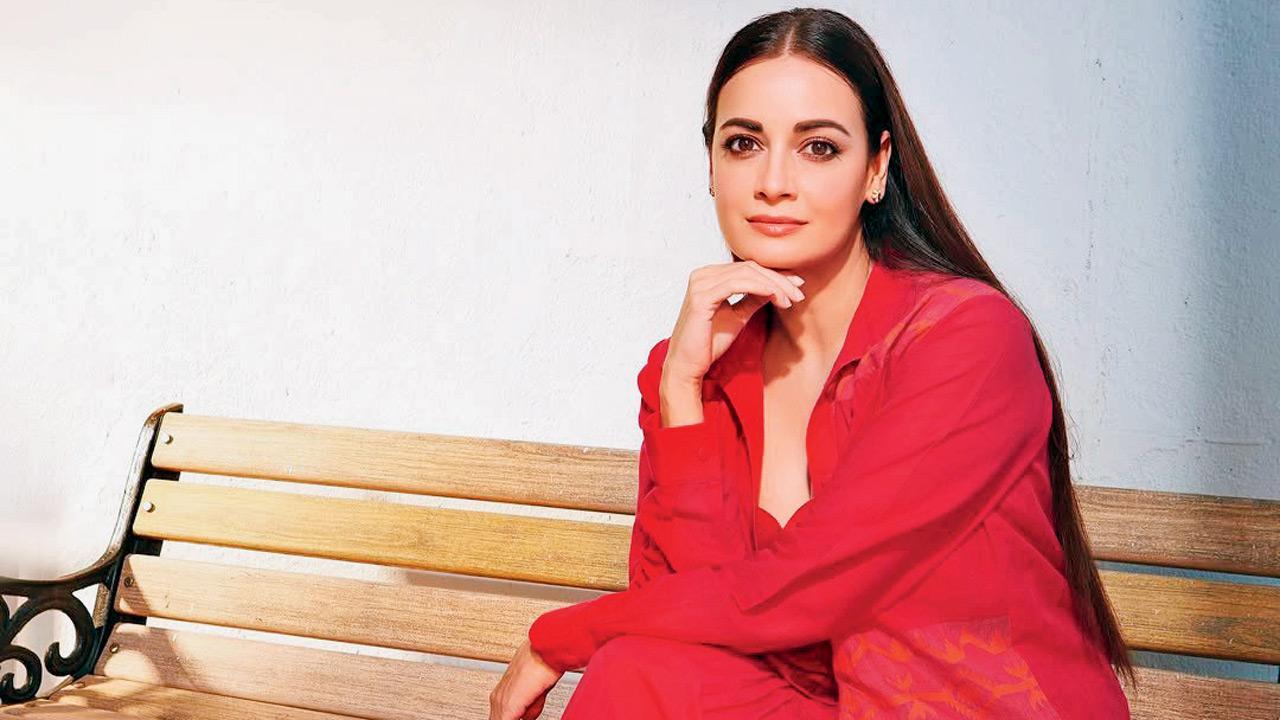
Dia Mirza, whose next production is currently being scripted, says she wants to show powerful women in unique stories as they are not depicted enough on screen
Priyanka Sharma (MID-DAY; April 21, 2025)
In the first four months of the year, Dia Mirza had a release in Nadaaniyan, and saw her acclaimed series Kaafir being re-released as a film. But it’s the next step that has her excited about 2025. The actor, who had turned producer with Love Breakups Zindagi in 2011 and has backed two more projects since, is set to return to production after six years.
“The writing [on my next] has been on in full swing. Hopefully, we’ll begin the project soon. I am looking for diversity, representation of powerful, incredible women in unique stories. If nobody is making it, I will make it,” she smiles.
There is no dearth of acting offers for Mirza, but the lack of inspiring parts pinches her. Today, her nos are more frequent, more decisive even. With a 24-year career behind her, she doesn’t feel the compulsion to give her nod to everything that comes her way.
“I came from a humble background and moved to Mumbai at a young age. When you’re seeking financial independence, at that stage of your life, you say yes to everything. It takes a certain kind of security to reach a point where you recognize that you have more than you need, that you can continue to hone your craft and don’t need to say yes to crap,” she says.
Her recent movies reflect not only her career principles, but also her personal activism and ideology. She reflects, “It comes from the understanding that being an artiste is about driving change. I’m perhaps a better actress today as many of my life experiences taught me to empathize more deeply with my characters.”
-----------------------------------------------
Dia Mirza feels that in cinema, offers often disappear for women from the age of 35 to 48, and is glad that OTT has given these actors a new voice
Vishakha Pandit (HINDUSTAN TIMES; April 21, 2025)
Actor Dia Mirza Rekhi has a new reason to be happy. Her 2019 web series Kaafir was re-released as a movie recently. Interestingly, it was originally written as a feature film, she shares adding, “As a film is shorter, it is probably more convenient to watch. It also gives the story an opportunity to reach out to a whole new set of people.”
Dia, who is mother to three-year-old Avyaan Azaad Rekhi, played a mum in Kaafir. In this year’s Nadaaniyan as well, she played a doting mother.
Ask if motherhood has influenced her choices in work and she says, “Every single project I have done over the last five years leading to my son’s birth is the kind that I would want him to watch. When choosing stories, I always think, ‘Would I want my child to watch this? What will he gain from it?’”
As she completes 25 years in the industry, Dia is happy that factors such as age, marital status and motherhood are no longer affecting work for female actors. However, she admits that she did face its impact to some extent: “I was beginning to believe that work had dried up as it happens to most women in cinema — from the age of 35 to 48, offers disappear. Then, you get mother’s and sister’s roles. Fortunately, OTT has given a new voice to women. (Actor) Shefali Shah in Delhi Crime is an example of it, and I count Kaafir as one of those, too.”
While she is hopeful about the way ahead, the actor laments a new factor that has come into play — social media following.
“Now, there is a new nonsense — a lot of casting is done looking at an individual’s popularity on social media. It is unfair. Some extremely talented artistes may not be willing to put their voice out on social media, but that doesn’t mean they don’t qualify for a part. This is a new culture gaining prominence globally, too, and it’s terrible,” she ends.
The only privilege I had was that I was a beauty title holder-Dia Mirza
8:49 AM

Dia Mirza, whose web series Kaafir has been turned into a film, discusses OTT changing the game for female actors and how she says more nos than yes to projects
Priyanka Sharma (MID-DAY; April 10, 2025)
Call it a quirk of fate or irony, but Dia Mirza’s Kaafir (2019) was initially written as a film. After six years of streaming as a web series, the Zee5 offering has now been trimmed to a movie. Smiling at the turn of events, Mirza says, “It was first written as a film, but it was stuck for many years. Then Zee5 came along and said they will make it as a series. So, Bhavani Iyer [writer] rewrote it. Now, [as it streams in a film format], I was curious to see what would be retained.”
Kaafir tells the story of a woman from Pakistan-occupied Kashmir, who ends up as a prisoner in India. It fits seamlessly in Mirza’s filmography that, over the last few years, has seen diverse stories—from Thappad (2020) to Dhak Dhak (2023) and IC 814: The Kandahar Hijack (2024). But finding such opportunities hasn’t been easy.
The actor shares, “For me, Dhak Dhak was a clarion call. It changed my perception of how life would be in my 40s. The industry had made me believe that by my 40s, I’d be obscure.”
Even as she credits OTT for opening doors for female actors, she notes that author-backed roles are hard to come by. “OTT has opened up [opportunities] for female parts. But again, stories like Dhak Dhak are rare. It takes a lot of sifting and sometimes also hurting egos [to find the right projects]. I say more nos than yes.”
The actor recently worked alongside Ibrahim Ali Khan and Khushi Kapoor in Nadaaniyan. With the two actors having been trolled for their performances, Mirza says she empathized with them, as it reminded her of the “vicious” attack she received in her early years.
“We didn’t have social media then, but I was burnt at the stake. So, I empathize with how hard a personal attack can hit. The only privilege I had was that I was a beauty title holder. Beyond that, I didn’t have any support system.”
The silence in Mumbai during the 26/11 was scary and shook me-Mohit Raina
9:51 AM

Fronting Mumbai Diaries 26/11, Mohit on how the 2008 Mumbai terror attacks brought back memories of his early years in Kashmir
Uma Ramasubramanian (MID-DAY; September 1, 2021)
Every Mumbai resident has a different memory of the 2008 terror attacks, each alarming and indelible in its own way. For Mohit Raina, it invokes memories of the deafening silence that had engulfed the city for four days. The actor, who is leading the retelling of the fateful night with Mumbai Diaries 26/11, says it was shocking to see India’s financial capital under siege. It took him back to his early years in the Valley.
“Hailing from Kashmir, the first superheroes I saw were the Army and defence officials. You are surrounded by [a tense] atmosphere in Kashmir, and sometimes, your memories are disturbing. I used to think that I have seen everything [as far as attacks are concerned]. But then, we witnessed something like this in Mumbai, the financial hub of the country. The silence in the city [during those days] was scary and shook me. I can never forget it,” says the actor.
The Amazon Prime Video series, also starring Konkona Sen Sharma, sees Raina as a doctor torn between his duty and his concern for his wife who is trapped in a five-star under siege. Reliving the dark chapter of Mumbai’s history is bound to be emotionally draining. “The subject itself was challenging. Plus, this was the first time I was dealing with a subject that had a bound time frame. We had to showcase what happened in 48 hours, over a shoot of 40 to 60 days. So, that takes an emotional toll on you. You don’t have the liberty of playing with your emotions because [the story is set in] a limited time span.”
Though television gave him his biggest claim to fame Devon Ke Dev — Mahadev, Raina is relishing his graduation to OTT with hard-hitting projects like Kaafir (2019) and Mumbai Diaries. He agrees that the OTT boom has changed the business. “Kaafir was supposed to be made as a feature film, but it didn’t materialise. It went from one producer to another, before it was made as a web series. So, stories like these, which were not being told [on the big screen], are now getting an opportunity to reach the audience.”
Hichki director Siddharth P Malhotra shaves 40 kilos
8:43 AM

Siddharth P Malhotra chronicles going from fat to fit, for the fourth time
Mohar Basu (MID-DAY; April 17, 2020)
Anyone who has battled the bulge will vouch that incidents that hit closer to home work as motivators to start an active lifestyle. For Hichki director Siddharth P Malhotra, it was his inability to seamlessly work on his web series Kaafir in high altitudes that served as a trigger. "We had landed for the shoot and I realised that even reaching the hotel from the airport was difficult because I weighed 127 kilos. If I have to direct my film, things must change. If I couldn't even walk properly for two minutes, how would I lead the cast?" says the director, who shaved off 40 kilos.
Apart from his trainer, Malhotra owes his transformation to Rohit Roy, who gave him a regimen to follow. "I was on a diet and I walked 10,000 steps a day. Four months into this programme, I hit the gym. When you lose weight, you develop loose skin. Gradually, when you notice how clothes fit and get compliments, you are further motivated. I have lost about 30 kilos three times, only to gain it all back. I don't want that to happen again. It is a challenge to make the healthy food taste as good as junk food. And [nutritionist] Jaydeep Bhuta made sure that I lose weight and still eat my favourite foods."
After a certain age, we are fit to only play mothers-Amruta Subhash
8:16 AM

As part of the run-up to the mid-day and Radio City Hitlist Web Awards, leading ladies and nominees Dia Mirza, Rasika Dugal and Amruta Subhash discuss how the advent of OTT has changed gender dynamics on and off-screen
Mohar Basu (MID-DAY; March 5, 2020)
On the surface, their three shows share little in common. Yet, Hitlist Web Awards nominees Dia Mirza, Rasika Dugal and Amruta Subhash find themselves bound by a common thread — the three redefined how women are perceived on screen. In the heartbreaking Kaafir, Mirza told the horrors that a Pakistani woman is subjected to when wrongfully accused of being a militant. Dugal reflected the struggles of a woman in uniform, her aspirations and ground realities, with her restrained act in Delhi Crime. Subhash, who went from the domesticated woman in Gully Boy trying to stand up to her husband to a woman who brings down Mumbai's biggest gangster Ganesh Gaitonde in Sacred Games 2, aced every nuance to perfection.
Seated on a couch in the mid-day office, the off-camera conversation among the actors flits from the dire political situation in the country to Subhash's temptation to devour the Japanese cheesecake sitting on the centre-table.
But once the camera starts rolling on the Sit With Hitlist Huddle — as part of the run-up to the maiden edition of mid-day and Radio City Hitlist Web Awards on March 19 — the actors don't shy away from hard talk.
To begin with, the ladies unanimously agree that the advent of web has brought stories sharply in focus. Or as Subhash sagely declares, "The universe conspires for good stories."
"Delhi Crime was the most sensitively written script. Often, things get lost in between the written word and the screen. I trusted Richie [Mehta, creator-director] completely, and I wouldn't have signed the show if it was anyone else [at the helm]," begins Dugal, who flew down from Delhi for the meet.
Coincidentally, Mirza binged on Delhi Crime before she left for the shoot of Kaafir. "Mohit [Raina], Sonam [Nair, director] and I had a long-drawn conversation about how finely crafted that show was. It was [commendable] that the lens of the storyteller was not judgmental," analyses the actor. She reasons that the similar empathetic gaze of Kaafir drew her to the story. "We never dehumanised any character. I was sold at Bhavani's [Iyer, writer] story. It took 13 years for this story to materialise, and 15 minutes for me to say yes."
The OTT boom may be in its nascent stage in India, but its ripple effect can already be felt. Where there are strong stories, there are well-rounded characters, thus giving female actors that long overdue opportunity to break out of stereotypical roles and inhabit powerful, author-backed parts.
"My character was written as a male part in the novel [Sacred Games], but Varun Grover [screenwriter] changed it to a female part in the show," marvels Subhash, aware how this seemingly minor tweak signals a significant change for women. "After a certain age, we are [deemed] fit to only play mothers. In Gully Boy, I played a mother to Ranveer [Singh], but look at the nuances of her character. This is the beginning of something vital for us."
While she shares the sentiment, Mirza — wisened by the 19 years in the film industry, and hardened by the gender inequality prevalent in Bollywood — asserts that the change has been much needed. "I have had directors tell me that I am too pretty to be in their movies. That's sexist in a way."
Even as digital offerings break formula, Dugal rues it's a long road ahead for depiction of women with sensitivity. "The good thing is that people are writing progressive things on paper. But unfortunately, the visuals are still sexualised in their prism."
But Mirza applauds the brave approach and stark treatment that many web shows employ — a feature not many Hindi movies can boast of. "I remember throwing up after the rape scene in Kaafir. I was bruised and battered by the end of it. It was the most real moment of the show."
Subhash, who comes from the background of theatre and regional films, views OTT as a convergence of cultures. "This heralds the beginning of true ensemble. Finally, good content is here, and so are the actors from all over," she says, adding, "Now, we discuss the arc at length, the graph of characters, the backstories. It's all brewed with care. The character I play was directed by both Anurag Kashyap and Neeraj Ghaywan. They both have different processes. So I approached my character, keeping the period in mind."
To which Dugal quips, "I have never been on a show where I have been told that I have time [to imbibe the character]."
Jokes aside, Subhash says Sacred Games 2 was one of the rare outings that offered her 'Brahma sharn' — that moment which is rewarding for the character. "[In the scene] where Saif's [Ali Khan] character asks, 'Mathur ka kya?' while my [on-screen] daughter is sitting there, I say, 'Bloody Mathur' aur main zindagi bhar ka rona ro deti hoon. It encapsulates my hatred for the man because he died too soon, leaving me alone."
Dugal says she found her moment in the mayhem on screen. "For me, [that moment is] when I fire the water cannon at the mob. My character wants to save the girl who is brutally raped, but then [as part of the Delhi police] she has to fight the mob that is fighting for the same cause. It breaks her."
Hitlist Web Awards Timeline
- Voting lines for public close on March 8.
- There are 14 categories you can vote in. Log on to www.hitlistwebawards.com to cast your vote.
- You can also vote via SMS. Send HITLIST <space> category name <space> your choice (a/b/c/d as on the website) to 57575.
- The awards will be held on March 19, in Mumbai.
- Watch the full Sit With Hitlist huddle with actors on the website, www.hitlistwebawards.com

(From left) Mayank Shekhar, editor, Hitlist with Hitlist Web Awards nominees Rasika Dugal, Dia Mirza and Amruta Subhash
Storytelling is the right way to cut through (hate politics)-Bhavani Iyer
8:05 AM

Nominated for Best Writing for Kaafir in the upcoming mid-day and Radio City Hitlist Web Awards, Bhavani Iyer discusses why Dia Mirza starrer is relevant in today's political climate
Mohar Basu (MID-DAY; March 3, 2020)
 At a time when India-Pakistan ties are fraught with tension, Kaafir is not an easy story to tell. But writer Bhavani Iyer was resolute in her decision to bring the true story — of Shehnaz who hailed from Pakistan-occupied Kashmir but was put behind bars in India after being suspected of being a militant — to the screen.
"I don't know if she has watched the show, but the Shehnaz I knew 14 years ago, left me moved," begins Iyer.
"Shenaz spoke about her horrors with such normalcy and heart, that I knew she had forgiven and moved on from what had happened with her," says Iyer of the woman who inspired Dia Mirza's character, Kainaaz, in the Zee5 offering. The sensitively told story has won her a nomination for Best Writing in the upcoming mid-day and Radio City Hitlist Web Awards.
"When the show released, I received love from across the border. Viewers called me to say that they liked the fact that Pakistani characters haven't been vilified," emphasises the writer. "When I was writing the show, I remember driving through Ludhiana, and the driver showed us a view of the border. It dawned on me that people on the other side are just the same."
While the material was powerful, Iyer says it was only enhanced by Mirza's mature performance. "We would talk for hours thinking of how to approach her character. The idea was to retain the character's fragility, without making her bechari. She said something beautiful to me; Dia said she wanted to be in my head and wanted to keep me in her heart."
Not many know that the show was originally conceived of as a movie. With the first season garnering appreciation, work on the second edition has begun. "Kaafir 2 has to reflect what's currently happening in the country, from an insider's perspective. My politics comes from an idealistic space. I grew up in a secular democracy. I am frightened for our future generations because we are bringing them on up hate. Storytelling is the right way to cut through the cacophony."
More About Kaafir
- Bhavani Iyer insisted on adding the court scene in which Vedant [Mohit Raina's character] narrates Kainaaz's journey — how she was taken to prison and raped for years; and ends it saying 'Imagine if she was an Indian.' Apparently, it was intended to evoke empathy since people from both sides of the border, who still await trials, have been branded militants basis suspicions.
- Iyer's favourite scene is the one where Raina's character comforts Kainaaz by embracing her. The chemistry brings the scene alive even with no dialogues to fall back on.
- Cast Your Vote For The Hitlist Web Awards
- Bhavani Iyer has been nominated in the Best Writing category for Zee5's Kaafir
The other nominees are:
- The Family Man (Raj-DK, Suman Kumar, Sumit Arora; Amazon Prime)
- Made in Heaven (Zoya Akhtar, Reema Kagti, Alankrita Shrivastava; Amazon Prime)
- Little Things S03 (Dhruv Sehgal, Nupur Pai, Garima Pura Patiyaalvi, Abhinandan Sridhar; Netflix)
- Delhi Crime (Richie Mehta; Netflix)
- Gullak (Nikhil Vijay; SonyLIV)
- Kaafir enjoys four nominations, including Best Series, Best Actor (Male), Best Actor (Female) and Best Writing.
- There are 14 categories that the public can vote in. Log on to www.hitlistwebawards.com to cast your vote.
- You can also vote via SMS. Send HITLIST <space> category name <space> your choice (a/b/c/d as on the website) to 57575.
- Voting lines close on March 8
I am happiest when I am in the Himalayas-Dia Mirza
8:07 AM

Nominated in the Best Actor (Female) category in the upcoming mid-day and Radio City Hitlist Web Awards, Kaafir actor Dia Mirza says proud to foray into the web with a thought-provoking series
Shaheen Parkar (MID-DAY; February 15, 2020)
Her maiden digital venture may have won her rave reviews, but Dia Mirza believes that the credit goes to the beautiful writing of Kaafir. In telling the story of a woman hailing from Pakistan-occupied Kashmir who is put behind bars in India after being suspected of being a militant, Mirza, director Sonam Nair and writer Bhavani Iyer have offered a narrative that is urgent and relevant in today's political climate.
"As an artiste, I respond to stories. The plot of Kaafir moved me, it compels humanity [to think]. I'm grateful that it was my debut on OTT," says Mirza of the show that is inspired by true events. "The experiences that Kainaaz Akhtar [her character] has, are so challenging at an emotional level. The fact that it was inspired by a true story made it even more difficult."
The harsh winter in Himachal Pradesh is far from conducive for shoots, but the actor feels otherwise. "When you are invested in a character, nothing feels extreme," she declares, adding that a sequence required her to jump into a river. "Even though the temperature was sub-zero degrees, I was revelling in the narrative so much that it didn't occur to me. The team was on standby with blankets and warm water. After finishing a shot, I would lie on the ground trembling, with my teeth chattering." She rues that the series, which also stars Mohit Raina and child actor Dishita Sehgal, could not be shot in the Valley. "Kashmir was going through a strange time then, so we couldn't go there. But I am happiest when I am in the Himalayas."
Mirza admits that the team is currently developing the material for the second season. "But I have no idea whether the story will move forward, or a new story will be told."
More About Kaafir
- Environment-conscious Dia Mirza gifted the entire crew customised metal water bottles, with each bearing the user's name
- The show was shot in Himachal Pradesh, with a short stint in Mumbai. Despite the sweltering heat in Mumbai, the actors had to wear woollen clothes to maintain continuity
Cast Your Vote For The Hitlist Web Awards
- Dia Mirza has been nominated in the Best Actor (Female) category for Zee5's Kaafir. The other nominees are:
Shefali Shah (Delhi Crime; Netflix)
Sobhita Dhulipala (Made In Heaven; Amazon Prime)
Shweta Tripathi Sharma (Laakhon Mein Ek; Amazon Prime)
Rasika Dugal (Out Of Love; Hotstar)
Geetanjali Kulkarni (Gullak; SonyLIV)
Mithila Palkar (Little Things S03; Netflix)
- There are 14 categories that the public can vote in. Log on to www.hitlistwebawards.com to cast your vote.
- You can also vote via SMS. Send HITLIST <space> category name <space> your choice (a/b/c/d as on the website) to 57575.
- Voting lines close on March 8.
Fiction is getting a tough fight from real-life stories that are taking over OTT platforms
8:42 AM

Be it a story of a serial killer or a freedom fighter, fiction is getting a tough fight from real-life stories that are taking over OTT platforms
Aastha Atray Banan (MID-DAY; September 1, 2019)
Earlier this year, we all watched Delhi Crime, which is about the 2012 Nirbhaya rape case, and were left overwhelmed. We were also, to a certain degree, amazed that something like this could happen in real life. Or Mindhunter, in which the FBI's behavioural science unit goes to meet serial killers to know what lies beneath a killer's mind. And, we discovered that the cliche is true: fact is stranger than fiction. It's this old adage that the OTT platform ZEE5 is banking on, by focusing on content based on true events. Be it Kaafir, in which a young Pakistani mother, who comes to India, is accused of being a terrorist; Gondya Ala Re (above), the story of the first armed revolution by the youth of the country, led by the Chapekar brothers; Barot House, about a child serial killer; or Rangbaaz, based on gangster Shiv Prakash Shukla: all stories are ones that require intense research.
 For Gondya Ala Re, a show on Damodar Hari Chapekar, Balkrishna Hari Chapekar and Vasudeo Hari Chapekar, director Ankur Kakatkar (left) took almost two years to research. The story of the Pune brothers, who were involved in the assassination of WC Rand, the British plague commissioner of Pune, was a vast one. "I knew them from my school books, but later they vanished from the MPSC syllabus. Then, in 2017, the prime minister mentioned them in the Lok Sabha and my interest piqued again," says Kakatkar, who is also from Pune. He started reading about them, including getting his hands on out-of-print autobiographies and hard-to-access court documents. "It was all jugaad, as it was very hard to get those documents from the court," says the 35-year-old filmmaker, who has also written the show. "Once I started making the show, their fourth generations got in touch, so we talked to them as well. But, eventually I knew more about them than anyone else. They were unsung heroes. Freedom fighters like Bhagat Singh and Veer Savarkar followed their cue. I wanted to make them more than just a paragraph in a history book." The writer traced their journey from 1892 to 1899 in the show, which stars Bhushan Pradhan, Anand Ingale and Sunil Barve.
 But, along with freedom fighters, even the stories of serial killers get told. In Barot House (right), Sanjeev K Jha, the UP writer who wrote last month's Jabariya Jodi, had to enter the mind of a serial killer; that, too, a teenage one. The show is based on different cases of serial killings across India of children, all allegedly by killers, who fell in the 14-18 age group. One took place in Maharashtra, one in Bihar. "For this show, I read a lot of serial killer novels and watched Mindhunter. I decided to go deep into the psyche of a troubled child, and had to question his parenting. So, this became a story about a father and son. When our children do wrong, aren't we the first ones to cover it?" says the 32-year-old writer, who feels that real-life stories are serving something useful to the audience. "I also found out interesting things during my research. Did you know that when serial killers are unsuccessful, they self-harm? We tried to keep it free of too much gore or sexual content, as it's more about psychology."
 In Rangbaaz, in place of a serial killer, is a gangster, who, as writer Siddharth Mishra (left) says, is also a father, son and boyfriend. Rangbaaz is the story of Rajashtan's infamous gangster Shiv Prakash Shukla. "The story is not just about a gangster, but about caste politics and state politics that were in effect then. What made a farmer's son, who was studying to be an IAS officer, become a gangster instead? We had to know his surroundings and his equations with people," says the 38-year-old, who spoke to old-school journalists (active in the '90s) to know more while also travelling and meeting his acquaintances. "We haven't tried to justify anything, but you have to show the human element, and that only comes with research," he says. "You have to maintain a balance."
And, that could be the most important part of telling a true story: to make sure all sides are told. Just like a journalist, who reports both sides of the story, these writers and directors are trying to bring the truth to fore. As Sonam Nair, director of Kaafir (below), says, "With a movie like this, which is about a Pakistani woman who was called a terrorist because she got stuck in India, political implications are big. Everyone is scared to make the movie. That's why all the facts have to be in place. We got information from the real lady, who is played by Dia Mirza, and details from the lawyer defending her. We didn't make a movie about India or Pakistan; it's fair and balanced. It's eventually a human story."

It feels like Kashmir has adopted me-Bhavani Iyer
8:38 AM

After Raazi and Kaafir, writer Bhavani Iyer set to pen another web series based on the history of the Valley
Letty Mariam Abraham (MID-DAY; July 9, 2019)
She may be a woman of few words, but give her a pen and paper, and her stories will do the talking. Bhavani Iyer, who — with a repertoire that includes Black (2005), Guzaarish (2010) and Raazi (2018) — has fast sealed her place as one of the most promising screenwriters in the industry, is busy at work on her next web series that chronicles the history of Kashmir.
“The show is titled Srinagar. The first season will showcase the events between 1985 and 2000 while season two will chronicle [the time] from 1947 to 1971,” says Iyer, whose last work, Kaafir, too was set in the state. It easy to see that the Valley, with its trials and tribulations, holds a special place in her heart. “I’ve been there so many times, it feels like Kashmir has adopted me,” she smiles.
Directed by Onir, the latest series will go on floors next year. The research and material collated for her past offerings will come handy as she gives shape to her new project. “I have met people who have been part of the custodial system, legal system, the BSF and CRPF. Onir and I have done exhaustive research on the state. We have recorded different perspectives on the issues and how the locals are merely pawns in a political minefield that being created.”
Narrating a story of the Valley comes with its set of controversies, but Iyer has faith in her material. "I don’t intend to tell the story for the sake of sensationalising it. I want to chronicle it to give people all the perspectives on the subject. We sit here cocooned in our safety, unaware of the pain and angst that the Kashmiris carry within themselves. I met this young boy who said, ‘Aaj main school bus se utra, toh meri talashi huyi’ [I was searched when I got off the school bus]. For him, it is a rite of passage. Why is that the reality of 13-year-old, when we can change it? I ruffle a few feathers in the process, so be it.”
We are experiencing a world that is polarised by its views-Dia Mirza
8:13 AM

Dia Mirza on why the Kashmir-set drama Kaafir is relevant today
Letty Mariam Abraham (MID-DAY; June 25, 2019)
While she has been a vocal social activist off- screen, Dia Mirza’s on-screen works have largely been restricted to playing the girl-next-door.
As she makes her web debut with Kaafir, the actor takes on her bravest role to date. the Zee5 show, inspired by a true story, sees her play a Pakistani woman who accidentally crosses the Indian border and is mistaken for a militant. In a chat with mid- day, she explains why the human drama is pivotal in current political climate. Edited excerpts from the interview:
Kaafir is based on a true story. Can you tell us about it?
Bhavani Iyer, who has written Raazi (2018), wrote this story 13 years ago. She met the woman whose story Kaafir was inspired by, and the journalist. Often, we don’t understand what it is for a human being to live in conflict, or what it is to be labelled a militant and be put behind bars. It’s an extraordinary human story. The timing couldn’t have been more perfect. We are experiencing a world that is polarised by its views, where prejudices are being reinforced every day.
In a 16- year career, Kaafir is your first bold project. Did this decision stem from the need to challenge yourself?
As an artiste, I have always been hungry for a part like this. When I was offered the role of Kainaaz, I felt immense gratitude that I would live a part that resonated so strongly with me. It has not only been written and directed sharply, but also gave me the opportunity to work with Mohit Raina and child actor [Dishita Jain]. She was extraordinary, so intuitive to every moment.
Did the show help you gain a clearer perspective of the conflict-ridden areas?
Since I do [social work] outside cinema, I have seen reality from a close range — be it the lives of children living in human conflict, or environmental degradation. Telling a story like Kaafir requires empathy and the ability to abandon any kind of reservation. As human beings, we tend to protect ourselves from going into emotional experiences that can cause anguish and pain. Kaafir compels you to face them.
Your production, Mind The Malhotras, is a comedy. How does it feel telling two diverse stories simultaneously?
The OTT platform has opened up a democratic and even playing field. It has given artistes the opportunity to speak to audiences with honesty and without censorship or the pressure of box office.
What’s in the pipeline?
I have signed two assignments and will start filming an ambitious project directed by Nikkhil Advani and written by Bhavani. It will take me to a lighter space.
I got addicted to power on the small screen-Mohit Raina
7:36 AM
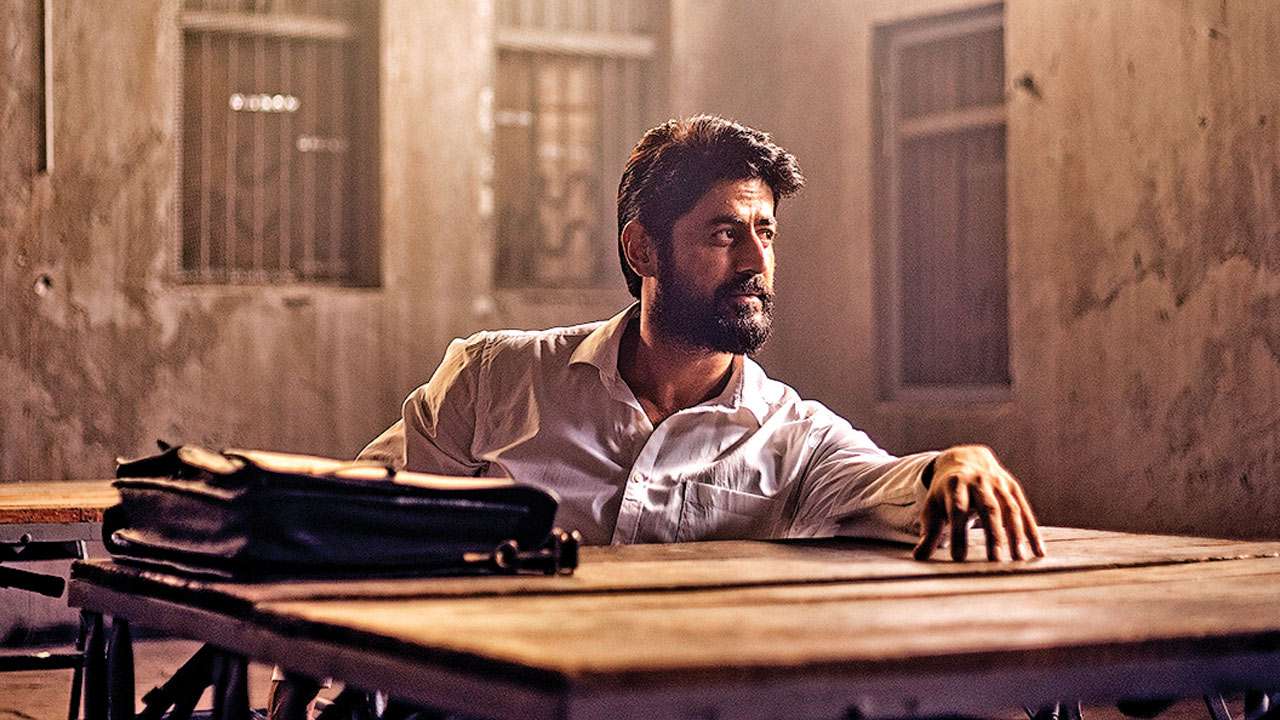
Chaya Unnikrishnan (DNA; June 14, 2019)
Mohit Raina, who became a TV heart-throb with his chiselled physique after his outing as Shiva in the television serial Devon Ke Dev... Mahadev, made his big-screen debut earlier this year with Uri: The Surgical Strike. Now, the good-looking actor is set to foray onto the digital platform with ZEE5’s web series Kaafir, which is inspired by the true story of a Pakistani woman who crosses over to India with her little daughter, and gets imprisoned. Mohit plays a journalist who helps bring them justice. Here, he tells us about his digital debut, and why it took time to make the transition from TV to films...
Has life changed after Uri: The Surgical Strike?
Yes, I guess so. Filmmakers are looking at me differently. They approach me with various kinds of scripts, which they feel I will be able to do.
Why did it take so long for you to make the transition from TV to films?
That’s because on TV you have a lot of exposure on a regular basis. You need to disconnect and reconnect with the market because they are different platforms. TV’s demands are different from those of films. It took me some time to understand and relate to these demands and slowly, steadily make them (filmmakers) believe that I could portray some nice and different characters.
Now you are making your digital debut with Kaafir, which again has you portraying an intense character.
I had heard the story of Kaafir a while back and it was nothing close to the other subject (Uri). When Siddharth (P Malhotra, producer) approached me and narrated the script, I was looking forward to doing it because it would let me showcase different emotions. This is a story which was waiting to be told for more than 10 years. Bhavani Iyer, who is the writer, has been working on it for 13 years. I feel fortunate to be a part of it. This is more about human emotions and drama. I was sold in the first minute as to how could a person be so selfless and giving. He gave precious time and invested years of his life to bring a smile and happiness to somebody else who was a stranger.
You play a journalist in the series? Did you take any inspiration?
The profession is just the backdrop — he is a journalist and then he turns out to be a lawyer. What was important was the human journey and emotions.
Is shooting for a web series different from films and TV?
It’s absolutely different. Kaafir is an eight-episode series; but while shooting, you really don’t know which part is for which episode. You have to constantly be in sync with emotions. It’s not a start-to-finish schedule like a film where you shoot and join the dots. You have to be particular about your emotions and need to know the entire script.
How was the experience of shooting in Himachal?
It was good because we were shooting outdoors and we got a lot of time to devote to our work. Plus, we got to work in a natural environment. We used to shoot in a small town called Kalpa, which has a limited population. So, the locals were really helpful — we used to get home-cooked food. Conditions were tough, but they were workable.
You are doing a romantic film Shiddat next..
Yes, I am looking forward to it. I will start shooting for it soon.
You have a great female fan following, but we didn’t see you doing any romantic show on TV. Why?
Because I got addicted to power on the small screen (he played Shiva in Devon Ke Dev Mahadev, Ashoka in Chakravartin Ashoka Samrat and Havildar Ishar Singh in Battle of Saragarhi) and enjoyed it too much. But now, it’s time to explore those options.
Are you taking a break from the small screen?
As of now, I am exploring different avenues. If something great comes my way, I will see.

The time frame between 35 to 45 is treacherous for an actress-Dia Mirza
8:33 AM

Chaya Unnikrishnan (DNA; April 13, 2019)
Dia Mirza returned to films after three years with Sanju (2018), which had her playing Maanayata Dutt. And, now the actress is all set to make her digital debut with Kaafir, which will see her essaying another real-life character that is currently kept under wraps. The former beauty queen has started shooting for it in Himachal Pradesh from where she has been posting pictures. She talks about her web series, how the digital platform is offering exciting roles to women and the problem of ageism in the film industry.
You have been posting pictures of your look from the upcoming web series Kaafir, but there is a lot of secrecy around it...
(Laughs) That’s because we want to unveil the story closer to the launch. Right now, all I can say is that it is a hard-hitting, compelling humane narrative. I feel enriched as an artiste and a human being to have the opportunity to play this part. It’s special as it’s based on a real person. I have watched some stuff that is available on her, but what is more important is to understand the full context of her experience and spend time understanding that.
Do you find it more challenging to play a role based on a real person?
I think the ability to empathise with another person’s experience and go into the trajectory of their journey is challenging. When I posted my character image from Kaafir, I wrote, ‘Your truth is now my truth.’ That is my endeavour, that’s the best I can do and hope for.
Will this be your first outing on the digital platform?
This is the second show that I signed, the first one is Moghuls, which is based on the Mughal empire. It is a massive show directed by Nikkhil Advani; I have a powerful and beautiful part in it. As for Kaafir, Sid (Siddharth P Malhotra, producer) gave me one line of the subject. By the time he finished it, I said yes. It was that compelling. The reason to do these two series is they answer every question that I asked myself and the industry.
It is important for the film industry to rise above ageism. Roles for women need to be better written. It is exciting to see this happening on OTT platforms. Within a span of six months, I was offered two brilliant narratives, which is a sign of good times. I am most excited as an actor, producer, and as a woman to be a part of it. I hope this continues to grow and more parts for women are written.
Kaafir is directed by a woman, Sonam Nair. Does that make a difference in the treatment of the series?
Before I talk about that, I have to tell you that I have done 47 films and this is only the second time I am collaborating with a female director! It reveals how much of a gender gap exists in our industry. I don’t mean to be unfair to men — they come with their own strengths. But there is something so extraordinary, sensitive and meaningful working with these women — (Sonam and Bhavani Iyer, writer). They have a greater and deeper ability to create empathy. Just see the work Zoya (Akhtar) is doing, the way Reema (Kagti) writes, or Alankrita (Shrivastava) works. Meghna Gulzar and Bhavani were such a powerful combination for Raazi. It is good to see them holding their truth; exploring ideas that compel them at a personal level, and not trying to follow some stereotypical idea of what storytelling has to be about.
Do you find any difference between shooting for a film and web series?
For a web series, there is more time to build on the character and discover the story. I will say it is delicious (laughs). That’s because you get a chance to sink your teeth into in, relish it and unravel the layers. Films are an incredible format, but you don’t get that much time. It’s like reading a novella and novel. A novel gives you so much more!
After Sanju, have you signed any films?
No film has come my way that has excited me. For any female actor, the age between 35 to 45 is treacherous. Filmmakers tell me, I am at that awkward age. No parts are written for women in this age bracket, while men at that age flourish and have great careers. They can play 30 till they are 50, but women are not allowed to do that. Interestingly, in the West, women in that age group are at the highest point of their careers. They get the best parts. That’s also because we do not write enough for mature people.

Subscribe to:
Posts (Atom)