Showing posts with label K Asif. Show all posts
Showing posts with label K Asif. Show all posts
My K Asif film is taking as much time as Mughal-E-Azam took to get made, says Tigmanshu Dhulia
10:12 AM

Priyanka Sharma (MID-DAY; September 12, 2026)
Director Tigmanshu Dhulia’s Ghamasaan released on September 11, while his next with Nawazuddin Siddiqui, Woh Phir Kabhi Dikha Nahi, is in the last leg of making. Even as he has been busy with these two projects, a story has remained constant in his mind — the biopic of late filmmaker K Asif of Mughal-e-Azam (1960) fame.
“Ghar bhi chalana hota hai. So, when some projects come my way, I have to halt the process of writing the film,” Dhulia told mid-day.
In his 26-year career, Asif made only five films, of which two were left incomplete. But his one creation — the Prithviraj Kapoor, Dilip Kumar, and Madhubala-starrer, Mughal-E-Azam — catapulted him to a legendary status. The epic famously took 12 years to get made. “This film is taking as much time as Mughal-e-Azam took to get made,” quipped Dhulia, who has been writing it since the project’s announcement in 2024.
He added that he has finished writing 100 scenes so far. “I have finally reached the point when the shoot of Mughal-e-Azam starts.”
Given the magnificence of Asif’s historical drama, opulence comes to mind the moment one thinks of the director. But grandeur is not what Dhulia’s biopic focuses on. Instead, he wants to zoom in on the man behind the filmmaker, whose promising career was marked by movies that remained for years in production and then cut short by his untimely death at 48.
“This film is not about opulence. It talks about Asif as a person. It’s personal in nature,” he reflected.
Many people objected to the handpump scene, calling it illogical-Anil Sharma
10:46 PM

Niharika Lal (BOMBAY TIMES; November 7, 2024)
After the string of hits - Pathaan, Gadar 2, and Jawan last year, the current state of cinema is different. This year has brought a noticeable dip, with only a handful of films managing to perform well. Why are audiences finding it harder to connect with films these days? And where have all the mass entertainers disappeared to?
Anil Sharma, often tagged as a director who makes mass entertainers, spoke to us about what goes into making a mass entertainer and says there is nothing wrong with a film being categorised as such. He explains, "We are not here to teach science or law - that's what colleges are for. I think a filmmaker's job is to entertain. Action, music, dance, romance - yehi mera motto hai. To make a film larger than life, to present a story that isn’t even real and still make it believable for the audience, is not easy."
"Hand pump ukhaada nahi ja sakta, lekin logon ko itna believe karwa dena ki yeh sach hai - yeh aasaan kaam nahi hai, yeh difficult kaam hai. Yeh kaam Manmohan Desai ji karte thay, K Asif ne Mughal-e-Azam mein kiya, Mehboob saheb ne Mother India mein kiya, aur Sippy saheb ne Sholay mein kiya. Yeh bahut mushkil hota hai."
He adds, "We (He and his team) see ourselves as stress-busters. Whether we get validation from certain people or not isn’t important - what matters is the love we get from the audience. My next film, Vanvas, will connect with 600 crore people because every family has those members."
In a recent conversation, he spoke about into what goes into making a mass entertainer.
'Maine kabhi yeh nahi socha ki main scene taaliyon ke liye likh raha hoon'
Whether it’s Gadar, Gadar 2, or The Hero: Love Story of A Spy, Anil Sharma's films have dialogues that stick with audiences years after the credits roll. But according to Sharma, the secret lies in never writing with the audience in mind. “I don't write scenes hoping for applause,” he says.
He says, "The story should carry that emotion. Jab mujhe laga ki kahani mein woh emotion hai jo 600 crore logon tak jaa sakta hai, tab main us kahani mein gaya. Agar aapki kahani mein woh emotion hai, toh woh audience tak zaroor pahunchta hai. Maine kabhi yeh nahi socha ki main scene taaliyon ke liye likh raha hoon. Scene ki requirement aur kahani ki zarurat ke hisaab se hi har scene likha."
Sharma’s films, especially Gadar, have often faced criticism for being overly jingoistic. What does he think about this? He responds, "When I first heard this, I looked up the meaning of jingoism. Main iss desh ka rehne wala hoon, aur apni bhavna ko waisa hi dikhata hoon jaise main sochta hoon. Jo log subtle sochte hain, main unki terah nahi dikhata. Main waise hi film banata hoon jaise ek aam aadmi sochta hai. Na main khud vishesh aadmi hoon, na vishesh logon ke liye film banata hoon. Jo meri film ko jingoistic sochte hain, kripya na dekhein, kyunki yeh film unke liye nahi hai."
'It seems like some directors and actors are making films only for a specific target audience and not entire country'
"When I started making films, even VCRs didn’t exist. When I decided to make Hukumat (1987) with the idea that I was making it for the masses, it became a turning point in my life. Hukumat gave me a tag, and then with Gadar, I got another one,” Anil Sharma shares.
“Now, when I look around, technology has advanced, but somewhere we’ve fallen behind in terms of content. Kahin na kahin kuch gadbad hai - there are so many talented people here, but they aren’t able to work effectively within the system.. Koi unbalance toh hai jiski wajah se filmein utni safal nahi ho pa rahi hain aaj. Last year, we saw some good performances at the box office, but this year things look different."
He continues, "Films are performing only in segments. It seems like some directors and actors are making films only for a specific target audience instead of making film for the entire country. And even when they try to make those films, perhaps the corporate side isn't supporting them. I don’t know exactly why, but the kind of momentum we once had - 10-12 blockbusters a year - isn’t there at present."
Director ko apne actor ke saath fraud nahi karna chahiye
Anil Sharma shares a long-standing relationship with Sunny Deol. What he believes makes the actor-director dynamic work, he says, “Honesty. A director should never deceive their actors by promising one role and delivering something different on set. If I change anything in the role, I always inform them. Director ko apne actor ke saath fraud nahi karna chahiye."
He adds, "Actors are inherently insecure, so, it's better to tell them which actor is doing what scene especially when it is a multi-starrer film. I make sure to tell them - yehi scene hai aur yehi karna hai - and I always have a reason for it. Truth in storytelling and honesty with actors is important."
How was the handpump scene in Gadar written
Recalling how he wrote the iconic handpump scene in Gadar, Anil Sharma says, “Mujhe agar bologe Hindustan murdabad, toh mujhe itna gussa aa raha tha ki mujhe laga building hi utha kar phenk doon. Woh emotion blast hota hai. Building toh nahi phenk sakta tha, fountains nahi phenk sakta tha, aur uss zamane mein hand pumps hote the, toh maine hand pump phenk diya.”
He continues, “We had a two-hour discussion on set about that scene, and shooting was halted because of it. Many people objected to the handpump scene, calling it illogical."
But Sharma managed to convince them. He explains, "Sometimes, an emotion is so overwhelming it consumes a person entirely. Don’t we all feel, at times, that our anger could make us destroy everything physically?”
He adds, “Jab story mein emotion itna hota hai, toh apne aap bomb ki tarah explode karta hai aur audience tak pahunchta hai. Hum emotion la nahi sakte. Emotion ko film mein import nahi kar sakte. Agar emotion andar hai, tabhi woh export hoga.”
'I want to entertain myself and audience with my films and I can never be entertained without music'
Moviegoers don’t just want good stories, they also want songs they can dance to. Sharma explains, “Music of the film is like blood to the body,” underlining that a film cannot stay memorable without music.
“Whether it was Manoj Kumar, Raj Kapoor, K Asif, or Vijay Anand - the kind of films they made had music as the lifeblood of their stories, and I’ve learned from those films. I can’t imagine a film without music, and I can’t make a film without it. I don’t enjoy films that lack music. I want to entertain people through my films, but I also want to entertain myself - and I don’t think I can ever be entertained without music.”
Elements of a mass entertainer
What are the elements of a mass entertainer? Sharma says, "Ultimately, log entertainment ke liye aa rahe hain. Aapse seekhne-samajhne nahi aa rahe hain."
- A story with emotion that resonates with crores of people
- Honesty in storytelling
- Serving truth like medicine coated with sugar
- Entertainment ka tadka, lekin tadka na lage
People on other sets will tell you you’re an amazing actor. Sanjay Leela Bhansali will say, ‘Faltu! Kya hai yeh?’-Richa Chadha
10:13 AM
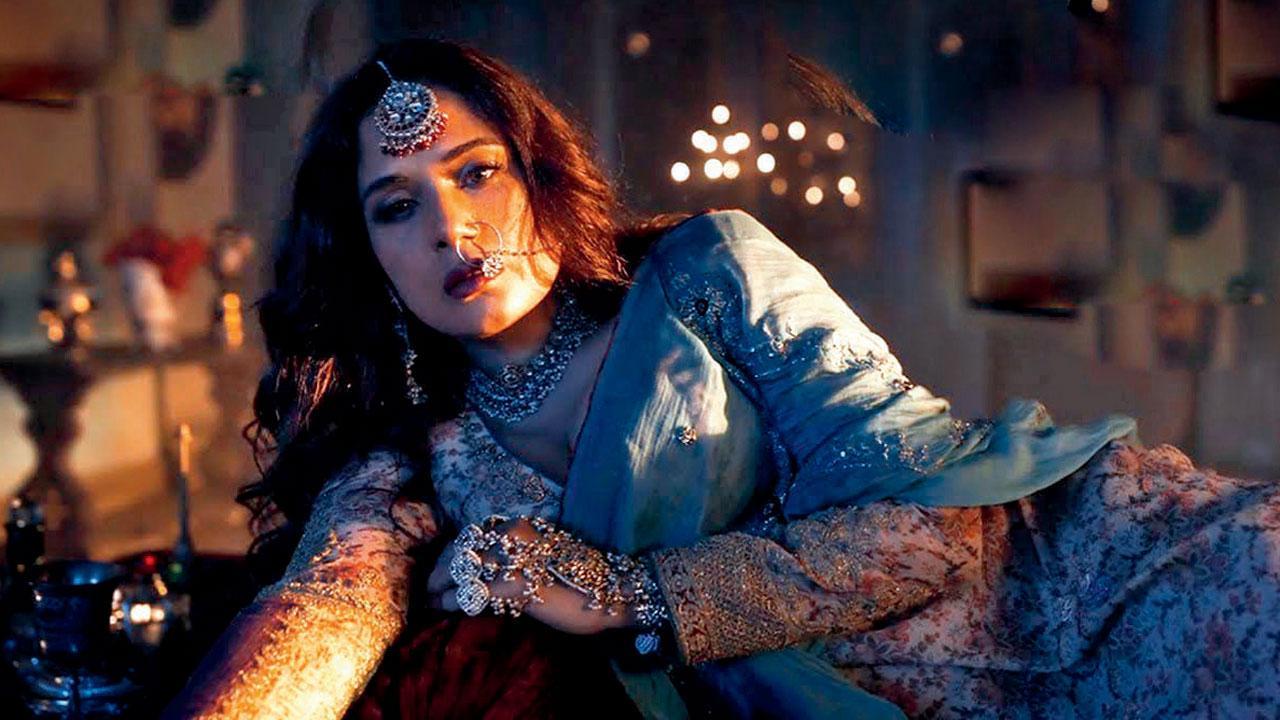
With Pakistani actors deeming Heeramandi a case of cultural appropriation, Richa highlights the two countries’ shared history and how her grandfather hailed from Lahore
Mohar Basu (MID-DAY; May 4, 2024)
The female characters Sanjay Leela Bhansali has crafted in Heeramandi: The Diamond Bazaar are fierce, manipulative and audacious. In contrast, the creator paints a picture of vulnerability with Richa Chadha’s Lajjo, who drowns herself in alcohol and delusion after being dumped by her lover. Over the past few days, the actor has been winning love for her part, which echoes well beyond its two episodes.
Chadha notes it is Lajjo’s pain that is resonating with the audiences. “Lajjo is a human reflection of this world’s pain, of people’s loneliness. She suffers from lack of love and wants to belong to someone desperately. People have always seen me play a tomboy or a boisterous part. This is a shift,” smiles the actor, who stars with Manisha Koirala, Sonakshi Sinha, Aditi Rao Hydari, Sanjeeda Shaikh and Sharmin Segal in the series.
A lot of her love for Lajjo comes from the sheer joy of working with Bhansali. Giving shape to the creator’s vision of the character has been both exhilarating and demanding.
“He juices every ounce of you. I love being pushed to my extreme, feeling like, ‘Oh my God, I know nothing.’ On a bad day, you are destroyed. But the next day, you rise with a new confidence. Working with him is an ego-destruction exercise. People on other sets will tell you that you’re an amazing actor. When you come here, he’ll say, ‘Faltu! Kya hai yeh?’ With him, I went back to the rasa of acting. Once I caught [my character’s sur], I understood why it felt like a raw wound. Playing her felt like being in a world of ghazals. Sanjay sir is carrying forward the torch of storytelling in this subcontinent that represents greats like K Asif and Kamal Amrohi. This is a way of preserving our heritage.”
But many actors in Pakistan feel Heeramandi, which tells the story of Lahore’s courtesans, is an attempt at appropriation. Bhansali admitted that when it was conceptualised as a movie, he had considered casting Mahira Khan and Fawad Khan.
Chadha defends the show, saying, “I don’t see it as appropriation. My character’s name is Lajwanti. My grandfather is a Punjabi from Lahore, Sharmin’s grandfather studied in Lahore University. Our roots are the same. Most of us would love to see a world without borders, [bound] by a spirit of love. Appropriation would be Rooney Mara playing Tiger Lily in Pan [2015]. In the original story, Tiger Lily was a princess from the Piccaninny tribe, native Americans who inhabit Neverland. Here, we are the same race.”
Tigmanshu Dhulia to helm Mughal-E-Azam director K Asif’s biopic
8:20 AM
Deep Saxena (HINDUSTAN TIMES; March 23, 2023)
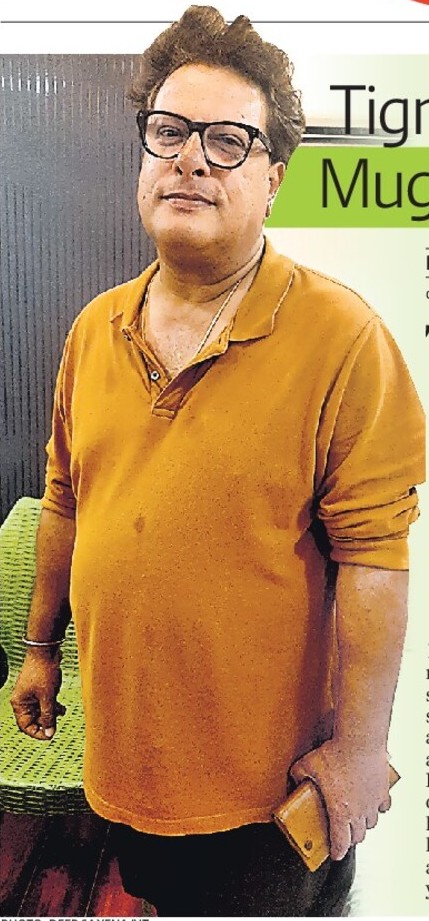
Tigmanshu Dhulia, who won a National Award for his film Paan Singh Tomar (2012), is excited to direct another biopic. This time, his subject of interest is producer-director K Asif, who is most noted for the 1960s classic Mughal-E-Azam.
The filmmaker shares that he has been working on the idea for the past few years, and as soon as he wraps up his film Ghamasaan, he is taking a long break to work on this project.
On his fascination with Asif, Dhulia says, “The film says a lot more than Salim and Anarkali’s love story. Then I came to know about some popular kissey (incidents) about the making of the film as well as K Asif, which intrigued me. Imagine, that man was a Class 5 or 6 dropout; tailoring was his craft, and he made just about two films in his life: Phool (1945), Mughal-E-Azam and Love and God (1986, released 15 years after he passed away in 1971).”
The filmmaker goes on, “The film is said to be a magnum opus, but from where I see it, that man was a magnum opus — his vision, flamboyance, four marriages, fallout with (late actor) Dilip Kumar (who played Salim), and so many other things. Sometimes, I feel that he was sent by God with a farman (order) to make this masterpiece.”
The 55-year-old further informs that “renowned journalist and Urdu exponent Rajkumar Keswani had written a lot about Mughal-E-Azam, its making and people associated with the film in his memoirs”. “Sadly, he (Keswani) died in Bhopal in May 2021 but Priti Sinha (Dhulia’s OTT series The Great Indian Murder producer) had taken its rights when he was alive. We (Dhulia with writers Kamlesh Pandey and Iqbal Rizvi) are working on the story,” says the filmmaker, who is also well-known for his role as Ramadhir Singh in filmmaker Anurag Kashyap’s cult movie, Gangs Of Wasseypur.
Om Raut is K Asif reborn. He is offering something yet unseen to Indian audience-Saif Ali Khan
8:17 AM

Saif Ali Khan says Adipurush makers won’t compromise on grand vision for movie by seeking an OTT release
Uma Ramasubramanian (MID-DAY; September 14, 2021)
Saif Ali Khan, one of the early birds of digital entertainment, knows its perks. Even as his recent offering Bhoot Police enjoyed a direct-to-web premiere, the actor rules out the possibility of Adipurush taking the same route. He argues that the Prabhas and Kriti Sanon-starrer — an adaptation of the epic, Ramayana — deserves to be told on the big screen, owing to its visual effects. The actor believes that director Om Raut won’t compromise on his magnum opus by having it stream on laptops and smart TVs.
“This is a big-ticket movie with never-before-seen [visual effects]. This film can’t release anywhere except in theatres. The [makers] will have to sit on it [until cinemas are fully up and running],” emphasises Khan.
The actor plays Lankesh to Prabhas’s Lord Ram in the movie. As he reunites with Raut after Tanhaji: The Unsung Warrior (2020), Khan applauds his knack for mounting larger-than-life projects, generously comparing him to K Asif of Mughal-E-Azam fame. “Om Raut is K Asif reborn. He is offering something yet unseen to the [Indian] audience.”
Rajkumar Keswani reveals in his book on Mughal-E-Azam how Madhubala was considered a distraction by K Asif
9:27 AM

Author, poet and journalist Rajkumar Keswani shares lesser-known stories about Indian cinema’s most iconic film, which turns 60 this year
Kunal Guha (MUMBAI MIRROR; September 6, 2020)
When Madhubala first arrived on the sets of Mughal-e-Azam to essay her career-defining role of Anarkali, she brought her usual cheerful personality to work. Known to light up many a room, and to always leave her co-stars and crew rolling on the floor laughing, it dawned on her much later that not everyone was charmed by her ebullience. In fact, filmmaker K Asif found her a bit of a distraction. Soon enough, Madhubala’s shots began getting postponed and she went without shooting for several days. The actor was a little taken aback when, one day, Asif’s assistant Sultan Ahmed informed her that the filmmaker didn’t appreciate her behaviour and expected the cast “to take their job seriously”. The superstar accepted the feedback graciously, submitting to the filmmaker’s approach, and soon, the shoot commenced as planned.
It is anecdotes such as these that feature in plenty in poet, writer and journalist Rajkumar Keswani’s Daastan-e-Mughal-e-Azam, a literary tribute to the iconic film about unrequited love, which clocks 60 this year. Considered a milestone in Indian filmmaking, K Asif’s magnum opus took over 10 years to create. Keswani, who was 10 when it was released, remembers watching the film in Bhopal’s Bharat Talkies. “Those three hours in the theatre changed my life forever,” he says, adding that he was so charmed that he had memorised most of the film’s dialogues.
When he embarked on this project, Keswani’s passion for the film also drew him to follow the life of its director. Music director Naushad told him how Asif had started out as a tailor before going on to weave stories on celluloid when nudged in that direction by his brother-in-law and actor Nazir. In fact, the filmmaker also had a tailoring shop in Dadar’s Khodadad Circle at the time. “Famous heroes of the 1940s, Prem Adib and Jeevan [Narad of the screen], ran a restaurant in partnership in the same locality,” says Keswani about the neighbourhood, which was synonymous with tinseltown dreams at the time.
Most fans will know that development of the feature film began in 1944, but hit a roadblock during the time of Independence, only to commence again with a new cast in 1951. But few know about Asif’s struggle in casting for Anarkali’s role, after Nargis, his original choice, turned it down. Newspapers ads were published across the country, inviting women between the age of 16 and 22 to apply with photographs and biodata. Many actors approached the filmmaker for the role and Dilip Kumar, who was already cast as Salim, recommended the popular actor Vijaylaxmi. But the filmmaker didn’t find anyone suitable.
Asif had tried casting Madhubala for an earlier film, but her father Ataula Khan had set terms that weren’t agreeable with the director. “‘Keep your daughter in a showcase’, is what K Asif told him then,” says Keswani. He adds that the actor was cast as Anarkali only after she reached out to the filmmaker and agreed to work on his terms. “She arrived in her car and the meeting took place in the car itself. She asked him to forget his interaction with her father, and agreed to cooperate with him, because she really wanted to work with him.”
Maratha Mandir theatre, which had planned its gala launch with the release of Mughal-e-Azam had to launch with B R Chopra’s Sadhna (1958) since Asif’s film wasn’t completed by then. The theatre’s leasee owner Seth Mehtabchand Golcha set a clause for every filmmaker who wanted to screen his movie there: When Asif decides to release Mughal-e-Azam, their film would be replaced without notice. And when it did release, it even got travellers from Pakistan who would come only to watch the film. “In fact, Golcha had made special provisions for his Pakistani audience — they wouldn’t have to stand in queue to buy their tickets and could pick it up from inside the theatre itself,” says Keswani, adding that the theatre’s patrons also included filmmaker and actor Guru Dutt and Feroz Khan, who would turn up at Maratha Mandir to watch Mughal-e-Azam every week in the initial months.
“Shapoorji Mistry, the film’s financier, and who famously had several disagreements with Asif over his extravagant production, was no less in love with the director and the movie,” says Keswani. “Shapoorji seth was so obsessed with the dialogues that he would say them aloud as if in an elocution contest.”
Keswani’s book also includes 25 paintings by M F Husain, which were dedicated to Asif and his magnum opus. “Hussain made these paintings during his stay in London, as a guest of K Asif’s son Akbar Asif,” says Keswani of the works, which the renowned artist had gifted to Akbar’s daughter Haya Asif on her birthday.
It took Keswani 15 years to compile his research into a book, but stumbling upon gems about the film made the effort worthwhile. “I didn’t work like a scientist while writing and editing the book. I worked like a passionate lover,” he says.
60 years of Mughal-E-Azam: Why Prithviraj Kapoor’s name preceded Dilip Kumar and Madhubala’s in the credits
8:13 AM

Roshmila Bhattacharya (MUMBAI MIRROR; August 5, 2020)
 The story goes back to 1945. While the Quit India movement was escalating, K Asif was filming Anarkali at Minerva Movietone Studio with Sapru and Nargis as Prince Salim and the courtesan Anarkali, and Chandramohan as Akbar, intent on separating the lovers. The filmmaker had flagged off what was planned as Hindi cinema’s epic extravaganza the previous year in a peaceful India. But following the Partition, Shiraz Ali, who was bankrolling the film, decided to relocate to Pakistan. Before leaving, he set up a meeting between Asif and construction magnate Shapoorji Pallonji Mistry, having decided to settle the latter’s dues against the rights of the underproduction film.
“Shapoorji was a huge fan of Prithviraj Kapoor and would often go to the Royal Opera House to watch his plays. Since they were not ticketed, he would stand outside after the performance, with a jhola for patrons to donate what they wished and Shapoorji would rain money into it,” recounts Deepesh Salgia, CEO and Director of a company in the Shapoorji Pallonji Group.
K Asif was around 25 then, with just one directorial, Phool, behind him. A charmer, he convinced Shapoorji, who had little interest in showbiz, to come on board. There were casting changes, with a more saleable Dilip Kumar replacing Sapru and Ajit Khan coming in for Himalaywallah as his trusted lieutenant, Durjan Singh. Dilip Kumar’s entry led to Nargis’s exit, and Madhubala, a virtual nobody, became an unforgettable Anarkali. “Shapoorji was very close to her father, which is how he convinced Ataullah Khan to let Madhubala continue shooting for the film even though he was irked about her closeness to Dilip Kumar and later his betrayal when he gave evidence against her in court in the Naya Daur case,” informs Deepesh.
Akbar’s big shoes had to be filled too, after Chandramohan suffered a fatal heart attack in 1946. Both Shapoorji and Asif were convinced only Prithviraj Kapoor, impressive as Sohrab Modi’s Sikander, could play the emperor. He lived the role, walking barefoot, in May, for the scene where he goes to Salim Chisti’s dargah to pray for a son.
Shooting resumed in 1951. The film was completed in 500 shooting days, used 1 million feet of negative, and was unveiled nine years later, on August 5, 1960. It made Shapoorji poorer by 3 million USD (Rs 1.5 crore).
The Sheesh Mahal set on which “Pyar Kiya To Darna Kya” was filmed, alone cost him Rs 15 lakh, taking two years to build with glass imported from Belgium.
A 100 dancers were used in the song “Ae Mohabbat Zindabad”, one of 20 recorded, of which 10 were unheard, including “Husn Ki Baaraat Chali”. For the war scenes, 2000 camels, 4000 horses and 8000 jawans from the Indian army were hired. By 1956-’57, the budget had quadrupled and there were times Shapoorji despaired over the escalating costs. But Asif couldn’t be reined in.
When technicolour arrived in India in ’57, he shot one reel in colour in ’58. Impressed with the results, Asif shot three more reels the following year and would have re-shot the full film in colour had the distributors not put their foot down. Mughal-E-Azam released in 15 per cent colour, then, was re-released on November 12, 2004, in full colour with Dolby Digital sound.
Once, when Asif came to him for another Rs 15 lakh, Shapoorji insisted he’d get only Rs 3 lakh. The director immediately screened some rushes for him, deliberately picking scenes featuring Akbar. Every time his producer wah-wahed, he reminded him creative excellence costs money. He got his Rs 15 lakh and left for Jaipur to shoot more war scenes.
Deepesh, whose favourite scene is the one where Akbar comes across the lovers romancing, the drama playing out without dialogue, explains why the title changed from Anarkali to Mughal-E-Azam and Prithviraj Kapoor’s name preceded Dilip Kumar and Madhubala’s in the credits. “While Bina Rai was the protagonist of S Mukherjee’s Anarkali, Mughal-E-Azam showcased the conflict between Akbar’s love for his son and his duty as an emperor. He was livid when the heir to the throne falls in love with a dancing girl and goes through the charade of walling her up, with Salim unaware that she has been safely escorted out through an underground tunnel. Today, the film may well be remembered for Dilip Kumar and Madhubala’s tragic romance, but for Shapoorji, the real heroes were always Prithviraj Kapoor and Akbar,” says Deepesh, asserting that even after 60 years, Mughal-E-Azam’s magic hasn’t dimmed. The film has come back restored and colourised, as a stage play and in the form of books. “Shapoorji would be a happy man today.”
I won’t give up on my dream of making a biopic on Madhubala-Madhur Bhushan
7:56 AM

Madhur Bhushan, Madhubala’s youngest sibling, gives us an insight into the iconic star’s life and talks about her passion project – a biopic on her sister
Neha Maheshwri (BOMBAY TIMES; March 3, 2020)
 Paeans have been written about her ethereal beauty and stardom, and odes dedicated to her spirit and passion for life. And yet, destiny was such that her beautiful life was laced with tragedy. At 36, after a nine-year battle with illness, she succumbed to death. Days after her 52nd death anniversary (February 23), Madhur Bhushan (originally Zahida), reminisces moments from her sister’s far too short life, and talks about why Madhubala’s story needs to be told.
She says, “Though she is remembered for her classic beauty, there was so much more to her than her beauty. I want to do something for her before I die. She continues to rule millions of hearts and her story needs to be told.”
However, Madhur’s dream of making this biopic hit a roadblock after her other siblings raised an objection over it. Reportedly, filmmaker Imtiaz Ali who had procured the rights from her for the biopic earlier, recently terminated the contract because of the same reason. But Madhur is not ready to give up on it, yet. “As of now, the biopic has come to a halt because my sisters have objected to it. I find it strange that they don’t want this to materialise…humne uska (Madhubala) namak khaaya hai. Usne apne behnon ko paala hain,” she says, adding, “With the help of my spiritual guru, Arvind Kumar Malviya, who’s idea this was, I want to make this biopic.” Madhur also plans to write a biography on her sister and title it ‘Nine Years of Madhubala’.
‘SHE ALWAYS TOLD OUR DAD, ‘ABBA, MUJHE FILMON MEIN JAANA HAI’
‘It was written in her fate...becoming an actress,’ says Madhur, recounting the turn of events that made a nine-year-old Mumtaz Jehan Begum Dehlavi land in Bollywood. From Baby Mumtaz to Madhubala, her journey could only be described as that of a dance of destiny. She made her acting debut as a child artiste at the age of nine with Basant (1942) and her first appearance as a lead actress was at 13, when she starred opposite Raj Kapoor in Neel Kamal (1947). It wasn’t long before, she became a star and a sensation. Madhur continues, “Madhu aapa was a cute little girl. She would sing, and dance in front of the mirror. She always told our dad (Ataullah Khan), ‘Abba, mujhe filmon mein jaana hai’. However, our father was averse to it because of his conservative background and the belief that girls should not join the industry. But life had plans of its own. Our father lost his job, and eventually, we had to move to Mumbai to survive. At one point, he relented to her wishes and started doing the rounds of studios with her. However, he never dreamt that she would become such a big star.”
With Mahal (1949), she caught the imagination of Bollywood. She became a star, overnight. She was around 16 then. So, did things change at home with this newfound stardom? “Never,” Madhur is quick to point out, adding, “We often felt, ‘Oh my God, she is so beautiful. How can we sit next to her?’ She would put us at ease by saying things like, ‘Main toh actress hoon na, isliye log mujhe mudd mudd kar dekhte hain. Tum actress bann jaoge toh tumhe bhi log mudkar mudkar dekhenge’. She never made us feel any less. She was such a loving daughter and an equally good sister. Unfortunate are those people who ill-treated her or left her to be by herself.”
‘SHE NEVER FELT THAT SHE WAS A STAR AND SHE DIDN’T BEHAVE LIKE ONE’
To the outside world she was an enigma, a mystery. People even said that she was a recluse, but what was the eternal beauty like in real life? Madhur gets nostalgic while taking us on a trip down memory lane. “Hum logon ke saath toh bohot hi masti karti thi — kabhi baal kaat diya, kabhi kuchh kar diya. She loved to have ice-cream and enjoyed listening to music. She would even go to theatres to watch movies wearing a burkha. If you would have met her, aapko aisa lagta hi nahi ki yeh actress hain. She never felt that she was a star and she didn’t behave like one. She wouldn’t wear any make-up; she didn’t need to because she was so pretty. She would only dress in whites and tie her hair up in a simple bun when not shooting. Madhu aapa didn’t need to get dolled up, as my father didn’t allow her to attend parties. He had told her, ‘Maine izzat bohot mushkil se kamaayi hai, Madhu. Court cases jeeta hoon tum bachhiyon ki izzat ke liye. Mere baad koi tum par unlgi nahi utha sakta saying that they were dhandhewali chokris and their father exploited them.’ My sister always abided by him. She was a gharelu ladki,” says Madhur.
‘IT WAS VERY EASY TO LINK HER WITH MEN BECAUSE SHE WAS SO BEAUTIFUL’
With beauty and fame came rumours of her linkups, controversies and heartbreaks. Following a courtship of nine years with Dilip Kumar, the couple endured an ugly breakup and Madhubala finally married Kishore Kumar in 1960. Madhur says, “People have written about her affair with Kamal Amrohi. Baahar jaane ko milta nahin toh affair kaise hoga? Woh toh Dilip Kumar sahab ke saath itni films mein kaam kiya, waise mulaqaat hui aur pyaar ho gaya. She worked with Kishore Kumar sahab in Chalti Ka Naam Gaadi (1958) and Half Ticket (1962), toh pyaar hua. It was very easy to link her with men because she was so beautiful. Prem Nath wanted to marry her, but she told him that our father wouldn’t allow it, because we were Pathans. She was not the kind to have frivolous relationships.”

THE LEGENDARY ROMANCE WITH DILIP KUMAR
However, the highlight of her love life remains her relationship with Dilip Kumar, which made headlines then and continues to pique eveyone’s interest to date.
Most believed that the two of them would tie the knot, but sadly, it was not to be. Was it a misunderstanding, a clash of egos or love gone sour? In the Bollywood thespian, Dilip Kumar’s autobiography, which was published in 2014, it has been stated that things soured between them during the making of Mughal-E-Azam. He stated, “I sensed, Asif (filmmaker) was seriously trying to mend the situation for her when matters began to sour between us, thanks to her father’s attempt to make the proposed marriage a business venture.”
Talking about their bitter-sweet love saga, Madhur recalls, “Dilip sahab and Madhu aapa were shooting for Naya Daur (1957, Vyjayanthimala was cast in her place ultimately). The makers had scheduled an outdoor shoot (the location was where a previous shoot was attacked by dacoits), and our father was not willing to allow her to shoot at that location. He feared for my sister’s safety. He asked them to zero in on an alternate location, but B R Chopra (producer) sahab didn’t budge. That’s when Dilip sahab got involved. His only mistake was that he stood by the producer. Finally, B R Chopra filed a case against my father, which went on for four months, jiske dauraan we heard people say ulti-seedhi cheezein about my father. They called him a dictator and that he wanted to dominate my sister. Finally, the case was resolved, and later, Dilip sahab came home and told Madhu aapa to complete the film, and post that, they could get married. But my sister wanted him to apologise to our father. He flatly refused. We have nothing against him. Had he apologised to my father, aapa would have been Mrs Dilip Kumar. She had immense gratitude for our father, and she couldn’t just let it go.”
‘IMAGINE A 27-YEAR-OLD GIRL BEING TOLD THAT SHE HAD JUST TWO YEARS TO LIVE. WE WERE ALL IN SHOCK!’
It was in 1960, while shooting for a film in South, that Madhubala spat blood. She flew to London the next day, along with her husband, Kishore Kumar. “We were not aware that she had a hole in her heart. When the doctor said that she had a hole in her heat and the operation won’t be successful, we were all in shock! Imagine a young girl of 27 being told that she had just two years to live. She consulted several doctors in India and they confirmed her worst fears. She was advised to take a break, but she had films lined up. She completed a song and a few scenes in Mughal-E-Azam (1960) in that condition. It took about nine years to complete the film and that was the phase when she was suffering. In all those years, she rarely met anybody from the industry, barring Geeta Dutt and Waheeda Rehman. She didn’t want anyone to see her in that state. I was with her through the last few years of her life. I would sleep in the same bed with her.”
‘SHE LOVED THE SONG RULA KE GAYA SAPNA MERA. SHE FELT THAT IT ENCAPSULATED HER LIFE’
It was a life too beautiful, cut too short. Madhur reveals, “You know…She loved the song Rula Ke Gaya Sapna Mera (Jewel Thief, 1967). She felt that it encapsulated her life. She would wait every day for the doctors to tell her that they had discovered a cure for her. She wanted to live. I believe that love heals. Yes, we can’t change destiny, but if she had received more love from the people who she loved so much, then I think she would have had more strength to fight her battle for life, longer.”
Did Madhubala get a chance to interact with Dilip Kumar during the last days of her life? Madhur says, “He once went to see her at the hospital. She sent him a message through someone that she wanted to see him, and he came over to see her. This was before his marriage. Later, he came for the funeral. He immediately flew down from Madras (where he was shooting) when learnt that Madhubala was very critical. But he was late by two hours...she was buried by then.”

‘I WON’T GIVE UP ON MY DREAM TO MAKE A BIOPIC ON HER’
Though she is remembered for her classic beauty, Madhur says that there was so much more to Madhubala than her beauty. She believes that the story of her undying zest for life, fierce loyalty towards her family and quiet courage in matters of the heart, needs to be told to a nation that hailed her the Venus of Bollywood. However, Madhur’s dream has not taken off because her other siblings are not willing to give their consent. But she is not ready to give up on it, yet. She says, “With the help of my spiritual guru, Arvind Kumar Malviya, I am keen to make the biopic, as it was his idea.” Along with her guru, she also plans to set up an old-age home and a school for young girls in Jodhpur. “Madhu aapa would always tell my father, ‘Abba, jab hamare paas bahut paisa aayega na, toh hum log school banaayenge chhoti ladkiyon ke liye.’ She didn’t get formal education herself and this was her dream.

"Madhubala's ceaseless laughter became an ideal balm for Dilip Kumar's bruised heart..."
8:23 AM

Dilip Kumar and Madhubala had a near, perfect romance, until her interfering father got in the way. A new illustrated biography on the veteran actor, challenges some myths around the famed love story
MID-DAY (October 27, 2019)
After a somewhat tentative debut in Jwar Bhata and Pratima, the actor came of age in Milan, which was followed by the super-duper hit Jugnu opposite none other than Noor Jehan. Dilip Kumar had now hit the purple patch of his career and three mega hits followed in quick succession —Shaheed, Shabnam and Nadiya Ke Paar. The leading lady of all these hits was the comely Kamini Kaushal—reportedly Dilip Kumar's first flame and also his first serious heartbreak.
Kamini Kaushal's real name was Uma Kashyap. She was the daughter of Rai Bahadur S R Kashyap, a renowned Botanist, president of Indian Science Congress and dean of the pre-partition Punjab University. She was one of his five children which included three brothers and two sisters. She was very well-educated and had studied at Lady MacLagan School and Emily Kinnaird College of Lahore. She was also a champion swimmer. When her elder sister, who was married to B S Sood, a high ranking official of Bombay Port Trust, died in a car crash leaving behind two small kids, Uma married him and moved to Mumbai. It was here that legendary director Chetan Anand discovered her talent and cast her in his award-winning Neecha Nagar as Kamini Kaushal. As an actress, she quickly ascended to stardom with films like Jail Yatra, Aag (opposite Raj Kapoor), Do Bhai, etc. Soon, Filmistan's S Mukerji signed her opposite Dilip Kumar in his Shaheed (1948) which was a box-office success.
Famous Kathak exponent and actress Sitara Devi (who starred with Dilip in Hulchul and shared a sister-brother relationship with him) and producer director P N Arora of All India Pictures (in whose super hit Pugree Kamini Kaushal starred) have been on-record authenticating the Dilip Kumar–Kamini Kaushal romance. It is said that Sitara Devi ji had met the rumoured couple huddled together and travelling aimlessly in the first-class compartment of Mumbai's local trains. P N Arora has said, on-record, that Dilip Kumar often visited Kamini Kaushal on the sets of Pugree and once Kamini's military-man brother strode on the film's sets, brandishing a pistol, threatening to kill Kamini if she did not call off her clandestine romance with Dilip Kumar. He also threatened to kill Dilip Kumar. Around that time, Shahi Latif–Ismat Chugtai's Aarzoo, in which Dilip–Kamini featured for the last time, was in the making. Ismat Aapa had reportedly warned Dilip Saheb against the futility of the said romance. The hot-headed brother of Kamini Kaushal reportedly shot himself, having failed to end the Dilip–Kamini romance. This came as a blow to Kamini Kaushal and Dilip Kumar and they put a stop to their romance.
Kamini exuded urbane sophistication and bonded very well at an intellectual level with Dilip. On the other hand, both Madhubala and Dilip being Pathans shared a commonality of ethnic and cultural background. Thus, a vivacious Madhubala's ceaseless laughter became an ideal balm for Dilip Kumar's bruised heart. Madhubala's real name was Mumtaz Jehan Begum Dehlavi. She was third born among the seven daughters (Kaneez, Fatima, Altaf, Chanchal, Zahida and Shahida being others) of a handsome Pathan Attaullah Khan and his beautiful Iranian wife. Her father was a headstrong, stubborn and egoistic man, and a harsh disciplinarian. Her mother was simple, illiterate and a homely woman. Attaullah Khan apparently had lost his job with the Imperial Tobacco Company, Delhi due to his arrogant, hot-tempered behaviour and attitude. He moved to Mumbai with his family but could not fend for them. He made his daughter work in films to make ends meet.
The legendary Dilip Kumar–Madhubala romance is said to have took off on the sets of this film, as the duo hit the ground running, enacting the dulcet duet, 'Nain mile nai huey baware'. One has to revisit Tarana to fathom the chemistry between Dr Motilal (Dilip Kumar) and Tarana (Madhubala) which even after six decades floors you with its innocent charm. Prior to being romantically drawn to Dilip Kumar, Madhubala was reportedly dating the leading man of her hit film Badal, the handsome Prem Nath. Grapevine has it that there was some time when Madhu was dating Dilip and Prem Nath simultaneously. Reportedly, when Prem Nath came to know that his friend Dilip was seriously involved with Madhubala and that she was drawn to him as well, he withdrew and married Bina Rai, his charming co-star of Aurat.
On his part, Dilip Kumar never missed any opportunity to recommend Madhubala for a role opposite himself. The iconic Amar originally had Meena Kumari in the female lead, but she fell off with its renowned maker Mehboob Khan after the latter's squabble with her husband writer-director Kamaal Amrohi. Dilip Kumar promptly persuaded Mehboob Saheb to take in Madhubala. Similarly, when Nargis opted out of Mughal-E-Azam, Dilip Kumar convinced K Asif to let Madhubala play Anarkali which ultimately became her best ever performance. The mahurat announcement of the celebrated classic Daag also had Madhubala's name as the leading lady but something went wrong and Nimmi played the part.
However, the perfect romance of this well-matched perfect couple did not culminate into marriage. Many were of the opinion that it was Madhubala's father Attaullah Khan who stood in the way of their marriage for the fear of losing the breadwinner for the large family. The truth lies somewhere around this premise. As the Dilip Kumar–Madhubala romance was peaking, Attaullah Khan once asked Dilip Kumar to star as the hero of a film he wanted to produce under his own banner and also had his daughter Madhubala in it. We believe that the moment Attaullah did that, he encroached upon Dilip Sahab's professional side via his personal life. Yusuf Saheb never wanted Dilip Kumar to be exploited for somebody's gain.
As is widely believed, Attaullah Khan was not opposed to the Dilip Kumar–Madhubala marriage but had his own axe to grind in the whole affair. He wanted the superstar of the era to work exclusively and on priority for his own home productions. On the other hand, Dilip Kumar, who had been positively considering marriage to Madhubala, was unwilling to tolerate any interference in his professional endeavours. Dilip Saheb reportedly laid down two conditions for getting married to Madhubala. One, he would financially support the Khan's family but Madhubala would have nothing to do with her father after wedding; and second, she would stop working in films. This was a clever killing-two-birds-with-one-stone strategy—if Madhubala agreed to quit films, her father's hold on her would automatically diminish. Both Dilip Saheb and Attaullah hardened their positions in the ensuing tug of war to the point that Madhu had Dilip's ultimatum to choose between him and her father. She opted for her father ending the fairy-tale romance.
Excerpted with permission from Dilip Kumar: Peerless Icon Inspiring Generations by Trinetra Bajpai and Anshula Bajpai, published by Bloomsbury India

The actor with Kamini Kaushal, his first love and also his first serious heartbreak

Dilip Kumar with Madhubala. Pics/Dilip Kumar: Peerless Icon Inspiring Generations, Bloomsbury India
A look at the two grand premieres of Mughal-E-Azam in 1960 and 2004
8:02 AM

Roshmila Bhattacharya (MUMBAI MIRROR; August 3, 2017)
August 5, 1960… All roads lead to Mumbai’s Maratha Mandir where K Asif is unveiling his magnum opus, Mughal-e-Azam. From movie moguls to business magnates and politicians, including Chief Minister Y B Chavan and Prithviraj Kapoor’s two sons — Raj, who’s flown in from Czechoslovakia and Shammi from the Far East — are winding their way through bumper-to-bumper traffic towards the theatre dazzling in the glow of a dozen spotlights.
At 9 pm the lights go off. The excitement is palpable as Salim enters the world in answer to his father Akbar’s prayers, grows up into a spoilt little prince and is sent off to war. Fourteen years later, the shehzada returns home to the strains of “Mohe Panghat Pe Nandlal Chhed Gayo Re” as Janmashtami is being celebrated in court. He’s introduced to Anarkali (Madhubala) who as Radha is dancing to Kathak exponent Lachhu Maharaj’s cues. While the song was being choreographed, the late Pakistani Prime Minister Zulfikar Ali Bhutto drove down to Mohan Studio everyday to watch it. He was mesmerised by it. The audience is entranced by the bewitching Madhubala and a suave Dilip Kumar, but after about 30 minutes there are stifled yawns and muted whispers of “boring hai.”
At the end of 19 reels, among the many disappointed faces who file out, is a beautiful teenager who had been bracing herself since a week in the hope of running into Dilip Kumar, whom she’d met at a premiere in London and has fallen in love with. This time the actor stays away and Saira Banu is heartbroken. Years later, she admits that though she grew to relish the dialogue, back then she wasn’t too familiar with the beautiful, flowery Urdu. That, coupled with the disappointment of not seeing her ‘hero’, had spoilt the occasion for her.
There are many like her who fail to comprehend words like “taqliya” and wonder why Akbar keeps asking for a “takiya” (pillow), when he simply wants “to be left alone”. The lukewarm reaction deflates the spirit of the team that had fought valiantly for a decade to live their Mughal dream. Only Asif is unfazed. On the night of the premiere, at the party he hosts, he urges them to eat, drink and make merry, confident the film will be a hit. No one believes him but after a ‘sleepy’ start, the box-office starts jingling, adding up to Rs 40 lakh at the end of the first week.
Cut to 2004. Mumbai’s Eros theatre looks like a Mughal court. An elephant ambles along with a palanquin carrying reels of a colourised Mughal-e-Azam. They are unloaded by soldiers in royal costumes and rushed up to the projection room. The foyer is bustling with guests, among them are Rekha, Sridevi and Aishwarya Rai. Time comes to a standstill when Shehzada Salim walks in, his begum by his side. Forty-four years later, Saira Banu returns home, beaming.
Mughal-E-Azam makes a comeback with a Broadway-style musical
7:52 AM

Feroz Abbas Khan returns to theatre with a Broadway-style musical, an adapation of K Asif's classic love story, Mughal-e-Azam, which will ring to Pyar Kiya Toh Darna Kya
Roshmila Bhattacharya (MUMBAI MIRROR; September 9, 2016)
 Feroz Abbas Khan was just
a child when he saw Mughal-e-Azam for the first time and returned home
wondering why Akbar had to stop Salim from marrying the girl he wanted
and why the beautiful Anarkali had to be humiliated, imprisoned and
walled up for falling in love with a prince. Since he lived in Dongri
then where it was an Eid ritual to rerelease the K Asif classic every
year, the filmmaker-playwright-stage director saw the film many more
times at various ages. And each time Madhubala's heart-breaking
innocence moved him to tears.
He grew up and fell in love with Sonya, a Jain girl, and though he was just a 'floating' theatre-actor then, without a prosperous past or a steady job in the present, her progressive family graciously accepted him. Yet, Salim-Anarkali's quintessential love story, rooted in class war with an emperor for an antagonist, still captured his imagination every time he watched it. "The last time was when we were touring Hyderabad with my play, Tumhari Amrita. It had returned to the theatre after 40 years in colour and Farooq (Sheikh) insisted we catch a show. Shabana (Azmi) and I went along apprehensively but I was mesmerised again," he reminisces.
After making a name for himself on stage with small, intimate plays like Salgirah, Tumhari Amrita and Kuchh Bhi Ho Sakta Hai, bigger, more intense dramas like Salesman Ramlal and the well-mounted Mahatma Viruddh Gandhi, Feroz took a break to travel with the education series, Main Kuch Bhi Kar Sakti Hoon, which promoted women empowerment, family planning and behavioural changes. "It's been an important part of my life and the staggering numbers prove we made a difference," he exults.
A year ago, almost suffocating from the yearning to get back to the stage with a bigger challenge, Feroz came up with the idea of adapting K Asif's 1960 magnum opus.
Partnering with the original producer, Shapoorji Pallonji and NCPA, he is busy rehearsing the Broadway-style Mughal-e-Azam which unveils on October 21 and will play almost daily till November 1, followed by a 14-show run in the Capital. "We plan to take it across India and the world, Broadway too," he asserts.
After the Gujarati Eva Mumbai Ma Chaal Jaiye inspired by Westside Story, Feroz admits he's wanted, for a while, to direct a lavishly-mounted musical rooted in an Indian story. "Mughal-e-Azam is apt because even the film was inspired by a play, Anarkali, which K Asif saw and borrowed passages of dialogue from. It's a dramatic father-son story with the nation at stake. In its writing skills and mounting, it was close to perfection with great dialogues and emotional story-telling, complemented by eye-catching visuals and a terrific score which picked up 'Mohe panghat pe Nandadalal' from Gujarat's Balwadi theatre," he says, having retained around eight songs including the evergreen "Pyar Kiya To Darna Kya".
He won't divulge the names of his actors yet but informs that they will be dressed by Manish Malhotra and choreographed by Mayuri Upadhyay. We'll also see a 'theatrical' Sheesh Mahal and staged battles.
But he's trimmed the length, turned the royal sculptor Sangatarsh into the narrator and given the story the language of theatre. Also, he's brought a modern sensibility to the presentation. "But in its heart and spirit, it's still Mughal-e-Azam and everything we love about it. We have Broadway's finest talents recreating the grandeur so as not to disappoint its fans," he promises.
After this, in November, Feroz moves to an original play, Maseeha Tonight, and is planning to revive Tumhari Amrita too. Having made two films he's proud of—the satire Dekh Tamasha Dekh and the emotional drama, Gandhi, My Father — he wants to get back to cinema towards the end of 2017-end. "I have an idea in my head which I will sketch out soon. I've written a couple of scripts but they fell apart after the interval and were discarded. I don't want to be apologetic about my work. Whether it's a film, play or TV, I must have something to say which will make a difference to me and remain with the audience for a long time. I've travelled with Gandhi, My Father to Oxford and Harvard and even now the reactions are heart-warming," he reasons.
For now though its sleepless nights till Mughal-e-Azam opens. He's hoping to have Dilip Kumar and Lata Mangeshkar, health permitting, at the premiere, along with anyone else associated with the film. "We don't have love stories today because parents have become reasonable and if they put their foot down, they will be told to take a chill pill. So this is our chance to savour a love story. A classic love story that threatened an empire and touched our heart," he signs off.
Subscribe to:
Posts (Atom)