Showing posts with label JioHotstar. Show all posts
Showing posts with label JioHotstar. Show all posts
I've honestly not seen 13 Reasons Why, says Student Of The Year: After Dark director Reema Maya
4:26 PM

With ‘Student Of The Year - After Dark’ being compared to ‘13 Reasons Why’, director Reema Maya says her aim was to make an Indian YA story about the pressure on today’s youth
Mohar Basu (MID-DAY; November 3, 2026)
Confusion was Reema Maya’s first reaction when she was approached to direct the newest instalment of Student Of The Year (SOTY). Having made independent movies and music videos, she wasn’t an expected choice for filmmaker Karan Johar’s franchise that offers a glossy take on campus life. Recalling her first conversation with Johar, she said, “I remember Karan saying, ‘I want you to make it your own.’ He has been true to his word.” The result is Student Of The Year - After Dark.
The first two instalments of Student Of The Year were built around romance, rivalry and the glossy world of elite campus life. But when filmmaker Reema Maya was approached to direct the next chapter of the franchise, she wasn't particularly interested in revisiting that territory. Student Of The Year - After Dark takes the familiar school setting and turns it into a murder mystery, with competition, friendships and the insecurities of growing up forming the crux of the story. For Maya, the opportunity came with an unusual degree of creative freedom from franchise creator Karan Johar, who wanted her to bring her own sensibility to the property.
“I've been making music videos and advertising. I've made two short films that went to Sundance. So, this was a completely different world. Suddenly, I was asked if I'd be down to direct a commercial franchise that has been so loved and so popular. My first reaction was a little bit of confusion about why this had come to me,” she recalls.
The conversation with Johar, however, settled her doubts. “They've really been true to that word (of giving autonomy). I guess they'd seen a lot of my work and saw in it some potential that resonated with them enough to trust me with a baby that is so close to Karan's heart. Of course, it means a lot, but it's also a big burden and responsibility.”
The filmmaker says the decision to take the franchise into darker territory came from looking at what the young adult genre and the competition format could offer together. While the earlier films were romantic comedies, she saw an opportunity to use the premise to explore the pressures faced by young people today. “The idea was always supposed to be something that resonates with the youth. It is a very genre-specific franchise, and the first two editions were, of course, rom-coms. I think it was Karan's idea and JioHotstar's idea to see if we could reimagine the franchise. That's when they reached out to me.”
She adds, “Young adult is a genre we don't make enough content in, and we should make more of it. We are a country where the majority of the population is youth, and we need to speak to them more. The second thing was that it's Student Of The Year. It's a competition series, which is such a fun genre to experiment with. I thought I had the opportunity to make a young adult competition series that would have a massive outreach. I then asked myself what I really wanted to see and what conversation I wanted to have with the youth of our country.”
The answer, she says, was the intense culture of competition that has come to define education, friendships and even personal relationships. “I realized that the conversation I wanted to have was about this intense sense of competitiveness that people are constantly being pitted against each other with. We're constantly put in a mind frame of compete, compete, compete, win, win, succeed, succeed. There isn't enough for everyone. So, what does that do to minds? What does that do to friendships and relationships? That was what I wanted to explore through this project and this opportunity. That's how Student Of The Year - After Dark came into being. We wanted to do something that feels relevant to today, something that feels like a conversation you have with the youth of today.”
Turning an established film franchise into a series also gave her more room to develop its characters. Rather than treating the school as a backdrop for a handful of rivalries, Maya wanted to spend time understanding the motivations of the larger group. Her writing process, she says, begins with conversations and observations from real life.
“The fact that this changed into a series from a film helped immensely because the canvas is a lot wider. You can spend more time with the characters and build their arcs a lot more. It is a young adult show set in a high school, so obviously there's going to be a gang of friends, and each person is different. It gave us a wider canvas to build characters who are different from each other and understand them a little better,” she says.
“For me, research starts very simply, within real life. I start by talking to everyone who's either in that age group right now or asking people what they felt and went through when they were in that age bracket. It is really from those life experiences that I decide what world we want to build. From those realities, you then start layering things and building the fiction.”
Working with an existing property, however, came with its own set of expectations. Maya was conscious that the series had to feel fresh without losing the elements that audiences associate with Student Of The Year.
“This one was a bit tricky because it's an existing franchise. There are expectations with it, and it's also supposed to be commercial. That's what Student Of The Year is known for. So, how do you make something that feels new but also feels the right amount of familiar? That was the trickiest thing to do, to see how you balance it. You can get it right or get it wrong, but you have to try and see how you can craft it.”
The darker tone has already prompted comparisons with international young adult shows, particularly 13 Reasons Why. Maya, however, says she hasn't watched the series and is reluctant to let external reference points dictate how Indian stories in the genre are received.
“I've honestly not seen 13 Reasons Why, so I don't know if someone watched the show and told me if it is similar, because I really don't know. But I want India to keep making more and more young adult content so that everything is not compared to an external reference point, and we start believing more in the originality of our own storytelling,” she says.
She is quick to add that she understands why viewers draw such comparisons. “I don't blame audiences either. If you have certain reference points of a particular genre, it's completely understandable that that's what you will think of. But trust me, watch the show.”
Maya says her approach to the series was guided by its themes rather than an attempt to replicate the visual language of popular international shows. “My process is very theme- and objective-based. It starts from the theme of the film and how we want to communicate that to the audience. That's what everything else is built around. When you come into an existing project and have to do your own iteration of it, you have to stay true to the genre. If you're saying this is a young adult murder mystery, there are certain expectations you have to fulfil. If you're saying it's a competition series, there are certain expectations of that genre too. You keep crafting it and see how you can communicate what you really want to say in a way that is as authentic as possible.”
The filmmaker also believes the darker treatment allows the series to acknowledge the anger and frustration that accompany growing up. Having been a teenager herself, she says the emotional intensity of that period is something that stays with people long after they leave school.
“It's something I relate to quite a bit. We've all been teenagers once, and we all know what a frustrating experience that is. In so many ways, that feeling doesn't leave you because it happens at such a formative moment in your life. The grit and angst of the youth will always find its way into the young adult genre. Because this is After Dark, it allowed me to put in all the rage, anger and grit, but also the perseverance and determination that our youth have,” she says.
She also believes rage is an emotion that needs to be acknowledged rather than automatically dismissed. “I believe rage is a very important emotion. We often misunderstand it and think it's something to be suppressed, but it is something to be acknowledged.”
The series was written and shot over the past two years, making the subsequent rise of student movements across the world an interesting parallel for Maya. She says much of the material had already been developed before those developments came into focus.
Casting was another important part of the process. Given that the franchise has served as a launchpad for several young actors, there may have been expectations of familiar faces returning. Maya, however, was more interested in finding fresh talent for the new edition.
“We were thinking the opposite, actually. I wanted to really find and give this opportunity to young, new talent that deserved the stage. Our casting process was quite intensive. The characters were complex, and every character has so many shades that whoever is playing them has to be able to play the entire spectrum of emotions. We were really intensive in trying to find the right people who had that range. Performance was the only consideration when we chose people,” she says.
At the centre of the ensemble is Shanaya Kapoor, who plays twin sisters Aayesha and Aditi. The two characters are markedly different, and Maya says the actor had to navigate the demands of playing both over the course of the shoot. She remembers being struck by how completely Kapoor immersed herself in the roles.
“Shanaya was wonderful. She had a lot to figure out on her plate because she's playing not one, but two characters who are diametrically opposite to each other. And she was there for it. When she was one sister, she was a completely different person,” Maya says.
Recalling an instance from the shoot, she adds, “We were looking at some behind-the-scenes photographs and laughing about the fact that even when she was standing with me, looking at the monitor, she was still in character. For that entire duration, day in and day out, she had just become Aditi. After the shoot got done, when I met her, she spoke differently. She spoke like herself. But for that entire duration, she had just become the protagonist.”
Maya says the entire young cast was equally willing to put in the work required by the series. “It was a blast. This cast was so dedicated. They were so willing to push themselves from a craft perspective, emotionally and physically. It was gruelling. Once you see it, you'll know what all they've had to do for the show. They were down for it. They wanted to do more at every step. It's such a blessing.”
The experience also brought the director closer to the actors, many of whom were navigating demanding roles in a relatively early stage of their careers. “By the end of it, I felt like their teacher. They were my students, my babies. We're all very close and emotionally attached to each other. Even at the trailer launch, you could see the friendship and camaraderie that had developed between the group.”
While the series is set in the privileged surroundings of St Teresa's Heritage School, Maya says she was conscious of ensuring that the characters did not all come from the same background or experience the same challenges. Representation, she says, was an important consideration while building the ensemble.
“I actually care a lot about representation. You have to write in characters who feel true to the story but who also have a resonance in some way. That doesn't mean they have to talk exactly like everybody else or have the exact same problems. But there has to be some emotional resonance that the audience feels towards these characters,” she says.
She adds, “We have a gang, and there are so many different people in the cast. Each person comes from a different background, is battling different aspects of life and dealing with different challenges as a teenager. I was particularly mindful because it's supposed to be this rich school called St Teresa's Heritage School, and it's supposed to be really posh. How do I work in characters who don't come from immense privilege within that palette? We've tried to do that.”
Rajkumar Hirani's son Vir to make his acting debut with father's first web series Pritam Pedro
9:41 AM
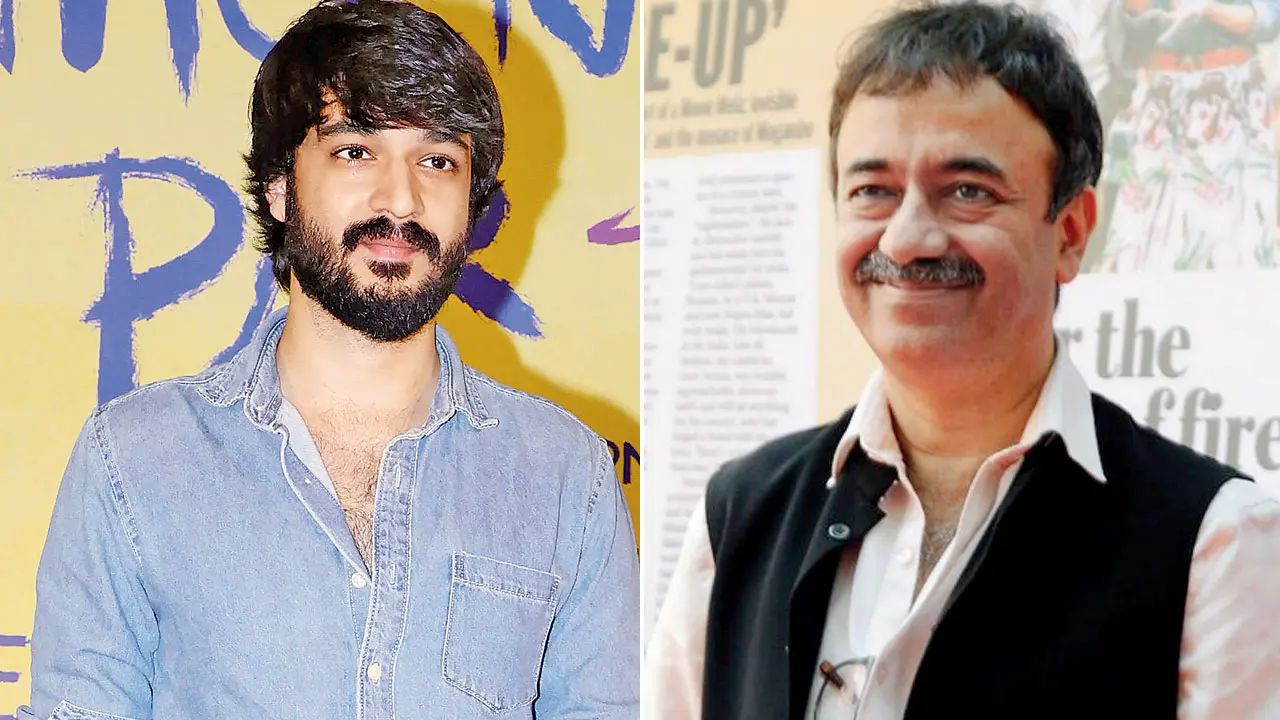
Sources say Pritam Pedro, which marks Rajkumar Hirani’s first web series and his son Vir’s acting debut, will drop online in May
Priyanka Sharma (MID-DAY; March 10, 2026)
Joining the list of newcomers making their acting debut in 2026 is Vir Hirani, son of filmmaker Rajkumar Hirani. If things go as planned, the new kid on the block may appear on screen as early as this summer. mid-day has learnt that Vir’s maiden series, ‘Pritam Pedro’, which also marks the filmmaker’s first web offering, is being lined up for a May release on JioHotstar.
A source revealed, “The cyber crime thriller was originally mentioned in the streamer’s 2025-26 slate. But as work on the series went on for long, it is finally arriving this May.”
‘Pritam Pedro’ sees Arshad Warsi portray an old-school cop, compelled to team up with Vir’s young officer, who is a computer geek and uses technology to solve cases.
Rajkumar, who serves as the co-producer and showrunner, had originally cast Vikrant Massey in the role of the young cop. The actor, however, had to exit the project. “Vir wasn’t supposed to be launched with ‘Pritam Pedro’. But during casting changes, Hirani felt Vir could fit in as a young tech geek,” said another insider.
----------------------------------------
Vir Hirani will also be seen in director Shakun Batra’s next, an OTT film that is expected to roll soon
The South is eating OTT’s lunch; Bollywood isn’t the main course anymore
9:49 AM

Once built around a Bollywood-first script, India’s streaming economy now finds its biggest growth engines and creative bets firmly rooted in the southern states
Javed Farooqui (THE ECONOMIC TIMES; November 26, 2025)
Over the last decade the gravitational pull of India’s entertainment economy has shi fted unmistakably southward. What began as sporadic national curiosity, gradually swelled into a full-blown cultural crossover. When Naatu Naatu from the Ram Charan-NTR Jr starrer RRR lit up the Oscar stage, it signalled that southern cinema was no longer rising quietly; it was asserting itself at the centre of India’s mainstream imagination.
That momentum has now spilled decisively into the OTT universe. For years, India’s streaming landscape ran on a Bollywood-first operating system. Budgets, narratives, and viewer targeting were all sculpted around the Hindi-speaking market.
But the lockdown years changed viewing behaviour dramatically. Housebound and hungry for fresh stories, audiences began exploring Tamil, Telugu, Malayalam and Kannada films in unprecedented numbers. The runaway popularity of Pushpa: The Rise - Part 01, Kantara and RRR ensured that southern storytelling was no longer incidental, it was central.
Among the southern-language industries, Malayalam cinema has emerged as the most intriguing outlier. Despite being the smallest in scale, it has consistently punched above its weight. Films like Manjummel Boys and Aadujeevitham - The Goat Life have travelled across states, while titles such as 2018 and Premam have shown modest overseas draws. Its combination of creative discipline and financial prudence has strengthened the entire value chain, making Malayalam cinema an appealing proposition not just for theatres but also broadcasters and streaming platforms chasing quality content with dependable economics.
Battle for Eyeballs
Today, the fiercest battle for subscribers, originals and film rights is unfolding in southern India. Tamil Nadu, Telangana, Andhra Pradesh, Kerala and Karnataka have become high-growth markets. Every major platform is investing aggressively, drawn by more than 250 million people, deep digital penetration, mature entertainment habits and a willingness to pay.
L V Krishnan, chief executive officer of TAM Media Research, notes that southern audiences have historically shown about 50% higher content consumption. “With growing digital penetration and diverse storylines, content consumption is being further boosted by streaming platforms. Easy and cost-effective AI-driven dubbing has broadened the appeal of southern content to a global audience.”
India’s streaming ecosystem has exploded to 57 OTT platforms, spanning national giants and regional players like Aha, Sun NXT and ETV Win. Ormax Media estimates the country’s OTT audience will touch 600 million by year-end, powered by rising connected-TV usage expected to hit 129 million. With 562 million smartphones and nearly 50 million connected-TV screens, digital entertainment is now the default mode of consumption.
Content Counts
Content supply has kept pace —India churns out close to 200,000 hours of original programming a year—from over 1,600 films to more than 2,600 hours of premium OTT series, says a FICCI-EY report. Paid streaming is also expanding, with subscription video users projected to rise from 47 million in 2024 to about 65 million by 2027.
Although platforms do not reveal regional subscriber splits, executives say the South contributes disproportionately to paid users and viewing hours. The region’s 143 million OTT users nearly match North India’s 151 million despite its smaller population base, according to Ormax. Half the southern population already consumes OTT content, the highest penetration in India.
The investment momentum reflects this energy. Platforms are building larger content teams in Chennai and Hyderabad, experimenting with new pricing models and aggressively commissioning original series that reflect local culture rather than merely ticking regional boxes. The era of token presence is over; depth is the new strategy.
For Netflix, Prime Video and ZEE5, southern growth is fuelled by blockbuster films and originals. For JioHotstar and Sony LIV, sports strengthen their entertainment pipeline. Local giants such as JioHotstar and ZEE5 also benefit from steady daily TV content that reinforces platform stickiness.
“Streaming created a watershed moment for South cinema. During the pandemic, high quality subtitles and dubbing removed language barriers and audiences discovered stories they never had access to,” said Monika Shergill, VP content, Netflix India.
On a New Platform
In 2022, South content viewership grew 50% year-on-year, with South titles appearing in Netflix’s global non-English Top 10 list in about 17 countries the following year. This number has now risen to 26. Last year, Vijay Sethupathi’s Maharaja became Netflix’s most-watched Indian film globally.
“South storytelling is not just becoming bigger in India, it is becoming mainstream. A large part of our slate today consists of South movies, and we acquire the Hindi dubbing rights along with multiple subtitle and dubbing language rights. This allows these powerful films to travel across different audiences,” Shergill said.
Early OTT investment focused heavily on acquiring South Indian films. Titles such as Pushpa, Kantara, Kalki 2898 AD and KGF fetched some of the highest digital acquisition fees. Films still trigger subscriber spikes, but platforms are now investing more in long-form originals to build retention.
Netflix recently announced six new Tamil and Telugu originals, underscoring long-term commitment.
“We currently have about 26 shows in development, negotiation or production for the South. This is the largest pipeline of South Indian content we have ever had,” said Nikhil Madhok, director and head of originals, Prime Video India, adding that 60% of users watch content in multiple languages.
Sony LIV is developing 13 regional originals, 11 of them from the South. Sony LIV’s business head Danish Khan said the South’s strong legacy in films and television raises creative expectations. “Tamil and Telugu are large markets both within India and internationally. Malayalam has become a supplier of strong stories across India.”
Khan noted that consumption patterns in South India mirror national trends—sports, films and originals drive engagement. Sony LIV acquires only select Malayalam films for cost efficiency. The subscriber split is around 80:20 male to female and viewership is 70:30 in favour of men. “OTT penetration in South India is already high and content consumption per user is higher than the national average,” he said.
“We anticipate a substantial rise in the volume of OTT content originating from the South in the coming years.”
JioHotstar plans to triple its South slate to 1,500 hours of original and acquired programming over the next year. JioStar head of entertainment, South cluster, Krishnan Kutty said one-third of the platform’s viewers are from the South and account for a disproportionately high share of watch time.
“The Tamil and Telugu markets are the largest in terms of heft and creative ecosystem. Kerala punches far above its weight because it has a strong pool of storytellers. Some of our most successful movies and specials have come from Kerala. In Karnataka, we are at an early stage, but we are very excited about that market too,” Kutty said.
ZEE5 chief business officer Siju Prabhakaran said, “South contributes up to 45% of our total OTT watch time. Language packs contribute roughly 60-70% of our new subscribers. Each market has a business head who understands local culture and stories. For us, content is the hero.” ZEE5’s language packs are priced at Rs. 99 per month and Rs. 699 annually.
Plot in Story-telling
Executives say South Indian audiences are shaping a distinct OTT playbook. The region’s entrenched TV habits and strong cinema culture push platforms to create habit-forming content. Films remain the biggest subscription catalyst, with Prabhakaran estimating 50- 60% of new subscribers still coming from movies. Prime Video also notes the South’s affinity for films.
To build retention, platforms are adopting TV style storytelling. JioHotstar’s 80–100 episode series are “breaking conventional norms of digital content” as viewers return weekly. ZEE5’s OTT-first reality shows are among its biggest non-fiction subscription drivers.
The South is no longer a regional appendage to the national entertainment market. It has become the creative engine powering India’s soft-power ambitions. As language barriers fall and audiences embrace Indian stories, creators from Tamil Nadu, Telangana, Andhra Pradesh, Kerala and Karnataka are leading the charge. Streaming has not only expanded southern cinema’s audience; it has reshaped India’s entertainment economy and its cultural centre of gravity.
THE GREAT EXPANSION
- JioHotstar plans to triple its South slate to 1,500 hours over next year.
- Prime Video has 26 South-origin shows in the pipeline.
- SonyLIV has 13 regional originals, 11 of them from the South.
- ZEE5 says the South accounts for 45% of its OTT watch time, driven by aggressively priced language packs.
- Netflix has announced six new Tamil and Telugu originals; says views of South content grew 50% YoY in 2022.
OTT platforms come under scrutiny as dark patterns erode consumer trust
9:03 AM

Consumers are increasingly flagging deceptive design tactics, or dark patterns, that make the experience less transparent
Javed Farooqui (THE ECONOMIC TIMES; July 14, 2025)
Consumers in India are increasingly flagging design practices on over-the-top (OTT) platforms that make the user experience less transparent, say industry executives and market observers.
Frequent complaints include unexpected rental charges, ads during paid subscriptions and difficult cancellations. These tactics, commonly referred to as dark patterns, can mislead users into continuing subscriptions, sharing personal data, or paying extra charges not clearly disclosed.
Some users also report being asked to install separate apps or re-register to access certain content.
A LocalCircles study of over 95,000 responses from OTT users identified six dominant dark patterns: interface interference, forced action, bait and switch, drip pricing, subscription traps and SaaS billing. Users cited hidden cancel buttons, surprise rental fees, unclear final pricing and charges even after cancellation.
To tackle these concerns, the Department of Consumer Affairs introduced Guidelines for Prevention and Regulation of Dark Patterns in 2023, listing 13 such practices, including false urgency, confirm shaming, basket sneaking, disguised ads, nagging, trick wording and rogue malwares.
While the union government's guidelines are aimed at improving digital transparency, some OTT platforms argue they apply only to e-commerce services.
“Dark patterns like forced action, where ads are added to a plan that was earlier ad-free, or subscriptions with difficult cancellation processes lead to a direct erosion of consumer trust,” said Sachin Taparia, founder of LocalCircles.
“The need of the hour is for all OTT platforms to assess which of the 13 dark patterns exist on their platforms and resolve them at the earliest. Such a move will improve transparency, and platforms that act swiftly will gain a long-term advantage over their competitors,” he added.
Experts say greater clarity and enforcement are needed as streaming becomes the primary mode of content consumption in India. The ministry of information and broadcasting listed 69 OTT platforms in the country, including Netflix, Amazon Prime Video, JioHotstar, Zee 5 and Sony LIV.
“India’s regulatory approach is rapidly evolving from a reactive stance to a proactive one. The CCPA (Central Consumer Protection Authority) has taken the lead by defining and warning against dark patterns, and by holding platforms—including OTT services—accountable. MeitY’s (ministry of electronics and information technology) policies and TRAI’s (Telecom Regulatory Authority of India) oversight play supporting roles in ensuring that digital marketplaces are fair and that no regulatory gaps allow these practices to persist unchecked,” said Consumer Protection Association president Kashyapnath N Upadhyay.
“While enforcement is still ramping up and some platforms are dragging their feet by claiming the guidelines are not binding, the trajectory is clear: deceptive design in OTT subscriptions is on the regulators’ radar, and India is moving towards a regime of greater transparency and stronger consumer rights online,” he added.
Ram Kapoor dropped from Mistry promotions for passing sexually inappropriate remarks
10:02 AM

After staff of streaming platform complain about actor’s offensive comments, management opts to only go with co-star Mona Singh on series’ promotions
Mohar Basu (MID-DAY; June 24, 2025)
Days before the release of his mystery dramedy Mistry, actor Ram Kapoor has been dropped from the series’ promotional activities. The decision was made by the top brass at JioHotstar — which will host the series — after the actor allegedly made sexually inappropriate remarks during a media interaction at J W Marriott, Juhu, on Thursday.
Multiple eyewitnesses revealed that Kapoor, while seated alongside his co-star Mona Singh and JioHotstar executives, made comments laden with sexual innuendo that left members of the team uncomfortable.
We’re told one of the instances happened between two interviews. A JioHotstar insider revealed, “The tone and content of his ‘jokes’ were unprofessional. He had back-to-back interviews that day. Referring to the work pressure at one point, he said he feels ‘gang-raped’. This remark was made while one journalist was setting up her mic.” The journalist corroborated the episode.
In the course of the evening, Kapoor — while interacting with the JioHotstar and public relations teams — apparently made off-colour remarks about their outfits and their family. One of the executives recounted, “He looked at my colleague’s dress and referring to its length, said, ‘The clothes are distracting.’”
Another staffer said that the team was aghast at the number of offensive things he said, under the garb of humour, throughout the day. “It didn’t hit immediately, but when it did later that evening, we started recounting the number of offensive things he said. He told one of our male colleagues that his mother should have faked a headache and he shouldn’t have been born. He made references to sex positions.”
The following morning, June 20, the matter was swiftly escalated to JioHotstar’s senior leadership. Internal discussions were held with the streamer’s HR team, following which it was decided that Kapoor’s remaining promotional appearances would be cancelled and he would be distanced from the show.
An insider states, “This workplace prioritizes dignity and safety. After a complaint was formally raised and the incidents corroborated by eyewitnesses, the leadership moved promptly. The platform wants to distance itself from any behaviour that normalizes workplace misconduct. The interviews are being solely held with Mona.”
In light of the incident, internal training sessions on gender sensitivity have been apparently fast-tracked as the platform seeks to reinforce its workplace code of conduct.
mid-day reached out to Kapoor, who did not respond till press time.
OTT platforms script new strategies to cut costs
3:56 PM

Industry is embracing financial discipline through content production benchmarking, say execs
Javed Farooqui (THE ECONOMIC TIMES; June 12, 2025)
India's OTT industry is entering a phase of financial discipline, with leading platforms such as Netflix, Amazon Prime Video, JioHotstar and ZEE5 undertaking content production benchmarking exercises to manage costs and bring in fiscal prudence, industry executives said.
Platforms have engaged consultant majors like EY, PWC and Deloitte to create content cost benchmarks - to help them allocate resources for various projects more effectively with a clear reference point to assess production costs in comparison with shows of similar scale on other platforms.
"The move reflects a shift towards profitability and operational efficiency, as platforms look to streamline workflows, reduce wastage, and align with global best practices," said a media executive aware of the development.
The cost optimization push comes amid a spike in production expenses of OTT content and increased focus on profitability in a competitive market where subscribers are sensitive about charges and the number of advertisements.
"The rising costs of OTT episodic content - which is created in shorter seasons compared to longer-running television shows - combined with a focus on profitability by OTT platforms as they mature out from the growth phase, has led to increased cost-consciousness," said Ashish Pherwani, media and entertainment leader at EY India.
According to a Media Partners Asia report, the streaming industry in India spent over $2 billion on originals between 2018 and 2024. It is projected to spend another $2.2 billion between 2025 and 2028.
Previously driven by aggressive growth targets, the industry is now focusing on structured spending to ensure sustainable growth without compromising on storytelling quality, executives said.
The CEO of a leading media company said the industry has been conducting production audits for years to ensure that content budgets are spent judiciously and wastage is minimized.
"Production benchmarking, on the other hand, has been prompted by the realization that companies need to reduce losses and move towards profitability by optimizing content spending, which remains the largest cost component for streamers," he said requesting anonymity.
Amit Goenka, president - digital businesses and platforms at Zee Entertainment, said the company has always been judicious with its content investments.
"When international players entered the market, they approached large production houses that quoted fixed prices and began creating content. Now, these players are looking to optimize costs," he said. "They're asking critical questions: how much is going to talent, how much to line production, and how much to VFX... They're asking for detailed breakups."
Goenka said the presence of big stars in OTT shows should be justified by their value to the script. "If the story holds its own, why would I pay crores to an actor just for being there?" he said.
A media analyst noted that India's OTT industry, still at a relatively nascent stage, is maturing, and these exercises reflect a concerted effort to bring order to rising production costs. "India doesn't yet have a gold standard for what it costs to produce a streaming show," the analyst said. "With boards of entertainment companies asking tougher questions, it has become essential for the industry to develop such a framework."
Shanaya Kapoor to be seen in a double role in Student Of The Year 3
8:54 AM

Sources say Student Of The Year 3, in the works since 2019, to roll from April 20; Shanaya Kapoor to play a double role in the Reema Maya-helmed series
Priyanka Sharma (MID-DAY; April 11, 2025)
Will it happen? Will it not? For the past six years, the question has loomed large over Student Of The Year 3 (SOTY 3), which was to launch Shanaya Kapoor in Bollywood. Now, mid-day has learnt that the third instalment of the Karan Johar-backed campus caper is set to go on floors later this month. No prizes for guessing that Kapoor will headline the project that will roll in Mumbai.
While some things remain constant in SOTY 3, some aspects have undergone an overhaul. The latest edition of the campus drama will be a web series, unlike the first two film instalments. Debutant director Reema Maya, who previously helmed the 2023 acclaimed short Nocturnal Burger, will be in charge of the six-episode show.
“SOTY 3 has been taking shape for the past six years. Finally, Karan has given the green signal and the unit plans to begin filming it from April 20. It will be a tight schedule of just over 30 days to shoot six episodes,” informs a source.
With SOTY having launched at least five actors over its past two instalments, producer Johar had hoped SOTY 3 would mark Kapoor’s foray into Bollywood. But after the project hit a roadblock, followed by Bedhadak that didn’t materialize as well, the youngster signed Vrushabha, a bilingual film in Malayalam and Telugu, opposite Mohanlal. While she will make her Bollywood debut with Aankhon Ki Gustaakhiyan opposite Vikrant Massey, she will also be seen in director Bejoy Nambiar’s Tu Yaa Main.
Another insider reveals, “SOTY 3 will now be her fourth project and her streaming debut. Interestingly, Shanaya will be seen in a double role, which is a first in the SOTY franchise.” The series is expected to première on JioHotstar.
JioStar likely to remove entertainment content from YouTube from May 1
9:46 AM

Javed Farooqui (THE ECONOMIC TIMES; March 15, 2025)
JioStar is likely to remove its entertainment content from the Google-owned video streaming platform YouTube as part of its strategy to curb subscriber migration from linear TV to free digital streaming, sources familiar with the matter told ET.
The company may implement this from May 1 but it has not yet taken a final decision, they added.
This will be the second significant decision by the company, which was formed through the merger of Disney's Star India with Reliance Industries' Viacom18.
The move follows the company's decision to place content behind a paywall on JioHotstar after offering premium content, including sports, for free for two years prior to the merger—a strategy that had impacted both pay-TV and subscription video-on-demand (SVOD) services.
Pay-TV distribution platforms such as Tata Play, Airtel Digital TV and GTPL Hathway have been urging pay-channel broadcasters like JioStar, Zee Entertainment and Sony Pictures Networks India to remove their content from advertising-supported video-on-demand (AVOD) platforms, including YouTube, which are drawing subscribers away from pay-TV.
With pay-TV subscriptions declining to 84 million paying homes, the broadcasting industry has been exploring ways to reduce churn and grow its paid subscriber base. The TV subscription market is estimated at Rs 40,000 crore, according to a Ficci-EY report.
"We have been actively pushing for the removal of pay content from AVOD platforms. Broadcasters have now recognized that supplying premium content to these platforms ultimately harms the pay-TV industry," said a senior executive from a leading TV distribution platform, adding that other broadcasters may follow suit.
However, a top executive from a rival network said the company has yet to make a decision on removing content from AVOD platforms. "Putting pay content on YouTube, which is a free platform, is a big mistake on the part of pay-TV channels," he added.
JioStar’s free-to-air (FTA) Hindi GECs, Colors Rishtey and Star Utsav, which are set to launch on DD Free Dish in April, will also implement a one-year content windowing policy. This means that fresh content from Star Plus or Colors will only become available to Star Utsav and Colors Rishtey audiences a year after its premiere.
Additionally, the company will launch a campaign on its FTA channels to encourage DD Free Dish users to switch to pay-TV. With 40-50 million households relying on DD Free Dish, the platform has significantly impacted the pay-TV subscriber base.
In an interview with ET last year, JioStar vice-chairman Uday Shankar stated that when an industry leader takes bold steps that resonate with consumers, others tend to follow—highlighting JioStar's influential position.
"With 90 million pay-TV homes and 125-135 million families watching TV daily, it’s clear that TV is far from dead. On the other side, the streaming business offers immense growth potential, with 700-750 million people using mobile phones and consuming data in some form," he had said.
JioStar recently organized a closed-door event attended by top CEOs of pay-TV platforms, along with the company's senior management. The primary focus of the discussion was revitalizing the pay-TV industry and expanding the subscription base to ensure benefits for all stakeholders in the value chain.
--------------------------------------
Ahead of IPL season, JioStar wants Jio, Airtel, and Vodafone Idea to bundle its subscription with data plans
Javed Farooqui (THE ECONOMIC TIMES; March 15, 2025)
JioStar is in talks with Reliance Jio, Bharti Airtel, and Vodafone Idea (Vi) for bundling the streaming platform’s subscriptions with the telecom operators’ data plans ahead of the high-stakes Indian Premier League (IPL) 2025 season, said people familiar with the matter.
With live sports now behind a paywall, the partnerships will be key to JioStar’s goal of reaching over 1 billion viewers across television and digital platforms for the upcoming IPL. In 2024, IPL viewership touched 620 million on JioCinema and 541 million on the Star Sports network.
These tie-ups will allow users to access premium JioHotstar content without having separate subscriptions, the people said.
Experts say bundling OTT (over-the-top) subscriptions with prepaid and postpaid plans will drive telecom data consumption. Free live cricket on JioCinema and Disney+ Hotstar fuelled a surge in data usage in the past two years.
“These telecom partnerships will help JioHotstar reach a large internet audience base, especially now that it’s behind a paywall,” said an executive familiar with the talks, adding that the discussions include deals for both mobile and home broadband.
Another person noted that JioHotstar’s content deal with Airtel expired last month, making its renewal crucial for sustaining momentum, especially after the ICC Champions Trophy 2025, the first major tournament behind a paywall since JioHotstar’s launch on February 14.
The tournament garnered more than 5.4 billion views, with the India vs. New Zealand final drawing 1.24 billion and reaching a peak concurrency of 61.2 million.
As of December, Jio had 476.58 million broadband subscribers, followed by Airtel at 289.31 million and Vi at 126.38 million), according to Telecom Regulatory Authority of India data.
Jio offers JioHotstar access with three prepaid plans—₹100, ₹195, and ₹949—each including a three-month subscription.
The people cited above suggest Airtel and Vi will soon launch similar JioHotstar plans, providing seamless access to IPL and other content once they finalize the deals.
JioStar, Jio, Airtel, and Vi declined to comment.
JioHotstar is owned by JioStar, a joint venture of Reliance Industries, Disney, and Bodhi Tree Systems. Jio, on the other hand, is a wholly owned subsidiary of Reliance Industries.
Currently, JioHotstar offers a few free hours of content for sampling before requiring a subscription. It has three subscription plans: Mobile (Rs. 499/year), Super (Rs. 899/year), and Premium (Rs. 1,499/year). The Premium plan is ad-free, except for live events, including sports.
IPL 2025 is a pivotal event for JioStar, formed through the merger of Disney’s Star India and Reliance’s Viacom18. The media giant is targeting Rs. 4,500 crore in advertising revenue and has secured 20 sponsors, as advertisers look to leverage IPL’s vast reach.
Until recently, live cricket was available for free on Disney+ Hotstar and JioCinema, which have now merged to form JioHotstar. The platform currently has over 50 million paid subscribers and 500 million users in total.
The shift to paid streaming is expected to drive growth in the subscription video-on-demand (SVOD) segment. According to Media Partners Asia, India's SVOD subscriptions rebounded to 125 million in 2024 after dipping to 110 million in 2023 and are expected to grow further in 2025 and beyond.
Bollywood's shift to streaming giants raises concerns over content diversity, market control
8:46 AM

As OTT space turns into a concentrated buyers’ market, Hindi film producers find less room for negotiation, creativity
Rajesh N Naidu (THE ECONOMIC TIMES; March 3, 2025)
Bollywood's shift from a competitive content market to one controlled by a few major streaming platforms has raised major concerns among producers and industry players, mirroring the era when satellite rights dominated revenue streams, shaping content choices as filmmakers tailored films for family audiences.
The repeated failure of small- and big-ticket films has skewed the market in favour of a few deep-pocketed streamers such as Netflix, Prime Video and JioHotstar (see chart).
Three years ago, the industry was in a sellers' market, where producers and filmmakers had plenty of options to secure funding. With at least 10 mainstream streamers and a strong presence of production houses and studios actively creating and acquiring content, there was healthy competition, giving content creators more bargaining power.
In its latest research, media and entertainment research firm Ormax Media said the combined share of acquiring theatrical releases across languages of Netflix and Amazon Prime Video has jumped to a whopping 76% in 2024 from 60% in 2022, indicating a creation of a duopolistic market.
After the pandemic, the film industry saw a major shift as a handful of deep-pocketed streamers managed to survive the repeated flops of big-budget films, while many others struggled. Some streamers pulled back on content creation and acquisition, while production houses and studios took a cautious approach, pausing new projects. With fewer players left standing, the market became more concentrated, giving the surviving streamers even greater control.
Producer Rajesh R Nair, known for films such as 'Kaminey' and 'Adipurush', said, "The industry has transformed into a buyers' market. A few streamers are negotiating hard and calling the shots. Producers are making films for streamers rather than theatres."
He added that today a conversation about a film starts with knowing whether a streamer is attached to the film.
With just a few streamers in control, content buying and production have slowed, limiting the variety of films being made. As a result, producers are making fewer films, reducing the number of new releases on both streaming platforms and in theatres. This downturn has hit exhibitors hard, forcing them to re-release older films just to cover their high fixed costs.
According to Ormax Media, the number of Hindi films released directly on streaming platforms dropped sharply from 53 in 2021 to just 18 in 2024.
"Big production houses provide streamers some good content. But streamers also buy not-so-great content from them. Streamers must train their acquisition teams in developing a strong sense of aesthetics and creativity. This will help them create and acquire content which will appeal to a large base of audiences," said Shrirang Nargund, a veteran and independent consultant on streaming business.
He added, there was enough strong content from mid-and-small-sized production houses and streamers should be bolder in their choice of content.
One upside of a concentrated buyers' market is that streamers have become more disciplined with costs. Nargund noted that content budgets have been slashed by 40%, with a direct impact on actor remuneration. "Today, streamers are more cautious with spending. A film only moves forward if an actor agrees to take a share of the profits instead of an upfront fee. Producers often have to negotiate with actors who are hesitant to lower their steep fees, which also include the costs of their entourage," explained producer and film business expert Girish Johar.
Veteran producers said that the best way to address these challenges is to return to the traditional model-making films for theatres first and then generating additional revenue through rights sales.
JioHotstar under fire for censoring The White Lotus 3
8:21 AM

With JioHotstar having edited two scenes from The White Lotus 3, sources say international partner HBO has pulled up the streamer; advised them to avoid changes without prior discussions
Mohar Basu (MID-DAY; February 25, 2025)
On February 17, the third season of The White Lotus premièred on JioHotstar. But with the very first episode of creator Mike White’s acclaimed series, the recently launched platform has courted controversy. Sources say that JioHotstar has drawn sharp criticism from international partner HBO for censoring two scenes in the satire.
A scene, which sees Nicholas Duvernay cursing at a Buddha idol, was missing from the Indian stream, while another sequence involving masturbation was reduced. We’re told the changes caught eagle-eyed viewers’ attention as the platform had uploaded the original episode on the morning of February 17, and reportedly replaced it with the edited version by noon.
Sources say that these modifications didn’t go down well with HBO and it called for a discussion late last week. “HBO has been firm about maintaining creative integrity across global markets. Last week, the team initiated a discussion with JioHotstar about preventing such alterations in the future. The media network also highlighted that it was uncomfortable with changes being made to its content without prior discussions. This isn’t the first time that content has been tweaked for the Indian market. In June 2024, Jio Cinema had taken down an episode of Last Week Tonight With John Oliver that centred on Indian elections. International platforms are frustrated because these edits often happen without consulting them,” a source said.
Following the backlash, JioHotstar is said to be reassessing its approach to international content. A company insider, on condition of anonymity, said, “We’ll have to exercise caution before making modifications. The content must be in accordance with local sensibilities. At the same time, the platform can’t alienate key international partners.”
mid-day sent a detailed e-mail to JioHotstar, but it didn’t respond till press time.
JioHotstar goes live today; existing Jio Cinema and Disney+ Hotstar users automatically migrated to the new app’s premium plan
5:19 PM

(From left) Offerings like the IPL and Taaza Khabar will be streamed for free on the app
JioHotstar goes live today with all content available for free, but with ads; existing Jio Cinema and Disney+ Hotstar users automatically migrated to the new app’s premium plan
Mohar Basu (MID-DAY; February 14, 2025)
On Wednesday, the social me-dia accounts of JioStar teased the arrival of “a new era”. It turns out JioHotstar, the new OTT platform and one of the products of the months-long merger between Reliance Industry Limited’s Viacom and Disney Star India, is set to go live today. The streamer will house the library of both Reliance’s Jio Cinema and Disney Star India’s Disney+ Hotstar. Said to be designed with the idea of reaching the last-mile consumer, it will provide all its content free of cost and without subscription, but with ads. Subscription packs that provide ad-free content start at Rs. 149.
Obviously, the big question is: What happens to users who have active subscriptions with Jio Cinema or Disney+ Hotstar or both? A source tells us that existing subscribers of either platform will be automatically migrated to JioHotstar’s most premium subscription plan of Rs. 499 per quarter.
The source breaks it down further, saying, “It’s only after your existing subscription expires that you’ll need to choose from JioHotstar’s different packs. For those who currently have accounts on both platforms, the one with the longer validity period will be considered.”
Explaining further, our source adds, "Brand identity has been incorporated into the copy to ensure better recall and acceptance. No user will receive a three-month plan with a single JCP subscription. If a user has both Jio Cinema and Disney+ Hotstar, the Jio Cinema subscription is utilized first, granting premium plan entitlements until expiry. After that, the Jio Cinema subscription ends, and the Hotstar subscription continues unchanged.
The launch marks Reliance’s aggressive push into the streaming sector. The streamer will house all web series, OTT films, general entertainment shows, regional offerings, sports and movies available under the Disney Star India bouquet, as well as Jio Cinema’s wide roster that includes HBO, Peacock, and Paramount’s international offerings. It is also counting on its new vertical Sparks, which will offer original mini-series, to give it the first big push.
“With compelling narratives and highly engaging formats, we introduce Sparks, a space for creator-led content, where the creators are influencers, producers, or talent,” said the spokesperson.
It will continue to have another ace up its sleeve with the Indian Premier League (IPL), the streaming rights of which rest with JioCinema from 2023. Sanjog Gupta, CEO—Sports, JioStar, said, “Whether it’s the high-octane IPL, the drama of the Champions Trophy, or a Premier League showdown, we’re committed to delivering an immersive experience.”
Speaking on the launch of JioHotstar, Kiran Mani, CEO – Digital, JioStar said, “At the core of JioHotstar is a powerful vision—to make premium entertainment truly accessible to all Indians. Our promise of Infinite Possibilities ensures that entertainment is no longer a privilege, but a shared experience for all. By integrating AI-driven recommendations and offering streaming in over 19 languages, we are personalizing content like never before.”
“JioHotstar is setting a new benchmark for digital-first entertainment. The platform is immersive, inclusive, and audience-centric. While we have endless entertainment to offer, we are committed to continually innovate and elevate storytelling, ensuring that every Indian, regardless of language, discovers content they love,” added Kevin Vaz, CEO – Entertainment, JioStar, while elaborating on the entertainment offering.
Plan Details:
Mobile Plan: Rs. 149 for three months or Rs. 499 annually, providing access on one mobile device
Super Plan: Rs. 299 for three months or Rs. 899 annually, offering access on two devices across mobile, web, and supported living room platforms.
Premium Plan: Rs. 499 for three months or Rs. 1,499 annually, allowing ad-free viewing (except for live sports and events) on up to four devices.
Subscribe to:
Posts (Atom)