Showing posts with label Jeet Gannguli interview. Show all posts
Showing posts with label Jeet Gannguli interview. Show all posts
Zubeen Garg recorded his last song with me before leaving for Singapore-Jeet Gannguli
10:01 AM

S Farah Rizvi (HINDUSTAN TIMES; September 22, 2025)
Days after Zubeen Garg died in a scuba diving accident in Singapore, his friend and collaborator music composer Jeet Gannguli tells us, “With him gone, it feels like I have lost the soul of my music. It’s difficult for me to believe it.”
As he mourns the late singer, Jeet reveals to us, “We just spoke four days back, and he said, ‘Once I am back, you come over to my Guwahati studio aur music banate hain.’ Before leaving, he recorded his last song with me, Vidhi Re for the film She To Ajo Bojhena. I was just mixing the song yesterday when I got the news. Zubeen had told me, ‘You complete the song, promote sath mein karenge’.”
As he looks back on his decades-long friendship with Zubeen, the composer says, “He loved swimming, scuba diving since always; everything related to water sports was his favourite. This guy swam in the Brahmaputra and in the Ganges several times.”
Having worked together on over 40 film songs across languages such as Bengali, Assamese and Hindi, Jeet’s association with Zubeen goes way back. Ask him about it and the 48-year-old shares, “We have known each other for over 30 years. We worked together on over 45-50 film songs, and of course the endless jingles that brought us together, way back in 1995.”
And it was their ad work that led to their first-ever film collab, the 2003 Bengali film Premi. “Tab tak bahut gehri dosti ho gayi thi. Zubeen was not just a singer; he was an emotion, a man with a heart of gold. Not many know this, but he had an NGO in Assam where he worked relentlessly to make the lives of the less fortunate better. He has left a void that can never be filled.”
-----------------------------------
As told Raima Ganguly (BOMBAY TIMES; September 23, 2025)
When it comes to Zubeen Garg, I don’t know where to begin or where to end. Thirty years of friendship – of course music is there – but beyond that, I have lost my dearest friend. In any situation, at any time, when it came to friendship, I had very few true friends, whether in the industry or personally. Among those few, one was Zubeen Garg.
If I speak of him as a person, he was such a generous soul, a friend who would genuinely feel someone else’s sorrow as his own. I honestly haven’t come across another person like that. He stood beside so many people and helped them, though he never spoke about it himself. Today, I am compelled to say it.
As an artiste, he was undoubtedly magnificent – a great musician and a great singer. But what truly defined Zubeen were his inner qualities: his willingness to stand by people, to serve others, and to work through his NGO. Whenever my wife Chandrani, who is involved in NGO work, or I reached out to him for anything, he never hesitated to help.
Now, about my professional journey with Zubeen Garg. You may remember my first Bengali film Premi. I told him, ‘Zubeen, it is my first Bengali film, you have to sing.’ He replied, ‘Of course Jeet, why wouldn’t I?’ He was not very fond of Bombay and preferred staying in Assam, surrounded by open spaces and hills. Still, he came and sang my very first song in Premi – O Bondhu Re. People loved it and the song became very popular. After that came one song after another, many of which are now part of Bengali cinema’s history: Piya Re Piya Re from Chirodini Tumi Je Amar, the title track and Subha Mangalam from Mon Mane Na, Aaina Mon Bhanga Aaina from Bolona Tumi Amar, and Chokher Jole Bhashiye Dilam from Poran Jaay Joliya Re. I could go on endlessly. There were so many songs and so many collaborations. He also sang Tomar Amar Prem Ami Aajo Bujhini from Jaaneman for me.
For most of us, Zubeen was not just a singer, he was an emotion. I must say that I have worked with many singers over the years, but I have rarely come across such a generous artiste. Why do I call him generous? Because most people tend to be calculative. They think about which producer, which banner, whose song, and whether it is worth singing before they agree. Zubeen never thought that way. Whoever offered him a song, whatever the film, he always sang wholeheartedly and from within. I believe that the kind of person you are inside is reflected in your voice, and in Zubeen’s case this was absolutely true. He was such a good human being and such an emotional singer. There will never be another like him, there will never be a second Zubeen Garg.
There are countless stories that capture who Zubeen truly was. He often chose the oddest hours to record. I remember once, for the song Aaina Mon Bhanga Aaina, he told me, ‘Jeet, I’ll come at 3.’ I waited in the studio all afternoon, but he never arrived. His phone kept ringing unanswered. Then at 10 at night, he finally called and asked, ‘So where should I come at 3?’ That was when I realized he had meant three in the morning. And sure enough, he showed up at 3am. There are so many whimsical stories as such, he’d sometimes come straight from home, still in the clothes he had been sleeping in, ready to sing. That was Zubeen – unpredictable, carefree, yet always giving his all to music.
And let me say this: people often speak of living like a king, and that is exactly what I learned from him. He was a king in his own right, living life entirely on his own terms. I have rarely seen anyone like him. For as long as he lived, he celebrated every single day. Among us friends, we always said, and will still say – Zubeen was a Raja.
Whatever the case, his last song for Bengali cinema was also sung for me, and will be released soon. We had spoken just four days back, and he asked me, “When will you mix the song?” Sadly, at the very moment of mixing, I received the news of his passing.
I will never forget him. And I will never again find a friend like him. All I want to say is: wherever you are, I know you will remain like a king. Stay well, my brother, my friend.
KK looked like he was taking a nap and would wake up for his next set-Jeet Gannguli
8:05 AM
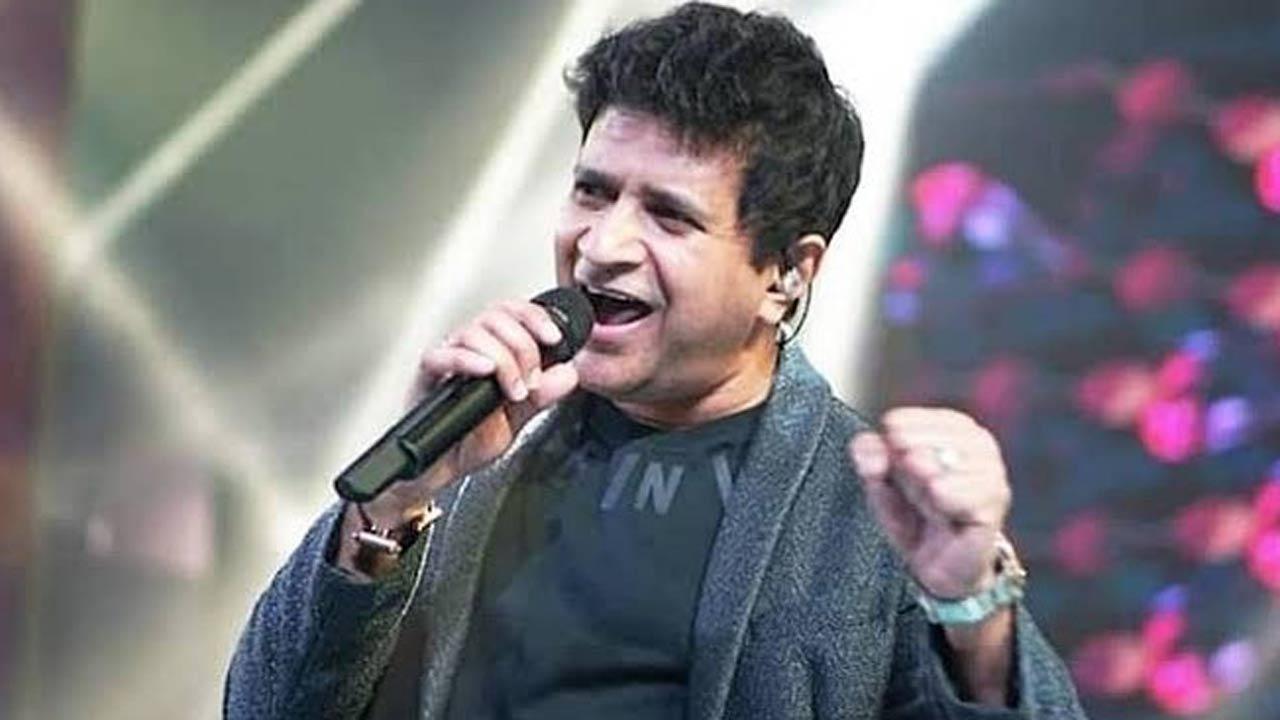
Shreyanka Mazumdar (BOMBAY TIMES; June 2, 2022)
When KK, took to the stage at Kolkata’s Nazrul Mancha on Tuesday evening for Sir Gurudas Mahavidyalaya’s fest, Utkarsh 2022 – no one could have imagined that this show would be his last. The singer passed away shortly after the concert, reportedly of a massive cardiac arrest.
‘ONE COULD TELL HE WASN’T WELL, HAD TO BE ESCORTED OFF-STAGE AFTER LAST SONG’
The singer was in Kolkata for two back-to-back shows – one on Monday and another on Tuesday – both of which drew full houses. According to those present at his concert on Tuesday, right after wrapping up the show, at around 8 pm, he complained of uneasiness. He made his way back to his central Kolkata hotel, but the discomfort did not subside. He was then rushed to a private hospital in south Kolkata where he was declared brought dead.
Speaking to us, a student, who was present at the concert, shared, “He wasn’t well on Tuesday – one could tell. He was sweating profusely and kept going backstage in between the set for a breather. He was struggling to wrap up the concert. The last song he sang was Pal and soon after, complained to his team of uneasiness. He was immediately escorted off the stage. That was the last time we saw him.”
Another student from Vivekananda College, who attended the concert on Monday, shared, “The only thing noticeable was that he kept asking for the AC to be turned up. We assumed it was because the auditorium was packed and he was quite energetic on stage.”
IT SEEMED LIKE HE HAD GONE OFF TO SLEEP: JEET GANNGULI
Music composer and KK’s long-time friend Jeet Gannguli said the singer’s untimely demise has left him devastated. Speaking to us, he said, “I was having dinner with my wife at a restaurant when I got a call from a colleague. I immediately rang up KK’s manager, who was crying inconsolably. I rushed to the hospital but it was all over by then.”
According to Jeet, the singer, on his way back to the hotel, complained of the heat and humidity. “He asked the chauffeur to increase the AC’s fan speed. On being told that the AC was running at full strength, he said he was feeling unusually hot and was also experiencing muscle cramps on his legs and arms,” he said.
Jeet, who has known KK for over 24 years and has worked with him on film albums like Aashiqui 2, Raaz 3D and Sadak 2, said he was not just a versatile singer but a fantastic human being. “He was such a gentle person. There was a lot to learn from him. Never did he turn up at the studio without rehearsing a song. He was a dedicated artiste. Tonight, when I held his hand at the hospital, it seemed as though he’d gone off to sleep. Clad in the concert clothes, he looked like he was taking a nap and would wake up for his next set,” Jeet added.
My first award was a chocolate-Jeet Gannguli
7:37 AM

Delivering melodious chartbusters one after another, Jeet Gannguli is on a roll
Noyon Jyoti Parasara (BOMBAY TIMES; February 12, 2016)
You started with Tere Liye,
did another film and then got into Bengali films. Why did you do that?
When I used to go to Kolkata during Durga Puja, I would hear only Hindi songs and would wonder why Bengali songs weren't being played. That's when my parents and wife encouraged me to create good Bengali music. I started in 2004 and today Bengali songs are played all over. Having said that, Mumbai remained my base. All the singers I needed were in Mumbai. It was due to one of my Bengali songs that I got a chance to work with Mukesh Bhatt.
Your relationship with Mukesh Bhatt has a lot of memorable 'phone' incidents. Tell us about them...
He had first heard my song as a caller tune and liked it so much that he contacted me. When he called, I thought someone was playing a prank. I actually disconnected the call but then he texted me and I realised it was actually him! Mukeshji is always ready to hear a tune. I first played the tunes of Muskurane Ki Wajah and the title track of Khamoshiyan to him over the phone.
You have an interesting partnership with Arijit Singh...
It could be the Bong connection. Arijit is like my brother. We just connected. Singers should practice every morning to strengthen their voice and lungs so that they can sing an entire line at one go. Arijit is one of the singers who is brilliant in this aspect. When he sings, he puts his soul into it. I have also worked with Sonu Nigam, who is my all time favourite. He takes it to another level altogether.
Any other tip that you want to give the singers today?
Clean your soul and sing like you are praying! You should hear Javed Ali. Listening to him makes you forget your problems and just feel good.
What are your views about composing one song in a film over composing for the entire album?
One music director should work on the entire film, including the background music. I enjoy doing an entire film. However, you have to accept what is happening today. Directors prefer it that way and it is not a negative thing. A lot of good songs have happened because of this.
How many instruments do you play?
I play the harmonium, tabla, guitar, conga and little bit of sarod. I come from a family, which has been into music for 18 generations. My father plays the accordion while my grandfather was a classical singer. My mother is also a singer and I learnt Rabindra Sangeet from her.
You do a lot of shows. How much confidence do you draw from the fact that you were introduced to the stage early in life?
As a child I used to play tabla with my father on stage. I must have been around five years-old when I started and one person from the audience came up to me and gave me a chocolate. That was my first award. And that gave me so much confidence. You get to learn a lot when fans interact with you. The stage can be both dangerous as well as a great learning ground.
When I used to go to Kolkata during Durga Puja, I would hear only Hindi songs and would wonder why Bengali songs weren't being played. That's when my parents and wife encouraged me to create good Bengali music. I started in 2004 and today Bengali songs are played all over. Having said that, Mumbai remained my base. All the singers I needed were in Mumbai. It was due to one of my Bengali songs that I got a chance to work with Mukesh Bhatt.
Your relationship with Mukesh Bhatt has a lot of memorable 'phone' incidents. Tell us about them...
He had first heard my song as a caller tune and liked it so much that he contacted me. When he called, I thought someone was playing a prank. I actually disconnected the call but then he texted me and I realised it was actually him! Mukeshji is always ready to hear a tune. I first played the tunes of Muskurane Ki Wajah and the title track of Khamoshiyan to him over the phone.
You have an interesting partnership with Arijit Singh...
It could be the Bong connection. Arijit is like my brother. We just connected. Singers should practice every morning to strengthen their voice and lungs so that they can sing an entire line at one go. Arijit is one of the singers who is brilliant in this aspect. When he sings, he puts his soul into it. I have also worked with Sonu Nigam, who is my all time favourite. He takes it to another level altogether.
Any other tip that you want to give the singers today?
Clean your soul and sing like you are praying! You should hear Javed Ali. Listening to him makes you forget your problems and just feel good.
What are your views about composing one song in a film over composing for the entire album?
One music director should work on the entire film, including the background music. I enjoy doing an entire film. However, you have to accept what is happening today. Directors prefer it that way and it is not a negative thing. A lot of good songs have happened because of this.
How many instruments do you play?
I play the harmonium, tabla, guitar, conga and little bit of sarod. I come from a family, which has been into music for 18 generations. My father plays the accordion while my grandfather was a classical singer. My mother is also a singer and I learnt Rabindra Sangeet from her.
You do a lot of shows. How much confidence do you draw from the fact that you were introduced to the stage early in life?
As a child I used to play tabla with my father on stage. I must have been around five years-old when I started and one person from the audience came up to me and gave me a chocolate. That was my first award. And that gave me so much confidence. You get to learn a lot when fans interact with you. The stage can be both dangerous as well as a great learning ground.
Mahesh Bhatt crying over Hamari Adhuri Kahani title song was the biggest compliment-Jeet Gannguli
7:49 AM

Roshmila Bhattacharya (MUMBAI MIRROR; May 14, 2015)
 "Towards
the end of Khamoshiyan, Mukesh Bhatt called me one day and told me it
was time to move on... To another film, written by Bhattsaab (Mahesh
Bhatt) and directed by Mohit (Suri). And it's important that you impress
them too," reminisces singer-composer Jeet Gannguli who was then given a
two-line story narration by Mohit and told to come up with a song which
reflected the film's title, Hamari Adhuri Kahani, without any of the
trio even describing the song situation to him. All he was told was that
when people see the film, they should remember this song.
"Towards
the end of Khamoshiyan, Mukesh Bhatt called me one day and told me it
was time to move on... To another film, written by Bhattsaab (Mahesh
Bhatt) and directed by Mohit (Suri). And it's important that you impress
them too," reminisces singer-composer Jeet Gannguli who was then given a
two-line story narration by Mohit and told to come up with a song which
reflected the film's title, Hamari Adhuri Kahani, without any of the
trio even describing the song situation to him. All he was told was that
when people see the film, they should remember this song. Jeet went back home and started reflecting on the title... And he soon realised that no relationship is ever complete even if you were to live with the person all your life. Being away from Kolkata for the last two decades, he yearned for his parents and the buddies he'd grown up with. And often one of Shakti Chattopadhyay's Bengali poems came to his mind which reiterated that after a man dies he returns to find out if his friends still remember him, and the day he finds himself forgotten is the day he really dies.
"I missed my friends from school and college and wondered if they still recalled those fun days... I missed the music sessions at home with baba on the accordion, me strumming my guitar and singing and ma joining me... There was a sense of loneliness and emptiness in Mumbai, far away from them," he sighs.
Wife Chandrani filled some of the vacuum with her effervescent presence but Jeet admitted that the sense of loss remained. "You need to feel it to appreciate what you have got," he reasons.
All these thoughts crystallised into a two-line mukhda without words which Jeet sang to Mukesh Bhatt on the phone. He was enchanted and insisted Jeet sound out Mohit too. The young director was ebullient, "Fantastic dada, let's have a sitting tomorrow?," he said.
They met on the morrow and were joined by Mahesh Bhatt whose eyes turned moist when Jeet sighed over the words, Hamari adhuri kahani. "That was the biggest compliment I could have received. The man whose films I had grown up on, tearing up over one of my compositions," marvels Jeet admitting that since then, everyone, from his young recordist Pankaj Vora to his wife and the common man have reacted to the song with tears.
"Even my programmer Prasad, violinist Suresh Lalwani, guitarist Ankur Mukerjee and flutist Humtu were moved. And my parents who usually tell me I can do better, responded to this song with, 'Bhalo thako, continue to do such good work.' It was incredible!"
Following that sitting, Jeet got together with lyricist Rashmi Virag who gave his music words. After programming it, Jeet himself recorded the scratch. The Bhatts and Mohit insisted that he'd have to get a singer to bring the same feelings to the song. "We tried out a few singers and finally settled for Arjit Singh. He's done a really great job with it and we've retained his version. But the film will have two other versions of the song too, both crooned by me on Mohit, Mukeshji and Bhattsahab's insistence. Even Sanujeet Bhujabal of Sony Music, after hearing the scratch, called me up to say the song was apt for my voice," he smiles.
However, the most surprising reaction came from his wife who reacted to it personally, sobbing and asking him, "Why did you make this song?" Prod her on this and she says simply, "For me this relationship will never be complete. I'd want to return to Jeet in my next birth and the next."
Despite such overwhelming responses, the doubts returned when the song was up for release. "I wondered if in this era of fast-track music, people would care for something so soulful," admits Jeet.
The first call was from Richa Sharma who wondered, 'How can you make a song like this?' And after that the compliments kept flowing, the biggest being, "After a long time a song has made me cry."
For Jeet that's the magic of Hamari Adhuri Kahani. If Khamoshiyan celebrated silence then this one makes music with tears.
Mukesh Bhatt told me to create the sound of silence for me-Jeet Gannguli
7:46 AM

Roshmilla Bhattacharya (MUMBAI MIRROR; January 8, 2015)
When Mukesh Bhatt called Jeet Gannguli to his office he was expecting the filmmaker to sketch a song situation for him. But Bhatt surprised him by simply telling him, "I want you to create the sound of silence for me..give it words and a dhun and shape it into a passionate, romantic song."
Jeet returned home wondering how to make silence speak through a melody. For the next three days his poet-lyricist wife Chandrani quietly watched her husband turn pensive, plumb the depths of desperation, bang his hands on the keyboard, strum his guitar and finally sing a song to Bhatt on the phone whose catchy tune she was soon humming while Jeet slipped into silence himself for most of the night.
Recalling his creative flight, Jeet points out that prayers are unspoken communication with God. "Also, when two people have been in love for a long time, they are in such complete sync that they can often read each other's thoughts before they are expressed in words. That's when I decided that I would stop thinking and just connect with my inner self and let the song come from within," he reminisces.
The next day, he sang, Khamoshiyan... teri meri khamoshiyan.... Khamoshiyan... lipti hui khamoshiyan, to Mukesh and Mahesh Bhatt.
"They loved it though Mukeshji insisted the anatara had to be better than the mukhda and Bhattsaab, who had tried to inspire me earlier by giving the example of Rabindranath Tagore who wrote a song for every occasion, sat with Reshmi Singh to find the right words for this melody," says Jeet.
In a couple of days the lyrics were presented to him following which he called up Arijit Singh "because I felt only he could sing something so intense and passionate". To his delight, Arijit was spellbound when Jeet played the track he had recorded and immediately called up Mukesh Bhatt to thank him for the song. "Mukeshji told him that I'd worked really hard on the song and he should give it plenty of time too. We took three hours to record it. Arijit has an innate understanding for lyrics, he felt the words and sang them from the heart," smiles the composer.
Jeet has heard a lot of Western songs, studied them, but points out that when it's a strong Indian melody like this one, he's instantly reminded of Madan Mohan, Gulzar, RD Burman and Salil Chaudhury, his childhood gurus.
"My father, Kali Ganguly, is an arranger, composer and accordion player who has worked with Salilda whose songs I had grown up hearing. Lataji's (Mangeshkar) Lag ja gale and Aye dil-e-nadaan resonates down the decades, connecting with every successive generation of listeners with its simple lyrics and sargam," he says, adding that for this song he played with the D minus scale because he could relate to the chords... the notes as he strummed his guitar.
Interestingly, this is the title track of a supernatural thriller but fortunately, when Mukesh Bhatt was briefing him, he didn't tell him that. "He didn't tell me he wanted a dark song for a horror film. He simply told me that he wanted me to find the notes of silence which would touch everyone's hearts," he recalls.
Khamoshiyan ek saaz hai, tum dhun koi laao zara
Khamoshiyan alfaaz hain, kabhi aa gunguna le zara
Beqarar hain baat karne ko, Kehne do inko zaraa...
The entire album of Citylights happened in 15 days-Jeet Gannguli
8:22 AM

Says Bollywood and Bengali music director Jeet Gannguli, who composed Sun Le Zara from Singham Returns and Muskurane from Citylights
Ria Lawrence (BOMBAY TIMES; August 29, 2014)
"Sufi music has an extremely haunting vibe. I find it very earnest and intense. Needless to say it was a spiritually exhilarating experience for me,“
says Jeet Gannguli about his composition Sun Le Zara from Singham
Returns.
How did Sun Le Zara happen?
I got a call from Bhushanji (Bhushan Kumar) sometime in March this year. He wanted to hear my compositions for Singham Returns. After he heard Sun Le Zara, he immediately liked it and told me to present it before director Rohit Shetty. He enjoyed it. The brief was that it is a prayer song at a dargah and he wanted something with a Sufi vibe to it. He then took me to Ajay Devgn, who also loved the song, and I decided to record it.
What was the brief for Muskurane (Citylights)?
The entire album of Citylights happened in a period of 15 days, including music sittings with Mukeshji, Mahesh Bhatt sahab and (director) Hansal Mehta, writing of the lyrics as well as recording of the songs. There are five songs in the film. After the fourth song Sone Do was recorded, Mukeshji told me that he needed one great romantic melody which would create an indelible mark in the mind of the listeners for a long time to come. Soon after, I hit the note for Muskurane. I called him up and played the tune over the phone. He said, 'Beta, this is the song I am looking for. Let's record it.'
Tell us about your father Kali Ganguli. How did his experience in Indian classical music shape your sensibilities?
My father is a well-known accordionist in Kolkata. Music has always been an integral part of our lineage, so much so that my father quit his job to devote all his time to music. In fact, all my ancestors specialised in Indian classical music, be it vocal or instrumental. My father was the first one to break the tradition and pursue Western classical music along with Indian, and I followed suit. He has been my first teacher. I started training under him at the age of four when I used to play the tabla. He was a very strict teacher, and used to make me do riyaaz for hours. My father has not only trained me in music, but more importantly inculcated qualities in me that I am grateful for. He always says, 'Remember, first you are a human being with integrity, then a musician and then a music composer!'
What was Carlton Kitto's contribution?
It was again my father who took me to Carlton Kitto, a great jazz guitarist based in Kolkata.Under his guidance, I learnt the various nuances of jazz. I still cherish those days spent with him.It was he who familiarised me with the vast array of western music, after which I gradually started developing a deep and profound liking for it.
How different is the Bengali music industry compared to Bollywood?
I have been staying in Mumbai since 1996 and have worked in both the industries from Mumbai itself. The only difference I find between the two is that working in Bollywood means you get to showcase your work at a much bigger and national level.
Which do you prefer composing for?
Music has no barriers of region or language.All it has to do is touch the right chord at the heart of the listeners. The sound of clapping is also the same everywhere. Given an opportunity I would also love to compose for Marathi and films from South!
What projects are you currently working on?
After Suno Na Sangemarmar from Youngistaan got a huge response, producer Vashu Bhagnani has offered me one more project. I am also composing for Vishesh Film's Mr. X, Khamoshiyan and Tuhi Mera. There is Kumar Mangat's Alone and Mithunda's (Chakraborty) film Hashtag Love.
How did Sun Le Zara happen?
I got a call from Bhushanji (Bhushan Kumar) sometime in March this year. He wanted to hear my compositions for Singham Returns. After he heard Sun Le Zara, he immediately liked it and told me to present it before director Rohit Shetty. He enjoyed it. The brief was that it is a prayer song at a dargah and he wanted something with a Sufi vibe to it. He then took me to Ajay Devgn, who also loved the song, and I decided to record it.
What was the brief for Muskurane (Citylights)?
The entire album of Citylights happened in a period of 15 days, including music sittings with Mukeshji, Mahesh Bhatt sahab and (director) Hansal Mehta, writing of the lyrics as well as recording of the songs. There are five songs in the film. After the fourth song Sone Do was recorded, Mukeshji told me that he needed one great romantic melody which would create an indelible mark in the mind of the listeners for a long time to come. Soon after, I hit the note for Muskurane. I called him up and played the tune over the phone. He said, 'Beta, this is the song I am looking for. Let's record it.'
Tell us about your father Kali Ganguli. How did his experience in Indian classical music shape your sensibilities?
My father is a well-known accordionist in Kolkata. Music has always been an integral part of our lineage, so much so that my father quit his job to devote all his time to music. In fact, all my ancestors specialised in Indian classical music, be it vocal or instrumental. My father was the first one to break the tradition and pursue Western classical music along with Indian, and I followed suit. He has been my first teacher. I started training under him at the age of four when I used to play the tabla. He was a very strict teacher, and used to make me do riyaaz for hours. My father has not only trained me in music, but more importantly inculcated qualities in me that I am grateful for. He always says, 'Remember, first you are a human being with integrity, then a musician and then a music composer!'
What was Carlton Kitto's contribution?
It was again my father who took me to Carlton Kitto, a great jazz guitarist based in Kolkata.Under his guidance, I learnt the various nuances of jazz. I still cherish those days spent with him.It was he who familiarised me with the vast array of western music, after which I gradually started developing a deep and profound liking for it.
How different is the Bengali music industry compared to Bollywood?
I have been staying in Mumbai since 1996 and have worked in both the industries from Mumbai itself. The only difference I find between the two is that working in Bollywood means you get to showcase your work at a much bigger and national level.
Which do you prefer composing for?
Music has no barriers of region or language.All it has to do is touch the right chord at the heart of the listeners. The sound of clapping is also the same everywhere. Given an opportunity I would also love to compose for Marathi and films from South!
What projects are you currently working on?
After Suno Na Sangemarmar from Youngistaan got a huge response, producer Vashu Bhagnani has offered me one more project. I am also composing for Vishesh Film's Mr. X, Khamoshiyan and Tuhi Mera. There is Kumar Mangat's Alone and Mithunda's (Chakraborty) film Hashtag Love.
Subscribe to:
Posts (Atom)