Showing posts with label Jawaharlal Nehru University. Show all posts
Showing posts with label Jawaharlal Nehru University. Show all posts
CBFC removes references to JNU, NDTV, Kanhaiya Kumar, Umar Khalid from Jahangir National University
9:36 AM
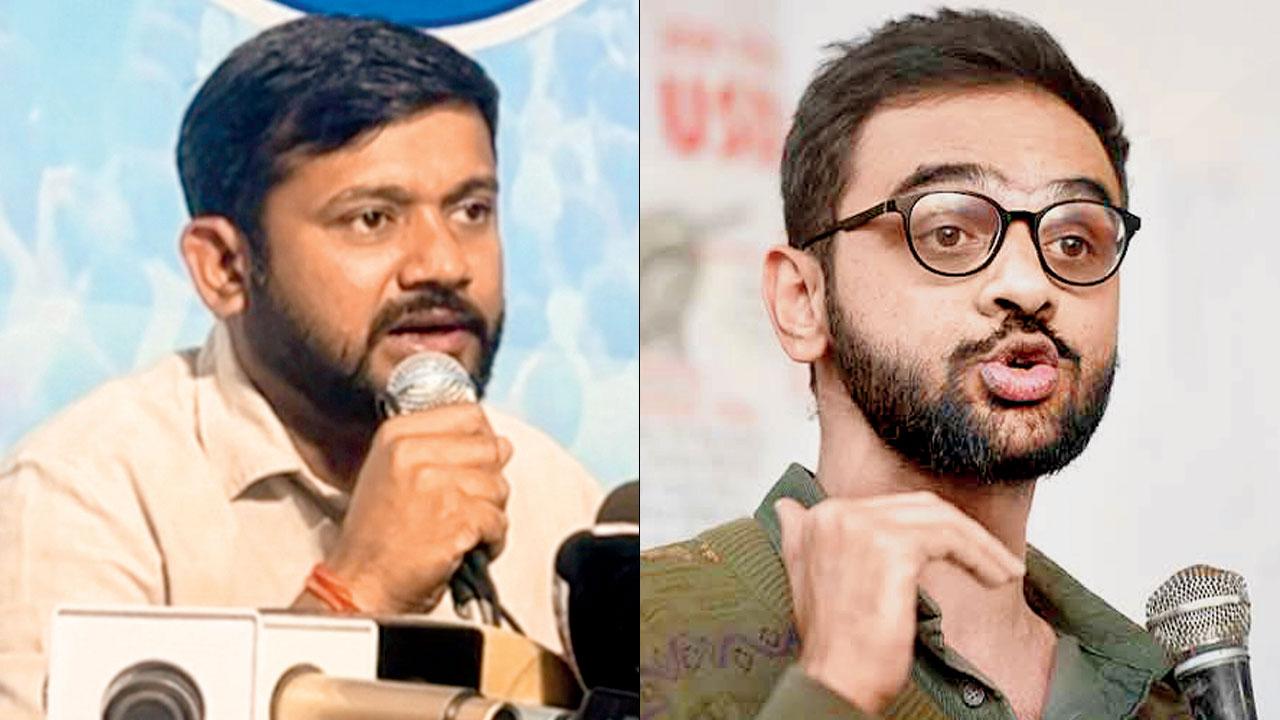
CBFC instructs makers of Jahangir National University to remove all references to JNU; mentions of NDTV, Kanhaiya Kumar, Umar Khalid and others to be dropped
Mohar Basu (MID-DAY; June 17, 2024)
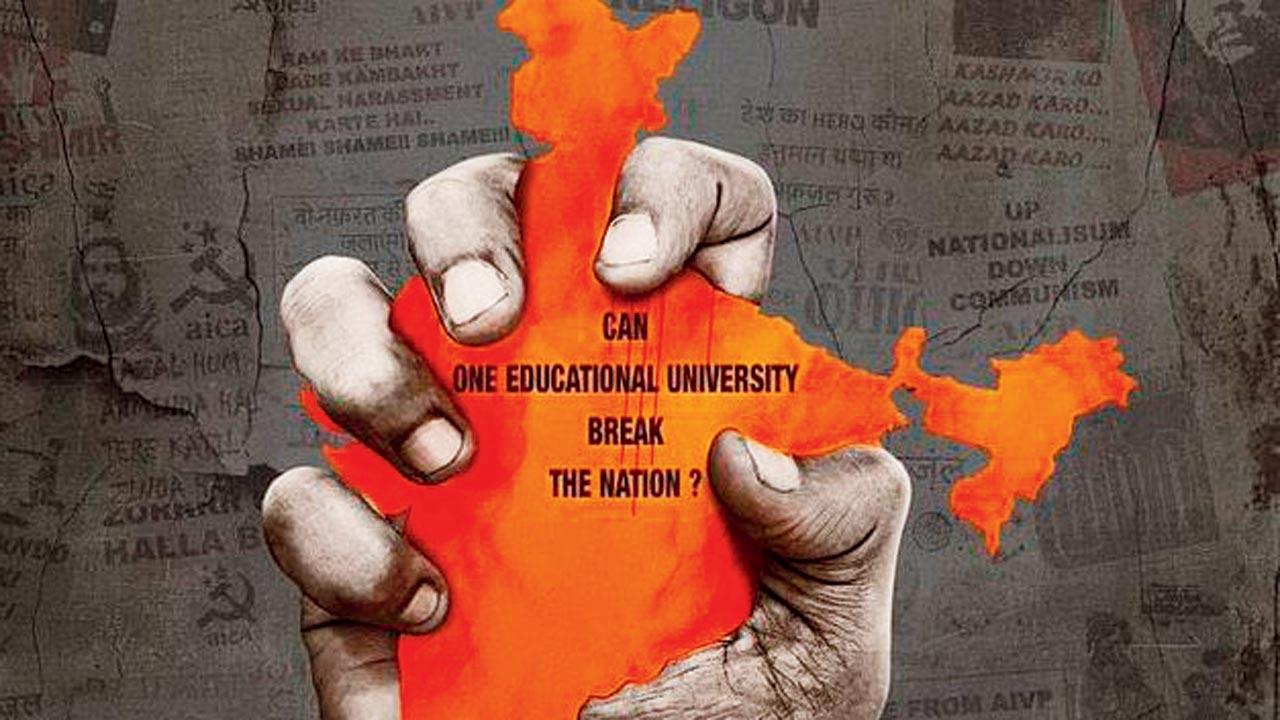
The Central Board of Film Certification found itself as the subject of much attention in April when it stalled the India release of Dev Patel’s Monkey Man. Now, in a move that may be seen by some as the Board trying to redeem itself, it has come down hard on director Vinay Mishra’s next, Jahangir National University. The film’s title is a blatant wordplay on the prestigious Jawaharlal Nehru University, while its poster reads, ‘Can one university shake the nation?’ The Ravi Kishan and Piyush Mishra-starrer has been recently cleared by the CBFC with some crucial changes.
First things first, the film cannot be referred to as JNU, nor can it make references to the university. A source reveals, “All official material and dialogues that refer to either have to be tweaked. Additionally, the material or dialogues cannot name Nehru. Mentions of NDTV, journalist Ravish Kumar, politician Kanhaiya Kumar, activist Umar Khalid, and Jamia Millia Islamia University have been asked to be removed completely. The Board noted that their inclusions will be seen as defamatory and contemptuous.”
A song in the June 21 release was deemed to glorify violence, and hence, instructed to be deleted. We hear the CBFC has asked for a few more changes to underline that the movie is a work of fiction.
The source adds, “As per the CBFC’s instructions, clips from news channels and those featuring political leaders, MPs and other dignitaries have to be removed. The film also had posters of beef festivals, which have to be withdrawn. Since the makers maintain it is a fictitious story, the Board highlighted that it shouldn’t contribute to maligning institutions or people.”
JNU Student Union protests shoot of Sudhir Mishra’s web series in campus; meets director, shooting continues
1:59 PM

Niharika Lal (BOMBAY TIMES; April 8, 2024)
What happened :
On Saturday, the JNU Student’s Union disrupted the shoot of Sudhir Mishra’s upcoming web series. The filmmaker had taken necessary permissions and paid for a nine-day shoot schedule for his web series, which is on the Emergency period in India. On Sunday, while the shoot went on, a group of students also sat in protest.
Sudhir and I spoke to the students and they were very cordial to us and the crew: Anubhav Sinha
Anubhav Sinha, who was present on JNU campus during the shoot with Sudhir Mishra, told us, “Sudhir and I spoke to the students and they were very cordial to us and the crew. They didn’t have any problem with the shooting or the film. All the claims about unruly conduct by students are not true. Their issue was with the administration of the university. They want that the students should be involved in the decision-making when such a big event (the nine-day shoot) is taking place in the campus. The concerns of the students are logical, and it needs a conversation with the admin, which they will hopefully have. The students told us that it is between them and admin, it has nothing to do with the shoot.”
Why is JNUSU protesting?
As per the statements given by the union, they have three issues:
- On March 31, a female student was harassed on campus, allegedly by two former students and two current students. The union claims that the admin and campus security have not done anything to address the incident, adding that “it is appalling that at a time when the campus security is unable to ensure the safety and security of its own students, such a large number of outsiders have been allowed inside.” On Wednesday, 21 students who protested the lack of action in the harassment complaint were sent notices by the admin for blocking the campus gate.
- One of the places where the shooting is taking place is the administration block. The union has asked why shooting (especially of a protest scene) is being allowed in a place where even students are not allowed to gather and protest. In Dec 2023, the university had banned protests in that block. The show’s crew told us that the shooting is taking place in the admin block since it’s a period drama.
- The JNUSU has also said, “We are not against the web series or its team. But we won’t allow any kind of commercialization to take place on campus.” Adding that “it was only a matter of time when our campus will be used to make films against us.”
Shoot permission given following due process, asserts JNU official
Amar, from the show’s crew, said, “On Saturday, when the shoot moved to the admin block, a group of students objected to the filming. After the shoot was stopped, JNU admin officials arrived on campus, and we had a meeting with students and the officials. JNUSU students agreed to allow us to shoot on Sunday, but they made it clear that they would not permit it after that.”
A senior JNU official told us, “JNUSU has no authority in this matter as the permission for filmmaking has been given by following a due process. The permission rules have been in place for nearly two decades. Scores of students are participating in the production process on campus from JNU Centre for Media Studies, Arts and Aesthetics, JNU drama, theatre and film club. This gives students massive industry exposure and opportunity to interact with top filmmakers. The administration held a detailed conversation with JNUSU and conveyed that due permissions have been taken.”
JNU’s Rashtriya Kala Manch cancels screening of JNU: Jahangir National University
8:36 AM
JNU’s Rashtriya Kala Manch cancels the screening of Jahangir National University; students’ union writes to VC seeking legal action against film that ‘slanders’ institution
Mohar Basu (MID-DAY; March 19, 2024)
On March 13, a pre-release screening of Bastar - The Naxal Story was held at the Jawaharlal Nehru University’s (JNU) Convention Centre auditorium. The screening, organized by the Rashtriya Kala Manch, led to widespread uproar as the varsity’s election committee had not granted permission for it. Moreover, Sudipto Sen’s directorial venture—which focuses on the Maoist insurgency, and alleges that students at JNU had ‘celebrated’ the killing of 76 Central Reserve Police Force (CRPF) jawans—was viewed by many as a means to influence the JNU Students’ Union elections that is slated for March 22.
In the latest development, the screening has evoked such polarizing response that the Rashtriya Kala Manch has pre-emptively cancelled the screening of another controversial movie, JNU: Jahangir National University.
The title of director Vinay Mishra’s upcoming movie— starring Ravi Kishan, Piyush Mishra and Urvashi Rautela—is a blatant wordplay on the prestigious university in Delhi.
A student, on condition of anonymity, tells mid-day, “It has been unanimously decided that the film won’t be screened. Regardless of which party wins the student election, slander against the university’s name will not be tolerated.”
The Students’ Federation of India (SFI) has written to Vice Chancellor Santishree Dhulipudi Pandit to pursue the matter legally. Mid-day got an excerpt from the letter that reads, “This film’s [poster] has a saffron image of the country with the text [reading], ‘Can one educational institution break the nation?’ This shows exactly what the film intends to portray. They want to parrot the popular line of calling JNU as anti-national and against the people of the country… We are with the vast majority of secular and democratic-minded citizens of our country. We request the Vice Chancellor to take action against this movie.”
Pandit has yet to respond on the matter. Akhil Bharatiya Vidyarthi Parishad (ABVP) that has allegiance to the RSS has stayed mum. The student adds, “They won’t come out and condemn this movie and its narrative that seeks to demonize this university’s students. For now, the film screening being [cancelled] is a win, but something needs to be done against this defamation.”
Deepika Padukone's presence at JNU took the discussion to a bigger level-Mohammed Zeeshan Ayyub
8:26 AM

Mohammed Zeeshan Ayyub dismisses the idea that Chhapaak's box-office fate suffered due to Deepika Padukone's JNU visit praises her for taking a stand
Upala KBR (MID-DAY; January 22, 2020)
 No sooner did Chhapaak register underwhelming numbers at the box office, than buzz was that the film bore the brunt of Deepika Padukone's political stand — if the actor was applauded for standing in solidarity with Jawaharlal Nehru University (JNU) students, a section also criticised her for the visit and started the #BoycottChhapaak movement.
However, actor Mohammed Zeeshan Ayyub — who has been at the forefront of the anti-CAA (Citizenship Amendment Act) protests — says it was brave of Padukone to look at the bigger picture than be driven by the prospect of her then-upcoming production. "When I went to places like Jamia [Millia University] or Shaheen Bagh, people told me 'Aapke aane se hamein confidence aaya ki hum sahi kar rahe hain.' If my presence gives them so much faith, [one can imagine the impact] of Deepika's presence. When she stood with the students, many of the privileged people who were ignoring the issue until then, had to look at it. [Her presence] took the discussion to a bigger level," he says, before adding, "I don't know whether the boycott affected Chhapaak's business. Maybe making money was not the [sole] intention; maybe the makers wanted to tell someone's story."
The studied silence of Bollywood's bigwigs on the CAA has not escaped his notice. "Not taking a stand right now shows that you are privileged; it could be because of your money, fame, or religious identity. If somebody wants to enjoy that privilege, they have the right to do so."
To all those who ‘boycotted’ Deepika Padukone’s Chhapaak, do you have the GUTS to boycott her next, ’83?
10:02 PM

Exactly a week ago, Deepika Padukone’s film Chhapaak seemed non-controversial. A section of audience was interested to see it. The rest weren’t; a large part of the population didn’t even bother about this flick. But then all hell broke loose as the actress visited the most hated place for some Indians – the Jawaharlal Nehru University (JNU). She met the student president Aishe Ghosh, who was injured in a recent attack along with many other students. She stood in silence, in solidarity, in the presence of activists like Kanhaiya Kumar. As expected, within no time, the IT cell machinery of the ruling BJP government went into an overdrive. They launched a vicious attack on Deepika Padukone and even managed to find her 2011 interview wherein she praised Rahul Gandhi. Of course, they conveniently chose to hide that she said called Rahul the future Prime Minister of India at a time when many in the country didn’t find him a ‘Pappu’. The most laughable was that they spread a lie that her film Chhapaak, which is based on real incidents, has changed the religion of the attacker from Muslim to Hindu! It turned out to be a blatant lie. To save their faces, they claimed that originally, the said character was a Hindu and it’s only because they raised voices is that the change was made. Obviously, they had no answer when asked which cutting-edge technology was used to alter the lip movement when the character’s name was uttered many, many times in the film!
And like it always happens in such cases where someone goes against the BJP, their infamous and notorious IT cell started the #BoycottChhapaak trend. It got lakhs and lakhs of tweets. As part of this campaign, they began to encourage the other film releasing with Chhapaak – Tanhaji: The Unsung Warrior. This film was a saga of an unsung Maratha hero who fought the Mughals. Moreover, it starred Ajay Devgn, who has never visited JNU or Jamia and in fact, once went to Bihar to support BJP during 2015 elections. Thus, this film ticked all the right boxes. So anti-Chhapaak crusaders overnight became pro-Tanhaji fanatics, when 90% of them didn’t care about both the films 12 hours prior.
Both Chhapaak and Tanhaji: The Unsung Warrior opened on January 10. And Tanhaji: The Unsung Warrior was a clear winner from Day 1. The film was a great entertainer with an unbelievable climax that made people clap and whistle. Most importantly, it was a mainstream film. Chhapaak, on the other hand, was a niche flick and a story of an acid attack survivor. It was not the conventional entertainer. As a result, the film opened on a not-so-great-note. Sadly, even reports were mixed. A lot of viewers complained that it was a missed opportunity as the film had lot of potential. This reflected in its collections. Usually, such films have a poor opening but then have a huge jump in earnings. This has been seen with films like Pink, Article 15, Andhadhun etc. But Chhapaak never got that spike in earnings. As expected, the geniuses behind #BoycottChhapaak began to take credit. They felt it’s because of them that Chhapaak has flopped.
So did Deepika Padukone’s JNU visit and the subsequent smear campaign really dent the film? The answer is a BIG NO! And it’s easy to explain why. Take a look at all those who are vehemently against Chhapaak due to the JNU episode. These people were never the target audience of the film. These people would have never ventured out to see Chhapaak, even if Deepika Paudkone had made no such visit to the said university. The film was targeted at the elite multiplex crowd. Most of them are sympathetic to the manner in which the students were assaulted and injured. Again, these are the ones who were interested to see the film as they are usually accepting of such disturbing and niche subjects. Hence, the intention probably was to get into their good books.
In the past, these BJP fanatics have targeted films like Dangal and Veere Di Wedding. Both were huge hits. Even Padmaavat was a film that had enraged some of these trolls due to the controversies over its content. It didn’t release in as many as 4 states. Yet, it crossed more than Rs. 270 crore net at the India box office. Hence, it has been proved time and again that boycott campaigns have zero impact on films. The reason Chhapaak didn’t work is because the content didn’t click with the target audience.
To further explain this point, let me make a comparison of Chhapaak collections with that of the 2018 Varun Dhawan starrer, October. The collections of Chhapaak for the first four days are as follows:
Friday - 4,50,00,000 apprx
Saturday - 6,50,00,000 apprx
Sunday - 7,00,00,000 apprx
Monday - 2,00,00,000 apprx
TOTAL - 20,00,00,000 apprx
Meanwhile, these are the four-day collections of October
Friday - 4,50,00,000 apprx
Saturday - 7,00,00,000 apprx
Sunday - 7,50,00,000 apprx
Monday - 2,50,00,000 apprx
TOTAL - 21,50,00,000 apprx
As one can see, the collections are more or less in the same range. October earned around Rs. 25.37 crore approx in Week 1. Chhapaak too would end up earning the same as it’ll get advantage of minor holidays today and tomorrow. But the main point is – even October had similar mixed word of mouth like Chhapaak. Despite having a star like Varun Dhawan, the collections didn’t go beyond a point and this usually happens with such niche films with not-so-great reports. And mind you, Varun never visited JNU!
Also, can all those promising to boycott Chhapaak can assure that they’ll similarly boycott Deepika Padukone’s next, ’83 as well? For those who don’t know, this sports film is based on India’s stunning victory in the 1983 Cricket World Cup. Ranveer Singh essays Kapil Dev while Deepika plays his wife. Just like Chhapaak, it’s also produced by the actress. It’ll release on Good Friday Holiday, on April 10, 2020, and is expected to be the biggest blockbuster of Hindi cinema, dethroning Dangal from number 1 position. The hype it’ll create will be historic as it’s a film that’ll attract audiences of all age groups and all kinds. And this also includes the BJP fanatics. They won’t be able to help but not see ’83! As a result, this #BoycottChhapaak movement was nothing more than a nuisance and made no impact to the film whatsoever.
Lastly, it also raises another question – if Deepika Padukone’s JNU visit didn’t dent the film, then did it help Chhapaak in any way? Again, the answer is a No. There’s no doubt that it was a publicity stunt by the makers. Possibly, it was done because they realized that the product is not upto the mark and were hoping that this campaign gives them the much needed boost. Well, it did grab eyeballs but didn’t translate into healthy box office numbers.
In the process, however, Deepika ended up taking a huge risk. In order to promote her film, she took a step that can have huge repercussions in a country like ours. Her image of standing with folded hands in front of Aishe Ghosh would forever haunt her and might be taken up in future by vested interests to further their evil agenda. Obviously, she must be having the urge to support the students and that’s what made her go there. After all, there are other, non-controversial and headline-grabbing methods of promotion as well. One just wishes it was not done under the guise of film promotion as that took away some impact. Nevertheless, here’s hoping Deepika Padukone’s brave decision motivates other Bollywood actors, who also want to do something similar but don’t do it out of fear.
JNU violence should not be made into a national issue-Kangana Ranaut
8:32 AM

Kangana Ranaut draws comparison between JNU violence and college gang wars, says perpetrators should be ‘given four slaps each’
MID-DAY (January 11, 2020)
Kangana Ranaut has opened about the campus violence at Jawaharlal Nehru University ( JNU) in Delhi, saying the incident should not be turned into a national or political issue. “The attack on students in JNU is currently being investigated. It’s understood that there are two sides, namely JNU and ABVP, two different unions, in the university,” said Ranaut, while speaking to the media on the sidelines of the promotion of her upcoming film, Panga.
Ranaut recalled a gang war she had witnessed during her college days in Chandigarh. “Gang war is quite common during college life. I used to stay at a girls’ hostel alongside a boys’ hostel, where people were followed and murdered in broad daylight. A boy once jumped into our hostel and was about to get killed by a mob, but our hostel manager saved him,” she said.
The actor added that the police should take the perpetrators into custody. “I would like to say that these gang wars are managed by powerful and dangerous people, which leaves both the sides hurt. Such things should not be made into a national issue. Police should take perpetrators into custody and give them four slaps each. Such people are found everywhere, in every street and college, and they should not be made national issue because they don’t deserve it,” she added.
On January 5, a masked mob entered JNU campus and thrashed students and teachers with wooden and metal rods. At least 20 students were admitted to All India Institute of Medical Sciences (AIIMS) with severe injuries, including Students’ Union President Aishe Ghosh, who was reportedly hit over the eye with an iron rod.
How protest by protest, Bollywood became a part of the nationwide movement opposing the Citizenship Amendment Act
8:29 AM

Protest by protest, Hindi film industry is registering its presence in the nationwide movement opposing the Citizenship Amendment Act
MUMBAI MIRROR (January 10, 2020)
Criticism for the Citizenship Amendment Act (CAA)—which started even before it was passed— and the National Register of Citizens (NRC) has now evolved into an unprecedented nationwide resistance.
And while Mumbai rallied behind the cause, registering its presence as a significant voice, it has been further buoyed by the constant inflow of the film folk.
After police unleashed lathis, tear gas and bullets on Jamia Milia students protesting CAA on December 15, Anurag Kashyap ended his self-imposed Twitter break to condemn the incident. “This has gone too far… can’t stay silent any longer. This government is clearly fascist... and it makes me angry to see voices that can actually make a difference stay quiet,” he tweeted. Anubhav Sinha, Huma Qureshi, Richa Chadha, Vishal Bhardwaj and Swara Bhasker, among others, were also the first few film folks to criticise the incident, and in turn, CAA.
 Swara, who has been one of the leading voices against the Act, hails the “real heroes and sheroes of the protest—the students of Jamia, JNU (Jawaharlal Nehru University), students at Shaheen Bagh and the people at the Gateway of India.” By her own admission, she is currently leading a “schizophrenic life”, flitting between professional commitments and protests in Mumbai and Delhi.
On December 19, she had turned up at the August Kranti Maidan in South Mumbai, joining reportedly two lakh Mumbaikars to raise their voice against CAA. Farhan Akhtar (who was briefly heckled for failing to speak with the clarity of an academic on the subject), Kashyap, Sinha, Aditi Rao Hydari, Kunal Kapoor, Sushant Singh, Rakeysh Omprakash Mehra and theatre personality Dolly Thakore were also present at the venue. The petite TV actress Sadiya Siddiqui (star of 1990s show Banegi Apni Baat who went on to do brief roles in the Shah Rukh Khan-starrers Kabhi Haan Kabhi Naa and Baazigar) also stood calmly in the crowd, even as fellow Mumbaikars towered over her.
Over at Azad Maidan on December 27, lyricist-comedian Varun Grover recited his impassioned call for resistance with “Kaagaz Nahi Dikhayenge”. Meanwhile, on the midnight of January 5, Mumbaikars ventured out again, this time at the Gateway of India and Carter Road in Bandra to protest the attack on students inside JNU premises earlier in the evening. The vigil saw Kashyap, Zoya Akhtar, Dia Mirza, Taapsee Pannu, Vishal and Rekha Bhardwaj, Pavail Gulati, Richa Chadha, Ali Fazal, Raj Kumar Gupta, Neeraj Ghaywan, Mallika Dua and Vasan Bala, among others in attendance. However, one of the most powerful images of Bollywood representation at the protests came when Deepika Padukone, in Delhi to promote her upcoming film and maiden production, Chhapaak, decided to stop by JNU campus on January 7 to express solidarity with the students. Dressed in all-black, the actress stood silently next to Kanhaiya Kumar and JNU Student Union President President Aishe Ghosh, who was seriously injured in the January 5 attack.
TV actress Kritika Kamra, who has been at all the Mumbai-based protests, including Carter Road and the Gateway, outlines the nature of the resistance. “One movement, is alarmed by reactions to the movement. “There are widespread internet shutdowns. There has been clear use of the police force to deter and intimidate protestors in BJP-ruled states, either directly through detention, bogus FIRs, beatings, and destruction of property, or indirectly, by standing back and allowing politically-charged violence,” he points out.
Cine and TV Artists Association general secretary Sushant Singh attributes the youth’s rise to eminence in the anti-CAA crusade to the absence of a formidable Opposition in the country. The TV actor, who was among the people booked on Thursday, for the overnight protest at the Gateway on January 6, takes a veiled jibe at could see that it’s a youth-led movement. We’re a young nation and the largest democracy in the world. To not listen to the youth and dissent, or not consult them before passing bills at midnight is not okay,” she asserts.
Jim Sarbh who, like Kamra, has been an active participant of the the Centre reaching out to Bollywood to “discuss and explain CAA” with a dinner at a suburban five-star last Sunday. “People like me, and the students, have questions, but you are talking to an XYZ and not inviting people who are questioning (you). Then you claim to have an inclusive approach,” he thunders.
Filmmaker Hansal Mehta, who on December 23 had joined Mira Nair in demanding the release of Sadaf Jafar (cast member in her screen adaptation of A Suitable Boy), who was arrested for participating in an anti-CAA protest in Lucknow, wants the Narendra Modi-led government to “listen to us and look at us. We are the people of the country, we expect to be heard and to be seen irrespective of our religion, caste, race, colour and creed.”
 Richa Chadha, who has been as vocal as Swara in her criticism of CAA, NRC and NPR (National Population Register), stresses that the fight should not remain political or even ideological. “My fear is that things have caused confusion, whether it is demonetization or even the GST. I come from a family of businessmen and this confusion affects the economy adversely. Right now, the protests are about citizenship and hatred, but soon it will come down to basic survival which is the rising price of food products, inflation and jobs. Let me tell you as a member of the generation that is younger than these leaders… the youth is damn upset.”
------------------------
MEANWHILE...CAUGHT IN THE MIDDLE
On January 5, the BJP invited Bollywood personalities to a suburban five-star seeking support for CAA. While many, including Kabir Khan, Siddharth Roy Kapur, Karan Johar, Rajkummar Rao, Farhan Akhtar and Ayushman Khurrana, didn’t turn up, lyricist and CBFC chief Prasoon Joshi, filmmakers Kunal Kohli, Ritesh Sidhwani, Abhishek Kapoor, and actors Ranvir Shorey, Tanisha, and singers Shaan, Suresh Wadkar were in attendance.
“It was a good meeting. It’s great to see the government reach out to clear the air regarding the CAA… I already had no issues with the CAA and I hope more people are not misled about it affecting any Indian citizen,” Ranvir was quoted as saying afterwards. Later, the BJP released a video featuring the actor and other attendees voicing pro-CAA views.
On Wednesday, Juhi Chawla and Dalip Tahil extended support to CAA while attending a BJP event in Shivaji Park.
Previously former BJP Parliamentarian Paresh Rawal has tweeted in support of the Act.
Images: Deepika Padukone heads to JNU to stand in solidarity with the students
8:13 AM

MID-DAY (January 8, 2020)
 If many B-Town stars lent their support to the Mumbai protests on Monday, several miles away in Delhi, another Bollywood heavyweight — Deepika Padukone — made it known that she stood in solidarity with the students of Jawaharlal Nehru University (JNU). The actor visited the university on Tuesday, two days after a masked mob attacked students and teachers on the campus, provoking nationwide outrage.
The actor dropped in around 6.45 pm and attended the public meeting that was held by a group of students, including Aishe Ghosh, president of the students' union. Former student leader Kanhaiya Kumar was also present.
Padukone, who has been in the capital over the past two days for the promotion of her upcoming film Chhapaak, did not make a media statement but reportedly spoke to a few members of the students' union.
As soon as pictures of Padukone's visit to JNU went viral on Twitter, BJP's Tajinder Pal Singh Bagga called for a boycott of her films. "RT if you will boycott movies of Deepika Padukone for her support to #TukdeTukdeGang and Afzal Gang," wrote Bagga.
At the protests at Carter Road and the Gateway Of India, it felt like old India was alive and well-Swara Bhasker
8:01 AM

As several Bollywood stars join #OccupyGateway and Carter Road protests against JNU attacks, Swara Bhasker reflects on how they expressed dissent through songs and chants
Mohar Basu (MID-DAY; January 8, 2020)
For those who believed Bollywood is happy to play a mute spectator to the nation's goings-on, Monday evening was an eye-opener.
As several actors and directors — including Taapsee Pannu, Richa Chadha, Ali Fazal, Anurag Kashyap, Vikramaditya Motwane, Hansal Mehta, Anubhav Sinha, Zoya Akhtar, Vishal and Rekha Bhardwaj, among others — turned up at Carter Road in Bandra to stand in solidarity with the students of Jawaharlal Nehru University (JNU), it was evident that they will no longer be silenced. Even in the depths of despair, those gathered chose hope and courage, reciting lines from Faiz Ahmed Faiz's Hum dekhenge. As Swanand Kirkire sang his creation, Bawra mann from Hazaron Khwaishein Aisi (2005), he called on everyone to dream for a better world.
Swara Bhasker, whose family was in the JNU campus when masked men attacked students and faculty members on Sunday, told mid-day, "At the protests at Carter Road and the Gateway of India, there was a spirit of fraternity and commitment to our Constitution, which was uplifting. The Indian flag was waving everywhere and strangers were smiling at each other. It felt like old India was alive and well."
The protest, which kicked off at 8 pm, ended almost two hours later — but not before the gathering gave a huge round of applause to the Mumbai Police. It was, however, far from the end of the night for Fazal, Chadha, Sayani Gupta, Shweta Tripathi and rapper husband Chaitanya Sharma. At the stroke of midnight, as the iconic Taj Mahal Palace Hotel glowed in the background, the stars joined the #OccupyGateway protest that has assumed a life of its own since Sunday.
"What you see here are artistes standing up for the value system that they believe in. [The protests] at both venues were beautiful because people were reciting poetry and singing songs. There was no hate or negativity. Like Anubhav Sinha said, this is to reassure the students that we are with them," shared Tripathi.
Fazal chose to convey his feelings through a verse he had penned:
Kuchh chhaatron ne milke ek mulk ko taakat di hai,Hum thhoda baithe, thhoda bole, thhoda suney. Dard bat ta hai toh josh banta hai, aasoon pochhaa toh sir uthhe, Ab nikle hain haath phailaaye, Aao sab aao, chalo galey mil aayein, Tirange se lipat aayein, tirange se lipat jaayein, Hum thhoda baithe, thhoda bole, thhoda suney, Chauraha nazdeek hai, aao gale mil aayein.


Richa Chadha and Ali Fazal

Kirkire sings Bawra mann
We need to address JNU attacks; we can have dinner meetings later-Kabir Khan
9:34 AM

After skipping Piyush Goyal's pro-CAA meeting on Sunday, filmmaker Kabir Khan on how recent events are threatening the country's secular fabric
Letty Mariam Abraham (MID-DAY; January 7, 2020)
While Delhi reeled under an atmosphere of violence as masked miscreants attacked Jawaharlal Nehru University (JNU) students and teachers on Sunday night, Piyush Goyal, Minister of Railways and Commerce, was busy hosting a "scrumptious dinner" for Bollywood folk at a five-star in Mumbai. The apparent apathy of the government is not lost on filmmaker Kabir Khan, who was one of the many Bollywood personalities invited by Goyal for the pro-Citizenship (Amendment) Act meeting.
"I did not go because I was busy," says Khan, who has been a vociferous critic of the CAA. The attacks that took place at JNU last night, and at Jamia Millia University last month, are all the more personal to him as his father was a professor at JNU, and he, an alumnus of Jamia Millia. "If goons can enter premier universities of the country and hit students and teachers, then what are we even discussing? The visuals of those goons laughing and [attacking them] break your heart. These are the larger issues that we need to [address urgently]. We can always have dinner meetings later."
Khan is one of the rare few from Bollywood who has taken a firm stand against the CAA, citing that it threatens the secular fabric of India. "Getting religion into politics and our social affairs is tragic." Tell him how the high and mighty of the industry have maintained a studied silence on the subject, and he argues, "It's their choice. How do we know what their fears are? [In the past], those who have spoken up have been attacked and no one was there to defend them. If you can't defend them, don't push them to talk. Too much is being made of why Bollywood is not reacting."
I lost four brands after I started campaigning-Swara Bhasker
8:01 AM

Riya Sharma (BOMBAY TIMES; May 20, 2019)
She is a familiar face in Bollywood, but that’s not the reason why she’s been in the spotlight lately. Swara Bhasker is on a journey of getting socio-politically educated, and has spent the last month lending her star power to multiple political rallies by Lok Sabha candidates. We recently met the actress at her residence in JNU. “I am so tired after campaigning. I can’t wait to go back to Bollywood now,” said Swara, who has campaigned for six candidates from different political parties. From losing four brand campaigns because of her political ideologies to why she doesn’t want to leave Bollywood for politics yet, Swara talks about her political awakening. Excerpts:
 You are a mainstream actress, who has been actively campaigning and for multiple candidates and parties. How did your family, friends from JNU and the industry react to your political awakening?
My friends in the industry are poking fun at me, saying, ‘Oh, you have become a neta’. But they are not surprised. In fact, they think this is my natural habitat. Huma (Qureshi) is very convinced that this is where I should be headed. Himanshu (Sharma), who joined me in Sikar, has advised me not to jump into anything and told me ‘Beta, ye sher ki sawari hai’! My friends from JNU are picking holes in my arguments (laughs!). They think that I am being too much of a ‘strategist’. My dad is pretty chilled out but my mom keeps asking me if I am sure about heading down this path.
But is this something that you want to do full-time in future?
It is very tiring. Campaigning is still a glamorous part of it. The real grit and grime is the daily work of dealing with what is happening in your constituency. I don’t know if I am in that zone. I know for sure that if I decide to do this, then I can’t do films. I can’t be a politician who only shows up at the constituency around elections. I like acting and I am also producing a film. I campaigned because in these elections, the stakes are high, after the things that have happened in our country. Whether it is mob violence, killings over beef, or just the general violence that has seeped into our lives and vocabulary. But Pragya Thakur really got me. I was like, ‘If this is it then we should really be involved’. Initially, I was campaigning for Kanhaiya Kumar because I thought he should be in the Parliament, but when the Pragya incident happened, I wanted to go places where I could speak to people. As a citizen, I also want to have a better idea of how elections are conducted. It has been a huge learning experience for me, but I am eagerly waiting to get back to Bollywood now.
How do you think your campaigning helps a candidate? How did the audience react to a fresh face?
I knew that people were calling me because I am a heroine. As soon as I learnt that I would be campaigning, I went and bought 20 saris and got my wardrobe sorted. Maine blouse silva liye, jewellery leli and curated my look. I used to blow dry my hair in morning, put on my hair extensions and make-up, and wear my chunky earrings. I knew that the media would come for pictures and interviews, which in turn could be used as a platform to talk about issues that matter. For the public, it’s not a politician joh white kurta and jacket mein aa raha hai, they see a young person with colourful clothes. Even if they haven’t seen my films, they know that they’ve seen my face somewhere. It kind of helps jab aap naare laga rahe ho, people get excited to shake hands. In Bihar, it was a big connect because of Raanjhanaa and Jiya Ho Bihar Ke Lala (the phrase was a part of her speech in Begusarai). A lot of my films have done really well in Bihar. In Rajasthan also, Prem Ratan Dhan Payo did really well and people could place me. Bhopal campaign was also interesting. I did interactions with students and young entrepreneurs and went to mohallas. I am also viewing this as political, sociological education for myself.
We saw Bollywood getting political quite openly in these elections. Is this increased presence in politics a good thing for the political system or a bad thing for Bollywood?
It is always great if people are involved in our democracy. Bollywood has always had stars campaigning for their friends and parties. But this election season, two things have happened for the first time. No other government has used Bollywood like this government has and that has been a clever marketing strategy. It is not Bollywood getting political, it is the political establishment knowing how to use Bollywood very smartly. Whether it’s the interview with Akshay Kumar sir, or it is the selfies, or the film that got made.
 The only difference I see in Bollywood is that earlier, actors never got publicly involved in tu-tu main-main about their political ideologies. Whether it is Anupam sir talking about Naseer sir or me commenting to a tweet on Anupam sir or talking about Paresh sir because he said something. Raveena Tandon ma’am is also very active, Richa (Chadha) is beautifully active. There are then some losers on the fringe of Bollywood who keep trolling me — that had never happened before. It is happening because our society is polarised and has a medium like social media to express that polarisation. Jaise hi country ka mauhal badlega, Bollywood will also settle down.
Like you said, the social media war and commenting on each other’s ideology has not been very elegant, do you think this will lead to a mature democracy or it will politicise the industry more than ever?
The industry is already politicised. You can see in terms of the appointments that are made, whether it is the FTII, the nature and composition of our censor board, or the way national awards are given. Every government puts its set of people in place. I don’t think Bollywood is relevant in the larger political discourse and scenario of our country.
But they have the power to influence voters…
Do we really though? I don’t think Bollywood influences voters who are on the fence, instead, it reaffirms the beliefs of people who are already on a particular side. Maybe, in the south it does. It definitely helps in perception building (of a candidate), so I think over time it does. Par maine suna hai ki 30-40,000 vote kisi actor ke aane se padh jaate hain. Someone told me that an actress was able to swing the votes by 30,000 in Bihar.
Do you think you can do this?
I think I can help the candidates make a stronger case for themselves. Instead of my star power, I can use my credibility because I am classified as a ‘thinking actor’— whatever that means. So, I can add credibility to the candidates. For example, someone like Amraram ji, got a lot more media attention because I campaigned for him (in Sikar), but I have no pretensions about swinging votes.
Were there any professional costs that you had to bear for actively taking part in politics at such an early point in your career?
I lost four brands after campaigning for Kanhaiya Kumar. They said they don’t want political people. I can understand because it’s election season and everyone is hyper. Brands don’t want to invest in someone who might attract anti comments. I am quite clearly for somebody and against somebody, or for a group and against a group. As far as a brand is concerned, everyone is in the market. You don’t want your audience to be divided. Also, I don’t see this as joining politics or leaving Bollywood. I am not taking a ticket and I don’t want a ticket. Even if someone offered me a ticket, I won’t take it.
Did someone offer you a ticket?
Well... no (laughs!). No comments on that. I don’t want a ticket. I am too young. I think I have at least 10-15 years to make that decision. But it would be nice to have some younger people in the Parliament.
A particular scene from Veere Di Wedding has also become political with many referencing to it while urging people to vote. What was your reaction to that?
I was surprised. I was like ek saal ho gaya film ko release hue. They thought that they were being clever, but it was just sexist. I was a little stung by the sexism. It was so crass, so tacky and what struck me was that they seemed like educated people. But, sexism unites everyone across political parties. Auraton ke mudde pe sab unite ho jaate hain gali dene ke liye. Whenever people troll me and it becomes something controversial, I always get this support from other social media groups. Mera bohot simple hai — you can disagree with me and you can hate me, but keep it civil. There is no point to this gaali-galoch.


For me the armed forces represent the kind of integrity that I have seen in my father-Swara Bhasker
10:10 AM

Anshul Chaturvedi (BOMBAY TIMES; August 15, 2018)
Swara Bhasker has been in an intense love/hate relationship with social media over the past year. Some see her as an outspoken defender of free speech and liberal values. Her critics slam her as an extreme leftist ‘anti-national’. A tweet by her has led to sedition cases in multiple courts. Ahead of 15th August, we ask her to explain what a ‘seditious’ JNU-ite who is also the daughter of a Naval officer has to say about being charged with defaming the uniformed forces.
Controversy and you aren’t strangers, Swara, but even by your benchmarks, sedition cases being filed is a new benchmark. How did you manage that?
Yes, controversies are something that I’m used to, especially of the kinds that originate on Twitter. But honestly, this particular one, I had no idea what was going on because I’m on a month long trip in Europe. I had done a series of tweets with #ButLiberalsAreFanatics. I suppose sarcasm is lost in the world of hashtags. But I was just trying to be sarcastic about it and wry. So, I put out this tweet which was in reference to the Una case of the Dalits being tied to a jeep and flogged, and how that was recorded and circulated, and I mentioned ‘big caste pride’ and of course it’s a case I feel very angry about and I used an expletive, I said ‘a**holes’, and I thought that it was pretty evident because I’d mentioned the word ‘caste pride’, and ‘tying to a jeep and flogging’, and I tweeted it.
And because I was travelling I didn’t even look at my Twitter, and then my father actually, who’s himself a retired Naval officer, called me the next day and said, listen, have you tweeted something because there’s this news that you abused the army. And I was like, what?! And even at that moment, I didn’t realise that it was this tweet that was being talked about. And then I went back to it and realised oh, this is being interpreted in this wrong way. And I didn’t know if it was willfully being interpreted in a wrong way or people were just making mischief, and then of course I was like, oh my God. So then I put out a clarification saying that obviously I was talking about Una and read the papers or use your brains or don’t, whatever. And then I thought okay, I’ve clarified, and I forgot about it. And then again, the next day a friend sends me this article from a factchecking agency, and when I read the article I realised that ministers had tweeted about it, like of course all these fake news sites had picked it up. I was just like, wow. I mean there’s a Twitter storm going on but I’m sitting by the beach in Portugal and I had no idea. Of course, I never said that, I don’t know how they assumed that I was talking about the army. Frankly, it shows their lack of faith in the army. My father is an armed forces officer and I’ve grown up in that whole culture. Nobody can have more faith in that institution than the people who’ve grown up within it, and who know it in a personal sense.

My poor father, he said I think you should put out a clarification, which I had done anyway. And he said — my father is very mild, he’s not dramatic at all — he said, well, as an aside, thanks to you, I get a lot of spite on my Twitter timeline. Poor guy (laughs), I felt so bad because my identity on Twitter and all my social media activism has led to my father being in the line of fire a lot. So, I told him that maybe you should change your account and not let people know that I’m your daughter, but I suppose it’s too late for that. And he was like, no, no, this is the good fight, and I think he thought it was kind of, I think all of us now realise that it’s a very odd time we live in where even the smallest things can — everything is inflammable, almost, you know. Even the smallest, most innocently made statement, most unpremeditated statement can be misinterpreted or can be wilfully twisted to mean something else. Of course that’s something that happens to me repeatedly. We’re living in a culture where it is so polarised and everyone is trying to discredit the other person or the other side in whatever way possible. Frankly, I do feel that liberals are under attack.
But I think it’s quite ridiculous, because the tweet nowhere implies anything at all like it has been twisted to mean. I know that I have nothing to defend on this because it didn’t even strike me, literally that thought didn’t even come into my mind, I didn’t even associate it with the Major Gogoi incident in Kashmir, till these people started tweeting. I think my father knows very well that obviously I did not mean that and would not ever say that, so he was — apart from making a wry comment about the spite that he receives on my behalf on Twitter, poor guy — has been very supportive. My mother did tell me though, to watch my language on social media and I got a bit of a lecture over there.
Is the JNU/fanatical liberal branding necessarily the same as being hostile to the men in uniform? What do the uniformed forces mean to you?
Firstly, I think that all these brandings, you know whether it’s JNU, or ‘tukde tukde gang’, or ‘libtard’ or ‘AAPtard’ or ‘sickular’ or ‘presstitute’, I think that all these brandings and all the stereotypes that come with them, I don’t buy into them. Frankly, they are hollow and coming from a very toxic place and coming from a place that is trying to discredit people and therefore, discredit their opinions. And to me, it’s a very undemocratic kind of a stand already. So, I don’t buy into that, either JNU branding or a liberal fanatic branding. Thing is, I’m an actress, so I have to hear all kinds of things from all kinds of sides. So if you say something, you’re either publicity hungry, or some group will say you’re a liberal fanatic, I’ve been accused of all kinds of things. So I don’t buy into these brandings. To me, JNU is an institution which is a very precious institution, it is one of the most stellar institutions of this country and the most valuable thing about JNU is that as a centre of learning, it has — it had, at least when I was there — an atmosphere where nothing was considered too outrageous to ask. Because the whole idea is that you can only learn in an atmosphere where questions can be asked without fear. And I think that that critical mindset, and that mindset towards critical questioning, is a very important thing for a democracy to have and to preserve.
As far as what the uniformed forces mean to me, as I said, for me, the uniformed forces — like at the very earliest part of my childhood — have meant to me my father. I always look at the armed forces through the lens that my father was in the armed forces. I have almost a sentimental, and a very emotional kind of a nostalgic outlook towards the armed forces. I have grown up listening to stories of my father’s experiences in the forces, in his training in the NDA, stories about his friends, his colleagues. My father always made it a point to say that the armed forces as an institution are loyal to the constitution of the country and not to any one government or political party. So in that sense, the armed forces are an institution that owes its allegiance to the Constitution of our country. And I think this is a really important point to make. I think we live in a very, it’s almost like this Kafka-esque kind of time where you don’t know what is right, you don’t know what is wrong, now there’s so much fake news you don’t know what is the truth, you don’t know what is fake. So to me, at this point, for me the armed forces represent the kind of integrity that I have seen in my father, and he always made it a point to tell me that the armed forces were very disciplined, they were very secular, they believed in the spirit of fraternity along with discipline, and more than anything they believed in the spirit of empathy and humanity and justice. So even if you have shot an enemy in a war situation, you will treat that dead body with respect because it is the body of a soldier, even if he’s from a different country, and you will lay them down with proper rites and with the respect that is due to a soldier — even if that soldier doesn’t belong to your country. This is my association with the armed forces.
The cliched question — how is your interpretation of Independence Day different from that of your trolls and critics? Are you a cynic or a proud Indian? Can you be both or is it an either / or?
Of course, I’m a very proud Indian, and I was never a more proud Indian than when I was the narrator of this TV series called Samvidhaan, which Shyam Benegal sir had directed, because it really made me understand what a valuable and precious document that is, how our political forefathers were not just far-sighted, but also so empathetic, so humane, so progressive in their thinking, the vision that they laid down in that document. And the fact that in 1947, without a doubt they were able to give equal rights, the promise — at least the vision — of equal opportunity to all the citizens of the country, to women, to Dalits, to the backward castes, to minorities. I think we really have something very special in our Constitution and it’s something that we must respect and love and believe in. I also feel that true love is one which is not blind. True love is one which would be very disturbed when you see the one you love going down on a dark path. If you see a friend or your child going on a very dark path, or doing wrong things or becoming a bad person, if you love them, you will stop them. And you will make them realise that what they’re doing is wrong. It’s the same thing with your country. If you see the social ills in your country or if you see something wrong, or injustice or oppression taking place in your country, and you’re silent in the face of it, and you don’t step up to correct it or call it out, you actually don’t love your country. And I think that you can be a very proud Indian and you can equally be an aware Indian citizen who is also active and who keeps calling out the wrongs that happen around her or him. And an Indian citizen who engages with the democratic process and keeps calling out the government every time the government does something that seems to be not in the spirit of the Constitution. I think that is the greatest sign of being a citizen who loves her country. And so, whoever shot at Umar Khalid — I’d say that is an anti-national action. An act that does a huge disservice to our country.
Which is the one movie you’d sit down to watch on August 15?
I think that I would, my friend gave a very good suggestion, that on the 15th of August, all of us should sit and watch Samvidhaan again, Shyam Benegal sir’s show which I hosted. That’s a great thing to watch and feel proud of our country. I’d watch Chak De! India, Shah Rukh sir’s film, because I think that showed the spirit of patriotism, but also equally looked at the problems in our country in a very nice way and brought it all together very nicely. I’d also watch Amar Akbar Anthony, because, as nostalgia for what the vision of India was, and what perhaps at one point it was, and what it should be and could be.

A young Swara Bhasker at The Garhwal Rifles Regimental Centre in Lansdowne
Requests to show Buddha In A Traffic Jam at JNU turned down by varsity officials
7:32 AM

Shaheen Parkar (MID-DAY; March 10, 2016)
Vivek Agnihotri’s long-completed film Buddha In A Traffic Jam has finally managed to get a release date this May. But before it hits the big screen, the filmmaker is keen to take his film to the Jawaharlal Nehru University (JNU) in New Delhi since it is centered around student life and echoes the recent happenings at the varsity. However despite repeated emails as well as text messages to the JNU authorities, he has not received any response.
Agnihotri says he wrote Buddha In A Traffic Jam a few years ago when he was disturbed by the way a nexus of professors-intellectuals-NGOs and Naxalites was brainwashing students and using them as “intellectual terrorists”. “It’s ironical that the film mirrors all that is happening in JNU today. The film exposes this nexus and perhaps, this is the reason that the film has found such resistance. Even after writing several letters, we haven’t obtained permission to screen the film in such institutes. But we are determined to tell the story,” he adds.
The cast of Buddha In A Traffic Jam includes Arunoday Singh, Mahie Gill, Anupam Kher, Pallavi Joshi and Anchal Dwivedi. The film premiered at the 2014 Mumbai International Film Festival and has been showcased at other festivals too.

Subscribe to:
Posts (Atom)