Showing posts with label Jawaharlal Nehru. Show all posts
Showing posts with label Jawaharlal Nehru. Show all posts
There should be one or two films made on Gandhi every year for the next 100 years-Anubhav Sinha
9:44 AM

Anshul Chaturvedi (BOMBAY TIMES; October 2, 2026)
Hindi cinema doesn’t have a great track record, at least of commercial success, when it comes to projects around the generation of freedom fighters. Not many movies have been made, fewer still have connected to the larger audience. Is there any point in making more movies on characters such as Mahatma Gandhi? Anubhav Sinha says yes, that filmmakers have a responsibility to keep making these films, in the hope that maybe the next one will work, or the one after that, or the one after that...
Why should another film be made on Gandhi today?
I feel there should be one or two films made on Gandhi every year, for the next hundred years. His contribution to the modern history of our country is just amazing. The weaknesses he shows, the strength that he shows, the tough decisions that he takes…
I was telling my son ki Gandhi woh aadmi tha jo kehta tha ki tum log jhagda band nahi karoge toh main khana nahi khaunga. Toh mera beta hasne lag gaya. Bola toh? Toh maine kaha log jhagda band kar dete thay. Ek baar nahi hua, kai baar hua. Ye uss aadmi ka power tha. Ambedkar ke, Gandhi ke views sabko maloom hain. Par jab Constituent Assembly banti hai toh woh Nehru se jaakar kehta hai ki Constitution inse likhwao. Because yeh desh ko behtar samajhte hain. Desh ke vanchiton ko behtar samajhte hain. Aur woh aadmi jo criticize karta tha, woh aisa karne ko agree kar deta hai. Woh Congress party join karta hai. Yeh bade unique log thay. Ambedkar ho, Gandhi ho, Patel ho. Yeh baat toh sach hai na ki Patel ko vote zyada mile thay aur Gandhi ne kaha ki nahi Nehru. Toh woh step back kar jaate hain, aur aapko kahin bhi Gandhi aur Patel aur Nehru ke beech mein koi animosity ya koi sarcastic remark kahin dekhne ko nahi milta. Ye bade unique log hain! Patel, Nehru, Gandhi, even V P Menon. Inn logon par toh itna zyada kaam hone ki zaroorat hai. Bhagat Singh. Bose. Matlab aapas ke itne contradictions...
A counter thought: We had a large number of Bhagat Singh movies in 2002. Five came out together. And maybe some of them did not even recover their cost. Is the audience willing to consume all those movies if you make them?
We have to understand that we are not making glucose biscuits. These are films, and these films live. A glucose biscuit is consumed with a cup of tea and it’s over. Then you buy a new packet. This is a different ball game. This is an art form. And every film, every such film will leave an impact on X number of people.
And slowly for all we know that X number of people will swell into a much larger number, which it should and it will. So just because two films on Bhagat Singh did not work, it doesn’t mean that the audience is not interested in him.
And also, those films were made with people who were in their thirties. When Bhagat Singh started, he was 17. He was born in 1907. He died in 1931. 24 saal mein toh phaansi ho gayi thi. Toh 17 saal ke ladke ke saath Bhagat Singh kab bani? Jab tak aap 17 saal ka Bhagat Singh nahi dekhenge, aap Bhagat Singh ko samajh hi nahi sakte.
A second counter thought: India is fascinated, captivated with the persona of Subhas Bose. And I remember vividly when Benegal’s The Forgotten Hero was released. I went to Kanpur to meet Captain Lakshmi Sehgal (who was then 90 years old), to ask her what she thought of the portrayal of her character. She said, “Beta abhi I have not watched the movie, because it is not running in a single hall in Kanpur.” And I was taken aback. Sahara was the distributor, I had gone from Lucknow, it was on Bose – and the INA veteran hadn’t been able to find a show in her city. As an audience, do we care about these movies – at least proportionate to how we apparently idolize those leaders?
Those are the predicaments of the cinema being run by corporations, right? See, any art form is very intimate, very personal. But cinema is so capital intensive that it becomes a corporate-run art form. So it will have these hiccups and roadblocks. But that still doesn’t mean that the next Bose should not be made or the one after that should not be made – or the one after that should not be made. It is our responsibility as filmmakers to keep on doing it because these people have played the most significant part in the making of India that we live in and that we chant about. We will never be able to contribute to India like they did.
That’s a legit POV too. Hollywood never tires of making movie after movie on the men who fought for them in WWII, and it just keeps coming. And they never say, we are now tired of seeing what our soldiers did. From the Battle Of The Bulge (1965) to A Bridge Too Far (1977) to Pearl Harbor (2001), Saving Private Ryan (1998), to Dunkirk (2017)… there are dozens, literally.
True. And we do not; we do not have this argument about the other side of the spectrum. So are you telling me that if a film about Air Force warfare doesn’t work, we should stop making films about Air Force warfare? No! It didn’t work. The next time it will work. Maybe the time after that.
Maybe a Safed Sagar comes in 2026 and it will sort of restore the perception.
Yeah, yeah. Maybe in 2047, a Netaji Subhas Chandra Bose film will work. We have to keep making it. And it’s not easy to make these films. It’s very difficult to make these films. But that’s the game. That’s the business of films.
So you say films on Gandhi should keep being made. There are films on Godse also now. What is your take on that?
But why shouldn’t they? I am not opposed to it. There are people who believe in Godse. They should make films about Godse. There are people who believe in Savarkar. They should make films about Savarkar. There are people who believe in Nehru. They should make films about Nehru. These people, whether it’s Godse or Savarkar – they have a place in history, right? They have a definite place in history, and their stories should be brought to the table.
We should not live on WhatsApp myths. There should be a biopic on Godse. There should be a biopic on every such person who played a part in the making of this nation. Because we can have these n number of dining table conversations about them, but we have a responsibility to acknowledge them, to recognize them, to talk about them, to know them. I’ve just ordered a book by Savarkar. I want to read Savarkar. I want to know Savarkar. And why shouldn’t I?
You’re saying, essentially, that people of every single spectrum/affiliation should understand every other spectrum as well to know what the actual debates were, rather than taking this condensed version 70 years later and arguing over it?
I think they were all human beings. I’m reasonably certain that they all made mistakes. But there was something going on between 1915 and 1950. There was something going on, and there were significant things going on. People losing lives, people changing history’s course. According to me, there are 200 films between 1915 and 1950. 200. 200 films minimum.
The Komagata Maru ship tragedy is not explored yet. A whole lot of things, like even Bose. Bose’s days in Germany when he goes to meet Hitler, there’s a film there. You can agree, disagree with anybody. That’s besides the point. But there are at least two movies there. There’s maybe more. What happened in Singapore?
What was Bose doing in Singapore? There’s a story there. There’s a film there. I would love to make a love story between Nehru, Gandhi and Patel. I think it’s a love story. It’s a beautiful love story.
Did you read up on Gandhi earlier as well?
Yeah, There’s... In my office, in my room, there’s only one picture on a wall, which is Gandhi. And for a reason. I try to visit every place that Gandhi visited. I go and sit there alone. I went to Bhitiharwa where he started his first Indigo Revolution. I sat there for two hours. I was sitting in the cottage that he made with his own hands. I sat under the tree that he planted. I… sort of spent time with him. One thing I miss terribly is that I never met him.
Any movie you think that got Gandhi’s persona right? We all began by seeing, of course, Attenborough’s Gandhi as a first starting point.
That’s a very hagiographical film.
Irrespective, but that’s the first time most Indians saw Gandhi on screen, so that remains your initial definer of what... it’s like seeing Arun Govil as Ram.
Yeah. No, there’s no other film on Gandhi, actually, and there’s none that treats Gandhi as a human being, which this film is doing. Just as a human being. I mean, we forget that the first time Gandhi ever got political, it was a rather racist cause. In South Africa, he was saying, ‘Don’t treat Brown people like Black people. Treat them like White people.’
But then he corrects himself. By the time he comes back in 1915, he’s a different man, and between 1915 and 1948, he’s a different man. And he’s changed over time. He’s constantly improving himself and at the same time not rejecting his mistakes. You read his autobiography, he talks about his stint with non-vegetarianism. He talks about that night when his father passed away.
By the time he wrote this book, he was a Mahatma already. He didn’t need to write all that. He didn’t need to write all that. His non-vegetarianism was between him and his friend and could easily have been buried. You and I wouldn’t talk about it today. But he wrote it in his autobiography. And that’s when I... And it comes on the fourth page or the sixth page, and I was like, “Whoa. What a man.”
We haven’t seen a film of that kind about Gandhi, the kind of truthfulness and faithfulness he has in his narrative about his own life without being worried of, uh, its interpretations.
He wrote what he lived. That’s a lot of courage. I was recently reading something that Marcus Aurelius said – that nobody knows you fully well. There are 17 sides that are inside of you. Nobody knows you. Even if you don’t know yourself very well. Then why should you worry about what people think of you? Because they don’t know you. And Gandhi explores himself in that book, and, he says everything that he knows about himself.
Some of the pictures are dark, some of the pictures are bright, but he puts them out, and he allows you to interpret him in the manner you choose to.
What was your buy-in into the project when Sudhir discussed it with you?
The first thing was that I... The first thought that came to mind was, how can I steal this story? (laughs). Can I... Should I ask him? Can I? Because he had come over. He comes over home quite frequently in the night, sometimes for dinner, sometimes for post-dinner coffee or ice cream, and we sit and we talk about films and life and the world. And one of these days, he told me that story, and I actually considered asking him, ‘Do you want... Do you mind giving this story to me?’ But then I didn’t, because he was so passionate about it. So, I thought I’ll get associated with it as a producer.
No, but what stayed in the story? I don’t know that part.
The fact that he was looking at Gandhi in such a personal humanist vision. A man who could make mistakes.
Sidhant Gupta says playing Pandit Jawaharlal Nehru was both painful and fascinating
10:21 AM

Akash Bhatnagar (HINDUSTAN TIMES; November 14, 2025)
As the country marks the birth anniversary of Pandit Jawaharlal Nehru today, actor Sidhant Gupta says he feels honoured to have portrayed the first PM of India in Freedom At Midnight. “There comes a big change after you truly play a character. Your perspective shifts, the way you see life changes. It’s like your mind opens up. The one thing I took away from him is that if you want to be a hero, you have to give a damn about people. It’s as simple as that,” he says.
Reflecting on the process of embodying Nehru, Sidhant calls the experience both “painful and fascinating”. The pain, he says, came from spending nearly three hours each day in prosthetics. “But the fascinating part is how the physical transformation helps your internal system. When you wear that prosthetic, something changes within you,” he adds.
Sidhant also acknowledges a shared trait between him and the former PM: a sense of calm. “Look at the world we live in, the pace is only increasing,” he says, adding, “If you want to grow, fulfil your dreams, and make this life count, there’s no other way but to find calmness and stillness. You have to stay in touch with that. That’s your hope.”
On his memories of Children’s Day, Sidhant recalls learning about Nehru in schoolbooks and the affection with which he was referred to: “We used to call him Chacha Nehru, and that felt really special. Someone we never knew, who had been the Prime Minister of India, suddenly felt like your father’s brother, there was a familiar warmth to that.”
Sachin Pilgaonkar on 60 years in cinema: "I have reached the interval stage"
8:16 AM

Natasha Coutinho (BOMBAY TIMES; November 13, 2024)
Sachin Pilgaonkar (67) completes 60 years in films this year. The actor, director and producer started acting as a child at the age of five and went on to feature in over 65 films before starring in films like Sholay and Satte Pe Satta as a grown-up. The veteran actor says there’s much more to come and he has only reached the “interval stage” of his career.
‘I was the first child artiste to win the President’s Award’
Talking about his early days as a child artiste, Sachin fondly recalls, “I received the National Award for Best Child Artiste at the age of five (for Marathi film Ha Maza Marg Ekla), from the hands of Dr Sarvepalli Radhakrishnan the second president of India, in the presence of Pandit Jawaharlal Nehru. Back then, it was known as President’s Awards and the child artiste category did not exist, so I was the first to win it. My mother had stitched a sherwani with mojri for the event and as I was leaving after receiving my award, Pandit ji called me, made me sit on his lap, took the rose from his coat and placed it on my sherwani. My mother was keen that I have a 9 to 5 job, but this event changed her thought process. Eventually, I went on to work in more than 65 films as a child.”
‘I learnt self-love from Dev Anand’
Sachin cherishes the close association that he shared with Dev Anand. He says, “Dev Anand with whom I worked a lot, loved himself and would address himself by his name Dev, while explaining a scene. The first time it happened, I asked him, 'Who is playing Dev?' He looked at me for a few seconds before announcing he was referring to himself and I apologized. He told me that I reminded him of his younger brother Goldie, who he was very close to. I played his younger brother in his debut directorial Prem Pujari. Apart from working with Dev saab, I feel fortunate to have been part of cult films like Sholay, Satte Pe Satta, Nadiya Ke Paar, Geet Gaata Chal and more.”
‘As a director, I treat my actors the way I wanted to be treated on set as a young actor’
Talking about the life lessons that he has learnt in all these years, he says, “At 24, I became a director in Marathi cinema. Today, my actors receive their cheque from me (not my managers) even before they have taken off their makeup on the final day of shoot. The reason is, that’s how I wanted to be treated when I was younger, but it wouldn’t happen. I celebrate the birthdays of my crew - from the light man to the actors because no one celebrated my birthday on the sets."
‘Shriya was our lucky charm since day one’
“The day Shriya was born, I was shooting for my Marathi directorial Atmavishwas, in Mumbai’s Shivaji Park. The previous night the doctor informed us Supriya would have to deliver the baby the next evening because of some complications. Co-incidentally, the hospital was on the same street as my shooting location. I was arranging the shot in the afternoon when a friend informed me that I’ve become father to a baby girl and I rushed to the hospital. The same evening, we received the news that I had received the Maharashtra State Award for Best Director for Ashi Hi Banwa Banwi and Supriya had won the award for Best Actress for Maza Pati Karodpati. Today, Shriya has made her own space in the industry and I am proud of her. As a family, we are very tight and they have always been my pillar of strength.”
‘Meena Kumari introduced me to Urdu’
The actor, who shared screen space with Meena Kumari in the film Majhli Didi, says, “Meena aapa imbibed Urdu into my life and today, it is part of my system. Having command over a language gives you immense confidence, it changes your body language and approach to your work. I couldn’t speak English back then, but a friend helped me by conversing and that’s how I learnt the language. Today, I visit colleges to give lectures on career building, but I consider myself a student. My pseudonym is Shafaq, and I write and recite Urdu poetry, and have shared the stage with the likes of Wasim Barelvi and Javed Akhtar.”
Winning Nach Baliye with Surpiya at the age of 48
Supriya (Pilgaonkar) and I are total opposites, but I never tried to change her because I married her for what she is. We were approached for Nach Baliye (2005) because the channel needed a senior couple and they didn’t even know if we could dance. The intention was not to win. We would be happy even if we survived six episodes, but we ended up winning the show. Choreographer Saroj Khan, who was a judge on the show, used to say, “No matter what, the Shammi Kapoor within you will never leave your body.”
I’m not hiding behind the character of Jawaharlal Nehru-Sidhant Gupta
3:07 PM
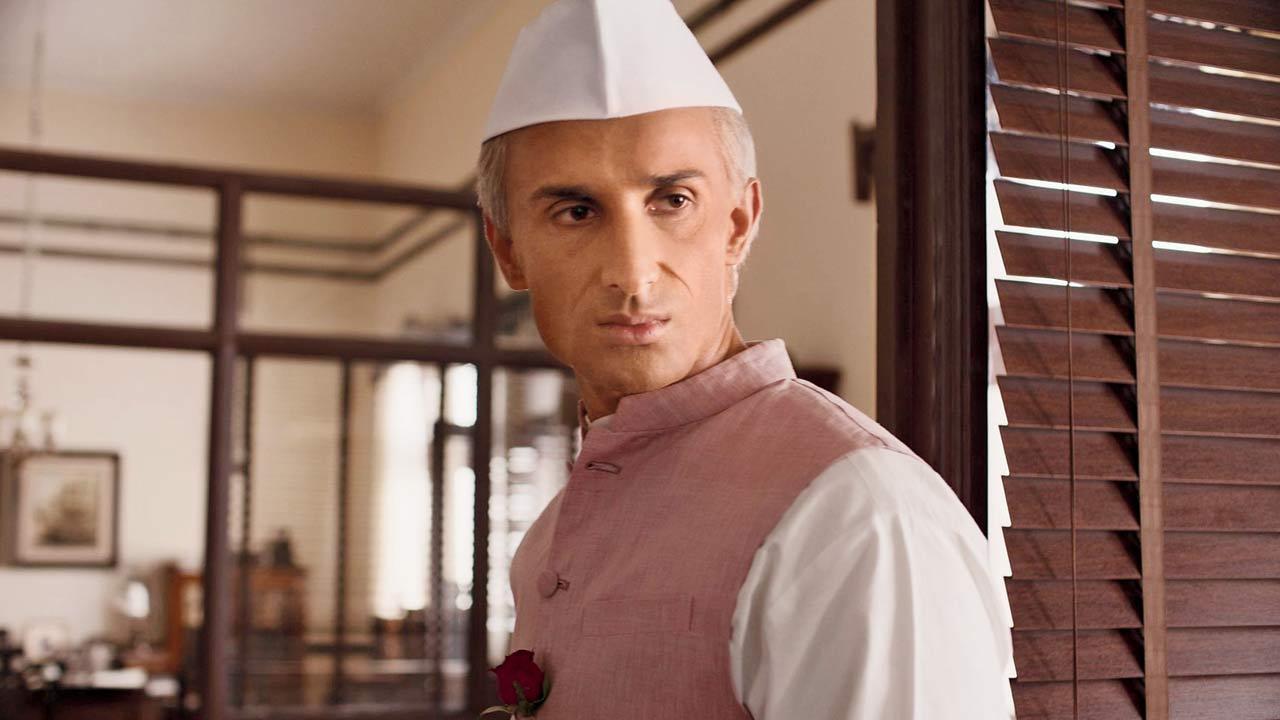
Resurfacing on the scene with Freedom At Midnight, Sidhant Gupta says he didn’t go on a signing spree after Jubilee’s success as he wanted to stay true to his craft
Priyanka Sharma (MID-DAY; November 10, 2024)
What does one do after emerging as a breakout star? Most likely, go on a signing spree. But Sidhant Gupta, who burst on the scene last year with Jubilee, vanished from the spotlight. Now, over one-and-a-half years on, the actor is back on screen as India’s first prime minister Pandit Jawaharlal Nehru in Nikkhil Advani’s period drama, Freedom At Midnight.
“As an actor, you get to know yourself as you move along, when success and acceptance come in. Why am I doing this work? This has been a life-changing question for me. I asked myself this when no one wanted to work with me, and I ask myself this today as well. When I read the script of Freedom At Midnight, I got my answer,” begins the actor. He is aware that the audience would have expected to see more of him after Jubilee.
But he instead dived deep into the Sony LIV series, which follows the events leading up to India’s partition and independence in 1947. “Nothing else mattered, not the perception of people. I didn’t want to take the safe route. I don’t want to keep doing the same three-film [deal] and back-to-back shifts. I want to stick to my guns,” he says.
That is not to say that Gupta is averse to commercial outings. After Jubilee, the actor read multiple scripts, but stayed true to his pursuit as an artiste. “If the characters are appealing, I might do those [mainstream projects] as well. I’m not hiding behind the character of Jawaharlal Nehru. I’m doing the job that actors sign up to do, which is to become someone else.”
Besides the creative satisfaction that Freedom At Midnight—also starring Chirag Vohra and Rajendra Chawla—offered, Gupta immensely enjoyed being on Advani’s set. He says the creator-director treats his unit like a family.
Recalling an incident from their Patiala shoot, the actor shares, “One day, we had to stall the shoot as the rains weren’t stopping. A day’s cost is enormous in such a huge show. So, usually, you see directors and producers thinking about how to save money. But Nikkhil sir took the entire unit to Chandigarh for a day and threw a bash. When I told him it was commendable, he replied, ‘This will drive the team for the next 15-20 days.’”
Check out Sidhant Gupta as Pandit Jawaharlal Nehru in Nikkhil Advani's Freedom At Midnight
9:46 AM
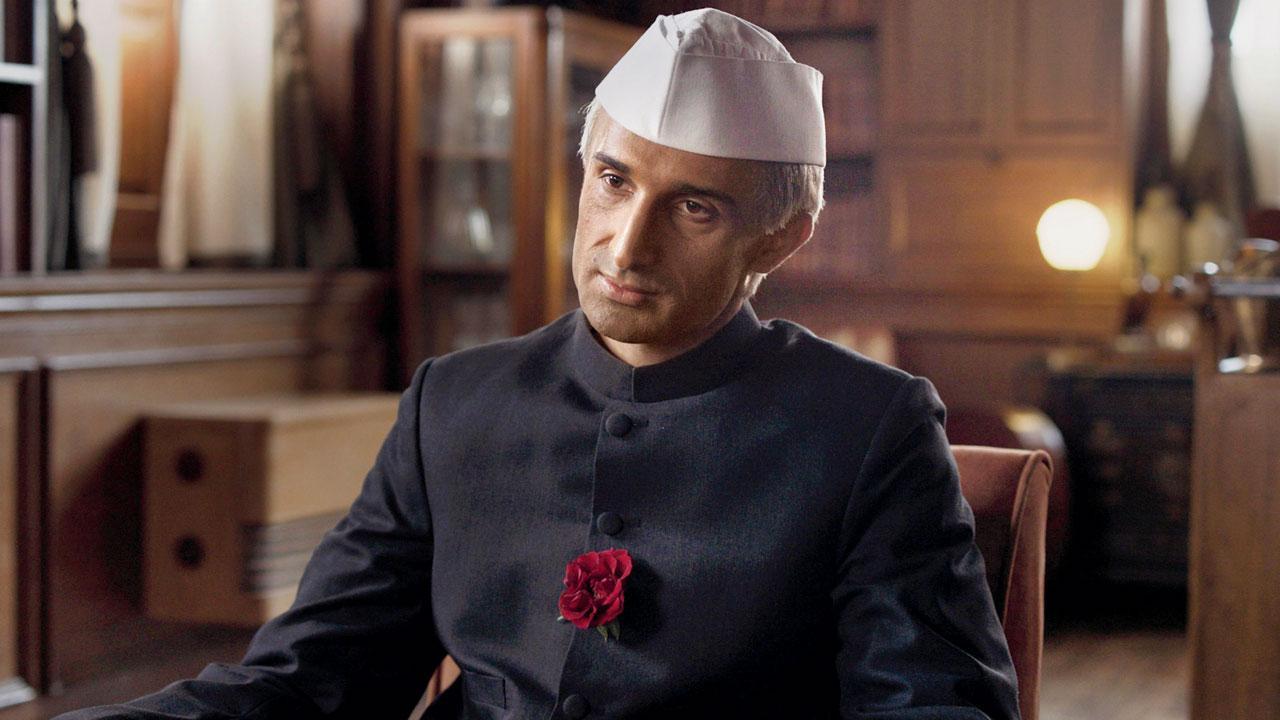
Sharing exclusive picture of Sidhant as Nehru, Freedom at Midnight creator on how the series adapted from the eponymous book looks at India’s independence struggle through personal accounts
Letty Mariam Abraham (MID-DAY; May 3, 2024)
There is something about history that draws Nikkhil Advani, something about real-life events that make for compelling storytelling. A case in point—Rocket Boys that focused on Homi Bhabha and Vikram Sarabhai. Now, the director-showrunner is gearing up to bring the most important chapter of Indian history to the screen with Freedom At Midnight.
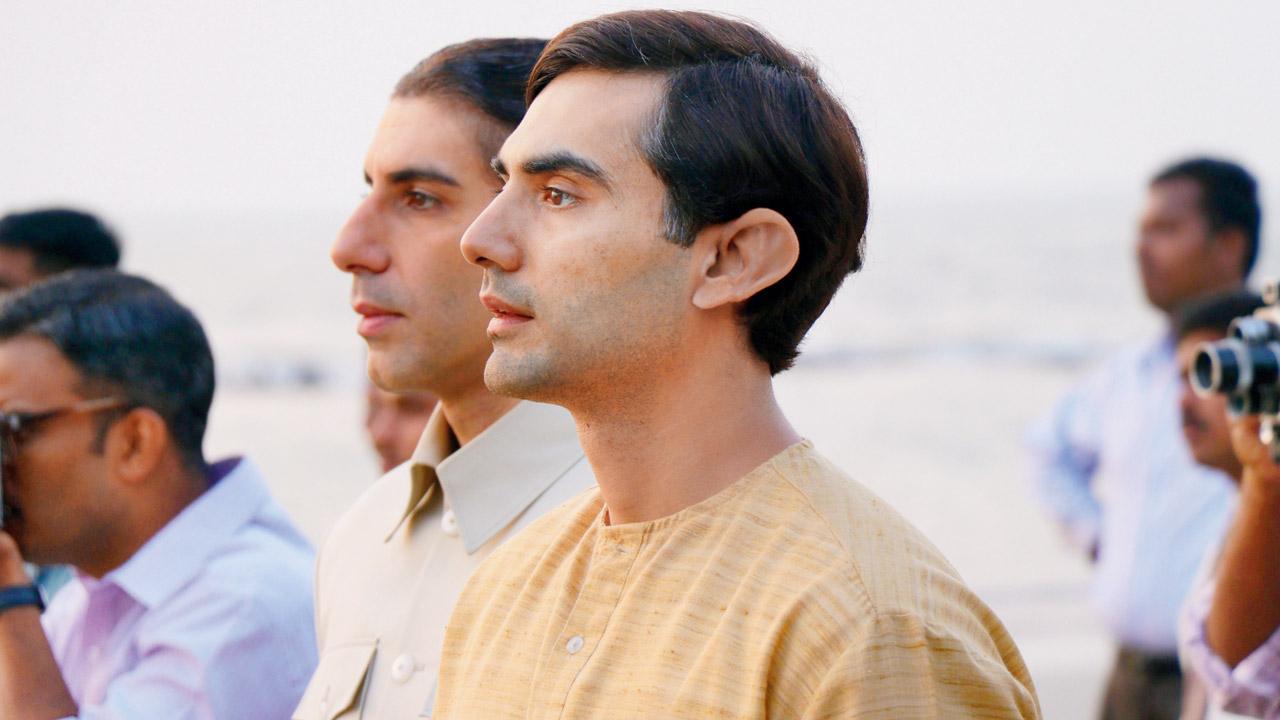
In June 2022, Advani had announced the historical drama that is based on Dominique Lapierre and Larry Collins’ acclaimed book of the same name. Almost two years on, he has shared the series’ first look with mid-day, which sees actor Sidhant Gupta as Pandit Jawaharlal Nehru.
“This show is a profound tribute to the luminaries of our freedom movement—Mahatma Gandhi, Jawaharlal Nehru, and Sardar Vallabhbhai Patel,” says Advani. While Gupta will be seen on screen after his breakout role in Jubilee (2023), Chirag Vohra and Rajendra Chawla will slip into the roles of Gandhi and Patel respectively. The Sony LIV series took birth over a simple conversation between Danish Khan, the platform’s business head, and Advani.
“Over the course of interacting on [shows], Danish sir and I have become not just collaborators, but also friends. He took one second after hearing the initial pitch of Rocket Boys to greenlight it. For Freedom, he came to me with a sparkle in his eye and asked, ‘How would you like to make your favourite book into a show?’”
The rest, as they say, is history. The team took the project on floors in late January this year. Besides being an ode to the heroes, Advani says Freedom at Midnight is also a means to take the audiences back to their roots, as they view India’s freedom struggle and the Partition through untold tales.
“We know the major sacrifices and struggles that led to our independence. What Dominique Lapierre and Larry Collins got was access to Lord Louis Mountbatten’s diaries and notes. So, in between all those milestones, we have some personal accounts that make that time come alive. We have tried to capture that.”
Throwback: When Rajbans Khanna’s Gotama The Buddha left audiences stunned and won at the 10th Cannes Film Festival
9:27 AM
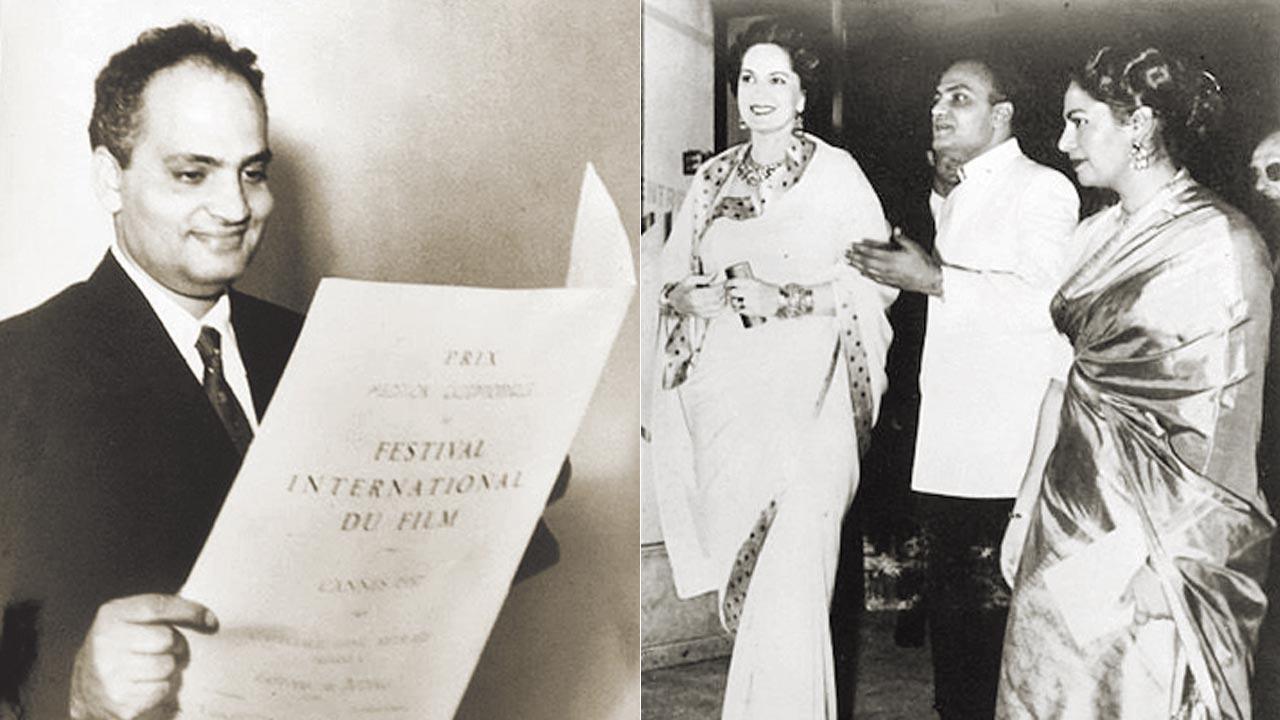
Filmmaker Rajbans Khanna won the award of the Best Director for his film Gotama The Buddha at the 10th Cannes Film festival in 1957; (right) Begum Agha Khan, mother of the present Agha Khan, with filmmaker Rajbans Khanna and wife Usha at the banquet hosted in Cannes, post the screening of his film
With India chosen as the first country of honour at the 75th Cannes Film Festival this year, Sunday mid-day takes a trip down memory lane to the 10th Cannes Film Festival
Nidhi Lodaya (MID-DAY; May 22, 2022)
This year marks 65 years since Rajbans Khanna’s documentary film, Gotama The Buddha, won at the 10th Cannes Film Festival. Born in 1920 in Lahore, Khanna was one of the country’s well known political filmmakers. Sunday mid-day got in touch with Devieka Bhojwani, one of Khanna’s three children and a theatre actor, to talk about their father’s achievements and how he reached the Cannes in the mid-’50s.
Right after school, Khanna plunged into the freedom movement until India gained independence. Post-1947, he dedicated his efforts to Kashmir. “He was a student leader and also part of the militia that protected Kashmir, once he was out of college,” recalls Peddar road-based Bhojwani. The sense of pride in her tone is evident as she speaks about her late father’s political involvement. “He had never made a film before,” she says. “He was a writer, poet, revolutionary, student leader and leftist. He believed in fighting for the cause of national integration.” Khanna only moved to Mumbai after marrying Usha Khanna. His interaction with director Bimal Roy in Mumbai was sparked when he showed him the script for Gotama The Buddha.
In 1956, the then prime minister Jawaharlal Nehru asked Khanna to make a film on the life and teachings of Gautam Buddha in celebration of his 2,500th birth anniversary. That’s how the idea for Gotama… was seeded, and Khanna and Roy began working on this unique idea with Hrishikesh Mukherjee, who was an assistant to Roy at the time and also the editor of the film.
The film is developed through thousands of ancient sculptures, paintings and art relics from India, Tibet, Central Asia, China, Indonesia, Burma, Ceylon and other Asian countries. There are no actors, yet the story has universal appeal. It traces the life—from birth till death, as a humble priest to a religious icon—of the Buddha. Emphasis is placed on Buddha’s relationship with the land, conveyed by lyrical shots of India’s vast and varied terrain.
“It took about a year to finish [the film] and my father travelled to all these countries,” says Bhojwani. “It’s so poetic.” The voiceover was done by renowned names of the day, Uma Anand, a journalist and broadcaster, Zul Vellani, producer, director and narrator of news broadcasts, Ramesh Thaper, a journalist and political commentator, among others.
Gotama The Buddha won a special mention for Best Director and was nominated for Palme d’Or (Golden Palm), considered one of the most prestigious awards in world cinema. It was introduced in 1957 by the festival’s organising committee. “People couldn’t believe that someone could create an expression using stone sculptures. You felt as if they were speaking to you,” says Bhojwani. After the screening, the audience gave a standing ovation. Jean Cocteau, a famous French intellectual wrote a note to Khanna, saying, “O marveille des marveilles Secretement et Coeur a coeur je bous salue’ which translates to “O marvel of marvels, secretly and heart-to-heart, I salute.”
This was also Bhojwani’s parents’ first trip abroad. “When they were awarded the cash prize, they had never seen so much money,” she recalls. “They were newlyweds and had left me in Bombay. I was two or three years old.”
The Khannas fell in love with Paris—the cafes and galleries—and would sit around the city all day. “That’s where my mother got the idea of coming back and starting Café Samovar—something like a little Parisian intellectual café,” she adds. The iconic cafe at the heart of Jehangir Art Gallery in Kala Ghoda shut down in 2015.
When asked about the current hype around Cannes and to run a comparison to what it was 65 years ago, Bhokwani says, “There was a beauty about the simplicity and the emotions. It was eloquent in itself. There were no gimmicks, no cameras.”
This year also marks Khanna’s 100th birth anniversary. His three children–Bhojwani, Siddharth Khanna and Malavika Sangghvi, are hoping to publish their father’s writings. “He has about 50 script ideas and most of them were on national integration, the pride and beauty of India,” concludes Bhojwani.
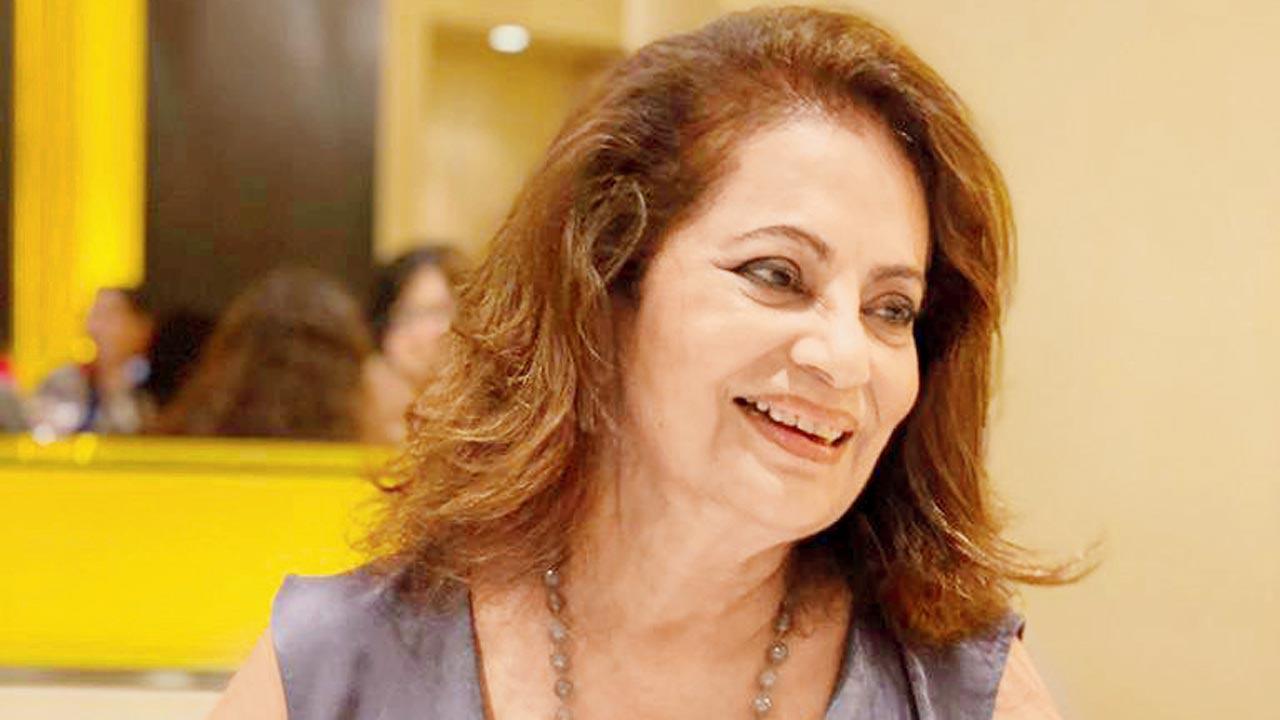
Devieka Bhojwani
Rocket Boys showed Bhabha and Sarabhai’s equation with PM Nehru; second season set in Indira Gandhi’s reign
8:04 AM
Upala KBR (MID-DAY; February 21, 2022)
Director Abhay Pannu ended the first season of Rocket Boys on an interesting note, with Homi Bhabha — essayed by Jim Sarbh — standing on the cusp of an era-defining invention. While the series depicted how Bhabha and Vikram Sarabhai boosted the nation’s standing in scientific communities under the aegis of then Prime Minister Jawaharlal Nehru, it is learnt that the second edition will see former Prime Minister Indira Gandhi play a bigger role as she takes charge.
Kavish Sinha, who handled the casting of the Sony LIV offering, had roped in Charu Shankar to play India’s Iron Lady in the opening season. “There are a lot of dignitaries who come into [play] in the second season, including cabinet ministers and prime ministers. A major part [is dedicated to] Indira Gandhi in the upcoming season. Abhay was ready with a complete docket for the entire show, including the character arcs,” says the casting director.
He adds that both instalments were shot simultaneously. “We needed actors who would be invested for a long period as the two seasons were being shot together. The 16 episodes weren’t shot episodically, but as per the script and location.” He adds that the show is now in post-production.
Lata Mangeshkar: A singer who captivated millions over seven decades
8:25 AM

Ambarish Mishra (THE TIMES OF INDIA; February 7, 2022)
Lata Mangeshkar was groomed in the art of playback singing—diction, pronunciation, voice modulation and breath control—by Master Ghulam Haider, Anil Biswas and Naushad Ali. She went on to team up with composers as varied as C. Ramchandra, Shankar-Jaikishan, S D Burman, R D Burman and A R Rahman, and found favour even with purists like Madan Mohan, Roshan, Khayyam, Sajjad Hussain, Jaidev, Vasant Desai, Salil Chowdhary, and Hridayanath whose creations were steeped in Indian ragas.
The appeal partly lay in her incredible vocal range—it extended beyond three octaves, allowing collaborators to experiment with form and content. Anil Biswas would say she inspired them to work on innovative musical phrases. “Hindi cinema was looking for a pan-Indian voice to suit female leads of varying extracts—Vyjayanthimala and Hema Malini came from south, Sharmila Tagore and Raakhee from Bengal, while Nutan was a Maharashtrian. Mangeshkar answered the need,” said film chronicler Veerchand Dharamsey.
Pointing out that her 1947 debut coincided with Partition, Prakash Joshi, a musicophile with a collection of 4,000 Lata songs, said her songs helped heal the wounds of communal frenzy. “‘Hawa mein udta jaaye’ (from Barsaat) was enough to put a smile on India’s lips, replacing horror with hope,” he said.
Born in Indore on September 28, 1929, to Deenanath and Shevanti Mangeshkar, she was trained in classical music by her father, an actor-singer from Goa, who owned a drama company. Eldest among five siblings, her passion for singing was evident as early as age four.
Master Deenanath’s death in 1945 altered her life’s course. She joined Prafulla Pictures, a film company helmed by producer-actor Master Vinayak Karnataki and became the family’s sole breadwinner at 14. Hindi film composer Ghulam Haider, a Lahore migrant, was quick to spot her potential. When producer S. Mukherjee, whose ‘Shaheed’ was on the floors, rejected the thin voice which, he said, wouldn’t suit the female lead, an angry Haider stormed out of Mukherjee’s Filmistan studio in Goregaon with Lata in tow, but not before warning the movie moghul that his protegee would become a superstar.
“That afternoon Master-ji and I trekked to Goregaon railway station. Master-ji said he would find me an opening in Bombay Talkies. The platform was deserted. We sat on a wooden seat. Tapping lightly on his 555 cigarette tin, he taught me a song,” Mangeshkar told TOI in a 1998 interview. ‘Dil mera tora,’ from ‘Majboor’ brought instant success, and was followed by ‘Aayega aanewala’ from Mahal (1949). As the 78 rpm record sleeve of Mahal didn’t carry her name, radio stations were flooded with calls from admirers eager to know the singer’s identity. Between 1947 and 1951, her popularity soared. This phase coincided with singing star Noorjahan’s migration to Pakistan and the gradual fading away of Suraiya.
A moment of glory came when she was invited to a midnight congregation at Shivaji Park on May 1, 1960 to mark the formation of the state of Maharashtra with a Marathi prayer song. Three years later, her voice rang out at a rally in Delhi to raise funds for families of soldiers who died in the Indo-China war. Jawaharlal Nehru fought back tears as he heard ‘Ae mere watan ke logon.’ After the event he met her and said, ‘Beti, aaj tumne mujhe rula diya” (You brought tears to my eyes today).’
Mangeshkar reigned in the 1970s-’80s despite drastic changes in taste. Languorousilting tunes gave way to heavy orchestration and fast beats. She was quick to adapt, crooning for composers half her age (Rajesh Roshan, Bhappie Lahiri, Jatin Lalit, Raam Laxman), as also with GenNext singers S. P. Balasubramaniam, Sonu Nigam, Suresh Wadkar.
Though she cut down on assignments, her ‘Dil deewana bin sajna ke’ from Maine Pyaar Kiya set the mood for the vibrant 1990s. She took Youngistan by storm with ‘Tu mere saamne’ (Darr), ‘Gori hai kalaiyaan ‘ (Aaj Ka Arjun), ‘Yaara sili sili’ (Lekin), ‘Didi tera dewar (Hum Aapke Hain Kaun), ‘Chhai chhappa chhai’ (Hu Tu Tu). Dilwale Dulhania Le Jayenge became a cult, post-globalisation film, reviving romance with frothy numbers like ‘Mere, khwabon mein jo aaye’, ‘Mehndi laga ke rakhna’ (the Lata-Udit Narayan duet is played at wedding receptions even today) and ‘Tujhe dekha toh yeh’ (with Kumar Sanu). ‘Luka chuppi’, a moving piece, from Rang De Basanti, is considered her swan song, a sort of grand finale to an epic life.
Dilip Kumar's realism and brooding screen presence had a seminal influence on generations of actors to come
8:02 AM

Avijit Ghosh (THE TIMES OF INDIA; July 8, 2021)
Dilip Kumar’s best encapsulated the finest in popular cinema. Secure in his craft, he acted only in 60-odd films in a career spanning more than five decades. Kumar, whose real name was Yusuf Khan, even refused the part that made Omar Sharif a Hollywood star in David Lean’s Lawrence Of Arabia.
His brooding intensity and comic flair influenced Bollywood A-listers such as Rajendra Kumar, Manoj Kumar and Amitabh Bachchan. An obsessive perfectionist, he learnt to play the sitar for a song sequence in Kohinoor. Kumar was so immersed in the self-destructive protagonist of Devdas (1955) that he had to undergo psychiatric counselling. The doctor advised comedies as therapy. And he excelled in them too.
In the pre-independence era, Pramathesh Barua and K L Saigal had swayed a million hearts as Devdas. Yet a generation later Dilip Kumar made the part his own. He induced intensity into loving and losing in a way that pain became indistinguishable from pleasure.
His most-remembered performances had distinct tragic undertones. As a conflicted prince who rebels against his father, the emperor, for the woman he loves, Kumar was starch-perfect with his diction in Mughal-e-Azam. A scene with Madhubala, where he fondles her face with a peacock feather, is iconic for its eroticism.
A notable moment in his career came with Ganga Jumna (1961) where he conveyed the despair of the innocent villager forced to become an outlaw. “To me, it was his ultimate performance,” Amitabh Bachchan told TOI in 1990. Ironically, the Censor Board recommended major cuts to it on grounds of vulgarity and violence. The film was released following Prime Minister Jawaharlal Nehru’s intervention. But the struggle to get it exhibited took its toll on him. He never produced a film again.
Like Raj Kapoor, and Shah Rukh Khan, Kumar’s roots were in Peshawar where his father was a fruit merchant. The family shifted to Deolali near Nasik, and Bombay, in late 1920s.
He loved watching movies. Kumar once said he had watched For Whom the Bell Tolls, starring Ingrid Bergman, 21 times in seven days. Among others, he was influenced by the 1930s Hollywood star, Paul Muni.
A chance meeting in Nainital with Devika Rani, a top star of the 1930s who co-owned Bombay Talkies, led to his debut in Jwar Bhata (1944). He picked the screen name from three options -- Vasudev and Jahangir being the others -- provided by renowned Hindi writer Bhagwati Charan Verma, then associated with the film studio, revealed film historian Sanjit Narwekar in Kumar’s biography, The Last Emperor.
After watching it, Baburao Patel, the much-feared editor of Filmindia, whose reviews could make or mar a film those days, wrote, “Dilip Kumar, the new hero of Bombay Talkies, is an anaemic addition…He looks gaunt and famished and strikes one as a long ill-treated convict who has escaped from a jail…His acting efforts in this picture amount to nil.”
But Kumar improved in Nitin Bose’s Milan (1946), a profitable adaptation of Rabindranath Tagore’s Nouka Doobi. Kumar once said, “I learnt from Nitin Bose the value of silence,” as evident in his signature pauses in later films. His first superhit was the tragic Jugnu (1947), with Noorjehan as leading lady.
Historian Ashok Raj describes the years between Jugnu and Ganga Jumna (1961) as “the classical period” of his career, ranging from tragic love stories (Andaz, Devdas), swashbuckling costume dramas (Azad, Kohinoor) and semi-socialist yarns (Naya Daur, Paigham) to the romantic supernatural (Madhumati), the experimental (Musafir), where he sang his only film song (Laagi nahi chhute), and even a Left-leaning project (Footpath), a proto-Deewar.
After Ganga Jumna, Kumar took a break, acting in only two flops in the next five years. His marriage to Saira Banu in November 1966 -- he was 44, she was 22 -- proved lucky for him. Kumar’s double-role venture, Ram Aur Shyam, celebrated its golden jubilee. But by then middle-age had crawled onto his appearance. In the 1970s, Kumar was largely reduced to a yesteryear star.
The thespian made a stirring return in Kranti (1981) and Shakti (1981).The new Kumar was occasionally over the top. But superhits such as Vidhaata, Karma and Saudagar introduced him to a new generation of film buffs. A secret marriage and divorce to a Hyderabadi socialite, Asma, became fodder for gossip magazines during the same phase. There were other unpleasant memories too when he was targeted for his efforts to bridge ties between India and Pakistan.
Now he is gone. But in every movie rerun, Dilip Kumar will continue to astound and enrich us with his gift to lift a scene with silence and soul.
---------------------------

SUHANA SAFAR
- Born as Yusuf Khan on December 11, 1922. He was born in the same month as Raj Kapoor and in the same place, Peshawar, but was two years elder. Yusuf Khan's father was a fruit merchant
- Before joining films, Yusuf Khan worked in a military canteen at Poona; set up a fruit stall next to it with his employer's permission
- He was interviewed for a film career by Devika Rani, wife of Bombay Talkies boss Himanshu Rai. She asked four questions: "Have you ever acted on the stage?"; 'No madam" was his reply; "Would you like to act in films?"; "Yes madam" he said; "Do you smoke?"; "No madam"; "Can you speak Urdu fluently?" "Yes madam"
- He lost his parents and his disabled brother Ayub Khan in rapid succession. This is believed to have deeply affected him in his youth
- The phase from Devdas to Mughal-e-Azam is considered to be the best in his work
- In 1961, he turned producer with Ganga Jumna
- In 1962, he was offered Lawrence Of Arabia, which he turned down. The role was done by Omar Sharif
- In 1970s, his career took a dip with films like Gopi, Sagina and Bairaag failing at the box office. He took a break for six years and returned with Manoj Kumar’s Kranti in 1981
---------------------------

FAMOUS LINES
- Devdas Kaun kambakth hai jo bardasht karne ke liye peeta hai. Main toh peeta hoon ke bas saans le sakoon
- Saudagar Haq hamesha sar jhukake nahin... sar uthake maanga jaata hain
- Mughal-e-Azam Mera dil bhi aapka koi Hindustan nahi ... jispar aap hukumat karein Shakti Joh log sacchai ki tarafdari ki kasam khate hain... zindagi unke bade kathin imtihaan leti hain
- Vidhaata Jagawar agar zindagi mein bada banna hain... toh chhoti harkate chhod do
- Daag Din mein iski zaroorat hoti hai zaalim raat toh khud ek sharab hoti hai
- Aadmi Zindagi bhar doosron ka boj uthataa raha hoon aur aaj khud ek boj ban gaya hoon
---------------------------
FAMOUS SONGS
- Yahaan badla wafa ka bewafai ke siva kya hai Noorjehan-Rafi duet, composed by Firoz Nizami, was from 1947 hit Jugnu
- Gaaye ja geet milan ke Mela (1948) had great songs by Naushad. This one, sung by Mukesh, was memorable
- Meri kahani bhoolnewale Deedar reinforced the tragedy king image. This Naushad tune was sung by Rafi
- Yeh hawa yeh raat yeh chandni Talat Mehmood’s voice suited the thespian; this one by Sajjad Hussain is a classic from Sangdil (1952)
- Aye mere dil kahin aur chal From Daag (1952), composed by Shankar-Jaikishen and sung by Talat Mehmood
- Hum aaj kahin dil kho baithe Naushad’s score and Mukesh’s sonorous voice from Andaz (1949)
- Suhana safar aur yeh mausam haseen One of Dilip Kumar’s personal favourites, from Madhumati (1958), rendered by Mukesh, scored by Salil Chowdhury
- Nain lad jai hain Dilip Kumar did a fast-paced folk dance for this Ganga Jumna (1961) number. Naushad-Rafi combination again

Subscribe to:
Posts (Atom)