Showing posts with label Jatin-Lalit. Show all posts
Showing posts with label Jatin-Lalit. Show all posts
Credit for Tujhe Dekha Toh first goes to Jatin-Lalit ji and Anand Bakshi-Kumar Sanu
11:00 AM

Rishabh Suri (HINDUSTAN TIMES; June 14, 2024)
Tujhe Dekha Toh from the 1995 romcom Dilwale Dulhania Le Jayenge was voted the UK’s favourite ’90s Bollywood song by the BBC, recently. But Lalit Pandit, one half of the track’s composer duo Jatin-Lalit, has a bone to pick with its singer, Kumar Sanu.
“The fact that Kumar Sanu didn’t acknowledge Anand Bakshi, who penned Tujhe Dekha To’s lyrics, and us, Jatin-Lalit, who composed the music for it — was upsetting. It is not good on his part to keep saying, ‘Mera gaana hai, mera gaana hai’,” Pandit told Bollywood Hungama.
When we reach out to Sanu, who is currently in the US for live shows, he acknowledges Bakshi and Jatin-Lalit’s contribution in the song as monumental. “The credit therefore goes first to Jatin-Lalit ji and Anand Bakshi sahab. Agar music aisa nahin hota toh yeh gaana hit nahin hota. Ditto for the lyrics. It was teamwork,” the 66-year-old says, adding, “Jatin-Lalit are such music directors that every song has something special. They took forward the legacy of good music after Pancham da (composer RD Burman).”
Is there a misunderstanding, then? “Kuchh nahin hai. When we meet, we’ll talk it out. Jatin-Lalit ji shouldn’t think like this; I’ve always respected them and will continue to, woh mujhe kuchh bhi kahein,” he says.
Kumar Sanu says he sang Tujhe Dekha Toh in 30 minutes. There’s not a word of truth in that-Lalit Pandit
9:46 AM

After Sanu doesn’t acknowledge them in BBC interview celebrating Tujhe dekha as Ultimate ’90s Song, composer Lalit of Jatin-Lalit says singer is always track’s ‘last link’
Sonia Lulla (MID-DAY; June 13, 2024)
The result of a recent musical poll confirmed what many of us growing up in the ’90s already believed—that Tujhe Dekha Toh, the track from Dilwale Dulhania Le Jayenge (1995), was the defining song of the decade. The BBC Asian Network invited listeners to choose The Ultimate ’90s Bollywood Song from a list of 50 contenders, and Jatin-Lalit’s composition, featuring Shah Rukh Khan and Kajol, emerged as the winner last week.
Such a title would be a reason for any composer to celebrate. However, Lalit Pandit laments that not only were they not interviewed after the win, but they also weren’t credited in the story or by singer Kumar Sanu.
Expressing his disappointment, Pandit highlights that a song is always a collaborative effort. “The writers and composers create the song, and it doesn’t belong to [one person]. A singer is always picked by the composers. It’s only fair that a singer acknowledges and thanks the composer for choosing him. We could have made anyone sing it. When a song is created, discussions about it take place with the producers and directors. The singer is not even in the scene; he is the last link. Kumar Sanu has been [harping] about it being his song. Even his fans have called him out, [asking him to] acknowledge lyricist Anand Bakshi saab, and Jatin-Lalit,” says Pandit.
The composer is equally displeased by Sanu’s claims in the interview. “He says he sang the song in 30 minutes. There’s not a word of truth in that. No singer can sing our song in such a short period. Jatin’s voice dubbing technique was superior. We ensured that the singer delivered the song precisely how we desired. He sang the song very well; no one takes that away from him.”
Making music is a creatively fulfilling experience. Looking back at the track, Pandit says he cherishes the moments he spent with Lata Mangeshkar. “In her last decade of singing, Lata ji sang the most for our compositions because she loved our work,” says the composer, whose Panchayat track, Thame Dil Ko, is being talked about.

Directors are confused and desperate for good music. But they don’t know how to introduce it in their film-Lalit Pandit
8:13 AM

Lalit Pandit brings the flavour of ’90s music to the third edition of the revered web show Panchayat with a track that features African percussion rhythms
Sonia Lulla (MID-DAY; June 2, 2024)
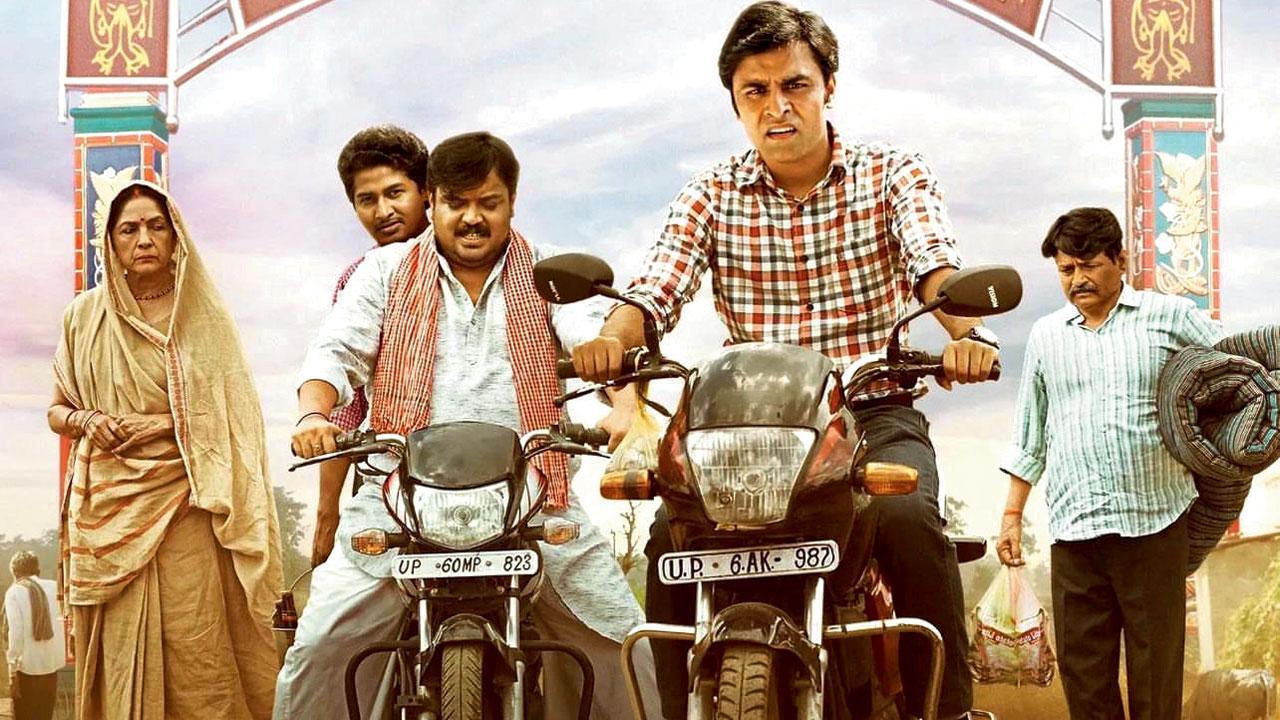
The third edition of the web series, Panchayat, which released on May 28, offered a throwback to ’90s music with Thame Dil Ko, a Lalit Pandit-composition that was rendered by Abhijeet Bhattacharya.
“The team wanted a melodious song along the lines of the numbers that I have created over the years in films like Yes Boss [1997]. They wanted a song that was reminiscent of the melodies of the ’90s, but one that had a boost of energy. It needed to be rhythmic and have [happy] notes,” says Pandit of the track in the Jitendra Kumar and Neena Gupta starrer.
Well aware that Bhattacharya excels at rendering the kind of number he was set to create, Pandit compelled the singer to break his “Bollywood hiatus” and return to the mic.
“We were happy to be working together again. He always takes my projects seriously and rehearses before coming into the studio. He has the baritone that is needed for this genre. He was worried, and told me that he hadn’t sung in a long time. But I encouraged him to join me.”
Alok Ranjha Jha’s lyrics, says Pandit, enabled him to create a composition that he was certain would appeal to listeners. In a bid to replicate the sonic quality of the ’90s, Pandit says the “programming and instrumentation” aligned with the flavour of the era.
“It has modern beats with a hint of African percussion rhythms. After a very long time, I used an instrument called the tumba, which creates a warm and rhythmic [melody]. While using percussion instruments, one can include nuances seamlessly, and that is something that a computer program cannot do, unless it is designed intricately. There are [segments] of the violin that I have used too, and they blend into the rest of the song beautifully. Because this was one man’s vision, the clarity of thought is evident,” he says, adding that a composer’s ability to create a song that the audience can sing along to is a winning quality.
Musicians of this day and age, he believes, are creating “very complicated tunes”. “More attention is paid to the production of the song than the composition and writing. That is why, today, the soundtrack of a film has only one or two songs that eventually become popular. The rest of the album doesn’t work. When Jatin and I were working together, the entire soundtrack of films like Fanaa [2006], Chalte Chalte [2003], and Dilwale Dulhania Le Jayenge [1995] became popular. The [desire to] create that kind of rich music is missing.”
Reiterating the popular notion that in Bollywood, “music makes the film and the artiste memorable in the long run”, Pandit asserts that artistic rights should remain in the hands of creative individuals.
“I blame the directors. They are confused and desperate for good music. But they don’t know how to introduce that into their film. They end up refusing good songs. If they feel a composer [hasn’t worked hard to create a complex number], they reject it. Then, a music director needs to start thinking from the film director’s point of view, and it is the latter’s choice that is given preference. This must change.”
Sarfarosh was a right mix of realism and commercialism-Sonali Bendre
8:06 AM

Niharika Lal (BOMBAY TIMES; May 7, 2024)
During a visit to the capital in 1991, ad filmmaker John Matthew Matthan was taken aback by the sight of deserted streets in the early evening hours, police personnel checking all vehicles to assess and avert security threats. Delhi was on a high alert, which made Matthan realise that in Bombay, he had never heard of similar terror-related security concerns. It’s this realization that led to the making of Sarfarosh.
For his debut film, John – the writer, director and producer of Sarfarosh – had approached Aamir in 1992, but due to scheduling conflicts, the film finally went on the floors in 1995 and was released in 1999.
Aamir, who essayed the role of ACP Ajay Singh Rathod in the film, had mentioned in an interview that he agreed to do the film because he believed there were certain societal issues that needed to be addressed through cinema. On being asked if he was aware of the political implications of the film, he had said, “Ofcourse, that’s why I did the film.”
I can’t believe it’s been 25 years since Sarfarosh: Sonali Bendre
The actress told us, “I can’t believe it’s been 25 years since Sarfarosh. I owe Sarfarosh to my director John and nobody else. I had done ad films with John. He was so clear that he wanted me in that role. Sarfarosh was a right mix of realism and commercialism. Everything was just right in it. Though till date, I have not seen Sarfarosh. I have not seen any of my films. Now I see it in bits and pieces when it comes on social media.”
‘Naseeruddin Shah was initially considered for the role of Salim’
The director initially considered casting Naseeruddin Shah for the role of Salim, but the actor had declined to play a cop. So instead, John offered him the role of Gulfam Hassan, the ghazal singer, which Shah accepted. When it came to creating the villain for Sarfarosh, John said he needed a character with good access to places. During that period, only Pakistani cricketers and ghazal singers frequented the country.
The director told us, “I couldn’t have portrayed a cricketer as the villain in my film. So, I thought, why not a ghazal singer? Ghazal singers were often invited to high-profile gatherings, so I thought of using that for the plot.”
CBFC had asked the makers to remove Pak & ISI references
John recalled, “A few months before the film was submitted to the CBFC for certification, in February 1999, then-PM Atal Bihari Vajpayee had visited Lahore on the inaugural run of the Delhi-Lahore bus service. So, the CBFC wanted us to remove references to Pakistan and ISI. But after several discussions, the film was passed without any cuts.”
The film released on April 30, 1999, and shortly after, the Kargil war officially began on May 3, and went on till July 1999. John added, “I remember visiting the theatres in July; they were packed. People felt that the film was topical.”
‘It took Nida Fazli a year to write Hoshwalon’
About the iconic song Hoshwalon from Sarfarosh, the late lyricist Nida Fazli had said in an interview, “Director John Matthew Matthan asked me to get Jagjit to sing it, initially composed by Jatin-Lalit. But after he heard it, Jagjit refused to sing it because the metre and rhyme were out of sync. But Aamir wanted only Jagjit to sing for him. So I spoke to Jagjit again. Eventually, he agreed on one shart – that he would compose it.”
John shared with us, “It took Nida Fazli ji a year to write Hoshwalon.”
DID YOU KNOW?
• Sarfarosh was listed 33rd among Variety’s top 100 films of the week in 1999.
• Nawazuddin Siddiqui played a small role in the film.
• There have been multiple discussions to make a sequel to the film
• The film was shot in Mumbai and Jaisalmer. While Gulfam Hassan’s haveli was the Mohangarh Fort, Mirchi Seth’s den was the Mandir Palace in Jaisalmer

'Tujhe Dekha To Yeh Jaana Sanam' remains the clarion call to lovers-Lalit Pandit
8:14 AM

Roshmila Bhattacharya (MUMBAI MIRROR; October 20, 2020)
The first sitting at Yash Chopra’s residence, with his entire family in attendance, went on for four-and-a-half hours during which brothers, Jatin and Lalit Pandit, showcased their best compositions. Among them was a song that went “Mehndi Laga Ke Chalna, Payal Baja Ke Chalna, Par Aashiqon Se Apna Daman Bacha Ke Chalna”. A month-and-a-half later, Yash ji’s elder son, Aditya, called them in the midst of a recording for Sanjay Leela Bhansali’s Khamoshi: The Musical , asking if they could zip across to the office during lunch break. “There he asked if “Mehndi” was still available and looked relieved when we answered in the affirmative, admitting that it was apt for a situation in the film. That’s when we learnt that Adi would be making his debut as a director with Yash ji’s next production, Dilwale Dulhania Le Jayenge,” recounts Lalit, remembering how veteran lyricist Anand Bakshi turned up with 25 kamaal ke antaras and together, they had come up with the unforgettable “Mehndi Laga Ke Rakhna, Doli Saja Ke Rakhna, Lene Tujhe O Gori, Ayenge Tere Sajna”.
At that marathon session, they’d also hummed a tune which had stayed with the Chopras. Penned by Bakshi saab, “Mere Khwaabon Mein Jo Aaye” was the first song to be recorded for the film. It was a solo by Lata Mangeshkar who was delighted to see the “kids” doing such good work and was generous with her inputs. “During the dubbing, Didi suggested she sing the line, 'Aa Ke Mujhe Chhed Jaaye' in a way that reflected the girl’s wonder, as the man of her dreams flits into her fantasy to flirt with her, pointing out that it would help the actress while enacting it on screen. Since that day, I’ve learnt to give expressions to my compositions,” admits Lalit.
Over the next six months, the Pandits came up with several chartbusters, from the folky “Ghar Aaja Pardesi”, beautifully rendered by Pam Chopra and Manpreet Kaur and carrying the fragrance of Indian culture, to the intoxicating “Zara Sa Jhoom Loon Main”, which had an inebriated Simran going totally berserk. “The latter was very different from the slow, slurry, nashiley numbers of the past. Asha ji (Bhosle) who sang the duet with Abhijeet (Bhattacharya), was at her ‘champion’ best, setting the recording room on fire with her very first alaap, then, going on to give an innovative twist to Bakshi saab’s words, ‘Thandi Thandi Pavan’, during the dubbing,” the music director reminisces.
Thanks to Kajol’s uninhibited histrionics, Shah Rukh’s soulful eyes and innate charm, its debutant director’s song picturisation, enhanced by his Yash ji’s large-heartedness, DDLJ topped a 2005 poll conducted by the BBC Asian Network as the best Hindi soundtrack of all time, nudging out classics like Pyaasa and Guide. Bakshi saab bagged Filmfare’s Black Lady for Best Lyricist for “Tujhe Dekha To Yeh Jaana Sanam”, voted Song of the Year.
For Lalit “Tujhe Dekha” brings back memories of Lataji, a one-take artiste, giving retakes after retakes, because they wanted her to sing “La La La La La”, as Kajol looks into her future with Raj, in a particular way. “Of course, she got it right and then Adi took the song into the mustard fields of Punjab to immortalise it. DDLJ set a world record as the longest-running film and 'Tujhe Dekha To Yeh Jaana Sanam' would remain the clarion call to lovers,” says a still awed Lalit.
The film opened in theatres on October 20, 1995. Lalit recalls how, after the premiere at Mumbai’s Excelsior theatre, as he nervously waited with his brother and the Chopras, trying to gauge the industry’s reaction to their love story, late producer F C Mehra, who was like a father figure, suddenly walked up and embraced him, saying, “Puttar tussi kar dikhaya hai (Son, you have proved yourself with this film).”
Twenty-five years later, people are still humming “Tujhe Dekha To Yeh Jaana Sanam” even as they fall in love with Raj and Simran, all over again.

Maybe, Jatin and I will work together some day-Lalit Pandit
8:18 AM

Lalit Pandit after 13 yrs, was seen with composer brother on a show
Himesh Mankad (MUMBAI MIRROR; November 28, 2019)
Composer duo Jatin and Lalit Pandit have some memorable scores to their credit, for films like Dilwale Dulhania Le Jayenge, Jo Jeeta Wohi Sikander, Yes Boss, Kuch Kuch Hota Hai, Jab Pyaar Kisise Hota Hai and Pyaar Toh Hona Hi Tha. They carried forward the good work into the millennium, with Kabhi Khushi Kabhie Gham and Hum Tum. Then, they shocked the industry and fans with their decision to part ways in 2006. Their last collaboration was the Aamir Khan-Kajol starrer, Fanaa. In the 13 years since, the brothers did not even make joint appearances. But recently, they reunited for a special episode on the on-going singing reality show, Indian Idol season 11.
When quizzed on the reason for the split, they maintain a dignified silence, as it’s too personal to discuss publicly. Prod them on the reunion, and Lalit says, “We came on the show to listen to our songs, have some fun and create some good memories. Though we no longer work together, we are brothers. I miss Jatin and often remember his quirky sense of humour. He’s my older brother, I respect him, and like the idea of us coming together again.” Jatin who went into flashback mode, listening to their compositions from the ’90s to early 2000 on the show, adds, “I was touched to see the love our music still gets.”
At a time when remixes reign, is there a possibility of the ‘originals’ returning? Jatin informs that if they get something that has the potential to change the current scenario, they will be back together. “It’s essential to land a big film today because that’s what gets you visibility. Music of such a film is promoted well and that’s necessary for us to reunite,” he maintains.
Lalit is both cautious and optimistic: “We need to take small steps and progress towards it. Our separation was not planned, it just happened. But since people want our music to return, maybe, Jatin and I will work together some day.”
And what’s their take on the current music industry? “Every era has a mix of both good and bad songs. You need a strong composer to change things, which is missing today. That’s why everyone is recreating old melodies. Original songs give you an identity. We never believed in recreations,” Jatin asserts.
Lalit opines that music plays an important role in an actor’s career. It gives them stability and later, an iconic status. “Many of SRK (Shah Rukh Khan), Aamir (Khan), Salman (Khan) and Ajay’s (Devgn) best remembered songs were composed by us,” he points out.
The composer duo’s father, Pandit Pratap Narayan, was a trained classical singer. Both their sisters, Sulakshana and Vijayta, were popular singers and they are hopeful their sons will carry forward their legacy. Lalit’s sons are both singers. The elder one, Rohansh, plays the piano while Ab eer plays the drums. Jatin’s son, Raahul, aspires to be a singer and is training under his father. “Coming from the family of singers, we know how to train our kids, Music is in their blood, they just need to work hard,” Jatin signs off.
I found the words 'Kuch Kuch Hota Hai' odd and asked ‘Yeh kaisa gaana hai?’-Alka Yagnik
8:37 AM

Roshmila Bhattacharya (MUMBAI MIRROR; October 20, 2018)
 October 16, 1998… That was the day Karan Johar made his directorial debut with Kuch Kuch Hota Hai, a film that took off in a Riverdale High-kind of campus before moving into the real world. Shah Rukh Khan
playing a reel life father for the first time to an eight-year-old
matchmaker who is determined to reunite Rahul with his unacknowledged
first love, Anjali (Kajol). The buddy romance arrived on Diwali, coming
up against the combined might of David Dhawan, Govinda and Amitabh
Bachchan’s Bade Miyan Chhote Miyan. It went on to become one of Hindi
cinema’s biggest grossers, sweeping up several awards along the way,
including two National Awards, for Best Film for Providing Wholesome
Entertainment and Best Playback (Female). The latter went to Alka Yagnik for the title track.
Flashbacking to her special moment two decades later, Alka says emotionally, “It was my second National Award after Hum Hain Rahi Pyar Ke’s 'Ghunghat Ke Aad Se Dilbar Ka'. I was pleasantly surprised when I got the news because while it’s a lovely song and very popular, I hadn’t expected to bag the coveted national honour for it.”
She admits that the first time she heard the lyrics, she found the words, “Kuch Kuch Hota Hai”, slightly odd and actually asked, ‘Yeh kaisa gaana hai?’ It was only after the film’s release that she realised what an apt title it was. The title track went on to become a milestone in her career and she’s asked to sing it at every concert in every part of the world. “Even this year, during Navratri and Durga Puja concerts around the city, this evergreen track featured prominently in the playlist,” she smiles, adding that while the National Award ceremony is not the kind of function where one breaks into a song, she was requested to hum a line while being felicitated by the President. “It was a proud moment for my family and me. I missed my father who would always say I was headed for the National Award but by the time I won it, he had passed away,” she says.
Alka brightens up as she recalls the excitement, energy and enthusiasm of the young team lead by Karan and his composer duo. “Jatin-Lalit worked very hard on this composition which had a lot of variations. They wanted me to sing it with certain nuances which I followed. The vibe in the studio was great and Udit ji (co-singer Udit Naryan) was cracking jokes in between,” the singer reminisces.
While the title track is undoubtedly the highlight of this album, she contributed other hit numbers, from “Koi Mil Gaya” with its 14-line mukhda to “Yeh Ladki Hai Deewani” which started onscreen as a tiff between Rahul and Anjali and went on to become a “complete package”, with the lyrics, melody, rendition and performances in perfect sync. Then there is “Sajan ji Ghar Aaye” which marked Salman Khan’s introduction in a memorable special appearance and to date is a favourite with baraatis at weddings. “Since Udit ji and I had been singing all the other songs, I was surprised when I learnt that this duet was with Kumar Sanu ji. I was told it would be picturised on another actor, I had no idea that actor was Salman!” says Alka.
She was equally bemused while recording Gandhi ji’s oft-sung bhajan, “Raghupati Raghav”, wondering how they would incorporate it. “When I saw the film, I was blown over by the way it established how Tina (Rani Mukerji) who had been studying at the Oxford University, hadn’t forgotten her roots. Even today, it’s a favourite with NRIs who like the way I render it,” Alka adds.
Another surprise is the number of requests she gets for “Tujhe Yaad Na Meri Aayee”. Lalit had once revealed that the heart-wrenching melody was inspired by a Punjabi folk song and had moved the late lyricist Anand Bakshi to tears when the brothers had played it for Yash Chopra during a music session for Dilwale Dulhania Le Jayenge. “Karan, who was present at that sitting, remembered it and asked us to play it for him. Yash Johar ji and his wife Hiroo ji loved it as much and that’s how 'Tujhe Yaad Na Meri Aayee' came to be a part of the film.”
Kuch kuch aise hi hota hai aur bees saal baad bhi yaad reh jati hai.
It hurts when I listen to remakes that don’t do justice to the originals-Anushka Manchanda
8:10 AM

Debarati Sen (BOMBAY TIMES; December 3, 2017)
A true artiste is never really restricted to a single form of expression. Multi-faceted, they usually begin early by dabbling in many areas and eventually, excelling in quite a few. Anushka Manchanda is one such artiste. She began her journey into stardom as a teenager, by winning one of India’s earliest reality shows to bag a place in the country’s first all-girl band, Viva. Since then, she has donned multiple hats with élan — singer, music producer, songwriter, video editor, biker babe and an actress. Excerpts from an interview...
You were in your teens when you won the Viva talent hunt in 2002. How was the experience, especially since you had never really planned a career in music?
I was 17, and hadn’t even finished school. I had no idea what I was getting into, but everybody around me, including my teachers at school, told my parents that this was the right thing to do. We were meant to migrate to the US earlier that year, but I had an accident which delayed the move. Now, I believe that everything, no matter how bad it seems at the time, happens for the right reason.
Viva was a glamorous band, which had four talented, young and gorgeous girls. Did you ever feel that the music industry did not take you seriously?
Right after Viva split, I became a VJ and one of my first shows was V Launchpad. One day, I did an impromptu jamming session and as soon as I stopped singing, I saw all these indie musicians looking at me incredulously. One of them said, ‘Hey, you can actually sing!’ I grew up on rock and roll, and felt like a fish out of water in the pop band. So, to finally get acceptance from others felt pretty good. Having said that, if I could go back and give an advice to my 20-year-old self, it would be to not worry about being accepted.
It took you four years after Viva to make your Bollywood debut with the title track of The Golmaal – Fun Unlimited (2006). That song is still popular. How did it feel to be appreciated for your first attempt at playback?
If there was a person from the band who had the least chances of being a playback singer, it was me. So, when these songs started to come in, I was shocked. However, I didn’t overanalyse it and just went with the flow. I landed the song because Vishal and Shekhar (music directors) had heard my voice at a show I was hosting. Needless to say, that track turned out to be super lucky for me.
While you were an untrained singer, the music industry, including Bollywood, has always laid a lot of emphasis on the singers being formally trained. Did you ever face any disadvantage because of that?
Yes, I felt that it was such a big drawback. I had played the piano for many years and my basic knowledge was strong, but mostly, I grew up listening to Aerosmith, Rage Against The Machine, Prodigy, Metallica and Apollo 440. So, my style and approach were completely different. It worked for me at times, but many times, it didn’t. For example, once I had to record a song for Jatin-Lalit and I spent most of the time crying in the bathroom because I just couldn’t sing in that style well enough and I felt so bad about it.
Since the Golmaal track, you have sung over 100 songs in films. How has the journey been?
It’s been an adventure. I actually learnt everything about singing on the job. There is this soft side to my voice that I didn’t get to explore much in Bollywood, but I use it a lot for advertising. I wish I could do more of that in films, too.
What’s your take on the current scene in Bollywood music? Over the last few years, do you think that it has changed a lot?
Honestly, it’s a bit confusing. There are so many new, talented artistes in the music industry. But then, there are also songs that make you question everything you believe in. In all humility, let me say that it hurts when I hear remakes of old songs that don’t do justice to the original. I’m not a purist, but some things are sacred.
You have also dabbled in acting, with Pan Nalin’s Angry Indian Goddesses that won critical acclaim, globally. Tell us about the experience...
It was educative — I learnt about filmmaking, acting processes and methods. I also learnt about myself and what I am capable of. I was surrounded by technicians and artistes who were passionate about what they were doing, and it reinforced my conviction about the kind of work I want to do.
Do you find acting as cathartic as music? Or did you explore it out of curiosity?
After Angry Indian Goddesses premiered at the Toronto Film Festival, an article was published about 15 breakthrough actors from the festival and my name was on the list. That gave me a high and I want to do more work that excites me.
Having been successful in various fields, what do you see yourself as — a singer, model, actress or VJ?
Whenever someone asks me that question, I say that I am a new music producer who has been singing for many years. I have also edited some music videos for which my brother, Shikhar Manchanda, and I composed the music.

Subscribe to:
Posts (Atom)