Showing posts with label Jatin Pandit. Show all posts
Showing posts with label Jatin Pandit. Show all posts
Jatin Pandit remembers sister Sulakshana Pandit: "She was like a mother to me"
8:18 AM

Rishabh Suri (HINDUSTAN TIMES; November 8, 2025)
Actor-singer Sulakshana Pandit, known for her films in the 1970s and ‘80s, died on Thursday at the age of 71. Her brother, music director Jatin Pandit — one half of the composer duo Jatin-Lalit — remembers her as a guiding force in his life: “Whatever she had, she gave to all of us, brothers and sisters... People like her are rare.”
“More than a sister, she was like a mother,” Jatin shares, adding, “We weren’t wealthy, just a typical middle class family. She helped me get an education and took care of the family.”
Jatin also reflects on Sulakshana’s journey in both music and films, saying, “Our father had trained her intensively. She was the first breadwinner in our family, and the entire burden fell on her. She got into singing initially, but there were legendary singers ahead of her who were better, so she couldn’t surpass them. Then she turned to acting, and I’m happy she did so many good movies with big stars and sang memorable songs.
Singer-actor Sulakshana Pandit passes away at 71
9:36 AM

Avijit Ghosh (THE TIMES OF INDIA; November 7, 2025)
Sulakshana Pandit, who sparked to prominence as a singer-actor in the 1970s and whose promising career was cut short by a string of unfortunate events, passed away following a heart attack at Mumbai's Nanavati Hospital on Thursday. She was 71.
Sulakshana Pandit was only 13 when first noticed in 'Saat samundar paar se' (film: Taqdeer, 1967), a duet she sang with the peerless Lata Mangeshkar. Another memorable track, 'Beqarar dil tu gaaye ja (film: Door Ka Rahi)' with Kishore Kumar further underlined her precocious talent.
But in the mid-seventies, producers also noticed her leading lady looks. Over the next decade or so, Sulakshna became a prominent singing star in Hindi cinema. During this period, she was paired opposite top heroes of the time - Sanjeev Kumar (Uljhan, Waqt Ki Deewar), Rishi Kapoor (Raaja), Jeetendra (Sankoch, Apnapan, Dharam Kanta), Rajesh Khanna (Bundalbaaz), Vinod Khanna (Hera Pheri) and Shashi Kapoor (Phansi), among others.
Singing was her core competence though. In some films she acted in, Sulakshana rendered a song or two. But in a field dominated by established singers, it wasn't easy to make major headway. However, Sulakshana showcased her capabilities with her soaring rendition, 'Tu hi sagar hai tu hi kinara' (film: Sankalp, music director: Khayyam). The composition maximized the inherent sweetness of her voice and displayed her mastery over the high notes. It also earned her the Filmfare award for the best female singer. 'Bandhi re kahe preet' (film: Sankoch), which was also filmed on her, and 'Khali pyaala ujla darpan' (film: Sparsh), a masterclass melody by the minimalist composer Kanu Roy, are some of her other classics. Sulakshna came from a family of musicians. Jatin-Lalit, the composer duo, are her brothers. Her actor-singer sister, Vijeta, played the female lead in the superhit, Love Story.
Directors are confused and desperate for good music. But they don’t know how to introduce it in their film-Lalit Pandit
8:13 AM

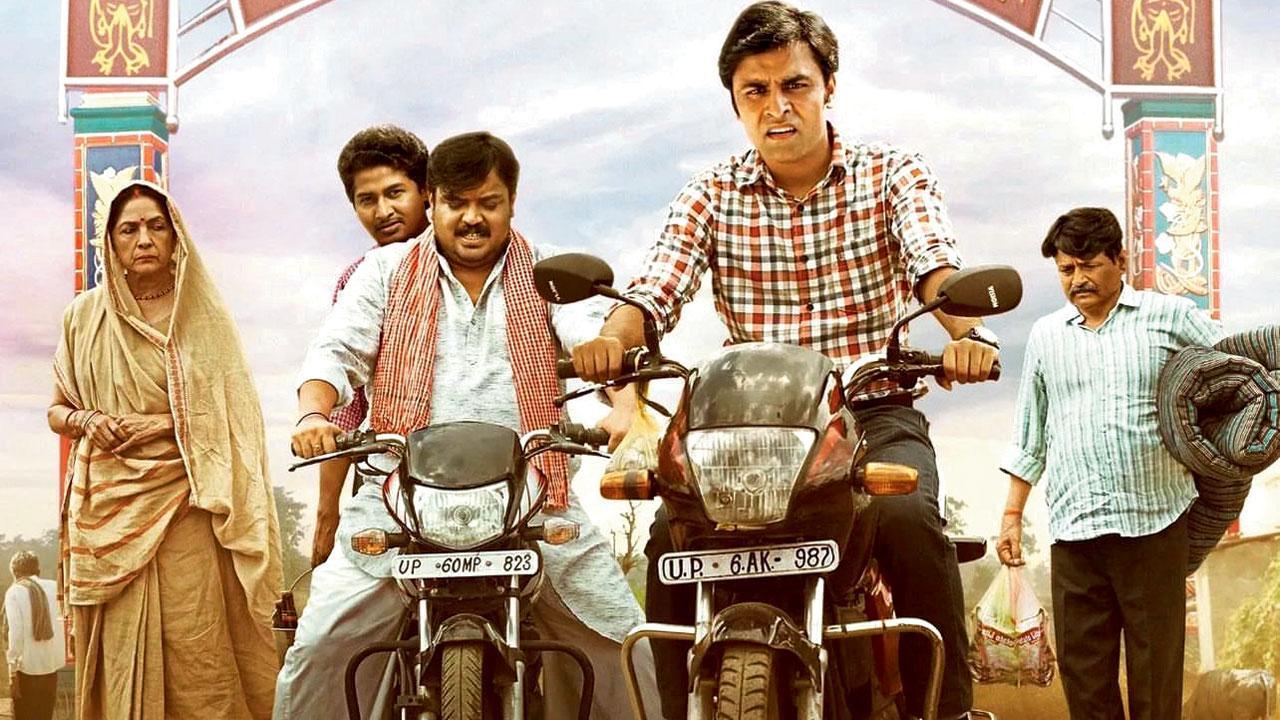
Lalit Pandit brings the flavour of ’90s music to the third edition of the revered web show Panchayat with a track that features African percussion rhythms
Sonia Lulla (MID-DAY; June 2, 2024)
The third edition of the web series, Panchayat, which released on May 28, offered a throwback to ’90s music with Thame Dil Ko, a Lalit Pandit-composition that was rendered by Abhijeet Bhattacharya.
“The team wanted a melodious song along the lines of the numbers that I have created over the years in films like Yes Boss [1997]. They wanted a song that was reminiscent of the melodies of the ’90s, but one that had a boost of energy. It needed to be rhythmic and have [happy] notes,” says Pandit of the track in the Jitendra Kumar and Neena Gupta starrer.
Well aware that Bhattacharya excels at rendering the kind of number he was set to create, Pandit compelled the singer to break his “Bollywood hiatus” and return to the mic.
“We were happy to be working together again. He always takes my projects seriously and rehearses before coming into the studio. He has the baritone that is needed for this genre. He was worried, and told me that he hadn’t sung in a long time. But I encouraged him to join me.”
Alok Ranjha Jha’s lyrics, says Pandit, enabled him to create a composition that he was certain would appeal to listeners. In a bid to replicate the sonic quality of the ’90s, Pandit says the “programming and instrumentation” aligned with the flavour of the era.
“It has modern beats with a hint of African percussion rhythms. After a very long time, I used an instrument called the tumba, which creates a warm and rhythmic [melody]. While using percussion instruments, one can include nuances seamlessly, and that is something that a computer program cannot do, unless it is designed intricately. There are [segments] of the violin that I have used too, and they blend into the rest of the song beautifully. Because this was one man’s vision, the clarity of thought is evident,” he says, adding that a composer’s ability to create a song that the audience can sing along to is a winning quality.
Musicians of this day and age, he believes, are creating “very complicated tunes”. “More attention is paid to the production of the song than the composition and writing. That is why, today, the soundtrack of a film has only one or two songs that eventually become popular. The rest of the album doesn’t work. When Jatin and I were working together, the entire soundtrack of films like Fanaa [2006], Chalte Chalte [2003], and Dilwale Dulhania Le Jayenge [1995] became popular. The [desire to] create that kind of rich music is missing.”
Reiterating the popular notion that in Bollywood, “music makes the film and the artiste memorable in the long run”, Pandit asserts that artistic rights should remain in the hands of creative individuals.
“I blame the directors. They are confused and desperate for good music. But they don’t know how to introduce that into their film. They end up refusing good songs. If they feel a composer [hasn’t worked hard to create a complex number], they reject it. Then, a music director needs to start thinking from the film director’s point of view, and it is the latter’s choice that is given preference. This must change.”
Jatin Pandit’s son Raahul admits being a star-kid helps: "Those without knowledge may not understand how a song can evolve"
8:16 AM
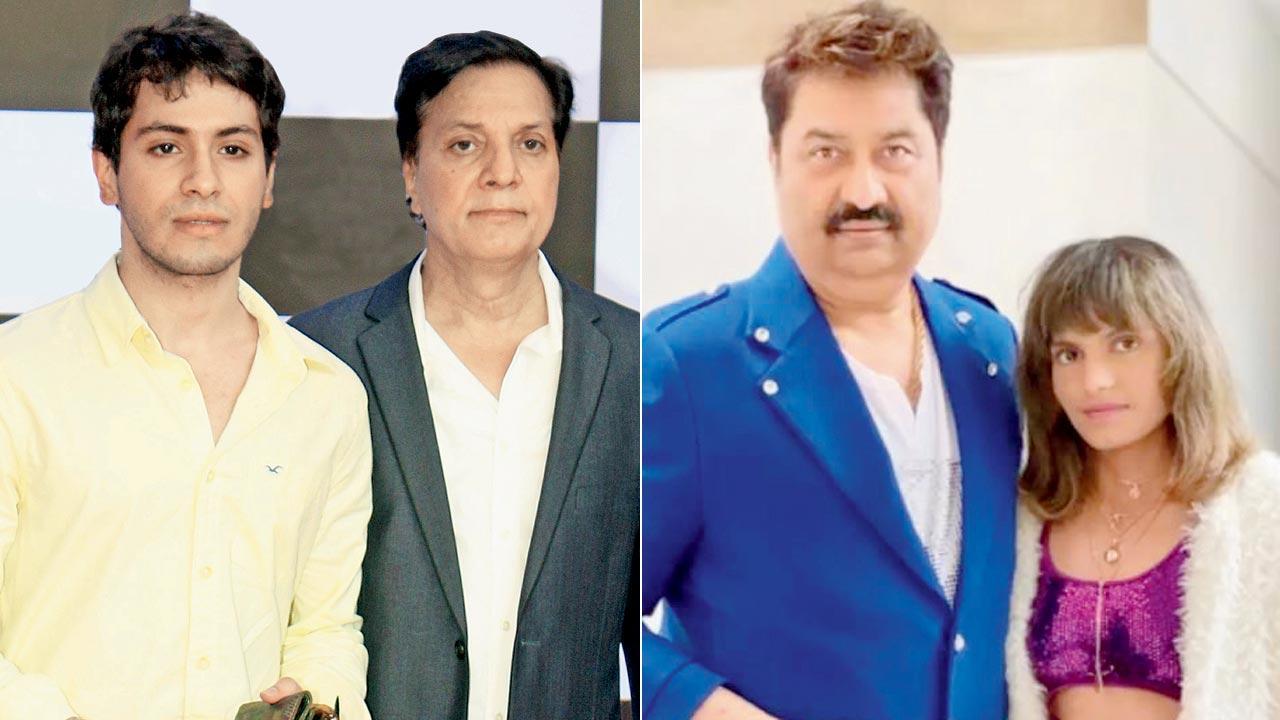
Jatin Pandit’s son Raahul on how track with Kumar Sanu’s daughter Shannon materialised over their musician-dads’ casual get-together
Sonia Lulla (MID-DAY; April 17, 2023)
It was over a casual interaction at the Pandits’ home that Raahul Jatin and Shannon Sanu decided to collaborate on a number. Son and daughter of musicians Jatin Pandit and Kumar Sanu respectively, the young duo’s next, Chand Mere, is a romantic offering that they felt they could do justice to.
“Shannon is an easy person to work with. This is a song with a traditional Bollywood vibe. I came up with the hook, and thought it would be a winner. Thereafter, we worked around it and allowed the lyrics to decide how the song should turn out. This is how most of my songs are made,” says Raahul, adding that though he pens a few of his numbers, he wouldn’t choose to refer to himself as a songwriter, just yet.
Coming from a family of legacy, he admits, has its advantages. “Things become more convenient. [Those without knowledge] may not understand how a song can evolve. People may create the first edition and think that [it] could be the final product. They may not understand that a song can evolve and improve with time, and that is something that a person with experience can comprehend. For instance, for the making of a film like Avatar, a young [associate] would have failed to understand the director’s vision of creating all characters in blue. But, someone who has worked on a similar project would have been able to understand how to bring that vision to life. Belonging to a family [that has worked in the industry] offers this advantage.”
The youngster — who has also worked on Jaago, a track inspired by Michael Jackson’s Heal The World — minces no words while confessing that though he has been dabbling in the indie space, his goal is to create music for Bollywood. “That’s a good place to move towards,” he signs off.
Lalit Pandit ropes in industry veterans for upcoming concert that celebrate his best hits across decades
8:08 AM
Sonia Lulla (MID-DAY; September 12, 2022)
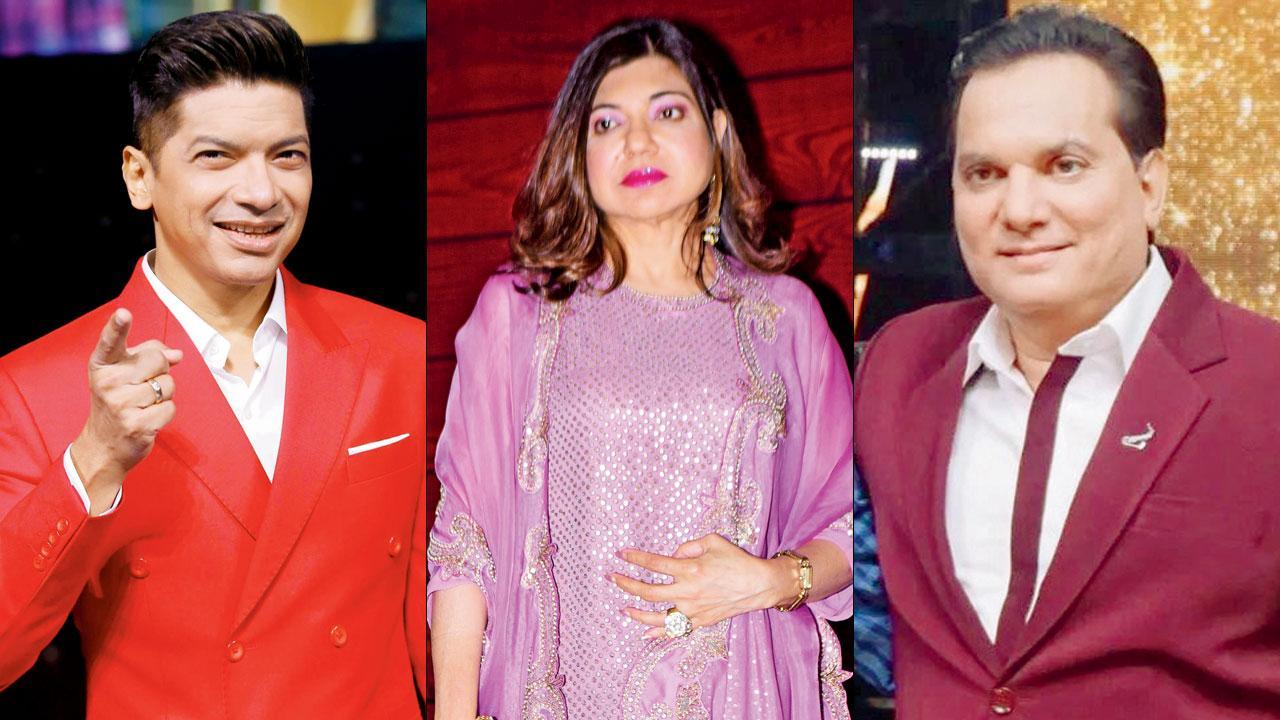
On September 23, Lalit Pandit is set to bring veterans of the Bollywood music industry for a concert that celebrates his, and brother Jatin’s work. Set to be held at Shanmukhananda Hall, the show will host performances by Abhijeet Bhattacharya, Shaan, Sadhna Sargam, and Alka Yagnik, among others.
“We had wanted to make this a yearly celebration, but then the pandemic struck. The singers will come together to perform the songs, which have been some of the country’s most iconic numbers. We will render songs from Dilwale Dulhania Le Jayenge, Jo Jeeta Wohi Sikandar, Sarfarosh, Kabhi Khushi Kabhie Gham, and Khamoshi, among others. The singers who sang the originals will sing the songs at the concert too,” says the composer, adding that the concert marks another milestone for him.
“I have completed over 25 films as an independent artiste since I split from my brother [Jatin]. So, this is a reckoning of sorts that life has moved on.”
Given that the numbers are as iconic as they are, Pandit says he isn’t tweaking the melody substantially, but will add nuances, and change the orchestration so as to surprise the audience. “People had been writing to me, asking for [a concert that celebrates] our eternal hits. I will conduct an orchestra, my sister Vijayata will be part of it, and so will my sons. My elder son, Rohaansh, who already made his debut with the song, Say No To War, will be part of it, as will my younger son Abeer, who is trained in the guitar and drums. Both of them are prolific musicians and composers who have joined me for this venture.”
About his time spent as a solo composer in the recent past, Pandit says he has noticed significant change in the industry’s working methods that tend to be restrictive for composers. “I don’t think music gets as much appreciation today. Of the albums that I have heard of late, I may have liked one or two numbers, but not the full soundtrack. And that should not be the case. Directors should take initiatives and give freedom to composers, because they are talented. Composers are not being trusted. And that’s why you end up with only one or two [good] songs, and then seek remixes.”
I agree that there is favouritism in the industry-Jatin Pandit
8:18 AM

Nishad Neelambaran (HINDUSTAN TIMES; November 30, 2020)
Composer duo Jatin-Lalit have given a lot of hits in their musical career that started in 1991 with Yaara Dildara. The brothers are known for their tracks in movies such as Jo Jeeta Wohi Sikandar (1992), Dilwale Dulhania Le Jayenge (1995), Kuch Kuch Hota Hai (1998) and Kabhi Khushi Kabhie Gham (2001), among others. After the duo split in 2006, they’ve been working independently.
Jatin Pandit, who is currently in the US, says that a lot has changed in the music industry as compared to the ’90s and early 2000s.
“Music has changed immensely and technology has taken over the normal way of working. Singers and composers started depending more on software than the organic way of doing things. But good compositions are still there and they do sound good if the technology is used correctly. But I think that over the years, the quality of music has been dropping,” he says.
The composer, who recently wrote the lyrics for his son, Raahul Jatin’s track, says that he always knew “nepotism would be a part of the conversation” and wanted his son to not take up music as a career.
“When Raahul was young, I wanted him to take up some other profession. But his passion towards music and his talent was deep rooted from the beginning, and I felt guilty to stop him,” he shares.
So, has he cautioned Raahul about the pitfalls in the industry? “Of course, in any profession there are hurdles that come in the way. There are all sorts of people one meets in the professional journey, but if you have the talent, then no matter what happens, there is some superpower which works for you. He is a very honest boy and has got a clean slate. He doesn’t get involved in any kind of politics. He’s very constructive, and respects relationships. Whoever will meet him, they will realise that he’s a very nice, hardworking boy and I’m proud of my son.”
Ask Jatin about the ongoing debate on favouritism in the music industry, and he says, “Yes, I agree, there is favouritism in the industry. There are so many companies which have their selected singers and they try to promote only those artistes. This is what has been happening. I could see that, and everybody knows about it.”
Maybe, Jatin and I will work together some day-Lalit Pandit
8:18 AM

Lalit Pandit after 13 yrs, was seen with composer brother on a show
Himesh Mankad (MUMBAI MIRROR; November 28, 2019)
Composer duo Jatin and Lalit Pandit have some memorable scores to their credit, for films like Dilwale Dulhania Le Jayenge, Jo Jeeta Wohi Sikander, Yes Boss, Kuch Kuch Hota Hai, Jab Pyaar Kisise Hota Hai and Pyaar Toh Hona Hi Tha. They carried forward the good work into the millennium, with Kabhi Khushi Kabhie Gham and Hum Tum. Then, they shocked the industry and fans with their decision to part ways in 2006. Their last collaboration was the Aamir Khan-Kajol starrer, Fanaa. In the 13 years since, the brothers did not even make joint appearances. But recently, they reunited for a special episode on the on-going singing reality show, Indian Idol season 11.
When quizzed on the reason for the split, they maintain a dignified silence, as it’s too personal to discuss publicly. Prod them on the reunion, and Lalit says, “We came on the show to listen to our songs, have some fun and create some good memories. Though we no longer work together, we are brothers. I miss Jatin and often remember his quirky sense of humour. He’s my older brother, I respect him, and like the idea of us coming together again.” Jatin who went into flashback mode, listening to their compositions from the ’90s to early 2000 on the show, adds, “I was touched to see the love our music still gets.”
At a time when remixes reign, is there a possibility of the ‘originals’ returning? Jatin informs that if they get something that has the potential to change the current scenario, they will be back together. “It’s essential to land a big film today because that’s what gets you visibility. Music of such a film is promoted well and that’s necessary for us to reunite,” he maintains.
Lalit is both cautious and optimistic: “We need to take small steps and progress towards it. Our separation was not planned, it just happened. But since people want our music to return, maybe, Jatin and I will work together some day.”
And what’s their take on the current music industry? “Every era has a mix of both good and bad songs. You need a strong composer to change things, which is missing today. That’s why everyone is recreating old melodies. Original songs give you an identity. We never believed in recreations,” Jatin asserts.
Lalit opines that music plays an important role in an actor’s career. It gives them stability and later, an iconic status. “Many of SRK (Shah Rukh Khan), Aamir (Khan), Salman (Khan) and Ajay’s (Devgn) best remembered songs were composed by us,” he points out.
The composer duo’s father, Pandit Pratap Narayan, was a trained classical singer. Both their sisters, Sulakshana and Vijayta, were popular singers and they are hopeful their sons will carry forward their legacy. Lalit’s sons are both singers. The elder one, Rohansh, plays the piano while Ab eer plays the drums. Jatin’s son, Raahul, aspires to be a singer and is training under his father. “Coming from the family of singers, we know how to train our kids, Music is in their blood, they just need to work hard,” Jatin signs off.
At parties, I’m that person on top of tables-Raahul Jatin
7:45 AM

Jatin Pandit’s son, who is making his debut with a single, recounts his journey from shy kid to showbiz hopeful
Natasha Coutinho (MUMBAI MIRROR; April 16, 2019)
Raahul Jatin, son of Jatin Pandit of the composer duo Jatin-Lalit, is all set to make his debut with a single titled “Aankhon Ke Ishaare.” Talking about his launch, the 22-year-old singer-dancer is quick to clarify that his father isn’t a part of it. “Dad wanted me to do it my way. I have given playback for the song and featured in it,” he asserts.
However, he does attribute his showbiz dreams to the veteran composer’s career. “As a child, I used to visit dad at the studio. He is a genius. Now that I make songs myself, I realise that it involves a lot of hard work. You must make sure that your compositions don’t sound like others’ work. Dad does it with a lot of ease,” Raahul explains.
On how his debut came about, he says that he approached a producer, with a bunch of songs he had made, out of which one was selected. “I also shared some videos showcasing my dancing and gymnastic skills. We made some changes to make the song catchier,” he informs, adding that the original version had a hook-line, “Tujhme jo nasha hai alag sa maza hai, main kyun piyu sharabein jaana tu hi bata,” which the makers didn’t like as it sounded “preachy”. “I was told that at my age, one doesn’t want to tell people not to drink; I should have a ‘party’ image.”
Did he receive formal training in music? “Dad taught me singing since childhood. I was a shy kid, but I developed an interest in dancing with time. Now, at parties, I’m that crazy person on top of tables, doing goofy things,” he signs off.
Subscribe to:
Posts (Atom)