Showing posts with label Jasleen Royal interview. Show all posts
Showing posts with label Jasleen Royal interview. Show all posts
I dread the day I hear my song being remixed without my creative inputs-Jasleen Royal
8:23 AM

Despite the acclaim she’s received for her Bollywood songs, Jasleen Royal says she’s keen to build her indie music repertoire, of which her track with Dulquer Salmaan is the newest addition
Sonia Lulla (MID-DAY; August 7, 2023)
Jasleen Royal has sufficient successful tracks behind her to keep fans intrigued about each new offering. However, her latest number, Heeriye, has become the talk of the town for more reasons than one. In this interview, Royal discusses creating the number that marks South star Dulquer Salmaan’s music-video debut, and why her songs are making fewer appearances in Bollywood films.
How did the idea of creating this track come about? And how did Dulquer come on board?
I have had this song with me for a while, but it was incomplete. I was attached to this one and did not want to give it to any [filmmaker]. I wanted to do it myself and have full control over what I could do. I reached out to Dulquer, and he told me that he [was my fan]. He said when his daughter was an infant, she would only sleep while listening to my song, Din shagna da.
I sent this song to him, and he said he loved it. While he was busy, I said I could wait for him. [Because he was coming on board], we obviously wanted to make this big. You’ll see that enough thought has gone into creating each frame.
A lot of people asked him why he decided to do this indie music video. And he’d say, ‘Art is art.’ He doesn’t segregate art on the basis of the platform. That is what I love about him, because a lot of actors are caught up in the game of positioning.
Because I was also donning the producer’s hat, I wanted everything to go well, and to make him feel welcomed. I didn’t want him to feel like this was a small project for him. My focus was on making him feel at ease, but he was cool.
What have you deciphered about cracking romantic numbers, given that the ones you make are always lapped up by listeners?
I don’t think about doing a romantic song or a sad song, in that specific way. When I made Ranjha, [I did so because] something was happening in my life. A close friend was going through a bad phase. She was living with me and I translated her pain into my song because it was getting overwhelming to see her.
So, I just think about what comes naturally to me. I don’t think about writing a chart-buster, or using tricks because something is [trending]. I made this song, and felt Arijit [Singh] would be the perfect choice for it. I was grateful that he agreed to sing it. So, the effort has always been to create something unique and something that I believe in.
How has the process of transitioning into production been?
Honestly, I’m sick of remixes. I don’t want to give the rights to my songs to any label anymore. I dread the day I hear my song being remixed without my creative inputs. I am frustrated with this trend. And because I don’t want to whine or complain about it, I am choosing to steer away from that direction and do something on my own.
When Ranjha came out, it brought me financial stability. I could take this risk, because I can’t sit and fear that someday someone will take my song, tweak one or two lines, or add one new word, and call it their composition. I think that is ridiculous.
Runway 34 is an expensive film; it’s Ajay Devgn's directorial venture. So, the fact that he trusted me is a big deal-Jasleen Royal
8:28 AM

Going from strength to strength, film after film, Runway 34 composer Jasleen Royal on making success look easy
Sonia Lulla (MID-DAY; April 4, 2022)
Jasleen Royal is young, but her jaunty laugh shaves years off her age. She isn’t burdened by the need to establish her prowess over her craft when addressing questions, but camouflaged within her playful responses are important nuggets for artistes. The first among them addresses a vital question — in a male-dominated music-composition industry, how has a young musician like her made success look so easy?
“Earlier, I’d wonder what the fuss around a male and a female composer is. But, I realised that while growing up too, I had to fight for little things, like [resisting] the early deadline to return home only because you are a girl. I understood that it’s all ingrained. We don’t even realise that we are always putting up a little more of a fight. But all women, especially those in India’s interiors, who are not always afforded opportunities, should follow their dreams. Having said that, it’s important to know that only promising work will get you good [opportunities]. Kaam se hi chance milega. I am glad that people appointed me for my work,” says the singer, who has composed the entire score for Ajay Devgn’s upcoming film, Runway 34.
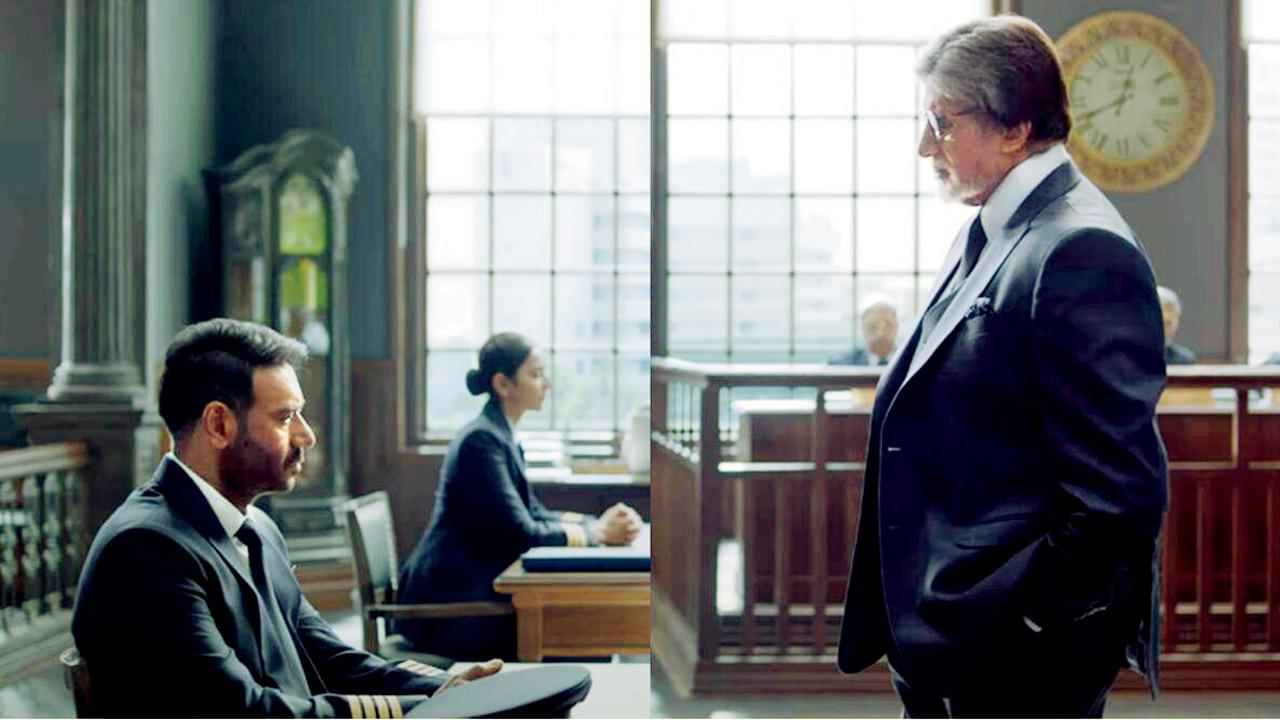
Royal’s previous collaboration with Devgn in Shivaay brought her in his good books. Even though the actor is a man of few words, Royal says when he speaks, “it’s always important”. “He initially called me for a few songs, and then we kept adding some more. It’s an expensive film, and it’s his directorial venture. So, the fact that he trusted me is a big deal. The best part about working with him is that he is open to new ideas. If I pitch an idea and he loves it, but I am unhappy with how it eventually sounds in the studio, he’s willing to let me try something new,” says Royal, delighted that the film’s Mitra Re, released a few days ago, is already earning acclaim.
Royal pins her ability to have found her way in the industry to a few crucial factors. To begin with, she isn’t easily attached to her projects. Also, she’s always willing to make amends to her work. “My approach towards any work has always been this — I need to love the song. If I don’t love it, I’m lying to whoever I take it to. When they take it, I’m done. Sometimes, if they ask me to make changes to make it more palatable, I’m wiling to do so, because even I want my song to be enjoyed by more listeners.”
She, however, agrees that any creative artiste is always challenged by one thing — the mental block, “when you don’t know what to do next”. What does she do next? “I share a good rapport with my lyricist Aditya Sharma. We chat, or head for a drive and discuss anything unrelated to music. When either of us is stuck, the other reminds them that such obstacles have been overcome in the pasts. If I’m at home, my [domestic help] will say, ‘Didi, ho jayega’. So, everyone is involved,” she laughs, safe in the knowledge that even if she must play 1,500 tunes, she will find five crucial ones that will get the job done.
Our conversation is incomplete without addressing the success she received for Shershaah’s Ranjha, which found a spot on the Billboard Global Excl US charts. “I made a song that I love. [The team] did a great job with the marketing plan, and the film worked too. Everything worked.”
Women still need to fight their families to step out for work-Jasleen Royal
7:59 AM

Titas Chowdhury (HINDUSTAN TIMES; November 8, 2021)
While the number of women working off the camera on a film set has increased marginally, the music industry still continues to have a skewed gender ratio. Jasleen Royal, who has composed songs like Kho Gaye Hum Kahan (Baar Baar Dekho; 2016) and Din Shagna Da (Phillauri: 2017), believes that the number of mainstream female music directors is lower, compared to their male counterparts.
“History tells us that women began voting much later. Women still need to fight their families to step out for work. There is a deep conditioning, and changing the structure will take a while. We will achieve gender equality when biases can be eradicated from the ground level,” says the singer.
However, Royal is hopeful that the future seems bright. “The change is happening slowly. Today, we have female music composers such as Parampara Thakur and Sneha Khanwalkar. When we have women like them to look up to, more girls will be inspired to pursue their dreams,” she shares.
Another concern that she has been vocal about is her songs being dropped from films at the last minute. She cites the example of Ranjha from Shershaah, which she had composed for another film. “I won’t ever hold it against the people who drop my songs. I’m just happy making music and I know it will eventually find its place,” says the Love You Zindagi (Dear Zindagi; 2016) singer, adding, “This has happened to me a lot of times. So, I understand the drill now. If a song gets dropped, that doesn’t mean I did a bad job. Everyone doesn’t understand every song.”
I’ve had songs that became popular after some years of their release-Jasleen Royal
8:12 AM

Titas Chowdhury (HINDUSTAN TIMES; September 14, 2021)
Jasleen Royal’s latest track, Ranjha, from the film Shershaah has become a chartbuster. Multiple cover versions and Instagram reels later, the love ballad debuted in the US Billboard charts. But the composer-singer remains unfazed. “I’m not feeling any of it,” she says with a laugh, adding, “Maybe it hasn’t really sunk in yet. I get a high when I’m creating something. Once people like it and it gets circulated, it gradually starts hitting me. This success hasn’t come overnight. I’m trying to wrap my head around it.”
Not one for the numbers game, Royal believes that the success of a track can’t be based on the eyeballs it gets on social media. “It isn’t really an important parameter for me. I’ve had songs that became popular after some years of their release, such as Kho Gaye Hum Kahan (Baar Baar Dekho; 2016) or Din Shagna Da (Phillauri; 2017),” she explains.
Talking about how every song has its own journey, the musician says, “I don’t think that a song can be labelled as a bad one if it doesn’t get 10 million views soon after it’s dropped. Some songs need to stand the test of time to become popular.”
Royal has also been in the news in recent times due to her vacation pictures with her gal pals, actors Radhika Madan and Sara Ali Khan.
She shares, “If we didn’t take the trip now, it would have been pushed indefinitely, because all of us will be busy in the coming months. We decided to go to Leh and make the most of it. It’s such a beautiful place. I was with the best company and we had a lot of fun! Sara is very energetic and wanted to do everything possible. Radhika just wanted to relax and sip on coffee.”
Women’s Day Special: Alokananda Dasgupta, Jasleen Royal, Kausar Munir confess that only way to success is through their work
8:04 AM

Alokananda Dasgupta, Jasleen Royal and Kausar Munir
Three female artistes on what drives them to success in the male-dominated music composing, and writing
MID-DAY; March 8, 2021)
Alokananda Dasgupta
Intricate and impassioned as they are, conversations on music composition with Alokananda Dasgupta are delightful for every interviewer. A far cry from the superficial accounts of the art, Bengali filmmaker Buddhadeb Dasgupta’s daughter always elucidates her answers with those engrossing anecdotes of the concerned project that enhanced her final creative piece. It is this obsession with the craft that, she admits, is an essential to enjoy a long career, especially in a field that, much like many others, is attuned to the needs of men.
“It may sound like a cliche, but, keep at it,” says Dasgupta, adding, “You must have a [deep] desire to keep at it, despite disillusionment, and intimidations, and know why you wish to express yourself. The truth is that scoring can get monotonous, because one is watching and re-watching [the film] over and over again. So, only if something is up my alley am I usually kicked about composing for it. I will make something that I want to hear as a viewer, and hence take my role as an audience and consumer of that project, very seriously.”
Following her acclaimed work in Sacred Games with shows like Leila, Breathe: Into the Shadows, and the fast-paced AK vs AK, Dasgupta doesn’t shy away from admitting that gender discrimination, while not exclusive to the film industry, is something she encounters owing to the authority afforded to her as music director. “Sometimes, I am egged on to analyse why certain incidents happen, and I understand that people hesitate to accept instructions from a female [musician], who doesn’t look old either. I’ve chosen to wear horse-blinders for several issues. Things may upset people, but what can I do? It is my job, I have to talk to them and tell them what has to be done.”
Admitting that gender bias isn’t the concern that initially perturbed her about a probable career as music composer, Dasgupta says she had other battles to wage, including her rather introverted nature. “I am not a people person, and prefer spending time with [my pets]. But, I learnt on the job, and could see the loop holes and inequalities. It wasn’t shocking [to see discrimination since such instances] subtly make way into every woman’s life. For me, it started with insecurities due to simple things like being unable to participate in conversation with my male contemporaries [on topics like technology, which they can freely indulged in].” Patriarchy, she says, is so deep-seated in society that “even a filmmaker making a [pro-women] documentary is likely to come home and do something that [can be classified] as patriarchal behaviour.”
Jasleen Royal
For 29-year-old Jasleen Royal, singe-songwriter-composer, an increase in representation of women’s perspectives will offer a breath of fresh air in the music industry, and some respite from the barrage of “songs on infidelity” that have been topping the charts. “I would love to see female writers hold more key positions in the industry than they do. The industry welcomes both genders, and only considers the work that one can create. But, given that women started working late, it will take time for them to catch up,” says the singer-songwriter, adding that focussing on the creative piece, instead of the artiste who is creating it, has enabled her to develop a good ear for music.
“Women have different perspectives on matters, but let’s acknowledge that several women-oriented films have been beautifully penned by [male writers like] Gulzar sa’ab too. So, it’s essential to be influenced by good art alone.”
Royal, with films like Baar Baar Dekho and Gully Boy on her resume, says despite all odds, it is her ability to create work that she loves, that has repeatedly borne fruit. “I believe that only if I love what I put out are there more chances of others loving it too.”
Kausar Munir
Mirroring Dasgupta’s opinion, lyricist Kausar Munir says a fair share of the path to acclaim in the music industry is spent in oblivion. “You are shooting in the dark because there will be no appreciation [for a long time]. You need to spend time, and effort [in enhancing] your skills, and have faith, which is what makes the process difficult. There are several sociological factors [that deter] women from exploring the field. You need women in production arts, but as far as writing is concerned, their representation is abysmal. It could be because the writing process is disordered and fluid. There is no clear path to success, so you have to be obsessed with your work. It is a rigorous path with little guarantee of return. Women want something more promising,” says Munir, adding that though she stumbled upon the career by happenstance, she was able to pave her path by exploring various avenues of writing, instead of sticking to lyrics-writing, alone.
Munir counts herself among the fortunate for two reasons — to begin with, she claims to have not faced gender discrimination, as we know it. Also, on the rare occasion that she did, she could afford to walk out of the project, without worrying about her bread and butter. However, aware that her appointment on any project is owing to a skill-set that only she possesses, Munir celebrates factors that set her apart. Responding to questions on drivers of success, she says, “I know that there is something I can deliver, which is why I am appointed for the job. If I try to be an Amitabh [Bhattacharya] or Irshad [Kamil], I am being unfair to myself. I have recognised what makes me unique, and why I am appointed for projects. So recognizing your ability, and nurturing it will take you where you want to be.”
Admitting that the “system isn’t conducive for women”, Munir says several practices would be termed unprofessional by aspiring singers. “If I am called for a project at 12 midnight, I can go. But many women cannot. They may find it unprofessional, which it is. But this system is tuned against women. I am not even going into the [sexual] harassment aspect, which is prevalent. To women, I would say, don’t be afraid to fail, and tread new paths.”
I have witnessed favouritism at award shows-Jasleen Royal
8:35 AM

Nikita Deb (HINDUSTAN TIMES; September 14, 2020)
Singer-composer Jasleen Royal has established herself as a successful musician in the industry in just more than five years. With no connections in the industry, she still managed to compose hits such as Din Shagna Da (Phillauri; 2017) and Jahan Tu Chala (Gully Boy; 2019) for Bollywood, and that, too, at a time, when female composers are anyway scanty in the industry.
But she says that her gender has got nothing to with her becoming a composer. “I was always clear about wanting to compose songs. And my gender played no role in it. It wasn’t like I got opportunities faster because I was a woman, or later for that matter. But I would love to see more women writing and composing music, and even heading music companies,” she says.
Royal, 29, adds that while she never explicitly experienced the downs of nepotism or favouritism, these factors exist in the industry. “There is nepotism and there is favouritism. It’s not like these things don’t exist. I have witnessed it at award shows, when even if you are nominated or win an award, people who have connections but have not done as much work are still given more importance because they come from an influential family or because they have a name attached to them. So, jagah banane mein thoda time lagta hai industry mein... but at the end of the day, your work speaks for you,” says the composer, who recently released a new track titled Sang Rahiyo.
The Kho Gaye Hum Kahan (Baar Baar Dekho; 2016) singer and composer recently also recovered from Coronavirus. While she says that there is fear of the virus, things are slowly getting back to normal. “My sense of taste hasn’t fully recovered yet. I can’t taste everything, so I get very excited when suddenly I can taste something,” she signs off with a laugh.
Jasleen Royal ‘panicked’, but battled Covid-19 with her mother
7:52 AM

Rishabh Suri (HINDUSTAN TIMES; August 6, 2020)
Singer-music composer Jasleen Royal is back with a bang, after defeating Coronavirus with her mother, who, too, had tested positive. It was on July 17 when she first realised she was unwell.
“I had low-grade fever and was travelling to Mumbai for a shoot. I thought it was best to rule out any possibilities of infecting others in case I had Covid-19. I did panic a little when it (test result) came positive, but it lasted only a day,” Royal tells us.
The 29-year-old remained in Ludhiana, Punjab, her hometown, till she recovered. “I informed the authorities that I’ve tested positive. They put a notice on my door and checked on my symptoms every day,” says the singer, known for songs such as Nachne De Ne Saare (Baar Baar Dekho; 2016) and Din Shagna Da (Phillauri; 2017). Besides the initial panic at contracting the virus, the singer says she feared infecting others. “I was isolated in a room in my house, and told to do Betadine gargles and take steam twice a day. I popped in ashwagandha and kadha. My dad was there to help us. For safety, everyone got tested and thankfully, came negative. My mother and I are also Covid-negative now,” says a relieved Royal.
As for the stigma Covid-19 positive people face, she says, “I feel people who have symptoms are shying away from getting tested. People should take wearing masks seriously, and maintain social distancing.”
Favoritism toh hota hai; it’s a setback but you’ve to do your work-Jasleen Royal
8:18 AM

Juhi Chakraborty (HINDUSTAN TIMES; June 30, 2020)
Singer Sonu Nigam’s video calling out favouritism in the music industry has kickstarted a debate, with many weighing in. Talking about how the industry responds to singers, especially newcomers, singer Jasleen Royal admits that instances of favouritism do exist. “If labels have signed up artistes, they will favour them. After all, the labels are getting business because of them. Favoritism toh hota hai; it’s a setback but you’ve to do your work,” she says.
Known both for her Bollywood compositions and independent music, Royal, 28, prefers to maintain a positive outlook. “For how long can talent be suppressed?” the Kho Gaye Hum Kahan (Baar Baar Dekho; 2016) singer asks, and adds, “If you believe in your song, put it online; it’ll reach people. It takes time... Kuch logo ke sath galat hua hai. I acknowledge that.”
She also feels that being an independent artiste is the best. “There are only four or five people who get work because they’re backed by a label. Now, thanks to social media, you can make a song and release it. That’s how I started,” she shares.
Meanwhile, she recently dropped a new song — a rendition of singer Lata Mangeshkar’s classic Lag Jaa Gale — wherein she has collaborated with actor Radhika Madan, who is making her first professional appearance in a musical showcase playing the keyboard. “Radhika is a friend… I’m a fan of her work. She’s very inclined towards music and poetry. That’s how I got to know how she has a good musical ear... Actually, she tells me to act and I tell her to sing,” shares Royal.
I've never had a Plan B in my life-Jasleen Royal
7:41 AM

Lakshmi V (BOMBAY TIMES; October 21, 2016)
She waltzed into Bollywood
with Preet (Khoobsurat) and established herself with subsequent outings,
including Badla Badla (Badlapur) and Kho Gaye Hum Kahan and Nachde Ne
Saare (Baar Baar Dekho). And now, Jasleen Royal is back with Raatein in
Shivaay. The youngster has composed and sung the emotional track that
highlights the father-daughter bond. “The song has two versions and the
second one's picturisation is completely different from the former and
the scenes are action-packed. Raatein was supposed to be recorded in a
male voice. But the team got so used to my voice that we
retained it,“ she laughs. In a chat with BT, Jasleen reveals how she was
inspired by Ajay Devgn, who has directed and acted in the film, to come
up with the number and why she can't think beyond music.
We hear there's an interesting story behind how you landed Shivaay.
The movie happened almost two years ago, when I had not even shifted to Mumbai. Irrfan sir had liked one of my singles, Panchi Hojavan, and had invited me over to perform at his house party. Turns out, the guests included the producers of Shivaay as well. The next day, I got a call from them and I was quite excited that I would be working on Ajay sir's film. He briefed me about Raatein and cited his own example. He told me how his kids, especially Yug, would never think twice before doing anything risky or adventurous because he knew his dad was there to protect him. I worked with Aditya Sharma on the lyrics and the team loved the end product.
From a reality show semi-finalist to making a mark in Bollywood, the journey must be overwhelming...
Mine is not an overnight success story. Things have happened over a period of time. After my stint in India's Got Talent, I did a single, which got picked up by a music channel. Then, I worked with Swanand Kirkire on another song. Sneha Khanwalkar and Rhea Kapoor heard my song and offered me Khoobsurat. Later, other projects in Bollywood, including indie films, happened. I've always been working and I think the journey is smooth.
Do you fear competition?
I stay far from it. Even if there are no films, I will continue to make music. I've never had a Plan B in my life. So, there's nothing else I will fall back on.
Subscribe to:
Posts (Atom)