Showing posts with label Jamshedpur. Show all posts
Showing posts with label Jamshedpur. Show all posts
Thank God for Dhurandhar. We are allowed longer films now-Imtiaz Ali
9:20 AM

Madhureeta Mukherjee (BOMBAY TIMES; June 15, 2026)
There is a reason Imtiaz Ali’s stories linger. Beneath the romance, music and heartbreak lies a deeper search — for home, for meaning, for the versions of ourselves we leave behind as we move through life. With Main Vaapas Aaunga, inspired by an emotional return to his childhood home, the filmmaker once again turns inward, exploring memory, longing and the ache of belonging.
In this conversation, Imtiaz reflects on love and loss, the purity today’s generation is searching for, and the invisible pull of the past. He reflects on why the stories that stay with us are often not born from cinema, but from life itself.
Would you say, there’s a certain beauty in that sense of loss?
There’s beauty in that because it brings you to yourself. The yearning, therefore, sometimes cannot be cerebrally understood. Everyone always feels that they have left something behind, in whatever they might have achieved. You feel…kya choot gaya? Inevitably, you want to go back to that. I guess the feeling of who we were is something we can never leave behind, however far we go.
From Love Aaj Kal, Rockstar to Tamasha – your films often ask whether love liberates us or consumes us. Has your own understanding of love changed over time?
I feel the simplistic answer is that it’s the being consumed that liberates you. It’s the surrender that liberates you. You realise your power when you surrender. And it’s easier said than done. In love, you’re constantly engaged with yourself. You are constantly talking to yourself. I’ve noticed that people who are in love with different women at different times in their lives, are in love in the same way. They yearn in the same way. If somebody is, let’s say, obsessive, then they will be obsessive in every relationship of theirs. They will try to find someone to shower love and affection on, and become obsessive about. The thing is, I don’t have answers about love or life, if I had answers, I wouldn’t be making movies.
So, you’re finding your answers through movies, characters, stories?
I don’t think I’ve found anything from my movies (laughs).
And you insist you aren’t a romantic? You have this image of being a romantic, a bit of a philosopher, too…
I am not. These words like romantic, philosopher and all of that sound very boring to me. I don’t know why I have this image. Tell me, how do I break this image?
Music in your cinema isn’t just something that happens in the background or around the story – it forms a character. It adds to the emotional rhythm, literally. You seek something from music emotionally that dialogue alone cannot achieve?
Oh, I love the work of music. I don’t listen to music too much, but I’ve always been a fan of music in films – whether it’s being part of the making of the song, the background music or shooting to music. The biggest thrill of shooting for me is when music plays on a set. I am the director who prays every day that we are not forced to reduce or remove music from films. For romantic movies, sometimes we connect to the music first and then the story.
This is your second collaboration with Diljit Dosanjh after the much-acclaimed Amar Singh Chamkila. He has an interesting emotional quality about him; he can appear really vulnerable, restrained with a certain kind of power. How do you direct someone like him?
He has somehow kept himself pure. He’s connected to himself and for that reason, he has not done many things that other people do. He is not like an actor who’s standardized in a certain way he lives. He doesn’t care for the obvious things, but some other things. Like, when we were starting out with Chamkila, we had to postpone the shoot, because of which one and a half months of his dates got wasted. I called him and told him about the problem. He said, ‘Koi nahi paaji. Main chala jaunga. Main solo trip pe chala jaunga pahadon mein. Problem hi nahi hai. Meri taraf se toh ho gaya.’ I said, ‘Lekin aapke days waste ho gaye.’ He said, ‘Arey, waste thodi hote hain dates. Mujhe jaana tha pahadon mein, toh solo trip pe chala jaata hoon.’ So, he went ahead and did whatever he wanted.
You’ve made generational love stories and worked with actors across generations. Today, in a world that is increasingly instant, performative and filtered, do you think people still crave the purity and beauty of truly connecting with another person?
I feel you can be very lonely in the present world. There is so much noise all around us that it’s difficult to talk and communicate. I believe this generation is seeking much more than before. For instance, today getting intimate with a girl or a guy is not difficult. Previous generations were distracted by the thought, as they knew that they would get intimate after marrying the person. Now that happens early on, they get over it and they aren’t lusting anymore. Lust is out of the park. What this generation is seeking is pure. They are digging deeper and are truly trying to find meaning. It’s just that they are very lost.
How do you protect your own sensitivity in an industry that can often become transactional and noisy?
I believe that the film industry is actually better than most other places in the world, because there are drifters and dreamers here. And no matter how smart they pretend to be, at the end of the day, all of these great guys in the film industry who talk about numbers and all of that, they are basically dreamers and drifters. What they want to do is to huddle somewhere and talk about cinema (laughs). This is what I have realized. Otherwise, it wouldn’t be possible for a rank outsider like me to be here. It must have been the kindness of some people that gave me my first step, my first break, right? The world is what it is, but I feel that the film industry is better, really, than most of the other parts of the world.
Your cinema generally revolves around the idea of yearning, not just from the point of view of yearning for romantic love, but yearning to come into yourself, to become someone else. What was the starting point for this film Main Vaapas Aaunga?
There was a point when I went home to the place which I call home, which was just a company quarter in Jamshedpur where I grew up. My earliest memories are from there. It was a rented place, but every time I think of home, I think of that place. One day, I went back there with my dad and I got so overwhelmed, I just went straight inside the house and in the courtyard, and obviously the present occupants found it strange. The courtyard had changed; that whole area seemed like it had changed, and something came over me, and I broke down. I never cry, in fact, my mother feels there’s something wrong with my system. But I broke down. I kept asking myself…what happened here? There was this sense of loss, but it’s not as though I’ve lost something.
Love portrayed in your films is rarely idealistic. It’s messy, transformative and often heartbreaking. Do you think our cinema still struggles to portray emotionally complex relationships with honesty?
For me, it’s impossible to show something clean and perfect because I would have no reference. If you asked me to make a clean love story with no heartache, I wouldn’t know where to begin because I’ve not seen it in my life, and I don’t think it exists. I don’t go out to make love stories, really. I make stories where people have various emotions and I follow those characters and see where they come at. And sometimes, of course, there’s an echo of what I’ve seen and felt, since I don’t draw from cinema as inspiration, I draw only from life as inspiration. Yes, I feel relationships are messy sometimes. They have the potential to be messier if the film duration were longer.
Now we’re slowly going back to longer films…
Thank God for Dhurandhar. We are allowed longer films now (laughs).
In Bollywood, at one time, romantic films were celebrated as spectacle films, today, action seems to occupy that space. Do you think filmmakers should make more romances for theatrical viewing?
I don’t think that era of romances can go away. A prominent producer recently told me, ‘Imtiaz ji, good love stories always run. If there are more action films being made, then that is the time to make a good love story.’ I think that is true. There will always be a Qayamat Se Qayamat Tak, and suddenly, you won’t even remember the other movies around you. I’m not saying that films of other genres are not good, but somehow, the memorability of a Qayamat Se Qayamat Tak or Maine Pyar Kiya is much more.
My father S Venkat Rao tore down my Leonardo DiCaprio posters because I hadn’t practised-Shilpa Rao
9:13 AM

Shilpa Rao, the first musician appearing on The Bombay Film Story, recounts how her father once tore down posters of Led Zeppelin and Leonardo DiCaprio as she didn't practised for a week
Mayank Shekhar (MID-DAY; December 29, 2025)
Navigating two names and many worlds, Shilpa Rao has existed in a state of contradiction — classically trained yet instinctively contemporary, intensely disciplined yet emotionally fluid, present everywhere in popular memory and almost invisible as a personality. Her voice has travelled further than her face, from the haunting minimalism of Tose Naina in Anwar (2007) to Chaleya from Jawan (2023). Sitting down for mid-day’s The Bombay Film Story, the National Award-winning singer speaks about choosing music as a way of life rather than hobby. Excerpts from the interview.
You were born Apeksha Rao. So how did Apeksha become Shilpa?
Shilpa Rao: I was actually born Shilpa. That’s what everyone at home always called me. Apeksha came later, when I went to school and had to fill out official forms. So, that became the name on my school records and 10th standard certificate. But when I got my passport made, everything officially became Shilpa Rao again. Apeksha literally means expectation. It felt heavy. I’ve always been someone who prefers being in the background, doing things at my own pace, and not carrying the burden of expectations. Shilpa felt lighter.
You hail from Jamshedpur. That city has produced Imtiaz Ali, R Madhavan, Priyanka Chopra, and Abhishek Chaubey. What’s it about that city?
Rao: Jamshedpur is a unique place. It’s a Tata township, and most people there are professionals — engineers, doctors, teachers. The only flex parents have is education. That creates an environment where ideas matter. You have XLRI [Xavier School of Management], Loyola School, film clubs, and theatre culture. We grew up watching classical maestros like Parween Sultanaji and Ustad Bismillah Khan sahib. There were no phones, no distractions, just conversations. That’s what shaped us.
Was music internal or external to your home?
Rao: It was my first education before the alphabet. My brother Anurag is the better musician; he’s a jazz pianist. He knew what he wanted at three years old. I didn’t want to do anything! But music became my safety blanket. My father always said, ‘There are two lives — one with art and music, and one without. Always choose the one with art.’ Even if you don’t make a career out of it, it enriches your life. Music becomes a friend.
Your father S Venkat Rao trained you. Was he a taskmaster?
Rao: He could be strict. Once he tore down posters of Led Zeppelin and Leonardo DiCaprio in my room because I hadn’t practiced for a week. He said, ‘The point is you didn’t even realize you hadn’t practiced.’ What truly made him happy wasn’t success or awards, but my desire to learn. He believed music isn’t a hobby. Once I had said music is my hobby, and he was furious. His thinking was that anything that would deter me from pursuing my music should not exist in my life.
Your father isn’t a professional musician, yet he trained you deeply.
Rao: He is an engineer, he also has an MA in music. He heard Ustad Amir Khan live in 1972, and it transformed him. He believed in being an educated musician.
At 13, you met Hariharan. That was your first Bombay film story, wasn’t it?
Rao: Yes, we were visiting Mumbai on a holiday. My mother got his landline number through a friend and called him. It was my birthday, and he invited us home. No industry connection — just kindness. I sang a ghazal he had composed in Raag Durga, written by Bashir Badr. He corrected me line by line, teaching me the ebb and flow of the ghazal right there. For a 13-year-old, it was magical. At that time, my stand changed. That meeting made me start taking [my music] seriously.
Who will take the chance of releasing an old film in theatres? OTT has offered a second life to people like us-Sajid Ali
8:35 AM
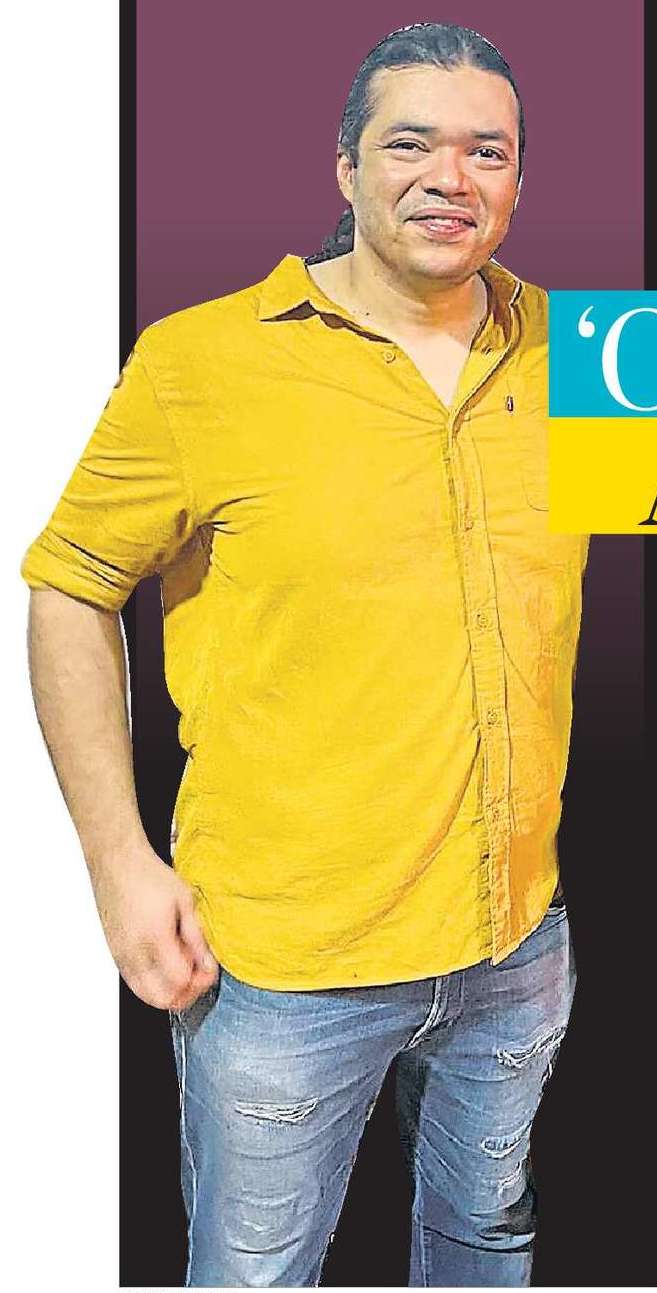
Director Sajid Ali shares how OTT helped his obscure film, shot 11 years ago, finally see the light of day
Rishabh Suri (HINDUSTAN TIMES; March 30, 2024)
For Sajid Ali, Laila Majnu (2018) might have been his debut directorial that released, but it certainly wasn’t his first. Instead, it was Woh Bhi Din The, which has finally seen the light of day, thanks to OTT. Elated to now see the film streaming, Sajid tells us, “This is my first film, and will always be the most special thing I have ever done in life. It is based in Jamshedpur (Jharkhand) where I grew up, and the school I went to.”
OTT: A SECOND LEASE OF LIFE
He believes that had the medium of OTT not emerged, his film would still be lying in the cans. “I don’t know why the film had not been released then. I have understood there are market dynamics that play their part. If it wasn’t for OTT, nowadays, a film like mine would have gone into the grave. It would have never come out. Who will take the chance of releasing an old film in theatres? Nobody! OTT has offered a second life to people like us,” shares Sajid, whose brother, director Imtiaz Ali’s Amar Singh Chamkila is set to drop on streaming.
In fact, Laila Majnu, which received a tepid response in theatres, later ended up taking off when it hit an OTT platform. Sajid, well aware of this, explains why. “When you make a film with people who are not well-known, not everybody would give it a chance. Not just in terms of money, but also as a viewer, to make the effort of travelling physically to a theatre. You have got to have some excitement to do that. Very few at that time were inclined towards Laila Majnu, and I understand,” he says.
Nonetheless, he feels that it was a brave decision to go ahead with a theatrical release initially despite casting two newcomers — Avinash Tiwary and Triptii Dimri. “It was my idea to cast new faces and the producers really supported it. It definitely got a new lease of life on OTT. TV is there, yes, but it wouldn’t have been like this. Thanks to the Internet, we are still talking about it,” he adds.
Light-hearted content on OTT? Not enough
The one thing that Sajid has witnessed on streaming platforms is the prevalence of bold scenes, strong language, dark content and lack of family entertainment. “I have kids now. When we watch something at home, I have got to be constantly checking whether they are sleeping or not. We tend to always find something we can watch together; you either end up with animation, which sometimes you are not in the mood for. Sometimes, you push them [the children] to watch something beyond their years, but also something safe. That [kind of] content is very less. I would like to watch a nice comedy with my daughter, but I am always suspicious,” he wraps up.
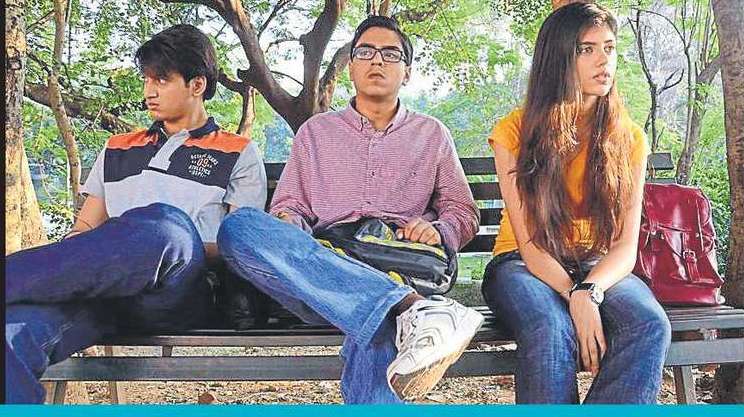
Convincing Ustad Rashid Khan to sing Aaoge Jab Tum wasn’t easy-Imtiaz Ali
8:19 AM
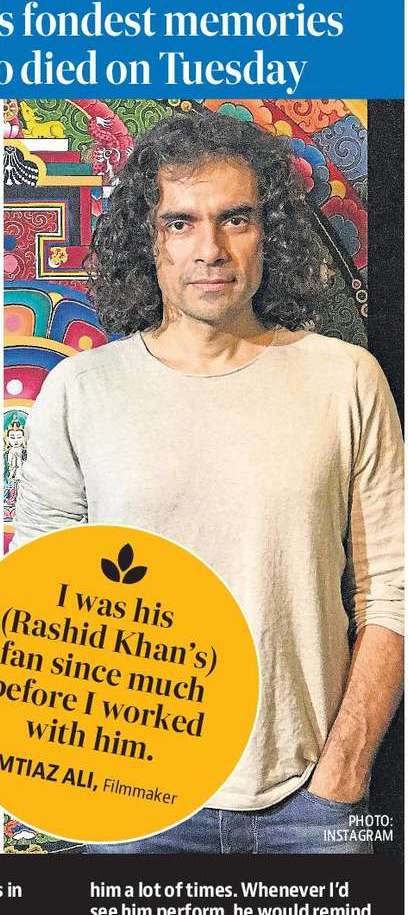
Imtiaz Ali remembers working with the late Ustad Rashid Khan for Jab We Met
Sundas Jawed (BOMBAY TIMES; January 11, 2024)
Ustad Rashid Khan, whose mastery over Indian classical music earned him awards and accolades around the world, became a household name with Jab We Met's iconic song Aaoge Jab Tum. Filmmaker Imtiaz Ali expressed his grief at his demise: “Losing him at this age is unfortunate for all of us. The amount of love, dedication and hours he gave to music is a blessing for all of us.”
Collaborating with the maestro for ‘Aaoge Jab Tum’
It wasn’t easy to convince Ustad Rashid Khan to sing for Jab We Met, recalled Imtiaz. “He was not ready to sing for the film because it is not usual for Ustads to do playback singing. But Sandesh (music director Sandesh Shandilya) was eager to have him on board. He went all the way to Kolkata to invite and convince him,” said Imtiaz, adding, “He finally agreed because he figured out how serious we were about collaborating with him and also the fact that we were big fans of his music. The way he embraced the song is evident in the fact that ‘Aaoge Jab Tum’ is the most famous and well-loved song from the Jab We Met album. Etched in our memories, it will live forever.”
Despite his stature, Ustad Rashid Khan was a keen learner. “During the recording he used to tell us that ‘Don’t treat me like an Ustad, but a newcomer because I am new to this (playback singing),” recalled Imtiaz.
A childhood icon
“I remember going for his classical concerts in Jamshedpur. I was always a big fan of his singing, but after working with him I was enamoured and in awe of him. He had invited me to Kolkata last year for his son’s music event. Although I could not make it to teh concert, it was the last time we spoke,” said Imtiaz.
---------------------------------------
Filmmaker Imtiaz Ali recalls his fondest memories with maestro Rashid Khan, who died on Tuesday
Rishabh Suri (HINDUSTAN TIMES; January 11, 2024)
For 16 years now, Aaoge Jab Tum from Jab We Met has been the undisputed anthem for broken hearts, and director Imtiaz Ali credits Rashid Khan’s soulful voice for making it the classic that it is.
Remembering the late maestro — who died at the age of 55 after a prolonged battle with cancer — Ali tells us, “I was his fan since much before I worked with him. The first time I met him was when I had attended his live recital of the Megh Malhar (a Hindustani classical raga). It started raining when he sang, and the belief is that when someone sings the Malhar well, it rains. That’s my first memory of him.”
Ali’s regard for Khan grew further when they went on to collaborate for Aaoge Jab Tum. “I realised how simple he is. He said, ‘Don’t think of me as a big singer. I am a newcomer who has never sung in a recording, so you have to guide me’,” the 52-year-old recalls, adding, “In fact, we had to convince him to do the song. It wasn’t an instant yes from him. And now, the track is perhaps the most popular one in my repertoire.”
Ali attributes Khan for giving the song a life of its own: “It lives on forever and that is owing to him and what he acquired over years and years of practising in the gharana. That is what brings that larger-than-life quality to his work.”
The filmmaker and the late classical singer would often have conversations about the song. Last year, Khan invited Ali to an event that marked the beginning of his son’s musical journey. “I couldn’t make it, but it was the last time we spoke... I’ll always be grateful to him for Aaoge Jab Tum. It was a blessing for my film,” Ali ends.
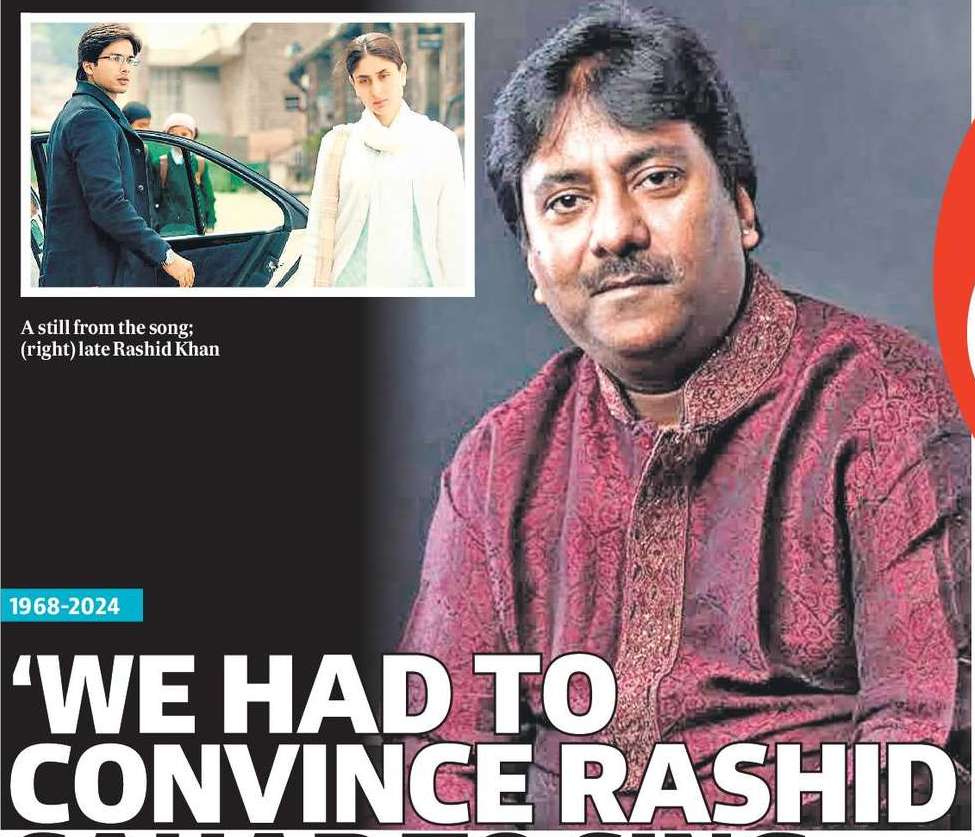
If Jab We Met was made today, Geet would just go off social media-Imtiaz Ali
8:39 AM

Sundas Jawed (BOMBAY TIMES; August 31, 2023)
Filmmaker, producer, screenwriter Imtiaz Ali was spotted in Kolkata recently with his daughter Ida and took to social media to share pictures of some of their food adventures. In between eating his heart out at pretty cafes and street food joints, the Jab We Met, Rockstar and Tamasha director spoke to us about his definition of love in IG times, the romance of train journeys and more. Read on to know more...
On why Kolkata is his favourite city in India..
I am from Jamshedpur; Calcutta was the first city I came to and still remains my favourite city in the country. I have been in the lanes of Kolkata several times and every time I try to discover at least one or two new places. This time it is a café in Hindustan park which is a beautiful, aesthetic place.
On Kolkata's unique architecture
What I have been seeing from the last few years, the Hindustan Park area is developing nicely in the way it has retained the cultural richness of the architecture. Kolkata is unique in the way it is home to the highest number of skilled artisans for flower decorations, weaving, painting, pandal making and various life arts. Besides some of the best looking buildings, it also has the best food in the country and I try to get here as often as I can.
If Jab We Met was made today..
Jab We met was very edgy in terms of how it was placed with missing trains, runaway bride and a boy and girl sharing a room. At that point of time, it was different, now it wouldn’t be. If the movie is made again, there would be only superficial changes in the story. One thing that would play a big role is social media, So if Geet of present day elopes and goes into hiding, she will be off social media or wouldn’t use her own name on her profile.
On the magic of travel and long-distance trains..
I love travelling and more than seeing beautiful places I have enjoyed the fact that I felt very different every time I went out of my home space. My travel out of Jamshedpur was mostly on train to Kolkata or some other place, but it was a very dreamy kind of world for me where not only was I thinking of different things that I wouldn’t be thinking of in my regular life, but I was also anonymous. So I could give any name any story to myself. Travel and storytelling to me are intrinsically related.
The role of music in his life and movies ..
Of all the things I do as a director, I enjoy shooting with music on set the most. The music directors that I have worked with have been true artistes and they have also been very gracious and generous in allowing me to come into the process of their music making. I owe a great deal to them for the fact that they have provided so much strength to my narrative, especially A R Rahman because he has taken the story forward to another zone with the music that he has provided for Rockstar, Tamasha and Highway.
On his favourite films..
There are parts of movies that I like but I am not my own fan. At one point we have been so engaged with these movies/songs that it doesn’t work for me in terms of entertainment anymore.
Imtiaz's favourite food stops
- Biryani from a renowned Mughlai restaurant in central Kolkata
- Tarun Niketan’s eating house for Bengali cuisine
- Iconic Park Street eatery for cakes: "Ida has been to Kolkata quite a few times and sometimes her birthday cake is ordered from the same Park Street confectionery. Both of us love it."
- Tangra for Chinese
----------------------------------------------
You get the best food in Kolkata at unnamed places and shops. A simple puri bhaji and chai or malai toast, absolutely inexpensive, are a few to name.
I can’t tell you how many producers and actors rejected Jab We Met-Imtiaz Ali
8:19 AM
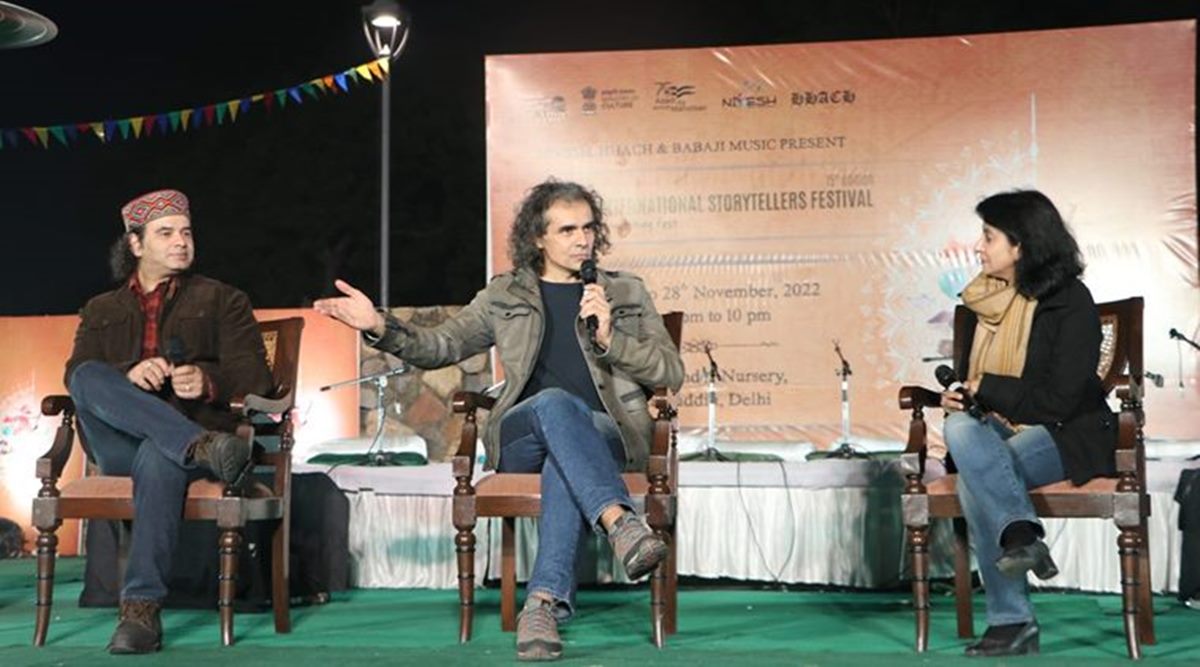
Riya Sharma (DELHI TIMES; December 2, 2022)
On a chilly winter Sunday night at Sunder Nursery, Imtiaz Ali turned into a storyteller for Delhiites at Kathakar International Storytelling Festival. For his fans, it was probably the ideal way to spend their Sunday evening, who came with the filmmaker’s portraits and CDs and posters of his films. In a conversation with Mohit Chauhan, Imtiaz highlighted his Delhi days, what made him miss the FIFA World Cup and why making music for Rockstar felt like a workshop.
‘DELHI GIRLS ARE VERY TALKATIVE, THEY TALK IN A CERTAIN STYLE’
Imtiaz has several stories to share when it comes to his days in Delhi. The moderator started with the disclaimer that there are stories we can talk about, and there are stories we cannot talk about. To which Imtiaz replied, “The story that I am thinking of, it’s a story with multiple characters.”
He added, “I had come to Delhi from Jamshedpur; I used to be a part of a theatre group called Act One while I was staying at the Hindu College’s hostel. We used to catch trains from Delhi to go to Jamshedpur. My friends would insist on going along with me because the best-looking girl would always be in my compartment. Buses mein bhi aisa hota tha. I used to find Delhi girls very talkative, they used to talk incessantly. They would go like, ‘Pata hai main ja rahi thi…’ there was a certain rhythm, unki personal baatein, relationship talks, yeh saari cheezein mere dimag mein thi. All stories of my life are incomplete in some ways, and I think it’s a good thing because they can complete themselves in my film.”
Imtiaz said that this story about these girls that he had met completed itself in Jab We Met. “That’s the same girl, and I have met her several times in several places but always in Delhi,” he added.
‘JAB WE MET WAS REJECTED THE MOST’
Imtiaz Ali said one of his most loved films, Jab We Met, was rejected the most. “But anything that is rejected is not necessarily bad. It is just not suited for that person, at that time. Everything that I have done, especially the ones that are successful, jo zyada chali hain, wahi zyada reject bhi hui hain. I can’t tell you how many producers and actors rejected it. Not because it was wrong, but it was not suited to them at that time. And this is what I want to say to young people – rejection is not a judgement of the quality of your work at all. You have to take rejections as a medal. If something is accepted easily, usually there is something wrong with it. So be afraid of things that are easily accepted; it means you have not found your depth in it,” said the filmmaker.
‘OVERWHELMED BY THE NUMBER OF PEOPLE WHO KEEP TELLING ME THEIR STORIES, WHICH ARE RELATED TO TAMASHA’
Imtiaz Ali’s Tamasha recently completed seven years. And when the moderator notified the audience about it, they broke into a loud cheer. “The people who cheered like that, the movie belongs to them,” said Imtiaz, adding, “I have constantly been overwhelmed by the number of people who keep coming to me over the years and telling me their stories, which is related to Tamasha, and how they took the decision to change the flow of their lives and follow the journey of their hearts. I feel guilty when someone tells me that they left their job because of my film. So many people have been positively motivated by the film’s story.”
WORKING ON ROCKSTAR WAS LIKE ATTENDING A WORKSHOP: MOHIT CHAUHAN
When Imtiaz asked Mohit about his connection with the hills, he said, “Main pahadon mein hi raha hoon, sab padhai karke main Delhi aaya. Ek abhi bhi jo sukoon hai, woh wahin milta hai. . . It is conducive to your art. If you sit close to nature, it gives you inspiration.”
Talking further about how the music for Rockstar was created, Mohit shared, “Rockstar was like a workshop....” Imtiaz added, “...Na tune thi, na lyrics thay, kuch bhi nahi tha. Sab kuch saath mein tha.”
“Kuch gaane jab Imtiaz ne mujhe bheje, like Jo Bhi Main was a 10-minute song with no lyrics, bas jam ho raha hai. Jab maine pehli baar suna toh main ghabra gaya. Maine socha dekh lenge, ek week baad inhone ek aur gaana bhej diya, aur woh bhi aisa tha toh main ghabra gaya. Par woh gaane rough diamond thay, jisse dheere-dheere tarasha jaane lage. Irshad (Kamil) sahab words saamne saamne likh rahe thay, it was an experience. It was amazing,” added Mohit.
WAS SUPPOSED TO WATCH A WORLD CUP MATCH IN QATAR BUT CHOSE TO COME TO DELHI INSTEAD: IMTIAZ ALI
Imtiaz, a regular speaker at the Kathakar International Storytelling Festival, shared, “It is true that the energy of this place is blessed in many ways. If you look around, you will find grand historical monuments and spirituality in proximity. Hazrat Nizamuddin Auliya is next door; Gurdwara Damdama Sahib is there. I feel in some ways, this is a very auspicious place. I was supposed to be at the Qatar World Cup and watching a match, and I was going to be taken there free of cost and somebody was organising the ticket as well. Unhone kaha aap kaun si team follow karte ho? I said I follow Brazil and this time I think we will win. I wanted to see a Brazil match but then there was also this, so I thought woh pata nahi, yeh dekh lete hain pehle. That was not the only reason, but I’m happy to be here instead.”
My friends and I would stand in queues for three to four hours, to buy tickets that cost just Rs 7-Rasika Dugal
8:57 AM
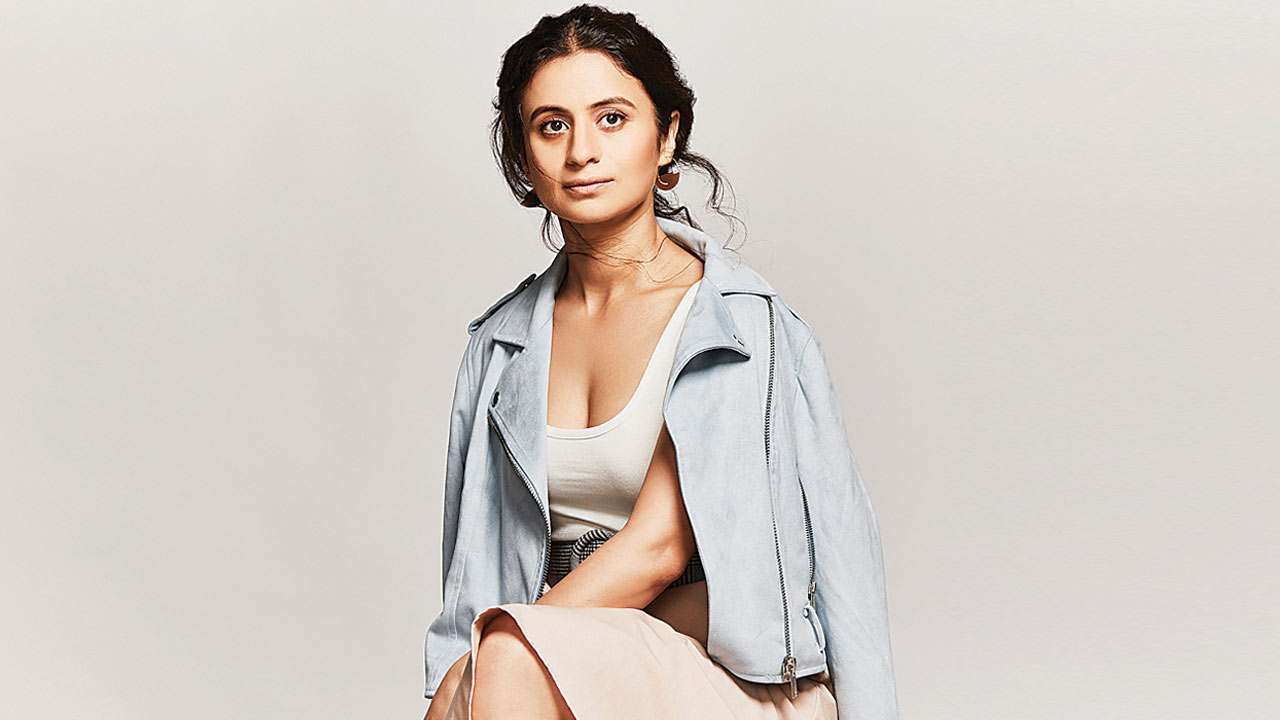
Aditi Pancholi (BOMBAY TIMES; October 8, 2022)
Known for her roles in several shows and movies, including Mirzapur, Made In Heaven and Delhi Crime, among others, Rasika Dugal credits Delhi as the city where she was first introduced to theatre.
The actress, who pursued a degree in mathematics in 2004 from Lady Shri Ram College (LSR), says, “My first introduction to any serious theatre was in LSR. At that time, it was just a way for me to fit into college. I hail from Jamshedpur and when I came to college, I saw everyone was so well-informed and doing multiple things. I used to feel I didn’t know enough. All the cool people in college used to be in the drama society, so even I wanted to be cool and be a part of it, so I auditioned and was cast for a play by theatre director Anamika Haksar, who has also made a film now. I had the opportunity to work with some enthusiastic and lovely women in college, so my cinematic journey started at LSR. My world opened up there, my first introduction to good work on stage started from college, and then Film and Television Institute of India (FTII) took it further,” says the actress.
‘LOVED GETTING PARANTHAS PACKED FROM MOOLCHAND’
Recalling some of her fondest memories of the city, Rasika says, “I was in the LSR hostel and most of my best memories about Delhi are very food-related. Whenever I am in Delhi, I want to try something new. Our hot favourite back in college used to be the paranthe wala at Moolchand. In fact, when I came to shoot for Delhi Crime’s first season, I went back to Moolchand just to have the paranthas. Back then, there used to be a little stall that would pack paranthas in a newspaper. I also remember how my friends and I would save and divide our pocket money and bahut soch soch kar hum hot chocolate fudge khaate thay.”
‘WE USED TO STAND IN LONG QUEUES TO BUY MOVIE TICKETS AT SAKET FOR JUST 7’
A cinema buff, the actress says she would stand in long queues to get a cheaper ticket at a Saket cinema hall. She says, “Back then, the ticket for these front rows – which were available at a separate counter – cost 7! My friends and I would stand in queues for three to four hours, just to buy those tickets. Since none of us had enough money at that point, we would shop at Greater Kailash M Block market and wear each other’s clothes. We would also go to Bengali Market for chhole kulche.”
‘NEED TO COME BACK TO DELHI FOR A FOOD TRIP’
“Every time I am in Delhi, it is a rushed trip, and I always feel I need to come back to the city for a food trip, especially in winter. The food is simply outstanding. In fact, even in between interviews during my recent visit to Delhi, at the hotel, I could smell some amazing aroma of dal makhani and I couldn’t resist ordering one for myself. I have a lot of friends and family members in Delhi. I ensure I meet a different set so that I can meet all of them whenever I am in the city,” she says.
‘OTT CHANGED MANY ACTORS’ LIVES, INCLUDING MINE’
“Projects in the streaming space have broken the set formula. The gusto with which content is being consumed across genres is proof of the fact that the audience was always ready to embrace new and interesting content,” says Rasika, adding, “I am happy to see that in the last few years, after streaming became popular, it is not just three or four actors that have had successful shows; every month there is a new show, so there seems to be a room for everyone. There is an opportunity for everybody, be it in terms of genre or talent, there is no dearth.”
However, there are cons to every medium and OTT is no exception. Rasika says, “There is a clutter of content, and not everything that is written for streaming services is of top-notch quality. Some shows or films are mediocre too. Once a show gets successful, there is a need to come up with subsequent seasons quickly but I hope that time is given to maintain the quality that they have come up with. We should not fall into the trap of producing subsequent seasons at such speed that it impacts the quality of a show in any way.”
I deliberately do not make political statements in my movies-Imtiaz Ali
8:13 AM

Imtiaz Ali was a rockstar at the recent Tension Not Twitter spaces session
Compiled by Rishabh Suri (HINDUSTAN TIMES; February 1, 2022)
Filmmaker Imtiaz Ali exudes a saint-like calmness, which is surprising in a field where tension tends to run high. In conversation with Sonal Kalra, Managing Editor (Entertainment & Lifestyle), Hindustan Times, at the Tension Not Twitter spaces session, Ali said his craft is his secret. “Interest ka kaam hai, mazaa aata hai, tense wali feeling nahin hoti,” said the 50-year-old.
The director of cult films like Jab We Met (2007), Highway (2014), Tamasha (2015)seemed almost like a rockstar as excited listeners couldn’t hold back their questions. Excerpts:
@iamFirki: What’s with your obsession with travelling? Most of your films start with it.
I love travelling. I’m from Jamshedpur, which is not a big city. We had to travel to Delhi or Kolkata for everything. My father worked on irrigation projects and he used to take me on tours. I’d feel a weird romance while travelling. Wahi cheez abhi bhi chal rahi hai. I have a suspicion that I deliberately write films where I’d get to travel!
@ARanganathan72: Is it a conscious decision to shy away from expressing your political inclinations?
I deliberately do not make political statements in my movies. It’s not that I’m scared... If there comes a time when I want to say something political, I will. But I understand the kind of reach films have, and I don’t like to show ignorance that I might have about politics.
@thatzanychick: You’ve said in the past that you like shooting songs. Please tell us your favourite memory.
One was Aaoge Jab Tum from Jab We Met. I was embarrassed to shoot it as it seemed slow, boring. I used to tell the sound guy to only play the part we were shooting. It’s a blessing that I get to hang out with people like Pritam Chakraborty, A R Rahman sir, tons of musicians, lyricists.
@sonalkalra: How many people have told you that they quit their jobs after watching Tamasha?
Many! I feel a sense of responsibility... This is when the power of cinema jumps to me. Aap ek kahaani likhte hain, aapko andaaza nahin hota ki aisa asar pad sakta hai. This is why I try to make films from the heart, with as much honesty as I can.
Listen to the full session: https://twitter.com/i/spaces/1yNGaYeooqnGj
The one thing Sushant Singh Rajput taught me was to save my energy-Sanjana Sanghi
8:32 AM

A year after the film’s release, the actress recalls memories from the process of making the movie, which was also Sushant Singh Rajput’s last film
Onkar Kulkarni (BOMBAY TIMES; July 24, 2021)
After playing supporting roles in films like Rockstar, Hindi Medium and Fukrey Returns, Sanjana Sanghi stepped into the lead space with Dil Bechara. The film wasn’t the typical Bollywood launchpad for the actress, but it rolled out a platform for her to step on and show her acting skills from the start. A year down, Sanjana recalls the time when the film released amidst the furore over her costar Sushant Singh Rajput’s sudden death. From the bond that she shared with the actor, how he taught her about ‘rationing’ her energy, to how her experiences of playing Kizie Basu left her feeling more equipped as a performer — she shares it all. Read on…
After playing supporting roles in a few films, you featured as the lead actress in Dil Bechara. The project was far from the conventional launchpad that most Bollywood actresses would look for. What drew you towards the part?
Honestly, you dream big, but you also want to manage your hopes and expectations. When I came to Mumbai, I had to navigate through everything myself, and there was no roadmap for me. One can dream of getting launched with a traditional project where the heroine gets to look glamourous, but here, I was in hair that wasn’t blow-dried and sported a no make-up look. This project had its own perks though.
I still remember the afternoon when I got a call for Dil Bechara, which is the Hindi remake of the Hollywood film The Fault In Our Stars. When I heard that I was being approached for the part of Hazel Grace Lancaster... I can never forget the feeling of blood flowing through my body. This opportunity surpassed all my dreams. When I was a teenager, I had read that book by John Green over 10 times. What A R Rahman sir did with the music and Sushant did with the dialogues made the movie bigger than a dream.
In your first project as a female lead, you essayed the part of a young girl battling cancer. Given the fact that you don’t have as much experience as an actor, was it tough to get in and out of the mould of your character?
Kizie Basu took over my life for two-and-a-half years. I let the director hold my hand and introduce me to the world of my character. At the age of 21, I dealt with the topics of strength, mortality and what it was like to battle an illness. Kizie wounded and healed me. Over a period of time, I had started to feel comfortable as Kizie. By the time we started shooting, the character had enveloped me completely. It was only when the project got over that I pushed myself to move on. I now know how demanding a leading actor’s job can be and what it means to be committed to a project. As an actor, today, I feel far more equipped.
What was your first meeting with Sushant like? How did you break the ice?
We met for the first time at Mukesh (Chhabra, director) sir’s office, where we did our reading. Within five minutes of the meeting, we realised that we both are nerds, are obsessed with everything academic and lived for the love of food! The other common point of interest was Delhi. While I hailed from Delhi, he had studied there. The performances you see in the film are all because of teamwork as it’s a completely performance-oriented movie. It didn’t boast of any fancy song sequences or stunts, but relied on human emotions and relationships. The one thing Sushant taught me was to save my energy. He made me realise how important it was to conserve energy by not putting in all of it when not required, for instance, the wide-angle shots. He used to call it ‘rationing’ of the energy.
While the film will always be special to you, it didn’t release under the circumstance that you would have desired, owing to Sushant’s sudden death. Do you think it got the attention it deserved for the right reasons?
It was all supposed to be different, right? Like, all of it! But once everything just changed the way it did... there was no looking back. The day the film released, it created records with millions of people watching the movie on the first day. That’s an unreal number. With the kind of love and respect the film got, how can I have any regrets? It was quite an ode. Sushant and I were excited about the project through its making. We would discuss which colleges we would be visiting to promote the film. We even thought of the songs from the film that we planned to croon during the promotions and wondered whether we would be able to revisit the theatre in Jamshedpur where we shot the film.

When Dil Bechara trailer dropped, I thought Sushant will text me, saying 'You have killed it, rockstar!'-Sanjana Sanghi
8:38 AM

As her debut vehicle, Dil Bechara becomes Sushant Singh Rajput's swansong, Sanjana Sanghi on how she has yet to come to terms with his demise
Uma Ramasubramanian (MID-DAY; July 21, 2020)
 Over the years, the aspiring actor imagined different scenarios as she daydreamed about being launched in Bollywood some day. And yet, as Sanjana Sanghi stands on the threshold of fame today, the reality does not match her dreams. The man who walked her through her first film, Sushant Singh Rajput, is no longer by her side. Sanghi is so used to him cheering her on that on certain days, she picks up her phone, half-expecting a message from the late actor.
"When the trailer dropped [on July 6], I thought he will text me, saying 'You have killed it, rockstar!' That's what he would say after a good day on the set. I am not even close to coming to terms with what happened. I know it will hit me in two to three months," says Sanghi, remembering her co-star who passed away on June 14.
Now, Dil Bechara — Rajput's swansong and her debut vehicle — is set to premiere on Disney+ Hotstar. She says that sharing her first film with Rajput made the overwhelming journey seem less daunting, exciting even. "In my head, nobody other than Sushant could have played Manny. Both of us were similarly wired — we were crazy about cinema and books, and our perspectives would often align. If I was nervous about a scene, he would notice it, put his arm around me and take me for a walk. During the stroll, he would run me through the scene and I was good to go after that. Honestly, he has set the bar high for my [future] co-actors."
The Mukesh Chhabra-directed venture is the official adaptation of The Fault In Our Stars (2014), which was inspired by John Green's novel of the same name. "When Mukesh told me during the audition that he was adapting the movie, I couldn't believe my luck. They have culturally adapted the script to set the story in Jamshedpur. The theme of the original has been retained, but it has been given a new flavour."
Love is still a mystery to me-Imtiaz Ali
8:54 AM
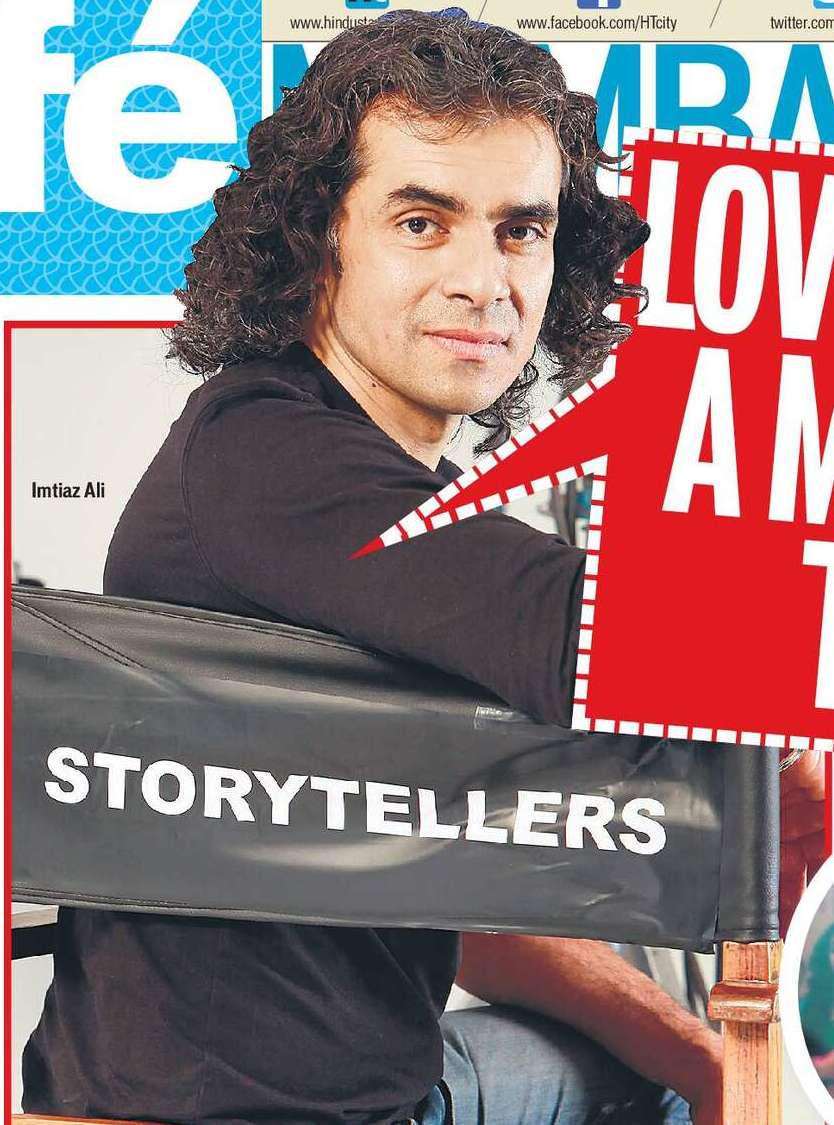
Imtiaz Ali says he knows nothing about love; relies on his thoughts and reflections to explore the concept
Prashant Singh (HINDUSTAN TIMES; February 3, 2020)
When he first made people sit up and take notice of his talent in Socha Na Tha (2005) followed by the cult hit, Jab We Met (2007), not many knew that Imtiaz Ali will soon leave an indelible mark in the Hindi film world with his inimitable, deep-rooted take on love. But just when you think of anointing him the ‘master of romance’, Imtiaz leaves you stumped, saying he knows nothing about it. “It’s not as though I am a master at it so I am telling you such stories but it’s more like I’m trying to understand it and movies are getting made,” says Imtiaz, as he readies for the release of Love Aaj Kal (LAK) starring Kartik Aaryan, Sara Ali Khan and Arushi Sharma. Excerpts:
2020 marks 15 years since you have been weaving stories...
Honestly, I don’t look back at my career or the professional life. But I do look back at my life, friends and people, so looking back is personal that way. I am always connected with people from my past. But I don’t try to learn too much from what [work] I did in the past. Maybe, I should (laughs). You work on one film and put all of yourself into it. And then, you kind of move on from there, and not go back. So, in some way, it’s poignant and good too because that way, you clear out the deck for newer things to come in. Else, it’ll be like being in a relationship that you don’t have anymore.
Your first film (Socha Na Tha) had an innate charm that stemmed from the fact that it was very raw, real and innocent. Have you managed to retain that magic?
I don’t think I’m the right person to answer that. And I don’t even know whether I have been able to maintain or conserve the innocence or rawness in my filmmaking. But whatever I do, even now, I don’t try to be more innocent or raw. I think the only way ahead is truthfulness and honesty. I’m a different person from when I made Socha Na Tha, and have learnt many things after that. Now, I have to look at how I perceive things at this stage and depict them beautifully. But my basic tools, fascinations, interests and process, remain the same. Also, since I’ve always written and directed my films, the process has remained intact.
Along with your legion of fans, a section of people also feel that you only make romantic films. How do you react to this?
I feel many emotions at the same time. If it’s said in praise, I feel like telling them, ‘I don’t know about it [love]. Maybe, you know more than I do. And that I am just more interested in it than you are.’ If someone feels I only make romantic films, I also wonder, ‘why that happens (smiles).’ But the fact of the matter is that I can show only those grains that grow in my garden. I just can’t invent or artificially inseminate something. So, most of the times, when such things are said, I try and not get affected by it as I want to enjoy the freedom of the range that I naturally have. I try to be in touch with my ‘real’ self, and not do things in reaction to something.
Coming to your next, Love Aaj Kal [LAK], it seems to have the same concept, pattern as your first Love Aaj Kal. Your take?
See, I’ve never done a remake, part two, a sequel or anything of that sort. So, vis-à-vis LAK, it all started with random conversations that if it was to be made today, it’d be very relevant and you would have a particular kind of guy and a girl. Also, I feel, it came from the fact that in the last 10 years, I’ve seen young people getting into relationships in a totally different — almost in a reverse kind of a process — than it was a decade back or 20 years ago. Yet, what they are looking for and their desire remains absolutely the same.
So, are you saying that your ‘regular’ conversations led you to this film?
Yes, and also, I guess the whole idea of love and relationships have gradually gone through such a dramatic change that I found myself talking about it time and again. I was going to make another film but I spoke so much about it that it started to form like a story in my head. While I was prepping to get into the shoot of the other film, I realised that I already have this story and I’m more excited about it. And plus, this was also more topical. So, I went for it.
Has your idea of love/romance changed, or metamorphosed over the years, or does the core remain the same?
I know that since I often make films about romantic relationships, I’m supposed to be someone who ‘knows everything about love.’ But the fact is that I know nothing. Since I don’t know anything about it and am still engaged with that concept, I’m still trying to understand it, as it remains a mystery to me. And the movies I make are a result of that churning in my mind. I don’t know anything more than anyone else. I do have some images, reflections and thoughts, and I’ve also realised a few things which I can present through stories.
You’ve seen many successes as well as failures. But by now, have you developed any software or hardware to deal with everything?
I think I entered the industry equipped with the software to deal with success and failure, and that’s shamelessness (laughs). It helps me not to ponder much. I always tell myself that I came from Jamshedpur/Delhi since I love making films. That’s what I should do and make them as well as I can since I enjoy that. I hope all my works is successful but if it’s not, then what different you can do. When Jab Harry Met Sejal didn’t do well, I, of course, didn’t enjoy that fact at all. But even if it was a success, I’d still be making the best film that I can. Right?
Talking about Love Aaj Kal [LAK], you chose the ’90s to showcase the past era. Do you feel a special affinity towards the ’90s?
I am at a different age now but when I see 20-year-olds, I think of the times when I was that age. That’s why the ’90s, when I was in my 20s. So, be it getting into relationships for the first time or the gamut of love-related emotions, it all happened to me then. In my case, it was even earlier but the 20s is the age when it happens to most people. So, if a person, who is nearly my age, looks at modern-day relationships thinking of times when he was that young, then the ’90s becomes the right period.
For you, did the ’90s also bring a personal connection?
Yes, because I understand the texture of the romance of that era because I was there. I have seen those things around me, in me. For instance, in our film, a group goes to watch Qayamat Se Qayamat Tak (1988), and that affects their romance. I know that emotion very well and also how people would wear clothes, especially in small towns. So, it’s about familiarity and also a secret desire to see what happens when Dil Deewana [from Maine Pyar Kiya; 1989] plays in a gully. Those things bring a smile to my face. So, I was like, ‘let’s depict it, and pay homage to those great films, which had a great influence on my life.’
Coming to film’s star cast, what made you choose Kartik Aaryan and Sara Ali Khan?
I was initially trying to work out another story. And when I happened to meet Kartik, I discussed that story with him and found him very accessible, someone you can talk to, and he also understands quickly. So, I knew I can work with this guy. And then I spoke to him about Love Aaj Kal. And the same happened with Sara too, who is very talented. I have known her for the longest time, and was very eager to work with her. Now, I realise — especially after watching the film — that they are more suited to this story than the first one. I feel it’s all about signs connecting you to the right direction, where I also wanted to go.
And then, you also have a newbie, Arushi Sharma?
I am very fond of her. We first bumped into Arushi at her engineering college near Shimla, when one of my assistants zeroed in on her for the part of Princess Sanyukta [in Tamasha; 2015]. And she did a great job in that little part. I was enchanted when I saw her for the first time. There’s something very pleasant about her. While working with her, I realised she has an innate, natural ability to act. So, I was looking for a chance to work with her again. When I finished writing LAK, I knew I will look for many girls — everyone out there — but I’ll finally choose her (smiles). Now, when people praise her after the trailer and songs, it kind of vindicates me. I feel relieved and gratified.
You don’t seem to be in a hurry to make your films. For instance, your last one, Jab Harry Met Sejal came in 2017…
Yeh ho jaata hai! I want to make films frequently. But I also write many scripts at one go. The same goes for my films such as Rockstar (2011) and Highway (2014). I made Highway 10 years after I wrote it. This time around too, I wrote four scripts but went with LAK. At times, subconsciously, you want to let a script be for a bit so that it grows organically. Even after Socha Na Tha (2005), I didn’t have work for a long time, so I wrote many scripts. This time too, the same thing happened. Since I have a bank now, I can, hopefully, come up with films sooner as a director. Also, since I’ve a production house now, I can present or produce more films than I direct.
Low-income category people are bulk of Chhattisgarhi film viewers; they too have changed-Anuj Sharma
2:41 PM

Against odds, films in regional Indian languages keep getting made. Anuj Sharma , a former salesman, is a major star in films made in Chhattisgarhi language. He has delivered several boxoffice hits such as Mor Chhaiya Bhuinya (My shadow and earth) and Raja Chhattisgarhiya over the past two decades. The actor-singer, a Padma Shri recipient, talks to Avijit Ghosh about the state of Chhattisgarhi cinema
Avijit Ghosh (THE TIMES OF INDIA; March 15, 2019)
How’s the Chhattisgarh film industry doing these days?
We have been struggling since the industry came to life with Kahi Debe Sandesh (Convey the Message), an intercaste love story, in 1965. There are many reasons for that. No television channel buys a film’s satellite rights, a major source of revenue these days. In some cases, the companies which have bought the video rights also exploit the digital rights. Call it innocence or ignorance, many producers were initially not aware of these differences. It took time for them to realise that home video rights, satellite rights, digital rights are different things.
Who are the core audience of your films? How much does an average Chhattisgarhi film cost?
The low income category people are the bulk of our viewers. Rickshaw pullers, daily wagers, marginal farmers – these are the people who spend their hard earned money on our films. A film’s cost depends on its cast and production values. A low budget film would roughly cost Rs 25 lakh while a high budget film can be made for anywhere between Rs 50 to Rs 75 lakh. The number of films produced each year varies from 7 to 14.
Where are these films shown?
They are shown in about 50 single screen theatres in 40 centres across the state. There are several multiplexes in Chhattisgarh but they don’t give any priority to local films. Some of them are also shown in Nagpur. Towns with Chhattisgarh migrant labour, such as Jammu and Jamshedpur, also run our films. In Odisha, hit films are shown in places like Khariar Road. Many Chhattisgarhi feature films are available for free viewing on YouTube. Some have over 6 million views. The video companies are making money. But they don’t want to share the revenue with the producers. Melas are another good source of revenue for our films, especially during festivals. In these melas, touring talkies organise ticketed shows of Chhattisgarhi films.
On video broadcasting sites, several people have made and posted their own short feature films. Some have got a million views.
People are expressing their creative energy in several ways, rather than allow it to die for lack of opportunity or shortage of finance. Profit or loss, people have a passion for making films in our parts. Twenty years ago, when I said that I want to earn a livelihood by acting in Chhattisgarhi films, I was told you are crazy. Chhattisgarh doesn’t have a proper professional film training institute. Earlier we got technicians from Odisha or Mumbai. They still work here but we are not entirely dependent on them anymore. By working in films over the years, a self-taught generation has emerged. Today we have hundreds of technicians in every department of filmmaking.
It is said that like most Bhojpuri films, Chhattisgarhi films have lost their regional flavour.
Like everywhere else, people in Chhattisgarh too have changed. Our language also has changed with the passage of time. New films should reflect these changes. New experiments keep happening. You must evolve.
Why are mainstream films not made on sensitive topics such as Maoism or exploitation of Adivasis?
Our audience is made of people who must save money from their meagre wages to watch a film. They are the ones who help us put up a “House full” board. They are the ones who clap and whistle during a movie show. We have to fully entertain them. Our films are loud. The actors speak their dialogues loudly, they laugh with gusto. Refined, upper-class people don’t weep loudly; common people do. We make films in tune with their taste. But if we start showing films in multiplexes, films could change stylistically because we would have to keep their tastes in mind too.
How can the state government help the industry?
Last year, the Raman Singh government announced Chhattisgarh Film Vikas Nigam (Chhattisgarh Film Development Corporation) for the state. It would be nice if the new state government comes out with a policy which ensures that Chhattisgarhi films get preferential treatment in multiplexes and on prime time in local TV channels.
You are also a musician. What is your take on popular Chhattisgarhi music?
Our music has a distinctive flavour which people love. I have also started a band called Aarug, which means untouched in Chhattisgarhi. We use traditional instruments such as tabla, dholak, shehnai, bansuri and gudum, an instrument popular among tribals. The most modern instrument used by our band is banjo. Last year we performed in Fiji. Everyone loved the shows.
Sushant Singh Rajput, Sanjana Sanghi kick off The Fault In Our Stars remake in Jamshedpur
8:44 AM

Hindi adaptation of the H’wood romantic drama The Fault in our Stars kicked off in Jamshedpur today with Mukesh Chhabra calling the shots
Roshmila Bhattacharya (MUMBAI MIRROR; July 9, 2018)
 Mirror ( March 19) was the first to report that after months of scouting, Mukesh Chhabra had zeroed in on Sanjana Sanghi, seen briefly in Rockstar, Hindi Medium and Fukrey Returns, to play the leading lady opposite Sushant Singh Rajput
in his directorial debut, the Hindi remake of Josh Boone’s 2014
Hollywood romantic drama, The Fault in our Stars. The film kicked off
in Jamshedpur today with a 5 am shoot. “The first shot will be taken
with Sanjana, who plays Kizie, and her parents in their home,” Mukesh
informed from the Steel City on Sunday evening, admitting that he didn’t
think he would get much sleep before D-Day. The film is titled Kizie
Aur Manny, after its protagonists.
Mirror ( March 19) was the first to report that after months of scouting, Mukesh Chhabra had zeroed in on Sanjana Sanghi, seen briefly in Rockstar, Hindi Medium and Fukrey Returns, to play the leading lady opposite Sushant Singh Rajput
in his directorial debut, the Hindi remake of Josh Boone’s 2014
Hollywood romantic drama, The Fault in our Stars. The film kicked off
in Jamshedpur today with a 5 am shoot. “The first shot will be taken
with Sanjana, who plays Kizie, and her parents in their home,” Mukesh
informed from the Steel City on Sunday evening, admitting that he didn’t
think he would get much sleep before D-Day. The film is titled Kizie
Aur Manny, after its protagonists.
Based on John Green’s bestselling 2012 novel, The Fault in our Stars, it’s the story of a 16-year-old cancer patient who is forced by her parents to attend a support group, where she meets and subsequently falls in love with another patient who has lost a leg to bone cancer. “The very fact that the story revolves around cancer makes it seem heavy and intense. But we’ve turned it into a beautiful love story which plays out lightly between these two main characters. I’ve tried to keep it as simple as possible which is why we decided on this title that has the ring of a rhyme, like Bunty aur Babli,” explained Mukesh.
When it was pointed out to him that Kizie is not a common Indian name, he acknowledged that they had imported it from Africa because it is a perfect fit for their leading lady. Manny, on the other hand, is a common name across countries and unusual enough to spark of interest.
The first-time director pointed out that as one of Bollywood’s best known casting directors, he was sure when he met her, seven years after Rockstar, that Sanjana is best suited to play Kizie. “As for Sushant, I was the one who got him his first break, Kai Po Che! and during the shoot of PK where again I was the casting director, I had told him that whenever I directed my first film, he would be in it and he had replied that he would always be there for me. Four days ago, he reminded me of that. In an age of empty words, he has kept his promise,” exulted Mukesh.
And why Jamshedpur? He reasoned that the city happily welcomed people from across the country and gave them a home there. “So you have a South Indian living next to a Bengali family, while a Parsi and a Bihari could be neighbours. I needed a place with a small town vibe and had heard a lot about Jamshedpur from Imtiaz (Ali) and R Madhavan. When I came here for recee, I knew instantly that this was where I wanted my love story to take root,” he avered.
Rucha Pathak, Chief Creative Officer, Fox Star Studios, which is producing the romantic drama, is happy that finally the stars have aligned for their Indian adaptation of The Fault in our Stars. “We’re especially happy that the script that we’ve been developing over the last few years is seeing the start of shoot and the title itself has come so organically from the Indian characters in the film. Kizie and Manny are characters from the imagination of Suprotim Sengupta who wrote the screenplay and Shashank Khaitan who gave them wonderful voices through his dialogues. Mukesh now is going to bring them to life,” she asserted.
There was a time when I was trying to figure out the meaning of 'love', but I have given up-Imtiaz Ali
8:34 AM

Madhureeta Mukherjee (BOMBAY TIMES; August 2, 2017)
His frames look stunning,
almost like a picture postcard coming out of real life. The lead pairs
in his films look lovely, too, but they
appear real. Like us all - beautiful and flawed, confused and complex.
His next, Jab Harry Met Sejal¸ starring Shah Rukh Khan and Anushka
Sharma, is close to his heart. It's a story that hits the road and takes
you along, and like Imtiaz Ali says, “If I had been born in Mumbai, or
belonged to a film background, my journey would have been lesser. And
for me, the journey is the most important part of my life.“ We catch up
over coffee and chat about all kinds of things - love, movies, men, women
and journeys. It's not a straight route, of course, but that's Imtiaz
for you. He will still give you enough to chew on. So, read on...
Your love stories follow a certain thread - pain, heartbreak, soul-searching, repression, breaking free... Is this how you define love yourself?
I am no longer looking for the meaning of love. I am no longer trying to define it either, but while reflecting on my own work I feel that a relationship with anyone else also makes you look at the relationship you share with yourself. I feel that whenever you encounter a new person or feeling, there is always a discovery and some sort of internal travel. It's not like I have a better definition or understanding of relationships than anyone else. There was a time when I was trying to figure out the meaning of the word 'love', but it's been long since I have given up. In fact, I never use the word 'love' while working, shooting or in real life. It means different things to different people depending on their experiences. It means different things to the same person at different stages in their life. So many things are clubbed and categorized under that word that it becomes extremely inaccurate to use it liberally. If I tell my actor that you are in love with this girl, so behave like this with her, it means nothing at all.
Have your films changed the course of your own journey? How much change has it brought about in you, personally?
Yes, for sure. Sometimes when I watch my own films, I realise that now, people have a sneak peek into everything that I am trying to hide from them. Movies reveal so much to everyone and even more to the director. Personally, I draw a lot from my films, but I don't see it passing on as learning to the next film. If I had carried on something from one film to the other, today, I would have been more confident as a director than I was when I made Socha Na Tha. But that's not the case. Every time I am working on a film, it feels like I have never worked before and I don't know what to do. When I am on the set, I don't know the first thing to say to anyone. It sounds convoluted, but it's absolutely true.
Like in Jab Harry Met Sejal (JHMS), in many of your other films too, the love story hits the road. Is it symbolic? Is it trying to spell out the belief that we need to travel inwards and outwards to find love?
Personally, travel has been very important for me. I was from Jamshedpur and I had to travel a lot, first to study in Delhi and then to Mumbai for work. In smaller towns, people have to travel more as you don't find everything in your own city. Travel is the most affordable entertainment and all kinds of people travel. It is a time when they can be who they want to be. You are often defined by your location, job and the environment you live in. Once that changes, the definition also wears off. You can choose who you want to be and you can refresh yourself by being anyone else because no one knows you there. When you travel, you come to know what kind of person you really are. If you live in a society and go to school or college in a certain area, everyone there has an opinion and you are often bound to carry the same opinion of yourself that everyone has. Once you leave that environment is when you dis cover yourself.
Anushka Sharma and Shah Rukh Khan have worked together twice before doing this film. Does it make it easier directing a love story with a lead pair, who are already comfortable with each r other?
Yes, it does. It makes it easy for not just a romantic film, but for any film. Though sometimes, it also a makes it difficult as there is a certain pattern that already exists which you need to break, because each film is unique and needs a difeferent energy. SRK and Anushka are very comfortable with each other; at the same time, as individsuals, they are very different. I think that also makes it more exciting because people who are unlike each other often add other dynamics to the scenes.
Your journey from Jamshedpur to Mumbai, from Jab We Met (first success) to JHMS, has been interesting. When you come from a smaller town, do your achievements (fame, success) seem more magnified?
I don't know any other way. For me, this is the life that I have lived. I cannot compare it with any other. I feel fortunate that my journey has been long, and the fact that I have been at various places and cities in life. I have worked at a junior level and learnt the ropes the way everyone does. I can use all those experiences in the movies that I make. I feel I am more blessed that life has taken me to different places. If had been born in Mumbai, or belonged to a film background, my journey would have been lesser. And for me, the journey is the most important part of my life.
Your name features on most actors' bucket list. Yet, you say that you are insecure. Why?
Honestly, I feel completely unsure about myself as a director. I think it is the very basic nature of people to be unsure about what they are doing. Right now, I am going to the mixing studio and it will be a struggle to make the best of what I can today. Tomorrow, I won't have the chance to do it again. There is nothing that I have done, which I have not regretted later in terms of work. There is nothing that I have done, which I felt couldn't have which I felt couldn't have been better. Yesterday, at the mixing studio I was thinking...when will a time come when I will just romanticise about the film releasing and talk about all the good things about it? Before every release, I am just insecure about the nitty-gritties that could go wrong.
The characters in your movies are beautifully sketched; do you see a reflection of your own self in your characters?
I do it subconsciously, never deliberately. Your own influence on the characters of your film is also something you realise in retrospect. I try to keep myself as far away as I can, but it is difficult. Ultimately, when I watch my films, I see that there is a reflection of me and my experiences. I try to avoid it, and the reason is that I don't want my life to repeat and make my films and characters boring and repetitive.
Ranbir and you share a strong bond. In a previous interview, you have spoken about how he often chooses films from the heart. The two of you seem to be similar in that sense; you are driven solely by the story you want to tell. Of course, the commercial aspect comes in later...
It is not a question of how much money you can make with one particular film. For actors and directors, it is a question of how you are going to train yourself to be the person who can make movies that will earn over a period of time. For that, learning is important. Many of us have not been to film schools and we learn on the job. The only way to learn is to experiment and attempt different things. After one successful film, I know that if I make a similar film, it will most likely make money as people have already accepted the subject. If I do that, my learning will stop and after three films, I will have nothing new to say. There are these risks we have to take with the intention that it will reap rewards later, if not right away. Which is why someone like Ranbir, who is going to be here one way or the other for donkey's years, needs to take those risks and learn more. For him, learning and doing new things is more important than the money that he makes right now.
What will he do with the money?
He already has more than he needs (laughs)!
Has your understanding of women changed through your own real life and cinematic experiences? Do you think you understand them better now?
I don't know if my understanding of women has become better, but I can say that now, I am more interested in them. It has always been there. As a child, I was always guilty about being interested in girls and women, now I am old enough to admit that, yes, that's the case. I am fortunate to have been in the company of admirable and intelligent women. I always feel that women are far more intelligent and sharper than men. So, more than understanding women, I think that I am fascinated by them.
In Love Aaj Kal, you showed parallel love stories belonging to different generations. In the older era, the man is in love with one woman, in the new age, he is confused about his choices. Do you think that the new generation construes love differently?
Yes, the definition has changed, but the basis has not. The dynamics around the topic has changed completely and with every generation, it is bound to change. Earlier, the impediment used to be an outside force, a barrier that would stop a man and a woman from coming together and the whole romance was to fight that barrier. Now, it has become internal. Today, you might have to combat some internal things to be with somebody. So, in that sense, the parameters have changed, but the basic desire of a man and woman to be together is the same.
Even the way we show love cinematically has undergone a huge change. Today, a couple in love kisses on screen, makes love and expresses themselves with abandon, without any fear of judgement...
Yes, that has changed, too. I think society has become liberal and therefore, cinema had to become liberal. Today, we have modern relationships, where even after living in for a long time and having an active physical relationship, a couple can take time to understand if they really love each other and want to be together for life. So, cinema is also trying to get there.
So, what we are trying to portray is more honest and closer to reality...
Absolutely! If you realise, today's cinema is actually becoming purer, as we aren't trying to camouflage emotions or add filters. Instead, we are removing them. Now we have a chance of portraying love stories more realistically.
Your love stories follow a certain thread - pain, heartbreak, soul-searching, repression, breaking free... Is this how you define love yourself?
I am no longer looking for the meaning of love. I am no longer trying to define it either, but while reflecting on my own work I feel that a relationship with anyone else also makes you look at the relationship you share with yourself. I feel that whenever you encounter a new person or feeling, there is always a discovery and some sort of internal travel. It's not like I have a better definition or understanding of relationships than anyone else. There was a time when I was trying to figure out the meaning of the word 'love', but it's been long since I have given up. In fact, I never use the word 'love' while working, shooting or in real life. It means different things to different people depending on their experiences. It means different things to the same person at different stages in their life. So many things are clubbed and categorized under that word that it becomes extremely inaccurate to use it liberally. If I tell my actor that you are in love with this girl, so behave like this with her, it means nothing at all.
Have your films changed the course of your own journey? How much change has it brought about in you, personally?
Yes, for sure. Sometimes when I watch my own films, I realise that now, people have a sneak peek into everything that I am trying to hide from them. Movies reveal so much to everyone and even more to the director. Personally, I draw a lot from my films, but I don't see it passing on as learning to the next film. If I had carried on something from one film to the other, today, I would have been more confident as a director than I was when I made Socha Na Tha. But that's not the case. Every time I am working on a film, it feels like I have never worked before and I don't know what to do. When I am on the set, I don't know the first thing to say to anyone. It sounds convoluted, but it's absolutely true.
Like in Jab Harry Met Sejal (JHMS), in many of your other films too, the love story hits the road. Is it symbolic? Is it trying to spell out the belief that we need to travel inwards and outwards to find love?
Personally, travel has been very important for me. I was from Jamshedpur and I had to travel a lot, first to study in Delhi and then to Mumbai for work. In smaller towns, people have to travel more as you don't find everything in your own city. Travel is the most affordable entertainment and all kinds of people travel. It is a time when they can be who they want to be. You are often defined by your location, job and the environment you live in. Once that changes, the definition also wears off. You can choose who you want to be and you can refresh yourself by being anyone else because no one knows you there. When you travel, you come to know what kind of person you really are. If you live in a society and go to school or college in a certain area, everyone there has an opinion and you are often bound to carry the same opinion of yourself that everyone has. Once you leave that environment is when you dis cover yourself.
Anushka Sharma and Shah Rukh Khan have worked together twice before doing this film. Does it make it easier directing a love story with a lead pair, who are already comfortable with each r other?
Yes, it does. It makes it easy for not just a romantic film, but for any film. Though sometimes, it also a makes it difficult as there is a certain pattern that already exists which you need to break, because each film is unique and needs a difeferent energy. SRK and Anushka are very comfortable with each other; at the same time, as individsuals, they are very different. I think that also makes it more exciting because people who are unlike each other often add other dynamics to the scenes.
Your journey from Jamshedpur to Mumbai, from Jab We Met (first success) to JHMS, has been interesting. When you come from a smaller town, do your achievements (fame, success) seem more magnified?
I don't know any other way. For me, this is the life that I have lived. I cannot compare it with any other. I feel fortunate that my journey has been long, and the fact that I have been at various places and cities in life. I have worked at a junior level and learnt the ropes the way everyone does. I can use all those experiences in the movies that I make. I feel I am more blessed that life has taken me to different places. If had been born in Mumbai, or belonged to a film background, my journey would have been lesser. And for me, the journey is the most important part of my life.
Your name features on most actors' bucket list. Yet, you say that you are insecure. Why?
Honestly, I feel completely unsure about myself as a director. I think it is the very basic nature of people to be unsure about what they are doing. Right now, I am going to the mixing studio and it will be a struggle to make the best of what I can today. Tomorrow, I won't have the chance to do it again. There is nothing that I have done, which I have not regretted later in terms of work. There is nothing that I have done, which I felt couldn't have which I felt couldn't have been better. Yesterday, at the mixing studio I was thinking...when will a time come when I will just romanticise about the film releasing and talk about all the good things about it? Before every release, I am just insecure about the nitty-gritties that could go wrong.
The characters in your movies are beautifully sketched; do you see a reflection of your own self in your characters?
I do it subconsciously, never deliberately. Your own influence on the characters of your film is also something you realise in retrospect. I try to keep myself as far away as I can, but it is difficult. Ultimately, when I watch my films, I see that there is a reflection of me and my experiences. I try to avoid it, and the reason is that I don't want my life to repeat and make my films and characters boring and repetitive.
Ranbir and you share a strong bond. In a previous interview, you have spoken about how he often chooses films from the heart. The two of you seem to be similar in that sense; you are driven solely by the story you want to tell. Of course, the commercial aspect comes in later...
It is not a question of how much money you can make with one particular film. For actors and directors, it is a question of how you are going to train yourself to be the person who can make movies that will earn over a period of time. For that, learning is important. Many of us have not been to film schools and we learn on the job. The only way to learn is to experiment and attempt different things. After one successful film, I know that if I make a similar film, it will most likely make money as people have already accepted the subject. If I do that, my learning will stop and after three films, I will have nothing new to say. There are these risks we have to take with the intention that it will reap rewards later, if not right away. Which is why someone like Ranbir, who is going to be here one way or the other for donkey's years, needs to take those risks and learn more. For him, learning and doing new things is more important than the money that he makes right now.
What will he do with the money?
He already has more than he needs (laughs)!
Has your understanding of women changed through your own real life and cinematic experiences? Do you think you understand them better now?
I don't know if my understanding of women has become better, but I can say that now, I am more interested in them. It has always been there. As a child, I was always guilty about being interested in girls and women, now I am old enough to admit that, yes, that's the case. I am fortunate to have been in the company of admirable and intelligent women. I always feel that women are far more intelligent and sharper than men. So, more than understanding women, I think that I am fascinated by them.
In Love Aaj Kal, you showed parallel love stories belonging to different generations. In the older era, the man is in love with one woman, in the new age, he is confused about his choices. Do you think that the new generation construes love differently?
Yes, the definition has changed, but the basis has not. The dynamics around the topic has changed completely and with every generation, it is bound to change. Earlier, the impediment used to be an outside force, a barrier that would stop a man and a woman from coming together and the whole romance was to fight that barrier. Now, it has become internal. Today, you might have to combat some internal things to be with somebody. So, in that sense, the parameters have changed, but the basic desire of a man and woman to be together is the same.
Even the way we show love cinematically has undergone a huge change. Today, a couple in love kisses on screen, makes love and expresses themselves with abandon, without any fear of judgement...
Yes, that has changed, too. I think society has become liberal and therefore, cinema had to become liberal. Today, we have modern relationships, where even after living in for a long time and having an active physical relationship, a couple can take time to understand if they really love each other and want to be together for life. So, cinema is also trying to get there.
So, what we are trying to portray is more honest and closer to reality...
Absolutely! If you realise, today's cinema is actually becoming purer, as we aren't trying to camouflage emotions or add filters. Instead, we are removing them. Now we have a chance of portraying love stories more realistically.

Once, I pretended to be Charles Sobhraj-Imtiaz Ali
8:27 AM

Nayandeep Rakshit (DNA; August 2, 2017)
When you think of Imtiaz Ali’s films, the two things instantly come to mind are love and travel. All his characters embark on a journey of self-discovery together. His last two films might not have been commercial hits, but his next film featuring Shah Rukh Khan and Anushka Sharma, Jab Harry Met Sejal holds a certain promise. Talking about love, trips and films, Imtiaz gets candid with us. Excerpts from the interview...
There’s a certain expectation always from an Imtiaz Ali film. How do you deal with this pressure to deliver?
I deal with it with shamelessness. It’s a unique gift that I have. I have no great expectations from myself. And for the others, who expect things from me as a filmmaker, I deal with all of it like a shameless man. My interest is to enjoy myself while doing work. The rest of it is incidental.
Having made so many love stories, how do you define love?
I do not define love. I don’t try to. I agree with people that when you are defining your relationship with anybody, you are also somewhere defining your relationship with yourself. I don’t understand what love is. I have tried, at different points in my life, to find out what it means to be in love. But now, I have given up on that. There’s a certain amount of affection, longing and desire, but love in itself is very confusing for me.
How do you connect love with a journey in all your movies?
Journey redefines a person. Once you are out of your own perspective, you don’t have a definition of yourself. That’s what I feel. You can be anybody. You are usually defined by people who know you. We do role playing in our society. Once we are out of this space where we are constantly surrounded by people we know and love, we are done with the role playing and that’s when we discover and get in touch with ourselves. That is the only way of having a relationship with somebody else. That’s what my love stories are also about.
You are obsessed with the hero finding his calling while on a journey. Is it a reflection of your real life?
Yes! I have travelled a lot in my life and I’m happy about it. Being from a small town, you need to travel more than other people. Each of those travels has been an exuberant affair for me. Wherein I have discovered new places, new people, and especially discovered myself, which has been entertaining. I have also posed and pretended to be different people for my own entertainment and then realised later that I am perhaps a bit more of that than what people know me as in Jamshedpur or in my University. That exuberance reflects in the films I make.
When you pretended to be someone else, was it a person, who actually existed or an imaginary character?
Mostly, they were imaginary characters. When people ask me about what I do for a living, I intrigue them by saying I can’t reveal that. So they get curious about who I am. Sometimes, I pretend to be this secret service agent, sometimes a writer, sometimes a guy who’s running away from a place Once, I pretended to be Charles Sobhraj! I was travelling by train and I refused to tell my fellow passengers my name. But after sometime, I said it’s Charles. That was way back in college.
Do you feel the world around you changes every time you complete a journey?
Yeah, sure. I feel, I become very different each time. Maybe, almost unfairly different but again, like I said, change is the only constant.
Your last two films were emotionally draining and didn’t do as well at the box office. Jab Harry Met Sejal is more happy and fun. Did the failure change your course?
No, it’s not about the box office. What had happened once was that in some chat groups, where there were a lot of fans of Tamasha, there was a huge debate. I have to admit that Tamasha has some really hardcore terrorist-type fans. Someone criticized Tamasha and the other people, who were lambasting that poor chap told him that you need to be intelligent to understand Imtiaz Ali’s cinema. That set me thinking because I have never been part of the intelligent man’s club myself. I could see that my films were making groups for themselves in which I, myself might not be admitted. So I decided to take another route. Anyway, the reason I do different kinds of films is to learn, experience and make myself better. This time, I knew I had made some heavy films so I wanted to try something lighter.
How was your first meeting with SRK?
It was in London for a film festival. We all were hanging out and I saw Shah Rukh coming up a very narrow aisle somewhere in the hotel, with a drunk girl hanging on to him. He was dealing with her so gracefully without demeaning her. Gauri (Khan) was also with him and everybody was trying to deal with this crazy fan. He was particularly being nice to the girl. When he saw me, he stopped, and we had quite a long conversation even as the girl kept murmuring ‘Oh Shah Rukh, Oh Shah Rukh’ all over him. He was dealing with her like how one would deal with a scarf. He put her arm on one side of the shoulder and continued to talk to me. He asked me to come and tell him the stories of my films. It was just post Jab We Met.
How many films did you offer him then before JHMS?
I never offered him a film, really. But we met many times. Because we somehow belong to a similar world. We are people of similar backgrounds — whether it’s Delhi, theatre or even our University, we have a lot of things in common. Also, like Ranbir, his interest in stories and ideas is exemplary. With Shah Rukh, I always met him without any agenda. I didn’t offer him anything, neither did he ever ask me for anything. But one day, we felt that just because we discuss my films, it doesn’t mean that we can’t have a film together. So then we got Jab Harry Met Sejal!
Has your impression about him changed post this film?
It actually has changed. My impression of Shah Rukh now is that he’s a typical theatre actor. He holds the script and approaches a role in the same way that a theatre actor would. That, too, from Delhi theatre. There’s a certain body language and the way in which you deal with a certain character, role, or a story. He’s all about that. All the background work and thinking he does, his whole personality is that of a Delhi theatre actor. It is something very endearing for me to see that.
When you work with stars, somewhere do you feel guilty of not being able to give them a commercial blockbuster?
I feel the only reward isn’t money. There are much more valuable rewards than basic money. I hope that every film is an enriching experience for my actors. They can keep this experience for later. I don’t feel responsible for box office results, as long as I know my team and the cast had a good experience shooting the film.
Your first film had newcomers, but never post that...
It’s not been deliberate and it’s not the lasting decision. I am not averse to working with a newcomer and I hope to do so soon.
Do you ever see yourself working in a film which won’t have travel at all?
(Laughs) That will be really boring, I think but yeah, maybe someday!
I get along with people who get along with my wife-R Madhavan
8:06 AM

Priya Gupta (BOMBAY TIMES; May 20, 2015)
R Madhavan, 44, came to be
popularly known as Maddy after he played the character of
Madhav Shastri in one of his films in which he was lovingly called Maddy. He is shameless about expressing his emotions, moody and astute,
with strong likes and dislikes. He could be adamant at times, but
considers himself a sucker for good manners and good human beings. He
enjoys being alone and lives in his world of imagination, but if he is
hooked onto something, he needs to see it to the end before he ditches
it. He loves animals and gizmos of all kinds, but nothing more than his
wife Sarita. In an hourlong conversation just ahead of his upcoming
romantic comedy Tanu Weds Manu Returns, he talks to Bombay Times about
the genius of Raju Hirani, why being loyal to his wife is the easier
choice and the invaluable advice of Mani Ratnam. Excerpts:
How did you become an actor?
Not intentionally. I am a Tambrahm born and brought up in Jamshedpur 20 years of my life, as my father worked for the Tatas there. My mother was a chief manager in the Bank of India and the only lady manager in Bihar in those times. So I was brought up like any other Tambrahm guy, who wanted to join IIT, IIM and come back to join Tata Steel. But in Class XI, I got a Rotary scholarship where I went under an exchange program to Canada and stayed with cowboys there. I would literally go to school horse riding there. I then did my B.Sc Electronics from Kolhapur. While in Kolhapur, I had joined NCC with the sole purpose of getting to go back to Canada under another exchange program, but got selected amongst the 22 best cadets of India to give the guard of honour to the President on Republic Day and was sent under an exchange program to England. I realised in Kolhapur that I could teach public speaking and personality development skills due to my exposure and started taking classes on the terrace. These classes became a hit so much so that I started making serious money from them and came to Mumbai to do a post graduation in public speaking and PR from KC College with the sole objective of teaching post that. It was at Kolhapur that I first met my wife Sarita, who had come to my class with her cousin and finally felt that she got a job as an air hostess due to attending them. In Mumbai, someone said to me, 'Why don't you give your photographs to an agency? You can make quick money as a model.' I didn't become a model but was chosen to do a TV serial on Zee and landed up doing 1,800 episodes and got overexposed, but also, I was the only TV actor who was getting endorsements. For one of the ads, the cameraman happened to be Santosh Sivan who finally recommended me to Mani Ratnam sir, who gave me my first break in a Tamil film in 2000. My younger sister Devika was a Kuchipudi dancer, so my family always imagined that she would be the artiste and me, the technician in the family. But it turned out to be just the opposite.
Who do you love the most in the world?
My wife Sarita. She understands me completely, keeps me totally grounded and is also my complete foil who takes care of my son, my parents and my finances. She gives me the complete freedom that I so desire to be an effective actor. She is used to my temper and follies and is fearless in telling me how good or bad I am. She never actually expresses how hard she works for me and for the sake of the family and never expects credit for it. She is more of a child to my parents than I am and they adore her. I am very lucky to have her in my life.
In an industry, where most married actors indulge in extra-marital affairs, how have you remained so faithful to your wife?
I think it's the easy way out to remain loyal. There are other aspects of my life that I need to put my energies in. Also, I think to be loyal is a family trait. My entire family, till the end of their lives, remained so loyal to Jamsetji Tata that we actually had a photo of his, along with all the Gods with the mala. So honestly, I will have to go out of my way to not be loyal. Also, at the end of the day, I am that darpok Madrasi middle-class man and while I am extremely attracted to attractive girls, at the end of the day, I balance off going back home and cuddling my wife as opposed to giving an excuse on why I am not there. So from the beginning of our relationship, she did not even have to ask, my mobiles are always with her and my accounts are always with her. Mani Ratnam gave me an advice on how not to have to test relationships. He said, 'When there is something going good with a relationship, don't keep testing it to see how much she loves you. Just let it be.' Sometimes, testing is the thing that spoils everything. So when I became a star in Tamil and had this crazy girl following, I was the first one to announce that I was married, even though I was advised against it. I would open all my girl fan mail along with Sarita. I would insist on taking her for any exotic outdoor shoots not because I wanted her to know that I am loyal, but I didn't want to test myself. Over a period of time, it became a habit and it worked for me. And I think she too likes the fact that I am sorted, that I don't mince my words and that she does not have to guess what I am trying to imply with what I say or do.
Which was the lowest period in your life?
The last three years have been the toughest for me. I had become a guy who was fat, lumpy and boring in my eyes. My acting had become pathetic. There was no spark in me and I had become complacent. Success or the lack of it has a way to make you realise what your boundaries are. So I knew that either I had to fumble, fall and stagnate or take that leap and create that fire again. My wife was amazing. She said, 'Maddy, I can see that you have become bored with your work, so unless we come back to our one bedroom apartment in Mumbai, I won't be worrying.' So I decided to take a break, cut off all appearances, films and endorsements and wanted to test if after doing 45 films, I had any of those genuine emotions left. In Chennai, I was a big star and yet, I decided to take a small taxi to go meet producers alone, instead of hiring a big car or going with my entourage as I wanted to test myself on whether I was still capable of being vulnerable to emotions of people mocking at you.
I have no one in the industry. I wish I had someone from my family in the industry who would watch my back and say, 'Hey, your money is safe or this is how you should dress and this is what you should do.' It took me 15 years of being in the industry to know that you need makeup and styling when you go out, that you need to have PR. I didn't have anyone who would sit me down and say yeh karo bhaiyya.
It's rare in the film industry to find someone as educated as you.
Kangana, in my opinion, is extremely educated. There is a difference between being educated and academics. I may be able to express myself in English that may give you an impression that I am educated. But there are many many more people who possess this essential quality to survive in this industry. Finesse, in fact, at times comes in my way. Having been brought up in Bihar, I can sit and have bidi on the ground like a Bihari and can speak Hindi better than most actors do in the industry and I am very cocky about it. But it's when someone who can have a bidi, wears a suit and speaks in English as well that you become aspirational for your audience.
Do you have friends in the industry?
Rajkumar Hirani, Bipasha Basu and Shilpa Shetty. I am a sucker for niceness and he is not just nice, he is a genius. And his humility is almost embarrassing compared to all that he has achieved. I admire him. Shilpa was the first person who told me, 'Why don't you take care of your looks?' She would take it upon herself to invite me to her parties and make me meet people. With Bipasha, you see what you get. She is boisterous and a complete Bengali. I think I also get along a lot with people who get along with my wife and all of them do.
Talk about working with Kangana Ranaut?
She is a complete challenge to work with and can quickly transform more than the character that is written on the script. For the sake of the film and your own sake, you can't treat her like most of the other actresses and you need to ensure that you don't drop it when she has really pitched it up for you. She and I have not really interacted outside the set socially. For some reason actually it has always been like that with all my heroines.
You are working again with Aanand L Rai in Tanu Weds Manu Returns?
He is an angel. He is one of those guys who is completely in love with people he works with unconditionally. He gives, is very smart and knows how to bring you back in a nice way, in case you are pushing the boundaries. His team adores him. Also, he is one of the finest directors in the country with the sole ability to make actors do magic for him on screen.
Mani Ratnam gave you your first break. What does he mean to you?
I love the fact that he is fiercely possessive about anything close to him. That he is so sure about who he is and if he falters, he gets up royally, dusts himself again and starts moving. Also, he is the only director in India who has mastered so many different genres. I remember after him giving me my first break, I sent him an email thanking him. And he wrote back these four lines: 'I didn't do it for you. I did it as I thought you were good for the film. Don't misplace your gratitude. You should also be like this.' That's Mani Ratnam for you.
How did you become an actor?
Not intentionally. I am a Tambrahm born and brought up in Jamshedpur 20 years of my life, as my father worked for the Tatas there. My mother was a chief manager in the Bank of India and the only lady manager in Bihar in those times. So I was brought up like any other Tambrahm guy, who wanted to join IIT, IIM and come back to join Tata Steel. But in Class XI, I got a Rotary scholarship where I went under an exchange program to Canada and stayed with cowboys there. I would literally go to school horse riding there. I then did my B.Sc Electronics from Kolhapur. While in Kolhapur, I had joined NCC with the sole purpose of getting to go back to Canada under another exchange program, but got selected amongst the 22 best cadets of India to give the guard of honour to the President on Republic Day and was sent under an exchange program to England. I realised in Kolhapur that I could teach public speaking and personality development skills due to my exposure and started taking classes on the terrace. These classes became a hit so much so that I started making serious money from them and came to Mumbai to do a post graduation in public speaking and PR from KC College with the sole objective of teaching post that. It was at Kolhapur that I first met my wife Sarita, who had come to my class with her cousin and finally felt that she got a job as an air hostess due to attending them. In Mumbai, someone said to me, 'Why don't you give your photographs to an agency? You can make quick money as a model.' I didn't become a model but was chosen to do a TV serial on Zee and landed up doing 1,800 episodes and got overexposed, but also, I was the only TV actor who was getting endorsements. For one of the ads, the cameraman happened to be Santosh Sivan who finally recommended me to Mani Ratnam sir, who gave me my first break in a Tamil film in 2000. My younger sister Devika was a Kuchipudi dancer, so my family always imagined that she would be the artiste and me, the technician in the family. But it turned out to be just the opposite.
Who do you love the most in the world?
My wife Sarita. She understands me completely, keeps me totally grounded and is also my complete foil who takes care of my son, my parents and my finances. She gives me the complete freedom that I so desire to be an effective actor. She is used to my temper and follies and is fearless in telling me how good or bad I am. She never actually expresses how hard she works for me and for the sake of the family and never expects credit for it. She is more of a child to my parents than I am and they adore her. I am very lucky to have her in my life.
In an industry, where most married actors indulge in extra-marital affairs, how have you remained so faithful to your wife?
I think it's the easy way out to remain loyal. There are other aspects of my life that I need to put my energies in. Also, I think to be loyal is a family trait. My entire family, till the end of their lives, remained so loyal to Jamsetji Tata that we actually had a photo of his, along with all the Gods with the mala. So honestly, I will have to go out of my way to not be loyal. Also, at the end of the day, I am that darpok Madrasi middle-class man and while I am extremely attracted to attractive girls, at the end of the day, I balance off going back home and cuddling my wife as opposed to giving an excuse on why I am not there. So from the beginning of our relationship, she did not even have to ask, my mobiles are always with her and my accounts are always with her. Mani Ratnam gave me an advice on how not to have to test relationships. He said, 'When there is something going good with a relationship, don't keep testing it to see how much she loves you. Just let it be.' Sometimes, testing is the thing that spoils everything. So when I became a star in Tamil and had this crazy girl following, I was the first one to announce that I was married, even though I was advised against it. I would open all my girl fan mail along with Sarita. I would insist on taking her for any exotic outdoor shoots not because I wanted her to know that I am loyal, but I didn't want to test myself. Over a period of time, it became a habit and it worked for me. And I think she too likes the fact that I am sorted, that I don't mince my words and that she does not have to guess what I am trying to imply with what I say or do.
Which was the lowest period in your life?
The last three years have been the toughest for me. I had become a guy who was fat, lumpy and boring in my eyes. My acting had become pathetic. There was no spark in me and I had become complacent. Success or the lack of it has a way to make you realise what your boundaries are. So I knew that either I had to fumble, fall and stagnate or take that leap and create that fire again. My wife was amazing. She said, 'Maddy, I can see that you have become bored with your work, so unless we come back to our one bedroom apartment in Mumbai, I won't be worrying.' So I decided to take a break, cut off all appearances, films and endorsements and wanted to test if after doing 45 films, I had any of those genuine emotions left. In Chennai, I was a big star and yet, I decided to take a small taxi to go meet producers alone, instead of hiring a big car or going with my entourage as I wanted to test myself on whether I was still capable of being vulnerable to emotions of people mocking at you.
I have no one in the industry. I wish I had someone from my family in the industry who would watch my back and say, 'Hey, your money is safe or this is how you should dress and this is what you should do.' It took me 15 years of being in the industry to know that you need makeup and styling when you go out, that you need to have PR. I didn't have anyone who would sit me down and say yeh karo bhaiyya.
It's rare in the film industry to find someone as educated as you.
Kangana, in my opinion, is extremely educated. There is a difference between being educated and academics. I may be able to express myself in English that may give you an impression that I am educated. But there are many many more people who possess this essential quality to survive in this industry. Finesse, in fact, at times comes in my way. Having been brought up in Bihar, I can sit and have bidi on the ground like a Bihari and can speak Hindi better than most actors do in the industry and I am very cocky about it. But it's when someone who can have a bidi, wears a suit and speaks in English as well that you become aspirational for your audience.
Do you have friends in the industry?
Rajkumar Hirani, Bipasha Basu and Shilpa Shetty. I am a sucker for niceness and he is not just nice, he is a genius. And his humility is almost embarrassing compared to all that he has achieved. I admire him. Shilpa was the first person who told me, 'Why don't you take care of your looks?' She would take it upon herself to invite me to her parties and make me meet people. With Bipasha, you see what you get. She is boisterous and a complete Bengali. I think I also get along a lot with people who get along with my wife and all of them do.
Talk about working with Kangana Ranaut?
She is a complete challenge to work with and can quickly transform more than the character that is written on the script. For the sake of the film and your own sake, you can't treat her like most of the other actresses and you need to ensure that you don't drop it when she has really pitched it up for you. She and I have not really interacted outside the set socially. For some reason actually it has always been like that with all my heroines.
You are working again with Aanand L Rai in Tanu Weds Manu Returns?
He is an angel. He is one of those guys who is completely in love with people he works with unconditionally. He gives, is very smart and knows how to bring you back in a nice way, in case you are pushing the boundaries. His team adores him. Also, he is one of the finest directors in the country with the sole ability to make actors do magic for him on screen.
Mani Ratnam gave you your first break. What does he mean to you?
I love the fact that he is fiercely possessive about anything close to him. That he is so sure about who he is and if he falters, he gets up royally, dusts himself again and starts moving. Also, he is the only director in India who has mastered so many different genres. I remember after him giving me my first break, I sent him an email thanking him. And he wrote back these four lines: 'I didn't do it for you. I did it as I thought you were good for the film. Don't misplace your gratitude. You should also be like this.' That's Mani Ratnam for you.

Subscribe to:
Posts (Atom)