Showing posts with label Jahnu Barua. Show all posts
Showing posts with label Jahnu Barua. Show all posts
For many filmmakers, Northeast feels like an alien region, as though it is from another planet-Jahnu Barua
8:12 AM
Shantanu Nandan Sharma (THE ECONOMIC TIMES; February 9, 2025)
In the early 1970s, Shillong became the stage for an unexpected flashpoint when a Bollywood movie laced with stereotypes ignited the fury of Naga students. Ye Gulistan Hamara, a Hindi film starring Dev Anand and Sharmila Tagore, revolved around a tribal community in the Northeast. But something cut deep. The Nagas found the song, “Mera Naam Aao”, and its picturization a crude and offensive misrepresentation of their Ao brethren. Outraged, the students vandalized a movie hall, forcing the Meghalaya police to crack down with lathis. Several student protesters later found their way into the ranks of Naga insurgents, with one of them, V S Atem, becoming a top commander of the National Socialist Council of Nagalim (NSCN-IM).
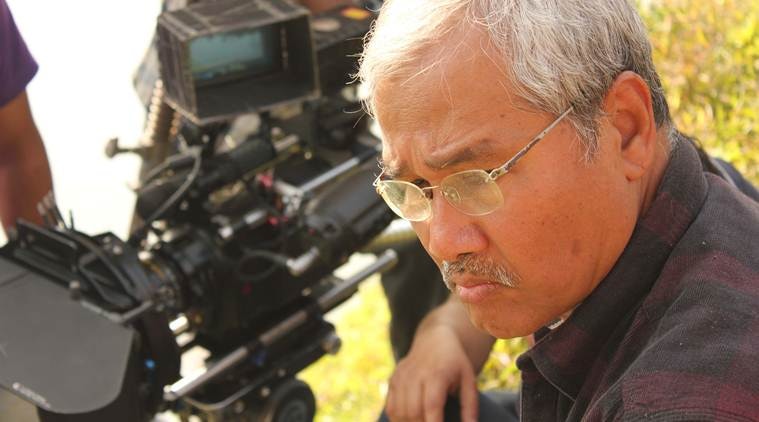
Bollywood has long played fast and loose with the sensitivities of the Northeast, a region rich in linguistic and ethnic diversity. So when the second season of Paatal Lok dropped last month—featuring characters speaking Nagamese, the lingua franca of Nagaland, and capturing the state’s turmoil with rare nuance—it came as a refreshing surprise to those familiar with the region. Among the unexpected highlights was the presence of award-winning Assamese filmmaker Jahnu Barua, 72, who stepped in front of the camera to play Uncle Ken, a former rebel leader torn between his past and his vision of peace and prosperity for the troubled state. In an interview with Shantanu Nandan Sharma, the Mumbai-based director shares his thoughts on Bollywood’s portrayal of the Northeast and what led him to step out from behind the camera and into the spotlight. Edited excerpts:
You rarely step in front of the camera. What made you act in Paatal Lok Season 2?
I acted in school plays a long time ago. But ever since I became a filmmaker, acting was never on my agenda. However, my close friends have known for decades that I have a knack for mimicking characters. Once Basu Chatterjee offered me the role of a Japanese astrologer in the television serial Kakaji Kahin (1988), and I obliged. Several fellow filmmakers have approached me with acting roles, usually for characters with a northeastern look, but I invariably declined. Often, such characters are introduced merely for comic relief, and I don’t appreciate that approach.
When the writer of Paatal Lok 2 narrated the script to me, I felt the story was genuine and presented the Northeast with authenticity. The writer, Sudip Sharma, grew up in Guwahati and, more importantly, understands the sensitivities of the region. That convinced me to accept the role.
Is acting a challenge for a director?
For a filmmaker, acting in a film is a beautiful experience, it brings a realization. It is easy to shout at actors from behind the camera, but once you step in front of it, you truly understand the difficulties actors face. Playing Uncle Ken was particularly difficult. He is physically worn out, battling terminal kidney cancer, yet remains mentally strong. I was given a walking stick, but I had to portray a character with a strong mind.
What’s your take on the portrayal of Northeast India in mainstream Hindi movies?
It’s a two-fold issue: how the rest of India perceives the Northeast and how the Northeast views the mainstream, particularly cinema. For many filmmakers, the Northeast feels like an alien region, as though it is from another planet. Hindi cinema, driven by commercial interests, often overlooks themes or characters from distant regions because the market dynamics don’t demand it. This is a misguided perception, but that’s how films are made.
Is that the only reason we hardly see Northeast faces in Bollywood? Are language and accent a barrier?
Language and accent are not a problem at all. In the realm of visual arts, audiences often embrace diversity in language and accent—it’s seen as something beautiful. The real issue, I feel, is that many young talents from the Northeast, though full of dreams and talent, lack the aggression required to enter and survive in Bollywood. Danny Denzongpa (an actor from Sikkim) is an exception. Despite many obstacles, he carved a niche in popular Hindi cinema. The challenges are clear: most people from the Northeast have distinct physical features, which lead to discrimination. However, we must recognise that discrimination can happen anywhere in the world.
As someone from the region, does it hurt you?
Yes, it hurts. I recall popular actors and filmmakers asking me, ‘Is it safe to travel to the Northeast?’ That kind of ignorance hurts me. For decades, the perception was that we lived in jungles. But I don’t want to solely blame filmmakers. The entire system is at fault.
What do you mean by the fault of the system?
To a large extent, political leaders—particularly from Assam and the Northeast—have allowed such ignorance to seep into society. For many decades, Indian history textbooks didn’t even include a chapter on the Northeast. Did our own leaders address this with the Central government? No. The Northeast has a rich, vibrant history. When society is ignorant about a region, it manifests everywhere, including in Bollywood. The Northeast may have been politically integrated into India, but social integration is still far from complete.
Why is Bollywood reluctant to explore the Northeast as a destination for film shoots, even though the insurgency has receded?
I believe there should be more films and series that feature Northeast themes and actors. The state governments in the region should encourage such initiatives.
The primary reason for Laapataa Ladies getting picked is Aamir Khan’s previous record with Lagaan-Varun Grover
3:04 PM

Getting nominated for an Oscar is not just about having a universal story, but also about having the funds to campaign for it
Mohar Basu (MID-DAY; September 29, 2024)
In a year filled with heavyweights, it was Kiran Rao’s Laapataa Ladies that emerged as India’s official entry to the 2025 Oscars. Unfolding in the heart of rural India, this film is a commentary on patriarchy, which juxtaposes humour with deep societal critique. With a backdrop of dusty Madhya Pradesh villages and real-life locales, the film captures the essence of a lost India, where women disappear—figuratively and literally—amid the chaos of cultural expectations.
When the Film Federation Of India revealed that Laapataa Ladies would carry the nation’s hopes at the Academy Awards, cinephiles cheered—but not everyone was convinced. Selected from 29 films, including Animal, Kalki 2898 AD, and All We Imagine As Light (AWIAL), the victory was both sweet and surprising. While many celebrated Rao’s comeback and the film’s understated brilliance, others couldn’t help but voice their discontent over what they saw as missed opportunities. Fans of All We Imagine As Light, a Cannes sensation, took to social media in droves. The Payal Kapadia-starrer is considered to be one that has a real shot at Oscars. Their argument? That Laapataa Ladies, while charming, lacks the international appeal of its more polished competitors.
Celebrated writer Varun Grover tweeted, “I mean it was expected that the chaaploos mandali (who can’t even write a citation with any attention to detail or meaning) will never select a film by someone who has questioned their authority. And, it’s still heartbreaking. We rarely get such a strong contender as AWIAL. At the same time, happy for Kiran Rao and her team. They made a sensitive, progressive, rooted film told beautifully through a new set of actors (and a hate-speecher)—and totally deserve a shot at glory. Best wishes to them. Jai Ho!”
While Grover didn’t wish to elaborate on the subject beyond this tweet, an indie favourite filmmaker tells us: “It’s undeniable that AWIAL was a stronger contender and should have been picked. The primary reason for this getting picked is Aamir Khan’s previous record with Lagaan. His ability to get visibility increases his chances of actually bringing home the Oscar.”
Laapataa Ladies was a unanimous decision, Jahnu Barua, the head of the Federation, told us. He told mid-day, “The film resonated deeply with us because it brings forward global social issues that are rarely explored on screen. As jurors, we want to select a film that has the best chance of making it into the Oscar nominations. The jury did deliberate over the AWIAL. It’s a significant work that deserves attention, especially since there were high expectations surrounding it. However, we felt that there were technical aspects that could have been stronger. When selecting a film for the Oscars, many factors come into play. While the subject was undeniably powerful, and Payal has crafted it beautifully, we ultimately had to make a tough choice. We wish we could have chosen both.”
So what is one looking for while choosing India’s entry to the Oscars? We asked Pan Nalin about his film Last Film Show (also known as Chhello Show) which beat RRR to get chosen as India’s official entry, much to the horror of fans.
Nalin said, “In our case, it was a complete surprise. You know, we were not even sure that we would ever get selected. The buzz in India was of very big, popular films. But when it comes to Oscars, it’s not really about popularity, but the film which will speak to the members of the academy in the US. So, from that point of view, I guess they must have voted for us. And once we become an entry, it’s a big work, you know, we need to do as a producer and director. It’s really huge work. You know, you need to mount a massive campaign in Hollywood. You need to organize quite a lot of screening for the members of the Academy. So, in our time, there were, for example, 102 films from 102 different countries. And the first round of voting leaves 15 film shortlist nominations. So, we were shortlisted. Voting is done purely by the Academy. India has no role to play there. All the academy members have to watch the film in order to vote. When we got shortlisted, you know, it was after a 21-year gap. Before that, the film which got shortlisted was Lagaan and went on to get the nomination. Our journey stopped there. And we also realized a couple of things while we were doing the campaign. Because we had no idea, we were learning as we were running the campaign for India. When the Oscar shortlist is announced, it’s actually the map of each country shown in the Academy screen. So, it’s neither the director nor the film. It’s actually you who is representing a country. You are representing a flag when you go there. The film was luckily very heavily appreciated. We were invited at the Academy to do multiple screenings. But where we lacked is time and money. Because you do need a lot of funds, you know, to mark the campaign. And advertising in international media and the US media is really expensive. The billboards alone are costly and you need to really have a great campaign. In the past five years, the publicity campaign has become aggressive and expensive. It’s very much like an election. You have to really make sure that every vote is earned. And the only way to earn a vote is maximum people have to see your film, who are the members of the academy.”
Nalin says the jury is looking for a universal story. “It is important because we were already acquired by an American distributor called Samuel Goldwyn Films. The fact that it speaks to an international audience is a plus. It is a gamble that must speak to international jury and voting committee members of the academy. The film has to be universal to start with because most of the Academy members are American, you know, I would say almost 85 per cent of them. Since the past 15 years, it has been very inclusive. Lots of foreign country members are being invited who are in the Academy. Now, I am a voting member as well. We know that if we had the right amount of funds and time, we would have gone much further in the campaign. But we had no example to fall upon. We had no master class to learn something from other examples. Because none of the films from India had made it up to that in 20 years, since Lagaan. It makes sense that Aamir Khan has a shot at this again. Laapataa has a chance to make it.”
The one element connecting the two films is Chhaya Kadam—who appears as Manju Mai in Rao’s film and is currently in France for the premiere of AWIAL.
She told us, “I’m absolutely thrilled and overjoyed! It’s such a proud moment for me to see Laapataa Ladies chosen as India’s official Oscar entry. At the same time, I’m in Paris for the premiere of All We Imagine As Light, which has been shortlisted by France as a possible submission for the 2025 Oscars. It’s truly exciting to have both films recognized on an international stage.” Is there a chance for AWIAL still? “I would have wanted to see them both at the Oscars. It might still happen,” she said optimistically.
Nandini Ramnath, film critic, Scroll.in, tells us choosing the best pick is a tough choice regardless, because of the diversity of the films being made.
“A few factors work in the favour of Laapataa Ladies: it has Aamir Khan as one of three producers; he has had previous experience with Lagaan; Laapataa Ladies is easily available to the Academy voters by virtue of already being on Netflix all over the world. I have watched both films. They are very different. Laapataa Ladies is a sweet modern-day fairy tale told in a realistic manner. All We Imagine As Light is a textured exploration of the shades of feminine desire and a quest for meaning. Given the current tendency of the Oscars to be more receptive to all kinds of storytelling styles from around the world, rather than just a certain kind of global-local international film, Payal Kapadia’s feature debut would have been an excellent contender too, especially given its Cannes award. Movies speak differently to different sets of viewers. What works at a film festival often doesn’t work for the Oscar voters. In general, films that can communicate their themes well and have layers in their plotting, performances and filmmaking language can travel to any corner of the world, regardless of the theme.”
When we asked her how she thinks politics and personal biases play into the selection process for India’s Oscar entries, Ramnath has the last word, “I think it fair to say that the Film Federation of India, for all its drawbacks, has been trying to keep away from political choices. If that were the case, the jury would have picked a propaganda film.”
Jahnu Barua donates proceeds of film's screening in Melbourne to flood-affected victims of Assam
8:20 AM

Mohar Basu (MID-DAY; August 15, 2019)
National Award-winning director Jahnu Barua's latest Assamese offering, Bhoga Khirikee, will have its world premiere at the ongoing Indian Film Festival of Melbourne (IFFM) today. Barua's home state plays an integral role in his latest work — the Priyanka Chopra production makes a commentary on the socio-political situation of Assam in 2015 by narrating the story of a villager in the state. Deeply affected by the floods that have ravaged Assam, the filmmaker has decided to lend his support to those affected by the calamity. Barua, along with the IFFM, will donate the proceeds from the premiere's ticket sales towards Assam Flood Relief Fund that is rehabilitating those affected in the 33 districts.
"As filmmakers, it's our job to represent where we come from. My land is in deep trouble, and the people who are my muses for so many years are in great unhappiness and danger. I am glad that IFFM volunteered to do this. It is a step towards rebuilding the state and reiterating that human empathy trumps any destruction caused," says Barua. Post the screening, he will also discuss the widespread destruction in Assam and shed light on the infrastructural requirements of the state. IFFM director Mitu Bhowmick Lange adds, "It was essential to not only discuss a pressing problem in Assam, but do whatever we can to help them."
I am happy to showcase regional cinema on a global platform-Prasoon Joshi
8:09 AM

Huma Qureshi, Vani Tripathi Tikoo and Prasoon Joshi at India Pavilion
CBFC chief Prasoon Joshi on opening India Pavilion at Cannes
Sonil Dedhia (MID-DAY; May 10, 2018)
With the aim of putting the spotlight on the treasure trove that regional cinema is, the India Pavilion was inaugurated at the 71st Cannes Film Festival yesterday. Prasoon Joshi, chairman of Central Board of Film Certification (CBFC) attended the event along with CBFC member Vani Tripathi Tikoo, Huma Qureshi and Jahnu Barua, among others.
With four National Award-winning films scheduled to be screened, Prasoon Joshi believes such festivals give regional cinema the much-needed impetus. "I am happy that the National Awards this year and the ministry have taken special efforts in showcasing regional cinema on such [an esteemed] platform. We should reach out to filmmakers who might not have access to a festival like this."
While film enthusiasts on foreign shores are well-versed with Bollywood, the CBFC chief says that international film festivals help in creating awareness about Indian cinema as a whole. "It's our regional cinema that is experimenting with new narratives. For the world to appreciate our rich content will be a win-win situation for India and world cinema."
After backing Marathi, Punjabi, Sikkimese films, Priyanka Chopra turns producer for Jahnu Barua’s next
7:53 AM

Mohar Basu (MID-DAY; February 8, 2018)
 After earning National Awards for her Marathi film, Ventilator, and following it up with the Sikkimese drama, Pahuna, Punjabi film Sarvann and another Marathi outing, Priyanka Chopra is ready to include yet another regional film to her assortment under her banner, Purple Pebble Pictures. Mid-day has it that the actor has come on board as the producer of an Assamese film. Titled Bhoga Khirikee (Broken Window), the film is being directed by auteur Jahnu Barua, who is returning behind the camera after four years.
Interestingly, the film, which stars Assamese actor Zerifa Wahid and Seema Biswas, went on floors last year under producer Shahnaab Alam’s banner, Easterly Entertainment. It was during Chopra’s visit to India last December that director Barua and producer Alam sounded her off about the project.
Says a source, “The film revolves around a female protagonist, whose life is in turmoil due to the ideological clash among the three men in her life – her father, her husband and a stranger. Priyanka loved the script and instantly agreed to back the project.” Considering Chopra is the brand ambassador of Assam Tourism, the state government has now extended its support for the shoot. Adds the source, “Though the primary photography has been wrapped up, a chunk of the patch work is yet to be done. With Priyanka’s access as the brand ambassador of the state, it will be easier for the crew to procure permissions to shoot in locations off- limits otherwise.”
Confirming the development, Dr Madhu Chopra said, “The north-eastern states are the most under-represented in our country. We, as a production house, endeavour to showcase Bhoga Khirikee for the world to see.”
Why the North East has been off Bollywood's radar as a shoot locale?
8:31 AM

Shaheen Parkar (MID-DAY; October 25, 2015)
Mary Kom’s biopic, starring Priyanka Chopra, was not shot in the boxing champ’s home state, Manipur. The makers preferred to opt for Himachal Pradesh instead. The North East has not been on Bollywood’s radar as a shoot locale. The seven sisters — the states of Arunachal Pradesh, Assam, Manipur, Meghalaya, Mizoram, Nagaland and Tripura — despite their pristine locations, are missing from Bollywood’s map.
Over the years, producers have preferred to log air miles to East European nations (Bollywood’s current hotspot) or traverse from Alaska to New Zealand.
As National award-winning filmmaker Jahnu Barua, who hails from Assam, points out, “The rest of India has been allergic to the North East since independence. There is this fear psychosis as it is the border area. They just do not want to take notice of the region.” Fortunately, that seems to be changing now.
Play it loud
The sequel of 'Rock On!!' (2008) is presently being shot in Shillong, Meghalaya. The film revolves around a music band, and Meghalaya is emerging as the rock capital of India.
The makers of the film — which stars Farhan Akhtar, Shraddha Kapoor, Arjun Rampal and Prachi Desai -- wanted to capture the music festival scene in Shillong which is now on the go-to-list for rock music aficionados.
Filmmaker Biswajeet Bora, who is from Assam, points out, “Most filmmakers feel it is not feasible to shoot with big stars in the area due to the lack of fancy five-star hotels, but things have changed a lot in the region. They have to put their fears to rest.”
Bora shot his recent film, 'Aisa Yeh Jahaan', starring Palash Sen and Ira Dubey in the Golaghat district of Assam.
Another project
Close on the heels of the 'Rock On 2' unit, is Vishal Bhardwaj, who is shooting his Saif Ali Khan-Shahid Kapoor-Kangna Ranaut starrer 'Rangoon' in Arunachal Pradesh. Knowing B-Town’s herd mentality, this might just have others following suit.
As 'Rangoon' is set against the backdrop of World War II, the region lends itself as the perfect location. Bharadwaj’s film will unfold in Ziro valley in Arunachal Pradesh which is considered a heritage site.
With two film productions in the North East, Bollywood is likely to wake up from its slumber and tap the region’s full potential.
Veteran filmmaker Shyam Benegal was part of a task force to develop the region as a shoot location. He says, “Five years ago, the Meghalaya government was keen that Hindi films be shot in the state. I was part of the initiative to promote it as a destination, but we had just one meeting and then things became quiet on that front.”
Benegal visited several breathtaking locations in the state. He says, “I wish I could have shot a film there. When I visited the place, I was stunned by the natural beauty. The Meghalaya government showed great interest. We visited several spots in the state which could be ideal locations. They were keen to offer several incentives to attract filmmakers, but things did not take off.”
Logistical issues
What Benegal saw as a possible deterrent were the connectivity and infrastructural requirements. As he puts it, “A film unit consists of a large number of people all their needs have to be taken care of.” But Barua feels what matters more is the mindset, rather than the logistics, “People need to understand the region. They need to know about the area. Due to the Mongoloid physical features of the people, they are considered to be different from the rest of the country.”
Barua always shoots his films in Assam to highlight the culture and politics of the state. “Most Bollywood stories do not match the North East region. The stories do not reflect the people of the region. They feel you cannot have people with Mongoloid physical features in their films. It is all in the thinking; it needs to change.”
This sentiment is echoed by actor Adil Hussain, who is from Goalpara in Assam. Best remembered as Sridevi’s husband in 'English Vinglish' (2012), he says, “It is because of the attitude of the political class that the area has been neglected. Films are being shot all over India, even Kashmir. Bollywood only looks at commercial viability. It is driven by profits, rather than art. They would rather go to an exotic foreign locale than go to the North East. The North East is considered a sensitive area, they do not want to put their money at stake by shooting in the region.”
Birthday blast
In November 2013, when Aamir Khan chose to bring in his wife Kiran Rao’s 40th birthday in Assam, it at least made Bollywood realise the region’s tourist potential. The star was accompanied by filmmakers Karan Johar and Ayan Mukerji. Though they raved about the state’s natural beauty, planning a film in the state remained a distant dream.

Unsafe terrain
Safety seems to be a big concern for filmmakers. Benegal explains, “Decades of insurgency and unrest has a lot to contribute to Bollywood skipping the north east. But Bora has a different opinion, “Things have changed a lot now. There were issues, but all that is now the past. There are several Western tourists who visit the Kaziranga National Park in Assam. Meghalaya has already become a rock music hotspot, so why can’t Bollywood shoot here?”
Things may be changing, but as Barua maintains mindsets do not alter, at least not soon.
“The people of the terrain have gone through a lot,” says actress Ira Dubey, who shot in Assam for her film, 'Aisa Yeh Jahaan'. “There have been natural disasters and political unrest, but what I observed after spending time in Assam during the shoot, was the resilience of the people. There is so much positivity, the people are warm and clean-hearted.”
Ira also learnt the Assamese folk dance, Bihu, for a song (pictured, above). “It looks simple, but there are some delicate hand movements which you have to get right.”
Talking about her experience of shooting in Assam, she says, “There was a scary episode when we were flying in a chopper from Arunachal Pradesh to Assam. We had to do an emergency landing, but we were fine. Later, I learnt that the two pilots, who had flown us, had perished in a crash.” So is this fear psychosis that makes industry folk keep off the North East for shoots? Mary Kom (pictured below) director Omung Kumar chose not to comment about why he did not shoot in Manipur for his film. But for his upcoming biopic on Sarabjit Singh, he plans to shoot in the actual locations in Punjab.
So why did he skip Manipur? He has no answer — like most of the B-Town folk who just do not seem to want to tread the region.

When Bollywood made an exception
>> Deepak Bahry’s 'Kurbaan' (1991) with Salman Khan and Ayesha Jhulka was shot in Shillong in Meghalaya. The red jeep used in the film by Sallu belonged to a local store owner in the Laban area of Shillong, who became a star himself after the shoot.
>> Rakesh Roshan’s 'Koyla' (1997) starring Shah Rukh Khan and Madhuri Dixit was shot in Arunachal Pradesh. One of the film’s tracks, Tanhai Tanhai, was filmed in the Shungetser Lake and Nuranang Falls in the Tawang district of the state. After the shoot, Shungetser Lake came to be referred to as the Madhuri Lake.
>> Kalpana Lajmi shot her Naseeruddin Shah-Shabana Azmi starrer 'Ek Pal' (1986) in Shillong, Meghalaya, and Jorhat, Assam. Her Raveena Tandon-starrer Daman (2001) was shot in Guwahati, Assam.
>> Jahnu Barua’s 'Har Pal' was shot in Shillong, Meghalaya, with Preity Zinta and Shiny Ahuja. It was filmed in 2007, but did not see light of day.

Bollywood personalities talk about the FTII Chairman row
7:57 AM

With neither the government nor striking student body ceding ground, that’s the status quo for now
Subhash K Jha (DNA; July 10, 2015)
It’s close to a month now, but the strike of the Film
& Television Institute of India (FTII) Pune’s students, protesting
the appointment of Gajendra Chauhan as the new chairman of the premier
film institute, shows no sign of abating. In fact, the fact that Chauhan
will head the panel for selection of the new director of the institute,
has also got them aggravated. With Ranbir Kapoor, Kiran Rao and
several others for the installation of an aspirational chairman, the
protests just keep getting louder. We asked industrywalas for their
take...
Shatrughan Sinha, Actor-politician
“I’m a proud alumni of the FTII and I must say the current crisis pains me deeply. The students who are agitating are also right in their own way. These students are bright kindred spirits and what they’re saying, makes a lot of sense. As an ex-alumni of the FTII, I want only the best for the students. Chauhan won’t be any part of the academics. He is here for an administrative purpose. The decision to appoint him has been taken after much thought by the high command of the BJP. In all fairness, he should be given a chance. My humble appeal to my boys, ‘Break the strike. The government won’t roll back its decision.’ I’d also ask for the director of the FTII, D Narain’s tenure, which is ending, to be extended, to restore some normalcy in the FTII.
Pahlaj Nihalani, CBFC Chairperson
“Those whose are protesting about Gajendra Chauhan’s appointment need to see how he performs in his new official designation. It is not right to go by perception. People are talking about his track record in movies. They don’t know he has had decades of experience in the film industry. He has been a prominent part of the Producers’ Federation and worked for the betterment of the film industry. Which government doesn’t appoint officials who are affiliated to the ruling party? Let him prove himself. If he doesn’t prove equal to the task, then ask for him to step down. Why oppose his appointment without seeing what he is capable of?”
Naseeruddin Shah, Actor
“All I have to say is that these kids should concentrate on learning their work and get out of there instead of wasting resources for the five-six years that they take to complete a three-year course.”
Rajkummar Rao, Actor
“I have nothing personal against Gajendra Chauhan. But I think for an institution like the FTII, which is of national importance, we need somebody who has done a significant amount of work in and for cinema. Or otherwise someone who is an alumni or has contributed enough to the world of cinema, in some form or another. In short, FTII needs a visionary. Students should feel motivated by the chairperson and his/her body of work. Mr Chauhan has been chosen over names like Adoor Gopalkrishnan, Shyam Benegal, Saeed, Gulzar Saab and other eminent personalities. I can totally empathise with the FTII students’ resentment.”
Ketan Mehta, Filmmaker
“Isn’t it a tragedy that we can’t find anyone better qualified to head such a prestigious institute? I am sure filmmakers of repute are still alive and kicking. And they would be willing to take on the responsibility.”
Resul Pookutty, Oscar-winning sound designer, editor and mixer
“It an academic institution where every student endeavours to understand cinema as an art form. The least we can give them is a figure they can aspire to be. The current chairperson comes nowhere close to being aspirational, either with his body of work nor with his credentials.”
Hansal Mehta, Filmmaker
“The government can appoint people owing allegiance to it. But at least the individual helming such a crucial position should be credible enough to carry off his duties. My request to the government is that instead of imposing their muscle power on the students they must provide a climate for an open-minded dialogue. The conflict of interest is purely aesthetic. It has nothing to do with left, right or centre. It is about education and continuity in providing our film fraternity with the finest talent.”
Jahnu Barua, Filmmaker
“The students’ protest is very much justified.”
Subscribe to:
Posts (Atom)