Showing posts with label Israel. Show all posts
Showing posts with label Israel. Show all posts
Oscar-nominated film The Voice Of Hind Rajab on hold to ‘protect Indo-Israel ties’?
9:07 AM
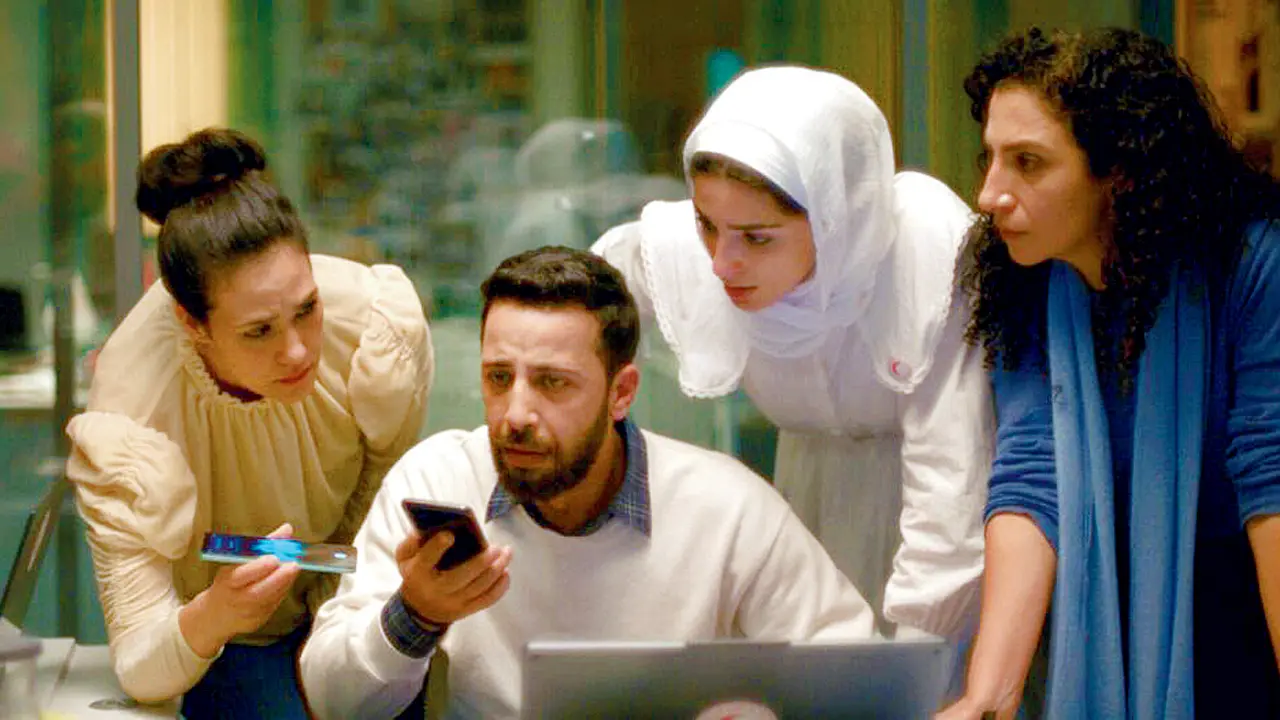
The Voice Of Hind Rajab becomes a talking point after India distributor says he was told verbally that ‘if it gets released it would break India-Israel relationship’
Niharika Lal (BOMBAY TIMES; March 21, 2026)
The India release of The Voice Of Hind Rajab, the Oscar-nominated Tunisian film centred on the death of a young girl during the Gaza conflict, has been put on hold after it failed to secure certification from the CBFC (Central Board of Film Certification), according to its distributor.
The film’s Mumbai-based distributor Manoj Nandwana, told Variety that the film has been verbally rejected by the CBFC. Nandwana said he had submitted the film to the board in February, aiming for a mid-March release ahead of Oscars, but it has not been cleared, and he was told by a CBFC member that “if it gets released it would break up the India-Israel relationship.”
He said, “I told them: the India-Israel relationship is so strong that it’s idiotic to think this movie will break it.”
A real story of a child from Gaza
The Voice Of Hind Rajab is about a five-year-old Palestinian girl who was killed in Gaza City in 2024. The critically acclaimed, Oscar-nominated 2025 docudrama by Kaouther Ben Hania that tells the story of a young Palestinian girl trapped in a car under Israeli military fire in Gaza, blending real recordings with scripted performances. The film premiered at the Venice Film Festival to over 20 minutes of applause, won the Silver Lion, and was later screened at the UN Headquarters in New York during the International Day of Solidarity with the Palestinian people.
‘CBFC directly referred the film to Revising Committee’
When a film is submitted to the CBFC, the Examining Committee members watch it and suggest cuts to the producer or distributor. If the producer does not agree with the cuts, they can appeal to the Revising Committee.
In the case of films like Jana Nayagan and Emergency, producers moved the CBFC Revising Committee. However, in this case, it was the CBFC that referred the film to the revising committee itself. The distributor was told that he would be notified later about when the film would be screened by the Revising Committee.
Manoj Nandwana explains, “I have not submitted the film to the revising committee. I received a letter 10 days back from the CBFC stating that the film has been referred to the Revising Committee. Once the revising committee is formed, they will watch the film and take a decision. Only then will we know the film’s release status. The current status of the film on the website shows that the film’s certification is ‘pending for revising committee formation.’”
The CBFC is expected to certify films within a 48-day window. The CBFC did not comment till the time of going to press.
They told me it’s a very sensitive film: Distributor
Manoj Nandwana told us, “The Voice Of Hind Rajab was submitted to the CBFC for certification in late January, ahead of a planned release before the March 16 Oscars. CBFC members did not clear the film and pointed out that, at one point, a character says, ‘f**k the army.’ They said, how can you use the F-word for the army – it has to be removed. There is no violence or anything objectionable in the film, so they didn’t suggest any cuts. They just told me that this is a very sensitive film. India and Israel have very good relations at present, and this film, if released theatrically in the country, will harm India-Israel relations.”
-----------------------------------
India distributor of ‘The Voice Of Hind Rajab’ on the Oscar-nominated movie’s censor ordeal, and the mounting losses due to the ban
Mohar Basu (MID-DAY; March 22, 2026)
It is strange, almost jarring, that a film about the devastation of Gaza has found ways to be screened in Israel itself, and yet, in India, it has not secured clearance. Directed by Tunisian filmmaker Kaouther Ben Hania, The Voice Of Hind Rajab reconstructs the true story of Hind Rajab, a young girl fleeing Gaza City with her family in January 2024. Their car, however, came under fire from Israeli forces. The film unfolds from the perspective of Palestinian Red Crescent volunteers, who remain on call with Rajab as she tells them, in fear, that her cousins are already dead, and pleads with them not to leave her alone.
The docudrama is anchored by Rajab’s real voice recordings from her final moments. She was never rescued. Twelve days later, her body was discovered alongside her relatives and the two volunteers who had tried to reach her.
For India distributor Manoj Nandwana, the effort to bring the Oscar-nominated film to Indian audiences has been cumbersome. “The Voice Of Hind Rajab is not banned in Israel. Their courts tossed out the efforts to ban films. We went to the Board [Central Board of Film Certification, CBFC] on February 27, where it was viewed by five people. They said it needs to go to the revising committee,” he explains, adding, “They feel the film could sever Indo-Israel relations and is [too] sensitive.”
The film was scheduled to release on March 6, but that date has now been pushed. “But they’re not saying no.”
According to Nandwana, the Board did not return with a list of cuts or a formal objection, but instead left the film in limbo. “They feel the film is against Israel, but it’s not. It’s anti-war. It’s about saving a child. There’s no issue like violence, nudity, and direct political instruction either,” he says. The delay has resulted in a “complete loss for me”.
“I felt it had the legs to fare well. Usually, docudramas don’t do as well, but a lot was going for the film — its theme, the accolades. In India, we didn’t get permission for any festival either. The film has now gone to revising committee but no screening date has been given so far.”
Did you know?
‘The Voice Of Hind Rajab’ holds the record for the longest standing ovation in the history of the Venice Film Festival (23 minutes and 50 seconds).
Deepika Padukone backs out of Louis Vuitton show in Paris due to limited flight operations amid West Asia tensions
9:46 AM

Sources say Deepika Padukone had to pull out of Louis Vuitton show in Paris due to limited flight operations amid the West Asia conflict
Mohar Basu (MID-DAY; March 11, 2026)
As one of the global ambassadors for Louis Vuitton, Deepika Padukone was scheduled to attend the French luxury house’s Fall/Winter show on March 10 in Paris. However, the superstar was a no-show. Sources indicated that the actor had to pull out of the event due to the limited flight operations amid the US and Israel’s war on Iran.
A source told us that the actor was to head to the French capital on March 9, and her team had been in discussion with the fashion house for the past few days about the possibility of her having to cancel the trip.
“Deepika was initially confirmed to attend. She had zeroed in on her outfits and begun fittings for the appearance. But her flight was among the many that were cancelled in the last few days. Also, given that the war has been escalating and affecting several countries across West Asia, she reconsidered whether it was the right time to be travelling,” said the source.
Louis Vuitton, which appointed her as one of its house ambassadors in 2022, was naturally understanding of the situation and respected the actor’s decision.
mid-day contacted Padukone’s team, who didn’t respond till press time.
Like India, Iran was diverse. It was never an Islamic country-Elnaaz Norouzi
4:27 PM

Elnaaz Norouzi shares her Iranian school pic (She is at the bottom right)
Renuka Vyavahare (BOMBAY TIMES; March 2, 2026)
On February 28, the United States and Israel launched a large-scale offensive against Iran after weeks of threats from President Trump. In a Truth Social post, Trump said the goal of the operation is to prevent Iran from obtaining a nuclear weapon and “to defend the American people by eliminating imminent threats from the Iranian regime.” Trump urged Iranians to capitalize on the attack as the “only chance for generations” to take over their government. Israeli officials later confirmed that these Israeli American strikes on Tehran for regime change killed their Supreme Leader Ayatollah Ali Khamenei. Iran has retaliated with strikes on US bases across the middle east.
Actress Elnaaz Norouzi was born in Iran and stayed there for eight years before moving to Germany and eventually India for work. Barring her parents, her other family members still stay in Iran. She last visited the country in 2018. The actress shares her views about the ongoing war, reflecting on the deep emotional toll it has taken on ordinary Iranians and urges the world to distinguish between the country’s people and its political regime.
Majority of Iranians do not support the opperessive Islamic Republic regime
Elnaaz, who was a part of the second season of Apple TV's much acclaimed show Tehran, explains, “The conflict has existed for over 40 years. I was born in Tehran. I spent the first eight years of my life in Iran. Barring my parents, many members of my family still live there. I remember everything. My show Tehran captured the Iran-Israel conflict. Iran is not Iraq. When we speak about Iran, I would like to differentiate between the Islamic Republic, which has occupied the country and the people of Iran. Majority of the Iranian people are smart and educated, and their beliefs are not the same as those of the Islamic Republic. At one point, Iran had a great relationship with Israel. If you see Cyrus the Great, the man who wrote the first human rights in the world ever, he was Persian and he freed the Jews from Babylon. We even had a great relationship with USA during the time of Shah (Mohammad Reza Pahlavi). It is just the Islamic Republic that is constantly saying that they want to wipe Israel off the map. A month ago, many Iranians who protested against this regime were killed.”
She adds, “Iran is complex. What the Islamic Republic has done in Iran is not just create one Nicolás Maduro or Saddam Hussein. There is the supreme leader, (the late Khamenei), there are people and parties under him - Hezbollah, there is the Islamic Revolutionary Guard Corps (IRGC), there is the Basij. They support and back the Houthis, Hamas. They are all intertwined. The Crown Prince Reza Pahlavi, his name is being chanted all over Iran. People want democracy in Iran. The Gen Z knows exactly what's right for them. The older generation, our grandparents say they made a mistake years ago by asking for a regime change. ‘We had it so good during the times of Shah. It was secular and diverse,” they say.
‘I am not allowed to set foot in Iran’
Elnaaz, who is vocal about her opposition to the Islamic Republic, claims that she would be killed if she went back to Iran under their rule. She says, “I can’t set foot in Iran. If I do, I think they will kill me. I couldn’t go to Iran because of what happened during the 2022 movement, where they killed Mahsa Amini (a 22-year-old Iranian Kurdish woman), whose death in police custody in September 2022, ignited widespread protests. Arrested by the morality police for allegedly wearing her hijab improperly, her death became a symbol of resistance against oppression. People went on the roads and said, we don't even want this f****** hijab, this is not ours. Back then, I spoke out against Khamenei and the regime, and my family got really worried for my safety. If people die in this war, I'm going to blame the Ayatollah because people have come out multiple times saying we do not want you and they did not leave. It is dictatorship. There are so many political prisoners who are people like you and me. If you speak up, they just put you in prison.”
‘There was a time when Iran was diverse’
While it would be naïve to believe that actions by the United States and Israel were carried out ‘in the interest of Iranians', the motivations behind these actions deserve critical examination. Elnaaz says, “For the past 40 years, a large population of Iranians go to sleep and wake up hoping that one day they are going to be freed from this regime. Just like in India, Iran had people from different religions, cultures and communities living there. It was diverse. Iran was never an Islamic country, it was largely Zoroastrian. Iran was Persia and Persia was Eurasian. Before the Arabs came in, Christians, Baha'is, and Russian expatriates lived in Iran. It wasn’t just for Muslims. You had the freedom to wear what you want to wear, say what you want to say. Iran needs democracy to go back to those times.”
‘Iranians have used cinema to speak about what is happening to them’
It’s a known fact that filmmakers are not allowed to shoot in Tehran, and Elnaaz hopes this changes. She states, “Of course, we have cinema in Tehran. Cinema has helped bring the truth and the voices of people to all over the world. And that has also been the medium that Iranians have used all over the years to speak about the atrocities that are happening in Iran. If you see there are multiple Iranian movies who have won Oscars, you know, and they are all about the terrible life that people are living in Iran. Look at Jafar Panahi, who was just nominated for an Oscar and the Golden Globes, he's not even allowed to film in Tehran anymore. Even our show Tehran was shot in Athens. Cinema can change the way you think so its considered a threat. Iranian people have no idea what freedom of speech is for the last 47 years. It's terrible. And it's so sad that the world has not taken as much notice as it should.”
'I hope my family is safe'
Elnaaz attributes her life and safety to her parents who chose to migrate to Germany years ago. The rest of her family however still stays in Iran. She says, “It’s a war situation so there’s an internet blackout and I haven't been able to reach my family since yesterday. I hope they are inside their homes and don’t get too excited because of Ayatollah Ali Khamenei’s death. Iranians are getting on roads to celebrate and it risks their life. So I hope they stay indoors.”
To those wondering why didn't they migrate as well, Elnaaz says its not easy. “Leaving your home behind is not easy. Not everyone has the means to move to another country. Filing for asylum is a complex, formal legal process that requires meeting specific criteria. Even the Iranians who have migrated are facing s*** in other countries. So uprooting an entire family from a country is not easy. If you can keep your mouth shut, you can live in Iran. It's still not as retarded as the Taliban. Women can open their businesses. Everyone’s educated but there are no jobs. The inflation is high. Some are taking loans to buy eggs. Survival is an issue unless you have ties with the IRGC or such."
Ramayana: Part One makers postpone the Gateway of India show amid geopolitical concerns
10:14 AM
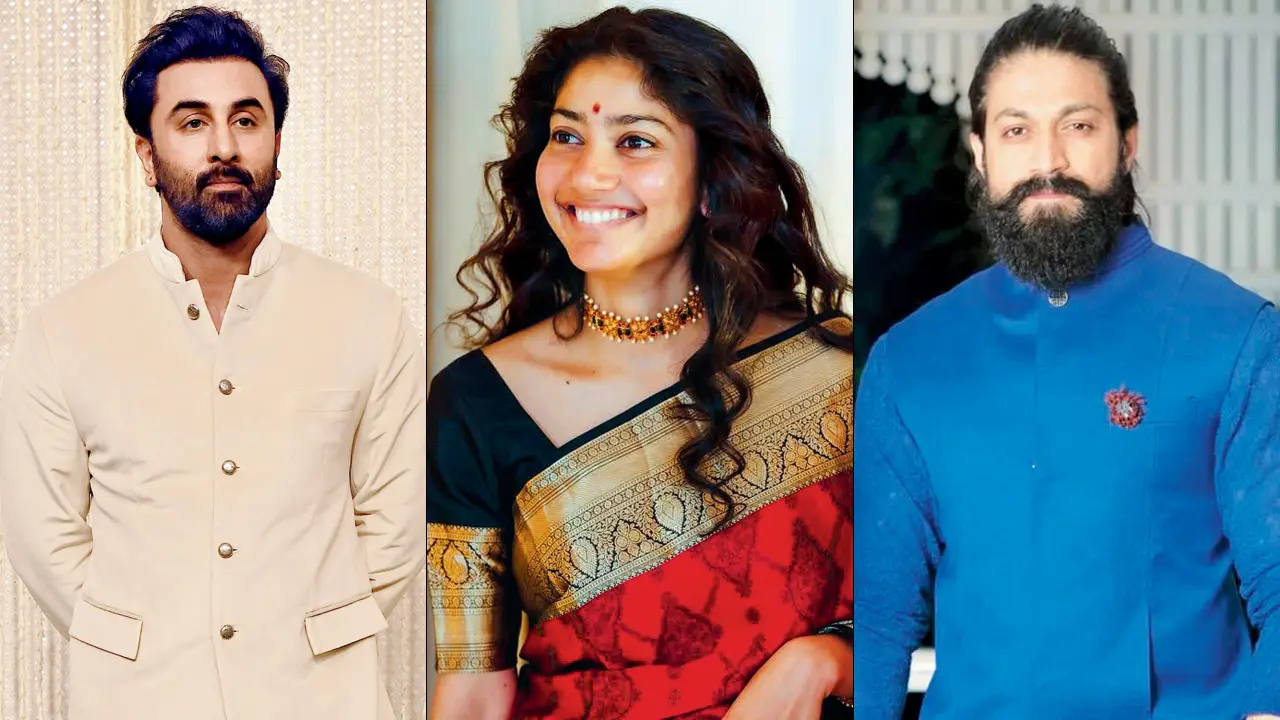
Mohar Basu (MID-DAY; March 8, 2026)
The plan was in full throttle, the venue had been finalized, and guests had been invited for the much-anticipated showcase of the principal characters of Nitesh Tiwari’s magnum opus, ‘Ramayana: Part One’. But no one expected the event to be postponed.
Sources close to the production inform mid-day that producer Namit Malhotra has decided to postpone the launch of the film’s promotional assets, which were originally scheduled to coincide with the Ram Navami festival on March 26.
The showcase, organised at Gateway of India, was set to unveil the look of the leading cast. However, the makers have opted to defer the unveiling in light of the ongoing US-Israel-Iran conflict that has triggered global tensions. They now plan to roll out promotional activities closer to May.
“The Ram Navami launch was planned as a massive moment for the film, but ‘Ramayana’ is not just a domestic project; it’s an international film with a global audience. The producers felt that the current situation worldwide is not the most conducive environment to unveil such important material,” informs an insider, adding that the makers do not want to rush the launch.
The first instalment of ‘Ramayana’ is slated for release during the Diwali 2026 window.
Sonu Sood opens up about his initiative offering free shelter to stranded travellers in Dubai amid Iran-Israel conflict
9:46 AM
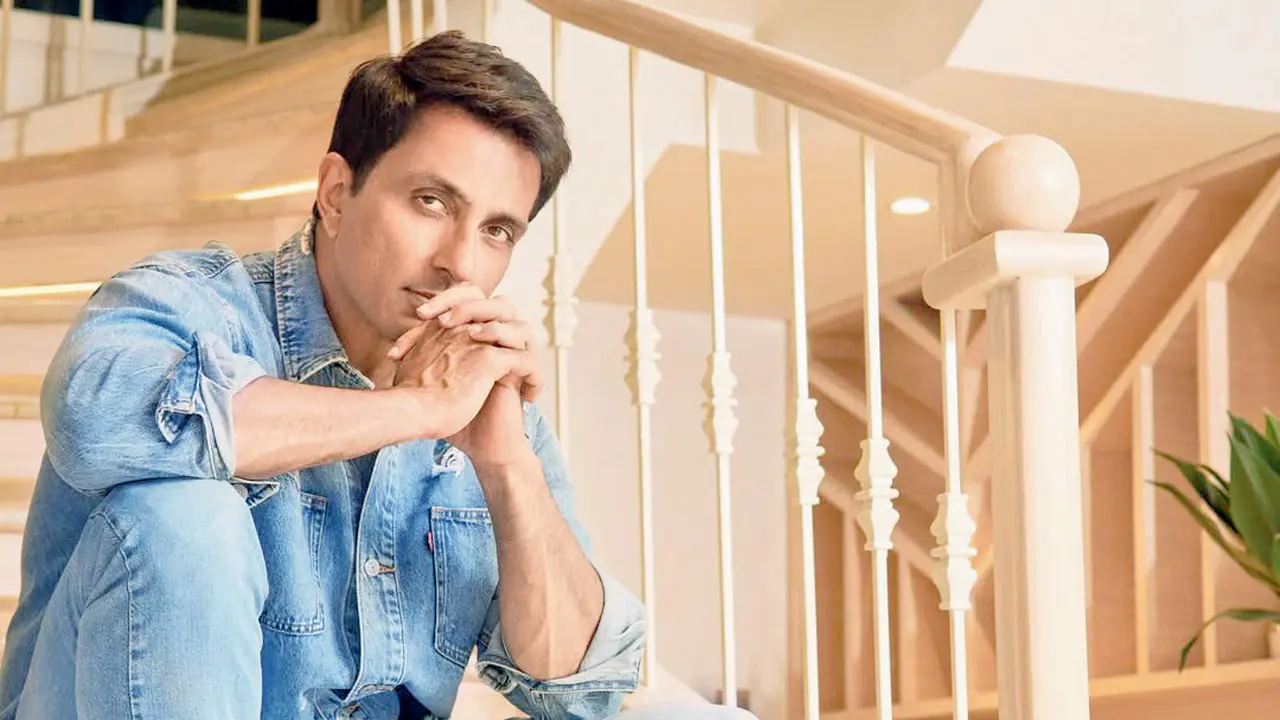
Even as the UAE sponsors travellers’ accommodation amid the West Asia conflict, Sonu Sood joins forces with real estate company to house stranded passengers in Dubai
Upala KBR (MID-DAY; March 6, 2026)
Soon after Iran’s attacks in Dubai and Abu Dhabi led to temporary closure of airspace, the United Arab Emirates’ (UAE) Civil Aviation Authority on March 2 announced that it would bear the expenses of food and accommodation of all affected travellers in the emirates. Now, actor Sonu Sood has also come forward to lend support to those stranded in Dubai, amid the US and Israel’s war with Iran.
“We want to provide safe and free accommodation to the families and individuals in need, in Dubai,” the actor told mid-day.
Sood revealed that he sprang into action on March 4 after the real estate development company, Dugasta Properties, of which he is a brand ambassador, agreed to give him on-ground support. The company has 11 properties in Dubai, the doors of which have been thrown open to travellers since Wednesday.
Breaking down the process, Sood explained, “Those affected can DM [direct message] me or the real estate company on Instagram. A lot of people have contacted us. My NGO, Sood Charity Foundation, is coordinating over phone calls. They speak to the passengers, get details of their flights and how many days they need to stay before they can return to their country, and arrange their stay.”
Even as the actor lauded the UAE’s relief measures, he highlighted that in such a crisis, the demand sometimes outweighs the supply.
“The UAE government has been doing a wonderful job, but many may not get accommodation because of lack of hotel space. Hundreds of families have reached out, asking for help,” said Sood, emphasizing that the efforts are aimed at people across nationalities.
Iranians want to choose their own leader-Elnaaz Norouzi
4:42 PM
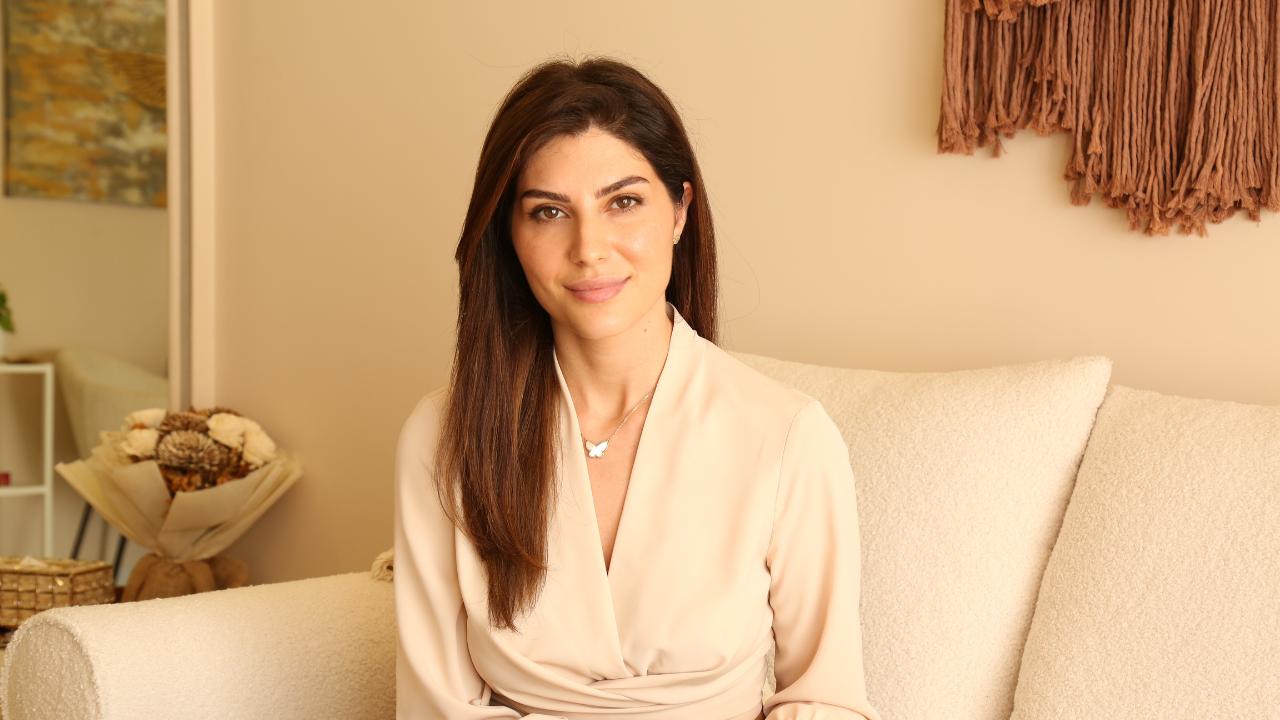
Iranian-German actor Elnaaz Norouzi, known for Sacred Games and Tehran, spoke about the Iran-Israel conflict, Ali Khamenei’s assassination, and decades of suffering under the regime, asserting that Mojtaba taking power would not change conditions for Iranians
Shruti Sampat (MID-DAY; March 5, 2026)
Amid the growing unrest, Iranian-German actor Elnaaz Norouzi speaks exclusively to mid-day about the global turmoil, her stance on assassination, and the deep emotional impact of the conflict. Iran’s Supreme Leader Ali Khamenei was reportedly assassinated on February 28 in a joint strike by the United States and Israel, dramatically escalating tensions across the West Asia. In response, Iran launched retaliatory attacks on US bases in the region, intensifying the crisis.
You recently mentioned how it is unsafe for you to go back, has opposing the leader equivalent to losing the freedom of speech in Iran?
The freedom of speech never really existed in Iran and that is why we have so many political prisoners in Iran as well. There are thousands of innocent people who have been imprisoned, tortured, raped because they have spoken against the government. At this point, it has surpassed the point of women and men but yes if we talk about specifically about women, women have almost no rights in Iran starting from the morality police going after them constantly, starting with the fact that as a woman you're not allowed in stadiums. As a woman in court, your statement is half as worth of what a man says. As a woman, you're not allowed to travel without your husband's permission. As a woman you cannot ask for a divorce easily.
Do you think US-Israel strikes to eliminate Khamenei were fair?
If you ask me as an Iranian, who who was born in Iran, who has lived in Iran, who has lived under his real leadership, who has family who's living under his leadership and who has friends who are living under his leadership, I will tell you that a dictator has been taken out, a terrorist that has taken many many people's lives has been taken out, a person who has chanted and has made millions of Iranians chant 'Death to America' for 47 years has been taken out; a person who's been building nuclear bombs in hiding. To attack the American people and America and the Israelian people in Israel for years and years has been taken out. This is a big win for the whole world; it's just that the world doesn't understand, we understand it because we've lived with it and we know it but unfortunately the people just look at it from one lens and that is 'oh he was a religious leader' but being a religious leader doesn't make you right when you do wrong, right?
Amid the conflict between Iran being an Islamic-state or a Democracy, what is your take?
I receive a lot of death threats and many people disagree with me, but that brings us back to freedom of speech and the idea of live and let live. That’s all the Iranian people are asking for. We want to live the way we choose, and we are okay letting others live as they wish. The problem is that a narrow mindset is forcing everyone to follow one way of life. This is not against religion. I have many Muslim friends whom I love and respect. Iran is home to Muslims, Christians, Baha’is, Zoroastrians and more. Everyone simply wants equal respect and the freedom to decide for themselves.
Mojtaba Khamenei is now the new leader: Do you think women will feel free under new leadership?
He is the son of Ali Khamenei. He is another person that was not elected by the Iranian people. Again, the safety is still at the mark because he has the same views. He supports the same barbaric thoughts that his father had and besides any of that Iranians are saying, we would like to choose our leader ourselves. We don't want supreme leaders. We don't want somebody who we have not chosen. That's the only thing. Since when in a democratic world in 2026 should anybody else decide who rules over 90 million people? The people should be deciding that for themselves and the people have decided they want the crown prince Reza Pahlavi back.
Iran-Israel conflict has been a long war, and the country has lost enough, where do you think is the end to this?
The end of the wars in the West Aisa will come with the end of the Islamic Republic of Iran. This regime has created unrest across the region by funding proxies like Hamas, Hezbollah and the Houthis with billions taken from our oil and tax money. Iranians don’t benefit from our own resources. When people protested high gas prices in 2019, it was because that wealth was being diverted to Hamas. So once you remove the Islamic Republic of Iran, this regime, the Ayatollahs, once you remove the clerics, there will be peace all over the West Asia because all the funding is going to be gone and all of those terrorist groups will crumble right because they'll not have any resource.
A first: Indian director Anuparna Roy bags top directing award at Venice Film Festival
9:19 AM
Priyanka Dasgupta (THE TIMES OF INDIA; September 8, 2025)
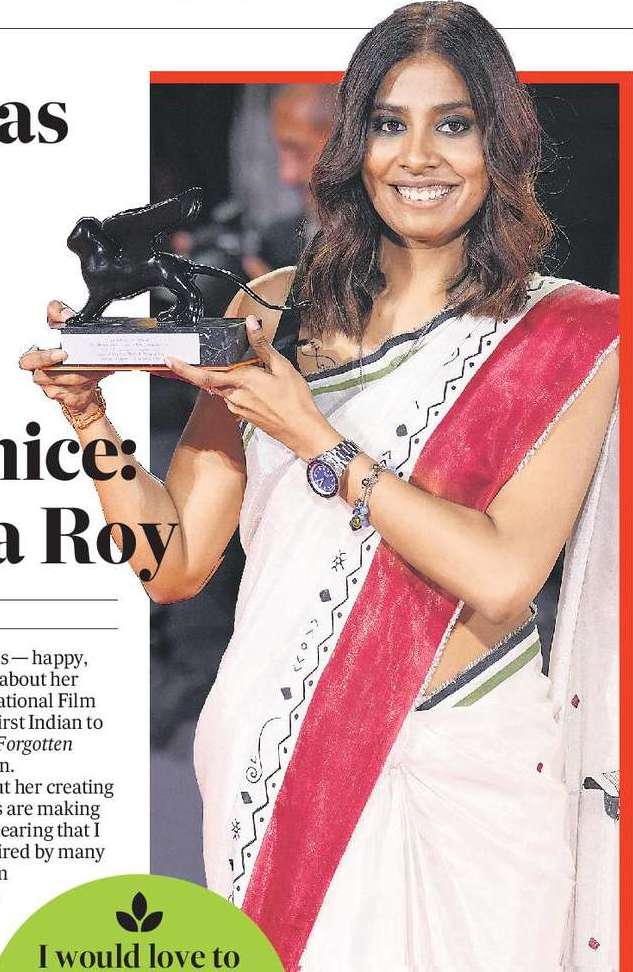
Kolkata: She grew up with rice rations instead of books in rural Bengal. Lost her childhood friend to marriage at 13. Debutant filmmaker Anuparna Roy drew from life to stun the 82nd Venice Film Festival by winning the Best Director award Saturday - and used the moment to plead for war-torn Gaza's children, reports Priyanka Dasgupta.
Roy, 35, became the first Indian filmmaker to win in the Orizzonti section with her debut 'Songs Of Forgotten Trees', outpacing 18 rivals. On stage, she let her victory speech take a political detour. "Every child deserves peace, freedom and liberation, and Palestine is no exception," she said in her acceptance speech. "I might upset my country, but it doesn't matter anymore."
On phone from Venice, Roy said she didn't realize she was making history when she spoke. "It is a global crisis when a powerful nation like Israel destroys justice, peace and lives. As a global citizen, I had a microphone and couldn't restrain myself," she said.
They once asked if their daughter could ever measure up to Satyajit Ray. On Sunday, Brahmananda and Manisha Roy were celebrating Anuparna Roy's Best Director award at the 82nd Venice Film Festival's Orizzonti section for her debut feature Songs of Forgotten Trees. Roy's win came decades after Ray's Aparajito won the Golden Lion at Venice in 1957. Orizzonti runs parallel to the festival's main competition.
A year ago, the middle-class couple from Kulti in Paschim Bardhaman district, 230km northwest off Kolkata, worried when their daughter quit her job to make her first feature. "We sent her to a modest village school, had no knowledge of films. We only enjoyed Uttam Kumar, Suchitra Sen, hit songs like Ei poth jodi na sesh hoy," Brahmananda said.
Brahmananda, a retired Eastern Coalfield Limited employee, lives in a flat in Kulti with Manisha. Word of their daughter's Venice triumph has already reached their ancestral village in Narayanpur. "We are waiting for her to come home so we can visit together," he said.
The father had challenged her obsession with cinema and feared for her marriage prospects. "She insisted marriage could wait. Now, after her victory and all the accolades, we feel proud," Manisha said.
She remembered her husband once asked their daughter if she thought she could hold a lamp to Ray. Anuparna had one request: give her a chance. Today, her mother has only one wish - to cook her daughter's favourite dishes when she returns.
Crew members echoed the pride. Sakyadeb Chowdhury, SRFTI alumnus and second-unit DOP with her in Venice, credited her "courage to show things as they are". He said she insisted on long takes, no cut-ins, and turned limitations into new aesthetics. "I hope her win inspires other filmmakers," he said.
--------------------------------------
Rishabh Suri (HINDUSTAN TIMES; September 8, 2025)
Anuparna Roy is a mix of emotions — happy, tired, and content — as she talks about her historic win at the Venice International Film Festival, where she became the first Indian to bag the Best Director award for Songs of Forgotten Trees in the Orizzonti Competition section.
With everyone around telling her about her creating history, she tells us, “All these statements are making me humble. I cannot lie back and enjoy hearing that I have created history. Come on! I am inspired by many other and better women filmmakers from within and outside India. It’s not just me; it’s cinema which has created history again. I would love to give the award to cinema, and my love for it.”
Songs of Forgotten Trees was the only Indian selection in the Orizzonti Competition section this year. As she accepted the award at the festival, Anuparna reveals that her mind was on her own journey and the responsibility that comes with recognition. “I remembered how Anurag (Kashyap, presenter) phrased it to me, that winning an award is not just bringing reputation but also responsibility… to make better films and better craft, even when you are uncomfortable,” she says.
She tells us that she dedicates this award to “all the beautiful women out there” and to her hometown, Purulia, in West Bengal. She says, “I have seen the women’s lives there. If any of them, after seeing this, can raise their voices, it would be great. It will be sufficient for me to keep myself motivated.”
Sharing further, Anuparna says that making a film centred on women and their intimacy, with full support from an all-male team, was deeply affirming. “It was definitely tough, but the kind of backing I received set an example for the world. Gender is literally secondary,” she says, adding, “My whole film was backed by men, and then Anurag sir was a bonus. For a film talking about friendship, outside the film too, the team members were friends and close. This is huge.”
Bollywood cinema does escapism best-Freida Pinto
8:11 AM

John Bleasdale (VARIETY; December 3, 2023)
Freida Pinto took a break from her jury duties at the Red Sea Film Festival to talk to Variety about her career and her hopes for the future.
The Indian actor shot to world fame for her starring role in Danny Boyle’s “Slumdog Millionaire” (2008) and remains committed to the breadth of cinema. “I’ve always looked at cinema globally,” she tells Variety. “After ‘Slumdog,’ I could have easily played all the Indian roles, the girlfriends and sidekicks, or just gone and done something only in India.”
Instead, she sought out challenging roles, often playing non-Indian characters such as Iranian or Arab women, for example a Palestinian girl in “Miral,” a choice that she recognizes is now controversial.
“I know it’s not okay these days, because the world has opened up and there’s so much talent,” Pinto says. “But — and I don’t mean this in a pompous way — with a film like ‘Miral,’ where I’m playing a Palestinian girl and it’s such a controversial subject matter, they needed someone then who could put butts on seats. I now see that’s why they chose me, but at the time I thought: I can see myself as x, y and z, and I feel that in me too. The way I think now is not the way I thought back then, at all. But those films opened doors and made people more aware of a whole region, which has so much talent and so many stories that are not being told frequently enough. I wouldn’t do it now, but I’m very proud of what I did then.”
Having had a large part to do with placing Bollywood in the mainstream of Western culture, how does it feel to be in Saudi Arabia where Bollywood stars are greeted with such adulation?
“Bollywood is all over the region. The Middle East and Northern Africa. I believe it’s also huge in Japan. When I was filming in Israel and Palestine, I remember going into the old city of Jerusalem, and they were literally selling DVDs of old Bollywood movies and they would say “Hind,” which means Indian in Arabic. They would ask me, even though I was in character, if I knew all the old Bollywood actors, which obviously I said no.”
So what’s the appeal?
“I think what really works is the escapism, which is something Bollywood cinema does best. I love what we do in the Western world as well, but there’s something magical about Bollywood and it’s always about family, love and culture, and it’s immediately relatable for the Middle East. Coming together, respect for your elders, all of that is represented in Indian Cinema and although Saudi Arabia and India are different countries, there’s no disconnect, when it comes to that. The Western world and their beliefs are more nuclear than the extended family.”
This global perspective also is dictating Pinto’s own future both as an actor and a producer.
“The opportunities are changing now. We’re celebrating ‘Minari’ and ‘Parasite’ at the Oscars. You’re in a bubble if you think Hollywood is the only thing. There’s Asian cinema that isn’t tapped into or explored, and they’re all doing really well in their own countries as well as elsewhere. I don’t want to be just doing Hollywood and working with the filmmakers who we hear about over and over again. That’s why I would love to work with Nadine Labaki. I loved her first film ‘Caramel’ and I’ve been hoping an opportunity would come and now with my own production company I can create that opportunity for myself if I wanted to.”
2024 looks to be a big year with a slew of projects potentially coming to fruition, including roles in Season 2 of Apple TV+ show “Surface” and a film adaptation of Onjali Q. Rauf’s “The Boy at the Back of the Class.” As a producer, she has four projects near “the finishing line,” including a Deepa Mehta film.
“It’s all coming together,” she says.
Madhura Naik's cousin and brother-in-law killed in Israel attack
8:36 AM
THE TIMES OF INDIA (October 11, 2023)
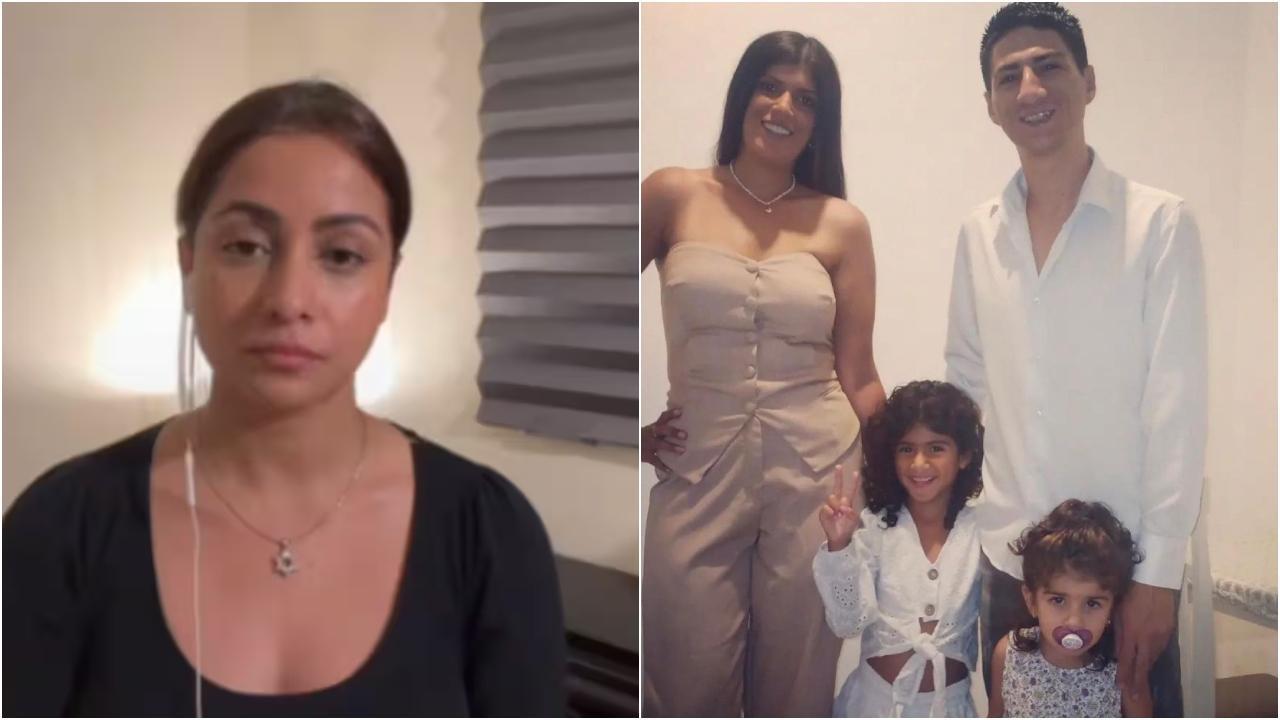
Mumbai: Actress Madhura Naik, who is known for her work in ‘Naagin, ‘Uttaran’ and ‘Breathe’, has shared that her cousin sister and her brother-in-law were killed by Hamas terrorists during the attack on Israel.
Naik took to her Instagram handle to share details of the attack, which left netizens shocked. She shared that the two were killed right in front of their children. She also stated that women, children and the elderly were being targeted in Israel and murdered in broad daylight.
The actress wrote: “Odaya, my sister, and her husband were brutally murdered by Palestinian terrorist in front of their children, was found dead today (Sunday). Deeply saddened by the tragic loss of our beloved cousin in the terror attack. Her warmth, kindness, and love will always be remembered.”
The Israel-Hamas conflict has entered the fourth day on Tuesday.
Nushrratt Bharuccha safe; returns to India from Israel
8:12 AM

HINDUSTAN TIMES (October 9, 2023)
Nushrratt Bharuccha was stranded in Israel amid the ongoing conflict. The actor was attending a film festival when the Palestinian terror group Hamas attacked. Her team was ‘unable to connect’ with Bharuccha for a while, but she is safe and landed in Mumbai on Sunday afternoon. In a video, she is seen asking the media to give her sometime to process the situation before she comments on the same.
Earlier, her publicist said in a statement, “We have managed to get in touch with Nushrratt and with the help of the Embassy, she is being safely brought back... We are relieved and thank god that she is safe.”
The 38-year-old was in Israel for the 39th Haifa International Film Festival, where her film Akelli was being screened. Incidentally, in the film, Bharuccha plays the role of a woman trapped in a combat zone, who battles for her life to reach home safely.
Over the weekend, Hamas carried out an unprecedented attack on Israel by firing rockets and infiltrating its borders. Israel’s Prime Minister Benjamin Netanyahu declared the country was “at war”.
It’s important to educate your child early about bad touch and good touch-Kalki Koechlin
8:25 AM

Kalki Koechlin’s vivid, unflinching take on nursing a newborn in a Mother’s Day comedy sketch called ‘I am Okay’ went viral this year as it resonated with legions of newbie moms who struggle to articulate the endless exhaustion and ecstasy of handling an “existential boulder”. The actor, writer, playwright and parent, who has authored a graphic novel on pregnancy and parenting called ‘The Elephant in the Womb’, talks to Sneha Bhura on raising a Covid baby, travelling with a three-year-old and lessons on motherhood from her latest film ‘Goldfish’
Sneha Bhura (TIMES PARENTING | THE TIMES OF INDIA; September 24, 2023)
Your daughter Sappho was born in February 2020, just before the world stuttered to a halt with a pandemic-induced Coronavirus lockdown. As a first-time parent, how did you readjust your childcare plans in such disorienting circumstances?
Basically, I didn’t have any childcare. Luckily, we had our domestic help who decided to live-in with us. But other than that, it was my partner and I who raised our baby. It was an intense time because I also had to look after my 13-year-old brother. My dad and his wife were stuck abroad as there were no international flights. My brother’s boarding school sent him to me. So, I had a newborn and a teenager. It was parenting 2.0! Between taking care of my teenage brother and changing diapers, there was no sleep at night. It was seven intense months.
You had opted for a water birth with help from a doula. What would you like to tell expectant mothers about the potential risks and benefits of this ‘natural’ delivery method from your personal experience?
I think it’s fantastic. But it needs a lot of planning. And you obviously need to check with a medical professional whether your body is fit enough to have a natural birth or if there are other complications. Sanam, my doula, was around and that gave us this extra sense of security because it’s not just the birth, it’s the pre and the post care too: How are you preparing mentally before and after the birth? How do you breastfeed the newborn? How do you keep this tiny thing alive? So, having a long chat with your gynaecologist and really writing down your birth plan — what you expect in those hours of labour, things that may go wrong, things you need to do then — is essential. You can really lay it out and come to an agreement. It’s sort of like an unofficial contract between you and your gynaecologist.
Your book ‘Elephant In The Womb’ was a raw account of pregnancy and the post-partum experience which you sometimes described as a nightmare. But what is it like parenting a growing three-year-old?
I love this time when they’re chatting and talking. They’re very entertaining. I want to frame a sentence of hers every day. There’s always some new funny sentence she has so it’s great fun. But of course, they are becoming cleverer and more manipulative. They know how to get something out of you by throwing a tantrum. And because she was a Covid baby, she had a lot of time with mama and she’s very attached to mama. So now comes the challenge of being away. I used to travel with her every time I went for a shoot but that’s not possible anymore. Now she needs to be in one place. So that challenge is coming up now.
How do you deal with the concern and anxiety of your child being in public places now that she has started school?
One of the first things to do is just giving your child the space to talk whenever you are with them. Constantly being curious about their life in school helps: What they’re doing with their social life? Who are their best friends? Who are their teachers? What are the people they don’t like? All of that stuff. Being involved and curious about their life is very, very important to understand how things are going. And of course, the other is to start educating your child about their body boundaries. All of that is really important to us. So, we’ve explained good touch and bad touch. We’ve explained to her how to own your space, how you can ask for space if you want it.
Parents often delay talking to their children about inappropriate touch. Teaching your child about it when she’s three years old, what does that look like?
Actually there’s a lot of support online. For example, a mother shared with me a song called ‘The boundaries song’ on YouTube. It’s made with cartoons which is perfect for this age group. It teaches them how some people love cuddles, some don’t; how some people’s kisses you like, some you don’t. It’s a really fun song. So, there’s an appropriate way to talk to even a three-year-old about these things. I don’t think there’s any sort of time limit; I think everybody can be spoken to. I always feel like the more I speak to my child as a human being and less as a little baby, and by being more honest with her, the better relationship we will have with each other.
They say sustainability goes out the window after the birth of a child when you just want to get through the day, and night! As a green parent, what are some of the consumer choices you have been advocating?
I remember when I told my doula that I only want to use cloth diapers, she was like, “Oh, that’s very sweet and all but please, you use cloth diapers in the day and at night use proper diapers.” And it was good advice (laughs). But what I did do is go the extra mile to find out about throwaway diapers which are still sustainable. So, in the day I was dealing with a lot of laundry from the cloth diapers and, at night, I was using biodegradable, store-bought ones made of bamboo. In the beginning, it was all very hard to do but because I was home and there was a pandemic, I just started figuring out a lot of things (about sustainability) like ordering organic and non-toxic floor and bathroom cleaners, shampoos and soaps. It just became something that I did as a sort of a big chunk (of my time). Sometimes even at 2 am in the morning after I had done my breastfeeding! But one of the things we do now is swapping things like clothes and cribs. I know so many kids and so many parents now that it helps to pass things around because kids grow out of their clothes so quickly. It’s become like a system.
You did a travel show with your father on your biking journey together in northeast India. Considering your love for adventure and travel, how do you deal with the daunting task of hitting the road with a child? Is there a mother-daughter travel series in the works?
This poor child has been to more continents than most of us (laughs). After seven months of being in lockdown, we were so frustrated that we decided to drive across the country to south India where my mother has a big home. She was also projectile vomiting in the car, that was another thing! And then my partner is from Israel. As soon as we were allowed to travel abroad, we went to Israel to visit his whole family, his grandparents. Then I had to shoot my film ‘Goldfish’ in London. She came there. So, she has been moving a lot. She has been great with travel. I obviously haven’t started motorbike rides with her yet. I have to wait two more years for that.
Sappho has found a very artistic home with a classical musician father and an actor-writer mother. Has she taken to music, drama or dance already? What does family downtime look like?
My daughter is really into art. It’s really interesting because we have children’s books but her favourite ones are by (French painter) Claude Monet, Henri Matisse and Spanish painter Joan Miro. And she’s obsessed with these artists! All of these artists go to Paris at some point in the book. And she goes like “I’m going to be a real artist. I’m going to go to Paris. I’m going to study art.” And we also have some friends down the road here in Goa. One of them is actually the woman (Valeriya Polyanychko) who illustrated my book. She allows Sappho to paint on the walls of her house and Sappho goes nuts there. So. Guy and I have done a few projects with her. Recently, we made an owl together.
You have talked about how regaining a sense of self as a mother, who is equally invested in her child and her work, has been the hardest job. How much of that delicate balance seems achievable now? Or do you still struggle to take time out for yourself?
Recently, I was shooting a film in Portugal. It’s the first time I didn’t travel with Sappho. So, the first ten days were blissful. I was shooting for 12 hours a day and I still had so much time to myself after the shoot. I would do yoga, go to the pool and have a beer and chill with my co-actors. I was like, “Wow, what is this life that I had completely forgotten.” But having said that, after about 12 days, I had this physical pain to get back. It was hard to be away. But now I feel I’m also prioritizing differently. I like the space I’m getting even while being a parent. For example, during her school hours, I’m writing and doing other work like reading and researching stuff that I want to work on. It’s giving me a new shape as a person and I am discovering new sides to myself which is exciting.
Kids born to unmarried parents in India are often treated unkindly in social situations. How can cohabiting parents protect and prepare their children for such eventualities?
I haven’t faced that issue yet, so I haven’t thought about it. But I don’t think there’s anything to hide. The parents we meet are quite progressive. Also, perhaps there’s no need for other parents to know. It’s none of their business whether you’re married or not. In my case, I’m a celebrity so people know. But in a lot of cases, I am sure people just will not say if they’re not married.
Your latest film ‘Goldfish’ stars Deepti Naval as your mother and it focuses on the strained relationship between a mother and daughter. What was it like working on this movie when in real life you had begun your own journey as a new mother?
Even when I was shooting the film, I was so aware because I was playing a daughter even as I was just becoming a mother. And I suddenly had so much more empathy for Deepti’s character. I knew now what my mother went through because I fought like crazy with my mother as a teenager. And I was constantly thinking, will I get to this point with my daughter? I love her to bits, and she loves me to bits right now, but will we get to that point where she says, ‘I hate you, Mom’? So it made me very aware and appreciative of my mother. And yes, I’m totally joyous and happy to have a theatre release after four years.
Is there anything that you would like to add about modern parenting?
My partner and I have very different techniques and parenting styles. Sometimes we get into fights because of that. We have started seeing a child psychologist every once in a while, because it helps us to understand what our child needs and which approach to take. So, I would really recommend that. If you can have someone just to consult — where somebody is able to hear both sides and also understand what the child’s perspective is and basically speaks for the child — then it really helps.
Our next show will be based in India, with a Delhi protagonist, say Fauda creators Lior Raz and Avi Issacharoff
8:09 AM

During their recent visit to India, Fauda creators Lior Raz and Avi Issacharoff spoke to us about the global impact of the series, as well as their next project – a spy thriller based in India
Niharika Lal (BOMBAY TIMES; December 9, 2022)
Following the success of their Israeli TV series Fauda, its creators Lior Raz and Avi Issacharoff are enjoying the immense love they are getting from fans – be it in Jakarta, Colombia or especially India. The duo, who recently visited India to attend a film festival, says they’re bowled over by people’s warmth. “When we landed here, at immigration, the officer looked at me, and said, ‘I saw Fauda three times’,” Lior, who also acted in the show, told us, adding, “Then I lost my baggage, and the officers helped me and they (all) knew who I was. It is so nice to know that people all over the world, and especially India, appreciate your work. It’s not easy, as sometimes you get mobbed and sometimes I try to hide myself. But when someone says they want to take a picture, for me, it’s just their way of expressing their love. ”
WE ARE COMING BACK TO MUMBAI SOON & HOPE TO FILM OUR NEW SHOW IN INDIA’
Avi told us, “We are working on a true story that follows an Indian guy and if everything falls in place, we will be filming in India. The lead character of the show is based in Delhi. The story starts here (in India) and it develops and goes to England and Russia. This is at an early stage. We want to shoot here and work and produce here. This is why we are coming back again soon to Mumbai to talk with Indian companies and producers.”‘
‘LIFE IN ISRAEL IS WEIRD. . . SOMETIMES REALITY IS WAY BIGGER THAN FICTION’
While dealing with such a sensitive topic, Fauda creators said that authenticity is crucial. Since they have both worked as undercover agents, how do they draw the line between what to reveal and what not to?
Avi said, “We both know what we shouldn’t expose. There is an ongoing dialogue between us about how far we can go without putting anyone in danger. We both were in a unit that was nothing like on show, which belongs to the Israel Defense Forces (IDF). And we both have been very careful with human life in what we do (pauses)...I have to say that reality brings all kinds of meanings and events that we could not really expect to happen and we could not imagine will happen. But it’s a very weird life in Israel and in the Middle East (in a way) that sometimes reality is way bigger than fiction.”
Lior added, “What is interesting is that because of the show, there is an increase in young people who want to be in those units. There are thousands more people who want to join these units. The number has doubled. People really want to be a part of that unit. This is a byproduct of what we are doing.”
‘FAUDA CHANGED HOW MANY ARABS VIEW ISRAEL’
Talking about the impact of Fauda across the world and in the Middle East, Lior said, “We were surprised that it was number 1 on the streaming platform in Lebanon and in the Top 10 all over the Arab world. There was an article about us in a newspaper in Egypt that stated that we have changed Arab people’s perspective on Israel. Until now, it was all about propaganda. But you see, as people, we are all good sometimes and we are bad sometimes. And not just other countries, but even in Israel, people feel compassion for those who are on the other side too. People who support Palestinians sometimes feel compassion for the Israeli side as well.”
‘WE DEFINITELY PLAN TO COME BACK TO INDIA AND EXPERIENCE IT MORE’
“The people who surrounded us here (in India) were so kind and polite. I was eating all the time here, everybody here wants us to eat a lot because they love us,” said Lior. “Fourteen years ago, I wanted to go on a spiritual trip, so I chose the south of India. With a good friend of mine, I started the trip on a motorcycle and we just travelled from Goa to Hampi to Kerala and we met so many interesting and loving people. It was the most spiritual moment of my life to be in India for a few weeks, just to travel and meet people. Now when I came to Goa this time again, I felt immediately at home. It was a great experience and I’d love to explore more,” added Lior, to which Avi agreed.
We are getting a response from people all over the world, but the most delicate, nicest messages are from Indians-Avi Issacharoff
8:37 AM
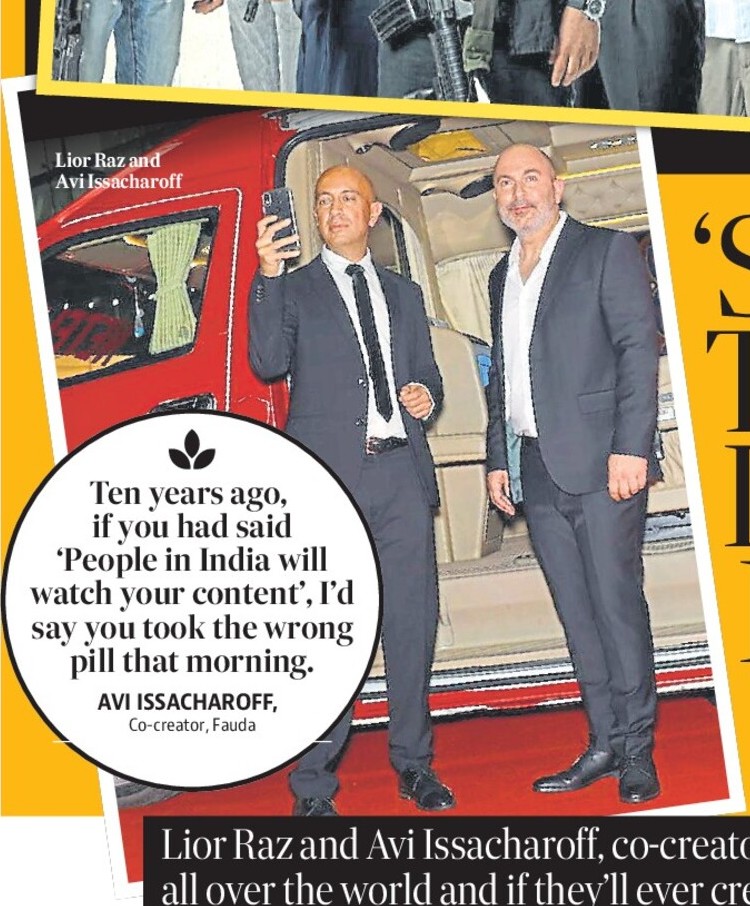
Lior Raz and Avi Issacharoff, co-creators of the hit show, dive into its massive connect all over the world and if they’ll ever create something for audiences in India
Rishabh Suri (HINDUSTAN TIMES; December 3, 2022)
As fans wait for the fourth season of Fauda to drop on Netflix, the first episode of the hit series was premiered at the 53rd International Film Festival of India, held in Goa, recently, with the creators of the show, Lior Raz and Avi Issacharoff, in attendance.
“When we heard about [the festival], we said, ‘Erase everything from our schedule – we want to be there in India.’ It’s the natural [choice] to premiere the show because of the love people watching our show here give us,” shares Raz.
Somehow, the duo find the show’s massive popularity in India rather “strange”. “It is not common that you have people from this country follow you and try to interact. We are getting a response from people all over the world, but the most delicate, nicest messages are from Indians. Here when someone wants a selfie, they ask first, and don’t just go for it,” exclaims Issacharoff.
The show is based on the duo’s time in the Israeli Defense Forces, and this personal touch is what clicked with the audiences. “Everybody can connect with stories of people and their journeys. The atmosphere in Israel is very chaotic, and when you see the journeys of the characters, you understand,” says Raz, who also stars in the show, before adding, “We don’t really know what the secret to Fauda being such a big hit is, and we don’t want to know. We just want to continue what we are doing.”
STORIES OF THE WORLD, TO THE WORLD
The OTT boom enabled a rapid exchange of entertainment all over the world, and the duo agree that Israeli content benefited in the process. “Ten years ago, if you had said ‘People in India will watch your content’, I’d say you took the wrong pill that morning. It’s a new era — I can sit in my house and watch Indian content. People in India and Sri Lanka watch Israeli content,” says Issacharoff.
The explosion of OTT content has also brought about a change in viewers’ preferences, and star casts are no more a sure-shot hit formula. “All of us have the same emotions, we laugh, hate, [feel] connected. We want to be moved by somebody’s story, it doesn’t matter what the language. OTT brought it to the table,” Raz adds.
The series saw its official Hindi adaptation Tanaav, drop recently. Do they ever plan to create something for Indian audiences? “We haven’t seen enough Indian content, but we want to. Being in the country and understanding how big the market and potential is, is making us hungry,” Raz says, recalling how as a kid, he would watch Indian films at home. “I remember the dances and the colours, which were so strong. Some of them really inspired us to tell a story. A part of that is from the films we have seen from India,” he adds.
COMPARISONS GALORE
Whatever other work they do, comparisons with their first show always arise. Do they feel the pressure? “This is our first baby... Of course, when we had Hit & Run, there were comparisons. I know it’s the natural tendency of people. We, as creators, are also looking for something new. We don’t want another Fauda, it’s unique and specific,” Raz signs off.
I didn’t mean to hurt affected Kashmiris-Nadav Lapid
8:13 AM

Remarks About Film Quality, Says Israeli Filmmaker
THE TIMES OF INDIA (December 2, 2022)
New Delhi: Israeli filmmaker Nadav Lapid, whose criticism of ‘The Kashmir Files’ irked a section of the rightwing and made the Israeli diplomatic mission denounce the IFFI (International Film Festival of India) jury panel chief has offered a “total apology” to people if his comments have hurt or insulted people who suffered during the Kashmir exodus, but maintained his remarks were limited to the quality of the film.
“I didn’t want to insult anyone. My aim was never to insult the people or their relatives, who have suffered. I totally apologize if that’s the way they interpreted it...But at the same time, whatever I said and I said clearly that for me and my fellow jury members, it was and it is a vulgar propaganda movie that didn’t have a place and was inappropriate for such a prestigious competitive section.”
“I can repeat it again and again,” Lapid said speaking to CNN-News18. The award-winning film maker, who had referred to “The Kashmir Files” as a “propaganda, vulgar film”, said his remarks were neither a statement on the political situation in Kashmir, nor, in any way, a denial of the tragedy. “I have enormous respect for the tragedy, victims, survivors and for whoever suffers there. It (my remarks) was not at all about this. I’ll repeat these words 10,000 times if I have to say that I was not talking about the political issue, historical equation, or disrespecting the tragedy that happened in Kashmir. I was talking about the movie and that such serious topics deserve, in my opinion, a serious film. . . ,” he said.
Lapid also dismissed claims by fellow juror Sudipto Sen, who had distanced himself from Lapid’s statement and called it the director’s “personal opinion”.
“It wasn’t a personal opinion at all. We all thought that the movie used a series of manipulation, vulgar, violence because it was supposed to transmit a message that can cause hostility, violence and hate in the environment,” he said.
-------------------------------
HINDUSTAN TIMES (December 2, 2022)
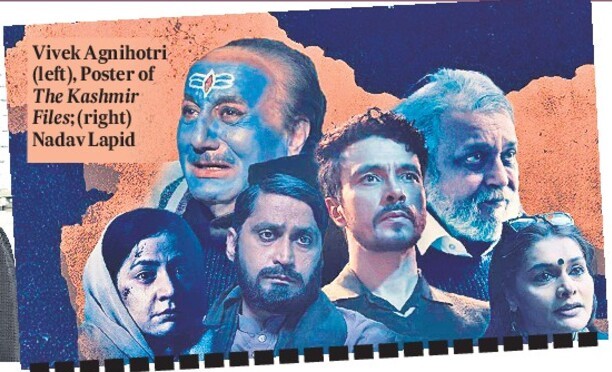
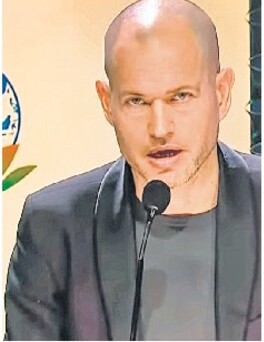
Israeli filmmaker and International Film Festival of India (IFFI) jury head, Nadav Lapid, who courted controversy when he called The Kashmir Files a ‘vulgar propaganda’ earlier this week, in Goa, has apologized. In a recent interview, Lapid who called the film, directed by Vivek Agnihotri, “inappropriate for an artistic, competitive section of such a prestigious film festival” said that his aim was “not to insult anyone”. This comes some days after he defended his remarks and insisted “someone needs to speak up”.
In an interview with CNN News-18, Lapid expressed regret for inadvertently offending the sentiments of any community. “I didn’t want to insult anyone, and my aim was never to offend people or their relatives, who have suffered. I totally apologize if that’s the way they interpreted,” he said. He also claimed that the rest of the jury supported his stance; although, fellow juror (the only Indian on the jury), and director Sudipto Sen stated that the views endorsed by Lapid were entirely his own.
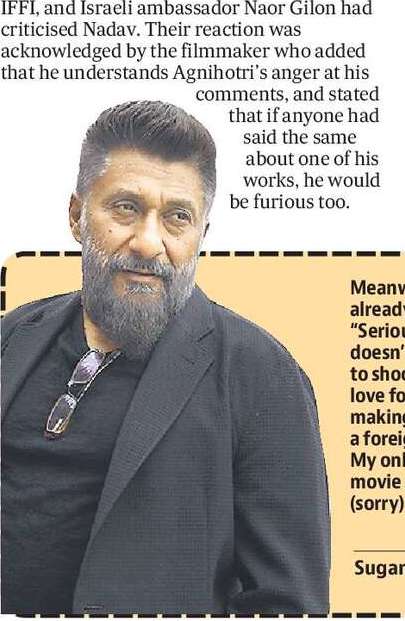
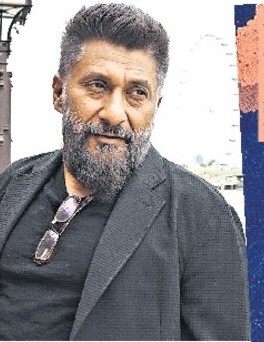
The cast of the movie and director Agnihotri, which was featured in the panorama section at IFFI, and Israeli ambassador Naor Gilon had criticised Nadav. Their reaction was acknowledged by the filmmaker who added that he understands Agnihotri’s anger at his comments, and stated that if anyone had said the same about one of his works, he would be furious too.
-------------------------------
Sugandha Rawal (HINDUSTAN TIMES; December 2, 2022)
Meanwhile, filmmaker Vivek Agnihotri, who has already moved on from the war of words, says, “Seriously, I don’t even care about what he says or doesn’t. Mere liye baat khatam ho gayi hai. I have come to shoot (for his next) in Pune, and I am getting so much love for the film. People have come and thanked me for making the film, so, I don’t need an endorsement from a foreigner. What does he know about my country... My only answer is Hrithik Roshan’s dialogue [from the movie Zindagi Na Milegi Dobara; 2011] Jab tak (sorry) dil se na nikle, it is not an apology.”
IFFI row: Nadav Lapid says he was apprehensive before comment, Vivek Agnithotri announces sequel
8:21 AM
Someone Needs To Speak Up, Says Israeli Filmmaker
THE TIMES OF INDIA (December 1, 2022)
New Delhi: After sparking a political row with his comments criticizing ‘The Kashmir Files’ as a “propaganda” film, Israeli filmmaker Nadav Lapid has said he stands by everything he said because “in countries that are increasingly losing the ability to speak the truth, someone needs to speak up”.
At the closing ceremony of the 53rd edition of IFFI (International Film Festival of India) this week, Lapid had said that he and his fellow jurors were “disturbed and shocked” by the inclusion of ‘The Kashmir Files’ in the artistic competition segment of the film festival since it was “a propaganda, vulgar movie”. Indian juror Sudipto Sen, however, distanced himself from Lapid’s comments calling them his “personal opinion”.
Lapid was also slammed for his remarks by Israeli ambassador to India Naor Gilon, Consul General Kobbi Shoshani and former Israel ambassador to India Daniel Carmon.
An unfazed Lapid clarified that his comments did not “express one position or another on the conflict in Kashmir”. He said he spoke because he felt it his “duty” to speak his mind as the president of the international competition section jury since he “knows how to recognize propaganda disguised as a movie”, and because while it was not a crime to make bad films, what Vivek Agnihotri had directed was “crude, manipulative and violent”.
“Making bad films is not a crime, but this is a very crude, manipulative and violent propaganda film,” Lapid said in an interview with Israeli newspaper Ha’aretz. “The truth is that I also couldn’t help but imagine a similar situation that might happen one day soon in Israel, and I would be happy that in such a situation the head of a foreign jury would be willing to say things as he sees them. In a way, I felt it was my duty to the place that invited me,” he said.
The director of ‘The Kashmir Files’ Vivek Agnihotri, however, had defended his film. In a statement, he also threw an open challenge to all “intellectuals, urban naxals and even the Israeli filmmaker who made these remarks to prove if any scene, dialogue or event shown in the film is false”, promising to quit filmmaking if they find any falsehood in the film.
Lapid said he was not surprised by the outrage over his comments. “Since this is a film that the Indian government encourages, I assume that the government there is not happy about it. But is a country only about its government? I assume not. What I said is not comfortable for the Government of India, nor for the government in the making in Israel, which the ambassador there represents,” he said.
The award-winning filmmaker also alleged that the jury had learnt that ‘The Kashmir Files’ was “pushed into the official competition” of the festival “due to political pressure”. “You have an obligation to say the things that the people who live there may have a harder time saying,” the Paris-based filmmaker said.
----------------------------
HINDUSTAN TIMES (December 1, 2022)
Israeli filmmaker Nadav Lapid, who earned the ire of many social media users after he called The Kashmir Files a “propaganda and vulgar film”, has opened up about his controversial comments during the closing ceremony of the 53rd International Film Festival (IFFI), held in Goa.
Speaking to Y-Net, Lapid said he was aware that “the event was connected to the country and people praise the government”.
“It is not an easy position, because you are a guest and are treated very nicely. Then you come and attack the festival. There was apprehension and discomfort; I didn’t know what the dimensions would be. Let’s put it this way: I’m happy to be on my way to the airport now,” said the filmmaker.
Addressing the trolling he faced on the net Lapid shared, “In countries that are increasingly losing the ability to speak the truth, someone needs to speak up. When I saw this movie, I couldn’t help but imagine its Israeli equivalent, which doesn’t exist but could.”
Amid the IFFI row, filmmaker Vivek Agnithotri, who directed the film in question, announced what seems to be the sequel to the film, titled - The Kashmir Files Unreported. Speaking to Aaj Tak, Agnithotri said, “I am determined now and I am making an announcement. We have many stories, anecdotes and truths. But now, I have decided that I will bring out the whole truth.”
A story like Fauda resonates with us. Art has no borders; if you make a good story, it will have a global appeal-Rajkummar Rao
8:20 AM

At IFFI, Fauda makers Lior Raz and Avi Issacharoff, along with Rajkummar Rao, discussed what makes content globally appealing
Niharika Lal (BOMBAY TIMES; November 29, 2022)
Fauda creators Lior Raz and Avi Issacharoff, who’re currently on a two-day visit to India, attended the International Film Festival of India (IFFI) on Sunday. The two had a chat with Rajkummar Rao on the topic Storytelling in the Era of Global Entertainment and spoke about their desire to collaborate with Indian creators.
THE MOST IMPORTANT THING IS TO MATCH THE EXPECTATIONS OF THE VIEWERS: FAUDA CREATORS
Fauda creators shared that when they started the project, they thought that nobody would watch the show. Lior said, “After the release of the first season, it became a hit and we thought that now we have to bring in more action in the show. People love the show because of how it is. You (as a viewer) feel like you are part of what’s happening, you are a fly on the wall. And we didn’t want to change that. We are not trying to be something that we are not. We are not trying to make it a Hollywood show and we are not trying to make it a Bollywood show. We are trying to make it the same thing that we already did. And this is the secret of the show.”
Avi added, “The most important thing was to match the expectations. The expectations after the first season became very high, then the second and then the third. After the third season, people thought we are not gonna go further. We were very surprised that we could match the challenges of the show. One of the ideas here is to keep the authenticity alive. It is not true, it is not a documentary, it is fiction, but you have to make people feel that it is authentic. Fauda was a very local Israeli show that became an international show. ”
The makers of Fauda have also collaborated with Indian creators, and a collaborative project is in the pipeline. Appealing to Indian creators, Lior Raz said, “I want to say this to those attending the screening – if there are any creators or producers here, then we are very much open to collaborating with you. We really want to collaborate with the Indian industry.”
IF YOU MAKE A GOOD STORY, IT WILL HAVE A GLOBAL APPEAL: RAJKUMMAR RAO
Sharing how working in a web series helps an artiste, Rajkummar said, “It really helps when your work can travel globally. I remember after Ludo, even though theatres were not functioning, I got messages from people from the US, UK, Singapore, Australia and New Zealand, which meant that people were watching Indian content globally. That’s what we want. A story like Fauda resonates with us. Art has no borders; if you make a good story, it will have a global appeal. You need to be grounded and you need to be rooted with your content. You can’t really make something which is surreal or unreal. You need to be authentic. That’s why Monica O My Darling or Badhaai Do work well. They are pushing makers.”
Commenting on what avenues streaming platforms have opened for him, Rajkummar said, “I wanted to do a series. Doing a series really enhances you as an artiste because you get to play the character for a longer duration. That’s what I felt while doing Guns & Gulaabs. I love watching films on streaming platforms. Watching other people’s work really inspires you as an artiste. I saw Kantara recently, and I was really inspired because it was such a rooted story. You can’t make a film thinking that I want to reach out to a global audience. You have to be true to the content and your heart should be in the right place.”
Monika Shergill, Vice President, Content, Netflix India, added, “What exactly is global storytelling? Stories are stories. They have to have authenticity and emotions. If you are working in your own bubble and you pick a story and say that it is going to work for an international audience – well, there is no ‘international audience’. There is nothing called an international audience.”
‘NOBODY KNEW WHAT FAUDA MEANT WHEN WE STARTED THE SHOW’
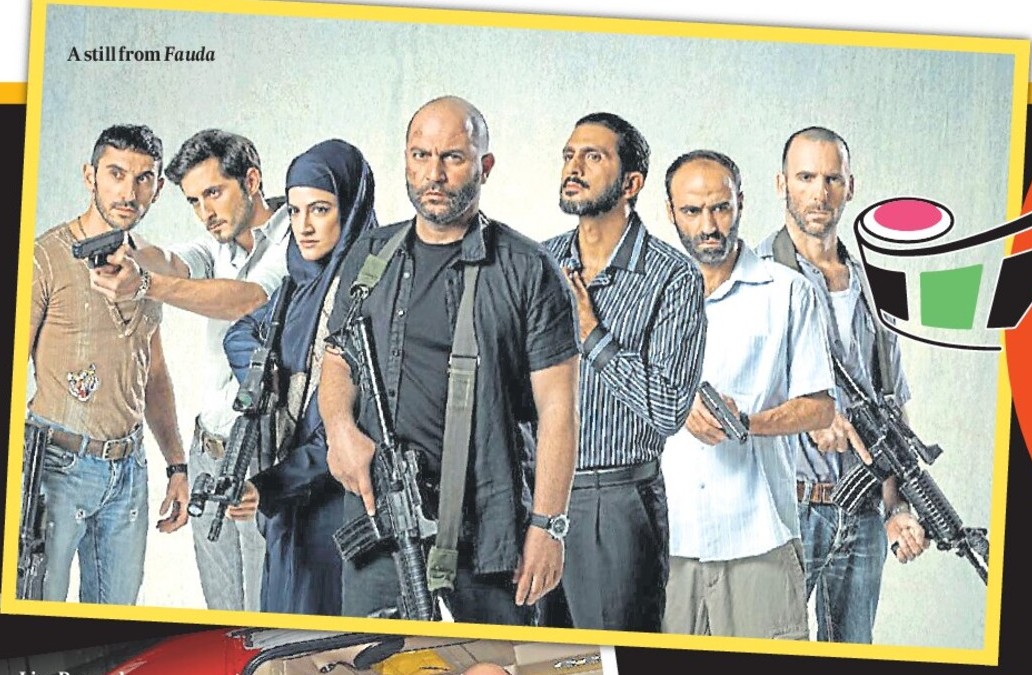
Fauda was earlier named Undercover, but later the name of the show was changed. Talking about the title, Avi said, “Fauda means ‘chaos’ in Arabic. Why did two Israeli-Jewish creators pick an Arabic name? The reason was that it had a double-edged meaning. It also has an Israeli meaning. And for us soldiers, who worked in undercover units, that was the code used when things turned messy. This is the word that you report in walkie talkie – ‘Fauda!, Fauda!, Fauda!’ and that is a sign for the rescue team to come.”
Raz added, “It is a very common word in Israel. Now everyone in Israel talks like – Oh! there is fauda in football games, there is fauda in politics. Nobody knew what fauda meant when we started the show, but now it is what everyone talks about.”
Israel celebrating Coronavirus breakthrough in Varun Dhawan’s lingo
8:30 AM

Ankita Chaurasia (MUMBAI MIRROR; May 7, 2020)
 Varun Dhawan, who has taken to sharing positive developments in the Coronavirus fight, retweeted an Israeli journalist’s post, which informed, “A significant breakthrough has been achieved in finding an antidote to the Coronavirus that attacks the virus and can neutralize it in the sick body.” The actor was quick to add that he hopes it is true. Israel’s official Twitter handle responded by quoting a dialogue from Varun’s 2015 film, ABCD - Any Body Can Dance - 2.
The dialogue is a part of the actor’s monologue and appears in the climax: “Sahi direction mein utha har kadam, apne aap mein ek manzil hai... Aakhir zindagi ka matlab hi apna agla kadam chunna hai.” Director Remo D’Souza revealed to Mirror that the lines were rooted in his childhood and struggle. “I asked my dialogue writer Mayur (Puri) to incorporate them. I live life by the same principle. Success is almost never achieved in the first go, but I believe in second chances,” he asserts.
While Varun said he was glad that the dialogue had reached all the way to Israel, Remo is not surprised. “Our films are huge hits there. Even Street Dancer 3D worked well. The dance fraternity around the world is aware of my work,” he concludes.
I have so many friends who are Hindu but they will say Khuda hafiz to me-Adnan Sami
8:47 AM

Anshul Chaturvedi (BOMBAY TIMES; February 3, 2020)
Adnan Sami’s Padma Shri ran into controversy on two grounds. One, does his body of work merit it? That, however, is a question that comes up each year for one or more recipients, irrespective of the regime in power. The second question, however, is not so common — should a man whose father fought against India in a war be feted by the Indian state? When Adnan spoke to us last year, he recurrently emphasised the point that he was “loyal to India because of what my father taught me”. We ask him to comment on the recent outrage.
“See, if you have been indoctrinated with a particular belief or principle... it’s like this... once you have learnt engineering after that you apply that skill to a Maruti or a Mercedes, the principle is the same, right, because the education that you got was basically for an engine. So the indoctrination that I got from my father of the concept of loyalty, patriotism etc... he used it in his capacity, in his life for the country that he belonged to and he instilled those principles in me. Today, I am an Indian and the DNA of my upbringing and the principles that have been indoctrinated in me — I am using exactly the same principles but adopting it to my country. And so my sense of loyalty is absolutely intact, but for the country that I belong to,” he explains.
Adnan was born in the UK, his spouse is German. We put a question to him, hoping for insight: During and after WW2, nations in Europe fought bitterly, even viciously, and political and ethnic boundaries were drawn, erased, redrawn. Yet, they have been able to function collectively, even build an EU that is close to borderless – even after Brexit – without the fallout of the hatred and killing in the 1940s. How did they reintegrate while the subcontinent still simmers in the animosity of the 1940s?
“It’s a very interesting question, which I have pondered over.” He pauses for a bit.
“And I think, I mean it’s just my opinion... When Germany finally woke up and realised the horror of what their leaders had done... you see, the Nazis and Hitler, in particular, with the level of oratory skills that he had, had managed to convince the masses of their superiority, the Aryan race and the white supremacy that he had advocated and the illusions that he had created that we are going to take over the world — all of that came tumbling down at the defeat. And thereafter, with the entire world teaming up against Germany and telling them what a horrid leader they had, and the horror that he inflicted upon humanity and so on, somewhere the Germans realised ki yaar humne waaqyi bahut zyadti ki hai. Therefore, they were on an extreme back foot and they admitted defeat, they accepted humiliation and with that acceptance, they went and sought forgiveness. And when that happened, you know, humanity is such that when you do have that closure whereby the other person has admitted their mistake, things settle... If you speak to a German and you start talking about Nazis, the average German is gonna feel very embarrassed because of his history. I know this because I live there... live in the sense that I have got family there and as a result I have German friends. I know this. Today if you mention Hitler, they will feel very ashamed because they’ve realised what a monster he was. Now, in comparison, yahan pe there has been no such thing. Nobody has accepted defeat, nobody has accepted their mistake, nobody has turned around and made any apologies. Every time there has been a possibility of a handshake, the Pakistan Army decides to step in and do a Kargil or whatever in order to sabotage any possibility of reconciliation. It doesn’t suit them to have a reconciliation because then it’s going to have repercussions on their economy.”
Even his Padma award became a discussion about India and Pakistan. “When has there ever not been a discussion of India-Pakistan?” he laughs. “That is a perpetual discussion going on ever since Partition; it’s not a new phenomenon”.
That may be true, but Hindu-Muslim, majority-minority has perhaps not been as much of a perpetual discussion as it seems to be presently. As someone who moved from a ‘majority’ status to a ‘minority’ one by choice, what learnings and experiences does he have to share with us? How has his association been with those not of his faith after he moved to India?
“When it comes to my relationship with people in India, I have, frankly speaking, never been able to differentiate in my day-to-day dealings with people from different walks of life. I am not even able to sometimes tell what faith they belong to unless somewhere in the conversation or at the end of the conversation, the person turns around and says Allah hafiz or Khuda hafiz. I will only then get to know that he might be a Muslim. I have so many friends who are Hindu but they will say Khuda hafiz to me. There is no difference ki main goodbye kahoon ya namaskar kahoon ya Khuda hafiz kahoon, mere liye ek hi hai.”
And that does not make either of the two parties traitors to their respective cultures, does it?
“Of course not, of course not!” He exclaims. “The most beautiful thing in our country is that a Hindu will celebrate Eid with me, I will celebrate Diwali or Holi with him and all of us collectively will celebrate Christmas. Mere bahut saare dost joh Hindu hain woh Eid ke dauran aake kehte hain, ‘achha yaar sevaiyaan bhej rahe ho na?’ ya ‘biryani bhej rahe ho na?’. Aur hum unki Diwali ki mithaai bade shauk se khaate hain. And now that Medina (his daughter) is with us, I was telling my wife that next year we must have a Christmas tree in the house. It’s just such a beautiful thing for the child.”
What faith will Medina grow up to embrace? Will she be able to celebrate both Eid and Christmas or is that no longer politically correct in the times the world is living in?
“My child will grow up just like me. She will be able to embrace all and respect all faiths because that’s the way I have been brought up. When I was studying in England, in boarding school, the day used to start with the entire school going to the chapel. I grew up with all of those different faiths. My upbringing instilled in me to respect all faiths because at the end of the day, if you look at all faiths, the basic teaching of every faith is the same, love thy neighbour, don’t do to others what you wouldn’t have done to yourself. Which faith turns around and says that make sure that you sleep with your belly full while your neighbour is hungry? So these are the principles with which I intend to bring up Medina and that’s the way it should be.”
How do these principles play out in real life, beyond the words?
“I had gone to Israel just last year and I went to Jerusalem, I visited Masjid-E-Aqsa, I visited the Wailing Wall, which is for the Jews, and I also went on the ziyarat of Jesus Christ and paid my respects in all of these different places with the same sanctity. So that’s the way I am. Jab yahan pe Ganpati hota hai toh humein har taraf se daawatein aati hain ki please come and visit us and we go. The point is that you respect all faiths. You may have your own principles or your own beliefs, but that doesn’t mean that you cannot respect somebody else’s beliefs. To each his own. That’s the way I have been brought up and that is also the most beautiful thing about our country that we respect this,” concludes the expressive musician, who often reiterates that art is beyond politics.
Flashback 2019 (Mar 5)
“Even though my father was originally Afghan, but because of the fact that he became part of Pakistan by default because of the Partition, his blood or DNA said that I will have to now show my allegiance to this country. Because that’s the Pathan way — this is the country that I’m in now, I will show my allegiance to this country. So therefore today, I have my oath to India to honour. This is a very important thing in our blood that we honour our zabaan, our oath. If I have sworn allegiance to you, by god, I’ll give my life to you. For a Pathan, his zabaan is a very important thing, ghairat is a very important thing. Aapne agar allegiance show kar di hai... he would have said to me that you better be true to the oath that you’ve taken. He was very clear about those things. And so today, if I am patriotic or nationalistic or whatever you want to call it, it is because of the upbringing that I have from my father, and the fact that he placed so much emphasis on loyalty, allegiance and honour...”
Flashback 2018 (Aug 14)
WHAT ADNAN TOLD US:
“I have been granted citizenship under a very special clause, and that is Section 6 (1) of the Citizenship Act 1955, in which the Government of India has discretionary powers to grant citizenship to any individual who they feel has extraordinary talent or exceptional talent in various fields such as science, art, culture, and they can do so at will.”
WHAT SECTION 6 (1) OF THE CITIZENSHIP ACT, 1955 SAYS:
Section 6 (1) in the Citizenship Act, 1955 deals with citizenship by naturalisation and provides for fast-tracking of the citizenship process of an applicant based on their contribution in the field of arts and sciences. It states, “Provided that, if in the opinion of the Central Government, the applicant is a person who has rendered distinguished service to the cause of science, philosophy, art, literature, world peace or human progress generally, it may waive all or any of the conditions specified in the Third Schedule.”
For Baaghi 3, we have Tiger Shroff taking over a city and breaking it down-Ahmed Khan
8:22 AM

With the third Baaghi film, producer Sajid Nadiadwala and director Ahmed Khan up the action ante by pitting their hero against a location; the film will be shot in Georgia, Serbia, Turkey and India
Avinash Lohana (MUMBAI MIRROR; July 11, 2019)

 Ahmed Khan who recently returned to the Bay from Agra where he was on a recce for the third instalment of the Sajid Nadiadwala-produced Baaghi franchise which reunites Tiger Shroff and Shraddha Kapoor, is all set to take the action one level up in the film which is expected to roll by August-end. He promises that his leading man “will cross all limits this time”, pointing out that after the previous film, the responsibility has multiplied three-fold and he has to make sure that he delivers on expectations.
“In Baaghi 2, Tiger jumped off a cliff to land on a mid-air chopper. He also performed stunts on water. This time we have him taking over a city and breaking it down, besides jumping off cliffs and skyscrapers and setting off blasts,” informs Ahmed.
As part of his prep, his hero will be going to Israel to train in Krav Maga as soon as he wraps up his film with Hrithik Roshan. Krav Maga is a military self-defence and fighting system developed for the Israel Defence Forces and security, derived from a combination of techniques sourced from boxing, wrestling, aikido, judo, karate and realistic fighting. “Tiger will be there for eight-10 days and is really looking forward to it. He has so much to give and always up for it,” says the director.
 After Israel, the actor will be travelling to Georgia for training in machine guns, pistols, shotguns and other weapons. “We are not naming any place in particular and will be filming in Georgia, Turkey and Serbia. We are also building sets and have a schedule in India too and should lock the location by this week,” says Ahmed who will be travelling to Georgia a couple of more times before the film rolls.
He is all praise for his leading lady who will next be seen with Prabhas in Saaho which opens on Independence Day. “It’s a different kind of action for Shraddha, not gimmicky or typical maar-dhaad. It’s a combination of mind and speed, very slick and international. We are still planning what kind of training she will need to go through, but I can assure that she will surprise everyone,” promises Ahmed who has Chashme Buddoor and Katha director Sai Paranjpye’s grandson Abeer Abhyankar and yesteryear villain ‘Loin’ Ajit’s grandson Faaris Khan assisting him on the film. “I have known them for a while, they had assisted me on a commercial earlier. Sai ma’am and Ajit saab have given so much to the industry, we can only take their legacy forward,” he signs off with a smile.
Subscribe to:
Posts (Atom)