Showing posts with label Ishqiya. Show all posts
Showing posts with label Ishqiya. Show all posts
Marketing prowess of big films, expensive tickets are killing small films-Abhishek Chaubey
8:25 AM

Hoping to return to theatres after six years with a period thriller, director Abhishek Chaubey rues that the big screen has no place for small films
Priyanka Sharma (MID-DAY; April 3, 2025)
Abhishek Chaubey hasn’t had a film play out on the big screen after Sonchiriya (2019). The director has been happy dabbling in digital entertainment with a segment in Ray (2021) and the web series, Killer Soup (2023). But now, the big screen is calling out to him.
“I am currently writing a period thriller,” he reveals, hoping to take it to cinemas. “I have also written a show, a thriller [that explores] a social phenomenon. It’s set in Bihar. Now, I am at the mercy of the streamers,” he smiles.
As he flirts with the idea of returning to the movie halls after over six years, the director is aware that a lot has changed in the theatrical space. Chaubey notes that the big screen has become synonymous with spectacles, leaving little room for small films to survive.
“We are only making tentpole films. We must find a way for the middle-of-the-road films to have a well-marketed release and make sure that the audience goes to watch them. We have to find our mojo again,” he insists.
Citing the example of his debut film Ishqiya (2009), Chaubey points out how small films would find an audience 15 years ago.
“Ishqiya was a small film, but Chandan theatre [in Juhu] ran housefull. Even a film that didn’t work at the box office would make enough money so as to not break the production company. Now, the star and marketing prowess of a big film, coupled with expensive tickets, are completely killing small films. Earlier, the audience that watched mainstream movies also watched a Gulzar or a Shyam Benegal offering. That was our culture. Today, that culture is dead.”
I am so bored with the content around me. There is too much action-Vidya Balan
8:06 AM
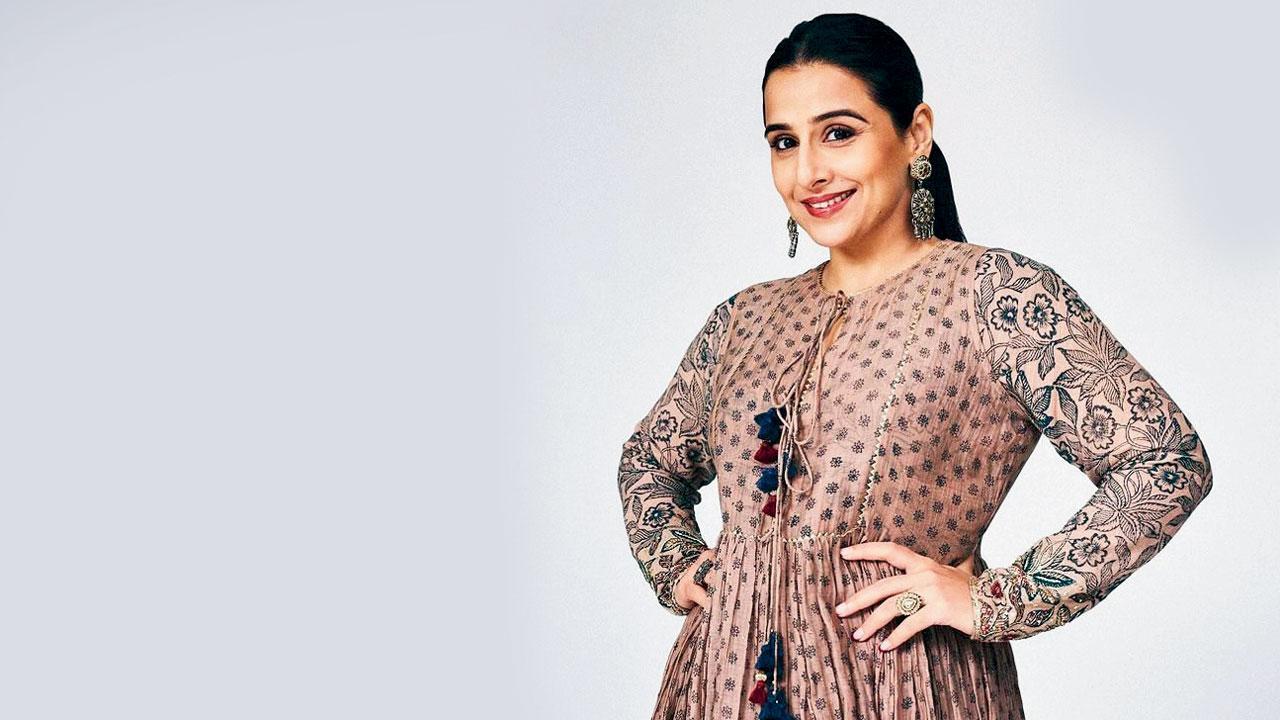
Tired of dark thrillers and action films dominating the scene, Vidya says she was craving a sharply written rom-com when Do Aur Do Pyaar came her way
Mohar Basu (MID-DAY; April 16, 2024)
Sometimes, you just want to sink into your seat with a popcorn tub, and watch a feel-good movie. Vidya Balan says Do Aur Do Pyaar is that movie. At a time when the industry is churning out action fare on the big screen and dark thrillers on OTT, rom-coms have been few and far between. “This is a genre I’ve missed,” starts the actor, who, with Pratik Gandhi, leads director Shirsha Guha Thakurta’s rom-com.
“I was wondering why people aren’t making such films anymore. I am so bored with the content around me. There is too much action. When the film came to me, I loved the idea. I watched the original, The Lovers [2017]. Shirsha gave our film a new direction and Supratim Sengupta wrote the script, playing it differently [from the original]. This film makes me laugh and fills my heart. I wanted to go on a long drive, listening to music with Siddharth [Roy Kapur, husband]. Enough of pointless maar dhaad and diabolical people! I want to be in movies where I am enjoying, and so are my audiences.”
Do Aur Do Pyaar sees Balan and Gandhi play a long-married couple, who are happy in their extra-marital relationships until they find themselves falling for each other again. Balan’s Kavya as a woman with agency struck a chord with her.
“Kavya and her partner have an equal marriage. I related to the fact that she is stubborn and angry; she is not apologetic about her affair. Her predicament was funny, but I played it with a hint of curiosity. She is scared, confused and stuck.”
Often, female characters in Hindi cinema are one-toned. Rebellious parts are becoming predictable, too. Balan, who has built a 19-year career on fascinating characters, from The Dirty Picture (2011) to Kahaani (2012) and Sherni (2022), says we need to delve deeper into a woman’s complexities.
“In films, there is either the bitch or the bechari, but I’ve never done films [with such black-and-white parts]. Women-led cinema is in a nascent stage here. Ishqiya [2010] was an aberration for its times. It has been 14 years, but the grammar is still being formed. It will get formed, broken, and reformed. It’s time to reimagine the women we are writing. I think more films are expanding the idea of a badass woman now. Even with women-led cinema, it’s important we take ourselves less seriously. Crew was fun and not necessarily nuanced, but we had a good time. That’s enough at times.”
Aadha lagta hai Irrfan Khan ke bina-Vishal Bhardwaj
10:07 AM

At an event titled Irrfan: A Retrospective, Vishal Bhardwaj and Naseeruddin Shah came together to talk about Irrfan’s unforgettable performance in Maqbool and share other anecdotes about the actor
Harshada Rege (BOMBAY TIMES; February 1, 2024)
It’s impossible to think of Maqbool without Irrfan, but few know that the actor was not the first or even the second choice for the role. Filmmaker Vishal Bhardwaj shared, “Ek actor ke liye toh Naseer bhai ne bola tha ke tumhe goli maar doonga (laughs).”
After the recent screening of Maqbool at an event titled ‘Irrfan: A Retrospective’, filmmaker Vishal Bhardwaj and Naseeruddin Shah shared many such anecdotes from the making of the film, which clocked in 20 years on January 30, and spoke about their association with the actor, who passed away in April 2020.
The first thing that struck me about Irrfan was his eyes: Naseer
Remembering his first meeting with Irrfan, Naseer said, “I met him for the first time when he was rehearsing for a play with Ratna (Pathak Shah). People had told me that he liked me a great deal. When I was introduced to him, he was very matter of fact, there was no fawning. Like everybody, the first thing that struck me about him was his eyes. He had absolutely amazing eyes. I had no idea of the depth of his range. There couldn’t have been a better choice to play Maqbool than Irrfan. Personally, he was very affectionate towards me, and I was very fond of him, but we didn’t meet very often. So, I can’t say that we were close friends, which is something I missed out on, but I continuously admired his work and his attitude towards it.”
Irrfan understood the silences in the script: Vishal
Vishal said, “During Maqbool, we were all discovering ourselves. Naseer bhai supported me a lot and did many workshops. The thing about Irrfan was that he was so effortless that at times, you would feel he hadn’t prepared for the scene at all. He understood the silences in the script so well. Dosti, dosti mein saara kaam ho raha tha, aur lag raha tha ke kuch special ho raha hai. We were grappling with many things, jaise ke paise kam the. Film release hone ke baad jo reaction aaya tab realize hua ke bahut extraordinary kaam hua hai.”

I wasn’t being modest when I said that I envied Irrfan as an actor: Naseer
Talking about Irrfan’s brilliance as an actor, Naseer had once said that he envied him. Elaborating on that, the actor said, “He always seemed to be performing so effortlessly, never did I feel, while watching him perform, that he was straining for an effect or trying to make an impact. My feelings about his movies are uneven. I haven’t liked them all, but there has never been any moment of falseness that I have detected in Irrfan’s work anytime. I wasn’t being modest or anything; I genuinely meant it when I said that I envied him because I know that at his age, I certainly was not that capable or had that much of an understanding of the craft of acting.”
No box-office success can match the pride that Maqbool gives me: Vishal
During the evening, Vishal played a song that Irrfan had sung and sent him during his cancer treatment that brought everyone to tears. The filmmaker said, “Irrfan had a great sense of humour. Even when he was unwell, he would make fun of the doctor. He had caught the doctor’s gestures and would mimic them. Sutapa would keep scolding him ke tameez se baat karo, tumhara ilaaj kar raha hai. Har baat mein Irrfan ka… Main toh andar se toot gaya hoon, kyunki aadha lagta hai Irrfan ke bina. Jab bimar the, tab mujhe messages bahut bhejte the aur gaane bhi gaake bhejte the…”
When asked if he would make any changes for better performance at the box office, Vishal said, “This reminds me of an actor who, after reading the script, said that the hero is a loser (laughs). No box-office success can match the pride that it gives me now.” Is there is anything he would change if the film were made today, Vishal said, “The only thing I would change is bring Irrfan back, but that isn’t possible.”
Vishal and Irrfan’s nok-jhok
Reflecting on the relationship they shared over their many collaborations, Vishal said, “Abhishek Chaubey ki ek film thi Ishqiya, uske pehle Anurag Kashyap ki ek film thi No Smoking. Both the producer and the director wanted me to be associated with it, toh maina apna naam de dediya. That movie flopped badly. After that, when we started shooting Ishqiya, Irrfan told me that he had given away all the dates meant for Ishqiya. He said, ‘Aapki film toh flop ho gayi, toh mujhe laga aap toh aage banaoge nahi.’ Toh mein bahut gussa hua, aur hum dono ki do-teen saal baat bandh hui thi.
Phir main jab 7 Khoon Maaf bana raha tha, I was unable to cast for the part that he eventually played. When I called him for it, I told him that I had a small role for him. He said, “Aap jo bhi bolenge main karunga, mujhe toh aapko manana hai.” Par jab editing ka time aaya, toh woh role kaatna pada. He got angry.”
He added, “For Haider, when I spoke to him, tab unhone kaha ke pehli shart yeh hai ki jo part kaata tha 7 Khoon Maaf mein usse YouTube pe release karo. Maine kaha theek hai, par aaj tak woh nahi mila. Haider ke waqt unhone kaha ke main paise bahut loonga tumse, kyunki tumne mere saath yeh gadbad ki thi. I said the role is yours and the money is also yours because I knew nobody could play the Ghost. After the trial of the show, he said, ‘Agar aisi entry deni thi toh paise kyun diye?’”
Sutapa's memory of Maqbool
Irrfan’s wife, Sutapa Sikdar, and son Babil were also present at the event. Sharing her memory of Maqbool, Sutapa said, “They were shooting the film in Bhopal, and I was pregnant with our younger son Ayaan. Suddenly, the doctor said that I might have the child. So, Irrfan rushed back, once he reached here, he started speaking to Ayaan, ke bahut nuksaan ho jayega Vishal ka, tu aisa mat kar. And the child actually seemed to have heard him. He was born two months later.”

Why is it a bad thing if women directors have women heavy crews?-Vidya Balan
8:05 AM

Vidya Balan, Nandita Das and Guneet Monga Kapoor discuss gender equality in cinema
Vinay MR Mishra (BOMBAY TIMES; June 30, 2023)
On Wednesday evening, Vidya Balan, Nandita Das and producer Guneet Monga Kapoor came together to discuss the subject of women’s representation in Hindi movies at an event titled Lights, Camera and Time for Action: Recasting Gender Equality Compliant Hindi Cinema. The School of Media and Cultural Studies, Tata Institute of Social Sciences, Mumbai, presented a research which analysed 25 box-office hits of 2019, along with 10 women-centric films that released between 2012 and 2019.
Vidya, Guneet and Nandita were also joined by Shibasish Sarkar, President, Producers Guild of India, Mike Hankey, US Consul General, Mumbai, and Prof Shalini Bharat, Director – TISS (Tata Institute of Social Sciences). The quantitative and qualitative study that was presented at the event was supported by a research grant from the US Consulate Mumbai.
Key findings of the study
- 72% of characters in the analyzed films are played by cis-males, 26% by cis-females, and 2% by
queer actors
- 36% of box office hits and 100% of women-centric films passed the Bechdel test (which tests if a work of fiction portrays women in a sexist manner)
- Women in employment and in public domain work are shown in films, however, the work roles they play are gendered, with a greater presence of women in healthcare, education, entertainment, and journalism
- The most popular skin tone for women characters is fair skin and body type is thin for lead characters and medium for all other support characters
- Women-centric films have greater diversity and explore inbound subjects dealing with relationships, sexuality, motherhood, and other sensitivities
Quotes:
I don’t see why it’s a bad thing if women directors are hiring women technicians & women-heavy crews. Eventually, that will percolate into male-led films also. I have seen that change with movies like Mission Mangal. I am seeing more women DOPs and editors. We need to look at the person for what they bring to the table and not judge them by their gender
In the early years of my career I was playing roles of the romantic interest. It wasn’t satisfying; I wanted more substance. I felt like I wasn’t contributing anything, I was sleepwalking through some of the roles. Ishiqiya set the ball rolling, it was the role of a woman who had agency. I felt reborn as an actor
– Vidya Balan, actress

When there will be more women storytellers, writers, cinematographers and producers, then slowly, it will start showing in the kind of complexities we give to women characters. The portrayal of men has also been controlled for the longest time by men
Anecdotally, we may feel we are far better than where we were, but the research and statistics show us that we have a rather long way to go
– Nandita Das, filmmaker and actress
I absolutely miss a group of producers who are doing independent films. I have seen a lot of them give up after producing one or two. Having produced more than 40 independent films, I think there is a need to have more female producers
I think women are incredible at multitasking and are generally able to run the world better. We are beginning to have a conversation, be more aware and build a safer space
– Guneet Monga Kapoor, producer

Now, the roles written for women are not in the context of or in relation to the men in the story-Vidya Balan
8:12 AM
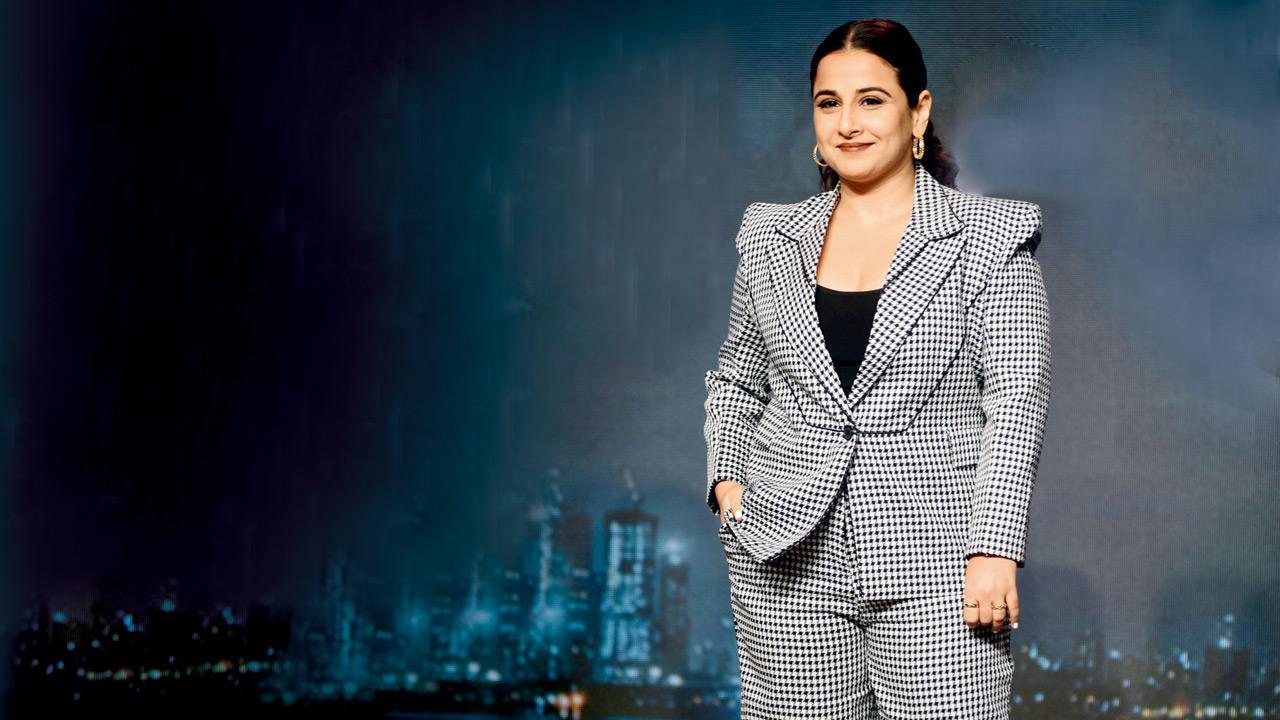
Vidya proud to see the changing dynamics of women on screen as she brings a female-led drama in Jalsa
Uma Ramasubramanian (MID-DAY; March 12, 2022)
There’s joy in finding a director who nudges you out of your comfort zone, pushes you to find the gumption in you. For Vidya Balan, Suresh Triveni could well be that director. After bringing the charming Tumhari Sulu (2017), the two have switched gears to tell a hard-hitting story in Jalsa. “Suresh has pushed me out of my comfort zone with this film,” smiles Balan.
The actor is one of the fierce voices in Bollywood who doesn’t shy away from a brave story, but she admits that she was taken aback by her character in Jalsa. “Here, I delved into the grey zone the way I have never done before. When Suresh narrated the story, I wasn’t sure I wanted to do the film because it required me to embrace the grey shades. Like Maya Menon [her character], I want to be seen in a certain way. There has been an inner goodness to the roles I have done so far. Even Maya Menon is a good person, but you don’t know how you’ll react to a certain situation until you are confronted with it.”
The Amazon Prime Video offering revolves around a news channel investigating the hit-and-run case of a young girl. While Shefali Shah plays the victim’s mother, refusing to give up until justice is delivered, Balan plays a noted television journalist keenly following the case. The actor had initially turned down the role, but the pandemic made her do a rethink. “The pandemic changed the way we look at ourselves and life. I felt ready to do Jalsa then.”
A Balan film assures you of certain things — a powerful story, honest performances and strong women at its core. The actor, over the past 16 years, has played a key role in propagating women-led films. She is happy to see the shift in terms of the roles written today. “When I did Ishqiya [2010], there were many so-called female hero films. It has been changing slowly. Now, the roles written for women treat women as people, and not in the context of or in relation to the men in the story. They are getting more nuanced.”
I wish filmmakers utilised me better-Arshad Warsi
8:36 AM

Arshad Warsi on making the best of opportunities, doing more comedies than ever and why he won’t produce a film but direction is on the cards
Hiren Kotwani (MUMBAI MIRROR; November 7, 2019)
Pagalpanti is your first Anees Bazmee directorial. He wrote your earlier film, ShortKut: The Con Is On, which was helmed by the late Neeraj Vora. Why did it take so long for you two to collaborate as actor and director?
I’ve always wanted to work with him, but I was hesitant because he seemed like a serious director to me, someone who might slap me if I tried to improvise. Fortunately, he was more than happy when I managed to improve a scene here or there while working on this film. After Raju (MunnaBhai series director Rajkumar Hirani), Anees bhai is the first director who gave me the freedom to act.
While you worked with Anil Kapoor in Total Dhamaal earlier this year, you’re reuniting with John Abraham after 12 years since Dhan Dhana Dhan Goal.
I love Anil’s energy and attitude. He is such a lovely guy. I also enjoy working with John. More than an actor and a personality, it’s the person that matters. We used to have our motorcycle chats. Working on this film gave me four new friends. Anees bhai is one, and I’d love to work with him again. I’ve grown crazily fond of Ileana (D’Cruz), she’s adorable. So are Pulkit (Samrat) and Kriti (Kharbanda), who are wonderful people.
What’s next after Pagalpanti?
Nothing finalised yet. I’m just reading scripts, I’ve found some subjects interesting. There’s a lot that is happening, but I don’t know which one will start first. Nonetheless, I have a busy next year.
You’ve been an important part of some big franchises. What’s the status on Munnabhai 3?
Raju is working on the second half of the script. To be honest, I have given up, but Raju is not giving up, Vinod (Vidhu Vinod Chopra, producer) has not given up, Abhijat (Joshi, writer) has not given up. Whenever they are ready, Sanju (Sanjay Dutt) and I will be ready, too.
What about the third Ishqiya? Have you heard from (director) Abhishek Chaubey?
I really want Ishiqya 3 to happen. I’m fond of the franchise and not just because I’m a part of it. It is not a regular film. For a film to stand out in today’s times, when hundreds are being made, Ishqiya is a huge achievement. I met Vishal Bhardwaj (producer) a few days ago and we got chatting. Even he is keen on another instalment. Jaya Mishra has a script, which I think, Vishal will listen to and decide.
Your performance in films like Sehar and Jolly LLB received a lot of acclaim. Ever wonder why you haven’t been offered more such subjects than comedies and entertainers?
Comedies are more saleable, and the returns are good. And honestly, I don’t get offered serious, intense roles or subjects. I either don’t like the offers I get, or they are too serious and depressing. I wish someone would come up with something like Sehar, Jolly LLB, Irada.
Naseeruddin Shah once called you the best all-round actor of this generation, while Vidya Balan had said that you remind her of great European actors who can fit into any role. But you are completely under-utilised. Comment.
I’m thankful to both of them for that. They are both brilliant actors and it feels great that they consider me to be in that space. I wish filmmakers utilised me better, I do feel that I can do more than what I’m doing. I’m making the best of the opportunities that are coming my way.
Ever thought of giving production another chance after Hum Tum Aur Ghost?
I’d like to, but it’s such a tough job. I’m a terrible businessman and production is a hard task. It takes a certain kind of mindset to be a producer, I don’t have that.
What about direction?
I will direct, 100 per cent, sooner or later. It may not be a comedy, but it will be entertaining for sure. I don’t want people to come and feel depressed, I want them to have a great time. Whenever I direct, it will be something entertaining.

I hope someday people will talk about the business of films in terms of female actors-Vidya Balan
8:08 AM

Chaya Unnikrishnan (DNA; August 19, 2019)
Dressed in a long kurta with a flared palazzo in magenta and long mane flowing, Vidya Balan looks radiant as we meet for a tête-à-tête. She is receiving rave reviews for her outing as the project director of the Mars Orbiter Mission in her latest release, Mission Mangal, which got an excellent opening at the box office. “From the word go, I had a good feeling about this film. I was sure of it because Balki (writer) narrated the script to me and the moment he finished the narration, I said, I’m doing the film. It’s never happened to me before,” she beams.
Interestingly, after playing a scientist, the Tumhari Sulu star will try her skills in mathematics as she essays the ‘human computer’ Shakuntala Devi in a biopic. “I was good at Maths, but I didn’t like Science, so, I am feeling good I passed this (Mission Mangal) test,” she smiles. Here, the talented actress talks to us about the changing phase of cinema, playing roles with substance and why she took a long gap between Tumhari Sulu and Mission Mangal.
You said you gave your nod to Mission Mangal immediately after R Balki narrated it. What did you like about the script?
Just the fact that everything came together so beautifully. The scale of the mission was big, but the science was simple. There was humour in it and the way personal lives of the characters had been fictionalised, it had drama. Jagan (Shakti, director) inspired faith in me, even though he’s a first-time director. Also, Balki was involved with the project. Then, of course, I was getting to team up with Akshay (Kumar) after Bhool Bhulaiya (2007) and Thank You (2011) — all those factors came later. Once I said yes after the narration, even while filming and promoting, I felt it was a good film.
Tumhari Sulu, which released two years ago, was a hit and you won a lot of acclaim. Still, Mission Mangal came after a long gap...
I didn’t intend it. But I think what happened post Tumhari Sulu is: Firstly, I had a hit after a long time! So, I was just relieved, I think I wanted to enjoy that feeling. Secondly, some of the things I liked were only ideas, like the Shakuntala Devi biopic. The idea was shared with me, but the script was not in place. They were going to start working on it. There were a couple of other things also that I liked and were at different stages of development. So I thought, chalo, let them take time. Anyway, I had worked on three films back-to-back — Kahaani 2, Begum Jaan and Tumhari Sulu. I did a Telugu film in between, but that was not too much work. I enjoyed that time, I think it was just a relief that I had had a hit movie after long (laughs).
People associate you with movies that have substance. Do you choose such roles or do filmmakers approach you with them?
It is my natural inclination and, yes, filmmakers also come to me with such roles. I think that’s because I came in with Parineeta (2005). So, from the beginning, I have always been offered interesting parts. I tried to do different things in between, early on in my career, and I realised I don’t enjoy that kind of stuff (playing the typical glamorous heroine). Since 2008, I decided to only do films that excited me or instinctively felt I must do. So, Paa (2009), Ishqiya (2010), No One Killed Jessica (2011), The Dirty Picture (2011) and Kahaani (2012) happened back-to-back. As these films started seeing success, directors and producers also began to feel, ‘We can go to her with this kind of subject’. It was a choice that I made and I think the success furthered it.
Everyone is talking about how films have become content-driven lately. For you, personally, how has it been?
I think the scope of work that I’ve been offered in the past 11 years, has really widened. Ishqiya was a definitive film in that sense because suddenly, you had a femme fatale who you hadn’t seen in Indian cinema so far. And you know, a rural femme fatale; not a glamorous, cigarette-smoking woman. Slowly, people felt that I was open to doing these kinds of films. They came to me saying, they had a story for long, but didn’t think they could make, but now it’s possible. When these films started seeing success, it encouraged more people to invest in movies like these. Then other actors started doing it. Now, it’s like Pandora’s Box has just been opened. The content is so varied and exciting. Sometimes, it is different for the sake of being different, but that’s okay. At least people are trying. There’s no dearth of exciting content. Even in Mission Mangal, you would have thought that a film that has Akshay Kumar may not have so much for the female leads to do. But this film has.
Right, but it is being touted as Akshay Kumar’s biggest opener...
Yes, but that’s because they still talk about the business of films in terms of the male actors. When people said the poster has Akshay’s face so prominently — it’s not fair because it’s about the women — I said, ‘I’m happy to use his stardom to my advantage’. You have to be practical about these things. He is the biggest star amongst all of us. And if it’s going to help us get more people into the theatre, why not? But now that the film is released, actually, a few people asked me this, not just in interviews, even otherwise. And I’m saying, that will also change, someday they’ll talk about the business of films in terms of female actors.
In this film there are five known actresses, was it necessary to have a mainstream hero in the film?
It was not necessary but faayda hua. Akshay’s a huge superstar, so it makes the film accessible to that many more people. By putting his face prominently on the poster, it will bring more eyeballs. But, I’m saying someday, I hope my face is equally big or bigger (than the male star). Not just mine, but all the girls’. Similarly, I hope the business gets talked about in terms of a Vidya Balan and Akshay Kumar film. That change will happen. I always look at the glass as half-full. What’s extremely heartening for me is the fact that in a film with Akshay Kumar, the roles (his and hers) are of equal importance. That itself is a step forward. Normally in any big hero’s film, the female part is not so strong, but I have played such a prominent role, it gives me great satisfaction and is fulfilling.
Abhishek Chaubey opens up on his cinematic world of women and the actresses who inhabit them
8:15 AM

Writer-director Abhishek Chaubey exchanges notes on his cinematic world of women and the actresses who inhabit them
Roshmila Bhattacharya (MUMBAI MIRROR; February 27, 2019)

ISHQIYA (2010)
The genesis of the film began with Krishna, a seemingly powerless woman with great reserves of inner strength and courage. In my head, I built her up to be what you’d call a femme fatale in cinematic terms. Then, I brought in two conmen Iftikhar aka Khalujaan and Babban, wove a story around them where Krishna uses her sexuality to manipulate them, but does it for love and not money.
Vidya had got a lot of acclaim for Parineeta and the films that followed. She was at an interesting stage in her career, ready to go a notch higher. Quiet, introverted Krishna with her sharp tongue was different from the outgoing Vidya whose laugh rings out on the set, but she spent a lot of time with me trying to understand and internalise the character. I remember Vidya pottering around Krishna’s house a few days before the shoot in costume, picking up a broom to sweep a room or trying to cook on the mitti ka chulha. It was her way of living the role and by the time we started shooting, she owned Krishna, made her a brand.
The look and feel came from the women I had met in small towns who looked beautiful in inexpensive, synthetic saris and were not shy of wearing bright colours. I couldn’t understand why we’d doll up our heroines in western wear when they looked so sensual in the six yards. With my costume designer Payal Saluja I wanted to break the stereotypical concept of a small-town woman and Vidya carried off the sari really well.
Almost a decade has passed since I shot my first film, but people still talk about Krishna’s frank sexuality, completely fresh at the time. They rave about how alluring Vidya looked and how she managed to hold her own against two macho, dominating men. Krishna still brings me a lot of love.

DEDH ISHQIYA (2014)
Though a sequel, Dedh Ishqiya was a different adventure for Khalu and Babban. The only other common factor apart from the two gentlemen, was that it was a caper. In look and feel, it was almost like a costume drama, set in a rich, textured world of Muslim aristocracy and Urdu poetry.
I approached Madhuri ji (Dixit) first, even before Naseer and Arshad (Warsi), with just a bare outline of the story. She found it exciting, agreed to do the film if the script panned out and set the ball rolling. Usually I don’t write scripts with an actor in mind, but in this case since the trio entered the picture early, I had that advantage.
Madhuri ji’s Begum Para and Huma Qureshi’s Muniya were more complex characters than Vidya’s Krishna, and what made it more challenging was that their world was soft and subtle, where nothing was spoken aloud and everything was underplayed. Both had been through troubled marriages, been betrayed and wounded in love, Begum more so. In the company of people, she was charming and confident, alone she was depressed, prone to self-harm. She’d lost a part of herself and Muniya, who was younger, sharper, more energetic, tried to bring it back for her. All her scheming and even the kidnapping plot was for the love she feels for her soulmate. Love is the core of this franchise. The characters miss romance and seek it, so the title Ishqiya.
SONCHIRIYA (2019)
I was impressed with Bhumi (Pednekar) in her debut film, Dum Laga Ke Haisha, and I am even more impressed now, having worked with her in Sonchiriya, in which she plays a housewife from a village in Chambal. She’s a girl of explosive talent and looks beautifully Indian, a prime criterion for my film. But since she’s actually a Versova girl she had to travel greater distances than Vidya (Balan) as Krishna in Ishqiya who, for me, was a graduate. Bhumi’s Indumati in contrast is an uneducated girl, married at 13 and a mother of two by 16-17.
 To get into character, Bhumi had to do extensive physical prep over two-and-a-half months, starting with changing the way she normally walked because her character walks six km, barefoot, to fetch water every day, with a pot on the head and another on the hip. There were other chores too which she had to learn, from grinding grain and mirchi to cooking on a chulha and firing a gun. She was diligent, and even wrote an eight-page character brief to understand where Indumati came from, how she thought, felt and behaved. This is stuff you won’t see in the movie.
The film at its core is Indu’s story. She is the female protagonist and since there are very few women characters in the film, Bhumi was often the only woman on the set amidst 45 men. To add to that, for a city-bred girl to run around, jump and shoot on a harsh, unfamiliar terrain like Chambal can be hugely challenging, physically. The intensity of the role also made it emotionally exhausting. There were days when by the time we finished, she was so drained she couldn’t move from her chair. But not once did we hear her complain, in fact, when things got too intense, she’d deflect it with her humour. She is charming, a ball of energy and great fun. And through this journey with one of the most difficult characters I’ve created, we have become good friends.

UDTA PUNJAB (2016)
This was a film on drug abuse, with two tracks — Shahid (Kapoor) and Alia’s (Bhatt) underlining its effects on the mind and the body, and Kareena (Kapoor) and Diljit’s (Dosanjh) highlighting the social problems that stem from it. Alia’s Mary Jane aka Bauria was a symbol of strength. For this 19-year-old aspiring hockey player from a very poor family, a mysterious packet comes with the dream of a better life. But it leads to her being abused, imprisoned and drugged. Unlike Tommy Singh (Shahid) who takes drugs recreationally, Mary Jane is forced into it and what she undergoes can break anyone, even kill them, because heroin is one of the most addictive of substances. But this chit of a girl shows tremendous strength to come out of the hellhole and in the end when you see her on a beach in Goa, you believe her time will come.
For me, it was a leap of faith to cast Alia in the role because she’s basically a Mumbai girl from an affluent family. But among all the actresses I’ve worked with, Alia has the highest emotional quotient. She empathised with her character and brought her to life with great conviction. It took emotional strength, apart from the drama, to carry it off and took a toll on her. Alia is a petite girl but during the shoot she shrunk so much it was hard to spot her in a crowd. She deserved every one of the rave reviews and awards she got for that performance.
 Helming the other track was Kareena’s Dr Preet Sahni. I’d met doctors and social workers like her during our research. They work 13-14 hours in small hospitals, seeing 300 patients a day, not for money but because “someone has to do it”. Preet could have got married and had a comfortable life, but she is intelligent enough to see through the rotting system and selfless enough to want to save lives.
I had worked with Kareena in Omkara, a film I wrote, and her, Dolly Mishra had been an angel too, reflecting the same innate goodness you see in Dr Preet. That’s why when tragedy strikes, it’s heart-breaking.
Kareena was happy I’d thought of her for the part and played it with dedication. Honey (Trehan), who is from that part of Punjab, gave her diction lessons. She never sat on the sets but would stand beside me, watching as I set up the shots.
My character in Sonchiriya has been the strongest-Bhumi Pednekar
8:27 AM
 Chaya Unnikrishnan (DNA; February 7, 2019)
Last year, Bhumi Pednekar was missing in action on the big screen, though she was seen in Lust Stories, an anthology of four short films on a digital platform. But 2019 will see the talented performer having a couple of releases starting with Sonchiriya. The film, which is set in the ravines of Chambal, has the Toilet: Ek Prem Katha actress play a feisty character alongside Sushant Singh Rajput. The 29-year-old, who has been essaying strong women characters ever since her debut in Dum Laga Ke Haisha (2015), considers her rustic avatar to be the most challenging till date. Here, she talks about her unique prep for the role and more. Excerpts...
From an overweight girl in Dum Laga Ke Haisha to being completely deglam in Sonchiriya, you have no qualms experimenting with your look. Don’t you feel apprehensive about how it will be received?
Honestly, no. When I play a character, I am completely disconnected from Bhumi, the person. I become the character. In Sonchiriya, the transformation was worked upon extensively right from the discolouration on my face to pigmentation due to sun exposure, the roughness of the skin texture, etc. I had to stop grooming myself for a couple of months. No going to the parlour, no manicure, waxing, skin or hair treatment. The only make-up was to get tan and darkness around the face. In fact, when I would drape the sari and have freckles on my face, I would become a different person. Recently, when I had to don that look for the promotions, I thought I appeared beautiful.
What prompted you to take up the film?
Abhishek Chaubey (director) has been on my bucket list. I have seen all his films, and especially loved Ishqiya (2010). But I was blown away by Udta Punjab (2016). So when I got a call from him, I was surprised. There was a gut feeling that I wanted to be a part of this phenomenal story of courage and spirit. It’s a humane story that comes from a region known for its lawlessness and harshness. The actioner is set ’70s during the Emergency period. It’s more than 40 years ago, but still relevant. That’s what stayed back with me after the narration. A lot of things that the director Abhsihek Chaubey has tried to comment on still exist; be it the caste divide, status war or the atrocities that women face. It’s the sheer consequence of revenge. Sonchiriya is an action-packed revenge drama. There’s so much happening in the movie that you start feeling for the characters.
What kind of prep did you have to do for the role?
In my first meeting with Chaubey sir, he told me categorically that in order to be a part of this film, I had to be physically, mentally and emotionally strong. He gave us that kind of training, too. We learnt the Bundelkhandi dialect. Ram Diwakar, who plays an important character in the film, trained us as he is from Chambal. We became so fluent in the language that we conversed in it on the sets even with the crew. As compared to other films, my physical training for this was different. I designed my workout around my character’s daily chores. I represent a girl, who does a lot of physical labour. Women there walk several kilometers to get water and carry 8-10 litres on their head, at times, with children on their back. To make myself stronger, I used to walk around Aram Nagar, barefoot, with some kind of weight on my back, either aate ki bori or chawal ki bori.
To what extent did this help while shooting?
We conditioned ourselves to such an extent that we felt we belonged to the region. So much so that even being pricked by thorns or the insects scurrying around didn’t get a reaction from us. The film is full of action, so we also trained in gun work, but it was all raw. Also, this is the first time I am doing action. The director spoke to us extensively about the character. Since it’s in the ’70s, it’s before modernisation took place. Women lived such a suppressed life, they did not know what the options were. My character shows a lot of strength and courage, but it is a reaction to the circumstances she is in. Women inherently are extremely strong, but their strength is only shown when they go through some dire situation.
As we can see in the trailer, the characters speak a lot in Bundelkhandi. Won’t this be a hindrance as many viewers cannot understand the language?
Not really. The beauty of cinema is that it’s an audio-visual medium. The audio has a strong visual supporting it. The language won’t be tough, it’s not alien from Hindi. A few minutes into the film and you’ll understand it. Chambal is a huge character in the movie and we had to make it as authentic to the area as possible. The language is not a hindrance in any way, it only uplifts the film.
How was it working with Sushant Singh Rajput?
Sushant is a passionate actor and so am I. We bonded on those grounds. He is a fit guy and did a lot of prep to get into the layers of the character. Sushant, Manoj sir (Bajpayee), Ranvir Shorey, Ashutosh sir (Rana) and I had a blast shooting for it. We used to improvise and help each other, there was never any kind of insecurity or ego battle. The entire cast needed to be synchronised for the film to be what it is.
Of all the characters you have played so far, which has been the strongest?
I honestly cannot pick one, but what I have done in Sonchiriya is most different. I did not know what life in 1970 was like and the entire process made me realise that such a big section is still living under suppression. They are still trying to find their freedom. This has been my strongest character.
I don’t have any illusions about the box office-Abhishek Chaubey
7:13 AM

Abhishek Chaubey on his upcoming dacoit-drama, future of the Ishqiya franchise, after-effects of the Udta Punjab row and life after marriage
Himesh Mankad (MUMBAI MIRROR; January 11, 2019)
Over the years, Abhishek Chaubey has carved a niche for himself in mainstream Bollywood cinema with characters drawn from the heartland of India. After Ishqiya, Dedh Ishqiya and Udta Punjab, the director is all set to take his brand forward with Sonchiriya, an upcoming dacoit drama set in the1970s.
Excerpts from an interview:
 What takes you back to small town characters?
Primarily my small-town heritage. Before we went there for the shoot, I hadn’t visited Chambal in a while, but I’ve seen life in the heartland and believe it’s not well represented in our films. That’s why I’m drawn to cinema that’s true to the real India and entertaining.
But how do you define entertainment?
I don’t really understand the term, if it means humor, song and dance, then I don’t subscribe to it. For me, entertainment is derived from a story. So, it’s important to tell an engaging story.
How tough was the casting?
It was a long process. For me, it’s a film with five primary characters and fortunately, all the actors came on board because of the script. My team flew to various parts of North India and picked out actors from local theatre.
Why do the characters need to speak in Bundeli? Won’t it alienate the audience?
People in Mumbai believe the entire country speaks one language, but the dialect changes every 200 kilometers. That’s why I create characters who speak different dialects, I don’t see it as alienating the audience because Bundeli is very similar to Hindi. But everyone in the cast, apart from Manoj Bajpayee and Ashutosh Rana, struggled to get it right when we started the workshops. Language aside, all actors also had to learn how to handle a gun as it is a battle film with a lot of action.
Was there any threat from the local dacoits in Chambal?
The dacoit culture died some time ago. You don’t see them roaming openly now. Yes, we were warned by the officials to avoid shooting in certain places.
Critical acclaim or box office collection – what’s important?
I would be lying if I said numbers don’t matter but I can’t make a film with the singular agenda of making money. I’ve to stay true to the script without compromising on my vision. I can’t let anyone force me into adding an item number just to lure the masses and make some extra bucks. I’d prefer to convince the audience through my promos that the story has ample scope for entertainment.
 Many believe it was the censor controversy that brought an audience for Udta Punjab…
This is a high-profile profession and one of its curses is that people will say whatever they feel like. If you take such things seriously, you end up depressed. The controversy wasn’t my doing nor my intention. I suffered a lot during that phase. There was nothing to take back except plain suffering. Irrespective of whether anybody believes me or not, I didn’t want the film to be controversial. We couldn’t stick to our marketing plan as everyone was busy fighting with the CBFC.
Were you satisfied with the audience reaction?
Some loved it, some hated it, but one thing I can say, the film was effective in creating awareness about substance abuse in Punjab. So, the purpose was served.
What did you learn from it?
As a filmmaker, I don’t dissect my previous work. If I get too satisfied, I will lose the will to grow. My goal is to learn from my mistakes and try not to repeat them.
Were you disheartened when your first production, A Death In The Gunj, failed at the BO?
I don’t have any illusions about the box office. I have an idea of what will work and what won’t. I knew my target audience and they responded exactly the way we expected. The film was applauded at international film festivals which helped us crack a good deal with the digital platform as well the overseas market. It’s a beautiful little gem for us and no one lost money on the film.
What’s happening with the Ishqiya franchise?
It’s difficult to comment at this point because the last film came out five years ago. Given an opportunity, I’d love to take the franchise forward, but someone needs to come to me with an interesting idea.
Anything you learnt from Vishal Bhardwaj?
He advised me to develop an understanding of screenplay writing before moving to direction. That’s why I worked with him as a writer and associate director in early 2000’s. Without his guidance, I wouldn’t have been the filmmaker I am today. A lot of people tell me that my films have a flavor similar to Vishal Bhardwaj’s films, that’s because I have grown up working with him. Apart from films, I learnt how to interact with the team on the sets, deal with problems and stay calm.
Any plans to team up again?
He scored the music of Sonchiriya, but there is nothing in the pipeline as far as films are concerned.
How’s life after marriage?
Chetana Kowshik and I got married two years ago, but we have been together since a long time. We were college sweethearts, and the most interesting part of our relationship is our friendship. I am less anxious as a person today because of her.
Do you discuss films with her?
Yes, we discuss work all the time.
What next?
I am doing a digital show with Junglee Pictures. It will happen sometime this year.
Money is power. It gives you the strength to take right decisions-Vidya Balan
10:40 AM

Vidya Balan is never afraid to display her vulnerable side – a reason why she’s a top notch actor
Anuradha Choudhary (TIMES LIFE; December 10, 2017)
From a one BHK in Chembur to a sprawling sea-facing apartment in Juhu. Does it seem surreal?
We recently sold our Chembur house and that was heartbreaking. I went there and cried. For the longest time we had kept that house. But the redevelopment seems to be taking forever. Unfortunately, the building is falling apart. I used to take a bus from Chembur to come to Prithvi theatre in Juhu for my summer workshop. I was 15 then. Looking back it seems symbolic. I’d get off at the bus stop, which is right outside my present house because the Prithvi workshops were conducted in a school in Juhu Koliwada, where Asha Parekh lives. Not once did it occur to me then that I should be living here. I was happy. I know people wish for bigger houses and better cars. I’m not one of those. Which is why until seven years ago, we lived in Chembur.
When was the first time you realised you wanted to act?
I keep saying it was Madhuri Dixit’s Ek do teen (Tezaab) but I guess it started before that. Those days, while I was still in school, they used to show regional language films on Doordarshan on Sunday afternoons. I remember watching Laxmi in a Tamil film, where she plays a lawyer. There was a huge scam in the South those days where because of the reservation policy, many Brahmins claimed to belong to the scheduled caste. Laxmi claims to belong to a scheduled caste in the film and gets caught. Then I remember seeing the Malayalam movie Elli Pattayam. The movie seemed slow with nothing happening. My sister Priya painstakingly explained to me the difference between art and commercial movies then. She also explained what acting was. How it’s about your ability to express feelings and how your eyes are the most important tools while acting. I soaked in all this at the age of 11. And then there was no looking back.
When was the first time you realized you were beautiful?
Thank you for saying that but while growing up a lot of people would tell me, ‘You’ve got such a pretty face, why don’t you lose weight? It always came with the caveat of ‘why don’t you lose weight?’ I was a plump child. During my teens I was fat. But at home there were no restrictions on food. My father only wanted us to eat well. But I guess, my mother was a bit worried. As a kid she would take me for walks. She’d trick me and take me to Chembur station for grocery shopping. She’d say we’ll take a rickshaw back home. But she’d make me walk both ways. And I’d sit on the road crying, refusing to walk.
But while acting and thank God for that, I realised that beauty is as beauty does. There I wouldn’t bother about profiles. But if I had to pose for a picture or if I had to do a photo shoot or an ad film, I’d tell them to shoot me from the left.
People do call you beautiful…
Now I believe it. There was this phase when things went wrong with Heyy Babyy and Kismat Konnection… I’ll always be grateful to all those movies because they brought that clarity. Otherwise, I’d have failed miserably. After those movies, I ended up doing Ishqiya, Paa and No One Killed Jessica. I simply responded to my instinct. The past few years have not been great professionally because my films have not worked. But I’m in a happy space. I won’t have it any other way. I feel grateful.
Go on…
I’m not saying that I didn’t go through the angst and analysis about why they didn’t work. What was I doing differently? I kept wondering about all the things that were told to me about marriage… that it hampers your professional life... I wondered, maybe, I had made a professional mistake by getting married. However, through it all, I always knew I wanted to be with this man (Siddharth Roy Kapur).
Did you share these thoughts with Siddharth?
Yeah, of course I told him. Not that marriage was a mistake but maybe it was true that married actresses don’t do well. And he’d keep telling me it’s not whether you’re married or not married; it’s about how the films turn out. I’d tell him but I’d made the right choices. Over time, I arrived at the understanding on my own that it’s not about the right choices. Sometimes you like the idea but the script doesn’t turn out as well and sometimes even a good script does not translate into a good film. So many variables go into making a film. So when it doesn’t work you can’t look just for one reason. Around that time Kareena’s (Kapoor Khan) Singham Returns released and it was a blockbuster. So I realised it was not about being married at all. Sometimes you just look for things to blame to make sense of your disappointments. But I was meant to go through this so that I don’t ever question my decision to marry or my choices again.
Historically, married actresses have always worked. There was Shobhna Samarth, Sharmila Tagore, Raakhee, Hema Malini, Kajol, Sridevi...
Yeah true. There was a time when actresses were women. So it was okay to be married. Then the heroine became a girl. When I joined I was already a woman. People kept telling me ‘your shelf life will be short; you have to do girly roles’. Which is why I attempted a movie like Kismat Konnection. But it flopped for me. Because I was never a girl. I was born a woman. But all that is behind me now. I’m just happy being an actor.
So are you a better wife or actress?
(Laughs) Better actress.
Would you recommend marriage to everyone?
No. It’s all about the person actually. You must find a person with whom you want to spend the rest of your life. It’s a big decision. If you find the person, great. But if you don’t, it’s not the end of the world. I’m not the kind who will say you must try marriage.
Does being financially dependent make a difference in the marriage?
It definitely does. I keep telling this to the girl who works for me that whatever you earn, you have to keep aside something for yourself. That security is something else. I tell her do things for others but even if it’s just Rs 500, save it for yourself. Money is power. It gives you the strength to take right decisions.
It took me one second to say yes to Chambal-Bhumi Pednekar
7:57 AM

Nayandeep Rakshit (DNA; October 10, 2017)
After three films based in small towns and villages — Dum Laga Ke Haisha, Toilet - Ek Prem Katha and Shubh Mangal Saavdhan, Bhumi Pednekar is now set to explore a completely different space in Abhishek Chaubey’s Chambal, with Sushant Singh Rajput. Both actors play dacoits in the film.
A Wish come true
The actress ends all speculation and confirms that she is doing the film, “I was dying to tell the world that I’m doing the film because I’m such a big Abhishek Chaubey fan. When I got the call, I was flying. He has been on my wishlist since I watched Ishqiya. I have known of his work because I’m a very big Vishal Bhardwaj fan, too. Omkara is one of the reasons why I’m acting in films.”
In a split second
Recalling the time when she got the offer, Bhumi reveals, “I initially thought that probably he’s producing the film. This was way before even the TEPK trailer was out. I met him and realised that he’d called me for his film. He gave me a narration and I was just star-struck because I love him, and his movies... I generally love talented people, especially filmmakers. I heard the film and I immediately said, ‘I’m doing it’. It took me one second to say yes. I told them I don’t want to read the script or anything. Otherwise, there’s always a process.”
Into the unknown
A lot will go in to the prep, before Chambal goes on floors. She explains, “We are starting in January. We need to put in a lot of prep before we go on the floor. There are going to be hardcore workshops and dialect coaching. It’s going to be set in a different era, and it’s going to be a tough film to make, both, physically and mentally. I don’t know how I’m going to express the emotion that the character is supposed to feel. I am going to tap into layers and shades in me, which I am not even sure exist.”
Action too
In all the three films that Bhumi’s been part of, she’s played the strong-willed Indian girl. But with Chambal, she will be seen in an action oriented role. “I’m very excited because people will see a different aspect to my personality with Chambal. The action, the crazy bit of it...” she continues, “When I met him, he was like this is a very stylised, action film. And I was like, ‘You are sure, right?’ He had more confidence in me that I’d pull it off. I’m very excited to explore this other facet to my personality.” Prod her a bit about the role and she hesitates, “Ya, but I really don’t want to comment on that. Because I also don’t know how much they want to give out, or what they want to give out. I didn’t tell anyone about Toilet - Ek Prem Katha till Akshay sir put it out. Even though people knew. I prefer Abhishek talking about it.”
Vidya Balan traces her journey through her best performances which challenged the actress in her
7:57 AM

Roshmila Bhattacharya (MUMBAI MIRROR; November 22, 2016)
KAHAANI (2012) & KAHAANI 2 (2016)
Kahaani was the mother of all stories. It was a tricky role to play because people had to believe Vidya Bagchi was a certain person till the revelation at the end after which they see the character in a different light. This meant I had to know the script extremely well and yet retain the spontaneity of someone who doesn't know what's happening. I'm glad Kahaani 2 is coming four years later because there is no pressure of expectations and I could approach it as a new film.
Durga Rani Singh is not Vidya Bagchi. Actually, this was the title of the film Sujoy Ghosh and I were supposed to do immediately after Kahaani. I had to opt out because of health reasons. Sujoy who loves the name suggested we name my character in Kahaani 2 Durga Rani Singh and I immediately agreed because it signifies the power of Durga and gives the film a distinct identity. Its not a sequel, we're only taking the franchise forward.
The mother-to-be is now a mother wanted for the abduction and murder of her daughter. I used to be terrible with kids earlier, the Hey Babyy baby would see me and start crying. When I was filming Kahaani, my sister was pregnant with twins. Today, Ira and Ruhaan, are like my own children. I would do anything and everything in the world to keep them safe and happy. I guess interacting with them has helped me play a mom this time around.

THE DIRTY PICTURE (2011)
Silk was far removed from the person I am and redefined liberation for me. To be that physically uninhibited, you have to be free. Silk thought she was sexy, totally bindaas. She didn't care what people thought of her. And when she did, it was the beginning of her downfall.
I'd land up at director Milan Luthria's office with so many questions and he'd run away. Only one thing he kept telling me was not to judge Silk for the clothes she wore or the fact that she slept around for roles. “If you judge her, everyone else will. If you accept and respect her, so will they,“ he'd urge. I followed his cues and by the time we shot the scene where Silk's trying to make a comeback, all her tires were on display. I could do it easily because I'd lost all consciousness of my body. Silk was bebaak, so am I. The Dirty Picture liberated me, helped me express this trait on screen.
NO ONE KILLED JESSICA (2011)
 No One Killed Jessica was a biopic of sorts with me playing Sabrina
Lal. Raj Kumar Gupta (director) didn't want me to meet her because her
sister Jessica Lal had been shot 11 years earlier and the fight for
justice had made Sabrina a stronger person. He wanted his Sabrina to be
more vulnerable, like she was before the rude shock of Jessica's death.
This was the first time I was playing someone so diffident... Someone
who didn't talk much but expressed herself through silences... Someone
who slowly comes into her own. That was my biggest challenge playing
Sabrina.
No One Killed Jessica was a biopic of sorts with me playing Sabrina
Lal. Raj Kumar Gupta (director) didn't want me to meet her because her
sister Jessica Lal had been shot 11 years earlier and the fight for
justice had made Sabrina a stronger person. He wanted his Sabrina to be
more vulnerable, like she was before the rude shock of Jessica's death.
This was the first time I was playing someone so diffident... Someone
who didn't talk much but expressed herself through silences... Someone
who slowly comes into her own. That was my biggest challenge playing
Sabrina.
 ISHQIYA (2010)
Ishqiya's Krishna was a small-town, sari-clad woman who played these two men (Naseeruddin Shah and Arshad Warsi), using her sexuality unapologetically to get to her husband who'd wronged her. I was going through a rough patch and had started wondering if I was fit for this profession. Ishqiya reassured and reconnected me with the actor within. Krishna, sensual and manipulative, was like a snake. You never know when it'll strike, quietly.

PAA (2009)
I thought R Balki was joking when he first narrated the story to me and told me he was expecting me to play Mr Amitabh Bachchan's mother. I had my reservations but eventually I let the actor in me take over and gave him the nod.
In Hindi cinema, particularly Mr Bachchan's films, the mother has been glorified by the son as a holier-than-thou goddess who makes the supreme sacrifice. For me the challenge was to play this mother as a regular person who wants to do the best for her child who's been diagnosed with a medical condition called progeria which ages him before his time. I had make Dr Vidya real, that was the key of Paa for me.
Balki put things into perspective on the first day. We were shooting this scene where the boy, Auro, is clamouring for pickle and he said, “This is a situation you've dealt with all your life, we're just shooting it today.“ That put a full stop to any kind of drama.
PARINEETA (2005)
 The fact that this is my first film will always set Parineeta apart.
Even though it was set in the '60s with our imagination lending the era a
certain lyricism, Dada (director Pardeep Sarkar) saw Lalita as someone
very real and would give me cues to stir something in me so I'd react in
a way that was believable.
The fact that this is my first film will always set Parineeta apart.
Even though it was set in the '60s with our imagination lending the era a
certain lyricism, Dada (director Pardeep Sarkar) saw Lalita as someone
very real and would give me cues to stir something in me so I'd react in
a way that was believable.
Lalita was someone who embodies love. Unlike the really young Lalitas of the earlier films, our Lalita was 24 and not 16, yet feels the intense flush of first love even though neither Shekhar (Saif Ali Khan) nor she realise till their accidental marriage just how much they mean to each other. For Lalita in particular, everything he says or doesn't say, does or doesn't do, affects her. Love makes this usually strong girl vulnerable, almost fragile. It also defines her, as love is the core of her being.
One of my favourite actresses, Meena Kumari, who for me embodies sensuality and melancholy, had played Lalita in Bimal Roy's Parineeta. Fortunately, I only saw it after the release of my film else I might have been influenced by her and veered away from Dada's Lalita who was a woman and yet retained a certain girlishness that was endearing.
Kahaani was the mother of all stories. It was a tricky role to play because people had to believe Vidya Bagchi was a certain person till the revelation at the end after which they see the character in a different light. This meant I had to know the script extremely well and yet retain the spontaneity of someone who doesn't know what's happening. I'm glad Kahaani 2 is coming four years later because there is no pressure of expectations and I could approach it as a new film.
Durga Rani Singh is not Vidya Bagchi. Actually, this was the title of the film Sujoy Ghosh and I were supposed to do immediately after Kahaani. I had to opt out because of health reasons. Sujoy who loves the name suggested we name my character in Kahaani 2 Durga Rani Singh and I immediately agreed because it signifies the power of Durga and gives the film a distinct identity. Its not a sequel, we're only taking the franchise forward.
The mother-to-be is now a mother wanted for the abduction and murder of her daughter. I used to be terrible with kids earlier, the Hey Babyy baby would see me and start crying. When I was filming Kahaani, my sister was pregnant with twins. Today, Ira and Ruhaan, are like my own children. I would do anything and everything in the world to keep them safe and happy. I guess interacting with them has helped me play a mom this time around.
THE DIRTY PICTURE (2011)
Silk was far removed from the person I am and redefined liberation for me. To be that physically uninhibited, you have to be free. Silk thought she was sexy, totally bindaas. She didn't care what people thought of her. And when she did, it was the beginning of her downfall.
I'd land up at director Milan Luthria's office with so many questions and he'd run away. Only one thing he kept telling me was not to judge Silk for the clothes she wore or the fact that she slept around for roles. “If you judge her, everyone else will. If you accept and respect her, so will they,“ he'd urge. I followed his cues and by the time we shot the scene where Silk's trying to make a comeback, all her tires were on display. I could do it easily because I'd lost all consciousness of my body. Silk was bebaak, so am I. The Dirty Picture liberated me, helped me express this trait on screen.
NO ONE KILLED JESSICA (2011)
No One Killed Jessica was a biopic of sorts with me playing Sabrina
Lal. Raj Kumar Gupta (director) didn't want me to meet her because her
sister Jessica Lal had been shot 11 years earlier and the fight for
justice had made Sabrina a stronger person. He wanted his Sabrina to be
more vulnerable, like she was before the rude shock of Jessica's death.
This was the first time I was playing someone so diffident... Someone
who didn't talk much but expressed herself through silences... Someone
who slowly comes into her own. That was my biggest challenge playing
Sabrina.
ISHQIYA (2010)Ishqiya's Krishna was a small-town, sari-clad woman who played these two men (Naseeruddin Shah and Arshad Warsi), using her sexuality unapologetically to get to her husband who'd wronged her. I was going through a rough patch and had started wondering if I was fit for this profession. Ishqiya reassured and reconnected me with the actor within. Krishna, sensual and manipulative, was like a snake. You never know when it'll strike, quietly.
PAA (2009)
I thought R Balki was joking when he first narrated the story to me and told me he was expecting me to play Mr Amitabh Bachchan's mother. I had my reservations but eventually I let the actor in me take over and gave him the nod.
In Hindi cinema, particularly Mr Bachchan's films, the mother has been glorified by the son as a holier-than-thou goddess who makes the supreme sacrifice. For me the challenge was to play this mother as a regular person who wants to do the best for her child who's been diagnosed with a medical condition called progeria which ages him before his time. I had make Dr Vidya real, that was the key of Paa for me.
Balki put things into perspective on the first day. We were shooting this scene where the boy, Auro, is clamouring for pickle and he said, “This is a situation you've dealt with all your life, we're just shooting it today.“ That put a full stop to any kind of drama.
PARINEETA (2005)
Lalita was someone who embodies love. Unlike the really young Lalitas of the earlier films, our Lalita was 24 and not 16, yet feels the intense flush of first love even though neither Shekhar (Saif Ali Khan) nor she realise till their accidental marriage just how much they mean to each other. For Lalita in particular, everything he says or doesn't say, does or doesn't do, affects her. Love makes this usually strong girl vulnerable, almost fragile. It also defines her, as love is the core of her being.
One of my favourite actresses, Meena Kumari, who for me embodies sensuality and melancholy, had played Lalita in Bimal Roy's Parineeta. Fortunately, I only saw it after the release of my film else I might have been influenced by her and veered away from Dada's Lalita who was a woman and yet retained a certain girlishness that was endearing.
We don't like talking about Partition and how freedom came through-Vidya Balan
8:00 AM

Vidya Balan on why we like to celebrate Independence but skip the painful memories of 1947, the gender politics of power play, and how even the madame of a brothel the role she's playing in her next, set during the Partition can be a feminist
Anshul Chaturvedi (BOMBAY TIMES; August 15, 2016)
Did you know that the team
of your next film was recently shooting on the very highway in
Bulandshahar where the infamous gangrape happened?
I wasn't part of that shoot but that's eerie.
The campaign you are doing for the government - building toilets in each home in rural India - is in a sense a women's rights issue. Half the crimes in villages happen when the girl is a mile away from her home.
Absolutely. From whatever I have read, a lot of rapes happen when girls go out to defecate in the open - early mornings, late nights. It's so depraved, even the thought of it. It's just sick. That's why the government is focusing on getting the message across. And in my experience, I think the awareness has really spread. Everyone is talking about building toilets. But I get conflicting reports from people, and I think mindsets have not changed and there are infrastructural issues.
I was tying three things together - the shoot on the Bulandshahar highway, the cause you have taken up, and the role you are playing in your next film, which is of the madame of a brothel. The police says that 90 per cent of crimes against women are within the house. So, while we look at brothels as this exploited area, sometimes you might think that the girls there are safer than some in their homes. But the middle-class India is so moralistic about what happens in an 'immoral' place like that, and so quick to cover up what happens inside homes.
Absolutely, which is why most child sex abuse perpetrators are within the family. Most of the times, within the family, it is so difficult to believe that this is even possible. The debate of legalisation of prostitution has been going on for centuries. Having said that, none of those prostitutes are doing it out of choice. They are doing it out of lack of choice. Yes it is transactional, but I don't think it is a fair deal. What comes to them is very miniscule. So, in that sense it is exploitative, but it is not either or. I don't think one is a lesser evil than the other. It (prostitution) is more open so there is no pretense about it. Finally, whether war or rape, it is all about appropriating another person's space. The physical, bodily space that you occupy is your space. And even that gets invaded, someone's mindspace. Yes, evils are happening within homes and people probably find it more difficult to talk about because the perpetrator is a family member. I read about this girl from Dubai, who was being abused by her father and the mother didn't know at all. When she got to know, she made sure that the father didn't know that she knew about it, and she managed to get her daughter to Mumbai, and filed a case. But she knew that would mean that she was also alienating her side of the family. Ki apne pati ke baare mein chup bhi toh baith sakti thi, ya talaq le sakti thi, case karne ki kya zaroorat thi.
From Meena Kumari to Rekha onwards, we have innumerable movies on the tawaif and the kotha. But we will never make a movie on incest. Is it because the 'it's all about the family' track breaks when you do movies like that?
I think these are the truths that everybody wants to run away from. Our films are not as aspirational as they used to be, up to the 90s or early 2000s. It is less escapist now, but you still don't want to be confronted with that reality in those two hours. Things that make you really uncomfortable. I had this friend in college, who I felt was being abused by her father. But I couldn't get myself to ask her that directly. Because you also feel like you are crossing a line. What if it is a figment of your imagination, because it is so blasphemous. The very idea of it is so indigestible. Much later, when I spoke to some other friend, she also said that she always felt the same. Because the way she spoke about her father was very, very strange. God knows where she is and I hope she is okay.
Neither television, nor cinema, not even documentaries, nothing takes up this topic at all.
So, you know, all sorts of things are happening. Gender politics is very complicated. Someone was telling me about this case in the corporate world. There is so much awareness about sexual harassment, but there is also a very thin line. You can say anything, and it can be held against you. There was this person who got thrown out of a job because he said 'I want to jump into bed now.' And he meant that he is really sleepy. And the girl had a bone to pick with him. Now, I don't know what the truth is, but I have known this person for a really long time. And you can sense things in people. You know instinctively how a person is. Though in the case of child sex abuse, a lot of times you can't even believe how a person can do something like this.
While on one hand, women's legislation has come to quite strong levels where men are often held to be guilty until proved innocent, on the other hand, what happens inside closed doors, no matter how gross it is, there is a certain degree of social immunity. In the corporate domain, you put a finger on somebody, to push someone away in a crowd, and suddenly it becomes molestation. Two very different lines being followed.
I might sound absolutely politically incorrect when I say this, even if it is tilted in the favour of women, finally it is tilted in the favour of women! There will be times when it is misused, but at least that voice is being heard. Unfairly sometimes, but it is high time. It is high, high, high time.
Sometimes when people say that Delhi is the rape capital, that there are so many rapes happening in India, and pehle toh aisa nahi tha, and I'm like, don't kid yourselves. That's always been the case. Today, because of the infiltration of media, and social media, it is being reported more. When in France that guy drove that truck on the pavement over people, there were people taking videos. The reality becomes that much more immediate for you. Now, it is not just the written words, that can be interpreted in any way, but those images are constantly on social media. Then you feel like ki pehle toh aisa nahi hota tha, aaj kal kya kya hone laga hai. Aaj kal kya kya hone laga hai nahi, aaj kal at least woh baatein ho rahi hai. The big advantage is that people know that they are not alone anymore. And that gives them the strength to come out.
How much is the film industry equal today? Because Bollywood is always pitched as a structure where the heroine is priority B and the hero runs the system. We are beginning to talk about how much a heroine is being paid as a sort of an index, but is that a true reflection?
While I definitely think that equal pay is something that needs to be arrived at across the board, I don't think that that is the only measure. Look at the kind of films that are being made these days. I feel that, again, out of a 100 films - and I am not saying male-centric or women-centric, that's not the point - at least there are 10 films where the woman has something substantial to do, from a time where you could take the woman out but the story would still go on.While we have had the golden period and we have had women playing strong roles, but I believe that in those times you still eulogised the sacrificial woman. I love Mother India, but it was a mother who sacrificed her son. The pain and suffering were the definitive characteristics of the women.
Now you can't have songs like Na Jao Saiyyan... They won't work.
Correct. Today, that dependence on the man to derive your identity has lessened in films.
So maybe The Dirty Picture and Queen are the two templates?
Yeah, definitely. Even, Piku, for example. She just decided that she didn't want to be married. So what if the only man in her life, who she focused all her energies on, had passed on? That didn't mean that she will hold on to the man she next saw. I think the grammar, the idiom is changing. And even there are some apologetic attempts at the so-called women-centric films, but at least that is happening. Do gaali bak diye, chaar thappad laga diye, toh lagata hai ki empowerment ho gaya hai. But if that is the symbol of empowerment, even if not at a deeper level, it is okay. When I did Hamari Adhuri Kahani, I didn't want to limit myself to a certain belief system. My work isn't an extension of my beliefs. I actually had to grapple with it. If I was in her place, I would have kicked the man back where it hurt the most and said, 'Dare you raise your hand on me. Who do you think you are?' But it is not Vidya Balan that I am playing in the film. So, that's when I have to sometimes step back and say that the character is not me. And not everyone does bagawat. I cannot define what it should be for another woman.
So there is Hamari Adhuri Kahani and there is Gone Girl!
Exactly! They are two ends of the spectrum, but they are both realities, especially in our country.
Would you have wanted to play the role in Gone Girl?
Oh, I would have loved to! I saw it and I was like 'Oh My God!'
Is that closer to Vidya?
(Laughs) I don't think I am very violent, but yes, that sort a woman excites me. As a person, I don't think I would give into so much manipulation. I would say it as it is. Though I loved the film. And someone fed me the thought that it could be Kahaani 2. When I did Ishqiya, I remember even today the number of women who told me that they loved the fact that she manipulated these two men to get where she wanted.
That's a popular sentiment today the girl playing the guy back, beating him via the mind.
Yes! I had lots of people saying (in the context of Ishqiya), 'Achha hua jala diya usko. Wahi hona tha uske saath. Dekho kaise daga diya'.
If you go back to Mirch Masala and that moment of mirchi jhonk, that sort of empowerment...
That's the thing. We can't decide for ourselves what is empowerment. Empowerment is also relative. Coming from the background that I do, where I was brought up to believe that I am an individual first and nothing can hold me back if I wanted to do something, I look at things very differently from a girl who has had to stand up every time an elderly male in the family came in or who was said ki tumhara bhai school ja sakta hai, tum nahi, or when she was made to eat after all the male members were finished, even if she was dying of hunger. So I can't decide that she has to react the same way that I do.
Given the kind of role you are currently working on, a question - would somebody who runs a brothel be a feminist?
Actually, someone who runs a brothel could very well be a feminist. We see the woman in the terms of a body, probably not even so much as a prostitute, but as the madame of a brothel, you understand that it is beyond the body. So you are not just defining the person in the terms of the body anymore. It's not just merely exploitative. She is not just picking up girls to sell them. I think she is someone who knows that I have the right over my body and these girls have the right over their bodies, and they have landed up here because of some majboori, but now that I am here, I am going to call the shots. What brought you there is unfortunate, but now that you are here, you call the shots. So, she is someone who sees it as just business, there is no moral judgement to it. It is very interesting because it is set during the Partition, and it is juxtaposed against the partition of the body. Because you are saying that half the brothel belongs to Hindustan and half to Pakistan. But this is my house! So are you going to cut half of me? To my mind, she is what we could call, for lack of a better word, an extremely evolved human being. Who comes, who goes, how much they pay, whether the house will finally belong to Hindustan or Pakistan - all of this is something that she decides. She says that my body is my space, you don't have a right over it. Similarly, my house is my space, and you can't run a line through it. So there are lots of semi-political undercurrents and gender politics. She will also manipulate. She knows how to use and manipulate men. She knows how to charm them, how to control them.
When I saw the original Bengali film (Rajkahini), there were lots of things that I hadn't thought about actively and forget articulating, but suddenly I said, 'Oh my God! It is about space being appropriated.' You process all this and it comes to you later, but at the feeling level, I was just so moved by the fact that she would just not let anyone else decide for her.
She could be a mother sometimes, yes, she could be a seductress, could be exploitative, she is a businesswoman sometimes, she is manipulative sometime, she is cajoling sometimes, she is charming sometimes. She is all of that. But she is what she decided she wants to be.
When we celebrate the anniversary of our Independence, we tend to conveniently forget that it is also the anniversary of our Partition, of massive bloodshed. And when there is Partition, when there is war, inevitably, the women are, in greater number, the losing side. Because they are abused both ways. Even if they are not killed, it doesn't mean they will get away, they will be caught up in the power game.
I was reading The Other Side Of Silence by Urvashi Butalia and that's exactly what she said. What about those women who didn't manage to go to the other side on time and probably settled with men from other communities? Sometimes they were forcibly still taken back. For example, Muslim women were taken to Pakistan, even though their families were here, Hindu women were brought back here and their families were not accepting of them, because they had lived with Muslim men. And there was rape and abduction... It's about women who really had absolutely no voice in this. It was only the men who were deciding whether to cross over or not. So, yeah, we don't talk about all this, because freedom is something to be celebrated.
Ours is still a culture where the realities are very hard. There was a flower seller in Marine Drive, I often buy flowers from these kids, and this one girl was quoting a very high price. And I was like, 'Kyun itna bhav bol rahi ho?' And she said, 'Kyun didi, aapke picture ka ticket 200 rupaye ka hai, hum jaake dekhte hai na fir bhi? Pehle toh 150 ka tha lekin hum fir bhi jaake dekhte hai na?' I knew that for those two hours that she goes in to the theatre, she should just be able to feel. And I am not therefore saying that there should be mindless entertainment films, those are also being made extremely well and are doing well. Though I am not capable of doing those films.
So, I don't think anyone would want to remember how it came through. Partition was extremely painful for people and I don't think they want to remember the day as its anniversary.
I wasn't part of that shoot but that's eerie.
The campaign you are doing for the government - building toilets in each home in rural India - is in a sense a women's rights issue. Half the crimes in villages happen when the girl is a mile away from her home.
Absolutely. From whatever I have read, a lot of rapes happen when girls go out to defecate in the open - early mornings, late nights. It's so depraved, even the thought of it. It's just sick. That's why the government is focusing on getting the message across. And in my experience, I think the awareness has really spread. Everyone is talking about building toilets. But I get conflicting reports from people, and I think mindsets have not changed and there are infrastructural issues.
I was tying three things together - the shoot on the Bulandshahar highway, the cause you have taken up, and the role you are playing in your next film, which is of the madame of a brothel. The police says that 90 per cent of crimes against women are within the house. So, while we look at brothels as this exploited area, sometimes you might think that the girls there are safer than some in their homes. But the middle-class India is so moralistic about what happens in an 'immoral' place like that, and so quick to cover up what happens inside homes.
Absolutely, which is why most child sex abuse perpetrators are within the family. Most of the times, within the family, it is so difficult to believe that this is even possible. The debate of legalisation of prostitution has been going on for centuries. Having said that, none of those prostitutes are doing it out of choice. They are doing it out of lack of choice. Yes it is transactional, but I don't think it is a fair deal. What comes to them is very miniscule. So, in that sense it is exploitative, but it is not either or. I don't think one is a lesser evil than the other. It (prostitution) is more open so there is no pretense about it. Finally, whether war or rape, it is all about appropriating another person's space. The physical, bodily space that you occupy is your space. And even that gets invaded, someone's mindspace. Yes, evils are happening within homes and people probably find it more difficult to talk about because the perpetrator is a family member. I read about this girl from Dubai, who was being abused by her father and the mother didn't know at all. When she got to know, she made sure that the father didn't know that she knew about it, and she managed to get her daughter to Mumbai, and filed a case. But she knew that would mean that she was also alienating her side of the family. Ki apne pati ke baare mein chup bhi toh baith sakti thi, ya talaq le sakti thi, case karne ki kya zaroorat thi.
From Meena Kumari to Rekha onwards, we have innumerable movies on the tawaif and the kotha. But we will never make a movie on incest. Is it because the 'it's all about the family' track breaks when you do movies like that?
I think these are the truths that everybody wants to run away from. Our films are not as aspirational as they used to be, up to the 90s or early 2000s. It is less escapist now, but you still don't want to be confronted with that reality in those two hours. Things that make you really uncomfortable. I had this friend in college, who I felt was being abused by her father. But I couldn't get myself to ask her that directly. Because you also feel like you are crossing a line. What if it is a figment of your imagination, because it is so blasphemous. The very idea of it is so indigestible. Much later, when I spoke to some other friend, she also said that she always felt the same. Because the way she spoke about her father was very, very strange. God knows where she is and I hope she is okay.
Neither television, nor cinema, not even documentaries, nothing takes up this topic at all.
So, you know, all sorts of things are happening. Gender politics is very complicated. Someone was telling me about this case in the corporate world. There is so much awareness about sexual harassment, but there is also a very thin line. You can say anything, and it can be held against you. There was this person who got thrown out of a job because he said 'I want to jump into bed now.' And he meant that he is really sleepy. And the girl had a bone to pick with him. Now, I don't know what the truth is, but I have known this person for a really long time. And you can sense things in people. You know instinctively how a person is. Though in the case of child sex abuse, a lot of times you can't even believe how a person can do something like this.
While on one hand, women's legislation has come to quite strong levels where men are often held to be guilty until proved innocent, on the other hand, what happens inside closed doors, no matter how gross it is, there is a certain degree of social immunity. In the corporate domain, you put a finger on somebody, to push someone away in a crowd, and suddenly it becomes molestation. Two very different lines being followed.
I might sound absolutely politically incorrect when I say this, even if it is tilted in the favour of women, finally it is tilted in the favour of women! There will be times when it is misused, but at least that voice is being heard. Unfairly sometimes, but it is high time. It is high, high, high time.
Sometimes when people say that Delhi is the rape capital, that there are so many rapes happening in India, and pehle toh aisa nahi tha, and I'm like, don't kid yourselves. That's always been the case. Today, because of the infiltration of media, and social media, it is being reported more. When in France that guy drove that truck on the pavement over people, there were people taking videos. The reality becomes that much more immediate for you. Now, it is not just the written words, that can be interpreted in any way, but those images are constantly on social media. Then you feel like ki pehle toh aisa nahi hota tha, aaj kal kya kya hone laga hai. Aaj kal kya kya hone laga hai nahi, aaj kal at least woh baatein ho rahi hai. The big advantage is that people know that they are not alone anymore. And that gives them the strength to come out.
How much is the film industry equal today? Because Bollywood is always pitched as a structure where the heroine is priority B and the hero runs the system. We are beginning to talk about how much a heroine is being paid as a sort of an index, but is that a true reflection?
While I definitely think that equal pay is something that needs to be arrived at across the board, I don't think that that is the only measure. Look at the kind of films that are being made these days. I feel that, again, out of a 100 films - and I am not saying male-centric or women-centric, that's not the point - at least there are 10 films where the woman has something substantial to do, from a time where you could take the woman out but the story would still go on.While we have had the golden period and we have had women playing strong roles, but I believe that in those times you still eulogised the sacrificial woman. I love Mother India, but it was a mother who sacrificed her son. The pain and suffering were the definitive characteristics of the women.
Now you can't have songs like Na Jao Saiyyan... They won't work.
Correct. Today, that dependence on the man to derive your identity has lessened in films.
So maybe The Dirty Picture and Queen are the two templates?
Yeah, definitely. Even, Piku, for example. She just decided that she didn't want to be married. So what if the only man in her life, who she focused all her energies on, had passed on? That didn't mean that she will hold on to the man she next saw. I think the grammar, the idiom is changing. And even there are some apologetic attempts at the so-called women-centric films, but at least that is happening. Do gaali bak diye, chaar thappad laga diye, toh lagata hai ki empowerment ho gaya hai. But if that is the symbol of empowerment, even if not at a deeper level, it is okay. When I did Hamari Adhuri Kahani, I didn't want to limit myself to a certain belief system. My work isn't an extension of my beliefs. I actually had to grapple with it. If I was in her place, I would have kicked the man back where it hurt the most and said, 'Dare you raise your hand on me. Who do you think you are?' But it is not Vidya Balan that I am playing in the film. So, that's when I have to sometimes step back and say that the character is not me. And not everyone does bagawat. I cannot define what it should be for another woman.
So there is Hamari Adhuri Kahani and there is Gone Girl!
Exactly! They are two ends of the spectrum, but they are both realities, especially in our country.
Would you have wanted to play the role in Gone Girl?
Oh, I would have loved to! I saw it and I was like 'Oh My God!'
Is that closer to Vidya?
(Laughs) I don't think I am very violent, but yes, that sort a woman excites me. As a person, I don't think I would give into so much manipulation. I would say it as it is. Though I loved the film. And someone fed me the thought that it could be Kahaani 2. When I did Ishqiya, I remember even today the number of women who told me that they loved the fact that she manipulated these two men to get where she wanted.
That's a popular sentiment today the girl playing the guy back, beating him via the mind.
Yes! I had lots of people saying (in the context of Ishqiya), 'Achha hua jala diya usko. Wahi hona tha uske saath. Dekho kaise daga diya'.
If you go back to Mirch Masala and that moment of mirchi jhonk, that sort of empowerment...
That's the thing. We can't decide for ourselves what is empowerment. Empowerment is also relative. Coming from the background that I do, where I was brought up to believe that I am an individual first and nothing can hold me back if I wanted to do something, I look at things very differently from a girl who has had to stand up every time an elderly male in the family came in or who was said ki tumhara bhai school ja sakta hai, tum nahi, or when she was made to eat after all the male members were finished, even if she was dying of hunger. So I can't decide that she has to react the same way that I do.
Given the kind of role you are currently working on, a question - would somebody who runs a brothel be a feminist?
Actually, someone who runs a brothel could very well be a feminist. We see the woman in the terms of a body, probably not even so much as a prostitute, but as the madame of a brothel, you understand that it is beyond the body. So you are not just defining the person in the terms of the body anymore. It's not just merely exploitative. She is not just picking up girls to sell them. I think she is someone who knows that I have the right over my body and these girls have the right over their bodies, and they have landed up here because of some majboori, but now that I am here, I am going to call the shots. What brought you there is unfortunate, but now that you are here, you call the shots. So, she is someone who sees it as just business, there is no moral judgement to it. It is very interesting because it is set during the Partition, and it is juxtaposed against the partition of the body. Because you are saying that half the brothel belongs to Hindustan and half to Pakistan. But this is my house! So are you going to cut half of me? To my mind, she is what we could call, for lack of a better word, an extremely evolved human being. Who comes, who goes, how much they pay, whether the house will finally belong to Hindustan or Pakistan - all of this is something that she decides. She says that my body is my space, you don't have a right over it. Similarly, my house is my space, and you can't run a line through it. So there are lots of semi-political undercurrents and gender politics. She will also manipulate. She knows how to use and manipulate men. She knows how to charm them, how to control them.
When I saw the original Bengali film (Rajkahini), there were lots of things that I hadn't thought about actively and forget articulating, but suddenly I said, 'Oh my God! It is about space being appropriated.' You process all this and it comes to you later, but at the feeling level, I was just so moved by the fact that she would just not let anyone else decide for her.
She could be a mother sometimes, yes, she could be a seductress, could be exploitative, she is a businesswoman sometimes, she is manipulative sometime, she is cajoling sometimes, she is charming sometimes. She is all of that. But she is what she decided she wants to be.
When we celebrate the anniversary of our Independence, we tend to conveniently forget that it is also the anniversary of our Partition, of massive bloodshed. And when there is Partition, when there is war, inevitably, the women are, in greater number, the losing side. Because they are abused both ways. Even if they are not killed, it doesn't mean they will get away, they will be caught up in the power game.
I was reading The Other Side Of Silence by Urvashi Butalia and that's exactly what she said. What about those women who didn't manage to go to the other side on time and probably settled with men from other communities? Sometimes they were forcibly still taken back. For example, Muslim women were taken to Pakistan, even though their families were here, Hindu women were brought back here and their families were not accepting of them, because they had lived with Muslim men. And there was rape and abduction... It's about women who really had absolutely no voice in this. It was only the men who were deciding whether to cross over or not. So, yeah, we don't talk about all this, because freedom is something to be celebrated.
Ours is still a culture where the realities are very hard. There was a flower seller in Marine Drive, I often buy flowers from these kids, and this one girl was quoting a very high price. And I was like, 'Kyun itna bhav bol rahi ho?' And she said, 'Kyun didi, aapke picture ka ticket 200 rupaye ka hai, hum jaake dekhte hai na fir bhi? Pehle toh 150 ka tha lekin hum fir bhi jaake dekhte hai na?' I knew that for those two hours that she goes in to the theatre, she should just be able to feel. And I am not therefore saying that there should be mindless entertainment films, those are also being made extremely well and are doing well. Though I am not capable of doing those films.
So, I don't think anyone would want to remember how it came through. Partition was extremely painful for people and I don't think they want to remember the day as its anniversary.

I lived the pregnant character of Vidya Balan in Kahaani myself-Namrata Rao
8:09 AM

Film editor Namrata Rao tells us what it takes to be Bollywood’s most wanted
Gaurav Dubey (MID-DAY; October 11, 2015)
A favorite of Yash Raj Films, Namrata Rao is considered one of the leading film editors in the industry today. She bagged the National Award for Best Editor for Kahaani (2012). Namrata started her career with Oye Lucky! Lucky Oye! (2008), Ishqiya (2010), Band Baaja Baaraat (2010) and Love Sex aur Dhokha (2010). She also worked on this year’s Detective Byomkesh Bakshy and Dum Laga Ke Haisha. We caught up with her at the Yash Raj Studios in Andheri, where she is busy working on the Shah Rukh Khan-starrer, Fan. Excerpts from a conversation:
How has your journey been in the industry been so far?
It’s been great fun. I didn’t even realise that it’s been eight years already. I am lucky I’m doing something I enjoy. I have only done films which I can connect to — every film has a part of me.
Bollywood has always been a male-dominated industry. How difficult was it to get a break?
Firstly, to be a film editor was a tough call to take. I took time to even convince myself. There was no one from my family in this line. But once I decided that I’ll jump off the cliff and see where I land, I had also figured out my way up, if I failed miserably. The industry may be male-dominated, but that is the case with life as well.
You have been associated with filmmaker Dibakar Banerjee for a long time. How is it to work with him?
I was editing a lot of documentaries when I was studying in Kolkata. One of them, I Am The Very Beautiful (2006), was directed by Shyamal Karmakar who was also my professor. It was an interesting documentary about homosexuality. After seeing the documentary, Dibakar connected with me. We spoke a lot about the docu and he later asked me to edit his film, Oye Lucky! Lucky Oye!
There is a growing audience for unconventional films nowadays. What is your take on it?
There’s a limitation on stories and there are limited stories to be told, so then you start experimenting — that’s the reason why people are loving the unconventional films and stories nowadays.
How do you choose your projects?
The first reading of a script should touch me. If it doesn’t, I reject it. I have to relate to the character or a part of the story to edit the film.
What was your turning point in the industry?
An important film for me was Kahaani. I lived the pregnant character of Vidya Balan in the film myself. For an entire year, I was with Vidya’s character. It is difficult for me to explain the experience, but I had no connectivity with reality when I was editing the film. I’m again waiting for that miracle to happen. Oye Lucky! Lucky Oye! was also a game changer for me. If Dibakar had not shown trust in me, it would have been difficult. When I did Ishqiya, I realised how everyone has their own way of making a film.
What was your first reaction when you heard about getting a National Award for Kahaani?
I didn’t believe it. I first got a call from a news agency asking for my reaction. I told them you have the wrong information. Then, I saw it in the news — that’s when I realised that I had bagged the award. I was estatic.
Did life change after that?
My life did not change, but it gave me more bargaining power for money. I could make better choices. But more than the National Award, it was the success of the film that mattered.
You are in great demand right now and everyone wants to work with you.
I don’t give much importance to all this. I don’t even think about awards. My biggest nightmare is when I finish the edit of a film, I wonder if I will be able to edit another one. With every new film, I feel the same way. Storytelling is a skill. It keeps getting better with practice, but you have to keep trying and do your best.
How difficult was it to work on Kanu Behl’s upcoming film, Titli, after your divorce with him?
Kanu and I know each other since we were teenagers. We grew up together, got married and then got divorced. He will always be a part of my life. After the divorce, there was a bit of awkwardness, but when we started working together, it was just like old times. It was the same problem, the same fights and same issues and that’s because we are still good friends.
What are your suggestions for upcoming film editors?
They need to be fearless and believe in themselves. Only a good storyteller can be a film editor. You also need a lot of patience. You need to take risks and then keep at it. I don’t think too much about the awards.
Subscribe to:
Posts (Atom)