Showing posts with label Is Love Enough - Sir. Show all posts
Showing posts with label Is Love Enough - Sir. Show all posts
It is dfficult to be creative if you don’t feel safe-Tillotama Shome
9:02 AM
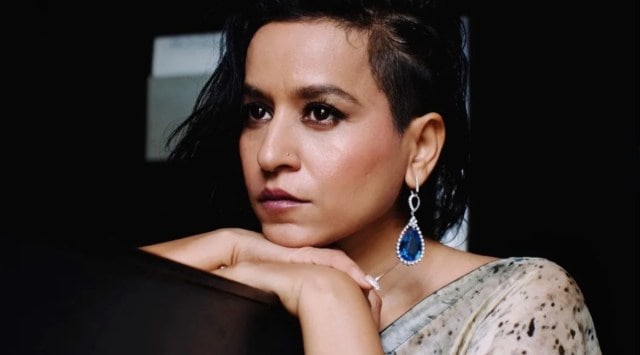
Reema Gowalla (HINDUSTAN TIMES; August 12, 2023)
With projects like Sir (2018), Delhi Crime 2, The Night Manager (TNM) and Lust Stories 2, Tillotama Shome manages to make a mark with each role.
Giving an insight into her process of picking projects, Shome says, “A good script and a director I can trust are key. A director who is also the writer is a big bonus. A professional setup is obviously a given. It is difficult to be creative if you don’t feel safe.”
Calling herself “the quintessential late bloomer”, she shares OTT gave her space. She adds, “The staggering response of the audience to an independent film, called Is Love Enough - Sir, was very unexpected. And everything since has been a blessing. I was lucky to work with directors who gave me the freedom to be myself, and the space and time for all my questions and suggestions. It has been two years since I got busy with work and not a day goes by when this fails to fill me with wonder. I am grateful to all the women [characters] I have played on screen; my life is so much richer because of them.”
The actor portrayed the role of a gritty RAW agent in TNM while the Konkona Sen Sharma-directorial segment in Lust Stories 2, titled The Mirror, saw her as Isheeta, who derives pleasure from peeping at her house help, Seema, and her husband, Kamal, getting intimate in the bedroom.
Having worked with Sen Sharma in A Death In The Gunj (2016) previously, she says, “Konkona is a reluctant, but wonderful director. I find it very exciting to work with directors who are also writers, as having a writer on the set can really free an actor.”
Ranbir Kapoor got coffee for everyone; Alia Bhatt greeted me with a warm hug-Rashi Mal
8:15 AM

Rashi Mal, who was seen in Helicopter Eela, hopes Ranbir-Alia’s ambitious film Brahmastra will take her career in a new direction
Mohar Basu (MID-DAY; September 6, 2022)
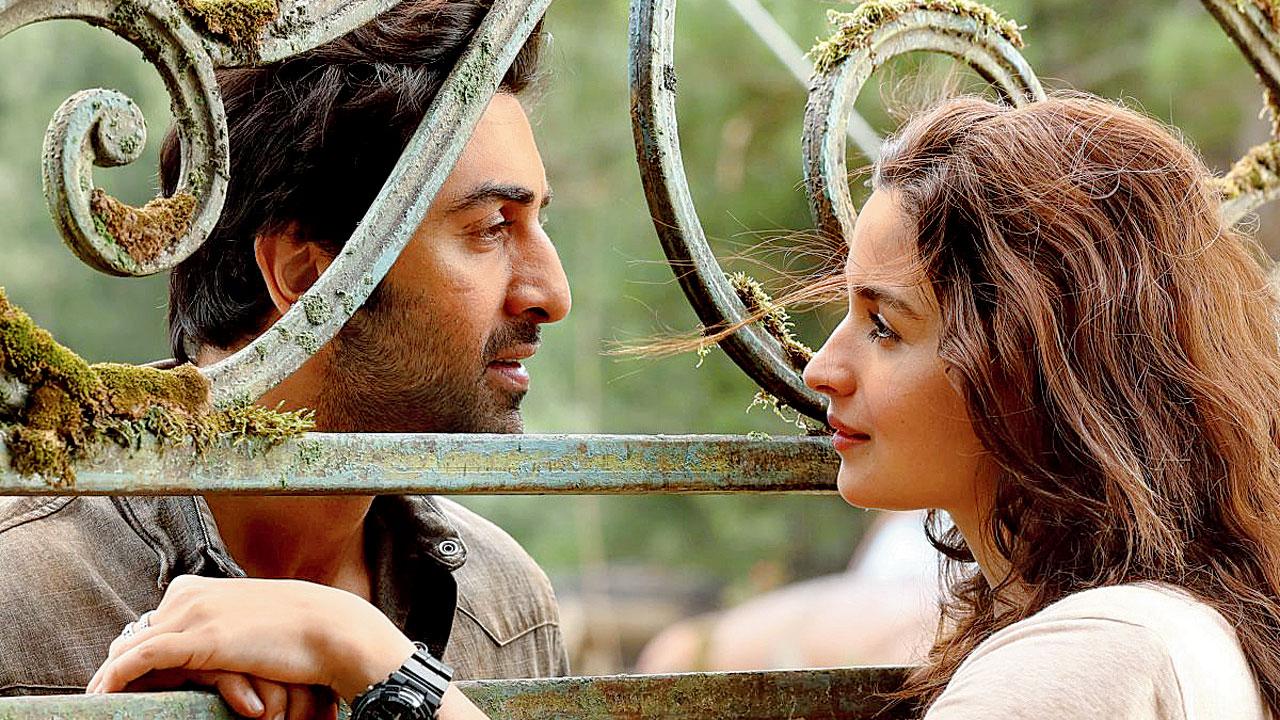
A big week lies ahead for Rashi Mal, who was seen in several web series, including Hindmata and Boygiri. She is awaiting the release of Brahmastra, which marks her third Bollywood project after Helicopter Eela (2018) and Is Love Enough - Sir (2018). She remembers auditioning for the role, hardly knowing that she would be on director Ayan Mukerji’s set two days later.
“Ayan lets his actors [approach their character in their own way]. Such trust from the director puts you at ease,” shares Mal.
The actor plays a comic role in the Ranbir Kapoor and Alia Bhatt-led superhero drama. Working with such talented artistes has left her enriched. “The first time I met them was at Ayan’s house. Ranbir got coffee for everyone, and Alia greeted me with a warm hug. The one thing I have learnt from them is their composure in the face of so much public scrutiny. They are grounded and kind.”
As she tries to find a footing in the industry, Mal is hopeful that Brahmastra will give a boost to her career. In many ways, this is the big Bollywood break she was waiting for. “Brahmastra is one of the biggest films to come out of India. Being a part of it already has had its payoff in terms of my growth as a person and an artiste. It will hopefully open more doors for me.”
I had to respond to the ‘maid’ comment-Tillotama Shome
8:19 AM

Rishabh Suri (HINDUSTAN TIMES; September 19, 2021)
Tillotama Shome has been winning hearts and awards alike for her performances, but trolling on social media is something even she hasn’t been spared from. Recently, the actor tweeted that a hater called her a “flop actress who looks like a maid”.
“I rarely get nasty remarks, at least I’ve not seen them. This one I had to respond to, not for the ‘flop actress’ bit, but for the ‘looks like a maid’ comment,” she clarifies about what compelled her to call out the troll. “I felt the person gave me an opportunity for a dialogue about our deep-rooted biases around beauty, class and caste, and its ugly intersections that give birth to such casual utterances of hate and, frankly, stupidity.”
Shome asserts that what people say about her acting skills doesn’t bother her at all. “I can’t help how you feel about me as an actor, and actually, I don’t care. But about this I care. This was meant to be an insult, so it was easier to respond to,” says the Angrezi Medium (2019) actor.
Compliments, in fact, are trickier territories for her. “For example, ‘You played Ratna (her character in Is Love Enough - Sir) so well, that now I’ve the hots for my maid’. Its implications are too insidious and a response on social media would just not be enough,” says Shome, who was recently awarded Best Actress at South Asian Film Festival for Raahgir.
On how much importance she gives to awards, she says, “The news of a win feels like a movie within a movie — a bit removed from life’s reality but yet grateful. Any win is a win for the whole team.”
Film festivals give voice to Indian female filmmakers
8:03 AM

Juhi Chakraborty (HINDUSTAN TIMES; August 9, 2021)
There is euphoria, in general, about how the film world is acknowledging that female voices have been underrepresented, and now making amends. While Cannes Film Festival, in a first, reportedly had 20 female filmmakers in its Official Selection, women directors accounted for 44% of the competition at Venice Film Festival last year, according to Variety. At the Toronto Film Festival last year, women makers were behind nearly half of the films screened.
Rohena Gera, whose film Sir toured several global film festivals before releasing in India on an OTT platform, feels such screenings give massive reassurance to filmmakers, about their product. “Film festivals are providing a great platform for voices of female filmmakers,” she adds.
“Film festivals allow films that may not necessarily be able to have a commercial platform, to be showcased,” opines filmmaker Gauri Shinde, adding, “They also look out for unique talent and it’s extremely encouraging to all kinds of filmmakers.”
Indian Film Festival of Melbourne (IFFM), too, saw a record number of 32 women filmmakers whose films will be screened this year. National Award-winning director Rima Das, whose film For Each Other will be screened at IFFM, is happy that a change is set in motion. “It may take another 10 years to see significant change. But, I’m happy that there is a serious attempt to see stories from a woman’s voice and perspective,” adds the Village Rockstars (2017) director.
Makers of documentaries and short films, too, are getting recognition. Director Karishma Dube, whose short film Bittu will be screened at IFFM, says, “Making a short film comes with no guarantee that it will find an audience or a platform, so for the film to find a home across the world, it’s a massive honour for me. I hope I can attend the festival in person, someday soon.”
Akriti Singh, whose directorial debut Toofaan Mail was recently named best film (youth choice) at the UK Asian Film Festival, believes such a fest is a great platform to showcase a film, especially for newcomers. “It gives validation, and back home, amplifies chances of getting potential buyers as well,” says Singh, who also stars in the film.

Films fine a new lease of life on OTT platforms
8:09 AM

From theatre non-performers to no-masala films, streaming platforms are giving many films a chance to win hearts
Rishabh Suri (HINDUSTAN TIMES; July 3, 2021)
As normalcy starts to crawl back in many industries after the second wave of Covid-19 subsided, the one sector that is still faltering is the cinema. Apart from people, who are scared to venture out of their homes, the dominance of streaming platforms led to this. However, a lot of films, which didn’t get a good response at the time of their theatrical run, managed to get a renewed lease of life upon their release on OTT platforms.
The most recent example is Sandeep Aur Pinky Faraar. The Dibakar Banerjee directorial released in select theatres earlier this year but didn’t garner much appreciation commercially. It was only after it came out on a web platform, it fetched rave reviews from audience and critics alike.
Actor Arjun Kapoor, who stars in Sandeep Aur... says, “I’m happy with the response the film has got upon its re-release on the web. You can’t control or predict this. The way it reached the audience might have been scattered and staggered through theatre and OTT, but a film that gets love like this will be remembered for a longer time.”
Films that didn’t have the conventional star or masala value too found a lot of takers in the digital space. Ramprasad Ki Tehrvi, helmed by actor Seema Pahwa, who made her directorial debut with the film, was much-talked-about when it reached wider audiences through OTT. Pahwa says the biggest benefit of such platforms is that they don’t have to face the box-office question. “You’re free to do your own creative thing. Aapka woh darr khatam ho jaata hai. These are the best platforms for anyone, even if you’re making low-budget films. Theatres have their own charm but OTT platforms have given a lot of opportunities to actors and directors,” shares the 59-year-old.
Trade expert Atul Mohan feels there’s a shift in the kind of stories being told and the way they’re being told. “Makers are now thinking of stories that can appeal to people across the globe and different diasporas. These platforms offer them that chance to reach out. People have the option, right in their homes to take chances and good content comes to the fore,” explains Mohan.
Talking about her film, Is Love Enough - Sir, actor Tillotama Shome says to see their independently made film travel through the precarious festival circuit to the homes of people was “an explosion of sorts”. “It dropped silently and then like this small wave, grew and gathered momentum. The platform gave it a massive wingspan, but the audience’s choice became the tailwind and we were suddenly flying. I’ll always be grateful and humbled by the power of these platforms,” she tells us.


In my 20s, all my auditions were for a best friend-Vivek Gomber
8:13 AM
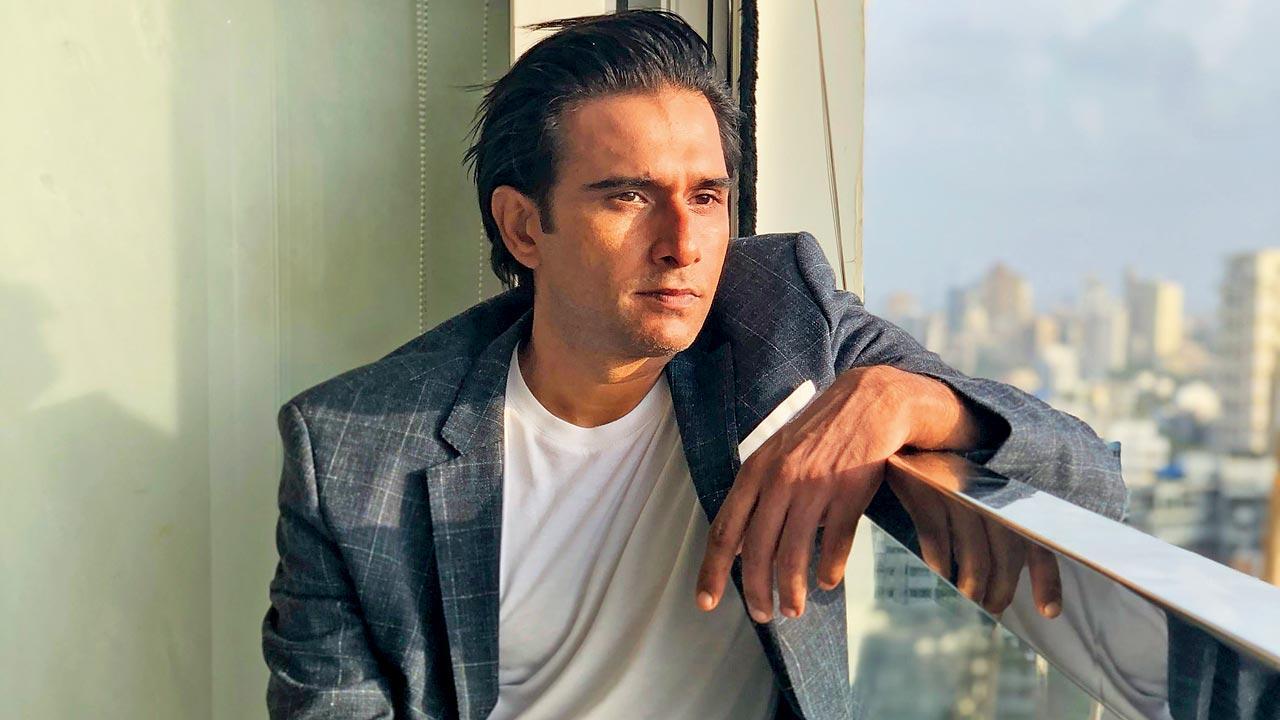
Vivek Gomber, who set hearts aflutter in Sir, and is producer of the recent toast of critics The Disciple, tells us why he is happy being a “working actor”
Aastha Atray Banan (MID-DAY; May 9, 2021)
“I think it was only because the character was written in a certain way that women found him attractive. He was a good guy,” says actor-producer Vivek Gomber of Ashwin, the character he played in Rohena Gera’s Is Love Enough - Sir, which pitted him opposite Tilotama Shome. The quiet and sweet film is about a man of privilege, who after breaking up with his would-be wife, who cheats on him, falls in love with his househelp, Ratna. It could be his soft portrayal of a man who sees a woman beyond her circumstances, or just that he comes across as a genuine and good looking catch, but he has left most female viewers say, “He’s dreamy”.
Gomber says, “I think it was because of how the character showed his vulnerabilities.” It could also be the nice shirts he wears, we tell him, and he laughs, “Yes, I want to thank everyone who made that role such a hit. And my parents!”
Ever since, it seems as if the 41-year-old is everywhere. We first noticed him in 2014 in the award-winning indie film Court, where he first worked with director Chaitanya Tamhane. In the past few months, he has entered our lives repeatedly, in Mira Nair’s A Suitable Boy, Pooja Bhatt-fronted Bombay Begums, and now of course as producer of Tamhane’s critical success, The Disciple.
But he has been at it since 2004. Gomber studied acting in Boston, but came to India to be a “working actor”. “I have always just wanted to be part of a conversation. There are many reasons you make it when you make it—you first have to arrive here, and hope to God, that the city is kind to you.”
The actor says like so many others in India, he grew up watching Amitabh Bachchan movies in Jaipur, where he spent his childhood with his banker father. His mother worked in the judiciary. He clarifies that when he says he wanted to be a working actor, he doesn’t mean that he needed a release every year. “It just means you have to be acting, and going for auditions, and meeting people in the know—like directors and casting agents, they need to know who you are. I am just grateful to be part of the conversation. And to be working with someone like Tamhane. Because you can’t work alone.”
Gomber, who started his journey in theatre, went on to act in television, including the popular Zee TV show Astitva - Ek Prem Kahani. “Maybe I didn’t do auditions as well before. I got offered too many best friend roles. In my 20s, all my auditions were for a best friend! How long can you do it?”
It’s finally his time. He says, “When I read Court, I thought it was a great film to engage with. It was very relevant then, and it is even more relevant now. I had thought of nothing except that it could be a way we could learn. And he [Tamhane] is a great director; I wanted to help him,” he says of the film that picked up a National Award and another at the 71st Venice International Film Festival. For now, he is happy that The Disciple is out there for viewers to see, because he thinks that the film is addressing an important issue—celebrating our own music, and showing people the nitty gritties of Indian classical tradition. “I didn’t know much about our music, and now I do. The worlds and the themes Tamhane explores are endless. It’s very important that the movie exists.”
He almost sounds relieved that it’s going to be a while before the audiences see him again. The entertainment industry is on pause, and wants to be safe and take care of its people, Gomber thinks. “We need to recover health-wise, focus on the lockdown, and just get out of the pandemic. But I hope there will be more work. And of course, maybe another Tamhane film, if he will have me.”
Goodbye, tragic martyr in white saree. Hello, merry widow
7:59 AM

In Lipstick Under My Burkha, the 55-year-old widow played by Ratna Pathak Shah is an avid reader of erotic novels
Widowed women change their colours on screen as filmmakers finally focus on their individuality
Sonam Joshi (THE TIMES OF INDIA; April 19, 2021)

Many films like Pagglait are now stepping away from the traditional stereotypes of the widow as a tragic, melodramatic and motherly figure. Widowhood becomes a trigger for women to rediscover themselves, and find out what it means to live life on their own terms.
Pagglait’s lead character was inspired by the women in his family, says director Umesh Bist, especially an aunt who took up a job in her late husband’s company despite not having studied much. “After my father’s death, I remember telling my mother I wanted to see her as my mother, and not a widow, that she could continue to wear bangles or coloured saris and enjoy the food she used to rather than give it up,” he says. “I didn’t want to see widowhood as a defining character trait but just one of the circumstances in life.”
If Pagglait’s Sandhya discovers her agency only by the end of the film, the young widow Ratna in the film Is Love Enough - Sir exercises hers at every step of the story. After her husband’s death, Ratna leaves her village to work in Mumbai as a domestic help, trains herself in tailoring and dreams of a better life for herself and her younger sister. Though the film addresses the class divide through a love story between Ratna and her employer, it also follows her journey. “She turns extreme adversity into an opportunity for herself, telling her boss: ‘life khatam nahin hoti’,” director Rohena Gera says.
Something similar happens in the film Once Again in which a financially independent middle-aged widow who runs a restaurant in Mumbai starts a telephonic romance with an ageing actor. “We as a society are far ahead of our storytelling — so many women live like this and we are not being told these stories,” says director Kanwal Sethi. “It was important that the woman wins on all fronts, as a lover and as a mother…She can finally feel the sensuality of her person and focus on her needs,” he says.

Other portrayals take a more subtle view of freedom. In the film Aise Hee, an elderly widow in Allahabad who we only know as Mrs Sharma suddenly gets the freedom to do little things, like eating ice-cream at the mall, getting a pedicure, learning embroidery and walking by the river. “Her husband’s death gives her the space to think that there are options which she never thought of earlier,” director Kislay says. “In real life, widowhood marks a break, where a lot of women change because they are forced to be more independent.” Mrs Sharma wants to preserve this new freedom, refusing to let her granddaughter move in because she likes being alone.
Kislay says that the film is a departure from the 1957 film Mother India, which in many ways is the epitome of the tragic, sacrificial widow in Hindi film. In one scene, the TV screen in Mrs Sharma’s house literally plays a scene of Nargis saving her children from floods. “Mrs Sharma could have been a Mother India, but what if the person doesn’t want to,” asks Kislay. The role has been essayed by septuagenarian Mumbai-based actor Mohini Sharma, who lives alone herself. There is a similar tone of independence in Tanuja Chandra’s documentary film Aunty Sudha, Aunty Radha, on her elderly widowed aunts who give each other companionship in their sunset years.
Gera, who got many messages from many women struggling with social judgement after their husband’s deaths, says it is important to depart from patriarchal norms. “We are still far from being an egalitarian society,” she says. “It’s great if filmmakers can show what we can aspire to: encouraging women to move on, rather than idealising a tragic figure who has given up on herself.”
The audience has given me license to dream bigger and not give in to commercial calibrations-Tillotama Shome
8:21 AM

Actor Tillotama Shome finds audiences’ praise for her recent project inspiriting
Shreya Mukherjee (HINDUSTAN TIMES; February 1, 2021)
Tillotama Shome’s poignant performance as Ratna in Rohena Gera’s Is Love Enough - Sir evokes realisations regarding class divisions inherent in our social structure. No doubt, viewers are showering praises on Shome. “The audience has given me the license to dream bigger and not give in to calculations and commercial calibrations. For good or bad, it has made me more idealistic... I’m genuinely grateful for the sudden surge of projects. But I’m taking time to decide what I want to do and why,” the actor shares.
In her career spanning two decades, Shome has been part of interesting films such as Monsoon Wedding (2001), Shadows Of Time (2005) and Qissa (2013). Many of her works, including these films, travelled to various international film festivals. But, closer to home, recognition for her has been limited. However, with Sir — that premiered at Cannes Critics Week — things have become different. If this acknowledgement had come earlier, would her career have taken a different turn?
“Who knows? But my practice of Buddhism allows me to enjoy the belief that a strong foundation takes a long time to build and is unseen. It needs time, away from the glare and the gaze of others… So where I’m is exactly where I need to be,” she replies.
Appreciation raises expectations. But Shome has a different perspective. “I’m looking at it as an anomaly, a glitch in the system, an exception... the algorithm has momentarily been taken over by audiences’ love for an independent film. It’s heartwarming. I’m grateful and it’s definitely a first. But, one is accustomed to working in the shadows and taking joy from it. This is a bonus and an encouragement to continue being an oddball,” adds the actor, who’s working in directors Rima Das, Anup Singh, Saumyananda Sahi and Madhuja Mukherjee’s upcoming projects.
Sir was the new Hindi release that opened Indian theatres, but it worked better when it released on an OTT platform. Asked if she thinks the web offers a more democratic space to creators and performers, Shome says, “I’ve not done enough work on OTT to answer this question with much authenticity or research. But I hear things aren’t ‘so democratic’ in this brave new world either. This is sad but expected, I suppose. Steering things to a more positive note, I thank the OTTs for bringing home a host of wonderful actors and writers who’re speak different tongues — the sounds are diverse, the languages embrace the richness of the vernacular and specificity of a place and time. This plurality of voices is exciting.”
Male gaze vs female gaze: Do female directors tell women stories better?
8:25 AM

Juhi Chakraborty (HINDUSTAN TIMES; January 31, 2021)
Female-driven stories told by female filmmakers have been gathering steam in the past few years. Films such as Lipstick Under My Burkha (2016), Raazi (2018) and Panga (2020), and the recent ones such as Dolly Kitty Aur Woh Chamakte Sitare (2020), Tribhanga and Sir have received immense love from the audience. These have been hailed mainly because of the treatment given to the stories attributed to the women directors behind them. This has also led to the discussion whether when it comes to women-centric stories, female filmmakers are more inept to tell them with sensitivity and correct treatment.
“There is something called the female gaze that comes into play. It is about how you write characters, how you shoot them and your point of view. That also changes the audiences’ point of view because they see the characters the way you present them. Right now, we are still living in cinema that is moulded by men. Everything is determined by the male gaze,” shares Alankrita Shrivastava, who has helmed Lipstick Under My Burkha and Dolly Kitty Aur Woh Chamakte Sitare.
Actor Richa Chadha, who worked with filmmaker Ashwiny Iyer Tiwary last year in Panga does not think there is much difference between how a female or a male directs a film but she says it stands true in the case of few their subjects. “In my experience, it’s not been that. But when I watch something like Dolly Kitty Aur Woh Chamakte Sitare, it appears a lot softer than other films. Even the topic of sexuality is handled sensitively,” she says.
Rohena Gera, who handled the story about a romance between a domestic help and employer in Sir, says it is difficult to say whether it is about gender.
She says, “Who is to say that as a sensitive man wouldn’t make a sensitive female-centric story. The stories one tells as a filmmaker is also because of his/her exposure to things. I find it difficult to categorize things as gender.”
Having worked with a female director in one of her most notable films, Tanuja Chandra’s Dushman (1998), Kajol recently collaborated with Renuka Shahane on her directorial venture, Tribhanga. The actor says, “I didn’t consider Renuka as a director. She knew what she wanted, her gender notwithstanding.”
Shrivastava feels that the onus is also on women directors. “That’s because not all have that female gaze. And, because the place is so lonely they prefer to perpetuate the status quo that just continues this male, patriarchal gaze,” she adds.

Big films may improve the scenario but smaller films are helping theatres to get going
8:13 AM

Big films may improve the scenario but smaller films are helping theatres to get going
Shreya Mukherjee (HINDUSTAN TIMES; January 11, 2021)
Soon after theatres reopened in mid-October last year, filmmakers have been testing waters to see if audiences are now stepping out and going to watch films in cinemas. Is Love Enough - Sir and Suraj Pe Mangal Bhari initiated the chain of new releases in Bollywood in November 2020, followed by Indoo Ki Jawani and Shakeela in December and Ramprasad Ki Tehrvi marked the beginning of this year. Meanwhile, Hollywood biggies — Tenet and Wonder Woman 1984 (WW’84) — too helped up the box office collections. Having covered almost the first quarter of the new beginning since cinemas reopened, industry insiders talk about the present scenario.

BOX OFFICE RESPONSE
Trade expert Komal Nahta feels the only “relief is that films are running and cinemas are functioning”. Suraj Pe Mangal Bhari also did a bit better business than other Hindi films, shares exhibitor-distributor Brijesh Tandon.
Trade expert Atul Mohan says, “The re-released films and new ones made about 5-10% business. Only Tenet, WW’84 made about 15-20%. After the difficult 2020, we must get things running with big films.”

ALL EYES ON BIG FILMS
With big-budget films expected to release March onward, and Shibasish Sarkar, CEO, Reliance Entertainment group, announcing that either Sooryavanshi or ’83 will release during Holi, has given many hope. “Many theatres are still shut, 50% occupancy cap is a concern. Turn-around time given the sanitisation procedure has reduced the number of shows. Now, only big films can change the game,” shares distributor-exhibitor Akshaye Rathi.
Raj Kumar Mehrotra, general manager, Delite Cinemas, shares Madam Chief Minister starring Richa Chadha releasing this month might bring business. “Till now, we had 15-20% occupancy, which went up to 30-35 % during Tenet, WW’84. Once big films come, it’ll go over 70%,” he says.
VACCINATION will help
“Vaccination will improve collective sentiments and provide courage. With all precautions, theatres are ready. Now, audience should extend support,” shares Rathi.
Highlighting how reworking of ticket pricing is a determining factor to increase footfalls, Mohan adds, “Pandemic has hit the economy hard, leading to job losses. If ticket pricing is on the lower side, it might draw more people to the theatres.”
A LOOK AT THE BOX OFFICE BUSINESS SO FAR (All approx figures)
Tenet: ₹15 crore
Wonder Woman 1984: ₹12.5 crore
Suraj Pe Mangal Bhari: ₹2.5 crore
Indoo Ki Jawani: ₹60 lakh
Shakeela: ₹30 lakh
Ramprasad Ki Tehrvi: ₹25 lakh

Movie Review: 'IS LOVE ENOUGH? - SIR' by FENIL SETA
10:10 PM

The Diwali week is usually dominated by some of the biggest films of the year. But this year is going to be different. With biggies preferring to wait it out until there's some degree of normalcy, the smaller films will have a field day in cinemas during the festival of lights. The one to take advantage of this opportunity is 'Is Love Enough? - SIR'. The film has made waves internationally and is a highly acclaimed film. It was scheduled to be released on March 20, 2020 but the lockdown ruined all plans. With cinemas now open in most parts of the country, 'Is Love Enough? - SIR' made it quietly to cinemas today. And it can be a film that's worth making a visit to the theatre!
The story of the film: Ratna (Tillotama Shome) is born and brought up in a village in Maharashtra. She was married early and became a widow at the age of 19. Everyone felt her life was finished. Proving her naysayers wrong, she comes to Mumbai and gets employed as a househelp in the house of Ashwin (Vivek Gomber). Ashwin was settled in the USA. But the demise of his brother prompted him to return and join his father (Rahul Vohra) in his business. He also is about to get married in a different city to his girlfriend. Ratna goes to her village during that time. But her holiday is cut short as Ashwin breaks his marriage and returns. Ratna, meanwhile, is trying to learn tailoring to fulfil her dream of becoming a fashion designer. With Ashwin's approval, she begins to work for a tailor for a few hours daily after completing the household chores. She also motivates Ashwin and encourages him to move on with life. Ashwin appreciates the gesture. Soon, both get quite close.
'Is Love Enough? - SIR' begins on an interesting note as Ashwin's marriage is called off and he returns dejected. Slowly and gradually, the director acquaints the viewers with the characters, their back stories, their dreams, their fears etc. Nothing much happens in the first half of this 101 minute long film but it still engages. The second half is when the characters cross the so-called line and this is where things get better. The film ends on a poignant and yet heartwarming note.
Rohena Gera's story is very novel and impressive. It does remind one a bit of the anthology flick Lust Stories and also the acclaimed movie Roma. But the writer has peppered the narrative with many original plot points. Rohena Gera's screenplay is slow yet beautiful. She takes her time to explain the changing dynamics between the lead characters and it works. As a rushed job, this wouldn't have worked. Rohena Gera's dialogues are minimal and effective.
Rohena Gera's direction is superlative and does justice to the script. She raises some important points about class divide, desire of people in villages to move to the city, the need to be financially independent, following your dreams etc. She also lays bare the fact that no matter how progressive we become, the fear of 'what-will-people-say' might not leave us. On the flipside, a few developments are too sudden, especially Ashwin's decision to break off the wedding. No explanation is given at all. The same happens in the last 15 minutes. The consistency of the film's pace breaks here.
Speaking of performances, Tillotama Shome leaves a tremendous mark. She looks every inch the character that she was essaying. It's amazing to see her silences and hesitations, especially in scenes when she's speaking to Vivek and is being cautious, making sure she doesn't breach the ‘line’. Vivek Gomber gets to play a heartwarming and an adorable character and he infuses life into it beautifully. It's also great to see how nicely he communicates with his silences. Of course, his dialogue delivery is spot on and same goes for Tillotama as well. In fact, both speak so impeccably that you feel like listening to them all day long! Geetanjali Kulkarni (Laxmi) is dependable as always. Bhagyashree Pandit (Choti) is decent. Chandrachoor Rai (Vicky; Ashwin's friend) makes his presence felt, especially in the pre-climax. Anupria Goenka (Ankita) is memorable, despite being in two (contrasting) sequences. Bachan Pachera (Tailor) is quite good. Rahul Vohra, Divya Seth Shah (Ashwin's mother), Dilnaz Irani (Nandita; Ashwin's sister), Alok Chaturvedi (Watchman) and Saharsh Kumar Shukla (Sabina's driver) are fair in their cameo appearances.
The songs 'Jeene Mein Kya Jaata Hai' and 'Zindagi Ka Feel' (Raghav Vagav) suit the narrative. Pierre Avia's background score is subtle and impactful. Dominique Colin's cinematography is splendid. The house scenes are well captured and in no time, one is able to more or less memorize the place. Also, it’s good to see that while most films are shot either in South Mumbai or the suburbs, this one is mostly set in the central part of the city. Parul Sondh's production design is appropriate. Kimneineng Kipgen and Chetna Rawat's costumes are straight out of life. Jacques Comets's editing is ideal for a film of this sort.
Some of the best scenes of the film:
1. Ashwin apologizing to Ratna for his sister’s behaviour
2. Ratna informs Ashwin about her past
3. Ratna saves Ashwin by lying on the phone (sweet scene!)
4. Ashwin and Ratna’s conversation in the kitchen about life in the USA
5. Ratna clarifies when Ashwin sees her trying her creation in his room
6. Ashwin gifts magazines and sewing china to Ratna
7. Ratna gifts a shirt to Ashwin
8. Ratna dances during Ganpati visarjan and the scene thereafter
9. Ratna and Ashwin at the rooftop
10. The last 20 minutes of the film
On the whole, 'Is Love Enough? - SIR' is India’s answer to Roma. It would have been pleasure watching it in a film festival with like-minded moviegoers and then clapping loudly when the credits would roll. A conversation with writer-director Rohena Gera post the screening would have been like an icing on the cake. Nevertheless, it’s great that it has been released in cinemas. Sometimes, it’s nice to watch such films on the big screen and not on an OTT platform. Do give it a try if it has been released in your city!
My rating - **** out of 5!
The story of the film: Ratna (Tillotama Shome) is born and brought up in a village in Maharashtra. She was married early and became a widow at the age of 19. Everyone felt her life was finished. Proving her naysayers wrong, she comes to Mumbai and gets employed as a househelp in the house of Ashwin (Vivek Gomber). Ashwin was settled in the USA. But the demise of his brother prompted him to return and join his father (Rahul Vohra) in his business. He also is about to get married in a different city to his girlfriend. Ratna goes to her village during that time. But her holiday is cut short as Ashwin breaks his marriage and returns. Ratna, meanwhile, is trying to learn tailoring to fulfil her dream of becoming a fashion designer. With Ashwin's approval, she begins to work for a tailor for a few hours daily after completing the household chores. She also motivates Ashwin and encourages him to move on with life. Ashwin appreciates the gesture. Soon, both get quite close.
'Is Love Enough? - SIR' begins on an interesting note as Ashwin's marriage is called off and he returns dejected. Slowly and gradually, the director acquaints the viewers with the characters, their back stories, their dreams, their fears etc. Nothing much happens in the first half of this 101 minute long film but it still engages. The second half is when the characters cross the so-called line and this is where things get better. The film ends on a poignant and yet heartwarming note.
Rohena Gera's story is very novel and impressive. It does remind one a bit of the anthology flick Lust Stories and also the acclaimed movie Roma. But the writer has peppered the narrative with many original plot points. Rohena Gera's screenplay is slow yet beautiful. She takes her time to explain the changing dynamics between the lead characters and it works. As a rushed job, this wouldn't have worked. Rohena Gera's dialogues are minimal and effective.
Rohena Gera's direction is superlative and does justice to the script. She raises some important points about class divide, desire of people in villages to move to the city, the need to be financially independent, following your dreams etc. She also lays bare the fact that no matter how progressive we become, the fear of 'what-will-people-say' might not leave us. On the flipside, a few developments are too sudden, especially Ashwin's decision to break off the wedding. No explanation is given at all. The same happens in the last 15 minutes. The consistency of the film's pace breaks here.
Speaking of performances, Tillotama Shome leaves a tremendous mark. She looks every inch the character that she was essaying. It's amazing to see her silences and hesitations, especially in scenes when she's speaking to Vivek and is being cautious, making sure she doesn't breach the ‘line’. Vivek Gomber gets to play a heartwarming and an adorable character and he infuses life into it beautifully. It's also great to see how nicely he communicates with his silences. Of course, his dialogue delivery is spot on and same goes for Tillotama as well. In fact, both speak so impeccably that you feel like listening to them all day long! Geetanjali Kulkarni (Laxmi) is dependable as always. Bhagyashree Pandit (Choti) is decent. Chandrachoor Rai (Vicky; Ashwin's friend) makes his presence felt, especially in the pre-climax. Anupria Goenka (Ankita) is memorable, despite being in two (contrasting) sequences. Bachan Pachera (Tailor) is quite good. Rahul Vohra, Divya Seth Shah (Ashwin's mother), Dilnaz Irani (Nandita; Ashwin's sister), Alok Chaturvedi (Watchman) and Saharsh Kumar Shukla (Sabina's driver) are fair in their cameo appearances.
The songs 'Jeene Mein Kya Jaata Hai' and 'Zindagi Ka Feel' (Raghav Vagav) suit the narrative. Pierre Avia's background score is subtle and impactful. Dominique Colin's cinematography is splendid. The house scenes are well captured and in no time, one is able to more or less memorize the place. Also, it’s good to see that while most films are shot either in South Mumbai or the suburbs, this one is mostly set in the central part of the city. Parul Sondh's production design is appropriate. Kimneineng Kipgen and Chetna Rawat's costumes are straight out of life. Jacques Comets's editing is ideal for a film of this sort.
Some of the best scenes of the film:
1. Ashwin apologizing to Ratna for his sister’s behaviour
2. Ratna informs Ashwin about her past
3. Ratna saves Ashwin by lying on the phone (sweet scene!)
4. Ashwin and Ratna’s conversation in the kitchen about life in the USA
5. Ratna clarifies when Ashwin sees her trying her creation in his room
6. Ashwin gifts magazines and sewing china to Ratna
7. Ratna gifts a shirt to Ashwin
8. Ratna dances during Ganpati visarjan and the scene thereafter
9. Ratna and Ashwin at the rooftop
10. The last 20 minutes of the film
On the whole, 'Is Love Enough? - SIR' is India’s answer to Roma. It would have been pleasure watching it in a film festival with like-minded moviegoers and then clapping loudly when the credits would roll. A conversation with writer-director Rohena Gera post the screening would have been like an icing on the cake. Nevertheless, it’s great that it has been released in cinemas. Sometimes, it’s nice to watch such films on the big screen and not on an OTT platform. Do give it a try if it has been released in your city!
My rating - **** out of 5!
Subscribe to:
Posts (Atom)