Showing posts with label Irshad Kamil interview. Show all posts
Showing posts with label Irshad Kamil interview. Show all posts
Sooraj Barjatya told me ‘You’re harming the industry by working less’-Irshad Kamil
10:24 AM

Lyricist Irshad Kamil says the biggest challenge before him isn’t writing another hit. It’s finding a more honest language for romance
Soumya Vajpayee (MUMBAI MIRROR; July 12, 2026)
Irshad Kamil has little left to prove. Over two decades, he has written some of Hindi cinema’s most memorable songs, from Tum Se Hi, Nadaan Parindey and Kun Faya Kun to Agar Tum Saath Ho and the recent Saiyaara. Yet the National Award-winning lyricist insists he is still a student.
“My journey has been about coincidences and evolution,” he says with a laugh. “It’s about what I want to become.” Sitting over tea on a rain-soaked afternoon in Andheri, Kamil looks back at a career that began almost by accident. As a student with a deep interest in theatre and poetry at Panjab University, he drifted into television before finding his way to films. More than 100 films later, he still believes every project teaches him something new.
Still learning
“I stumbled into television. I stumbled into films,” he says. “With every song, I understand a little more about what it means to be a lyricist. There are so many layers to lyric writing. Just as there are many kinds of love, I’m still learning them.” That desire to keep evolving changed the way he works.
For years, Kamil deliberately restricted himself to four films annually. Then filmmaker Sooraj Barjatya offered advice that stayed with him.
“‘Irshad, you’re harming the industry by working less,’” he recalls. “That really struck me.” He decided to say yes more often. “The more time you spend in a creative environment, the more you learn. That’s how projects like Krishnavataram and the ghazal EP with Papon happened.”
Making love believable
If there is one emotion Kamil keeps returning to, it is love. Ironically, he considers it the hardest to write. “I feel most love songs don’t have the purity that love deserves,” he says. “My language for every film is love. I want to redefine that language for today’s world.”
His ambition is not to make lyrics more poetic, but more truthful. “Love has evolved. Society has evolved. I want to reflect that in my writing. I want songs to feel less fake.”
That philosophy shapes Main Vaapas Aaunga, on which he worked alongside A R Rahman while simultaneously writing for Tere Ishk Mein. Before beginning, the pair watched James Mangold’s Bob Dylan biopic, A Complete, Unknown together. “Bob Dylan’s journey charged me creatively,” he says.
One song from Main Vaapas Aaunga, Kya Kamaal Hai, juxtaposes images of Partition with those of present-day refugees. “For me, it isn’t just a song,” he says. “It’s a dream of love, peace and hope.”
No room for ornament
Kamil is equally clear about what he doesn’t want his lyrics to become. “In every art form, people struggle to balance mass appeal with artistic quality,” he says. “We’re diluting art to make it more popular. Dilution isn’t the solution. Accessibility is.”
Instead of reaching for ornate vocabulary, he prefers words people are familiar with. “I don’t want to impress listeners with difficult words from a dictionary. I’m trying to make my lyrics more accessible without compromising on quality. At the same time, I’m trying to redefine myself, and romantic songs in films.”
That openness also informs his collaborations. Having worked with veterans such as Rahman, Pritam, Vishal-Shekhar, Amit Trivedi, and now with a younger wave: Shashwat Sachdev, Tanishk Bagchi, Sachet-Parampara, Vishal Mishra, Sarthak Kalyani, Hiral Viradia, is the process of working with new-age composers different? “There’s no fixed pattern,” he says. “Every composer has a different way of thinking, so every project challenges you differently. That’s where the learning happens.”
Some of his most rewarding work has emerged from those unstructured sessions. While writing Dhurandhar, he, director Aditya Dhar and composer Shashwat Sachdev often worked through the night, with Dhar’s home doubling up as a studio.
“We’d start at six in the evening and sometimes continue till six the next evening,” he says. “Phir Se was born during one of those sessions.”
The long game
Unlike singers and composers, lyricists rarely enjoy the visibility of live performances. But Kamil believes the profession has become more sustainable.
“Being a lyricist now comes with a pension plan,” he says, referring to royalties collected through IPRS. “Sometimes the royalty from a successful song can become many times what you were originally paid. And it keeps coming.”
Social media often compares him with Gulzar, Javed Akhtar and Anand Bakshi. Others have likened aspects of his recent work to Bob Dylan. Kamil accepts the compliments but rejects the comparison.
“There can never be another Bob Dylan,” he says. “Just as there can never be another Sachin Tendulkar. Every artist has their own zone. Irshad Kamil has to remain Irshad Kamil.”
Perhaps that is why, even after two decades in Hindi cinema, Kamil still speaks less about success than about discovery. At 54, his ambition is simpler, or perhaps some might say harder: to write songs that feel a little more honest than the ones he wrote yesterday.
I did not charge a penny for writing poetic dialogues for Chhaava-Irshad Kamil
9:44 AM
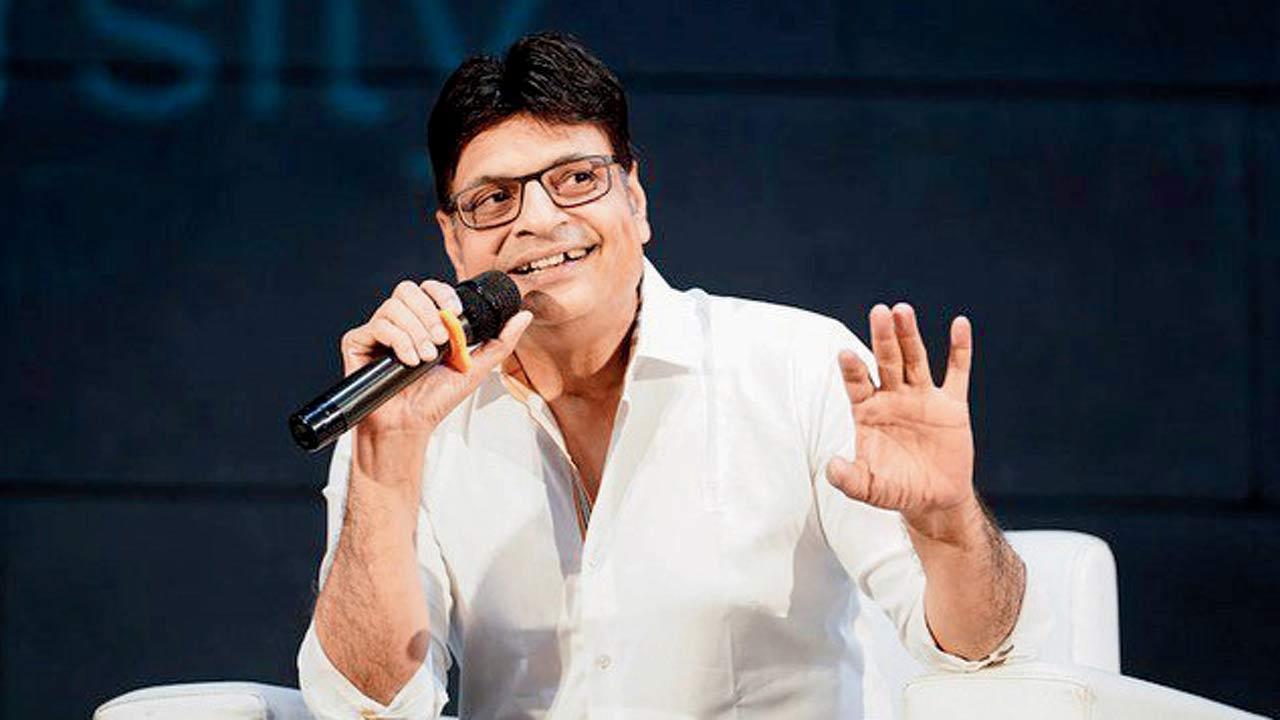
Chhaava lyricist Irshad Kamil on the tricks he used to ensure that the soundtrack of the historical film appeals to a contemporary audience
Sonia Lulla (MID-DAY; February 17, 2025)
In his first attempt at writing for a historical venture, lyricist Irshad Kamil joins forces with A R Rahman to take viewers back in time to narrate the heroic tales of Chhatrapati Sambhaji Maharaj, played by Vicky Kaushal. In a conversation with mid-day, Kamil, who is also credited for contributing to the “poetic dialogues,” appears to be consumed by the valour of the Maratha king whose “personality” he has attempted to portray via his choice of words. “We want viewers to feel like they are [living] this chapter of Indian history,” he says of the Friday release that he has been associated with for over two years. Edited excerpts of the interview.
What was your initial discussion with the makers of the project?
The movie revolves around Sambhaji Maharaj, and we wanted each song to fit his persona. It needed to reflect his personality, as well as the respect we had for him in our hearts. Each song is an attempt to understand the character better. Because these characters are heroic and larger than life, they are remembered. It is considered an epic because the story doesn’t end and stays with us across generations. We have a song called Zinda Rahey, which depicts precisely that.
While working on a project that is based on a historical subject that is well-known, what liberties can you take to present it for the big screen?
Apart from the songs, I have also been involved in writing poetic dialogues for the film. Due to the respect that I have for Sambhaji Maharaj, I did not charge a penny for writing them. This is the least that we can do. We need to remember that historical facts are one thing, and emotional expression is another. That they fought a war is a fact, but they must surely have been emotionally driven during that fight. There are no parameters that we have to define that emotional expression.
When the emotional crux of a character is explored across multiple iterations of a historical tale over the years, do you believe it could lead to the distortion of facts in the long run?
It could. But this film is based on a Marathi novel called Chhaava. So, there was little scope [for distortion]. Since it is historical, we [needed to] assess that period. We had to present a story from that period for the contemporary generation. Musically, we tried to recreate the flavour of that era. You’ll notice that in the language too. We wanted to ensure that the viewer feels like he is [living] this chapter of Indian history. We started working on this film at A R Rahman sir’s studio during the Ganapati festival in 2022. It has taken a long time and a lot of effort to complete it.
I feel directors can create more situations where only Hindi can be used for lyrics-Irshad Kamil
8:24 AM

Soumya Vajpayee (HINDUSTAN TIMES; September 14, 2022)
As someone with a doctorate in Hindi, lyricist-poet Irshad Kamil loves the language. On Hindi Diwas today, the 54-year-old talks about the presence of Hindi in films and how it can be ameliorated.
On presence of Hindi in Bollywood music:
Today, every music creator is making music for a pan-India audience. In this scenario, there are some languages that can help you communicate with a wider audience — Hindi, English and Punjabi. So, in today’s Hindi film music, the presence of Hindi is major, but it coexists with English, Punjabi and Bhojpuri.
On surge of Punjabi in film music:
Punjabi music is beat based, and the entertainment industry needs that kind of vibrancy to compel you to dance. Punjab has given so much talent to the film industry. Music directors like Gulam Haider, Hansraj Behl, Madan Mohan and O P Nayyar, and lyricists like Sahir Ludhianvi, Gulshan Bawra, Anand Bakshi, Gulzar and I belong to Punjab. When a person travels, their language travels, too.
On how the existence of Hindi in films can be improved:
Steps have been taken to better the presence of Hindi in our films. Now, film titles and credits are in Hindi too. I feel directors can create more situations where only Hindi can be used for lyrics and dialogues. Also, scriptwriters can come up with more interesting stories of interior parts of India. We can also make more original Indian music, rather than aping western beats. I wish that someday, we create music free from the burden of Reels, Shorts or TikTok, etc.
On whether millennials and Gen Z stand a chance of losing touch with Hindi due to the absence of proper Hindi in film and non-film music:
I feel Hindi films and music should be the torchbearer and take the initiative to connect them with the language. Hindi film and non-film music is fairly playing this part. There are so many youngsters who learn new Hindi words through film music.
Spontaneity & madness is what defines me, Pritam Chakraborty & Imtiaz Ali together-Irshad Kamil
7:34 AM

Irshad Kamil on teaming up with Jab We Met and Cocktail teammates, Imtiaz Ali and Pritam, again
Soumya Vajpayee Tiwari (MID-DAY; June 13, 2017)
He may have had only one big release to his credit last year, Salman Khan’s Sultan, but lyricist Irshad Kamil has been neck-deep in work since. The Sachin Anthem and Hind Meri Jind from Sachin: A Billion Dreams were well received. “Sachin Tendulkar is larger than life. During the course of this biopic, I unfailingly turned into a fanboy,” Kamil tells mid-day.
The writer is excited about his work in Manisha Koirala’s Dear Maya and Sridevi-starrer Mom. The tracks of Imtiaz Ali’s much anticipated next, Jab Harry Met Sejal, have also been penned by him. This brings him back in the company of his Jab We Met, Cocktail and Love Aaj Kal partners, Imtiaz and composer Pritam Chakraborty. “Spontaneity and madness is what defines the three of us when together,” he says.
Among his contemporaries, he is perhaps the only lyricist to have collaborated with A R Rahman on back-to-back projects, the latest being Sachin and Mom (releases in July). “I feel honoured to have regularly worked with a genius like him. The songs of Mom, a film that revolves around a mother-daughter relationship, are emotional. The film’s director, Ravi Udyawar, was deeply involved in the project and his clarity helped get the best out of me. His imagination was so strong that I was weaving words to his visuals. The project has taught me a lot.”
Besides working on films, Kamil also wants to help budding writers understand the difference between good and bad writing. In order to contribute to the art, he is planning to launch a platform, called Pen-Friend, which will help aspiring writers connect with him. “Expression through words is thought to be the simplest of all arts, and in the time of social media, there is an abundance of this creativity. This is both, good and bad. I still consider myself amateur, but people send me write- ups on social media, seeking comments. While I don’t consider myself competent enough to guide them on good writing, I can help them understand what doesn’t constitute good writing. I want to create a pen friend culture,” says Kamil.
Filmmaker Aanand L Rai, lyricists Irshad Kamil and Varun Grover on their TOIFA nominations
7:42 AM

Seema Mattoo, Tanvi Trivedi and Purvaja Sawant (BOMBAY TIMES; March 18, 2016)
AANAND L RAI, FILMMAKER
Aanand L Rai, nominated in the Best Director award category for The Times of India Film Awards (TOIFA) 2016, for Tanu Weds Manu Returns (TWMR) talks about his convictions while helming a film.
How do you balance story telling and direction?
My state of mind guides me towards storytelling. While keeping my commercial and creative beliefs separate, I maintain an internal balance since I am answerable only to my audience
How do you deal with the expectations?
I am selfish while making films to the extent that I remain faithful to my stories and characters. I want them to have that connect with the audience without any pressures. I don't ever get pressurised. If at all, it is only creative and thus I have no particular expectations from any of my films.
TWMR has won many accolades... how does it feel?
Coming from a middle-class background, being accepted in this industry is a big thing for me. Making films in itself is a pleasure but of course, being part of the award-winning group is a prestigious feeling.

IRSHAD KAMIL, LYRICIST
Nominated in the Best Lyricist category at TOIFA 2016 for Agar Tum Saath Ho (Tamasha), Irshad Kamil on music in Hindi cinema.
How was the song conceived?
I feel appreciated when my hard work gets a nomination. It reaffirms our faith in poetry. Since the film's director Imtiaz Ali is a friend, I was aware of the situation that I had to write. A R Rahman and I had composed three songs for the situation, but we agreed that this was ideal.
Do you feel that the kind of music people listen to has changed over the years?
We are composing better music now. People argue that the songs have a short recall value, but today's generation is exposed to all kinds of music. People recall only the songs from 60s and 70s so they feel that old tracks was better. Even today, despite consumerism, good lyrics survive.
A lot depends on the quality of tracks when the movie is being marketed. How do you work on your songs?
Marketing is not connected with quality. Many times masses like a song that isn't marketed well. Songs and music are a film's soul so we have to work on conveying the film's essence through them.
VARUN GROVER, LYRICIST
Screenplay writer and stand-up comedian Varun Grover, who has been nominated in the Best Lyricist category at TOIFA 2016 for Moh moh ke dhaage (Dum Laga Ke Haisha) talks about his hatke lyrics.
Did you think the song would be so well-received?
This is a moment of realisation, as the song has become way bigger than I could ever imagine. Also, it's great to be nominated alongside one of our greatest writers, Gulzar saab... it's a dream come true.
Your lyrics are often hatke... do you feel the need to write songs that have mass appeal?
Not at all. For me, song writing is very instinctive. I don't want the world to enter my creative space. In fact, whenever I write, I shut the doors, windows and lock myself in a room! I don't think of any thing and anybody.
Does it irk you to see songs with frivolous lines becoming popular?
I think Bollywood needs all kinds of songs. Writers are creating stuff which is suit able to a particular situation in the film. For example, you can't have a Moh moh ke dhaage in Mastizaade or a Chittiyaan kalaiyaan in Dum Laga Ke Haisha!
Does your shuddh Hindi give you an edge over other lyricists?
When it comes to writing songs about India's heartlands, I have an advantage, because I come from Lucknow. So, the words come naturally to me.

Aanand L Rai, nominated in the Best Director award category for The Times of India Film Awards (TOIFA) 2016, for Tanu Weds Manu Returns (TWMR) talks about his convictions while helming a film.
How do you balance story telling and direction?
My state of mind guides me towards storytelling. While keeping my commercial and creative beliefs separate, I maintain an internal balance since I am answerable only to my audience
How do you deal with the expectations?
I am selfish while making films to the extent that I remain faithful to my stories and characters. I want them to have that connect with the audience without any pressures. I don't ever get pressurised. If at all, it is only creative and thus I have no particular expectations from any of my films.
TWMR has won many accolades... how does it feel?
Coming from a middle-class background, being accepted in this industry is a big thing for me. Making films in itself is a pleasure but of course, being part of the award-winning group is a prestigious feeling.
IRSHAD KAMIL, LYRICIST
Nominated in the Best Lyricist category at TOIFA 2016 for Agar Tum Saath Ho (Tamasha), Irshad Kamil on music in Hindi cinema.
How was the song conceived?
I feel appreciated when my hard work gets a nomination. It reaffirms our faith in poetry. Since the film's director Imtiaz Ali is a friend, I was aware of the situation that I had to write. A R Rahman and I had composed three songs for the situation, but we agreed that this was ideal.
Do you feel that the kind of music people listen to has changed over the years?
We are composing better music now. People argue that the songs have a short recall value, but today's generation is exposed to all kinds of music. People recall only the songs from 60s and 70s so they feel that old tracks was better. Even today, despite consumerism, good lyrics survive.
A lot depends on the quality of tracks when the movie is being marketed. How do you work on your songs?
Marketing is not connected with quality. Many times masses like a song that isn't marketed well. Songs and music are a film's soul so we have to work on conveying the film's essence through them.
VARUN GROVER, LYRICIST
Screenplay writer and stand-up comedian Varun Grover, who has been nominated in the Best Lyricist category at TOIFA 2016 for Moh moh ke dhaage (Dum Laga Ke Haisha) talks about his hatke lyrics.
Did you think the song would be so well-received?
This is a moment of realisation, as the song has become way bigger than I could ever imagine. Also, it's great to be nominated alongside one of our greatest writers, Gulzar saab... it's a dream come true.
Your lyrics are often hatke... do you feel the need to write songs that have mass appeal?
Not at all. For me, song writing is very instinctive. I don't want the world to enter my creative space. In fact, whenever I write, I shut the doors, windows and lock myself in a room! I don't think of any thing and anybody.
Does it irk you to see songs with frivolous lines becoming popular?
I think Bollywood needs all kinds of songs. Writers are creating stuff which is suit able to a particular situation in the film. For example, you can't have a Moh moh ke dhaage in Mastizaade or a Chittiyaan kalaiyaan in Dum Laga Ke Haisha!
Does your shuddh Hindi give you an edge over other lyricists?
When it comes to writing songs about India's heartlands, I have an advantage, because I come from Lucknow. So, the words come naturally to me.
Imtiaz Ali is very concerned, sincere, very witty & sometimes unpredictable-Irshad Kamil
7:55 AM

Priya Gupta (BOMBAY TIMES; October 22, 2014)
Irshad Kamil, 42, is simple,
sensitive with very high self-esteem. He is a man of commitment and
a man who has no qualms in acknowledging the work of his contemporaries
that he loves, given the highly competitive nature of the business.
While he never raises his voice, he is a closed-door rebel that explains
many of his lyrics, be it those of the film Rockstar or of a song like
Patakha Guddi in Highway. His current song Manwa Laage Re from Happy New
Year is extremely popular. His home, in one corner of Lokhandwala, has a
lovely vibration and we sit down over a cup of coffee for our
interview, where he talks about the childlike Pritam, his intelligent
wife Tasveer and his special connection with Imtiaz Ali. Excerpts:
Have you made friends in the industry?
Sandesh, Imtiaz Ali and Pritam are my friends. Pritam is quite like a child, who is so forgetful, so unharmful and so lovely. He is very unapologetic about every action and is a gem. Imtiaz I could now call a chaddi buddy. We know each other from the days of Socha Na Tha, when he was not the star Imtiaz Ali. He is very clear in his vision and knows what he wants. He is very concerned and sincere, very witty and sometimes unpredictable. He is very cool.
The lyricists you look upto?
Sahir Ludhianvi, as I love the way he captured slice-of-life with a tinge of philosophy, Anand Bakshi sahab for his simplicity and yet, how he managed to remain poetic, the folk of Shailendra sahab and the experimentation of languages by Majrooh Sultanpuri sahab.
Who do you love the most in the world?
My wife Tasveer. She knows me and understands me. We have been married for 12 years. She is from Chandigarh and we did theatre together. What I like most about her is her innocence, her intelligence, her creative mind, her analytical power and her aura. She likes my honesty , my humility and the way I think and approach things in my life.
What are you like?
I am true to the core, very sincere and committed. If I have said yes to something, come what may, I will do it and will put in my 100%. I am very simple. I am extremely sensitive and may sometimes land up opening myself more than needed. My dressing sense is bad and I am a bit lazy. I am also quite stubborn, particularly with myself. I am a very closed-door rebel. But the effect of that is always positive. So if maine apne saath koi zid karli, toh aise hi hoga. So if I have to trouble myself to achieve it, I will. And while I am otherwise stubborn, when it comes to writing lyrics, I am very open. In my childhood, my mother told me one thing that stayed with me. Kids usually come back home from school to complain to their parents, 'I wrote so well, but still my teacher has deducted my marks.' I now understand that actually a child uses it as a defence mechanism. I must have been in Class VI when I came back home and told my mom, 'I wrote so well, but still my teacher took out so many mistakes and has given me only 6 marks out of 10.' Unlike what I expected, my mother said, 'If someone points out something wrong, it means that there has to be some problem there. It can't be smooth.' What she said then has stayed with me till today. So whether you are an actor or director or producer or music director, if you have found some fault in what I have written, there has to be some problem with it and before my defence comes up, I first try and understand what the problem is. And if I find that there is a problem, I will change it. But I have a lot of gussa and woh bada solid hai. If I am angry, I will let the other person know that I am very angry without raising my voice. I am very strong and I am my own emotional anchor. And while I am very emotional and sensitive, I am not an emotional fool. I am emotional with only people who value my emotion. I get hurt very easily , but can't express myself and that is probably my raw material to write. I always say, 'Pyaar bhi de aur pyaar ke gum bhi de Maula, hum shayar insse hi sher banate hain.'
How did you come into films?
We are Punjabi Muslims and I was born in Malerkotla in Punjab. I did my diploma in journalism from Punjab University, a post graduation in Hindi language followed by a Ph.D in contemporary Hindi poetry. My first job was as a journalist in an English newspaper in Chandigarh, where I covered education and entertainment. I interviewed many stars who came to Chandigarh, including Pooja Bhatt and Manoj Bajpayee. I then worked for a Hindi newspaper as a junior person and would often be asked to check and correct errors in articles written by others. One night, I was in office till 1.30. It was winters and I was riding back on my motorcycle when I thought to myself, 'Did I ever think that I will do journalism when I grow up? I didn't want to become Khushwant Singh. Then why am I doing this?' The next morning, I went to office and resigned. My senior thought maybe I had gone through some emotional atyachaar staying alone in the University and that is why I was leaving. He tried to convince me, but I had decided. While I was doing my Ph.D, I got an offer to teach and again, I asked myself, 'Am I born to do this? I don't want to teach.' And I refused the offer. It was at that time that Lekh Tandon had come to Chandigarh to shoot for TV and was looking for a writer. The joint director of Haryana Cultural Affairs department, Mr Kamal Tiwari sahab, introduced me to him. Mr Lekh Tandon got me to Mumbai and I started writing for TV. I started getting little money and took up a place to stay on rent. This was 2001. TV involves a lot of labour and while it gives you money, there is no creativity involved. Mentally, I would feel very low and I would tell myself, 'I didn't come here to do this.' I had started feeling angry with myself that whatever I do, I keep thinking, am I born to do this. I would ask myself, 'Tum kya karne ke liye bane ho yaar?' But right from my childhood, I wanted to be a lyricist and I would tell my friends, 'Geet likhne jaa raha hoon.' My friends would like my work and it became my dream to become a lyricist. After quitting TV, I met music director Sandesh who was working on Socha Na Tha and through him, I met Imtiaz Ali. We hit it off really well right from day one and he asked me to write the lyrics of Socha Na Tha. Even though I first worked on Socha Na Tha, my first film to be released was Sudhir Mishra's Chameli. I struggled a lot till 2007 when Jab We Met happened and I got my first Filmfare award for Ajj Din Chadheya in Love Aaj Kal. I never looked back after that.
You have done all Imtiaz's films and your best work is with him. Is there a reason for that?
Imtiaz has a lot of faith in me and when someone trusts you like that, you want to give everything to it. I can't let him down and I have to give back the trust he has entrusted in me.
How does it feel when someone comes and tells you to write an item song?
I find it very difficult. Because when someone comes saying, 'Please write an item song like this,' I know that in reality, he can write the song himself what he is asking me to write. They start telling you the lines and that becomes even more difficult.
Given that you were such a rebel, was there someone in your family who understood you?
Only my mother whom I lost in 2010. I loved her too much and I have started a scholarship on her name, Begum Iqbal Bano, after she died. She was the only person with whom I could discuss anything about my life, I could fight with her, I could get annoyed with her, and could take anger of somewhere else on her. Her going away was a loss to me. You expect your mother to take it. And the beauty is that you know that you are not being fair to her, but she still does not make you feel that aap zyasti kar rahe ho. She knew me internally. I was the youngest child, but looking at me, she knew I was different and a rebel. I remember when I left my job as a journalist, I did not tell or discuss with anyone at home before or after leaving my job. I did not do anything in my life after discussing with anyone, whatever I did, I took the decision first and then told everyone. Then after a few days, someone from home had called my office and found out that I had quit the job a fortnight back. I went home by which time my entire family knew and there was a full battalion waiting to ask me questions. My mother said nothing to me. I later asked her why she had said nothing to me. And she very casually said, 'Maine socha if you have left your job, you must have thought of some thing. Tu kaunsa bewakoof hai.' It was a very innocent statement, but I know that she had a lot of confidence in me.

Imtiaz Ali & I haven’t signed any lifetime agreement contract-Irshad Kamil
8:52 AM

Lyricist, poet and writer Irshad Kamil opens up about his work philosophy, his future projects and why a song from his 2011 movie Rockstar continues to be his caller tune, as Deepali Dhingra tunes in
Deepali Dhingra (MID-DAY; August 17, 2014)
A white, black and brown furry cat greets us with a loud “meoww!” just as we are about to ring the doorbell of Irshad Kamil’s residence. We look down and see the feline curled up with a bowl of milk next to her, looking up at us with big brown eyes. Thank god, we didn’t step on her tail, we think to ourselves, as the maid opens the door to let us in. “She comes to our house every day,” Kamil tells us later, when we’re seated inside his house, “Sometimes, she comes to drink milk. At other times, she comes here out of affection.” It’s a relationship of unspoken words for the lyricist and poet, for whom, ironically, it’s words that matter.
But he’s also the man who wrote ‘Jo Bhi Main Kehna Chahoon, Barbaad Karein Alfaaz Mere’ (Whatever I want to say, is destroyed by my words) from the Ranbir Kapoor-starrer Rockstar. “There are times when words become limitations, as the person may not be able to grasp the true meaning of what you’re trying to say. The intention might be purer than what the words convey. That is why you will notice that when you get overwhelmed by your emotions — whether love or hatred — you prefer to stay mum,” says Kamil.
The song, incidentally, has been his caller tune since 2011, ever since the movie released. “I’ve written many songs since then, but no other song has motivated or inspired me enough to change it. I think once I have that, the song itself will force me to replace it with the new one,” he adds with a smile.
The lyricist, who hails from Malerkotla in Punjab, and holds a PhD in Hindi poetry, is one of the few true poets in Bollywood today. Think of songs such as Bhaage Re Mann from Chameli, Aaoge Jab from Jab We Met, Pee Loon from Once Upon A Time In Mumbaai, Tum Hi Ho Bandhu from Cocktail, Naadan Parindey from Rockstar and Patakha Guddi from Highway, and you will know why we say that. “The great Hindi writer Nirmal Verma once told me that to be a good writer, you need to experience life. In contemporary songs, you will find ‘jumlebaazi’ (wordplay) but a lack of philosophy, which comes from experiencing life,” believes the poet.
The 42-year-old, who has written a number of plays in the past, has recently come out with Bolti Deewarein — his first play to be published as a book. Kamil feels it’s easier to come up with independent work, than write lyrics for Hindi movies. “While writing lyrics, there are at least six challenges you face. You have to justify the tune and the situation, then you have to satisfy yourself, the director of the movie as well as the music director and finally, the audience,” he counts on his finger.
So, ultimately, who does he write for? “None of the above,” he smiles, “I write to justify what the character is trying to say. Whether it was a Ranbir Kapoor of Rockstar, or a Shahid Kapoor of Jab We Met or an Emraan Hashmi from Once Upon A Time in Mumbaai, the songs they sang justified their characters,” says Kamil.
Having worked with director Imtiaz Ali in all his films, and currently working on his next, Tamasha, we assume it’s a given that he will collaborate with the filmmaker on each of the latter’s projects. But that’s not the case. “Imtiaz and I haven’t signed any lifetime agreement contract,” he laughs. “However, it does make it easier to work as a technician when the filmmaker is your friend and vice versa,” admits the lyricist.
Kamil also has Farah Khan’s Happy New Year and Sooraj Barjatya’s Prem Ratan Dhan Paayo to look forward to. “I take up projects that inspire me and I try and work with people whose company I enjoy. At the end of the day, this is not a job for me,” Kamil leaves us with those parting words, as we step out of the house with a last look at the cat and wave at her. We think she understands.
Subscribe to:
Posts (Atom)