Showing posts with label Irrfan Khan. Show all posts
Showing posts with label Irrfan Khan. Show all posts
Babil Khan was just figuring out his way and the world was expecting him to deliver-Shoojit Sircar
11:17 PM

Babil credits filmmaker Shoojit Sircar and acting coach Rachit Singh on this Teacher's Day for guiding him through the industry
Yashika Mathur (HINDUSTAN TIMES; September 5, 2026)
Actor Babil considers himself a lifelong student of acting, guided by two mentors: filmmaker Shoojit Sircar and acting coach Rachit Singh. On Teacher's Day, the young actor explains the role these two mentors have had in shaping his mindset.
“Shoojit da and I have been trying to work together for quite some time now. Even in that struggle to find the right subject and the right time, he taught me to trust life,” shares the 28-year-old.
In learning to trust the process, Babil also discovered the importance of embracing the journey. “All this while, I was chasing outcomes when I should have been living the struggle itself for what it is, and developing my instinct through it while balancing that with rigorous practice of the craft,” he says.
These lessons, he believes, came from having the right teachers. “The difference between a good and a bad teacher can be whether the student lives their life or merely survives it,” says the actor, who made his debut with Qala (2022) and is now preparing for his foray into Malayalam cinema.
Shoojit Sircar on guiding Babil
Shoojit Sircar says there was a lot of expectation from Babil since he is the late actor Irrfan’s son. “But it’s wrong. He was just figuring out his way and the world was expecting him to deliver. That’s the worst scenario for anyone. I just tried to help him out of this trap. Whatever course correction he is doing, it’s purely his conviction for his art. He is still a student and we should give him that chance,” he insists, adding that Babil’s biggest strength is “his surety that he wanted to become an actor”.
Rachit Singh's role in Babil's career
Speaking about his other pillar of strength, Babil says, “Rachit sir and I have been working intricately on surrender and awareness for six years. His workshops changed my life and perspective, and showed me how to offer my throat to life and be fearless about it. The confidence I have today in my skills as an actor and a human being stems largely from paaji’s workshops and friendship.”
Talking about an important moment with Rachit, Babil shares, “I think one moment that I can say without worrying is from paji’s workshops, especially the first one when I was trying to quit midway desperately afraid of failing and Rachit paji would call me incessantly and do whatever it takes which included literally dragging me out of bed and into the workshop to perform. I would usually perform well on these days but performing well wasn’t what he was trying to instil, it was confrontation with failure.”
He adds, “He was trying to tell me that it doesn’t matter whether I fail or succeed, it matters that I show up. Thank you so much, and I’m forever grateful for you Rachit sir!”
It was not till 2010, that we found a contemporary, urban language that defined us-Akarsh Khurana
2:41 PM
(From left) Akarsh, Dilshad, Akash, Meera, and Adhaar Khurana. Pic Courtesy/Akarsh Khurana
From studying mathematics, to stepping onto the stage, directing a film, and acting, Akarsh Khurana has been there and done that. In this edition of Arts Adda, the veteran is staying relevant in the game while borrowing from his 25-year-long journey
Shriram Iyengar (MID-DAY; June 21, 2026)
It is a busy afternoon while the cast and crew of Micro Theatre sets up their technical check on stage at antiSOCIAL in Lower Parel. Akarsh Khurana smiles, as he walks in; the tiredness of a battle-weary veteran of Mumbai traffic is hard to miss. “It feels like this city is at war with itself. I have grown up in Mumbai; a Bandra boy through and through, and yet, I find it tough to defend it these days,” he admits.
The conversation flows over cups of coffee, jokes, and insight into anecdotes and observations on everything from the stage to film.
Excerpts from the interview
Congratulations on 25 years. That’s quite an achievement...
It was in 2000 when we set up our production. Last year, we wanted to just celebrate. This year, it might be a reduced showcase.
Take us back to 2000, and your first production.
I was at St Xaviers’ College. Arghya [Lahiri] was a schoolmate, back from Arya Vidya Mandir in Bandra. One evening at Prithvi [Theatre], he suggested I submit a play to Thespo.
And, which play was this?
It was Brothers. I recall one of our lead actors contracted malaria two days before the opening, and I had to step in. Thankfully, we did well.
The perfect start for a 23-year-old on the stage…
Yes, but at a cost. The next season, I got more ambitious, and set up a production with 28 actors. We were literally booed off stage. I considered quitting theatre altogether.
So why didn’t you?
Back then, you had to apply in advance for dates at venues. Just then, the National Gallery of Modern Art (NGMA) offered me two dates. Quasar Thakore [Padamsee], Arghya [Lahiri], myself, and a few others quickly put together a quartet of short plays which did spectacularly. That was a resurrection.
Going back to setting up Akvarious. What was the moment of epiphany?
It felt like a place I wanted to be in. The name, Akvarious, came from my father’s [Akash Khurana] writing company — a combination of his initials, and his star sign, Aquarius. But it was not till 2010, that we found a contemporary, urban language that defined us.
That language is not just in theatre. I remember it in Karwaan. How did you not get mobbed during the shoot?
We did. Do you remember that now famous scene of Dulquer Salmaan, Mithila [Palkar] and Irrfan [Khan] on the bridge? It is now called the DQ Bridge.
It had been built just a week before we arrived. Avinash [Arun, Director of Photography] and I picked it because it was an isolated place. Unfortunately, on the day of the shoot, there was a funeral in the village. Suddenly, hundreds of people were trying to catch sight of Dulquer [Salmaan]. Everyone else became almost irrelevant.
Two hilarious episodes occurred. Irrfan couldn’t reach his car, and just hopped on a passing local bike for a lift. The other incident was that Avinash and I were trying to set up a shot, and one over enthusiastic gentleman climbed up on my shoulder to take a picture of Dulquer (laughs). It was memorable.
Talk to us about the idea of curating theatre at a musical venue
They [antiSocial] approached us with the idea as they found that a few days in the week were slower at the venue. It sounded like a good alternative to experiment with subjects to suit the space. After a while of staging plays, we also stepped on board to help with the curation. The Micro Theatre itself is an interesting idea, and is mainly overseen by Jahaan Singh and Rayaan Khatib.
We want to build a community of theatre lovers, actors, and audiences. To do so in Lower Parel is an interesting project.
With your dad, and Adhaar, do you think of the legacy on stage?
I don’t think we consider legacy much. Even this community-building exercise is something we simply chose to do as an interesting experiment.
What is the ultimate objective?
The ultimate dream is to have my own venue. But it takes a lot. In this next five-year plan, it is something I would like to achieve.
My dad told Christopher Nolan he didn’t have dates for Interstellar as he was already committed to another Piku-Babil Khan
10:23 AM

Renuka Vyavahare (BOMBAY TIMES; May 12, 2026)
Comic Con Mumbai kicked off over the weekend, bringing together immersive booths, creators, fans, and cosplayers in a vibrant celebration of pop culture. Babil, who recently returned to movies after a brief hiatus, made a special appearance for BT and soaked in anime culture’s soaring popularity among young fans. Warm and unassuming, Babil happily posed for selfies and responded to every fan who enthusiastically spoke about their love for his father, the late Irrfan.
Babil’s connection with superheroes is also deeply personal because of his father’s association with The Amazing Spider-Man (2012), which starred Andrew Garfield as Peter Parker. Speaking about it fondly, he said, “We know from the Spider-Verse that there’s an Indian Spider-Man. Seeing my dad in the film was surreal, but not as crazy as him telling Christopher Nolan he didn’t have dates for Interstellar because he was already committed to another wonderful film – Piku with Shoojit Sircar.”
He added, “Spider-Man is my favourite superhero because he’s human in a very real way. He goes through all the emotions of being a kid growing up and coming to terms with being handed this immensely heavy responsibility and legacy. I relate to that deeply.”
‘SUPERHERO FILMS INSPIRE HOPE FOR THE RIGHT PATH’
Babil believes the enduring appeal of superhero films lies in the hope they inspire. “I’m not sure if good always triumphs over evil,” he reflected, “but the fact that superhero films make you hope for that is enough to keep you going and striving towards the right path.”
While superhero cinema is often critiqued for relying heavily on CGI spectacle, Babil sees its value differently. “Sometimes, it’s not about how technically sound or inventive a film is,” he said, “Sometimes, it’s simply about the feeling it leaves you with – and superhero films make you want to become a better version of yourself. I think that matters.”
‘Creating worlds and characters is what I do for a living, so I feel at home at Comic Con’
Admiring the passion and effort behind cosplayers’ creations, Babil said, “To believe your way into creating worlds and characters is what I do for a living as an actor, so I feel at home at Comic Con. There’s also a certain bravery and rebelliousness to cosplay. It’s about standing up against the rigidity of reality and refusing to let go of imagination – and all the magic that comes with it. Sometimes, our souls need a little magic.”
For the actor, superheroes represent more than pop-culture. He revealed, “I was always that weird kid no one spoke to. It was difficult for me to make friends. I was often bullied, and for any child going through that kind of loneliness, superheroes and the imagination that came with them became the friends I desperately wanted. They created an inner world for me where resilience became my superpower.”
I almost threw Irrfan Khan-Vidya Balan’s film away-Saarthak R Dasgupta
3:13 PM

Akash Bhatnagar (HINDUSTAN TIMES; May 7, 2026)
Six years after actor Irrfan Khan’s passing, an unreleased film featuring him finally saw the light of day. The Last Tenant, co-starring Vidya Balan, premiered on YouTube on his death anniversary (April 29). Directed by Saarthak R Dasgupta the 43-minute film was shot 26 years ago.
He tells us, “Those days, you didn’t have digital backups… One beta got lost, the other one was full of fungus. I forgot about the film all this time.”
But things changed just two weeks ago, during a house move: “I found an unlabelled VHS tape and assumed it was my wedding video... I was about to throw it away, but then I decided to check what was on it, and that’s when this film appeared.”
Since the video quality was not up to the mark, he was apprehensive about releasing the film: “(But) I felt I needed to pay tribute to Irrfan... So I decided to upload it on April 29. I didn’t even speak to Vidya before, as it was such a quick turnaround.”
But Vidya was “very excited” about the retrieval. “I messaged Vidya after putting it out... This is the only film where these two legendary actors share screen space. So it’s special for her too,” he signs off.
Irrfan Khan never saw the Paan Singh Tomar documentary-Ranjeeta Kaur
4:36 PM

Director Ranjeeta Kaur, whose ‘A Story That Refused to Die’ chronicles ‘Paan Singh Tomar’ making, regrets that Irrfan was unable to watch her creation even after she sent it to him
Mohar Basu (MID-DAY; April 21, 2026)
Originally, a documentary wasn’t a part of the plan. Director Tigmanshu Dhulia had hired Ranjeeta Kaur only to shoot the behind-the-scenes footage of Paan Singh Tomar (2012). She, in turn, suggested that they turn it into a documentary. The result — A Story That Refused To Die, which examines one of Hindi cinema’s most honest performances: Irrfan as Paan Singh Tomar.
The documentary is set to première at the Nita Mukesh Ambani Cultural Centre in Bandra on April 29, remembering the late actor on his sixth death anniversary. Proud as Kaur is to have helmed it, it also comes with regret. The actor never watched the creation. Kaur recalled, “I had sent him a DVD because he was travelling, but to my knowledge, he never saw it. Tigmanshu sir and his family saw it.”
A Story That Refused To Die comes 14 years after Paan Singh Tomar’s release, after facing hurdles of lost footage, crashed hard drives, and more. To her, one sequence in the docu remains special, in which the actor explains how he approached the scene where the lead meets his son. “When you watch that, it stirs something inside you. From an art point of view, you want to know how Irrfan sir did that,” she said.
What, according to her, made Irrfan such an extraordinary artiste? She reflected, “He was curious and valued existence. He wanted to know more — about himself, people, and their psychology. He’d bring his consciousness to his character.”
What made him unforgettable was that it didn’t come wrapped in self-importance. “He loved laughing. It was never, ‘Look at me, I’m so serious about my art’.”
I got paid Rs. 11,000 for my first film, Love Sex Aur Dhokha-Rajkummar Rao
10:22 AM

Actor-producer RajKummar Rao reflects on family, career choices, and what drives him now after welcoming daughter Parvati
Sonal Kalra (HINDUSTAN TIMES; April 18, 2026)
It’s barely been five months since he became a dad, and now, actor RajKummar Rao is already on his way to becoming ‘Dada’ — on screen, that is, by portraying former cricketer Sourav Ganguly in his biopic. The 41-year-old’s life, both personally and professionally, seems to be in a happy space. Adding to this phase is his debut as a producer with the recently released Toaster. He spoke candidly on The Right Angle with Sonal Kalra. Excerpts:
What change has your daughter Parvati brought to your life?
It’s beautiful. Whenever somebody talks to me about Parvati, there’s a big smile on my face. A co-actor once asked me her name, and after I replied, he was like, “Have you noticed how our faces change when we talk about our kids?” So, I’d say everything has changed. Now, my motivation to do anything is how she’d feel about it, what kind of films she’d like to see. I just want to spend all my time with her. I took a five-month break after she was born, before going back to shoot for Dada. It was tough. I want to see her grow into this beautiful girl one day.
Being a father to a daughter really makes you vulnerable and sentimental, no?
Yes. And softer in life. I’ve decided I’m going to cut down on work and try doing only two films a year. I am also being very careful about the kind of films I choose. I just want to push myself and make Parvati, along with my mother (Kamlesh Yadav) and my wife (actor-producer) Patralekhaa, proud.
You have become a producer with Toaster. People think a producer’s job is the toughest. How did you and Patralekhaa decide to take this step?
Main aisa nahi sochta thha till we started doing this job and we realized that it is actually tough. We had been trying to set up a production house since 2018, but it didn’t materialize, and then the pandemic happened. Last year, we thought, let’s give it another try, because there are so many stories we want to tell. That’s how we started our production house, Kampa.
The name comes from the initials of our mothers’ names: Kamlesh Yadav’s ‘Kam’ and Papri Paul’s ‘Pa’, respectively. Then we got a one-page idea for Toaster. We both liked it, developed it, and Netflix came on board. This film is solely produced by Patralekhaa under our production house. I then reached out to friends: (director-choreographer) Farah Khan ma’am and (actors) Abhishek Banerjee, Archana Puran Singh ji, and Sanya Malhotra. All of them were kind enough to come on board.
The story is about a miser. How kanjoos are you in real life, Raj?
I’m not! There’s a thin line between majboori and kanjoosi. If you don’t have money, then you would have a banana instead to satiate the hunger; that’s majboori, not kanjoosi. So yes, majboori bohot rahi hai jeevan mein, kanjoosi nahi.
I don’t know if it’s right to call it a struggle period, but the guy from Delhi’s ARSD College must have faced some harsh times on the road to success. Was there ever a moment you felt close to giving up?
No, I was never close to giving up. I was sure I wanted to be in this city and chase my dreams, no matter what. My mother had unbelievable faith that things would work out, sooner or later.
It isn’t like you get your first film and life changes overnight. I got paid Rs. 11,000 for my first film, Love Sex Aur Dhokha (2010), and I didn’t earn well for many years after that.
I also had a difficult childhood; I wasn’t raised with money. The only thing that kept me going was a positive attitude. I was always surrounded by good friends and my mother, so I was always surrounded with wonderful people. Masti mein hi pura bachpan nikal gaya, kyunki hum bacche thhe.
I got into dance, martial arts, and then acting on stage. But when you come to Mumbai, you realize you’re all alone. That’s when it hits you, ‘now what?’ Financially, it’s tough too. I never had a plan B.
There’s a perception that in cities such as Mumbai, life for a Bandra or South Bombay kid is very different from that of others. Was there ever a moment where you felt that you needed to belong to a certain group or camp?
Times are very different now; we’re living in the age of social media. But when I came to Mumbai, I saw many people who didn’t have any kind of experience doing stage, theatre, workshops or film school. Sometimes people are told, “You look good, try acting,” but I feel that isn’t the right way.
Today, people are celebrating talent, but if you don’t know anything, you’ll be lost. Mumbai gives you freedom, but how you use that freedom makes or breaks you. Be careful about your company, stay inspired, and never forget why you came here. If you know your job, there are enough opportunities now.
You’ve excelled at straight-faced humour in comedy films. (Actor) Akshay Kumar, who did a cameo in your film Stree 2 (2024), is known for his comic timing. What have you learned from him?
To be free. I remember watching him in Hera Pheri (2000) and I was zapped. We had seen him in action and drama films, but his shift to comedy was a game-changer. His comic timing, the way he uses his body, face, and muscles, is amazing. That’s something I’ve learned from him. I’ve also learned a lot from (actor) Irrfan Khan sir; his comic timing was unmatchable.
How much does what’s written or said about you on social media affect you?
As long as I know my truth, nothing bothers me. People talk about everyone; it’s not like they want to target any one person in particular. Social media has given us the power to comment on anyone. But I don’t take it seriously, because I also get a lot of love. I focus on that.
Being told TV actors can’t act hit me hard-Vikrant Massey
10:10 AM

(L-R) Rashmi Doshi, Rashi Agarwal, Vikrant Massey, Prathibha Kunda (Chairperson FICCI FLO Hyderabad), and Shilpa Raju
Shreya Varanasi (BOMBAY TIMES; February 9, 2026)
From television breakout to National Award-winning lead, Vikrant Massey has redefined the “outsider” success story. The 12th Fail star recently sat down with the FICCI Ladies Organisation (FLO) in Hyderabad to discuss his transition to films and the widespread acclaim following his 71st National Film Award win.
‘I was fascinated by the hustle of film sets’
Money was the reason I stepped out of my home at the age of 16. My goal then was simple – to earn for education, a home, and eventually Rs. 1 lakh a month. I grew up in Andheri Versova, where all the shootings used to happen. I was one of those kids standing in a crowd, watching Jackie Shroff, Anil Kapoor, and Sanjay Dutt shoot from the sidelines. I was fascinated by the lights, the walkie-talkies, and people running around with scripts.
‘Being told TV actors can’t act hit me hard’
Despite making a mark on TV with shows like Balika Vadhu, I faced skepticism when he transitioned to films. There was this unfortunate preconceived notion that TV actors can’t act. That was the first sting, the first jab I took on my chin. It honestly surprised me, because I felt these people didn’t know where actors like Naseeruddin Shah, Shah Rukh Khan, Om Puri, Irrfan Khan came from. Some of the greatest stalwarts came from television. Amid many challenges, one thing I always felt very strongly, and still continue to hold on to, is that what I do in front of the camera, between action and cut, is what matters the most.
‘Insider or outsider, it’s performance that matters most’
Today, with 21 years of experience, I can honestly say that people who are sitting at a certain stature are there because of the quality of work and dedication. Success doesn’t come easily; you have to work relentlessly for it. For every role, I must perform and position myself as a strong contender. Yes, there is that insider-outsider divide, but it’s only up until access.
‘The impact of 12th Fail meant a lot to me’
Vidhu Vinod Chopra sir told me very honestly, ‘I want to make a theatrical film, but OTT gives you Vikrant Massey for free — why would anyone come to see you in a theatre?’ That was brutal, but it was true. I was very lucky to be part of 12th Fail. People didn’t see the story of an IPS officer; they started seeing themselves. I would quietly enter theatres in the final minutes, sit in the last row and watch people completely immersed. Once, an elderly man sitting next to me started weeping, his chest was shaking, and he held my hand very tightly. That was the moment I realised I had done something that would last.
I destroyed relationships with alcohol and anger, but I don’t do that anymore-Piyush Mishra
9:04 AM

Actor, lyricist, singer, playwright, a man who can turn a word into a punch in the gut. At 62, Piyush Mishra is still impossible to slot. His memoir ‘Tumhari Auqat Kya Hai, Piyush Mishra’ reveals yet more facets: the teenage misfit; the NSD rebel; the furious artist who once threatened to douse a director in petrol over stolen credit. And also someone frightened, and brutally self-aware. Fresh off touring the US and now India with his indie band Ballimaaraan, Mishra spoke to Mohua Das about how he tamed his old ‘jungleepan’
Mohua Das (THE TIMES OF INDIA; November 26, 2025)
You insist the book isn’t an autobiography, but a novel. Why tell your true life through fiction? Did it allow you to say things that ‘Piyush Mishra’ couldn’t?
I didn’t introspect the way people imagine. I just emptied myself out. While writing, everything flowed straight from the heart. Only after finishing did I think, ‘Maybe I’ve revealed too much.’ But I didn’t want to go back and dilute it. You can never reveal everything about yourself, no matter how honest you try to be. Still, I’ve put out about 90% of myself in this book. But there are women and men in these pages who are alive and have moved on; I’ve made mistakes too. Giving a full ledger of every detail is difficult. So, I used fiction to create a little distance but the truth is intact.
In the book, you keep switching between Priyakant Sharma at home, Santap Trivedi in school, Hamlet at NSD. When do these selves take over, and which one is you now?
At home, I was Priyakant Sharma. After my aunt adopted me, I became Trivedi. Later, Mishra. And at NSD, I became Hamlet. Not because the play made me popular but something inside me shifted. To separate from Hamlet, I consciously performed characters that were completely unlike him, yet Hamlet kept walking beside me. His questions — to be or not to be? Who am I? What is my identity? What is real? What do I hide, or reveal? — became mine. But these switches don’t confuse me. They remind me I’m all of them, swinging between those selves.
You hide some identities with rhyming names — Samar Bajpayee, Aniket Kashyap, Som Puri — but reveal others like Irrfan Khan. How did you decide who to disguise and who to name?
It’s emotional. The people whose real names I’ve used — like Irrfan Khan, Deepak Dobriyal, Mita Vashisht — simply came and went from my life. But the ones I disguised — Samar Bajpayee, Aniket Kashyap, Sambal Bhardwaj, Som Puri, Nadeem Shah — had a deep emotional impact on me. If I wrote openly, my pen might have turned unfair or harsh. You’ll still know who they are. Also, there’s no slander in the book. Whenever there is a woman in the story, if there was a mistake, it was mine. Alcohol was my mistake. Anger too. I’ve exposed my own faults.
You describe fear as something that “lives, eats and drinks” with you but you also managed to tame it. Are there still fears that refuse to leave?
There’s a fear that never fully goes. Due to my environment, family dynamics, fear was inevitable. After my stroke in 2010, something shifted. I softened. The fear is still there, but it’s under control. Vipassana and meditation helped and even cured my psychosomatic issues. Most of my relationships were destroyed by anger and alcohol. That old jungleepan in me is less. I don’t do the alcohol-rage routine anymore. Passion now coexists with process. If something feels wrong, I walk away. I approach things calmly, systematically.
Was fear why you avoided Bombay for years?
Yes fear, maybe even an inferiority complex. Everyone who left before me became a star —Anurag Kashyap, Ashish Vidyarthi, Vishal and Rekha Bhardwaj. In Delhi, at NSD and Mandi House, I had respect even without money. That gave me a false sense of safety and I loved theatre, even if it didn’t pay. My first Bombay visit drained me emotionally and financially, and the thought of moving felt impossible. But when I finally moved to Bombay, it tamed my fears. People took me in. I learned that acting, music, writing… it’s also business. In Delhi, it was only passion.
Tell us about your band Ballimaaraan where the songs have poetry, satire, politics but you resist being called a ‘political’ artist?
Calm works better than rebellion now. I take light jabs where needed… mujhe taana kasna aata hai, par main pyaar se taana kasta hoon. I know how to tease and taunt, but with affection. The songs can be social or political, but I don’t cross the line because I want to keep talking about whatever I feel like (love, politics, society). I speak to the youth in their own slang. They see I understand them, and they value that I’m 62 and have seen more of the world. Maybe Ballimaaraan is a strange, lone lyric-driven band in that sense because I know how to talk or comment without hurting anyone. Art may pinch but its intention is never to give pain.
You end the book saying, ‘My life has been one big commotion’ but you’ve finally found ‘stability’. Why revisit the chaos now?
You can call it closure. I wrote this book three years ago, when things had finally begun to settle. Earlier, there were phases of loneliness, chaos, noise. Achievement is supposed to bring peace, but it never did for me. In the last seven years, I’ve found purpose. Before that I kept asking, is the purpose work, sex, women, money? No, yaar. There’s something beyond that. I realized the pollution was inside me. I also wanted to say clearly who I am. People had begun treating me like a saint, but my truth is very different. If they still respect me after knowing the truth, great.
Even when I go back to Mumbai penthouse, I have to remind myself that 'Tu Dilli ka middle-class ladka hai'-Aanand L Rai
9:08 AM
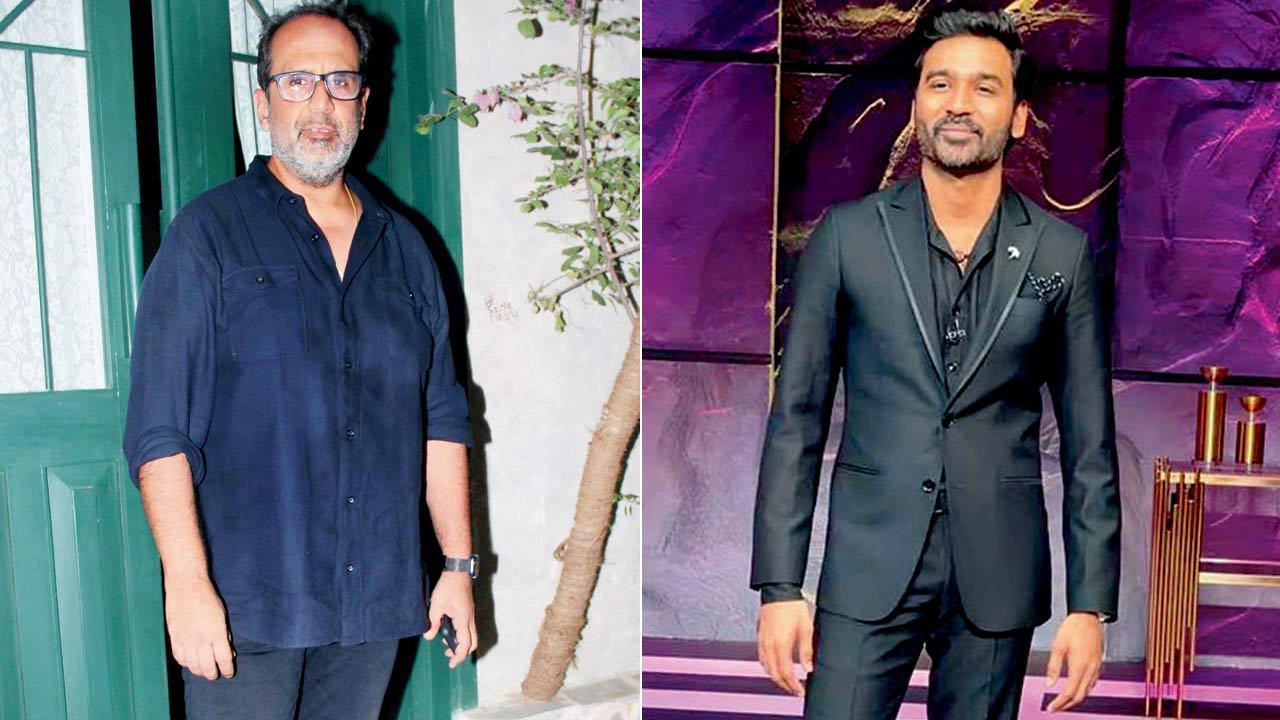
Anshul Chaturvedi (BOMBAY TIMES; November 17, 2025)
In an industry fixated with figuring out what the audience will opt for next, director Aanand L Rai insists that the real crisis isn’t of misreading the audience, but of diminishing honesty and genuineness from the filmmakers. It wasn’t the audience that changed, he says – it was the filmmakers whose conviction began to wobble. From his learnings from the success of Raanjhanaa and Tanu Weds Manu, and the failure of Raksha Bandhan, to the coming full circle and trying to reconnect to his middle-class grounding, the director opens up about an internal battle that many artists face, but few admit to.
Why are Hindi filmmakers often struggling to predict audience behaviour?
The audience has become very – how do I put it – woh thodi se bhi beimaani ab nahi le pa rahe hain storytelling mein.
What does that mean? Audience ka imaan jaag gaya hai ab?
Nahi, I think woh toh aise hi thay, hum (filmmakers) beimann ho gaye. Humko lagne laga, achcha, unka yeh emotion exploit kiya ja sakta hai. Iss tarah ki kahani, uss tarah ki kahani unko pasand aayegi. But in all that, joh ek cheez chali gayi in filmmaking, woh thi conviction – jo ki ek Pushpa ya KGF ya Kantara – inmein hai. They have proved that conviction works.
Define conviction. What’s the difference here?
Our approach to the film was just to please the audience. Their approach was to tell a story. There is a huge, huge difference between the two. I can speak for myself – kahani hi banayi thi na Tanu Weds Manu, kahani hi banayi thi na Raanjhanaa. But jahan mujhe laga ki audience ko yeh pasand aayega – Raksha Bandhan – nahi! It didn’t work for anyone.
So, when you made an audience-led film, it didn’t work because it was not with your personal conviction?
My conviction was that they will like it.
‘Maine detour liya toh mujhe sab yaad aaya’
When I was shooting last in Delhi, over a year back, I was staying near Nehru Place. And early morning I was on my way to the shooting location when I asked my driver to take a short detour to Sadiq Nagar. Our family stayed in Sadiq Nagar, government quarters – a Type III Quarter – that was allotted to my mother. I stayed there till my Class XII and then went to do my engineering. So on an impulse I told my driver, idhar le chal, main zara dekhoon Flat 152, Sector 1, kaisa dikh raha hai. Maine neeche khade ho kar dekha.
I remembered all those days. Roz wahin se nikalna, peeche bus stop se bus pakadna, uss window pe baithna, 2:45 pe ek ladki ka wahan se cross kar ke jaana, school uniform mein…that was such a memory. Maa ka chale jaana pyaaz ki rotiyan bana ke. Mera ghar aana, fridge mein se chhachh ka jug uthana…But if I don’t go there, all this is not happening to me. Main toh bhool gaya tha. Maine woh detour liya toh sab mujhe yaad aaya.
But the story was not your conviction?
No. Even if I make a film that I want to make, there is no assurance that it will work – but at least ek jana to khush hoga! Doosre tareeke mein toh dono hi khush nahi hain. This theory is easy, the practical – not so much. But when I think like this – mujhe mazaa aa raha hai – I can see the difference in how things go when I change the approach.
What is your learning curve of the last half a decade or so? What is your selfeducation in this journey?
My self-education is that when I was telling stories fearlessly, and at the same time, main apne pe kabhi successful film ka pressure nahi le raha tha, sirf kahani sunane ka pressure le raha tha – achche se sunane ka – tab tak meri duniya theek thi. Jab mujhe laga ki there are these growing expectations from this director, and I should go bigger – I started faltering.
That ‘formula’ work has been the reason for many an artiste to lose touch with their original craft.
Haan. At the end of the day, we are human – but at the end of the day, artiste jitna apni fakeeri mein reh jaye, utna achcha…
Artiste ki fitrat badal jaati hai toh uske kaam mein bhi farak aa jaata hai?
Aa jaata hai! Mujhe khud ko hi lagne laga ki bolta rehta hai middle class, middle class, but it doesn’t reflect in your work anymore – but it used to, earlier.
Achanak se sab badal gaya. So you keep talking about middle class, middle class, but you didn’t nurture the middle-class sensibility inside of you. My holidays changed – I began holidaying in Europe. I’m not saying that is wrong. If God has given you that success, you have to enjoy, there is nothing wrong with that. But it is a professional hazard – this profession makes you lose touch with your roots, and you have to understand that, and to hold on to it, if you want to remain in that space.
Midway nahi hai yahan. Ya toh aisa kar lo, ya toh phir udd jao. Be clear ki main toh aaya hi paise kamane ke liye tha. That is a different direction, a different track. But if you want to tell the stories that are inside you, then you have to stay grounded, stay in that world, and tell your stories.
And where are you placed – returning back to your original world?
Yes, I feel I am coming back to my world, jahan mujhe maza aayega.
What has changed in your approach to filmmaking now, as you come back?
I think if I am evolving, I should try to have my audience evolve with me. I will never be scared of telling an old story in a new way. I think the man-woman relationship was not depicted as an equal one for a long time. Many filmmakers got it wrong, and I need to make it right – that is my learning. Shayad main Tanu Weds Manu ya Raanjhanaa ke waqt iss tarike se nahi sochta tha, lekin ab sochta hoon.
You got a fair amount of flak for Raanjhanaa – not entirely unfair – in terms of your depiction of how a man behaved with a woman.
Yes, yes, and I took it. I understood. Ho sakta hai ki mere kaam mein going ahead you will see that I understood.
Hasn’t cinema sold the male entitlement pitch so often while making money at the box office? There is also a view that many of the blockbusters from the south have worked by playing that up while relatively more woke multiplex-ish Bollywood stories struggled.
I don’t disagree that many of the hits have a strong male perspective, they are very macho, and all that, but at the same time I think we cannot be the masters who decide beforehand what the audience should or should not watch.
I disagree with the thought that if we show them a lot of aggressive, macho male characters it will reflect in their behaviour. Because the reverse does not happen, does it? If I make films on Swami Vivekananda tomorrow, will all of them start doing sadhna? If they will not emulate what he does after watching a film on him, then they will not emulate the macho aggressive character either, will they?
Now you have seen me with my success and failures and trajectory. Obviously, success and failure matter, but at the end of the day, I enjoy the process. I am trying to not be afraid. I am trying to experiment. When I was making Raksha Bandhan I was thinking we don’t make enough cinema for the Tier-2 and Tier-3 cities. I thought I had it all clear in my head. But my judgement was wrong.
Staying connected is very important. Meri zameen chhoot jaati hai, phir mujhe pakadna padta hai, phir mai apne penthouse mein chala jaata hoon, phir mujhe yaad dilana padta hai apne ko Tu woh Dilli ka ladka hai, teri aadhi zindagi unn peele gharon mein guzri hai. Teri apni kahaniyan woh hain! Tu soch kyun nahi raha hai!
Isn’t it true that a lot of names, after they enter Bollywood, tend to forget the USPs or the nuances that brought them into Bollywood in the first place. Even if you’re circling back to the place you started from, mentally, that’s also part of any artiste’s graph, perhaps? And nothing teaches us more than failures, always, right?
Obviously (laughs)! The problem is that, fortunately or unfortunately, even when you have failures, so to say, your bank balance does not change dramatically. Your lifestyle does not change. So, you feel ki theek toh chal raha hai sab. After a point you have to realize that it does not matter how much you made or how much you lost in a project. You need to sit down and introspect and see how far you have drifted from your original path. If you don’t do that then even failure is teaching you nothing.
Right now I am enjoying myself. I am also relishing making films for other directors as a producer. I can’t compete with the big houses, but I will try to pick the stories that others won’t. I will search for an identity, something that is original, not a copy of anything ‘successful’. I have not reached a 200-crore movie ever. But I ask myself, what is a better option? To make something that I have fun making and have something that is still not a bad return, or to chase that number? I am not chasing that number. I am not chasing any number. I will keep my middle-class approach. Mujhe khana achcha chahiye, lekin mujhe chaandi ki thaali nahi chahiye.
It’s not just directors, though, is it?
Amol Palekar, Farooq Sheikh – they played some very relatable, everyday; then paused and said: Main dhoond raha hoon Vinod Mehra in this character. Tu mujhe bana ke de raha hai Vinod Khanna. If I do that, the character itself will change and you may not be the right fit for that version of it! Some directors complete the circle, like we were discussing, and come back to a more grounded version. But actors, if they do the same, wapas aa hi nahi paate hain. They reach a point of no return and sometimes they are neither grounded, nor superstars either.
Amol Palekar, Farooq Sheikh – they played some very relatable, everyday; then paused and said: Main dhoond raha hoon Vinod Mehra in this character. Tu mujhe bana ke de raha hai Vinod Khanna. If I do that, the character itself will change and you may not be the right fit for that version of it! Some directors complete the circle, like we were discussing, and come back to a more grounded version. But actors, if they do the same, wapas aa hi nahi paate hain. They reach a point of no return and sometimes they are neither grounded, nor superstars either.
Irrfan went to Hollywood but stayed capable of playing the everyday character, though.
Bilkul. Woh chala gaya, phir bhi aaj bhi kahaani bolte-bolte aap ruk jaate ho aur kehte ho, ‘Irrfan sahab hone chahiye thay…’ (Pauses) Bahut kahaniyan directors ke andar maar gaye woh. Ab aap suna hi nahi sakte, unke bina.
To wrap up what we’ve been talking about: Your USP, that you are rooted, gives you a nuance, an audience connect and also gives you commercial success. However, that success means that shortly thereafter, you are no longer rooted. So you lose your ability to repeat the original connect, and to do the same sort of work that brought you success in the first place.
Yes (laughs)! Yeh ajeeb sa circle hai! When you talk about great makers – and when I say great makers, I mean Hrishikesh Mukherjee or Bimal Roy, names like that – they somehow never lost connect with their roots or their storytelling. Even the Hollywood names who have taught us things about filmmaking – they have kept a consistency in their storytelling. I hope more of us can do that.
Kind of storytelling emerging from Hindi cinema today is far more authentic, experimental-Parvathy Thiruvothu
8:41 AM

Parvathy Thiruvothu talks about how today’s discerning audiences are the real gamechangers, driving the fading divide between Bollywood and regional cinema
Vishakha Pandit (HINDUSTAN TIMES; November 10, 2025)
Actor Parvathy Thiruvothu, who has been a part of Malayalam and Tamil cinema for over 17 years and marks eight years since her Bollywood debut Qarib Qarib Singlle today, feels that the lines between Hindi and regional cinema have blurred significantly since then. She shares, “Audiences no longer care about language; they just want an honest story. That’s a beautiful change because it pushes all of us to work harder and stay true to our craft.”
Parvathy adds, “Earlier, I used to think regional cinema, especially in the South, was more rooted, while Hindi films often followed certain set formulas. But that distinction doesn’t exist anymore. The kind of storytelling emerging from Hindi cinema today is far more authentic and experimental than it used to be. At the same time, southern industries have opened up to a global audience, especially after OTT. So, I feel both worlds are learning from each other now.”
The 37-year-old credits this change to the audience: “The audience has become the biggest game-changer. They’re far more aware, intelligent, and demanding. You can’t fool them with the same old ideas anymore.”
Reflecting on her journey since then, Parvathy admits she’s become far more selective about the projects she takes up. “Sometimes a script looks great, but if the energy with the team doesn’t feel right, I know it’s not for me. I’ve learned to listen to my instincts,” she explains.
That instinct, she says, has guided her choices across industries, including her Bollywood debut opposite the late actor Irrfan Khan. She recalls, “Working with Irrfan sir was one of the greatest blessings of my life. There was never any sense of hierarchy, only mutual respect and curiosity. He made every moment on set lighter, and that energy was contagious.”
I felt a punch to my heart when Irrfan Khan passed away-Adil Hussain
10:29 AM

Harshada Rege (BOMBAY TIMES; November 5, 2025)
At the Dharamshala International Film Festival, Adil Hussain reflected on the craft of acting and the mark Irrfan left on audiences. When asked about overcoming the challenge of being different in films of the same genre, he said, “It will be always different if you are truly yourself, even if the genre is the same, if you don't fall into the cliches of acting. It is extremely difficult. When you are not that person who is wearing a social mask, the one you wear when you are with your parents or lover or husband or when you are at a party and nobody is watching you and therefore, you are quieter, and from there when you act, you will be different. And the one actor who comes to my mind who was like that was Irrfan.”
Adil opined that Irrfan embodied a rare honesty in his work. “He tried his best to do that and that’s why when he died, I was shocked despite knowing that he was suffering from a terminal disease. I had a tough time accepting his demise. He tried his best to be as vulnerable and as transparent as possible. Did you see him very different in different characters? No. He was trying to be as open and vulnerable as possible. Not in all films. He was brilliant in The Warrior, The Namesake and Qissa - he was at his best in these films.”
Despite meeting Irrfan only a handful of times, Hussain recalled the deep personal impact his passing left on him. He shared, “I had met Irrfan only thrice during the promotions of Life Of Pi. I never had any conversation with him about acting or anything, but despite that, I felt a punch in my heart when he passed away. I was surprised about the way I felt.”
Complaining about nepotism gives a loser’s vibe-Vishal Jethwa
10:42 AM
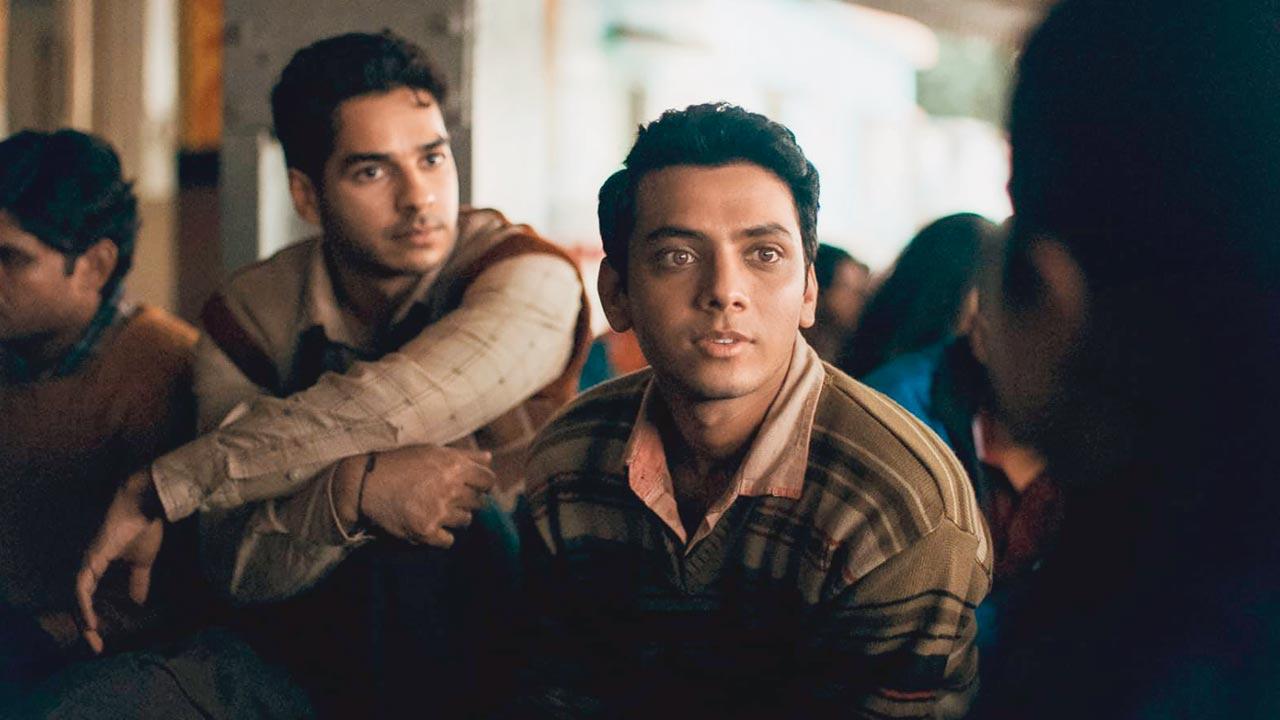
Oscar-bound film ‘Homebound’s actor Vishal Jethwa on taking inspiration from Shah Rukh Khan and Akshay Kumar
Mohar Basu (MID-DAY; October 5, 2025)
It’s been a few days since the country’s most talked-about film hit the screens. Naturally, leading man Vishal Jethwa is still absorbing the wave of love and acclaim for Homebound — India’s official entry to the Oscars.
When we get on a call with him, he starts with, “Everyone is talking about the film, and the fact that it’s officially entered for the Oscars,” he says. “Usually, when a film is selected, there’s some debate — people ask, ‘Why this film? Why not another with a better story or performance?’ But this time, I’ve only heard appreciation. That makes me so happy.”
For Jethwa — who had blink-and-miss roles opposite Irrfan Khan in Hindi Medium (2017) and in the Salman Khan-starrer Tiger 3 (2023), then played the antagonist in Mardaani 2 (2019), and a patient suffering from Duchenne muscular dystrophy in Salaam Venky (2022) — the journey to this moment is not lost on him.
Recalling his first big-screen appearances, he says, “I did a role of a tea vendor in Hindi Medium, a 30 to 40-second character with Irrfan sir. I’m glad I at least got to share that much screen time with him.”
Now, people are hailing his act as the moving performance of the year. “Someone told me I’m the next Irrfan Khan,” he says, almost incredulous. “I felt very strange. I couldn’t accept it at all.”
Jethwa, well aware that he is an outsider who has carved a place for himself, doesn’t wish to engage in conversations about nepotism or the lack of a godfather in the industry. He acknowledges that the journey is challenging but accepts that even those with a film background “don’t have it easy”.
Rather than complaining, he says, “I take inspiration from people like Shah Rukh Khan and Akshay Kumar, not from those who keep complaining about nepotism. I accept that nepotism exists. But if you keep complaining about it, it gives a loser’s vibe.”
Jethwa credits his director Neeraj Ghaywan for shaping his performance as Chandan in Homebound. The actor shares that the director advised them “to live the character” rather than act the part. Ghaywan asked him to read Annihilation of Caste.
“My [knowledge] about caste and religion is mostly bookish. Experiencing it is very different. Shooting the film changed me. It changed how I looked at society and identity. He’s a director who truly walks the talk. He wanted us to deliver lines in a way that was authentic, not preachy.”
Despite international acclaim, Homebound’s theatrical performance in India has been mixed. Jethwa says he hasn’t tracked the numbers closely, “I don’t think a film like Homebound is made for monetary reasons. Still, I want people to go to the theatres so the message can reach more people.”
New discovery
While film offers are pouring in, what surprised Vishal Jethwa more was when post Cannes, companies and designers approached him for fashion. “Another wing has opened up in my life,” he says.
You can’t even name five mainstream filmmakers who are united-Nikkhil Advani
9:53 AM

Rohan Kanawade, Nikkhil Advani
Priyanka Sharma (MID-DAY; September 24, 2025)
Rarely does this emotion strike filmmakers, but when it does, it hits hard. Nikkhil Advani experienced it — that feeling of a filmmaker reminding you of your younger self — when he watched Rohan Kanawade’s Sabar Bonda. “Rohan is the filmmaker we set out to be 30 years ago. But along the way, we had to take other decisions,” he says. “The purity with which Rohan has made the film is beautiful.”
Sabar Bonda tells the story of Anand, who, while navigating the grief of his father’s demise, finds love in Balya. The Marathi film has Advani, Vikramaditya Motwane, Sai Tamhankar, and Nagraj Popatrao Manjule as its executive producers. It’s notable how the movie brought several filmmakers together. Not a rare phenomenon, according to independent producer Shiladitya Bora, who recently told us that mainstream Bollywood filmmakers have more unity than their indie counterparts.
But Advani disagrees. “You can’t even name five mainstream filmmakers who are united. In the 1990s, 44 Aram Nagar was Sudhir Mishra’s office where all of us — myself, Tigmanshu Dhulia, Irrfan Khan, Manoj Bajpayee, Anurag Kashyap — used to hang out. Today, there’s more unity among indie artistes because their struggle is the same.”
As an executive producer, Advani is happy to nurture Kanawade and hopefully ease some of his struggles. Asked whether he felt almost envious while watching the director’s work, and he admits, “When I saw Aligarh [2016], I said, ‘Wow! Hansal [Mehta], what have you done?’ When we saw Udaan [2010], we were like, ‘Who is Vikram!’ I want to be jealous of [good] films when I see them.”
Advani, who made his directorial debut with Kal Ho Naa Ho (2003), knows that preserving one’s voice is far from easy. For Kanawade, he has a simple advice.
“He has to learn from me. I made Salaam-E-Ishq [2007] as my second film. My [approach] was that since nobody is giving me credit for my first love story, I’ll make six love stories. The decision was wrong because it was [born] out of arrogance. But you have to tell yourself, ‘I won’t go against [my instincts]’.”
Ten people placed their trust in me because Irrfan Khan, Manoj Bajpayee etc paved their way-Viineet Kumar Siingh
8:54 AM
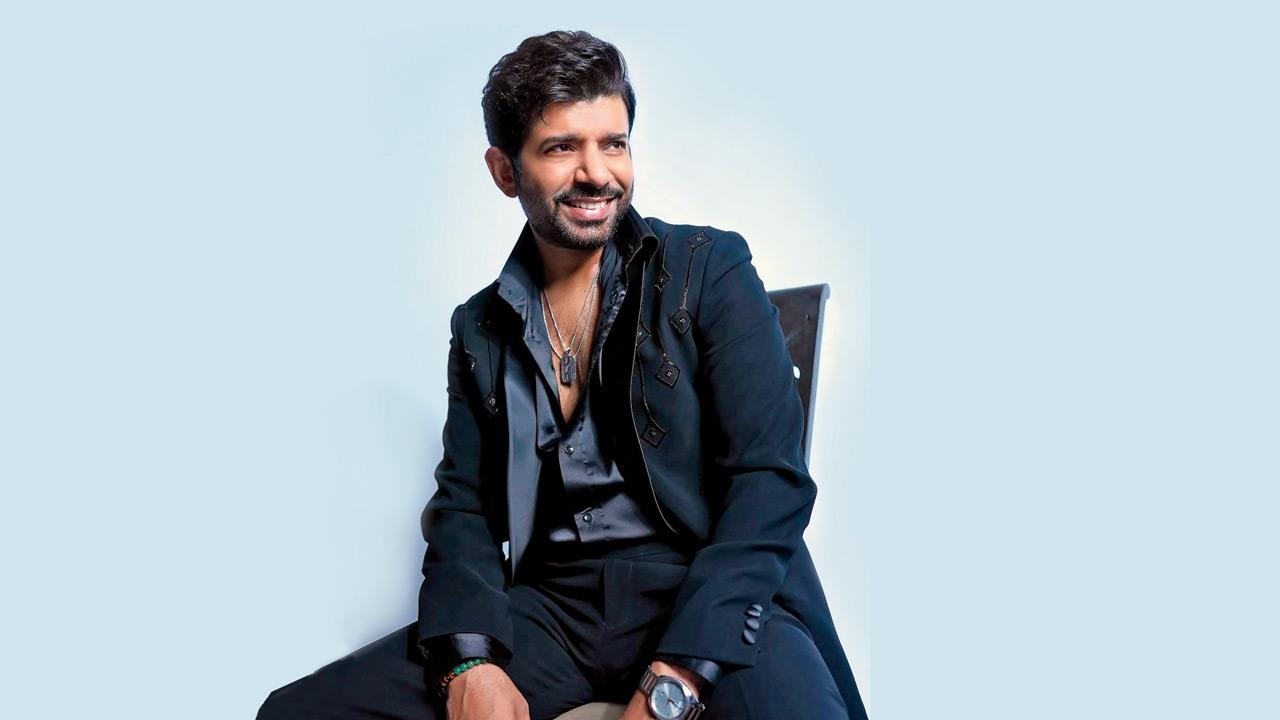
‘Rangeen’ actor Viineet Kumar Siingh says the rise of Manoj Bajpayee and Rajkummar Rao, who pursue craft over commerce, empowers artistes like him
Priyanka Sharma (MID-DAY; August 4, 2025)
A jilted husband-turned-gigolo is a role that Viineet Kumar Siingh had never been offered before. Naturally then, given his pursuit of novelty, the actor was immediately drawn to Rangeen. “I love to experiment. Just reading three episodes of Rangeen, I was sure I wanted to do it,” he smiles.
But before he said yes, the actor wanted to ensure he could trust the makers. The series, which also stars Rajshri Deshpande and Taaruk Raina, is created and written by debutants Amardeep Galsin and Amir Rizvi. “The subject is so sensitive that I needed to consider the people associated with it. I saw that Kabir Khan sir [producer] was there, as was Amazon Prime Video,” he says.
Rangeen tells the story of a woman who is stuck in an unfulfilled marriage and gets involved with a gigolo, which in turn makes her husband reevaluate his life. With the show examining the loneliness of the three prime characters, we ask Siingh whether he experienced loneliness over his two-decade career. “When you come to a city like Mumbai, your beginning itself is with loneliness,” he candidly shares. But to him, it’s not a disadvantage. If anything, he believes the sense of isolation can become an armour for an artiste.
“That emotion remains alive inside you and gives you strength. Your spirit will break, and so will your trust every day. This field shines from the outside, but there is emptiness, loneliness, and unemployment, until you create an identity as an artiste. You have to fight that fight alone. There are times when a role that you could do passes you by, but you have to be happy and headstrong.”
Evidently the actor speaks from his personal experience. Having started with smaller roles and finally landing a leading part in Mukkabaaz (2018), he enjoys a stronger position in the industry today with mainstream entertainers like Jaat and Chhaava behind him. He credits the actors before him, who made their craft their singular focus and rose to prominence, for making his path easier.
“It’s a long list — Irrfan [Khan] saab, Naseeruddin [Shah] saab, Nawazuddin [Siddiqui], Manoj [Bajpayee] bhai, Rajkummar [Rao], Vicky [Kaushal], and Vijay [Varma]. Ten people placed their trust in me because these actors [paved the way]. If such actors — whom the audience trusts and finds relatable — have gone ahead in their careers, they’ve helped me knowingly or unknowingly.”
I was typecast as a commercial actor during my prime-Deepak Tijori
9:41 AM

Ancela Jamindar (BOMBAY TIMES; July 26, 2025)
Deepak Tijori, who was in Ahmedabad recently for the muhurat of Get Set Go, is excited about doing a Gujarati film after a long time. The Jo Jeeta Wohi Sikandar actor shares, “I did a Gujarati film (Hun Tu Ne Ramtudi) more than two decades ago. I have been watching Gujarati films and fortunately, things have changed for the better and interesting concepts are being explored. I was offered a couple of other films prior to Get Set Go, but I felt I should explore this one. Ahmedabad has changed a lot over the years, but I have always enjoyed coming here. The city has a rich culture, with the right blend of modernity, and I love the people. Whenever I am here, I never miss eating dal dhokli, which is among my favourite dishes.”
‘After almost 20 years, I am reinventing myself’
Talking about how he was stereotyped as an actor, he says, “I always wanted to do contemporary films which were out of the box, but I was typecast as a commercial actor during my prime. I grew up watching actors like Naseer sahab (Naseeruddin Shah) and Om Puri sahab, and I had a theatre background. Once, I met Govind Nihalani and asked if I could work in his films. He told me that I could never work with him as I was recognised as a highly commercial actor. This had such a big impact on me that I never approached any makers of art films, as I didn’t know how to change this perception.”
He adds, “Now, after almost 20 years, I am reinventing myself with a new look in Veena Bakshi’s Ittarr. I always wanted to do such films, the kind that Irrfan did. Once, I even met Irrfan to discuss a film on these lines, but unfortunately, it was too late. Now, I am getting opportunities to experiment. I want to do roles which suit my age and have depth. I would love to do a sequel of Jo Jeeta Wohi Sikandar with Aamir (Khan). It should be a continuation of the story. May be, we can play headmasters of rival schools.”
‘After the slump, I’m now ready with interesting films’
Recently, he was nominated for the Best Actor award at the Independent Short Awards, Los Angeles, for his short film Echoes of Us. He shares, “I wrote and acted in it as I wanted to explore something beyond stereotypical roles like playing a father or other supporting roles. I wrote this movie in English as I did not want to limit it to regional languages, as it then gets considered in the foreign language category at international film festivals, thus limiting the scope. This movie received laurels at film festivals, and I was excited to be nominated for the Best Actor award.”
While he has also directed and produced films, he says, “My passion has always been acting. But I took a step back intentionally as I was swayed into the wrong kinds of roles. I put myself in a bracket where producers did not bank on me. Once, when Bhatt sahab (Mahesh Bhatt) tried to offer me a lead role, producers said that I can’t be a hero. I idolized Sanjeev Kumar and dreamt of the kind of roles he played in films like Trishul and Sholay. After the slump, I’m now ready with interesting films. I hope directors offer me more character roles suitable for my age. I don’t want to play just a father.”
Asked about his thoughts on the OTT boom, he shares, “OTT is a haven for hidden talents and artistes who never got recognition. There are many stories that can’t be told on the big screen due to time limits, and OTT doesn’t have this constraint. It has its pros and cons. Audiences now know that even if they don’t watch a film in theatres, they can watch it on OTT after a month.”
‘I fully support Deepika Padukone’s demand for an eight-hour workday’
Recently, Deepak had supported Deepika Padukone’s decision to opt out of Sandeep Reddy Vanga’s next film due to a disagreement over working hours. He says, “I fully support her demand for an eight-hour workday because she wanted to spend time with her child. She has worked in 12-hour shifts in the past. It (working hours) should be one’s individual decision and she shouldn’t suffer because she is a mother. While there are factors like budget, time, and availability constraints, I feel these things can be managed. Earlier, actresses had to give up acting after marriage or having kids, but the industry has evolved, and we need to be more progressive.”
We are fortunate to have actors like Om Puri, Manoj Bajpayee, Irrfan Khan-Nawazuddin Siddiqui
9:38 AM
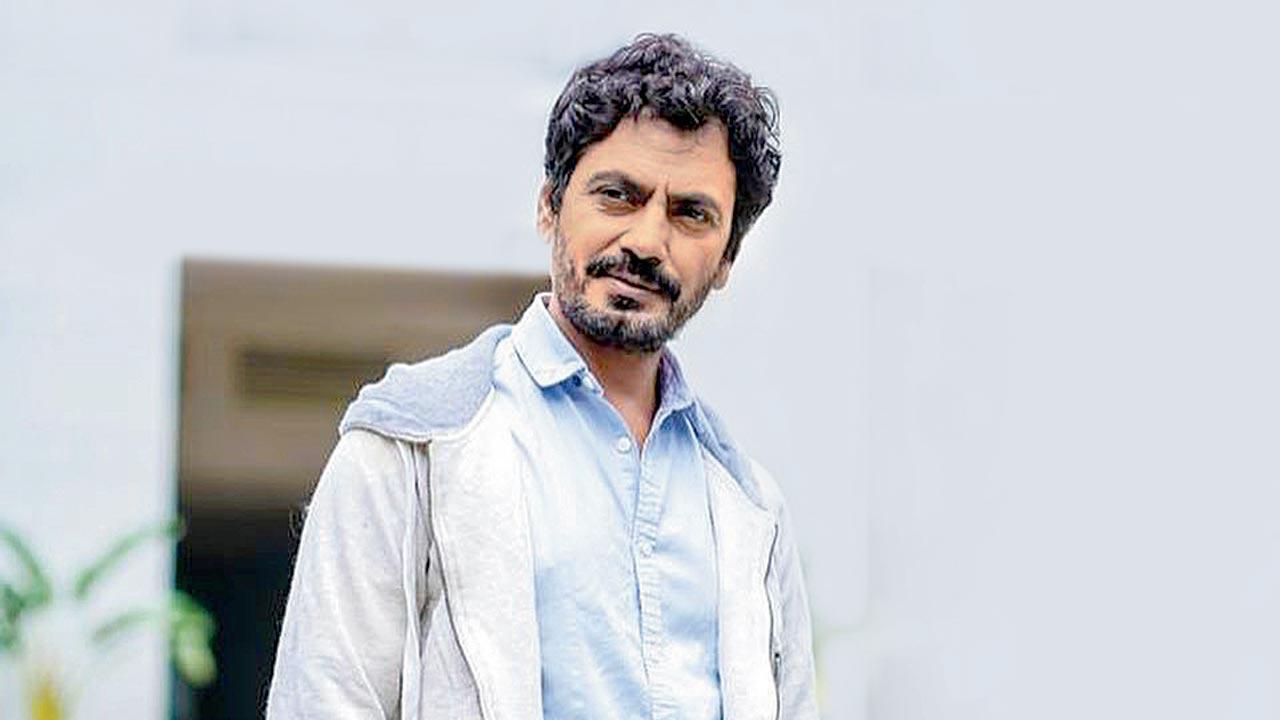
Niharika Lal (BOMBAY TIMES; June 23, 2025)
Nawazuddin Siddiqui, whose cinematic journey began in a theatre in the remote village of Budhana (Uttar Pradesh), believes that Indian cinema’s global recognition has been largely driven by independent filmmakers. With their work being appreciated in Europe, this acknowledgment, he feels, was long overdue and keeps him anchored to the kind of cinema he has always loved – from Naseeruddin Shah’s powerful performance in Sparsh (1980) to Irrfan’s in The Lunchbox (2013).
“These films, performances, and my theatre training shaped me into the actor I became,” he says. In conversation, Nawaz speaks to us about the deep impact films have had on him.
‘BERLIN HO YA CANNES YA VENICE, ITNE LOG AATE HAIN SIRF CINEMA KE LIYE’
According to Nawaz, film festivals expanded his vision of what Indian cinema could be. Sharing that he has been in screening rooms from Venice to Berlin, where audiences come for cinema, not spectacle, Nawaz says, “Berlin ho ya Cannes ya Venice, itne log aate hain sirf cinema ke liye. You go there, watch films from around the world, and then you see the ones that went from India, aur tab lagta hai ki ‘Thank God! Hamare yahan se bhi itni achhi filmein gayi hain.’ Even if they didn’t run in India, even if people here didn’t know about them – they worked globally.”
He adds, “Be it All We Imagine As Light (2024) or The Lunchbox – these films went on to become global phenomenon.”
‘OUR INDEPENDENT FILMS ARE MORE APPRECIATED IN EUROPE’
This year, Neeraj Ghaywan’s Homebound made it to Cannes. Payal Kapadia was on the Cannes jury. About the growing global recognition of Indian indie films, Nawaz says, “Indian cinema ko global level pe kisi ne crack kiya hai toh woh independent directors ne . Most of our commercial films are preferred by Indian diaspora and Middle East. But in Europe, our independent films are more appreciated.”
‘I keep going back to Dilip Kumar’s films and Naseeruddin Shah’s Ijaazat, among others’
Nawaz reveals he has always been a cinephile, drawn to movies by actors who pushed boundaries. “There are so many films I keep going back to Dev Anand and Dilip Kumar’s films, Naseeruddin Shah’s Ijaazat (1987), Om Puri’s Ardh Satya (1983), Pankaj Kapur’s Ek Doctor Ki Maut (1990). Yeh filmein main baar-baar, hazaar baar dekh sakta hoon .”
For him, it’s not genre or director, but the power of performance that links them. “It’s the actors,” he says. “Hamare country mein aise actors ka hona, yeh hamari khushnaseebi hai. Naseeruddin Shah, Om Puri, Kamal Haasan, Manoj Bajpayee, Irrfan – they’re great actors.”
“The first film I ever watched in a cinema hall was Jaggu (1975),” Nawaz recalls, adding, “I must’ve been five or six. Hamare yahan toh Shatrughan Sinha bahut hi popular thay western UP mein.”
I have a problem with celebrating mediocrity-Avinash Tiwary
3:47 PM
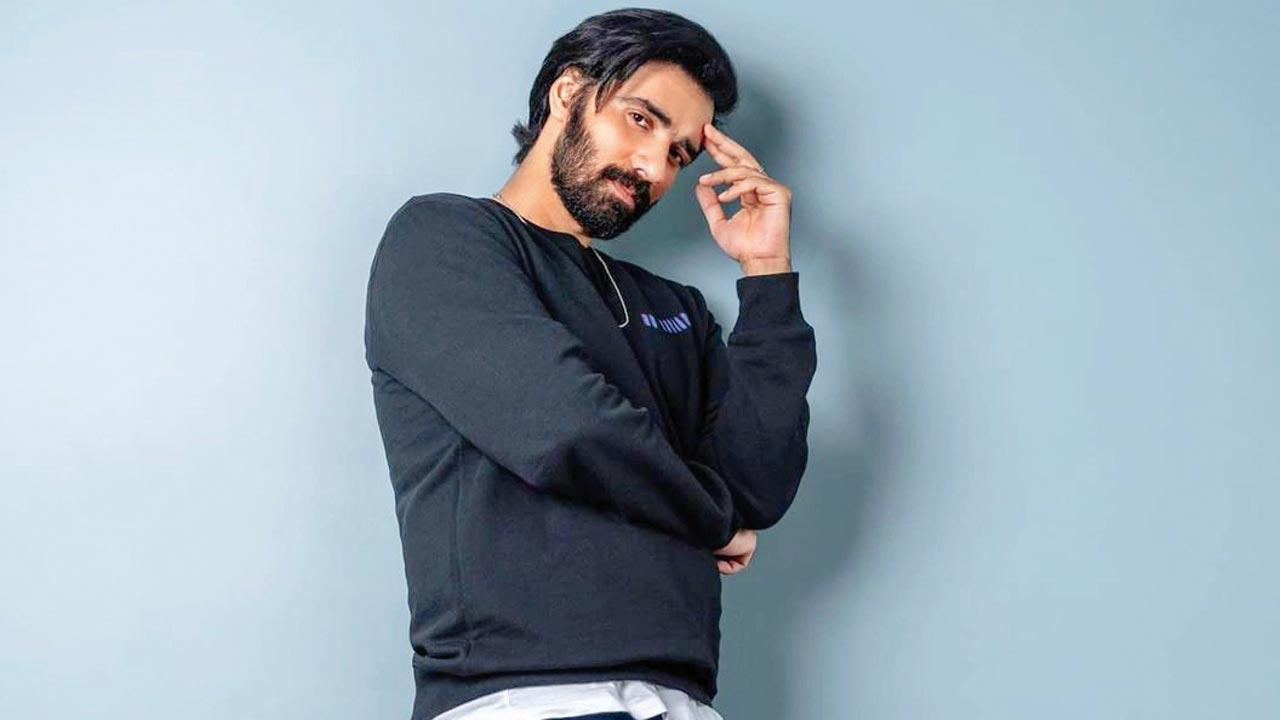
Neha Maheshwri (BOMBAY TIMES; May 28, 2025)
Avinash Tiwary finds himself at an intriguing and unique phase in his career. While steadily building a repertoire of critically acclaimed performances across diverse genres, he hopes to make a space for himself within the exclusive club of new-gen actors who successfully blend stardom with craft.
‘It is the audience alone that got Laila Majnu back to the theatres’
The initial release of Avinash’s debut film Laila Majnu in 2018, was heartbreakingly brief. However, everything changed with its 2024 re-release — a success Avinash believes was entirely driven by the audience.
He shares, “It’s time I start focussing on how grateful I am that it was the audience alone who brought it back to theatres. After Laila Majnu found box office success, many producers began re-releasing and promoting their films. But we didn’t feel the need to do that — the love for this film came entirely from the audience, and we didn’t want to interfere with that organic connection.”
‘Rewarding online attention and not quality has resulted in absolute mediocrity’
Despite the positive turn with Laila Majnu, the actor remains clear-eyed about the broader realities of the industry. The challenges he faced earlier haven’t vanished. “I don’t think the challenges have changed,” he admits candidly, adding, “The system is still the same... Nothing has really changed.”
He credits his perseverance to personal resilience and a belief in age-old wisdom – ‘Stay in the game, play it and move forward — one step at a time’.
Speaking about the industry’s flaws, he points to the dominance of the “attention economy” in content creation. “If you have attention — whether good or bad — even if 950 out of 1,000 comments are negative, the sheer volume of engagement drives the algorithm to support you, leading to significant revenue,” he explains, adding, “We’re rewarding attention, not quality — and that says everything about the system. It’s led to widespread mediocrity, where real value holds little importance.”
‘We’ve reached a point where we fail to acknowledge true value’
Avinash laments how creators are often blamed without considering the audience’s role in shaping consumption patterns. “We sit and complain about the creators, but we don't want to take any responsibility as consumers. If consumers took responsibility, creators would be accountable too,” he says.
He points to the late Irrfan Khan, widely regarded as one of India’s finest actors, and asks, “How many of his films had ‘housefull’ cinema halls?” He adds, “Is it Irrfan’s fault? It’s the audience. We’ve reached a point where we fail to acknowledge true value.”
He criticizes the “bheed” (crowd) mentality, where popularity breeds more popularity, driven by manufactured FOMO rather than genuine appreciation. “My problem is the celebration of mediocrity,” stresses the actor, adding, “When consumers glorify mediocrity, it feels like you’re disrespecting your own sanity. But this is where we are today.”
‘When I walk into a room today, I sense a certain amount of admiration for my work’
Years of navigating the film industry have bolstered Avinash’s confidence. “I feel much more assured about myself, my craft, my skills, and my space in the industry. Top directors and producers have reached out to me, appreciating my work. I can definitely say that when I walk into a room today, there’s a certain level of admiration and respect for my work and me. I am grateful for the opportunities, but I am waiting for that one major film that will reach out to everyone. It’s a matter of time.”
He sees himself aligning with actors who balance stardom with strong character portrayals. He says, “Ranveer Singh, Ranbir Kapoor, Shahid Kapoor, Vicky Kaushal and Rajkummar Rao have the ability to pull off stardom while bringing depth to the characters they play. I would like to be counted among them.”
With characteristic wit, he adds, “For now, I’m a similar product at a much lower price (smiles).”
Has anyone made a film worth Rs. 20-30 cr with Irrfan Khan, Manoj Bajpayee, Naseeruddin Shah?-Nawazuddin Siddiqui
10:37 AM
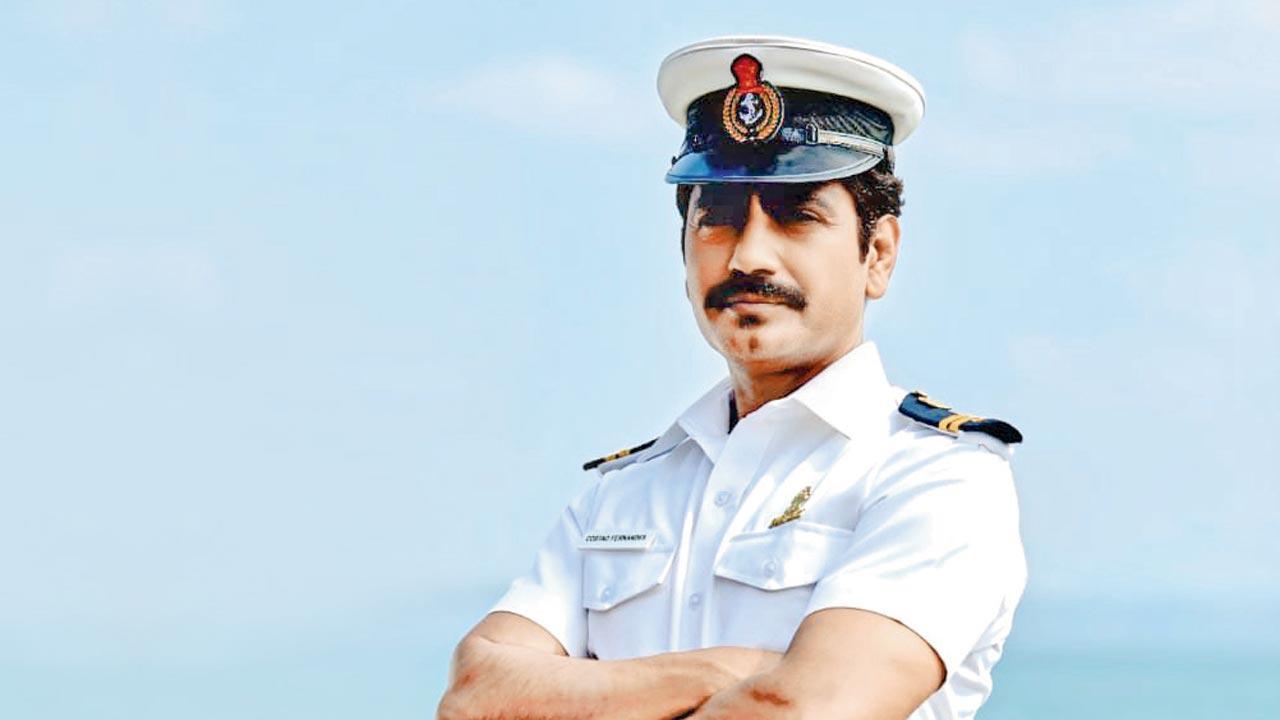
As Nawazuddin Siddiqui brings Costao Fernandes’s fight to life, he reflects on how the industry overlooks real performers for manufactured ideals
Priyanka Sharma (MID-DAY; April 28, 2025)
There were many inspiring qualities of customs officer Costao Fernandes that compelled Nawazuddin Siddiqui to come aboard his biopic. But what got him more excited was the way Fernandes laughed. “He laughs a lot, but there’s still something hidden behind his laughter. That was very interesting to explore,” Siddiqui tells us. The Zee5 biopic drama, directed by Sejal Shah, follows a gold smuggling case that Fernandes fought against in the 1990s. Siddiqui was awed by the officer’s courage and moved by his suffering when standing against a corrupt system.
Costao is an addition to his 26-year glorious filmography as an actor. As we remind him of the number of years he has been in the industry, he smiles and says, “The more I am experienced, the more I am scared thinking about acting because there are so many things to be explored. There could be 1,000 ways to perform a scene and the process of finding them is what I feel is interesting.”
Last month, at the Chandigarh Film Festival, Siddiqui had spoken about how he used to be annoyed at being called “unconventionally looking”. Even his NSD (National School of Drama) batchmate, lyricist Swanand Kirkire, in an interview, mentioned how the industry was cruel to him as he didn’t fit their definition of a hero. Does the actor consider it the industry’s failure that it doesn’t trust actors who don’t fit its stereotype of how a hero should look?
“But those, whom you are trusting, what are they doing? We are seeing what’s happening to the films that are coming nowadays with new actors,” he shoots back, before continuing, “The problem is, whether it was Irrfan [Khan] bhai, or Manoj [Bajpayee], Naseeruddin [Shah] saab or Om Puri saab, has anyone ever made a film with them worth Rs. 20-30 crore? Today, you shower praise at them and call them great actors, but no one ever made a big film with them. It happens only here. Internationally, they don’t differentiate between actors. They just cast a good actor. Here, we have categories like actor, hero, star, superstar. We have such great actors among us, you will spot them in movies or series in smaller roles. They aren’t supporting actors. They are great actors. Yet no one thought of making a film with them. And maybe no one ever will. We will be gone one day, but this will go on.”
Gangs of Wasseypur 3?
When we mention that director Anurag Kashyap got offers recently to make the third edition of Gangs Of Wasseypur, Nawazuddin Siddiqui promptly tells us, “Anurag won’t make it. Neither will I act in it. I get such offers so much. People even tell me, ‘Lets take your character of Faizal Khan from Gangs and make a film on him.’”
Irrfan Khan's fifth death anniversary: Why the legendary actor still lives on at Hiruchiwadi in Igatpuri
8:41 AM
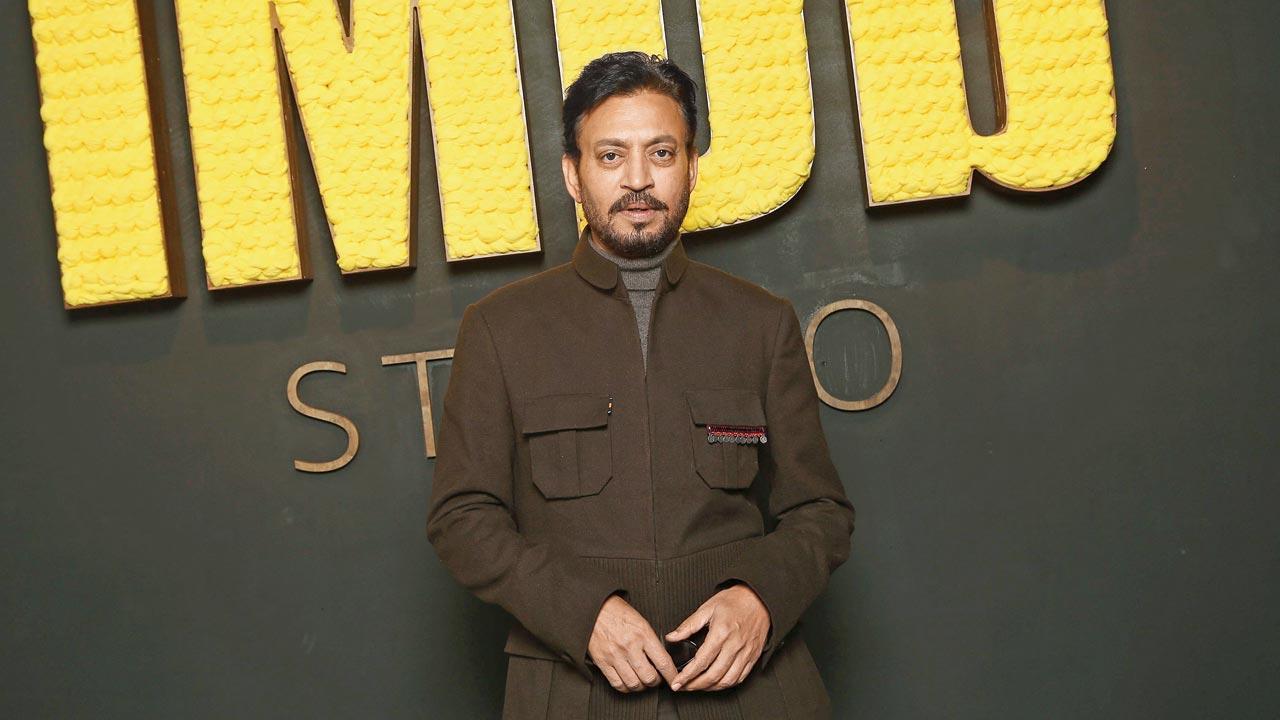
To mark his 5th death anniversary on April 29, Sunday mid-day travelled to Hiruchiwadi in Igatpuri—a village where Irrfan’s farmhouse lies untouched, and his legacy of generosity and kindness is still valued
Anand Singh (MID-DAY; April 27, 2025)
In 2010, when the late actor Irrfan bought a land parcel in a tiny hamlet in the lap of the scenic Sahyadri range in Igatpuri taluka of the Nashik district, very few people knew of him here.
By then, he was already an international star, having worked in Danny Boyle’s Oscar-winning film Slumdog Millionaire (2008), and classics such as Asif Kapadia’s The Warrior (2001), Vishal Bhardwaj’s Maqbool (2003), and Mira Nair’s The Namesake (2006), apart from many other Hindi box office hits.
It’s no surprise that people didn’t know him here, given that televisions are still a rarity in this tribal village called Hiruchiwadi. In the era of 5G connectivity, the network here is spotty, with just 3G connectivity if you’re in the right spot. When we asked a local farmer, Revati, 28, when was the last time she had watched a film, she responded, “Mee kadhi chitrapat naahi baghitla (I have never watched a film).” However, she came to know about Irrfan after he moved here, as he socialized with the villagers quite often.
It may be bewildering to many, but films are not the main source of entertainment in this tribal village. The closest film theatre from here, Victory Cinema, is around 11 km away, near Igatpuri railway station. With no state transport facility to connect Hiruchiwadi, travelling outside the village is not an everyday affair for everyone. Adults who have two-wheelers and a few families with cars are the only ones who frequently travel towards the city side.
Though just 120 kilometres from Mumbai, this tribal hamlet feels light-years away from modernity, still living in the 1990s. Old Hindi film music can still be heard on the radio sets if you stroll through the village on a quiet afternoon. The Sahyadri range surrounding it from all sides protects it in its soft fists, much like a mother coddles a baby in her lap.
It’s probably this simplicity and rawness that appealed to Irrfan, and he chose to build his farmhouse here, which was completely ready by 2015. It’s a perfect escape from the glitz and glamour of Mumbai, a city that always kept him busy and where everyone knew him.
Social media is full of stories and articles claiming that the village’s name has been changed to “Herochiwadi,” meaning “the hero’s neighbourhood” in Marathi. However, when Sunday mid-day spoke to the village Sarpanch, Ashok Pingle, it revealed what can be described as both coincidence and misinformation.
The Sarpanch explained, “The village’s actual name is Hiruchiwadi, named after Hiru Pingle, the mukhiya of the local tribal clan, who fought the British alongside the tribal revolutionary Raghoji Bhangre. Local NCP leader Suresh Bodke, who has worked for the village, proposed that the village’s name should be changed to ‘Herochiwadi’ to honour Irrfan after he passed away. But we didn’t want that. Because firstly, we are the descendants of Hiru Pingle and take pride in the fact that the village is named after him. Secondly, if two letters in the village’s name are changed—from ‘Hiru’ to ‘Hero’—it may bring popularity to the village, but it would also mean that all our documents, from Aadhaar to property papers, would need to be changed as well… It’s too long a process for changing just two letters.”
It’s a major coincidence that both “Hero” and “Hiru” have a very similar phonetic sound. The visit to the village was another lesson in the age of social media—do not trust everything you read online.
Regardless of the village’s name, the Sarpanch said the village loves its “Hero”. “The humility Irrfan showed by visiting houses around, providing livelihood to the locals by giving them jobs at his farmhouse, and his interaction with the children was something we did not expect from such a big film star. He could have arrived in his SUV with his bodyguards and chosen to stay in, enjoying the serene view and spending time only on his estate without stepping out. But he always chose to come to us.”
Ashok Pingle’s uncle, Damu Pingle, lives just a stone’s throw from Irrfan’s farmhouse, being the third house from his gate. When Irrfan learned that Damu was a tailor, he gave him the task of altering and tailoring all the drapery he had purchased for his farmhouse, including furniture covers for when the house would be closed. Damu refused to share how much he was paid for partly being involved in the “interior designing” of a film star’s house, but he mentioned it was more than all the money he made in the last five years.
When we asked Damu about his interactions with Irrfan, he said, “Aamcha bolnach zhaala nahi, kaaran tyaanna Marathi yaet nhavta ani mala Hindi bolta yaet nhavta. (We never spoke a word as he didn’t know Marathi, and I couldn’t speak Hindi).” But Irrfan’s staff did the translation for the two.
Another employment opportunity arose for Damu’s family as caretakers. It is his family that tends to the farmhouse during Irrfan’s family’s absence. As he showed this correspondent the farmhouse from outside, he further added, “I also worked on items like the tablecloths, kitchen cloths needed for regular use, and even doormats. Irrfan brought these items from outside, probably Mumbai, but they needed to be tailored to size. All the tailoring on this farmhouse is my work.”
But the real surprise came when he revealed that he had also stitched a few kurtas for Sutapa Sikdar, Irrfan’s wife. “She gave me a kurta that fit her well. I took the measurements and sewed many clothes for her for over two years.”
The trust Irrfan placed in the villagers was evident as we walked around his farmhouse. Villagers freely moved around, as there were no locks on the gates. A trophy he won for a film, along with various décor items, lay scattered on the façade of the farmhouse, yet nobody touched their beloved hero’s possessions.
Locals mentioned that Irrfan was deeply committed to community work. According to Subhash Mengal, a primary school teacher in the village, Irrfan was planning to have some films shot there, those that fit the village’s terrain—mountainous, rugged, yet green.
Mengal says, “In one of the interactions I had with him, he mentioned that film shootings would generate employment for the locals. It’s a location just three hours away from Mumbai, and it may help filmmakers save costs on VFX or travelling to distant locations. It was a very interesting prospect. You can see how disconnected the village is, despite being at the border of three major districts—Nashik, Palghar, and Thane.”
Though he never formally adopted the village, during his time here, Irrfan touched lives across all domains. A resident of the village, Eknath Pawar, told us that Irrfan had donated Rs 50,000 for a local temple, now the largest in the village.
“We mentioned that the Hanuman temple needed renovation. We didn’t care whether the donation came from a Muslim, as it was god’s work. He never cared about religion either. The funds arrived within a few days, around the time when he was already sick. It didn’t come directly from him but through Sutapa Didi.”
But closest to his heart were the children of Hiruchiwadi. Bhavrao Bandu Bangar, the former headmaster of the primary school in the neighbouring village of Patryachawada, knew how big a star Irrfan was. However, his approximately 100 students had no idea who he was. In 2015, when Bangar learned that Irrfan’s farmhouse was nearly ready and that he would be arriving soon, he went to the farmhouse to request him to meet the students. “It may have been their only chance to meet such a big film star. Meeting an influential figure at a tender age can make an impact,” he tells Sunday mid-day.
But Irrfan was seemingly busy that day, telling the headmaster, “I will come later in the day...” School ended at 5 pm, and the children waited until 5.30 pm, but Irrfan did not arrive.
Bangar says, “It was understandable. He is a busy man.” But, to his surprise, the next morning, Irrfan, along with his family, arrived at the school earlier than anyone else and waited for the students to come. Delighted that he had shown up with his entire family, the headmaster asked, “Why did you not come yesterday?” To which Irrfan replied, “I didn’t want to come empty-handed.” Bangar recalls, “He came with two cars full of school bags, stationery, sweets, and whatever he could get for the children from a nearby market in Nashik.”
A few years later, Irrfan visited the farmhouse again. By this time, the children knew he was unwell. Bangar told the students, “Hero aajaari aahe (Hero is unwell). Make bouquets for him from whatever you find on the farms.”
The students got to work immediately, and within a few hours, a hundred bouquets made from local flowers and leaves were ready. Bangar informed Irrfan that the children had brought him something this time. Soon, a hundred bouquets adorned the façade of his farmhouse. “He started crying when he saw the gesture,” recalls Bangar.
This happened towards the end of the monsoon season, and Irrfan had noticed the children walking to school with plastic sheets or nothing at all during heavy rains. Bangar shares, “Ten months later, at the onset of the next monsoon in 2018, I received two massive cartons. The sender’s address was from Rajasthan, where Irrfan originally hailed from. I had never asked for it, but even while he was receiving treatment in London for his illness, he remembered the children and the fact that the monsoons had begun, knowing they would need raincoats to go to school. I never got to see him again, as Saheb was very sick.”
Today, the plans Irrfan had for the village sit stalled, which included basic infrastructure for shooting, proper roads till the Trilangwadi Fort, modern classrooms in the primary school, and much more. Locals say his family does not visit as often, and they mostly keep to themselves, unlike Irrfan. He once told primary school teacher Subhash Mengal, “The film industry is a lonely place. I am glad to have you all.”
However, the work he did for the village remains. The children still cherish fond memories of spending entire days, multiple times, with an international star. Some now aspire to become actors. Bangar says, “Without him, even the thought of learning theatre or becoming a film star would not have occurred to these children. We are close to Mumbai, yet so far.”
The questions posed to the residents about Irrfan make them light up with pride, knowing that their village is recognised now because of their hero.
Today, the gate of his farmhouse, which opens directly in the village, has a seat that nobody sits on, next to an epitaph that reads, “We live because you reside in our soul.”

Irrfan’s farmhouse in Hiruchiwadi, Igatpuri—where he helped the village grow and found a second family. Pics/Satej Shinde
Babil Khan pe bahut zyada pressure hai, almost depression mein hai-Sutapa Sikdar
10:44 AM
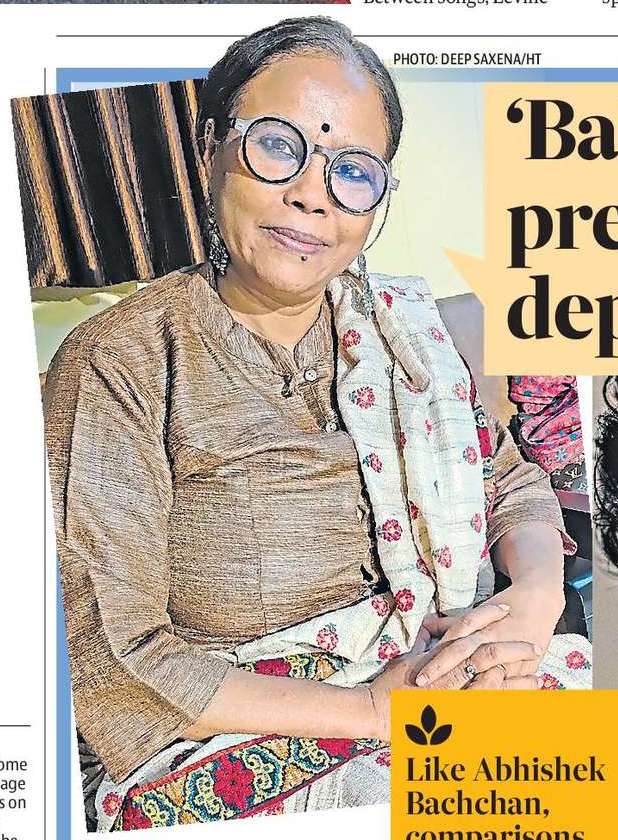
Deep Saxena (HINDUSTAN TIMES; December 5, 2024)
Late actor Irrfan Khan’s wife, writer-producer Sutapa Sikdar, candidly opened up about the challenges faced by their son, actor Babil Khan, who has featured in The Railway Men and Qala, during her recent visit to Lucknow. Sutapa revealed how constant comparisons with his legendary father have created immense pressure on Babil, affecting his emotional well-being.
“Babil pe bahut zyada pressure hai aur mujhe yeh thik nahin lagta! This pressure should not be there. Irrfan never had this kind of burden, and when you don’t put pressure on yourself, your individuality shines. It’s not just about work; losing his father has left Babil almost in depression. Usmein yeh stress and comparison hai all the time. As a mother, I feel, ‘Please mere bachche ko chorr do.’ He’s very vulnerable and does not have a fighter’s spirit. His father was very strong and so am I, but genetically kahin se toh aaya hoga,” shared Sutapa.
Drawing parallels, she compared Babil’s journey to actor Abhishek Bachchan’s career struggles. “Like, Abhishek Bachchan did amazing work in I Want To Talk but wahi hai...comparisons with legendary Amitabh Bachchan have worked against him. I feel Babil is going through a similar ordeal. I just hope he overcomes it soon.”
On the professional front, Sutapa, who contributed to Kahani (2012), is slowly returning to her creative pursuits. She has consulted for two TV shows and is now working on a book and a film. “I am writing a book and a film, but to be honest, I am still unable to become an individual that I can focus on career or writing. I am unable to detach myself, and simultaneously, Babil’s career has started, and phir kabhi kuch, kabhi kuch…so I am still stuck. I have written the skeleton part of the film. Besides, I have started a book on Irrfan but not a serious preachy one and want to do it in a funny genre, which needs time,” she said.
Asked if she plans to direct or act in her film, she said, “Whoever I have narrated the concept has suggested that I should direct it. Babil can fit in as it’s about mother and son, but surely, I won’t act in it.”
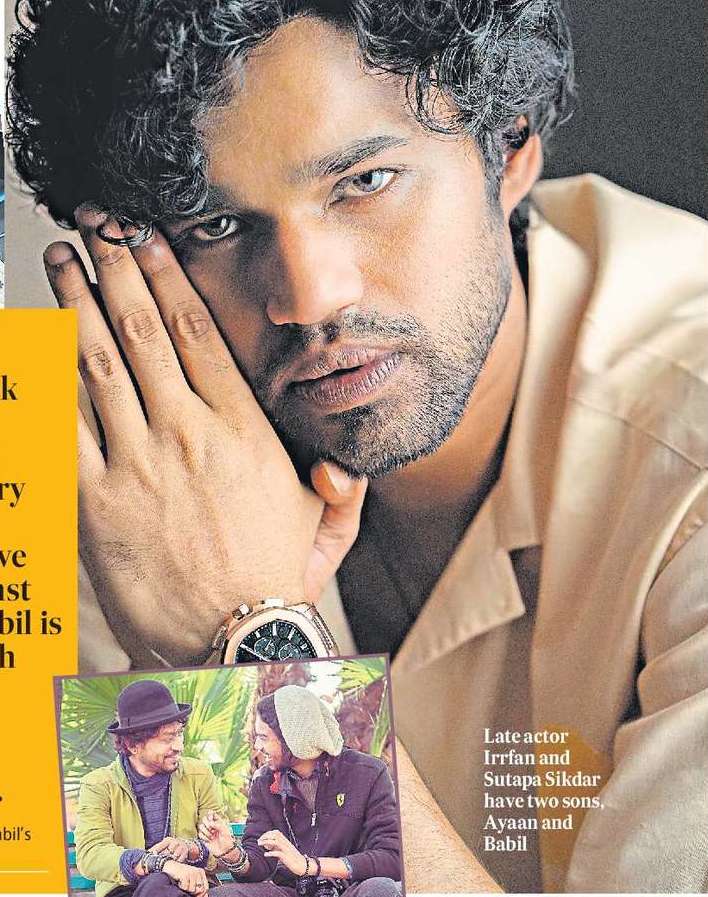
Subscribe to:
Posts (Atom)