Showing posts with label International Film Festival of India 2024. Show all posts
Showing posts with label International Film Festival of India 2024. Show all posts
I love buying vegetables; it gives me more of a high than people taking my selfies-Manoj Bajpayee
10:28 AM

Niharika Lal (BOMBAY TIMES; December 3, 2024)
Manoj Bajpayee says that an actor has to be like a fly on the wall – he’s present in the room, but still not quite there. If an actor achieves that in life, then things become easy. He says, “You can see things which are unseen.” During a recent conversation at IFFI, Manoj spoke about why he thinks silence speaks the most, why mastering pauses is difficult, and his immense dislike for selfies.
‘PAUSE IS THE MOST DIFFICULT DIALOGUE FOR ANY ACTOR’
Manoj says that when he got admission to DU, he was blown away by the amount of work he had to do to perfect the art of dialogue delivery. He recalls, “A teacher of dramatics heard me saying dialogues, and she shouted at me. She said, ‘Everything that you are saying is wrong. Your pronunciation is wrong, pitch is wrong, rhythm is wrong.’ Here I was, thinking that coming from a poetry background, everything was going to be fine. From there, I started working on myself.”
He also adds that as an actor with decades of experience, he now sees things differently – “Pause is the most difficult dialogue for any actor.”
Talking about silence, he adds, “When there is no dialogue, there are too many dialogues. It’s just that you are not voicing them, but they are happening inside your brain. That is where the actor’s job becomes more important because you have to think about what the character wants to say but is not saying.”
‘IF I’M GOING TO KEEP MY CAR WINDOWS BLACK, HOW WILL I OBSERVE PEOPLE?’
Talking about staying away from stardom, Manoj says, “I love strolling in the market and buying vegetables; it gives me more of a high than people taking my selfies. Somehow, I feel that selfies invade my private space. It’s too close to me – nowadays, even my wife isn’t that close to me (laughs).”
He says that he doesn’t want to be seen, but wants to observe people. He explains, “On a serious note, I feel that if I’m going to keep my car windows black, how will I observe people, understand them, and get those characters, get their minds into my characters? The more I am cut off from people, the more my journey will go downward. My kind of actor can’t afford to be away from people.”
He adds, “I was never chasing stardom. Stardom has to do with mystery and glamour – what I was chasing were roles.”
Nobody can force me to do a film-Rakhee Gulzar
10:21 AM

Niharika Lal (BOMBAY TIMES; December 3, 2024)
Rakhee Gulzar attended a press conference at IFFI for her upcoming Bengali film Amar Boss (2024). When asked about her return to films after a long time, she initially refused to comment, saying, “I will not say anything about it.”
After repeated questions, she said, “I have not come back. I have not gone anywhere. I am there. I am still in the film industry. My daughter is there, I know who is doing what, who is upcoming, I keep track. But choosing a film to do – I will do that. Nobody can force me. I wanted to do this film; I did it. Usmein aap koi bhi lollipop de do toh nahi chalega chahe woh paisa ho, chahe woh kuch aur ho, it’s not going to work. First, give me the subject. The main important factor is subject.”
‘For me, new technology was a little difficult’
Sharing one of the reasons she hasn’t been doing films, the veteran actress said, “Aur ek darr tha – new technology. Hamare time ka camera, sound – ye sab alag tha. Jab main meri beti Meghna (director Meghna Gulzar) ko dekhti hoon – tab mujhe darr lagta hai – main kar sakungi kya? Ghabra gayi thi main. Main uss zamane se hoon jahan director, cameraman, sound recordist even the lightmen and the total unit would be together. Otherwise, it wouldn’t work.”
She elaborated on how technology has changed, saying, “It’s very easy for them, but for me, to digest and take it like that – it was a little difficult.”
How local mobile theatre company is creating movie magic with tickets at just Rs 100
10:48 AM
Priyanka Sharma (MID-DAY; November 28, 2024)
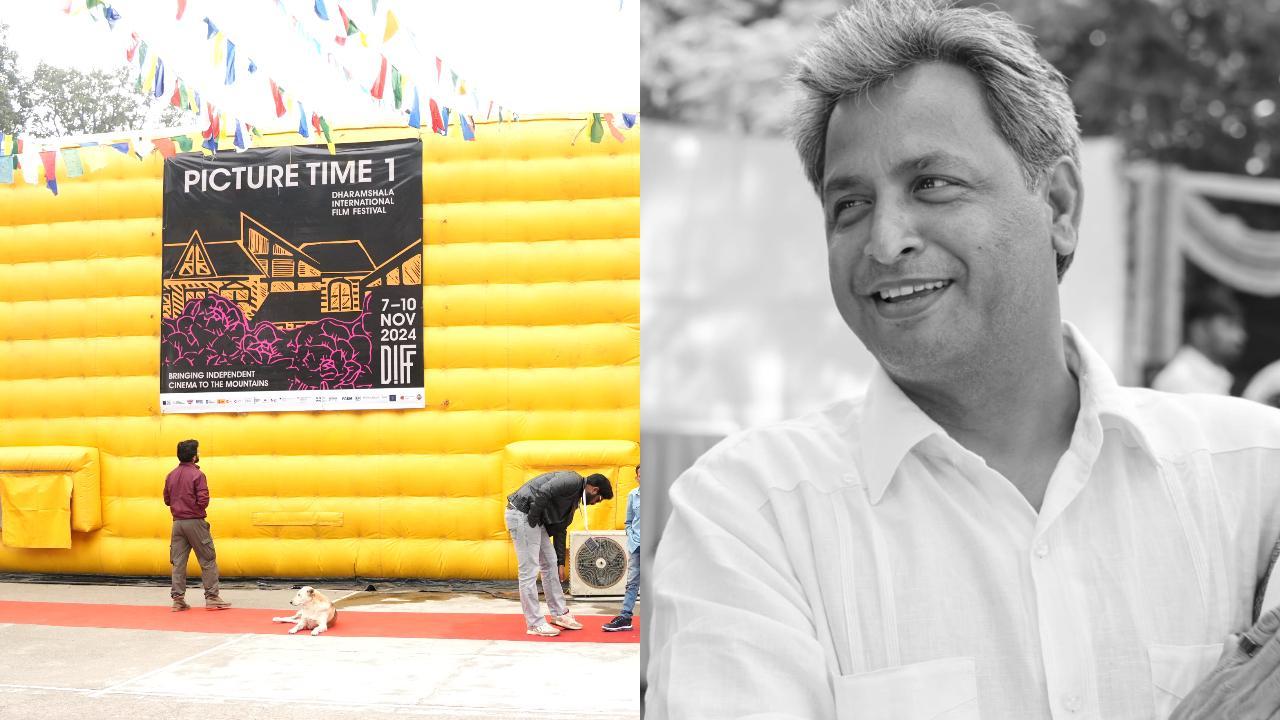
What comes after roti, kapda aur makaan? It should be entertainment if one asks Sushil Chaudhary, the man who aims to take cinemas to every nook and corner of the country. Chaudhary is the founder and CEO of the mobile theatre company PictureTime that screens films at inflatable theatres across the country.
“Everybody was talking about it but we took the cinema literally to people,” says Chaudhary, who is currently in Panjim, Goa as PictureTime is the screening partner of the 55th edition of International Film Festival of India (IFFI).
It’s a sweet home coming for PictureTime. Eight years ago, the company began their association with IFFI with the screening of S S Rajamouli’s Baahubali: The Beginning. It continued for the next three years until pandemic played a spoilsport. In the last two years, Chaudhary says, the company was regrouping and missed coming to IFFI.
“So, when NFDC and Ministry of Information and Broadcasting approached us, we immediately said yes. The number one problem for IFFI was the number of screens. It only has INOX. This year, we have put two inflatable theatres.”
If one happened to be in or around Panjim over the last week, it’s impossible to miss the IFF hype— the posters, standees and signboards won’t let it happen anyway. And once entered the primary IFFI venue of Kala Academy, one could spot the red coloured PictureTime inflatable theatre anyone could walk in to catch a film. The playlist at this theatre ranges from Pa Ranjit’s latest work, Thangalaan, Rajamouli’s blockbuster RRR (2022), Ranbir Kapoor’s much-loved 2011 romance Rockstar to Hindi film classics like Guide (1965), Bobby (1973) and Jane Bhi Do Yaaro (1983).
Unlike the rest of the festival, which needs a prior approved accreditation, PictureTime theatre makes no distinction. So, at a given time, the theatre is filled with festival attendees and non-delegates. Another such inflatable theatre is operating in Sanquelim. Not just that, PictureTime has also set up a mobile open-air screen that has been travelling across North and South Goa. Chaudhary is confident that PictureTime will grow bigger by the next edition of IFFI. We wanted to put five theatres time but couldn’t due to budget constraints. But next year we will do it in a bigger manner,” he says.
Chaudhary’s self-belief is not without a reason. From the inception of his company till now, he and his team have put inflatable theatres in more than 600 locations across the country. “These many locations in 18 states. In a state like Orissa, which has very less screen density, I have screened films in all its 29 districts. More than 70 percent of the districts in Orissa have no cinema penetration,” he shares.
It’s rather unfortunate that for a cinema-obsessed country, the magic of movies continues to elude a large population. “India not only has poor theatre density but also doesn’t have a clean entertainment option. For filmmakers to make movies and for movies to make money, the only answer are the cinemas, not OTT,” Chaudhary asserts. Trade experts say that India has around 9,000 screens. For context, let’s look at China, Chaudhary points out. “In 2007, it had more than 3000 screens and in 2015, it had around 55000 screens. Aamir Khan’s Dangal, which released in 2016, made Rs 400 crores in India but Rs 1800 crores in China,” he says.
Chaudhary is singularly focused on making films available to the country's remotest areas. “The government recognises 117 districts as having below-poverty line issues. And in all those districts, we are setting up theatres.” The purpose is to ensure a safe, enjoyable recreational experiences for the youth and families in small towns.
"You hear the stories of couples in small towns being harassed for going out and spending time together. People in the interiors want to go out in quiet, peace and safety but they do not have any place because if you go to the single screens, you are labelled. We managed to convince state governments and the centre government that entertainment zones are very important," Chaudhary mentions.
A 150-seater inflatable theatre takes a couple of days to set up. Five to six people can set up the full screen, and another such team can run full operation, we are told. "The idea is to make the theatre at a very efficient cost and keep the monthly operational cost below Rs 2 lakhs but do not compromise on the quality," he shares. So people get an air-conditioned theatre with Dolby 5.1 big screen and stories that are both Indian and foreign.
And because at the heart of PictureTime is to make cinema available to low-income areas, the ticket pricing is accordingly.
"Rs. 100 is our standard ticket price. Add Rs 50 for popcorn. The pricing depends on the expenditure power of a place as well on the film's producer and distributor. Like in Chhattisgarh, we have kept the ticket price to Rs 70, in Rajasthan it’s Rs 150-200. Normally, when a family of four goes out to watch a movie, it ends up spending Rs five-six thousand. We want it to all fall under Rs 1000," Chaudhary says.
Providing a wholesome experience to families has been another big pursuit of Chaudhary and his team at PictureTime. "We are creating family plexes. The first one will be in Bharatpur, Rajasthan. December 24 is the inauguration. The family plex will have nine retail stores, including food court, and live performances. Cinema theatre should anchor this arrangement and it’s a lifestyle we are taking to these places. Post the ’90s revolution, when the multiplex culture entered India, theatres went inside the malls. What we are trying to do is take malls to the theatres. So, imagine a theatre and a Dilli Haat type set up around it. So, I am creating a rural mall. We have tried this arrangement in Goa and other places and it has worked."
Chaudhary has found patrons in Indian filmmakers. "During our first IFFI association, we could show the theatre to filmmaker Kabir Khan and other senior people in the industry. Kabir Khan called the experience brilliant. Every filmmaker I met, from S S Rajamouli to Siddharth Roy Kapur, loved the idea and they all asked me to keep adding as many screens as possible."
Certain horror films are trying to be depressing-Chuck Russell
8:09 AM

Currently in India to attend IFFI in Goa, Chuck spoke to us about the mayhem he creates in his horror films, his approach to staging, and the classical aspects of horror that are the foundation of his work.
Niharika Lal (BOMBAY TIMES; November 28, 2024)
Hollywood director and producer Chuck Russell originally decided to make The Mask (1994) as a horror film. Following A Nightmare On Elm Street 3 (1987) and The Blob (1988), The Mask was set to be his next spine-chilling project. Instead, the 1994 global box office hit was an action-comedy.
Chuck says that a good horror film is a combination of psychology and fear. “I don’t think I’ve ever worried about scaring the audience too much. I’m concerned about going too graphic. I always think, ‘Is it graphic enough, or is it too graphic?’ As a director, I want to scare the audience as much as I can and give them a thrill. They’re going for a horror movie, so they know that it is going to be scary,” he says.
‘IT’S NOT ABOUT HOW GRAPHIC HORROR CAN BE, BUT HOW IT IS STAGED’
Chuck says that when he crafts horror films, he focuses on storytelling and characters because when the audience cares about the characters, it makes the scares impactful.
He says, “I want to make films where the audience thinks, ‘That’s how I might behave, even if it’s a spaceship,’ or ‘That’s how I might behave, even if it’s someone trapped in a cabin or whatever.’ Now once I have the audience’s heart in the character, I can scare the hell out of them. This is the horror you really remember. The scenes in my movies that people remember the most are often the most imaginative, but terrifying because they cared about the character. So it’s not just how graphic it can be, for me, it’s how it is staged.”
‘THE EVOLUTION OF HORROR FILMS HAS BEEN QUITE INTERESTING’
Talking about the way horror as a genre has grown over the years, the filmmaker says, “The evolution of horror films has been very interesting because it has become more and more graphic. I’m impressed when I see something surprisingly graphic that’s true to the story. What’s happened in contemporary horror is that certain horror films are trying to be depressing – they’re so choked with despair. Every character is miserable. The film itself can become depressing.”
‘HORROR COMEDY IS ABOUT COMBINING FEAR & HUMOUR’
In India, this year, horror-comedy genre was quite popular. Talking about the genre Chuck says, “Horror-comedy is really cool, but you have to be careful not to be silly. There’s a little bit more humour in most of my movies. In Elm Street 3, I did things that were unexpected for the character, and it worked. Horror comedy is about the combination of fear with humour. If you’re doing something a little funny when the audience expects a scare, and when the audience is not expecting a scare, you scare them, and you will get a scream.”
What makes a great horror film as per Chuck Russell
- Story and characters that the audience cares for
- Set pieces with a great shot design
- Originality – It’s a great rule to say you want to give the audience exactly what they wanted the way they least expected
- There has to be an organic sense to the magic in the story, but there has to be logic
If you’re not talented, you won’t go beyond 4 or 5 films-Kriti Sanon
11:14 PM
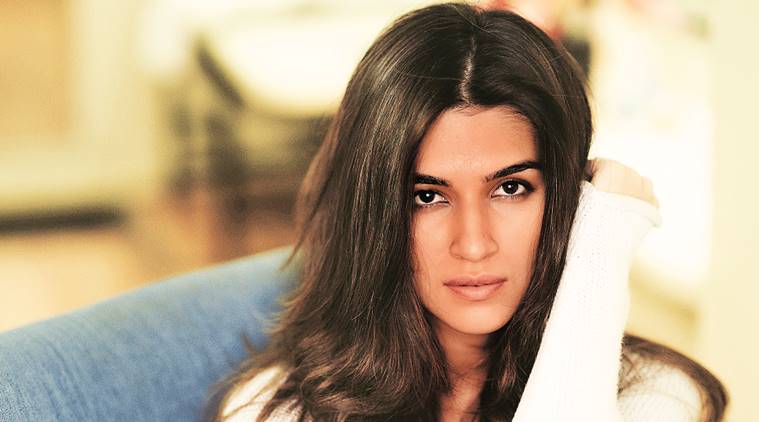
Kriti Sanon spoke about her journey in showbiz and her take on nepotism at a session in IFFI 2024
Niharika Lal (BOMBAY TIMES; November 27, 2024)
A t the ongoing IFFI 2024, Kriti Sanon spoke about a myriad of topics, inlcuding her love for filmmaking and nepotism not being an industry-specific phenomenon.
‘AUDIENCE WANTS TO WATCH CERTAIN STAR KIDS, SO INDUSTRY MAKES A MOVIE ‘
Expressing her views on nepotism, Kriti said, “The industry has given me a very warm welcome since the time I came. Of course, when you don’t belong to a film background, it takes time for you to get there, to get the opportunities you crave for. It takes time for you to even get those magazine covers. But after 2-3 films, if you keep working hard and if you are at it, nothing can stop you. Ye jo hum nepo kids-nepo kids karte rehte hain, I feel, it’s not just the industry that is responsible for nepotism, it is also the media and the audience. The audience wants to watch what the media is putting out about certain star kids and because they are interested in them.”
Kriti added, “People in the industry feel like the audience is interested in them, so, let’s make a movie here. It’s a circle. But I believe, if you are talented, eventually, you will get there; no matter where you come from. If you’re not talented, you won’t go beyond 4-5 films.”
‘I’VE REALISED THAT THE SUCCESS OR FAILURE OF A FILM IS NOT IN MY CONTROL’
Kriti shared that she was advised against taking on Mimi by many people. “Still, I chose it because the script touched my heart. For me, that’s the most important factor while selecting a film,” she said, adding, “There’s a lot of chatter around actors. A lot of people tell you what to do, what not to do. I’ve gone through all of that. I’ve listened to many things, but I’ve also realised that the success or failure of a film at the box office is not in my control. There are certain films that haven’t worked, and that’s broken my heart. But if you ask me whether I’d go back and do the same film again – I would, because I enjoyed the journey of it.”
She elaborated, “Sometimes, (let’s say), my agent says I should do a film because great people are involved, or it might collect Rs. 100 crores. That Rs. 100 crore is not in my hands. But if your heart’s not in it, and that film doesn’t work – toh ek toh hear tbreak hota hi nahi hai kyunki tha hi nahi dil wahan pe. Upar se lagta hai kyun kara? There is no formula, there will never be.”
Ranbir Kapoor on Animal, Sanju: "We have to be more responsible towards the kind of films we make"
8:26 AM
Niharika Lal (BOMBAY TIMES; November 26, 2024)
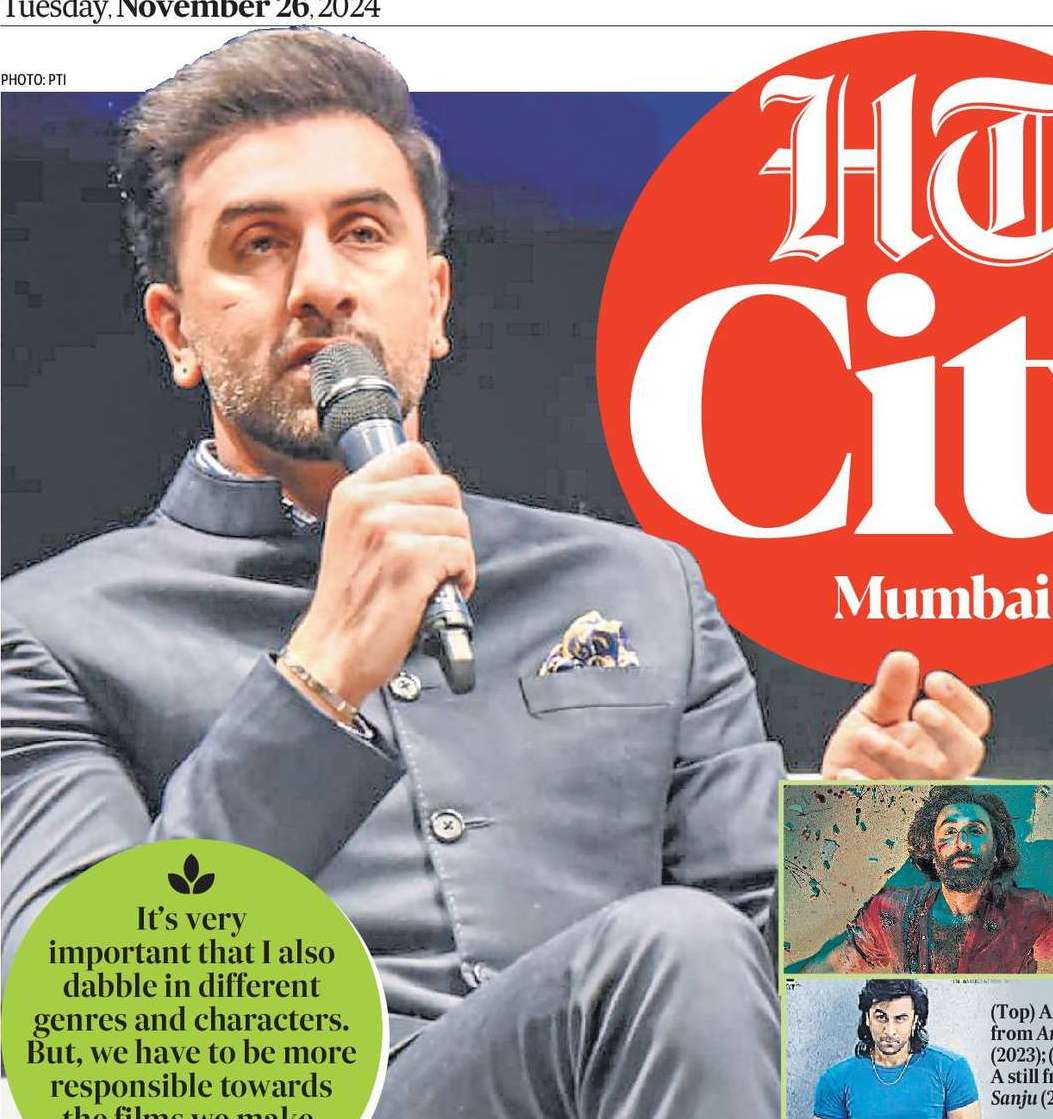
Ranbir Kapoor recently took the stage at the ongoing International Film Festival of India (IFFI) in Goa for a discussion celebrating the work of Raj Kapoor. “He was this big man with blue eyes,” the actor said as he began reminiscing about his grandfather. Ranbir confessed that it was only after he began understanding cinema that he fully grasped Raj Kapoor’s contribution to Indian cinema.
Sharing that 10 of Raj Kapoor’s films are being restored, Ranbir said that some of them will be screened at a film festival next month. “Raj Kapoor was Raj Kapoor because he didn’t follow any model. I think that if you want to carry any legacy forward, you have to approach it in a very individualistic way,” he told the audience.
‘I would love to have a take on Shree 420’
When asked which of Raj Kapoor’s films he would like to remake as a director, Ranbir said, “I would have directed every film in a different way, but all of them would have been atrocious. I don’t believe in remakes; I think every film is made to the best of its capabilities and should not be touched, especially Raj Kapoor’s. But I would love to have a take on Shree 420 – it is my favourite film.”
‘RAJ KAPOOR WAS CONSTANTLY IN TOUCH WITH THE COMMON MAN, THE MASSES’
In response to a question, Ranbir said, “Honestly, I want to say this – I’m a bigger fan of Raj Kapoor as a director than as an actor.” Raj Kapoor, the filmmaker, always explored different themes at different stages of his life.
Talking about his oeuvre, Ranbir shared, “If you look at his early films, Awara was based on casteism, in Shree 420, he spoke about greed.” Ranbir spoke about how in the later years of his career, Raj Kapoor made powerful films grounded in Indian moral values, tackling societal issues in a commercial and really entertaining way.
“Raj Kapoor had the courage to make a film with newcomers – a 50-year-old man making a film (Bobby) for the youth. It means that he really kept up with the times. He wasn’t stuck in a cocoon. He was not high up in an ivory tower. He was constantly in touch with the common man, the masses, and the kind of stories people would like to see,” Ranbir said.
The National Film Development Corporation of India (NFDC), National Film Archives of India (NFAI), and Film Heritage Foundation (FHF) and Kunal Kapoor have started restoring 10 films of Raj Kapoor. Ranbir said, “We are going to organize the Raj Kapoor Film Festival from December 13 to 15 all over India. We will show the restored version of 10 of Raj Kapoor’s films.”
-----------------------------------
Which film of his would Ranbir have wanted to be directed by Raj Kapoor?
Yeh Jawaani Hai Deewani (2013)
Which Raj Kapoor film would he like to direct?
Shree 420 (1955)
For which of his films did he take inspiration from Raj Kapoor?
Barfi! (2012)
-----------------------------------
Actor Ranbir Kapoor, who took the brunt of criticism for portraying toxic characters in his recent projects, opened up about leaning towards more responsible storytelling at a recent event
HINDUSTAN TIMES (November 26, 2024)
Actor Ranbir Kapoor’s films Sanju (2018) and, more recently, Animal (2023), have been at the end of fierce criticism for glorifying violence and toxic masculinity. Addressing the same on Sunday, the actor shared his take on the widespread debate at the 55th International Film Festival of India (IFFI) in Goa.
Prompted by an attendee, who asked him about “responsible storytelling” in context with Animal and Sanju, the actor responded, “I completely agree with your opinion. As an actor, it is our responsibility to bring movies which bring a positive change to the society.”
However, the 42-year-old maintained that doing diverse roles is important to him. “Having said that, I’m an actor, it’s very important that I also dabble in different genres and characters, and play varied roles. But what you are saying is absolutely correct. We have to be more responsible towards the kind of films we make.”
Earlier this year, in Nikhil Kamath’s podcast People by WTF, Ranbir had responded to the criticism that Animal had received, stating, “Social media played havoc. They needed something to talk about, so they really went to town claiming it was a misogynistic film.”
On a separate note, Ranbir also touched upon his dream of creating a biopic on his grandfather, late filmmaker-actor Raj Kapoor’s life, calling it a “challenging yet worthwhile endeavour.” Revealing his take on a biopic, the actor said at the event, “A biopic is not just about celebrating someone’s success but honestly portraying their struggles, relationships and low points. I’ve spoken to (filmmaker) Sanjay Leela Bhansali about it, but it’s a tough project. I’m not sure if my family would agree to show that side of his life.” htc
Ranbir reveals Alia didn’t know about Kishore Kumar
Speaking at IFFI, Ranbir disclosed that his wife, actor Alia Bhatt didn’t know about the legendary playback singer, musician and actor Kishore Kumar. “The first time I met Alia, she asked me, ‘Who is Kishore Kumar?’ [But] it’s just the circle of life. People forget [old artistes] and then new artistes come in. So, I think it’s very important to remember our roots.”
The video, which has now gone viral, has been dubbed as ‘Ranbir’s revenge’ by social media users, as a response to Bhatt’s earlier interview where she had claimed that Ranbir asked her to “wipe off” her lipstick. One social media user shared, “He took the revenge for ‘wipe it off’”, while another said, “Are these two in a competition: who can embarrass the other more... (sic).”
I am no longer doing Meena Kumari’s biopic-Manish Malhotra
8:19 AM
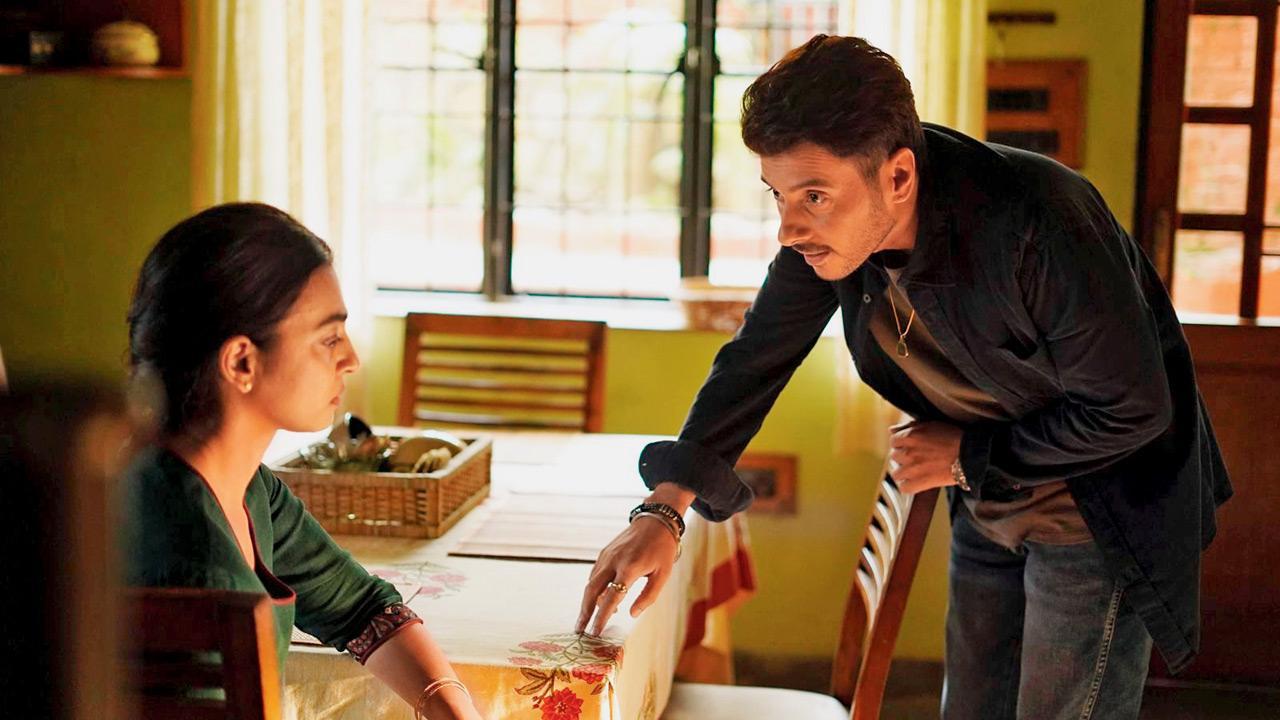
Even as his maiden production Saali Mohabbat premières at International Film Festival of India, designer Manish Malhotra says his plan of directing Kriti-led biopic shelved
Priyanka Sharma (MID-DAY; November 26, 2024)
Glamour and style are the first things that come to mind when one thinks of Manish Malhotra. But after over three decades of creating fashion statements for movies, the couturier has acquired a new identity—of a filmmaker. As his maiden production, Saali Mohabbat, premièred at the 55th International Film Festival of India (IFFI) on November 22, it was easy to see that his bent of storytelling is far removed from his work as a designer.
“My dream with Stage 5 was to start a different narrative from what’s expected out of me. [People expected] my films to star Kareena [Kapoor Khan] or the young girls, with lots of glamour. But this is not an extension of my brand. I can do glamorous storytelling tomorrow itself. But the most important thing is the script,” emphasises the new producer.
The story takes centre-stage in Saali Mohabbat, starring Radhika Apte, Divyenndu and Anurag Kashyap, and helmed by Tisca Chopra. The thriller revolves around a homemaker who is telling a story of infidelity and deceit to a group of people. Backing a middle-of-the-road film is not easy. Did Malhotra seek advice from his industry friends, especially filmmaker Karan Johar?
“When I told Karan about Saali Mohabbat, he was surprised. But he also knows if I’ve said yes to something, I will do it. I didn’t ask anyone anything. I just wanted it to be mine, be it good, bad or ugly. Friends are always protective about you and will say, ‘Make something else.’ But this had to be my voice.” Have Kareena Kapoor Khan, Janhvi Kapoor or other actor-friends asked him to make movies with them too? “I think when they see my work, they may say this,” he chuckles.
It’s not every day that a fashion designer turns filmmaker. But filmmaking was a natural step for him. “All fashion designers don’t have a film sense, but some do. With me, it was organic because I was in love with films since childhood, watching Mughal-E-Azam [1960] or the works of Raj Kapoor and Guru Dutt. I love the ’70s, their songs and costumes. I am steeped in films. That’s why I get how it works,” says Malhotra, who also has Bun Tikki and Ul Jalool Ishq in the pipeline.
At the end of our chat, we ask him for an update on the Meena Kumar biopic that he was to direct with Kriti Sanon playing the late actor. He says, “I’m no longer doing the biopic. I’ll direct something else. Directing is one dream that remains unfulfilled.”
We need to reduce and remove the mysticism around filmmaking-Prasoon Joshi
8:11 AM

Niharika Lal (BOMBAY TIMES; November 26, 2024)
Prasoon Joshi, now in his third term as the chairperson of the CBFC, spoke at IFFI about the role he never imagined himself in — regulation. He shared that he never thought he’d end up in a position where he’d have to tell people to change their work. During the conversation, he discussed his role as CBFC chairperson, his approach to writing, and why he believes creative people can’t operate like machines.
‘KISI KO PASAND NAHI HOGA KI AAP KAHEIN KI BADLAAV KIJIYE’
Prasoon said, “I’m a creative person. I never thought that I would get into something like regulation or a role where I have to tell people (to curb creative work). If I put myself in the shoes of creative people kisi ko pasand nahi hoga ki aap kahein ki badlaav kijiye. It’s a vantage point. Life is a vantage point.”
Explaining his point, Prasoon said, “If you’ll try to look at things from someone else’s point of view, then you’ll understand things. Let’s say there is a flowing river. Now, the one who is swimming against the tide of this river – you ask that person, how is this river? He might say that the river is aggressive. Nadi aakramak hai. But you ask someone who is standing at the riverbank, how is this river? That person will say, ‘This river is very quiet, beautiful. I have been meditating looking at this river.’ The same reality is seen differently from different vantage points. The river hasn’t changed.”
He added, “Hence, I felt that when I accepted my position in the film certification board, maine kaha vivaad nahi, samvaad. Aap baat cheet kariye aur aapko point of view samajh aa jayega. And there will be a way out. We are all human beings; we are creating something.”
‘AS FILM WRITERS AND CREATORS, YOU CAN’T BE A MACHINE’
Talking about the process of writing a song, Prasoon said that it doesn’t matter what he approaches – whether it’s a short film, a long poem, a song, or a script – it needs to have a vision. He said, “First of all, you need to have a very clear vision, a very clear belief. Your faith and belief in what you are trying to say are important.”
Recalling how he drew from his childhood memories to write the song Maa from Taare Zameen Par, he said, “I couldn’t write the song for days. The script format mentioned ‘separation song.’ There could be various ways of writing a separation song. I was challenged by it. How do I make it unique? The tone in it, the touch. As film writers and creators, we have a platform to share something very personal. If you don’t have that tone in it, the touch of yours, then you are a machine. You can’t be a machine. I kept struggling with it and I went back to my childhood when my parents were teachers. My mother had to go for a teacher’s training programme, and I was a young boy in Uttarakhand. You act brave, like ‘You are going? Fine. We’re fine without you. There’s no problem.’ But deep down, I didn’t know how to live without my mom. I just went back to that feeling – the feeling I had at that moment. That’s exactly what I wrote: ‘Main kabhi batlata nahin, par and here se darta hoon main, maa.”
‘FILMMAKING HAS TO BE MADE MORE ACCESSIBLE SO STORYTELLING DOESN’T FEEL INTIMIDATING’
In response to a question about how aspiring filmmakers can learn from established ones at IFFI, he said, “We need to reduce and remove the mysticism around filmmaking. People often say: himmatwala makes films, talent wala nahin. Filmmaking is a process that should be transparent and accessible. Those intrigued by the idea of making films should be able to do so the process needs to be simplified. Filmmaking has to be made more accessible so storytelling doesn’t feel intimidating. The fear that your ideas might not resonate with people, that’s what we need to work on. The process must be demystified.”
Naseeruddin Shah said if you’re a great director, then make Jackie Shroff act-Vidhu Vinod Chopra
8:00 AM
Vidhu Vinod Chopra gave some interesting insights into his movies during a session at IFFI
Niharika Lal (BOMBAY TIMES; November 25, 2024)
Vidhu Vinod Chopra recently spoke about his zero moments (low points) that became turning points in his career. During a conversation with Shantanu Moitra at the ongoing 55th International Film Festival of India (IFFI) in Goa, he said that he was a very, very angry young man. Chopra described his relationship with stars as “not good.” When asked how, as a director, he trusts other directors when he becomes a producer, he explained, “I don’t trust directors. I only trust a human being.”
‘I REMEMBER HOW EVERYBODY LOVED KHAMOSH, BUT NOBODY BOUGHT IT’
Recounting the time when he decided to make films, he said, “Of course, I couldn’t tell my father because when I did, he was very angry. His whole idea was, ‘Tu doctor banega toh Kashmir mein sab tere ko Doctor Chopra bolenge’. But the only dream I had was to assist Vijay Anand and to somehow reach him.”
Chopra says, “A relative promised me that he will send me a letter from Vijay Anand. Every day after school, I used to run to the little letterbox we had at 35-A Wazir Bagh, waiting for that letter that never came. That was my zero moment — I never got the letter.”
Chopra shared that everybody loved Khamosh (1986), but nobody bought it. He said, “NFDC had financed it and given me Rs. 8 lakhs. In 8 lakhs, we made that film, and the rule with NFDC, which is a fair rule, was that unless you paid back the loan, you wouldn’t get another loan. So unless I paid that, my career as a filmmaker was dead.”
He shared that everyone praised the film, but nobody bought it. He then showed it to the owner of Regal Cinema, who liked it. “He gave me his theatre for two weeks at a 50% profit-sharing agreement,” Chopra revealed.
“On the first day, for the 3 pm show, the theatre was empty! After the show ended, a man (who turned out to be a black marketeer) told me, ‘Tension kyun leta hai? Tera night show housefull hai.’ They had bought the whole hall and started selling tickets in black after putting up a housefull board. The hall was empty, but with a housefull board. That was the marketing of that time. That’s a zero se restart moment,” he said.
‘DIDN’T CHANGE THE ENDING OF PARINDA’
Talking about his film Parinda (1989), he shared, “In the film, Anil Kapoor and Madhuri Dixit die, and distributors had told me, ‘Sir, aisa mat kijiye. Jackie Shroff ko maar dijiye, hero-heroine ko maarenge toh picture nahi chalegi.’ They offered me Rs. 10 lakh to change the ending. But I said, what I’m trying to say in the film is that violence begets violence. It was also self-therapy because, at that time, I was a violent man, too. I didn’t change the ending.”
‘JACKIE WENT ON TO WIN THE BEST ACTOR AWARD FOR PARINDA’
Narrating Jackie Shroff’s zero to restart moment, he said, “Everybody called him a wooden actor. Naseeruddin Shah was supposed to be in Parinda, but we had a fight. He said, ‘I won’t do it’ and I said, ‘Okay.’ He said, ‘If you’re a great director, then make Jackie Shroff act.’ I was young and angry, and I said, ‘You watch, I will make him do it.’ Jackie read the script and told me, ‘Bhidu, tu sambhal lena. Mere ko acting nahi aata hai.’”
Chopra shared that Jackie’s biggest problem was hitting his mark (the spots where actors are supposed to stand in a scene). So he decided to remove the marks entirely. Jackie got angry, said a few things, and left the set when he found out there were no marks. He returned 20 minutes later.
Chopra said, “Jackie thought for a moment and then told me, ‘Main yeh scene window se shuru karega kyunki yeh mera dream hai, toh main dream dekh raha hoon bhai ka. This was the beginning of Jackie Shroff, who went on to win the best actor award for Parinda.”
Hollywood folks told me that 12th Fail should have gone to the Oscars-Vidhu Vinod Chopra
8:04 AM
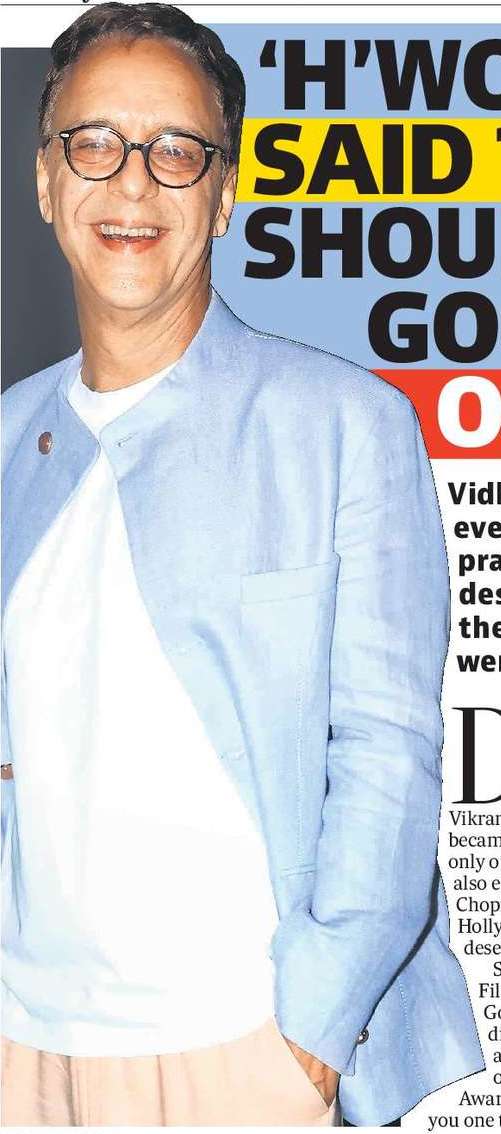
HINDUSTAN TIMES (November 24, 2024)
Director Vidhu Vinod Chopra has opened up about the international recognition his film 12th Fail has received. The Vikrant Massey-starrer, which became a sleeper hit last year, not only outperformed expectations, but also earned three times its budget. Chopra shared that many in Hollywood have told him the film deserved to be in the Oscar race.
Speaking at the International Film Festival of India (IFFI) in Goa on Friday, Chopra discussed the trend of thrillers and other genres often getting overlooked at the National Film Awards. He remarked, “Can I tell you one thing? So many people, including folks in Hollywood, have told me that 12th Fail should have represented India at the Oscars, not whatever went.”
India’s official entry for the 2025 Academy Awards is Laapataa Ladies. Last year, it was the Malayalam survival drama 2018, which did not receive a nomination. 12th Fail was not selected by the Film Federation of India to represent India.
Chopra emphasized that he doesn’t prioritize awards, adding, “Say yes or no, do I care? What I care about is — did I make a good film or not? Please don’t give too much importance to awards. They’re for people outside the industry acknowledging you for reasons we don’t know.”
I tell my mother that cooking is not a way of proving her love to me-Sanya Malhotra
7:56 AM

As Mrs premières at the International Film Festival of India, actor Sanya Malhotra says it made her question gender roles and understand her mother better
Priyanka Sharma (MID-DAY; November 25, 2024)
When she watched The Great Indian Kitchen (2021), Sanya Malhotra could see Jeo Baby’s film doing what good cinema does—asking questions that haven’t been raised before. So, when the actor was offered its Hindi adaptation, Mrs, she took no time to say yes to it.
“My yes to the film was both as an actor and a woman,” she tells us, at the movie’s Asia première at the ongoing International Film Festival of India (IFFI).
Nimisha Sajayan was widely praised for her performance in the Malayalam original, which told the story of a young dancer whose life becomes restricted to the kitchen after marriage. Did Malhotra feel the pressure of stepping into her shoes?
“I never compare myself with anyone. If I put myself in this mindset, I will be leading with fear, which I don’t want to do,” she explains, adding that director Arati Kadav and writer Anu Singh Choudhary made Mrs personal and novel.
“We have made this personal and palatable to the north Indian audience. Arati and Anu have brought their own lived-in experiences to the script. All I thought about was I have to do it in a way that it travels far and wide, and people take away something from it.”
If the acclaim and love from various festivals is any indication, Malhotra’s efforts have already paid off. As she awaits the film’s release in January, she says Mrs has already brought a change in her. “The process of interviewing women for the character opened up a lot of things in me, and I’m constantly questioning and correcting myself,” she says, sharing a personal anecdote about how her view on gender roles has changed.
“Whenever I used to go back home, my mother felt pressured to cook for me. Having worked in the kitchen all these years, she has an aversion to it now. [At the same time] she’d be apologetic about it, saying, ‘I didn’t cook anything good for you.’ To date, I tell her that cooking is not a way of proving her love to me. Everyone around us says maa ke haath ka khana is ultimate love. That’s there. But no one should feel pressured to do it.”
No work environment is safe for women, but film sets are-Imtiaz Ali
7:46 AM

Niharika Lal (BOMBAY TIMES; November 24, 2024)
At the inaugural session on women’s safety and cinema at the 55th IFFI, Imtiaz Ali, Bhumi Pednekar, Suhasini Maniratnam, Vani Tripathi Tikoo and Khushboo Sundar discussed the attitude toward women on set, how newcomers are treated and more. When asked whether the film industry can change, they shared personal accounts, stressing that, overall, film sets are safe spaces.
‘There have been three people whom I have sent back in my life, from different sets’
Discussing safety on sets, Suhasini Maniratnam said that her husband Mani Ratnam recently “threw out a person from the set because he crossed a line.”
To this Bhumi added, “Okay, you take that first step where you make sure that person is not on your set. But that person will be working on some other set. What are those strong steps we can take so that when there is a true perpetrator, that person is punished?”
Suhasini asked Imtiaz, “Can you tell what happens if there is a perpetrator and a violation? How does a film unit react to it?”
Imtiaz replied, “There have been three people that I have sent back from different sets, from different cases. I’m happy that there were only three.”
Recalling one of those incidents, he said, “We were shooting Highway on the rural highway and there were no proper vanity vans back in 2013. Alia had to change, go for nature’s call in unusual places. Once I had to send this guy back from the set when he was trying to be around her during those times. So yes, it did happen with me as a filmmaker thrice, but not anymore. Times have changed, changed drastically. Actresses are really safe on the sets. It’s not like that anymore.”
Check out Prakash Jha in Amar Aaj Marega
1:48 PM
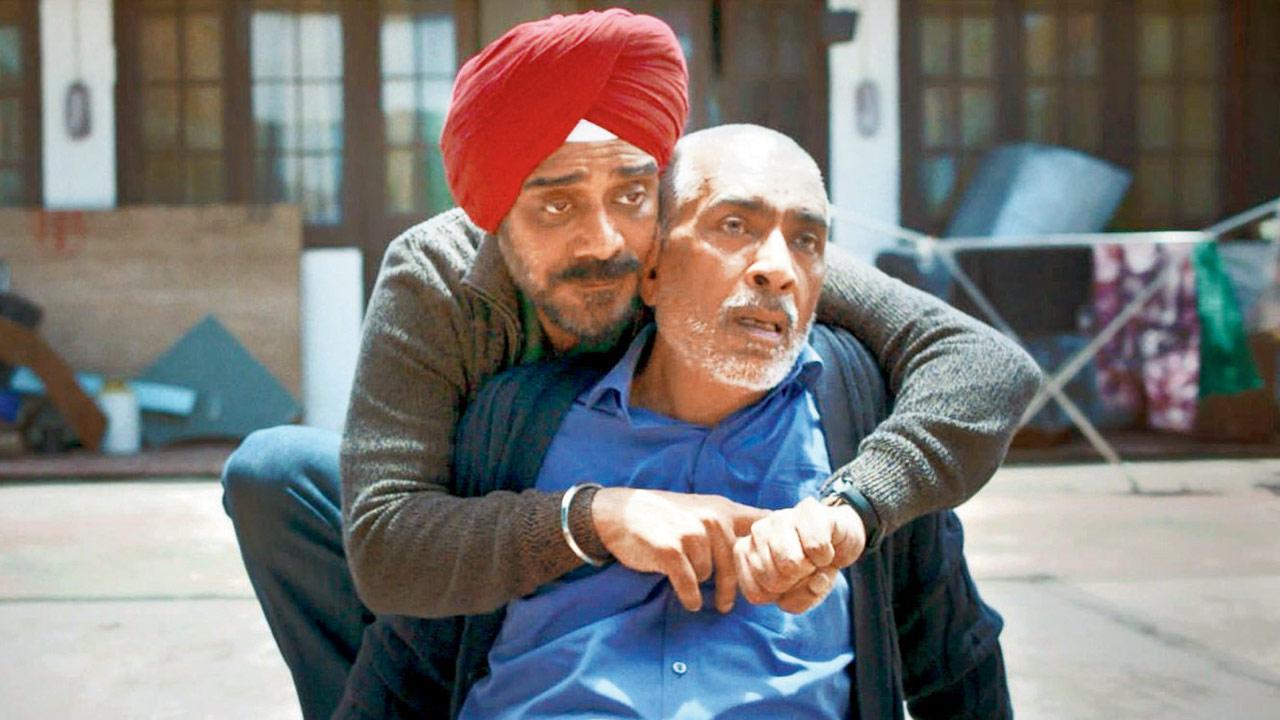
Prakash Jha (front) and Saurabh Sachdeva in the film
Ahead of Amar Aaj Marega’s première at International Film Festival of India, Prakash Jha says debutant director Rajat K’s quirky story prompted him to front the short film
Upala KBR (MID-DAY; November 18, 2024)
Give him a fascinating role, and director Prakash Jha will happily leave his place behind the camera and face it instead. An example is his latest short film, Amar Aaj Marega, which has been selected for the Indian Panorama section at the 55th International Film Festival of India (IFFI). The Rajat K-directed venture will première at the festival in Goa on November 24.
What prompted Jha to front the project? He points to the quirky story that revolves around a 62-year-old widower, who is convinced that he has lived his life to the fullest and plans to end it. “It’s a quirky movie. Amar has decided to end his life after a small celebration with a close friend [Saurabh Sachdeva]. When the friend learns of his plan, he gets scared and starts calling people home. Then they all sit and decide whether Amar should die or not, even discussing the method of his death,” says Jha.
Acting is not new to the National Award-winning director, who featured in Saand Ki Aankh (2019) and Matto Ki Saikil (2022). To him, it’s a joy to bring another director’s vision to life.
“When Rajat approached me, I thought it was a good concept. The film being screened at IFFI is good for him as he is a first-time filmmaker. I love encouraging debutant directors. First-time filmmakers are the best. Even in Matto Ki Saikil, debutant Mohammed Gani made a beautiful film.”
Though busy with Aashram’s fourth season, Jha says he will always make time for acting. It comes with a simple condition—the role should enhance the story. “If I say yes to a role, it should be pivotal. Otherwise, I get approached for many parts, including cop roles. But I don’t need acting as a profession; I do it purely out of love. Directing and writing will go on,” he states.
Manish Malhotra's maiden production Saali Mohabbat to premiere at IFFI
3:05 PM
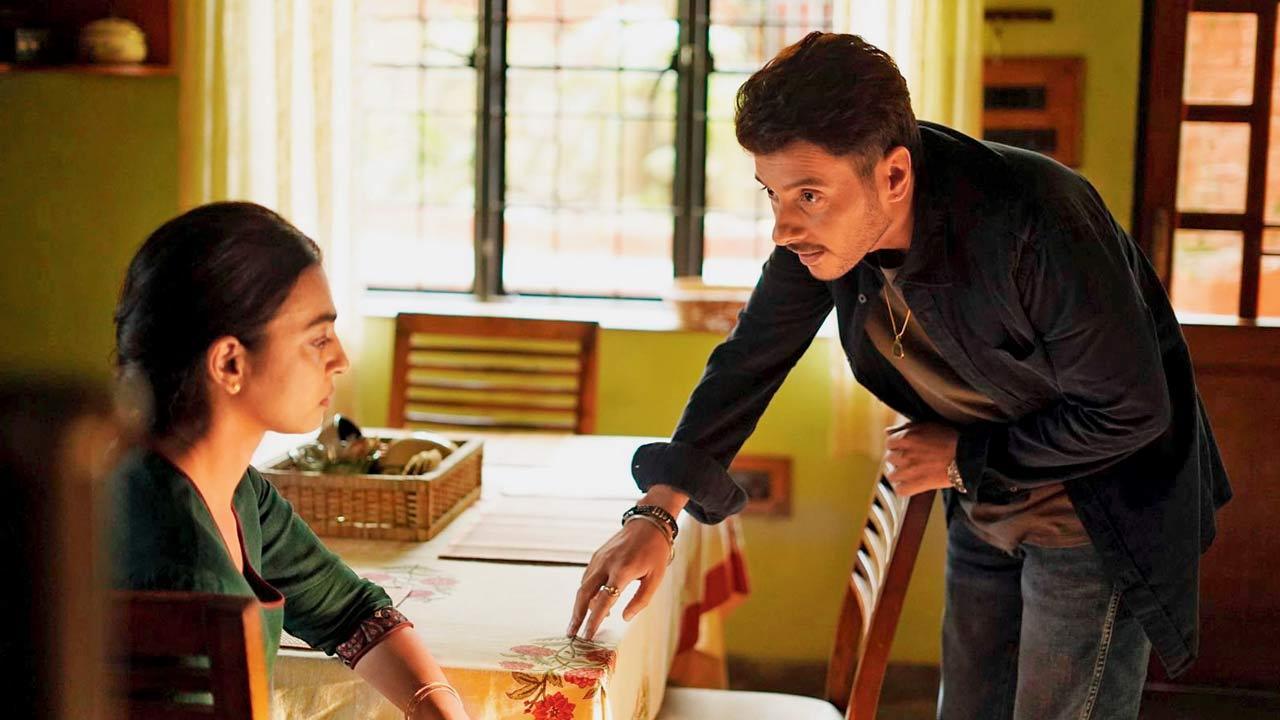
Couturier-turned-producer Manish Malhotra’s maiden movie, Saali Mohabbat, is to premiere at the International Film Festival of India in Goa this month
Mohar Basu (MID-DAY; November 11, 2024)
As the year is nearing its end, it’s a new start for Manish Malhotra. The fashion designer is taking his maiden production, Saali Mohabbat, to the 55th International Film Festival of India (IFFI) in Goa. The Radhika Apte, Divyenndu and Anurag Kashyap-led suspense drama, which marks actor Tisca Chopra’s foray into direction, will premiere at the film festival on November 22. Malhotra was scouting for a powerful story to venture into filmmaking, when Saali Mohabbat came his way.
“The moment I read its script, I was drawn to its intense and thrilling narrative. At Stage5 Production, we work closely with directors to bring their vision onto the screen with artistry and care. Tisca Chopra’s commitment to crafting this story with such complexity made it all the more compelling,” says the designer-turned-producer.
Jyoti Deshpande, President of Media and Content Business at Reliance Industries, shared her happiness on the news, “We are thrilled to collaborate with Manish Malhotra, who is bringing his creative brilliance from the world of fashion to film—a natural progression for a visionary who has always made impactful statements. With Saali Mohabbat, Manish extends his legacy of creativity, now crafting stories that captivate just as his designs have. Saali Mohabbat is a thrilling and layered story that aligns with our mission to present unique stories from India. We’re honored to debut this film at IFFI and reinforce our dedication to meaningful storytelling.”
In Saali Mohabbat, Apte plays a homemaker who is telling a story of infidelity, deceit and murder to a group of people. While her listeners are riveted, one of them gets the message she intended. First-time director Chopra is thrilled that her ‘howdunit’ is premiering at the prestigious film gala.
She says, “Saali Mohabbat is a story close to my heart, and I’m grateful to Manish Malhotra and Jio Studios for trusting in my vision and supporting my journey as a director. I couldn’t be more excited to present it at IFFI, which celebrates diverse and bold voices in cinema.”
Subscribe to:
Posts (Atom)