Showing posts with label International Film Festival of India 2022. Show all posts
Showing posts with label International Film Festival of India 2022. Show all posts
We are getting a response from people all over the world, but the most delicate, nicest messages are from Indians-Avi Issacharoff
8:37 AM
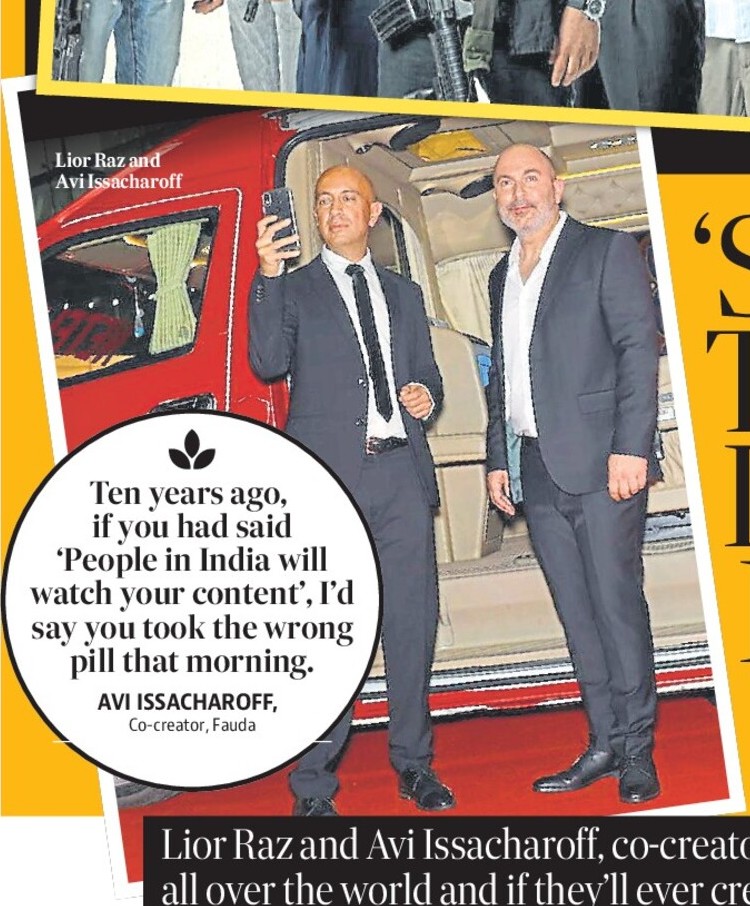
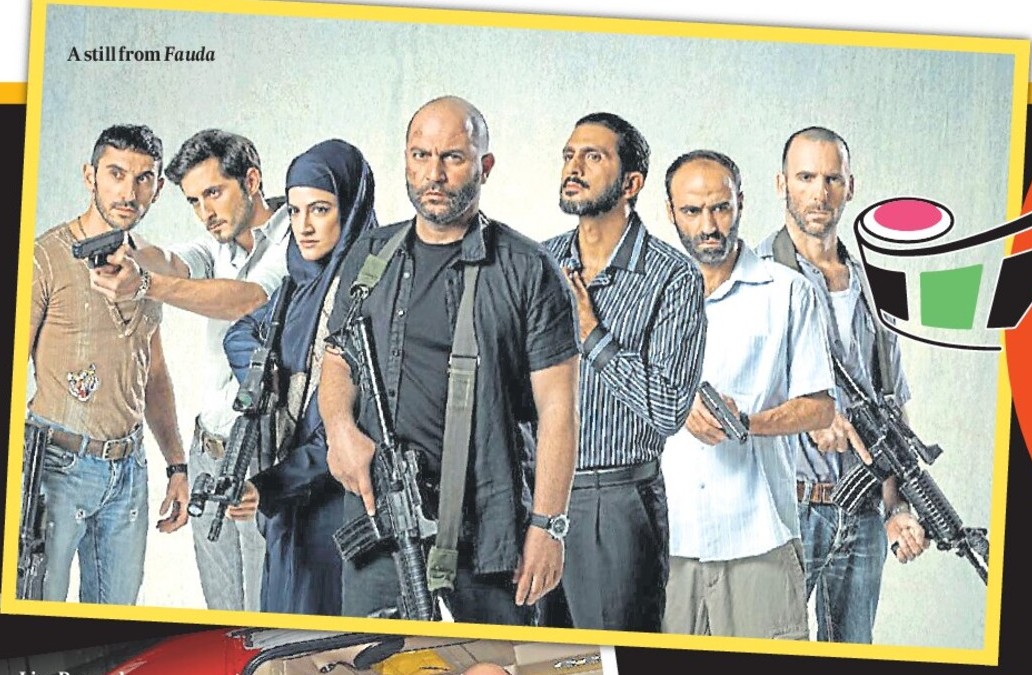
Lior Raz and Avi Issacharoff, co-creators of the hit show, dive into its massive connect all over the world and if they’ll ever create something for audiences in India
Rishabh Suri (HINDUSTAN TIMES; December 3, 2022)
As fans wait for the fourth season of Fauda to drop on Netflix, the first episode of the hit series was premiered at the 53rd International Film Festival of India, held in Goa, recently, with the creators of the show, Lior Raz and Avi Issacharoff, in attendance.
“When we heard about [the festival], we said, ‘Erase everything from our schedule – we want to be there in India.’ It’s the natural [choice] to premiere the show because of the love people watching our show here give us,” shares Raz.
Somehow, the duo find the show’s massive popularity in India rather “strange”. “It is not common that you have people from this country follow you and try to interact. We are getting a response from people all over the world, but the most delicate, nicest messages are from Indians. Here when someone wants a selfie, they ask first, and don’t just go for it,” exclaims Issacharoff.
The show is based on the duo’s time in the Israeli Defense Forces, and this personal touch is what clicked with the audiences. “Everybody can connect with stories of people and their journeys. The atmosphere in Israel is very chaotic, and when you see the journeys of the characters, you understand,” says Raz, who also stars in the show, before adding, “We don’t really know what the secret to Fauda being such a big hit is, and we don’t want to know. We just want to continue what we are doing.”
STORIES OF THE WORLD, TO THE WORLD
The OTT boom enabled a rapid exchange of entertainment all over the world, and the duo agree that Israeli content benefited in the process. “Ten years ago, if you had said ‘People in India will watch your content’, I’d say you took the wrong pill that morning. It’s a new era — I can sit in my house and watch Indian content. People in India and Sri Lanka watch Israeli content,” says Issacharoff.
The explosion of OTT content has also brought about a change in viewers’ preferences, and star casts are no more a sure-shot hit formula. “All of us have the same emotions, we laugh, hate, [feel] connected. We want to be moved by somebody’s story, it doesn’t matter what the language. OTT brought it to the table,” Raz adds.
The series saw its official Hindi adaptation Tanaav, drop recently. Do they ever plan to create something for Indian audiences? “We haven’t seen enough Indian content, but we want to. Being in the country and understanding how big the market and potential is, is making us hungry,” Raz says, recalling how as a kid, he would watch Indian films at home. “I remember the dances and the colours, which were so strong. Some of them really inspired us to tell a story. A part of that is from the films we have seen from India,” he adds.
COMPARISONS GALORE
Whatever other work they do, comparisons with their first show always arise. Do they feel the pressure? “This is our first baby... Of course, when we had Hit & Run, there were comparisons. I know it’s the natural tendency of people. We, as creators, are also looking for something new. We don’t want another Fauda, it’s unique and specific,” Raz signs off.
‘Can AI replace AR?’: Shekhar Kapur; ‘I’m the AI!’ responds A R Rahman at IFFI
8:32 AM

Niharika Lal (BOMBAY TIMES; December 3, 2022)
At a session on the future of content at the International Film Festival of India (IFFI), Shekhar Kapur and A R Rahman discussed if Artificial Intelligence (AI) could replace the musician. In his response, Rahman said that people who liked his music from the ’90s say that he is not doing that stuff, adding that but if he keeps doing the same work that he did in the ’90s then he will be finished, and he needs to constantly evolve with time.
‘CAN AI GIVE ME A BACKGROUND (SCORE) THAT RAHMAN WOULD DO?’
Addressing Rahman, Shekhar said, “This is the question that everyone wants to ask you – ‘Can you be replaced by AI? Can AR be replaced by AI?’ If I feed all of A R Rahman’s music into a machine and then play a scene from the film (for which music needs to be produced), and ask AI – ‘Give me a background (score) that Rahman would do,’ Do you think that would be possible?”
AR Rahman said, “As human beings, we all evolve. I grew up with south Indian folk music, and then I was exposed to Hollywood and all other kinds of music later. My influence at that time was rebellious. I wanted to do something else, so I did north Indian classical music and then used tribal music. And the core was Tamil lyrics, and those lyrics grounded my songs. It was different as it was about what I had learned, what I was aspiring to be, and what I wanted my music to be. So, the multiple emotions behind music-making were what directors were asking me to do. So, it was not just a piece of music. Sometimes we’d just underplay, sometimes it was just the voice. Then it was piano. Then from 2000-2010, the world changed – Dolby came, and then from 2010, technology advanced. The world is evolving, and so are challenges.”
Shekhar told the audience, “He is not answering the question I asked. Can AI replace AR or not?” Rahman smiled and took the microphone from him and said, “What I am saying is that all these factors determine my compositions. So A R of the ‘90s is very different from A R now. And those who like my music from the ‘90s say, ‘Oh! He is not doing that stuff. ’ But if I do the same stuff, then I will be finished. I need to evolve; I’m the AI (laughs).”
‘ACKNOWLEDGING THAT EVERY ASPECT OF GOD’S CREATION IS DIFFERENT IN ITSELF IS A SOURCE OF INSPIRATION’
An audience member asked Rahman, “In a previous interview, you were asked about your source of creativity for your songs and you said, ‘I keep some empty space in my heart, and music comes out of that.’ Is it still the same source?”
Rahman responded, “Our mind is connected to the universe through our consciousness. We bow to the creator and the creator’s every aspect of creation is different – every animal, bird and insect is different; every microorganism is different; all of us are different. To match that, we have to acknowledge that. And to acknowledge that itself is creativity. It brings you inspiration from the supreme.”
Watching my old films is like revisiting old memories; it’s a nostalgic trip down memory lane-Asha Parekh
8:30 AM

Niharika Lal (BOMBAY TIMES; December 3, 2022)
At the 53rd International Film Festival of India (IFFI) session, while introducing Asha Parekh, who was honoured with the Dadasaheb Phalke Award this year, the moderator told the audience how back in the day films used to be promoted just using ‘Hit Girl’ Parekh’s name. Parekh spoke about her muchcelebrated movies such as Teesri Manzil, Kati Patang and Main Tulsi Tere Aangan Ki, and shared how directors used to first sign her for the female lead before finalising the hero.
‘UNLUCKY TO NOT HAVE WORKED WITH DILIP KUMAR’
Talking about rewatching her films, Parekh said, “Watching my old films is like revisiting old memories; it’s a nostalgic trip down memory lane.”
When asked if not working with Dilip Kumar remains an unfulfilled wish for her, she said, “When I came to IFFI four-five years ago, a gentleman wrote that because I didn’t like Dilip Kumar, I didn’t work with him. It was very upsetting because I was always in awe of Dilip sahab. There was a film, Zabardast, for which I was signed to work with Dilip Kumar. But the movie got shelved. I was unlucky.”
‘CRITICS THOUGHT I COULDN’T ACT’
Stating that she has done side roles in several films, Parekh elaborated, “The critics always thought that I was a glamour girl and couldn’t act. But after Do Badan, when a renowned critic, who was critical of all films, praised me, I was finally accepted by the press as a good actor. I got roles in films like Kati Patang and Main Tulsi Tere Aangan Ki and people started taking me seriously. I don’t know why I did those films. There was an actor with whom I did two-three films. He would never come on time and I’d wait for hours on the set. One day I thought what am I even doing playing these character roles and decided to not act anymore. I got into direction and I really liked directing the TV show Kora Kagaz, which was a big hit. I had a superb heroine in Renuka Shahane. But there was a lot of intervention from TV executive producers with the dialogues or my actors’ looks. That was the point when I decided – no more TV.”
‘PRESS WAS HARSH WHEN I WAS CBFC HEAD BECAUSE I WAS A WOMAN’
Talking about the Dadasaheb Phalke award, Parekh said, “This award is being given to a woman after a long time and I’m also the first Gujarati to receive this award. For a good two days, it didn’t register.”
Talking about her Central Board of Film Certification (CBFC) tenure, Parekh said, “I was criticized by the press so badly during my CBFC tenure because I was the first woman in CBFC (first woman chairperson). The press thought I was too strict because I was a woman. I don’t want to name the film, but a certain film was certified R (restricted) in the US and they wanted me to give U/A. In the end, we gave it a U/A certification, but with cuts.”
Someone from the audience asked, “What do you want to say about CBFC’s role today?” She responded, “Ye bhari sankat wala sawal hai kyunki saara kuch change ho gaya hai.”
When someone asked about her opinion on today’s movies, she said, “Ab log bahut westernized ho gaye hain.”
When asked why today’s films do not have silver jubilee, she said, “Aaj kal sab kuch itna fast chal raha hai toh bechare kaise tikenge?” A fan also made a request to the veteran actress, saying, “Just one request, please ask Wikipedia to remove ‘retired actress’ from your bio. An actor never retires.”
I didn’t mean to hurt affected Kashmiris-Nadav Lapid
8:13 AM
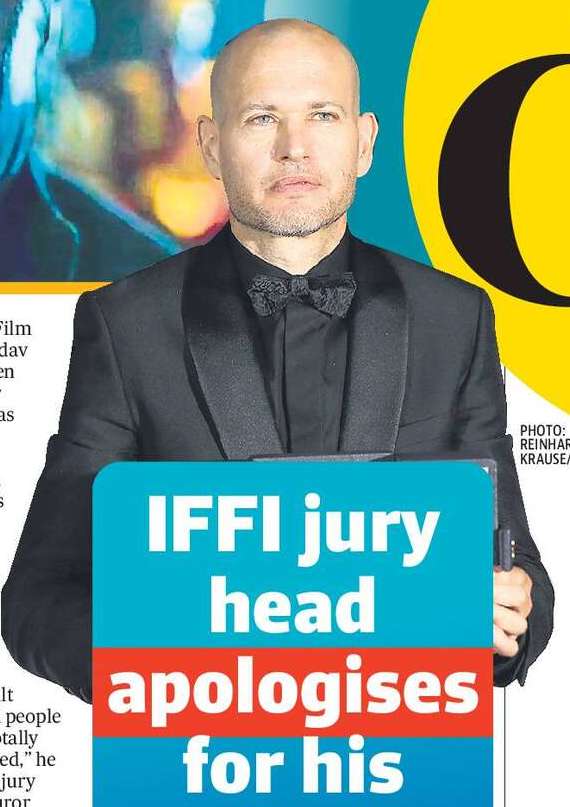
Remarks About Film Quality, Says Israeli Filmmaker
THE TIMES OF INDIA (December 2, 2022)
New Delhi: Israeli filmmaker Nadav Lapid, whose criticism of ‘The Kashmir Files’ irked a section of the rightwing and made the Israeli diplomatic mission denounce the IFFI (International Film Festival of India) jury panel chief has offered a “total apology” to people if his comments have hurt or insulted people who suffered during the Kashmir exodus, but maintained his remarks were limited to the quality of the film.
“I didn’t want to insult anyone. My aim was never to insult the people or their relatives, who have suffered. I totally apologize if that’s the way they interpreted it...But at the same time, whatever I said and I said clearly that for me and my fellow jury members, it was and it is a vulgar propaganda movie that didn’t have a place and was inappropriate for such a prestigious competitive section.”
“I can repeat it again and again,” Lapid said speaking to CNN-News18. The award-winning film maker, who had referred to “The Kashmir Files” as a “propaganda, vulgar film”, said his remarks were neither a statement on the political situation in Kashmir, nor, in any way, a denial of the tragedy. “I have enormous respect for the tragedy, victims, survivors and for whoever suffers there. It (my remarks) was not at all about this. I’ll repeat these words 10,000 times if I have to say that I was not talking about the political issue, historical equation, or disrespecting the tragedy that happened in Kashmir. I was talking about the movie and that such serious topics deserve, in my opinion, a serious film. . . ,” he said.
Lapid also dismissed claims by fellow juror Sudipto Sen, who had distanced himself from Lapid’s statement and called it the director’s “personal opinion”.
“It wasn’t a personal opinion at all. We all thought that the movie used a series of manipulation, vulgar, violence because it was supposed to transmit a message that can cause hostility, violence and hate in the environment,” he said.
-------------------------------
HINDUSTAN TIMES (December 2, 2022)
Israeli filmmaker and International Film Festival of India (IFFI) jury head, Nadav Lapid, who courted controversy when he called The Kashmir Files a ‘vulgar propaganda’ earlier this week, in Goa, has apologized. In a recent interview, Lapid who called the film, directed by Vivek Agnihotri, “inappropriate for an artistic, competitive section of such a prestigious film festival” said that his aim was “not to insult anyone”. This comes some days after he defended his remarks and insisted “someone needs to speak up”.
In an interview with CNN News-18, Lapid expressed regret for inadvertently offending the sentiments of any community. “I didn’t want to insult anyone, and my aim was never to offend people or their relatives, who have suffered. I totally apologize if that’s the way they interpreted,” he said. He also claimed that the rest of the jury supported his stance; although, fellow juror (the only Indian on the jury), and director Sudipto Sen stated that the views endorsed by Lapid were entirely his own.
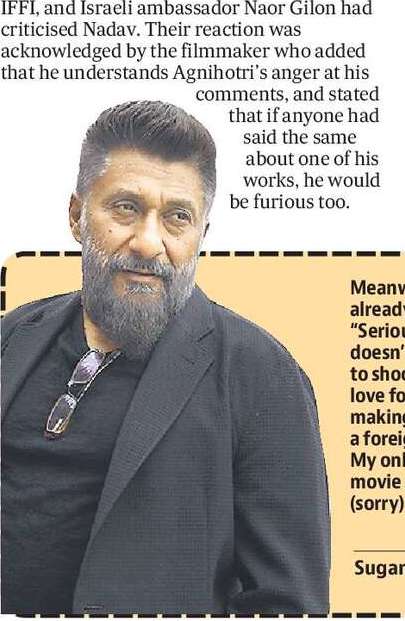
The cast of the movie and director Agnihotri, which was featured in the panorama section at IFFI, and Israeli ambassador Naor Gilon had criticised Nadav. Their reaction was acknowledged by the filmmaker who added that he understands Agnihotri’s anger at his comments, and stated that if anyone had said the same about one of his works, he would be furious too.
-------------------------------
Sugandha Rawal (HINDUSTAN TIMES; December 2, 2022)
Meanwhile, filmmaker Vivek Agnihotri, who has already moved on from the war of words, says, “Seriously, I don’t even care about what he says or doesn’t. Mere liye baat khatam ho gayi hai. I have come to shoot (for his next) in Pune, and I am getting so much love for the film. People have come and thanked me for making the film, so, I don’t need an endorsement from a foreigner. What does he know about my country... My only answer is Hrithik Roshan’s dialogue [from the movie Zindagi Na Milegi Dobara; 2011] Jab tak (sorry) dil se na nikle, it is not an apology.”
From Roja to Satya, we have seen pan India phenomena earlier too-Rana Daggubati
8:01 AM
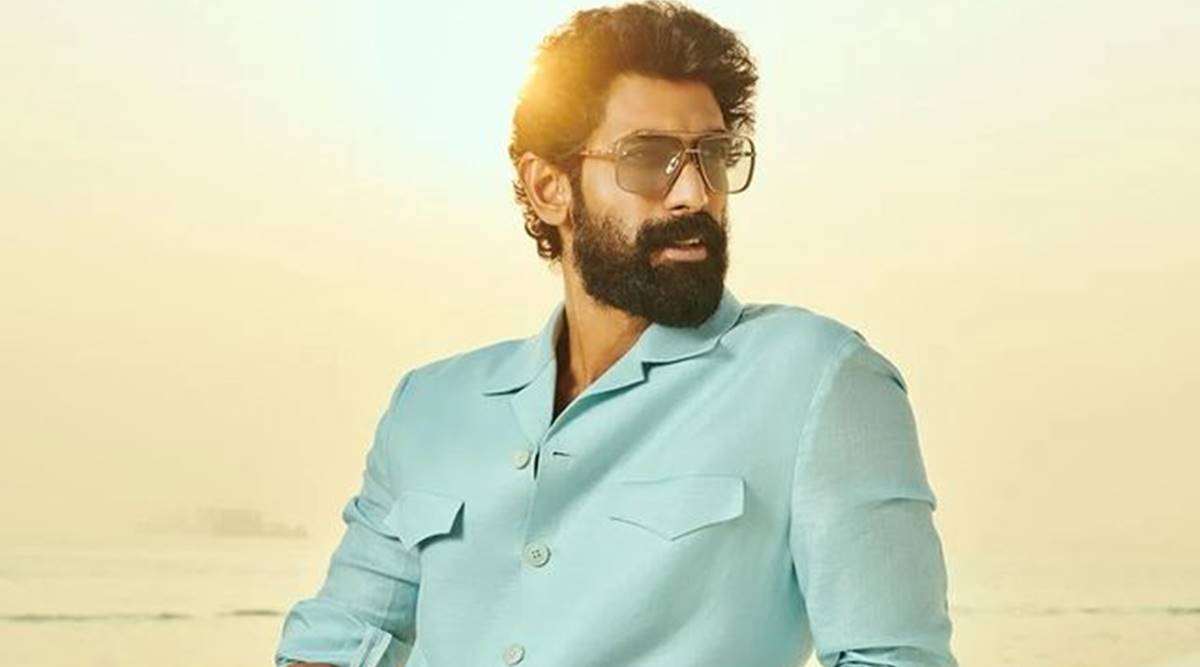
Niharika Lal (BOMBAY TIMES; December 2, 2022)
There was a time in his career, when people didn’t know which part of the country he was from or what language he worked in, says Rana Daggubati, adding, “And vice versa – people in the Telugu industry, or the Tamil industry, didn’t know what was happening in Mumbai.”
That’s what makes the shifting dynamics of Indian cinema all the more fascinating to the actor. At a session on film business at IFFI (International Film Festival of India), Rana shared, “It is the first year when we are addressing India as one film industry. What is happening in one industry is no longer alien to others.”
Rana said that OTT has definitely contributed to this shift. “Last week, I was at a party in south Bombay and they spoke to me about every Fahadh Faasil film they have seen in the last two years and this change is kind of incredible. The consumption of content is huge on OTT. You have so much choice on your phone and TV, which is high-quality, 4K, high definition. It gives you an opportunity to engage with those characters for a longer time. If you’re watching a show you’re hooked on those guys for 10 or 12 hours. It’s a different experience.”
‘PEOPLE ARE TAKING TIME OUT TO WATCH RRR & KGF ON THE BIG SCREEN BECAUSE THESE FILMS ARE LIKE EVENTS’
On the flipside, the audience is now more selective about which films to watch on the big screen, Rana said, adding, “When Black Panther: Wakanda Forever came out, everybody just got up, and left their offices, to watch it. People are still taking out time to watch KGF and RRR because those are events. If you sit in an auditorium with a giant screen, then you will only go for emotions or experiences that are extreme. Everything that is communal is more likely to be watched on big screens. Today you want cinema to be more authentic, and true to its genre. Whatever genre the filmmakers are making their stories in, they need to be extreme in narrative.”
Rana added, “What is extreme about Kantara? What it is showing you, you have seen it in photographs, you have experienced it. If you are from Karnataka, then you have heard of it or if you are from a different state then you have seen some other version of it, but to see all that together in a single frame. . . (pauses). Now, while I am talking about Kantara, my body is feeling the same effect it did when I first watched it. During the black and white films era, I remember my granddad used to keep talking about films that were devotional and he’d say that he felt God, and after this experience, I felt okay, maybe that’s what he meant...”
‘PUSHPA, KANTARA BROKE THE MYTH THAT PAN-INDIA RELEASES NEED BIG-BUDGET PUBLICITY’
Responding to a question on what’s next for cinema, Rana said, “We are just one year into it and we are all figuring out which films to make. I think all stories will find their place. But (it will take) three-four years of making, watching, and consuming them.”
Citing the example of Kantara, Rana said, “It didn’t matter what language the film was made in, everyone watched it in the language they preferred and ended up feeling the same. Earlier, we used to say that films should come out in all languages on the same date. But now we are seeing that if a film works in Kannada then 15 days later or a month later, it comes out in Telugu. And it still does the same job. You will see deferred releases and releases that can be localized. Earlier, this trend of pan-India films was (about spending) 10-15 crores in terms of publicity, otherwise, you would not even reach anywhere. But Pushpa and Kantara broke that whole myth. They spent what they had to spend in their region, and the whole country went to watch it. I think these systems (of pan-India mega-budget releases) will keep changing, and everybody will keep finding their type of affordable cinema.”
In response to the question of ‘why it took India so long for India’s cinema to become united’, Rana said, “When I was a kid, Mani Ratnam sir made Roja and Bombay. Those were Tamil films watched across the country. Everyone knows Roja’s music, no matter which part of the country you are from. Ram Gopal Varma made films like Satya, and again, it didn’t matter which language you spoke, you watched it. Time and again, there were films like these, which were telling us – ’Here you go, guys. We’ve done it.”
Addressing the narrative that in this flux, ‘Hindi cinema has somehow lost its way’, despite recent hits like JugJugg Jeeyo, Gangubai Kathiawadi and Brahmastra, Rana said, “Every time there is a certain change in the industry, the guy who is leading the pack is the first to get hit. I think somewhere Hindi cinema has been leading the pack. They are leading the entire industry in terms of creating music, creating value, and enterprise. And I think that they are closest to the change so they are taking a bit longer.”
‘STARDOM LIKE YESTERYEARS MAY NOT BE POSSIBLE TODAY, BUT GREATER THINGS ARE POSSIBLE’
About the changing definition of stardom, Rana said, “What is the star concept? The further away you are from a person, the more mystical they are. I don’t think you are going to have the same phenomenon as the yesteryear stars because there was just so little that you got to know about them. The only way to consume stars was through their films. Today, stars are always on social media, and you (the audience) also start treating them as entertainers. The star system will keep changing, and there will be characters that will last beyond stars.”
But are there still going to be stars? “The same thing may not be possible, but greater things are possible. Now you see platforms taking Indian culture, actors and films to a global stage. Becoming global stars is possible for Indian stars.”
IFFI row: Nadav Lapid says he was apprehensive before comment, Vivek Agnithotri announces sequel
8:21 AM
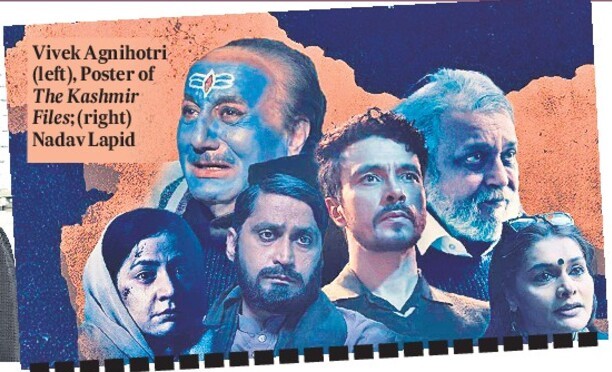
Someone Needs To Speak Up, Says Israeli Filmmaker
THE TIMES OF INDIA (December 1, 2022)
New Delhi: After sparking a political row with his comments criticizing ‘The Kashmir Files’ as a “propaganda” film, Israeli filmmaker Nadav Lapid has said he stands by everything he said because “in countries that are increasingly losing the ability to speak the truth, someone needs to speak up”.
At the closing ceremony of the 53rd edition of IFFI (International Film Festival of India) this week, Lapid had said that he and his fellow jurors were “disturbed and shocked” by the inclusion of ‘The Kashmir Files’ in the artistic competition segment of the film festival since it was “a propaganda, vulgar movie”. Indian juror Sudipto Sen, however, distanced himself from Lapid’s comments calling them his “personal opinion”.
Lapid was also slammed for his remarks by Israeli ambassador to India Naor Gilon, Consul General Kobbi Shoshani and former Israel ambassador to India Daniel Carmon.
An unfazed Lapid clarified that his comments did not “express one position or another on the conflict in Kashmir”. He said he spoke because he felt it his “duty” to speak his mind as the president of the international competition section jury since he “knows how to recognize propaganda disguised as a movie”, and because while it was not a crime to make bad films, what Vivek Agnihotri had directed was “crude, manipulative and violent”.
“Making bad films is not a crime, but this is a very crude, manipulative and violent propaganda film,” Lapid said in an interview with Israeli newspaper Ha’aretz. “The truth is that I also couldn’t help but imagine a similar situation that might happen one day soon in Israel, and I would be happy that in such a situation the head of a foreign jury would be willing to say things as he sees them. In a way, I felt it was my duty to the place that invited me,” he said.
The director of ‘The Kashmir Files’ Vivek Agnihotri, however, had defended his film. In a statement, he also threw an open challenge to all “intellectuals, urban naxals and even the Israeli filmmaker who made these remarks to prove if any scene, dialogue or event shown in the film is false”, promising to quit filmmaking if they find any falsehood in the film.
Lapid said he was not surprised by the outrage over his comments. “Since this is a film that the Indian government encourages, I assume that the government there is not happy about it. But is a country only about its government? I assume not. What I said is not comfortable for the Government of India, nor for the government in the making in Israel, which the ambassador there represents,” he said.
The award-winning filmmaker also alleged that the jury had learnt that ‘The Kashmir Files’ was “pushed into the official competition” of the festival “due to political pressure”. “You have an obligation to say the things that the people who live there may have a harder time saying,” the Paris-based filmmaker said.
----------------------------
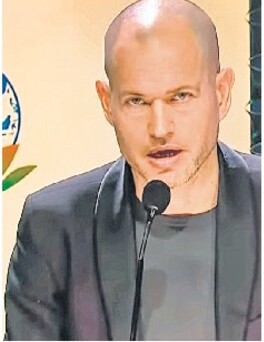
HINDUSTAN TIMES (December 1, 2022)
Israeli filmmaker Nadav Lapid, who earned the ire of many social media users after he called The Kashmir Files a “propaganda and vulgar film”, has opened up about his controversial comments during the closing ceremony of the 53rd International Film Festival (IFFI), held in Goa.
Speaking to Y-Net, Lapid said he was aware that “the event was connected to the country and people praise the government”.
“It is not an easy position, because you are a guest and are treated very nicely. Then you come and attack the festival. There was apprehension and discomfort; I didn’t know what the dimensions would be. Let’s put it this way: I’m happy to be on my way to the airport now,” said the filmmaker.
Addressing the trolling he faced on the net Lapid shared, “In countries that are increasingly losing the ability to speak the truth, someone needs to speak up. When I saw this movie, I couldn’t help but imagine its Israeli equivalent, which doesn’t exist but could.”
Amid the IFFI row, filmmaker Vivek Agnithotri, who directed the film in question, announced what seems to be the sequel to the film, titled - The Kashmir Files Unreported. Speaking to Aaj Tak, Agnithotri said, “I am determined now and I am making an announcement. We have many stories, anecdotes and truths. But now, I have decided that I will bring out the whole truth.”
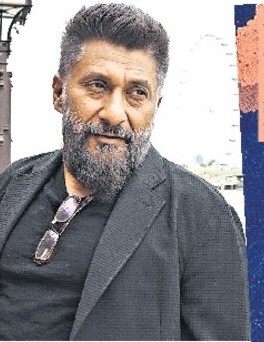
The Kashmir Files IFFI row: Red-faced establishment goes into fire-fighting mode
8:09 AM

IFFI Controversy Snowballs Into BJP Vs Oppn Row
Swati Mathur (THE TIMES OF INDIA; November 30, 2022)
New Delhi: Israeli filmmaker Nadav Lapid’s disparaging comments over the inclusion of “The Kashmir Files” in the competitive section of the International Film Festival of India that concluded in Goa on Monday triggered a strong backlash with even Israel’s envoy to India, Naor Gilon, calling them “insensitive and presumptuous”.
Goa CM Pramod Sawant, director of the film Vivek Agnihotri and its lead actor Anupam Kher also slammed Lapid, even as the political opposition latched onto Lapid’s remarks, as the chairman of the jury, as validation of their views that the movie was “BJP-backed propaganda”.
As Lapid’s comments ballooned into a political firestorm, the Israeli mission swung into damage-control mode. Ambassador Gilon said Lapid should be “ashamed” of abusing India’s invitation to chair the panel at IFFI and the trust, respect and warm hospitality bestowed on him. He said, “I’m no film expert but I do know that it’s insensitive and presumptuous to speak about historic events before deeply studying them and which are an open wound in India.”
At a joint conference with Kher, Israel consul general Kobbi Shoshani said the film was not propaganda and “carried a very strong message”.
Speaking at the closing ceremony of the 53rd edition of IFFI, the government’s marquee film festival, Lapid addressed an audience including Union ministers Anurag Thakur and L Murugan, Asha Parekh, Akshay Kumar and Rana Daggubati, and said that he and his fellow jurors were “disturbed and shocked” by the inclusion of “The Kashmir Files” since it was “a propaganda, vulgar movie”.
-------------------------------------
Swati Mathur (THE TIMES OF INDIA; November 30, 2022)
New Delhi: With the row over Israeli director Nadav Lapid’s remarks about Kashmir Files turning into a political storm, its ambassador to India, Naon Gilon said that while the friendship between India and Israel is “very strong” and “will survive the damage” inflicted by Lapid’s remarks, the filmmaker should reserve his criticism for the government in Israel.
At the closing ceremony of IFFI, Lapid had said, “There were 15 films in the international competition—the front window of the festival. Fourteen out of them had the cinematic qualities. . . and evoked vivid discussions. We were, all of us, disturbed and shocked by the 15th film—‘The Kashmir Files’—that felt to us like a propaganda, vulgar movie, inappropriate for an artistic competitive section of such a prestigious film festival.”
“I feel totally comfortable to share openly these feelings here with you on stage since the spirit that we felt in the festival can truly accept also a critical discussion, which is essential for art and for life,” he added.
Former Israeli ambassador Daniel Carmon also unequivocally condemned Lapid’s statements. The Israeli director’s comments left the political spectrum divided. Goa chief minister Pramod Sawant said Lapid had misused the IFFI platform to heap insult on the horrors faced by the Kashmiri Pandit community, but was countered by Shiv Sena MP Sanjay Raut, who backed Lapid’s charge and said ‘The Kashmir Files’ was “propaganda by one party against another”.
“A party and the government were busy with publicity… but the maximum number of killings in Kashmir occurred after this film was released. Kashmiri Pandits and security personnel were killed,” Raut said.
Congress’ Shashi Tharoor waded in, too, saying the inclusion of the film had “embarrassed the nation before the world”. “It is widely known that ‘The Kashmir Files’ . . . has received official and unofficial backing from the ruling party (sic) and its minions in the film establishment, since it serves the purpose of fomenting the Islamophobia that some in the Sangh Parivar are happy to promote,” he said.
Shiv Sena MP Priyanka Chaturvedi said Lapid’s comments “were on the quality of the film”. “It is obvious for anyone to understand that Nadav Lapid had at no point denied the Kashmiri Pandit exodus or dismissed it,” she said.
The Israeli filmmaker was pilloried and branded a “supporter of Palestine” on social media, and even faced a police complaint against him in Goa for outraging “Hindu sentiments”.
While there were no comments from most of his international juror colleagues, Indian filmmaker Sudipto Sen said Lapid’s remarks were no reflection of the jury’s views. “As jurors, we are assigned to judge the technical, aesthetic quality and socio-cultural relevance of a film. We don’t indulge in any kind of political comments on any film and if it is done, it is completely in a personal capacity,” Sen said.
The filmmaker’s controversial comments exposed the “left vs right” fault-lines and led to questions over his appointment as jury chair at IFFI. There was considerable consternation and dismay among a section of pro-Hindutva handles which questioned the event organizers over their failure to run a thorough background check into Lapid’s well-known “anti-establishment, Palestine-supporting” antecedents, and also the fact that he remains a deeply polarising figure back home.
-------------------------------------
Will quit if film is proven wrong, says Agnihotri
THE TIMES OF INDIA (November 30, 2022)
The Kashmir Files director Vivek Agnihotri said he will quit filmmaking if intellectuals, including Israeli filmmaker Nadav Lapid, are able to prove that events depicted in his film are false. “What’s surprising is how an event organized by the government of India was used to support the narrative of terrorists who want Kashmir’s separation from India and how many Indians living in India used it against the country?” he asked.
-------------------------------------
Does he know my pain: Son of Pandit slain by ultras
THE TIMES OF INDIA (November 30, 2022)
Kashmiri Pandits, whose parents were killed by terrorists in the Valley, lashed out at Lapid for terming The Kashmir Files a “propaganda movie” and “vulgar”. They demanded that Lapid be immediately deported. Vikas Raina, son of Ashok Kumar, who was killed by Hizbul Mujahideen, said, “Does he know my pain? My father was brought down from a bus and sprayed with a volley of bullet. ”
-------------------------------------
BOMBAY TIMES (November 30, 2022)
Israeli filmmaker Nadav Lapid, the jury head of the 53rd IFFI, on Monday, described The Kashmir Files as “propaganda”. At the closing ceremony, Lapid said, “All of us were disturbed and shocked by The Kashmir Files. It felt to us like a propaganda and vulgar movie that was inappropriate for an artistic and competitive section of such a prestigious film festival. ” Lapid’s comments invited reactions from the film’s crew and Israeli officials, among others.
‘LAPID’S REMARKS ARE INSENSITIVE’: Naor Gilon, Ambassador of Israel to India
Naor Gilon opposed Lapid’s statement on Twitter, writing that “it’s insensitive and presumptuous to speak about historic events before deeply studying them. . . The connection you make between your criticism of #KashmirFiles and your dislike to what is happening in Israeli politics was quite evident. . . My suggestion. As you vocally did in the past, feel free to use the liberty to sound your criticism of what you dislike in Israel but no need to reflect your frustration on other countries. ”
LAPID: AWARD-WINNING FILMMAKER, NOT A FAN OF CURRENT ISRAEL POLITICS
Lapid’s 2019 film Synonymes (2019) won the Golden Bear at the Berlin International Film Festival, while his 2021 film, Ahed’s Knee, was awarded the Jury Prize at the Cannes Film Fest. He’s also been a part of several international film fest juries, including at Cannes and Berlin. A vocal critic of Israel’s current political climate, Lapid once said in an interview, “The Israeli collective soul is a sick soul... It’s not special to Israel. This sickness or nature is characterized by young Israeli men muscular, smiling, who don’t raise any questions. They have a totally dichotomist vision of existence : Us versus all others.”
-------------------------------------
After Israeli filmmaker’s explosive put-down of Kashmir Files, embarrassed juror fronts damage control job
Priyanka Sharma (MID-DAY; November 30, 2022)
Just when it looked like all the controversies around The Kashmir Files had subsided, the film was firmly put back in the jarring spotlight after the jury head of the recently concluded International Film Festival of India (IFFI) deemed it “vulgar”, and an unfit choice for the festival’s competitive section.
Though Israeli director Nadav Lapid claimed that his co-jurors shared his opinion that the film that “disturbed and shocked” them “felt like a propaganda”, co-juror Sudipto Sen distanced himself from the stance. “It is his personal opinion, because, officially, no discussion happened between [the five jurors]. [At the ceremony], while announcing the awards, we were to read our citation from a printed page, which was [presented to] the festival authorities. But, Nadav expressed his own views. We were not consulted,” says Sen, adding that jury members often refrain from political commentary on the shortlisted movies.
While Sen claims Lapid’s opinions were not shared by others, isn’t his comment as the jury head synonymous with an official statement from the IFFI jury itself? “All our official communication happens with the authorities and then with the press. We don’t make any other comment separately,” he responds, alluding to Lapid’s decision.
The only Indian on the five-member panel, Sen reveals that the job of jurors is concluded post the official presentation. “After that, if any individual goes on any forum and speaks differently from [what was expressed at] the official presentation, how should the festival own up?”
What happened
Speaking at the 53rd edition of IFFI, jury head Lapid described The Kashmir Files as “propaganda” and “vulgar”. In his speech at the closing ceremony, he said he was “disturbed and shocked” to see the film being screened at the film festival. He was subsequently accused of whitewashing Islamist violence and disregarding the plight of Hindus in Kashmir.
Who is Nadav Lapid?
Israeli filmmaker Nadav Lapid is the jury head of the 53rd International Film Festival of India (IFFI). Via his style of filmmaking, he has also been vocal about his conflicted views of Israel.
The selection process
The Kashmir Files was one among three Indian films that were part of the Indian Panorama Section at IFFI on November 22, and was competing against 14 other films in the International Competition. The winner takes home the Golden Peacock title.
As part of the jury, Lapid had no hand in the selection process, and was presented with the 15 films — including The Kashmir Files — at the festival. The winning film was the Spanish offering, I Have Electric Dreams.
Kamalakannan’s Kurangu Pedal and Anant Mahadevan’s The Storyteller, starring Paresh Rawal, were the other two Indian films on the list.
The jury members
Apart from Sen and Lapid, the jury comprised American producer Jinko Gotoh, French documentary filmmaker and critic Javier Angulo Barturen, and French editor Pascale Chavance.
About The Kashmir Files
Agnihotri’s The Kashmir Files, a retelling of the Kashmiri Pandits’ exodus in the ‘90s, showcases the pain and suffering of the community. The narration develops around the protagonist, Krishna, a young college student who sets out to discover the truth about the untimely demise of his parents.
Reactions from the cast
Anupam Kher took to Twitter to share: “No matter how high the height of the lie is, it is always small in comparison to the truth.” In a video clip, he stated that “some individuals find it difficult to come to terms with the truth about Kashmir, and wish to perceive it through a positive lens”.
Darshan Kumaar claimed that the film depicted the plight of the Kashmiri Pandits community, who continue to fight for justice against the brutal acts of terrorism.
Director Vivek Agnihotri also shared his opinions on social media, and added that he would quit filmmaking if anyone could prove that the film was untrue.
-------------------------------------
The film’s makers, cast and industry peers are displeased with Nadav Lapid’s criticism of the film at the festival’s closing ceremony on Monday
Rishabh Suri (HINDUSTAN TIMES; November 30, 2022)
The closing ceremony of the 53rd International Film Festival of India (IFFI) is making headlines because of a statement made by jury head Nadav Lapid. The Israeli screenwriter criticised the film The Kashmir Files (TKF) that was screened at the festival, saying, “That felt to us like a propaganda, vulgar movie, inappropriate for an artistic competitive section of such a prestigious film festival.” Directed by Vivek Agnihotri, the film is claimed to be a fictional representation of the ’90s exodus of Kashmiri Hindus from Kashmir.
The Israel ambassador to India, Naor Gilon, reacted sharply to Lapid’s comments. He tweeted, “In Indian culture they say that a guest is like God. You have abused in the worst way the Indian invitation to chair the panel of judges at @IFFIGoa as well as the trust, respect and warm hospitality they have bestowed on you.”
Director Sudipto Sen, who was the only Indian member in the jury, took to Twitter to point out the films’ “subjective interpretations”.
Soon after Lapid’s speech surfaced online, social media was abuzz, with people associated with the film or in support of TKF expressing anger towards the comment. In a press conference with Consulate General of Israel, Kobbi Shoshani, actor Anupam Kher, who played the lead role in the film, said, “If he does not like a film, he is most welcome to say it. But if you’re a jury member, you cannot use words like ‘vulgar’ and ‘propaganda’. It’s a vulgar remark by a person who is vulgar and an opportunist.”
Actor Darshan Kumaar, who was also a part of the film, told ANI, “Everyone has their own individual opinions on anything they see and perceive. But one can’t deny the fact is that TKF depicted the actual plight of the Kashmiri Pandit community.”
The film’s producer, Pallavi Joshi, shared on Instagram: “It is unjust and unacceptable to stain one of the finest films of the Indian cinema with vulgar comments that delineate the harsh reality of a segment of our nation.”
In a video shared with us, Agnihotri said, “...Mere liye aashcharyajanak baat ye hai ki Bharat sarkar dwara aayojit Bharat sarkar ke manch pe Kashmir ko Bharat se alag karne wale terrorists ke narrative ko support kiya gaya... Main challenge karta hoon ki The Kashmir Files ke ek shot, ek dialogue ya event ko koi prove kar de, ki yeh poori tarah se satya nahin hai, toh main filmein banana chhod dunga (sic).”
Ashoke Pandit, Filmmaker
I am angry at people who appointed him as the jury head. This man has lowered the level and insulted IFFI. The seriousness of the festival is questionable now.
Vani Tripathi Tikoo, CBFC member and steering committee member for IFFI
I was totally flummoxed by the comment. There was a pre-selection jury, before it came to the international selection jury. To single out one film and make such comments was a shock. It puts the whole concept of independent cinema in the dock. On the one hand, you talk about creative freedom and independence of cinema. But when such incidents occur, the independence of cinema takes a beating. When we see a film, we may creatively disagree with it, but we never compromise on the process of jury selection.
Amit Behl, Actor (he was a part of the film)
I am very proud of Pallavi (Joshi; producer-actor), Vivek (Agnihotri; director-producer) and the entire team — Kher saab, Mithun da (Mithun Chakraborty) and Darshan Kumaar. We don’t even need to talk much about this. The world is talking about it. A Rs. 15 crores film did a business of Rs. 350 crores!
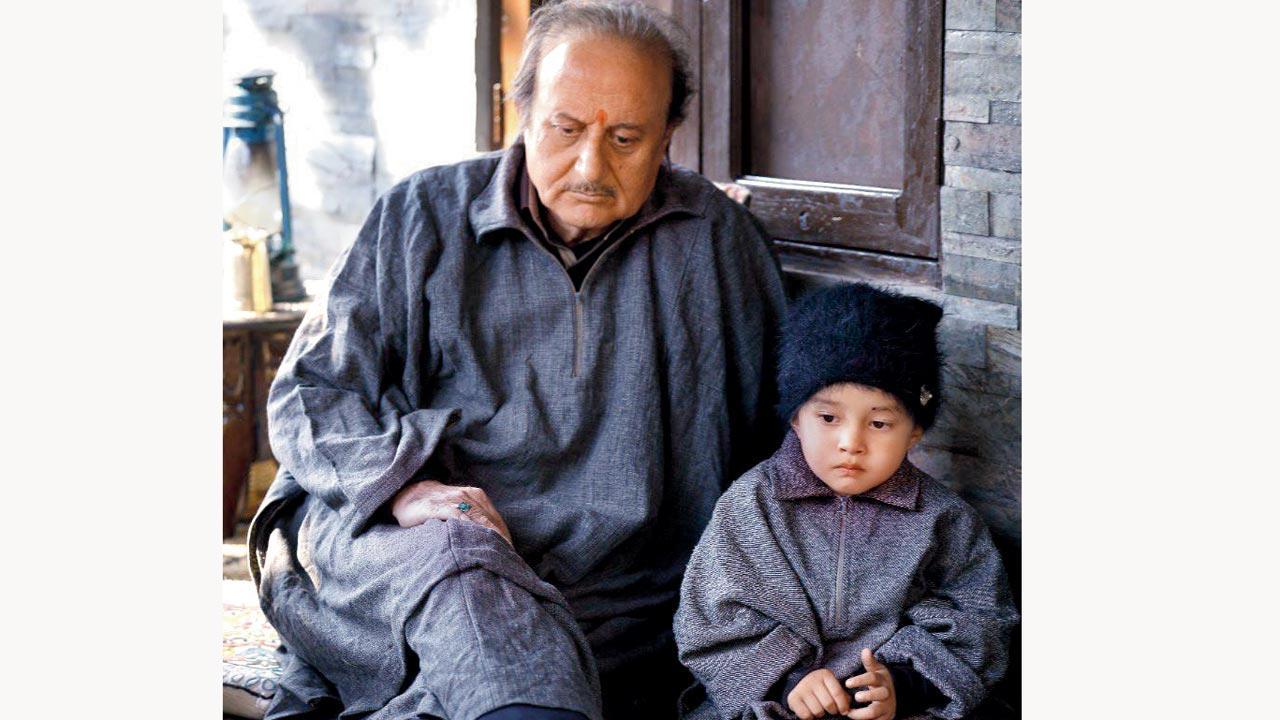
No better film than The Kashmir Files for competition at IFFI-Vinod Ganatra
8:01 AM
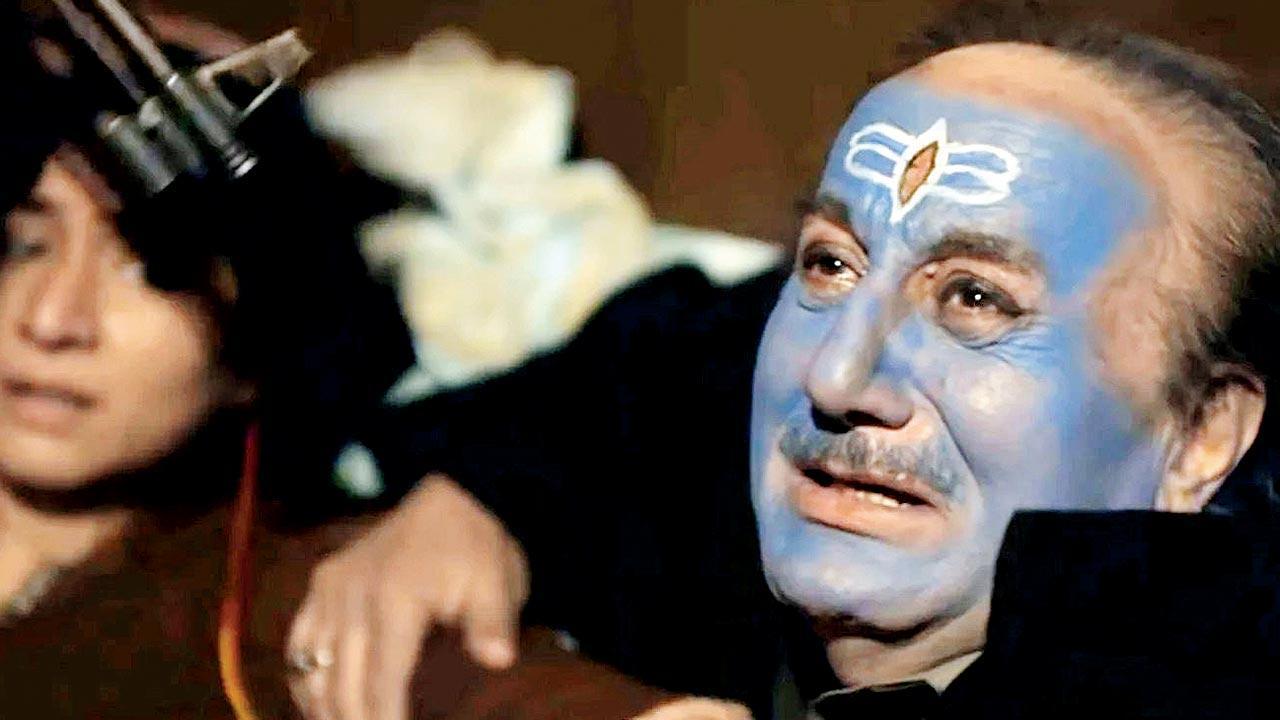
IFFI (International Film Festival of India) selection committee members, criticized by Lapid for placing film for international Competition, say they felt it would win!
Priyanka Sharma (MID-DAY; November 30, 2022)
Stating that he was “disturbed and shocked” to find The Kashmir Files among the 15 films in the International Competition category, Nadav Lapid questioned the choice of the selection committee of the 53rd edition of the festival.
However, directors Vinod Ganatra and Vijay Pande, who were among the 15-member panel that zeroed in on the Indian films for the competition, claim to have depended on cinematic prowess and not political commentary, while making the decision. “I don’t think there was a better film than this one that deserved to be part of the competition,” says Ganatra, who presided over the committee, and expected The Kashmir Files to bag the top award.
Prod Ganatra on if the criticism against Lapid — who used a podium to express his stance — is justified, and he responds in the positive. “He could have expressed his opinion to Vivek Agnihotri directly, because it was a personal one. To do so as a jury member [is inapt].” Had Lapid criticized a foreign film instead, Ganatra says his reaction would be along the same lines.
Pande, who not only selected the Indian films for the section, but also shortlisted the remaining 12 foreign language films, slams Lapid instead, stating that he “politicized a decision that was taken keeping cinematic aesthetics in mind”.
“We picked what we thought people should see, as students of cinema or as cinephiles. He is not an Indian native. How does he know what happened in Kashmir? He is trying to connect this politically, which is wrong. All the films that we selected cinematically, deserved a place in the competition. The directors of these films tried to convey something more than what the visuals depicted. That’s what matters,” says Pande.
In Kantara, no viewer asked about the budget of the film. They felt a connect with the film-Rishab Shetty
8:27 AM

Niharika Lal (BOMBAY TIMES; November 29, 2022)
Kantara director Rishab Shetty spoke about the importance of telling a hyperlocal story, exploring the theme of nature in his latest film and why he thinks pan-India films is a flawed concept. Shetty, who was also the film’s lead, discussed these topics with veteran film producer TG Thayarajan at an IFFI (International Film Festival of India) session titled Representing Cultural Diversity and Identifying New Markets.
‘I WROTE KANTARA BECAUSE I WANTED TO EXPRESS THE ANGRY YOUNG MAN INSIDE ME’
Talking about his character in Kantara, Rishab said, “I wrote Kantara because I wanted to act in it. For years, I wanted to play a character like Shiva but I never got a chance to do that and got busy with direction. I was the lead in Bell Bottom, which is a comedy genre, and after that I was offered a lot of comedy and underdog roles. I felt that if I will accept these roles then I will be limiting myself to this particular genre and I won’t be able to express the angry young man who’s inside me. That’s why I wrote this role.”
‘I BELIEVE THE MORE REGIONAL A STORY IS, THE MORE UNIVERSAL IT IS’
Asked if he thinks the world is warming up to regional films from India, Rishab said that it is the power of cinema. He said, “There is a need to tell local stories because the more rooted and local a story is, the more unique it would be and these unique stories have a universal appeal.”
He added, “If I am going to tell you a story of my own village, which I did in Kantara, then you will not get that particular story from that particular village on any OTT platform or in world cinema because that story is unique to my own village. Hence, I feel that there is a dire need to tell unique stories. So if I bring a story from my village and present it in a new format then people are going to like it. There is nothing new in stories. It is just the treatment of the story that is always new. I believe that the more regional a story is, the more universal it is.”
‘KARNATAKA MERI KARMBHOOMI HAI AUR MAIN UDHAR HI FILM KARNA CHAHTA HOON’
Kantara was dubbed after its release in five languages, including Hindi, because of the demand. Rishab said, “Now it has become a pan-India film. There is no formula for a pan-India film. It is the audience connect that matters.”
In response to a question if he would be interested in doing films in other languages besides Kannada? Rishab said, “Main Kannada film karna chahta hoon. Across the country and even the world, people have transcended the language barrier and watched Kantara, and showered me with so much love and respect, but I’ve come from the Karnataka film industry and Kannada people have given me a platform to tell my stories. Karnataka meri karmbhoomi hai aur main udhar hi films karna chahta hoon. If my film in Kannada language reaches people in other states – be it Hindi, Tamil, Telugu, Malayalam then I’ll dub the film and release it.”
Rishab also confirmed that Kantara is being dubbed in multiple foreign languages.
‘AUDIENCE DOESN’T CARE IF IT IS A BIG OR A SMALL BUDGET FILM, THEY ONLY CARE ABOUT CONNECTION’
Rishab dismissed the idea of pan-India films and the notion that producers have to increase the budget to reach a wider audience. He said, “Now, the reach of cinema has become limitless. If the content is strong in today’s time, then it can reach any place in the world. The audience doesn’t care whether it is a big-budget film or a small-budget film, all they care about is a connect with a film. When you think that the film should be pan-India and we increase the budget, then at that step itself you are facing a huge loss. I don’t believe in the concept of pan-India films. Producers mislead bhi hote hain – they think a big budget means wider reach which is definitely not true. Now in Kantara, no viewer asked about the budget of the film. They felt a connect with the film, liked the story and watched it. Word-of-mouth is the most inexpensive form of marketing and it contributed to the success of Kantara. Any film can perform well if the audience can connect with the content. I decide the budget of my films on the basis of what the film needs.”
‘MAIN SOCIETY SE KUCH LEKAR FILM MEIN DIKHANE KI KOSHISH KARTA HOON’
When asked how he selects the subjects for his films, Rishab said, “I don’t think much about the subject of the film. I even read very less. I was a below-average student in a Kannada medium school and you all are asking me to speak in English so I was wondering if should I speak in English or not? Main sota (sleep) bhi Kannada mein hoon aur khata bhi Kannada mein hoon. Main sab Kannada mein karta hoon. To choose the subject of my film, I observe what is happening in society and around us, what is the political scenario, and what are the discussions going around, and then I take inspiration from that. Yeh sab zyada sochta hoon main aur society se kuch lekar film mein dikhane ki koshish karta hoon.”
When asked if he believes in rituals that are shown in Kantara? He said, “I belong to a family that believes in those rituals and every year we do these rituals. Hamara mool wohi hai. If I would not have believed in those rituals then the audience would not have believed in those rituals shown in the film.”
A story like Fauda resonates with us. Art has no borders; if you make a good story, it will have a global appeal-Rajkummar Rao
8:20 AM

At IFFI, Fauda makers Lior Raz and Avi Issacharoff, along with Rajkummar Rao, discussed what makes content globally appealing
Niharika Lal (BOMBAY TIMES; November 29, 2022)
Fauda creators Lior Raz and Avi Issacharoff, who’re currently on a two-day visit to India, attended the International Film Festival of India (IFFI) on Sunday. The two had a chat with Rajkummar Rao on the topic Storytelling in the Era of Global Entertainment and spoke about their desire to collaborate with Indian creators.
THE MOST IMPORTANT THING IS TO MATCH THE EXPECTATIONS OF THE VIEWERS: FAUDA CREATORS
Fauda creators shared that when they started the project, they thought that nobody would watch the show. Lior said, “After the release of the first season, it became a hit and we thought that now we have to bring in more action in the show. People love the show because of how it is. You (as a viewer) feel like you are part of what’s happening, you are a fly on the wall. And we didn’t want to change that. We are not trying to be something that we are not. We are not trying to make it a Hollywood show and we are not trying to make it a Bollywood show. We are trying to make it the same thing that we already did. And this is the secret of the show.”
Avi added, “The most important thing was to match the expectations. The expectations after the first season became very high, then the second and then the third. After the third season, people thought we are not gonna go further. We were very surprised that we could match the challenges of the show. One of the ideas here is to keep the authenticity alive. It is not true, it is not a documentary, it is fiction, but you have to make people feel that it is authentic. Fauda was a very local Israeli show that became an international show. ”
The makers of Fauda have also collaborated with Indian creators, and a collaborative project is in the pipeline. Appealing to Indian creators, Lior Raz said, “I want to say this to those attending the screening – if there are any creators or producers here, then we are very much open to collaborating with you. We really want to collaborate with the Indian industry.”
IF YOU MAKE A GOOD STORY, IT WILL HAVE A GLOBAL APPEAL: RAJKUMMAR RAO
Sharing how working in a web series helps an artiste, Rajkummar said, “It really helps when your work can travel globally. I remember after Ludo, even though theatres were not functioning, I got messages from people from the US, UK, Singapore, Australia and New Zealand, which meant that people were watching Indian content globally. That’s what we want. A story like Fauda resonates with us. Art has no borders; if you make a good story, it will have a global appeal. You need to be grounded and you need to be rooted with your content. You can’t really make something which is surreal or unreal. You need to be authentic. That’s why Monica O My Darling or Badhaai Do work well. They are pushing makers.”
Commenting on what avenues streaming platforms have opened for him, Rajkummar said, “I wanted to do a series. Doing a series really enhances you as an artiste because you get to play the character for a longer duration. That’s what I felt while doing Guns & Gulaabs. I love watching films on streaming platforms. Watching other people’s work really inspires you as an artiste. I saw Kantara recently, and I was really inspired because it was such a rooted story. You can’t make a film thinking that I want to reach out to a global audience. You have to be true to the content and your heart should be in the right place.”
Monika Shergill, Vice President, Content, Netflix India, added, “What exactly is global storytelling? Stories are stories. They have to have authenticity and emotions. If you are working in your own bubble and you pick a story and say that it is going to work for an international audience – well, there is no ‘international audience’. There is nothing called an international audience.”
‘NOBODY KNEW WHAT FAUDA MEANT WHEN WE STARTED THE SHOW’
Fauda was earlier named Undercover, but later the name of the show was changed. Talking about the title, Avi said, “Fauda means ‘chaos’ in Arabic. Why did two Israeli-Jewish creators pick an Arabic name? The reason was that it had a double-edged meaning. It also has an Israeli meaning. And for us soldiers, who worked in undercover units, that was the code used when things turned messy. This is the word that you report in walkie talkie – ‘Fauda!, Fauda!, Fauda!’ and that is a sign for the rescue team to come.”
Raz added, “It is a very common word in Israel. Now everyone in Israel talks like – Oh! there is fauda in football games, there is fauda in politics. Nobody knew what fauda meant when we started the show, but now it is what everyone talks about.”
Hindustan mein jo sabse soft target ho sakta hai woh film industry hai-Anees Bazmee
8:28 AM
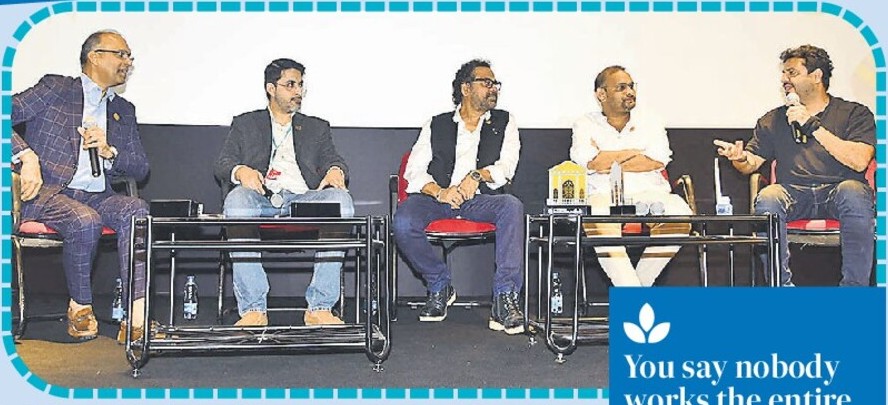
(L-R) Komal Nahta, Abhishek Sharma, Anees Bazmee, Mahaveer Jain and Vikas Bahl
HINDUSTAN TIMES (November 28, 2022)
The 53rd International Film Festival of India (IFFI), which ends today, saw a lot of topics being discussed in various sessions, workshops and masterclasses. One of the issues that was spoken about was the corporate culture in the film industry. The session, that had filmmakers Anees Bazmee, Vikas Bahl, Abhishek Sharma, Mahaveer Jain and trade analyst Komal Nahta as the guest speakers, also saw questions about whether the film industry truly had a mafia culture being addressed.
When a member from the audience member asked if the reason behind the industry being divided was a certain ‘heroine’ who recently raised the issue of ‘mafia culture’ in Bollywood, Bazmee answered, “Mujhe aisa lagta hai, Hindustan mein jo sabse soft target ho sakta hai woh film industry hai. You abuse it, say that nobody works here the entire day, and heroes and heroines do drugs. [If that is true] Then who are those actors who report to a film set at five in the morning, and keep working till three at night?”
The 60-year-old added, “Jitne ilzaam hain, aap saare laga dijiye. I have been in this industry for many years now, and there’s no workplace with as many beautiful people as this one.”
As for the narrative that drugs are prevalent among actors, Bazmee said, “Mujhe lagta hai jaan boojh kar kayi logon ke beech aisa bola gaya, taaki iss line ko badnaam kar do.”
He said, that people want to defame people in showbiz and make the profession look dangerous. “I am from the film line, and I am proud that I am not in any other line of work,” he added.
The filmmaker also mentioned that he feels it’s his duty to help new people in the industry in whatever way possible and so he always tries his best to guide them.
People are very harsh in their criticism towards the CBFC-Prasoon Joshi
8:27 AM
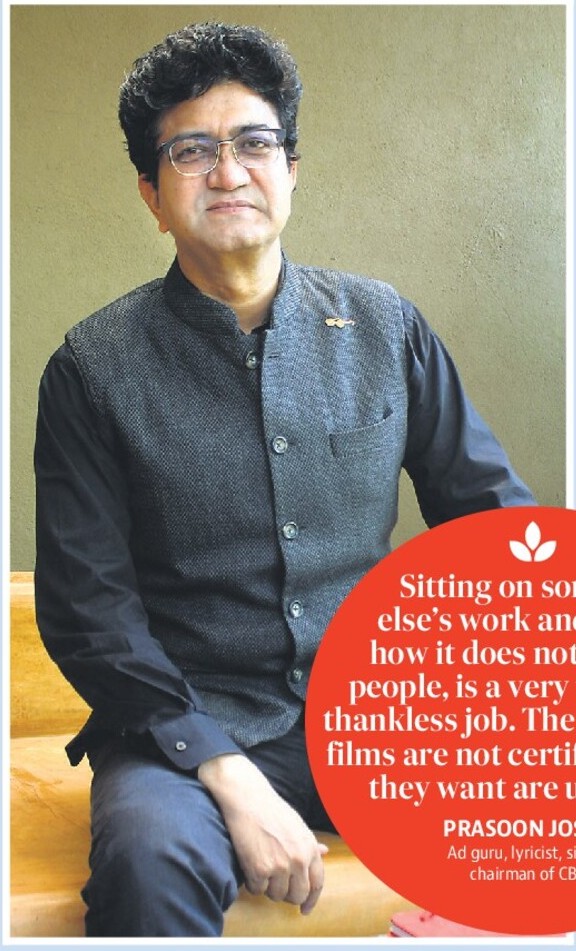
The Central Board of Film Certification chairman says his job is a challenge as he lacks the right temperament for it
Rishabh Suri (HINDUSTAN TIMES; November 28, 2022)
He wears many hats, including those of a noted lyricist, advertising guru as well as a talented singer. But the job which Prasoon Joshi finds the toughest to do is being the chairman of the Central Board of Film Certification (CBFC).
Explaining why it is a challenge, Joshi tells us, “It is something which is temperamentally not me. Sitting on someone else’s work and saying how it does not gel with people, is a very tough and thankless job. The ones whose films are not certified the way they want are unhappy. People are also very harsh in their criticism towards the CBFC.”
The 51-year-old, who was speaking to us at the 53rd International Film Festival of India (IFFI) after he delivered a masterclass, adds, “Even in advertising, you have to constantly evolve to meet expectations. But I have had fun creating brands for more than two decades. I love that job.”
Though challenges are present in advertising too, he says they are not ‘conflicts’. Similarly, there was hard work involved in recording songs as well. Joshi reminisces, “I would leave my office at 5 in the evening, take a flight and reach (music composer) A R Rahman’s office at 12 in the night in Chennai. I would then take another flight back to work at 8.30 in the morning the next day. But I did not mind the hard work.”
Despite managing the difficult responsibility at the CBFC, Joshi, however, also has a keen interest in imparting education to aspiring filmmakers, actors and technicians, which is why he chaired the jury for IFFI (International Film Festival of India)’s 75 Creative Minds of Tomorrow for the second time. This is why, he made sure to not miss the festival this year as well.
In school, I got Prithviraj Chauhan's role because of my mimicry, but I messed it up-Anupam Kher
8:07 AM
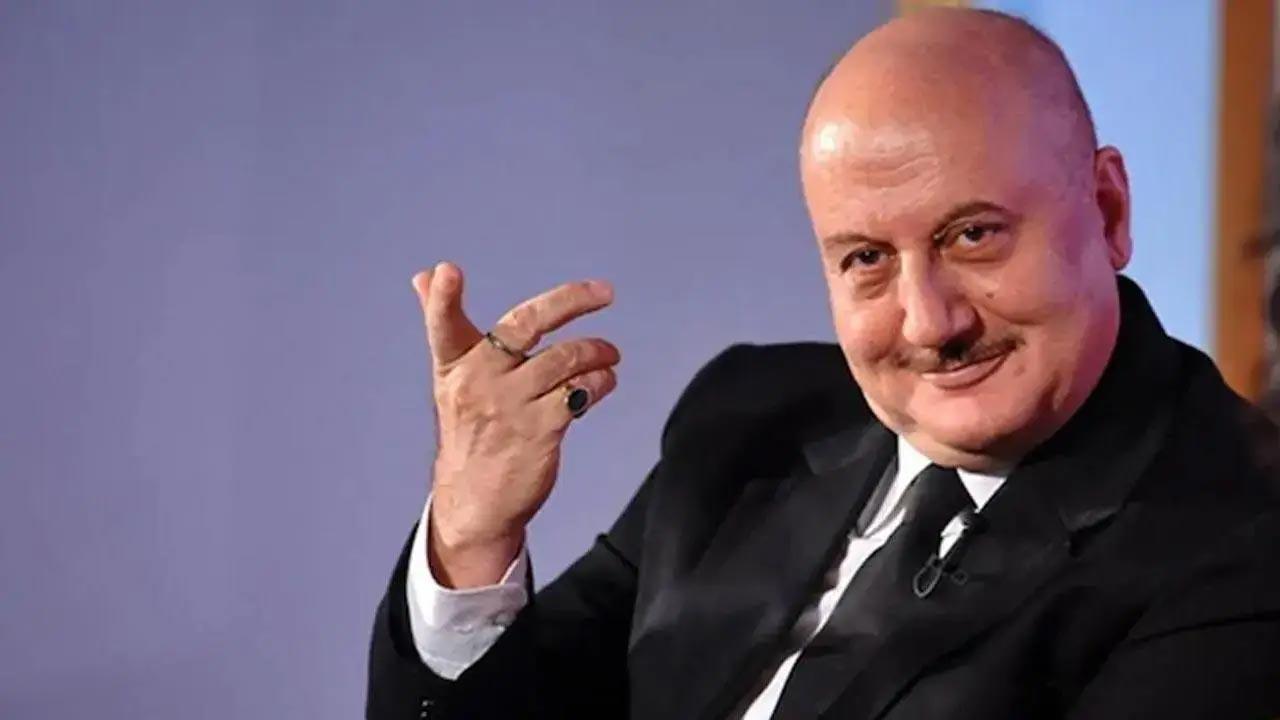
Kher’s masterclass on Performing for Screen and Theatre at IFFI
Janice Rodrigues (BOMBAY TIMES; November 28, 2022)
His many different roles over the years – starting out as a 28-year-old in Saaransh, where he played an ageing father grieving for his NRI son, down to roles in films like Midnight’s Children and Silver Linings Playbook – have marked Anupam Kher as a veteran of Indian cinema. So, when he spoke at the IFFI (International Film Festival of India) masterclass on ‘Performing for Screen and Theatre’ recently, there was a full house in attendance.
Talking about his first acting role in school, he shared that it wasn’t until a teacher had asked for the “boy who imitates everyone”, that he found the spark of acting inside him.
“I come from a non-filmi background, but I would always imitate people and wasn’t very good at studies. The teacher was looking for a person to play Prithviraj Chauhan where I had only one line, and I got the role because of my mimicry – but I messed it up!” he said. He had given up hope of acting further when his father, who was his biggest fan, got him a garland and said, “This is not for winning, but for trying.”
Kher then went on to act in several theatre productions before he landed the role in Saaransh (1984). “Theatre was my learning ground and I believe that no actor can be good without training,” he shared, stating that he is not a spontaneous actor. “I live the role for months before I face the camera. When I got Saaransh I was too young to understand the pain of a father, so I lived his life for six months,” said Kher.
Talking about the iconic scene with the Customs officers, Kher said that he would only be able to do it in one take. “Since I couldn’t feel a father’s pain, I dug into my own: that I would have to pack my bags and leave the city if I didn’t do this right, and thus the tears on screen were real,” he said.
But Kher revels in comic roles as much as he loves being part of dramas. “I believe an actor should be able to make a complete ass of himself; until you become a bewakoof, you cannot be an actor,” said Kher.
An intense performer, Kher called audience members up on stage during the Q&A session to give them a first-hand account of how he prepares as an actor. “You should be able to emote well when you act,” he told a young man who came up on stage to enact a scene with him. However, he was stern with those who looked disinterested, taking away the phone of a man who was busy with it. “You wouldn’t do that in a theatre, would you?” he asked the audience.
If certifying films fairly comes with a price, I’ve paid it-Prasoon Joshi
8:15 AM

At IFFI, the lyricist spoke about how his role as CBFC chairman has led him to maintain a distance from the industry, and the personal and professional price he’s paid for it
Niharika Lal (BOMBAY TIMES; November 27, 2022)
Prasoon Joshi, who has been the CBFC chairman for the last five years, says that he has maintained a deliberate distance from films, and written fewer songs, since taking on that role. “I was on the board of several major film companies and I resigned from them after becoming the CBFC head. Yeh mera style hai kaam karne ka. Main nishpaksh rehna chahta tha, main nishtha se kaam karna chahta tha. I am not part of certification of those films in which I’m involved. Somewhere, commercially, I’ve had to pay a price as well,” the lyricist said during his recently-held masterclass on Art And Craft Of Lyric Writing at IFFI (International Film Festival of India).
Prasoon continued, “I have been friends with a lot of people in the industry. But I have kept a distance to judge films judiciously and fairly so that everyone can reach out equally and everyone is judged fairly. If it comes with a price then I have paid the price.”
He added, “People can say whatever they want to, but all I can tell them is – main factory mein tarasha hua patthar nahin hoon. Main nadi ke kinare pada hua patthar hoon, jisne 50 thokrein khayi hain uske baad uska aakar gol hua hai. Aise hi gol nahin ban gaya hoon main. No one from my family was in films. No one came to Bombay with me and neither did I know anyone in the advertising world. I found my own way. Maine apni thokrein khayi hain aur un thokron ka prabhav ye hai ki kahin golayi aayi hai aur un golaiyon ka prabhav aap ko dikhta hai.”
‘IT IS IMPORTANT THAT THERE IS HIGHER REPRESENTATION OF WOMEN IN CBFC COMMITTEES, EVEN IF IT’S LOPSIDED’
Prasoon also said that 70% of the members in the CBFC committees today are women, and that it is really important for him to include more women members. “It is a bit lopsided. Who are these women? They are from all walks of life. Now, why is it important for me that women are in these committees? Kai baar woh maa bhi hoti hai, behen bhi hoti hain, receiving end pe hoti hain. It is important that they are comfortable. Since I have joined CBFC, I have ensured that there is unfair representation of women – lopsided representation of women – in those committees (i. e. higher ratio of women). I am not doing male bashing, but women take more interest in the shaping of the society. Unke upar dayitwa (responsibility) hota hai toh mujhe tasalli hoti hai.”
‘A FILMMAKER CANNOT SAY THEIR FILM IS JUST FOR SELF-GRATIFICATION IF THEY SEEK MONEY FROM A MOVIEGOER’
When asked if the CBFC sometimes tends to ‘unnecessarily use its scissors to cut films’, Prasoon expanded on his own philosophy on censorship during his tenure, saying, “We stay in a society, toh usmein kuch systems bante hain. Jaise hum sadak par chalne ke niyam banaate hain. Animal kingdom mein toh kapde nahi hote, but we celebrate wearing clothes, we make it an art form. Fabric design pe jaate hain. Koi usse yeh bhi keh sakta hai, aap mera freedom lerahe hain, mujhe kapde pehna rahe hain. But somewhere, there is an understanding in human civilization that we all want to see each other in a certain way. Aur bhasha ka istemaal hai, ki hum aapas mein public mein iss tarah se bolenge. Ek code of conduct evolve hota hai. It’s dynamic, ever-evolving. And kahin na kahin, doosre ke baare mein sochna important ho jaata hai. So, I have tried to handle this system (at CBFC) – jo pehle se chala aa raha hai – gracefully. And to solve these matters by asking ‘samaaj kya dekhna chahta hai?’. A filmmaker cannot say that a film is made just for their own gratification. If you’re seeking money from a moviegoer’s wallet, you can’t say that I don’t respect the opinion of the person from whose wallet I am seeking money. As long as we find the right balance between complete expression and responsibility and sensitivity towards the milieu and society we live in, I think we can solve it. And that has been my approach. As long as the intent is to solve it. The intent is not to play the blame game. The intent is not ki logon ko kathghare mein khada karo.”
‘LISTENERS SHOULD BE HELD EQUALLY RESPONSIBLE FOR THE TYPE OF SONGS BEING MADE TODAY’
Talking about the sexism in the lyrics of certain songs, Prasoon said that creators and listeners “should all be held equally responsible” for them. “If you want any change, then you have the biggest button. Uska bahishkar karne ka button aap ke paas hai. You can’t say that I will criticize objectification of women in songs during the day and in the evening, I will dance to those songs. Double standards are not going to work. Regardless of how harsh the market is, jo bikta nahi, woh tikta nahi,” he said.
Main aaj bhi acting seekh raha hoon-Anupam Kher
8:47 AM
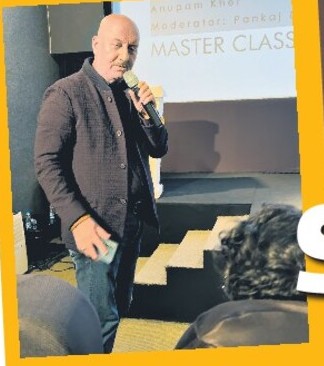
Unfiltered, funny and inspirational, Anupam Kher was at his best while doling out some much-needed gyaan to the younger generation
Rishabh Suri (HINDUSTAN TIMES; November 26, 2022)
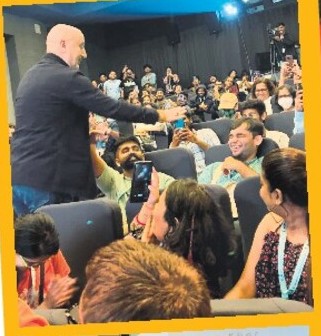
Anupam Kher was truly in his element at his masterclass at the ongoing 53rd International Film Festival of India (IFFI) in Goa. He stopped an audience member from leaving, took away his phone, sprinkled water on someone who yawned, and recreated his crying scene from his debut film, Saaransh (1984) — the audience couldn’t get enough of the actor.
SMALL TOWN DAYS
Kher revealed that he used to mimic his teachers and parents, and the town started calling him ‘jo nakal utarta hai’. The actor said, “I had this adjective attached to my name. I didn’t know whether I wanted to be an actor... My father was too busy earning money for a family of 14. His salary used to be Rs. 90. Actors are not born. Log bolte hain na, ‘paidaishi actor hai’. If I were a born actor, my first acting stint would not have been a disaster.”
He stressed the fact, for all the aspiring actors in the audience, that an actor should be ready to make a complete fool of himself: “Jab tak goof up na ho, aap actor nahin ban sakte ho. Main aaj bhi acting seekh raha hoon.”
FIRST SALARY
The 67-year-old recalled his first salary of Rs. 10,000, and the subsequent jump was a humorous incident: “When you are successful, people come and get associated with you. Ashok Punjabi came after Saaransh and said I am your secretary. Ashok said, ‘We have to go for the signing of your second film. I will keep my foot on yours, and if I press it, it means you are saying something wrong. Paison ki baat main karunga’.”
The two went to filmmaker Ramesh Behl’s office, where he told Kher he could choose either actors Sharmila Tagore or Moushumi Chatterjee to star opposite him. “The narration started, and the only thing I was thinking about was, ‘Who do I like more, Sharmila or Moushumi?’ I said, ‘Main Sharmila wala role karunga!’”
BATTLING DEPRESSION
Kher was diagnosed with manic depression some years ago. “Everybody has issues, young actors too. But they think, ‘I don’t want to tell people I am weak’. No! Tell people you are weak or when you are feeling sad, lonely or feel like crying. Go out and have a cup of coffee with strangers. I, as a rule, never eat alone,” he shared.
The benchmark of greatness for a film is wanting to see it again, not opening collection-Mark Osborne
8:38 AM

At IFFI, Kung Fu Panda director Mark Osborne spoke about what inspired his iconic animated film, and why he turned down the chance to make its sequel
Niharika Lal (BOMBAY TIMES; November 26, 2022)
Niharika Lal (BOMBAY TIMES; November 26, 2022)
When Kung Fu Panda and The Little Prince director Mark Osborne conducted a masterclass at IFFI, his audience comprised not just film students, but filmmakers, producers and directors, many of whom admitted to being die-hard fans of his films. From the influence of Japanese animation legend Hayao Miyazaki in his work, to the role of imitation and inspiration in art, and what makes a movie truly great – Osborne did a deep dive into several aspects of animation and filmmaking.
‘DIDN’T DO KUNG FU PANDA SEQUEL BECAUSE I DIDN’T THINK THAT THERE WAS ANY OTHER STORY OUTSIDE OF THE ORIGINAL’
Many in the audience were eager to share their memories of the first time they watched Kung Fu Panda and the impact the film had on them. Osborne revealed that the film’s journey started from a crew of seven, which expanded to 400.
Showing a picture of a panda on the screen, the filmmaker said, “It all started with this panda. I was inspired by films like Crouching Tiger Hidden Dragon. Hero was another film that I saw that blew my mind. And all these martial art films – Kung Fu Hustle to Kill Bill – helped to tell this story of Kung Fu Panda. It was like a tribute to all this beautiful cinema and trying to be authentic to the environment, art and true to the culture of China. We were never really clear whether it was an action film or a comedy film. It was like – what if Crouching Tiger, Hidden Dragon had a guy like Jerry Lewis? We made something that was really unique. What I am proud of is that we were able to tell an authentic story.”
Osborne said that when the opportunity to do a sequel to Kung Fu Panda came up, he felt he’d rather do other things. He said, “Wanting to see a film again should be the benchmark of the greatness of the film, not the film’s opening weekend collection. My heart was in stop-motion animation. I was still exploring the world of CG. Besides, I was in the bubble of the story. I didn’t think that there was any other story outside of that story.”
‘I LOVE HAYAO MIYAZAKI’S FILMS AND HOW HE ALWAYS USES FEMALE CHARACTERS TO NARRATE THE STORY’
Talking about his 2015 film The Little Prince, and how it was influenced by Miyazaki’s works, Osborne said, “Miyazaki’s My Neighbor Totoro was a huge inspiration – I thought, tonally, this is what we’re going for (in The Little Prince). I love Miyazaki’s films. He always uses female characters to narrate the story, which is very inspiring. I was also thinking about him because I knew he loves this book (The Little Prince), and it would be terrible if I made a bad movie which made him angry with me. So I was always thinking about making something he would appreciate.”
Osborne said that Miyazaki had also been approached by producers to make this film, though he turned them down, saying, “it is too important and I am too old”.
Osborne added, “I thought, well, I am not too old, and he is a huge fan of The Little Prince.”
Osborne did try to reach out to Miyazaki to show him his film, “but Miyazaki famously never sees other people’s work. As much as I have done my best job with the movie and as much as I love it, I am also happy that he has not seen the film.”
‘I HAVE NEVER REALISED WHAT MY MOVIE IS ABOUT TILL IT’S DONE’
Osborne’s advice to aspiring artistes was – “Figure out what’s important to you and try to tap into it. Because if it is meaningful to you, and it’s honest, then it is going to be meaningful to an audience. You are going to find your audience...and you’re going to discover something about yourself along the way. Every single project I have worked on has been a discovery for me. I have never realized what the movie is about until it’s finished. I want to break new ground. If you get comfortable, check yourself.”
Responding to a question on the line between being inspired by and copying other artistes, he said, “If you are going to be honest, and not just tell a story that is copying another or trying to do something like someone else, then it is that honesty that creates fresh takes on things and fresh approaches.”

Martial arts films like Crouching Tiger, Hidden Dragon & Kung Fu Hustle inspired Kung Fu Panda, said Osborne
We don’t have the concept of silence on our film sets-Nawazuddin Siddiqui
8:36 AM
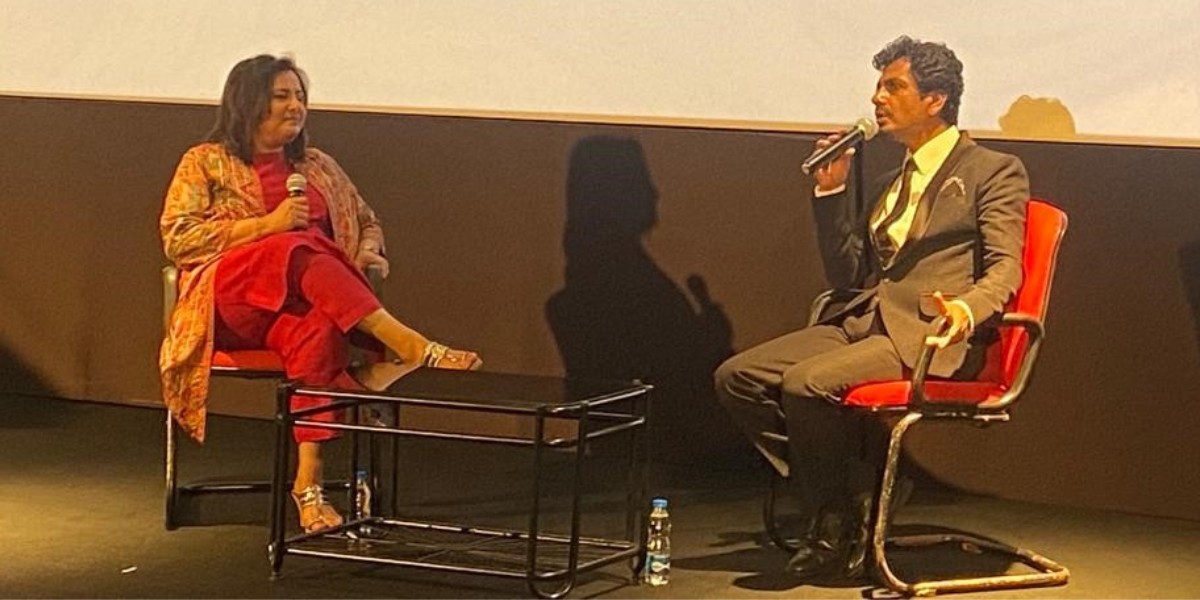
At his IFFI session, the actor spoke about how he starts afresh for every role he does, the lack of character details in movie scripts & what he expects from his directors
Niharika Lal (BOMBAY TIMES; November 25, 2022)
During his masterclass titled Journey as an Actor at the 53rd edition of the International Film Festival of India (IFFI), Nawazuddin Siddiqui shared with the audience what he expects from his directors, how he approaches his characters and why he never gets tired of acting.
‘I HAD TURNED DOWN SACRED GAMES BECAUSE I DIDN’T KNOW WHAT A WEB SERIES WAS’
In conversation with Central Board of Film Certification (CBFC) member and IFFI steering committee member Vani Tripathi Tikoo, Nawazuddin revealed to the audience that he had initially refused to do Sacred Games because he had no idea about what a web series was.
“When Vikramaditya Motwane (director of the series) contacted me to do Sacred Games, I was not really sure. I didn’t know much about the concept of web shows. It was Anurag Kashyap who convinced me to do the series. Anurag showed me a world map and said that the web show would be available in every country that was lit up on the map, and that was when I understood the reach OTT has and agreed to take up the role,” he recounted.
‘HAMARE YAHAN JAB SHOOT HOTA HAI TOH BAHUT SHOR MACHTA HAI’
Tikoo informed the audience that Nawaz has been working in international projects and asked him about the difference he has noticed while working with directors in India and abroad. “Hamare yahan shoot par bahut shor machta hai. Silence ka koi concept nahi hai. Aur director chahta hai ki ismein ye actor apna best kare,” he said.
Nawaz added, “Itni awaazein ho rahi hain aur usmein kehte hain — ‘aaiye, aap ka shot ready hai. Lights, camera, action’. Thoda silence do na yaar usko, toh woh shayad behtar kar sake. Main bolta hoon silence do, lekin hamare yahan nahi ho pata. Hamare yahan silence ka concept nahi hai.”
‘I UNLEARN AND LEARN EVERY TIME I START A PROJECT’
When Vani asked her National School of Drama (NSD) senior about his approach towards acting, Nawazuddin said, “Whenever a senior director used to visit NSD, he used to ask us to unlearn all the techniques and start it all over again, and that felt like a tedious process back then. Later, I realised that whenever you do a new role, you have to start learning all over again. If you think that you know everything, then you will not be able to excel in your craft. You have to start from zero. I unlearn and learn every time I start a project. Pehle se agar mind mein le kar aao ki main toh har baar century marta hoon toh bahut mushkil ho jayega.”
‘ACTING ITNA BADA FIELD HAI KI LAGTA HAI PAANCH ZINDAGI BHI MILEGI TO BHI PURA NAHI KAR PAYENGE’
Talking about an actor’s fatigue while goingthrough the psychological and physical transformation every character might need, Vani asked Nawaz what drives him every day to act all over again. “Kahin na kahin woh aadat bhi ban jati hai jo aap ko junoon de ki har roz subah kaam karne ki. Acting mera shauq hai, main usse kyun thakunga? Mujhe realise hota hai ki acting mein hi toh duniya basti hai meri. Ismein mujhe thakna kyun hai? Kabhi kabhi toh lagta hai ki ek zindagi bhi kam hai. Jab aap deep jate hain acting mein, tab aap ko lagta hai ki abhi to bahut kuch karna hai. Sirf acting itna bada field hai ki lagta hai paanch zindagi bhi milegi toh bhi pura nahi kar payenge hum log,” responded Nawaz.
‘I WANT MY DIRECTORS TO GIVE ME EVERY LITTLE DETAIL ABOUT A CHARACTER’
Responding to a question on what he expects from his directors, Nawaz said, “I need everything from my directors. I want them to tell me every single trait of the character that they are aware of. But unfortunately, very few directors are like that in our country. When you read a script, you’ll find that there are only dialogues and hardly any details about the kind of person a character is — details about his temperament, his physicality. Set par bolte hain aisa character hai, lekin yaar yeh script mein toh likha nahi. Dialoguebazi bahut hai hamare yahan. Do page ka dialogue likhne ki kya zarurat hai jab ek eyeball se express kar sakta hai scene ko? Hum bolte bahut hai.”
He further shared, “Once Irrfan bhai was directing me in a short film and I told the actress, ‘Aa ja meri cycle mein baith ja,’ aur Irrfan bhai ne kaha, ‘Cycle toh dikh rahi hai, toh bol kyun raha hai?’” While talking about dealing with mediocre actors, he said, “Scene do logon ki wajah se banta hai. Agar koi mediocre hai toh scene nahi banega. Lekin hamare yahan chalta hai. Insaan achcha hai toh le lo usko yaar. Arey insaan achcha hai toh ghar pe bula ke dawat do usko, role kyun de rahe ho?”
When someone asked Nawazuddin, what should one do when they are not getting a role even after 10-20 auditions, he said, “Once an actor came to Piyush bhai (Piyush Mishra) and said that he wants to leave acting and Piyush bhai responded, ‘Haan sahi soch raha hai, chala ja.’ That actor was expecting that he would be encouraged and consoled. Kya hai na humein koi sambhalne nahi aayega, humein khud ko hi sambhalna hoga. Humein puri zindagi deni padegi, agar 55 saal mein mil jaye success toh koi buri baat nahin hai.”
Subscribe to:
Posts (Atom)