Showing posts with label Instagram. Show all posts
Showing posts with label Instagram. Show all posts
Sonakshi Sinha's student protest post flagged as sensitive by Instagram
9:33 AM

Mohar Basu (MID-DAY; July 23, 2026)
A day after Sonakshi Sinha shared a series of visuals from the July 20 protest in New Delhi and criticised the violence meted out to the youth, Instagram appeared to have limited the post’s visibility. On Wednesday, the actor’s post had a ‘sensitive content’ warning over it. Users attempting to view it were met with a message that read, ‘This video contains content that some people may find upsetting’, along with a prompt to ‘See why’ before the content could be viewed.
The shadowban comes amid broader complaints from actors and public figures who have alleged that politically sensitive posts on Instagram face reduced visibility or content warnings.
Sinha was among the many Bollywood artistes who voiced their support for students amid the Cockroach Janta Party (CJP)-led protests in New Delhi, demanding education reforms and the resignation of Union Education Minister Dharmendra Pradhan.
Her post in question had a series of pictures from the July 20 protest, where the demonstrators were subjected to tear gas and lathi charge by the police. Alongside, she wrote, “20th July. Bohot logon ki haddiyan tooti, aur poore desh ka dil toota.”
An actor, who wanted to reshare the post, said on condition of anonymity, “I couldn’t reshare Sonakshi’s post initially. I thought it’s an error, but it turns out she had been shadowbanned. The post has no video content.”
Another source told mid-day that Shabana Azmi, Prakash Raj, Seema Pahwa, Revathy, and Anurag Kashyap’s posts on the ongoing protests were also blocked temporarily on July 21. “They disappeared temporarily or became inaccessible for a while before being restored. These incidents have prompted accusations of content suppression on Instagram.”
mid-day reached out to Meta India, which didn’t respond till press time.
More celebrities have condemned the police’s actions of July 20, and supported the students’ protest. With an excerpt of his post reading “bootlickers, one and all,” Imran Khan criticised the lathi charge against the protesters, while Naseeruddin Shah compared the act to that of America’s ICE agents.
Zee Entertainment sues Nykaa for using its songs in Instagram reels without licence
10:40 AM

Retailer used its songs in brand promotion without permission, claims co
Rajesh N Naidu & Maulik Vyas (THE ECONOMIC TIMES; May 6, 2026)
Mumbai: Zee Entertainment Enterprises Ltd has filed a copyright violation case against FSN E-Commerce Ventures, the owner of beauty and fashion retailer Nykaa, in the Delhi High Court.
Citing the Copyright Act of 1957, Zee claimed that FSN E-Commerce had used the former’s songs in brand promotion in about a dozen Instagram reels without seeking permission or licensing.
Senior counsel Abhishek Malhotra and Madhu Gadodia of Naik Naik & Co, representing FSN E-Commerce, however argued that Meta Platforms, Instagram’s parent and Zee’s licence partner, should be included as a necessary party.
The lawyers for Nykaa stated that Meta provides licensed music to all users as a standard feature and that using Instagram’s native music tools falls within the licencing agreement between Instagram and Zee. They also argued that without Meta’ involvement, a licensing framework cannot be properly reviewed. They said the order to remove content cannot be effectively enforced since only the platform has the authority to mute audio, remove content, or restrict access.
FSN E-Commerce informed the court that the twelve identified Instagram reels have been removed and are no longer accessible to the public.
Harsh Kaushik, the counsel for Zee Entertainment, instructed by Anushree Rauta of ANM Global, argued that the licensing agreement with the social media platform is for non-commercial use, whereas any commercial use requires prior approval and payment.
Zee Entertainment declined to comment stating that the matter is sub judice.
In the past two years, there have been three similar cases of music copyright violation. These include Sony Music-Myntra, Saregama-Emami, and Sony Music-Marriott Group.
Lack of clear understanding between personal expression and commercial exploitation of music is one of the key challenges resulting in copyright violations.
“Today, brands routinely collaborate with influencers and creators to produce “organic” or “branded content” that blurs the line between personal expression and commercial promotion,” said a leading lawyer requesting anonymity. “However, under platform policies, such collaborations, where there is any exchange of value, constitute branded content which falls in the realm of commercial use.”
Due to a lack of strict compliance, the Indian music industry is losing Rs8,000-10,000 crore annually in royalty payments, said independent music analysts. According to a senior executive at a leading music licencing platform, the music industry may earn at least Rs 3,600 crore if all commercial videos are paid a minimum fee.
“A popular song drives engagement in a reel or a video by two times,” said Gaurav Dagaonkar, cofounder and CEO at Hoopr, a leading platform for music licensing which serves 125 brands in securing licensed music.
“When companies use music owned by labels in promotional content of their brands, they don’t realize that they are using intellectual properties (IPs) of labels. So, when brands use music without labels’ permission, they deprive labels of revenues emanating from licencing music.”
Some labels attribute low awareness among companies about the nuances of music copyright violation.
“Such cases create awareness among companies about music copyright violation,” said Shivansh Jindal, CEO, Merchant Records, a label launched by music composer duo Salim-Sulaiman. “Today, we live in a digital world where music is democratized. So, companies may not fathom the gravity and consequences of using music of labels or independent artists without their permission or paying them.”
In the Zee-FSN E-Commerce case, Justice Tushar Rao Gedela granted on April 30 two weeks to FSN E-Commerce to file its response and gave a week to Zee to reply. The next hearing is slated for May 26.
Kill Joy: Licensing issues disrupt digital content consumption
8:23 AM

From songs that stop playing to shows that refuse to stream, licensing issues are disrupting content consumption in social media and streaming platforms
Shephali Bhatt (THE ECONOMIC TIMES; March 31, 2024)
Paromita Deb Areng is frustrated with the content consumption experience on digital platforms. Recently, someone told her that the sound in one of her Instagram Reels was not working. Areng, a beauty products consultant from Pune, had used a trending audio clip from Instagram’s music library to enhance her video’s reach.
“Instagram offered to replace the now unavailable song on the app, but the new audio failed to update as well,” says the 43-year-old. Muting audio ended up silencing her voice in the video, thus impeding its reach. Areng says this problem isn’t unique; many creators are avoiding library audio for this reason.
Her frustration extends to streaming services. Unable to find older Korean dramas on Netflix, she subscribed to another streaming service, Viki, only to find those shows “unavailable in our region”. She was surprised to encounter geo-restrictions especially since the Korean government declared India the biggest market for Korean content last year.
Areng has since come to understand that these issues are due to complications in licensing agreements with content producers that grant platforms the right to publish content they do not own. However, that awareness doesn’t necessarily ease her exasperation.
"You feel short-changed because you are willing to pay to consume content legitimately and yet are being forced to look for alternatives that often expose your system to security risks.” She makes a valid argument. At least 46% users of virtual private network (VPN) globally opt for it to access streaming services, and 26% do it specifically to access region-locked entertainment, as per a report from Forbes Advisor published in August 2023.
Eight years ago, when global streaming services like Netflix and Amazon Prime Video arrived in India, they promised access to a vast and continuously expanding content library. The “digital video-on-demand” branding created an unrealistic expectation that the content would be universally and permanently available. Over the years, snippets from popular international shows circulating on social media have only fuelled the craving for diverse content.
Ironically, this very desire has now shattered the illusion of seamless access as licensing-led curbs increasingly constrain users trying to watch anything and everything in the cloud. Similarly, music’s pivotal role in social media content has inadvertently exposed people to the vagaries of licensing disputes in the music industry, which end up restricting the use of songs on platforms like Spotify and Instagram.
OTT BORDERS
As a result, a growing number of users are expressing disgruntlement with their consumption experience. “It’s annoying that I can’t do a Prime Video Watch Party with my friends in India even when I’m in the country, just because I have a US-registered Prime account,” says Anmol M, a 27-year-old software engineer based in San Francisco.
In the US, he watches Koffee With Karan on Hulu because Hotstar isn’t available there. However, the show airs on Hulu a day later, he says, by which time his friends back home have already seen and made memes out of it. A decade ago, when Anmol moved overseas, there wasn’t a lot of content from India that he followed. “Very little existed in the first place,” he says. But now, he experiences FOMO for Indian content.
Some Indians abroad, like Soumya Wadhwa, compile a list of shows to watch during visits back to India due to this fear of missing out. “I like how western content is concentrated on certain platforms in India,” says the 32-year-old finance professional from Vancouver.
“Shows like Friends and Schitt’s Creek (a Canadian show) are available on Netflix India but not on Netflix Canada,” she adds. During her last trip to India, she found Hindi-dubbed K-dramas on Netflix. She prefers the quality of Hindi dubbing over English, but Netflix Canada doesn’t have a Hindi audio option.
India doesn’t necessarily have easy access to every popular western title. Ask film critic Sucharita Tyagi, who moved from India to the US last year. When discussing a movie, show, or even an audiobook, she says, “I have to first ensure that it is available in India.” For instance, Oscar-nominated May December never hit Netflix India, despite its many trailers announcing Netflix as the film’s digital home in North America.
“I always check with my India team which Hulu titles are streaming on Hotstar,” says Tyagi. She recently discovered that the audiobook for Killers Of the Flower Moon—which inspired the 2023 Martin Scorsese movie—is strangely available in French, German and Italian on Audible India, but not in English.
Stranger still is the case of Mysteries And Feluda. It’s a locally produced animated series based on the tales of Feluda—a fictional detective conceived by writer-director Satyajit Ray– that is available on Prime Video but not accessible to Indian viewers.
In an email response, a Prime Video spokesperson tells ET, “We make our locally licensed Indian films available in 240+ countries and territories. While there could be some exceptions where certain rights/territories could be carved out by the licensors in case of licensed content, it’s our constant endeavour to provide customers across locales, great content in their preferred languages.”
Netflix and Disney+ Hotstar declined to comment while ET’s emailed queries to Jio Cinema and Viki did not elicit a response.
IT’S BUSINESS
Why do platforms operate like this, you ask? The short answer: It’s nothing personal, just business. “Around 80% of content rights, excluding those of major studios and their projects, are handled by sales agents,” says G K Tirunavukarasu, CEO of ProducerBazaar, a content IP rights exchange marketplace.
“Producers distribute their movies through these brokers, who then allocate different licences to several players in different territories for varying prices. It’s more beneficial for them to sell individual rights rather than in bulk.”
Dealing with content in both domestic and international markets involves at least 40 IP rights, including gaming rights, dialect rights, sequel rights, among others. “If the producer isn’t clued in to who is acquiring which rights where, it can lead to chaos [read: legal notices and lawsuits] due to the legalities of adhering to each contract,” adds Tirunavukarasu.
Entertainment lawyer Priyanka Khimani highlights how new services often are either clueless or feign ignorance about content licensing costs. She cites homegrown short video platforms from the post-TikTok ban era, some of whom neglected music licensing payments until labels took legal action.
In 2023, Spotify paid $9 billion to music labels and publishers in licensing fees, according to its annual report, “Loud&Clear”. Khimani, who specializes in media rights, says much of the behind-the-scenes efforts contributing to this figure often escape the general audience.
“Disputes between artists, labels and third parties cause delays in closing deals, which could potentially result in takedowns and song unavailability on platforms like Spotify and Instagram. Failure to arrive at a deal can result in catalogues being taken down from a platform, like it happened with Universal Music Group that has removed almost its entire catalogue from TikTok recently,” she adds.
An instance of content licensing issue that can escape the viewer is the use of third-party music in films and OTT shows. For instance, in Season 3 of an ALTT show, Dil Hi Toh Hai (2020), several Sony Music tracks that were featured prominently in some episodes initially, seem to have been replaced with instrumental music, even though the characters are still lip-syncing to songs like “Hawayein’’ and “Say Shava Shava”. This could have happened due to a gap in coverage of rights or changes to ownership of the music. Emails to ALTT, formerly ALT Balaji, and Sony Music did not elicit a response till press time.
Negotiations for music licensing occur across platforms and labels in various territories, with no standardized rates, relying solely on relationships and track record. “It’s truly the Wild West,” says Khimani.
Instagram has now started flagging audio affected by licensing changes. In an email, a Meta spokesperson tells ET, “We have deals across the music community in more than 150 countries.... However, our partnerships are always subject to change and our library of licensed music may shift as a result.”
Movies are shifting platforms, too. Streaming rights for new movies are typically for three-five years. So, crime thriller Andhadhun (2018) shifted from Netflix to Prime Video recently.
The 2016 Aamir Khan-starrer Dangal, which was on Netflix India initially, can now only be rented on Prime Video and Apple TV (or bought on the latter).
The latest content-licensing contracts are now allocating different language/ dubbed versions to different platforms. Hanuman, the Telugu blockbuster from January and one of the highest grossing movies of the year so far, has been released in Hindi on Jio Cinema while the original Telugu version has gone to ZEE5. By April 5, its Tamil, Kannada and Malayalam dubbed versions will be on Disney+Hotstar.
K Niranjan Reddy, producer of the film, says, “Each platform offers various subscription tiers in India and globally, potentially expanding our audience. It’s promising; we will see how the strategy unfolds. It’s a valuable learning experience for me.” Last week, Reddy closed a contract for the film’s Japanese dub with English subtitles through a local vendor in Japan, he tells ET from the US.
This constant movement of content across platforms renders Google searches for locating content unreliable and time-consuming, says Basreena Basheer, a product manager at a B2B media & security firm in Bengaluru. However, she defends platforms’ decisions to not disclose reasons for content unavailability: “Many avoid mentioning geo-restrictions to discourage VPN use, given the abundance of online guides on circumventing geo-blocking.” Reasons for unavailability typically tend to be vague to avoid direct mention of any regulatory role (if applicable) in geo-restriction, she adds.
Streaming platforms are increasingly focusing on expanding their original content library to avoid licensing hassles. However, licensed content remains vital for growth; 45% of Netflix watch-time in H1 2023 was dedicated to licensed content, per the company’s engagement report. Some players are trying to find ways to improve communication around licensing woes.
Viki has an option to petition to get a show in your region. Netflix has introduced the ‘Leaving Soon’ tag for short-lived titles. “Perhaps, an ‘Available from’ tag to provide a tentative timeframe for accessing content could help. I’d be thrilled if there are categories like ‘Available after general elections’, for instance,” says Basheer, only half-jokingly.
Instagram restricts activities of Sapna Bhavnani's Wench Film Festival over it's name
8:02 AM
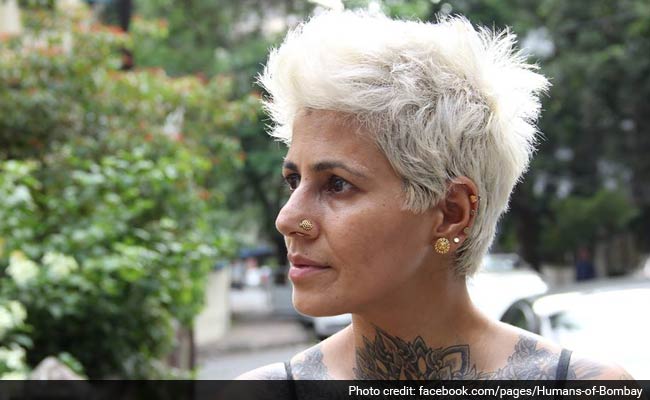
Ahead of Sapna Bhavnani rolling out Wench Film Festival, India’s first women directors’ movie fest, Instagram bars its account due to ‘objectionable’ name
Mohar Basu (MID-DAY; February 24, 2021)
When Sapna Bhavnani christened India’s first female-directors-only indie film gala Wench Film Festival, she hoped to spark a dialogue about how sexism influences our everyday language. But the hair stylist-artist-producer did not expect social media giant Instagram to be among the first to raise an objection. Over the past two days, the social media platform has restricted the activities of the film festival’s account.
“Last year, Facebook had restricted my production house’s account because of the term ‘wench’. It took three months of persistent conversation with the US office to fix that. Now, I am facing the same issue with the festival’s Instagram page. We are unable to reach out to our audience because we can’t follow people back,” says Bhavnani. The film festival, partnered by mid-day, is slated to kick off on March 6.
Bhavnani asserts that in naming the festival and her studio thus, she hoped to battle the negative connotation that ‘wench’ has acquired over the decades. With its roots in Old and early Middle English, the term originally meant a female infant or a young unmarried woman. However, over time, it came to designate a servant, but the disempowered status was tied to servitude rather than femininity or sexuality.
She notes that its current usage as a derogatory term for a woman is another example of our sexist society. “Wench means a young girl, not what it has colloquially come to be known as. When I was naming the studio, I asked Twitterati for two terms used to derogate women. Wench, witch and spinster are three words with problematic connotations. I chose ‘wench’ because I wanted to subvert its connotation. The effort to see our intention is lacking in these social media sites.”

Subscribe to:
Posts (Atom)