Showing posts with label Inox. Show all posts
Showing posts with label Inox. Show all posts
Oppenheimer draws crowds to Kashmir’s cinema halls
9:02 AM

Saleem Pandit (THE TIMES OF INDIA; July 23, 2023)
Srinagar: Cinema and Kashmir have shared an uneasy relationship for several decades. But now there’s change in the air— and on the ground.
Hollywood writer-director Christopher Nolan’s latest opus, ‘Oppenheimer’, is drawing youngsters in droves and running to packed shows at Srinagar’s INOX facility. All shows on Sunday are already booked. And the collections here could surpass Shah Rukh Khan’s blockbuster, ‘Pathaan’!
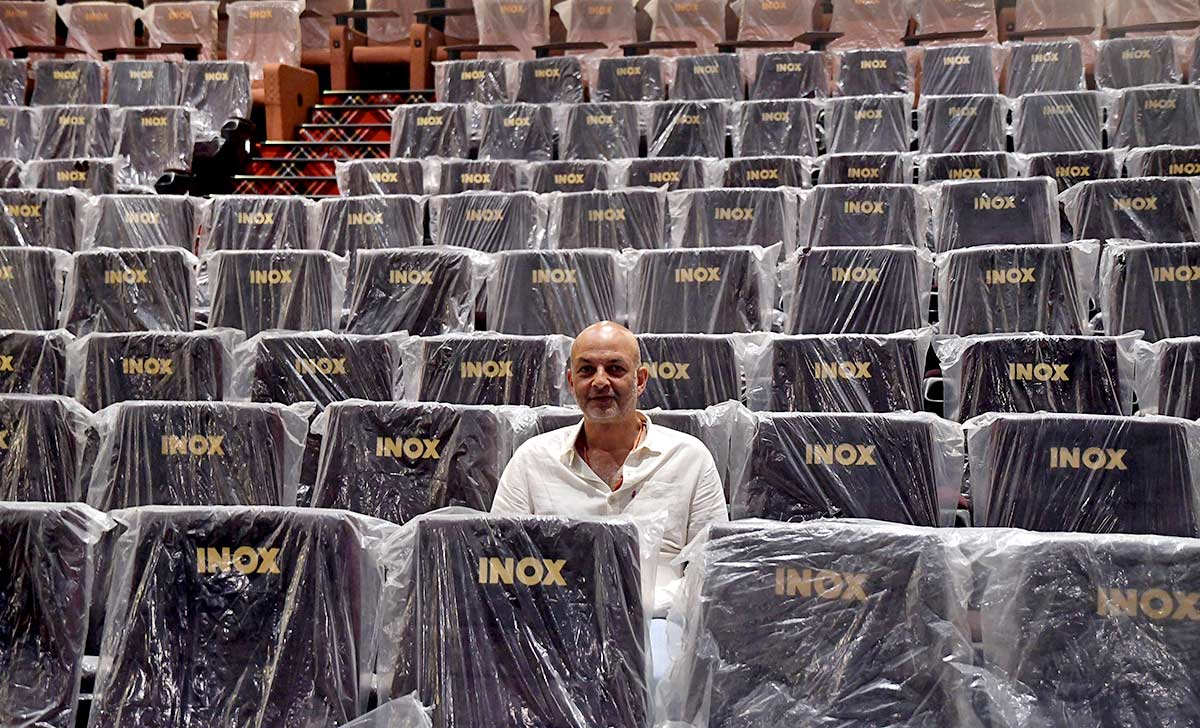
INOX owner Vikas Dhar said that many youngsters from across the Valley started enquiring about the movie on social media as long as a month before its release. “We had promised them that the film will be out (in Srinagar) on the day of its worldwide release,” Dhar said.
Cinema returned to the strife-torn Valley barely a year ago after decades of shutdown due to terrorism. Srinagar’s INOX was the first to get off the blocks last September, followed by two cinemas in south Kashmir’s Shopian and Pulwama districts. Last week, two more came up in north Kashmir’s Baramulla and Handwara. Ganderbal, Bandipora and Kulgam will join the list by September.
Kashmiris were forced out of cinema halls following diktats from terrorists in 1990. Three cinemas—Broadway, Neelam and Regal—reopened in 1999. But on the first day of Regal’s reopening, grenades were hurled at viewers coming out of the theatre. One person died. Soon, the theatres morphed into paramilitary barracks, malls, hospitals and ruins.
LG Manoj Sinha has promised to open theatres in every district. The return of cinema is part of the engagement initiatives of the J&K administration. Article 370, which gave Jammu and Kashmir special status, was revoked by the Centre in August 2019.
The rush at INOX, which seats 220, underlines a craving for the movies. IT engineer Saaqib Iqbal and doctor Falak tried to buy a ticket but the shows were full. Civil engineer Khalid Mir was enthusiastic about watching the movie but, like many others, wasn’t lucky to get a first-day ticket. “I had not expected such a rush for this movie in Srinagar,” he said.
‘Oppenheimer’s’ success demonstrates the Kashmiris’ evolving taste in cinema. Movie lovers from across the Valley are making advance bookings, Dhar said.
Merger was the best way to make balance sheet stronger-Ajay Bijli
8:28 AM

Vinod Mahanta and Javed Farooqui (THE ECONOMIC TIMES; March 27, 2023)
A key priority for PVR-Inox currently is improving margins through better capital and operating expenses, says managing director Ajay Bijli. In an interview with ET’s Vinod Mahanta and Javed Farooqui, Bijli talks about the contours of the deal to merge the two companies that has created the world’s fifth largest multiplex chain and what lies ahead for the combined entity. Edited excerpts:
What was the rationale behind the merger of PVR and Inox?
This (multiplex) business has always been about scale. Only when you reach a certain scale, do economies kick in. Achieving a certain scale allows for operating and cost efficiencies, as seen in large companies worldwide with 4,000-5,000 screens or more. The pandemic completely devastated our balance sheets and business. And, the best way to make our balance sheet stronger and address the challenges we faced was through the merger. The merger allowed us to take on the challenges that lay ahead in the the exhibition industry. But it also means we have more responsibility now with more screens, seats to fill, people to manage, and expectations to meet.
How is the integration process going on?
Fortunately, the integration process is going well. We started with the day-one structure and prioritized bringing people together. We hired Kornferry about three–four weeks ago to assist with this process. We developed the day-one structure to give clarity on everyone's roles and responsibilities, which was essential for our 23,000–24,000 employees. Now we are looking at synergies in every revenue line, and we have launched a new 100-day initiative called Parikrama. We're currently exploring ways to improve various aspects of our business, such as ticket prices, advertising revenue, and cost items, whether its capex or opex. There are about 13-14 initiatives that are going on simultaneously, which BCG is monitoring. We've informed the markets that it will take at least 12-24 months before we start seeing the benefits of our efforts. We have given it a value of Rs. 225 crore in synergy.
PVR and Inox promoters would own 10.6% and 16.9% of PVR-Inox, respectively. How will operational side of it work?
I have been appointed as the MD of the company by the board and shareholders, along with the Jain family as executive directors with equal representation on the board. The chairman is Pavan Jain. As MD, I am responsible for running the company for the next five years. At the operating level, we have two co-CEOs due to the large scale of our operations. We have roughly 1,700 screens, including 180 that are currently being fitted out. So, the span of control of Gautam Dutta, who is CEO of North and South, is equivalent to the span of control of Alok Tandon, who is looking after West, East and Central. Our focus is on economies of scale and adopting best practices from both companies.
Has occupancy reached pre-Covid levels? Will the higher ticket pricing hold after the Coronavirus bump subsides?
Occupancy rates vary by region, with the South having reached pre-Covid levels while West, North and East have not. We do think the ticket prices will hold. They haven't gone up by that much; it’s less than inflation in a three-year period. By the way, minimum wages have gone up, electricity has gone up, and so have all input costs. We have stayed below inflation.
Do you see a recovery in ad revenue once big-budget movies start doing better?
Everything is dependent on footfall — all our revenues are binary. The FY23-24 line-up is looking good. We have Ajay Devgn’s Bholaa releasing now, and John Wick: Chapter 4 has been released and has gotten a lot of traction. Then we have Karan Johar’s Rocky Aur Rani Ki Prem Kahani. Ajay Devgn’s Maidaan is coming.
Here's why PVR stocks fell despite Pathaan's super-success, merger with Inox
8:06 AM
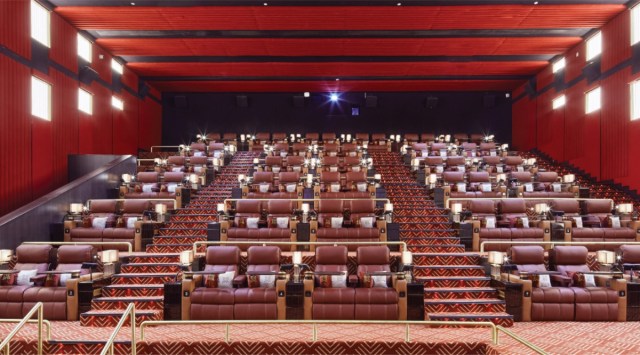
Exits by FIIs, who hold substantial stake, and seasonal weakness weigh; long-term story intact with Inox merger: Analysts
Rajesh Naidu & Jwalit Vyas (THE ECONOMIC TIMES; March 17, 2023)
The stock of PVR, India’s largest multiplex company, has lost 11.6% so far this year compared with around a 6% drop in the S&P BSE Sensex.
The underperformance of the company is glaring because it is despite the successful release of Pathaan in January, which turned out to be the first blockbuster Hindi movie of 2023 and the recent merger with Inox Leisure.
The key concerns for investors then would be what triggered the lacklustre performance of the stock and what should be future investment strategy. A major reason for the stock’s fall can be attributed to the selling by foreign institutional investors (FIIs) who trimmed their holding in the company to 32% as of February 22 from 40% at the end of December last year.
“Given the unfavourable developments in global markets, FIIs have been selling their stake in PVR in recent months. Since they have a comparatively high stake in PVR, its share price fell,” said a sector analyst requesting anonymity.
Besides this, seasonal weakness in the fourth quarter due to school and college exams across the country also impacted the stock’s performance. Footfalls are relatively lower in the March quarter than in other quarters of a fiscal year. In addition, apart from Pathaan, no other releases have shown a similar momentum at the box office during the March quarter, which is expected to affect the performance of exhibitors including PVR.
Despite the short-term hiccups, analysts and trade experts continue to remain optimistic about PVR’s long-term earnings. “The merger of PVR with Inox Leisure is likely to create a pan-India player which will help the combined entity achieve high bargaining power with producers and distributors and advertisers in revenues and rates,” said Girish Johar, trade analyst and a producer.
The combined entity will have more than 1,650 screens across 110 cities in India. Given the benefits of the merger, analysts believe that the company is currently priced attractively. They estimate that in the next 12 months, the company’s share price can appreciate in the range of 15-20% to Rs. 1,800-1,900.
PVR, Inox draws up Rs. 850 crores expansion plan
8:18 AM

Merged entity to invest Rs. 700 cr on new screens and the rest on retrofitting: PVR MD
Javed Farooqui (THE ECONOMIC TIMES; March 2, 2023)
Mumbai: The merged entity of PVR and Inox Leisure is expected to spend Rs. 800-850 crores for adding new movie screens and retrofitting the existing ones, PVR managing director Ajay Bijli said. As much as Rs. 700 crores of this will go into new screen expansion and the rest for retrofitting screens.
They have set a 100-day action plan to complete the integration of the two firms, and once completed, the merger will generate annual cost and revenue synergies of Rs. 225 crores over the next 12-24 months, said Bijli.
As part of the action plan, the merged company will focus on integrating human resources, technology and operations, and once the integrations are complete, it will focus on unlocking cost and revenue synergies, said Bijli. They expect the synergy benefit to come from areas like box office, food & beverage and advertising in terms of revenue. The cost synergy is expected to accrue from areas like supply chain and overhead rationalization.
In the next two years, the merged entity plans to add 200 screens per year, Bijli added. In the current fiscal year to date, they together have launched 143 screens across 26 properties in 21 cities.
On Wednesday, PVR launched an 11-screen superplex in Lucknow’s Lulu Mall. With this launch, the company's screen count will increase to 158 screens in 32 properties across Uttar Pradesh.
The merged entity now has 438 screens in 100 properties across North India. PVR-Inox’s growth plan involves expanding the screen count in South India, tier-2 & tier 3 cities and increasing its share in the premium format segment, Bijli said.
The combined entity will be called PVR Inox, with Bijli serving as its MD. It, according to Bijli, will have an 18% market share in screens and 30% in box office collections in the country. The joint entity will have 1,642 screens in 113 cities and 354 properties in India.
On January 12, the National Company Law Tribunal sanctioned the scheme of arrangement between the cinema chains. In a February 23 regulatory filing, PVR announced that the company's board had approved the allotment of more than 36.70 million shares to equity shareholders of the erstwhile Inox Leisure.
----------------------------------------------------
PTI (THE ECONOMIC TIMES; March 1, 2023)
Leading multiplex operator PVR is working on "getting economies of scale" after the merger of rival Inox Leisure and expects a double-digit growth in its top-line in FY24, said managing director Ajay Bijli. PVR is working on synergies on revenue from ticket prices, food & beverage, advertising, and operating costs, he said, adding that the merged entity has plans to add 200 screens every year, and tap the potential of smaller markets.
"If you look property by property, in certain places there are disparities in the ticket price. There are opportunities for improving programming, and scheduling the peak-hour ticket pricing," Bijli told PTI.
Besides, some of the properties would also have to be upgraded, he said.
"We both are operating in the same environment and look at the demographics in a similar way. But whatever tweaking needs to be done for both brands to give a consistent experience, we are working on it," Bijli added.
When asked about the growth in terms of the top-line of the merged entity in FY24, Bijli said he expects double-digit growth.
"In calendar year 2019 which was normal year of operations pre-pandemic, PVR and Inox recorded a combined turnover of about Rs 5,600 crore. We are adding about 200 screens every year with a capex of about Rs 700-750 crore," he said.
A merger of PVR and Inox Leisure is effective from February 06, 2023.
"We felt that coming together would make the balance sheet stronger and this business is all about scale... I truly believed that if we has not come together, there would have been a problem in growth, and we will grow together," he said.
Like in the F&B space, Inox was serving vegetarian food only and post-merger it will also have a non-vegetarian menu, which can take the ATP (Average Ticket Price) up.
"Advertising is another area, where the minutes on the screen, which we were charging can be taken up," he said.
Besides, Bijli also plans to share some benefits with the consumer from the economies of scale after the merger.
"Not everywhere it will be value-driven, it would be volume driven as well. Where ever we feel that ATP has to come down, it's fine for us," he said, adding, "the ATP will come down at several places."
According to Bijli, he is more concerned with film income rather than ticket price multiplied by the number of people.
"Our focus is more on getting more and more people inside, rather than looking at ticket price," he said.
Regarding the operation cost, Bijli said the joint entity PVR Inox would have 23,000 people and have operations in 113 cities.
Post-merger Inox Leisure would cease to exist and Bijli would head the merged entity PVR Inox as managing director.
After the merger with Inox, PVR on Wednesday announced the launch of an 11-screen 'superplex' at Lucknow at Lulu Mall, the largest shopping mall in the city.
This will have all formats, including the multi-sensory 4DX format, premium large screen format P[XL], two auditoriums of PVR's luxury format, LUXE along with 7 auditoriums with last-row recliners.
After this, PVR's foothold in Uttar Pradesh with 158 screens in 32 properties consolidates the merged entity's presence in north India with 438 screens in 100 properties.
In the current fiscal, the merged entity has opened 143 screens across 26 properties in 21 cities.
IMAX to speed up expansion in India after a Blockbuster 2022
8:35 AM

Global entertainment technology co has set a 100-screen target for India in the next 5 yrs
Javed Farooqui (THE ECONOMIC TIMES; January 12, 2023)
Mumbai: Global entertainment tech company IMAX Corporation will be speeding up its market expansion plans in India after witnessing healthy growth in box office collections in 2022, a top company executive said.
IMAX Corporation CEO Richard Gelfond, who is on his fourth trip to India, said that the time is ripe to up its investments in the Indian market as 2022 was the best year for the company after 2019.
“It is the perfect time for IMAX to expand in India because the stars have lined up in the right way. Our box collection is up 41% in 2022 compared to 2019,” he told ET.
‘Avatar: The Way Of Water’, he said, has become IMAX’s highest grossing movie in India. “The movie generated $4 million and is still going very strong. Our per screen average in the country was $900,000 in 2022,” he added.
Gelfond said IMAX has set a 100-screen target for India in the next five years. “We have 23 screens open, and another 19 screens are in the backlog. We have targeted 100 screens in the next five years,” he said.
He noted that IMAX has 800 screens in China with another 200 screens in backlog. “India has a long way to go. It is hugely under screened,” he said.
The IMAX top boss said that the company’s biggest success in 2022 came in the form of local language films, which contributed 30% to the total box office collections. “We made a breakthrough in local language content in 2022. IMAX was perceived as a Hollywood-focussed brand. But now, people say it is a place to go for blockbuster movies whether it is Hollywood, Bollywood, or South Indian,” he added.
IMAX’s strategy to grow its business in India is three-fold, Gelfond revealed. The company will release more local language blockbuster films, open new screens, and go deeper by partnering with single screen theatres.
“We are going to double our bets on local language films. We did six local language films in 2022 and we intend to do 10-12 in 2023,” Gelfond said.
“We will be installing six theatres this year. We have 23 screens open, so six is about 25% growth in our network this year. We will also target some of the independent single-screen theatre operators around the country,” he noted.
IMAX will partner with real estate developers besides strengthening relationships with existing clients like PVR, Inox and Cinepolis. “Together, PVR and Inox will be financially much stronger than they were during the pandemic,” he said.
He also pointed out that Indian films are doing well in overseas markets by citing the example of Telugu film ‘RRR’, which he said collected $3.60 million in the US through IMAX.
“IMAX's involvement with Indian films is not just in India but also in other countries. Indian films do well in the Middle East, the US and the UK. We have helped the Indian film industry gain international exposure,” he said.
-------------------------------------------
Lata Jha (MINT; January 12, 2023)
Following a slow down in its India business due to the covid-19 pandemic, IMAX Corp., which develops immersive cinema technologies and manufacturers cameras and projection systems, seeks to touch the 100-screen mark in five years in India.
At present, 23 IMAX theatres operate in India. It will add six screens in 2023. In 2020, the Canadian cinema firm had set out to achieve the goal by 2025.
IMAX will partner local studios and producers, and will float a programme to promote the use of IMAX cameras to shoot big-ticket movies.
IMAX offers 70-mm motion picture film format, and projection system, wherein screen image width is greater than the height of a screen.
In 2013, IMAX and Yash Raj Films had partnered to screen Dhoom 3 and Shekhar Kapur’s Paani, which was later shelved. Recognizing the importance of screening local content in India, and not just Hollywood movies in premium formats, IMAX is looking at enhancing homegrown output and even tied up for hits such as Ponniyin Selvan-1 and Brahmastra.
“Our strategy of doing Hollywood films was a good, but it limited. Many people want to watch films in their local languages, they want to watch the kind of films they’re used to. So I think that’s going to be one of the keys to breaking this market open," Richard Gelfond, chief executive officer, IMAX, said in an interview.
“It’s inevitable that we will do deals with some larger studios as time goes by. The other thing we would really like to do is to accelerate our camera programme since we’ve developed specific digital cameras. We have met some studios and filmmakers and are in an early stage to explore ways to partner some Indian companies in helping us manage the camera programme in India. Ideally, I would like to find a company that will help us roll out faster."
Gelfond said Coronavirus-led disruptions had slowed its global expansion plans, including for India. “Five years ago, I didn’t think there will be a pandemic that would close entire countries down for three years. Not just in India, but globally, out-of-home entertainment was shut, and slowed things down. There were also side effects of covid: mall development and moviemaking slowed and you couldn’t release films, and sets were closed . And if you think of India, theatres opened in March-April of last year." Gelfond said these were primary impediments, but India was always a challenging due to government permits, licensing and regulations.
To be sure, Covid has forced IMAX to reexamine its strategy. “In 2019, 2% of our box office in India was from local Indian content. In 2022, it rose to 30%," Gelfond said.
The firm expects to release 10-12 local films in 2023 such as the Shah Rukh Khan-starrer Pathaan and Prabhas’ mythological film Adipurush.
“IMAX is a very exclusive solution that aims at getting the best on-screen experience, and is not a multiplex. So if we had 100 movies a year, that will not be feasible in the context of how we operate," Gelfond said explaining the relatively low output for IMAX screens.
Experts say some of IMAX’s bets may pay off. Film lovers are getting used to the convenience of watching multi-language content from within the comforts of their homes, theatres will have to lure them back through luxury formats such as plush auditoriums, larger and high-tech screens, as well as customized menus. It will obviously be at a higher ticket price, which at least a section of the audience will be willing to pay, they added.
“We take upfront payment, and a percentage of box office, from the exhibitor and a piece from studios. Putting an IMAX really helps the theatre brand and it doesn’t seem to take away people despite a higher price," Gelfond said.
Multiplexes gear up for a blockbuster second half of FY23 after a muted first half
8:08 AM
Rajesh Naidu (ECONOMIC TIMES; December 8, 2022)
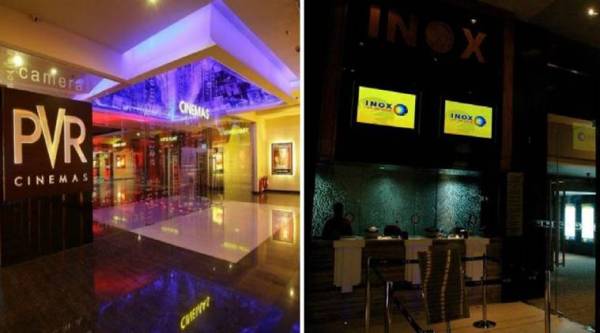
ET Intelligence Group: The business outlook for the multiplex companies has turned favourable over the past month following a slew of box office hits including Kantara, Drishyam 2, Uunchai, and Black Panther: Wakanda Forever. Rating agency ICRA in a recent report has revised its business outlook for the exhibition sector to 'Stable' from 'Negative'.
Several factors have played in favour of the sector. First, the increase in the number of weeks to eight from earlier four weeks for which films should be exhibited at theatres before releasing on streaming platforms was a timely move. The cumulative box office collection of Hindi films released in November 2022 was Rs 293 crore compared with Rs 286 crore in September and Rs 211 crore in October.
The other factor is a recovery in the in-cinema advertising, which has a higher profit margin. Third, increase in prices of food items in tandem with inflation and expansion in the food menu also boosted revenue of multiplexes.
Given these factors, ICRA expects multiplexes to improve profitability. It estimates that multiplex companies will record 16-18% margins in the second half of FY23 compared with 12-13% in the first half. For FY23, margins are expected to be between 14 and 16%.
A strong line-up of releases in the second half of FY23 offers hope. Star studded films such as Cirkus, A Man Called Otto, Kisi Ka Bhai Kisi Ki Jaan, Adipurush and Pathan are expected to draw viewers to theatres.
For FY23, ICRA estimates that the multiplex industry's revenues will exceed pre-pandemic revenue in FY20 by 6-8% driven by 10-15% higher average ticket prices and 30-35% growth spend per person.
In the past month, stocks of PVR and Inox Leisure have gained 4.2% and 6.9% compared with 2.7% gain in the benchmark Nifty 50 index. After incurring losses for two consecutive fiscals, analysts estimate that multiplexes will turn profitable in FY23. For FY24, analysts estimate that earnings per share (EPS) of PVR and Inox Leisure may jump two-three times.
PVR plans big South India push this year amid rapid mall development
8:06 AM
Javed Farooqui (THE ECONOMIC TIMES; December 3, 2022)
Mumbai: Multiplex chain PVR’s screen expansion in 2022 has been skewed towards South India due to the rapid mall development activity in that region, its chairman Ajay Bijli said. “We are South-skewed in terms of screen expansion this year because a lot of malls have come up in the South,” he said. “We are joined at the hip with mall development, which changes every year from region to region. This year, it just so happens that the retail expansion has happened in the South.”
Bijli said PVR aims to open its Director's Cut format in every major city in the country. “In the first phase, we will look at Delhi, Mumbai, Hyderabad, Bengaluru, Gurugram, and Noida. The second phase will be smaller cities,” he said. “This year, our capital expenditure for screen expansion would be Rs. 350 crore.” The average cost per screen is Rs. 3 crore, he added.
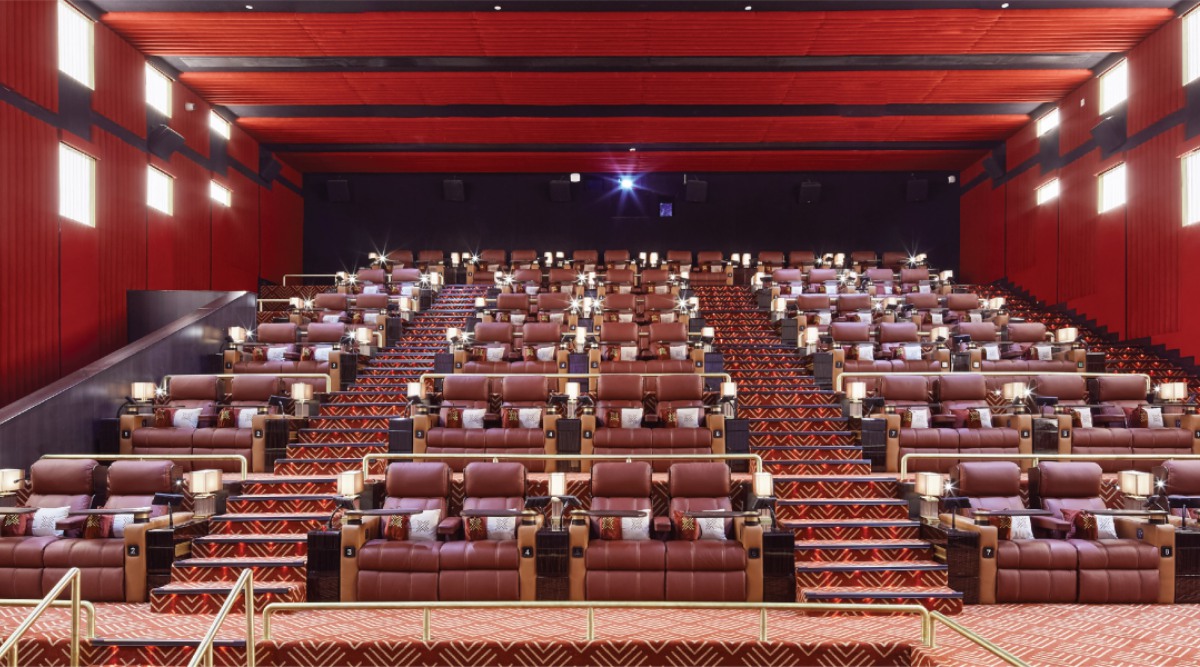
PVR will launch its first super luxury cinema format PVR Director’s Cut in South India in Bengaluru on December 9, Bijli said. With this launch, the multiplex chain will have 88 screens in 12 properties in Bengaluru and 316 screens across 51 properties in South India. PVR has set a goal to open 100 new screens every year. It has opened 44 screens so far this fiscal, and is aiming for 20 more screens in this quarter with plans to add another 35 in Q4.
On its merger deal with Inox, Bijli said the same will be closed this fiscal year. “We have got all the necessary approvals but there are still one or two approvals left,” he said. “Everything is on track. Hopefully, in the next couple of months, we should be done with it.”
PVR chief financial officer Nitin Sood said, “We are waiting for the final approval from the NCLT because the regulatory authorities must give their consent as a part of the process. If they don't have any objections, the tribunal passes the order for the merger. Our next date of hearing is scheduled mid-December. ”
First day, first show: Kashmir keeps its date with the movies
9:44 PM

Though safety concerns affected turnout, those who experienced the magic of the big screen say it’s kindled new hope
Mohua Das (THE TIMES OF INDIA; October 2, 2022)
The lights dimmed, the projector cast its smoky white beam and for the first time in 33 years, friends and families in Kashmir found themselves united over popcorn and cola looking up at a ginormous screen to gaze at an oversized Hrithik Roshan and Saif Ali Khan sweeping them up into a dream of what life in Kashmir once was and what it once again could be.
It was a coup of sorts in a land where this simple act of pleasure was impossible until even a week ago as Kashmir’s cinema halls were forced to abide by a 1989 diktat from a militant outfit forbidding outings at movie theatres.
The first day, first show at Kashmir’s first multiplex — after it opened up for its commercial run on Saturday morning — didn’t quite set the box office registers ringing. Just about 20 film enthusiasts trickled into the heavily guarded four-storey entertainment complex in Srinagar’s tranquil Badami Bagh cantonment where a guest house was razed to make way for the three-screen, 520-seater ‘Myoun INOX Cinema’. The name plays on the Kashmiri word ‘myon’ meaning ‘my own’.
“I don’t think more than 100 people will turn up over the first two days… this is Kashmir after all,” says Vikas Dhar, who along with his father Vijay Dhar — owner of the now defunct Broadway cinema hall in Srinagar — partnered with INOX to “reintroduce cinema to Kashmiris.”
With his eyes on ticket windows and last-minute trial runs, he says with a laugh: “Around 13 seats have sold till now for the morning show of Vikram Vedha. I think my daughters will have to fill up the halls.”
But he wasn’t complaining. In Kashmir’s strife-torn state where films were declared “un-Islamic” and nearly a dozen standalone cinema halls were forced to shut in the nineties, Vikas is happy that Kashmiris can once again enjoy the novelty of being in a movie theatre. Some after 30-odd years and some for the very first time.
“See, if we were business-minded we wouldn’t have set up a cinema. For us this was born out of a passion. Even if five people come and watch a movie on the first day, our dream of showing Kashmir the big screen would have come true,” he says, cautiously optimistic that more people would turn up eventually.
Even though the turnout was small, there was no lack of enthusiasm. Faheem Khan, a 19-year-old vlogger from the Kamarwadi area of Srinagar, channelled the emotions of the day. “I drove for nine hours to Jammu recently to watch Brahmastra. It’s almost unbelievable that Kashmir has a multiplex now. It shows that Kashmir is progressing and gives teenagers like me hope that more such places will open now.”
It was “a joyous moment” for Arjamand Khurshid, a school teacher from Zaffron Colony, never mind the two rounds of frisking she had to clear to enter a cinema hall after a 30-year pause. “With decades of conflict, the 2014 floods and Covid-19 we’ve been living like dead souls. How many times can you go to the Mughal gardens for a picnic? This feels like a fresh breath. A Kashmir away from Kashmir,” she smiles, marvelling at the facade of the modern-day movie house with its carved wood Khatamband ceilings and hand-painted Kashmiri papier mache theatre logo that worked like a sentimental reminder of the valley’s charm.
But despite the presence of gun-toting CRPF jawans and J&K police vans across the complex in the morning, the box office shut in the evening due to security concerns.
The shiny new multiplex offers quite a contrast to Srinagar’s old cinemas that have either been re-purposed or stand as ghosts of cinemas past. One can still see Neelam and Shiraz’s jaded marquee over a traffic-clogged roundabout in Srinagar’s city centre which now serve as CRPF bunkers. Likewise Palladium in Lal Chowk, Kashmir’s first theatre which opened in 1932, is occupied by paramilitary forces although the edifice has trees growing out of its ruins. Khayam has been through multiple avatars of a playground, a compound for military men to assemble suspects and now a multi-specialty hospital. Regal in the heart of the city is a shopping mall in the making while Broadway houses a bank.
“It was ironic that the last film we showed at Broadway was Yateem (Orphan), a sentiment echoed by our staff when we had to shut,” says Dhar who was one of the many fear-stricken Kashmiri Pandits that left the Valley in 1990 but returned in 1992. Dhar’s Broadway, alongside Neelam and Regal, defied the threats and started screening films in 1999 but not for long. Neelam and Broadway shut down with no one turning up, Regal came under a deadly grenade attack.
“But movies were in my DNA,” says the octogenarian, recalling a phase when he’d make excuses to go to Delhi every weekend to watch films until his family caught him out. Generations thereafter have found themselves in Dhar’s shoes. It wasn’t Areeba Sajjad’s first time at a cinema theatre. “I go out for movies whenever I travel with my family but the idea of hanging out with friends at the movies in my own city is very exciting,” says the 16-year-old.
What was challenging though was putting together the multiplex crew from a generation of Kashmiris deprived of the big screen. “We promised ourselves that all the employment would be local but most of our recruits had never been inside a cinema while 18 of them left after the first hiring. Either because of societal reasons or because they were afraid given the history,” says Dhar.
Ishrat Rasool, a 23-year-old working as a security guard, admits she had no idea of what a cinema hall was until he took this job. “Everything was so big and loud, my heart started racing,” smiles Ishrat who hasn’t mustered the courage to tell her parents about working in a hall. “They are scared but I need to earn.”
For Kashmiri film and television producer Mushtaaque Ali Khan, watching people streaming into the multiplex brought back poignant memories of movie outings — the women in silk and the men in well-cut suits — munching on kebab and naan during the interval and walking home in the wee hours of the night. “The 7 pm show was always in English and interestingly many patrons weren’t even well versed with the language. They’d even make up their own stories. Yet Hollywood was a craze because of the exposure it offered.”
As the revival of a big screen signals a new reality for the state, there’s still unassuaged anger waiting to be resolved. Irfan Masudi, a 35-year-old IT professional, balks at politicians promoting movies while other painful issues remain unaddressed. “It’s a waste of money and an eyewash. I wanted to set up an assembling unit some years ago but couldn’t for the lack of any entrepreneurial assistance. Shouldn’t they be prioritising other development for the youth still struggling for an education, jobs or skills?”
But Adil Nazir, 26 manning the box office, food counter and ushering in guests, captures the aspirations of Kashmiri youths. “I couldn’t study beyond class ten and worked as a painter, salesman, daily wager and was jobless after Covid struck. I am proud that I’m now a part of Kashmir’s historic moment and able to feed my family. ”
Decoded: Who decides how much a film ticket costs – and how?
8:41 AM

Is a movie’s ticket price based on its star cast or budget? Who takes the final call – exhibitors, distributors or theatres? And why can’t prices be as low as Rs. 75 everyday?
Niharika Lal (BOMBAY TIMES; September 26, 2022)
A string of flops over the last two-and-a-half years has the film industry, distributors and cinema halls concerned. ‘Where is the future of moviegoing headed?’ – is the primary question on their minds.
Several cinema and trade experts had initially predicted that it seemed unlikely that theatres or the film industry would recover from the blow delivered to them during the pandemic. Many reasoned why – in the age of OTT – would the audience spend up to Rs. 400 + GST on a movie when they weren’t even sure it would live up to their expectations? When, in fact, they could binge on several movies, including the latest releases, at a considerably lower price from the comfort of their home?
On Friday, cinemas celebrated India’s first-ever National Cinema Day, with many theatres lowering their ticket prices to Rs. 75. Suddenly, houseful boards were back at several cinemas, with people even watching movies back-to-back. It’s evident now that lower prices can indeed bring back the audience, and there’s a need for a reassessment of ticket pricing strategies. But who decides the ticket price, and what keeps them from revising the current rates?
‘REGULAR, POPULAR, BLOCKBUSTER OR MEGA BLOCKBUSTER – PRICES DECIDED ON BASIS OF CATEGORY THE MOVIE FALLS IN’
According to Rajender Singh Jyala, Chief Programming Officer, INOX Leisure Ltd, the answer to how ticket prices are decided varies, depending on geography, as well as the film’s scale. He explains, “In the south, for example, it’s the government that largely decides the ticket prices, with many state governments placing a cap on movie ticket prices. In the north, apart from Chandigarh, it is largely the exhibitors who decide the prices in every state. At INOX, we have four pricing slabs – regular, popular, blockbuster and mega blockbuster. In a year, not more than 10 films would fall in the category of a mega blockbuster. An Avengers or an RRR would belong in this category. It’s the exhibitor who decides which slab the film should be priced within, and then they inform the producer, studio or distributor. ”
Producers of big budget films – that need to recover the amount invested in them – are often roped into these discussions, too. Jyala adds, “The film’s budget, star cast, scale and the hype around it – all these factors contribute in determining the price. “For example, Laal Singh Chaddha was placed in the popular slab, even though it was a big-budget Aamir Khan film, because exhibitors felt there was not much hype around the film, and the studio agreed.”
He adds, “The pricing is a matter of recovery. For a small budget film, even if we price it in the regular slab, it will be able to recover its investment. The same parameter is used for Hollywood films, in discussion with the producer, studio or distributor, whoever has the rights.”
THE THEATRE, EXHIBITOR OR PRODUCER – WHO TAKES THE FINAL PRICING CALLS?
Raj Bansal, exhibitor and industry expert, says, “During the era of single screens, it was the distributor who used to decide the ticket price, but after the advent of multiplexes, prices are decided by both. There is no hidden or secret price range. Usually, it is the multiplexes who discuss with each other and decide the ticket prices. For big-budget films, the price is decided mutually with producers and exhibitors. Exhibitors can’t decide on their own to lower or increase the price because then the multiplexes will lose out to competition.”
Akshaye Rathi, Director, Aashirwad Theatres Pvt Ltd, breaks down the pricing further, explaining, “If you look at multiplexes, then it is an organised sector. All major chains are in discussion with each other and they decide pricing on the basis of slabs in discussion with the producer/studio/distributor. On the other hand, the single screens are fragmented and each owner discusses the pricing with distributors. It is not about star value, but about recovery.”
‘TICKET PRICES ALSO CHANGE OVER THE COURSE OF WEEK, DAY, SHOWS, CITY & PERFORMANCE AT BO’
Rathi says that people are more likely to come to cinemas when the content matches the price. And so the price keeps changing depending upon various factors. Adds Rathi, “Within this, too, the blockbuster price in Mumbai would be very different than in Nagpur. Even within Mumbai, prices at Nariman Point would be different from Andheri. Hence, prices change according to the city, location, day of the week, time of the show, and more. It is quite dynamic. It is a matter of demand and supply.”
But what if the ticket price is in the blockbuster slab, and the film crashes at the box office, can the price then be revised? Jyala says, “It is revised more often than one would imagine. If the film doesn’t perform well on the first Friday, then the price is modified. From a mega blockbuster price, a film’s price can go down to popular, or even regular, by the 11th day.”
But that isn’t the case when it’s the other way round i.e. when a popular film turns out to be a blockbuster. He says, “We never do that (raise ticket prices) as the audience would feel cheated.”
Girish Johar, producer and business analyst, says, “There are no written rules on what will decide a movie’s ticket price. I would say that in this discussion, it is the exhibitors who have a slight upper hand over producers. But if the producer or the studio is big enough, then it’s them who’ll have the upper hand. In either case, one seeks a balanced equilibrium.”
He adds, “This negotiation is about revenue-sharing. The exhibitors create an agreement before the film’s release. Largely, the terms of revenue-sharing are that in the first week, revenue is shared 50-50 between both parties – exhibitor and producer. In the second week it may be 55-45 between the exhibitor and producer, respectively, then it’s 60-40 and so on. ”
-------------------------
FACTORS THAT MAY DETERMINE THE TICKET PRICE
-Star cast
- Budget
- Hype
VARIOUS SLABS FOR TICKET PRICES
- Regular
- Popular
- Blockbuster
- Mega Blockbuster
OTHER VARIANTS
- The city or state the cinema hall is located in
- The locations within the city
- The day of the week
- The timing of the show
WHY CAN’T TICKETS BE PRICED AS LOW AS Rs. 75 ON ALL DAYS?
Though experts agree there’s a need to discuss new pricing, Rs. 75 is not sustainable for multiplexes, as they have to bear the cost of rentals, electricity, staff and maintenance
Is Brahmastra a hit? Film industry stakeholders discuss different aspects of its business
8:47 AM
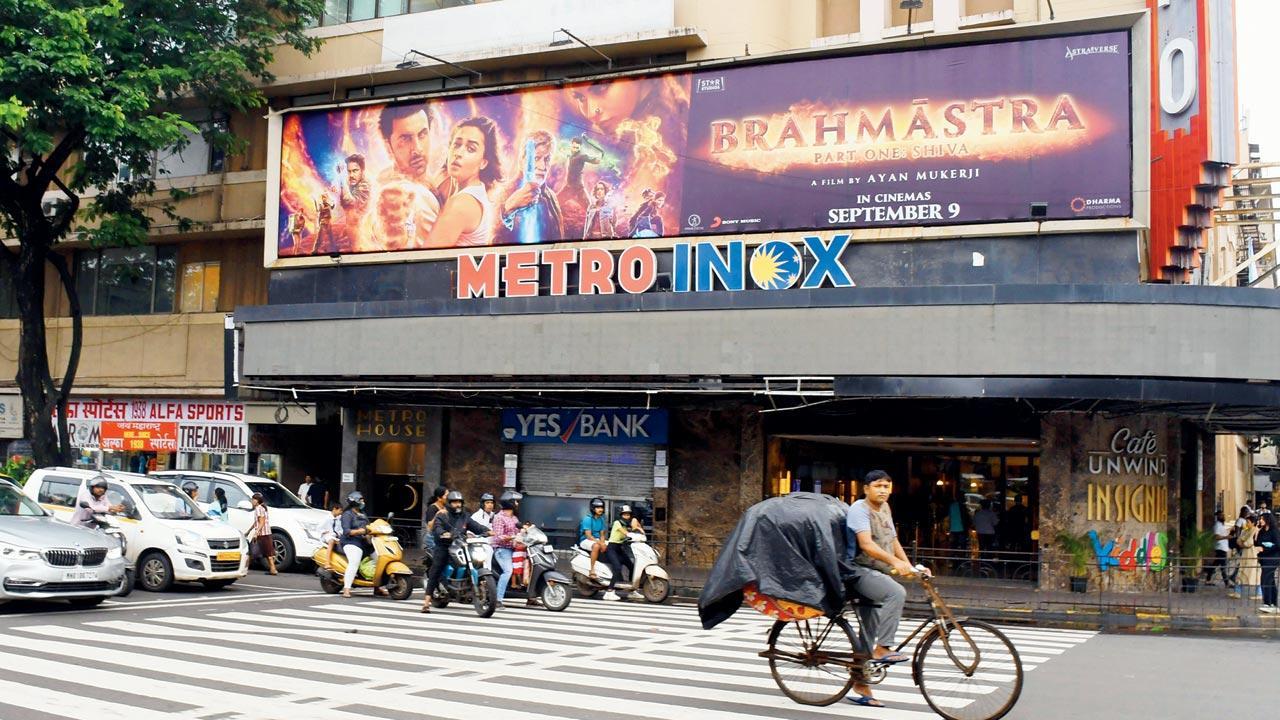
Why does Brahmastra’s proclaimed collection not match the scene in theatres? Is it inflated ticket prices or bravado, we ask stakeholders
Heena Khandelwal (MID-DAY; September 18, 2022)
It is important that Brahmastra: Part One–Shiva do well not only for the people directly associated with it, but for everyone in the Hindi film business. Film exhibitors and distributors pointed this out in mid-day’s report ‘Content is the problem, not #boycott calls’ (dated September 4, 2022). After Aamir Khan’s Laal Singh Chaddha and Akshay Kumar’s Raksha Bandhan’s lacklustre show at the box office, everyone was desperate to resuscitate Bollywood.
The Ayan Mukerji film saw the light of day after eight long years. Made at a budget of Rs. 410 crorse—a major chunk of which was spent on VFX—it opened to promising box office numbers, with a gross collection of Rs 300 crores worldwide in the first week, as pointed out by its producer Karan Johar.
But is the audience paying for this shot-in-the-arm? On Monday, a colleague bought a ticket for Rs 650 for a 2D show at a theatre in Malad; stubs for 3D versions in premium theatres crossed Rs 1,000. “Ticket prices have inflated,” says Kolkata-based film critic and trade analyst Sumit Kadel. “Producers have increased ticket prices by 30 to 40 per cent for weekend shows.”
This raised box office numbers, echoes Mumbai-based entertainment analyst Karan Taurani. “Prices were hiked by 35 to 45 per cent. This film has been adapted for 3D and IMAX 3D, which comes at an additional cost.”
Taurani adds the technology demands budgets of Rs 500 crore and more. “To make it profitable for producers, ticket pricing has to be higher,” he explains. “The audience is also willing to pay because they want to watch compelling content that is larger than life.”
Speaking for multiplex chains, Sanjeev Kumar Bijli, joint managing director of PVR Limited, said that just like airlines, cinema halls also have different ticket price slabs for the same film. Rajender Singh Jyala, chief programming officer of INOX Leisure Ltd, adds that price varies from theatre to theatre and area to area within a city. “A theatre in Nariman Point would charge Rs. 400, while a theatre in the same multiplex chain in Ghatkopar would charge Rs 200.”
He elaborates on the ticketing policy: INOX has four pricing categories—regular, popular, blockbuster and mega-blockbuster. “If a film looks promising, it is considered popular,” he says. “It is a blockbuster when it has a strong star cast and is made on a good scale. Only a few films—such as KGF - Chapter 2 and RRR—make it to the block-buster category. Brahmastra was put in the blockbuster category. If a regular ticket is priced Rs. 100, tickets for a popular film would fall between Rs 115-120, for a blockbuster it would be Rs 130-35, and a mega-blockbuster would be Rs 145-150.”
However, he dismisses reports that say ticket prices for Brahmāstra have been hiked. “In fact, the rates for Brahmastra are lower than those for KGF - Chapter and RRR,” he says.
A report in an online portal pointed out how stocks for PVR and INOX were gaining steam after Brahmastra’s release. “We are in the business of movies,” says Jyala. “If films do well, our stock prices gain momentum, and if they don’t, that too affects us.”
Much has been made about the box office collection. Mukerji puts it at a gross business of Rs 75 crores worldwide on opening day, and Rs. 300 crores in the first week. Domestically, according to Bollywood Hungama, the film opened to Rs. 36 crores on the first day, did a business of Rs 120 crore over the weekend and Rs 170 crores in its first week.
“The exhibitors are very happy,” says PVR’s Bijli, adding, “PVR saw 12 lakh admissions over the weekend across the country; it testifies that people do come to theatres. We feel that the movie has potential to run another week.”
Seconding him, INOX’s Jyala says the film has had a sizable box office collection considering the environment around it, including the call for boycott. “All big films are released around the holidays, but Brahmastra is the second highest non-holiday weekend film of all time; the first was Baahubali 2: The Conclusion,” says Jyala.
The scenes on ground contradict this confidence. Social media was filled with pictures of empty theatres, and soon there were memes, one of which said, ‘Brahmastra box office collections surpass GDP of India, Dharma Productions become world’s fifth biggest economy.”
Taurani has an explanation: “The weekday drop has been very high. Generally, if you compare weekday business to that of a weekend, the drop is usually 45 to 50 per cent; Brahmastra dropped 60 per cent.” Could word-of-mouth be blamed? “Yes,” says Taurani.
When asked if footfall and revenue have touched pre-COVID levels, Taurani says, “Yes, it happened last quarter when KGF - Chapter 2 and RRR had released. We saw a growth of 13 per cent even as the footfall was down by 10 per cent. [But] this quarter we are expecting a decline of 45 per cent when it comes to revenue and 50 per cent when it comes to footfall because none of the films has done well.”
Usually, traders call out fudged numbers. “But this time,” says film journalist and trade analyst Amod Mehra, “the outcry is from the public; and it is because the figures don’t match what they saw in theatres.”
Mehra says the situation is dismal in non-metro cities. “Mumbai and Delhi have prominent theatre areas, where many people go to multiplexes,” he says. “Places such as Lucknow, Jammu and the interior parts of Maharashtra are seeing empty theatres. The film performed well on Friday, Saturday, and Sunday, but the collection dropped Monday onwards. By Tuesday, shows were being cancelled.”
Then why does the box office say otherwise? And can the claim be verified? “In the good old days, trade papers and magazines would collate figures from every theatre,” says Mehra. “Then one could judge whether figures announced by film producers were inflated. There was also a fear of being exposed, so even if producers fudged numbers, it was only marginally. Today, if a film makes Rs 70 crores, you can exaggerate to Rs 100 crores, and it will be published without verification. Besides, earlier producers would manipulate box office collection by buying tickets and sending them to friends. Today, you can book tickets online, and cancel them one day or a few hours prior. So it may seem that seats are filling up fast, but in a theatre you’d find them empty.”
All this effort to raise hype pays off, says Mehra, because it becomes the benchmark to determine digital rights. “Whether it is satellite or OTT, these rights are swayed by box office collection. If a film is declared a hit, the producer can sell it for, say, Rs 150 crore,” he says. “But if declared a flop, the OTT rights could come down to R100 crore. Besides, every filmmaker wants to declare their film a hit, as do the actors. It decides their future [in the industry]. So everybody chimes in.”
Will Brahmastra register a profit? Unlikely, say distributors. While they recognise and acknowledge that the scale of the film brought audiences back to theatres, and proved that a Hindi film can have a huge opening, it would be far-fetched to say it will be a hit.
Manoj Desai, executive director of G7 multiplex and Maratha Mandir cinema, says the film did well over the weekend, but dropped in appeal Monday onwards. “Instead of running it at both Galaxy and Gaiety [theatres], we decided to run it only at Gaiety, keeping Galaxy free for other movies. Maratha Mandir is running only two shows instead of three,” he says, betting that the film won’t recover the cost of making. “The expectations were high,” he sighs, but blames the poor plot. “BrahmÄstra was an astra used in the Mahabharata, but here, they turned it into a love story.” Though every action film has a kernel of a love story within, this one couldn’t do it justice, he thinks.
Breaking it down to how profit for a film is calculated, Mehra says, “From a ticket priced at Rs 100, Rs 18 goes to GST. From the remaining Rs 82, Rs 41 goes to the producer/distributor, and Rs 41 remains with the multiplex. So, if a film does Rs 100 crores at the box office, it is bringing the producer’s home only Rs 41 crores.”
Brahmastra was made on a budget of Rs 450 crores, including promotion cost; so it will have to do a business of at least Rs 500 crores at the domestic box office to break even. This excludes money from digital rights and overseas release. “Say it gets Rs 150 crores from digital rights and Rs 50 crore from overseas [collection],” calculates Mehra, “it will still have to do a business of Rs 500 crore to earn the remaining money. This seems like a very distant dream.”
However, Mukerji has already confirmed that the second installment in the trilogy will be released in December 2025. “What Dharma did right is that they sold all rights to Disney,” says trade analyst Kadel. “Disney has been making films worth Rs 3,000 crores in Hollywood, [so] spending Rs 400 crores isn’t a deal breaker. Besides, they are looking at creating an intellectual property.”
The moving forward of National Cinema Day, so that it doesn’t interrupt the film’s collection, can be seen as a hefty vote of confidence. The Multiplex Association of India had announced it on September 16, which would be marked by all multiplexes selling tickets at Rs 75. However, it was postponed to September 23.
When asked why, a source close to the development said that distributors thought it would be best that the movie continues to gather momentum at the box office. “Cinema day was pushed by a week so that it doesn’t affect any major film’s chances,” he said.
32 yrs after terror shut cinemas, Kashmir set for new show
8:34 AM
Saleem Pandit (THE TIMES OF INDIA; August 13, 2022)
Srinagar: Kashmir’s long and rich cinematic history went dark and blank 32 years ago as sweeping diktats from terrorists and fundamentalists shut down cinemas and banned movies, calling any such audio-visual entertainment “haram”—or against the tenets of Islam. But Kashmir is making a jump cut in time, as plans are spooling to open Srinagar’s first multiplex this September.
“It’s a three-screen multiplex designed by INOX. It can seat at least 520 patrons, and will have the most advanced Dolby sound system, food courts selling local fare, and other entertainment options,” said Vikas Dhar, the owner.
Fries and popcorn may meld with the wazwan, the delectable Kashmiri multi-cuisine, and modern acoustic sidings will blend with a papiermâché and khatamband ceiling, with wooden chips arranged geometrically into a motif.
The idea is to give the young the entertainment their peers enjoy outside Kashmir, said Vijay Dhar, Vikas’s father. “This is for everybody. Our youth should be happy. They can watch 3D movies. They need to scream and shout. Except sports and food, there is no place now where one can get a dose of entertainment,” he said, and thanked the Centre and the J&K government for their help.
This is a far cry from that fateful day when 19 cinemas in Srinagar, Anantnag, Baramulla, Sopore, Handwara and Kupwara were shut down “by order” from the banned JKLF and Hizbul Mujahedeen terrorists on January 1, 1990. Some relics of the past still exist, but not in the form they are intended to be.
The iconic Palladium Cinema’s burnt-out skeleton stands still in Srinagar’s Lal Chowk as a grim reminder of the theatre of the absurd unleashed three decades ago. Many abandoned movie halls became “camps” for security forces. Some were converted into private nursing homes and shopping malls.
Attempts were made earlier too to revive cinemas in Kashmir—a picture-postcard place that has been a muse of filmmakers for long. In 1999, then CM Farooq Abdullah tried to reopen cinemas, announcing a cash subsidy for theatre owners. A few cinemas like Neelam, Regal and Broadway opened, but the attempt failed. Terrorists set off grenades inside Regal and Neelam, shutting down all those who dared.
Another attempt was nipped in the bud too. Then CM Mehbooba Mufti, who was helming a PDP-BJP coalition government, welcomed Saudi crown prince Mohammed Bin Salman’s decision to reopen movie theatres in his kingdom. But Hurriyat hawk Syed Ali Shah Geelani shot it down with a strong statement against Saudi Arabia’s decision.
Strong movie runs, non-Hindi genre to boost multiplexes
8:35 AM

Top lines of PVR, Inox Leisure projected to grow 18-20% in FY24; restoration of 8-week exhibition timeline bodes well
Rajesh Naidu (THE ECONOMIC TIMES; July 19, 2022)
ET Intelligence Group: Multiplexes are likely to record higher growth in revenue than broadcast (channels) companies following a strong line-up of movies and rising popularity of non-Hindi releases. In contrast, channel broadcasters are expected to face headwinds of dwindling advertising revenue amid high production costs. Analysts expect multiplex companies including PVR and Inox Leisure to record 18-20% top-line growth for FY24 compared with the FY23 estimated numbers.
The top-line growth is expected to pick up for multiplexes in the second half of FY23 given a large number of big-budget, star-studded, and spectacle films in Hindi, regional languages and English. Films such as Laal Singh Chaddha, Shamshera, Brahmastra (Part I), Liger, Adipurush, Avatar: The Way Of Water and Black Panther: Wakanda Forever are expected to generate high footfalls in theatres.
Besides, multiplexes are expected to benefit from a longer run of movies at theatres before debuting on over-the-top (OTT) streaming services. Before the Coronavirus pandemic, movies were released on OTT after completing eight weeks of theatrical exhibition. During the pandemic, the time frame was shortened to four weeks amid falling footfalls at the movie halls and improving reach of streaming services.
Now that the ticket sales at theatres are improving as demonstrated by some of the recent hit movies, filmmakers, distributors and exhibitors have decided to restore the eight-week time frame starting August 1. This augurs well for multiplexes given a strong line-up of movies and the ensuing festive season. The move will provide more weeks of collections for multiplexes boosting their revenues in the coming quarters.
The rising popularity of regional content is another positive factor. According to a distributor who requested anonymity, audiences are more open to films in regional and English languages as they are available with subtitles or dubbed. “Multiplexes no longer have a very high dependence on Hindi films for collections. Most blockbusters in recent months have been either in regional or English language,” he added.
On the other hand, the revenue of broadcast companies may fall or show lower growth because of the slowdown in advertising from FMCG, auto and new-age technology sectors, and high production and marketing expenses arising from inflation.
Multiplexes stealing the show again after Covid break
8:01 AM

Buoyed by recent successes, cinemas looking to get cash registers ringing again
Reya Mehrotra (FINANCIAL EXPRESS; July 17, 2022)
There was a time during the Coronavirus pandemic when cinemas were totally shut, and audiences hooked to OTTs seemed to be a way of life that would prevail.
However, as theatres reopened and larger-than-life releases took over the big screens, the faith of cinema owners was reinstated. This year’s biggest releases KGF - Chapter 2, RRR, The Kashmir Files, Gangubai Kathiawadi and Bhool Bhulaiyaa 2 not only brought the money back into the business, but proved to be golden openers for theatres after the pandemic.
Recovery, which began in March, as the pandemic waned, has continued in the first quarter. Besides more occupancy, average ticket prices and spends on F&B are higher than pre-pandemic levels. Revenues of PVR Pictures and INOX Leisure, which have the biggest market share in terms of overall multiplex screens in India at 26.6% and 21%, respectively, grew from Rs 12,356 million in FY 22 to Rs 39,559 in FY 23 (estimated) and from Rs 6,863 in FY 22 to Rs 23,392 in FY 23 (estimated), respectively, as per data shared by an Anand Rathi report on Multiplexes: The Best is Yet to Come. PwC’s Global Entertainment & Media Outlook 2022-2026 further predicts a CAGR of 38.3% for cinemas, the highest growth rate amongst all segments.
As Kamal Gianchandani, CEO, PVR Pictures, told FE, “RRR and KGF have had unprecedented success at the theatrical box office. Both films have contributed immensely towards the V-shape recovery we are witnessing in theatrical and film business.”
The success of regional films also signals a trend of breaking of language barriers. Some of it has to do with the fact that dubbed regional films were popular on OTTs, which translated into success of regional films at the box office too.
Success of Hollywood films like Top Gun: Maverick also indicates that Bollywood is no longer the mainstay at the box office. “Non-Hindi Indian movies and Hollywood movies have broken the thresholds of geographical and language barriers, being dubbed in multiple languages aided by their larger-than-life appeal and formats such as IMAX and 3D, which have helped in expanding the movie viewing market. This is a massive positive for theatrical business, and will help boost the theatrical box office collections in a material way. I think FY 2022-23 could easily become the best year in the history of film business, thanks to this growing trend,” adds Gianchandani.
Rajendra Singh Jyala, chief programming officer, INOX Leisure, says he is confident that theatres have a bright future ahead and that both OTTs and theatres will co-exist and complement each other.
“Bhool Bhulaiyaa 2 was a medium budget film but did a business of more than Rs. 180 crore, JugJugg Jeeyo did decent business. So sooner or later, things will pick up. The upcoming lineup of films like Laal Singh Chaddha, Shamshera and Raksha Bandhan are promising and might impact the numbers positively,” he says.
Theatres also focusing on improving the experience of cinema with better food and beverage options and movie formats like IMAX and 4D will be an added plus to attract viewers.
PVR recently announced an exclusive tie-up with Oma Cinemas, the premium auditorium concept by French architect Pierre Chican, to roll out opera houses-inspired cinemas in India.
As Jyala of INOX points out, in the pre-pandemic days, over 300 films released every year but the success ratio was never more than 18-20%, with only about 40-50 hit films and only about 10 films entering the Rs 100 crore-club.
He adds, “Post-pandemic, the ratio has not changed, but the success of films from the south — KGF and RRR — contributed to the popularity of regional films, and also opened the tier-II AND III markets more.”
PVR and Inox to merge, will create largest multi-screen player in India
8:26 AM

Pankaj Doval (THE TIMES OF INDIA; March 28, 2022)
New Delhi: PVR and Inox, India’s top two multiplex chains, on Sunday announced a surprise merger to create the country’s largest multi-screen player as they looked to emerge from the pandemic-induced slump and seek to tackle the onslaught from content streaming giants.
Ajay Bijli of PVR and Siddharth Jain of Inox Leisure told TOI that the move would help the merged entity — to be called PVR Inox with over 1,500 screens — better compete with the new-age deep-pocketed rivals, and added that the benefits of the synergy may be passed on to consumers in terms of aggressive ticket prices.
“We will become an entity with much stronger balance sheet. There is a lot to be done, and India is still an under-screened country,” said Bijli, who will be the MD of the merged entity.
-----------------------------------
The merger of PVR and Inox comes in the aftermath of the pandemic, when there’s a need for a consolidation in the multiplex industry and “creating scale to achieve efficiencies critical for long term survival of the business” and to fight OTT platforms, said PVR’s Ajay Bijli, who will be MD of the merged entity.
“There is no doubt that consumer (content viewing) habits got changed (during the pandemic). One can say that there was no choice but to consume a lot of content on small screens and OTT platforms… you have big OTT players with very deep pockets. Only if you become stronger can you do that (compete). The pandemic expedited consolidation and made it more of an important thing to happen,” Bijli added.
Jain, who will be a non-executive director on the board of the merged entity, said that multiplex cinema screens were the “hardest hit” in the past two years and a stronger, merged entity was an effective way to make a comeback while also growing operations. “Someone has to start the investment cycle. What better way to do that than come together and do it… This partnership will bring in enhanced productivity through scale, a deeper reach in newer markets and numerous cost optimisation opportunities.”
The amalgamation is subject to regulatory approvals, which may take six to nine months. With the biggest screen population for any entity (India has around 9,600 theatre screens), the merger will also require approval over competition issues.
As part of the plan, Inox will merge with PVR. After merger, PVR promoters will hold 10. 62% stake while Inox promoters will have 16.66% in the combined entity. Inox shareholders will receive three shares in PVR for 10 shares of Inox.
The new company will have a board strength of 10 members, and both promoter families would have equal representation with two seats each.
-----------------------------------
INOX promoters to hold 16.66%, promoters of PVR to hold 10.62% in combined entity
Gaurav Laghate (THE ECONOMIC TIMES; March 28, 2022)
Mumbai: India’s leading multiplex chain, PVR, will merge with INOX Leisure, the second biggest, to create the country’s largest film exhibition company — with 1,546 screens in 341 properties across 109 cities. The move is a surprise as PVR had reportedly been in advanced talks with the local unit of Mexican company Cinépolis for a possible merger.
Boards of both companies approved the all-stock amalgamation of INOX with PVR on Sunday. After the merger, INOX promoters will hold 16.66% in the merged company, while those of PVR will have 10.62%. The merger is subject to approval by regulators, shareholders and stock exchanges.
It will likely not require Competition Commission of India (CCI) approval, said some analysts, as the threshold of Rs. 1,000 crore won’t be exceeded, given the damage to the sector caused by Covid-19, which closed theatres for months on end. INOX shareholders will get three shares of PVR for every 10 they hold, according to the terms of the deal. On Friday, stocks of PVR and INOX traded at their 52-week highs.
PVR closed at Rs. 1,827.60, up 2.8%, for a market value of ₹11,120 crore on the BSE. INOX ended at Rs. 470.50, up 6.3%, for a market value of Rs. 5,740 crore.
The combined entity will be named PVR INOX, although the current branding of existing screens will continue. New halls will be branded PVR INOX.
“This decisive partnership would bring in enhanced productivity through scale,” said INOX director Siddharth Jain.
PVR chairman and managing director Ajay Bijli said, “The film exhibition sector has been one of the worst impacted sectors on account of the pandemic. Creating scale to achieve efficiencies is critical for the long-term survival of the business and (to) fight the onslaught of digital OTT platforms.”
The deal, if completed, will reshape the country’s film exhibition industry that’s seeing its first consolidation in the past decade and a half. After the merger, the promoters of INOX will become co-promoters in the merged entity along with the existing promoters of PVR. The board of the merged company will be reconstituted with a total strength of 10. Both promoter families will have equal representation with two board seats each.
INOX’s Pavan Kumar Jain will be non-executive chairman, while PVR’s Ajay Bijli will be MD and his brother Sanjeev Kumar Bijli will be executive director of the merged company. Jain will be non-executive, non-independent director in the combined entity.
No new releases force theatres to shut shop
8:42 AM

Titas Chowdhury (HINDUSTAN TIMES; January 9, 2022)
G7 Multiplex’s Gaiety Cinema in Mumbai has been shut down temporarily since film releases have been indefinitely postponed due to the surge in Coronavirus cases. Many other cinemas all across the country have followed suit, with a few theatres in Tamil Nadu, Karnataka, Rajasthan and Uttar Pradesh running at 50% capacity. Theatres in West Bengal are currently screening Spider-Man: No Way Home, Pushpa: The Rise - Part 01, '83 and a regional film.
Manoj Desai, executive director of G7 Multiplex and Maratha Mandir Cinema says, “For how long can we continue screening films that released three-four weeks back?” Rajender Singh Jyala, CPO, Inox Leisure Limited shares that they had “done a business of over ₹1,000 crore in December, which was as good as in the pre-pandemic era” and all hopes were pinned on January, which was supposed to see the release of RRR, Radhe Shyam and Valimai.
Better policies are needed for theatres, feels Meenu Singh, AGM, Legend Cinemas, whose Haryana outlet has been forced to shut down. Whereas, Satadeep Saha, director, SSR cinemas Pvt Limited, says, “If the government asks us to shut down, we will or else we’ll continue to run even if we have to with one show of each film.”
Cinema shutdown in Delhi will impact major Bollywood releases, say stakeholders
8:28 AM

Industry stakeholders say the move will lead to ‘irreparable losses’, and urge the govt to instead introduce safety measures such as allowing only double vaccinated audiences
Niharika Lal (BOMBAY TIMES; December 30, 2021)
The Delhi government’s order on Tuesday shutting down cinema theatres and multiplexes, in view of the sharp rise in omicron cases in the city, has come as a big jolt to the industry that was just getting back on its feet. An exhibitor says, “We have seen packed theatres this month for films like Spider-Man: No Way Home. The last week of the year is when people prefer going out and watching films. This will be a huge revenue loss for cinemas. ”
‘CINEMA SHUTDOWN COMES AT THE BUSIEST TIME OF THE YEAR’
Theatres in the rest of the country, including other parts of NCR and Mumbai, remain open for now. However, with Coronavirus cases rising across the country, exhibitors fear more cities will soon introduce restrictions and lockdown measures.
Akshaye Rathi, director, Aashirwad Theatres, and an industry expert, says, “This is the holiday season, when kids are on winter break, and business is robust across the sectors, including cinemas. It’s unfortunate that a sector is being closed at this specific time of the year, especially taking into account the scenario in the last one-and-a-half years when cinemas were closed for months. Be it Delhi, or other state governments who are contemplating lockdown, authorities need to find a more pragmatic approach. For example, only allowing double vaccinated audiences to enter cinemas, and other such measures.”
Girish Johar, a producer and film business expert, asks, “Why only cinemas? Cinemas are not being treated as a business. After Sooryavanshi opened big, people were coming back to the cinema. We have seen how Spider-Man: No Way Home changed everything and is now clocking around 200 crores at the Indian box office, which is a big deal. So, what now? Thoda gire, thoda uthe, phir se ye chot. We really hope Delhi gives some relaxation to cinemas.”
Rajendra Singh Jyala, Chief Programming Officer, INOX Pvt Ltd, adds, “Whether it was Spider-Man or '83, theatres had good occupancy, and moviegoers came out to watch these films because they found cinemas to be safe. We’ve worked so hard to gain this confidence. This year-end week is one of the busiest weekends for cinemas. In fact, even on Monday-Tuesday, we had over 50% occupancy in cinemas across NCR, which is a good number for weekday occupancy. We had almost 100% occupancy last weekend. While a few moviegoers may go to watch films in Noida and Gurgaon as Delhi cinemas are closed, this shutdown will adversely affect not just the business of films which are currently running, but upcoming releases, too.”
CONSIDER DOUBLE VACCINATION, REINTRODUCE 50% CAPACITY, BUT RETHINK SHUTDOWN: MULTIPLEX ASSOCIATION OF INDIA
The Multiplex Association of India has urged the Delhi government to consider introducing a double vaccination requirement to enter cinemas, instead of a complete shutdown. Kamal Gianchandani, President, Multiplex Association of India, said in a statement, “The Delhi Government’s decision to shut down cinemas in Delhi while enforcing the ‘yellow’ alert of the Graded Response Action Plan (GRAP) has caused massive uncertainty and could lead to irreparable damage for the Indian film industry. After being allowed to reopen, cinemas have already demonstrated an ability to operate safely for the public and employees via usage of enhanced ventilation systems, hygiene, and other safety protocols. Not a single outbreak of COVID-19 anywhere around the world has been traced to a cinema. While we fully understand the need at the government’s end to take necessary preventive measures, we’d request that cinemas should get equal treatment with comparable industries and institutions.”
“Instead of closing the cinemas, we’d urge the Delhi government to consider introducing a double vaccination requirement to enter cinemas, as is the case in some of the other states (including Maharashtra). Alternatively, the seating capacity restriction of 50% can be reintroduced at cinemas. We call on the government to recognise the unique social, cultural and economic value of the Indian film industry, and to provide the support it so desperately needs to survive this unprecedented period,” the statement added.
DELHI’S THE SECOND-BIGGEST MARKET FOR BOLLYWOOD; THIS WILL IMPACT FUTURE RELEASES: INDUSTRY EXPERTS
Producer and film business expert Girish Johar says that the closure of cinemas in Delhi can have a ripple effect. “The reason is that Delhi is one of the top two cities from the revenue point of view of Bollywood films. I don’t think that producers will release films when they are on tenterhooks.”
Akshaye Rathi, director, Aashirwad Theatres, and an industry expert, says, “The biggest territory for Bollywood films is Maharashtra, which is already operating at 50% capacity. Now, with the second biggest market – Delhi – shutting down, it is too much of a compromise revenue-wise for producers to continue releasing films, especially films which do well in Hindi-speaking markets. For a film like Valimai, there may not be that big of an impact because its main market is Tamil Nadu, but for an RRR or Prithviraj, it is a very tricky situation.”
Makers of Shahid Kapoor-starrer Jersey, have already postponed its release while upcoming films like Prithviraj and John Abraham’s Attack may also be impacted.

As the Delhi government shuts cinemas, theatrical releases likely to be impacted now
8:11 AM

THE TIMES OF INDIA (December 29, 2021)
New Delhi: On a day when new Coronavirus cases in Delhi jumped by 50% in 24 hours, the level 1 (yellow alert) of the graded response action plan (GRAP) kicked in with strict curbs.
Schools, colleges, cinema halls, multiplexes, banquet halls, auditoriums, spas, gyms, and yoga institutes will be shut. Religious places are open but no visitors are allowed. People can walk, run or play at parks and gardens, but picnics are barred. Private offices are allowed to operate from 9am-5pm at 50% attendance, unless they provide essential services. Public transport’s capacity has been limited to 50% seating and no standing passengers. Cabs, autos and e-rickshaws are also not allowed to carry more than two at a time.
Shops dealing in non-essentials can be open from 10 am-8 pm on an odd-even basis. Restaurants can operate from 8 am-10 pm with 50% capacity. Ditto for bars from noon-10 pm. Hotels and lodges can operate, as can barber shops and salons. Wedding gatherings must be restricted to 20 persons, held either at a court or at home. The 20-person cap is also for funerals.
--------------------------
Rishabh Suri (HINDUSTAN TIMES; December 29, 2021)
The film industry had barely started getting back on its feet and things seem to be going south again. The Delhi government, on Tuesday, announced yellow alert and theatres have now been shut down. Trade experts feel this will cause a domino effect, with films being pushed.
And it has started already. Actor Shahid Kapoor’s Jersey has been delayed. “In view of the current circumstances and new Covid-19 guidelines we have decided to postpone the theatrical release of our film Jersey. We have received immense love from you all so far and want to thank you all for everything. Until then everyone please stay safe and healthy, and wishing you all the best for the new year ahead!! Team Jersey (sic),” read a statement from the makers.
Rajender Singh Jyala, chief programming officer, INOX Leisure, says this move to shut down Delhi theatres will hurt. “After a long time, we were releasing films, and getting a good number at the box office. It definitely hurts. The cases were not that much, but if the government has taken a call we will abide by that,” he says.
Rumours are rife that actor Akshay Kumar’s Prithviraj will be postponed, too. Trade expert Atul Mohan says, “Why are cinemas the first casualty whenever we have any kind of threat coming in? You have venues operating at full capacity without protocols. We are the first ones to close down, last to reopen. Ab sab push ho jayega, including RRR starring Ram Charan and NTR Jr. This shutting down trend will spread to other states as well. This will be a bad start to the new year.”
Exhibitor Akshaye Rathi agrees that upcoming releases will also get affected. “When a market as important as Delhi shuts down, other releases will get postponed, too,” he opines.
DELHI SPAS AND GYMS SHUT, TOO
Alongside theatres, spas, gyms and banquet halls in Delhi will also be shut. “Jab spa shut ho jayenge, hum kamayenge kaise? Work from home had already reduced our business,” says Prashant Mehar, manager at a spa in Delhi.
Omesh Chandna, owner, Anytime Fitness in South Delhi, adds, “Starting a fitness regime and joining a gym is often a New Year resolution for many people. By implementing this restriction, we’ve lost the opportunity to get back on track.”
Manoj Nanda, manager of Orabella Banquet in west Delhi says, “We are heavily booked from mid-January, which is when wedding saaya dates start. Right now, we don’t have too many bookings.”
Text by Sanchita Kalra and Siddhi Jain
Due to revenue sharing negotiations, multiplex chains yet to open advance booking for Sooryavanshi
8:17 AM

While single screens witness strong response to Sooryavanshi, leading multiplex chains have yet to open advance booking; trade says exhibitors negotiating with makers over revenue-sharing
Upala KBR (MID-DAY; November 3, 2021)
There is palpable excitement at single-screen cinemas as the owners count the hours to Sooryavanshi's release. With their business having nose-dived during the past 18 months, the exhibitors are counting on the Akshay Kumar-starrer to help them bounce back. However, the scene is starkly different at multiplexes across the country, including Inox, PVR Cinemas and Cinepolis, which have yet to open the advance booking for the Diwali offering. mid-day has learnt that the exhibitors and makers are negotiating the revenue-sharing ratio of the film's first and second-week collections.
When the Rohit Shetty film was slated to release in March 2020, the two parties had agreed to the standard revenue-sharing ratio, where producers get 52 per cent of the first-week collections. “During the pandemic, Reliance Entertainment waited for 19 months, supporting the cinemas. One good turn deserves another. They are not wrong in asking for 60-40 revenue-sharing in the first week, and 55-45 in the following week,” says Komal Nahta.
Trade analyst Atul Mohan seconds Nahta, noting that Sooryavanshi was one of the few films that did not take the OTT route. “The red carpet should be rolled out for the team.”
The other bone of contention is the sharing of screens between the cop caper and the Hollywood superhero movie, Eternals. “The exhibitors want to give an equal number of shows to Eternals, which is not fair. They should give priority to Rohit who urged the Maharashtra CM to reopen cinemas,” he says.
Exhibitor Akshaye Rathi views the negotiation as a necessary step. “When the industry reboots like it's doing now, the commercial terms are reset and big films like Sooryavanshi set the terms for the way forward. Producers and exhibitors have suffered [during the pandemic]. But this is not a situation for fans to be worried about. Sooryavanshi will open on a strong note.”
When mid-day reached out to Kamal Gianchandani, CEO, PVR, he declined to comment. Shibasish Sarkar, CEO, Reliance Entertainment, Mayank Shroff, general manager, Cinepolis, and Rajender Singh Jyala, chief programming officer, Inox, remained unavailable for comment.
Multiplexes with discount on tickets, freebies pull in crowds; thin audience at other screens
8:14 AM

Nitasha Natu & Sharmila Ganesan Ram | TNN (THE TIMES OF INDIA; October 23, 2021)
Mumbai: Multiplexes and theatres reopened on Friday after nearly a year to relatively sparse crowds, except for those movie halls that had offers and freebies for audiences.
One of the reasons was Covid guidelines issued by the government. Besides temperature checks and green ticks on the Aarogya Setu app, some patrons had to furnish vaccine certificates and adapt to the new normal, given that theatres were allowed to operate at 50% capacity.
At a Borivali multiplex, a very disappointed teenager walked away from the box office with his mother on being denied entry as he was underage, despite the government not mandating any such requirement.
To draw in audiences, some multiplexes had free morning shows, a few threw in a free tub of popcorn per ticket purchased and others had heavily discounted ticket prices. “We were almost sold out for morning shows across all our multiplexes in Maharashtra. The overall turnout during the day has been reminiscent to the pre-Covid days and we are certain that the sentiment would remain like this,” said Rajeev Patni, COO, Inox Leisure.
Siddhesh, a Thane-based engineering graduate, turned up at least 15 minutes early to catch the 9.55 am show of the latest James Bond movie. “I’m here for the experience,” said Siddhesh while waiting for three of his friends.
While Pooja Parikh, who caught a morning show of the new Marvel movie at Nariman Point, said it’s important to follow safety protocols, she accepted the inability to ask friends in the adjacent seat about complex movie scenes and the prospect of eating her movie staple — cheese popcornin the foyer as minor tradeoffs for the communal viewing experience. Four 20-something students converged at a Borivali movie hall after “much research” as only selected movie halls were screening the Marvel movie and the group “had not missed a single one till date”.
These two movies are the only releases that are drawing audiences for now, according to box office staff. Some multiplexes like Carnival Cinemas have opened fewer properties at present because of limited content available. “We are confident that footfall will increase on November 5 when we have two big-ticket releases. We plan to throw open all our properties then,” said Prashant Kulkarni, senior vice-president, sales marketing, Carnival Cinemas.
Multiplex managements said that audiences appeared more comfortable with stepping out now as compared to last year.
“When we had reopened cinemas for a short spell in October-November 2020, some guests were apprehensive about using washrooms. Now, masking up and sanitizing have become a way of life. Besides, our staff are 100% vaccinated and that inspires confidence," said a multiplex owner.
Single screens did not share the same experience as multiplexes. At Thane’s Vandana talkies, the larger-than-life crow sculpture that welcomes visitors, seemed desolate. The theatre was among the single screens in the city that remained shut.
Nitin Datar of Cinema Owners and Exhibitors Association of India stated that some single-screens are waiting for the big releases to reopen their gates and fortunes. Among those that reopened were Maratha Mandir, whose manager noted a drop in footfalls for their longest-running 11:30 am show. “Vaccine,” answered the monosyllabic manager when asked for the reason for this dip.
Despite the lukewarm first-day-first-show turnout and the dwindling single-screens though, film critic Dilip Thakur remained optimistic. “The craze for films and cricket will never die.”
------------
Dy CM: Decision on 100% theatre ops after Diwali
Pune: Deputy chief minister Ajit Pawar on Friday said the decision on allowing theatres and auditoriums to operate at 100% capacity would be taken post Diwali, after assessing the Covid situation in the state.
“It would be considered only if cases continue to decline as the state has announced unlocking for all sectors. The Coronavirus situation would be assessed a week after Diwali,” he said. After the weekly Covid review meeting of Pune district, Pawar said India’s feat of 1 billion vaccinations was due to planners and health fraternity.
Subscribe to:
Posts (Atom)