Showing posts with label Imtiaz Ali interview. Show all posts
Showing posts with label Imtiaz Ali interview. Show all posts
When Imtiaz Ali told his father he didn’t want to do UPSC
9:45 AM

Kimberly Colaco (MUMBAI MIRROR; August 26, 2026)
That Goa trip with friends — the one you keep talking about and social media never seems to stop talking about — has become almost a tradition. Even filmmaker Imtiaz Ali has a memorable Goa trip of his own, which he recently shared at the launch of the state’s first community radio station in Panaji on Saturday.
Imtiaz’s first trip to Goa was in 1993, after he and his friends earned some money by staging a play. With their first earnings in hand, they decided to head to Goa. “That was our first earning. I hired a bike and went to all kinds of places. That was the craze of being in Goa,” the Main Vaapas Aaunga director recalled.
‘You choose the line of your choice but do the best in it’
But the trip also coincided with a significant moment in his life. While his father believed he was studying in Delhi, Imtiaz was beginning to question the conventional career path he was expected to follow. Around the same time, he had told his father that he did not want to pursue the UPSC examination or become an IAS officer.
“My father had no clue about this trip, as I was supposed to be studying in Delhi for UPSC. But at the same time, I had told my father that I didn’t want to do UPSC and be an IAS officer,” he said.
Instead of discouraging him, his father gave him the freedom to choose his own path. “My father became a very important person to me. He was the one who supported me and said, ‘You choose the line of your choice but do the best in it,’" Imtiaz recalled.
Imtiaz was speaking at the launch of Goa’s first community radio station in Panaji, where he was joined by actor Rahul Bose and actress Bhumi Pednekkar.
Imtiaz Ali on Main Vaapas Aaunga's slow opening: "We are not a star-driven film, so it was supposed to be like this"
9:52 AM

The filmmaker on his latest movie’s slow-burn box office journey, why Gen Z is often misunderstood, and Diljit Dosanjh
Akash Bhatnagar (HINDUSTAN TIMES; June 19, 2026)
Even as Main Vaapas Aaunga (MVA) records a gradual uptick at the box office, filmmaker Imtiaz Ali says he always expected the film to find its audience over time rather than through a blockbuster opening.
“We are not a star-driven film, so it was supposed to be like this. If people like it, they will tell others to watch it, and that’s how the film will grow,” he says.
Ali is particularly encouraged by the response from younger viewers, who he believes are yearning for deeper connections. “I feel the younger generation needs love the most. They are sensitive, romantic and seeking commitment, but they are often misunderstood and labelled as flaky. Their lives are different from previous generations, but they are searching for something meaningful,” he says.
Set against the backdrop of Partition, the film intertwines a love story with the lived experiences of survivors. “When I heard their stories of what they’ve seen, what they remember now after 78 years, I realized that no love story can happen in a vacuum. It happens in the real world, and the real world of the era of partition was necessary for the setting of this love story,” says Ali.
He was also unfazed about mounting a large-scale film led by relatively new actors Vedang Raina and Sharvari. “I am a man, not from the trade, but from the art of filmmaking. I do understand the power of cinema and performance, and also the power of good casting. If all those things come together, then there is a certain power that is created. I had no doubt that both these actors will be able to headline this story well,” he says, adding, “But I also knew that on the poster, there is also Diljit (Dosanjh). Everybody in the world knows him and they are interested to see what he’s doing. I was sure that there was going to be a poster appeal because he is there.”
While Imtiaz Ali has made romances across decades, he claims that he “doesn’t come from a point of understanding love”. “In Socha Na Tha (2005), the confusion of Viren (played by actor Abhay Deol) was actually my confusion of committing in a direction but your heart pulling you in another. I didn’t have an answer for that but I made a movie on it. Jab We Met (2007), in my mind, was not even a love story. It is about two people who meet as strangers and eventually become like the other. They complete each other and realize that [they are in love] later,” he says.
Similarly, Main Vaapas Aaunga (MVA) is set up as a love story, but also showcases the ordeal faced by the people of Punjab during the 1947 Partition. Does Ali feel that the film should be made tax free, especially in Punjab? “A lot of people have said that this is a story of Punjab, and also in a way of Bengal and other parts of India. If people feel that way genuinely and if that comment of national interest is out, then there must be a process in these states to see if the film can be made tax free and we’d be looking into it,” he says.
The filmmaker also asserts on the universality of the story, insisting that tragic incidents like the Partition are happening even today, something he brought out with the video of Kya Kamaal Hai in MVA’s end credits. And it was Diljit who pushed for it.
“I must thank him and Irshad (Kamil, lyricist) for encouraging me to make the video. I had never done or seen anything of this sort, but Diljit said, ‘Ye to karna hi hai kyunki ye phir isko sabki film bana dega’,” he shares.
Thank God for Dhurandhar. We are allowed longer films now-Imtiaz Ali
9:20 AM

Madhureeta Mukherjee (BOMBAY TIMES; June 15, 2026)
There is a reason Imtiaz Ali’s stories linger. Beneath the romance, music and heartbreak lies a deeper search — for home, for meaning, for the versions of ourselves we leave behind as we move through life. With Main Vaapas Aaunga, inspired by an emotional return to his childhood home, the filmmaker once again turns inward, exploring memory, longing and the ache of belonging.
In this conversation, Imtiaz reflects on love and loss, the purity today’s generation is searching for, and the invisible pull of the past. He reflects on why the stories that stay with us are often not born from cinema, but from life itself.
Would you say, there’s a certain beauty in that sense of loss?
There’s beauty in that because it brings you to yourself. The yearning, therefore, sometimes cannot be cerebrally understood. Everyone always feels that they have left something behind, in whatever they might have achieved. You feel…kya choot gaya? Inevitably, you want to go back to that. I guess the feeling of who we were is something we can never leave behind, however far we go.
From Love Aaj Kal, Rockstar to Tamasha – your films often ask whether love liberates us or consumes us. Has your own understanding of love changed over time?
I feel the simplistic answer is that it’s the being consumed that liberates you. It’s the surrender that liberates you. You realise your power when you surrender. And it’s easier said than done. In love, you’re constantly engaged with yourself. You are constantly talking to yourself. I’ve noticed that people who are in love with different women at different times in their lives, are in love in the same way. They yearn in the same way. If somebody is, let’s say, obsessive, then they will be obsessive in every relationship of theirs. They will try to find someone to shower love and affection on, and become obsessive about. The thing is, I don’t have answers about love or life, if I had answers, I wouldn’t be making movies.
So, you’re finding your answers through movies, characters, stories?
I don’t think I’ve found anything from my movies (laughs).
And you insist you aren’t a romantic? You have this image of being a romantic, a bit of a philosopher, too…
I am not. These words like romantic, philosopher and all of that sound very boring to me. I don’t know why I have this image. Tell me, how do I break this image?
Music in your cinema isn’t just something that happens in the background or around the story – it forms a character. It adds to the emotional rhythm, literally. You seek something from music emotionally that dialogue alone cannot achieve?
Oh, I love the work of music. I don’t listen to music too much, but I’ve always been a fan of music in films – whether it’s being part of the making of the song, the background music or shooting to music. The biggest thrill of shooting for me is when music plays on a set. I am the director who prays every day that we are not forced to reduce or remove music from films. For romantic movies, sometimes we connect to the music first and then the story.
This is your second collaboration with Diljit Dosanjh after the much-acclaimed Amar Singh Chamkila. He has an interesting emotional quality about him; he can appear really vulnerable, restrained with a certain kind of power. How do you direct someone like him?
He has somehow kept himself pure. He’s connected to himself and for that reason, he has not done many things that other people do. He is not like an actor who’s standardized in a certain way he lives. He doesn’t care for the obvious things, but some other things. Like, when we were starting out with Chamkila, we had to postpone the shoot, because of which one and a half months of his dates got wasted. I called him and told him about the problem. He said, ‘Koi nahi paaji. Main chala jaunga. Main solo trip pe chala jaunga pahadon mein. Problem hi nahi hai. Meri taraf se toh ho gaya.’ I said, ‘Lekin aapke days waste ho gaye.’ He said, ‘Arey, waste thodi hote hain dates. Mujhe jaana tha pahadon mein, toh solo trip pe chala jaata hoon.’ So, he went ahead and did whatever he wanted.
You’ve made generational love stories and worked with actors across generations. Today, in a world that is increasingly instant, performative and filtered, do you think people still crave the purity and beauty of truly connecting with another person?
I feel you can be very lonely in the present world. There is so much noise all around us that it’s difficult to talk and communicate. I believe this generation is seeking much more than before. For instance, today getting intimate with a girl or a guy is not difficult. Previous generations were distracted by the thought, as they knew that they would get intimate after marrying the person. Now that happens early on, they get over it and they aren’t lusting anymore. Lust is out of the park. What this generation is seeking is pure. They are digging deeper and are truly trying to find meaning. It’s just that they are very lost.
How do you protect your own sensitivity in an industry that can often become transactional and noisy?
I believe that the film industry is actually better than most other places in the world, because there are drifters and dreamers here. And no matter how smart they pretend to be, at the end of the day, all of these great guys in the film industry who talk about numbers and all of that, they are basically dreamers and drifters. What they want to do is to huddle somewhere and talk about cinema (laughs). This is what I have realized. Otherwise, it wouldn’t be possible for a rank outsider like me to be here. It must have been the kindness of some people that gave me my first step, my first break, right? The world is what it is, but I feel that the film industry is better, really, than most of the other parts of the world.
Your cinema generally revolves around the idea of yearning, not just from the point of view of yearning for romantic love, but yearning to come into yourself, to become someone else. What was the starting point for this film Main Vaapas Aaunga?
There was a point when I went home to the place which I call home, which was just a company quarter in Jamshedpur where I grew up. My earliest memories are from there. It was a rented place, but every time I think of home, I think of that place. One day, I went back there with my dad and I got so overwhelmed, I just went straight inside the house and in the courtyard, and obviously the present occupants found it strange. The courtyard had changed; that whole area seemed like it had changed, and something came over me, and I broke down. I never cry, in fact, my mother feels there’s something wrong with my system. But I broke down. I kept asking myself…what happened here? There was this sense of loss, but it’s not as though I’ve lost something.
Love portrayed in your films is rarely idealistic. It’s messy, transformative and often heartbreaking. Do you think our cinema still struggles to portray emotionally complex relationships with honesty?
For me, it’s impossible to show something clean and perfect because I would have no reference. If you asked me to make a clean love story with no heartache, I wouldn’t know where to begin because I’ve not seen it in my life, and I don’t think it exists. I don’t go out to make love stories, really. I make stories where people have various emotions and I follow those characters and see where they come at. And sometimes, of course, there’s an echo of what I’ve seen and felt, since I don’t draw from cinema as inspiration, I draw only from life as inspiration. Yes, I feel relationships are messy sometimes. They have the potential to be messier if the film duration were longer.
Now we’re slowly going back to longer films…
Thank God for Dhurandhar. We are allowed longer films now (laughs).
In Bollywood, at one time, romantic films were celebrated as spectacle films, today, action seems to occupy that space. Do you think filmmakers should make more romances for theatrical viewing?
I don’t think that era of romances can go away. A prominent producer recently told me, ‘Imtiaz ji, good love stories always run. If there are more action films being made, then that is the time to make a good love story.’ I think that is true. There will always be a Qayamat Se Qayamat Tak, and suddenly, you won’t even remember the other movies around you. I’m not saying that films of other genres are not good, but somehow, the memorability of a Qayamat Se Qayamat Tak or Maine Pyar Kiya is much more.
I feel this generation desires love more desperately than any other-Imtiaz Ali
9:37 AM

Director Imtiaz Ali says ‘Main Vaapas Aaunga’ is his way of presenting a different viewpoint on the Partition than to help people heal from the historic event
Mohar Basu (MID-DAY; May 22, 2026)
Set against the backdrop of India’s Partition, Main Vaapas Aaunga is not a political statement, according to filmmaker Imtiaz Ali. Instead, it looks at the emotional weight that the historic chapter left on the people it divided. At its heart, it’s a sweeping romance, particularly for the younger audience.
“People often say this generation doesn’t have patience. But I feel this generation desires love more desperately than any other. There’s this feeling that meaningful, lasting love existed in the old times, but cannot anymore,” shared Ali.
To dispel the idea, the director has woven a timeless love story starring Naseeruddin Shah, Diljit Dosanjh, Sharvari, and Vedang Raina. The June 12 release is centred on a man remembering, on his deathbed, the love of his life whom he had to leave behind in Pakistan during the Partition.
Revisiting Partition on screen in today’s political climate inevitably comes with its own sensitivities. Asked whether art can help heal the trauma carried by those who lived through the episode, Ali reflected, “No, it’s not meant to make you forget the horrors or somebody’s personal grief. A film can never be and should not be so powerful that it obliterates that grief. However, it can present somebody else’s story, a [different] point of view.”
Ali’s love story has struck a chord with his friend and filmmaker Shoojit Sircar. Recalling Sircar’s response, Ali shared, “He said, ‘Yeh film mujhe banaani thi. I could never take my father back to Dhaka.’ In a way, it’s so many people’s stories. It’s not as though their feelings will go away after watching this film. But [they] will at least get the joy that it’s being addressed. More people will know this story, which stayed only in my closet.”
There is no love for Pakistan in Main Wapas Aaunga-Imtiaz Ali
10:51 AM

Sonal Kalra (HINDUSTAN TIMES; April 11, 2026)
He’s been in the film industry for almost 20 years now, and people swear by his school of filmmaking. Unrequited, often incomplete love (barring a few exceptions) forms an integral part of his stories. Yet, when you speak to him, he’s all heart. Filmmaker Imtiaz Ali, gearing up for the release of his next film Main Wapas Aaunga, spoke about everything under the sun on The Right Angle with Sonal Kalra. Excerpts:
Do you still get asked about a Jab We Met 2 or Tamasha 2?
I do keep hearing about Rockstar 2 and Jab We Met 2. But especially for Jab We Met (2007), I won’t [make a sequel]. Some things are best left untouched. I don’t want to start from a point of view that this is a money-making plan or a professional move… Good films cannot be made that way. They have to come from a point of, ‘This is a nice story, I want to be in this world’. Love Aaj Kal 2 (2020) bhi toh banayi thi na… woh toh itni achhi nahin gayi.
How did you come up with the title Main Vaapas Aaunga?
When I was in school, I read a poem called The Highwayman, which was very effective. I was thinking this is such a thing to say, that ‘I’ll come to thee by moonlight, though hell should bar the way.’ Then there was a song actually in Khuda Gawah (1992), in which the character of Badshah Khan (Amitabh Bachchan) says, ‘Main vaapas aaunga; main agar mar bhi gaya phir bhi vaapas aaunga’. I remember the impact of that song. Even while shooting this film, I didn’t think that it would be called Main Vaapas Aaunga. There was this scene we were shooting on a moving train. I had briefed Vedang Raina (actor), who is playing Kinu in the film, that he comes and he screams these same words. He’s making this promise to somebody, and it happened to be those words. During the take, I realised that this has to be the title of the film.
Have you received Love Aaj Kal-like comparisons?
I saw some on the internet, but I’m not worried about that at all. This is not two love stories; it is just one story.
You’ve taken two risks—one, telling a romantic story in a time dominated by high-scale violent films, and two, exploring love involving Pakistan when sentiments are sceptical.
There is no love for Pakistan in the film. It’s a very personal story of one person. And it is not casting an allegation. It is not saying anything which is politically one way or the other. Anybody watching the film will not feel slighted by the fact that this is catering to anyone. The second thing is, is there a time for a love story to work? I’ve seen all of my life that any good film, whether it’s violent, bold, romantic or a comedy, is working at any particular time that it’s released. The audience is very strategic in the way that it wants to see films, and if the socio-political climate becomes very intense, maybe comedies will also work very well, and a film which is very intense and bloodthirsty will also work.
Which of your films comes closest to perfection?
Perfection— no! As for things which made me happy, there are certain points in Rockstar (2011) and Amar Singh Chamkila (2024). In Chamkila, there was this portion where we had a beautiful sunset, and somehow, we had time in hand. I don’t know what we were doing, so I just asked Diljit (Dosanjh), ‘Please sit here, and I’ll play the song. You just listen to it and turn and look at the lens when I say.’ That’s the longest take in the film. And I thought, let’s take a chance at Mainu Vida Karo. So then I played it, and he heard it for the first time. Sometimes, you don’t even know why, and it feels nice.
Do you see flaws in any of your past films?
Oh yes, I discover flaws very early. I remember that I saw Socha Na Tha (2005) after many, many years, and then I was laughing along with it, which is not something that ever happened for the first 10-15 years since its release. For a film like Jab Harry Met Sejal (2017), there was something very nice, which did not really turn out nicely. This whole angle of somebody being a womaniser or looking at themselves like an unstable character but having a story behind it… It was very enticing. I feel that even in Love Aaj Kal (2020), there were certain things which were underwhelming. There was a very beautiful thought, but I couldn’t bring it out in the best possible value.
Is a reunion with Ranbir Kapoor (with whom he worked in Rockstar and Tamasha) on the cards?
There is no present plan as such. But hopefully there’ll be something that will have to top the other work that we’ve done.
What’s that one thing about the film industry that you have still not been able to understand in 20 years?
Everyone here is very passionate and always trying to come across as strategic and professional. But I think they’re just a group of passionate drifters. I don’t know how they have so much time to just do gup-shup. When I met (actor) Shah Rukh Khan... he was sitting calmly for 5-6 hours, talking to me. How does he have so much time? It’s the same for all of the Khans, various other producers, directors — whoever you meet. I love that about the film industry. But unfortunately, what happens in the film industry is that with popularity comes power. Each one of them have so many people on their social media… it’s almost unfair. And if somebody has to say something about politics, etc., maybe we are not the most qualified, but we have to be damn careful.
I also feel lucky to be a part of the industry because I didn’t know anybody when I came here. It’s only with the support of these people that I could do anything.
I know that the world is in a terrible place right now, and I hope that things improve-Imtiaz Ali
9:37 AM
Oshin Fernandes (MID-DAY; March 14, 2026)
Be it Highway (2014), Tamasha (2015), or Amar Singh Chamkila (2024), through his movies, Imtiaz Ali has a way of saying something bigger than the story itself. A responsibility that the filmmaker believes is only magnified when the world is in conflict. When mid-day caught up with Ali at the India International Film Tourism Conclave (IIFTC) in Mumbai, he emphasised that amid the conflict in West Asia, sparked by the US and Israel’s war against Iran, it’s all the more important for artistes to show the potential of a better world.
Cinema as a cure
Imtiaz Ali believes that as much strife as there is in the world, the requirement for entertainment to provide relief and pleasure also increases.
He explains, “I know that the world is in a terrible place right now, and I hope that things improve, but if I do get influenced by what's going on in the world, it is not actually to make films about what is happening but somehow to make films about what should happen or what the world is missing right now.”
Imtiaz asserts that art can compensate for the absence of a certain condition and draw attention to the real reason why such things happen, aggrieving everybody. “This is the time for all artists to communicate an alternative way of looking, thinking, and feeling to have a better world,” he adds.
The ‘unsafe’ illusion
Imtiaz has never shied away from taking his craft to high-conflict areas. His films, like Rockstar and Highway, have been shot in parts of Kashmir, which he claims felt safer than any other place.
He states, “I have only had extremely cooperative people and peaceful situations. I've had more insecurity in every other place that I've shot. Kashmir has been the easiest place to shoot. Certain narratives get set about the safety and security of certain places. Unfortunately, it takes a lifetime to take that away. People believe that Dharavi is an unsafe place in Mumbai, but there are many more unsafe places.”
Imtiaz stresses the fact that although there’s a war looming overhead, one can’t wait for the ideal situation before making a move. He feels it is paramount that we normalise the world as much as we can.
Director’s darling Diljit
Imtiaz Ali’s next film, Main Vaapas Aaunga, is his second collaboration with Diljit Dosanjh, the lead of his previous hit, Amar Singh Chamkila. Citing how it is rare for him to work again with the same actor consecutively, he says, “This is going to be a Diljit who is very different from the previous film, and this is equally significant to him, maybe more. I’m always very happy to work with great actors, and Diljit is one of them. Personally, I am thrilled to work with him, and I hope to have more chances with him.”
The fact that Shah Rukh Khan is a humongous star is something I hadn’t made a provision for-Imtiaz Ali
8:19 AM
On Mid-day's Sit With Hitlist, Imtiaz Ali goes back in time to share anecdotes from his first film Socha Na Tha, right up to the latest, Amar Singh Chamkila
Mayank Shekhar (MID-DAY; August 17, 2024)
“Whatever you do, sir, just don’t fix the money [for your next film], before calling me,” actor Shahid Kapoor told director Imtiaz Ali, in 2007, when Jab We Met (JWM) had opened “lukewarm” in theatres.
It’s going to become a big film, Shahid suggested to Imtiaz, whispering to him then, “You could charge 2X of what you’re thinking [in lakhs], or you know what? It could even be a crore!”
Imtiaz was set to do Love Aaj Kal (2009). Negotiations were on. He waited it out, upon Shahid’s advice. He says, “It was Dinoo [producer Dinesh Vijan], who suffered! You ask him, he will never forget this. He is like, ‘Sir aapne jo number bola, [the number you quoted], my head hit the roof’. I said, blame Shahid!”
Shahid had recalled to us (on Sit with Hitlist), telling Imtiaz, not to carry a script with the name Geet (working title for JWM), given the heroine’s name on it, when shopping around for the hero!
But it’s actually Shahid, Imtiaz remembers now, who reminded him about the Jab We Met script, in the first place. He’d heard about it from others, while it was being passed around film industry folk.
Shahid had dates available. As did co-star Kareena Kapoor, who was going through the more important size-zero regimen for Tashan (2008), the supposed blockbuster in the making (that she explains in detail, in another episode of Sit with Hitlist).
Both said yes, and Imtiaz had literally a “window of 21 days” to get on shoot, while the screenplay wasn’t absolutely complete, dialogues had yet to be written, let alone pre-production, for locations to be locked, etc.
The script that Imtiaz had gone over to Shahid with is the same one that he met Ranbir Kapoor for, years later. That movie is still to be made—about time, we say! Ranbir took the said script with him to read, but asked Imtiaz about Rockstar (2011), instead.
It’s the story that, once upon a time—right after Imtiaz’s debut, Socha Na Tha (2005)—was to be made with UTV, starring John Abraham in the lead! Nothing came of that Rockstar.
Ranbir, in fact, narrated Imtiaz’s Rockstar story to Imtiaz himself. He’d heard it at a friend’s place, a few days from when they met: “Sir, let’s make that film,” he proposed.
Hearing Ranbir narrate the script, he knew that’s the actor to cast. This is post Ranbir’s debut, i.e. Sanjay Leela Bhansali’s Saawariya (2007), which Imtiaz hadn’t watched still. The reverse-narration was the clincher.
Now, there are wholly savable Word/Finaldraft documents, and the computer, of course. “Despite everything”, Imtiaz admits, he had lost that script.
He rewrote Rockstar, from memory, for Ranbir. “The common thing between Ranbir and [and his wife now] Alia Bhatt is that I met both at a screening,” Imtiaz recalls.
Alia did Highway (2014) with him. She was not the original choice. He had a maturer actor in mind for the role, someone perhaps in her 30s: “Aishwarya Rai, without the make-up, maybe. It was that kinda film.”
While his core crew wasn’t convinced about Alia in Highway, he got her over to the office, to narrate the film to everyone. Done with that, the unit was satisfied.
It’s a hack he’d learnt from Ranbir’s narration of Rockstar. He tried it on Alia. Two unrelated people, “who have a kid together now; how filmy,” Imtiaz laughs.
We remember Alia telling us (on Sit with Hitlist) about how she seduced Imtiaz into casting her in his film (any film)—when she set her eyes on the director, at the screening of Luv Shuv Tey Chicken Khurana (2012).
Which is not how Imtiaz remembers it: “She’s just sweet!”
He handed her a novella-like outline of Highway; called her up later to check on what she felt. He could tell she was petrified. Given that she’s in every scene of the film.
He went over to meet, where dad Mahesh Bhatt was convincing her to go for it: “He’s a nice director.” Alia had said it was simply her dream to work with Imtiaz.
In fact, this profile, heavily excerpted, is almost wholly around anecdotes that other guests on Sit with Hitlist, this conversation series, have narrated, on Imtiaz himself.
The entirely unedited, fun chat, on video, is uploaded online. The other person, who inevitably shows up in most conversations to do with Bombay film talents, who were similarly newbies in the ’90s, is Mahesh Bhatt, aka semi-godman Bhatt Saab!
Imtiaz says, “Bhatt Saab was the first person to offer me to direct a film. He was planning on retiring as a director. He had seen an episode of Imtihaan, a series I was doing for Star Plus. Manoj Bajpayee was in it. He called me up one day, and asked me to meet at his office.”
Imtiaz went over to Bhatt Saab’s workplace—far too packed with people, over a majlis, listening to warm sermons on life, films, the works. Imtiaz was intimated.
From across the floor, Bhatt Saab shouted out to Imtiaz, “I’ve seen the scenes you’ve shot; loved this, didn’t like that, blah blah, blah… You’re directing my next film. Now go, I don’t have time.”
Totally taken aback by what had happened, Imtiaz called Bhatt Saab back, from the pay-phone, downstairs, “‘Sir, I didn’t understand what you said.’ He laughed, and asked me to come back the next morning. That was a movie to do with two musicians. Bhatt Saab was going to write and produce it for Vishesh Films. I hope to make it someday.”
Imtiaz, as is widely known, was born and raised in Jamshedpur, then Bihar, now Jharkhand. You can see his Jamshedpur in Vikramditya Motwane’s Udaan (2010), which is not a happenstance.
As Vikramaditya had told us, he had got Imtiaz to read the script, who asked him to stay over with his family back in his hometown, to get a sense of the setting. It made sense for Udaan to be placed specifically in the steel township of Jamshedpur.
Imtiaz’s younger brother Sajid, a school kid then, used to show Vikramaditya around—who, in turn, felt Sajid would make for the perfect lead actor for Udaan.
The film remained stuck between producers, over years. By which time Sajid had grown up. He debuted as director with the romantic musical, Laila Majnu that, as we speak, six years later, has made a rerelease/comeback into theatres, vastly outpacing collections/footfalls, from when it first opened in 2018.
Vikramaditya and actor Abhay Deol were childhood buddies. Which is how Imtiaz and Vikramaditya met. Abhay, the young Deol in town, was looking to enter films, ideally with fresher ideas/talents.
Imtiaz, who had been working in television—after graduating in advertising, from Mumbai’s Xavier Institute of Communications—went over to Abhay’s place to narrate his script.
Abhay needed a close bouncing-board for a second-opinion. He called his friend Vikramaditya over. Likewise, Imtiaz says, he took his friend Anurag Kashyap along for the meeting.
Such is how Socha Na Tha (2005), both Imtiaz and Abhay’s debut film was born. Whether or not right there, and then, but certainly seeded in the same room.
Imtiaz’s career since has largely been marked by strong romantic films, but all the more associated with Punjab. For the Bombay film industry itself, Punjab, as the prime muse, is hardly a surprise.
Most top Bollywood stars and producers have had their ancestral roots in the land of five rivers. The nostalgia around which—sarson khet, bhangra, giddha, karva chauth—have inevitably showed up in their popular works.
Imtiaz, though, is from Bihar—having also spent seven years of growing up in Patna, where his father was posted. Not that he has an iota of a Bihari accent. Which, he says, is more because of Jamshedpur, which is an altogether cosmopolitan town.
He’s sure to switch into a Bihari twang, while responding to it. In the same way, he says, among Delhi-ites, can go full ‘Delhi’. That’s where he went, to Hindu College, to read English literature. He can similarly react to the Punjab accent.
How come Punjab, though? He wears a kada alright, that was gifted to him, when still in school, and he’d visited Punjab on a holiday then. But, that’s it.
“Punjab began with JWM,” he says. And has, of course, continued with his last film, Amar Singh Chamkila, the most deeply felt, insider’s account of the state, where both compassion and blood flow (always has).
Chamkila is also the most watched Indian film on Netflix.
Imtiaz had first set JWM in Rajasthan. But his feisty, female lead character, Geet, and her words, fitted in more with “Sikhani girls, who I had interacted with a lot in Delhi.”
The train of JWM, hence, moved to Punjab instead. Namely a small-town called Nabha. The locals thereafter guided him towards achieving authenticity. He’s since been drawn to “the land of grace, mysticism and love. All the great lovers in India have been from Punjab.”
Which isn’t to say he hasn’t subverted the setting enough, or gone with clichés of old-world Bollywood altogether. My favourite instance is him placing a Brazilian model, Giselli Monteiro, as a ‘kudi’ from the ancient Punjab pind, in Love Aaj Kal (2009)!
Imtiaz was looking to cast Giselli—visiting India on an assignment—as Saif Ali Khan’s Latin American girlfriend, in the London/modern portions of the pic. Looking at her, his co-producer, Preety Ali, suggested her for “Harleen Kaur [from Brazil] for Punjab!”
He had similarly picked Nargis Fakhri—half Czech, half Pakistani, fully American, from Jackson Heights, Queens, New York City, as a pucca Delhi-ite, from Kashmir, in Rockstar.
He spotted her in an ad, in a fashion magazine. Whether or not that casting convincingly worked out, Imtiaz reasons the idea behind it was to find a “dil todne ki machine [complete heartbreaker]—someone so out of the league, in terms of looks, face, body, even for Ranbir!”
In hindsight, he does feel he could’ve factored in the bit that she was American, into the script. Nargis’s casting was strongly criticised, if you recall, after the release of Rockstar.
Imtiaz defends himself with the same film’s successful rerun in theatres recently: “Nobody expressed a problem with it now.” Nargis’s character Heer is from St Stephen’s, which is the college across the road from Hindu, where Imtiaz went.
I reckon if it’s his most personal film, yet? Imtiaz agrees. More so, for its central question—about whether success, in general, let alone the arts, was possible, without experiencing sufficient turmoil in life.
It’s something Imtiaz had grappled with himself. He says, “During interviews for Chamkila, I realized, even Diljit [Dosanjh, his lead actor] had grappled with the same dilemma: ‘Koi tragedy nahin hai [No tragedy], how will I become a singer?’ And then he says, so nicely, ‘Koi baat nahin, continue karte hain [Never mind, let’s continue]!’”
The other theme that Imtiaz related to most deeply was “illogical attachment” with issues that, otherwise, we have no engagement with, but have empathy for—the fact of ‘Sadda Haq’!
“Even in my own movies, there are moments that move me, but I don’t know where they come from, in terms of a [direct] source. That said, the character, Jordan, is nothing like me. The thoughts are.”
At Hindu College, Imtiaz named and founded Ibtida, its dramatics society, that runs even today. During his time in Delhi, he belonged to what he calls the “Mandi House jhol”.
Meaning, the theatre scene in and around the National School of Drama (NSD), with independent groups, such as Act One, headed by N K Singh, that he was part of—along with the likes of Manoj Bajpayee, Piyush Mishra, Shoojit Sircar, Ashish Vidyarthi, Gajraj Rao, Prashant Narayanan, and the lot.
These are well-known names, and the list grows big enough to avoid recounting—for the number of creative talents, who moved to Bombay, around the same time, from Delhi, to work in the film industry.
Establishing a new filmic voice of sorts—Vishal Bhardwaj, also from Hindu; Tigmanshu Dhulia, from NSD; Kashyap, from Hansraj College; Saurabh Shukla, from next-door Khalsa (the latter two wrote Satya, 1988)…
Imtiaz, 53, says, “Somebody must do a study [on how that came to be]. We were all friends, or friends of friends; often crashing at each other’s homes. This was the generation that was both ‘Sholay’ and ‘Shyam Benegal’.”
Delhi’s Act One had a “sister-concern, with similar values”, Barry John’s Theatre Action Group (TAG), that shared talents, on occasion.
That’s from where emerged Shah Rukh Khan, who had dropped out of the mass communications programme at Jamia, after a successful stint on television in Delhi—establishing himself, soon enough, as the ‘King of Romance’ in Bollywood.
Imtiaz, as a director, broke out with the romantic genre as well. Surely, he would’ve thought of Shah Rukh for his star at some point?
“No, he was too big; never on the anvil. For that matter, even now, I can’t think of Amitabh Bachchan. He’s too big for me. Even Mr Bachchan doesn’t realise how big he is. I have seen people pull out theatre seats, because he’s appeared on the trailer for Geraftaar [1985]!”
Shah Rukh and Imtiaz did team up on a romance together—that’s Jab Harry Met Sejal (JHMS, 2017). It’s a film that, Imtiaz says, pretty much got triggered from a Facebook comment on Tamasha (2015).
Possibly his most polarizing picture—loved to death by many. While some got bored to death as well, questioning the realist basis of the male lead (Ranbir). Which is, to be honest, really their bad. If they didn’t get it, that is.
“Well, there is something snooty about the appreciation for Tamasha. It’s become the club that I never saw myself in. I used to think, I’m a sell-out. So, I just wanted to make an easy, accessible film [with JHMS],” Imtiaz says.
It was the biggest ticket film—genre, star, and director, perfectly in sync. But I don’t think he sees it that way. Again, in hindsight, criticisms or box-office apart, you wonder what he thinks he could’ve done differently with JHMS?
He says, “With theatre, television, and films, I’ve worked the same way. Written a story, and brought it together, through actors. Which is what I did with JHMS. The fact that Shah Rukh is a humongous star is something I hadn’t made a provision for. Because, in life, he’s such an easy and accessible person—he doesn’t give you that impression, either.”
“Of course, there are enough good things in the film, which get lost [when it’s not accepted]. But I could have brought in a flashback, a backstory, and Shah Rukh, as the star, could’ve been used to the best of his strengths.”
Going back to the Delhi crowd that made the ‘new Bollywood’ in the ’90s, as it were—where Imtiaz seems separate from the mainstream-indie, migrant directors, that emerged then, is foremost with music.
He remains among the few realistic, new-age filmmakers, indulging deeply with romance, song picturizations, lip-syncing, adapting soundtrack, as situations, into his scripts. That is, after all, an inherited art-form, syntax, and grammar—threatening to die with later talents.
All of it, he says, comes from growing up in Jamshedpur. If you’ve seen Cinema Paradiso (1988), that’s him—young boy sitting behind the projectionist, switching reels. His family owned Jamshedpur Talkies and Karim Talkies, two local theatres, that he had complete access to.
He says, “I’m inherently drawn to the ‘cinema-ness’ of cinema. The moving melodrama, that actually comes with music—to represent mood, feelings, turns [in the story], or time transition, through montage….
“And I found myself so lucky to be in the company of such crazy and kind musicians [Sandesh Shandilya, A R Rahman], who literally opened their doors for me [to work with them]. I find music composition to be the highest art form.”
In that respect, his strongest collaborator, in terms of writing, might well be the “shayar” Irshad Kamil, from Malerkotla (Punjab), whose lyric is essentially an extension of dialogues, in Imtiaz’s films—they’ve worked on each one together.
Imtiaz found Irshad, through Sandesh. They instantly bonded over the common love for poetry: “In this city [of Bombay], you crave that, and when you find a person like that, you catch that person!”
Speaking of getting caught, the most hilarious anecdote I’d heard about Imtiaz and Irshad was actually about how they were once caught by the police together.
This is on Versova beach, past midnight. Him, Sandesh and Irshad, lost to the world, discussing music (for Socha Na Tha).
“Those days, if we had to meet at night, it had to be outside. Homes were small. People would be sleeping inside.” In comes a cop, wondering what these guys were up to on the desolate beach.
“It was 2 am, but it’s not like we were up to anything nefarious… Irshad said we were making music.” Which is probably the lamest explanation/excuse the beat-cop would’ve heard in his life, over three men, allegedly gallivanting.
Next thing they know, they’ve been put inside a police van. Further, into the police station. They were right in the middle of having arrived at a track, though.
Each time they regrouped, whether in the van, or the police station, they simply carried on with cracking the idea: “Well, we knew, if we get the song right, none of this will matter!”
There is a charming stoicism about Imtiaz. You can sense it in his company. He’s also an engaged conversationalist, never repeating stuff you’ve heard him say before. Totally in the moment; mulling, responding, detaching, yet fully interested.
It’s probably the same way he handles personal fame. I know this from independent sources. As in, friends, who’ve bumped into him at local bars/restaurants in the past. Imtiaz being among the few directors, who’s so public a face.
As he puts it, in another context, quoting Buddha, “Eyes half open, half closed. Half with yourself, half with the world. It’s such day-dreamers, who drift into the film industry. Instead of the other way around. It’s a boon to make a living out of dreaming.”
Even while he was looking to make films, and surely, it’s a struggle for everyone, he says, he was fine, the way he was. “You never really make it, anyway. Manisha Koirala told me once that when she was in Bombay, auditioning for films, that was her life.
“If nothing ever happened, she was still satisfied. Only if she felt dissatisfied [for any other reason], she would have returned, done something else.”
That said, certainly the rigours of film as an industry can get to most—hits, flops, etc. Consider the unusually cold streak that Imtiaz had, JHMS onwards—in particular, Love Aaj Kal (2020), or even stuff helmed as producer, Thai Massage (2022), series such as She (2020), Dr Arora (2022).
Whatever one’s personal opinions on those works, and those are subjective, anyway—they didn’t turn out to be pop-culture moments, or at least haven’t, yet.
And that Chamkila (2024) was, effectively, the comeback, as it were? Does he ever feel that he’s on a rough patch? He says, “Always! Because you’re always engaged, with a certain [new/next] challenge. I’m only worried about that, at any point in time.”
Going by the theme of picking moments from Sit with Hitlist, when guests have brought him up, there is a not-so-positive one, if you may.
“Bring it on, I love negative stuff,” Imtiaz smiles. That’s when his lead actor Sara Ali Khan mentioned to us that she hated herself, in the new Love Aaj Kal! Or, at least, something to the effect.
On the film itself, he says, “You know, my English teacher, Swaroopa Mukherjee told me, when she saw Love Aaj Kal, that it remined her of her English classes.
“She said, ‘There is this strange thing that when you explain things to young people, and ask—have you understood? They say, ‘Yes miss, I’ve understood. But, actually, they haven’t.
They never say—no, I haven’t understood. There was something very sensitive in there, and the youngsters in the film, perhaps, didn’t get what you were trying to say’.”
He adds, “I’m not blaming Sara. The point is that direction is a process of working with an actor. The actor, who has surrendered, is not obliged to understand. They have said the words/lines. I couldn’t get through to the actors, to own the material [in Love Aaj Kal].”
Going beyond stars, it’s my turn now to pose to Imtiaz something that has annoyed people, at large. And that’s do with fans of JWM!
When asked during a recent interview about what he thought might happen to the it-couple, Geet and Aditya, if the film had a sequel? He said, they would be at the divorce-lawyer’s office!
Only fair that I pass on the outrage. Imtiaz laughs, “That interview was before a live audience. I just thought it was a smart thing to say!”
Nope, not letting go that easy. “Well, films have to be dramatic. So—what if, they’re at a divorce-lawyer’s office? That’s the question. Now, if that’s the beginning of the film—the end will be happy, right? You start at a crisis, and come to a solution!” Well saved.
Final question, and this has to do with an old print interview of Imtiaz’s, that’s remained in my head since. Chiefly because there was no follow-up to his answer, and I kept wondering exactly what he meant, when he once said, “Married men are the most ch***** version of themselves!”
Mercifully, he remembers that decade-old interview. He smiles, “There was a context to it. Some of which I’ve forgotten now. All that remained was the headline!”
Go on? “Well, marriage in itself is nothing. Relationship and vibes are important. Anyway, I don’t believe in bracketing relationships. The problem is when people start playing ‘married’. The same thing applies to the wife.
“And then you dumb yourself down, playing ‘rules of the game’. Rather than respect each other, for who you are. That’s when you become a bad version of yourself.”
Okay, explain with an example? “That husband and wife are supposed to do things together. Why? Let’s say, I wanna go on a solo-trip to Jhumritalaiya, or read a book. And she wants to go to Switzerland, or watch a movie.
“You would, if you were friends; so why not? But you’re married people. So, what? And then resentment sets in. You start keeping secrets from the one person, you’ve actually sworn never to keep secrets from.”
Aptly, we’ve ended with precious gyan on love, from Imtiaz. Outside of films, of course. “Disclaimer: Please don’t follow anything I say. I know nothing,” he signs off.
Unless it screams its presence, people don’t give it a chance. Laila Majnu went down that route-Imtiaz Ali
8:48 AM
Renuka Vyavahare (BOMBAY TIMES; August 13, 2024)
Sajid Ali’s contemporary retelling of the Persian love story, Laila Majnu (2018), explored the junoon (passion) of forbidden and eternal love between Qais (Avinash Tiwary) and Laila (Tripti Dimri). Set in Kashmir, the story penned by Imtiaz Ali (Sajid’s elder brother and producer of the film) was appreciated by film enthusiasts, but it couldn’t succeed at the box office despite word of mouth and critical acclaim six years ago.
It barely lasted six days in theatres. Probably the biggest redemption arc for the ‘loved but unsuccessful’ movie, Laila Majnu, was welcomed with open arms by the audience when it was re-released in theatres recently.
‘Unless a film screams its presence, people don’t give it a chance’
Talking to us, Imtiaz Ali said, “We make films to be permanent. Unfortunately, the way exhibition works, films often get killed very early because of initial bias or prejudice from the audience. The period for release of a feature film theatrically is very narrow. Unless it screams its presence, people don’t give it a chance. Laila Majnu went down that route. Luckily, some films get a second chance like this.”
“It was euphoric for Kashmir to see the film play in theatres there’
The re-release started with Kashmir, where the film is set, and it holds a special place in Imtiaz’s heart. He shares, “It was very euphoric for Kashmir, it’s the land that has seen so much unrest and issues over the years but hasn’t been celebrated for a long time for its beauty and culture. Kashmir did not have theatres when Laila Majnu had released, and now, it is playing at a theatre in Srinagar. It is the audience who made this possible.”
‘I’m glad Laila Majnu has reached the category of films that are meant to have a long shelf life’
Laila Majnu barely lasted in theatres for six days in 2018. We have seen cult classics or blockbusters being re-released, but for a film that didn’t do commercially well to get a second chance is rare.
Imtiaz said, “Films that are subtle in their appeal are often not recognized for their worth immediately on their release. Sholay was such a film. It did not do great business in the first three weeks of its run. But nowadays, we don’t even have three weeks. If a film doesn’t do well in the first three days, it is removed from theatres. Laila Majnu was such a film. I am glad it has reached the category of films that are meant to have a long shelf life. This is a big lesson for all of us. Finally, it will get the recognition it deserved. This has restored my faith in making good cinema without worrying too much about packaging or the PR machinery.”
‘Why the film didn’t work when it released is still a puzzle to me’
Avinash Tiwary, whose portrayal of Qais (Majnu) in the film won him accolades, said, “The film was loved on OTT. I wish it had sustained a little more in theatres in 2018, but it couldn’t. However, the love for the film only kept growing over the years and resulted in the outpour that has been happening in Srinagar. This was my first film as a lead. I was a novice so didn’t have a perspective on why it didn’t work at the time. I still don’t understand what went wrong because whoever saw it loved it and loved my performance in it. Why we couldn’t attract the audience to the theatres back then is a puzzle. The film has a certain amount of purity to it. Letting the film grow organically has kept that sanctity intact. I used to hear people say that they want to gatekeep the film to retain its purity and not share it with the world. However, the Laila Majnu community kept growing over the years. It’s doing well in Kashmir, and I hope to see similar response from other parts of the country.”
The actor’s recent visit to Srinagar led to fan frenzy and re-release of the film there. He said, “There’s a certain kind of abandon, depth and maturity in that character of Qais that people find relatable. The film showed the Kashmir that perhaps they know of or want to see. The larger representation of Kashmir in our films is not something that the locals have liked. The youth of Kashmir felt that their voice and culture has been seen and heard in Laila Majnu.”
Speaking about an inside joke between him and his costar Tripti, he concluded, “I met Tripti recently in a gym. She couldn’t come to Srinagar because she was shooting but we joked about how both of us should finally get our due from our director Sajid Ali who was super tough on us during the shoot. Everyone appreciated and acknowledged us except for our director Sajid Ali. Tripti and I said, 'Ab toh Sajid ko bolna hi padega ke aap dononay kya kaam kiya hai.' (laughs).”
It’s not that the woman is being objectified all the time in Chamkila's songs. It’s an equal relationship-Imtiaz Ali
8:35 AM
Even as Chamkila’s songs continue to divide audience over their raunchy lyrics, Amar Singh Chamkila maker Imtiaz notes singer’s duets showed women as ‘smarter and naughtier’
Priyanka Sharma (MID-DAY; April 19, 2024)
Imtiaz Ali’s Amar Singh Chamkila has won unanimous praise. The director’s masterful storytelling and Diljit Dosanjh’s honest performance has endeared the slain Punjabi singer to the audiences. The musician’s songs though—which, in his lifetime, were wildly popular, but abhorred by a section of the society, who felt they objectified women—are a different story. But Ali believes that Chamkila wasn’t a sexist man.
“In Punjab and everywhere else, I’ve seen that the sangeet songs in shaadis are always vulgar. There’s a reason for it—women are naughtier than men. Their naughtiness comes out through music,” reasons the director. He points out another aspect in the late Chamkila’s creations.
“In his music, the women are smarter and equally participative. They are teasing the men. The first song that Chamkila sang on stage is about an old man who is trying to say that he is young and virile, and the woman is making fun of him. It’s not that the woman is being objectified all the time. It’s an equal relationship.”
Through the musical, Ali neither glorifies nor decries Chamkila’s songs. He doesn’t glorify the protagonist either. The director was certain he didn’t want to make a hagiography.
“When you tell the story of someone’s life, you should represent all aspects of it. I don’t like biopics that endlessly glorify the [protagonist]; that becomes boring. I had to present the human side of Chamkila. He wasn’t a [flawless] person. But I was sure of his intrinsic good qualities—he didn’t come across as a star, he was always a servant of the masses. He came from the most disadvantaged background; he was humble.”
Though the Netflix film delves into his partnership with his singer-wife Amarjot Kaur, played by Parineeti Chopra, it largely shows her as muted. “I relied on my research. This is how Amarjot always comes across, in the narration of people or in her videos. Plus, the film had to wrap up in a certain duration. Maybe, someone can make a film on Amarjot now,” he smiles.
The purple patch of Chamkila’s career was one of the worst times of Punjab-Imtiaz Ali
11:08 PM
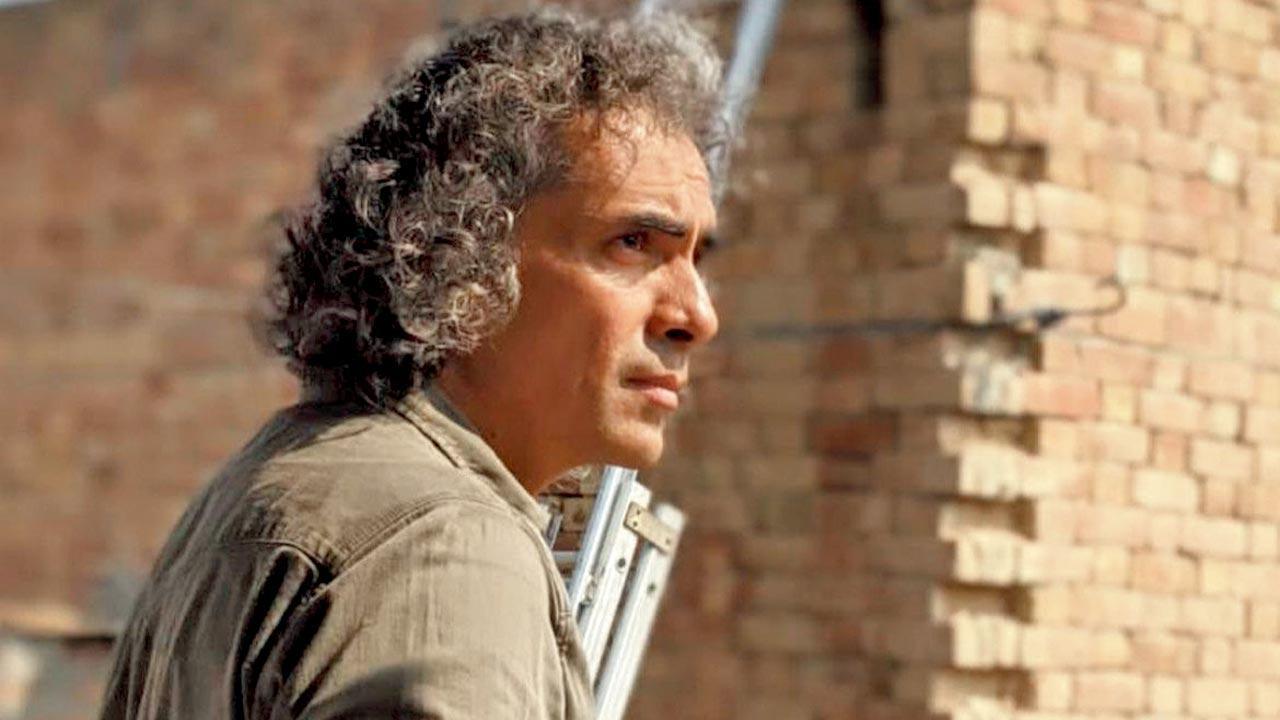
Imtiaz Ali traces the origins of Amar Singh Chamkila, an artiste whose golden phase ran parallelly with one of the worst times of Punjab. As the state burnt, an artiste was born
Priyanka Sharma (MID-DAY; April 14, 2024)
The last time he told the story of a musician, filmmaker Imtiaz Ali sealed his fate in the other world, which in the words of 13th century poet Rumi was “the field beyond right and wrong”. Seventeen years later, Ali tells the story of another musician, whose fate was unfortunately sealed more than three decades ago. But this time around, Rumi’s words become the beginning of the story. There’s no other way to step into the world of Amar Singh Chamkila, Punjab’s controversial yet legendary musician of all time, Ali says.
“The point was to get on with it. Okay, he sang double meaning songs. You can judge him. But let’s go beyond this. Let’s not fight about whether he was right or wrong. Let’s discuss what he loved. In order to reach that, you have to go past judgement. (As Chamkila would say) ‘Theek hai, aap bolte ho, mai galat hun. Now, let’s talk about what really moves my heart.’ That becomes the bigger discussion,” he begins.
Chamkila stars Diljit Dosanjh in the titular role of the musician, who composed, wrote and sang raunchy, suggestive duets with singer and second wife Amarjot during the ‘80s. The couple, along with two members of their band, were assassinated in 1988. Until his untimely demise, Chamkila remained the most popular Punjabi artiste.
But, parallelly to his rise, rose the intense criticism against him, from religious fundamentalists to sections of the media, who found his work dangerous for the society. To Ali, who co-wrote the film with filmmaker brother Sajid Ali, what really spoke about Chamkila was how he became the source of cheer for the state of Punjab when it was surrounded by gloom.
“For me, the story of Punjab came before the story of Chamkila. I knew this aspect of Punjab, where grimness and celebration go hand in hand, for a long time. I have known the fact that all Indian love stories have been Punjabi love stories, from Heer Ranjha to Soni Mahiwal. I also know that the biggest tragic events in India have also happened in Punjab, including the partition and the displacement. So, there’s something very ironic about it. When I then heard the story of Chamkila and discovered more about him, I got into making this film on him because it reflected the same irony. So much so that the purple patch of Chamkila’s career was one of the worst times of Punjab, the ‘80s, when it burnt. That is when Chamkila was on fire as well. I also know this incident that a particular officer of HMV was in conversation with Chamkila and was accepting and, perhaps, even inspiring him to make more happy songs for the audience of Punjab, which was going through darkness. So, in the anatomy of this conflict are both Punjab and Chamkila. I wanted to go there,” shares the director.
A biopic was never on the cards for Ali, who has primarily helmed modern day romances. But Chamkila’s tale gave him an outlet to say things that were personal to him. “It so happened that in the story of Chamkila, there happened to be so many things that I felt I wanted to say, things that I felt were really hidden from the audience.”
Through the story of a man passionately and stubbornly in love with music, Ali makes explicit commentary about an artiste’s relationship with his/her art and its impact on the society. The questions raised during Chamkila’s time, like what is good art, if seeking moral superiority from art is valid and who decides what an audience should consume remain relevant even today.
A much recent example of it is 2023’s divisive action drama film, Animal, headlined by Ali’s frequent collaborator Ranbir Kapoor. While it went on to become a roaring commercial success, it was severely panned by a section of the audience and the media for its depiction of misogyny and violence. Ali says while he takes his responsibility as a filmmaker seriously, he believes personal opinions on a film shouldn’t turn into sweeping judgments about it.
“As an artiste, when I would put something across, I will bear a sense of responsibility. Not only in terms of morality but also in terms of giving the audience something that elevates their experience. Something that they love but something that they haven’t seen before. As far as criticizing a particular film is concerned, I feel that one should avoid because people should judge. We are a democratic nation, we believe in the power of people. They will decide what they want. If they don’t like a certain film, they will not watch it. Who is to decide whether it’s right or wrong? Who casts the first stone? I wouldn’t want to be that person. I can say whether I like a certain song or a film or not. I have the choice of not watching or listening. But I can’t say this is wrong to be made or wrong for people or not suitable for people so they shouldn’t be allowed to watch it. I don’t think anybody has that power to decide for people.”
People still come to me and say they left their job after watching Tamasha-Imtiaz Ali
7:59 AM

Niharika Lal (BOMBAY TIMES; December 6, 2023)
On Sunday, Imtiaz Ali’s session at Kathakar – International Storytellers Festival continued for over three hours at Sunder Nursery, turning into a partial concert as his fans sang, danced, took photos, and passed letters to Imtiaz. Mohit Chauhan and Imtiaz also joined the audience as they broke into song.
Towards the end of the evening, around midnight, it was Imtiaz’s turn to narrate a story.
With a disclaimer, “It is part fact and part fiction,” Imtiaz shared a story of love, loss, and redemption, triggering many awws, sighs, and tears. However, he asked the audience not to record any audio or video because “some things should just be between us.”
“Tough times are always a part of life, drama, and every personality. If you want to tell a real story, you can’t avoid showing tough situations. However, I want to show life, and in the life I have seen, there are mental traumas and difficult phases. I feel that these issues should be spoken about more.“
Highway’s origin story
Discussing Highway (2014), Imtiaz said that this story idea was even older than Socha Na Tha (2005, Imtiaz’s directorial debut). Imtiaz shared that when he was in college and travelling from Jamshedpur to Delhi, they crossed Chambal. He was sitting near the train door with a female friend and when the TT asked him to shut the door and he refused.
The TT told him, “Ye Chambal ghaati ka ilaka hai, aur gaadi ruk-ruk ke chal rahi hai. Agar iss ladki ko kisi dacoit ne kheech liya, aap zindagi bhar khud ko maaf kar paoge?” Imtiaz told the audience, “It made me realize how narrow our experiences are. And from here came the idea – what if a girl is taken away from her life, will she want to come back?”
Imtiaz said, “Highway was a film with dacoits, but I didn’t want it to be A-rated because I really wanted young boys and girls to watch it. Usmein characters bahut aggressively bolte hain, lekin woh gaali nahi dete hain. And Randeep’s (Hooda) acting! Gaali ke bagair woh aggression lana zyada mushkil hota hai.”
Talking about Highway’s soundtrack, Imtiaz shared, “Highway was supposed to have only one song, that one lullaby, and I was not approaching Rahman sir because I thought how can I approach a music director for one song. But he said if you want me to do it, then I will do it. Finally, Highway had more songs than Rockstar; it had 13 songs. There were a lot of situations that were silent where we used songs later. There were no (separate) song sequences.”
‘People still come to me and say they left their job after watching Tamasha’
Imtiaz said that even after so many years of Tamasha (2015), people still come to him and say that they left their job after watching the film. Recalling a particular incident at a Mumbai cinema when he went to see the audience response to Tamasha, he said, “A woman came to me and said, ‘You should have made this film earlier. Ab toh bahut der ho gayi hai.’ The entire reaction to Tamasha can be ascertained from this one line. At some point, people should make a decision that can change the ending of their story.”
"A lot of people come to me and say, ‘Aapki film dekh kar maine naukri chhor di.’ Whenever someone says this, I feel that they should do well in their profession. It should not be like they come looking for me and say, ‘Iss aadmi ki wajah se maine naukri chhor di,’" he joked.
He added, “More power to those people who have taken the decision to change their life. Your life is in your hands, and there is no other way that it works other than how you make it work. From the bottom of my heart, I wish and pray for the best for such people.”
From Socha Na Tha to Love Aaj Kal, Rockstar and Tamasha - Imtiaz's film songs are as popular as his characters. Imtiaz shared that he is not a fan of how songs suddenly appear in films, as if the story has to wait for the song to get over, and he tries to avoid that in his films. “I used to find it very silly when a song breaks in, and suddenly, all laws of physics are sidelined. Suddenly, music appears from somewhere, and people who are not able to talk properly suddenly become great singers. I'm the kind of audience that would make fun of it. I want to have songs in my films, and I have struggled a lot with this in my films, figuring out how to include songs so that it is not jarring."
---------------------------------------
I would hate to be a safe film director. When I made Highway it was a huge risk, but it did do well. When I made Jab Harry Met Sejal, I was also coming out of Tamasha. Overall, the film didn’t do well, I would have liked the film to do better, it could’ve been made better
---------------------------------------
I don’t think any of my movies are really autobiographical. I try not to get into my movies. Because then it will be narrow and I will get confused. However, I have realized that there are certain reflections that have come from my life experiences, the people I have met in my life are reflected in my films
Failure has always opened many doors for me-Imtiaz Ali
8:06 AM
Vinay MR Mishra (BOMBAY TIMES; November 4, 2023)
One quick glimpse at filmmaker Imtiaz Ali’s filmography and his romance with locations and landscapes is evident. At the 10th edition of the India International Film Tourism Conclave recently, Imtiaz addressed this romance.
When we caught up with him for a quick chat, he said, “I love travelling. If I am not shooting in a beautiful place, then I feel ‘What a waste!’ and if I am shooting at a beautiful spot, then I wish I wasn’t shooting, then I would have enjoyed this place. So, I am somewhere in between. But I am inspired by places. I feel like a different person when I travel. It is a liberating experience. It reflects in my stories, too.”
Imtiaz’s next is a biopic on Indian singer and musician Amar Singh Chamkila. While the movie awaits its digital release, the filmmaker has finalised two stories. “I have already written a few scripts. There’s something based in the Northeast of India. Then there’s something I have written about Turkey and my travels there. In a way, both are romance, as there is a man and a woman and a lot of that,” he said.
‘The creative aspect of filmmaking will be tested’
While Imtiaz isn’t keen to shed much light on his upcoming movies, these projects would mark the filmmaker’s return to the theatres post-pandemic. “This is a time of great creative unrest. A lot of things that used to work in a certain way earlier, will not work now. The audience, including us, is behaving in a uniquely different way post-COVID, as far as going to the theatres is concerned. The numbers that Pathaan and Jawan have achieved are unimaginable, but then there are also films that the audience doesn’t want to watch and it’s very clear. At this point in time, it is up to the filmmakers. The creative aspect of filmmaking will be tested. We will have to come up with better things,” he admitted.
How does that make the Rockstar director feel? He replied, “It makes me feel invigorated. You have to dive deeper; the jewels are deeper. You cannot gloss over. But that’s the circumstances in which good art emerges, historically. In that way, I feel very encouraged by what is going on.”
‘Most of the things I planned for myself didn’t come true’
Imtiaz’s last two releases, Jab Harry Met Sejal (2017) and Love Aaj Kal (2020) didn’t perform well at the BO. However, the filmmaker believes that failure just opens new doors for him. “Most of the things I planned for myself didn’t come true and they were not good plans. I wanted a job as an advertising copywriter, and I failed at it. I got a job at a film company and I became a director within a year. I could have never imagined becoming a film director, otherwise. Many more cases of such failure have escalated me to a higher level. Failure has always opened many doors for me,” he explained.
Sequel to Jab We Met?
Recently, multiple reports suggested that one of Imtiaz’s most popular films Jab We Met (2007), will soon head for a sequel. While Imtiaz denied the reports earlier, he tells us why he chose to not refute the rumours sooner: “Somebody starts a fire, and it turns into smoke. I knew that it wouldn’t be (true) because I would have had to be involved if there was a Jab We Met sequel. So, these were rumours. The more I would talk to the media and clarify, the bigger the story would become. Sometimes, the best way is silence and in two days if you don’t talk, everyone will know it is not true.”
If Jab We Met was made today, Geet would just go off social media-Imtiaz Ali
8:39 AM

Sundas Jawed (BOMBAY TIMES; August 31, 2023)
Filmmaker, producer, screenwriter Imtiaz Ali was spotted in Kolkata recently with his daughter Ida and took to social media to share pictures of some of their food adventures. In between eating his heart out at pretty cafes and street food joints, the Jab We Met, Rockstar and Tamasha director spoke to us about his definition of love in IG times, the romance of train journeys and more. Read on to know more...
On why Kolkata is his favourite city in India..
I am from Jamshedpur; Calcutta was the first city I came to and still remains my favourite city in the country. I have been in the lanes of Kolkata several times and every time I try to discover at least one or two new places. This time it is a café in Hindustan park which is a beautiful, aesthetic place.
On Kolkata's unique architecture
What I have been seeing from the last few years, the Hindustan Park area is developing nicely in the way it has retained the cultural richness of the architecture. Kolkata is unique in the way it is home to the highest number of skilled artisans for flower decorations, weaving, painting, pandal making and various life arts. Besides some of the best looking buildings, it also has the best food in the country and I try to get here as often as I can.
If Jab We Met was made today..
Jab We met was very edgy in terms of how it was placed with missing trains, runaway bride and a boy and girl sharing a room. At that point of time, it was different, now it wouldn’t be. If the movie is made again, there would be only superficial changes in the story. One thing that would play a big role is social media, So if Geet of present day elopes and goes into hiding, she will be off social media or wouldn’t use her own name on her profile.
On the magic of travel and long-distance trains..
I love travelling and more than seeing beautiful places I have enjoyed the fact that I felt very different every time I went out of my home space. My travel out of Jamshedpur was mostly on train to Kolkata or some other place, but it was a very dreamy kind of world for me where not only was I thinking of different things that I wouldn’t be thinking of in my regular life, but I was also anonymous. So I could give any name any story to myself. Travel and storytelling to me are intrinsically related.
The role of music in his life and movies ..
Of all the things I do as a director, I enjoy shooting with music on set the most. The music directors that I have worked with have been true artistes and they have also been very gracious and generous in allowing me to come into the process of their music making. I owe a great deal to them for the fact that they have provided so much strength to my narrative, especially A R Rahman because he has taken the story forward to another zone with the music that he has provided for Rockstar, Tamasha and Highway.
On his favourite films..
There are parts of movies that I like but I am not my own fan. At one point we have been so engaged with these movies/songs that it doesn’t work for me in terms of entertainment anymore.
Imtiaz's favourite food stops
- Biryani from a renowned Mughlai restaurant in central Kolkata
- Tarun Niketan’s eating house for Bengali cuisine
- Iconic Park Street eatery for cakes: "Ida has been to Kolkata quite a few times and sometimes her birthday cake is ordered from the same Park Street confectionery. Both of us love it."
- Tangra for Chinese
----------------------------------------------
You get the best food in Kolkata at unnamed places and shops. A simple puri bhaji and chai or malai toast, absolutely inexpensive, are a few to name.
I can’t tell you how many producers and actors rejected Jab We Met-Imtiaz Ali
8:19 AM
Riya Sharma (DELHI TIMES; December 2, 2022)
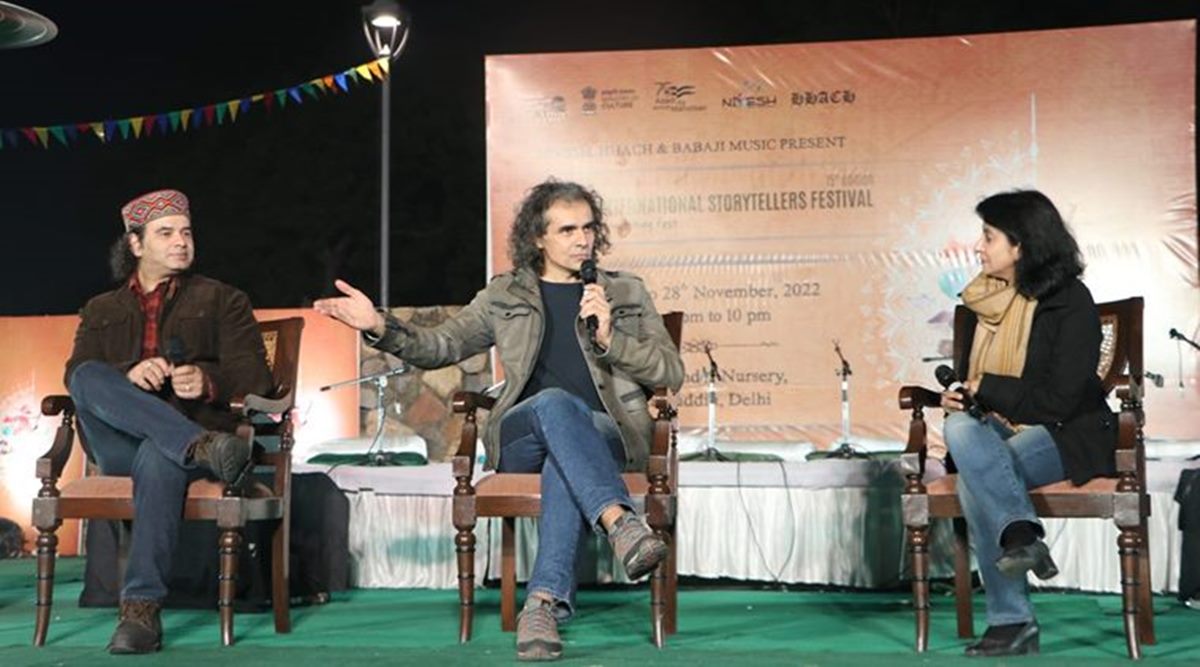
On a chilly winter Sunday night at Sunder Nursery, Imtiaz Ali turned into a storyteller for Delhiites at Kathakar International Storytelling Festival. For his fans, it was probably the ideal way to spend their Sunday evening, who came with the filmmaker’s portraits and CDs and posters of his films. In a conversation with Mohit Chauhan, Imtiaz highlighted his Delhi days, what made him miss the FIFA World Cup and why making music for Rockstar felt like a workshop.
‘DELHI GIRLS ARE VERY TALKATIVE, THEY TALK IN A CERTAIN STYLE’
Imtiaz has several stories to share when it comes to his days in Delhi. The moderator started with the disclaimer that there are stories we can talk about, and there are stories we cannot talk about. To which Imtiaz replied, “The story that I am thinking of, it’s a story with multiple characters.”
He added, “I had come to Delhi from Jamshedpur; I used to be a part of a theatre group called Act One while I was staying at the Hindu College’s hostel. We used to catch trains from Delhi to go to Jamshedpur. My friends would insist on going along with me because the best-looking girl would always be in my compartment. Buses mein bhi aisa hota tha. I used to find Delhi girls very talkative, they used to talk incessantly. They would go like, ‘Pata hai main ja rahi thi…’ there was a certain rhythm, unki personal baatein, relationship talks, yeh saari cheezein mere dimag mein thi. All stories of my life are incomplete in some ways, and I think it’s a good thing because they can complete themselves in my film.”
Imtiaz said that this story about these girls that he had met completed itself in Jab We Met. “That’s the same girl, and I have met her several times in several places but always in Delhi,” he added.
‘JAB WE MET WAS REJECTED THE MOST’
Imtiaz Ali said one of his most loved films, Jab We Met, was rejected the most. “But anything that is rejected is not necessarily bad. It is just not suited for that person, at that time. Everything that I have done, especially the ones that are successful, jo zyada chali hain, wahi zyada reject bhi hui hain. I can’t tell you how many producers and actors rejected it. Not because it was wrong, but it was not suited to them at that time. And this is what I want to say to young people – rejection is not a judgement of the quality of your work at all. You have to take rejections as a medal. If something is accepted easily, usually there is something wrong with it. So be afraid of things that are easily accepted; it means you have not found your depth in it,” said the filmmaker.
‘OVERWHELMED BY THE NUMBER OF PEOPLE WHO KEEP TELLING ME THEIR STORIES, WHICH ARE RELATED TO TAMASHA’
Imtiaz Ali’s Tamasha recently completed seven years. And when the moderator notified the audience about it, they broke into a loud cheer. “The people who cheered like that, the movie belongs to them,” said Imtiaz, adding, “I have constantly been overwhelmed by the number of people who keep coming to me over the years and telling me their stories, which is related to Tamasha, and how they took the decision to change the flow of their lives and follow the journey of their hearts. I feel guilty when someone tells me that they left their job because of my film. So many people have been positively motivated by the film’s story.”
WORKING ON ROCKSTAR WAS LIKE ATTENDING A WORKSHOP: MOHIT CHAUHAN
When Imtiaz asked Mohit about his connection with the hills, he said, “Main pahadon mein hi raha hoon, sab padhai karke main Delhi aaya. Ek abhi bhi jo sukoon hai, woh wahin milta hai. . . It is conducive to your art. If you sit close to nature, it gives you inspiration.”
Talking further about how the music for Rockstar was created, Mohit shared, “Rockstar was like a workshop....” Imtiaz added, “...Na tune thi, na lyrics thay, kuch bhi nahi tha. Sab kuch saath mein tha.”
“Kuch gaane jab Imtiaz ne mujhe bheje, like Jo Bhi Main was a 10-minute song with no lyrics, bas jam ho raha hai. Jab maine pehli baar suna toh main ghabra gaya. Maine socha dekh lenge, ek week baad inhone ek aur gaana bhej diya, aur woh bhi aisa tha toh main ghabra gaya. Par woh gaane rough diamond thay, jisse dheere-dheere tarasha jaane lage. Irshad (Kamil) sahab words saamne saamne likh rahe thay, it was an experience. It was amazing,” added Mohit.
WAS SUPPOSED TO WATCH A WORLD CUP MATCH IN QATAR BUT CHOSE TO COME TO DELHI INSTEAD: IMTIAZ ALI
Imtiaz, a regular speaker at the Kathakar International Storytelling Festival, shared, “It is true that the energy of this place is blessed in many ways. If you look around, you will find grand historical monuments and spirituality in proximity. Hazrat Nizamuddin Auliya is next door; Gurdwara Damdama Sahib is there. I feel in some ways, this is a very auspicious place. I was supposed to be at the Qatar World Cup and watching a match, and I was going to be taken there free of cost and somebody was organising the ticket as well. Unhone kaha aap kaun si team follow karte ho? I said I follow Brazil and this time I think we will win. I wanted to see a Brazil match but then there was also this, so I thought woh pata nahi, yeh dekh lete hain pehle. That was not the only reason, but I’m happy to be here instead.”
I make movies at the rate of one movie per two years, which has been my average-Imtiaz Ali
8:28 AM

Shruti Das (HINDUSTAN TIMES; August 13, 2022)
Filmmaker Imtiaz Ali loves helming films. In fact, he’s glad how being a producer and writer helps him tell more stories to the world. Here, he talks about that, being stereotyped and the positives of OTT. Excerpts:
How has your journey been as a producer?
I have been producing films for the last three and a half years. I make movies at the rate of one movie per two years, which has been my average. But I think of stories at the rate of one story every few months. So, just by mathematics, we know that I will not be able to make all the films that I think of or want to make, if I direct them. The next best thing to do is to produce them and also have some sort of creative supervision, so I’m still able to tell those stories.
You are known for making romance films. But you’ve also been dabbling in new genres with She, Dr Arora and Thai Massage. Is it a conscious choice?
I like to make all the stories that come to me naturally. When I made Highway (2014) or Jab We Met (2007), I didn’t think of them as love stories while writing or making them. I think it is the audience that decides what genre a movie or director belongs to. If a certain type of movie is liked, then it’s good for me. She and Dr Arora are very different from the ones that people have seen me making. I hope to make different kinds of films.
How has exploring the web space been like?
The good thing about the web space is that there’s no limit in terms of duration. If you have a longer story, you can make a web show. I could have never make She as a film, as it needed a long duration. When shows started getting made, I thought, ‘Yes, I can make that into a show because it’s more like a character study and less like a plot-oriented story’. It just won’t fit into two hours.
The family is very fond of Arif; I am the slightly off one. And the ladies love him-Imtiaz Ali
8:59 AM
Imtiaz and Arif Ali, who are back on OTT with the second season of thriller She, talk about their bond made of mutual acceptance, admiration and adaptability
Aastha Atray Banan (MID-DAY; June 19, 2022)
“We have similar food tastes,” says director Arif Ali of his elder brother, writer and director Imtiaz Ali. Somehow, the conversation that has to be about the second season of Netflix thriller She, which Imtiaz has created and written, and Arif has directed, has become about the cuisine that Mumbai is home to and isn’t. “We share the same opinion—the North has better food, but we need to find a few places and then be happy within that,” says Arif. Surprisingly, this attitude is also reflected in the rest of the conversation, which is about the brothers believing in the same philosophy—do the best you can, and then just put it out in the universe.
When it comes to She, a story about a woman constable who goes undercover as a sex worker to bust a kingpin no one has seen, the two seem to be in sync as well. The second season is about the lead, Bhumi, played by actress Aaditi Pohankar, coming into her own, realising the power of her sexuality, and how she can use it to gain control over others. “That’s what I find most fascinating about the second season—the fact that she uses it now like a weapon,” says Imtiaz.
The two brothers often look at each other before they answer questions, almost taking unspoken permission, a courtesy that may have helped them through the making of the show. “Imtiaz pays attention to the details, while I am more macro. He has written certain things the way he sees them… there is a comma, or a full stop, because of a reason. And he wants it a certain way. We have had to change some scenes, because he didn’t think they were true to what he wanted. And I am okay with that—at the end of the day, it’s his vision.”
Imtiaz gets it, but says that as showrunner, he was responsible for the final product, unlike a project where he may have just written a script and handed it off. We remind him of the time when we pointed out discrepancies in Homi Adajania’s Cocktail, which he wrote. The film didn’t share his vision. “Yes, but with Arif I can say anything, and know that I am not being judged. I can’t impress him, and I can’t fool him. He knows it all. So when I am signing off on something, it has to be absolutely right. A scene, a moment, a dialogue… is all there for a reason. Or else let’s chop it off completely.”
Arif laughs when we ask if he wants to give his elder brother some “feedback” on his process. “There are times where what he may have written, could be different. He spent two hours on one scene, I spent many on the recce, and the preparation. I thought that maybe this could be different. But sometimes, he is obstinate about it. And it [the scene] eventually got cut on the editing table!”
But the brothers show no signs of discontent or disagreement. They talk about spending a lot of time together growing up. “We were the constants in each other’s lives. He got married first, so he had a TV and a home, and we used to spend evenings watching movies. We have similar likes and dislikes,” says Arif, who is the natural extrovert between the two.
“Oh, he is very popular and genial, and gets along with people. He is the one who is interested in people being together. The family is very fond of him—I am the slightly off one. And the ladies love him,” says Imtiaz, who we have discovered through interviews over the years is the natural introvert, who talks only because he has to. “I am not popular with the ladies the way he is,” Arif interjects.
Is the mutual love of and from women, the reason they could get into the mind of Bhumi, a lower middle class Marathi girl shunned by her husband because he saw her as cold, manly, asexual, who is now grappling with the nuances of her own sexuality? “I don’t think we disagreed about any way in which we showed her. We were clear she was coming into herself. But it wasn’t to be woke. I am socially responsible in the way that I don’t want my movies to make audiences take the wrong steps, but at the end of the day, it’s a story.” Arif adds, “Yes, I’m glad we are talking about all the issues that are important to women and us, but for us this was a character, and the character will have an organic journey.”
Maybe Bhumi is just looking for the “self”, a trait common to many of Imtiaz’s characters—Dev in Tamasha, Veera in Highway or Aditya in Jab We Met. “Ya, maybe. I am not looking for my ‘self’ at all, but my characters seem to be. There has to be some deeper psychological reason for that.”
At the end of the day, the brothers can put aside work, hang and talk about other things. “But we do talk about work as well; work is life.” Do they care how critics and audiences will react to She? Arif takes this one—“You can never know what audiences want. But we knew what we wanted, and we made that product. Now, it’s out of our hands.”
Subscribe to:
Posts (Atom)