Showing posts with label Imtiaz Ali. Show all posts
Showing posts with label Imtiaz Ali. Show all posts
Imtiaz Ali knows even the smallest place in Kashmir-Vedang Raina
9:11 AM

Akash Bhatnagar (HINDUSTAN TIMES; September 16, 2026)
As a Kashmiri, Vedang Raina had a special moment recently as he went back to his roots at the inaugural edition of the International Film Festival of Jammu And Kashmir, where his film Main Vaapas Aaunga was chosen to close the festival last week.
“I was going back to Kashmir only for the second time in my entire life and that place is very special to me as it is home. I wanted an excuse to go to Srinagar and when this opportunity came, it was the perfect match. To go there with a film of mine, my parents felt the proudest and emotional that I was doing something to give back to the people of where I come from,” he says.
Main Vaapas Aaunga is about leaving your home and everything you have had, and the want to come back home, and the actor insists that feeling resonates with the people in Kashmir more so.
“They have faced very testing incidents be it the Partition, or what happened during the ’90s (with Kashmiri Pandits), while it was different, the emotion of leaving everything behind and then start afresh remains,” he says.
Getting appreciated and accepted from the people of Kashmir felt different for Vedang: “I didn’t even realize what kind of an audience Kashmir has for movies. I know that people there care about art and culture, but it’s through this film festival, I got to learn more about them. Whatever I can do to contribute to the culture of cinema being celebrated there, I wanted to do as it’s long overdue. Kashmir deserves a lot more theatre and connection to cinema, and being able to contribute to that feels special. People in Kashmir feel like family.”
Raving about Kashmir and its beauty and culture, Vedang says, “I just love the landscape. This time, I only got to go to Srinagar, but when you go to Pahalgam and Gulmarg, there's few places in India that are more gorgeous than that. Also the food, this time I had a proper Wazwan in Kashmir, which was amazing. I love Kashmiri food. And I also had the walnut fudge, and that is probably one of my favorite things. I got back home a lot too. Hopefully it'll survive for a while.”
Even though he is Kashmiri, it was actually filmmaker Imtiaz Ali, who turned out to be more well versed than him about the place.
“I have a connection with the place but Imatiz Ali sir knows Kashmir way better than I do. He knows even the smallest places there, and when me and Sharvari were thinking of where to go, what to eat, Imtiaz sir knew it all,” he laughs, adding that he hopes to do a film set in Kashmir with Imtiaz. “If there's an opportunity that takes me to Kashmir, and if it's for a film shoot, that's even better. It means I will get to spend so much more time there. If Imtiaz sir writes it, that would be a dream come true. If he decides to cast me in it, I hope that's something that comes to fruition,” he says.
Naseeruddin Shah's favourite line was ‘There are no bad actors, there are only lazy actors’-Aahana S Kumra
11:19 PM

S Farah Rizvi (HINDUSTAN TIMES; September 5, 2026)
The eagle has landed – this was how actor Aahana S Kumra and her batchmates reacted when actor-theatre director Naseeruddin Shah walked onto their film school campus 20 years ago. To them, he was not merely a teacher but a standard-setter.
"For some reasons he always knew if we reached unprepared,” Kumra recounts her college and theatre days. “And you could never prepare enough, because he was always over-prepared as a teacher. His favourite line was ‘There are no bad actors, there are only lazy actors.’”
The teaching phase soon shifted from the classroom to the stage for both mentor and mentee.
In 2010, while Kumra was backstage at a play, “Naseer sir approached me with a George Bernard Shaw script. ‘Take and read this,’ he said. That was the day where I finally started to act for a play and in 2011 I performed for By George, at the NCPA under his direction. And it also earned me painting from him and Ratna (Pathak Shah) maam.”
Kumra says that as his students, they all value his sharp insight into the industry’s calculated realities. “He understands that young actors rarely get second chances,” she explains. “If you say no to a producer, you’re replaced. He knows producers have inflated egos—a lost chance is often lost forever.”
On a lighter note, she shares that he fondly calls her a “feisty cat,” and she shares new actors ask her, ‘Naseer sir ke sath kaise kaam kar sakte hain’ and she reverts, ‘Koi tareeka hain hi nahi unke sath kaam kar paane ka. It’s sheer good luck.”
On Main Vapas Aaunga, she adds, “I cried when saw him on screen no doubt it one of his best. He just loves Imtiaz Ali and calls him a rare director. Sir always enjoys portraying a Sardar character—he understands they speak with such buland awaz and as they age it becomes feeble yet authoritative.”
And what does the master think of his former student?
He told us at an event, “Ahana Kumra is one of my students and now also a good friend. Her career hasn’t gone as well as I’d hoped, but she’s been doing some offbeat films. She’s a girl with gumption, and I definitely feel her day will come. Some find success at 20, others at 30 or 40. Look at Boman Irani and Gajraj Rao. So I keep encouraging her and telling her not to get disheartened. I really believe her time will come.” (Input by Aadrika Sominder)
When Imtiaz Ali told his father he didn’t want to do UPSC
9:45 AM

Kimberly Colaco (MUMBAI MIRROR; August 26, 2026)
That Goa trip with friends — the one you keep talking about and social media never seems to stop talking about — has become almost a tradition. Even filmmaker Imtiaz Ali has a memorable Goa trip of his own, which he recently shared at the launch of the state’s first community radio station in Panaji on Saturday.
Imtiaz’s first trip to Goa was in 1993, after he and his friends earned some money by staging a play. With their first earnings in hand, they decided to head to Goa. “That was our first earning. I hired a bike and went to all kinds of places. That was the craze of being in Goa,” the Main Vaapas Aaunga director recalled.
‘You choose the line of your choice but do the best in it’
But the trip also coincided with a significant moment in his life. While his father believed he was studying in Delhi, Imtiaz was beginning to question the conventional career path he was expected to follow. Around the same time, he had told his father that he did not want to pursue the UPSC examination or become an IAS officer.
“My father had no clue about this trip, as I was supposed to be studying in Delhi for UPSC. But at the same time, I had told my father that I didn’t want to do UPSC and be an IAS officer,” he said.
Instead of discouraging him, his father gave him the freedom to choose his own path. “My father became a very important person to me. He was the one who supported me and said, ‘You choose the line of your choice but do the best in it,’" Imtiaz recalled.
Imtiaz was speaking at the launch of Goa’s first community radio station in Panaji, where he was joined by actor Rahul Bose and actress Bhumi Pednekkar.
What Mumbai is now, the stars of that time used to stay in Lahore-Vedang Raina
10:19 AM

Nishad Neelambaran (HINDUSTAN TIMES; August 15, 2026)
Vedang Raina has been riding high after the success of Imtiaz Ali’s Main Vaapas Aaunga. The 26-year-old actor has been praised for his strong performance in the romantic drama that revolves around the partition period in 1947. It wasn’t just a film for Raina, but a redemption after Jigra (2024), and an eye-opener in a lot of ways, as he holds the film responsible for changing his perspective on the significance of Independence Day and what it meant for the country back then. Excerpt:
What a year you have had with Main Vaapas Aaunga. Did you always anticipate it becoming the biggest movie of the year?
No, I still don’t think it’s the biggest movie of the year. But it’s done its bit and found its audience. I’m very grateful for that. While shooting the only thing I understood at that time was that it’s an honour to be part of a film in which Imtiaz Ali is directing, and to be playing the younger version of Naseeruddin Shah. I think those two things were like the highlight of my journey in this industry.
What was Imtiaz Ali’s process like?
It wasn’t really like a narration, not in the typical sense. With him, it was like he had certain ideas in his head. It lasted maybe two minutes, and he spoke about the concept of the film. And this is the character I want you to play. And for me, it was the fact that Imtiaz sir was making it. I said, okay, fine. Like, I’m on it. Let me know when we start.
What does Independence Day mean to you after Main Vaapas Aaunga?
I feel this immense sense of belonging to the country and an immense sense of pride. After Main Vaapas Aaunga, I’ve had a different outlook on what that day meant, how much it means to the people and how important it was in the history of our country. As a kid, I did not get into it that much. But now, I really got in-depth into what that day was like for so many people. And what it stands for now.
You also went to the partition museum. Did that open up a different world to you of what actually happened decades ago?
Yes, 100%. That was probably the most important thing that I did in pre-production. Sharvari and I went to the partition museum in Amritsar. We spent four hours there. The museum was amazing, but it was those anecdotes from the people. There were 15-20 minute videos of actual people who went through that partition journey. And what that migration was like for them. That experience was really important.
What were the things that you found that we don’t talk about when we talk about Independence Day and partition?
The Radcliffe Line [drawn by Sir Cyril Radcliffe] that we know of: I didn’t know that Sir Radcliffe hadn’t ever been in India before. He came here for a few weeks, and he was in his hotel room. And he had so much pressure from the higher-ups to make the line between India and Pakistan that he didn’t really get to go talk to the people, understand what it means, what those areas mean, what those people are like in those places. And for them, it was kind of just like a line that they drew. Which sounds so terrible. Lahore was such a big part of Indian culture. It was the heart of India. What we call Madhya Pradesh right now was Lahore because that was kind of central India. It was not the capital, but it was the hub of culture, art, music and movies. What Mumbai is now, the stars of that time used to stay in Lahore and everything used to come from there... And I’m thinking just that line could have changed the lives of maybe 1000s of people.
Have you heard anything about partition or the freedom struggle from your grandparents or parents?
I must have heard stories about the partition, but also we are from Kashmir. My grandparents were in Kashmir at that time. So, it was different for them. They didn’t experience any migration at that time. Later they did, of course. My nana used to talk about how things were, what Mahatma Gandhi was doing, what Pandit Jawahar Lal Nehru ji was doing, and what the political climate was. He is very politically aware. He’s always had very strong opinions on politics.
Do you have strong political views as well?
Yeah, I’d say not as extreme as him. I do have political opinions, and I do have strong opinions.
Diljit, in Main Vaapas Aaunga, says the major problem in partition was that there was no social media. If we had to go through something similar now, how do you think the Gen Z would react? Will they ‘clock it’?
(Laughs) 100 per cent they will. We’ve seen a little whiff of what social media and something that is an important subject to our country means in recent times, right? And just imagine something like the partition [happening]. Well, there would be one side where Gen Z would be making those reels, but also we are such a strong collective voice now. And not just Gen Z, but all generations. Because of social media, we have a strong, collective voice that cannot be ignored. That is something that we’ve proven.
Imtiaz Ali on daughter Ida’s engagement: "It is the greatest happiness for me"
9:53 AM

Medha Shri Dahiya (HINDUSTAN TIMES; July 14, 2026)
Filmmaker Imtiaz Ali’s daughter Ida Ali, 25, is engaged to her longtime boyfriend Krish Agarwal, 24. And for the father of the bride, this milestone “is the greatest happiness for me”.
Krish, a quantitative researcher at a hedge fund, proposed to Ida, a filmmaker, in Norway on July 1, and she shared glimpses on Instagram on Sunday.
The proposal also came with an old-world touch of tradition. Before popping the question, Krish spoke to Imtiaz and sought his blessings. The 55-year-old tells us, “Krish did speak to me before proposing to Ida.”
As congratulations continue to pour in, naturally, conversations have shifted to wedding bells. However, Imtiaz is in no rush to get ahead of the couple’s engagement bliss. Choosing to let the couple soak in this momentous milestone, he says, “I would rather not step in and let them enjoy their moment.”
Meanwhile, Ida tells us, “No wedding plans yet, just enjoying this moment like my dad said.”
Vedang Raina on Main Vaapas Aaunga's BO miracle: "There is no other example..."
3:31 PM

Actor Vedang Raina opens up about dating rumours, the emotional rollercoaster of Main Vaapas Aaunga, and why a compliment from Imtiaz Ali will always matter more than the rest
Sonal Kalra (HINDUSTAN TIMES; July 11, 2026)
His relationship status sparks almost as much curiosity as his film choices. Fresh off the success of Main Vaapas Aaunga, a film that went from a disappointing start to one of the year’s most talked-about success stories, Vedang Raina has plenty on his mind.
For starters, the 25-year-old confirms that he “is currently single”. Notably, he was rumoured to be dating actor Khushi Kapoor. Asked what attracts him to someone, he says with a smile, “Kindness. There are other qualities too, but if you are not kind, everything else falls flat.”
Raina is still processing the extraordinary journey of his latest release. “It’s been quite overwhelming. The first couple of days or three days was a lot to take in. There were a lot of things being said about the film, which is now being unanimously loved by critics and audiences. The screenings that we went for... I have never seen reactions like that, and I felt it had to amount to something,” he says.
The film’s poor initial box-office performance left him disheartened: “It was very shattering. And then the turnaround took place. I guess it makes this entire thing even more special. There is no other example where it happened like this. I regained my faith in the fact that good films will find an audience.”
The actor believes the film’s success has offered reassurance to filmmakers across the industry. “If the product is good, people are going to love it regardless of all things around,” he says.
Among the many compliments he received, one mattered more than the rest. “I think the compliment that matters to me the most is always going to be Imtiaz (Ali) sir’s,” he says, admitting he put immense pressure on himself while playing the younger version of veteran actor Naseeruddin Shah.
If the success of Main Vaapas Aaunga has reaffirmed Raina’s faith in audiences, it has also given him a moment to reflect on the journey so far. Just three films old in the industry, the actor has already worked with filmmakers Zoya Akhtar (The Archies, 2023), Vasan Bala (Jigra, 2024) and now Imtiaz Ali... experiences he believes have shaped both his craft and outlook. He speaks about the lessons he’s carried from each, the choices he makes as an actor and why instinct remains his biggest guide.
What’s one thing you’ve taken away from each director you’ve worked with?
Zoya taught me much more than acting. The kind of person I’m shaping up to be has a lot to do with her. With Vasan sir, I saw a different school of filmmaking and acting. If I hadn’t done those first two films, I don’t think I would have been able to do what I did with Imtiaz sir.
Who’s the most brutal critic at home?
My father (businessman Ayush Raina). The other opinion I really care about is my younger sister’s. She’s trying to become a filmmaker. Whatever she tells me, I believe her.
What’s the biggest misconception that got busted once you became an actor?
I always thought getting your first film would be the biggest achievement ever. Now I realize the journey actually gets more complicated after that, as you suddenly have important decisions to make.
When it comes to choosing films, how much is gut instinct versus advice from people with experience in cinema?
When it comes to doing a film, it’s always about what I feel like doing. Choosing a film is a very emotional decision because you’re going to be part of that journey for such a long time. You have to be emotionally invested and almost obsessed with it. If I knew the decision had been made by someone else, I won’t be able to live with it.
You come across as very calm. But what is it that would anger Vedang Raina, if at all?
This is how I’ve always been, and I hear this all the time but it’s not true at all! It takes a lot to get my temper up, but I do get angry. In fact, I get triggered at the silliest things, such as the Wi-Fi not working or the TV not turning on. Maybe that’s a Gen-Z problem. Apart from that, it’s only my characters that bring out those emotions.
Who is your dream director to work with?
Christopher Nolan followed by Martin Scorsese. There are so many Indian directors I’d love to work with as well, but if I’m dreaming as big as possible, I’d choose those two.
Among Indian actors, whose career would you study as a student?
Everyone’s career trajectory is unique. Ranbir Kapoor, Ranveer Singh and Vicky Kaushal have all had their individual journeys. But I can’t emulate someone else’s trajectory, I can only admire it.
Earlier, there were certain actor-director collaborations, like Shah Rukh Khan would say, ‘If it’s a Yash Chopra film, I’m not even going to listen to the script’. Is there a director whose film you’d say yes to blindly?
Imtiaz sir. Even with Main Vaapas Aaunga, it wasn’t a narration, just five minutes of him talking about certain ideas he had. I simply said, ‘Sir, I’m doing it’. Today too, if he came to me, I wouldn’t ask for the script. I’d just say yes.
Imtiaz Ali is leading you to love, not hate-Sanjay Suri
9:47 AM

Sanjay Suri says he joined ‘Main Vaapas Aaunga’ knowing that director Imtiaz Ali would treat the Partition story from the lens of inclusivity, not divisiveness
Priyanka Sharma (MID-DAY; June 26, 2026)
It took only a phrase for Sanjay Suri to give his nod to Imtiaz Ali’s Main Vaapas Aaunga. “Imtiaz used this line, ‘Opening of the heart’. That is what I was hoping someone would make,” recalled Suri, referring to Ali’s Partition drama that views the historic chapter through the lens of inclusivity, not divisiveness.
In the Naseeruddin Shah, Diljit Dosanjh, Sharvari, and Vedang Raina-starrer, Suri plays a Sikh man separated from his family after Partition and spends the rest of his life waiting for them. Ali’s treatment, coupled with the role, was just what the actor was looking for.
“There was a comfort in working with Imtiaz because I knew he is not leading you to hate. He is leading you to love, and to opening of the heart. The film asks what we humans are made of. This othering is so non-inclusive. If we live a life with inclusivity, it can be a joy to live,” reflected Suri.
His fondness for Ali began with the first meeting itself. Suri recalled how they spoke more about life than his role. “I’m from Kashmir and he has a connect with the place. So, we chatted about life and then he said, ‘I am making a film, which is being seen from an old man’s viewpoint.’ Then we started talking about humans seeing grief, loss, and identity.”
Imtiaz Ali on Main Vaapas Aaunga's slow opening: "We are not a star-driven film, so it was supposed to be like this"
9:52 AM

The filmmaker on his latest movie’s slow-burn box office journey, why Gen Z is often misunderstood, and Diljit Dosanjh
Akash Bhatnagar (HINDUSTAN TIMES; June 19, 2026)
Even as Main Vaapas Aaunga (MVA) records a gradual uptick at the box office, filmmaker Imtiaz Ali says he always expected the film to find its audience over time rather than through a blockbuster opening.
“We are not a star-driven film, so it was supposed to be like this. If people like it, they will tell others to watch it, and that’s how the film will grow,” he says.
Ali is particularly encouraged by the response from younger viewers, who he believes are yearning for deeper connections. “I feel the younger generation needs love the most. They are sensitive, romantic and seeking commitment, but they are often misunderstood and labelled as flaky. Their lives are different from previous generations, but they are searching for something meaningful,” he says.
Set against the backdrop of Partition, the film intertwines a love story with the lived experiences of survivors. “When I heard their stories of what they’ve seen, what they remember now after 78 years, I realized that no love story can happen in a vacuum. It happens in the real world, and the real world of the era of partition was necessary for the setting of this love story,” says Ali.
He was also unfazed about mounting a large-scale film led by relatively new actors Vedang Raina and Sharvari. “I am a man, not from the trade, but from the art of filmmaking. I do understand the power of cinema and performance, and also the power of good casting. If all those things come together, then there is a certain power that is created. I had no doubt that both these actors will be able to headline this story well,” he says, adding, “But I also knew that on the poster, there is also Diljit (Dosanjh). Everybody in the world knows him and they are interested to see what he’s doing. I was sure that there was going to be a poster appeal because he is there.”
While Imtiaz Ali has made romances across decades, he claims that he “doesn’t come from a point of understanding love”. “In Socha Na Tha (2005), the confusion of Viren (played by actor Abhay Deol) was actually my confusion of committing in a direction but your heart pulling you in another. I didn’t have an answer for that but I made a movie on it. Jab We Met (2007), in my mind, was not even a love story. It is about two people who meet as strangers and eventually become like the other. They complete each other and realize that [they are in love] later,” he says.
Similarly, Main Vaapas Aaunga (MVA) is set up as a love story, but also showcases the ordeal faced by the people of Punjab during the 1947 Partition. Does Ali feel that the film should be made tax free, especially in Punjab? “A lot of people have said that this is a story of Punjab, and also in a way of Bengal and other parts of India. If people feel that way genuinely and if that comment of national interest is out, then there must be a process in these states to see if the film can be made tax free and we’d be looking into it,” he says.
The filmmaker also asserts on the universality of the story, insisting that tragic incidents like the Partition are happening even today, something he brought out with the video of Kya Kamaal Hai in MVA’s end credits. And it was Diljit who pushed for it.
“I must thank him and Irshad (Kamil, lyricist) for encouraging me to make the video. I had never done or seen anything of this sort, but Diljit said, ‘Ye to karna hi hai kyunki ye phir isko sabki film bana dega’,” he shares.
Is a Hollywood 'Obsession' sidelining Hindi releases?
2:59 PM

After filmmaker Anurag Kashyap claimed that Hollywood films are getting priority over Hindi films in theatres, trade experts weigh in on the impact on Indian releases
Akash Bhatnagar (HINDUSTAN TIMES; June 17, 2026)
The global success of the Hollywood horror film Obsession, which has reportedly earned 330 times its budget, has become a case study in world cinema. However, it has sparked mixed reactions within the Hindi film industry.
Filmmaker Anurag Kashyap recently expressed concern on his Instagram Stories that theatre chains are prioritizing Obsession over Hindi releases, including his film Bandar (released on June 5) and recent Friday releases such as Main Vaapas Aaunga, Governor, and others.
Trade analyst Komal Nahta, however, believes international films aren’t an impediment. He shares, “Only bad content is coming in the industry. Bandar is not doing well even otherwise, so the number of shows isn’t going to make a difference,” adding, “If in two shows, they can’t get houseful, what will they get in 20 shows?”
Trade analyst Atul Mohan adds that multiplex programming is largely driven by audience response. He says, “In a way, Anurag is right. Business is ruthless. If a film doesn’t do well in the first two days, they reduce the shows drastically, which doesn’t give time for word of mouth to spread. Hindi films deserve that time to grow.”
Film exhibitor Akshaye Rathi echoes the sentiment and says that the audience makes the ultimate decision. “If Main Vaapas Aaunga or any other film have very good occupancy levels, cinemas across the country would increase the number of shows, like they did for Haunted – Echoes Of The Past in the same week. So, it’s not about the theatres but what the audience decides,” he shares.
--------------------------------------------------
These are business-oriented decisions. There is a policy for encouraging local produce, and there should also be a policy for encouraging local cinema. But there are arguments on both sides of the matter, and can’t be compared.
- IMTIAZ ALI, DIRECTOR OF MAIN VAAPAS AAUNGA
--------------------------------------------------
Nothing is coming in the industry except bad content. If Anurag thinks it is because of Obsession that Bandar is not doing well, he should see the collections. Critical acclaim is not the same as the box office, and when we talk about competition, we talk about box office. So, Obsession is not acting as an impediment to the running of Indian films at all.
- KOMAL NAHTA, TRADE ANALYST
--------------------------------------------------
‘FOR EVERY DHURANDHAR, THERE WILL BE FIVE EXPENSIVE FILMS THAT WILL BOMB’
Rishabh Suri (HINDUSTAN TIMES; June 17, 2026)
For Indian films to not get enough attention from theatres, despite having good reviews, does not go down well with Anurag.
He tells us, “Films like Bandar and Main Vaapas Aaunga should get proper shows so that people can watch them, allowing word of mouth to build up. Then another problem is that there’s an audience that is getting used to seeing such films on OTT. So you’re building an audience only for event movies. But such films are so expensive, and the hit-and-miss ratio is huge. For every Dhurandhar, there will be five expensive films that will bomb.”
He emphasizes strategic show timings for smaller films too. He adds, “Bandar’s night shows were full. But who’s going to go watch Bandar at 9 am, when it is going to upset you for the rest of the day? There’s human psychology also involved.”
Thank God for Dhurandhar. We are allowed longer films now-Imtiaz Ali
9:20 AM

Madhureeta Mukherjee (BOMBAY TIMES; June 15, 2026)
There is a reason Imtiaz Ali’s stories linger. Beneath the romance, music and heartbreak lies a deeper search — for home, for meaning, for the versions of ourselves we leave behind as we move through life. With Main Vaapas Aaunga, inspired by an emotional return to his childhood home, the filmmaker once again turns inward, exploring memory, longing and the ache of belonging.
In this conversation, Imtiaz reflects on love and loss, the purity today’s generation is searching for, and the invisible pull of the past. He reflects on why the stories that stay with us are often not born from cinema, but from life itself.
Would you say, there’s a certain beauty in that sense of loss?
There’s beauty in that because it brings you to yourself. The yearning, therefore, sometimes cannot be cerebrally understood. Everyone always feels that they have left something behind, in whatever they might have achieved. You feel…kya choot gaya? Inevitably, you want to go back to that. I guess the feeling of who we were is something we can never leave behind, however far we go.
From Love Aaj Kal, Rockstar to Tamasha – your films often ask whether love liberates us or consumes us. Has your own understanding of love changed over time?
I feel the simplistic answer is that it’s the being consumed that liberates you. It’s the surrender that liberates you. You realise your power when you surrender. And it’s easier said than done. In love, you’re constantly engaged with yourself. You are constantly talking to yourself. I’ve noticed that people who are in love with different women at different times in their lives, are in love in the same way. They yearn in the same way. If somebody is, let’s say, obsessive, then they will be obsessive in every relationship of theirs. They will try to find someone to shower love and affection on, and become obsessive about. The thing is, I don’t have answers about love or life, if I had answers, I wouldn’t be making movies.
So, you’re finding your answers through movies, characters, stories?
I don’t think I’ve found anything from my movies (laughs).
And you insist you aren’t a romantic? You have this image of being a romantic, a bit of a philosopher, too…
I am not. These words like romantic, philosopher and all of that sound very boring to me. I don’t know why I have this image. Tell me, how do I break this image?
Music in your cinema isn’t just something that happens in the background or around the story – it forms a character. It adds to the emotional rhythm, literally. You seek something from music emotionally that dialogue alone cannot achieve?
Oh, I love the work of music. I don’t listen to music too much, but I’ve always been a fan of music in films – whether it’s being part of the making of the song, the background music or shooting to music. The biggest thrill of shooting for me is when music plays on a set. I am the director who prays every day that we are not forced to reduce or remove music from films. For romantic movies, sometimes we connect to the music first and then the story.
This is your second collaboration with Diljit Dosanjh after the much-acclaimed Amar Singh Chamkila. He has an interesting emotional quality about him; he can appear really vulnerable, restrained with a certain kind of power. How do you direct someone like him?
He has somehow kept himself pure. He’s connected to himself and for that reason, he has not done many things that other people do. He is not like an actor who’s standardized in a certain way he lives. He doesn’t care for the obvious things, but some other things. Like, when we were starting out with Chamkila, we had to postpone the shoot, because of which one and a half months of his dates got wasted. I called him and told him about the problem. He said, ‘Koi nahi paaji. Main chala jaunga. Main solo trip pe chala jaunga pahadon mein. Problem hi nahi hai. Meri taraf se toh ho gaya.’ I said, ‘Lekin aapke days waste ho gaye.’ He said, ‘Arey, waste thodi hote hain dates. Mujhe jaana tha pahadon mein, toh solo trip pe chala jaata hoon.’ So, he went ahead and did whatever he wanted.
You’ve made generational love stories and worked with actors across generations. Today, in a world that is increasingly instant, performative and filtered, do you think people still crave the purity and beauty of truly connecting with another person?
I feel you can be very lonely in the present world. There is so much noise all around us that it’s difficult to talk and communicate. I believe this generation is seeking much more than before. For instance, today getting intimate with a girl or a guy is not difficult. Previous generations were distracted by the thought, as they knew that they would get intimate after marrying the person. Now that happens early on, they get over it and they aren’t lusting anymore. Lust is out of the park. What this generation is seeking is pure. They are digging deeper and are truly trying to find meaning. It’s just that they are very lost.
How do you protect your own sensitivity in an industry that can often become transactional and noisy?
I believe that the film industry is actually better than most other places in the world, because there are drifters and dreamers here. And no matter how smart they pretend to be, at the end of the day, all of these great guys in the film industry who talk about numbers and all of that, they are basically dreamers and drifters. What they want to do is to huddle somewhere and talk about cinema (laughs). This is what I have realized. Otherwise, it wouldn’t be possible for a rank outsider like me to be here. It must have been the kindness of some people that gave me my first step, my first break, right? The world is what it is, but I feel that the film industry is better, really, than most of the other parts of the world.
Your cinema generally revolves around the idea of yearning, not just from the point of view of yearning for romantic love, but yearning to come into yourself, to become someone else. What was the starting point for this film Main Vaapas Aaunga?
There was a point when I went home to the place which I call home, which was just a company quarter in Jamshedpur where I grew up. My earliest memories are from there. It was a rented place, but every time I think of home, I think of that place. One day, I went back there with my dad and I got so overwhelmed, I just went straight inside the house and in the courtyard, and obviously the present occupants found it strange. The courtyard had changed; that whole area seemed like it had changed, and something came over me, and I broke down. I never cry, in fact, my mother feels there’s something wrong with my system. But I broke down. I kept asking myself…what happened here? There was this sense of loss, but it’s not as though I’ve lost something.
Love portrayed in your films is rarely idealistic. It’s messy, transformative and often heartbreaking. Do you think our cinema still struggles to portray emotionally complex relationships with honesty?
For me, it’s impossible to show something clean and perfect because I would have no reference. If you asked me to make a clean love story with no heartache, I wouldn’t know where to begin because I’ve not seen it in my life, and I don’t think it exists. I don’t go out to make love stories, really. I make stories where people have various emotions and I follow those characters and see where they come at. And sometimes, of course, there’s an echo of what I’ve seen and felt, since I don’t draw from cinema as inspiration, I draw only from life as inspiration. Yes, I feel relationships are messy sometimes. They have the potential to be messier if the film duration were longer.
Now we’re slowly going back to longer films…
Thank God for Dhurandhar. We are allowed longer films now (laughs).
In Bollywood, at one time, romantic films were celebrated as spectacle films, today, action seems to occupy that space. Do you think filmmakers should make more romances for theatrical viewing?
I don’t think that era of romances can go away. A prominent producer recently told me, ‘Imtiaz ji, good love stories always run. If there are more action films being made, then that is the time to make a good love story.’ I think that is true. There will always be a Qayamat Se Qayamat Tak, and suddenly, you won’t even remember the other movies around you. I’m not saying that films of other genres are not good, but somehow, the memorability of a Qayamat Se Qayamat Tak or Maine Pyar Kiya is much more.
All of Imtiaz Ali’s women are mature but have a childish quality to them-Anjana Sukhani
10:01 AM
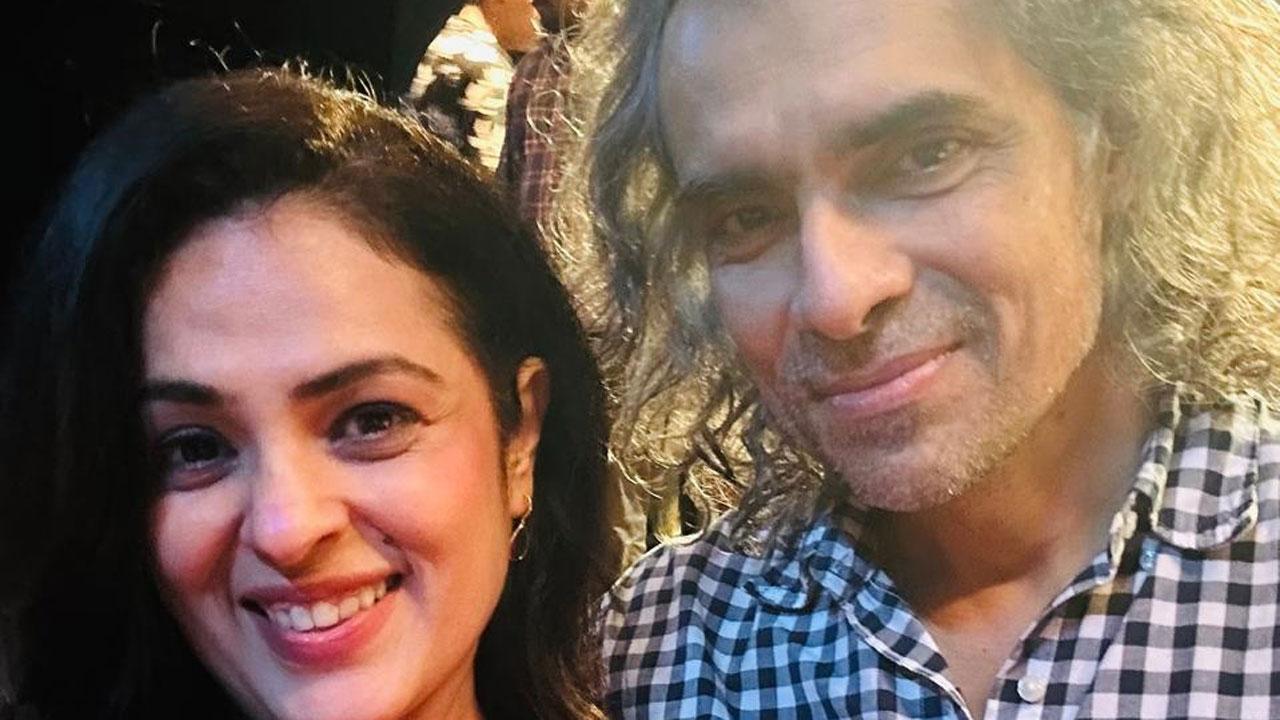
Priyanka Sharma (MID-DAY; June 13, 2026)
“How many actors can really say that I am in an Imtiaz Ali film?” asks Anjana Sukhani, her excitement evident as she speaks to mid-day about Main Vaapas Aaunga. Her journey began with a call inviting her to meet the filmmaker. The role: Naseeruddin Shah’s daughter-in-law and caretaker in the Diljit Dosanjh, Vedang Raina, and Sharvari Wagh-starrer.
“He wanted to see me on camera,” recalls Sukhani, who was first asked to send an introduction video. “When I met him at his office, I think he saw Meher in me. He narrated the part to me. And [I had] no questions. Who am I to say no to Imtiaz?” she says. During their discussions, she realised that Meher shares shades of Geet from Jab We Met (2007).
“Like Geet, [played by Kareena Kapoor Khan] Meher has no filter. I feel all of Imtiaz’s women are mature but have a childish quality to them. She innocently speaks about the wrong things at the most unfavourable time. It’s an endearing character,” says the actor.
Sukhani also cherishes her experience of working alongside Shah. Marvelling at the veteran actor’s commitment, she says, “Every time I did a scene with him, I teared up because of the way he performed. Just watching him perform is a masterclass in itself.”
Her admiration also extends to Dosanjh. “Diljit comes with a lot of sincerity and honesty as an artiste. He knows everybody’s lines, so when I fumbled, he would tell me my line.”
I feel this generation desires love more desperately than any other-Imtiaz Ali
9:37 AM

Director Imtiaz Ali says ‘Main Vaapas Aaunga’ is his way of presenting a different viewpoint on the Partition than to help people heal from the historic event
Mohar Basu (MID-DAY; May 22, 2026)
Set against the backdrop of India’s Partition, Main Vaapas Aaunga is not a political statement, according to filmmaker Imtiaz Ali. Instead, it looks at the emotional weight that the historic chapter left on the people it divided. At its heart, it’s a sweeping romance, particularly for the younger audience.
“People often say this generation doesn’t have patience. But I feel this generation desires love more desperately than any other. There’s this feeling that meaningful, lasting love existed in the old times, but cannot anymore,” shared Ali.
To dispel the idea, the director has woven a timeless love story starring Naseeruddin Shah, Diljit Dosanjh, Sharvari, and Vedang Raina. The June 12 release is centred on a man remembering, on his deathbed, the love of his life whom he had to leave behind in Pakistan during the Partition.
Revisiting Partition on screen in today’s political climate inevitably comes with its own sensitivities. Asked whether art can help heal the trauma carried by those who lived through the episode, Ali reflected, “No, it’s not meant to make you forget the horrors or somebody’s personal grief. A film can never be and should not be so powerful that it obliterates that grief. However, it can present somebody else’s story, a [different] point of view.”
Ali’s love story has struck a chord with his friend and filmmaker Shoojit Sircar. Recalling Sircar’s response, Ali shared, “He said, ‘Yeh film mujhe banaani thi. I could never take my father back to Dhaka.’ In a way, it’s so many people’s stories. It’s not as though their feelings will go away after watching this film. But [they] will at least get the joy that it’s being addressed. More people will know this story, which stayed only in my closet.”
I was liked for Amar Singh Chamkila’s role before Diljit Dosanjh-Udaybir Sandhu
4:51 PM

Vishakha Pandit (HINDUSTAN TIMES; April 20, 2026)
Fresh off the success of Dhurandhar The Revenge, actor Udaybir Sandhu, who played Pinda, actor Ranveer Singh’s friend, is taking a moment to reflect. While he’s enjoying the spotlight, he hasn’t forgotten the struggle that shaped his journey.
Opening up about a moment that could have changed his career trajectory, Udaybir reveals he almost landed the lead role in Amar Singh Chamkila (2024), a part that eventually went to actor-singer Diljit Dosanjh.
“I had auditioned for Chamkila’s part. I had done a lot of research and I was totally invested in it. I was the one who was liked for the part,” he says. However, things didn’t go as planned. According to the 27-year-old, director Imtiaz Ali “always wanted a singer for it… they didn’t think a non-singer would be able to perform it”.
Despite the disappointment, Udaybir holds no bitterness. “When I got to know that Diljit had been cast for the role instead of me, I understood the decision. He did a great job in the film, but I could have played it very well too because I was invested,” he admits.
And what initially felt like a setback eventually turned into an opportunity, as the same audition helped him land another role in the film. “It was due to my audition for Amar Singh Chamkila that I later got the chance to play (late Punjabi singer) Surinder Shinda’s role in the film,” he shares.
Looking back, Udaybir believes the struggles he faced have made his current success more meaningful. “If you get a chance early on, it’s almost like a fluke… you stop doing that kind of hard work. So you need that struggle, that hustle,” he ends.
A R Rahman reacts as Tamasha's Agar Tum Saath Ho becomes most streamed Indian song
9:59 AM

With ‘Agar Tum Saath Ho’ becoming the most streamed Indian song since last week, A R Rahman recalls toiling through four scores to arrive at the ‘Tamasha’ track
Priyanka Sharma (MID-DAY; April 16, 2026)
Is it the power of the melody, two timeless voices, or the universal experience of heartbreak? What makes Agar Tum Saath Ho from Tamasha (2015) relevant over a decade after it first released? Since last week, the poignant ballad from Imtiaz Ali’s movie has claimed the top spot as the most streamed Indian song on Spotify. When mid-day reached out to its composer A R Rahman, he recalled that the song came to him after several attempts.
“It’s a song people can universally relate to because we all go through problems and need a shoulder to lean on. ‘Lean on me’ was the brief. We had to go through the process three times to get there. Once we got the song, we knew we had something special,” he told mid-day. The composer added that getting “iconic voices” like Alka Yagnik and Arijit Singh to sing the track added to its magic.
In Tamasha, Agar Tum Saath Ho comes at a critical point — after their break-up, as Deepika Padukone’s Tara tells Ranbir Kapoor’s Ved to confront his inner turmoil, he breaks down and walks away.
Interestingly, Ali had shot the emotional sequence on a different track. The musician recounted that the three initially created tracks felt out of sync. “Initially, I felt the melody was light-hearted. The second one was more classical. So, I felt we should do something, which is universal and simple. We finally got it right [the fourth time],” Rahman shared.
There is no love for Pakistan in Main Wapas Aaunga-Imtiaz Ali
10:51 AM

Sonal Kalra (HINDUSTAN TIMES; April 11, 2026)
He’s been in the film industry for almost 20 years now, and people swear by his school of filmmaking. Unrequited, often incomplete love (barring a few exceptions) forms an integral part of his stories. Yet, when you speak to him, he’s all heart. Filmmaker Imtiaz Ali, gearing up for the release of his next film Main Wapas Aaunga, spoke about everything under the sun on The Right Angle with Sonal Kalra. Excerpts:
Do you still get asked about a Jab We Met 2 or Tamasha 2?
I do keep hearing about Rockstar 2 and Jab We Met 2. But especially for Jab We Met (2007), I won’t [make a sequel]. Some things are best left untouched. I don’t want to start from a point of view that this is a money-making plan or a professional move… Good films cannot be made that way. They have to come from a point of, ‘This is a nice story, I want to be in this world’. Love Aaj Kal 2 (2020) bhi toh banayi thi na… woh toh itni achhi nahin gayi.
How did you come up with the title Main Vaapas Aaunga?
When I was in school, I read a poem called The Highwayman, which was very effective. I was thinking this is such a thing to say, that ‘I’ll come to thee by moonlight, though hell should bar the way.’ Then there was a song actually in Khuda Gawah (1992), in which the character of Badshah Khan (Amitabh Bachchan) says, ‘Main vaapas aaunga; main agar mar bhi gaya phir bhi vaapas aaunga’. I remember the impact of that song. Even while shooting this film, I didn’t think that it would be called Main Vaapas Aaunga. There was this scene we were shooting on a moving train. I had briefed Vedang Raina (actor), who is playing Kinu in the film, that he comes and he screams these same words. He’s making this promise to somebody, and it happened to be those words. During the take, I realised that this has to be the title of the film.
Have you received Love Aaj Kal-like comparisons?
I saw some on the internet, but I’m not worried about that at all. This is not two love stories; it is just one story.
You’ve taken two risks—one, telling a romantic story in a time dominated by high-scale violent films, and two, exploring love involving Pakistan when sentiments are sceptical.
There is no love for Pakistan in the film. It’s a very personal story of one person. And it is not casting an allegation. It is not saying anything which is politically one way or the other. Anybody watching the film will not feel slighted by the fact that this is catering to anyone. The second thing is, is there a time for a love story to work? I’ve seen all of my life that any good film, whether it’s violent, bold, romantic or a comedy, is working at any particular time that it’s released. The audience is very strategic in the way that it wants to see films, and if the socio-political climate becomes very intense, maybe comedies will also work very well, and a film which is very intense and bloodthirsty will also work.
Which of your films comes closest to perfection?
Perfection— no! As for things which made me happy, there are certain points in Rockstar (2011) and Amar Singh Chamkila (2024). In Chamkila, there was this portion where we had a beautiful sunset, and somehow, we had time in hand. I don’t know what we were doing, so I just asked Diljit (Dosanjh), ‘Please sit here, and I’ll play the song. You just listen to it and turn and look at the lens when I say.’ That’s the longest take in the film. And I thought, let’s take a chance at Mainu Vida Karo. So then I played it, and he heard it for the first time. Sometimes, you don’t even know why, and it feels nice.
Do you see flaws in any of your past films?
Oh yes, I discover flaws very early. I remember that I saw Socha Na Tha (2005) after many, many years, and then I was laughing along with it, which is not something that ever happened for the first 10-15 years since its release. For a film like Jab Harry Met Sejal (2017), there was something very nice, which did not really turn out nicely. This whole angle of somebody being a womaniser or looking at themselves like an unstable character but having a story behind it… It was very enticing. I feel that even in Love Aaj Kal (2020), there were certain things which were underwhelming. There was a very beautiful thought, but I couldn’t bring it out in the best possible value.
Is a reunion with Ranbir Kapoor (with whom he worked in Rockstar and Tamasha) on the cards?
There is no present plan as such. But hopefully there’ll be something that will have to top the other work that we’ve done.
What’s that one thing about the film industry that you have still not been able to understand in 20 years?
Everyone here is very passionate and always trying to come across as strategic and professional. But I think they’re just a group of passionate drifters. I don’t know how they have so much time to just do gup-shup. When I met (actor) Shah Rukh Khan... he was sitting calmly for 5-6 hours, talking to me. How does he have so much time? It’s the same for all of the Khans, various other producers, directors — whoever you meet. I love that about the film industry. But unfortunately, what happens in the film industry is that with popularity comes power. Each one of them have so many people on their social media… it’s almost unfair. And if somebody has to say something about politics, etc., maybe we are not the most qualified, but we have to be damn careful.
I also feel lucky to be a part of the industry because I didn’t know anybody when I came here. It’s only with the support of these people that I could do anything.
Kai baar main raat ki Delhi ki flight lekar ghoom kar subah wapas Mumbai aa jaata hoon-Rakeysh Omprakash Mehra
11:12 AM

Niharika Lal (BOMBAY TIMES; April 2, 2026)
In the worlds of Imtiaz Ali and Rakeysh Omprakash Mehra – whether it’s the Delhi of Rockstar and Tamasha , or the one shown in Rang De Basanti and Delhi-6 – the city is not just a shooting location. These films are a window into Delhi, and for those who belong to it, it is a mirror. At the closing session of the first International Film Festival of Delhi, the two filmmakers came together in conversation, unfolding the layers that run through each other’s cinema – the shared love for Delhi, the imprint of the city on them and their films. They spoke of the lanes of Delhi like a livedin map – “take this left, that right” – and the audience was definitely not surprised.
WOULDN’T SAY LET’S MAKE DELHI THE FILM CAPITAL: RAKEYSH
Rakeysh Omprakash Mehra doesn’t see Delhi as a contender in the race of film capitals, but as something that exists in its own distinct space.
“I wouldn’t say let’s make Delhi the film capital. For that, Bombay, Hyderabad, Chennai, Kochi, and Kolkata are already there, making films in their respective languages. Delhi can, however, 100% become an alternate expression for cinema.”
It’s not because there’s an “India Gate or Red Fort, not because we have Mehrauli or Qutub Minar,” but the contradictions that sit side by side, noted the filmmaker.
“There is something in the air here which is very serious and, at the same time, very fleeting – something that is extremely socially awakening, and yet, completely societally dead and insensitive to the other person. It all exists in the same place. I meet the bureaucracy in Delhi, and I understand why this complex country called India works – they make it work. Then I meet so many people in Delhi, and I realize, arey satyanash! That’s why we are still struggling, why we move two steps forward and three steps back,” he added.
Delhi, according to him has the capacity to tell stories as “it is a melting pot of people not just from across India, but from all over the world. It is a power capital. And this power is greater than the power of money. The human power here is incredibly strong. These are the stories we can tell.”
Imtiaz Ali sees the same city through the idea of layers, histories folding into one another, “The great thing about Delhi, and I see (this) in your (Rakeysh’s) cinema, is that within one lens, within one geography, there is the presence of many, many layers that have come into this city over the years and centuries.”
THERE ARE SO MANY THINGS THAT YOU ONLY GET AT NIGHT IN DELHI: RAKEYSH
The mood shifts as Imtiaz reveals the Delhi-6 director’s quirky love for the city. “Aapke baare mein ilzaam hai ki kabhi-kabhi Rakeysh ji bina kisi ko bataye Dilli chale jaate hain. Kabhi-kabhi aise hi Dilli ghoom kar – kahin nahi jaakar bhi – wapis airport se aa jaate hain,” asked Imtiaz, and Rakeysh quiped, “Aadha sach hai.”
He then revealed the whole truth, “Kai baar main raat ki flight lekar ghoom kar subah wapas Mumbai aa jaata hoon.” Why? Because “there are so many things that you only get at night in Delhi – jaise Moolchand ke paranthe,” shares Rakeysh, adding, “We used to go to the old Jaipur highway and watch international flights taking off – that sight you can only see at 3 or 4 in the morning. Take a walk in Lodhi Garden after 2 am – it becomes another place entirely. There is nobody there, and you feel like you’ve gone back in time. I love it. Din mein bhi kai baar aata hoon (laughed).”
‘In A R Rahman’s light we all glow’
The conversation drifts to music, and to the songs that stay long after the films end. Rakeysh said, “Rehna Tu Hai Jaisa Tu – Rahman sahab ne chatayi ki tarah kuch aisa buna hai. There was no song situation for Rehna Tu or Luka Chuppi in RDB, and no song situation for Masakali in Delhi-6. It’s just A R Rahman who brings that. And in his light we all glow.” For Imtiaz, it’s Phir Se Udd Chala. “Iski lyrics bhi badi mushkil hain.”
‘Rockstar bilkul imperfect hai, lekin usmein thodi bahut sachhi baatein aa gayi’
Turning the spotlight towards Imtiaz, Rakeysh asked, “Main bahut arson se aap se puchhna chahta hoon. Rockstar dekhi – bahut maza aata hai. Main hall chhor ke jata hoon aur mujhe neend nahi aati. There is something you shake inside us – aisa kuch jo aapko jhanjhorta hai, that keeps you awake. I think that element is you. Is it you in all your characters?”
Imtiaz answered, “Rockstar ek aisa experience hai – jismein ek line hai: jo bhi main kehna chahoon, barbaad kare alfaz mere. So, it was like that during the shoot too. When we were making the film, it was dictating itself – something that was there in the air. Jaise aap kehte hain – hawa mein kuch baat hoti hai. Out of that, something emerged. Dilli mein hi ho raha tha yeh sab. Aap kehte hain na, kuch jhanjhor deta hai – main pehla victim hoon uska. I feel that woh film bilkul imperfect hai, lekin usmein thodi bahut sachhi baatein aa gayi hain.”
I know that the world is in a terrible place right now, and I hope that things improve-Imtiaz Ali
9:37 AM
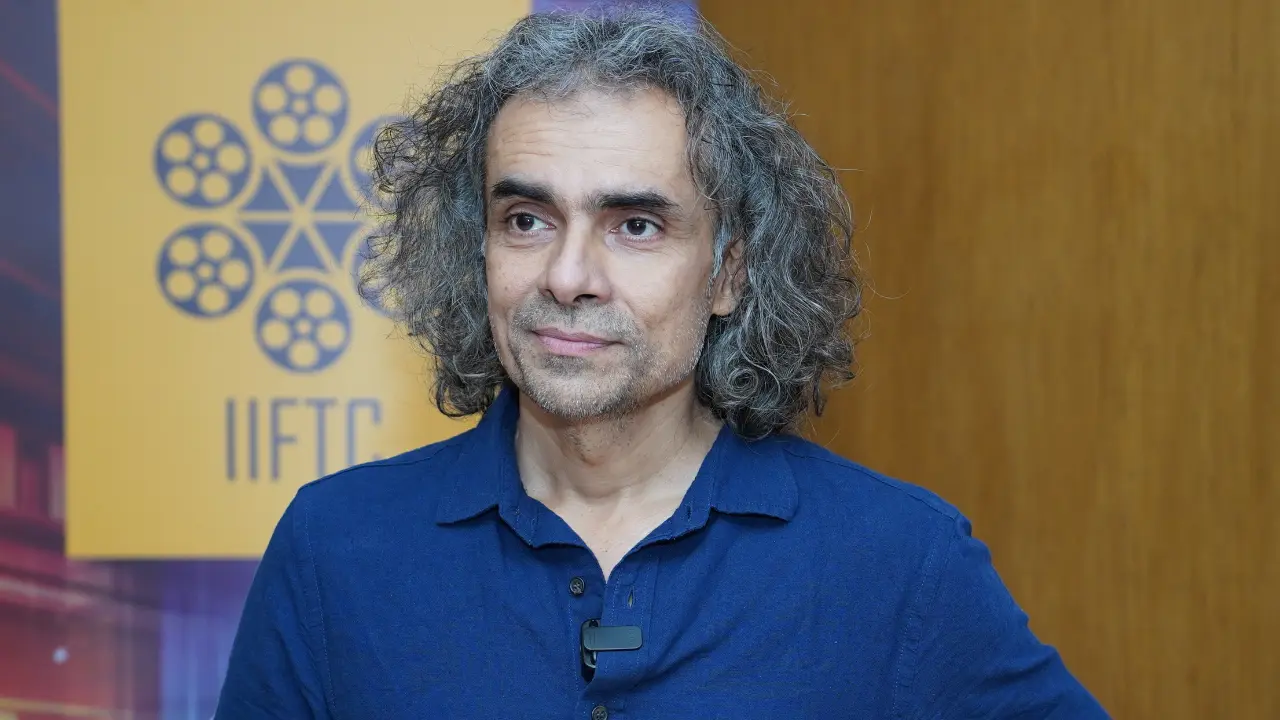
Oshin Fernandes (MID-DAY; March 14, 2026)
Be it Highway (2014), Tamasha (2015), or Amar Singh Chamkila (2024), through his movies, Imtiaz Ali has a way of saying something bigger than the story itself. A responsibility that the filmmaker believes is only magnified when the world is in conflict. When mid-day caught up with Ali at the India International Film Tourism Conclave (IIFTC) in Mumbai, he emphasised that amid the conflict in West Asia, sparked by the US and Israel’s war against Iran, it’s all the more important for artistes to show the potential of a better world.
Cinema as a cure
Imtiaz Ali believes that as much strife as there is in the world, the requirement for entertainment to provide relief and pleasure also increases.
He explains, “I know that the world is in a terrible place right now, and I hope that things improve, but if I do get influenced by what's going on in the world, it is not actually to make films about what is happening but somehow to make films about what should happen or what the world is missing right now.”
Imtiaz asserts that art can compensate for the absence of a certain condition and draw attention to the real reason why such things happen, aggrieving everybody. “This is the time for all artists to communicate an alternative way of looking, thinking, and feeling to have a better world,” he adds.
The ‘unsafe’ illusion
Imtiaz has never shied away from taking his craft to high-conflict areas. His films, like Rockstar and Highway, have been shot in parts of Kashmir, which he claims felt safer than any other place.
He states, “I have only had extremely cooperative people and peaceful situations. I've had more insecurity in every other place that I've shot. Kashmir has been the easiest place to shoot. Certain narratives get set about the safety and security of certain places. Unfortunately, it takes a lifetime to take that away. People believe that Dharavi is an unsafe place in Mumbai, but there are many more unsafe places.”
Imtiaz stresses the fact that although there’s a war looming overhead, one can’t wait for the ideal situation before making a move. He feels it is paramount that we normalise the world as much as we can.
Director’s darling Diljit
Imtiaz Ali’s next film, Main Vaapas Aaunga, is his second collaboration with Diljit Dosanjh, the lead of his previous hit, Amar Singh Chamkila. Citing how it is rare for him to work again with the same actor consecutively, he says, “This is going to be a Diljit who is very different from the previous film, and this is equally significant to him, maybe more. I’m always very happy to work with great actors, and Diljit is one of them. Personally, I am thrilled to work with him, and I hope to have more chances with him.”
I hope someday I get to photograph Ganesh Chaturthi in all its emotion and glory-Sharvari
10:22 AM

Onkar Kulkarni (BOMBAY TIMES; January 30, 2026)
Sharvari’s love for photography, which began years ago with an old-school broken camera that needed a film roll, has now blossomed into a full-fledged passion.
She remembers, “My friend’s mom had a camera that wasn’t working. We somehow fixed it, and she let us use it. With that camera, you couldn’t take 10 photos and decide later. You were in the moment completely. I would click pictures and then develop the film. The process felt exciting and magical.”
Later, a second-hand Nikon FM10 from a Churchgate store became her loyal travel companion.
“The light meter, loading the roll, everything felt like entering a whole new world. Photography is all about the way you see the world. Which moments feel enduring, what emotions pull me in… whether it’s people, architecture or the spirit of a city, a film camera forces you to pick the moment. And that makes every frame special.”
‘Punjab has this peace and positivity that you can feel in the air’
When she travelled to Amritsar recently to shoot for Imtiaz Ali’s next film, Sharvari packed her camera. This was her first shoot in Punjab, and she loved the experience. “I’ve absolutely fallen in love — with the food, the people, the culture. Punjab has this peace and positivity that you can feel in the air.”
During the shoot, whenever time allowed, she would set out with her camera, documenting the landscapes, the bustle of the streets and the quiet of dawn.
The Munjya actress says, “I captured a series there. It reflects Punjab for me - full of warmth, kindness and serenity. I also love clicking pictures of every person I work with. I’m also creating a series for each film — capturing the crew and the people who actually make cinema happen. These behind-the-scenes moments feel so alive.”
‘I now notice architecture more’
Photography, she says, has changed the way she travels. “I notice architecture more, the way cities are built for their weather, how roads and buildings are maintained. I pay more attention to people — their moments and moods.”
Her dream is to capture the vibrant mood in the city during Ganesh Chaturthi. “It’s my favourite festival. I’ve seen stunning visarjan pictures on Instagram. I hope someday I get to photograph it in all its emotion and glory.”
If people knew what I was like in the ’80s or the ’90s, my image would be ruined-Piyush Mishra
9:18 AM

Through his novelized memoir, actor, thespian, singer, writer, and much more, Piyush Mishra tells a tale of many cities and how they shaped him to be the artiste he is today
Akshita Maheshwari (MID-DAY; December 14, 2025)
“I, me, and myself. That’s all I could write if I had written an autobiography,” says Piyush Mishra. We sit in the Tamboo Media office, a quaint space, full of young blood, all excited to be in the presence of this monolith of art, song, theatre, and cinema. For those who’ve only brushed past his name, Mishra is many things at once — a poet who sings, an actor who writes, a musician who performs with his whole soul, and now latest, a novelist with his new book Tumhari Auqaat Kya Hai, Piyush Mishra. A fresh take on memoirs, his book assumes Mishra to be a fictionalized version of himself, Santap Trivedi urf Hamlet. In the book, Mishra fictionalizes friends and foes.
“Many would have been hurt if I would have put their real names. So I changed their names to protect their dignity. And no one would be hurt too, except for one director. I won’t name him still, but everyone would know him if you read the book,” says Mishra in the quiet of his office.
“Thoda tedha novel hai, par ekdum seedha bhi hai [It’s a crooked novel, but it’s also very straight],” he says. It’s a memoir in the true sense then, because that’s the person Mishra is. Unconventional and eccentric (he’s a theatre kid, after all), yet very straight to the point. He sits down with Sunday mid-day to discuss life, theatre, cinema, and the new adventure of his book.
Childhood started in the little town of Gwalior in Madhya Pradesh, a city celebrated for its legacy of Hindustani music and also recognised by UNESCO as the “City of Music”. The musical legend Tansen was born and died in the city. Perhaps, a childhood in such a city influenced Mishra’s own leaning towards art.
“In Gwalior, I first learnt that I am capable of doing this [the arts]. That’s where I learnt it,” he says, “But there were obstacles there too, with parents, with friends. I chose a very unique profession, and I was often told, ‘Kya gaana gaoge? Kya nautanki karoge? [What will you do, dancing and singing around?]’ But I loved it too much. That’s where it all started. So it holds a soft corner in my heart.”
He remembers Delhi fondly, “Delhi and I have a very strong relationship. I lived there for twenty years. I didn’t have any money back then but theatre was everywhere. All I did was work, but I didn’t make much money. But I don’t regret it, I earned something much bigger, adapting some of the best roles, best music.”
He tells us about how he remembers being “phissadi [weak]” in Physics as a child, but theatre brought back a certain love for it, as he played Galileo and Einstein. Having spent most of his theatre days in Mandi House, Mishra has plenty, and vivid, memories of those days. “There was a bench there, beneath a tree near my office. I would spend day and night writing there.”
Cut to now, it’s been 23 years since Mishra came to Mumbai. “The entire topography of the city has changed in the last 23 years. Too many flyovers have come, a lot of crowd, a lot of cars too,” he says, “I still live in the quiet corner of Versova, but soon there will be flyovers here too. But you can’t challenge change. Even I have to accept it.”
He segues into talking about change in Bollywood. “Cinema too is as different as night and day. Anurag Kashyap, Vishal Bharadwaj, Imtiaz Ali, Rajkumar Hirani, all of them came in the early 2000s. They brought a lot of change to cinema.”
But being in Mumbai is no easy task, even for Mishra. There’s a constant give and take. “I got money, real money for the first time in my life. That’s what it gives you. And I earned a lot of fame here. In the first twenty years of my career, only a limited, theatre-going audience knew me. Mumbai gave me everything, it gave me my band, my poetry collection, and now this book.” But the cost to pay isn’t cheap either.
“I would only recommend you become an artiste if you truly wish to. It can’t be forced. It needs hard work and a lot of studying. Even in my theatre days, I studied sculptors, writers, architects, playwrights.”
A certain tug pulls Mishra between the two cities. “Mumbai is a commercial place. You work instantly, and you make money instantly, you earn fame instantly. But really, you can’t compare Mumbai and Delhi.”
As he sat down to write this memoir, Mishra had to reflect a lot. Going through his entire life journey brought back memories he didn’t even remember making. But there were hard times too, like his alcoholism, which he touched upon in the book. At 62, Mishra is now sober. “I revisit only from a distance. When you look from too close, the pain can be too much. I like a bird’s eye perspective,” he says, “A generation of people started looking at me as a God. If they knew what I was like in the ’80s or the ’90s, my image would be ruined,” he jokes, “So I thought why don’t I tell them myself.”
But even in the days of his struggle, what kept Piyush going was “my work, and my wife. She worked. She told me when we got married, ‘If you love theatre, you do theatre. I am working, I will provide.’ I realized how important money is to live in society, and moreover, how difficult it is to make it.”
Saumya Tandon returns to the big screen with Dhurandhar
10:07 AM

Onkar Kulkarni (MUMBAI MIRROR; November 24, 2025)
Saumya Tandon, who began her acting journey with Aisa Des Hai Mera (2006) before making her Bollywood debut with Jab We Met (2007), is looking forward to the release of Dhurandhar. The actress returns to the big screen with this film after many years.
Speaking about her role, Saumya says, “I can’t reveal much about my character. It’s a small but serious role. I said yes because I’ve always wanted to work with director Aditya Dhar. Sometimes you take up projects simply because you want the opportunity to collaborate with the people involved. It was Mukesh Chhabra who called me and told me that the part is small but I should blindly do it. It's quite an intense part. I am looking different and people haven't seen me doing something like this before.”
What drew her to the film, she explains, is the cast. “I feel Ranveer Singh is the most powerful actor we have in the industry. He’s special and incredibly talented. Honestly, I was a little greedy to work with Akshaye Khanna as well. He has been reinventing himself, and it’s a pleasure to watch him perform. My biggest takeaway is that when you work with talented directors and actors, your own work automatically becomes better. You get inspired just by being around people with such skills.”
Recalling her debut in Jab We Met, Saumya says, “It feels like ages ago. I had met Imtiaz Ali for another project, but he called me for this one instead. I planned to hide behind this small character and learn the ropes. I did it simply because I loved Imtiaz and the way he narrated the story.”
She adds, “After Jab We Met, I got busy hosting on television, and then Bhabi Ji Ghar Par Hai happened. I never planned my career; I was an outsider and simply picked up things that came my way. Even then, I remained choosy, but I worked with what was available to me at the time.”
Subscribe to:
Posts (Atom)