Showing posts with label Ilaiyaraaja. Show all posts
Showing posts with label Ilaiyaraaja. Show all posts
Bollywood hits the rewind button, turning the lens on its legends
9:40 AM

Artistes’ popularity, lower costs make the genre promising bet for producers
Rajesh N Naidu (THE ECONOMIC TIMES; October 6, 2025)
Mumbai: Producers are turning to biopics on celebrated film personalities, drawn by their emotional depth, lower marketing costs, safer returns and audiences' growing fondness for real, inspiring stories from the world of cinema, writers and trade insiders told ET.
Over the next two years, Bollywood producers are set to release a wave of biopics on film legends such as Dadasaheb Phalke, Meena Kumari, Kishore Kumar, Parveen Babi, Madhubala and Ilaiyaraaja, as the industry increasingly turns the camera inward amid a broader boom in biographical films across politics, history, science, sports and mythology.
"These biopics have an advantage. Largely, audiences are inquisitive about the personal lives of their favourite film artists," said Girish Johar, producer and film business expert. "But for those who are not admirers or fans of these artists, the merit of these biopics will be tested only on how their stories are told," he added.
A key concern among directors and writers about biopics on film artists is the authenticity of their portrayal, a nuance that many past films failed to capture.
"I am keen on watching a biopic about the actress Meena Kumari given her body of work, personality and the enigma around her. But a key question remains: Will the film on Meena Kumari deal with the critical aspects of her life or just one prominent aspect of her life?," said veteran writer-director Nilaskhi Sengupta. "Ultimately, it is the authentic portrayal of such artists which will decide how well they will be received," she added.
In recent years, creative works based on the film industry and artists have received high critical acclaim. In India, the web series Jubilee, which showed the 1940s era of the Hindi film industry received favourable response from the audience.
Lastly, costs also play a role in this trend. "Indian audiences have an immediate connection with biopics on film artists. For producers, who are under-confident in backing original stories due to polarized responses to films, a biopic on a film artist reduces at least the marketing and promotion costs," said Ameya Naik, founder of Fantasy Films, an event management company.
Shruti Haasan on turning 40: "People seem to care more about my age than I do"
10:45 AM

Divya Shree (BOMBAY TIMES; July 28, 2025)
While turning 40 can be a daunting milestone for many, Shruti Haasan isn’t losing sleep over it. With her milestone birthday coming up in January, the actor-singer is embracing the idea of growing older with candour, humour and a sharp sense of self. During a recent visit to the city, she sat down with Hyderabad Times for a freewheeling conversation, opening up about letting go of ageist expectations, stepping back from the online world, her thoughts on AI and creativity, and the nostalgic joy of her first-ever recording at six.
‘I want to be my honest & authentic self with people when I’m on social media’
There’s an ease with which Shruti carries herself, a quality that’s sharpened over years of living in the limelight while charting her own course. Whether it’s choosing roles that interest her or stepping back from the noise, she says her choices today are guided more by instinct than compulsion. That’s what prompted her recent digital detox.
“I’m not fond of words like attachment or detachment because they carry so many connotations, I wanted to step away from social media for a while. I think I just needed that,” she explains, adding, “I want to be honest and authentic with people. And I wasn’t in a state of mind or frame of mind to feel like sharing. You don’t have to always be sharing. Everyone should take a digital detox; and everyone should put their phone away for a whole two hours if they can.”
‘I’m genuinely excited about AI, it’s unavoidable & will develop at an incredible pace’
Technology, ironically, is something Shruti is deeply curious about, particularly the growing presence of AI in creative fields. She references her segment X-Life from the Telugu anthology Pitta Kathalu, directed by Nag Ashwin, where she played a character trapped in a tech-saturated future.
“I see the world shifting and it’s surreal because it’s actually happening just like how the movie predicted,” she says. Still, while she acknowledges the inevitability and power of AI, Shruti draws a firm line around what it can never emulate.
“I’m genuinely excited about AI because it’s unavoidable and will develop at an incredible pace. However, I’ve always believed that while AI can mimic human thinking and leverage immense computational power, it will never be able to replicate the human soul. The soul is the essence, and that can never be duplicated.”
‘I feel truly blessed to have made my singing debut at 6’
From starting as a child singer to delivering chart-toppers like Odiyamma, Shruti’s had quite a journey as a singer. “My father is very supportive and he is such a pookie. My debut song as a child singer was in dad’s iconic film Thevar Magan,” she says, adding, “I remember those days when I was six, practicing in the car while driving to the shoot with my dad for my first song as a singer. Back then, I didn’t know Shivaji Ganesan as the OG. I used to call him Shivaji thatha, and Ilaiyaraaja Sir as Raja uncle. But now, looking back, I feel truly blessed to have made such a debut in singing.” She adds, “Music is my saviour, I don’t know if I’d be alive without it.”
For the longest time, people said that I couldn’t sing-Shilpa Rao
8:18 AM

Debarati S Sen (BOMBAY TIMES; August 31, 2024)
Shilpa Rao first sang for the Hindi film music industry over 17 years ago and since then, has had hits like Khuda Jaane, Kalank, Subhanallah, Bulleya, Ghungroo, Tere Hawaale, Chaleya and Besharam Rang among others to her credit.
In a conversation with us, this Grammy-nominated singer talks about creating a space for herself in the music industry despite her voice being termed unconventional at the beginning of her career. Excerpts:
Initially, your voice was termed unconventional. Did you face challenges to get a break in the music industry because of that?
Throughout my childhood, people said I couldn’t sing, and I believed them. Back then, I was learning to sing because I liked music. I never thought I’d be a musician. I wasn’t very goal-oriented, in that sense. Even now, I am learning music because it brings me happiness. Also, today, I don’t think much about what people say. I just believe in working hard. People can say whatever they want, but we must filter out the comments that are not relevant. If someone like Rashid Khan sahab would say something to me, I would listen and see value in it, but not from everyone. It's important to use your own mind, pick things that you're passionate about, work hard on that and listen to people who are wiser than you. Like, if Pritam tells me something, I will think hard.
How did you manage to find your voice even after facing criticism at a young age?
I think it helped me when people said I couldn’t sing (laughs). On a serious note, my parents instilled in me the idea of having my own voice and opinions, which shielded me from being too affected by others’ opinions. My dad always believed in learning music because it enriches your life, and I still hold onto that outlook. My voice was nurtured by my parents, who were big fans of artistes like Begum Akhtar, Prabha Atre ji, and Parween Sultana ji. I was fortunate to have seen some of them perform live as a child. Listening to Farida Khanum was also common in our house. My parents instilled in me the idea of having my own voice and opinions, which shielded me from being too affected by others' opinions on my singing abilities. My dad always believed in learning music because it enriches your life, and I still hold onto that outlook. Attaching happiness, love and good energy to my songs translates to the audience, and that’s important to me.
You’ve sung numerous popular Bollywood songs in the past few years. What’s your process when it comes to singing?
For me, it’s about approaching each studio session as if it were my first. Every recording is a fresh opportunity to connect with music, like a child in a chocolate factory exploring new flavours. For instance, when I was first told about Kaavaalaa (Jailer, 2023), I wondered why Anirudh (composer Anirudh Ravichander) chose me for it, as it was unlike anything I had sung before. However, trusting the composer and director’s vision is crucial. With Besharam Rang (Pathaan, 2022), Siddharth Anand was confident about me singing it. That meant a lot to me. People have told me how much they have loved the song. Sometimes, it’s not just about singing for a movie, it’s also about the emotional attachment people form with the song. So, having faith in what you do is essential.
During recording sessions, is your input as a singer considered?
Yes, always. Artistes who have been in the industry for a long time, whether it’s Pritam, Vishal-Shekhar or Mithoon, are always open to inputs from singers. They’re willing to listen to ideas and suggestions because they understand that it can only enhance the work. I enjoy collaborating with new people as witnessing their spontaneity and energy in the studio is amazing. There’s a unique dynamic that emerges when you bounce off ideas and energy, and often, something magical happens when they listen to your input.
You'd said earlier ‘Kalank’ took three months to complete. Which other song has been challenging for you?
Every song requires dedication and hard work. But if I had to pick, Mudhi Mudhi Ittefaq Se (Paa, 2009) was particularly challenging. I worked with Ilaiyaraaja Sir for that song, and he is known for his discipline and perfection. Impressing him wasn’t easy. Gustakh Dil (English Vinglish, 2012) was also tough because it conveyed complex emotions. Bulleya (Ae Dil Hai Mushkil, 2016), too, posed its own challenges, depicting a unique relationship dynamic.
And are there any songs that you breezed through?
I’d say "Manmarziyan" was definitely one of those songs. It felt tailor-made for me, and Amitabh (Bhattacharya) and I wrapped it up in just 30 minutes. It's quite rare for things to come together so seamlessly like that. Initially, it wasn't even called Manmarziyan, but as soon as I sang the first line, Amitabh immediately named it. Another quick recording was Chaleya. We finished the recording in just 20 minutes because we were both (composer Anirudh Ravichander) present, making decisions swiftly and bouncing off each other's energies. It really does make a difference when you have multiple perspectives in the room, including the composer, lyricist, and sometimes the director. When you're alone, it's challenging to navigate all those possibilities.
In an industry where most songs are male dominated, Tere Hawaale from Laal Singh Chaddha was one of those rare ones where male and female voices were given equal weightage. How did this song come about? How involved were you all?
Tere Hawaale is an ideal duet. The film is not just about one character; it's about the parallel lives of Laal Singh and Rupa, intersecting and drifting apart. The song reflects this journey, where they finally acknowledge their need to be together. It took a lot of time to perfect. We started working on it before COVID in 2019 and experimented with different ways of singing the two lines, and then the final recordings were done. Aamir Khan sir felt that the last part should be from Rupa’s (Kareena Kapoor Khan’s character in the film) perspective to conclude the song properly. It was truly a collaborative effort.
Ilaiyaraaja’s legal battle over music rights; musicians react
7:45 AM
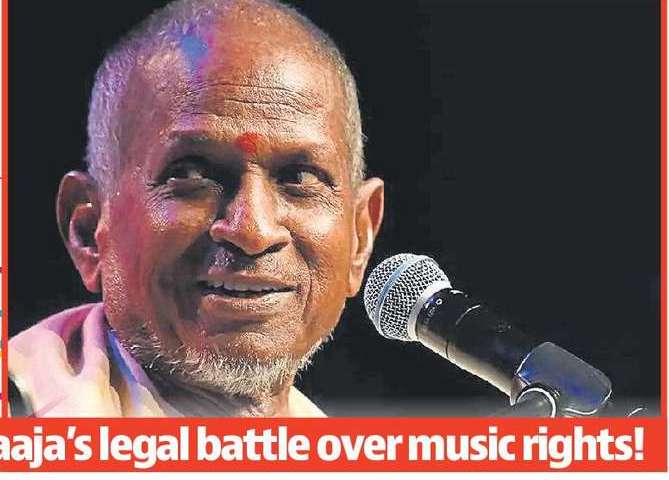
As Ilaiyaraaja’s battle for the rights to his 4,500 songs ends, musicians agree with the court’s decision
Rishabh Suri (HINDUSTAN TIMES; May 2, 2024)
Tamil musician Ilaiyaraaja’s legal battle with Echo Recording Company, that bought the rights to his compositions, has sparked the question — who owns a song? Is it the film producer who pays the music composer, lyricist and singer, the music director who composes a song or the lyricist who writes it? According to the Copyright Act 1957, the producer is the first owner.
On April 24, the Madras High Court came to the conclusion that the musician cannot claim the sole rights to his discography that includes over 4,500 songs, because lyrics are an integral part of a song too. The two-judge bench stated that the 80-year-old only has a right on the melody.
When we speak to composers and lyricists from the Indian music industry, they agree with the court’s decision, stating that a song is a collaborative effort and cannot belong to just one artiste.
SWANAND KIRKIRE, LYRICIST:
I don’t have a take on the case. I also can’t comment on who gives the companies the copyright in this case. I share a good rapport with Ilaiyaraaja. The intellectual property remains with the creator and the producer uses it for their film. What the court has done is reiterating the Copyright Act and stated that everyone needs to follow the law.
UTTAM SINGH, COMPOSER:
I feel everyone involved in creating a song is indispensable. A music director makes the tune for the lyrics that is written by the lyricist and the singers get to sing it. When an award is given, three people are always talked about — the composer, the lyricist and the singer. I feel a song is made by these three together and it’s hard to decide who has more stake in a song.
SAMEER ANJAAN, LYRICIST:
India has a Copyright Act and everything has been written very clearly so that there is no misunderstanding between the author, composer or producer. The rights belong to the producer. If somebody is claiming they have got 100% rights, I don’t think this is the right approach. It’s okay if Ilaiyaraaja is ready to fight, but you have to follow the law. You can’t not obey the law of the land. I always stand by the court’s decision.
EHSAAN NOORANI, COMPOSER:
When you are working on a movie, you’ve been hired to do the music for it. You can, as the composer and lyricist, claim royalties. Unless there is documentation to show your own rights, a producer automatically sells the rights of the song to record companies. So, unfortunately, the complete ownership of a song is not possible when doing a film contract. Whether in India, or the US, it’s the same.
NO STOPPING FOR ILAIYARAAJA
Now, Ilaiyaraaja has sent a legal notice to Sun Pictures, the producers of Rajinikanth-starrer Coolie, over unauthorized use of his song, according to a report by India Today. The notice states that a segment from the song Vaa Vaa Pakkam Vaa from the 1983 Tamil film Thanga Magan has been used without his permission.
Manjummel Boys to Merry Christmas, filmmakers are going beyond borders
3:21 PM

The pan-Indian movie has gone beyond dubbing or casting the odd crossover star. A new breed of directors is making cinema that reflects India’s linguistic diversity
Shruti Sonal (THE TIMES OF INDIA; March 24, 2024)
In 1991, when Kamal Hassan-starrer Tamil psychological romantic drama ‘Gunaa’ hit the box office, it had an average run. However, over the next few years, the film achieved a ‘cult status’, with its song ‘Kanmani Anbodu’ — composed by the legendary Ilaiyaraaja — becoming a rage. The film’s most lasting contribution, surprisingly, was something else. Parts of the film were shot in the hill station Kodaikanal, including a cave known back then as the Devil’s Kitchen. The notoriously dangerous cave became so popular as a tourist spot as a result that it began to be known as ‘Guna Caves’.
Over three decades later, Kamal Hassan, ‘Kanmani Anbodu’ and Guna Caves have gripped the imagination of cinephiles again, this time through a Malayalam film. ‘Manjummel Boys’ is a dramatic re-telling of the real story of a bunch of friends whose trip to the caves in 2006 turned into a disaster after one of them got trapped in it. The film — stripped of any ‘star’, songs, or even a female lead — has sprung a surprise and emerged as the first Malayalam film to enter the Rs 200 crore club.
A fourth of that has come from Tamil Nadu. Ruban Mathiavan, managing director of Chennai-based G K Cinemas, says even after five weeks, some shows are running housefull. “It has already earned equal to what films with Tamil superstars earn. Kamal Hassan and the Ilaiyaraaja song have been a huge factor in it,” he says.
Not just in this particular film, but in multiple movies and web shows today, linguistic and state boundaries are blurring. From dialogues to pop culture references, filmmakers cater to an audience that’s increasingly multi-lingual, mobile, and more comfortable with subtitles than ever before.
REGIONAL DELIGHTS
Big star-led blockbusters such as ‘KGF’, ‘RRR’ and ‘Baahubali’ led the way, but have now opened the floodgates for more experimental forms of content, says Harshit Bansal, founder of Humans of Cinema, an online community of cinephiles that has nearly four lakh followers on Instagram. “Audiences are now more comfortable with the cinematic languages of different regions. From action sequences, songs and background music, to how women are portrayed... Everything differs. A Marathi film looks very different from a Tamil film. Audiences are realizing that they don’t need to turn to Hollywood or Korean cinema in order to get something different,” Bansal says.
What this means is that ‘pan-India’ content today has dived deeper, moving away from lazy remakes, television re-runs with oft-hilarious and unsynced dubbing, or merely putting together stars from different regions in order to broaden the appeal.
For instance, two different versions of Sriram Raghavan’s ‘Merry Christmas’ were simultaneously shot in Hindi and Tamil. In an earlier media interview, Raghavan said he didn’t want any of the versions to ‘sound dubbed’. While the story of the slow-burn romantic thriller was almost identical, the references were carefully tweaked: the Hindi version had references to Rajesh Khanna, the Tamil one had Kamal Hassan. Two different teams of writers were hired for the languages, and original songs were composed for each! Bollywood’s Katrina Kaif and Tamil actor Vijay Sethupathi were leads in both versions, but the secondary cast differed.
However, some things remained the same. Both the versions were dedicated to director Shakti Samanta, and Sethupathi’s credits referred to him via his popular Tamil title ‘Makkal Selvan’ (people’s treasure).
In last year’s biggest hit ‘Jawan’ too, references to an old song being played at a pivotal point in the film differed in each version. The Hindi one had ‘Bekaraar Karke Yun Na Jaiye’ (Bees Saal Baad, 1962), the Tamil one had ‘Paattu Padava’ (Thennilavu, 1961), and the Telugu one had ‘Ee Mounam’ (Doctor Chakravarthi, 1964).
In ‘Manjummel Boys’, director Chidambaram didn’t shy away from letting the audiences know his inspirations. Illustrations from ‘Kanmani Anbodu’ play in the background as the title credits come on screen. The boys buy a CD of the film and play the song on the trip. They refer to the caves as the ‘place where the Kamal Hassan song was shot’. And, perhaps most fittingly, the love song plays in the climax itself, with the lyrics now spotlighting the power of friendship instead.
“The idea to put the song in the climax was in my head even before I started writing the film. I asked my team to get the rights to it before the production started. I told them if we can’t get them, then I won’t make the film. Everything else was written around it,” the director says.
Interestingly, the second half of the film has more Tamil dialogue than Malayalam, which Chidambaram says is ‘organic’ because of the setting. “Lingual boundaries are blurring. Even if one has to make a movie in Bengaluru, the characters can’t just speak Kannada. There will be a mixture of Kannada, Hindi, English, Tamil, Telugu. Similarly, Malayalam content also has to change. That’s how our country is today,” he adds.
ACCENT KHICHDI
In the world of OTTs too, different settings are being explored in order to offer something fresh to the audiences. From characters speaking a mish-mash of different languages to stories being set in far-away locations, creators are opting for it all. Netflix India’s dark comedy ‘Killer Soup’, for instance, is set in a fictional hill station in South India, and has dialogues in Hindi, Tamil, and Dakhni. Starring Manoj Bajpayee and Konkana Sen Sharma as the leads, it is based on a 2007 murder case in Telangana, and has emerged as a sleeper hit.
Harshad Nalawade, one of the writers of the show, says the fictional setting allowed them to also create more eccentric characters that spoke in peculiar accents and mannerisms. “We didn’t want to make yet another show that is set in a small town in north India. I think a section of the audience is tired of content coming from the north, and there’s no fresh world that they are seeing. So this was the opportunity to actually explore that,” he says.
Raj and DK’s hugely popular shows ‘The Family Man’ (season two) and ‘Farzi’, which featured a few Tamil dialogues alongside Hindi, made it easier for the audience to consume more of it in subsequent shows, the writer adds.
One thing is clear. For more and more viewers in India today, language is no bar. As South Korean director Bong Joon-ho said in his 2020 Oscars acceptance speech: “Once you overcome the one-inch tall barrier of subtitles, you will be introduced to so many more amazing films.”
--------------------------------------------------
MAKING UP A REEL LANGUAGE FOR REAL
Others are creating a whole new language themselves. At the global boxoffice, the sequel to Denis Villeneuve’s scidrama ‘Dune’ has earned accolades for offering viewers a glimpse into the fictitious Chakobsa language, created by a group of linguistic experts who borrowed from real-world languages.
In India, grim survival drama ‘Kaala Paani’ has managed to do the same. Set in the Andaman and Nicobar islands, it traces the journey of tourists and officials who try to tackle the outbreak of a mysterious disease.
The fact that it featured tourists from multiple parts of the ‘mainland’ made the use of a multilingual setup necessary, says creator Sameer Saxena. However, the main challenge was to create a fictional language spoken by the ‘Oraka’ tribe featured in the show.
“We got language scholars from across the world, and made a guidebook from scratch, with all the alphabets and pronunciations. We didn’t want it to sound similar to any of the existing tribal languages,” Saxena points out.
The end product was rather finessed, as opposed to the often-derogatory representations of tribal languages that have existed previously. (Think : the jhinga la la hoo hoo songs in the past.)
I told Akshay Kumar that though he was the hero of Pad Man, the actual hero was a sanitary pad-R Balki
9:47 PM

Renuka Vyavahare (BOMBAY TIMES; March 5, 2024)
The Fifth anniversary of the National Museum of Indian Cinema (NMIC) in Mumbai was graced by the presence of notable dignitaries, including the Consul General of the Republic of Belarus, Aliksandr Matsukou, and Consul of Belarus, Anton Pashkov. The day saw an array of events including a guided tour for visually impaired students from The Happy Home & School for the Blind as well an enriching masterclass by acclaimed director R Balki, in conversation with D Ramakrishnan (GM NFDC).
Following the insightful conversation, cinema enthusiasts enjoyed the screening of R Balki's 'Ghoomer’. The highlight of the event was Balki’s unabashed take on content clutter, not undermining one’s talent and his penchant for addressing social issues without resorting to social messaging. Over the course of the two-hour session the Cheeni Kum director shared some wonderful insights, funny anecdotes and inspiring words for aspiring actors and filmmakers. Excerpts…
‘You can’t learn the art of scripting’
I don’t think there is a better film school than going to the set and working with several filmmakers. You learn about life. I was fortunate that I was able to get these experiences, so I didn’t feel the need to do a film school. It’s not that I did it without knowledge, I gained the knowledge. If you can go to a film school, you might probably learn things faster than I did but what you can’t learn is the art of scripting. Scripting doesn’t happen by going to a scripting school because there are a hundredth ways in which you can communicate a story.
‘If you are confident about yourself, you will celebrate your enemy’
Cinema is a tool to express a thought or a story that you have. Nobody is going to see the scale or grandeur of your movie if your story doesn’t touch them, isn’t relatable or doesn’t make them think. I prefer the term engaged, over entertained. There has to be an emotional connect. I don’t want people to be bored or switched off or be distracted while watching a film. Entertainment can be mistaken for laughing, dancing, jumping. People want to be engaged while watching a film.
When I did the Surf Excel commercial, people told me, ‘Everyone’s preaching hygiene and you are saying get dirty (daag acche hai)’! I feel if you are confident about yourself, you will celebrate your enemy. If you have the ability to defend yourself and remove the stains, why would you curse the stains? I am confident enough to celebrate my enemy which is dirt here so come get dirty. I believe cinema is also like that.
Thought behind the role reversal in Paa
I remember I had gone to Amitabh Bachchan ji’s house during Cheeni Kum. Abhishek was there with him, and he was saying some extremely wise things, which is rare (smiles). He is usually the one who cracks jokes. Amit ji was pulling his leg by saying ridiculous things. They were completely opposite to their (father-son) character. I looked at them and said, “who is whose dad!” That thought stayed with me. I knew I wanted to make a film where I will reverse their roles. That’s how Paa happened.
I don’t have a single social cause bone in my body
Terms like ‘meaningful messaging’ scare me. If you want to look for meaning in life, go to a meditation app. Why watch a film? You need to be clear about your ambition from the beginning. My thoughts in cinema have been far more frivolous than my thoughts in ads. I always think cinema is serious so why not start with a frivolous thought? Even in Pad Man, my thought was not to convey a social cause. I don’t have a single social cause bone in my body. The film did a lot for menstrual hygiene and awareness, but I didn’t make it for that. I got to make a commercial feature film where the hero of the film was a sanitary napkin. I told Akshay Kumar that though he was the hero of the film, the actual hero was a sanitary pad.
A filmmaker needs to be honest. I am not here to change the world. I am here to explore an idea that doesn’t destroy the world and gives me happiness. Even a Ghoomer wasn’t about showcasing the infallible spirit of a woman who loses her right hand in an accident and learns to bowl with her left. That’s a cinematic given. People tend to glorify anything that’s social as inspirational. It is an inspiring film; yes, but what’s the speciality in this inspiration? What new can you bring to the table is the trick. I believe when you are down and out you tend to be most creative. The biggest joy in Ghoomer was discovering that new bowling delivery in cricket.
‘I love the arrogance of artists who have faith in their abilities’
I don’t agree with this notion that everyone must work for the film and no individual should want his/her talent to stand out because filmmaking is a group work. I like working with a cinematographer like P C Sreeram because he is a rebel who likes to show off. How can you be a craftsman if you don’t want to show your craft off? How can you hire the best man for the job and tell him to listen to you and expect him to curb his instincts for the sake of the story? The story is not driving him. It’s driving the film. I love the arrogance of artists who have faith in their abilities and put their craft first. As long as your craft doesn’t destroy me, please show off your craft. As a director if I ask you to not show off your talent then I am the devil. I am killing your abilities. I love people who are determined to show their abilities. I want people to notice a cinematographer, music director, choreographer, sound-production designer for the right reasons. If people remember you for the wrong reason, then you are doing a shoddy job. You can’t expect the artists to be submerged in the film. If you look at The Godfather, it works because everybody is showing off and delivers their best. That’s why I like working with P C Sreeram sir and Ilaiyaraaja sir. They are gifted with originality, and they know it. Cinema is all about 'look at me'. When anyone says we need to work as a team and the cause is bigger than individuality, that’s the biggest bull s***. Only when all eleven players try to play their best, will a cricket team succeed.
OTT has lovely stories about common people
The presentation is a bit understated and subtle but OTT has some lovely stories about common people. I want these films to cut the walk though. I see content where people just keep walking endlessly long after the scene is over. Cut the walk! Someone is standing on a terrace and watching people aimlessly, thinking. Some filmmakers believe this creates an atmosphere. I get it and it’s their presentation but cut it faster.

Music School director on recreating The Sound Of Music's songs: "Ilaiyaraaja made the process simpler with his brilliance"
8:18 AM
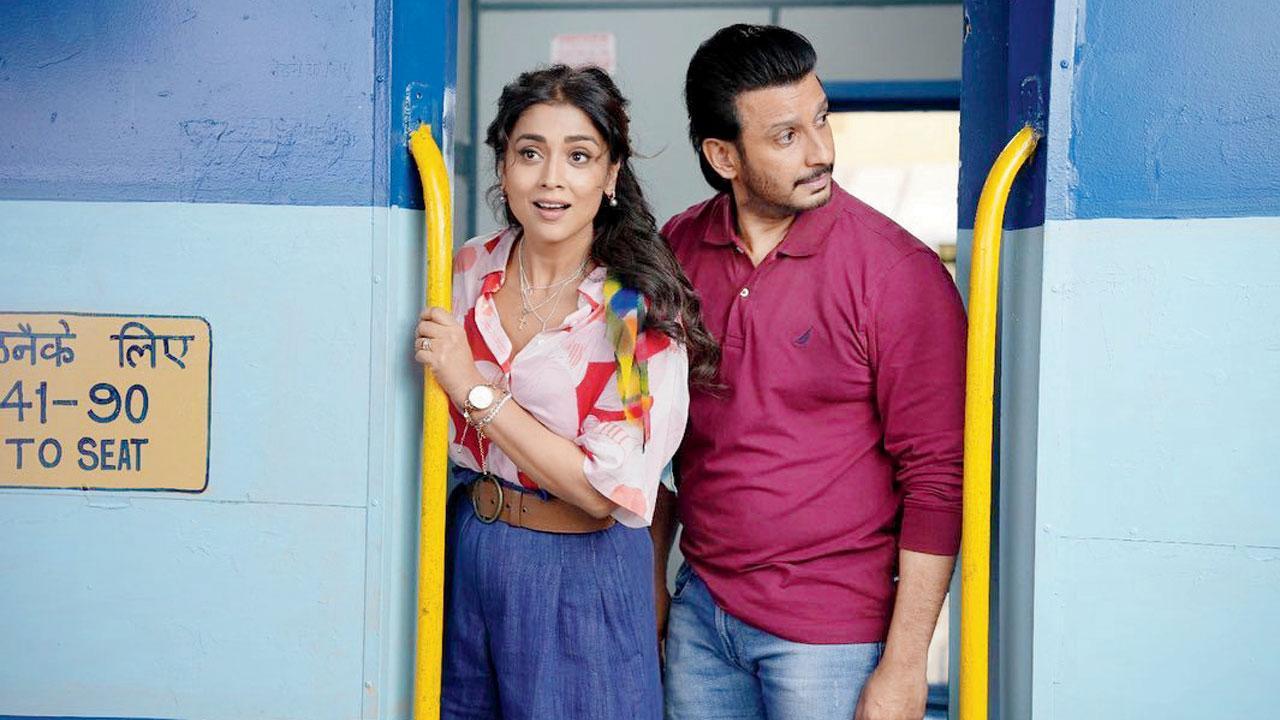
Music School maker on recreating three songs of evergreen musical, The Sound Of Music, for his film
Priyanka Sharma (MID-DAY; April 24, 2023)
In December, Shriya Saran had told mid-day that her next, Music School, included three songs from The Sound Of Music (When Do re mi becomes sa re ga, Dec 13). First-time director Paparao Biyyala says that when he was conceptualizing the drama, starring Sharman Joshi, Saran and Prakash Raj, he was looking for a fitting musical to draw inspiration from. He found his answer in the famed 1959 Broadway musical, and acquired the rights to the play’s music.
“I watch a lot of musicals when I am in London or New York. I felt that The Sound Of Music is one of the most loved musicals of all times, and caters to our main demographic — the kids. So, I have interwoven its three songs in Music School, aptly modifying them to suit the sensibilities of the Indian audience,” Biyyala shares.
Ilaiyaraaja, who has composed the film’s album, also recreated The Sound of Music songs — Do Re Mi, So Long Farewell, and Sixteen Going On Seventeen.
The director says, “As we drew inspiration for our music from the legendary Broadway play, it involved a huge risk. I was scared of making the wrong choice. However, Ilaiyaraaja made the process simpler with his brilliance and experience.”
In 1965, the Broadway musical was adapted into the Julie Andrews-led film of the same name.
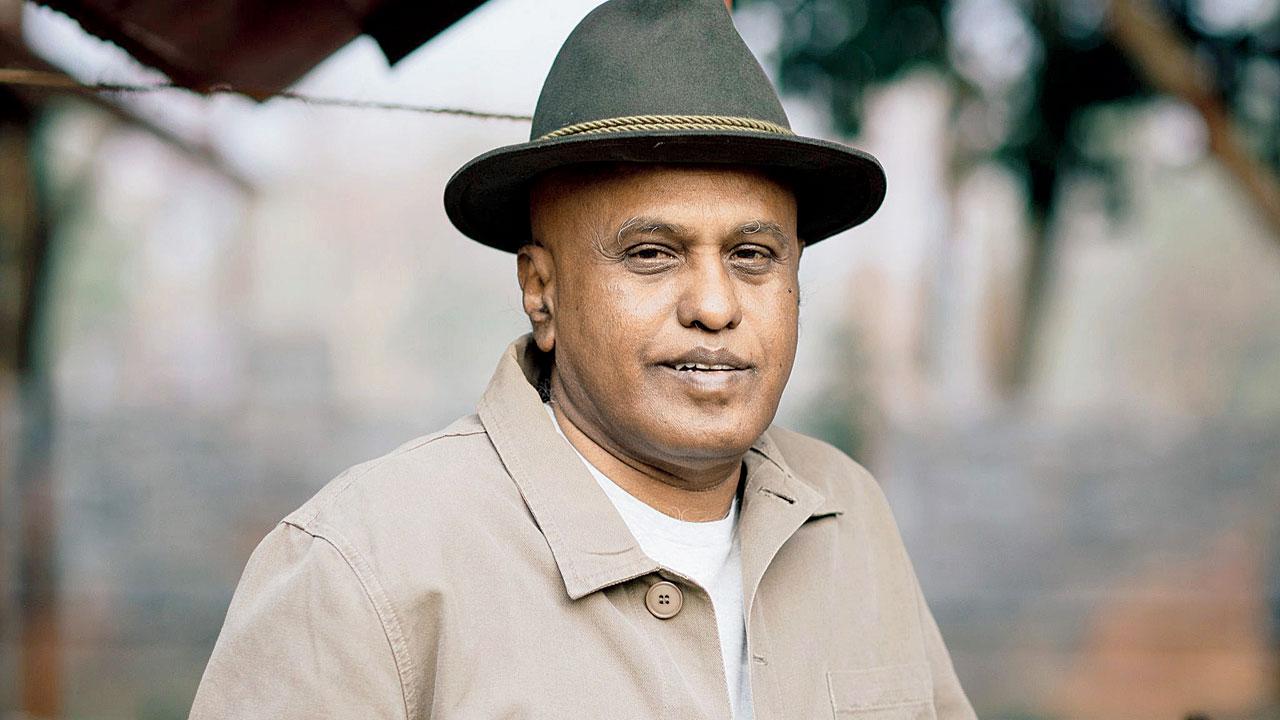
Three songs of The Sound Of Music recreated in Shriya Saran's film Music School
8:15 AM

Actor Shriya on how 'The Sound Of Music's' three songs, including 'Do Re Mi' and 'My Favourite Things', have been recreated for her film, 'Music School'
Hiren Kotwani (MID-DAY; December 13, 2022)
Haven’t we all watched the classic, 'The Sound Of Music' (1965), humming with Julie Andrews to Do re mi and My favourite things? Shriya Saran, a die-hard fan of the musical, is one of us in that regard. Which is why her 2023 summer release, 'Music School', took her back to her childhood days. In a unique move, the Papa Rao Biyyala-directed venture features three evergreen songs from 'The Sound Of Music — Do Re Mi', 'Sixteen Going On Seventeen', and 'My Favourite Things'. Before the film went on floors in Goa in 2021, the ditties were orchestrated by the London Philharmonic Orchestra for the project.
Saran, who plays a music teacher in the drama that also stars Sharman Joshi, says it’s a dream come true to relive the Hollywood gem through its iconic songs. “It was the first film I ever watched. I was very young at that time, and watched it several times on the VCR,” she recalls. “The director [Biyyala] took the script to the makers of 'The Sound Of Music'. They loved it and gave the rights to use the songs. Since the film’s release, its songs have never played in any [other] movie. So, to use them in our film after 57 years [since its release] is a privilege.”
Music School has been shot largely in Hindi, and will also be released in Tamil and Telugu. The drama examines how the Indian education system and parents pressure children to devote long hours to studies so that they can go on to pursue profitable careers, thus denying them their childhood. In the film, the students are seen enacting The Sound Of Music as a play, thus making way for the songs.
Meanwhile, the movie’s original soundtrack and background score have been composed by music maestro Ilaiyaraaja. The director was well aware that the music would be keenly awaited after the incorporation of the Hollywood songs, and hence, ensured that the background score was recorded with the Budapest Symphony Orchestra under the supervision of Ilaiyaraaja.
P T Usha, Ilaiyaraaja and Baahubali writer K V Vijayendra Prasad nominated to Rajya Sabha
8:19 AM

Jain Priest Also Named In BJP’s South Outreach
Akhilesh Singh (THE TIMES OF INDIA; July 7, 2022)
New Delhi: The Modi government on Wednesday nominated four celebrities from the south—athlete P T Usha (Kerala), legendary music composer Ilaiyaraaja (Tamil Nadu), writer-director K V Vijayendra Prasad, the script writer of mega hits ‘Baahubali’ and ‘RRR’ (Andhra Pradesh/Telangana), and Jain priest Veerendra Heggade from Karnataka—to the Rajya Sabha.
The choice for the coveted Upper House berths was also seen as a friendly signal to the region across the Vindhyas.
BJP, keen to expand its influence in the south, just held the meeting of its national executive in Hyderabad—a move seen to supplement its vigorous campaign to challenge Telangana CM K C Rao.
Coming after the choice of a tribal woman, Droupadi Murmu, as the NDA nominee for the Presidential polls, which appears to have generated excitement among the Scheduled Tribes in central and eastern India, the naming of four celebrities from four south Indian states for the RS was seen as yet another instance of the Modi government making use of selections and nominations to send out political messages.
“RS nominations show yet another instance of the Modi government recognizing outstanding Indians who have made a mark in diverse fields. The choice of personalities with illustrious careers in their respective fields and having achieved national and global recognition for their contributions is in keeping with the spirit of the scheme to recognise excellence by nominating them to the Upper House,” government sources said.
“These nominees have given back to society at every instance — if one of them has groomed athletes, the other has mentored creative geniuses, another has nurtured cinematic talent and the fourth has done community service,” the sources said.
“The remarkable PT Usha Ji is an inspiration for every Indian. Her accomplishments in sports are widely known but equally commendable is her work to mentor budding athletes over the last several years,” the PM tweeted.
He also lavished praise on Ilaiyaraaja, saying his creative genius has enthralled people across generations. “His works beautifully reflect many emotions. What is equally inspiring is his life journey — he rose from a humble background and achieved so much,” Modi said.
On Heggade’s contributions, the PM said, “I have had the opportunity to pray at the Dharmasthala Temple and was also witness to the great work he is doing in health, education and culture. He will certainly enrich parliamentary proceedings.”
Modi said K V Vijayendra Prasad has been associated with the “creative world for decades and his works showcase India’s glorious culture and have made a mark globally”. Prasad, a formidable name in Telugu cinema, is father of S S Rajamouli — the maker of hits ‘Baahubali’ and ‘RRR’. Prasad wrote the script of both films.
Ilaiyaraaja likens Narendra Modi to B R Ambedkar; creates a buzz
8:41 AM

THE TIMES OF INDIA (April 19, 2022)
Chennai: Maestro Ilaiyaraaja’s praise for PM Narendra Modi and comparing him to Dr B R Ambedkar is witnessing both opposition and support on social media while BJP national president J P Nadda has hit out at harsh criticism.
The celebrated Tamil composer, in his foreword to a book ‘Ambedkar & Modi, Reformer’s Ideas, Performer’s Implementation’, by Bluekraft Digital Foundation, has made the comparison and lauded pro-women initiatives like the ‘Beti Bachao Beti Padhao’.
The criticism on social media since Saturday against Ilaiyaraaja could be summed up as ideological, which claim that Modi cannot be compared to Ambedkar as the former is committed to Hindutva while the latter is a reformist leader who dedicated his entire life for the upliftment of oppressed people.
Supporters defend the praise for Modi saying the maestro has only pointed out a fact that both the Prime Minister and Ambedkar went on to succeed against all odds through sheer work and despite belonging to socially disempowered sections of society.
Also, they say Ilaiyaraaja commending Modi for schemes aimed at welfare of women, including a legislation against triple talaq, would have made Ambedkar proud.
The war of words spilled over to the political arena with the BJP coming out in full support to the renowned musician. The ruling DMK said no one from the party has expressed any opinion on the maestro’s comment on Modi. The DMK is also not inclined to spell out any view on the matter, said party MP and organising secretary R S Bharathi in a statement. Meanwhile, Ilaiyaraaja’s son Yuvan Raja (Yuvan Shankar Raja) in a Instagram post said he is a ‘Dark Dravidian, Proud Tamizhan’ seen by some people as a remark against the right wing.
Telangana Governor Dr Tamilisai Soundararajan, in a tweet, said, “Music Celebrity iconic legend Thiru. @ilaiyaraaja is the pride of TamilNadu & India. His expression from bottom of his heart saying #Modifullfillsambedkardreams is Welcome. as it reflects million brilliant fair minds.”
Radhika Mukherjee told me that if I wanted to marry her, I would have to leave acting-Shaan
8:15 AM

Titas Chowdhury (HINDUSTAN TIMES; November 13, 2021)
Singer Shaan will soon star in music composer Ilaiyaraaja’s musical. The singer says that it was while recording a song for the film that he received the offer to play a part in the film. “While recording, I realised that there’s a lot of acting involved in the singing. The tempo was changing and there were a lot of impromptu reactions to the rhythm. That’s when the director offered me the role,” Shaan shares.
Elated to be collaborating with Ilaiyaraaja, he says, “Ilaiyaraaja is a living legend. He has composed some great music. Every time he calls me to record, I feel overwhelmed. I’ve had the fortune of singing a lot of songs for him in different languages.”
Apart from doing cameos in films like Secret Superstar (2017) and Helicopter Eela (2018), Shaan played the lead in Balwinder Singh Famous Ho Gaya (2014) and a pivotal part in Daman (2001). And while he was always getting acting offers, he turned them down.
Quiz him about it and he quips, “Radhika (Mukherjee; wife) told me that if I wanted to marry her, I would have to leave acting. And I was too scared to act again after looking at myself in Daman. Music ka career accha chal raha tha and I didn’t want to become a laughing stock.”
Going forward, Shaan would want to act in films that “convey positive messages”. The Tanha Dil singer adds, “After watching a few of my recent music videos, Radhika feels ki ab mujhse acting ho payegi (laughs). I’m in my late 40s and not getting any younger. So, I thought of giving it a shot.”
One needs to be patient, but don’t treat the person like a patient-Shaan
8:06 AM
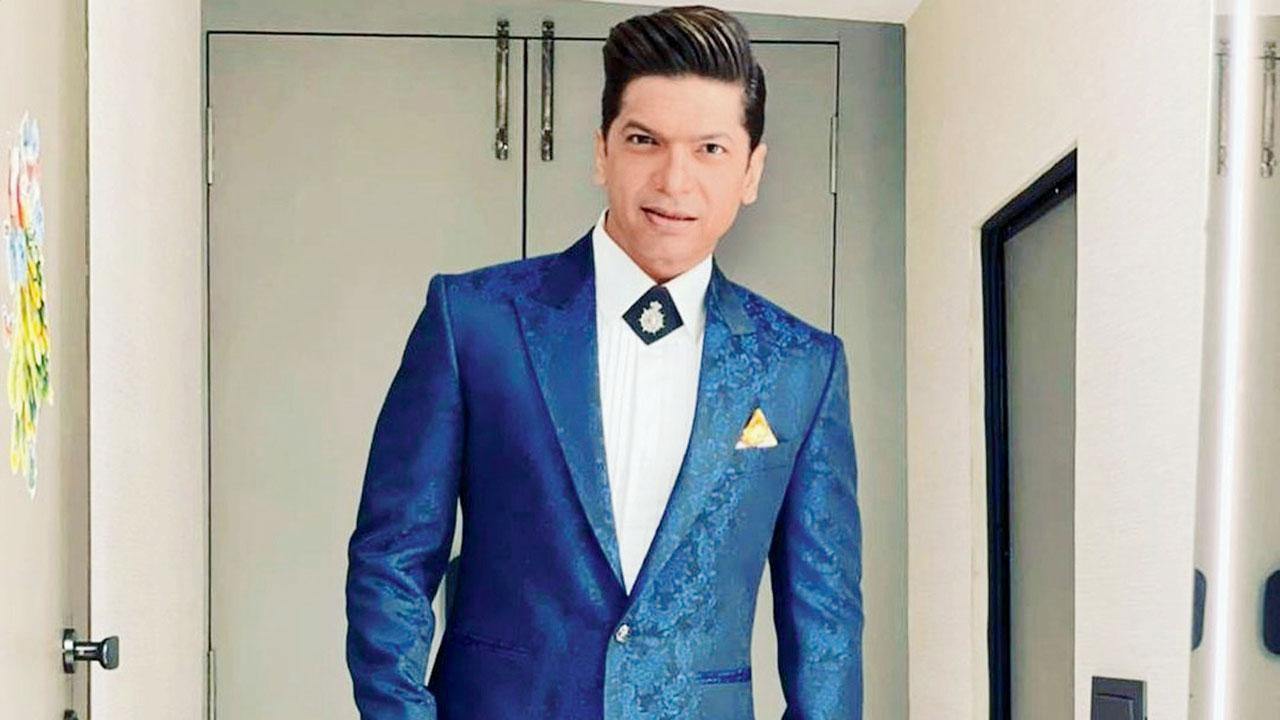
Admitting that his wife’s battle with depression was an eye-opener for him, Shaan addresses tackling the subject with Tanha Dil 2.0
Sonia Lulla (MID-DAY; November 1, 2021)
Well aware of the acclaim that the original song garnered, singer Shaan admits that the revisited version of Tanha Dil is not likely to evoke nostalgia. It’s a risk he’s willing to take, given that in addressing the issues of mental health with this version, he is bringing attention to a subject that is not only pressing, but also one that hits closer to home.
Edited excerpts from the interview:
You’ve spoken about wanting to make a song on mental health since a while, but why did you choose this one to address it?
Because no other line aptly summarized what someone battling clinical depression endures. These words encapsulate the feeling of loneliness and helplessness that they encounter. If anyone hopes to revisit [the ’90s song] and groove to it with this remake, they’re going to be disappointed. That’s not happening. This is a different song which only includes the crux of the old number.
What matters pertaining to mental health are being addressed in this number?
All of it. The subject hits closer to home because my wife [was diagnosed] with depression. For months, I couldn’t understand it. I had to learn that it was a condition that she couldn’t simply brush under the carpet. When people spoke about it, I’d find myself wondering why well-to-do people were going through it, and how the common man would [deal with situations] if the [wealthy] were battling depression. But I learnt that this has nothing to do with [being wealthy]. If an educated person like me could not understand it, how would another person comprehend the situation if their spouse or mother was going through it? Of course, we’ve taken liberties to make it cinematic and entertaining. We had to amend the first draft to tone down the lyrics. We don’t want to scare listeners. Establishing the solution is important.
As the spouse of someone who battled clinical depression, what did you learn about the importance of your role?
That it is important to not rush the person [during recovery] else the person may feel victimised. You need to be with the person, and [reason with them]. But you also have to be sensitive, lest they hide things from you. One needs to be patient, but don’t treat the person like a patient. The more normal you are, the quicker the person can [deal with it]. Having said that, the fight is for the individual to wage. Support is vital, but unless the person is strong enough to face it, it is tough. The person needs to fight the brain, with the brain.
Also, when the medication is needed, it must be taken. Don’t we take them for other conditions?
That’s where I went wrong. I was opposed to [my wife taking] meds because I thought once we walk down that road it would be tough to pull back. But, if you know that meds will help them, denying that chance is terrible.
After having been part of a variety of projects this year, what is in the pipeline for you?
We’ve done a lot of Bengali tracks during the puja [season] that recently went by. I’ve been part of [projects] by Pritam Chakraborty da’s Jam 8. And then there’s the film, Music School, by maestro Ilaiyaraaja. It is a true musical where the songs take the story ahead. It’s fascinating to be part of it. It may release in June or July next year.
Music should know about me and come to me-Ilaiyaraaja
7:39 AM

Janice Rodrigues (BOMBAY TIMES; November 30, 2019)
“Music is everywhere in the universe, it’s not that I make the music, I believe that it shouldn’t be about how much music I know; music should know about me and come to me,” said Ilaiyaraaja about how he gets some of his melodies. He was speaking at the International Film Festival of India (IFFI) masterclass titled ‘The Musical Maestro’. IFFI probably never had such a full auditorium for a masterclass before and this just showed how much of a fan following Ilaiyaraaja has.
R Balki, who was the moderator of the session, spoke of the musical genius saying that he can weave magic into the films with his music.“Even in the heat and discomfort of Chennai, he has been able to make people smell roses! And he taught half the country how to fall in love, just with his music,” said Balki.
The director who worked with Ilaiyaraaja in several films, said that the maestro would not be able to speak about how he makes his music, but even after 58 films a year, he still has the enthusiasm of a child and is very witty when he does speak. The music director, who truly spoke through his performances with his troupe, held the audience captive with his genius, and indeed made a few witty remarks. Upon being asked about how his process works and he puts music that is opposite to that of the scene sometimes, he quirkily replied, “Why should I tell you?” He then continued, “When I choose a film I try and see what fun is there for me in the film; I don’t want to get bored.”
Speaking more about music, he said the musician should create music that can bring people together, and try and bring heart into the film. “Without any expressions from the actor, I can compose music to show that he is thinking of his mother or his lover; which country he is in and what he is feeling, all this just through the music,” he said.
He then demonstrated his skill when Balki suggested a scene of a son plotting to kill his father and the maestro composed a track in a span of ten minutes. The audience was held rapt and sang along when they were later treated to some of his famous numbers Aye Zindagi Gale Lagaa Le, Surmayee Ankhiyon Mein and his version of Neele Neele Ambar Par.
Ilaiyaraaja, Birju Maharaj, Arvind Swami, Prem Chopra to be honoured at IFFI finale
2:19 PM

Hiren Kotwani (MUMBAI MIRROR; November 27, 2019)

 The closing ceremony of the ongoing 50th edition of International Film Festival of India (IFFI) in Goa tomorrow (November 28) will be a star-studded affair. Apart from Prakash Javadekar, Minister of Information & Broadcasting, Amit Khare, Secretary I & B, and several dignitaries will rub shoulders with filmmakers like Rohit Shetty, Madhur Bhandarkar and Aanand L Rai and actors like Akshaye Khanna, Rakul Preet Singh, Nithya Menen, Vijay Deverakonda, Rashmika Mandanna and Ravi Kishan.
 Roja actor Arvind Swami, Bollywood baddie Prem Chopra, Kathak maestro Pandit Birju Maharaj, music maestro Ilaiyaraaja and Assamese filmmaker Manju Borah will be felicitated for their contributions to cinema with their body of work. Ilaiyaraaja will host a masterclass today. He will also be performing with his team.
“The theme of the closing ceremony is ‘Ek Bharat, Shresth Bharat’. It will be a blend of music and dance,” says IFFI director Chaitanya Prasad. Hariharan will be performing, with some special compositions created specifically for the festival. He will also join Leslie Lewis to croon their Colonial Cousins’ hits. Tanushree Shankar, Sangeet Natak Akademi awardee, and her troupe will perform seveneight dance forms from different parts of India.
After the hour-and-half long musical extravaganza, awards for the Competition sections will be given in the presence of the international jury, comprising French filmmaker Robin Campillo, Chinese filmmaker Zhang Yang, Lynne Ramsay, one of the leading lights of young British cinema and veteran Bollywood filmmaker Ramesh Sippy.
On-camera accounts of legends who shaped Indian cinema to be archived
8:18 AM

Mohua Das (THE TIMES OF INDIA; May 19, 2019)
What makes for a classic Bollywood movie? A beginning, middle and an end; a hero, heroine and villain; a few challenges; and a generous dose of drama, mystery and romance. Can real life stories be just as exciting and is there any power in sharing these tales with a larger audience? Turns out, there are few things more stimulating than a story straight from the mouths of those who lived it.
In an initiative to discover, document and preserve unwritten personal recollections, anecdotes and informal tales of Indian cinema legends, the Film Heritage Foundation (FHF) in Mumbai has partnered with the Academy of Motion Picture Arts and Sciences to co-produce and archive “on-camera spoken accounts” of those who shape India’s filmmaking legacy. The shared mission titled Oral History Project will chronicle unmediated truths in the form of audio and video interviews of how one became who they are and what they’re on their way to becoming.
The subjects of the project will span 25 filmmaking professionals including actors, directors, cinematographers, writers, music composers, illustrators, film projectionists, film lab technicians, make-up artistes and others.
The Academy’s visual history program has been recording oral histories on video and documenting representatives from a wide variety of film professions since 2012. Till date, the program has conducted more than 140 interviews in seven languages featuring film professionals including Rachel Portman, Alejandro G. Inarritu, Douglas Slocombe, Ann Roth, Rick Baker, Agnes Varda and others. The project has also collected over 2000 interviews from various sources in their bid to establish a “primary preservation repository” for filmmaker interviews globally.
It was last year when filmmaker and archivist Shivendra Singh Dungarpur – who set up the FHF in 2014 and been rallying to preserve India’s motion picture heritage – was invited by the Academy to deliver a keynote speech when he was approached with the proposal. “Oral history has been on our Foundation’s wish list since inception. We had begun the programme with Kamini Kaushal and were very excited at the new prospect of collaborating with the Academy which has years of experience in the area. They have developed an excellent format which informed our methodology for research, interviewing, transcripts and records. It’s heartening that oral narrative of and by living legends in cinema will be available for posterity, for researchers and scholars to understand them better,” explained Dungarpur who completed the first slew of interviews this month. “We decided to start with stalwarts who represent the three major film industries—Tamil, Bengali and Hindi. Next on list are veterans Shyam Benegal, Gulzar, Asha Bhonsle, Ilaiyaraaja, Salim Khan and others.”
The pilot slate features actors Amitabh Bachchan, Soumitra Chatterjee and Madhabi Mukherjee; directors Adoor Gopalakrishnan, Mani Ratnam, and Buddhadeb Dasgupta; and Vishwa Mehra (R K Studios’ production manager, and brother-in-law of Prithviraj Kapoor). The interviews spanning four to six hours each threw up endearing memories that will serve as a living testimony of their life.
Take for instance Amitabh Bachchan. It can be hard to imagine a chapter in the megastar’s life when the Big B wasn’t that big nor the tallest star that tall as a kindergarten boy at the St Mary’s Convent High School. “That’s the time I first appeared on stage and played the role of a chicken… with feathers,” he narrates before confessing about a time in the early phase of his career when his photograph was rejected by Filmfare for a talent hunt contest. Also, who would have thought that Mani Ratnam, the man who crossed over from the South and gave Hindi cinema some of its greatest hits in the 90s was brought up with a lot of “orthodox and constraints and not allowed to watch movies”? “I was really into maths and physics and was working as a project leader in a financial consultancy firm” when he quit and joined the crew of a Tamil film, he recounts. Auteur Adoor Gopalakrishnan spoke about how his debut film was removed from theatres soon after its release because theatre owners and audiences complained about the lack of song and dances; Ray actor Madhabi Mukherjee described the genius of filmmaker Ritwik Ghatak and his extraordinary lensing abilities including a time when he used his spectacles as the lens for a shot.
“A key thing in oral history is that the person should opt to speak without the interviewer putting words into their mouth. The questions are based on extensive research and have to be open ended, in a way that lends direction to the narrative arc and allows the person to reveal himself without being probed,” explained Dungarpur.
To counter India’s culture of dusty archives, this oral cache will be made available for scholars, students, aspiring filmmakers, journalists and movie lovers to actively engage at the Academy’s archive and museum in Los Angeles and the FHF in Tardeo. “The aim of our collaboration is to ensure long-term preservation of interviews through digital archiving. In the future we hope to develop an online access plan,” he said.
FTII to now offer a course on song picturisation appreciation
8:30 AM

A still from the song Dil Ka Bhanwar Kare Pukar
A new course in song picturisation appreciation reveals how songs have been used in Indian cinema to take the story forward
Gitanjali Chandrasekharan (MID-DAY; September 16, 2018)
Remember the pelvic thrusting background dancers of the 90s that still get a redo by filmmakers looking for a nostalgia button? Or perhaps, the swing dancers in the black and white films as the leading lady or man, stood in a corner singing their heart out? Later this month, the Film and Television Institute of India (FTII) will offer a course on song picturisation appreciation — literally, about understanding the nuances of how songs are picturised in Indian cinema and what different eras brought to the screen.
 Speaking about the course, the idea of which germinated last year, FTII director, Bhupendra Kainthola (left) and Karan Bali (below), the course director, say over the years everything about film songs in Indian cinema — music and picturisation has changed.
The course is a new chapter in understanding this evolution. “Songs have been an integral part of our films right from our first talkie, Alam Ara (1931). Indians have music in our blood and we see this in our lives too, where we have a song for every situation from when we are born to when we die. Various forms of Indian theatre too, used music and dance as a part of their storytelling and this continued but naturally, when cinema took over from the stage as the primary form of entertainment. I think the film song evolved to a highly sophisticated art form by the 1950s and ’60s, becoming perhaps the most important part of our storytelling on film. The best songs combined the best of writing, music and dance with a strong sense of storytelling through filmic techniques,” says Kainthola, adding, “What’s more, they gave mainstream Indian cinema a unique identity of its own. These songs were often the biggest reasons for ‘repeat value’ of a film as well written and composed songs resonated big time with our film audiences. Till recent times, it was unthinkable for an Indian film to not have songs.”
 The course then will be about the film song, and its use as a critical element of storytelling. Elements will include the evolution of song picturisation techniques over the years (technically and aesthetically), the golden age of film music — the 1950s — through eminent composers, lyricists and choreographers, filmmakers who elevated song picturisation into an art form such as Guru Dutt, Vijay Anand, Mani Ratnam and Sanjay Leela Bhansali, and film songs and their picturisation in contemporary times.
Kainthola takes the example of the song Dil Ka Bhanwar Kare Pukar from the 1963 Dev Anand starrer Tere Ghar Ke Samne and says that here the developing romance is beautifully built up through the sequence where Dev Anand and Nutan climb up the Qutub Minar. “It then finds perfect expression of their love story as he declares his love to her on the journey downwards. And it’s not merely having the right situation at the right time in the story. The song should also move the story forward through its different aspects — lyrics, composition, use of choreography, locations and costumes.”
Kainthola and Bali take us through the evolution of the Hindi film song picturisation over the decades: From the stagy, static picturisation of the 1930s, the film song came into its own as all its elements peaked in the 1950s. Thereafter, it has seen its ups and downs.
Bali picks the example of the 1970s when Hindi films turned action oriented with the advent of the “angry young man”. That’s when, he says, a decline in film music began, hitting rock bottom in the 1980s, only to slowly turn around in the 1990s. “At the same time, different cinemas across the country have seen different stages of development. While Hindi cinema saw its nadir in the ’80s, music maestro Ilaiyaraaja did some of his best work in the Tamil and Telugu film world during the same period. And even as aesthetically Hindi cinema dipped downwards, filmmakers down South like Mani Ratnam showed just how beautifully a song could still be filmed. In fact, Tamil cinema has always been ahead of Hindi films as far as choreography is concerned and even today, they use the song far better than their Hindi counterparts. The traditional film song in Bollywood is struggling a bit to be picturised in newer creative manners that would hold audience interest. Of course, part of this is a higher degree of realism entering Hindi cinema, a change in audience tastes down the years — the sad song, for instance, is all but gone today,” he adds.
Composers and lyricists will finally get their due-Javed Akhtar
8:03 AM

The distribution of Rs 13 crore as synchronisation royalty dues by Indian Performing Rights Society (IPRS) was a big breakthrough for Bollywood. Talking to BT, chairperson Javed Akhtar, writer-lyricist, talks about IPRS’ future plans to empower the artistes
Debarati Sen (BOMBAY TIMES; May 12, 2018)
Not many Bollywood music lovers are aware that whenever they listen to an old favourite on radio, television, weddings, advertisements, event, or a recreated version of it in a film, there is royalty owed to the composer and the lyricist of that song. And by law, that royalty money should ideally go to them. However, that was not happening for decades. Writers and music directors were constantly at loggerheads with music companies over this till a few music companies got together last month and distributed Rs 13 crore as synchronisation royalties that was due to the lyricists and composers. With this, the artistes and music companies buried the hatchet, finally. Facilitated by Indian Performing Rights Society (IPRS), its chairperson, writer-lyricist Javed Akhtar throws light on the issues plaguing Bollywood music and their plans to strengthen it...
THERE ARE PLANS TO GO BEYOND SYNCHRONISATION ROYALTY
“The Rs 13-crore distribution due to lyricists and composers was a warm and friendly gesture by the music companies. Since there was no log of songs, the money was divided between all the members. The amount is not really huge, if you think of the possibilities in the future — this amount was given to us by only seven companies as last six years’ dues for a single limited usage. Synchronisation royalty is owed when a song is used in an ad, video or by another filmmaker in his movie. Apart from this, there is mechanical royalty, performance royalty and other such royalties, which are still pending. But the good thing is that the composers and lyricists will finally get their due.”
IPRS HAS GONE ONLINE NOW
“With the IPRS going online, people can apply for a license to use our songs and pay online. The physical transfer of money has been eradicated and this will stop mismanagement and corruption.”
RIGHT TO ROYALTY IS NON-TRANSFERABLE NOW
“The right to royalty was optional earlier — one could waver it, transfer it to someone else’s name or give it to the publisher (the producer). And this led to many artistes not getting their dues. Since the market was limited, the artistes used to sign on the dotted line. The only way they could be helped was by restraining them legally. For the artiste’s protection, royalty has been made nontransferable and non-waiverable. While copyright can be transferred, right to royalty will always be retained by the artiste.”
WORKING ON PLUGGING LEAKS, NETWORKING AND FINE-TUNING COLLECTIONS
“Our music is popular across the world, even in countries like Argentina and Peru, but we aren’t able to collect the kind of royalty we deserve. It means that our collection and network isn’t perfect. We need to spread the network, find the leakage and identify areas where we aren’t able to collect royalty properly. We have taken up these issues seriously.”
STRONG DATABASE AND SOFTWARE PROGRAMS NEEDED
“With hundreds of television and radio channels that play Bollywood tracks, the IPRS has plans to spend money to develop appropriate software and use technical facilities wherein they will be able to collect proper information globally with detailed logs. If your song is played for 20 seconds, you’ll get money. But if the music director’s spelling or the writer’s name is wrong, the money won’t reach them. You won’t get the money if a particular song isn’t present in the database. What’s needed to make it work is a complete data of all the Bollywood songs (that run into lakhs) with its lyricist, composer and publisher. It is tedious and will also cost money, but it is worth it. The collection in the South industry isn’t as good as it ought to be. I don’t think great artistes like Ilaiyaraaja, A R Rahman, Vairamuthu, Bali are getting royalties as smoothly as they should. Perhaps, we are short of people, or short of network and all this has to be looked into.”
IT WILL BE A WIN-WIN SITUATION WHEN ARTISTES AND MUSIC COMPANIES JOIN HANDS
“While the labels may have money, the kind of goodwill artistes have everywhere is unparalleled. Artistes can open doors anywhere. If our goodwill and their financial muscle come together, we can win the world.”
Dear Zindagi has the Sadma track Ae Zindagi Gala Laga Le, thanks to R Balki
8:08 AM

DNA (November 23, 2016)
Director Gauri Shinde is going to incorporate the classic Illaiyaraja song Ae Zindagi Gala Laga Le from 1983’s Sadma in her next, Dear Zindagi.
Sadma had Kamal Haasan and Sridevi in starring roles. The poignant track itself is about the vagaries of life. But the other connection? Shinde’s husband R Balki. Ilaiyaraja has composed for all Balki films and it was he who convinced Gauri to include the song.
Says Balki, “I cannot think of my cinema without two things, the presence of Amitabh Bachchan and the music of Ilaiyaraja. Ae Zindagi... is one of Raja Sir’s finest Hindi songs so beautifully written by Gulzarsaab. It fitted Gauri’s film like a hand in glove.”
Gauri’s composer Amit Trivedi who’s done the rest of the score and is known to be averse to musical inclusions on his soundtrack was fine with the track addition. “Not only Balki and Gauri, even I am Ilaiyarajaji’s biggest fan,” he says.
The Maliks almost broke down after Armaan's win at the Mirchi Music Awards
7:33 AM

Neha Maheshwri Bhagat (BOMBAY TIMES; March 4, 2016)
It's raining awards for
Armaan Malik. The singer, who recently walked away with the Mirchi Music
Award for The Best Indie Pop Song (Main rahoon ya na rahoon), says all
the recognition coming his way has fuelled his desire further to hit the
right note with the audience in films and independent music.
Armaan says, “This award is special because it is based on listeners' choice and feedback. I was nominated last year too, but I didn't win.“ How did the Maliks share his moment of glory? “We nearly broke down,“ he states, adding, “The song is close to my heart as I remembered my grandfather (legendary singer Sardar Malik) while recording it. Both Amaal and I were in tears. The success of the song has proved that Indie pop genre is still a favourite with the audience. We usually get to sample dance numbers in this space, but Main rahoon...was like a breath of fresh air. It is melodious and resonates with people across all age groups. Emraan Hashmi (who featured in it) had said that it will live on for years to come.“
Cashing in on the success of his debut single, he is now planning another song, which will feature him, too. “I would like it to be a R&B (Rhythm and Blues) track and pop-infused song,“ he reveals.
Talking about his upcoming film tracks, the young singer says, “Foolishq from Ki & Ka gave me a chance to work with renowned composer Ilaiyaraaja and Shreya Ghoshal. I'm awaiting the release of Buddhu sa mann from Kapoor & Sons (Since 1921). The family in the song is like the Maliks; what happens in the song is exactly what happens at my home,“ he sums up.
Armaan says, “This award is special because it is based on listeners' choice and feedback. I was nominated last year too, but I didn't win.“ How did the Maliks share his moment of glory? “We nearly broke down,“ he states, adding, “The song is close to my heart as I remembered my grandfather (legendary singer Sardar Malik) while recording it. Both Amaal and I were in tears. The success of the song has proved that Indie pop genre is still a favourite with the audience. We usually get to sample dance numbers in this space, but Main rahoon...was like a breath of fresh air. It is melodious and resonates with people across all age groups. Emraan Hashmi (who featured in it) had said that it will live on for years to come.“
Cashing in on the success of his debut single, he is now planning another song, which will feature him, too. “I would like it to be a R&B (Rhythm and Blues) track and pop-infused song,“ he reveals.
Talking about his upcoming film tracks, the young singer says, “Foolishq from Ki & Ka gave me a chance to work with renowned composer Ilaiyaraaja and Shreya Ghoshal. I'm awaiting the release of Buddhu sa mann from Kapoor & Sons (Since 1921). The family in the song is like the Maliks; what happens in the song is exactly what happens at my home,“ he sums up.
R Balki includes song of his fav music composer Ilaiyaraaja in Ki And Ka only at the last minute?
7:50 AM

Shaheen Parkar (MID-DAY; November 19, 2015)
In all his three Hindi films so far (Cheeni Kum, Paa and Shamitabh), R Balki had legendary South composer Ilaiyaraaja on board. He had reportedly said, “My biggest inspiration has been Ilaiyaraaja’s music; it was his music that got me interested in cinema in the first place.” However, in his Kareena Kapoor and Arjun Kapoor-starrer Ki And Ka, Balki almost went ahead sans his ‘favourite’ composer.
The upcoming film will see T-Series head honcho Bhushan Kumar turn music producer. He has already roped in Meet Bros, who have done a fresh version of Yo Yo Honey Singh’s 2012 track, High Heels. We hear there are five tracks in all with Mithoon scoring the music too.
Sources state that Balki had no choice, but to give his favourite composer a miss this time under the changed scenario. He later relented and included a track by Ilaiyaraaja since he could not imagine not having his touch in the film.
Says a source, “Balki was upset after his last film Shamitabh did not do well at the box office. With his upcoming project, he does not want anything to go wrong. So, he is following the market trends.”

Subscribe to:
Posts (Atom)