Showing posts with label Igatpuri. Show all posts
Showing posts with label Igatpuri. Show all posts
Irrfan Khan's fifth death anniversary: Why the legendary actor still lives on at Hiruchiwadi in Igatpuri
8:41 AM
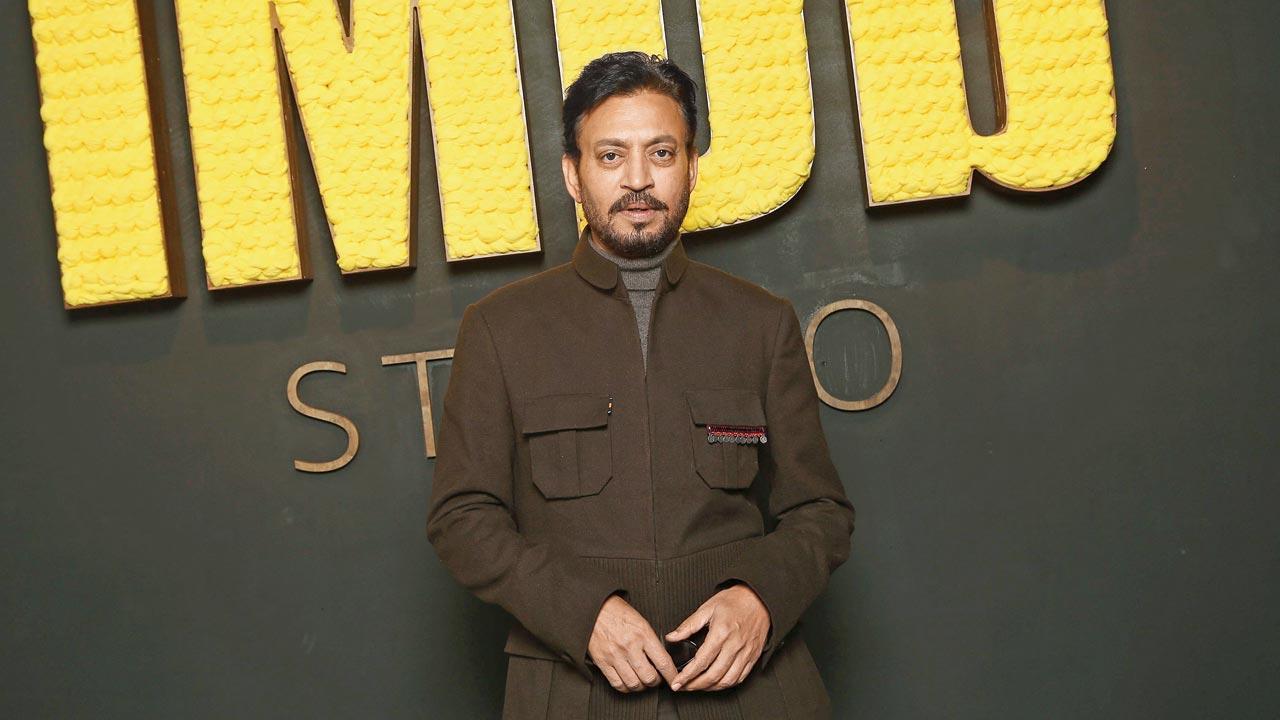
To mark his 5th death anniversary on April 29, Sunday mid-day travelled to Hiruchiwadi in Igatpuri—a village where Irrfan’s farmhouse lies untouched, and his legacy of generosity and kindness is still valued
Anand Singh (MID-DAY; April 27, 2025)
In 2010, when the late actor Irrfan bought a land parcel in a tiny hamlet in the lap of the scenic Sahyadri range in Igatpuri taluka of the Nashik district, very few people knew of him here.
By then, he was already an international star, having worked in Danny Boyle’s Oscar-winning film Slumdog Millionaire (2008), and classics such as Asif Kapadia’s The Warrior (2001), Vishal Bhardwaj’s Maqbool (2003), and Mira Nair’s The Namesake (2006), apart from many other Hindi box office hits.
It’s no surprise that people didn’t know him here, given that televisions are still a rarity in this tribal village called Hiruchiwadi. In the era of 5G connectivity, the network here is spotty, with just 3G connectivity if you’re in the right spot. When we asked a local farmer, Revati, 28, when was the last time she had watched a film, she responded, “Mee kadhi chitrapat naahi baghitla (I have never watched a film).” However, she came to know about Irrfan after he moved here, as he socialized with the villagers quite often.
It may be bewildering to many, but films are not the main source of entertainment in this tribal village. The closest film theatre from here, Victory Cinema, is around 11 km away, near Igatpuri railway station. With no state transport facility to connect Hiruchiwadi, travelling outside the village is not an everyday affair for everyone. Adults who have two-wheelers and a few families with cars are the only ones who frequently travel towards the city side.
Though just 120 kilometres from Mumbai, this tribal hamlet feels light-years away from modernity, still living in the 1990s. Old Hindi film music can still be heard on the radio sets if you stroll through the village on a quiet afternoon. The Sahyadri range surrounding it from all sides protects it in its soft fists, much like a mother coddles a baby in her lap.
It’s probably this simplicity and rawness that appealed to Irrfan, and he chose to build his farmhouse here, which was completely ready by 2015. It’s a perfect escape from the glitz and glamour of Mumbai, a city that always kept him busy and where everyone knew him.
Social media is full of stories and articles claiming that the village’s name has been changed to “Herochiwadi,” meaning “the hero’s neighbourhood” in Marathi. However, when Sunday mid-day spoke to the village Sarpanch, Ashok Pingle, it revealed what can be described as both coincidence and misinformation.
The Sarpanch explained, “The village’s actual name is Hiruchiwadi, named after Hiru Pingle, the mukhiya of the local tribal clan, who fought the British alongside the tribal revolutionary Raghoji Bhangre. Local NCP leader Suresh Bodke, who has worked for the village, proposed that the village’s name should be changed to ‘Herochiwadi’ to honour Irrfan after he passed away. But we didn’t want that. Because firstly, we are the descendants of Hiru Pingle and take pride in the fact that the village is named after him. Secondly, if two letters in the village’s name are changed—from ‘Hiru’ to ‘Hero’—it may bring popularity to the village, but it would also mean that all our documents, from Aadhaar to property papers, would need to be changed as well… It’s too long a process for changing just two letters.”
It’s a major coincidence that both “Hero” and “Hiru” have a very similar phonetic sound. The visit to the village was another lesson in the age of social media—do not trust everything you read online.
Regardless of the village’s name, the Sarpanch said the village loves its “Hero”. “The humility Irrfan showed by visiting houses around, providing livelihood to the locals by giving them jobs at his farmhouse, and his interaction with the children was something we did not expect from such a big film star. He could have arrived in his SUV with his bodyguards and chosen to stay in, enjoying the serene view and spending time only on his estate without stepping out. But he always chose to come to us.”
Ashok Pingle’s uncle, Damu Pingle, lives just a stone’s throw from Irrfan’s farmhouse, being the third house from his gate. When Irrfan learned that Damu was a tailor, he gave him the task of altering and tailoring all the drapery he had purchased for his farmhouse, including furniture covers for when the house would be closed. Damu refused to share how much he was paid for partly being involved in the “interior designing” of a film star’s house, but he mentioned it was more than all the money he made in the last five years.
When we asked Damu about his interactions with Irrfan, he said, “Aamcha bolnach zhaala nahi, kaaran tyaanna Marathi yaet nhavta ani mala Hindi bolta yaet nhavta. (We never spoke a word as he didn’t know Marathi, and I couldn’t speak Hindi).” But Irrfan’s staff did the translation for the two.
Another employment opportunity arose for Damu’s family as caretakers. It is his family that tends to the farmhouse during Irrfan’s family’s absence. As he showed this correspondent the farmhouse from outside, he further added, “I also worked on items like the tablecloths, kitchen cloths needed for regular use, and even doormats. Irrfan brought these items from outside, probably Mumbai, but they needed to be tailored to size. All the tailoring on this farmhouse is my work.”
But the real surprise came when he revealed that he had also stitched a few kurtas for Sutapa Sikdar, Irrfan’s wife. “She gave me a kurta that fit her well. I took the measurements and sewed many clothes for her for over two years.”
The trust Irrfan placed in the villagers was evident as we walked around his farmhouse. Villagers freely moved around, as there were no locks on the gates. A trophy he won for a film, along with various décor items, lay scattered on the façade of the farmhouse, yet nobody touched their beloved hero’s possessions.
Locals mentioned that Irrfan was deeply committed to community work. According to Subhash Mengal, a primary school teacher in the village, Irrfan was planning to have some films shot there, those that fit the village’s terrain—mountainous, rugged, yet green.
Mengal says, “In one of the interactions I had with him, he mentioned that film shootings would generate employment for the locals. It’s a location just three hours away from Mumbai, and it may help filmmakers save costs on VFX or travelling to distant locations. It was a very interesting prospect. You can see how disconnected the village is, despite being at the border of three major districts—Nashik, Palghar, and Thane.”
Though he never formally adopted the village, during his time here, Irrfan touched lives across all domains. A resident of the village, Eknath Pawar, told us that Irrfan had donated Rs 50,000 for a local temple, now the largest in the village.
“We mentioned that the Hanuman temple needed renovation. We didn’t care whether the donation came from a Muslim, as it was god’s work. He never cared about religion either. The funds arrived within a few days, around the time when he was already sick. It didn’t come directly from him but through Sutapa Didi.”
But closest to his heart were the children of Hiruchiwadi. Bhavrao Bandu Bangar, the former headmaster of the primary school in the neighbouring village of Patryachawada, knew how big a star Irrfan was. However, his approximately 100 students had no idea who he was. In 2015, when Bangar learned that Irrfan’s farmhouse was nearly ready and that he would be arriving soon, he went to the farmhouse to request him to meet the students. “It may have been their only chance to meet such a big film star. Meeting an influential figure at a tender age can make an impact,” he tells Sunday mid-day.
But Irrfan was seemingly busy that day, telling the headmaster, “I will come later in the day...” School ended at 5 pm, and the children waited until 5.30 pm, but Irrfan did not arrive.
Bangar says, “It was understandable. He is a busy man.” But, to his surprise, the next morning, Irrfan, along with his family, arrived at the school earlier than anyone else and waited for the students to come. Delighted that he had shown up with his entire family, the headmaster asked, “Why did you not come yesterday?” To which Irrfan replied, “I didn’t want to come empty-handed.” Bangar recalls, “He came with two cars full of school bags, stationery, sweets, and whatever he could get for the children from a nearby market in Nashik.”
A few years later, Irrfan visited the farmhouse again. By this time, the children knew he was unwell. Bangar told the students, “Hero aajaari aahe (Hero is unwell). Make bouquets for him from whatever you find on the farms.”
The students got to work immediately, and within a few hours, a hundred bouquets made from local flowers and leaves were ready. Bangar informed Irrfan that the children had brought him something this time. Soon, a hundred bouquets adorned the façade of his farmhouse. “He started crying when he saw the gesture,” recalls Bangar.
This happened towards the end of the monsoon season, and Irrfan had noticed the children walking to school with plastic sheets or nothing at all during heavy rains. Bangar shares, “Ten months later, at the onset of the next monsoon in 2018, I received two massive cartons. The sender’s address was from Rajasthan, where Irrfan originally hailed from. I had never asked for it, but even while he was receiving treatment in London for his illness, he remembered the children and the fact that the monsoons had begun, knowing they would need raincoats to go to school. I never got to see him again, as Saheb was very sick.”
Today, the plans Irrfan had for the village sit stalled, which included basic infrastructure for shooting, proper roads till the Trilangwadi Fort, modern classrooms in the primary school, and much more. Locals say his family does not visit as often, and they mostly keep to themselves, unlike Irrfan. He once told primary school teacher Subhash Mengal, “The film industry is a lonely place. I am glad to have you all.”
However, the work he did for the village remains. The children still cherish fond memories of spending entire days, multiple times, with an international star. Some now aspire to become actors. Bangar says, “Without him, even the thought of learning theatre or becoming a film star would not have occurred to these children. We are close to Mumbai, yet so far.”
The questions posed to the residents about Irrfan make them light up with pride, knowing that their village is recognised now because of their hero.
Today, the gate of his farmhouse, which opens directly in the village, has a seat that nobody sits on, next to an epitaph that reads, “We live because you reside in our soul.”
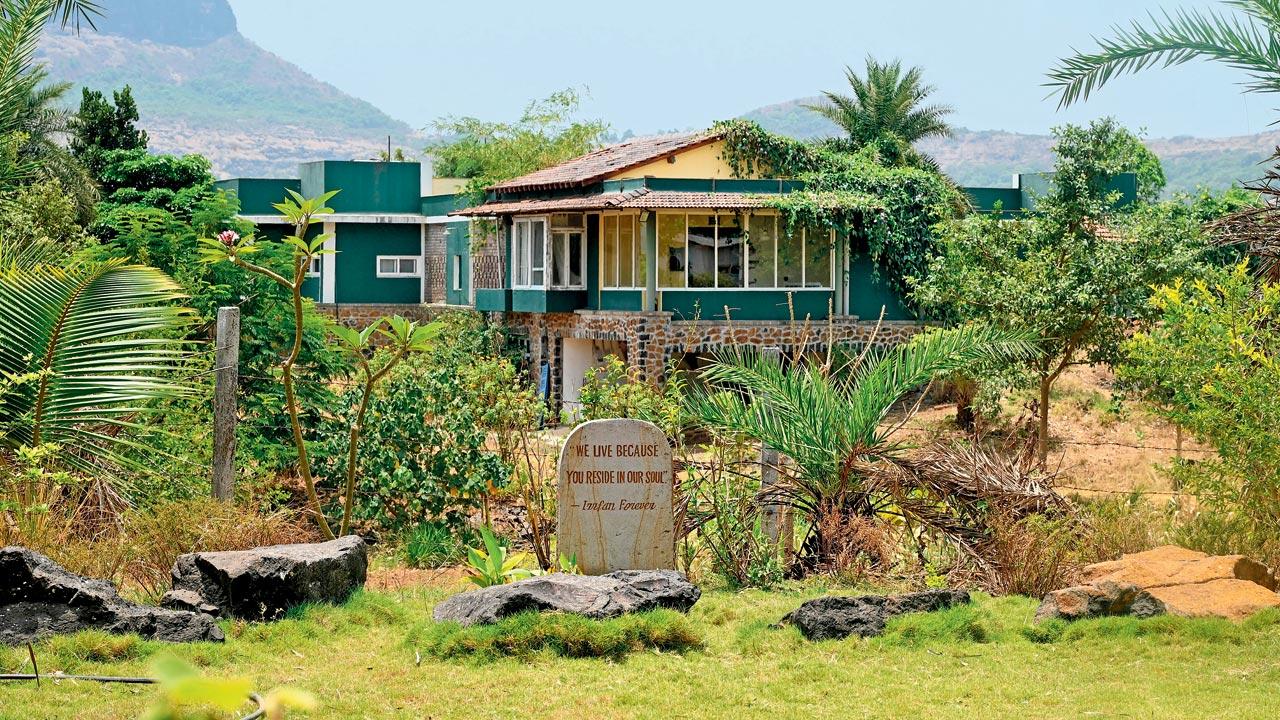
Irrfan’s farmhouse in Hiruchiwadi, Igatpuri—where he helped the village grow and found a second family. Pics/Satej Shinde
Nitesh Pandey suffers fatal heart attack at Igatpuri resort
9:39 AM
THE TIMES OF INDIA (May 25, 2023)
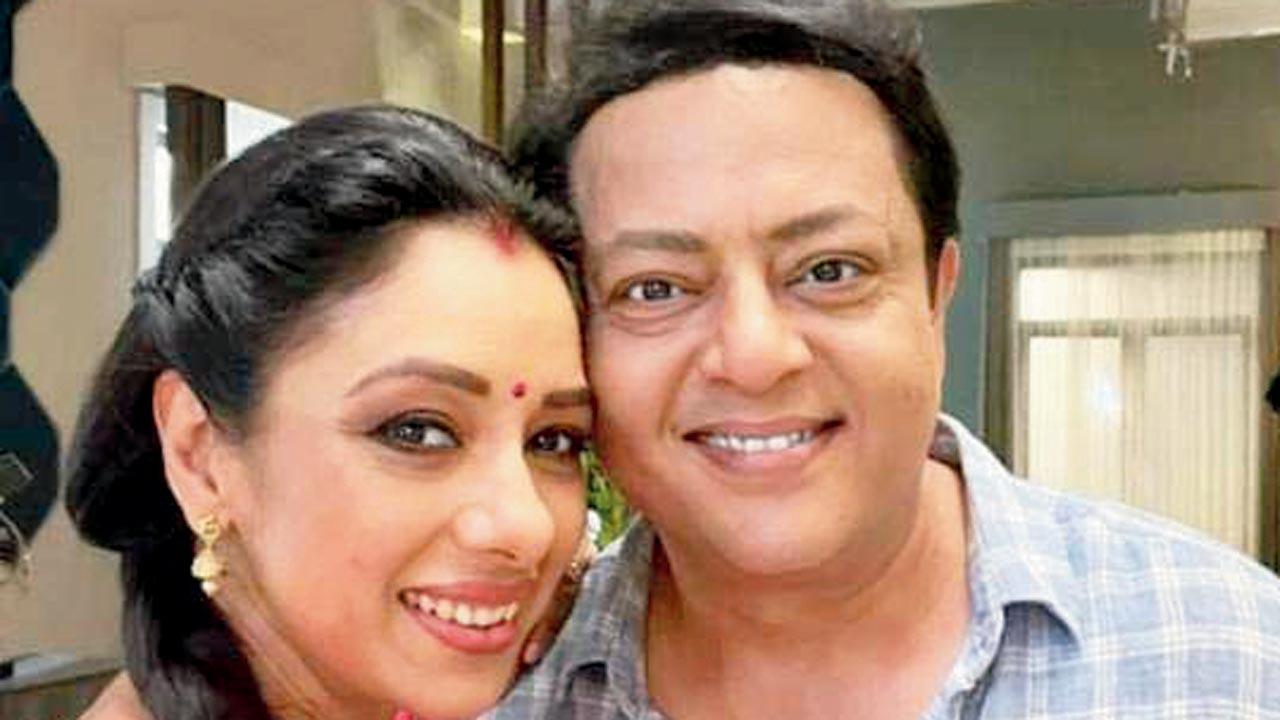
Mumbai: India’s television industry suffered a third successive blow this week with the death of actor-scriptwriter Nitesh Pandey past Tuesday midnight. On Monday, actor Aditya Singh Rajput collapsed and died in his Andheri apartment, while actress Vaibhavi Upadhyaya lost her life after her car fell into a ravine in Himachal Pradesh.
Pandey, best known for his performances in television serial ‘Anupamaa’ and the Shah Rukh Khan-starrer ‘Om Shanti Om’, suffered a fatal heart attack in a resort in Igatpuri, 50km from Nashik city, which was his favourite retreat. Pandey, who lived in Powai with actress-wife Arpita and son Aarav, was 51.
Investigating officer Nilesh Deoraj of Igatpuri police told TOI, “Pandey would often visit this retreat to pursue his passion for writing. He arrived here on Tuesday and around 10:30pm, the room service attendant brought him dinner. But nobody answered the door. The boy arrived again an hour later and when there was still no response, the staffers opened the door with a master key. They found Pandey lying still on the sofa. Then they rang us, and we arrived promptly to rush him to hospital. But he was declared dead on arrival. The postmortem report stated the cause of death as heart attack. Pandey’s remains were handed to his relatives who left for Mumbai.” The last rites were performed on Wednesday.
Kritika Kamra, Gulshan Devaiah, Deven Bhojani, Hansal Mehta, Manoj Bajpayee, Khushwant Walia, Rajkummar Rao and Nakuul Mehta offered tributes to Pandey on social media. ‘Anupamaa’ co-actor Rupali Ganguly tweeted, “I am numb. Can’t believe it.”
In a media interview she said Pandey was a dear friend, and that they had imminent plans to meet up with their sons who are of similar age.
Pandey had a special flair for comedy and used his wide-eyed, baby-faced look to advantage through an illustrious career of 25 years in theatre, television and cinema. He featured in popular TV serials like ‘Anupamaa’, ‘Star Bestsellers’, ‘Tejas’, ‘Manzilein Apni Apni’, ‘Saaya’, ‘Astitva — Ek Prem Kahani’, ‘Justujoo’ and ‘Durgesh Nandini’. Among his memorable films are ‘Om Shanti Om’, ‘Khosla Ka Ghosla’ and ‘Dabangg 2’.
He was a writer of merit, a keen chef and had also founded a production house. He was earlier married to actress Ashwini Kalsekar, but they divorced.
Consider reformation when drugs case accused are young, says Bombay High Court
8:15 AM

Swati Deshpande (THE TIMES OF INDIA; October 19, 2021)
Mumbai: Noting that reformation is to be considered when accused are young and have no antecedents in any drug offences, the Bombay High Court recently granted bail to a duo arrested in June following a raid by police on a private bungalow at Igatpuri.
The Narcotic Drug and Psychotropic Substances Act (NDPS) imposes deterrent sentences on those who traffic in significant quantities and addicts, said Justice Bharati Dangre, but added that youngsters arrested first time “deserve one opportunity by restoring their freedom.”
“Adolescence and youth are the phases of lifetime, where making of irrational and impulsive decisions may be favoured by some,” said Justice Dangre. The Igatpuri bungalow was rented for a birthday celebration, and police found several in possession of less than 6 gm cocaine, 5 gm ganja and 1 gm charas. The party was attended by 27 persons. Police said cocaine traces were also found in the swimming pool, and blood and urine samples were positive for consumption.
Aryan Khan’s lead counsel Amit Desai and Satish Maneshinde cited this judgment to make a plea for the reformation approach before the special NDPS judge for his bail.
The men in the Igatpuri case, aged 27 and 34, represented by senior counsel Aabad Ponda, advocates Kushal Mor, Rishi Bhuta and Anurag Garg, raised several grounds, including how the accused were not apprised of their right to be searched in the presence of a magistrate. Seeking bail, the 27-year-old said cocaine found in a bag was only for consumption, as he is “purely an end user.” It is non-commercial and hence rigours on granting bail are not attracted, his lawyers argued.
From the party organizer, the second bail seeker, there was no seizure on his personal search. The lawyers said all contraband was for personal consumption, none for sale or distribution. Ponda pleaded for HC to adopt a reformative approach towards youngsters who could be lured by temptation and curiosity about the prohibited substance, landing them in trouble.
Justice Dangre said the challenge today focuses on the issue of drug addiction in youth and how to tackle it. “Experimentation with alcohol and drugs is common. Unfortunately, the youths do not foresee the link between their action today and its consequences tomorrow. It is crucial to uncover the root of youths and young adults, which necessarily would involve posing questions, understanding the problems at hand and having an insight into if and how badly this problem would be eradicated and its progress stalled,” she reasoned in her order, adding, “It is indeed a harrowing reality.”
The duo were arrested on June 27. The special trial court had denied them bail. The HC granted them bail on August 24, after nearly two months of incarceration. The HC also said the Section 50 requirement of informing suspects of their right was not complied with.
“The suspect has to be clearly informed that he has a right to be searched before either of the authorities and, if he demands, he can be searched before them,” said Justice Dangre. The drugs seized also included 1 gm charas and 6 gm ganja—both small-quantity.
The HC also rejected a submission of the prosecution, saying one of the two who brought the substance and offered it to other accused present at the party would “by no stretch of imagination assign him the role of a drug peddler.”
I was just 17; had never even hugged a boy before this, says Shilpa Shetty about her first day at shoot on Baazigar sets
8:23 AM

As told to Ankita Chaurasia (MUMBAI MIRROR; August 20, 2020)
The first film I shot for was Gaata Rahe Mera Dil. Ronit Roy, who was a big name at the time after Jaan Tere Naam, and his brother Rohit, were my co-stars and I had shot for my introduction scene with the latter. The makers had announced my debut with a huge close-up picture in a trade paper. But the film never saw the light of the day. However, my picture got noticed and landed me Baazigar opposite Shah Rukh Khan, who I had been a fan of since his Fauji days.
The first time I faced the camera was for the song, “Aye Mere Humsafar”. Other unit members had all carried duvet covers and bedsheets from their hotel rooms to the location. It was eight degrees in Igatpuri and I was shivering in a flimsy salwar kameez because I had no idea it was going to get so cold.
I was just 17 then, straight out of college, and though a lot of boys liked me, I hadn’t even hugged one before. I was really innocent, but luckily, the song required me to look nervous, so it worked.
I didn’t even know how to lip-sync and was standing with my back to the camera for my first scene. Rekha Chinni Prakash, the choreographer, kept screaming “Cut” and telling me my hair was obstructing the shot. Thank God for Shah Rukh, who took me aside and told me that the camera is my audience so even though I was giving beautiful expressions, no one could see. That bit of advice has stayed with me.
Honestly, I didn’t think I would last this long. Looking back, I think I got the hang of acting only after Dhadkan. Working with (director) Dharmesh Darshan and then, Revathi in Phir Milenge made me fall in love with cinema and the art of acting. Before that, I was just having fun. And had started commanding a high price from my second film itself. After the Main Khiladi Tu Anari chartbuster, “Churake Dil Mera”, I hit the jackpot. I didn’t come from a filmy background, so it was all about buying a car and a bigger house. Thankfully, the audience was much more forgiving back then. When I see my hair and makeup in old movies, I want to hide under the chair.

When all hell broke loose after Rishi Kapoor went missing from All Is Well sets
7:37 AM

Sanyukta Iyer (MUMBAI MIRROR; July 22, 2015)
 Last year,
Umesh Shukla's team was panic-stricken when Rishi Kapoor went missing
from the sets of All Is Well. "We were shooting an important sequence in
Himachal Pradesh where Rishiji was a part of a funeral procession. We
searched for him all day and eventually, a spot boy found him munching
samosas and drinking chai with a local family in their home. Everyone
was glued to the TV screen, watching Bol Bachchan," reminisces director
Umesh Shukla. And that wasn't the only surprise sprung on the
unsuspecting unit. Once, when they were filming in Mashobra, their car
broke down. They were all scheduled to fly back to Mumbai the next day
so they had to wrap up the shoot even though the weather was bad and the
road was covered in snow.
Last year,
Umesh Shukla's team was panic-stricken when Rishi Kapoor went missing
from the sets of All Is Well. "We were shooting an important sequence in
Himachal Pradesh where Rishiji was a part of a funeral procession. We
searched for him all day and eventually, a spot boy found him munching
samosas and drinking chai with a local family in their home. Everyone
was glued to the TV screen, watching Bol Bachchan," reminisces director
Umesh Shukla. And that wasn't the only surprise sprung on the
unsuspecting unit. Once, when they were filming in Mashobra, their car
broke down. They were all scheduled to fly back to Mumbai the next day
so they had to wrap up the shoot even though the weather was bad and the
road was covered in snow. In consultation with Umesh, cinematographer Sameer Arya got Abhishek and Rishi to get off and push the car with Asin and Supriya, sitting inside. "The camera was fixed on the car and captured the windmill fields in the background, while the two actors huffed and puffed their way through a great, improvised shot. The car breakdown was a blessing in disguise," Umesh smiles.
The road trip flick is about a family on the run from goons. For one such cat-and-mouse chase, Sameer shot the mini-train which runs from Shimla to Chandigarh from inside, above and outside it. "Umesh made me stand on top of the moving train. Even though it wasn't going too fast, it was a scary but thrilling ride," Sameer recalls.
There are constant disagreements between the flamboyant and quarrelsome father (played by Rishi) and his introverted son who wants to pursue a career in singing. The mother has Alzheimer's and the girlfriend is trying to glue the cracks. "I had warned Sameer about the power cuts in Himachal. Once when we were filming a romantic scene between Asin and Abhishek, the lights went off and the shoot came to an abrupt halt. We then shot in broad daylight and switched to night mode with visual effects during post-production," Umesh reveals.
Quiz him on the film's highlight and he quips, "Rishi Kapoor peeing. His constant need to relieve himself is just a gag. And we filmed him in the act near the picturesque Igatpuri lake. It was picture perfect," he laughs.
I stayed in a chawl in Igatpuri; make my own tea; washed my clothes-Varun Dhawan
8:09 AM

Priya Gupta (BOMBAY TIMES; February 21, 2015)
Varun Dhawan may have taken
the unconventional choice of doing a dark, violent revenge
drama, Badlapur, despite being the heartthrob of millions of girls and
being the good-looking, singing, dancing hero of our Hindi films, but he
has achieved more than what he had set out to do. It is not only his
best performance till date, but shooting for the film transformed him as
a person. In a conversation with Bombay Times just ahead of his
release, he opens up about the disturbing part of shooting for the film
and the life-changing effect that it has had on him. Excerpts:
You have now worked withdirec tors Karan Johar, your father David Dhawan, Shashank Khaitan and now with Sriram Raghavan. What stands out in Sriram?
I have to say that of all my directors, he is the only one who became my friend. Even though he is much older to me, it's very strange that with him, I can sit and talk about things, chill out and can remove my mask that I have with other people, and be just myself.
Badlapur is a story about loneliness at one level. Did it bring about any personal change in you?
Initially, I felt very cool about thematically signing this very cool, dark film. It was very immature of me, but slowly, when I started getting into this film, every emotion started feeling very real. It stopped feeling like shooting and started feeling like life and that was almost disturbing. We first shot in a Pune hospital. Sriram would tell me a story about every place we shot in, so for instance, he would tell me about people who had died there. The first scene in the film is where my wife, played by Yami, is dying. On her left, there was a lady who was terminally ill. We then shot in a morgue and then in Nashik Jail with real criminals. Just visiting these places and hearing stories about them, started affecting me. I really started feeling that I had lost someone precious in my life. We shot in Igatpuri in Maharashtra for a month, where Sriram wanted me to live a simple life, the life of Raghu in the film. So we chose to stay in a very ordinary motel where even the lights would go on and off, as against staying in a star hotel. There was no phone network there, so for a month, I had no access to either the phone or the internet. I did not speak to my family even once and thus, was totally cut off from everyone. At night, I would only talk to Sriram and that too, about the character. So it was almost like living in exile. I stayed in a chawl in Igatpuri and so, even after shoot when I came back there, it felt the same as if I was on set. So, all throughout the month, I stayed that way. While it was cool and it would rain every day, there was no AC that I am otherwise used to. I am otherwise always non-vegetarian, but for that one month, I turned vegetarian. I would eat basic dal chawal or just make Maggie or have some boiled vegetables and make my own tea on the stove. Nobody from my family visited me. This was the first time in my life that I was staying in such conditions. But the experience made me a different person.
What made you change?
I just thought that I have lost someone and have been made to live over there. I became very quiet. I got very emotional and cried when I left that place as I missed it. When I returned to Mumbai, I started missing being alone and that is what was damaging. For almost two months even after coming back, I was not okay. And that's when my parents got a little worried. I was not happy with the sound and noise around me. I would not watch TV and didn't meet people. While I was in Igatpuri, my mother kept trying to reach me and I would get angry about that. I had told her that I was going to be doing that. But while my father and brother, being directors, understood it, she being a mother did not understand. She wanted to know what I was up to and if I was okay. The problem was that even when I came back home, I was still behaving the same way and was talking only two lines and was behaving as if they were not my family. And that was difficult for them, as I would be angry and snappy all the time.
Do you feel any permanent change in you?
I value my family too much now, as this film is about losing family. Just imagine if your family is wiped out from the face of the earth one day. How would you feel? Now when I see my parents, my brother, my loved ones, I just value them. I feel that I have become more loyal. I fear losing them a lot now. They tell me that I am not as funny as I used to be. I used to be a funny guy 24 x 7. Now I am funny only 4 hours a day. I find some things very senseless now. For instance, I don't like fakeness any more and want people to get to the point fast. I feel, stop manipulating me. Tell me the work you have with me straight, don't do the buttering timepass. That pisses me off. I am usually very nice to people and am very good to my fans. If I see kids, I will go out of my way to please them.
But what has started irritating me is when people misuse children to get pictures and autographs. Internally, I have become more angry. I have stopped giving myself as much importance. When I travel, I always have a boy with me to pick up my luggage, check in for me. I hate that. I want to stand in a line, I want to do all the things a normal person does. I feel I am not living any more. What I miss about Igatpuri is that I was living over there. I made my own tea, washed my own clothes. I didn't work out for two months. I would walk to the location as there was no car, no AC. Everything was very basic over there. And it reminded me of my experience of being in university at Nottingham, where I did my own laundry and made my own food. You value your space a lot. Yes, in fact, Nawaz is also like that and what I really liked about him is how he is so basic and down to earth. He is a true actor.
How did you get yourself back to being normal?
Shraddha Kapoor will tell you that I was so weird on the first day of shooting ABCD 2. But I told her that while I was not in the correct frame of mind, I would soon be okay. My mother spoke to me a lot and I shared a lot of stuff with her that was in my heart. I basically told her that seeing the things I saw in the film affected me badly. The part that troubled me the most was the revenge part, where I was brutally killing using the hammer. It all became too real for me. I went on a path in the film that people should not follow. It was so real for me that I started disliking the person I am. And that affected me. What really helped me coming back was my mom, a couple of my old friends and most importantly, dance. Dancing for ABCD 2 became a big part of my recovery.
What made you do a film like Badlapur so early in your career?
I met the 33-year-old producer of Badlapur, Dinoo (Dinesh Vijan), just post SOTY and thought he was crazy to make a film like this. He loves this film as much as I do. He told me something that someone could feel bad hearing it, but I felt good about him. He said, 'Varun, if Badlapur, does not get accepted by people, I will cry.' And I love that as I am like that too, and feel protective about each of my films. He loves this film as much as I do. Dinoo, like me, is trying to prove himself day in and day out. He is amazing at music and has written the lyrics of this film. I would always tell him that I want good music and I can say with confidence that Badlapur is my best album. It is my most special film that I wanted to be a part of it, not to make money, but I did it as an actor as I knew that if I could pull off this character, it would give me an artistic high.
You have now worked withdirec tors Karan Johar, your father David Dhawan, Shashank Khaitan and now with Sriram Raghavan. What stands out in Sriram?
I have to say that of all my directors, he is the only one who became my friend. Even though he is much older to me, it's very strange that with him, I can sit and talk about things, chill out and can remove my mask that I have with other people, and be just myself.
Badlapur is a story about loneliness at one level. Did it bring about any personal change in you?
Initially, I felt very cool about thematically signing this very cool, dark film. It was very immature of me, but slowly, when I started getting into this film, every emotion started feeling very real. It stopped feeling like shooting and started feeling like life and that was almost disturbing. We first shot in a Pune hospital. Sriram would tell me a story about every place we shot in, so for instance, he would tell me about people who had died there. The first scene in the film is where my wife, played by Yami, is dying. On her left, there was a lady who was terminally ill. We then shot in a morgue and then in Nashik Jail with real criminals. Just visiting these places and hearing stories about them, started affecting me. I really started feeling that I had lost someone precious in my life. We shot in Igatpuri in Maharashtra for a month, where Sriram wanted me to live a simple life, the life of Raghu in the film. So we chose to stay in a very ordinary motel where even the lights would go on and off, as against staying in a star hotel. There was no phone network there, so for a month, I had no access to either the phone or the internet. I did not speak to my family even once and thus, was totally cut off from everyone. At night, I would only talk to Sriram and that too, about the character. So it was almost like living in exile. I stayed in a chawl in Igatpuri and so, even after shoot when I came back there, it felt the same as if I was on set. So, all throughout the month, I stayed that way. While it was cool and it would rain every day, there was no AC that I am otherwise used to. I am otherwise always non-vegetarian, but for that one month, I turned vegetarian. I would eat basic dal chawal or just make Maggie or have some boiled vegetables and make my own tea on the stove. Nobody from my family visited me. This was the first time in my life that I was staying in such conditions. But the experience made me a different person.
What made you change?
I just thought that I have lost someone and have been made to live over there. I became very quiet. I got very emotional and cried when I left that place as I missed it. When I returned to Mumbai, I started missing being alone and that is what was damaging. For almost two months even after coming back, I was not okay. And that's when my parents got a little worried. I was not happy with the sound and noise around me. I would not watch TV and didn't meet people. While I was in Igatpuri, my mother kept trying to reach me and I would get angry about that. I had told her that I was going to be doing that. But while my father and brother, being directors, understood it, she being a mother did not understand. She wanted to know what I was up to and if I was okay. The problem was that even when I came back home, I was still behaving the same way and was talking only two lines and was behaving as if they were not my family. And that was difficult for them, as I would be angry and snappy all the time.
Do you feel any permanent change in you?
I value my family too much now, as this film is about losing family. Just imagine if your family is wiped out from the face of the earth one day. How would you feel? Now when I see my parents, my brother, my loved ones, I just value them. I feel that I have become more loyal. I fear losing them a lot now. They tell me that I am not as funny as I used to be. I used to be a funny guy 24 x 7. Now I am funny only 4 hours a day. I find some things very senseless now. For instance, I don't like fakeness any more and want people to get to the point fast. I feel, stop manipulating me. Tell me the work you have with me straight, don't do the buttering timepass. That pisses me off. I am usually very nice to people and am very good to my fans. If I see kids, I will go out of my way to please them.
But what has started irritating me is when people misuse children to get pictures and autographs. Internally, I have become more angry. I have stopped giving myself as much importance. When I travel, I always have a boy with me to pick up my luggage, check in for me. I hate that. I want to stand in a line, I want to do all the things a normal person does. I feel I am not living any more. What I miss about Igatpuri is that I was living over there. I made my own tea, washed my own clothes. I didn't work out for two months. I would walk to the location as there was no car, no AC. Everything was very basic over there. And it reminded me of my experience of being in university at Nottingham, where I did my own laundry and made my own food. You value your space a lot. Yes, in fact, Nawaz is also like that and what I really liked about him is how he is so basic and down to earth. He is a true actor.
How did you get yourself back to being normal?
Shraddha Kapoor will tell you that I was so weird on the first day of shooting ABCD 2. But I told her that while I was not in the correct frame of mind, I would soon be okay. My mother spoke to me a lot and I shared a lot of stuff with her that was in my heart. I basically told her that seeing the things I saw in the film affected me badly. The part that troubled me the most was the revenge part, where I was brutally killing using the hammer. It all became too real for me. I went on a path in the film that people should not follow. It was so real for me that I started disliking the person I am. And that affected me. What really helped me coming back was my mom, a couple of my old friends and most importantly, dance. Dancing for ABCD 2 became a big part of my recovery.
What made you do a film like Badlapur so early in your career?
I met the 33-year-old producer of Badlapur, Dinoo (Dinesh Vijan), just post SOTY and thought he was crazy to make a film like this. He loves this film as much as I do. He told me something that someone could feel bad hearing it, but I felt good about him. He said, 'Varun, if Badlapur, does not get accepted by people, I will cry.' And I love that as I am like that too, and feel protective about each of my films. He loves this film as much as I do. Dinoo, like me, is trying to prove himself day in and day out. He is amazing at music and has written the lyrics of this film. I would always tell him that I want good music and I can say with confidence that Badlapur is my best album. It is my most special film that I wanted to be a part of it, not to make money, but I did it as an actor as I knew that if I could pull off this character, it would give me an artistic high.

Sometimes the pressure is so much, I feel like quitting-Varun Dhawan
8:43 AM

Upala KBR (DNA; July 26, 2014)
He is an industry kid. Varun Dhawan’s father is
director David Dhawan and the young actor has grown up with star kids
and all the big actors that his dad worked with. Varun got his big break
in Karan Johar’s Student Of The Year, along with two other actors. He
has had three back-to-back hits SOTY, Main Tera Hero and Humpty Sharma
Ki Dulhania; but it has not been an easy journey. He says he still works
as hard as he did for his first film. Varun talks about his journey so
far:
When I first told my family (David, mother Lali and director brother Rohit ) that I wanted to act, they were not excited about my decision. Maybe it was because they knew how difficult it was going to be.
One has to work very hard and be very passionate about what you do. Also everyone was worried if I would click or not as a hero but Rohit was more confident than my parents always. People outside feel that life is easy for children of Bollywood celebs. My dad was a famous director so it must have been easy to get those breaks. I would say hardly... It’s never easy becoming an actor. My father doesn’t know Karan Johar, He has always worked with stars like Salman Khan, Sanjay Dutt and Govinda so there was no connection between my father and Karan. I got Student Of The Year on my own merit. Also, my father is not a big superstar. If that was the case, Karan would have signed on a famous actor’s son. There is a lot of work I did before I got my first film. I took acting, dancing and fighting classes.
I have had three back-to-back hits till now and most people assume my life must be so easy - all glamor, glitz and money. Sometimes the pressure is so much that I have felt like quitting. Especially during the promotions of Main Tera Hero. It was a very hard time for me. My dad was the director, he was unwell and there was too much pressure on me to make sure that the film did well as it was my father directing it. He had to deliver a hit. I was rehearsing for an award ceremony and started really early in the morning. After that, I would shoot for Humpty... then after my shoot, I would go for my promotions and reach the rehearsal venue around midnight. I hadn’t slept the night before. I was wondering what I was doing here and whether I should give it all up when I saw Shahid Kapoor, Deepika Padukone, Shah Rukh Khan and some other stars rehearsing. They were were so energetic and they inspired me. I was the youngest and smallest in stardom...”
He further adds, “Even though sometimes the pressure gets too much for me sometimes, at the end of the day whenever I see an audience, I perform. I can have fever or broken bones but I will get up and perform. That’s what drives me. I want to entertain people and show them my love for my art, cinema.... It’s tough sometimes being an actor. At the moment I am shooting in Igatpuri. I wake up at 7 am, have a bath, reach sets and shoot till 9.30 pm. Then I come back to the hotel and work out. There’s no gym where we are staying, so my gym instructor is travelling with me. There is no internet and I have to be on this diet. I am eating only boiled food. I don’t feel successful for sure.
People say many things, but you must follow your heart, be yourself and you will know whether it’s the right thing you have done. I will tell all aspiring actors that. A lot of struggling actors are my friends and I keep trying to put one or two in films. I want to tell them, don’t get bitter about someone else’s success, your time will come too. My father says I should go home early and not party late. I like to stay out and observe people. What if I get to play a role of a guy who parties till 3 am? I believe in living life and make mistakes. After a film releases, I go on a bender and do crazy stuff. It’s like detox. If you want to have a disciplined life join the police or army. As an actor if you don’t see the dark side of life you can never be real on screen.”
Subscribe to:
Posts (Atom)