Showing posts with label ISAMRA. Show all posts
Showing posts with label ISAMRA. Show all posts
Artistes have finally moved from being remembered to being rewarded-Sonu Nigam
9:25 AM

Debarati S Sen (MUMBAI MIRROR; April 2, 2026)
In a landmark moment for India’s music industry, ISAMRA distributed Rs. 100 crore in royalties to 26,000 singers and musicians, marking what its leadership calls a long-overdue “correction of history.” We spoke to veteran singers Anup Jalota, Sonu Nigam and Founder, MD of ISAMRA, Sanjay Tandon.
Tandon described the payout as more than a financial milestone, calling it “justice for performers” whose voices have shaped the nation’s musical legacy while remaining excluded from its economic rewards.
He said, “With over 4 lakh tracks played upwards of 4.5 crore times across platforms, the move underscores the growing importance of structured systems, as ISAMRA’s metadata backbone ensures accurate tracking and monetisation across radio, television, digital and public platforms.”
VOICES FINALLY HONOURED
Anup Jalota called the moment “deeply emotional and historic,” adding, “For years, singers gave their voices to immortality, but did not always receive their due. Today, with this distribution, that voice is not just heard, it is honoured. It reinforces that royalties are a right, not a privilege.”
Sonu Nigam echoed the sentiment, saying, “Our decades-long battle pays off. Artistes have finally moved from being remembered to being rewarded. This goes beyond applause. It gives performers a financial identity and dignity, and acknowledges that the voice is not just emotion, it is value.”
A SHIFT ACROSS GENERATIONS
For veteran artistes, many of whom never expected to receive royalties within their lifetime, the payout signals delayed justice, while for younger performers it offers long-term assurance. Jalota noted, “It brings peace to legends and confidence to the young. When an artiste knows their work will continue to earn for them, it brings dignity and security.”
Nigam added, “For years, recognition came in the form of love and applause, but not proportionate reward. This shift changes that narrative. It tells every young artiste that their art will not just be celebrated, it will be protected and valued.”
WHY SYSTEMS MATTER
The scale of music consumption today makes transparency critical. “Today music travels everywhere. Without structure and transparency, it is impossible to track it,” said Jalota, crediting ISAMRA with bringing “discipline and accountability” to an unorganized space.
Nigam emphasized, “Transparency is everything. If you cannot track usage, you cannot value it. Systems like ISAMRA ensure that every play, every performance translates into rightful earnings with clarity and credibility.”
THE ROAD AHEAD
Looking forward, the focus is on expanding awareness, strengthening enforcement and building global integration. Tandon stressed the need to bring more artistes into the royalty framework, ensuring no voice is left behind. Jalota underlined the importance of parity, saying, “We must ensure that Indian artistes receive global respect and parity. As our music travels across borders, our rights must travel with it.”
Nigam added a note of caution in an evolving landscape: “The industry is evolving rapidly with digital platforms and AI. But the core must remain human. Technology should empower artistes, not dilute their rights. We need ethical frameworks that protect the voice behind the music.”
If you make a hundred songs, at least one will be a hit. That can be profitable for you-Sanjay Tandon
8:59 AM
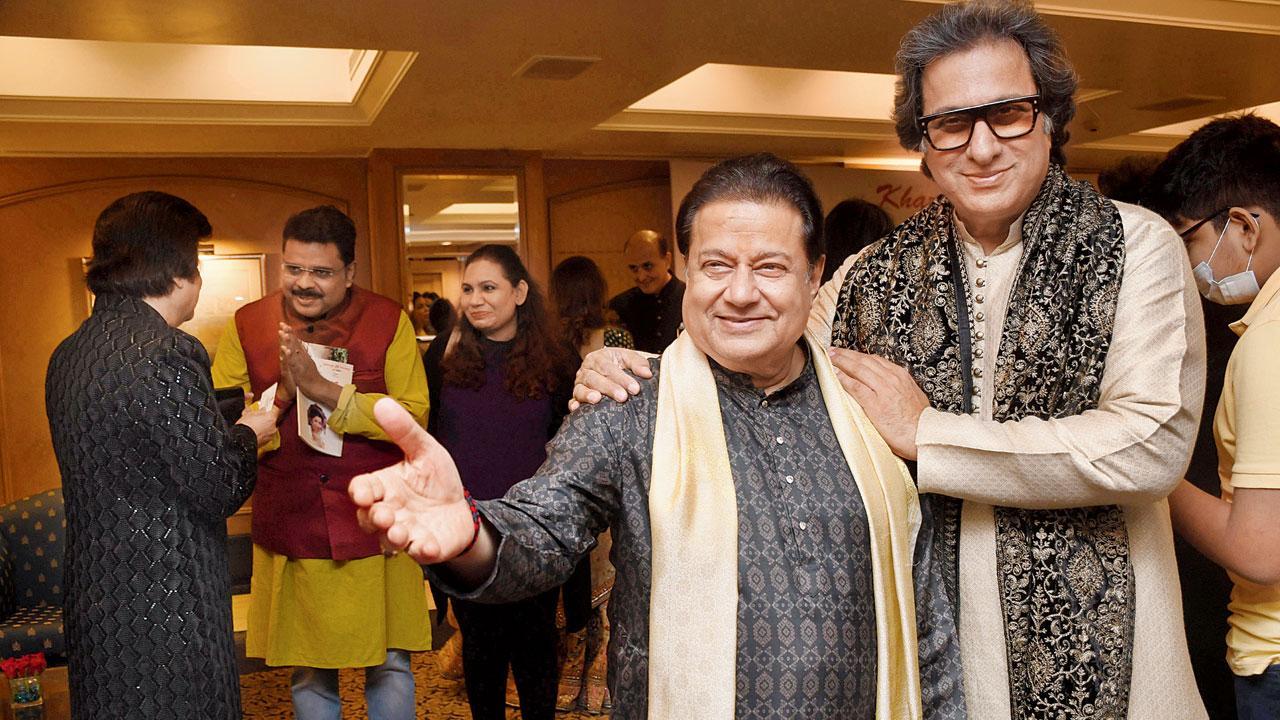
Jalota and Aziz
As they unravel the process of acquiring royalties, ISAMRA bosses Jalota, Aziz, and Tandon on why artistes should make “as much music as possible” to safeguard their futures
Parth Srivastava (MID-DAY; July 15, 2024)
Established in 2013, the Indian Singers and Musicians Rights Association (ISAMRA) has been spearheading the fight for monetary benefits for musicians in the film industry. Navigating the workings of music labels and associations to ensure that artistes earn their due royalties, the board of directors tells mid-day that they have worked towards tweaking laws that do not favour those who do the leg work.
The organization's CEO, Sanjay Tandon, says that in this day and age, “being aware of your rights” is imperative. “As a collecting body, we collect royalties on behalf of artistes, and subsequently pay them. Only in the recent past have musicians raised questions on these aspects, and our organization is working as the middleman to facilitate this exchange [of money],” he says.
A discussion on royalty becomes important in a world that’s increasingly dependent on artificial intelligence. With voice samples of artistes being fed to software that subsequently generates a new song in the desired voice, we ask Tandon if the rights of musicians are indeed protected.
“As of now, if people are using AI to create content for social media, we aren’t taking any steps. However, if they [are deriving monetary benefits by] uploading it on YouTube or other similar platforms, we are imposing copyright strikes.”
Chairman Anup Jalota, who has leveraged his stature to push for reforms in royalty distribution, has been instrumental in shaping policies that favour fair compensation. “Singers and musicians have always been under the hand of [music] publishers. We ensure that if a member’s song is played, either digitally or on the radio, they are compensated. However, if the song is never played, we cannot pay them,” says Jalota.
In a bid to put money into the hands of musicians, Tandon thus encourages singers to “sing as many songs as possible”. “Make as many compositions as you can. If you make a hundred songs, at least one will be a hit. And that can be profitable for you.”
At a time when reworking old ditties has become the norm in the industry, Jalota says “the original artiste always gets a share of the royalties”. “Even after the artiste’s demise, their children continue to benefit. For example, the royalties of Kishore Kumar are received by his son, Amit Kumar.”
Ghazal maestro Talat Aziz, who has also been associated with ISAMRA, says artistes must “understand the concept of distribution in music”. His efforts have been pivotal in addressing issues faced by musicians, particularly those working to further the classical music scene. “Those who understand the process can be empowered enough to demand fair compensation. This will help establish standardised practices for royalty distribution.”
Music and laws
- While the use of AI for entertainment purposes is not being objected to, ISAMRA is imposing a copyright strike if the voices of their singers are being generated for commercial purposes using AI tools.
- Only when a song becomes a hit, and is subsequently played on multiple occasions does it yield monetary benefits. The board suggests that artistes create as much work as they can to create a financial basket.
- ISAMRA says after the demise of an artiste, his or her children can continue to earn monetary benefits from royalties.
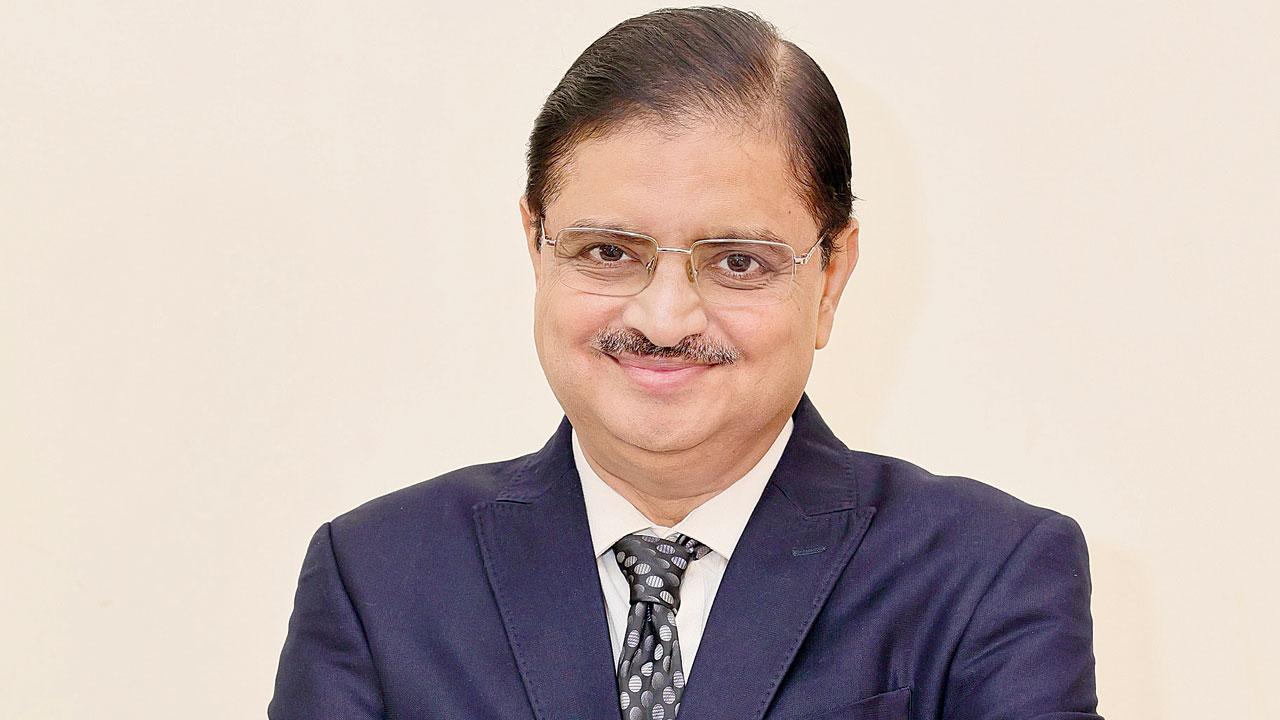
Sanjay Tandon
World Music Day: IPRS and ISAMRA musicians talk about their long struggle for copyright and royalties
4:44 PM

On World Music Day today, musicians, who are part of copyright and licensing societies in India like the IPRS and ISAMRA, talk about their long struggle for copyright and royalties, and how its bearing fruit
Soumya Vajpayee (HINDUSTAN TIMES; June 21, 2024)
The lack of copyright compliance remains a hot topic in Indian music industry. On World Music Day today, artistes who are a part of copyright and licensing societies in India, such as the Indian Performing Right Society Limited (IPRS) and Indian Singers’ and Musicians’ Rights Association (ISAMRA), talk to HT City about the ongoing struggle.
It’s unlikely for a music aficionado in India to not know about the issue surrounding the distribution of royalties for music creators and not just music labels and producers, which started in the 1960s. With music societies like the Indian Performing Right Society (IPRS) and the Indian Singers and Musicians Rights Association (ISAMRA) spearheading the mission, the industry has come a long way.
On World Music Day today, musicians Sonu Nigam, Shaan, Sameer Anjaan and ISAMRA Founder-CEO Sanjay Tandon, in an exclusive sit-down with HT City, delve into the topic of music copyright and how these societies — which are of the musicians, for the musicians and by the musicians — safeguard the democracy of music in India by ensuring justice for all the stakeholders, including composers, singers and lyricists.
Sanjay Tandon (Founder, Director and CEO of ISAMRA)
Unfortunately, in India, copyright is the least talked-about subject. If you compare the music of India to the scene in the US, UK and Europe, it’s suffering because these places have a proper copyright structure in place. In the initial years, more than the money, establishing the principle that you have a right is the greatest challenge. Also, while a lot was being done to safeguard the rights of composers and songwriters, singers were not really thought about. So, I decided to spearhead that mission.
Sameer Anjaan (Lyricist and Board of Director at the IPRS)
I had returned from London in 2002 after a meeting with PPL (UK’s music licensing company) and Nadeem (one half of the composer duo Nadeem-Shravan) told me how important it was to preserve my rights as a lyricist. He said, ‘Future digital hai aur agar humare rights humare paas nahin honge, toh humein kuch nahin milne wala’. So, I met Sanjay (Tandon) and sought his support for the IPRS. We wanted to take the matter to the government. We were lucky that Javed (Akhtar; lyricist and Chairman of the IPRS) sahab became a part of this mission.
‘Javed sahab nahin hote toh kuch bhi nahin hota’
Sameer Anjaan says, “Javed Akhtar sahab felt so strongly for the rights of the fraternity that he decided to spearhead the mission and since he was a Member of Parliament, it worked in our favour. He had a meeting with all music labels so that we could mutually sort things rather than going to court. But they weren’t ready. In fact, some music companies said, ‘Hum royalty nahin, aapko bheek de rahe hain’. Javed sahab was told, ‘Aap jo gaane likh rahein hain, chup chaap likhiye, warna woh kaam bhi aapko milna band ho jayega’. Uske baad, Javed sahab ne kaha, ’Ab baat meri zidd pe aa gayi hai’. He did research for three years about copyright from across the world, made a file and took a delegation to meet the government. It symbolised our unity as a fraternity, and both the ruling party and the opposition supported us. That’s when the Copyright Act was amended.”
‘Lata ji was always with us’
Sanjay Tandon says, “In August 1991, Lata ji and I attended a conference in Delhi and a minister in his speech said that singers are mere vocal instruments. That hit us hard. She was so upset that she wanted to walk away. Post that, I told her, ‘The mistake is ours. Bina roye to bachche ko maa doodh bhi nahin deti... Kya humne as a music community kabhi apna haq maanga?’ She asked me to promise her that alongside fighting for composer and lyricist rights, I would also fight for the royalties for singers. Lata ji, Sonu ji, Alka (Yagnik; singer) ji and Kavita (Krishnamurti; singer) ji fought for the rights of the singers since the beginning and Lata ji would accompany us to all the meetings. Her contribution to our mission was unparalleled.”
Shaan (Singer and Board of Director at ISAMRA)
A lot of our contemporaries who joined us in the mission were not hopeful of a result. Kitni baar humari himmat bhi toot jaati thi. Kaafi singers ne yeh assume kar rakha tha that if they joined us, they wouldn’t get work. They were so fearful of getting on the wrong side of the music companies. But ab sab cheezein sahi direction mein hain aur woh singers jo pehle shak karte the ab dekh sakte hain ki sabke ghar mein cheques aa rahe hain. It’s great that all music companies are now with us and we work in tandem.
Sonu Nigam (Singer and Board of Advisor at ISAMRA)
Jab se main iss industry mein aaya hoon, main nirantar ismein laga raha (fighting for musician rights and royalties). A lot of singers became part of the mission and quit after a while. But some of us, who were at the peak of our careers, were perseverant to not give up. We wanted to fight for the rights of our fraternity and we also lost work because of that. I am glad that we have come a long way and our efforts are bearing fruit. Achcha lagta hai jab humari meetings hoti hain. Saari music companies aur hum log pyaar se milte hain, achcha khaana khate hain and we discuss the way forward. Mere baare mein jo bhi negativity unmein (music labels) thi, ab sab theek ho gaya hai, so I am busy again (laughs).
Fact check
- Earlier, songs belonged to composers, lyricists and the music labels. Singers were neither considered owners of the copyright, nor were entitled to any royalty. In 2012, this anomaly was fixed with a landmark amendment to the Copyright Act, 1957, which recognised ‘Performer’s Rights’ of the singer of a commercially recorded song for 50 years from the beginning of the calendar year in which the performance is made.
- Until March 2024, the IPRS claims to have distributed Rs. 500 crore among the artistes. “And this is still the tip of the iceberg,” says Anjaan.
- The royalties start ticking from the day a song is released, and is credited to the artiste after almost a year.
- The IPRS distributed its first royalty, Rs. 14,000, for the song Aayega Aanewala (Mahal; 1949) in 2013.
- The ISAMRA distributed its first royalty, Rs. 51,000, for the song Lag Jaa Gale (Woh Kaun Thi; 1964), says Tandon.
Subscribe to:
Posts (Atom)