Showing posts with label Huma Qureshi interview. Show all posts
Showing posts with label Huma Qureshi interview. Show all posts
I don’t believe in ‘angry’ feminism-Huma Qureshi
10:54 PM

Ancela Jamindar (BOMBAY TIMES; May 1, 2026)
An actress who consistently prioritises substance over stereotypes, Huma Qureshi is as compelling in conversation as she is on screen. From redefining feminine archetypes to championing authentic empowerment, her perspective serves as a mirror to the evolving consciousness of the modern woman. During a recent visit to Ahmedabad for an event, Huma spoke at length about the complexities of womanhood, the fallacy of "angry" feminism, and why she refuses to be pigeonholed.
‘To do the tried and tested (on screen) is boring’
Huma’s career trajectory has been defined by a refusal to follow the "tried and tested" path, which she dismisses as "dead and boring". People are always ready to put you in a box. I always say, ‘Give me something you think I haven’t done, and I’m going to do the character differently and prove you wrong.”
Huma says, “Today, audiences are very smart, and we must respect their intelligence by giving them something they can truly engage with. As an actor, I would get bored doing the same thing repeatedly. My pact with my audience is to bring them something new every single time.”
Huma, who’s played layered, complex titular characters on OTT, admits that “Essaying intense roles like Rani Bharti in Maharani, Juhi Adhikari in Mithya, or dark, manipulative antagonists Badi Didi in Delhi Crime 3and Monica Machado in Monica O My Darling, which resonated with the audience, were deeply satisfying and enriching experiences. These shows also let me experiment with intense, dark and morally ambivalent characters who were not just cardboard cutouts as leads or even the antagonist.”
She adds, “Maharani really challenged me as a performer, and I want to bring the success I’ve had with Maharani on OTT to single-screen theatres as well. I want to be part of the kind of work that brings audiences back to cinemas.” Ask Huma what else lies ahead professionally, a genre she has yet to conquer, her answer is immediate: “Action.”
‘Morally grey female characters are accepted’
Reflecting on the industry's shift, Huma admits that she’s “excited” about the “acceptance of morally grey and complex female characters, probably because they are more real and relatable. There is space for far more nuanced portrayals and an audience as well”.
She says that the "damsel in distress or the one-dimensional vamp are relics of a time when cinema failed to represent real women. Audiences were always ready for layered stories," she says, adding, “The fault was simply that we weren’t consistently representing the reality of women on screen.”
'I am not an angry feminist; we need to move beyond constant comparisons'
Huma feels there’s an invisible weight often placed on women’s shoulders, and societal expectations can be a heavy mantle to carry. “It’s exhausting that women are often made to feel responsible for everything—the family’s honour, its dignity, and so much more,” she says.
For Huma, feminism isn't a battle of the sexes. “I don’t believe in ‘angry’ feminism," she says. "The idea is not to be against men; the real issue is patriarchy—a system sustained by men and women. We need to move beyond constant comparison."
She credits her own confidence to the secure men in her life, specifically her father and brother, saying that their “support allowed her the freedom to own her journey, mistakes and all. I believe that behind every successful woman, there are also secure and supportive men."
On her connection with Ahmedabad
Huma’s connection with Ahmedabad runs deep, fuelled by film shoots and a close circle of friends and not just promotional tours.
She says, “I love Ahmedabad. I think it's the best city ever. I get so much love here. I've visited Ahmedabad not just for promotional tours; I have shot movies here, and I have a lot of friends here. My connection with this city is beautiful. I haven’t been able to travel around much, though I have been here many times, but someday I would really like to explore it as a tourist.”
Huma Qureshi on Toxic getting postponed due to Dhurandhar 2: "I cut out the noise, do my job and check out"
9:57 AM

The actress talks about the change in the release date of Toxic and why she remains unfazed by it
Vinay MR Mishra (BOMBAY TIMES; April 9, 2026)
With Toxic—headlined by Yash— being pushed from it's original release date, [people started speculating that the change in the release timing was due to the alleged box-office competition with Dhurandhar The Revenge. Amid speculation over whether the film has been pushed to avoid a clash, Huma Qureshi addresses the noise, maintaining that such decisions are best left to the makers.
Speaking about the film’s delay, she says, “I’m of course very excited Toxic to come out, but I think the timing of these things has to be correct. And I’m sure, like, this decision made with a lot of like, thought behind it and whenever it comes out, I’m sure audiences are going to love it and have a great time.”
On the speculation and negative PR chatter around the film, Huma remains unfazed: “I don’t think about it. I. I feel like my job as an artist is to do work and the audiences have every right to receive it the way they intend to. But I mean, if I start only listening to other people and what they’re saying and thinking, then I won’t be able to do my job.”
She adds that she consciously distances herself from the noise post work. She adds, “So honestly, I do my thing and then I check out. I fully check out. Like, I’ve done my acting, I’ve done what I’m as a professional, what I’m supposed to do, and then I go off and I don’t like to read everything. I feel like reading every comment and reading every opinion and reading whatever just in a way just cripples you from doing something. As an artist, you have to be free and keep your energy really open and you can’t always predict how people are going to respond to something, so you shouldn’t do that.”
The actor also hints at a packed slate ahead. “There are like five releases now, which I’ve shot for already. I mean, some of them we can’t talk about, but the ones that you know are there, whether it’s a Toxic or it’s a Baby Do Die Do, which is a home production… that Saqib Saleem and I have produced under our banner Saleem Siblings," she signs off.
I’ve already got my Eidi from Yash-Huma Qureshi
8:43 AM

Vinay MR Mishra (BOMBAY TIMES; March 21, 2026)
Huma Qureshi sports a radiant glow in white ethnic wear as she celebrates Eid with a special shoot for us. For her, it isn’t merely a festival; it’s a feeling, a ritual of togetherness, and a gentle reminder of all that truly matters.
While this year, it’ll be a celebration at home, among her fondest memories is a chaotic, joy-filled Eid from her college days. “I came home late, and 17 of my girlfriends had already landed. The food had gone cold, but no one cared. We just sat and ate thanda khana – biryani, korma – while my mother kept yelling at us,” she recounts.
‘We often forget to be grateful for what we have’
Talking about what Eid signifies for her, Huma says, “Sharing with friends, family, people around you, your community, and perhaps people who are less privileged than you are. Ramzan is a month when we do a lot of things – whether it’s iftar or just sharing whatever we’re eating and opening our table out to friends and others. I think it’s a very important part of who we are as a family. I have a bunch of friends whom I don’t even need to invite. If it’s Eid, they’ll come home. The relationship is not just with me, but also with my family and mother. They want to have uske haat ka khana.”
For Huma, Ramzan is less about grand gestures and more about mindful pauses. “We often forget to take a moment, pause and be genuinely grateful for what we have in our daily life,” she says.
‘As kids, Eid was about Eidi and chocolates’
For Huma, Eid fashion was serious business growing up. “What will I wear? Salwar kameez or lehenga? It was a proper discussion when I was a kid,” she laughs. Then came the real highlight – eidi. “All of us cousins would stand in a line after namaz and collect money from every elder. Then we’d try to sneak back in again. The day would end with counting, comparing and of course, chocolates.”
Eid memories for Huma cannot be complete without her actor-brother, Saqib Saleem. She shares, “I remember stealing his money! We would have lots of fights over chocolates, because he would save them and I would finish mine.” Cooking, she admits candidly, is not her strength. “Unfortunately, I have not learned how to make a good biryani, but I definitely know where to find a good biryani and to appreciate it. That’s also an art,” she says with a grin.
What Eidi would you want from the following people?
Yash: The film Toxic, I’ve already got my Eidi.
Saqib Saleem: Undivided attention and time
Nawazuddin Siddiqui: Already got my Eidi—we’ve worked together
Farah Khan: I don't want any Eidi from her. She sends me so much food like every week. Maybe she should stop sending me so much food! (Laughs)
Rachit Singh: A free acting workshop. He is the best.
Tara Sutaria: She should just keep smiling all the time. She has a gorgeous smile.
Theatres and studios have to stop treating smaller films like trial runs-Huma Qureshi
10:41 AM

With ‘Single Salma’ being allotted only a few screens in favour of the re-released ‘Baahubali’, actor and producer Huma Qureshi says the system’s preference for event films is killing slice-of-life movies
Mohar Basu (MID-DAY; November 3, 2025)
Even as Huma Qureshi’s Single Salma was the new Hindi release of the week, most single screens and multiplexes played Baahubali: The Epic, which was a re-release. The Qureshi, Shreyas Talpade, and Sunny Singh-starrer opened in 200 cinemas across the country. Sharing fan messages on Instagram, Qureshi — who is also one of the producers of Single Salma — revealed that her timeline is flooded with requests for more shows of the Nachiket Samant-directed film (Fighting for screens, Nov 1). Many people from Jamshedpur and Delhi wrote to her on social media that the movie wasn’t available in their local cinemas.
This isn’t the fate that Qureshi had envisioned for her production. “It’s tough out there for films like Single Salma. It does not have massive marketing budgets or star-driven optics. Theatres are fighting for space between superhero movies, franchise films, and re-releases. So smaller, heart-led stories get squeezed out — not necessarily because the audience doesn’t want to watch them, but because they never get the chance to. The system still prefers to play safe,” she says.
Single Salma tells the story of the protagonist, who, after years of taking care of her family, decides to tie the knot. The actor understands that such an intimate story doesn’t offer the extravaganza that tentpole films promise, but all she is fighting for is a fair chance. “What’s missing is balance. Every big banner release should co-exist with a few story-driven ones,” she urges.
Often such movies go on to find popularity when they drop on OTT platforms. But the promise of an eventual digital release has changed the mindset of producers.
Qureshi explains, “Smaller films often get caught in a crossfire between studios and platforms. The OTT [heads] say, ‘We’ll support it after a theatrical release,’ and the studio then does a token release just to honour that agreement. So it’s not a proper run; it’s just ticking a box. A film like this deserves an honest chance in theatres. We need more courage. Not every film has to be a Rs 200-crore spectacle to deserve attention. Theatres and studios have to stop treating smaller films like trial runs. Give them good slots, let the audience discover them. Also, we need to stop calling them small films. A good story is a good story, the screen size doesn’t define its impact.”
Huma Qureshi on engagement rumours with Rachit Singh: "When the time is right, I’ll make an announcement"
9:43 AM

Vinay MR Mishra (BOMBAY TIMES; October 16, 2025)
Huma Qureshi, who turned showstopper for one of the shows at the recent Bombay Times Fashion Week, addressed the ongoing buzz around her engagement. The chatter around her personal life exploded in mid-September after a viral picture and a cryptic Instagram post from singer Akasa Singh sparked speculation that the actress had exchanged rings with her rumoured partner, acting coach Rachit Singh.
‘Why should I clear any air?’
Responding to it, Huma said, “What can I say? People have too much time on their hands. I’m sure when the time is right, I’ll make an announcement. But before I can announce, people have already decided to do it. When it happens, we will let you know. Why should I clear any air? I didn’t put it out there… It is somebody’s active imagination. When my wedding happens, everyone will know.”
‘My personal life is my private matter’
When asked if the speculation bothers her, Huma replied, “Not at all. I don’t even think about it. I live my life, I’m happy, and I know what’s happening in my life. My contract with my audience is only as far as my work is concerned. My personal life is my private matter.”
Acknowledging public curiosity, she added, “I do understand that because I’m a public figure, everyone’s interested in what’s going on with my life — which is sweet and kind. The day it stops happening, perhaps, that might bother me. It’s the deal you make with the devil — the price of all the love and attention I get for my work. And it’s a small price to pay.”
We all thought OTT would change narrative styles-Huma Qureshi
10:02 PM

Taking ‘Bayaan’ to Toronto International Film Festival, Huma Qureshi discusses betting on an indie movie and how it got international support
Mohar Basu (MID-DAY; August 15, 2025)
Huma Qureshi has made several trips to Toronto, but the upcoming visit will be special for her. The actor will take Bayaan to the Toronto International Film Festival (TIFF), where Bikas Ranjan Mishra’s directorial venture — the only Indian title to be selected in the Discovery section — will première on September 7. “This is my maiden visit to the festival,” Qureshi says gleefully.
In Bayaan, the actor plays an investigator who goes to Rajasthan to solve a case that shows her how our society is steeped in patriarchy. Saying yes to the thriller was an instinctive decision, she says.
“The script was fantastic. Bikas and Shiladitya [Bora, producer] were sure of the story they wanted to tell — it was India-specific, but told with a larger global audience [in mind]. The film is supported by International Film Festival Rotterdam’s Hubert Bals Fund. During the [Film Independent’s] LA Residency, the scripting was done under the mentorship of Craig Mazin of Chernobyl [2019] fame. It felt like something I wanted to bet on. I had wanted to do an indie project for a long time. It is getting so much appreciation and that reinstates my faith in the fact that passion drives work in the movies.”
In the past few years, Qureshi shone in digital entertainment with films like Monica O My Darling (2022) and Tarla (2023), and the series Maharani (2021-24). She has been vocal about the pay disparity in OTT entertainment, pointing out that despite the show’s success, her remuneration is nowhere close to that of male actors. Taking that thought forward, she says the pay gap is only the tip of the problem.
“The industry loves to call OTT a level-playing field, but the gap is real. The disparity will get worse. Today’s content is so different from the quality content we were making a few years ago. We all thought OTT would change narrative styles. While we see shows like Breaking Bad and Squid Game, where are those shows from India that can break barriers? To have systemic changes, you need mindsets to shift, and we are nowhere close to that shift yet.”
Qureshi has been exploring another creative frontier — writing. In 2023, she released her debut novel, Zeba: An Accidental Superhero. While it was initially written as a concept note for a television series, she turned it into a book. Is the screen adaptation in the pipeline? “I’d love to do a screen adaptation. It would be wonderful to go back to that world from a fresh perspective,” she says.
Huma Qureshi opens up about her dance number in Maalik: "Why should I not express my sensual side as a woman?"
9:08 AM
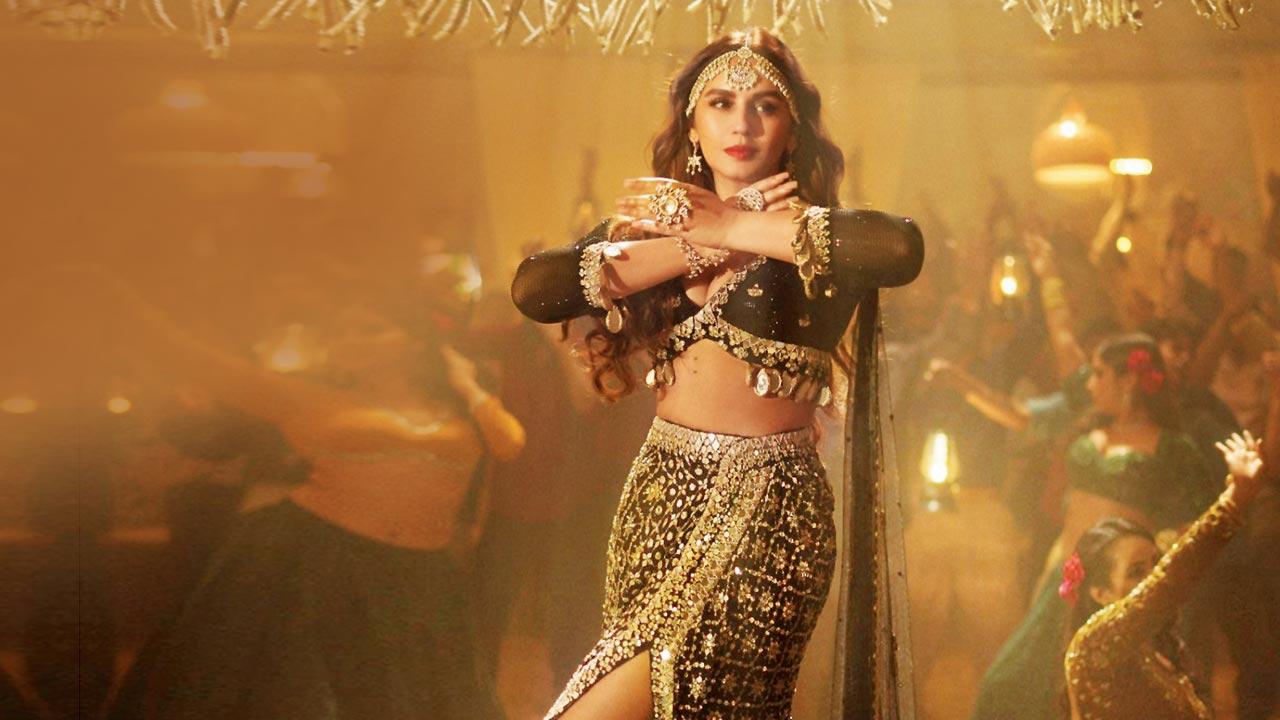
Sharing an exclusive look of her dance number from Maalik, Huma Qureshi says dance numbers don’t just cater to the male gaze today, but celebrate a woman’s sexuality
Mohar Basu (MID-DAY; June 20, 2025)
Rajkummar Rao and director Pulkit have built a world of grit and grime with their upcoming film, Maalik. Bringing a dose of glam into the actioner is Huma Qureshi, who features in the song, Maalik ki mehfil mein mallika ka swagat. Sharing the song’s first look with mid-day, ahead of its release today, the actor reveals that her love for spectacles made it an easy yes to front the dance number.
“I enjoy spectacle! I enjoy Indian films that have elaborate songs. I’ve grown up dancing on Beedi from Omkara [2006]. So, this felt like a perfect song to show who I am,” she says, before adding, “Until your song plays at a party, have you even made it?”
Featuring in dance numbers seems at odds with Huma Qureshi, who is known to headline powerful female stories in Maharani, Tarla (2023), and the upcoming season of Delhi Crime. Mention this, and she says it’s the perfect way to strike a balance.
“I always approach everything as a performer. I want to balance my work as an artiste. People ask me if dance numbers dilute my image, but I don’t want to have a set image. Just because I can do an acclaimed show like Maharani or Delhi Crime, doesn’t mean I can’t do this. I refuse to get myself boxed. No one can tell me what I can or cannot do!”
We’re in an age where ‘item numbers’ are being reimagined as empowering cameos. The actor says she fully trusted the director’s vision as she shook a leg to the Sachin-Jigar composition that is choreographed by Vijay Ganguly.
“In 2025, we women are aware of these songs’ intentions. Earlier, such songs were made for the male gaze, but now there is a shift of perception. Now, it is about celebrating female sensuality, form, and sexuality. It’s an important differentiation. When a filmmaker like Pulkit decides to do a song like this, you know you’re in safe hands. His movie Bhakshak [2024] was one of the most powerful stories of recent years. When we approached this song, I felt empowered. The people, who want to present you, are doing so with the right idea. Moreover, why should I feel shy as a woman and not express my sensual side?”
If we stop tourism to Kashmir, we will let the haters win-Huma Qureshi
8:39 AM

Vinay MR Mishra (BOMBAY TIMES; May 30, 2025)
On Wednesday, the Jammu and Kashmir Tourism Department, in partnership with the Border Security Force (BSF), hosted a special event at the Octroi general area in Suchetgarh to promote border tourism in Jammu. Huma Qureshi, who attended the event, met the families affected by the crossborder firing, interacted with the troops and appealed for tourists to return to the region and not let hate win. Speaking to us, Huma reflected on her experience of meeting the soldiers and their families.
The invitation to visit Jammu and meet BSF personnel came at a crucial time, and Huma was quick to accept. “When the officials reached out to me and said that they wanted me to come to Jammu, especially to Suchetgarh post, to meet with the BSF jawans, I immediately said yes,”
Huma shares. “It is an important time – we need to let them know that what they have done for this country, for the safety and security of India, has not gone unnoticed. We salute their valour and bravery.”
‘If we stop tourism, we let haters win’
Stressing on the importance of not letting hate win, Huma says, “The whole idea of this exercise was that we should not let fear become our identity. We should not let hate become our identity as Indians. They are trying to divide us, instil fear and hatred, and we will not let hate win. This is a time for all of us to come together as Indians and keep up the morale of our soldiers. We should just remove hate right at the root.”
Supporting tourism to the region, Huma adds, “I urge every single Indian to just come and meet the armed forces and interact with them. If we stop tourism to Jammu, if we stop tourism to Kashmir, we will let the haters win. We will let the bad guys win. The idea is that we have to come together as one India, one voice and say that we will not be afraid. We will dance, sing and perform together, and you will not take away from our shine.”
‘It was heartwarming meeting the families of BSF soldiers’
Upon reaching the Suchetgarh border post, Huma says she was struck by the atmosphere and the courage of those stationed there. “The Suchetgarh border post is literally ground zero – it is India and Pakistan border. There was no sense of fear. I have never felt safer in my life. They were so warm, especially the female soldiers,” she shares.
Huma also met the families of the jawans. “I met so many mothers, wives and children. It was heartwarming. When you meet the families of the BSF soldiers, you really realise that their sacrifice is something that we can never even think about. They do it with just a shrug and a smile,” she says softly, adding, “I also visited the family of one of the martyrs – Raj Kumar Thapa (Additional District Development Commissioner of Rajouri, who was killed by Pakistan's shelling earlier this month). I met his family and it was really heartbreaking. There’s not much I could say but just to sit there, share their grief, and let them know that the son, the father, the husband that they love so much – we will always remember his sacrifice.”
‘Being an Indian is a much larger part of who I am than being an actor’
The Maharani actress also acknowledged the difficulty of expressing opinions today, but stood firm in her resolve to support the nation. “It is difficult to be anyone today and have an opinion. Sometimes, even if you’re trying to say something with the most honest intentions, social media or people or just this mindless chatter has a way of twisting your words around and putting it in a different light which is not how you meant it. Of course, I totally understand why people are very reluctant to voice their opinions. However, showing solidarity with the soldiers of our country doesn’t require me to think twice. I think it’s the most natural thing to do. Being an actor is a very small part of my identity. Being an Indian is a much larger part of who I am,” she shares.
Non-veg food wasn’t available in certain areas of Ahmedabad; people would cook and send it for me-Huma Qureshi
8:39 AM

Yesha Bhatt (BOMBAY TIMES; December 12, 2024)
While Huma Qureshi has played some feisty characters in her career, the Double XL and Gangs of Wasseypur actress says that she “never picked those roles consciously.” She adds, “I like playing characters that I have not done before. They just happened to be feisty and fierce because I don’t know women who are not like that. I always want to play real women. I observe people around me closely and incorporate certain aspects of their personality in my work.”
However, Huma has never really got to play herself on screen. She says, “I’m so amazing, they haven’t figured out a way yet (laughs)! I only get to be myself during promotional tours.”
She adds, “I think I have a great sense of humour, but it never really comes to the fore. Most of my directors like to see me doing strong roles. I think I’m ready to do a slapstick comedy. I’m a goofball in real life.”
‘People had told me not to do OTT shows’
The Maharani, Mithya and Leila actress seems to be enjoying doing OTT shows. She says, “I think I must unapologetically say that I am the maharani of OTT. I think I was the first actress in this country to be leading a show called Leila. At that point, a lot of people told me not to do OTT. They said it would look like my career was over. However, I knew OTT was the future; it’s just that it happened faster due to COVID.”
However, the actress is open to working in all mediums and says, “I just want good roles and to work with great makers. I feel the audience is very different on every OTT platform as compared to audiences that go to theatres to watch films. In a web series, you have the time to discuss finer nuances. That’s why OTT is working all over the world. In films, aap ko do-teen ghante mein sab kuch dikhana hota hai.”
‘Your self-worth has got nothing to do with other people’s validation’
Huma, who has also authored a book and produced a film, says, “I feel like I’ve just scratched the surface. To an extent, what you do as an actor depends on other people offering you the right role at the right moment. I am really enjoying my journey as a producer- putting out stories that I like and resonate with. I want to be a part of more films that people will remember.”
Talking about audience’s appreciation, she adds, “Awards, rewards, everything matters. Those who say it doesn’t matter are probably lying. As an artiste, I live on other people’s appreciation and acceptance. But are these the only things that matter? Perhaps not. I feel your self-worth has got nothing to do with other people’s validation. Even without it, you will always remain the same person.”
On reacting to trolls, Huma says, “I have never responded to someone (trolls) saying anything bad to me. Probably, being an actor has made me thick-skinned. I am an entertainer and I am here to entertain people. I no longer get triggered by other people’s negativity.”
‘Shooting in the old city areas of Ahmedabad was a beautiful experience’
In May, Huma shot her upcoming film Gulabi in Ahmedabad. She says, “While it was terribly hot, the only thing that kept us going was the beautiful old city areas of Ahmedabad. I had never been there, and it was stunning. It was nice to see the families preserving that heritage, architecture, and way of living. I hope I’ve done justice to Gujarati women and the language (in the film).”
She adds, “There were so many people every day who would send me dabbas, and lunch was like a feast. While non-vegetarian food wasn’t available in certain areas, people would cook food at home and send it for me.”
We are expected to look nice but be replaceable as actresses-Huma Qureshi
8:18 AM

Niharika Lal (BOMBAY TIMES; April 5, 2024)
From glam to girl-next-door, Huma Qureshi has portrayed a wide range of characters over the years. However, for the portrayal of Rani Bharti in Maharani, Huma went completely deglam – from no makeup to wearing polyester saris and rubber chappals. In conversation with us, Huma talks about why actresses are expected to look a certain way and how growing up in Delhi helped her prepare for her roles in Maharani and Gangs Of Wasseypur.
‘Deglamourizing yourself is seen as problematic’
On expectation from actresses to look glamorous, Huma says, “One thing I did for Maharani was not letting my vanity get in the way of playing this character. There is often a notion that when you’re playing a deglam character – you’re aging yourself, you’re deglamourizing yourself. It’s almost seen as problematic. I think collectively, we are all responsible for considering deglamourization problematic. Once during an interview, a male journalist asked me about deglamourizing, and I told him that it comes from patriarchy. As women (actors), we are only supposed to look nice, pretty, and delicate, hence replaceable. So many male actors play deglamourized parts, but they are never asked, arey aap toh deglam ho gaye. Tab toh bolte hain waah aapne kya achha kaam kiya hai. So, as women, we are always seen from a particular lens.”
Huma adds, “I also feel ladkiyon ko ye sikhaya jata hai ki aapko glam role play karna chahiye toh aapki fan following badhegi. But I think actually, aap jitna relatable hote hain utna aapki fan following badhti hai.”
‘Growing up in Delhi helped me get the Bihari accent right’
One of Huma’s most memorable roles was Mohsina in Gangs of Wasseypur for which she adopted a strong Bihari accent. The actress shares with us that she was able to get the Bihari accent right because she grew up in Delhi, a melting pot of the entire country.
“I was Mohsina in Gangs Of Wasseypur, and no one knew who I was and where I was from. In an interview after the film a journalist told me, ‘Arey aap toh badi achhi angrezi mein baat karti hain.’ And I was like I’m happy that you think that I’m possibly a girl from Bihar, but I’m not. Dilli mein itna melting pot hai pure desh ka toh aap bachpan se itni north ki awaazein sunte hue bade hote hain.”
Huma adds, “The character got so much love that people forget Huma, who is a cosmopolitan girl from south Delhi. My whole life has been like in a 5km radius of central Delhi. I went to south Delhi school, south Delhi college – Gargi – and we grew up in a very Hinglish surrounding.”
‘Rani’s character in Maharani has that quiet strength’
Who does Huma think Rani Bharti is? She says, “I think she is the penultimate common woman as they say. She represents India for me, in that sense. I think she is strong, she is brave, and she is someone who is unafraid to ask questions. She has that quiet strength that doesn’t demand attention, but she just is. And she is able to navigate all spaces in the public sphere when she has been thrust into it almost against her will. In that sense, we all have that fantasy, ‘humko ek din raaj karne ka mauka mile toh? Ek din CM ban jaye ya PM ban jaye toh kya hoga?’ In that sense, she fulfills common person’s fantasy in that sense. I think which is why people see a lot of themselves in Rani Bharti.”
Why is there pressure on women to always look 19?-Huma Qureshi
8:26 AM

Renuka Vyavahare (BOMBAY TIMES; September 3, 2023)
Monica O My Darling, Maharani, Double XL and Tarla – Huma Qureshi’s film choices are anything but predictable. The actress tells us that she is unafraid of experimenting and out of the box is what she wants to be with every role that she plays. In a conversation with us, she talks about this and much more. Excerpts…
‘The notion of what works and what doesn’t has changed’
I am enjoying the work I am doing and taking each day as it comes. The film industry has opened up because of OTT platforms. People are consuming more content and are open to newer ideas. Female-centric stories are doing well. The notion of what works and what doesn’t has changed.
‘Playing myself in movies would be boring’
People asked me why would you do a Tarla after doing a role like Monica? The truth is, I want to challenge myself as an artiste. My biggest high is that no one can say that I can do only a certain kind of role. I have a skill set as an actor that I want to explore to the fullest. I want to experiment with different genres. I loved recreating what Helen ma’am or Parveen Babi did back in the day in Monica O My Darling. I loved watching Tarla Dalal’s old videos and observing her mannerisms, style of talking, and cooking. Playing myself in movies would be boring. I live with myself all the time anyway.
‘I didn’t want to wear a fat suit to play an overweight person’
When the trailer of Double XL came out, people asked me if that was my real arm (in the scene where I am seen with cricketer Shikhar Dhawan). I was told by people, ‘Yeh kya pagalpan hai? What have you done to yourself and how much weight have you put on!’ I told them this was a story where if I didn’t put on 20 kilos, it wouldn’t look real. Just wearing a fat suit or padded clothes wouldn’t be honest. I didn’t want girls to look at me and say, ‘They are actresses, what do they know about being fat-shamed or feeling insecure about their looks? What do they know about being overweight?’ I decided to go the whole hog. That’s the only way the film could have touched people. Mazaa useeka hai. I get inspired when I see actors who transform themselves for roles. After working for 10 years, I don’t want my audience to feel fatigued when they look at my face. It’s good when people don’t know what to expect from you.
‘I want filmmakers to write out-of-the-box roles for me’
I am a non-controversial person, who loves to focus on her work. I just speak my truth as any person should. If that makes a statement, so be it. I am not trying to be sensational. I remember being asked, ‘Why would you do a Tarla at this point in your career when you are at your prime?’ That’s when I said, why is there pressure on women to always look 19! I am at a stage in my life where I can play someone in her 20s, 30s, 40s and even 50s if need be. I want filmmakers to look at me and feel that ‘Let me write something for her’… crazy or out of the box.
‘I am not interested in playing safe parts’
I don’t want to be remembered as just a pretty face. I want to be known for my body of work. I feel happy when someone says, ‘Look at the wide range of characters she has played.’ That’s all I have got. My next films are completely different and clutter-breaking. If I am afraid of experimenting and I stick to playing safe parts, then I am not doing justice to my own dream. As a little girl, I loved dressing up and playing different roles. This is to honour that little girl.
Huma used to have a long ‘farmaish’ of kebabs and tangdis that she wanted to share with friends at school-Saleem Quereshi
8:24 AM
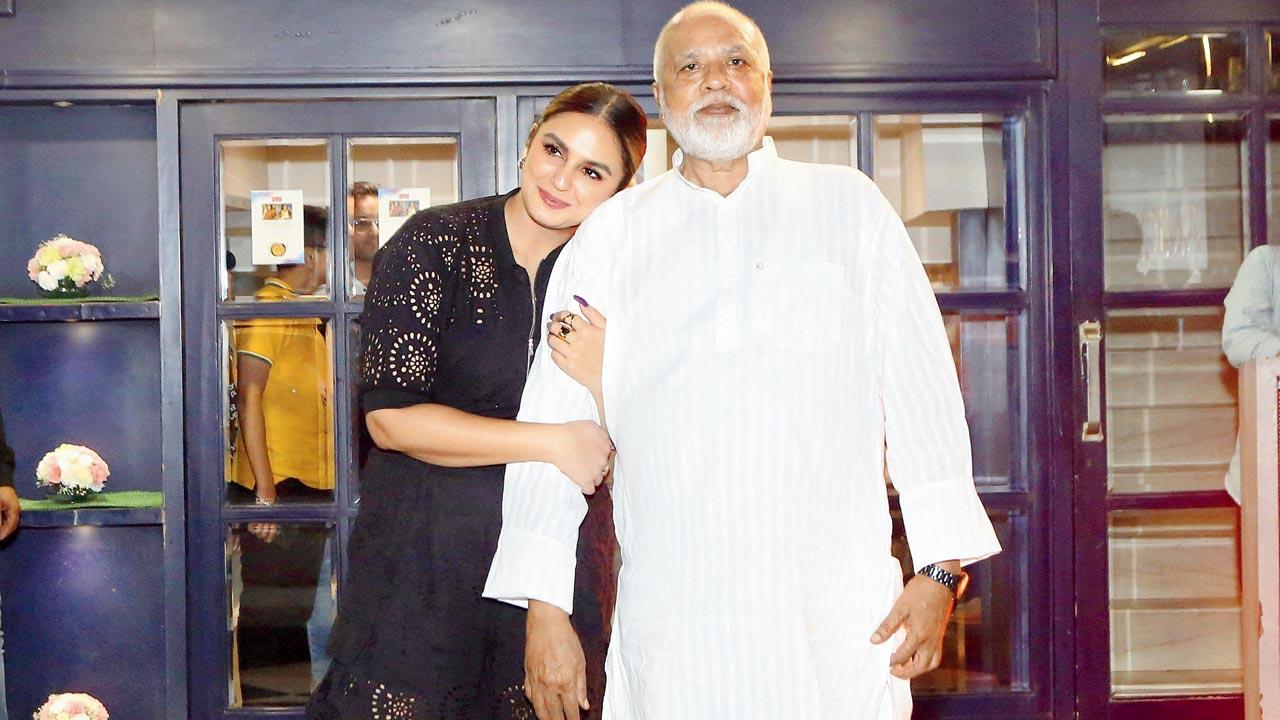
Heartwarming meals, and the love for feeding, is the common strains running through all the members of the Qureshi family. In a freewheeling chat, Huma Qureshi, who plays Tarla Dalal in her new film, and her restauranter father Saleem share the secret ingredients of success
Nasrin Modak Siddiqi (MID-DAY; July 9, 2023)
What is it with actress Huma Qureshi and food, we wonder. At an Italian restaurant in the Ashhti Ghat of Varanasi, there was a dish called Huma Qureshi special, named after the actress after she shot there for Gangs Of Wasseypur. Her movie, Double XL, addressed stress-eating as a subject. She acted in the food-centric Luv Shuv Tey Chicken Khurana, and the last time this writer met actress Huma Qureshi, along with her brother Saqib Saleem, it was to chat about iftar. It would then not come as a surprise that her father has been running Delhi’s famous Saleem’s restaurant for almost 50 years ago. Now, she also plays the lead in Tarla, a film about the journey of the legendary Tarla Dalal from a home chef to a cookbook author and culinary star, which released last Friday.
“Food and I are inseparable. In our family, food and feeding is very important. We love to host friends and family and many of them come over, just to have a good meal. My father was passionate about food, and my mother got hooked on it when they got married,” says Huma.
Ask her about her first, favourite food memory and she says, “It’s always been around Eid when people would just come over to eat”.
“No, no, that’s not right,” her father, Saleem Qureshi interrupts. “She has forgotten, but I haven’t, that every day, and mind you, every single day, she used to have a long ‘farmaish’ [wishlist] of kebabs and tangdis that she wanted to share with friends at school. I’d gladly have it made for her according to each of her friend’s spice preferences. Daily ke toh inke nakhre hote the bhai [It was a daily drama],” he laughs.
“Tangdi is still my favourite, though nutritionists insist on having chicken breast, I do prefer the leg piece and treat myself to it occasionally,” she laughs.
Many from Kailash Colony, South Delhi, have seen Saleem’s transform from a butcher’s shop to one of the city’s most successful restaurants. We are told their kebabs and tikkas are to die for. But coming from a family of raw meat traders and butchers, it wasn’t easy for Saleem to convince his family to start a restaurant.
“We were a bunch of friends who loved eating good food. Chicken tandoori and mutton burra were my favourites. We would meet every evening, cook food and have deep discussions on the preparation and methods of different dishes. We had access to the best meat and other ingredients and would test what we could make today with which part of the meat—from kormas to niharis to kebabs—we experimented every day. That’s where the idea for the restaurant was born”.
But, in his family, this was considered blasphemy. “My father was so upset that I would be serving food to people and washing their dishes. For 15 days, no one spoke to me. I had to get my mother to intervene and convince the elders to allow me to follow my passion. Today, almost 80 per cent of our extended family is in the food business. The younger generation is grateful that I paved the way. I am humbled, but honestly, all I did was just follow my heart,” he smiles.
Huma, who isn’t interested in cooking, only eating, says that her father and Tarla Dalal followed their passion around the same time and it took them places. “She was passionate about vegetarian food, he loves non-veg and yet, food is such a unifying factor, bringing people together. At this age too, my father is willing to learn. When he saw the batata mussalam in the Tarla trailer, he looked up the recipe, put his mind to it and came up with a dish. It’s now being served at the restaurant and is gaining popularity among non-veg lovers too. Potato in a creamy, buttery gravy—what’s not to like, right?”
Huma has never needed to promote her father’s restaurant as it already has a loyal following. So, what’s the recipe for Saleem’s success, we ask?
“For a good non-veg dish, bade log yeh kehke gaye hai ki gosht kam se kam badshah hona chaiye, bananae wala kam se kam wazeer hona chaiye and masalae gulam hai [it is said that the meat should be at least the king, the cook should be at least the minister and spices are mere servants, acting on the instructions],” he tells us, adding, “For 25 years, I have survived on just four hours of sleep, ensuring that everything is perfect, always. In our business, we have no days off and to run a successful one, you must have the good intention to feed—niyat mein taqawat honi chaiye—otherwise, even if you use the best ingredients, you’ll not be able to make a memorable dish.”
Huma’s mother couldn’t cook when she got married. “At one time, she added water to bhindi and look at her now, she’s left everyone—including me—behind with her culinary prowess.” Ask the father-daughter about their diets, Huma says she loves nihari, mutton seekh and chicken korma.
Saleem says, “Huma ke ajeeb ajeeb healthy diets hote hai [she follows many weird and healthy diets], I love my non-veg for three meals. Breakfast is nihari and khameeri roti; lunch and dinner is hari mirch ka kheema or kadhai gosht or korma. In veg, (if I ever have it), it is navratan korma, paneer kadhai and dal makhni, which you must try for sure,” he adds, inviting us to his dastarkhwan in Delhi.
And can we expect a branch of Saleem’s in Mumbai? “Inshallah, soon,” he signs off!
There is a generation of women that started their lives again in middle age. That needs to be celebrated-Huma Qureshi
9:56 AM
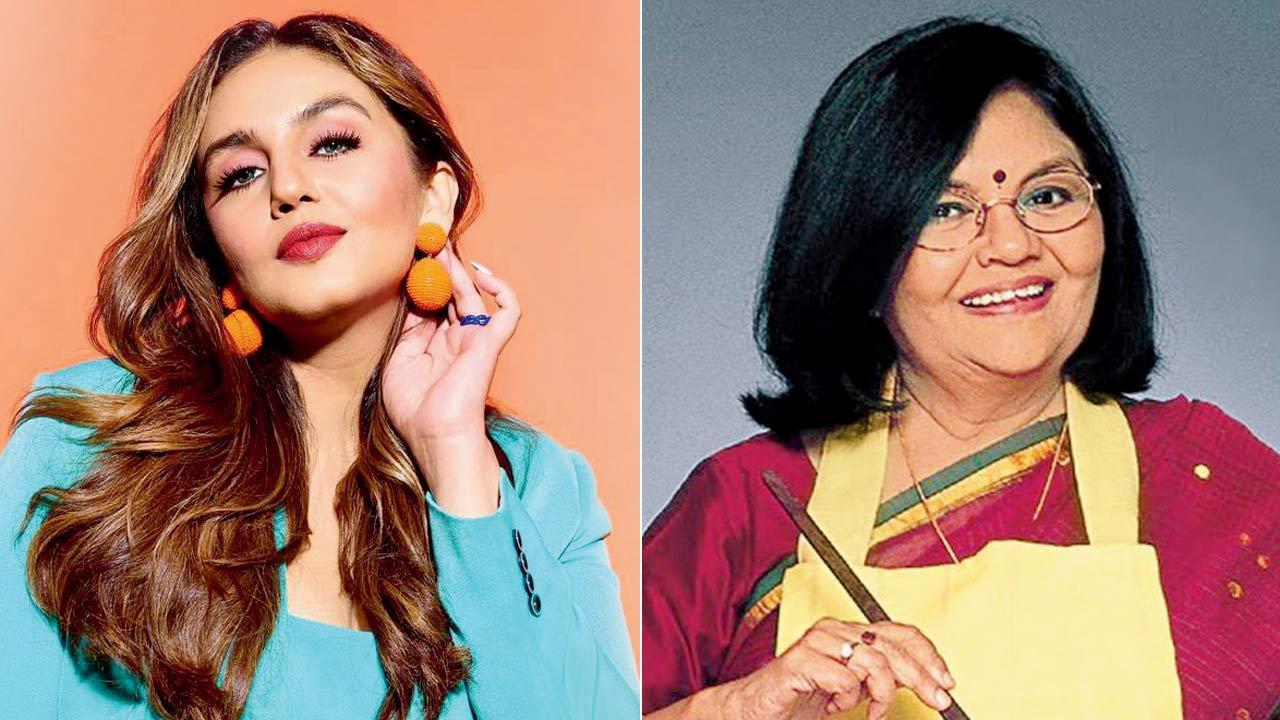
Playing Tarla Dalal in eponymous biopic, Huma says film celebrates women who chased their dreams after years of being bound by family duties
Priyanka Sharma (MID-DAY; June 30, 2023)
To Huma Qureshi, the essence of Tarla can be perfectly captured in one line—“You can cook, but you don’t have to be confined to the kitchen”. It’s this liberating thought that stayed with the actor as she stepped into the shoes of the late Tarla Dalal, renowned chef and cookbook author. A thought that deserves its moment on the screen, because it not only celebrates women who defy ageist norms to chase their dreams, but also propels others to not lose views of their goals.
“It’s important to tell this story because this is what has happened to our mothers and grandmothers. They were pushed into getting married and having children. When their kids went to college, they suddenly realised, ‘Now, nobody needs me.’ I have seen my mom and aunts [feel this]. Some of them opened salons, others tried their hand at jewellery business,” recounts Qureshi.
In chronicling Dalal’s journey from a homemaker to India’s favourite cookbook author, Piyush Gupta’s directorial venture shows how it’s never too late to pick up the reins of your life. “There is a generation of women that started their lives again in middle age. That needs to be celebrated,” she emphasizes.
The ZEE5 film, also starring Sharib Hashmi, is centred on a 30-something protagonist. Qureshi feels it’s a refreshing change in Hindi cinema that is largely populated by young characters. “Through pop culture, we have [pushed] this young adult obsession where it seems by the time you are 30, you have no value. It’s so unhealthy. What about the rest of your life? Today, an 18-year-old is giving skincare tutorials! Turn 50 and then let’s see what you know about skincare,” she laughs.
Ageism is a manifestation of sexism that women battle regularly across fields. Who knows that better than women in the movie industry? Qureshi is appalled at how female actors are considered dispensable.
“Actresses are made to feel relevant only if they are pretty and hot. We are not papaya that will get stale and have no value. We are artistes who will become better as we age. That’s the story we need to put out. You have to be taken seriously, and you should take yourself seriously.”
I’d love to do a spin-off of my female cop character in Valimai-Huma Qureshi
11:36 AM

Logesh Balachandran (CHENNAI TIMES; June 23, 2023)
Huma Qureshi was in the city recently and spoke to us about her association with Tamil cinema, her approach to scripts and the kind of films she wants to do. Huma states that she’s always open to doing films in Tamil. “If there is something good and exciting, I’ll jump at the chance to take up the offer. Even if it’s a small film, without big stars like Rajinikanth or Ajith, I would love to take it up,” she says.
‘I’D LOVE TO DO A SPIN-OFF OF MY CHARACTER IN VALIMAI’
I love Tamil cinema, and I want to work here more often, but it all depends on the right opportunities and the availability of dates. It was a great honour to work with Rajini sir (Kaala) and Ajith (Valimai). I was lucky to be in the right place at the right time and these wonderful films fell into my lap. I’d love to do a spin-off of my female cop character in Valimai. I should probably tell my producer, Boney Kapoor, about this idea.
‘I LIKE TO DO FILMS THAT MAKE PEOPLE SEE THINGS IN A BETTER WAY’
My approach to scripts is simple: choose the best that is offered to you. I was an outsider, and it wasn’t an easy journey, but I love my work. So, I wake up every day with a lot of fire in my belly, go in front of the camera, and deliver my best. I like to do films that educate people and have a message for the viewer, not necessarily political films, but those that make people see things in a better way.
‘I ENJOY MY VISITS TO CHENNAI’
Even though it is a little hot, I enjoy my Chennai visits a lot. That said, these days, it is hot almost everywhere. I love shopping and spending time in the city. Especially, as another festival season is approaching, it’s a good time to buy things for you and your family. I do like to pick things myself.
Monica is James Bond in a red dress-Huma Qureshi
7:53 AM
Huma, who landed the eponymous part in Monica O My Darling due to her red lipstick, breaks down why she views her manipulative character as a hero
Priyanka Sharma (MID-DAY; November 17, 2022)
There’s something about red lipstick. Like most women, Huma Qureshi will vouch for its power. It, after all, landed her the role of Monica Machado in Vasan Bala’s Monica O My Darling. “I had gone to Sriram’s [Raghavan, producer] office for something else, and met Vasan. Two days later, he called me for the film’s narration because I had worn red lipstick the day he saw me. When I had entered Sriram’s office, Vasan thought that Monica had walked in,” she laughs, adding that she had sported the bold shade to divert attention from her dark circles.
Qureshi’s Monica is at the centre of Bala’s black comedy, also starring Rajkummar Rao and Radhika Apte. She is the top boss’ secretary, unabashedly using seduction to one-up a system that considers her disposable. She is equally unapologetic about fighting for her right, even if that involves being the villain in her male colleagues’ lives.
“Monica is the only woman in a board full of men. It’s clearly a glass ceiling. To some, she comes across as someone who blackmails or controls men, but Monica knows why she is doing it. That’s also why people are connecting with her — because she is human,” says Qureshi, who is earning rave reviews for her performance.
For an actor who despises cookie-cutter characters, bringing out Monica’s grey shades was both delightful and demanding. The underlying commentary about sexism, and eating the rich, only added more dimensions to the Netflix movie.
“Here, everybody is grey. Raj’s character is selling his tech, Monica her beauty. They are equals because they are have-nots in the system, and trying to move ahead. But nobody calls him a social climber.”
Another reason she holds the film close to her heart is that it subverts the seductress stereotype in Bollywood. “For me, she is the quintessential heroine who never got an opportunity, so she is creating her own. She believes she is equal to men. I see her as James Bond, who goes around seducing women. Monica is James Bond in a red dress.”
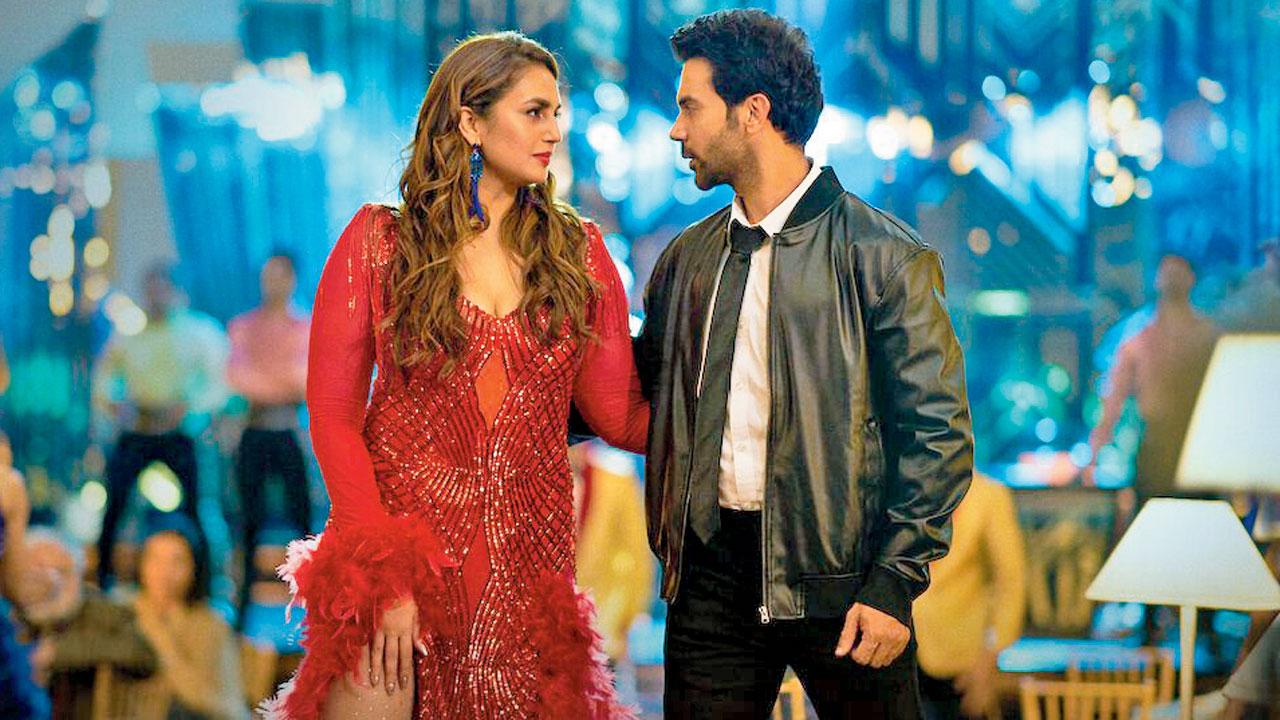
Producers would come by and say, ‘Lose five kilos, it will make the film better’-Huma Qureshi
8:51 AM

With Double XL tackling body shaming, Huma Qureshi shares how she battled critics and filmmakers’ remarks about her weight to find her place in the industry
Mohar Basu (MID-DAY; October 22, 2022)
In 2014, Huma Qureshi had graced the cover of a magazine’s body edition, with the headline reading ‘My body, my rules’. The cover was a part of the actor’s relentless endeavour to promote self-love and body positivity in an industry that, until recently, couldn’t look beyond waif-thin and slender frames. Now, she has taken the conversation against body shaming a step ahead by throwing her might behind Double XL. Did she actively seek out the script, or was it the other way around? Qureshi says the film was conceptualized from a casual conversation in her living room.
“We were lamenting about how much weight we had put on during the pandemic. Sonakshi [Sinha] and I were discussing how throughout our career, people always have something to say about how we look. Mudassar [Aziz, writer] was there, and he suggested we make a movie about this.”
That set the ball rolling on Satramm Ramani’s directorial offering, which highlights self-love by narrating the story of two women who challenge the norms set by society. Since the subject was so close to her heart, Qureshi turned producer with it. The actor also piled on 20 kilos for the role.
“There is a culture where a specific body type is [projected] as perfect. It leads to bullying and unhealthy lifestyle choices. We shouldn’t adhere to the [conditioned] idea of perfection. Even Barbie dolls have moved away from this idea. We, as people in show business, need to do better. Why are we telling young girls and boys that they are only as good as their skin colour, or waist size? Why are we devaluing a human being by negating their personality? [Through the movie], we are saying that every body type is beautiful, and everyone needs to be celebrated and empowered.”
During the pandemic, Will Smith’s video that saw him flaunt his dad bod got much love from fans the world over. But female celebrities are often pressured more to conform to beauty standards.
Qureshi says she felt the pressure as soon as she set foot in Bollywood — be it by way of critics’ reviews, or losing out on films. “In a review of my second film [Luv Shuv Tey Chicken Khurana], someone wrote, ‘Huma is a lovely actor, but she is five kilos too heavy to be a mainstream leading lady.’ Imagine how demotivating it is to hear that for a young person trying to break into the industry. [At the time], it was perfectly acceptable to say it. A person may [have put on weight] because of a mental health disorder or a medical condition; it’s not always about being lazy. After that review, I was lost. I went through a phase when I was desperately trying to fit in. I rejected myself for a long time. When I went for events, people would post my worst angle and write a catty comment. Producers would come by and say, ‘Lose five kilos, it will make the film better.’ I am sure I lost movies because of my size. But over time, I made the journey to being this person who knows that she is more than a number on the scale. I kept telling myself to focus on work. If my size mattered, I wouldn’t still be working here.”
With Double XL, the actor has a single objective. “Sona and I channelled our personal struggles and insecurities into the movie. I hope it makes people feel seen, heard and acknowledged.”
We can hustle because we had women before us do that-Huma Qureshi
8:28 AM
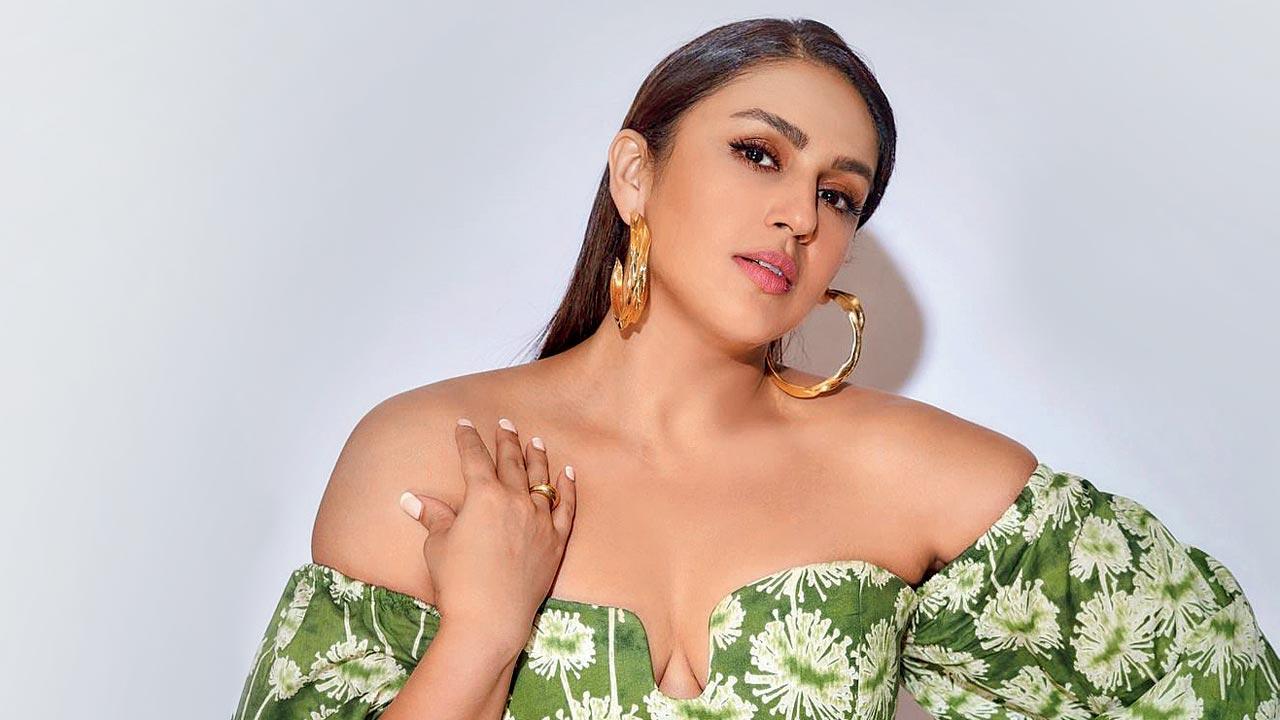
With Maharani 2 depicting how society discourages women in power, Huma Qureshi says every generation has to do its bit in the fight for gender equality
Uma Ramasubramanian (MID-DAY; August 12, 2022)
Huma Qureshi remembers the first Zoom narration she had for Maharani in 2020. She went into it blind, only to log out of the meeting later with a wide grin on her face. “I fell in love with the script. Here was a character for which I would have to unlearn so much,” recalls the actor. Two years on, she is ready with the second season of the political drama that sees her as Rani Bharti, a home-maker who is thrust into politics.
The upcoming edition sees Rani confidently take on political rivals. “She is no longer as lost as she was in the first season. People connected with Rani because they saw themselves in her. She is slightly savvier now, but she is still a woman in a man’s world.”
Becoming Rani for the Sony LIV series has taught her more than a few things, says the actor. “It has empowered me as a woman. If she doesn’t know something, she is able to articulate that. As women, when we don’t know something, we keep quiet instead of asking questions. But Rani gave me her sense of curiosity. Just because I don’t know something, doesn’t mean I am stupid. I didn’t have that confidence [earlier].”
It’s not easy for a woman to be in a position of power in a patriarchal society. The web series depicts how the protagonist has to lock horns with several rivals, including her husband, essayed by Sohum Shah. Qureshi admits that women at the top have to battle society’s judgments. “It’s an unequal world, but our hustle is to push for equality. We can hustle because we had women before us do that. We are standing on their shoulders, and we will [play that role] for the future generation. I feel if you make a small change in your life, you will end up changing things around. Also, one shouldn’t look at a person in power through the lens of gender.”
Since last year, Huma Qureshi and I have started a tradition of tying rakhis to each other-Saqib Saleem
8:11 AM

Renuka Vyavahare (BOMBAY TIMES; August 9, 2022)
With Raksha Bandhan just around the corner, siblings Huma Qureshi and Saqib Saleem take a trip down memory lane and reflect upon their evolving bond, camaraderie, childhood memories of the festival and its reach across cultures – something that truly represents the ethos and diversity of our country.
Raksha Bandhan is celebrated across cultures and regions. How have you both celebrated the festival over the years?
Saqib: We grew up in Delhi and we celebrated Holi, Diwali, Eid, Christmas… har cheez celebrate karte thay. We had big Raksha Bandhan celebrations. I remember Huma used to tie me a rakhi. There were other girls in my colony who also used to tie me rakhis and some of them still do. On Eid, we would cook kheer and biryani for the entire colony. Likewise, we used to feast on faraal and scrumptious food during Diwali, or gorge on mithai on Raksha Bandhan at our neighbour’s homes. The atmosphere was jubilant and fun. This is what India is all about.
Huma: I agree. I consider myself extremely fortunate to have been born in a country rich in cultural diversity, and even more fortunate to have grown up in a family that always helped me understand the significance of each festival and enjoy them. I once decided to make kheer for Saqib as my gift for him on Raksha Bandhan. It was tasty, but I forgot to add sugar. I tied the rakhi and offered him the kheer, saying it is your gift. He tasted and replied, ‘No gift from you is better than no sugar kheer.’ Even today, when I make something sweet, he gets someone else to try it before he tastes it (laughs)!
As two siblings living under one roof in Mumbai, how has your relationship evolved over the years? Is it comforting, chaotic, both or more?
Huma: I remember how we used to fight as kids! As we grew older, we realised how important we were to each other and things improved. As a result, living in Mumbai with my brother is both chaotic and reassuring. He is a clumsy person who will do things I don’t like, from leaving things around to purposefully tampering with my belongings; on the other hand, when I come home from a long, hectic, or bad day, he will make sure to lighten my mood with his stupid jokes and make or order my favourite food. Having a brother has only cons. Just kidding! Saqib has always been my personal entertainment source, my personal bodyguard, my support and someone I can always pass the blame on to. Life is so much better with him, but there are cons too, like sharing the room and belongings, his lame jokes, annoyance, and the fact that there’s someone to compete with for our parents’ attention. Privacy is something you can only dream of if you have siblings.
Saqib: We stay together and will continue to do so until we get married, I guess. We are more like friends today, I will always respect her as an elder sister, but if you see our banter, you will be scandalized. Then there’s no bada chota. We love each other, we hate each other, we fight, we hug. We are like any other siblings, but yes, we are much more evolved now. We are mature and understanding. Now we don’t need to work on this relationship. It’s easier today. I used to hate her when I moved to Mumbai. I was 20 and quite rebellious. She hated me because I was immature. It was Mumbai that brought us together! When you are younger, there’s sibling rivalry because you are told that your sister is better than you and vice versa. Parents tend to do it and that’s a weird phase because then you want to outdo each other. While growing up, we were a tad distant, but when I came to Mumbai, things changed. We were initially staying separately and would catch up at coffee shops every week. In one of those meetings I asked her if we could stay together. Paise ka issue nahi tha. The intention was to get to know each other better, plus, we worked in the same profession. Speaking of sharing a house, Huma is great at interior designing, so I leave all that to her. I let things be. Huma loves to redesign things.
Some families are still patriarchal. Were you two raised as equals at home?
Saqib: Since last year, Huma and I have started a tradition of tying rakhis to each other. We are there for each other and we were raised as equals at home. I have never in my life said to her that, ‘Yeh kya kar rahi hai. Yeh ladkon ka kaam hai.’ It’s a very equal world in our house. There’s no such thing as women should eat after men, which is still a common practice in many homes. Neither do we believe that mard ko hi sara bojh uthaana hai. What I can do, she can do and vice versa. The patriarchy in our society, though needs a wider discussion. It definitely exists.
Huma: In my family, equality has always been prioritized. There were times when Saqib did not get permission for stayovers, parties, or going out, but I was never told no. According to the Raksha Bandhan tradition, Saqib should be protecting me, but I’m the elder, and I’ve always been the elder sibling protecting the younger. This is why we tie rakhis to each other, but the best part is that he has never received a gift from me.
Saqib: She is joking... I do get her gifts and she does the same.
Who among the two is more protective of the other?
Saqib: Huma is far more protective. I am cooler. If there is a guy who is annoying Huma or trying to chat her up and she’s not interested, I will become best friends with that guy and ensure he doesn’t reach Huma again. I deal with things in a cooler way. Mumbai has mellowed me down. I want to be this calm person; I don’t want to argue with people.
Huma: Honestly, I’m the one who is more guarded. I might call him a loser, we might argue like children, and I might bother him over the tiniest things, but I won’t put up with it if someone else does the same to him.
Be it Sonakshi Sinha, Mrunal Thakur or I, we stand here to service the story and tell it right-Huma Qureshi
8:11 AM
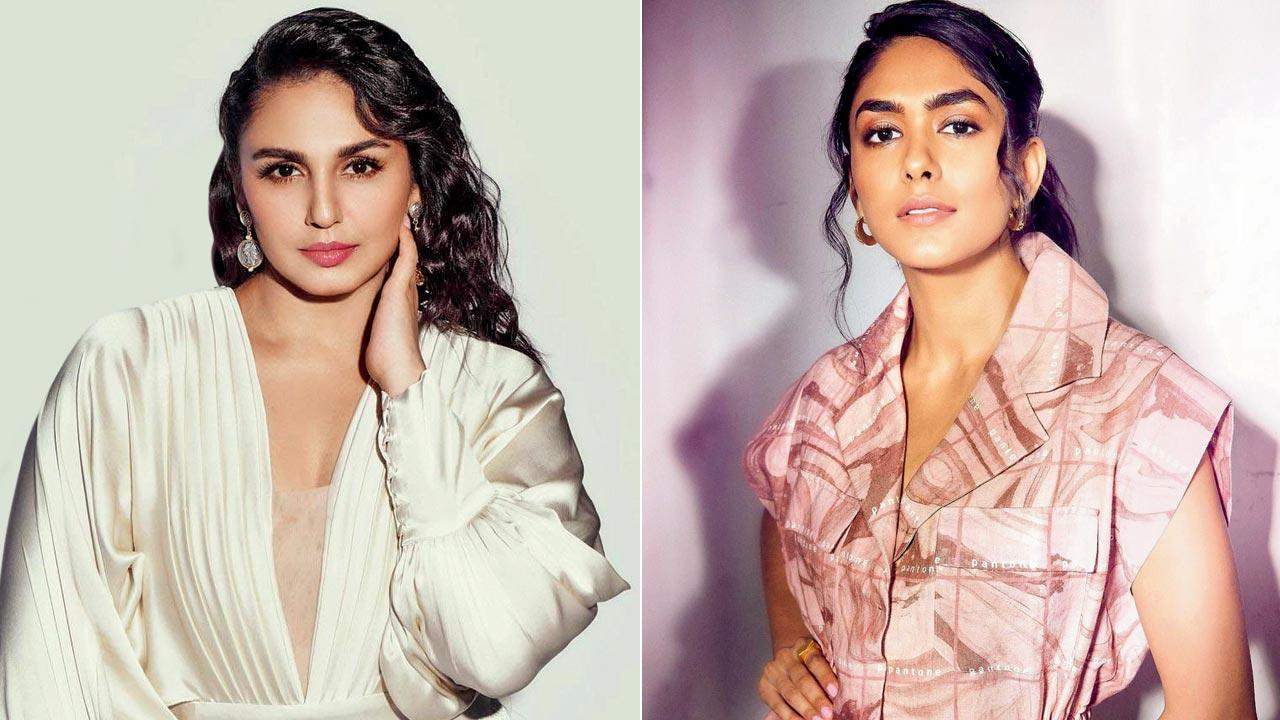
Doing two-heroine projects in Pooja Meri Jaan and Double XL, Huma says she is a secure artiste who doesn’t want to be limited by industry’s trappings
Mohar Basu (MID-DAY; August 3, 2022)
It has been a busy week for Huma Qureshi. While she began the promotional run for the second season of Maharani, her next Pooja Meri Jaan was also announced. With its teaser that shows the threatening side of a romantic proposal, the makers have built much intrigue around the Navjot Gulati-directed movie. “It is a relevant conversation, which [piqued] my interest in the film,” begins Qureshi, who is joined by Mrunal Thakur and Vijay Raaz in the Dinesh Vijan production.
“I have worked with Dinoo on Badlapur [2015] before. This film is also produced by Amar Kaushik who is one of the best directors we have in the country today. When he told me he is creatively producing the film, I was kicked about it. Navjot’s script is so hard-hitting, highlighting an important conversation we need to have.”
It is equally relevant to discuss how Qureshi, while headlining solo outings like Maharani and the Tarla Dalal biopic, is unafraid to give her nod to two-heroine projects. If Pooja Meri Jaan sees her share the frame with Thakur, Double XL has her teaming up with Sonakshi Sinha.
Happy to front stories told from women’s perspective, she says, “I am operating from a place where content matters the most. I am a secure actor who is assured of her space. If I like the film and the intentions of those making it, [I will go ahead]. Be it Sonakshi, Mrunal or I, we stand here to service the story and tell it right. As artistes, we should not let ourselves get limited too easily and too soon.”
From her performances to her choice of projects, it is evident that Qureshi has matured as an artiste. The new line of thinking, she says, comes from director Deepa Mehta, with whom she collaborated on Leila. “She has empowered me as a performer. I talk to her every week. She is my mentor in a way. She is the first director who shot me in a way where the camera was [focused] on my eyeball. I was petrified, but she gave me the confidence that I can shoulder a project.”
I didn’t come here to play a doll. I came here to be an actor-Huma Qureshi
8:08 AM

Rachana Dubey (BOMBAY TIMES; July 1, 2022)
Huma Qureshi recently clocked a decade in Bollywood. She had stepped into the industry with Gangs of Wasseypur – Part 1, which had released in June 2012. Today, even as she’s busy completing movies and shows at breakneck speed, she believes she has learned to strike the perfect work-life balance. In a conversation with BT, she talks about working non-stop and how the narrative for women and women-led stories has changed in the industry in the decade that she has been a part of this field. Excerpts:
The last two years have turned out to be interesting for you career-wise. At a time when there was so much uncertainty around us, you shot for a couple of projects between the two lockdowns. You were seen in Bellbottom and Zac Snyder’s Army Of The Dead and were appreciated for your performance in the web show Maharani. How do you plan to sustain that momentum for the rest of this year?
Opportunities and hopes come at the most unlikely times and from the most unheard of places. The two years, 2020 and 2021, were the pandemic years in public memory. Theatrical releases had virtually stopped and content on the OTT platforms was dictating the entertainment space. In that phase, I was clear that I won’t let this bog me down. I wanted to go out there and put out something great for people to see. When Bellbottom came to me, I eagerly took it up because it was the first film that went on floors post the global slowdown. The part was great, and it was an experience worth the risk we took. Subhash Kapoor’s narration for his web show (Maharani) had blown me away. I was certain that I wanted to do it. We shot it between two lockdowns amid so much uncertainty. What if this was my last piece of work? That thought ignited an entirely different passion in me. It liberated me in so many ways. And that is the thought with which I have surged into 2022. I’m trying out newer things, playing characters that are completely different from who I am.
You recently completed a decade in Bollywood. In these years, you have seldom played the conventional heroine — something that wasn’t the norm when you started out. What do you think helped you get this far?
I just do things that I naturally gravitate towards. At the outset, I didn’t have the luxury of choosing projects, neither was I launched on a grand scale nor have directors chasing me. I went through an entirely different journey where I auditioned to get work, I got replaced on numerous occasions and went through a grind, something that I wear like a badge of honour. I am proud of everything I endured to get this far. All that I have today has been earned with a lot of hard work and patience. It didn’t come to me. If you find my repertoire full of unconventional projects, it’s also because those were the choices I made from all that came my way. It was about choosing a role where I could not really see myself easily. I have never tried playing myself. The greatest compliment for me was to be told that I played an uneducated Bihari housewife like I belonged there, although I am a South Delhi girl. That is the fun of being an actor. I didn’t come here to play a doll. I came here to be an actor. I will do what it takes to play a part effectively. In the last year alone, I have worked with different directors and in content across various genres. Do I love songs and dances? Yes, I do, but I don’t want to do just that. I have a lot more to offer that goes beyond it. I don’t know what the new conventional norms are, but with our choices, if we have been able to redefine how a woman should be seen in a movie, we’re getting somewhere and exploring so many of her other facets.
A decade ago, it was a big deal for a heroine to shoulder a film on her own. Today, plenty of leading ladies, including yourself, are carrying films as well as web shows on their own. That’s a huge transition, don’t you think?
Yes, and it hasn’t come in easily. I can talk for myself. After I worked with Deepa Mehta on the show Leila, my perspective changed in a big way. It was such a turning point. Khoon chakh liya maine! The joy of leading a project is scary and empowering in the same breath. And she gave me that. Deepa made me believe that I can carry an entire show and be in every frame without boring the audience. She made me believe that I had it in me. When an opportunity presents itself, you rise to the occasion. The show opened doors for me to work with Hollywood bigwigs like Zack Snyder. It got me several good projects. Maharani was one of them. I am now leading a lot of stories which have a female perspective. This is Huma Qureshi 2.0. I want to call it that without sounding vain about it. I am not the same person I was back in the day. I am trying to do things differently. As an actor, the more fearless you get, the more this industry and the audience rewards you. I like reading and watching content. A few years ago, people had an issue with the phrase, web-series. I had seen that not only was it brimming with international talent, but it was also gearing up to take India by storm. The writing and the production standards were superlative. These are opportunities that have to be grabbed when they come to you. Doing my first show has hence, been a big turning point. Sometimes, merely doing things you like can have a domino effect on your life. It benefitted me in a big way.
Lastly, the film industry in India is gradually moving towards becoming one cohesive workspace that ropes in talent from film industries across the country. As someone who has worked in two films down South, do you find a change in the manner in which people now perceive actors who work across industries?
I think the change here is phenomenal. People have realised that there is a lot to learn from them. Industries like Tamil and Telugu are not talking down to their audience. In fact, they are pushing their boundaries. The stories are contextual, they pride themselves in the cultural references, they are deeply personal, nuanced and have a massive scale. The southern industries have done this repeatedly. The way things are going, multilingual projects are the in thing. For every actor and talent involved, the audience base increases. I feel thrilled that I did my second Tamil film, Valimai. I have learned so much by sharing screen space with Thala Ajith and Rajinikanth sir. Not just as an actor, but also as an audience member, I am excited about these big pan-India films. Why should we have so many boundaries within our country anyway? We need to shake things up a bit in these seminal times.
Subscribe to:
Posts (Atom)