Showing posts with label Huma Qureshi. Show all posts
Showing posts with label Huma Qureshi. Show all posts
Why should Huma Qureshi still have to struggle to get a major theatrical film? Hasn’t she earned that by now?-Saqib Saleem
3:43 PM

Ancela Jamindar (BOMBAY TIMES; August 21, 2026)
Saqib Saleem, who was in Ahmedabad recently along with his actress-sister Huma Qureshi to promote Baby Do Die Do, which he co-produced, says, “It is extremely difficult to release a female-led action thriller in theatres. It’s not because the audience doesn’t want to watch such films, but because of the gatekeeping within the industry. The people who decide what gets into theatres often don’t allow these films to be mounted and released properly. I feel Huma is a phenomenal actor. She has consistently proved herself with projects like Gangs Of Wasseypur, Delhi Crime and Maharani. So why should she still have to struggle to get a major theatrical film? Hasn’t she earned that by now?”
He adds, “I have produced two films before this, Double XL and Single Salma. Both were backed by studios and although the reviews and audience feedback were positive, neither film got a fair chance in theatres. They didn’t get enough screens or the right show timings. Even for our latest film, when a studio had certain unreasonable demands, I just decided to do this on our own and told Huma, ‘Let’s make this film, we’ll think about everything else later.’ I was blessed to have an incredible team. The vision behind our production house is to build an ecosystem where talented voices get the opportunities they deserve. We want to create a platform for people we truly believe in. I may not always make the biggest films, but I will give artistes the freedom to express themselves. I’ll create an environment where their voices are heard, because that’s often what’s suppressed in this industry.”
‘Producing a film is a completely different ball game’
Talking about the responsibilities that come with producing films, he says, “As a producer, my responsibility is to make sure the film reaches the right theatres and gets the right number of shows. It’s not easy, but I believe audiences don’t think about whether a film comes from a studio or an independent producer. They simply want a good story and a unique film experience. I am glad that Main Vaapas Aaunga, which is very different from the kind of films that are considered commercially successful today, found its audience in the second week. It gives me hope and shows that people want to watch different, unique films and not just formula-driven cinema.”
He adds, “Producing a film is a completely different ball game from acting. Acting is a demanding profession, but as an actor, your focus is largely on your character, dialogues and performance. As a producer, however, everyone on the set looks to you for answers. You’ll meet plenty of people who will discourage you, but you need to believe in yourself, build a good team, work sincerely, and not let the outside noise affect you.”
‘Even today, I’m a cricketer in my head’
Saqib, who has played cricket at the under-19 level, says the sport continues to influence the way he approaches filmmaking, “Even today, I’m a cricketer in my head. I still feel like I can play for India, and I don’t think that feeling will ever go away. I’ll always consider myself a sportsperson because cricket was my first love. Sports taught me that you start from zero every single day. For every new film, I have to start from zero. I can’t carry the baggage of my previous success.”
He adds, “That’s why I always relate filmmaking to cricket. Cricket is about building the right team and bringing people together to achieve one common goal. Producing is the same; my responsibility is to bring together the right people. I tell my directors, ‘I believe in your style. Make the film your way.’ Similarly, I choose actors who I believe are exceptionally talented. For instance, Sikandar Kher is a phenomenal actor. The same goes for Chunky Panday and Seema Pahwa. I like to cast actors who are immensely talented but haven’t always received the recognition they deserve. That includes Huma too; she’s a phenomenal actor. She has consistently proved herself with projects like Gangs of Wasseypur, Delhi Crime and Maharani. So why should she still have to struggle to get a major theatrical film? Hasn’t she earned that by now?”
Shaadi jab honi hogi tab ho jayegi-Huma Qureshi
4:26 PM

Sonal Kalra (HINDUSTAN TIMES; August 7, 2026)
Huma Qureshi has lately made headlines on both the personal and professional fronts. While she turned producer with recently released Baby Do Die Do, which clashed with Alia Bhatt’s Alpha in theatres, her appearances with actor and acting coach Rachit Singh have also fuelled wedding speculation.
Qureshi, however, says marriage will have to wait. “You and my mum have the same questions! I don’t have an answer to when the wedding is going to happen. Shaadi jab honi hogi tab ho jayegi; I have a lot of work to do. This is a very busy year and, right now, I am just focusing on that.”
How big a risk was turning producer? “It is a high-risk, high-reward business. It is exciting because you get to be the creator and keeper of your IP. I feel every creative person should produce a film once to understand the entire process.
As an actor, your job is largely in front of the camera. A producer, however, is responsible for everything needed to make a project happen. Sometimes, even somebody’s temperament becomes your problem.
It is a humbling experience and teaches you the value of time, money and professionalism. At the same time, the risk involved is considerable.
As actors, we are dependent on other people to hire us. Saqib (Saleem, brother- actor) and I are not cribbers, and we do not like playing victims over the roles we are not getting. The only option was to create opportunities for ourselves.
Saleem Siblings is our little brother-sister cottage industry, through which we hope to create interesting projects with like-minded people. We may not have mammoth budgets, but not every story needs Rs. 150 crore to be made. Some stories need only a fraction of that amount and can still be engaging. Baby Do Die Do is now in its fifth weekend and continues to get shows. I keep sharing whenever a show goes houseful in any part of the country.”
How have your recent trips to Delhi been and what keeps bringing you back to the city?
Delhi, of course, is home. I have spent my entire life there. So I don’t need an excuse to come back. But when I was there recently to promote Baby Do Die Do, I toured with the film. We went to theatres to ask people, ‘What do you think of the film?’ These were all surprise visits. So, sometimes I would just bump into an old friend from college or an aunty who used to be my neighbour.
We’ve loved watching your funny Reels, especially the ones where you and your dad pull each other’s leg. How did he react to Baby Do Die Do?
As a family, it’s been surreal. My dad runs a restaurant business in Delhi for almost 50 years, called Salim’s. My mum’s been a housewife. And we have grown up in a Punjabi part of Delhi, so I identify as a Punjabi. For us, even becoming actors was a huge leap. To have taken that step, and found success with the grace of God, and now become first-generation producers is a very strange feeling.
These days, producers take pride in saying, ‘My film is worth Rs. 800 crores or Rs. 900 crores’. How much pressure does it create for people who want to tell small, meaningful stories?
I don’t take that pressure. Firstly, because I don’t have Rs. 800-900 crores to make movies. Secondly, I feel like films take too much pressure of the opening weekend box office number. Oftentimes, the industry figures are inflated ones. I don’t know who are we trying to impress. At times, it is just to create a sort of perception of how bankable a film or a particular star is. So, I don’t take them too seriously. The conversation has to shift beyond numbers to the content itself. When I was growing up, I didn’t know how much films made at the box office, but I remember those scenes and songs that had a deep impact on me. For me, my metric would be ‘Hey, did you go a second time and watch the film? Or would you recommend it to another friend? Would you talk about it?’
It’s lovely to see this recognition come your way, especially when you speak so passionately about the film. Sadly, the whole chatter around, ‘kitne ki opening lagi?’, ‘aapko toh OTT mein chale jaana chahiye,’ and ‘itna bada risk le rahe ho’ continues...
This is very unhealthy. OTT mein... Arre, kyun? Somebody recently said to me, ‘Kuch films toh OTT ke liye hoti hain’. I replied, ‘Are you trying to say only people with pots and pots of money should be allowed to make theatrical films? And everybody else should just do OTT? If this happens, then a lot of movies wouldn’t get made, and a lot of new voices and people wouldn’t be discovered.’
Regarding your recent presence at the students’ protests… There must be people who would’ve warned you that it was risky, that it could be connected as a way to promote your film, or simply advised you to stay away. What made you negate those voices?
I would be lying if I said it didn’t cross my mind. We were in Delhi, and it just didn’t feel right for us not to go there and stand in solidarity. We didn’t take a single picture or inform any media. We quietly went at 2 am and just sat there... I am not aligned to any political party or movement, but I felt really bad for those students... I chose not to make a statement about it because people have a way of like misinterpreting it.
Do you feel that your profession sometimes takes away your right as a citizen to do and say whatever you want to?
I am very conscious of the fact that because I’m a public figure and what I say will impact people. So, I say as less as I can. But yes, I feel like for me, the logic is that I should always speak up for humanity and that’s my only guiding light. But I cannot be expected, at every and any given point of time, to offer my opinion because sometimes even I’m in the middle of forming one. There are also athletes, sports people and industrialists who choose not to talk about things. Koi unko nahi bolta. But I feel somehow, as actors, we always come under scrutiny.
------------------------
I refuse to be boxed. Whenever I feel people have figured me out and they want to tell me ‘this is what you’re good at and this is what you should do’, I want to do something entirely opposite. I am not here to be in some kind of rat race. I am here for the work. I am here for the creativity... I think of myself as an artiste, and I want to be, by the end of my career, counted as a leading artiste of our times. That, for me, is like the goalpost.
- Huma Qureshi
Akshay Oberoi opens up on being the only male Bollywood actor in Yash's Toxic
9:19 AM

Mohar Basu (MID-DAY; July 28, 2026)
Having Toxic: A Fairy Tale for Grown-ups, one of the biggest releases of the year, in his kitty is a matter of pride for Akshay Oberoi. The actor also finds himself in a rare position with the Yash-starrer — Oberoi is the only male Bollywood actor in the ensemble that boasts prominent female actors from Hindi and South cinema.
Counting himself lucky to be part of a cast that has Nayanthara, Huma Qureshi, Kiara Advani, Tara Sutaria, and Rukmini Vasanth, the actor said, “It’s not every day that you walk into a film where you’re the only male Bollywood actor surrounded by such extraordinary women. It’s an honour to share the screen with performers who have built such incredible careers.”
According to Oberoi, Geetu Mohandas’s directorial venture is a reflection of the industry’s changing dynamics. “Language, region, and industry labels don’t matter anymore. Toxic has artistes from every corner of the country,” he added.
Advice to release Baby Do Die Do on OTT was coming from a place of concern-Saqib Saleem
9:19 AM

Priyanka Sharma (MID-DAY; July 20, 2026)
Hopping from one theatre to another, producer Saqib Saleem is getting common feedback from the audience about Baby Do Die Do — that the Huma Qureshi-led action thriller is “unique”. For the actor-turned-producer, that is heartening.
“With our company [Saleem Siblings], we want to tell original stories. So, when people say that they hadn’t seen something like this before, we feel that’s what we wanted to achieve. We didn’t want to make a template film. There are some template films that are being made out there, and they have a market. But I want to get to a point where whenever my company’s name comes up, people think we’re making something cool and quirky,” Saleem told mid-day.
But it’s easier said than done, especially in the post-pandemic market where only spectacle movies are believed to be profitable in theatres. Saleem was advised to take Baby Do Die Do, directed by Nachiket Samant, directly to OTT.
“They weren’t coming from a place of doubt. That advice was coming from a place of concern. The market is brutal for theatrical films — sometimes you don’t get good showcasing, other times you don’t have marketing budgets. But for me, films were always meant for the big screen. So, I thought I have to take the risk.”
Pata nahin kaun meri marriage kara raha hai-Rachit Singh
10:29 AM

Yashika Mathur (HINDUSTAN TIMES; July 17, 2026)
Actor Rachit Singh is currently enjoying the positive response to his recently released film Baby Do Die Do and is now focused on what lies ahead. But alongside discussions about his performance, the actor says he has been flooded with calls and messages over rumours of his wedding with friend and co-star Huma Qureshi.
Reacting to the speculation, Rachit laughs, “Pata nahin kaun, kahan meri marriage kara raha hai!”
Reports that the two were dating began after they attended actor-couple Sonakshi Sinha and Zaheer Iqbal’s wedding reception in 2024 and only grew stronger with their frequent public appearances.
Ahead of the film’s release, Huma’s heartfelt Instagram post praising Rachit’s journey, from a small-town boy in Banaras to making it in Mumbai, was also seen by many as a “hard launch” of their relationship. “When I first met Rachit, what struck me wasn’t just his talent — it was his patience. His quiet grit,” she wrote.
Recent reports have even claimed that the two are set to marry in October. However, Rachit reacts to the buzz with humour. “Main soch raha hoon apni mummy ka number de doon. Sab log mujhe phone karke pooch rahe hain,” he says, adding with a smile that he’ll announce his wedding himself and send an invitation whenever the day comes.
Having spent a decade as an acting coach, Rachit says his experience on film sets has added a new dimension to his teaching. “I always connected with them (acting students) whether I was working as an actor or not, but now, with the experience of working on sets, it gives me a lot of perspective.”
Years of hard work can’t be judged on a weekend-Huma Qureshi
10:28 AM

Priyanka Sharma (MID-DAY; July 17, 2026)
Before diving into Baby Do Die Do, Huma Qureshi knew one thing for certain: that it won’t be a film whose opening numbers could be tom-tommed about. Instead, she viewed her production as a “film that people should discover”. Now, as director Nachiket Samant’s action thriller that began on a slow note is entering its third week, the actor and producer’s vision has become a reality.
“We live in a culture where people are quick to write you off. Unfortunately, today the first 72 hours determine how big or successful your film is. Years of somebody’s hard work cannot be judged on a weekend. Sometimes we need a little time and word of mouth,” Qureshi told mid-day.
That’s exactly what drove Baby Do Die Do, centred on Qureshi’s hitwoman. Not only has the audience praised the thriller, but also filmmakers like Anurag Kashyap and Sudhir Mishra have supported it by organising screenings. That’s a big win for Qureshi and her brother Saqib Saleem.
Qureshi recalled, “It was a massive risk that we took with our eyes wide open. A lot of people tried to dissuade us. Beyond a point, I stopped discussing with people because the only difference between genius and stupidity is our success.”
The actor was convinced about putting her might behind this story for a bigger reason. “We are on the path to give a fighting chance to ourselves and people like us who don’t have a lot of opportunities. Now, people are making safe films and those without backing don’t fit into those films because there is no proof of concept. But how will you have proof of concept if we don’t get an opportunity?”
‘Baby Do Die Do’ was inevitably compared to ‘Alpha’ that released on the same day. How does Huma Qureshi react to the comparisons? “I can make my film shine without bringing down another human. I know how difficult it is for a woman to have projects mounted around them. So, it’s amazing that two distinct films, headlined by women, came on the same date,” she said.
Neha Dhupia says casting director’s remark affected her for years
8:59 AM

HINDUSTAN TIMES (May 30, 2026)
Actor Neha Dhupia has opened up about the impact of harsh beauty standards in the entertainment industry, recalling how a casting director’s comment about her smile affected her confidence for nearly a decade.
Speaking on her show Double Date, which she hosts with husband and actor Angad Bedi, Neha shared the experience during a conversation with actors Huma Qureshi and Saqib Saleem.
Recalling an incident from the beginning of her career, Neha said, “Jab main ekdum nayi thi industry mein, I was going for an audition for a TV show. I was sitting in a casting director’s car and he looked at me and I smiled. He said, ‘You don’t smile. You look bad when you smile. You have more power on your face when you don’t smile.’”
The 45-year-old said the remark stayed with her for years. “After that I even won Miss India but you see my photos, I am not smiling. It affected me for 8-10 years before I recovered,” she said.
The actor, who won the Femina Miss India 2002 title and represented India at the Miss Universe 2002 pageant, also revealed that losing Miss Universe had impacted her confidence and that she took nearly eight to 10 months to recover emotionally.
During the conversation, Huma also spoke about dealing with social media trolling after her second film, Gangs Of Wasseypur - Part 2 (2012). She said the criticism pushed her into a shell and eventually led her to seek therapy and begin journalling.
Huma Qureshi, Rachit Singh to marry in October
9:40 AM

Yashika Mathur (HINDUSTAN TIMES; May 4, 2026)
Actor Huma Qureshi and her beau, actor and acting coach Rachit Singh, who’ve largely kept their relationship private, are now gearing up for the next step. After details of their US engagement, we have exclusively learnt that the couple is reportedly planning a wedding later this year.
A source reveals, “They are planning an intimate October end wedding as of now and the preparations have already begun,” adding, “The wedding will be followed by a big reception for the (film) industry (people). As of now, it’s most probably looking like (it will take place in) Mumbai.”
The couple sparked engagement buzz after appearing together at actor Sonakshi Sinha’s wedding festivities in 2024 and later the screening of Thamma (2025). Back in September 2025, a source had shared, “He (Rachit) proposed to her in an intimate setting in the US and she said yes… they are yet to decide when to make it official.”
Their recent joint appearance at the Mumbai airport has only added to the excitement around what’s coming next.
I don’t believe in ‘angry’ feminism-Huma Qureshi
10:54 PM

Ancela Jamindar (BOMBAY TIMES; May 1, 2026)
An actress who consistently prioritises substance over stereotypes, Huma Qureshi is as compelling in conversation as she is on screen. From redefining feminine archetypes to championing authentic empowerment, her perspective serves as a mirror to the evolving consciousness of the modern woman. During a recent visit to Ahmedabad for an event, Huma spoke at length about the complexities of womanhood, the fallacy of "angry" feminism, and why she refuses to be pigeonholed.
‘To do the tried and tested (on screen) is boring’
Huma’s career trajectory has been defined by a refusal to follow the "tried and tested" path, which she dismisses as "dead and boring". People are always ready to put you in a box. I always say, ‘Give me something you think I haven’t done, and I’m going to do the character differently and prove you wrong.”
Huma says, “Today, audiences are very smart, and we must respect their intelligence by giving them something they can truly engage with. As an actor, I would get bored doing the same thing repeatedly. My pact with my audience is to bring them something new every single time.”
Huma, who’s played layered, complex titular characters on OTT, admits that “Essaying intense roles like Rani Bharti in Maharani, Juhi Adhikari in Mithya, or dark, manipulative antagonists Badi Didi in Delhi Crime 3and Monica Machado in Monica O My Darling, which resonated with the audience, were deeply satisfying and enriching experiences. These shows also let me experiment with intense, dark and morally ambivalent characters who were not just cardboard cutouts as leads or even the antagonist.”
She adds, “Maharani really challenged me as a performer, and I want to bring the success I’ve had with Maharani on OTT to single-screen theatres as well. I want to be part of the kind of work that brings audiences back to cinemas.” Ask Huma what else lies ahead professionally, a genre she has yet to conquer, her answer is immediate: “Action.”
‘Morally grey female characters are accepted’
Reflecting on the industry's shift, Huma admits that she’s “excited” about the “acceptance of morally grey and complex female characters, probably because they are more real and relatable. There is space for far more nuanced portrayals and an audience as well”.
She says that the "damsel in distress or the one-dimensional vamp are relics of a time when cinema failed to represent real women. Audiences were always ready for layered stories," she says, adding, “The fault was simply that we weren’t consistently representing the reality of women on screen.”
'I am not an angry feminist; we need to move beyond constant comparisons'
Huma feels there’s an invisible weight often placed on women’s shoulders, and societal expectations can be a heavy mantle to carry. “It’s exhausting that women are often made to feel responsible for everything—the family’s honour, its dignity, and so much more,” she says.
For Huma, feminism isn't a battle of the sexes. “I don’t believe in ‘angry’ feminism," she says. "The idea is not to be against men; the real issue is patriarchy—a system sustained by men and women. We need to move beyond constant comparison."
She credits her own confidence to the secure men in her life, specifically her father and brother, saying that their “support allowed her the freedom to own her journey, mistakes and all. I believe that behind every successful woman, there are also secure and supportive men."
On her connection with Ahmedabad
Huma’s connection with Ahmedabad runs deep, fuelled by film shoots and a close circle of friends and not just promotional tours.
She says, “I love Ahmedabad. I think it's the best city ever. I get so much love here. I've visited Ahmedabad not just for promotional tours; I have shot movies here, and I have a lot of friends here. My connection with this city is beautiful. I haven’t been able to travel around much, though I have been here many times, but someday I would really like to explore it as a tourist.”
Huma Qureshi on Toxic getting postponed due to Dhurandhar 2: "I cut out the noise, do my job and check out"
9:57 AM

The actress talks about the change in the release date of Toxic and why she remains unfazed by it
Vinay MR Mishra (BOMBAY TIMES; April 9, 2026)
With Toxic—headlined by Yash— being pushed from it's original release date, [people started speculating that the change in the release timing was due to the alleged box-office competition with Dhurandhar The Revenge. Amid speculation over whether the film has been pushed to avoid a clash, Huma Qureshi addresses the noise, maintaining that such decisions are best left to the makers.
Speaking about the film’s delay, she says, “I’m of course very excited Toxic to come out, but I think the timing of these things has to be correct. And I’m sure, like, this decision made with a lot of like, thought behind it and whenever it comes out, I’m sure audiences are going to love it and have a great time.”
On the speculation and negative PR chatter around the film, Huma remains unfazed: “I don’t think about it. I. I feel like my job as an artist is to do work and the audiences have every right to receive it the way they intend to. But I mean, if I start only listening to other people and what they’re saying and thinking, then I won’t be able to do my job.”
She adds that she consciously distances herself from the noise post work. She adds, “So honestly, I do my thing and then I check out. I fully check out. Like, I’ve done my acting, I’ve done what I’m as a professional, what I’m supposed to do, and then I go off and I don’t like to read everything. I feel like reading every comment and reading every opinion and reading whatever just in a way just cripples you from doing something. As an artist, you have to be free and keep your energy really open and you can’t always predict how people are going to respond to something, so you shouldn’t do that.”
The actor also hints at a packed slate ahead. “There are like five releases now, which I’ve shot for already. I mean, some of them we can’t talk about, but the ones that you know are there, whether it’s a Toxic or it’s a Baby Do Die Do, which is a home production… that Saqib Saleem and I have produced under our banner Saleem Siblings," she signs off.
I’ve already got my Eidi from Yash-Huma Qureshi
8:43 AM

Vinay MR Mishra (BOMBAY TIMES; March 21, 2026)
Huma Qureshi sports a radiant glow in white ethnic wear as she celebrates Eid with a special shoot for us. For her, it isn’t merely a festival; it’s a feeling, a ritual of togetherness, and a gentle reminder of all that truly matters.
While this year, it’ll be a celebration at home, among her fondest memories is a chaotic, joy-filled Eid from her college days. “I came home late, and 17 of my girlfriends had already landed. The food had gone cold, but no one cared. We just sat and ate thanda khana – biryani, korma – while my mother kept yelling at us,” she recounts.
‘We often forget to be grateful for what we have’
Talking about what Eid signifies for her, Huma says, “Sharing with friends, family, people around you, your community, and perhaps people who are less privileged than you are. Ramzan is a month when we do a lot of things – whether it’s iftar or just sharing whatever we’re eating and opening our table out to friends and others. I think it’s a very important part of who we are as a family. I have a bunch of friends whom I don’t even need to invite. If it’s Eid, they’ll come home. The relationship is not just with me, but also with my family and mother. They want to have uske haat ka khana.”
For Huma, Ramzan is less about grand gestures and more about mindful pauses. “We often forget to take a moment, pause and be genuinely grateful for what we have in our daily life,” she says.
‘As kids, Eid was about Eidi and chocolates’
For Huma, Eid fashion was serious business growing up. “What will I wear? Salwar kameez or lehenga? It was a proper discussion when I was a kid,” she laughs. Then came the real highlight – eidi. “All of us cousins would stand in a line after namaz and collect money from every elder. Then we’d try to sneak back in again. The day would end with counting, comparing and of course, chocolates.”
Eid memories for Huma cannot be complete without her actor-brother, Saqib Saleem. She shares, “I remember stealing his money! We would have lots of fights over chocolates, because he would save them and I would finish mine.” Cooking, she admits candidly, is not her strength. “Unfortunately, I have not learned how to make a good biryani, but I definitely know where to find a good biryani and to appreciate it. That’s also an art,” she says with a grin.
What Eidi would you want from the following people?
Yash: The film Toxic, I’ve already got my Eidi.
Saqib Saleem: Undivided attention and time
Nawazuddin Siddiqui: Already got my Eidi—we’ve worked together
Farah Khan: I don't want any Eidi from her. She sends me so much food like every week. Maybe she should stop sending me so much food! (Laughs)
Rachit Singh: A free acting workshop. He is the best.
Tara Sutaria: She should just keep smiling all the time. She has a gorgeous smile.
Have we even accounted for the number of hours some male actors come late?-Shefali Shah
9:47 AM

Batting for stipulated work hours in the industry, ‘Delhi Crime 3’ star Shefali Shah on how long shoot days go unchecked, affecting actors’ output and the crew
Priyanka Sharma (MID-DAY; November 7, 2025)
How long does it take for an actor to find her way back to a character when a new season is set to roll? Shefali Shah, who returns as DCP Vartika Chaturvedi in the third season of Delhi Crime, says she wouldn’t know, for a simple reason — she never let the character leave her system. “There are parts that you do and move on. This is something I can’t move on from,” she starts.
Her emotional attachment to the Netflix series is evident. But with the attachment comes nervousness, even though she has played the astute cop, who rarely misses a thing, for two seasons, even bagging an International Emmy nomination in 2023.
“My biggest fear is that I’ll let Vartika and Delhi Crime down,” she admits candidly, before saying how the show elicits conflicting emotions in her. “When I get to know we’re doing another season, I am the happiest. But I don’t let go of that fear. I just surrender.”
Surrendering to scripts and characters is something every artiste swears by. But surrendering to the industry’s functioning style is something more and more actors are voicing out against. With Deepika Padukone’s recent episode opening a dialogue about work-life balance and stipulated working hours in the industry, many actors — including Sonakshi Sinha and Konkona Sen Sharma — have batted for regulation of working conditions on sets. In an unregulated workplace like the film industry, can there be a way for actors to negotiate working hours?
“We need to have this discussion desperately,” emphasizes Shah. “We are reasonable people. So, we realize [the need to accommodate] if a location is not available tomorrow or something has to be done now. But it can’t be the norm.”
Shah says, “I take one-and-a-half hours to reach the set and the same time to return. For those hours on set, I give it my all. I go back home, and hopefully, I can go to the gym because that’s part of my job. Then I will shower, eat, go back to the script, and then wake up the next morning for another day of work. How many hours of sleep am I getting? And how are you expecting me to come with my A-game?”
The actor echoes what Sinha told mid-day recently about the crew suffering more than the actors (What takes 14 hours on set can be done in eight, Nov 1). “On one of the last films I shot for, which had a 10-hour schedule, some of the ADs said, ‘Thank God, she leaves because that way we get to go.’ The rest of the crew doesn’t get paid extra [for the overtime]. Is it fair to them?”
What only makes matters worse is the disparity of treatment between male and female stars. Some stars have pointed out how the same demands made by male actors are readily accommodated, but viewed as a problem when asked for by a female counterpart. Shah agrees, noting, “We [female actors] are talking about eight hours and 10 hours contractually, but have we even accounted for the number of hours some male actors come late? That’s not even considered!” She emphasizes that such long working hours over years can cause burnout, leaving artistes mentally and creatively bankrupt.
But undisciplined sets are not all that we’re talking about. There are the other kinds too — the ones that spark joy and creative stimulation. Like the one led by Delhi Crime 3 director Tanuj Chopra, where Shah was joined by cast regulars Rajesh Tailang, Rasika Dugal, and Jaya Bhattacharya, as well as new entrants to the universe Sayani Gupta, Mita Vashisht, and of course, Huma Qureshi, who plays the antagonist in the police procedural drama.
“Sadly Huma and I just had two scenes. I wish we had more work but when I heard that she is doing the series, I was so excited. When we met — be it Huma, Sayani, Mita ma’am — there was no such thing as breaking the ice. It was almost like being a part of something we wanted to create together. It’s one of the most powerful female ensemble casts you’ll ever see.”
In the film industry, sets populated by women have historically been called many things — difficult, filled with insecurity, and almost all wrapped up in misogyny. She smiles as she describes this set as a place of sisterhood. “I don’t want to undermine male actors because I have worked with some amazing ones, but I have felt a silent sisterhood. I feel that for other people around me, and the same was true [on this set]. You have to see how happy I get when I am with all these beautiful women.”
Even though Shefali Shah hasn’t met Zohran Mamdani, she feels a bond with the Mayor-elect of New York City. The actor, who worked with Mamdani’s mother Mira Nair in ‘Monsoon Wedding’ (2001), shares, “From the time we did ‘Monsoon Wedding’ to date, I get a Christmas or New Year’s card [from Nair], which has a picture of all three of them. So, I have seen him from his childhood to now. I don’t know him personally, but it [his recent win] feels so good.”
Theatres and studios have to stop treating smaller films like trial runs-Huma Qureshi
10:41 AM

With ‘Single Salma’ being allotted only a few screens in favour of the re-released ‘Baahubali’, actor and producer Huma Qureshi says the system’s preference for event films is killing slice-of-life movies
Mohar Basu (MID-DAY; November 3, 2025)
Even as Huma Qureshi’s Single Salma was the new Hindi release of the week, most single screens and multiplexes played Baahubali: The Epic, which was a re-release. The Qureshi, Shreyas Talpade, and Sunny Singh-starrer opened in 200 cinemas across the country. Sharing fan messages on Instagram, Qureshi — who is also one of the producers of Single Salma — revealed that her timeline is flooded with requests for more shows of the Nachiket Samant-directed film (Fighting for screens, Nov 1). Many people from Jamshedpur and Delhi wrote to her on social media that the movie wasn’t available in their local cinemas.
This isn’t the fate that Qureshi had envisioned for her production. “It’s tough out there for films like Single Salma. It does not have massive marketing budgets or star-driven optics. Theatres are fighting for space between superhero movies, franchise films, and re-releases. So smaller, heart-led stories get squeezed out — not necessarily because the audience doesn’t want to watch them, but because they never get the chance to. The system still prefers to play safe,” she says.
Single Salma tells the story of the protagonist, who, after years of taking care of her family, decides to tie the knot. The actor understands that such an intimate story doesn’t offer the extravaganza that tentpole films promise, but all she is fighting for is a fair chance. “What’s missing is balance. Every big banner release should co-exist with a few story-driven ones,” she urges.
Often such movies go on to find popularity when they drop on OTT platforms. But the promise of an eventual digital release has changed the mindset of producers.
Qureshi explains, “Smaller films often get caught in a crossfire between studios and platforms. The OTT [heads] say, ‘We’ll support it after a theatrical release,’ and the studio then does a token release just to honour that agreement. So it’s not a proper run; it’s just ticking a box. A film like this deserves an honest chance in theatres. We need more courage. Not every film has to be a Rs 200-crore spectacle to deserve attention. Theatres and studios have to stop treating smaller films like trial runs. Give them good slots, let the audience discover them. Also, we need to stop calling them small films. A good story is a good story, the screen size doesn’t define its impact.”
Huma Qureshi on engagement rumours with Rachit Singh: "When the time is right, I’ll make an announcement"
9:43 AM

Vinay MR Mishra (BOMBAY TIMES; October 16, 2025)
Huma Qureshi, who turned showstopper for one of the shows at the recent Bombay Times Fashion Week, addressed the ongoing buzz around her engagement. The chatter around her personal life exploded in mid-September after a viral picture and a cryptic Instagram post from singer Akasa Singh sparked speculation that the actress had exchanged rings with her rumoured partner, acting coach Rachit Singh.
‘Why should I clear any air?’
Responding to it, Huma said, “What can I say? People have too much time on their hands. I’m sure when the time is right, I’ll make an announcement. But before I can announce, people have already decided to do it. When it happens, we will let you know. Why should I clear any air? I didn’t put it out there… It is somebody’s active imagination. When my wedding happens, everyone will know.”
‘My personal life is my private matter’
When asked if the speculation bothers her, Huma replied, “Not at all. I don’t even think about it. I live my life, I’m happy, and I know what’s happening in my life. My contract with my audience is only as far as my work is concerned. My personal life is my private matter.”
Acknowledging public curiosity, she added, “I do understand that because I’m a public figure, everyone’s interested in what’s going on with my life — which is sweet and kind. The day it stops happening, perhaps, that might bother me. It’s the deal you make with the devil — the price of all the love and attention I get for my work. And it’s a small price to pay.”
Bayaan shows courage, redeems Bollywood-Meenakshi Shedde
9:46 AM
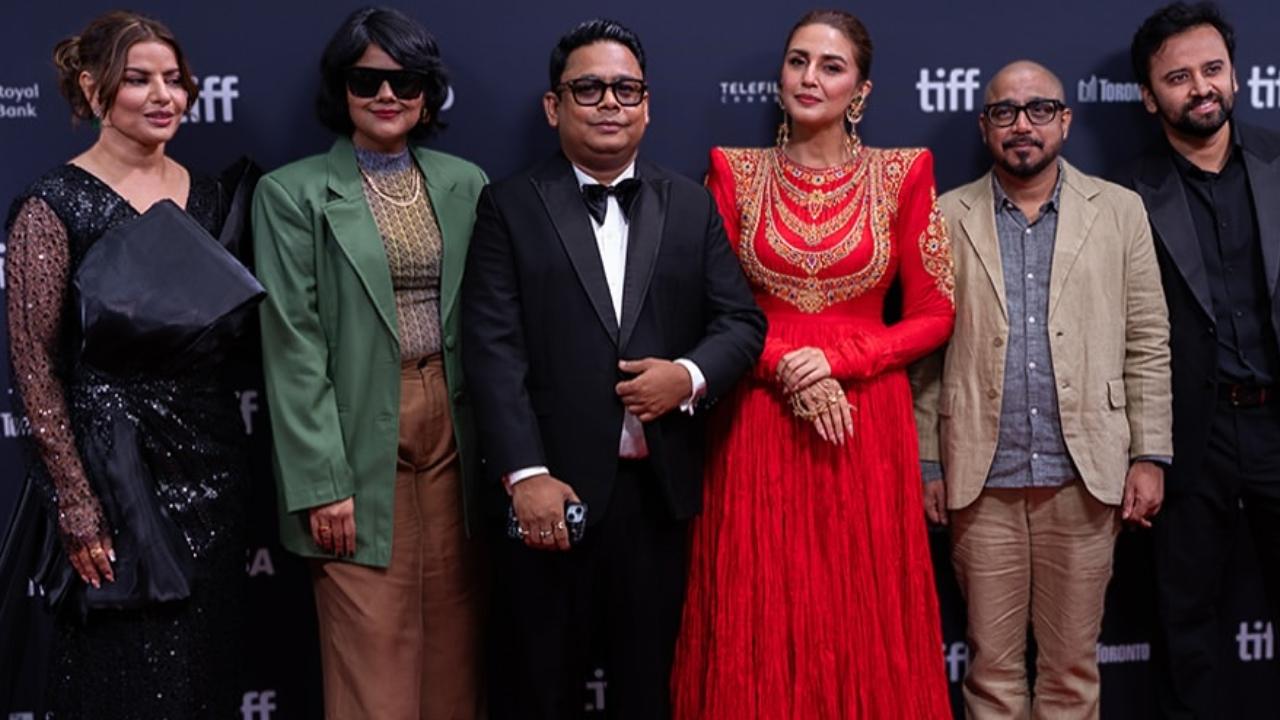
Bikas Mishra’s thriller is among a record mix of 17 Indian films and series being showcased at Toronto
Meenakshi Shedde (MUMBAI MIRROR; September 10, 2025)
Bikas Mishra’s powerful thriller Bayaan, Testimony, is one of the record 17 films and series selected at the 50th Toronto International Film Festival, TIFF, from India, South Asia and Diaspora. The film had its world premiere in the Discovery section of the festival, that runs from September 4-14.
The Indian films and series in official selection at TIFF are Anurag Kashyap’s Monkey In A Cage (Bandar, with Bobby Deol, in the Special Presentations section), Neeraj Ghaywan’s Homebound (Ishaan Khatter, Vishal Jethwa, Janhvi Kapoor, Gala Presentations); Bikas Mishra’s Bayaan (Huma Qureshi, Discovery), and Jitank Singh Gurjar’s In Search Of The Sky (Vimukt, Centrepiece).
Also selected officially are Gandhi, the series co-created by Hansal Mehta and Sameer Nair (Primetime), Satyajit Ray’s Aranyer Din Ratri (Days And Nights In The Forest, 1970, TIFF Classics), Ramesh Sippy’s Sholay (1975, restored by the Film Heritage Foundation and Sippy Films, Gala Presentations); and Sohrab Hura’s Disappeared (India/Nepal), short, in the Wavelengths: Map of Traces section.
Bayaan is Mishra’s second feature after Chauranga, that won the Grand Jury Prize at the Indian Film Festival of Los Angeles in 2015. Set in small town Rajasthan, Bayaan is a police procedural about a rookie police officer detective Roohi Kartar (Huma Qureshi) investigating the case of a ‘Maharaj,’ the head of a cult, who has raped countless girls in the ashram he heads. He has also given shelter and an education to these destitute women and orphans, who might otherwise never get the opportunity. He changes all the girls’ names, and gets inconvenient girls married to men of his choice, to cover up his tracks. He is an all-powerful figure, with influence over the police, judicial and political system, and is not seen until the last quarter of the film. Indeed, the entire system—through silence, patriarchy and misogyny--empowers the Maharaj.
Roohi finds it near impossible to get a bayaan, a testimony from the survivors that would enable her to nail the criminal. The locals are terrorised – her first witness is shot dead – and police and judiciary block her at every turn. But she refuses to give up, not even when it sets her on a collision course with her own father, also a senior police investigating officer. The film is inspired by real life events.
First of all, kudos to Mishra and producer Shiladitya Bora (Platoon One Films, along with Summit Studios and Guidant Films) for making a film on bringing a criminal cult figure to justice, in today’s India. Second, kudos for redeeming much of mainstream Bollywood with a strong woman-led film, and a competent woman police officer--without a hero. Mishra’s direction makes for a compelling thriller, and a technically accomplished one.
Huma Qureshi is in command of her role: playing the tough guy in a suit, or an empathetic listener, when required. There is an unforgettable scene in which all the ashram devotees bang thalis with spoons (oho!) to protest a summons being served on their Maharaj, described as Holy Father.
The ensemble cast, including Sachin Khedekar, Chandrachur Singh, Vibhore Mayank, Swati Das and Sampa Mandal, is very good. Mishra’s screenplay is excellent and layered, and rich with contradictions and dramatic twists at every turn, investing issues with personal stakes. Udit Khurana’s cinematography is a stand-out, creating atmospheric, delicately lit, dark and melancholic spaces, while Sreekar Prasad’s superb editing keeps the film taut. Ajay Jayanthi’s music and Pragyan Gogoi’s sound are an asset. The women crew include producer Madhu Sharma and Costume Designer Shilpi Agarwal Bora. Bollywood is in good hands with this team.
Bravo for making this powerful film - a must-see.
Shiladitya Bora says Vicky Kaushal, Rajkummar Rao no more indie artists; hails Huma Qureshi's Bayaan
9:14 AM
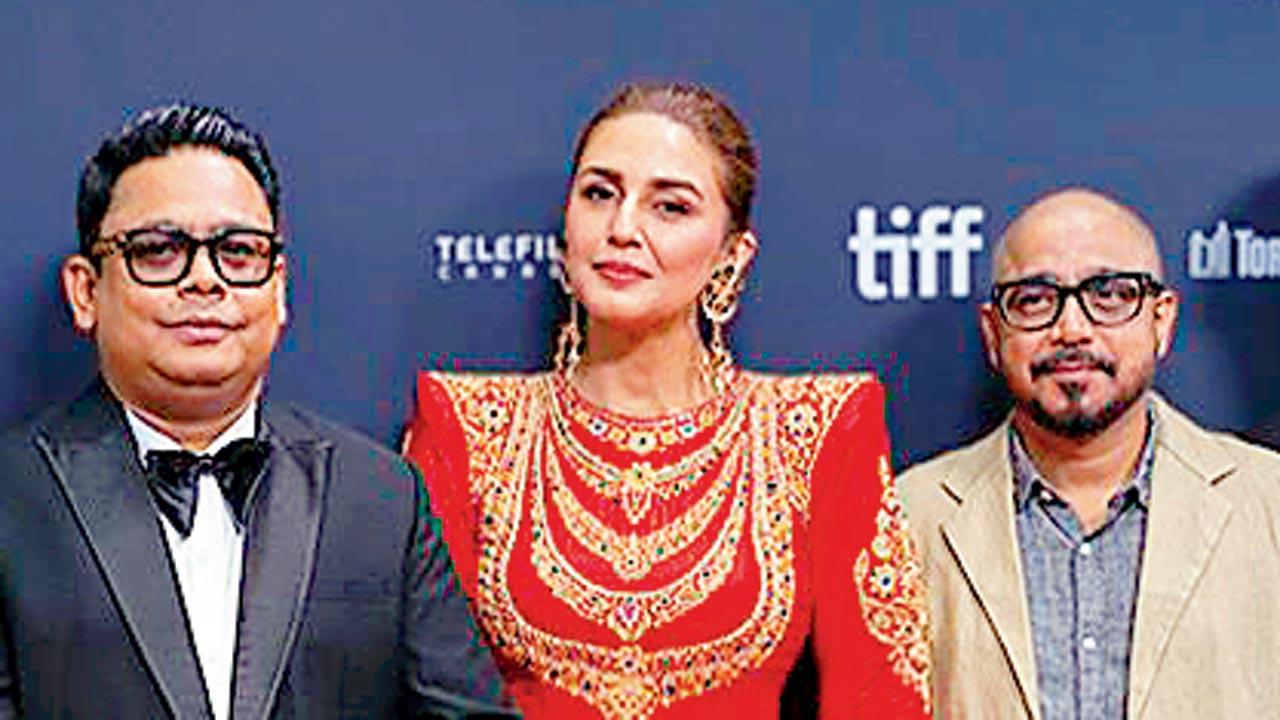
(From left) Shiladitya Bora with Huma Qureshi and Bikas Ranjan Mishra at the festival in Canada
Suggesting that Vicky Kaushal and Rajkummar Rao no longer champion indie films after having become mainstream stars, producer Shiladitya Bora is all praises for Huma Qureshi for fronting Bayaan that went to TIFF
Priyanka Sharma (MID-DAY; September 10, 2025)
Career milestones are not only a moment of validation, but also one of reflection. It struck us when we spoke with producer Shiladitya Bora, days before he headed out for Bayaan’s September 6 première at the 50th edition of Toronto International Film Festival (TIFF). The Huma Qureshi-led thriller is not the first time that Bora has worked with a mainstream Bollywood star. Previously, he served as the executive producer of Vicky Kaushal’s Masaan (2015) and Rajkummar Rao’s Newton (2017), albeit both weren’t the stars then that they are today. How does the producer view their rise to stardom and becoming the face of mainstream movies over the years?
“Here, actors, directors, or producers are independent only till they don’t make it. Once they get success, they only want to do [mainstream] projects. That’s not right. You should never leave your core. Once you grow, you should empower more people,” he reflected.
On that count, he praised Qureshi for fronting Bayaan, making sure Bikas Ranjan Mishra’s directorial venture finds a place on her résumé that has mainstream offerings like Maharani and Jolly LLB 3. While actors’ lure of big-ticket films is understandable, Bora wondered why that amounts to them not backing small but meritorious stories.
He elaborated to mid-day, “I understand now that you’ve become a bigger star, you want to do bigger studio films. But since you reached here through a breakout small film, be fair. You took a chance at that time. Now things are much better for you. You can champion things. We lack that. Huma is a great sport in this, apart from being a great actor.”
The actors alone aren’t to be blamed, he assessed. The producer’s experience in the industry has shown him that actors are influenced by their managers.
“Many actors depend on what their management says. After a point of time, they all are surrounded by yes-men. It’s important that they make decisions on their own. I feel many people don’t even read scripts, or decide on the basis of them. They will only do a film when a big studio is attached.”
We all thought OTT would change narrative styles-Huma Qureshi
10:02 PM

Taking ‘Bayaan’ to Toronto International Film Festival, Huma Qureshi discusses betting on an indie movie and how it got international support
Mohar Basu (MID-DAY; August 15, 2025)
Huma Qureshi has made several trips to Toronto, but the upcoming visit will be special for her. The actor will take Bayaan to the Toronto International Film Festival (TIFF), where Bikas Ranjan Mishra’s directorial venture — the only Indian title to be selected in the Discovery section — will première on September 7. “This is my maiden visit to the festival,” Qureshi says gleefully.
In Bayaan, the actor plays an investigator who goes to Rajasthan to solve a case that shows her how our society is steeped in patriarchy. Saying yes to the thriller was an instinctive decision, she says.
“The script was fantastic. Bikas and Shiladitya [Bora, producer] were sure of the story they wanted to tell — it was India-specific, but told with a larger global audience [in mind]. The film is supported by International Film Festival Rotterdam’s Hubert Bals Fund. During the [Film Independent’s] LA Residency, the scripting was done under the mentorship of Craig Mazin of Chernobyl [2019] fame. It felt like something I wanted to bet on. I had wanted to do an indie project for a long time. It is getting so much appreciation and that reinstates my faith in the fact that passion drives work in the movies.”
In the past few years, Qureshi shone in digital entertainment with films like Monica O My Darling (2022) and Tarla (2023), and the series Maharani (2021-24). She has been vocal about the pay disparity in OTT entertainment, pointing out that despite the show’s success, her remuneration is nowhere close to that of male actors. Taking that thought forward, she says the pay gap is only the tip of the problem.
“The industry loves to call OTT a level-playing field, but the gap is real. The disparity will get worse. Today’s content is so different from the quality content we were making a few years ago. We all thought OTT would change narrative styles. While we see shows like Breaking Bad and Squid Game, where are those shows from India that can break barriers? To have systemic changes, you need mindsets to shift, and we are nowhere close to that shift yet.”
Qureshi has been exploring another creative frontier — writing. In 2023, she released her debut novel, Zeba: An Accidental Superhero. While it was initially written as a concept note for a television series, she turned it into a book. Is the screen adaptation in the pipeline? “I’d love to do a screen adaptation. It would be wonderful to go back to that world from a fresh perspective,” she says.
Bayaan director Bikas Ranjan Mishra reveals many actors quit after casting: "Ran away for a three-day role"
10:20 AM
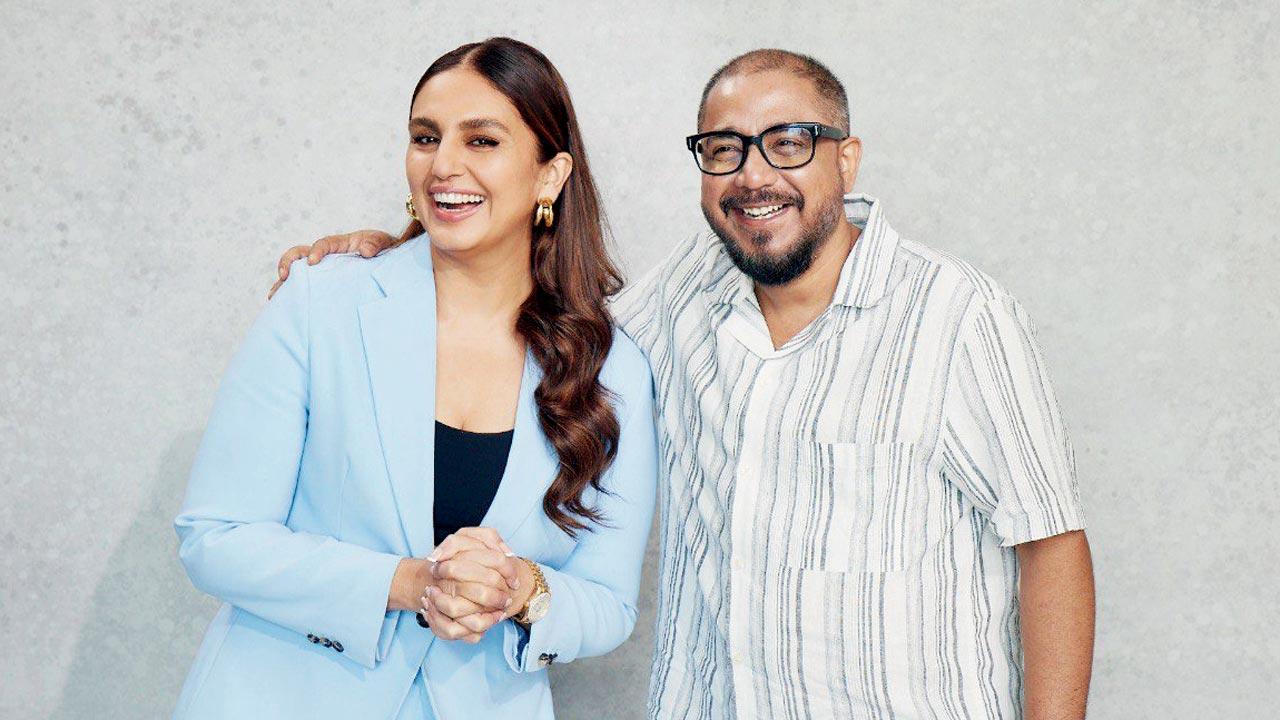
With Bayaan headed to the Toronto International Film Festival, director Bikas Ranjan Mishra recalls facing rejections from actors and how Huma Qureshi had the guts to front the thriller
Priyanka Sharma (MID-DAY; July 28, 2025)
More than happiness, director Bikas Ranjan Mishra feels a sense of relief as his next, Bayaan, is headed to the Toronto International Film Festival (TIFF). To him, the world première at the prestigious festival is the culmination of a seven-year journey that involved rejections from multiple production houses. “I took this script to everyone. Every production house in Mumbai has a copy of the Bayaan script,” he states.
The thriller, led by Huma Qureshi, took its first step towards realization only when Shiladitya Bora stepped in as the producer. Mishra says, “Huma is the film’s hero, but if there’s one more hero, it’s Shila. In this industry, no one has guts. People are sitting in big offices, but a producer is one who is ready to risk their business for a [good] story.”
Equally gutsy is Qureshi, whose investigator character goes to Rajasthan for a case that ends up mirroring the deep-rooted patriarchal society. “We approached other actors and everybody wanted to do it, but they were scared,”
Mishra recalls. In contrast, Qureshi was all courage, ready to front a story she believed in. “Apart from being a wonderful actor, she has guts. All the actors hide behind their managers and agents. Huma is the only actor I approached directly. After narrating the story, I told her that no studio or platform was attached. She said, ‘No problem. Send me the script.’ For the rest of the industry, commercial considerations come first. Huma responded to our integrity that we wanted to make the film our way.”
Qureshi’s belief in the material was refreshing for the director, after having met actors who had several criteria that superseded the story. Mishra says, “Many actors were kicked about the role. But they wondered, ‘Will the film get a platform? Will people go to theatres to watch a small film?’ There were actors who were cast, but they ran away because they got a three-day role in a big male star’s film.”
Bayaan had no big backing or safety net; it’s a film that I took a bet on-Huma Qureshi
9:34 AM
Renuka Vyavahare (BOMBAY TIMES; July 26, 2025)
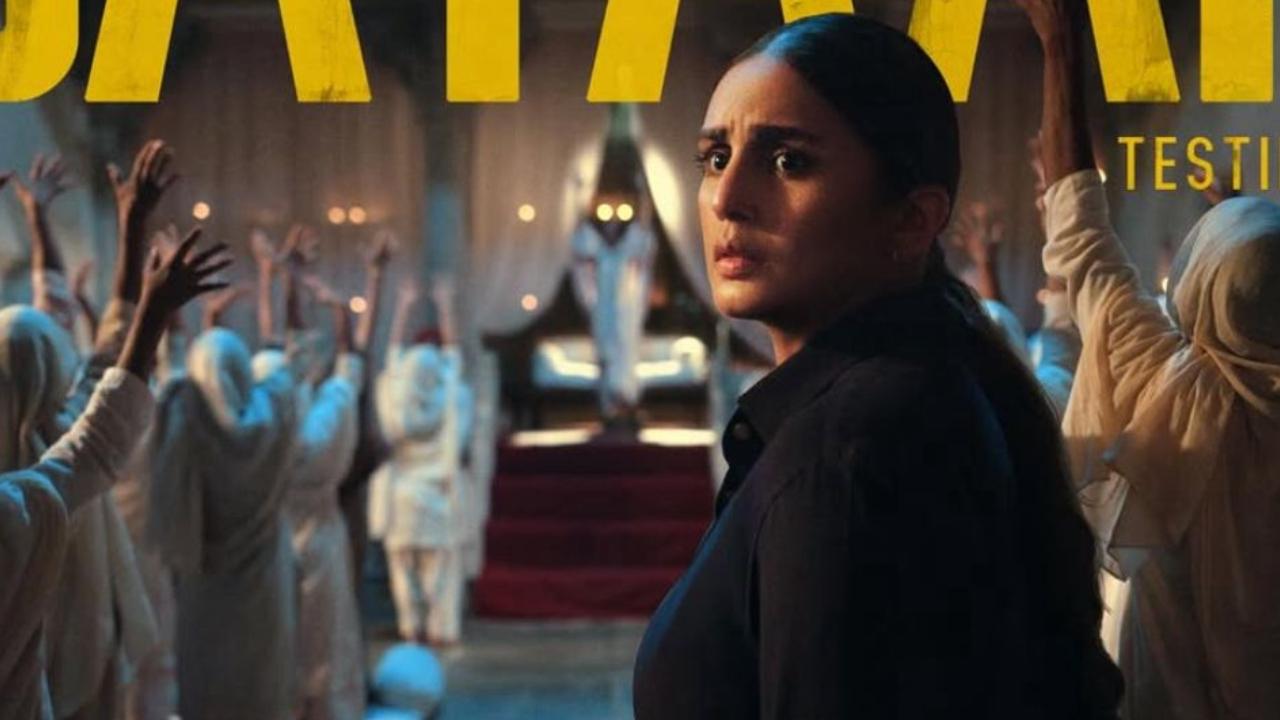
Huma Qureshi-starrer Bayaan, a taut police procedural-thriller, has been officially selected for the prestigious Discovery section of TIFF (Toronto International Film Festival), where its world premiere will take place this September.
Speaking to us about the film, helmed by writer-director Bikas Ranjan Mishra, Huma says, “Bayaan is a film that I took a bet on; it brings to the forefront a haunting story with a big soul. With no big backing and safety net, this film is purely a fruit of everyone's hard work, and I am elated that this is the only film selected in the Discovery Section at TIFF this year. It is indeed a proud moment for me, and I further strengthen my belief to support such storytelling and films.”
Talking about why she connects so strongly with this film, she says, “Bayaan gave me the opportunity to play the kind of character I’ve long been drawn to—someone within the justice system, yet up against forces much larger than herself. What makes this even more special is that I am part of this project not just as an actor but also as a producer.”
Helmed by writer-director Bikas Ranjan Mishra—best known for his acclaimed feature film 'Chauranga'—'Bayaan' was developed at Film Independent, Los Angeles and is produced by Shiladitya Bora of Platoon One Films, India’s leading independent film studio known for multiple Filmfare award winning Ghaath (Berlinale 2023), National Award winner Picasso (Amazon Prime’s first direct to digital Marathi film).
Filmmaker Bikas Ranjan Mishra described 'Bayaan' as a poignant reflection of contemporary India, where "power and gender intersect in volatile and often invisible ways."
The filmmaker added, "It is my attempt to bear witness to a society in transition — and to salute the quiet courage of those who choose to speak.' I'm deeply honoured to present my second feature, Bayaan, at the Toronto International Film Festival in the Discovery section — a platform that has launched the journeys of many filmmakers I admire and cherish."
“As a producer, I’m always looking for that one script that can be a breakout film for everyone involved—and with 'Bayaan', I knew we had something powerful. At Platoon One Films, our ethos is to champion newer voices and newer stories that provoke, connect, and challenge. This film truly embodies that spirit," said Shiladitya Bora.
Besides Huma, the film boasts of a stellar cast that includes Chandrachur Singh, Sachin Khedekar with powerhouse performers Paritosh Sand, Avijit Dutt, Vibhore Mayank, Sampa Mandal, Swati Das, Aditi Kanchan Singh and Perry Chhabra.
Yash begins Toxic shoot in Mumbai; cast to perform action sequences without body doubles
9:16 AM
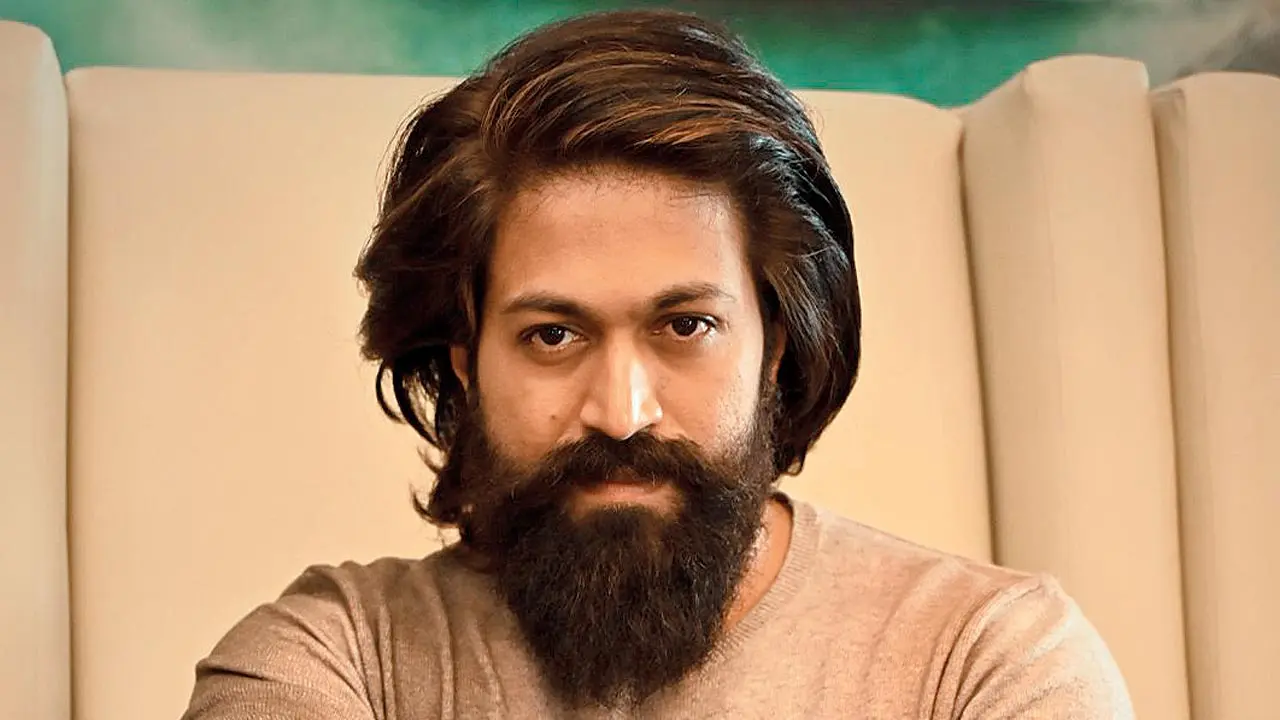
Mohar Basu (MID-DAY; July 25, 2025)
The KGF franchise, with its massive success, is a tough act to follow. But Kannada actor Yash is hoping to up the game with his next, Toxic, which is being designed as an action spectacle. Director Geetu Mohandas kicked off the latest schedule in Mumbai on July 21 with the leading man, Huma Qureshi, Tara Sutaria, and Akshay Oberoi. The three-week schedule is focused on a singular aspect — the action sequences.
A source said, “Last Monday, the new schedule kicked off in Film City, Goregaon. It will be largely indoors, where the actors will perform their stunts without the help of body doubles. It includes many sequences that involve hand-to-hand combat.”
Given the demand of the story, the actors underwent intense training before reporting to the set.
The source added, “A team of 15 experts has been put together for safety and execution. They are helping the actors with close-cut scenes. The action in Toxic is raw, brutal, and grounded. In the hand-to-hand combat sequences, action directors J J Perry and Giorgi Iarajuli have blended elements of Krav Maga, Filipino Kali, and MMA techniques to create a gritty style of action.”
Subscribe to:
Posts (Atom)