Showing posts with label Honey Trehan. Show all posts
Showing posts with label Honey Trehan. Show all posts
Awarapan 2's Suvinder Vicky recalls almost exiting Satluj
11:30 PM

Priyanka Sharma (MID-DAY; August 21, 2026)
If one measures an actor’s success by the projects in their kitty, Suvinder Vicky comes out shining. The actor, who is currently enjoying a box-office biggie in Awarapan 2, will soon be seen in Hrithik Roshan’s maiden production, Storm. The actor, however, has a different metric to measure success — to him, it’s about earning the trust of his directors.
Vicky told mid-day, “When I get a message from a director saying that they want to work with me, my happiness knows no bounds. Whether I end up doing that project or not is secondary, but that trust shown by them is precious. For instance, Honey Trehan is like my brother. Whether he casts me in his next or not, I will always be present in his films, in spirit.”
The actor collaborated with Trehan on Satluj, which was pulled down from Zee 5. Vicky had almost exited the movie, but a line by Trehan compelled him to remain part of the drama on human rights activist Jaswant Singh Khalra.
“There was a clash of dates between Kohrra and Satluj. I told Sudip [Sharma, Kohrra creator] and Honey to sort it out. Honey is great. When I told him that I was leaving his film because I was getting paid better on Kohrra and it was a longer commitment, he said, ‘My film will not be made without two people, Diljit Dosanjh and you.’”
Even as ‘Satluj’ remains unavailable for streaming, Suvinder Vicky is happy that the controversy around it has shed more light on Jaswant Singh Khalra. “My daughters would ask me what the film was about. I told them to Google it. The new generation should at least get to know about this story,” he said.
Honey Trehan reveals why Diljit Dosanjh can't play Shiv Kumar Batalvi in biopic: "I can’t get him to smoke cigarettes"
9:22 AM

Mohar Basu (MID-DAY; July 28, 2026)
Even as Satluj, based on human rights activist Jaswant Singh Khalra, remains banned, director Honey Trehan has turned his attention to his next passion project. The filmmaker has spent the past few years developing a biopic on legendary Punjabi poet and writer, Shiv Kumar Batalvi, and hopes to take the film on floors by the year-end. The big question then is: who will play the late poet?
As much as he would want his Satluj leading man Diljit Dosanjh to portray the role, that won’t be a possibility. “I really wish Diljit could play Shiv, but there is a technical problem. Shiv was a chain-smoker, and I can’t get Diljit to smoke cigarettes,” shared the director.
That said, the actor and musician will be part of the biopic in some capacity or the other. Trehan added, “Diljit will do something in the film, I don’t know what yet. He is such a pure soul. I want to have him [on the project] just for the right vibe.”
To develop the screenplay, the director travelled extensively across Punjab and met people who knew Batalvi personally. The result — he has created an intimate portrait of the poet, who was known for his poems on love, separation, and longing.
“I met such great people who are in their 90s; someone has an oxygen mask, someone is bedridden. But when you speak to them about Shiv, they get teary-eyed. They take pride that they were so close to Shiv, and that finally somebody is making [a film] on him.”
"A revolutionary act to watch it": Satluj, the India’s censors do not want you to see
3:37 PM

Hannah Ellis-Petersen in Delhi (THE GUARDIAN; July 18, 2026)
For as long as he has been a film-maker, there is one story Honey Trehan has wanted to tell above all.
Growing up in the Indian state of Punjab, Trehan saw firsthand the devastation wrought by police who carried out tens of thousands of killings and illegal cremations in the 1990s, as they cracked down on a separatist insurgency. To those in Punjab, the period remains one of the darkest in India’s modern history. Jaswant Singh Khalra, the activist who exposed the crimes and was murdered in the process, is a national hero.
By 2022, Trehan’s movie about Khalra and the crimes of Punjab police was completed under the title Ghallughara – a reference to a historical massacre of Sikhs – but the film would never reach Indian cinemas.
For more than three years, India’s film censorship board, which must approve all cinematic releases, blocked the film from release. When it was finally launched straight to a streaming platform last week, under a new title, Satluj, it was taken down within 48 hours and banned on government orders as a threat to national security.
Trehan describes the ordeal of trying to get Satluj released as “dystopian” and decries “undemocratic censorship” and alleged political interference under the Narendra Modi government re-shaping India’s film industries. He claims Indian cinema has been widely co-opted as a propaganda arm for the government’s rightwing, religious nationalist agenda, where there is “only room for one kind of story to be told”, particularly in mainstream Hindi films.
“It is clear to me that there is no creative freedom in India today,” says Trehan. “When you see the level of censorship happening, films getting blocked by the film board and banned from release, it makes you question: does democracy exist in this country any more?”
Even today, discussions of Punjab’s separatist movement – which raged in the 1980s and 1990s, fighting for an independent Sikh homeland called Khalistan, before it was crushed by the state – remain highly sensitive for the Modi government.
A ministry of information committee backed the ban on Satluj on the grounds that it lacked “balance” and had “whitewashed” the acts of Punjabi separatist militants, with the potential to incite national security issues.
“Show Muslims in a bad light and your film will get a standing ovation in the parliament,” says Trehan. “But if you dare to try and tell an uncomfortable part of our history, suddenly you are a criminal and a threat to national security.”
Trehan is not the first Indian film-maker to fall foul of India’s Central Board of Film Certification (CBFC) in recent years. The body is legally mandated to be independent, but it has faced growing accusations by those in the industry of pushing an agenda aligned with the Hindu nationalist politics of the Modi government. The CBFC has not responded to the allegation and was not available for comment.
“From what I’ve experienced, the film board is hand in glove with the government,” says Trehan. “They are being used as a backdoor entry to control the narrative of the film industry.”
Film-makers have complained of an opaque process in which films that make any reference to government oppression, certain religions, police brutality or caste violence are blocked by censors or face demands to make impossible cuts. Filmmakers have even been told to cut images of meat in films, to avoid offending Hindus.
There is no official figure for the number of films that have languished due to censor demands. One recent example was Santosh, which debuted at Cannes to acclaim but was blocked by the CBFC for its negative portrayal of police. Writers and directors privately acknowledge that self-censorship has become a norm in the industry in order to ensure their movies get a cinema release, and not lose huge sums in profits.
Meanwhile, Bollywood films with an alleged pro-government slant such as The Kashmir Files and The Kerala Story, which some have accused of telling a highly distorted version of historical events – and of fuelling Islamophobia and Hindu-Muslim division – have sailed past the board and been backed with government tax breaks and promotion.
Anna M M Vetticad, an Indian film journalist who has written about censorship, said that the treatment of Satluj encapsulated what many film-makers now have to endure.
She described a culture where film-makers were reprimanded by the censor board for realistic portrayals of social oppression or for simply “showing India in a bad light”.
“The goal is to create an atmosphere of fear and encourage self-censorship among those who have not boarded the rightwing bandwagon,” says Vetticad. “The effect on Indian cinema is potentially devastating.”
Trehan says few in the industry are willing to be as vocal as him, fearing retribution. “I know many other filmmakers who have faced similar issues but we lack unity as an industry. Most people are too worried about speaking out, especially because there is often a lot of money and careers at stake. If you criticize, suddenly a police case could be filed against you.”
In total, CBFC demanded 127 cuts to Trehan’s film, some of which appeared impossible for him to execute. As well as changing the name, the censors wanted the removal of all mention of Punjab police, the killings, government, the crematoriums where the bodies were illegally burned, the name of a former prime minister, the dates the events took place, images of the Indian flag and any scenes that showed the police in a “bad light”. They even requested the removal of Khalra’s name and a scene showing his murder inside a police station – an incident of historical record.
Trehan was particularly concerned by an insistence that he change the name of Trilokpuri – a real area in Delhi where Sikhs were massacred in the 1980s – to the invented name of “Khanpuri”, which is a name associated with Muslims. “This incident had nothing to do with Muslims, so why change to this name?” says Trehan. “You could clearly see them trying to insert their Hindu-Muslim political agenda into each and every film.”
The censors also questioned whether the film was really based on true events, prompting Trehan to hand them a file of more than 1,800 pages of research, including witness statements and court testimony.
Trehan says that “afterwards one of the people on the board said to me: ‘To my surprise, it’s a true story. But Mr Trehan, I want to ask you one thing. Who speaks the truth so loudly in today’s time?’”
As Trehan continued to be stonewalled by the CBFC, he eventually opted for a digital-only release earlier this month which does not require censor approval. He never thought the government would go as far as immediately banning the film, describing the effect as “chilling”.
He says that far from provoking a “law and order situation” in Punjab, Satluj has in fact brought communities in the state together. Since it was banned, guerilla screenings have been held across Punjab and surrounding states in village squares, gurdwaras, schools, community halls and fields, sometimes with thousands turning out. “It’s become a revolutionary act to watch it,” says Trehan.
At an event this month in remembrance of Khalra’s 1995 disappearance, people gathered on the banks of the Sutlej River in Punjab – where police are believed to have dumped his body and many others – and families of victims protested against the banning of the film.
Ranjit Singh, 38, was three years old when his father was tortured to death by police. “This film is, for me, an archive of him – of the injustices he bore on his body,” says Singh. “It may be the only archive that all this happened. I cried for days after watching it.”
Anuj Behal contributed reporting from Punjab
Bollywood has always maintained good relations with whichever government is in power-Swara Bhasker
10:12 AM

Swara Bhasker talks about her mother’s classroom, the tweet that changed everything, and why celebrity worship culture will fail us every time
Jinit Parmar (MUMBAI MIRROR; July 26, 2026)
At 38, Swara Bhasker no longer separates her life as an actor from her identity as an outspoken citizen. She moved our interview forward so she could join Friday’s student-led education protest, a cause that, for her, begins at home. “This protest is very relevant to my family,” she says.
Bhasker grew up in Delhi between two forms of public service. Her father, C Uday Bhaskar, served in the Indian Navy for nearly four decades, while her mother, Ira, taught film studies at Delhi University and JNU for 43 years. “My mom always believed education should be public, government-funded, subsidised or free,” she says.
In fact, in 2017, many academics challenged the creation of the National Testing Agency, questioning why teachers were losing oversight of entrance examinations to a system driven by contracts and tenders.
Bhasker later studied English Literature at Miranda House and Sociology at JNU, trained in Bharatanatyam, and worked with N K Sharma’s Act One and the Indian People’s Theatre Association. “I have seen the guru-shishya parampara, modern Indian education and the progressive cultural movement,” she says. “I feel very blessed to have been a student in India.”
Cinema, cable TV and the cost of dissent
When Bhasker left Delhi for Mumbai in 2008, she imagined a career shaped by films rather than politics. Vishal Bhardwaj’s Omkara remains the benchmark. “Because I was a literature student, I had studied Othello, and then I saw what Vishal Bhardwaj had done with it. It was brilliant.”
Her love affair with cinema, however, began much earlier. “I always say Chitrahaar ruined my life,” she laughs. “My dad got cable installed, but I failed a maths test the next day, so he cut it in two days. I was obsessed with Chitrahaar and Superhit Muqabla. I wanted to be in that world.”
As films such as Raanjhanaa, Nil Battey Sannata and Veere Di Wedding raised her profile, her political voice grew louder. Bhasker insists there was never a conscious decision to become outspoken. “There was never one moment when I started being vocal,” she reflects.
“I came to Bombay during the Congress government and the Anna Hazare movement. India has a really vibrant culture of protest. So many actors used to write and tweet and give their opinion. It was just normal, part of being a citizen in a democracy. It was not an act of bravery. To share your thoughts or say this is the truth, all of this became an act of bravery only after 2014.”
After a series of posts following the 2014 general election – in which she’d pointed to the country’s socio-political fractures—triggered months of online abuse, she says the threats never altered her convictions. “You fight for what you love. I love this country, and I love the version of this country envisaged in our Constitution.”
The culture of industry silence
Her outspokenness has come at a professional cost, from the backlash over her open letter on Padmaavat to her opposition to the Citizenship Amendment Act. Bhasker says many colleagues choose silence after seeing what she has faced.
“A lot of my friends would say, ‘Let your art speak.’ But how can art speak when you haven’t left any space for it to be created? Honey Trehan did create art, Satluj, but it didn’t even last two days on Zee5 and wasn’t even allowed a theatrical release. There’s so much censorship. Even when I wrote that open letter to Sanjay Leela Bhansali, more than one big director told me I shouldn’t have done that.”
She is unsurprised that Bollywood rarely takes political risks. “A producer is ultimately a businessman. I don’t expect great acts of bravery from commercial cinema. Bollywood has always maintained good relations with whichever government is in power.”
“Celebrities will grow a conscience when society does”
Bhasker’s advice to those finding their voice is, thus, rooted in collective action rather than celebrity. “The only way you can speak up and be safe is if everyone speaks up. But people should not depend on actors. Celebrity worship has ruined our politics and our films. Celebrities are products of marketing, money and glamour. They will grow a conscience when society grows that conscience.”
She is equally uncomfortable being placed on a pedestal herself. “Don’t make me your hero. Someday I will probably let you down because I am human. Don’t attach those kinds of hopes to anyone.”
Now balancing motherhood with a quieter phase on screen, she is completing The Illicit Dreams of Mrs Phalani, in which she plays 16 characters. She has also made peace with the labels attached to her. “I fought that activist tag for many days, then I said, ‘Give it to me. I am not going anywhere.’ I just hope I’m remembered as a person who had good and clean intentions and integrity.”
Indian filmmakers fear to tread many paths these days
7:58 AM

Sensitive themes being increasingly dropped at the ideation stage amid increased censoring, legal scrutiny and social media backlash
Rajesh N Naidu (THE ECONOMIC TIMES; July 18, 2026)
Mumbai: The removal of Punjabi film Satluj from a streaming platform has brought attention to a trend that writers and film-makers say has been quietly reshaping India's entertainment industry: self-censorship.
Over the past three to four years, creators say an increasing number of subjects have become difficult to touch, prompting many ideas to be dropped long before they make it to the scripting stage.
Scriptwriters, directors and producers told ET that topics such as Kashmir, communal riots, caste, religious identity, farmer protests, China, national security, the Northeast and Punjab militancy are increasingly being avoided at the ideation stage itself, narrowing the range of stories entering development.
While concerns over regulatory scrutiny continue to loom large, many creators say the fear of organised social media backlash has emerged as an equally potent constraint. Others, however, view the environment as an intellectual challenge, attempting to navigate sensitive themes through more nuanced storytelling without compromising their creative intent.
"There is fear among creative minds. Today, one has to think even about the names of the characters one writes. This speaks for the extent of self-censorship in the industry. One cannot write or create anything against the system today," said Honey Trehan, director of the film Satluj.
"Even before censorship, producers often ask us to change or remove things because they fear trouble. How much of real life or vision is left in a work after these changes," said scriptwriter Sudeep Nigam, known for the web series Illegal - Justice, Out of Order. "I wonder if we could make a film like Rang De Basanti today."
Production houses have legal teams which examine scripts line by line, said industry insiders.
Consequently, the universe of stories which writers can tell has been shrinking. "There is an unwritten but widely accepted self-censorship of certain topics among writers. It has materially shrunk the available universe of storytelling," said Jaidev Hemmady, who wrote the script for the web series Hunter - Tootega Nahi, Todega.
According to scriptwriter Sudeep Nigam, many people feel it is safer to write a romantic comedy than deal with difficult truths.
A scriptwriter who requested anonymity said: "I am tired. Today, most of my decisions are not creative but strategic in nature. I don't know what aspect in my story will trigger an unfavourable response from producers, streaming platforms, people or even the government."
Personal backlash is a key worry, said writers. "Earlier, writers would avoid certain things out of sensitivity. Today, we think twice before selecting a subject. We worry about legal action, social media attacks and even the impact on our families," said Abhishek Chatterjee, scriptwriter for the web series Sutliyan.
"What worries me most is not just whether a film will be stopped but the personal backlash that can follow. This fear is real."
But Chatterjee said he has not lost optimism. "There are challenges today. Despite these challenges, we must find ways intellectually and not compromise on our vision, like Iranian film-makers," he said.
Satluj faced this problem because it’s so explicit-Gurvinder Singh
3:39 PM

Honey Trehan and Gurvinder Singh
Disheartened by ‘Satluj’ ban, National Film Award-winning director Gurvinder Singh says the movie might have escaped the govt’s attention had Honey Trehan’s storytelling not been emphatic
Priyanka Sharma (MID-DAY; July 15, 2026)
Over the past week, Diljit Dosanjh’s Satluj has become a national talking point after Zee5 removed the film within days of its July 3 première. With many artistes and politicians debating over the sustained censorship meted out to Honey Trehan’s crime drama, where does filmmaker Gurvinder Singh — one of the most prominent voices of alternate Punjabi cinema — stand on the matter, we wondered.
“Disheartening” is how he described the ban on the movie that tells the story of human rights activist Jaswant Singh Khalra, who investigated the extrajudicial killings in Punjab of the 1990s.
“The censorship that the film has gone through is disheartening. But that’s the truth of the times we live in, and he [Trehan] should have been prepared [for this],” reflected Singh. Per him, there were “other ways” to tell the story.
“[That way] the government could have said, ‘Dekhne do logo ko.’ When the government sees my films, they feel, ‘Iss mein kya hai? Dekhne do.’ But Honey’s approach was the film should have that impact and reach everyone. In that context, it’s a very well-made movie. But the film faced this whole problem because it’s so explicit, because the government knows it will arouse people of different faiths for different reasons,” he said.
The National Film Award-winning director watched Satluj long ago at a preview in Chandigarh. What he remembers distinctly is how the film made him angry about what transpired in Punjab. “It’s not my kind of film because it doesn’t leave anything for you to imagine. It explicitly shows everything, and that’s fine if the filmmaker feels that’s the way needed to tell the story in the most emphatic manner. It made me angry about what happened at that time. So, they were successful in doing that,” shared Singh.
Diljit Dosanjh's Satluj taken down amid fears of reviving separatist sentiment
11:04 AM
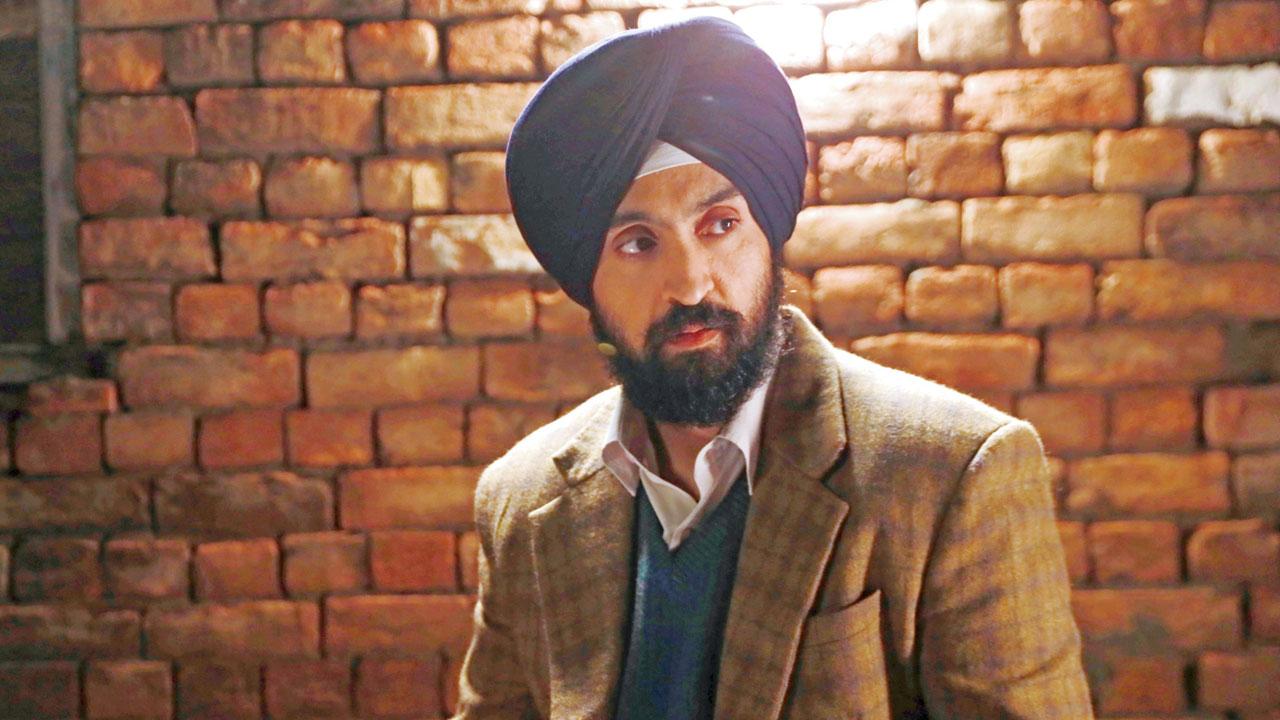
Mohar Basu (MID-DAY; July 7, 2026)
Just about 48 hours. That’s how long Diljit Dosanjh’s Satluj, formerly titled Punjab '95, was available for streaming in India before it was pulled down from ZEE5 on the evening of July 5, even as it remained accessible overseas. Sources have told mid-day that the takedown decision came after the government apparently flagged the film — a biopic on human rights activist Jaswant Singh Khalra — citing threats to national security.
Satluj chronicles how Khalra investigated the extrajudicial killings of Sikh youths during the Punjab insurgency between 1984 and 1995. Sources revealed that authorities were concerned that the film could be used to revive separatist sentiment in Punjab ahead of the Assembly elections in November.
An insider said, “The concern is the environment in which the film is releasing. There is a feeling that certain groups could weaponize the film to further their own agenda. The assessment has been made from a national security perspective, not a political one. With Punjab heading towards elections, the authorities are not willing to take chances.”
Despite the latest takedown, director Honey Trehan’s movie — that was stuck in a years-long battle with the Central Board of Film Certification (CBFC) — continues to circulate online. During a recent Instagram Live, Dosanjh acknowledged that users were downloading the film through torrent websites.
Shortly afterwards, an X account user told mid-day that over 5000 people had downloaded the movie through their link. “It started with over 300 downloads, but now there are over 5000 downloads of our print,” said the user.
The film’s journey
- On the first viewing in 2022, the CBFC sought 21 cuts. The makers approached the Bombay High Court
- In July 2024, mid-day reported that the CBFC’s list of cuts had risen to 85
- By September 2024, it sharply rose to over 120
- In January 2025, mid-day reported how the makers unsuccessfully tried a global release for the biopic
------------------------------------------
After years of censorship battles, title changes and release delays, Diljit Dosanjh’s long-delayed film finally reached audiences without cuts — only to disappear from ZEE5 within two days. As speculation grows, no official explanation has emerged
HINDUSTAN TIMES (July 7, 2026)
For years, Honey Trehan’s film on human rights activist Jaswant Singh Khalra existed more as a censorship controversy than a movie. Announced as Ghallughara, later retitled Punjab ’95 and finally released as Satluj, the Diljit Dosanjh-starrer spent nearly four years battling certification hurdles before quietly premiering on ZEE5 on July 3.
There were no promotions, interviews or marketing campaigns. Then, just 48 hours later, the film disappeared.
On July 5, ZEE5 announced that Satluj would be unavailable in India “until further notice”, citing unspecified “developments”. The platform has not elaborated further, and neither the CBFC nor the film’s producers have publicly explained the move.
HT City reached out to all stakeholders but had not received a response at the time of going to press.
ONLY ONE MAN IS TALKING — DILJIT
The most detailed response has come from Diljit, who suggested the team always feared such an outcome. During an Instagram Live session, the actor said the makers deliberately avoided announcing or promoting the release because they worried the film might never reach audiences otherwise. In fact, during a fan interaction a day before the takedown, he had predicted it could happen: “Today is Saturday. I feel it could be taken down by Monday. But no worry, you download it and watch.”
After the removal, Diljit remained defiant. “You can trouble me as much as you want. I am with Punjab till the day I die,” he said, adding that he was satisfied the film had reached viewers and urging those who downloaded it to share it further.
Beyond Diljit, most stakeholders have remained silent. Producer Ronnie Screwvala has not commented, while director Honey Trehan only reposted ZEE5’s statement with the message, “Tera bhana meetha lage” (God’s will seems sweet).
WHY WAS THE FILM CONTROVERSIAL?
The film tells the story of Jaswant Singh Khalra, the human rights activist who investigated alleged illegal cremations and extrajudicial killings during Punjab’s militancy years. Khalra was abducted and murdered in 1995, and the case later led to the conviction of several police personnel. Because it revisits one of the most sensitive chapters in Punjab’s history, the project faced scrutiny from the start. After being submitted to the CBFC in 2022, the film reportedly ran into objections and was asked to make more than 120 cuts. Trehan maintained that such changes would fundamentally alter the film. The prolonged dispute derailed release plans and eventually pushed the makers towards a direct-to-digital release.
WHY OTT?
Unlike theatrical releases, OTT platforms do not require prior CBFC certification. Industry observers believe streaming offered the makers the only realistic way to release the film in its intended form. That makes its sudden removal all the more puzzling.
SO WHAT HAPPENS NOW?
Some observers point to the film’s politically sensitive subject matter, while others have noted that Punjab is due to hold Assembly elections early next year. Film trade analyst Atul Mohan says the exact trigger remains unclear but believes the subject itself may have raised concerns. “It is definitely a sensitive issue. Elections are coming in Punjab and maybe there could be a concern that no one should use this as propaganda,” he says.
Adding to the controversy, advocate Vineet Jindal has said he filed a complaint with the Ministry of Home Affairs seeking action against the filmmakers and ZEE5, alleging that the film promotes a distorted narrative around Punjab’s insurgency years, in addition to an FIR against Diljit. There is currently no indication that the complaint is linked to the film’s removal.
Honey Trehan breaks silence on Satluj controversy: "I genuinely don't know who objected"
9:38 AM

Just two days after its Zee5 première, ‘Satluj’ — previously titled ‘Punjab '95’ — was made unavailable in India, mid-day finds out how the film got an India release in the first place
Mohar Basu (MID-DAY; July 6, 2026)
Four years after Punjab '95 was stopped in its tracks over objections from the censor board, Honey Trehan was finally breathing easy on Saturday morning when we got on a call with him. His film, now streaming on ZEE5 as Satluj, had arrived without a single cut.
For the filmmaker, it marks the end of a battle that often seemed impossible to win.
In his first interview since the film's release, Trehan told mid-day that there were moments when even he wasn't convinced the film would eventually see the light of day "Even till yesterday afternoon, I wasn't sure if the film would come out," he says with a laugh. "We've reached this point so many times before that I had stopped allowing myself to believe it. I kept telling myself, 'Let it go, let it go.' Then suddenly, it was just there."
The release, he says, belongs as much to the family of human rights activist Jaswant Singh Khalra as it does to the makers. "I spoke to them immediately. They are very, very happy. It was important because we didn't get the title Punjab '95. Naturally, people assumed the film must have been released with cuts. Paramjit aunty herself clarified that this is the same film. Hundreds of people who had watched the earlier version are now saying Satluj is exactly the same film."
For Trehan, that validation mattered more than anything else. "I'm getting messages from IPS officers in Punjab asking, 'The film is without cuts, right?' They are excited to finally watch it. That means a lot."
The director admits he was initially worried that the four-year delay would burden the film with impossible expectations. "I actually felt the opposite happened. These three years became three years of publicity. Punjab '95 had become much bigger than the film itself. My only anxiety before release was whether I could live up to what people had built in their minds. But the response has been overwhelming. Every reaction has become memorable."
Trehan credits producer Ronnie Screwvala, Diljit Dosanjh and ZEE5 for refusing to compromise. "The way Ronnie sir and Diljit stood by me and stood by the film... I can't thank them enough. And what courage ZEE has shown. Hats off to them. They simply dropped the trailer, posters and the film together. There was no release date, no countdown, nothing. It was just — streaming now. I've never seen anything like that."
Throughout the film's uncertain journey, Dosanjh remained firmly behind the project, says Trehan. Recalling how the actor came on board, he says their relationship dates back to Udta Punjab. "Even before I told him I wanted to make a film on Jaswant Singh Khalra, he immediately said, 'There's only one story from Punjab worth making if it isn't about 1984'. I showed him my research book. He looked at Mr Khalra's photograph, picked up the book, placed it on his forehead and simply said, 'Waheguru ji... tell me when and where to come. You'll find me there'."
That commitment, Trehan says, never wavered. "There were days when he reported at six in the morning and I couldn't take his first shot until four in the evening because schedules had gone haywire. I kept apologizing. Every single time he would tell me, 'Paaji, no problem. Whatever you're doing, you're doing for the film. I'm here to support the film.'"
The filmmaker also recounts how Dosanjh recently waited nearly an hour for an Instagram Live session promoting the film despite repeated technical glitches. "He waited for almost 50 minutes. We couldn't connect because of technical issues. Finally, someone got us connected. It wasn't about publicity. Somewhere, both of us felt we would connect. That's the kind of person he is."
Even today, Trehan says he doesn't know who exactly objected to Punjab '95. "If somebody asks me who had a problem with the film, I genuinely don't know. I don't have a face. I don't have a name. Everything came through third persons or lawyers."
He reveals that communication from the censor board effectively stopped earlier this year, forcing the makers to find another route. "There came a point when there was simply no communication anymore. After everything we'd gone through, there was nothing left to discuss. That's when ZEE stepped in and made this release possible."
Yet, despite the years of uncertainty, he refuses to hold grudges. "I've never been bitter. Sometimes you feel hurt emotionally because you're not getting answers. But I also remind myself that I'm talking about one film. The people running the country have much bigger responsibilities. Sometimes there must have been helplessness. I respect the people and the positions they hold."
He points out that every legal body and community organization that watched the film responded positively. "The SGPC watched the film. The Akal Takht committee watched the film. Everywhere I went, the response was overwhelming. Today the film is available across 196 countries on ZEE5 and all I'm receiving is love. So where exactly was the problem?"
Trehan also responded to Diljit Dosanjh's recent assertion that he is "not political, but an artiste". Without commenting on the actor's statement, the director says art inevitably exists alongside politics. "Art can be different from the politics of the time you're living in. Otherwise your art cannot be truthful. Everything today becomes political."
He insists Satluj was never designed to make a political argument. "We're only talking about human rights. We're not commenting on the politics of that period. We're talking about what happens when extraordinary powers are placed in the hands of a few people. That's a human issue, not a political one."
Trehan believes that is why audiences across generations are responding to the film. "Someone messaged me saying this film doesn't reopen wounds; it heals them. That stayed with me. People feel somebody has finally told their story. That's probably the greatest compliment I've received."
At the time of going to press, ‘Satluj’ had been made unavailable on ZEE5 in India.
Statement by Zee5 “The response to ‘Satluj’ since its release has been truly overwhelming. We are deeply grateful to every viewer who chose to subscribe, watch and champion the film. Your love and support have meant a great deal to us and to everyone who brought this story to life. At Zee5, we stand firmly by ‘Satluj’ and the creative vision behind it. We believe powerful storytelling has the ability to inspire, endure, and leave a lasting impact. We remain committed to championing authentic and meaningful narratives. In light of the current developments, ‘Satluj’ will be unavailable in India until further notice. We remain committed to exploring every appropriate avenue through due process to bring the film back to our audiences at the earliest opportunity. Our commitment to creators and to stories told with conviction, artistic integrity and purpose remains unwavering.”
Punjab '95 finally releases as Satluj; Diljit Dosanjh says no cuts made
9:30 AM

HINDUSTAN TIMES (July 5, 2026)
After years of delays and censorship-related hurdles, Diljit Dosanjh-starrer Punjab '95 has finally been released under a new title. The film, now called Satluj, quietly dropped on OTT on Friday. Based on the life and death of human rights activist Jaswant Singh Khalra, the Honey Trehan directorial was originally slated for release last year but remained stuck amid certification issues.
During an Instagram Live session on Friday, Diljit clarified that while the title has changed, the film itself remains untouched. “Unfortunately, we couldn’t keep the original title for certain reasons... But there are absolutely no cuts in the film. The version I watched in theatres two years ago is exactly the same one I watched at home last week. If even a single cut had been made, I would not have promoted the film,” he said.
Trehan echoed the sentiment, revealing that Khalra’s wife, Paramjit Kaur Khalra, had also confirmed that the released version remains unchanged. “Paramjit aunty also shared a post about the film and said this is the very same version she had watched earlier. Only the title has changed,” he said.
Trehan added, “Everything I objected to, every word I refused to cut or mute, is still there in the film.”
The film also stars Arjun Rampal, Surinder Vicky, Varun Badola and Geetika Vidya Ohlyan.
Honey Trehan wanted me for a song in Raat Akeli Hai-Chitrangda Singh
8:56 AM

Priyanka Sharma (MID-DAY; December 27, 2025)
If things had played out differently, Chitrangda Singh would have been a part of the first instalment of director Honey Trehan’s Raat Akeli Hai (2020) itself. It’s not something she regrets, and for good reason. “Honey had gotten in touch with me for a song in the first film. They wanted to put a special song for the theatrical release. But that got dropped because the film went to OTT,” recalls the actor.
Funnily, her loss turned out to be her gain. Today, Singh is winning praise for her turn in Raat Akeli Hai: The Bansal Murders, the second part of the Netflix murder mystery franchise. She recalls Trehan approaching her when she was shooting for Housefull 5.
“He messaged me, saying, ‘Do you know what you’re doing in January-February?’ I said, ‘I am shooting with you’,” she laughs.
Only when she sat for a meeting with Trehan did the actor learn that it was Raat Akeli Hai 2 with Nawazuddin Siddiqui and Radhika Apte. Singh, who plays a grief-stricken mother in the crime thriller, says the director’s brief to her was to convey her emotions through body language.
“I had to remind myself that the energy of this woman is somebody who has lost her son. So, I doubled my [emotional] weight and dragged myself because the woman doesn’t even want to even live anymore.”
It also gave her an opportunity to be a part of a story that offers social commentary on the disparities existing within the society. A plot point in the film involves children falling sick due to a poisonous gas leaked from a factory. For Singh, who is a mother, it hit home.
“As a mother, I also worry about the water we’re drinking. When I was first reading the script, we were largely thinking of scenes and character graph. But while shooting, I realized that social commentary is such an important part of the film. What a character does in the end is because there is no justice.”
--------------------------------------
To Chitrangda Singh, co-star Nawazuddin Siddiqui is all about improvisation. She says, “Even if he says the same line 10 times, every time he’ll change [things] in it.”
--------------------------------------
About Deepti Naval’s nuanced act, she says, “When you see her off camera, you know what she’s doing, but when you see it on the monitor, the impact [is unbelievable].”
Censorship is a silly exercise in pretend power-Roshan Sethi
9:56 AM

Hacking of ‘Indian’ from the film ‘A Nice Indian Boy’ prompts filmmaker Roshan Sethi to question the censor board’s arbitrary power-wielding
Amarabati Bhattacharyya (MUMBAI MIRROR; October 28, 2025)
America-based filmmaker Roshan Sethi’s rom-com A Nice Indian Boy has become yet another victim of the Central Board of Film Certification’s (CBFC) crude erasure. The film, based on Madhuri Shekar’s play of the same name, is a queer love story between Naveen, an Indian-American doctor, and Jay, a white man. Before the film was released in Indian cinemas on October 17, the censor board demanded that ‘Indian’ be dropped from the film’s title, seemingly to separate the nation from the core theme of the film.
The film’s distributor, Pictureworks, in an Instagram post revealed that they were compelled to remove ‘Indian’ owing to the “censorship rules” in India. “Remember when the Aligarh mayor wanted Aligarh [2025] banned because she thought a gay protagonist made her city look bad? Seems like the CBFC now fears that calling a gay man ‘A Nice Indian Boy’ might make the whole country gay,” tweeted Aligarh’s writer and editor Apurva Asrani, reacting to the incident.
Following Mirror’s October 25 report on Indian cinema’s battle with the censor board, Sethi spoke on the arbitrariness of these alterations. “I think censorship is historically always very dumb, and doesn’t really work. This title change achieves nothing. Anyone who wants to watch the unaltered film via other means can and will. I suspect all of the people who watched the film already knew its real title. A censorship board composed of people who believe they know what’s best for the public is a silly exercise in pretend power, and the best thing we can do is to repeatedly puncture the appearance of that power,” he said.
“Queer love has existed in every country since the beginning of human history, and will continue existing until the end regardless of how anyone feels about it. It’s a basic, dependably re-occurring facet of human biology. Same with most things considered controversial or worthy of censorship. The pronouncements of largely older men in dusty rooms have always historically been proven to be irrelevant because they are trying to stop something that cannot be stopped,” he added.
Long list
In the past many Indian film titles have been renamed for a variety of reasons: Sanjay Leela Bhansali’s Padmavati was renamed Padmaavat (2018) after mobs took to the streets and protested claiming that the film inaccurately portrayed the Rajput queen and disrespected their culture.
Malayalam film Oru Bharatha Sarkar Ulpannam was renamed as Oru Sarkar Ulpannam (2024) as the censor board commanded that the film would be certified only if ‘Bharatha’ is removed from the name. Other hacked titles include Janaki v/s State of Kerala releasing as Janaki V v/s State of Kerala (2025), when the CBFC objected to the use of a Hindu deity’s name, or Cheat India (2019), which was renamed Why Cheat India.
Another instance
Another film stuck in certification limbo is Honey Trehan’s Punjab '95, for over a year. A biopic that centres on the life of Jaswant Singh Khalra, the human-rights activist who uncovered extrajudicial killings and mass cremations during Punjab’s militancy era in the late 1980s–1990s, the film was slated for a release in India in February but is yet to come out.
CBFC demanded over 120 cuts to the film, reportedly including core aspects such as removal of the name “Jaswant Singh Khalra”, deletion of real-locations, and removal of key historical references. The teaser and trailer for the film have reportedly been blocked or removed in India and the title itself was reportedly changed from an earlier working title — Ghalughara to Punjab ’95 — allegedly under CBFC pressure. The director and protagonist, Diljit Dosanjh, refused to associate with the film if it releases in India with the cuts.
Speaking to Mumbai Mirror, Trehan reveals that he was asked to withdraw the film’s censorship case from the high court and has been asked not to fight for the film’s release anymore. “Censorship should not exist at all. The CBFC is meant to be a certification board, not a censor board. Once the film is released, if anybody has a problem with the film, they can definitely go to court but the CBFC is wielding powers beyond its jurisdiction. CBFC has become more like a self-proclaimed court,” he said.
“They have been given extra power by the ruling government, for whom the CBFC is a backdoor entry into controlling the film industry — particularly films that don’t match their narrative. CBFC is an independent body, why is the government interfering?”
You won’t understand in-depth acting today as it’s lost in event films-Nawazuddin Siddiqui
8:05 AM

Nawazuddin Siddiqui on reuniting with director Honey Trehan for Raat Akeli Hai 2
Priyanka Sharma (MID-DAY; March 23, 2025)
Nawazuddin Siddiqui is currently consumed by the world created by filmmaker Honey Trehan. Five years after their maiden collaboration, Raat Akeli Hai, the duo is reuniting for the sequel of the thriller drama. The actor, who plays a cop in the film, informs us, “We have been shooting for it over the last two months. We have five more days of shoot left.”
Taking a day out from the shoot to attend the second edition of the Cinevesture International Film Festival, Siddiqui shares the challenges of being part of Trehan’s film.
“You can’t enjoy [yourself] in a Honey Trehan film,” he quips, adding, “He sets up difficult tasks for you. However, if you are able to do it, you leave the audience mighty impressed. Honey deliberately adds new dimensions to the characters in the script without telling you. That’s his process. It is such a wonderful discovery for an actor,” Siddiqui smiles.
While he is thrilled with the opportunities of diverse characters coming his way, he laments at the current state of Hindi cinema. The actor has realized that post the pandemic, the audience’s taste in movies has completely changed.
“It saddens me. It feels like we have regressed. Before the pandemic, small and medium-budget films were at least releasing in theatres and people were stepping out to watch them. Now, only lavishly-mounted films have space on the big screen. It’s a big loss for medium-budget films,” he says, adding that the box office collection has become a huge pull for the audience to give a film a chance. He recounts that this was not a practice before. “If someone said, ‘That actor gave a terrific performance,’ we all would be compelled to go and watch the film because we were curious about performances,” he explains.
Siddiqui, who has grown up watching films, including Ek Doctor Ki Maut (1990), Sparsh (1980) and Ardh Satya (1983), feels that ever since people have begun consuming content on mobile screens, the impact an in-depth performance brings is lost. “I might be wrong but I believe you won’t understand [in-depth] acting today even on the big screen because it’s lost in event films,” he expresses.
Juggling films
Besides Raat Akeli Hai, Nawazuddin Siddiqui is also shooting for Costao, based on the life of customs officer Costao Fernandez, produced by Bhanushali Studios. “It’s the story of a customs officer and what all he goes through. It’s a human drama,” he shares.
Raat Akeli Hai 2: Nawazuddin Siddiqui returns as inspector Jatil Yadav to investigate a new mystery
8:21 AM
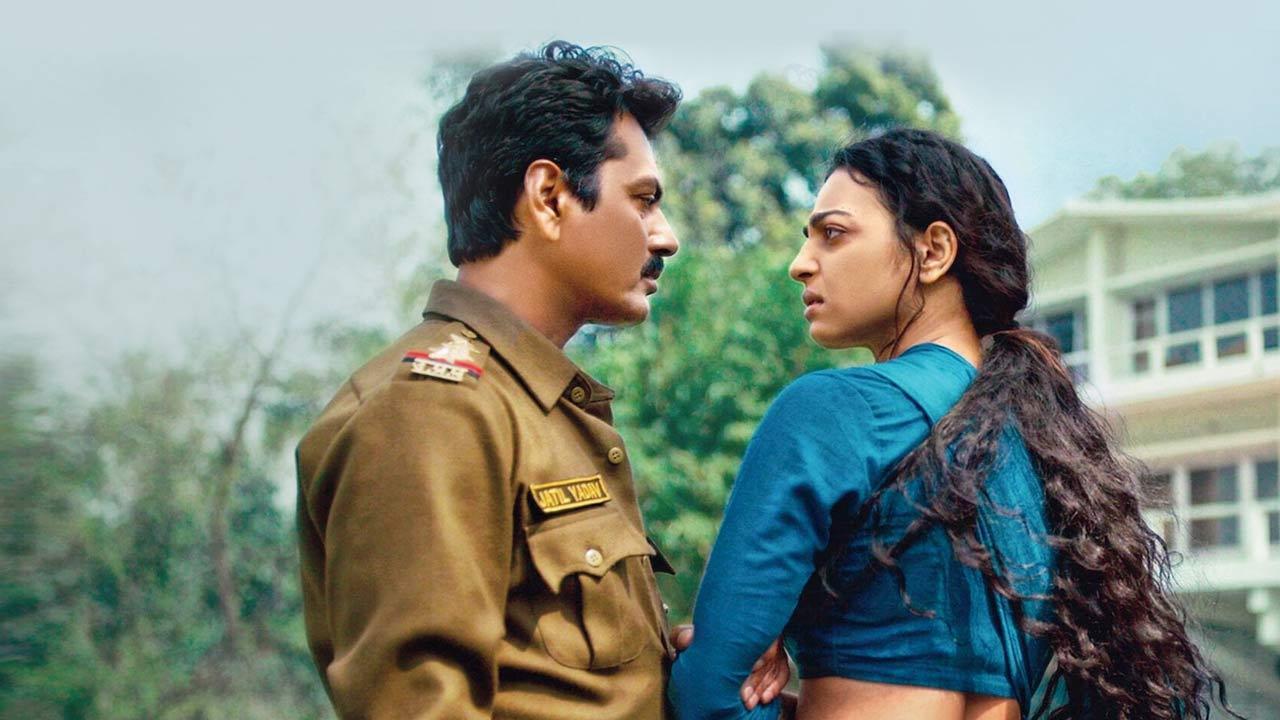
Nawazuddin Siddiqui reprises the role of a police officer in the sequel of Raat Akeli Hai; shoot to conclude in March
Upala KBR (MID-DAY; January 12, 2025)
Nawazuddin Siddiqui returns as Inspector Jatil Yadav to investigate another gruelling case in the sequel of Raat Akeli Hai. The Netflix film, directed by Honey Trehan, will kick off from where it started. The first schedule began on January 9 in Delhi. The second edition will bring back four principal characters, including Radhika Apte, Tigmanshu Dhulia and Ila Arun.
Raat Akeli Hai followed the journey of a small-town cop who is asked to investigate the death of a local politician. The film received critical acclaim for its direction while Siddiqui won awards for his performance as a quirky cop.
“The sequel will be a fresh crime story. The only connection from Raat Akeli Hai is Radhika [who plays Radha, his paramour], Tigmanshu as senior SP Lalji Shukla IPS and Ila Arun [as Sarita Kumari, Jatil’s mother]. The film opens with Jatil enjoying domestic bliss with Radha, till a new series of crimes unfold and he is asked to solve the case,” reveals a source.
Raat Akeli Hai 2 will be shot across four Indian cities, Delhi, Lucknow, Kanpur and Mumbai in a two-month schedule. The film is expected to wrap up by March 12 in Mumbai. “Everything is being shot in a hush-hush manner as the OTT channel wants to announce the sequel in a planned manner,” informs the source, adding that Apte will join the schedule in February.
“Radhika gave birth to a baby in December last year. She is currently on maternity leave and will join the cast and crew from February. Her character in the sequel is expected to be darker. There will be a twist to it. A lot of Honey’s research is based on real-life situations and cops so there is a lot of authenticity in his work,” inform the source.
Diljit Dosanjh's Punjab '95 faces new hurdles: CBFC demands nearly 120 cuts and name change
8:16 AM
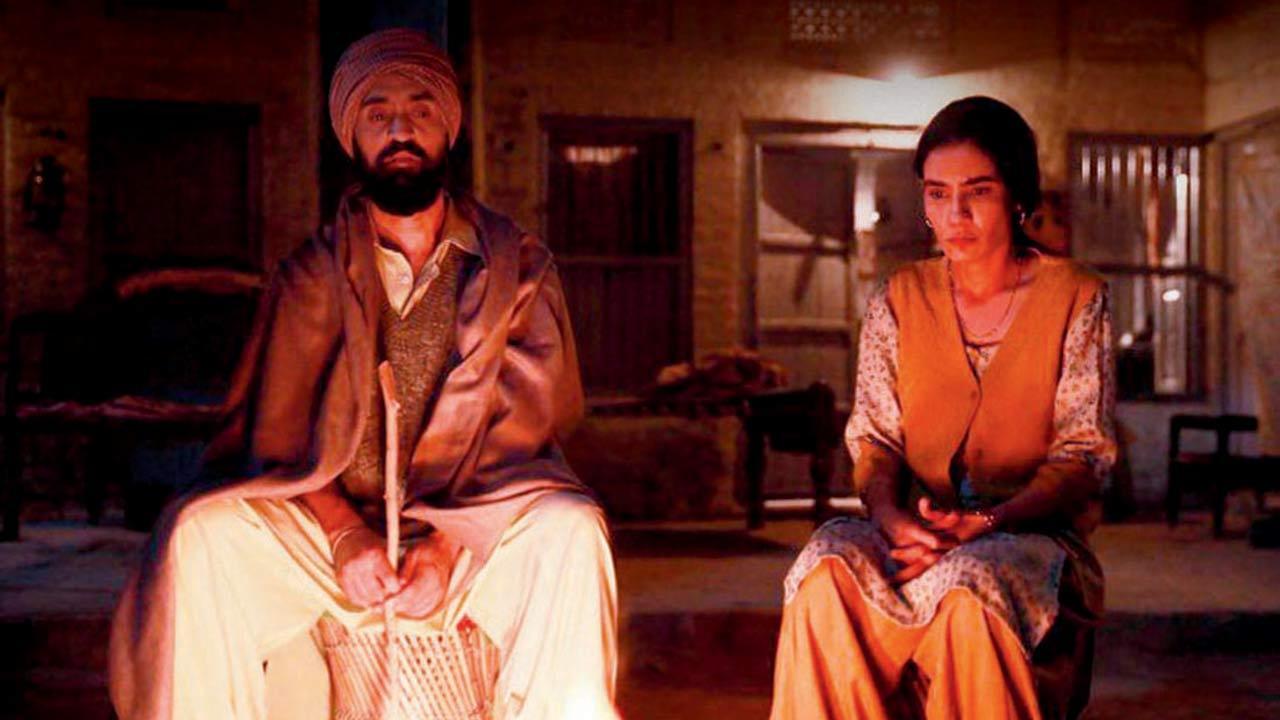
Sources say CBFC chief Joshi has handed out nearly 120 changes to Punjab ’95, from its original 85 cuts; recommended alterations for activist Khalra’s biopic include renaming the protagonist and film
Mohar Basu (MID-DAY; September 25, 2024)
One would think that 85 cuts is one too many for a film. But apparently not. Troubles continue for director Honey Trehan’s Punjab ’95, a biopic on human rights activist Jaswant Singh Khalra. In July, mid-day reported that the Central Board of Film Certification (CBFC) had not greenlit the Diljit Dosanjh-starrer even after suggesting 85 cuts (85 cuts not enough?, July 17).
Now, it has come to light that CBFC chairman Prasoon Joshi, along with the Revising Committee, watched the gritty drama last month and handed out a final round of changes. Sources tell us that the cuts have now sharply increased from 85 to nearly 120. Not just that, one of the pivotal asks is that Khalra’s character be renamed altogether.
Additionally, the movie cannot be titled Punjab ’95, which is a reference to Khalra’s year of death. The activist had disappeared in September 1995, and 10 years later, six Punjab police officials were convicted for his murder.
A well-placed source from the film’s team reveals, “Per the CBFC’s suggestion, the film will now be called Sutlej, denoting the river that unites Punjab. There are a total of almost 120 changes! The most pivotal change is to not call the protagonist Jaswant Singh anymore. Honey and producer Ronnie Screwvala told CBFC that they won’t allow this change in a film that highlights Khalra’s role in investigating the disappearance and killing of Sikh youths during the Punjab insurgency between 1984 and 1994. Their point of argument was that Khalra is seen as a martyr by the Sikh community and removing his name will be disrespectful not just to him and his family, but to the entire community. Not to mention that it then won’t be a biopic anymore. The CBFC also stated that the movie cannot claim to be based on real-life incidents as they felt it would lead to ‘swaying of sentiments’.”
There is more in the list of changes. The source adds, “In a scene, there is a Gurbani that has been asked to be removed. They have also instructed that any mention of Punjab and the district of Tarn Taran be dropped. Moreover, display of the national flag and any reference to Canada or the UK has to be dropped altogether. If the makers agree to these changes, they will be handed the certificate before the week ends.” A final meeting is slated to take place today, where Trehan and Screwvala will appeal to the CBFC against some of the suggested modifications.
The movie — also starring Arjun Rampal and Suvinder Vicky — was first screened for the CBFC in 2022. Since then, Screwvala and Trehan have been trying their best to get it cleared. It had led to a court case, with Screwvala appealing against the Censor Board’s then-ask of 22 cuts.
“The makers had eventually decided to pursue an out-of-court settlement. In an earlier meeting, the Revising Committee asked them to alter a line in the film, where the protagonist remarks that over 25,000 people have been killed in Punjab. The Revising Committee stated that the number be reduced. But Honey and Ronnie had opposed it, noting that all the facts shown in the film were based on real-life testimonies and the CBI court’s judgment from the ’90s,” added the source.
CBFC asks for 85 cuts in Diljit Dosanjh-starrer Punjab '95
8:37 AM
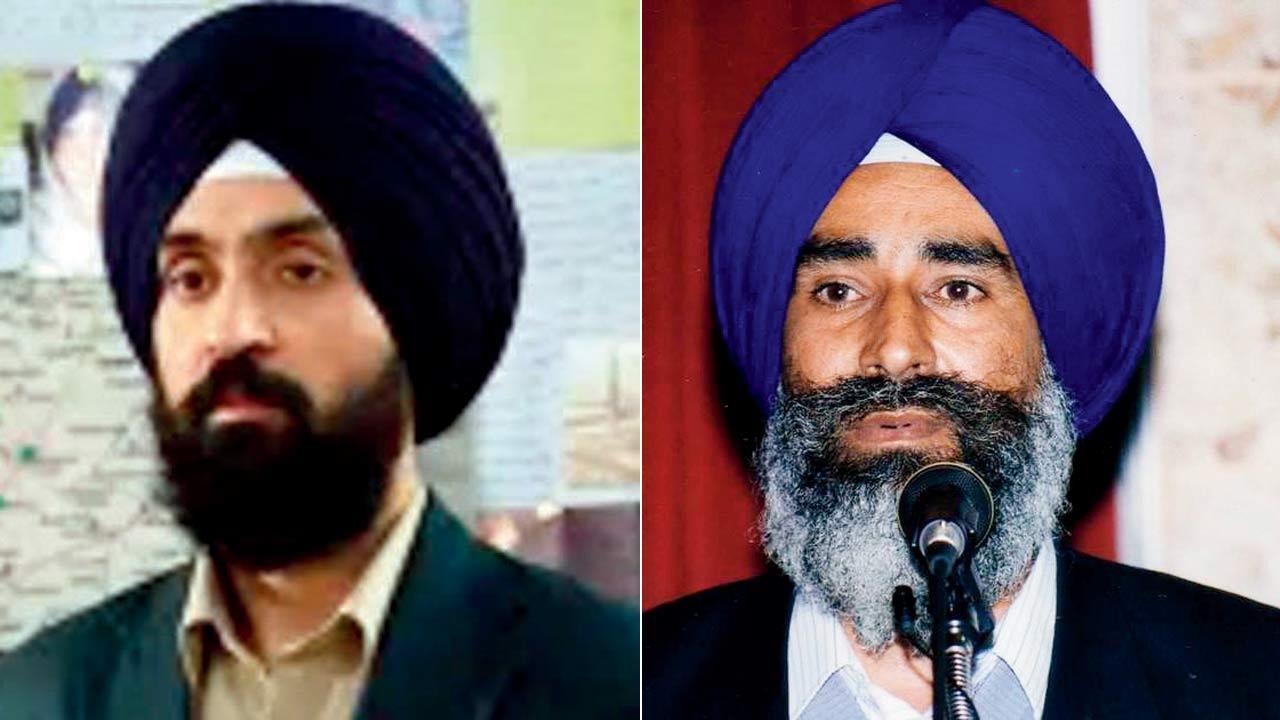
Sources say CBFC has asked for 85 cuts in Punjab ’95, based on activist Khalra; Board still dragging its feet on Diljit-starrer’s release due to its contentious subject
Mohar Basu (MID-DAY; July 17, 2024)
The fate of Honey Trehan’s second directorial venture, Punjab '95, continues to hang in the balance. The film tells the story of human rights activist Jaswant Singh Khalra, who had attempted to uncover the disappearance and killing of Sikh youths during insurgency in Punjab between 1984 and 1994. We hear the Diljit Dosanjh-starrer was screened for the Central Board of Film Certification (CBFC) on Sunday, and the examining committee handed it 85 cuts. The troubles don’t end there. Whispers suggest that despite the cuts, the CBFC has yet to greenlight its release.
An insider from the film’s team told mid-day, “In spite of agreeing to the suggested 85 cuts, the makers were told that the film remains a contentious subject, and whether it should be released in the current times is a question. A final decision has yet to be taken by the CBFC.”
This is not Punjab '95’s first run-in with the Censor Board. In December 2022, Trehan’s movie—titled Ghallughara then—was screened for certification. The process reportedly took six months, with the CBFC asking for 21 cuts and a change of title. Ronnie Screwvala’s production house had appealed against the decision in the Bombay High Court. As a result, the film, also starring Arjun Rampal and Suvinder Vicky, had to be pulled out from the 2023 Toronto International Film Festival’s line-up.
Currently, even as the number of cuts has quadrupled from the Censor Board’s 2022 ask and uncertainty looms large over the movie’s release, a cast member says the makers are bullish about it reaching the audience.
The actor said, “The film might be butchered, but the team will ensure its release. Right now, we are fighting for its existence.” The person refused to divulge details about the team’s future course of action.
Another source said that the producer has been discouraged from releasing it, since it raises questions about Khalra’s death. The activist disappeared in September 1995, and 10 years later, six Punjab police officials were convicted for his murder.
The source said, “The producer has been requested to write off the film as a bad investment. CBFC won’t allow its release because it is considered to be a volatile subject. There are concerns that it shows cops in a poor light by reflecting Khalra’s custodial death, and that could lead to violence across the country. The material needs to be reimagined drastically for release.”
We texted Screwvala and Trehan, who didn’t respond till press time.
I never used dialect coaching to find roles-Vikas Kumar
10:40 AM
Vikas Kumar, who is also a popular dialect coach in the industry, says that it was his acting prowess that got him the series, Aarya
Letty Mariam Abraham (MID-DAY; February 13, 2023)
He has portrayed a cop one too many times, but Vikas Kumar has always managed to play them differently. As the actor steps into the role of ACP Khan again for the second part of Aarya season 3, he credits the show’s writing for making his character “more human and emotional”. In conversation with mid-day, Kumar looks back on his acting journey, how filmmaker Ram Madhvani humanized his character in the Disney+ Hotstar show and how the part is closer to his real-life persona. Edited excerpts from the interview.
How did both your professions, dialect coach and acting, come together?
I came to Mumbai looking for work as an actor. Whoever had seen me act thought that my voice and dialogue delivery are my forte. One day, my roommate Honey Trehan, who is now a director, was sitting with an assistant casting director [working on a] Hollywood film being shot in India. They wanted somebody to ensure that the Indian actors speak British English well. So, he recommended me to the line producer. While I waited for the right acting projects to come my way, I had to do something to stay busy and earn money. Dialect coaching gave me a chance to be part of the film industry. Now, I have a company called Strictly Speaking, where my wife is also a trainer.
Did dialect coaching pave the way for your acting career?
Never. People on the outside think that this would help me build contacts, but I’ve never looked at it as a way of finding roles. Dialogue coaching has allowed me to choose my acting assignments and do only what I really want to do.
It took a long time to build your career since Powder and Khotey Sikkey.
My journey has been slow yet steady. Things looked promising after Khotey Sikkey because [I was] made to believe that there will be regular work and Khotey Sikkey was supposed to have a second season. But these shows by YRF were way ahead of their time. If something like that had happened today, it would’ve been very [successful].
While Aarya’s first season was liked, the second edition received mixed reviews. Your take?
The first season had its own novelty; it was fresh for the viewers and the actors to explore. In season two or three, the fear is that you can get complacent. You have to challenge yourself and see how you can do things differently within the character’s parameters. Ram also does workshops to push you. Some people liked season two more than season one; we’ve got all kinds of reactions.
You’ve played a cop many times. How do you make the roles distinct?
I’ve refused many cop roles because they didn’t excite me or didn’t have a proper journey character-wise. The first [factor is] the writing. That’s why you take up a show like Aarya because it’s not your regular cop. Plus, Ram was directing it and it was Sushmita Sen’s comeback. Ram and the other directors [wanted me] to make ACP Khan more human and emotional, not someone who carries his authority on his shoulders. He carries enough authority when he is conducting raids, but he is also human enough to understand what Aarya as a woman may be going through. His relationship track made it a wholesome character.
How has ACP Khan evolved in season three?
Now, he comes with even more angst and drive to catch Aarya and the Russians, and get rid of the entire drug racket. This is probably the closest to how I am in real life, and Ram wanted it that way. Similarly, Sushmita is exactly like Aarya with her kids. Ram tries to capture the real you. With Ram, there is no action and cut; you go live your scene and he will capture it. Being yourself is the toughest thing to do.
Directing is scary, but it’s equally rewarding-Radhika Apte
2:27 PM

Rachana Dubey (BOMBAY TIMES; April 12, 2021)
As an actress, she has essayed several characters that are off the beaten path. Last year, Radhika Apte turned writer-filmmaker with the short film, The Sleepwalkers, which featured Shahana Goswami and Gulshan Devaiah. Talking about what led her to write and direct, Radhika says, “I had never thought of making films. There was no such plan. I just had the urge to write because sometimes you want to create content that challenges you. Roles that come your way are not necessarily from the space that you want them to come from. I just wanted to write something that interested me. There are things that I passionately want to do. When I bounced off the story to Honey Trehan and Abhishek Chaubey, they decided to make it. I had 10 days for the prep and shoot. When I finished writing, I realised I didn’t want to act in it, but I wanted to direct it. And, I absolutely loved the process.”
Radhika shares, “As a director, the responsibility on your shoulders is huge. Someone has put in their money, which they could lose because you didn’t do your job well. So, directing is scary, but it’s equally rewarding.”
Radhika, while talking about her decision to direct, says, “There is a lot to learn. I feel grateful for the work that came to me in all these years as an actress, but a lot of it was not really challenging. The things that I enjoyed were done within a matter of a few days. I was also tired of getting these tiny roles in films led by other actors. I wanted something that I could sink my teeth into for longer. I love to work, and I want to go on. I felt I was creative in my own way. So, now I am trying to write more, and I will make something again when I am happy with the material I create.”
When asked if she plans to write or direct a film or a web series or stick to the short-film format, Radhika says, “I have never had plans to write a feature. Until I feel I have a script worth making, I won’t. There’s no pressure. I want to make something again, but it will depend on the idea. I will not decide on the format before I zero in on the concept.”
After spending a large part of 2020 in London, Radhika is now back in India for her upcoming film. The actress has recently shot her next film in Kolkata. Given how difficult the health situation is, one can’t help but ask how the experience has been. Radhika shares, “The experience was the same, except that we do frequent tests, we take a lot of precautions and follow health and safety protocols. Other than that, everything else is pretty much the same.”

I don't know the D of direction-Nawazuddin Siddiqui
8:09 AM

Refusing to discuss the turmoil in his personal life, Nawazuddin Siddiqui on his latest release Raat Akeli Hai, and why he won't steer towards filmmaking
Shaheen Parkar (MID-DAY; August 2, 2020)
Nawazuddin Siddiqui's personal life has been under the scanner ever since wife Aaliya sent him a divorce notice in May. There have also been allegations of abuse and misconduct as his estranged wife made startling revelations on social media. The actor fields the question calmly, stating, "I don't want to say anything about my personal life in public."
He would rather concentrate on acting and his family occupation of farming in hometown Budhana. "I practice farming whenever I am back in my village," says the actor. While he kicked off 2020 with the release of his long-pending Ghoomketu in May, he has turned his attention to Raat Akeli Hai that dropped on Netflix on Friday. "When I shoot, it doesn't matter whether it is for theatres or OTT platforms. My job is to challenge myself to perform better. You should keep working and giving your best shot. It may take time, but one day, you will earn the fruits of labour. I had no clue if I would achieve success, but slowly and steadily, I have reached here."
After Kahaani (2012) and Raees (2017), Siddiqui is playing a cop again in the noir thriller, which marks the directorial debut of casting director Honey Trehan. Having known him over the years, he is thrilled that Trehan chose him for his first feature film. "I am familiar with his creative process. I got to know him well during the making of Raees, in which he cast me."
The actor rues that casting directors, despite being integral to a movie, do not get their due. "When people watch a film, they say the actors were well-chosen for their parts. They don't realise that it is the work of a casting director," says Siddiqui, who will next be seen in brother Shamas's directorial venture, Bole Chudiyan. "I don't even know the D of direction; I'm happy to leave it to my brother."
Honey Trehan has rejected me quite a few times-Radhika Apte
8:24 AM

Thrilled to reunite with Nawazuddin Siddiqui on Netflix's Raat Akeli Hai, Radhika Apte discusses bagging Honey Trehan's directorial debut
Shaheen Parkar (MID-DAY; July 31, 2020)
 Radhika Apte is only too happy to spend the lockdown with musician husband Benedict Taylor in London and has "no clue" when she will hop on a flight to Mumbai. However, she is not missing from action. The original poster girl of homegrown content on Netflix returns to the streaming giant with Raat Akeli Hai, which drops online today. "I am thrilled to be back on it," laughs the actor, who had three back-to-back releases — Sacred Games, Lust Stories and Ghoul — on the OTT platform in 2018.
The noir thriller marks the directorial debut of casting director Honey Trehan. "I have auditioned for him for various projects, and he has rejected me quite a few times. Honey will not select you till he is convinced that you are perfect for the role. When he turned to direction, he thought of me. I said yes instantly, without reading the entire script," says Radhika Apte. It was serendipitous that Trehan decided to explore a whodunit — her favourite genre — in his first feature film. "On the set, Honey surprised me with the homework he had done for every character. He knew the reaction he wanted from each actor."
Nawazuddin Siddiqui, who plays the small-town cop investigating the murder of the family's patriarch, is the perfect foil to Apte's "mysterious" Radha in the suspense drama. Raving about her co-star, she says, "Acting with him is fulfilling. We keep improvising and changing our performances accordingly."

Blockbuster Friday on July 31: How will a four-way film clash pan out in the digital world?
8:28 AM

With four films up for release on July 31, for first time in Bollywood, mid-day examines if there's such a thing as a box office clash in OTT world
Mohar Basu, Uma Ramasubramanian (MID-DAY; July 20, 2020)
 After Bollywood began exploring digital premiere of films since June, it was only a matter of time before we would witness a clash of movies. Come July 31, four films will compete for viewers' attention — while Vidya Balan's Shakuntala Devi drops on Amazon Prime Video, Nawazuddin Siddiqui and Radhika Apte-starrer Raat Akeli Hai and Kunal Kemmu's Lootcase will stream on Netflix and Disney+ Hotstar respectively. They will have a rival in Vidyut Jammwal's Yaara that will have dropped 24 hours earlier on ZEE5. With factors such as screen count and opening weekend collections no longer coming into play, how will a four-way clash pan out in the digital world?
 Honey Trehan, who has helmed the Netflix outing, believes the beauty of the OTT world lies in the freedom it offers from box-office numbers. "There is no concept of a clash on OTT platforms. A viewer no longer needs to buy four tickets for four films; he has the subscription to the platforms."
Aparna Acharekar, programming head, ZEE5 India, notes movies no longer have the pressure of making money within a week before the next release hits the screens. "Also, each service has its loyal audience, which is the digital [equivalent of the] first day, first show viewer. Now, people can watch two to three movies [over one weekend]."
Considering streaming giants do not reveal the viewership figures of their projects, it is difficult to determine if a film bested its rivals. However, Varun Gupta, founder-director, Max Marketing, which handles digital promotion, says there is a method to the madness. "It's a clash of the platforms, with each aiming to widen its subscription base. So, it will boil down to which film got you new subscriptions."
He predicts that the OTT world will have its own version of a clash once the honeymoon period is over. "Eventually, direct-to-web releases will move to a pay-per-view model."

Subscribe to:
Posts (Atom)