Showing posts with label Honey Irani. Show all posts
Showing posts with label Honey Irani. Show all posts
The fact that I share such a cordial bond with Honey Irani goes to her more than me-Javed Akhtar
4:46 PM

Amina Ashraf (BOMBAY TIMES; February 28, 2026)
The Urdu Academy in Lucknow was housefull as writers, professors, theatre practitioners, historians, veterans and cultural figures gathered to welcome literary stalwart Javed Akhtar on the occasion commemorating theatre doyen Shankar Dayal Tewari’s 105th birth anniversary. At the event, the free-wheeling conversation on art, literature, society and cinema naturally opened with Lucknow, as Javed Akhtar spoke about the pride he feels in having spent his early formative years in the city.
Lucknow’s influence, he said, has never faded. “From etiquette to morality, everything I am, comes from here, and even today, that influence remains. Main jab Lucknow aata hoon, toh ehsaas hota hai logon ke manners, taur-tareeqa, baat-cheet mein ki aaj bhi kitna Awadh baaki hai. You see people who left Lucknow 25 years ago, settled elsewhere, still hold pride that they are from this city. They know that if you’re from Lucknow, you have to carry yourself in a certain language and demeanour.”
Drawing a vivid metaphor, he compared his relationship with the city to a fish and water. “It’s like a fish living in water. As long as it’s there, it doesn’t realise the value of water. But when the fish goes out and then comes back, only then does it truly understand what water means. That’s Lucknow for me,” he said.
Lucknow’s distinctive Language, too, became part of the discussion. “It is interesting that people of Lucknow traditionally do not use main; they use hum. People who are not from Lucknow find it a symbol of arrogance. The reason was never pride. Hum speaks of promoting a neutral gender. It is almost vulgar to say, “main jaa rahi hoon or main jaa raha hoon that’s a crude way to talk.”
An alumnus of Colvin Taluqdars College, Akhtar credited the school with shaping his ambition and taste. Recalling an anecdote when he got taunted for asking for expensive shoes, “Children today are born and brought up with sensitivity; it was not the case during our childhood,” he said.
“Today’s parents talk about childcare and understand sensitivity, abhi toh sheeshe ke bachche hain. Hamare zamaane mein jab chaaha peet diya, jab chaaha kuch keh diya. Ya toh mujhe meri aukaat ke hisaab ka school milta, par mujhe Colvin bhej diya. I was around eight years old and wanted the expensive shoes my classmates wore. Rona dhona macha kar, mujhe vo joote dila diye gaye the. Later, I was taunted so much for it that it is still etched fresh in my mind, ‘Bhai, inke toh ameer shauq hain. 19 rupaye ka joota pehente hain, jo ki school fees se zyada ke hain. 17 rupaye school fees aur 15 rupaye inki tuition fee hai’. So altogether I was an expensive child of the family,’’ he laughs.
‘Poets were discussed as important people in my home’
Javed, who spent days struggling on the roads of Mumbai before finding his footing, reflected on his journey from Jaadu to Javed Akhtar. Asked whether he inherited literature or struggle from his father, the veteran lyricist-poet Jaanisar Akhtar, he expressed, “A child, while growing up, never receives lectures on upbringing. However, the environment involuntarily affects him. Through the osmosis process, he somehow absorbs the air of the atmosphere he lives in.”
That atmosphere, he said, was steeped in literature. “The kind of home I grew up in, there used to be detailed discussions of poets and literature on a day-to-day basis. Poets were discussed like important people. Ghar mein kitaabon ki baat hoti thi. Kaafi literary magazines toh free mein aa jaati thi because of Majaaz Lakhnawi, the famous poet and writer. He was my maternal uncle. ”
‘Honey is one of my three best friends today’
Reflecting on his personal life, Javed Akhtar spoke with usual candour about his marriage to ex-wife Honey Irani and his relationship with actress Shabana Azmi. “I have been fortunate in these matters. Honey is an exceptionally good person. It’s okay if our thoughts, value system, thinking and aesthetic had big gaps. However, fundamentally, a person who might share a different personality from you can also be an amazing person. The fact that I share such a cordial bond with Honey goes to her more than me. Both of us have been very civilized right from the beginning,’’ he said.
Their priority, he said, was always the children. “We made sure nothing touched them, that the father isn’t saying one thing and the mother another. Both of us were sensitive that things should not go sour. There is no parting which is not painful, but it’s the job of civilized people to minimize that. If you ask me who my three best friends are today, Honey would definitely be one of them. In this whole scenario, there was also a great deal of grace, large-heartedness and maturity from Shabana too. She never resented these matters. In fact, she was always helping and cooperating with Honey, which resulted in no collateral damage to the kids. Now they are very good friends. I think all the parties have behaved extremely maturely and civilized, which is rare.”
‘Lucknow shaped my personality’
Asked about growing up in the city of Nawabs, the legendary lyricist-screenwriter held forth on his Awadhi roots, expressing, “Once I was having a debate with someone on language, and he said but weren’t you born in Gwalior? Yes, I was, but I stayed there for only a few months. I came to Lucknow as a child and left when I was 12. Psychologists say that by the age of eight, your personality is already shaped. So if there’s anything good or bad in my personality, Lucknow is responsible for it,” said Akhtar.
‘We are no longer ready to accept our hurt’
Shifting to contemporary cinema, when asked how present-day storytelling can reflect the anger of today’s youth, Javed Akhtar said that while aggression continues to exist, society has grown increasingly uncomfortable acknowledging emotional vulnerability. “We all have a lot of aggression. However, society has developed a morality where people do not want to accept that they are hurt.”
Drawing a comparison with Hindi cinema of earlier decades, Akhtar pointed out how emotional expression has significantly changed. “In an average Hindi film of the 1950s and 1960s, you would find at least two sad songs. Today, you hardly see that. We are no longer ready to accept our hurt and our defeat. For us, everything appears hunky-dory. In such a pretentious world, if a middle-class individual grows up, how will he express his anger? He develops a complex about showing sadness,” he said.
Being a child actor wasn’t something I chose-Honey Irani
10:37 AM

As child actors, Honey Irani (left) and her sister Daisy were household names in the 1950s and ’60s
Forced to go before cameras while never having the chance to go to school or play with other children: former child actor and acclaimed screenwriter and director Honey Irani recalls her difficult childhood in this extract from a new book, Behind the Big Screen
MID-DAY (February 1, 2026)
The world of cinema has a way of pulling you in, even before you realise what’s happening, and overpowering you. For Honey Irani, it began when she was just two and a half years old. She remembers it vividly. ‘I was a tiny bundle of curiosity, scampering around our modest home in Bandra, Mumbai, when a man named Dulal Guha walked into our lives. He was a film producer, there to sign my older sister Daisy for a role in his movie, Ek Gaon Ki Kahani (1957). I was just a bystander, or so I thought, playing nearby as he spoke with my mother.
As he removed his hat, he revealed a bald head, I couldn’t help myself. “Mama, yeh toh takla [bald] hai!” I blurted out, pointing at him. The room froze. My mother’s face turned crimson, and before I could blink, her hand met my cheek with a sharp slap. “You don’t speak like that!” she scolded. But Guha, instead of being offended, chuckled. He looked at me, his eyes twinkling with interest. “How old is she?” he asked my mother. “Two and a half,” she replied, still flustered. He paused, then said, “If you don’t mind, can I sign her instead of Daisy? I did need someone younger actually.”’
And just like that, her life changed. ‘My mother, always quick to seize an opportunity, agreed. I was too young to understand what it meant,’ says Honey. And so she was suddenly a child actor, thrust into the dazzling, chaotic world of Indian cinema.
From that moment, right up until she was about twelve, her life revolved around film sets. Within this period, she acted in some seventy films including Chirag Kahan Roshni Kahan (1959), Zameen Ke Tare (1960) and Pyaar Ki Pyaas (1961). Irani also appeared in numerous Tamil, Telugu and Marathi films, each one a whirlwind of lights, cameras and endless takes. Hers was nothing like a typical childhood. There were no lazy afternoons playing with friends, no regular drone of school days, no carefree summers. Instead, her days were filled with call sheets, costumes and the hum of studio life.
‘Schooling was a patchwork affair. I attended Hillview School briefly, then Mount Mary’s Convent on Bandstand, but I was never there long enough to settle in. The demands of shooting were relentless, and schools in those days were strict about attendance. A few months here, a few there and then a long gap for filming. Eventually, my mother arranged for home tutors, or sometimes someone would teach me on set between takes. I scraped through fifth standard, but that was the extent of my formal education. Looking back, I don’t resent it entirely — it was the price of the life we lived — but I did miss the normalcy of school, the chatter of classmates, the rhythm of a classroom,’ says Honey.
‘Being a child actor wasn’t something I chose; it was something that happened to me. I hated the studio gates. The sight of them would make me wail, “I don’t want to go!” My mother, ever resourceful, would bribe me with promises of ice cream or a movie, only to deliver me to the set. But once I was there, something shifted. The actors I worked with — legends like Meena Kumari, Dilip Kumar and Nargis — became my surrogate family. They transformed the intimidating world of filmmaking into a place of warmth and comfort.
Meena Kumari, in particular, was her haven. She was more than a co-star; she was a mother figure who enveloped her in love. Honey would ride home with her in her car, stay at her house and fall asleep to her soothing voice. ‘She’d bathe me, feed me with her own hands and tuck me in. One memory stands out. During the filming of Chirag Kahan Roshni Kahan (where she played a boy), we were shooting a scene where I needed to cry. I wasn’t getting it right, and the days were dragging on. In a moment of desperation, Meena pinched me — hard. I burst into tears, shocked, and the cameras rolled. Afterwards, she was inconsolable, hugging me and apologizing profusely. “I’m so sorry, my bacha,” she kept saying, kissing my forehead. That was Meena — professional to a fault, but with a heart that overflowed with care.’
Her mother was the driving force behind her career. She was ambitious, fiercely so, and saw in both Daisy and Honey a chance to live out dreams she’d never realized herself. Daisy, older and more aware, bore the brunt of that ambition. ‘Daisy was protective of me, always keeping an eye out, but her own experiences as a child actor left her with scars I was spared. While I escaped the worst of it, I can’t deny that home wasn’t always a sanctuary. There were tensions, moments I’d rather not revisit, that made the studio feel like a safer place. I’d rather be on set, surrounded by the camaraderie of actors and crew, than face whatever waited at home.
‘I don’t dwell on those memories. They’re part of who I am, but I’ve chosen to focus on the positive. The hardships taught me compassion, resilience and an ability to connect with people. They made me a better mother to my own children, a better person. I’m not bitter about my past — I can’t change it, so why let it weigh me down? Instead, I carry forward the lessons and the love I found along the way.’
The sets thus became her playground. They were filled with moments of joy and fatigue, and Honey learnt to welcome both. ‘I remember shooting Pyaar Ki Pyaas [one of my favourites] when I was about seven or eight. I was exhausted, barely able to keep my eyes open and the crew kept promising “one last shot”. Fed up, I pulled out my false tooth — a replacement for a lost milk tooth — and tossed it into a pond. Without it, they couldn’t shoot. The crew scrambled, and I got my rest. It was a small act of rebellion, but it felt like a victory.’
Then there were other lighter moments, like the lunch breaks during which Dilip Kumar and other actors would fly kites or play cricket. ‘I’d hold the firki [spool] for their kites or cheer as they bowled underarm to us kids. Other child actors became my companions. We’d laugh, share stories and navigate the strange world of fame together. I worked with Babloo and a girl called Purnima. I knew Raja, who played boys’ roles despite being a girl, [and she] somehow left a lasting impression. Years later, I ran into her at an airport, where she worked. It was a bittersweet reunion, a reminder of how time scatters us.’
Extracted with permission from Behind the Big Screen by Sunanda Mehta and Suchitra Iyer, published by Bloomsbury Publishing India
As a kid, I knew how having divorced parents felt like-Farhan Akhtar
3:26 PM
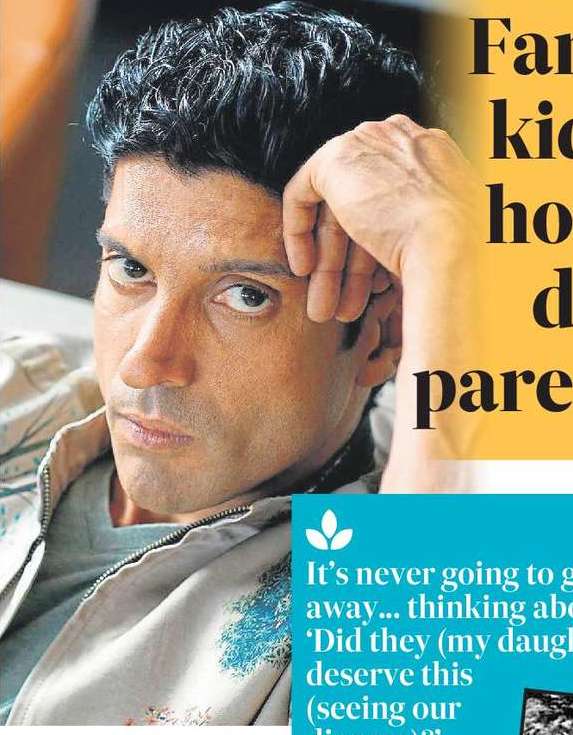
HINDUSTAN TIMES (August 27, 2024)
Actor-filmmaker Farhan Akhtar says dealing with his parents, lyricist Javed Akhtar and actor-writer Honey Irani’s separation at an early age wasn’t easy. In fact, it also impacted him when he decided to end his first marriage with hair stylist Adhuna Bhabani.
“It (deciding on separation) was difficult. I had divorced parents when I was a kid and I know what it felt like. There was a huge part of me that was like, ‘I cannot do this to my own kids’. I felt that it came to a place that Adhuna and I spoke to them openly and honestly, and explained to them why we were taking that step... that it didn’t have anything to do with them,” he told journalist Faye D’Souza on her YouTube channel.
Farhan and Adhuna, who have two daughters, Shakya and Akira, announced their separation in 2016. He added, “This (his divorce from Adhuna) was something between two grown-up people, who, as friends, decided that it (parting ways amicably) was something they wanted to do. But, it’s something that I am going to have to live with for the rest of my life. It’s never going to go away... thinking about, ‘Did they (his daughters) deserve this?’. That’s something I’ll have to live with. The fact that it happened to me as a kid played a huge role in how I feel about it now.”
Farhan got married to actor Shibani Dandekar in 2022.
MEETINGS AND PARTINGS
Javed Akhtar was married to actor-writer Honey Irani, with whom he has two children — Farhan Akhtar and Zoya Akhtar. Their relationship fell apart around 1980. Javed and Honey divorced in 1985. Javed fell in love with actor Shabana Azmi and they got married in 1984.
The first time I performed live, I was downright terrified-Farhan Akhtar
8:28 AM

Debarati S Sen (BOMBAY TIMES; February 3, 2024)
Recently, Farhan Akhtar performed live at the finale of the Kala Ghoda Arts Festival in Mumbai. In an exclusive conversation with Bombay Times, he spoke about how he has gone from being terrified of live performances to thoroughly enjoying them. However, Farhan says that a certain degree of nervousness helps him focus on the stage. Excerpts:
What is it about live performances that you enjoy the most?
The feeling of live – in the here and now – is always exciting. The immediate reaction that you get from the audience at live shows, nothing compares to it! I mean when working on a film, you are surrounded of course by people who are working with you on that film and you only get a sense of what the audience feels, the public feels, months later, and at times maybe over a year later, but when you are performing live, everything is happening there and then and it’s a completely different feeling and it is not comparable to anything that I have done and I absolutely love it. I feel that the more honest I am on stage, the more ‘me’ I am on stage, that’s what the audience wants, that’s what they expect, and that’s when they have the most fun.
Have you ever dealt with stage fright?
The first time I went on stage to promote Rock On in 2008, it was really nerve-wracking because I had never performed on stage before that. So, it did take a lot of encouragement from Shankar, Ehsaan and Loy, to get me into the frame of mind to be able to go out there and perform. That is probably the time – I won’t even say I was nervous or anxious - I was downright terrified of going on to the stage. But over the years of course, it has gotten a lot easier, and I look forward to concerts now when they happen and I think it is completely normal for there to be a certain degree of nerves before each gig and I feel that it helps me focus. It does not scare me anymore; it makes me really kind of dig in and be very focused about how I want the show to be.
You are a self-taught guitar player without any formal training. Do you feel things would be different if you had?
Yes, I do love music and I am a self-taught guitar player up to a certain level. I would like to dedicate more time to improve on my guitar playing skills. I think it is difficult to do that, given that there is this whole alternate career I have, of doing films which take up a tremendous amount of my time, not that I am complaining about it, I absolutely love it. I would like to improve my guitar skills and I think that the more one learns the more one’s range improves in what they can write and what they are capable of ideating. So that’s something that I definitely want to keep doing.
In a family of many talents – Javed Akhtar, Honey Irani, Shabana Azmi and Zoya Akhtar – how do they react to your various creative endeavours, whether it’s direction, acting or music?
I am absolutely grateful for the family that I have – be it dad, mum, Shabana or Zoya. They have always been exceedingly encouraging with what I have done. Nobody has ever questioned why. I mean when I was directing, why take a break and act, or why take a U-turn or a hard left and start performing live on stage? They support me in my decisions in manners that I choose to express myself artistically. And it gives me strength and so there are no complaints whatsoever.
There’s a lot of excitement around your other projects, including Don 3, which you will be directing.
I will be directing Don 3 soon. Then, there is a new Hindi single and two English songs that should be released within the next two months. As a producer, there is a lot that’s happening, which we will announce soon. So, there are busy times ahead when it comes to acting, directing, and producing. I just have to find the right time to balance it out with my other passion, which is music, and I hope to do that.
Shabana Azmi reveals that she and Javed Akhtar tried to break-up ‘thrice’
8:11 AM
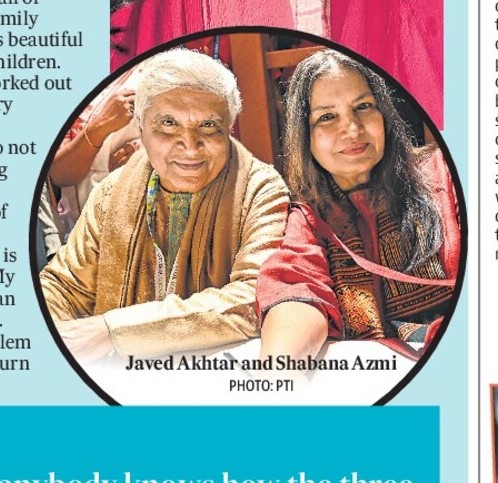
HINDUSTAN TIMES (April 4, 2023)
When Shabana Azmi and Javed Akhtar fell in love, the latter was married to actor Honey Irani and had two kids. Though Azmi and Akhtar tried to end their relationship “thrice”, they could not stay apart and ended up getting married in 1984. A year later, Akhtar and Irani got divorced.
In a recent interview with Curly Tales, Azmi said, “It was a very, very tough period. I don’t think anybody knows how the three people involved suffer. It is very difficult and painful, particularly when there are children involved.”
She added, “We tried to break-up thrice, because of the children (director-actor Farhan Akhtar and director Zoya Akhtar), but it just didn’t happen. Today, what is good is that I am very good friends with all of them. Honey is like a family member and I have this beautiful relationship with the children. So, in the end, it has worked out well, for which I am very grateful.”
Azmi urges people to not judge anyone struggling in a situation like hers: “Whenever you know of a situation like that, please don’t judge, as it is a very painful period. My relationship with Farhan and Zoya is very strong. When they have a problem with their father, they turn to me.”
I’d never write Javed Akhtar’s biography-Shabana Azmi
4:15 PM

Her lyricist husband may have the strongest command over words, but Shabana says she’d struggle to find any had she been in charge of penning his life’s complex journey
Upala KBR (MID-DAY; January 9, 2023)
One would assume that there wouldn’t be anyone better suited than Shabana Azmi to work on a biographical offering on Javed Akhtar, her husband of almost four decades. But, Azmi believes that her knowledge of Akhtar’s “geographical journey” is limited.
“I was born in Hyderabad, and subsequently brought to Bombay when I was four months old. And that was it; thereafter, my journey commenced. But, his has been [a complex journey], traversing across several locations,” she says of her husband, who was born in Uttar Pradesh, and travelled to Gwalior, Lucknow and Bhopal, before arriving in Mumbai.
While Azmi would be hesitant to showcase his story, Akhtar’s journey will be available for people to consume in Jadunama, a coffee table book that will be unveiled today. “There are bits from his speeches that even I have not heard, stories from his days of struggle, and his faith in himself, even in the darkest of times. Arvind Mandloi has meticulously collected facts about him over the years. It’s a compilation of extracts from his public speeches, interviews and quotes.”
The book’s title, she reveals, is a chip of his own name. “Jadu was his nickname because he was a bright child, and that name stuck with him since it epitomized his magical personality. When he went to school, the hunt for a real name began, and they settled on Javed, because it was so close to Jadu.”
Several celebrities have penned pieces on the lyricist in the soon-to-release book. “Salim Khan, Honey Irani, Amitabh Bachchan, and Asha Bhosle, among others,” Azmi reveals.
The highlight from this event though, will be the participation of Gulzar, who is set to recite poetry for the attendees and inaugurate the book. Ask Azmi how Akhtar was able to convince Gulzar to make this rare public appearance, and she says, “Both Javed and Gulzar saab have mutual respect for each other. Rakshanda Jalil, who translated the book in English, requested Gulzar saab to do it, and he agreed readily. We are very grateful. It is exciting to have two legendary poets and lyricists together on one stage.”
Shibani Dandekar is a lovely girl and gets along very well with the family-Honey Irani
9:46 PM

Farhan Akhtar’s mother, Honey Irani,also talks about how food will be a highlight at his wedding with Shibani Dandekar today
Onkar Kulkarni (BOMBAY TIMES; February 19, 2022)
Farhan Akhtar and Shibani Dandekar’s pre-wedding festivities took place with a lot of fervour over the past few days. The couple, who is all set to take their wedding vows today, had a mehendi ceremony on February 17 at Farhan’s Mumbai home, which was attended by close family members and friends like Shabana Azmi, Anusha Dandekar, Rhea Chakraborty, Amrita Arora Ladak. Yesterday, the couple and their guests left for the wedding venue, Akhtar’s family home in Khandala, where the haldi ceremony took place.
A day before their wedding, BT spoke to Farhan Akhtar’s mother, screenwriter Honey Irani, who said, “I had tested COVID positive and was under isolation, but I am fine now. I am looking forward to participating in their big day.”
Talking about her daughter-in-law, Irani says, “Shibani is a lovely girl. She is so beautiful and is extremely respectful towards others. She gets along very well with the family. I meet Shibani every second day because they (Farhan and Shibani) live just next door. We also went on a holiday to the Maldives together. Shibani and I talk on the phone almost every day and keep messaging each other. She’s just too sweet. I am even fond of her parents and her sisters who are very cultured. It was really nice meeting all of them.”
Farhan apparently broke the news about their decision to get married to his mother, by inviting her for a dinner hosted by the duo. Sharing more about the kind of rapport she shares with Shibani, and how both Farhan and his partner relish her food, she said, “There are times when they both call me and say, ‘Mom, we are coming home, kuch achcha banake rakhna. Shibani likes to eat the guacamole I make. She also enjoys eating my nawabi keema and all the other mutton dishes I make and, of course, the dhansak. She is quite a foodie! It’s good for them as both of them love food. Both of them are on a diet all the time, but Sunday is the day when they want to treat themselves,” she says.
When asked if Irani gave any inputs to the couple with regards to the wedding prep, she replied, “I told them that the festivities will be incomplete without kulfi and jalebi on the menu. I just don’t care about the rest (laughs!). The food has to be good and it can’t go wrong. That is the only thing everybody has been contemplating right from the word go. It was never about ladki kya pehnegi, ya ladka kya pehnega… khaana kya banega has always been very important.”
She further elaborates how the wedding celebrations will be a small and intimate affair. “We are a very close-knit group for the wedding. That in itself is a celebration because it is great fun to have everybody who you care about and who cares about you as part of the festivities. The people who will be present are the people who have been with us for all these years. So, we really want them to be there with us on the big day. We have to keep in mind the precautions and protocols we need to follow during the pandemic and hence, we will have a limited number of guests. It has been a difficult task to chalk out the guest list, but the good part is that the people have been understanding.”
I got slapped in the face with demonetization when Rock On 2 released-Farhan Akhtar
4:39 PM
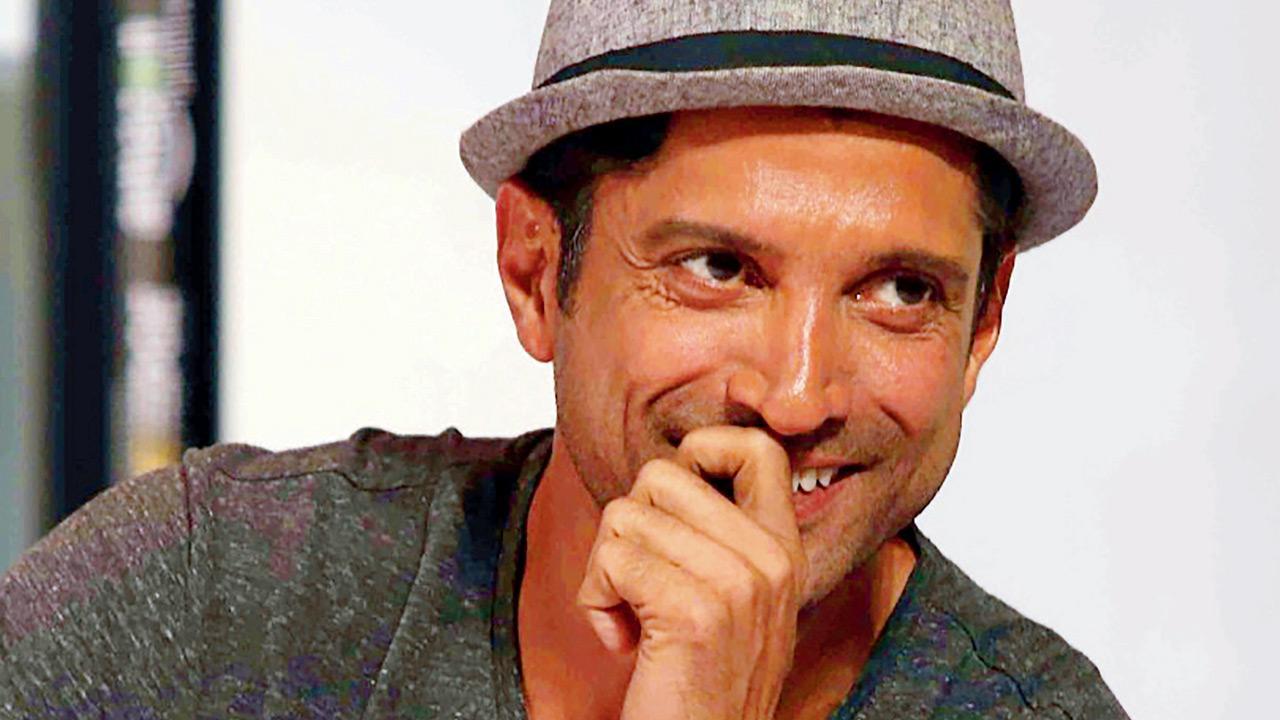
Takes a village to raise a star, Bollywood’s top polymath looks at key people through his 20-year journey
Mayank Shekhar (MID-DAY; September 4, 2021)
Back when Farhan Akhtar was a kid, a common visitor to his home used to be family friend, ace photographer, late Gautam Rajadhyaksha. Gautam was once assigned a photo-shoot for a pressure cooker ad, in which a child is supposed to look excitedly at the contents of a cooker — “Like, this is the best matar pulav I have eaten in my life; that expression!”
Gautam asked Farhan’s mother, Honey Irani (a child actor once herself), if her little boy could pose for the ad. She agreed, and he did. For the longest, Farhan’s face had remained associated with the pressure cooker. “I’m talking about the ’80s,” he recalls. This is, in fact, the first story he also recalled to his childhood friend and later his producer-partner, Ritesh Sidhwani, when he first learnt about Ritesh’s family business.
“You mean you shot an ad for Marlex?” Ritesh asked, naming the kitchen appliance company his father owned, and the son worked in as well. “Oh, no,” said Farhan: “It was for your biggest rival, Hawkins. We were rivals when we were kids. Now, the two opposing giants of the kitchen corporate-world are collaborating together!”
Gautam hired the “naughty boy [Farhan], for his mischievous streak.” Which Farhan offers another evidence of, when I ask him how he got a scar under his right eye — the permanent identification mark on his passport; also something you’ll notice, especially, when he plays rugged parts in films like Lucknow Central (2017) or Toofaan (2021).
Is there an interesting story to that injury? Not really, he basically tripped and fell on the side of a table, when he was two. In school though, when kids would ask him about it, he’d look them in the eye and go, “Vietnam [accent on nam]!” Imagining a story in his head similar to how Sylvester Stallone’s character has his face slashed across, in Rambo: First Blood Part II (1985), his favourite film then!
Ritesh and Farhan went to Juhu’s Maneckji Cooper Education Trust School together. Which is also where, he reveals, the name of the production house they jointly founded, Excel, gets its name from: “There was a tossup between two names. The other day we were trying our hardest but couldn’t remember what that other [possible] name was. Besides its obvious meaning, Excel comes from our school motto: There is no excellence without labour.”
The two Maneckji boys — who later went to Jai Hind College, while Farhan dropped out — came together only to make the film Dil Chahta Hai (DCH, 2001), where Farhan was explicitly the writer-director, and Ritesh the producer. It’s during the film that Ritesh sat Farhan down and reasoned, “This is something you want to keep doing — then it really is important that you keep ownership of your work.”
“Maybe it is a business lesson that he had learnt from what he was doing earlier in life. Things have to belong to you — when you work so hard to create them,” Farhan agreed. By then, he had already spent few years learning production in Adi Pocha’s ad film company Script Shop. He obviously came from a film family — both his parents, Honey and Javed Akhtar, having been accomplished screenwriters.
“The closest Ritesh came to film was putting a VHS tape into his VCR player,” Farhan laughs, of the time his business partner quit his family firm, placed both his trust and money into a movie and an industry he had such little idea about.
And yet, he says, it is actually Ritesh’s continuous commitment to produce more and more movies that inspires him: “In our industry, Ritesh is known as a hard negotiator. That is what I hear about him. And in business, being a hard negotiator is a good thing. That’s what you are supposed to be. People also respect him, because he is always there for them. Six years down the line [after DCH], Lakshya, Don and Honeymoon Travels Pvt Ltd — by 2006 in fact, producers would call him to find out how is it that we were doing certain things differently. Of course we were only doing [or putting systems in place] that is commonplace in, say, LA.”
Which is where Farhan, 47, is speaking to us over the screen from. It’s 8 am for him (8 pm for us). A morning person “for 15-16 years”, he’s usually up by 6 am, to hit the gym. The regimen works best for his health, “which is something you owe yourself, and your loved ones.”
Of course he wasn’t always this way: “I was also a teenager once — not wanting to wake up before 11-12.” Which is the phase from Farhan’s life that his father Javed, he says, had probably modeled Hrithik Roshan’s character Karan Shergill on, in Lakshya (2004), that Farhan directed.
After DCH, of course — a Hrithik-mania type directorial debut, no less, when viewed in hindsight. Each year, social media explodes on August 10 to celebrate DCH Day, replete with heartfelt tributes and personal anecdotes.
Which is quite common for a lot of movies — even random ones, whose non-landmark anniversaries get celebrated every other day. Including messages like, “I wish this movie many years, a long life, 50 years, golden anniversary…” As if films were humans who could otherwise pass on with a heart attack.
The year 2021, nonetheless, was special for DCH, since it completed 20 years of relentlessly growing in public imagination. Ever since, Farhan himself has expanded his CV to become among the most hyphenated contemporary entertainers around — music composer, rock-star, movie star, screenwriter, director, lyricist, talk-show host… His introduction has become a cliché.
The job description that doesn’t get enough attention still is of him as a consistent/prolific producer, for the longest — having established arguably the most successful creative-commercial collaborations in Bollywood, with Ritesh.
Together they’ve produced 36 films and series, according to IMDb — generating what should be a healthy balance sheet, given smart calls like an early foray into OTT, with franchise shows like Inside Edge, Mirzapur, Made in Heaven. Even DCH, you realise, for all its creative acclaim, was one of the early Hindi films to be insured, for instance — opening titles credit United India Assurance Co (Ajit Gupta).
“It just wasn’t possible or a film to qualify for insurance against calamities in India, until then — because of the way the film industry worked I guess,” Farhan says. DCH was a commercial success of course, but slightly eclipsed in the box office that year, because “on June 15, came Lagaan and Gadar. Gadar at that point had become the biggest hit that India had ever seen. Lagaan captured the nation’s imagination in a way that money can’t quantify.”
Everything about DCH, though, has become part of popular folklore since. Starting with the back shot of the three lead actors — Aamir Khan, Saif Ali Khan, Akshaye Khanna — on Chapora Fort in Goa, that is now called the Dil Chahta Hai Fort! Farhan had obviously been to the fort on his trips to Goa, “Just never had the kind of deep thought Akshaye’s character has, when they are staring out!”
Likewise the line, “Hum cake khane ke liye kahin bhi jaa sakte hain” — that’s morphed into a line with multiplex context. “The story behind it is my absolute love for cake,” Farhan says. “I was a member of this club at Hotel Sea Rock that no longer exists, and which used to have the amazing Black Forest and Chocolate Truffle I could not afford. If somebody ever said, let’s go somewhere, it is my treat, it was the happiest day of my life! Later in college, the cake could become a free meal, free drink… So I just threw in that line for Sameer [Saif’s character].”
The first actors Farhan approached for DCH were in fact Preity Zinta and Akshaye Khanna — both of whom had come to his home to audition for Kya Kehna (2000), written by his mom Honey, and directed by Kundan Shah.
“Akshaye was already there in the film. They were looking to cast a new girl, which is how Preity came in. She still hadn’t had her release of Dil Se, and all the other films that followed. I told her about what I was writing. She asked me to meet her when I was done. She became a massive star after, but kept her word.” Farhan had bonded with Akshaye on the sets of the latter’s acting debut, Pankuj Parasher’s Himalay Putra (1997), where Farhan worked as an assistant director.
The script Farhan would’ve probably shown Preity and Akshaye was then titled Hum Teen: “It sounded like an anti-allergy tablet to people!” He later called it Dil Chahta Hai, which in English would make sense as, “What your heart desires!” Except in Hindi, it sounds incomplete, or so his father Javed asked: “Dil kya chahta hai?” Farhan was stuck, and asked lyricist dad to bail him out. To explain, Javed came up with the song words, “Dil chahta hai… Kabhi na beetein chamkeele din… Hum na rahein kabhi yaaron ke bin…”
While DCH arguably altered/reinvented the grammar of popular, metropolitan Hindi cinema altogether, in the beginning of the naughties — it is in fact Farhan who wholly reinvented himself by the turn of the decade. Branching out into full-time acting instead — scripting a completely different direction for his career, away from film direction itself.
Was there a moment of epiphany? “I guess you see me as a full-time actor — because that is my only visible work out there. But I was very involved in producing a lot, writing dialogues for Game, Karthik Calling Karthik, Talaash, Dil Dhadakne Do, working with different directors, doing Rock On 2. There was a desire to creatively extend myself in different ways. I actually took a year and half away from acting itself—to write and record my album as [an independent] musician.” The album, Echoes, dropped in 2019.
Few artistes in Mumbai have freely allowed themselves as many avenues to max out their varied creative potential — whatever the eventual outcome, that effort itself could be a measure of personal success. Music, of course, happened naturally with Farhan’s acting debut on screen, Rock On (2008) — about a retired musician who goes back to stage. Farhan sang his songs, instead of simply lip-syncing.
The soundtrack was a smashing hit that’s stood the test of time: “I had always wanted to play the guitar, and been teaching myself from chord books and the Internet, age 16-17 onwards. But it was a private passion. In 2012, I tinkered with the idea of putting together a bunch of like-minded musicians to form a band [Farhan Live]. We’ve performed in over 100 cities since — colleges, festivals — twice to the US, Australia, Middle East...”
Farhan’s last release as a director was Don 2 (2011). Whatever your opinion on the film — there is surely a social media clamour for Part 3 — what’s undeniable is how it spawned a series of sequels in Bollywood. Just as his Don (2006) remake, before that, made old Bollywood remakes a thing to roll out every few months.
His most challenging move as an actor, until 2013, was to play the Olympian athlete in Bhaag Milkha Bhaag — a role he was even more determined to pull off convincingly, once he heard a journalist in Chandigarh ask him why a Punjabi wasn’t picked for the ‘Flying Sikh’ Milkha Singh’s part. After the film released Farhan went back to Chandigarh, especially reached out to the journalist — besides to gauge her response, to thank her for inadvertently “serving as great motivation”.
Bhaag Milkha Bhaag similarly unleashed a series of sports biopics — a gift that Bollywood can’t stop giving, as we speak. What does he make of the formula? “Well, I guess if a car sells with a certain kind of artificial intelligence system now, then all cars will go get artificial intelligence. Because that is what people like. If there is a new flavour in the chips packet, suddenly everybody will have that same flavour. That is how life is, and how the world functions I guess.”
That commercial benchmark for films, of course, is the number of views/hits online; or box-office figures in case of theatrical releases. But creative failure can also be defined as mismatch between intentions, and outcomes. Have there been such instances he could talk about, with regard to his own works, as an actor, or filmmaker.
“Of course that’s happened. A lot of things, at times, do not translate from script to screen as effectively as you want. I don’t want to take names of those movies though. Because there are other people, who have their effort, talent and reputation attached. And it is not fair for me to speak about a work, as if it only belongs to me, or my learning from it.”
For a more particular example, I bring up Rock On 2 (2016) — did that turn out the way he would’ve liked? “Well, the first Rock On obviously had a lot more people loving it, than not liking it. With Rock On 2, it was a bit more mixed, for sure. But we also got absolutely slapped in the face with demonetization happening two days before the film released. The carpet got pulled from under our feet. People didn’t have enough money to buy food; they were queuing up outside ATMs. There were news stories on TV about how demonetization had affected the film industry. It was sad for me to see posters of Rock On 2 on walls in these clips — not a crow in theatres. It was completely empty. Which is understandable.”
The great part of the original Rock On’s success, though, was it delivered for Farhan’s sister Zoya a saleable star right at home. Given that she’d been struggling to take off as a director for years, taking rounds of hero’s homes, unable to cast for the lead of Luck By Chance (2009) — a Bollywood movie, on Bollywood itself; a subject supposedly too close for superstars to sign up for.
Farhan suitably stepped in. Together as director-actor, they’ve collaborated on Zindagi Na Milegi Dobara (ZNMD, 2011) and Dil Dhadakne Do (DDD, 2015) since. Both those films co-produced by Farhan, where he has also written the dialogues. Giving one a sense that between the two, perhaps Farhan has the edge in dialogue writing. With Gully Boy behind her, Zoya can easily stake a claim for the most interesting voice in current Hindi mainstream.
Age wise, the siblings are a year apart. Zoya was also the casting director on DCH. How are they different as directors, I ask Farhan, who takes a second to think this through, and eventually boils it down to how they are different as personality types as well.
“She is more open about her feelings — more of a people’s person than I am — better at communicating her thoughts. Because she speaks with a lot of clarity. I tend to keep things more inside, which can be unnerving sometimes — an actor or technician could feel anxious, about why am I not saying what I feel? So, there is that.”
This seems like an accurate assessment, even when you compare Zoya to Farhan from an edition of this series Sit with Hitlist on YouTube. While Farhan does hold a more public job — facing the camera, surrounded by selfie-hunters, massive audiences before a concert stage — it is Zoya who comes across as more naturally the extrovert!
She develops screenplays with her long-time writing partner, Reema Kagti. But for the dialogue draft of DDD, that required a lot of back-and-forth with Zoya for the number of voices/characters involved, Farhan says, he’s worked on all scripts alone, by himself. Which would be true for song writing, an equally solitary job, as well.
Farhan was last seen on screen with a dramatic physical transformation, playing a boxer in the film Toofaan (2021). He enters the ring as director next — first time, behind the camera since a decade.
With Jee Le Zara, starring Priyanka Chopra Jonas, Alia Bhatt and Katrina Kaif, slated to open in 2022. Which is also the first time he’ll be co-writing a screenplay, with Reema and Zoya: “For me this is actually going to be a new experience. Working on screenplay, maybe not dialogue so much, but at least on screenplay, with two other writers, who are so hands-on.”
Where the siblings are likely to meet on the same page, I’m guessing, are inevitably some inside jokes. As they did with the popular refrain, “Bwoy”, in ZNMD. That caricature of a school teacher in the decade’s breeziest Bollywood film was based on their common PT instructor at Maneckji Cooper — one, Mr Dubey, who is no more.
Mr Dubey’s daughter, who saw the film, instantly got the reference and called up Farhan to convey how glad she felt that he and Zoya remembered her father fondly still: “All these things from those years leave such great impressions on our minds, isn’t it?”
Akhtar siblings grew up in the sea-facing Bandstand in Bandra, which is where I’m hosting this conversation from, I tell Farhan. It’s a few blocks away from his family home, that Farhan intends to shift back into, once he returns from LA. On the other end of the same street is Galaxy apartments, where Salman Khan grew up, and still lives. Both Salman and Farhan, respectively, being sons of Salim-Javed, the hyphenated, greatest blockbuster writers of ’70s Bollywood.
Javed had come to Bombay to become a film director. Salim Khan had acted in many films — realised he wasn’t getting too far, and so stepped back to pursue screenwriting instead. Both came full circle with their kids — Farhan turning director, and Salman a superstar.
“I think we are making it too melodramatic [with the observation],” Farhan cautions: “In the ’90s, my father was so busy writing songs, working with everyone — I think in every second film or third film, the songs were written by him. I thought this is what he always wanted to do. It was when we were doing Lakshya, and he was writing it, that at one point he spoke about having wanted to direct. And that this is going to be a very challenging film, etc. I was like, okay — I didn’t know you wanted to direct! That is when I found out — at 29!’
Salim-Javed’s sons could not have turned out more differently still. If anything Salman stands for larger than life, ganjee-boots mardaangi/masculinity—about never going back on a commitment. Let alone choice in dialogue, script or films, even in life outside cinema, Farhan actively runs an NGO tackling toxic masculinity itself.
What explains two lifelong neighbours, with fathers who went by a common name for years, turning out such polar opposites? Farhan says, “The interesting part of your question, really, is that our creative paths are different, but we do come from the same pool. Which is a pool that Salim uncle and my father kind of created. That is the world we grew up in, and those are the films we grew up on, and knew. But why that happens, or how that happens? I don’t know. I guess you are a product of your environment in some ways. He [Salman] is massively successful. I don’t think we should question his choices at all!” Mic drop.
Everybody in my family has a National Award except me-Zoya Akhtar
8:52 AM

Bollywood's most loved filmmaker Zoya Akhtar looks back during the lockdown
Mayank Shekhar (MID-DAY; May 15, 2020)
 Consider writer-director Reema Kagti (Gold, Honeymoon Travels Pvt Ltd) as an Australian male Ricardo Fernandes, looking for his lost brother in Mumbai, while filmmaker Zoya Akhtar is the local don Mastana's hot moll. That's really how Zoya first met Reema, during the audition for Kaizad Gustad's Bombay Boys (1998).
Reema, as the casting assistant, was standing in for Rahul Bose. Zoya, opposite her, was actually testing for the film's female lead role—mainly to humour Gustad, because he was keen she read for the part, that finally went to Tara Deshpande. Zoya was clear she wanted to AD on the movie.
AD, meaning assistant director—both a proper noun and an active verb on a film set. It's been over two decades since Bombay Boys, where Reema and Zoya were second ADs. Their partnership, as writers over the past decade though, counts amongst its achievements, Gully Boy (2019), the Amazon series Made In Heaven (2019), Dil Dhadakne Do (2015), Talaash (2012), and Zindagi Na Milegi Dobara (2011).
Bollywood wise, they could well be—albeit slightly Bonzai—versions of the '70s super-hit, Salim-Javed (Zanjeer, Deewar, Don, Sholay, Mr India)—the most successful writing pair ever, comprising Salim Khan and Zoya's father, Javed Akhtar.
I say this, while Zoya is talking to us from where Salim-Javed used to work out of—the study in her Bandra family home—that she now uses as her bedroom: "I'm just absorbing them," she smiles. She also drops a hint at working on a talkathon/documentary project of sorts to do with Salim-Javed themselves, as part of her newly launched production company.
But it's too early to talk about, she insists. Much is naturally made of Zoya as poet-lyricist Javed's daughter, eighth generation writer from the Akhtar family. Her love for films, as she points out, flows first from her mother's fine collection of world to latest cinema, projected on the screen at home, growing up.
Also the fact is that it's her mom, Honey Irani, who's the Bollywood insider in the family, having literally grown up in showbiz (Javed had moved from Bhopal).
Wikipedia rather exaggeratedly lists her as the child-star of 72 films!
Honey would've done minimum 20-30 movies as the much loved kid-face of the big screen—graduating much later to screenwriting, with popular titles like Yash Chopra's Lamhe (1991), Aaina (19993), Darr (1993), Rakesh Roshan's Kaho Naa Pyaar Hai (2000), Koi… Mil Gaya (2003), Krissh 3 (2013).
Zoya reminisces, "Now, everybody has a camera to record their children. But people in my generation did not have footage of when their parents were three years old. I was one of the few kids, who had my mother from the time she was two, to when she was 16! I've seen my mother animated [on the screen], with different expressions, speech, seen her change, and grow. It's really interesting even now, to see her like that. She was darn cute, man! She, and my aunt Daisy [Irani]!"
She rues in jest, "Everybody in my family has a National Award— my mother, father, brother [Farhan Akhtar], step-mother [Shabana Azmi], cousin [Farah Khan], everybody. Except me!" Which film did her mom get a National Award as the kid-lead? "I don't know, if it was for Pyaar Ki Pyaas or Taare Zameen Par, one of the two." There was a yesteryear film called Taare Zameen Par? "Zameen Ke Tare! Both my mom, and my aunt."
The mom's acting gene, Zoya contends, went to her younger sibling, Farhan: "He is a bona-fide performer—he always had that. I hate being on stage, or before the camera. My first thing to do with the arts was to write—watching both my parents work at home, discussing scripts… That was one of the first things [in my head]. Directing came later."
Held over video-call for the first time, Zoya is also the first filmmaker to feature on our unscripted conversation series, Sit With Hitlist—so far limited to Hindi cinema's lead actors. Reason for that of course is that she's arguably Bollywood's most loved filmmaker, and therefore a star in her own right.
That apart, little is known about her life up until her rather belated directorial debut at 36-plus, with Luck By Chance (2009), although she'd been working as a film professional for around 18 years before that. Very little worth knowing, Zoya casually reckons, jogging back to age 19, when she started interning for a copy-writer's job at a creative agency—simultaneously reading sociology at Bombay's St. Xavier's College.
"I remember watching Salaam Bombay (1988), being madly in love, and going: I want to direct. And I don't know what I'm going to make. Because Hindi films were not my scene then. Out of the blue, when I was about 21, I got a job with Mira Nair on [the sets of] Kamasutra (1996)." You can find her in a cameo appearance as one of the Kamasutra girls, "an extra part," as she puts it, because ADs are frequently expected to fill-in or add to the human backdrop on shoots.
Of all her past associates, Mira as director appears to have left a strong impression on Zoya: "Mira is just special, you can see that. When she is talking to you, you are the only person in the world. She makes people feel special. She knows everybody on a crew by name. I love that about her. And I love her aesthetics."
Post Kamasutra, Zoya recalls, "I started working mainly on American projects that came to India. Went to NYU [New York University] for a diploma [in filmmaking]. Stayed back in New York. Got a job, thanks to Ismail Merchant, in a small, cool, indie film called Side Streets, directed by Tony Gerber."
She returned to Bombay as a freelance, professional AD, of which there were only four in all of Bollywood, who did a lot of foreign films and Indian work: "Reema [Kagti], [director] Apurva Lakhia, and me. Then Kiran Rao came in." Zoya's credits during this phase include Mahesh Mathai's Bhopal Express (1999) and Dev Benegal's Split Wide Open (1999). She chose to specialise in the casting department, because there, "you get to direct actors, with a script," and that's what she ever wanted to learn/master anyway.
She was the casting director on Farhan's first film Dil Chahta Hai (DCH, 2001), and thereafter Armaan (2003), her mother Honey's directorial debut. Okay did she personally pick/cast that balloon-lover boyfriend in Dil Chahta Hai? "Oh that's actually Hassan, a childhood friend of Farhan. But we handpicked everyone, so to speak. There are very interesting cameos. Kiran Rao is one of the girlfriends in Goa. She'd come to do all the extras' casting for the film's Goa leg!"
Between freelance AD-ing, Zoya had been ideating all along for her debut feature. It's mildly ironic that while so cued into casting, she was unable to kick off her first film for want of a lead actor, for almost a decade that she'd been ready to direct. And the one she eventually cast for the lead role, in her directorial debut (Luck By Chance, 2009) was her brother, Farhan, who'd been around all along!
"You cannot cast someone, unless they are ready. And feel that they want to do this. It took Farhan a while to get there—that he wants to act, and that he is a really good actor." While practically the entire Bollywood A-list came down for cameos in Luck By Chance, including both Shah Rukh Khan and Aamir Khan (guessing, for the first time in the same film, although not in the same frame), Farhan was the seventh star to read/consider/hear the script. Hrithik Roshan played the second lead. "Luck By Chance is a book that I am going to write one day, about how that film got made," Zoya sighs.
Can't wait. It'd be quite a telling tinsel-town tale, given that nobody in Bombay does it. And Zoya is perfectly positioned to—not just as the quintessential insider, but as someone who can surprise you with her adorably random zaniness, on occasion. Recently at an interview she called herself the love-child of directors Karan Johar and Anurag Kashyap. What does that mean? "That I am halfway between Indie and commercial, you know."
One time I remember getting a smoke with a group, outside a closed-door meeting with director Oliver Stone who was in Bombay then, and Zoya casually mentioned, "You know, there are four kinds of people in the world—John, Paul, George and Ringo." What?
I bring that up again: "That is a line from a Tom Robbins book. Have you read Tom Robbins? I love him. I don't remember what the context of that conversation was. You can look at everyone, and be like—that's a Paul, Ringo, George. I am a John, for sure!"
And while her films primarily deal with real, human, often raw emotions, there is this carefree cattiness that inevitably slips in too. It's only fair that we dig into a couple of stories behind some stellar, surprising choices she's made so far. For example, why/how/when did a ladies' bag, called Bagwati, bag a proper part in the breezy masterpiece Zindagi Na Milegi Dobara?
"That comes from Reema and a close friend of ours, Shai Heredia, who's an academic, award-winning documentary filmmaker, and hysterically funny. She and Reema were on a road trip, and they kept talking to Shai's bag. Think they were just tripping! We just put it into Zindagi."
It was Zoya's second film, with Farhan and Hrithik back on her frame, but in a much wider canvas, although the script started out in her head as a small, cathartic, road movie, about three boys in a car—for all the road trips she's taken in her life. Over time, of course, the script "developed a life of its own".
The film she co-wrote after was Reema's Talaash. It's a supernatural thriller that, by the way, was based on a true story, that happened to her! "You have to stop. I am going to be the crazy lady that goes on interviews and says all this shit. I know it sounds really crazy, and I don't want to be propagating this nonsense. But, I had a strange experience on Haji Ali, while a bunch of us were driving back from a nightclub. We thought we had hit a naked woman in the middle of the road. Everybody was freaking out. This is something I told Reema about, and where Talaash came from. I am not going to repeat this story, ever again!"
Okay how about the dog called Pluto, who's the narrator/POV of Dil Dhadakne Do; where does he come from? "From my super-smart, intelligent beagle Zen, who passed away last year. You can find him on my Insta page, Zen Akhtar. Zen would look at us as though he is watching National Geographic—that we are the animals, and he is like, 'What are they doing?' That's Pluto. Even the way the film is shot [as a result] is observational—there are no close ups, only 'wides'."
After a preview screening for Aamir Khan and his wife, Kiran Rao, both of whom Zoya makes it a point to get a feedback from before her film's final cut, she asked Aamir if he'd like to voice the dog: "He was, like, after these many years, you have offered me the voice of a dog? I said, please do it. He was, like, yeah, totally! And he just came [on-board], like a sweetheart. It was great!"
Is there anything she'd like to change about Dil Dhadakne Do? "I think the title. Would have been nicer [if it had] a little more gravitas." How about the climax (that was rather OTT, compared to the rest of the film's tone)?
"I actually liked the climax (of the mom, dad, sister jumping off the ship, with lifeboats to chase down brother/Ranveer Singh's character). The whole metaphor of the trip is that you can't get rid of anyone. Family is what you are stuck with. You can't just walk out the door. Eventually, when shit hits the fan, they are the only ones who will pull you up too. So when everyone tells me, I don't like the climax; I am like, cool, so what would you do? Till now nobody has given me a better ending. If there is one, I'd be like, damn!"
What did upset Zoya even before the release of Dil Dhadakne Do though was people taking the piss out of the picture for it being centred on lives of the super-privileged—intended also as a barb against movies that Zoya had directed thus far.
"Firstly I don't think it was criticism. There is nothing for me to take home from it. It is like somebody seeing a trailer of Gully Boy and saying, oh, this is about poor people. And I made Made in Heaven, along with Gully Boy. And that is about very rich people!"
"I was being interviewed by this woman wearing diamonds and solitaires, and she was telling me, it [the film] is about rich people. I was, like: Would it bother you, if your husband has an affair? Why? But you have solitaires on, it shouldn't bother you! What does it even mean?"
Before Gully Boy — set in a Mumbai slum and the city's underground rap scene—released, it got roundly compared to the American ghetto, hip-hop biopic, 8 Miles. Did that bother her? "The two people I spoke to [to base the film on their lives] are living here. You can talk to them. So, no, I didn't get into it. It bothered me, when they compared Zindagi to Hangover [producer Ritesh Sidhwani had to respond to Warner Bros]. Now, I think that's what they do."
Inspirations from dogs and spirits apart, what makes Zoya's filmmaking process special—given what we've managed to gauge so far—is she is capable of working backwards. Where she must know end, before she locks her script. Which isn't true for many filmmakers, who often arrive at the conclusion, as they navigate the story or characters' journeys: "I have to set a goal. That goal may change. But I when I set off, I have to know where I am taking the film. Otherwise I meander. I need a direction I am shooting at, you know!"
The other thing is her complete clarity on the point she's trying to make—so much so that she can distill each film into a single line, which is different from a log-line that describes a plot: "Of course Gully Boy is about a Muslim kid from Dharavi, who expresses himself through rap. It is a rags-to-riches, coming-of-age story. You can pin it down in any log line. But at the core of it, the film is about class. Luck By Chance is really about self-esteem. Zindagi is about living, seizing the day. Dil Dhadakne Do is a film about projection—who we actually are, and what we tend to project. It is what lenses the film, creates the base."
This sort of sharpness of thought, cutting through fluff, getting to the point, is also something Zoya shares with her father Javed, as a communicator in general—whether it be his works as lyricist, screenwriter, people's poet, or popular orator. He's possibly India's finest conversationalist—whose quick repartees and general gyan stick with you, if not go viral online.
Is there something Zoya remembers he told her that she's held as talisman? "Little things, you know. That when you are writing a script, whatever your story is, you've got to be able to lift your viewer. By the end of it, just lift your viewer! Don't resort to cheap shit to get a laugh or clap. Say it in the most base-denominator way, if you have to. But find a higher level of communication." It's tough, bohot hard.

Ranveer Singh is generous, Alia Bhatt is special-Zoya Akhtar
8:25 AM

Meena Iyer (DNA; February 13, 2019)
Zoya Akhtar has an impressive body of work, including feature films like Luck By Chance (2009), Zindagi Na Milegi Dobara (2011) and Dil Dhadakne Do (2015) as well as anthologies such as Bombay Talkies (2013) and Lust Stories (2018).
The writer-filmmaker is known for her attention to detail and presenting well-etched characters with an emotional graph. She is also the talent behind the Ranveer Singh-Alia Bhatt Valentine Day-release Gully Boy, which is currently the talk of the town. Frankly, her plumes need no further polishing. In a freewheeling chat, the pleasant yet candid award winner talks about her independent banner, teaming up with Ranveer for the second time and more.
Your banner name Tiger Baby is intriguing. Is Gully Boy your first production?
Well, we co-produced one movie with Ritesh (Sidhwani) earlier and also did Made In Heaven with Amazon, which is dropping on March 8. Gully Boy is our third offering.
Why Tiger Baby?
My partner Reema (Kagti) and I liked the name. I love the tiger, it’s extremely Indian. It’s fierce, feminine and most of all, it’s specific to us.
Coming back to Gully Boy, the film is tracking extremely well. Does that make you nervous?
Yes and no. Of course, you are happy, because when you put out content, you want everyone to respond to it. Now we’re just hoping they come in to watch our movie and enjoy it. So obviously, there is nervousness because people are excited about the film. But, we’ve crossed the first hurdle.
The voice of the movie is young, it’s inspirational. It seems like a Slumdog Millionaire kind of a story…
It is an underdog story. It’s also talking about a section of society that doesn’t normally get represented in the mainstream.
It speaks of rap, an art form that came up from the street, like anywhere else in the world. These people use music as a tool, they’re all poets, they speak truth to power, so, it’s exciting. Hopefully, it will resonate with a larger section of the audience than just the youth.
Was Ranveer always your first choice?
Yes, he was my first choice, so was Alia, actually.
You’ve watched Ranveer from his Dil Dhadakne Do days. What would you say about his growth as an actor?
I knew Ranveer even before he did his first film. I always got along with him. I liked his energy and what he brings to any situation that he’s in. When I did Dil Dhadakne Do, we got along so well. I’m extremely comfortable with him. He is a real collaborator. He is a generous actor and a good co-creator of the character. He comes without any ego. At the core of his stardom, he is an actor who wants to do well. He understands the role, the script, and reads between the lines. He knows exactly where I’m coming from and brings stuff to the table. We can say yes or no to each ther’s ideas. I find that really exciting. He lifts the characters up. Usually, people just see the flamboyant and slightly larger-than-life side of him, but he’s got a lot of depth and sensitivity. I like being on a film set with him.
And, Alia...
Alia is special, she operates from an instinct that is so powerful. She follows her gut. She is so centered within herself that it comes through in her performances. In fact, it’s evident in everything. She is in the moment. I think that allows her to make her choices and play the characters she does. She is a dream to work with. I can’t wait to collaborate with her again.
Both, you and your brother Farhan Akhtar have a good body of work. Is it possible for you to say who is better?
No, it’s not. There’s nothing as better. Honestly, we’re not even halfway through our body of work. We still have so many films to make, so many stories to tell.
So, there’s never been any sense of competition with him?
No, never. And there can’t be because my film is his film. He’s either acting in it or he’s producing it or writing it. So, the ownership is always there.
There’s also a common soul in your father, in Javed Akhtar saab, who is also associated with your work.
Of course, I feel extremely privileged.
And who is the apple of his eye; you or Farhan?
I’d say it’s me (smiles). I’m the first born and a girl... so we have a different equation like my mother (Honey Irani) and my brother have a different dynamic. I feel blessed and lucky with my family, not because of the privilege, of course, I’m grateful for that as well that we never wanted anything. But what is a real privilege is that we (my brother and I) were treated equally. I was treated with equal amount of opportunity, freedom and confidence as him.
We were allowed to make mistakes. I mean that is a real privilege, to be able to go your own way, find your voice, just have a support system that allows you to do all that.
How involved is your partner Reema (Kagti) in this film?
She has co-written it; so yes, she is very much involved; from the research till the script was ready.
What did you think of her film Gold (2018)?
I cried at the end; It was a massive film. It was nicely made. I think there were certain things that went wrong for her, in terms that she wasn’t happy with the effects. There was not enough time and things went off there. But the film really moved me and I cried. I’m happy that it got made.
There was also talk of similarities between Gully Boy and Eminem’s 8 Mile (2002). Do you see it as unfortunate?
It’s not unfortunate, it’s obvious because 8 Mile is the biggest reference for rap. So people will look at it and be like, ‘Okay, this and that...’ Like during Zindagi Na Milegi Dobara’s release, everybody was saying it’s The Hangover (2009). But it was not The Hangover and I got upset. However today, I don’t feel that way about this film. I know that when Gully Boy opens in cinemas, they will understand that it’s specific to people from our space. I think what they are talking about is the rap battle, but those things are common everywhere. So, I’m not reacting to that.
Ranveer has done a good job rapping in the film. While you say he was your first choice for the role, was it the same case with his rapping, too?
It’s better na, because rap is spoken word. You can’t have another voice, it’s better that he do it himself. And he does rap, he also writes. So, there’s a certain sense of it. But we needed to know how he would flow with the sound that we were producing. I’m so happy that he’s in this film.
Did you get a chance to watch Simmba?
No, I was in post-production. I missed it but I will watch it once my film releases. Because when you’re in the last lap of post-production, you don’t have the space.
You, Karan Johar, Anurag Kashyap and Dibakar Banerjee have been collaborating on short films. Will that association continue?
Yes, definitely.
Who is your favourite filmmaker among them?
They or should I say all of us are unique. There isn’t another Karan. You can’t replace Anurag. They’re my gang, my friends. We have so much fun together. We’re a good bunch when we are together. And that’s what I mean; you can’t compare them, they are incomparable. Who will you replace Dibakar Banerjee with? There isn’t another one. We are four unique voices.
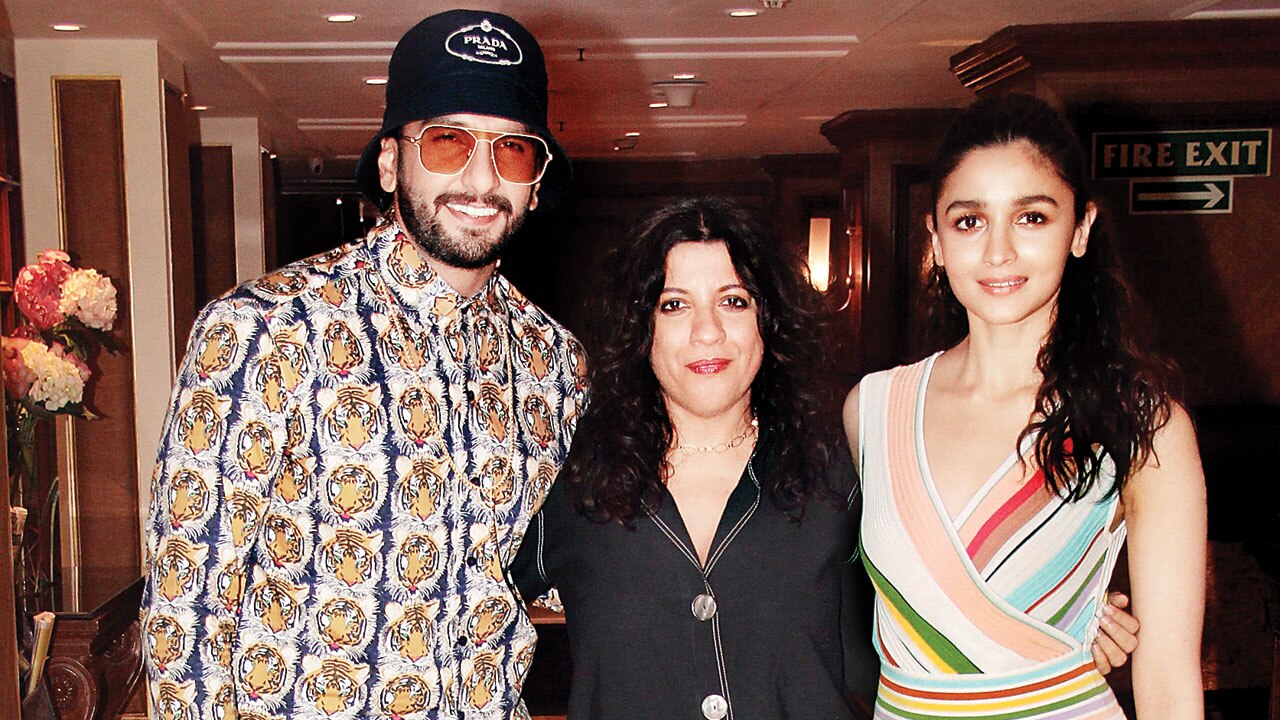
17 years of Dil Chahta Hai: When Aamir Khan was approached to play philosophical Sid's part
5:30 AM

Roshmila Bhattacharya (MUMBAI MIRROR; July 26, 2018)
Seventeen years ago, Farhan Akhtar’s debut directorial, Dil Chahta Hai, opened in the theatres. We still remember Akash, Siddharth and Sameer with great fondness and agree that Aamir Khan, Akshaye Khanna and Saif Ali Khan were perfectly cast for the roles. So, it would surprise many to know that when Farhan took his script to Aamir, he had the actor in mind to play Sid. He believed that the broodingly intense, somewhat philosophical poet-artist, infatuated with an older woman who doesn’t reciprocate his romantic feelings, would appeal to his idol. Aamir listened to the story of three friends and picked out Akash for himself.
Perhaps it was because the urbane charmer, very much a today’s guy, was the polar opposite of Bhuvan, the farmer-cricketer of of his period drama Lagaan which released in the same year, on June 15, given Aamir’s now-famous 360-degree turnarounds. Or maybe it was because Akash, the rich and arrogant cynic who doesn’t believe in love but in the end crashes his lady love Shalini’s (Preity Zinta) wedding to go down on one knee and profess his feelings just when she has resigned herself to a life with her boorish fiancé, was unlike any hero he had played...Except for the filmi denouement. Farhan justified this, revealing that he had to make it really difficult for the I-won’t-succumb Akash, and what could be more difficult than a very public proposal at a big fat Indian wedding where it’s sacrilege to covet another man’s wife-to-be. He actually knew a guy like Akash whose love story had inspired the film. Meanwhile, his mother, scriptwriter Honey Irani, pointed out that he had landed the rare opportunity of working with the actor of his dreams in his very first film.
Farhan’s sister and his casting director, Zoya, then took the role of Sid to Abhishek Bachchan but got the thumbs down presumably because the actor didn’t want to do a three-hero film. Akshaye, who was rebelling against run-of-the-mill hero roles at the time, and had taken off for a three-month introspective vacation to the US after Taal, however found Farhan’s script refreshingly different. The look was new, the feel young and the story broke every rule in the book. It caught his fancy and he embraced Sid like a long-lost soulmate making many believe after the film’s release that the role was an extension of him. Akshaye however was quick to dispel that notion, saying with his distinctive tongue-in-cheek humour, “I have never gone fishing in my life, tried my hand at painting or even had a crush on an older woman.” Ah well, we always knew Akshaye could ‘act’!
For Sameer, who starts out being in love with the idea of love, before finding true love in Pooja (Sonali Kulkarni), Farhan had decided on Saif Ali Khan but the actor, reeling from some bad career choices, took a long time to give his nod, at one point almost saying ‘no’. Saif later confessed that he had never had so much fun shooting a film and his goofy “Jise Dhoondta Hoon… Woh Ladki Hai Kahan” had everyone rolling in the aisles.
What was particularly hair-raising for the actors, besides their reel life adventures, was that Farhan’s stylist, Avan Contractor, insisted on giving each of them a new look. Akshaye’s hair was almost scraped off while Saif’s was cut short and gelled. Aamir got spikes and a goatee. The tiny triangle of hair on Aamir’s chin was the subject of much speculation, but it took Preity to boldly march up to him, and dimples flashing, ask cheekily if his daadhi was real or fake. Aamir told her that it had taken him three months to grow it just right. His ‘look’ is still talking!
Shocking: India's best known child star Daisy Irani reveals she was raped when she was six-year-old
8:10 AM

Daisy Irani, star of iconic films like Boot Polish, Jagte Raho, Naya Daur reveals she was raped when she was six years old during an outdoor shoot in Madras; Courageous star confronts pain, goes public sixty years after the trauma
Khalid Mohamed (MUMBAI MIRROR; March 23, 2018)
India’s best-known child star of the 1950s, Daisy Irani, whose moppet curls and saucer-eyed charm captivated generations of film lovers, has revealed that she was raped and abused at the peak of her stardom.
It has taken over 60 years for Irani, these days better known as the maternal aunt of Farhan and Zoya Akhtar and Farah Khan, to speak publicly about her trauma. More than #MeToo, what has prompted her to break her silence is the very large number of children working via films, TV and talent shows. Through her story, she serves a cautionary note to parents, guardians and mentors to keep a protective eye on their wards.
The mega child-star of yore reveals that she was just six years old when she was raped: “The man who did this was supposed to be my guardian. He accompanied me to a film shoot (Hum Panchhi Ek Dal Ke) in Madras. One night in the hotel room he violated me, hit me with a belt and warned me that he would kill me if I ever told anyone about what had happened.”
Daisy Irani, all of six, and all alone with him, believed him.
Coerced into movies by an ambitious mother when she was only four, Irani worked multiple shifts to star in over 50 films including the iconic Naya Daur, Jagte Raho, Boot Polish and Dhool Ka Phool, essaying roles of boys mostly. Such was her popularity that heart-tugging roles were written especially for her and her footage often extended. She shared the limelight with the top stars of that time including Ashok Kumar, Raj Kapoor, Dilip Kumar, Dev Anand, Vyjayanthimala and Meena Kumari. Her bond with the last named was so close that she convinced herself that “Meena Kumari was my mother. She was so loving towards me.”
But in the darkness behind the klieg lights lay a story of sexual exploitation, which she has spoken about to Mumbai Mirror spontaneously.
Irani’s two siblings, Honey (Farhan and Zoya Akhtar’s mother) and Menaka (Farah and Sajid Khan’s mother), too, stepped into the movies prompting Daisy to be extra protective about them: “Thanks to our mother, Perin, our lives, when we were kids, resembled a never-ending black comedy,” she says with a rueful laugh.
More than six decades later, she can recount her childhood trauma without a trace of self-pity. “That man is dead and gone. His name was Nazar, he was related to the famous singer Zohrabai Ambalewali. Obviously, he had contacts in the film industry. My mother was hell-bent on making me a star. I made my debut in the Marathi movie, Baby. So Uncle Nazar (she rolls her eyes here) had accompanied me to the shoot of Hum Panchhi Ek Dal Ke in Madras. I can recall the incident only in flashes, but I do remember the killing pain, and the visual of him belting me. The next morning, I was back at the studio as if nothing had happened. For years, I couldn’t dare to tell my mother about what he had done.”
Did the incident take a psychological toll on the young Daisy? To that, she replies, “All I can say is as I grew up, I started flirting outrageously, I would tease and taunt men. I did not even understand what I was doing. I became badtameez (without manners). With time, my mother did get to know about the Madras incident but what could be done really?”
“When I was 15 or so”, she recalls,“mother made me wear a sari, padded me up with a new-fangled sponge, and left me alone with producer Mallikchand Kochar, who was planning a film called Mere Huzoor then, at his office located somewhere between Maratha Mandir cinema and the Tardeo circle. It was all quite hilarious… He joined me on the sofa, and started touching me… I knew what was on his mind. I took out the sponge things and handed them to him. He was furious. Now why did I do that? Because, I’ve always seen the funnier side of things.”
When kid sister Honey entered the movies, Daisy tended to be protective about her and kept her away from harm’s way. “Both of us had a common obsession: to get married and leave home as soon as we could. I revered Dad, he was cute, and he loved us to pieces but he would always be busy at work—his family owned the B. Merwan Café at Grant Road. I loved my mother too, but I guess I hated her as well.”
Bemused, she doesn’t hem or haw about her teenage-year romances, either with an upcoming actor or with an eminent producer-director. The actor married another woman. The movie moghul was already married and a father of several children “who were actually my buddies”.
While Honey Irani married scriptwriter and lyricist Javed Akhtar when she was 18, the other sister married filmmaker Kamran Khan when she was 19. Daisy herself married scriptwriter and director K K Shukla when she was 21. “KK…poor fellow, he’s no more as you know,” she chuckles. “Before he proposed to me, he used to play Cupid between my boyfriends and me. Our marriage lasted the course somehow although I once told him I knew of his extra-marital affair... He didn’t know where to look!”
Daisy who continued to act in supporting roles, her last being in the Shah Rukh Khan-starrer Happy New Year, says she has since found solace in Christianity and joined the New Life Fellowship Association. “I was always drawn to the iconography of angels protecting children,” she says.
“Child actors have it tough. In a majority of cases they have been taken advantage of. Maybe a few have had it easy, but most don’t, really,” she says.
Does she have any second thoughts about whether her interview should go into print? “None at all,” she thumps the cushions. “My three children, my sisters…everyone knows what happened. The truth never killed anyone. If I’ve spoken up after years and years and if the result sounds sensational in print, no problem. There could be a flurry of ‘phone calls. I just won’t answer them. Simple.”

Images: Farhan Akhtar goes back to his ancestral home in Khairabad
7:40 AM

Sanyukta Iyer (MUMBAI MIRROR; August 18, 2017)
On Thursday, Farhan Akhtar took a nostalgic trip to Khairabad, the
hometown of his great grandfather, Muztar Khairabadi, and his great
grand-uncle, Bismil, both renowned Urdu poets. For the first time, he
stepped into his sprawling ancestral home which had belonged to his
great great grandfather, Fazle-Haq Khairabadi, a scholar of Islamic
studies and theology who had played an important role in the Revolt of
1857. Located 100 km from Lucknow, the small town in Uttar Pradesh used
to be a trading centre for the East India Company in the
pre-Independence days, known for its market of Kashmiri shawls,
Birmingham jewels and elephants from Assam.
“I was keen to learn about my roots and pay my respects to my ancestors. My first and second cousins, with their families, live there now,” Farhan told Mirror from the UP town, adding that his filmmaker-sister, Zoya Akhtar, had pointed out earlier that it was a good day to remember his Parsi roots too. Their mother, Honey Irani, a Zoroastrian, and the siblings wished everybody “Navroze Mubarak” on Thursday too.
The 43-year-old actor-filmmaker is in this part of the country to promote Nikkhil Advani’s upcoming film, Lucknow Central. At Khairabad, he interacted with not just family, but also locals and children for around five hours. Then, he paid homage at the grave of his great grandfather, Muztar Khairabadi’s mother.
The ancestral property is a seven-room bungalow with a garden and backyard shared by four families. “I’ve heard many stories about this place growing up and now, I’d like to know it better. In cities, everything grows rapidly and progresses fast, but in smaller towns like Khairabad, life is slow-paced. I want to put smiles on the faces of these children. I’d like to do for this place what Shabana and Baba Azmi have done for Azamgarh,” Farhan asserted, referring to the work the Mijwan Welfare Society has done for women and child development in Azamgarh using hand-woven chikankari designs as a revenue booster for families.
Interestingly, Farhan’s award-winning lyricist-father, Javed Akhtar, owes his nickname to a line in a poem penned by his father, Jan Nisar Akhtar, when the family was residing in Lucknow. The line goes, ‘Lamha, lamha kisi jadoo ka fasana hoga’, and even today, in Khairabad, he’s known as ‘Jadoo chachu’. Farhan’s time in Khairabad was made “sweeter” with sheermal parathas and meetha paan. The fitness freak has been binging ever since he arrived in Lucknow on Tuesday. “I’m overwhelmed by the love. I’ll definitely be back soon,” he signed off.
“I was keen to learn about my roots and pay my respects to my ancestors. My first and second cousins, with their families, live there now,” Farhan told Mirror from the UP town, adding that his filmmaker-sister, Zoya Akhtar, had pointed out earlier that it was a good day to remember his Parsi roots too. Their mother, Honey Irani, a Zoroastrian, and the siblings wished everybody “Navroze Mubarak” on Thursday too.
The 43-year-old actor-filmmaker is in this part of the country to promote Nikkhil Advani’s upcoming film, Lucknow Central. At Khairabad, he interacted with not just family, but also locals and children for around five hours. Then, he paid homage at the grave of his great grandfather, Muztar Khairabadi’s mother.
The ancestral property is a seven-room bungalow with a garden and backyard shared by four families. “I’ve heard many stories about this place growing up and now, I’d like to know it better. In cities, everything grows rapidly and progresses fast, but in smaller towns like Khairabad, life is slow-paced. I want to put smiles on the faces of these children. I’d like to do for this place what Shabana and Baba Azmi have done for Azamgarh,” Farhan asserted, referring to the work the Mijwan Welfare Society has done for women and child development in Azamgarh using hand-woven chikankari designs as a revenue booster for families.
Interestingly, Farhan’s award-winning lyricist-father, Javed Akhtar, owes his nickname to a line in a poem penned by his father, Jan Nisar Akhtar, when the family was residing in Lucknow. The line goes, ‘Lamha, lamha kisi jadoo ka fasana hoga’, and even today, in Khairabad, he’s known as ‘Jadoo chachu’. Farhan’s time in Khairabad was made “sweeter” with sheermal parathas and meetha paan. The fitness freak has been binging ever since he arrived in Lucknow on Tuesday. “I’m overwhelmed by the love. I’ll definitely be back soon,” he signed off.
If I really look up to anybody in the show business, it's Javed Akhtar-Anil Kapoor
9:10 AM

Priya Gupta (BOMBAY TIMES; June 6, 2015)
Anil Kapoor has the rare
distinction of being the only actor who has had the opportunity
of working with all the Akhtars, starting with Javed Akhtar to Zoya to
Farhan to Shabana Azmi to Honey Irani. Anil Kapoor takes his time to say
a yes to a role, but once he gives his nod, he always delivers more
than 100%. And thus it comes as no surprise that his role as Ranveer
Singh's father in Zoya Akhtar's Dil Dhadakne Do too has got him rave
reviews. Over an hour-long conversation over poha and chai at his plush
Juhu home, he talks to Bombay Times about his friend and biggest
ambassador Shabana Azmi, how Javed Akhtar turned from hating to loving
him and why he considers Zoya to be a true international director.
Excerpts:
You are the only one who has worked with Javed Akhtar, Shabana Azmi, Honey Irani, Zoya and Farhan Akhtar. Who were you closest to first?
If I am close to anyone in films, it's to them. I first met Shabana while shooting Ek Baar Kaho. I was a junior artiste in the film and had gone to Kalimpong in a train, where I first met her. She saw me and asked who this Punjabi Smart Aleck trying to be an actor is. She told me later how she was completely put off by me till she saw me perform. By the end of the 40-day shoot, we had not only become friends, but by the time I had returned home, Shabana had already spoken to my family telling them how their son would become a big star. My dad had been Shammi Kapoor's secretary and had become producer, but having Shabana, who was this huge National Award-winning actress say that I was a good actor was like getting a medal. She started recommending me to all her directors and friends and sent me to many people. I did many small roles, but wanted to be a hero. Salim-Javed at this time were huge and it was also the time that Javed sahab started seeing Shabana. Javed sahab used to literally hate me and thought that nothing could happen to my career. He felt neither did I have a personality nor the presence and I knew from the vibrations I got from him that he just didn't like me and on the other hand, was Shabana trying really hard somehow to get me work. I had done a Telugu film directed by Bapu and was showing it to Shabana, when Javed sahab happened to see the rushes. His whole attitude changed seeing my performance and can you imagine he recommended me to Ramesh Sippy, who was at that time supposed to make Meri Jung. The film got shelved, but the announcement came in the paper and that announcement was enough for me to take off. The turning point of my career was when Javed sahab recommended my name to Yash Chopra for Mashaal. Yashji cast me in a small role, but Javed sahab was convinced that I should be in the lead opposite Dilip Kumar sahab. How he manouvered and convinced Yashji only Javed sahab knows and can do. I remember at night he sat with Boney (Kapoor) himself and edited what he wanted to show Yashji. There was a scene where another girl had worked better than me and Javed sahab said, 'Is ladki ne Anil se better kaam kiya hai, iske close up nikaal do.' Boney and Javed sahab edited together to show to Yash Chopra. Then he showed the same to Yashji's assistants and told them, 'If you want to be a director tomorrow, koi hero toh haath mein hona chahiye na tumhare? Bhai mujhe toh zabardast lagta hai! Aap log dekh lo. Be friends with him. When he becomes a star, at least your career will get launched. When Yashji asks you, tell him.' I got the role and lost three kilos wondering how Yashji had taken me along with Dilip Kumar sahab. A guy from Chembur, who had done small roles till now, had been cast in a Yash Chopra-directed film, written by Javed Akhtar. And that became my turning point. The film didn't do well, but I was on the cover of every magazine and the next day Subhash Ghai sahab, who I had tried and tried with earlier, cast me for Meri Jung and I became an overnight 'A' list star.
Talk about your relationship with Shabana Azmi?
I always looked up to her as an actress and friend. She would say, 'Come there, come there.' I would say to her, 'I am not coming.' I always wanted to be known only for my work and was very conscious that people should not mistake my respect and fondness for her as an affair.
What about your relationship with Javed sahab today?
Over the years, it has only grown stronger and stronger. If I really look up to anybody in the show business, it's him. If he calls me up for anything, I can't say no. If not for him, I don't think I would have been an 'A' list actor. He helped me take the leap. I feel the industry would be incomplete without him. My life would have been incomplete with out him, not just as an actor, but as a human being. I have learnt so much from him. His so many words have gone into my ears about life, about the show business, of how to make a big film, how to take the leap. He has entertained me so much and given me so much of joy. Nobody has made me laugh in my life as much as he has. It's been more than 30 years that I have known him and I look up to him and respect him too much. Javed sahab is emotional, he is an achiever and I admire the way he has always conducted himself, be it in the industry, in his relationships, in his family and with his friends. He is very special and for me, even if I am too biased, he is perfect. The contribution of Javed sahab and Shabana is 360 degrees in my life. Today, I am equally close to both of them. I just love being with them and talking to them.
Is it true that you were reluctant to play the role of a father to stars the age of Ranveer Singh in films?
No, it's not true. For me what is important is just the role. I take my time to say a yes. I agreed to playing Ranveer's father in Dil Dhadakne Do as I thought would I say a yes if this had been an international film. In my mind, I had already said a yes. Also, the commercial details were being worked out. Till one day, Javed sahab called me and said, 'Sarkar, wig pehaniye aur kariye sir.' I can't argue with him. That phone call put pressure on me and I immediately said, 'Done sir.'
How was your experience working with Honey Irani (Zoya and Farhan Akhtar's mother)?
I had broken my leg and was in bed when Honey first came to narrate the script of Lamhe to me. For me to be friends with anyone, you need to be talented. During Lamhe, Honey was on shoot throughout. I was so impressed with her writing that when I was not shooting, I would look at her to admire her and became really friendly to her and fond of her and started enjoying her company. And then when she wanted to direct her first film Armaan, she narrated me her story and I said, 'Done, I am doing it.' The film didn't do well, but our friendship remains and I constantly want to do a film with her. She is wonderful, has a great sense of humour, she is a fantastic writer and can be a fantastic director. I don't know why she is not making films. I can trust her completely and there is not an iota of negativity in her. She is only about positivity and love. She is like a friend, a mother and is just niceness personified, as she is a good human being who has no manipulations in her. It's great to see how Honey has conducted herself and her family and made everything so beautiful. There is so much to learn from her.
You have worked for the first time with Farhan in Dil Dhadakne Do?
He really wanted me to do Don, but I didn't like the role. I told him, 'Kuch kar yaar. Just give me one good scene in the film and I will do it.' I knew that he was Javed sahab's son, so how could I say a no to him. Farhan really tried to write that one good scene, but it didn't happen. Everytime I see him, he surprises me. Sonam has good judgement of people and she told me, 'Dad, he is a really nice guy.' I started working with him and realised that he is a true gentleman. He understands, he is much more evolved than many actors I have worked with. He will give you all the respect and love and has a great sense of humour. Despite being in an ensemble film, where he was also the producer and actor, he never overstepped and gave Zoya all the space as a director. If I was in his place, I would be more interfering. The reason he is what he has become is because he is the kind of person who will not waver, he is not corrupted yet. He is diplomatic and knows how to zip his mouth. He is also one of the most intelligent people I have met in the industry.
Your experience working with Zoya Akhtar?
She is not just intelligent. but her emotional quotient is very high. Both Farhan and Zoya have taken their brightness from Javed sahab. She could easily have gone to someone else for my role in Dil Dhadakne Do, but she was determined to take me and she just didn't give up. Given her aesthetics, her understanding, her worldly wisdom and her pitching of her film, I truly feel that she has it in her to become a big world class director.
You are the only one who has worked with Javed Akhtar, Shabana Azmi, Honey Irani, Zoya and Farhan Akhtar. Who were you closest to first?
If I am close to anyone in films, it's to them. I first met Shabana while shooting Ek Baar Kaho. I was a junior artiste in the film and had gone to Kalimpong in a train, where I first met her. She saw me and asked who this Punjabi Smart Aleck trying to be an actor is. She told me later how she was completely put off by me till she saw me perform. By the end of the 40-day shoot, we had not only become friends, but by the time I had returned home, Shabana had already spoken to my family telling them how their son would become a big star. My dad had been Shammi Kapoor's secretary and had become producer, but having Shabana, who was this huge National Award-winning actress say that I was a good actor was like getting a medal. She started recommending me to all her directors and friends and sent me to many people. I did many small roles, but wanted to be a hero. Salim-Javed at this time were huge and it was also the time that Javed sahab started seeing Shabana. Javed sahab used to literally hate me and thought that nothing could happen to my career. He felt neither did I have a personality nor the presence and I knew from the vibrations I got from him that he just didn't like me and on the other hand, was Shabana trying really hard somehow to get me work. I had done a Telugu film directed by Bapu and was showing it to Shabana, when Javed sahab happened to see the rushes. His whole attitude changed seeing my performance and can you imagine he recommended me to Ramesh Sippy, who was at that time supposed to make Meri Jung. The film got shelved, but the announcement came in the paper and that announcement was enough for me to take off. The turning point of my career was when Javed sahab recommended my name to Yash Chopra for Mashaal. Yashji cast me in a small role, but Javed sahab was convinced that I should be in the lead opposite Dilip Kumar sahab. How he manouvered and convinced Yashji only Javed sahab knows and can do. I remember at night he sat with Boney (Kapoor) himself and edited what he wanted to show Yashji. There was a scene where another girl had worked better than me and Javed sahab said, 'Is ladki ne Anil se better kaam kiya hai, iske close up nikaal do.' Boney and Javed sahab edited together to show to Yash Chopra. Then he showed the same to Yashji's assistants and told them, 'If you want to be a director tomorrow, koi hero toh haath mein hona chahiye na tumhare? Bhai mujhe toh zabardast lagta hai! Aap log dekh lo. Be friends with him. When he becomes a star, at least your career will get launched. When Yashji asks you, tell him.' I got the role and lost three kilos wondering how Yashji had taken me along with Dilip Kumar sahab. A guy from Chembur, who had done small roles till now, had been cast in a Yash Chopra-directed film, written by Javed Akhtar. And that became my turning point. The film didn't do well, but I was on the cover of every magazine and the next day Subhash Ghai sahab, who I had tried and tried with earlier, cast me for Meri Jung and I became an overnight 'A' list star.
Talk about your relationship with Shabana Azmi?
I always looked up to her as an actress and friend. She would say, 'Come there, come there.' I would say to her, 'I am not coming.' I always wanted to be known only for my work and was very conscious that people should not mistake my respect and fondness for her as an affair.
What about your relationship with Javed sahab today?
Over the years, it has only grown stronger and stronger. If I really look up to anybody in the show business, it's him. If he calls me up for anything, I can't say no. If not for him, I don't think I would have been an 'A' list actor. He helped me take the leap. I feel the industry would be incomplete without him. My life would have been incomplete with out him, not just as an actor, but as a human being. I have learnt so much from him. His so many words have gone into my ears about life, about the show business, of how to make a big film, how to take the leap. He has entertained me so much and given me so much of joy. Nobody has made me laugh in my life as much as he has. It's been more than 30 years that I have known him and I look up to him and respect him too much. Javed sahab is emotional, he is an achiever and I admire the way he has always conducted himself, be it in the industry, in his relationships, in his family and with his friends. He is very special and for me, even if I am too biased, he is perfect. The contribution of Javed sahab and Shabana is 360 degrees in my life. Today, I am equally close to both of them. I just love being with them and talking to them.
Is it true that you were reluctant to play the role of a father to stars the age of Ranveer Singh in films?
No, it's not true. For me what is important is just the role. I take my time to say a yes. I agreed to playing Ranveer's father in Dil Dhadakne Do as I thought would I say a yes if this had been an international film. In my mind, I had already said a yes. Also, the commercial details were being worked out. Till one day, Javed sahab called me and said, 'Sarkar, wig pehaniye aur kariye sir.' I can't argue with him. That phone call put pressure on me and I immediately said, 'Done sir.'
How was your experience working with Honey Irani (Zoya and Farhan Akhtar's mother)?
I had broken my leg and was in bed when Honey first came to narrate the script of Lamhe to me. For me to be friends with anyone, you need to be talented. During Lamhe, Honey was on shoot throughout. I was so impressed with her writing that when I was not shooting, I would look at her to admire her and became really friendly to her and fond of her and started enjoying her company. And then when she wanted to direct her first film Armaan, she narrated me her story and I said, 'Done, I am doing it.' The film didn't do well, but our friendship remains and I constantly want to do a film with her. She is wonderful, has a great sense of humour, she is a fantastic writer and can be a fantastic director. I don't know why she is not making films. I can trust her completely and there is not an iota of negativity in her. She is only about positivity and love. She is like a friend, a mother and is just niceness personified, as she is a good human being who has no manipulations in her. It's great to see how Honey has conducted herself and her family and made everything so beautiful. There is so much to learn from her.
You have worked for the first time with Farhan in Dil Dhadakne Do?
He really wanted me to do Don, but I didn't like the role. I told him, 'Kuch kar yaar. Just give me one good scene in the film and I will do it.' I knew that he was Javed sahab's son, so how could I say a no to him. Farhan really tried to write that one good scene, but it didn't happen. Everytime I see him, he surprises me. Sonam has good judgement of people and she told me, 'Dad, he is a really nice guy.' I started working with him and realised that he is a true gentleman. He understands, he is much more evolved than many actors I have worked with. He will give you all the respect and love and has a great sense of humour. Despite being in an ensemble film, where he was also the producer and actor, he never overstepped and gave Zoya all the space as a director. If I was in his place, I would be more interfering. The reason he is what he has become is because he is the kind of person who will not waver, he is not corrupted yet. He is diplomatic and knows how to zip his mouth. He is also one of the most intelligent people I have met in the industry.
Your experience working with Zoya Akhtar?
She is not just intelligent. but her emotional quotient is very high. Both Farhan and Zoya have taken their brightness from Javed sahab. She could easily have gone to someone else for my role in Dil Dhadakne Do, but she was determined to take me and she just didn't give up. Given her aesthetics, her understanding, her worldly wisdom and her pitching of her film, I truly feel that she has it in her to become a big world class director.

Subscribe to:
Posts (Atom)