Showing posts with label Hichki. Show all posts
Showing posts with label Hichki. Show all posts
Today, women are not willing to be silenced-Rani Mukerji
10:08 AM

Madhureeta Mukherjee (BOMBAY TIMES; March 8, 2026)
Three decades in cinema, and over the course of 71 films, Rani Mukerji has navigated romance, drama, comedy and fierce, socially charged roles with equal conviction, constantly redefining what longevity for a leading woman in Bollywood can look like. From early films like Kuch Kuch Hota Hai, Saathiya and Hum Tum, to powerful intense roles in films like Black, Hichki, Mrs Chatterjee vs Norway, to the successful Mardaani franchise – her career has been marked by reinvention and a refusal to be boxed in by industry stereotypes. In a special Women’s Day conversation on the Bombay Times Lounge, she speaks about shattering the glass ceiling, channelling her angst around crimes against women through her art, and embracing vulnerability in a world that constantly expects women to “have it all together.”
Over the years, you’ve played women who are strong, flawed, resilient, and often ahead of their time. Looking back, do you feel these roles shaped the conversation around how women are portrayed in Hindi cinema?
I do feel that many of these roles helped shape the conversation around how women are portrayed in our cinema. My characters have often been written with agency and emotional intelligence. Hum Tum marked a shift towards urban, contemporary storytelling. Black beautifully portrayed the strength of the human spirit and a woman’s ability to rise above immense challenges. In Mardaani, my character broke stereotypes by portraying a tough, morally driven police officer, proving that women-led stories could thrive in action-driven narratives. No One Killed Jessica highlighted the power of women standing up against injustice. Hichki was a heart-warming story that addressed inclusivity and learning disabilities with great sensitivity. With Mrs Chatterjee vs Norway, I had the opportunity to anchor an intense and emotionally powerful narrative almost single-handedly.
You rewrote the rules for yourself from the start. The industry, for the longest time, had a certain image of how a leading actress should be portrayed on screen. You made your voice one of your strengths, it’s what gave you a distinctive quality. But when you were starting out, how did you use all the comments or criticism around that to fuel you?
I think it is important that certain things hurt you, as you can then make them into building blocks for your life, instead of letting it pull you down. To be resilient at times when you have been hurt shows true character. It is normal to go through that; it is part of growing up and part of evolving as a true artiste. Also, I think to live your life according to somebody else’s opinion of you is not an intelligent thing to do. In life, no one thing remains constant, so if people didn’t like my voice back then, it didn’t mean they wouldn’t like it forever. You can’t take what people tell you at first instant too much to heart. I’m very, very grateful for the comments – good and bad – because they have shaped me into the person and the actor that I am today.
The first part of the Mardaani franchise released 12 years ago, and sadly, conversations around crimes against women and safety continue to be painfully relevant even today. How do you reflect on this as someone who has fronted the franchise?
What has changed in the 12 years is that today, women are not willing to be silenced. They have a strong opinion; they are finding their voice and want their voice to be heard. Women have always associated the word fear since childhood. At some point in our lives, most of us have faced untoward situations. It happened to me. It’s probably happened to you. It happens to women, irrespective of their age and where they come from. And it doesn’t only happen outside, it happens within the walls of our homes too. All these experiences have hardened us in their own way, and the problem also is that women trust people easily. Today, we have no choice but to tell our children to be less trusting of people around them. It is something that has disturbed me from my younger days, and not being able to do anything about it makes me angry. The only way to channelize that is through my work, my art form. And having a daughter (Adira) changes the way you look at everything. Now my niece is 18, and she wants to be independent and travel and it worries me. It’s like a part of you is out there. Crimes (like in Mardaani) are happening as we speak. That is our reality. The film raises pertinent questions and talks about these uncomfortable truths. Today, we are living in scary times.
Society often puts women through various contradictions — you have to be powerful but soft, driven but not too aggressive, ambitious but not too fierce. How do you view such contradictions, and in your own journey, how did you process them?
It is very difficult. I don’t think it is easy for women in any position. It generally comes from an attitude where no one wants to be scolded by a woman, no one wants to get a dressing down from a woman. For many, seeing women in a position of power can be unsettling. I think it’s more about the male ego, which comes into the picture. I have navigated this and also dodged it. You know, when people ask me why I cut down on doing so many films, the reason was a conscious one where I wanted to work with like-minded people. There comes a time in your life when you are in a position where you can pick and choose the people who you want as part of your journey. Especially after having my daughter, I think it’s so important that she knows what I am doing means something and that mamma is part of a story that has to be told.
You’ve done romantic roles, rom-coms and dramas. Would you say that Mardaani’s Shivani Shivaji Roy is closest to Rani’s inner fire?
Yes, absolutely! Not to say that I don’t love doing romantic roles. I really love romances and I am still waiting for somebody to write a really lovely love story.
There is often an unspoken expectation from women to “do it all” and “to hold it all together” irrespective of what emotional phase they are in — whether it is in the capacity of a daughter, wife, mom or a working woman. Did you ever see yourself going through this, and how did you navigate it?
Of course, we all go through that process and it’s natural to go through different hormonal changes which we have no control over. I don’t think we should fight it. But if there is education around these emotional journeys that women have to go through at every decade of our life, it will make life easier. If you have mood swings, it’s fine. It is okay to get exasperated. On some days, you’re so tired that your emotions get all mixed up with your physical exhaustion and you break down. Also, I think, this whole thing that we’ve always been told that women have to be strong to handle everything, that myth should be broken. Women should be given a break, because suppressing our emotions is the worst thing that we can do to our bodies and health. Sharing our sadness, confusions and the dilemmas that we go through with our close ones is important. A strong support system during such times can make a huge difference.
Adira is now 10, does she realise the impact of your work, the gravity of being Rani Mukerji? She’s slowly understanding it and she’s very proud of me, which is beautiful. What more do you want?
In the beginning, seeing the pride in my parents’ eyes made my life. Then, of course, came my husband (Aditya Chopra), and now, it’s my daughter. It’s important that people close to you and your inner circle are truly proud of you and root for you. That means a lot to me. The complete interview with Rani Mukerji will drop soon on the Bombay Times YouTube channel
A woman is never allowed to or asked, ‘Are you attracted to this man?’-Rani Mukerji
9:32 AM

Niharika Lal (BOMBAY TIMES; November 28, 2023)
Rani Mukerji isn’t big on Bollywood romance movies that do not talk about a woman’s wants and choices, and says that in that aspect, films like Kabhi Alvida Naa Kehna or Hum Tum were way ahead of their time.
While Kabhi Alvida Naa Kehna was not that big a hit at the time, it raised uncomfortable questions, says Rani. “I think it is important to always stand by strong films and strong roles. Sometimes, you may not get the (right) audience, but in the history of Indian cinema, it will always be remembered as a film that was ahead of its time,” she said during a discussion about her characters.
‘I WORK HARD TO MAKE MY CHARACTERS REAL’
“I work hard towards making my characters real – in terms of how they walk, how they talk – because I firmly believe that body language makes a huge difference in terms of how you perceive a particular person. Fifty per cent of an actor’s battle to make the character believable lies in the appearance. If you look the character visually, half the battle is won, and the other half is what you need to perform. I can be Tina (Kuch Kuch Hota Hai) and also be Alisha (from Ghulam), and I can also be Michelle (from Black).”
‘IMPORTANT TO TALK ABOUT A WOMAN’S WANTS AND HER CHOICES’
It is very important to talk about a woman’s wants and her choices. Just because the husband doesn’t beat you, it does not mean that you are in love with him. I think people give less importance to a woman being in love. What is important for a lot of people and their families is – is the man settled? Is he from a good family? But physical chemistry is not given too much importance. It’s like a man can choose that, but a woman is never allowed to or asked, ‘Are you attracted to this man?’ ‘Would you like to marry him?’
A lot of people were watching the film in extreme discomfort because nobody wants to face their own reality. That is the feedback Karan (Johar) received for his film. It opened the eyes of a lot of people, and they took the decision of being happy. The film was very different from what we are taught – that you have to compromise and adjust, and of course we have to, but there should (also) be love in the relationship. Because even in a relationship of love, there will be compromises, marriage as it is very demanding; and if you are in a marriage that is loveless then it becomes even more difficult.
‘IT IS IMPORTANT TO KNOW WHAT AND HOW A CHARACTER THINKS OR FEELS’
For Naina (from Hichki), I had to meet a lot of people who had Tourette syndrome. I also did an interview with Brad Cohen, who was the inspiration behind Hichki. To play a character, it is also important to know what and how that person thinks or feels emotionally. At the end of the day, we are portraying emotions that touch the audience. What distinguishes a scene is the emotion that comes from behind the scene. When a writer writes a scene, he is actually writing what a character is going through, and for me, it is very important to portray those emotions.
‘NO ACTOR SHOULD BE JUDGED ON THE BASIS OF AGE’
The audience has kept me going for the last 27 years, and I hope they keep me going for the next 27… My audience has helped me break the age barrier and I promise my audience that I will act till I’m 80. No actor should be judged on the basis of their age. I think it is only because our cinema is known as popular cinema, and you want to see young people all the time. The trick is also to accept that you are not always going to look young.
‘BLACK TRANSFORMED ME AS A HUMAN’
(Black made me realize) that there is nothing impossible, but we condition ourselves to believe that there are things we cannot do. Our attitude in life should be that we have to make this possible. And that’s what Black did for me; it transformed me as a human. Sanjay Leela Bhansali makes it a point to bring out the best in you and transports the audience.
-----------------------------------------
Monika Rawal Kukreja (HINDUSTAN TIMES; November 28, 2023)
With a diverse body of work, Rani Mukerji has impressed audiences each time she has come on the big screen. Perhaps the only female actor in Bollywood to have a franchise (Mardaani) that she carries on her shoulders, Mukerji has also essayed characters across age groups. At the 54th International Film Festival of India, during the masterclass Delivering Compelling Performances, she spoke about the debate around ageism in the film industry.
“[In our cinema], you want to see young people on screen all the time because that’s what probably compels the youth to watch films. But it’s also important to not be delusional and believe that you are always going to be young,” she said, adding, “You can be young at heart (comma) but to accept your age and the roles that suit your age is also important for the audience to accept you in a character.”
Since making her debut 27 years ago with Raja Ki Aayegi Baaraat, Mukerji has been able to stay relevant and, at the same time, experiment with characters that aren’t necessarily her age. “That’s how my audience has loved and accepted me over the years. In fact, they have helped me break this ageism barrier. I promise them that I’ll work till I’m 80,” she said.
Mukerji, who played a mother of two in Mrs Chatterjee vs Norway earlier this year, continued, “In my third film, Kuch Kuch Hota Hai (1998), I played a mum and did it throughout my 20s. I’ve consciously tried to not give importance to the age of the character and instead do justice to the role, so that the audience doesn’t think of Rani Mukerji but believes in that character.” Stressing on believability for every part one takes up, she added, “If I’ve to play a college student today, I would first tell the audience that I’m a mother, and at the age of 40, have decided to go back to college.”
Mukerji also played a 60-year-old in a sequence in Hichki (2018). “It was a challenge that an actor took up to look older. But when an actor takes the challenge to look younger, it’s ridiculed because you don’t want them to try and tell the audience that they’re young. So, it’s important to accept who you are, what you are and look after yourself,” she wrapped up.
A star’s gender has no role to play in a film’s success-Rani Mukerji
8:09 AM
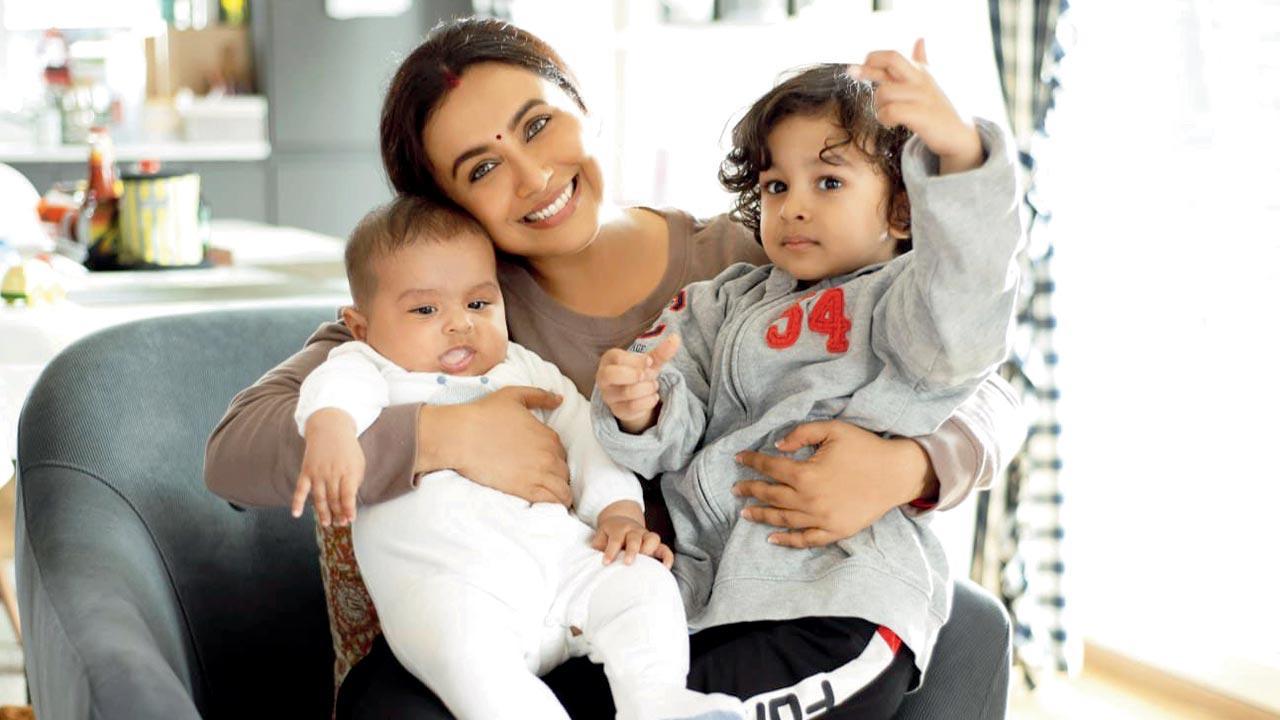
With Mrs Chatterjee vs Norway dropping online, Rani says movie’s strong BO run busted myths that only male stars and Rs. 100-crore collections make a hit
Mohar Basu (MID-DAY; May 30, 2023)
In the two weeks since it dropped on Netflix, Mrs Chatterjee vs Norway has reached audiences far and wide, consistently finding a spot in the streamer’s top 10 movies in India. It only echoes the Rani Mukerji-starrer’s successful run at the box office. The March release, said to be made on a modest budget, earned Rs 37 crore, becoming one of the few Bollywood hits of the year so far. With it, Mukerji is happy to have busted one of the Hindi film industry’s myths — that only a Rs 100-crore earner is a true box-office hit.
“There are misconceptions about what a hit means. A film is a hit when producers make money from it. It’s not only about how much it collects at the box office; one should also factor in the film’s cost,” emphasizes the actor.
So far, 2023 has witnessed a blockbuster in Pathaan, and hits in Mrs Chatterjee vs Norway, and The Kerala Story. The strong run of Ashima Chibber’s directorial venture also shut down detractors who had doubts about the prospect of women-led films, in the post-pandemic scenario.
Mukerji asserts, “There is constant chatter about whether women-centric films are box-office draws. Of course, they are! A good film will always bring people to the theatres, and a star’s gender has no role to play in a film’s success.”
Inspired by the real-life ordeal of Sagarika Chakraborty, Mrs Chatterjee vs Norway sees the leading lady play a fierce mother who takes on the legal system of Norway when her kids are taken away from her by the welfare services, on grounds of parental neglect. The drama aligned with Mukerji’s vision of bringing courageous women’s stories to the screen.
“As an actor, my vision for cinema will evolve, but the one thing that has stayed with me is the way I want to represent women on screen. I choose films where the woman is pivotal to the plot, where she is projected with dignity and power. For me, women have always been agents of change; they are independent, courageous and caring. I wanted to highlight these facets by choosing characters that echo my belief system — be it in Yuva [2004], Black [2005], No One Killed Jessica [2011], Mardaani, or Hichki [2018].”
We must constantly bring conversations about inclusivity for differently abled to the fore-Rani Mukerji
8:01 AM

On International Day of Persons with Disabilities, the actress talks about how portraying differently-abled characters has had a lasting impact on her
Harshada Rege (BOMBAY TIMES; December 3, 2020)


The actress further says that she was extremely inspired by the grit and inner strength that these characters showed in the harshest of situations. Rani adds, “I learnt about the resolve of people who are determined to triumph, despite the odds stacked against them. Essaying these powerful girls on screen made me a stronger human being. I realised the effort that they had to take for many things that we take for granted.”
Talking about more representation for the differently-abled in films and creating awareness about their needs among people, she shares, “For me, Black and Hichki were emotional experiences that opened my eyes more towards inclusivity for all. We must constantly bring conversations about inclusivity and equality to the fore. We need to do our bit to stop discrimination and stereotyping of individuals like those I have portrayed in these films.”
Directors mourn the passing away of 'very happy actor' Asif Basra
8:28 AM

Vivek Agnihotri, Siddharth Malhotra remember Paatal Lok actor, who reportedly died by suicide in McLeod Ganj yesterday, at the age of 53
Uma Ramasubramanian (MID-DAY; November 13, 2020)
Hours after reports of late actor Asif Basra committing suicide hit headlines, friends and colleagues of the artiste connecting with mid-day expressed shock at the development, citing that he had seemed "pretty okay" during previous interactions.
The Tashkent Files director Vivek Agnihotri points to a celebration party of the film when recalling his last interaction with Asif Basra. "I am working on The Kashmir Files and had promised to cast him in it again. He had categorically told me that he had been getting good offers from the West and that he was looking towards working in international cinema. As someone who has collaborated with him on many projects, I can say he was easy to work with and was a lively person. I can't comment on his personal life, but when we shot for a few days last year, he sounded pretty okay."
News of Basra's death was revealed by a portal on Twitter. Basra, 53, was reportedly living in a rented house in McLeodganj since the last five years along with a girlfriend, who is a foreigner. It is being reported that the actor had a property on lease and would visit the space in Dharamshala, regularly.
Siddharth P Malhotra, who worked with Basra on the Rani Mukerji-starrer Hichki, remembers him as a "very happy actor", who referred to Dharmshala as a place that brought him immense happiness. "He would often say that he would visit the place to live in the mountains and to escape from Mumbai. Despite being talented, he didn't have an ego. He was also well-read and versed in several subjects. As an actor, he was hungry, and would always try to make a scene better."
In his over two decade-long career, Basra played supporting parts in many critically-acclaimed features like Black Friday, Parzania and Outsourced. His notable performances in Hindi cinema include Imtiaz Ali's 2007 film Jab We Met, starring Kareena Kapoor Khan and Shahid Kapoor, Fanney Khan, Kai Po Che, and Once Upon A Time In Mumbaai.
More than my husband, I can be manipulated by Adira-Rani Mukerji
8:03 AM

Feisty cop on-screen and mushy mom off it, Mardaani 2 actor Rani Mukerji opens up on two pillars of her life - husband Aditya and her daughter Adira
Upala KBR (MID-DAY; December 17, 2019)
She may play a tough-as-nails cop in Mardaani 2, but mention daughter Adira and Rani Mukerji turns mushy. "I understood what true love is when I had Adira," beams the actor at the recording of Neha Dhupia's podcast, No Filter Neha. "It would matter to me if my husband [Aditya Chopra] didn't reciprocate my love, but it doesn't matter if Adira loves me or not. My affection for her is unconditional." It is evident that the little one has Mukerji wrapped around her little finger as she laughs, "More than my husband, I can be manipulated by Adira."
The actor had traded the arc lights for mommy duties after her daughter's birth in 2015. She ended her three-year sabbatical with Hichki (2018), following it up with the cop drama this year. She credits her filmmaker husband for her return to the big screen. "He told me that I should not let go of my individuality. He pushed me to read scripts; that is how Hichki happened. Women need supportive husbands at that point [post pregnancy] because it is in our nature to sacrifice."
Chopra's reclusive nature is legendary in Bollywood circles. In an industry where out of sight is out of mind, the fiercely private filmmaker has stayed away from public glare, content to run the show from behind closed doors. Mukerji gives a peek into the man behind the mystery as she reveals that he is punctual to a fault. "No matter where he has to go, he will reach there ahead of the [designated] time. When we go to watch a film, he will reach the theatre 20 minutes before the show so that he can watch the trailer of every upcoming movie." She attributes his success in Bollywood to his ability for recognising talent. "He has the knack for spotting not only talented actors, but also writers and directors. I guess he inherited it from Yash [Chopra] uncle."
I have always looked to celebrate the strength of women through my films-Rani Mukerji
7:53 AM

Actor Rani Mukerji says her roles reflect her belief in how women should be perceived
Rishabh Suri (HINDUSTAN TIMES; December 3, 2019)
Right from Shashi in Yuva and Saamiya in Veer-Zaara (both 2004), to Naina Mathur in Hichki (2018), Rani Mukerji has always made sure that she plays powerful female protagonists in her films. Shivani Shivaji Roy, her cop act in Mardaani (2014), was also plotted on similar lines.
What makes Rani zero in on such brilliant characters all the time? “I have always looked to celebrate the strength of women through my films, whenever I got the opportunity,” she says, “No One Killed Jessica (2011), Black, Mardaani, Hichki, etc. are some of the favourite films of my career as they resonated with who I’m as a person in real life and my belief in how a woman should always be perceived. For me, a woman is a pillar of strength for her family, community, husband, child, and I do feel we don’t celebrate women enough.”
The actor is all set to reprise the role of the fearless and committed superintendent of police, Shivani Shivaji Roy in Mardaani 2, which is a sequel to the hugely acclaimed Mardaani, in which she took on the kingpin of a child trafficking racket. In the second part, Rani has been pitted against a young, yet dangerous villain, who can be called pure evil.
Opening up on why she thinks her character in Mardaani became so popular with masses, she says, “Mardaani 2, which releases on December 13, is another attempt to showcase what a fearless, self-made, self-believing woman can do despite being pitted against all odds. Shivani is someone who will never back down in the face of injustice, and I’m glad people have showered her with so much love and appreciation. She is one of my most favourite characters because she lives life her way and isn’t cowed down by judgements and stereotyping. A boss in a man’s world, she ensures her work speaks the loudest. She is the quintessential spirit of a woman and maybe that’s why this character resonates with so many people.”
What the versatile actor is thrilled with is the current, new generation of actors, who are choosing to pick scripts with female protagonists. “I can see the tides changing, and I can’t tell you how thrilled I am as a woman and as an artiste. I have silently tried to do my best to bring out powerful women on screen and impact the psyche of people through their life. I get so happy when I see the young actors choosing to do women-centric films that give out the correct message about women to society,” says Rani.
I choose movies that appeal to my heart-Rani Mukerji
8:47 AM
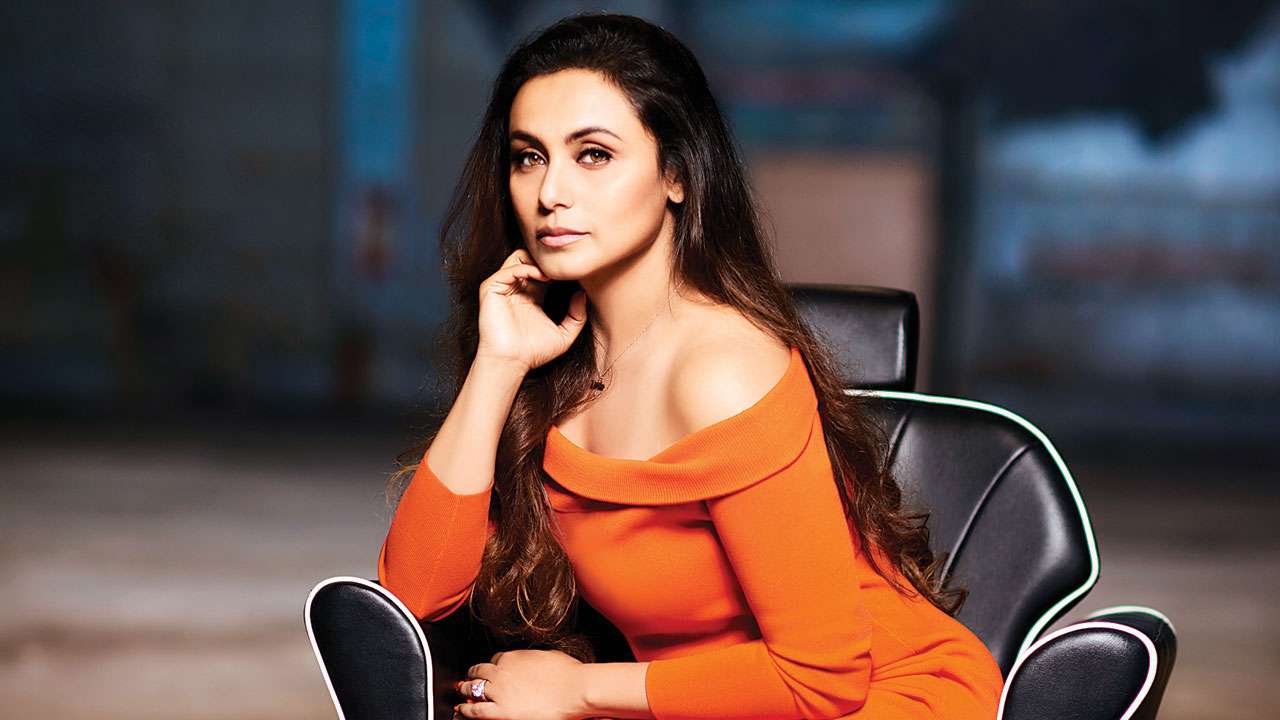
DNA (June 22, 2019)
With her last year’s release, Hichki, a socially-relevant film in which she essayed a teacher with Tourette Syndrome, Rani Mukerji wowed critics and audiences alike and also delivered a commercial success in India and overseas. Now, her upcoming film, Mardaani 2, which is a sequel to her 2014 hit cop thriller, Mardaani, is said to shock audiences with its hard-hitting subject.
‘Grateful and humbled’ that Hichki resonated with cinegoers in India, China and worldwide, the actress talks about how she is choosing stories that are starting social conversations and also setting the cash registers ringing. “I’m picking films that appeal to my heart, that appeal to me as an actor. I think it’s my good fortune that I’ve been able to select scripts out of the several ones that I’ve got and I’m fortunate that directors and writers have thought of me to play these characters,” she says, adding, “I’ve been lucky to have received the right script at the right time. I have enjoyed telling a story to the audience because if we are making a socially-relevant film, we are making it for them.”
Incidentally, not many were familiar with Tourette Syndrome until Hichki released. Rani points out that with Mardaani, the idea was to make the people aware about the menace of child-trafficking. Reiterating that it is is rampant around us and ‘we need to keep our eyes and ears open and protect our children’, she says, “I think these things are a learning for me as well when I get to read scripts. In Mardaani 2, we will again tackle a subject that will be shocking for viewers. It will show something that is extremely real and alarming to audiences and make them aware of what’s happening in and around our lives.”
17 Hindi films scored on television in 2018; Dhadak surprisingly gets the best ratings
7:25 AM
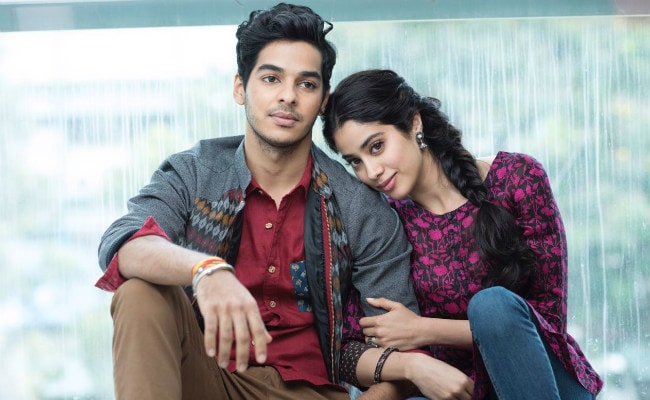
Box Office India Trade Network
DHADAK had the top premiere on television in 2018 though the year was dominated by TIGER ZINDA HAI, GOLMAAL AGAIN and BAAGHI 2 which have has continued to rate very highly post the premiere. These films have all crossed 5 crore impressions in 6-7 viewings and are films having a great innings post the theatrical release.
These three films were the huge BLOCKBUSTER on television while DHADAK and STREE were SUPERHIT and all the others on the list were HIT barring PADMAAVAT, GOLD and RAAZI. PADMAAVAT has not done well at all post release which pretty much ascertains that the theatrical business had a lot to do with the controversy as never has such big grosser performed so badly on television post release. It was premiered on digital before satellite but so were others on the list like STREE and PARMANU but they still found an audience. It means seventeen Hindi new releases scored on television in 2018.
Below are the top twenty films on television. The number is the impressions which is basically the number of television sets which viewed the film.
1. Dhadak - 1,83,16,000
2. Golmaal Again - 1,63,52,000
3. Baaghi 2 - 1,61,45,000
4. Tiger Zinda Hai - 1,37,04,000
5. Stree - 1,23,29,000
6. Pad Man - 86,42,000
7. Parmanu - The Story of Pokhran- 79,10,000
8. Sanju - 77,95,000
9. Raid - 74,71,000
10. Yamla Pagla Deewana Phir Se - 69,76,000
11. Sonu Ke Titu Ki Sweety - 64,97,000
12. Sui Dhaaga: Made In India - 64,00,000
13. Hichki - 63,60,000
14. Genius - 63,01,000
15. Badhaai Ho - 60,86,000
16. Secret Superstar - 60,41,000
17. Padmaavat - 55,23,000
18. Fukrey Returns - 53,05,000
19. Gold - 50,66,000
20. Raazi - 48,79,000
I realised a lot of people wanted to see me-Rani Mukerji
8:31 AM
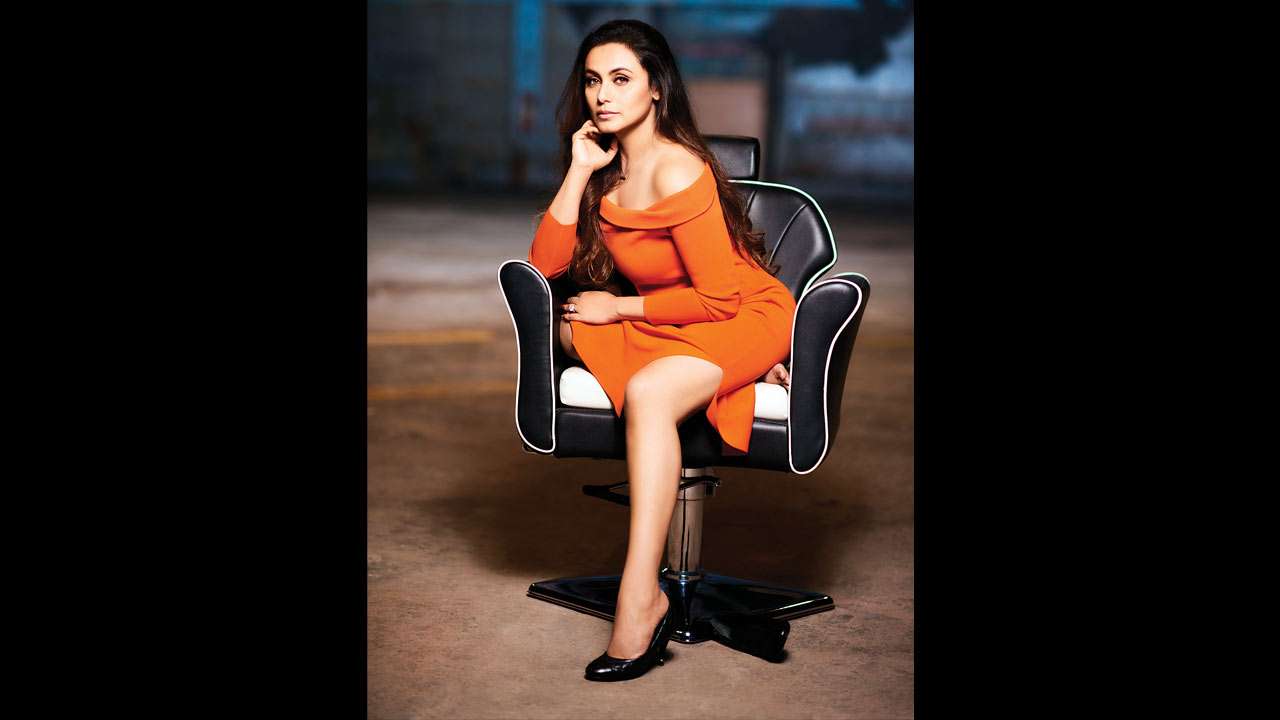
Harshada Rege (DNA; December 29, 2018)
After a four-year break from films, Rani Mukerji returned to the big screen with Hichki in March this year. She portrayed a woman whose passion is teaching but suffers from Tourette Syndrome. The project was also her comeback to showbiz post the birth of her daughter, Adira. The tale of the teacher’s bond with a bunch of lesser-privileged students struck a chord with the audience, not just in India but also in China. Rani will soon be seen on the big screen again as Shivani Shivaji Roy in Mardaani 2. We met the actress recently to talk about the year that was and her choice of roles. Excerpts from the chat...
The projects you have picked — Mardaani and Hichki — are message-oriented. Is that the way ahead for you?
Both the films spoke about powerful women in different walks of life. Mardaani is a female police officer tackling flesh trade and child trafficking, which are extremely important and grave issues in our country as well as the world. I remember many parents telling me that they didn’t want to watch the film as they’d feel uncomfortable, or that they didn’t want their children to watch it. I told them that, on the contrary, the movie was for them and their children. It helps society become aware that this is not happening in a faraway land, but right in our neighbourhood. We can’t view the world with rose-tinted glasses. I wanted to be a part of such a story, that too, told from the point of view of a female police officer. Hichki was about a teacher with Tourette, who is asked to tutor a bunch of underprivileged children. In a strange way, both of them are in the same boat. Together, they learn that you can turn your weakness into strength.
What was it about these characters that impressed you?
They are based on subjects that are relevant —child trafficking and issues with the education system. They also pointed to the fact that people judge you for your outer appearance instead of your merit. When you see a woman in a cop’s uniform, you may wonder whether she will be able to protect you. But that shouldn’t be the case because an officer is that, irrespective of the gender. Similarly, a teacher’s Tourette Syndrome doesn’t mean she won’t be good at her job. There were so many layers to these characters.
I think, when people look back at these films, they will realise how important they were. When a movie releases in the midst of what you are living in, you may not realise its importance at that point in time but you will, five years down the line. It will impact change in the society and the thought process. It takes time for an actual change to come about in a society, but these films will help kick-start that process.
What has been your biggest takeaway from the success of your film this year?
I have always believed that content is king. Whenever a story tugs at your heartstrings and has an emotional connect, it will find an audience. Now, how big a viewership it will get is when you need to look at the box office. Even if it’s a moderate hit, you know that it has been liked. For me, the learning has been to always listen to your gut and instinct because when I signed both these movies, I didn’t expect them to become the hits that they did. But I believed in the stories. I knew that I wanted these stories to be told because these subjects were relevant. It was about believing in myself and the stories. I also realised that if there is a producer willing to make a film like this, then as an actor, I have to back it too. Whether or not it does well, the intention is right. And when the film succeeds, that’s a bonus because what you had set out to achieve, you have managed to meet it.
Go on...
With Hichki, there were many more question marks because I was married, a mother. So, would the audience want to see me? That myth was broken and I realised a lot of people wanted to see me (smiles), so that was great. I can be part of the cinema and the stories I want to tell. At the same time, I love entertaining films, so whenever I do a film with a message, it is necessary to make them entertaining as well. Nobody wants to hear a lecture that’s boring. I want to be part of films that can strike a balance between both these aspects. When I know that there’s an audience who wants to see me, I can dabble in various genres. It gives me happiness to know that the viewer doesn’t shut you out because you are married or have kids. They do that when you don’t make good films, it’s as simple as that.
How do you analyse the success of Hichki in China?
I think there are some similarities between our cultures, backgrounds and family values. Perhaps, Hichki worked so well over there because they related to the teacher-student relationship. It’s the victory of the script and content. The Chinese government really loved the movie and agreed to release it there. I remember being in a room full of Chinese audience watching a Hindi movie, clapping and crying. That was a surreal feeling. Then to meet professors from the university and for them to say they wanted to be like Naina... it was something else. Even when we had a screening in Mumbai for 300 teachers across Maharashtra, they and the principals got emotional. Many of them said Naina has become an inspiration to them. And I got to hear the same thing in China. That was amazing.
Do you think there are more author-backed roles for actresses now?
I can’t really say that because I never faced that problem. In fact, I’ve always got meaty roles, right from Raja Ki Aayegi Baarat to Yuva or Black and Bunty Aur Babli. They were equal to the men or even more, but never less. As an actor, it’s our responsibility to choose the right characters. It doesn’t matter if it’s like the one I did in Kuch Kuch Hota Hai (Tina’s part) but it has to be impactful. Length of a role is never the issue, the substance is what matters. Actors shouldn’t confuse a bigger role with an important one. You could have a small part in the film, but it should leave an impact rather than being in the entire film and not making one. I have always wanted to do films that talk about the modern Indian woman. My roles have always depicted her. So, there’s always a direct connect.
What’s your resolution, work-wise and personally, for 2019?
I don’t really make any resolutions. Every new project that I sign becomes my resolution. I know that for this project, I need to achieve a set of goals. For Hichki, I needed to look like I did pre-motherhood. I wanted to get back in shape so that I would look the part. Now, I need to look like a cop for Mardaani 2, so my entire process will be dictated by that. Also, for me, it’s very important that each day I spend with my daughter is special. So, to maintain a balance between my work and personal life is my resolution every year (laughs).
The language of cinema and emotion is universal-Rani Mukerji on Hichki's super success in China
7:56 AM

Rani on Hichki crossing Rs 150-crore mark in China as against having made Rs 58 crore in India
Mohar Basu (MID-DAY; November 7, 2018)
After Aamir Khan and Salman Khan’s outings took China by storm, Rani Mukerji’s Hichki is taking the country’s romance with Bollywood forward. The movie, which sees Mukerji play a teacher suffering from Tourette Syndrome, has collected a staggering Rs. 150.8 crore at the Chinese box office since its release last month.
Thrilled that her story has struck a chord with viewers, Mukerji says, “The language of cinema and emotion is universal. The way Hichki has resonated with the audiences in China proves that when you make a film about genuine human emotions, it will deeply connect with people. It makes you believe in the power of good cinema.”
The actor reiterates Aamir’s belief that Indian films do well in China owing to the cultural similarities between the two countries. “Our family values are similar, which is why our stories connect with them.”
While the film had reportedly amassed over Rs 58 crore in India, it has crossed the Rs 200 crore mark globally, courtesy its runaway success in China.
Love Sonia has stayed with me for 10 years-Freida Pinto
8:08 AM
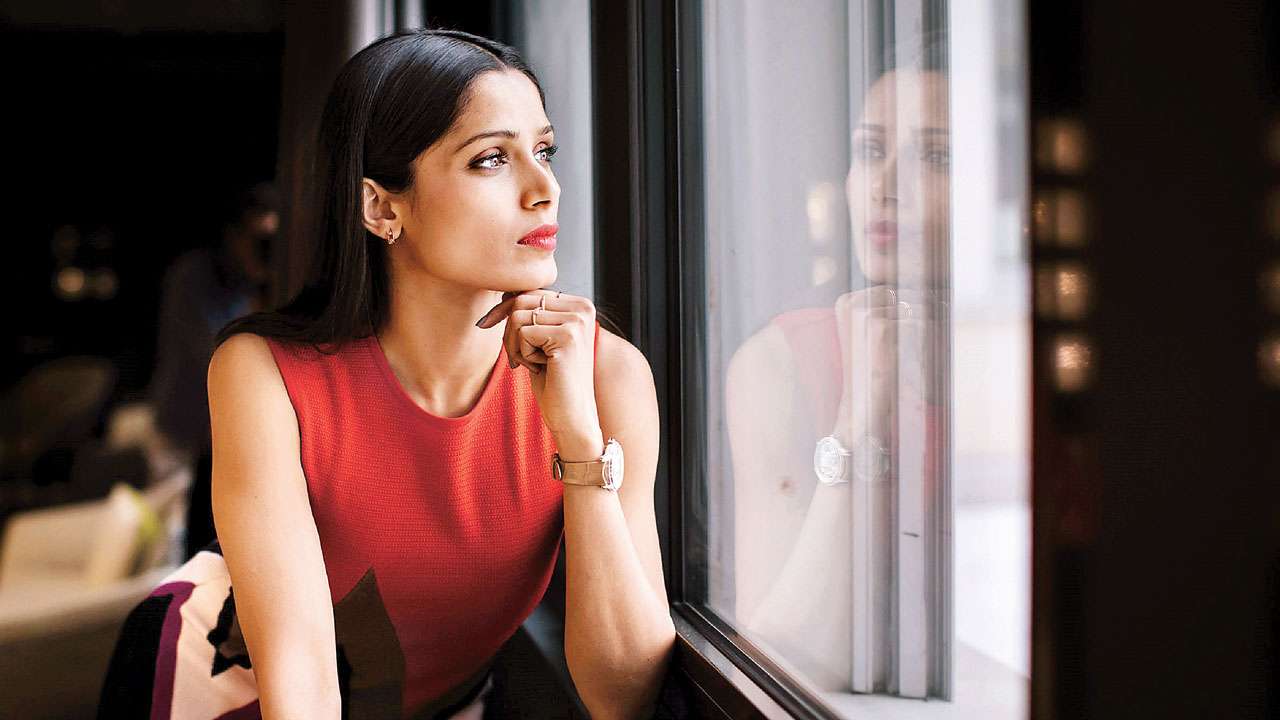
Meena Iyer (DNA; September 12, 2018)
One of India’s most famous exports, Freida Pinto walks in 40 minutes late for this interview. She apologises profusely because she has just landed at an unearthly hour from a foreign destination and is obviously sleep-deprived. Without wasting any further time, she delves straight into shop talk about Tabrez Noorani’s Love Sonia (an upcoming drama on human trafficking) and her other projects in the West.
Tell us about your involvement with Love Sonia.
Love Sonia has stayed with me for 10 years. Tabrez was a producer on Slumdog Millionaire (2008). While working on that film, he was writing this movie and told me that he was keen to direct it. Later, he asked me to read the script. Once I did, I was extremely disturbed by the subject. It was an important story and I wanted to be a part of it. I assured him that whether it was helping him cast actors or anything else, I would be actively involved. It took us a decade to get the right people as it’s difficult to find financiers for such films. When the project came together, he recalled how from 2008 onwards, I had read other actress’ parts and particularly enjoyed reading Rashmi’s lines. I loved the character’s complexity and craziness as well as the fact that she was unpredictable. He asked me if I’d like to portray her on screen. I told him my name was written all over it (laughs).
How did you manage to keep the interest alive in the subject for such a long time?
A lot of people think that when you make such a movie, it must be depressing. I can’t speak for Mrunal (Thakur), her role is a lot more intense. But Richa (Chadha), Manoj (Bajpayee), Raj (Rajkummar Rao) and I had a blast while shooting. Yes, there are scenes that are dark and disturbing, but as soon as we finished filming it, we knew why we were making Love Sonia. We wanted people with determined minds to be part of the movement that puts an end to this brutality. As for keeping my interest alive in this film for 10 years, Tabrez is a dear friend of mine. We live about 15 minutes apart from each other in Los Angeles. He and I would talk about this film and many other projects, we’re working on a bunch of things about which I can’t reveal anything more yet. But Tabrez and I are partners. He’s been my mentor, a lot of people don’t know that I learnt everything from him as a producer. If I ever direct a film, I would prod him on the set to mentor me there as well. The interest is alive because the subject matter of Love Sonia is relevant, probably more now than it was 10 years ago. The fact is that people are going to listen to a story like this.
What are the other projects that you are working on right now?
I’ve shot two movies earlier this year. One of them is with American actor Leslie Odom Jr (of Hamilton, a musical on Broadway, fame). Four-five months later, we ended up doing another film with John Ridley (who won an Academy Award for Best Adapted Screenplay for 12 Years A Slave). Later this year, I also have Mowgli. It’s fantastic that I have these two indie films coming up, both of which are love stories. I’d like to do something like Love Sonia once in a while. I want to indulge in more of human stories. There are also a couple of passion projects that I’m producing.
Your trips and films in India have been few and far in between. Filmmakers haven’t been able to tempt you with better scripts?
They are not few. You know that I come home for more than just Christmas. Whenever I come to India, my goal is not just to reconnect with Mumbai or the industry but with my country and different parts of it. The way you grow as an actor, you keep yourself connected to human stories across the nation and the world as opposed to just keeping it secluded to one part or industry. So, for me, it’s never been just about work. I see my growth as an actor by having new experiences. It’s not about tempting me with the right script, it’s wherever and however they find me. If I feel passionate about it, I will do it. I’m not waiting for something to happen. I have this belief that the right thing gets attracted to you.
As a viewer, are you in touch with Hindi cinema?
I enjoyed watching Hichki at the Melbourne International Film festival. Rani Mukerji and I were on the same platform to talk about our respective projects. It’s so moving that such subjects find a way to reach the audience and enlighten them. Not many people knew about Tourette Syndrome before Rani did that film. Likewise, when she did Black (2005), many of us learnt for the first time what visually and hearing impaired people go through. So, I keep in touch with Hindi cinema as and when I can.
I’m asking you this because you’ve relocated to LA and left Mumbai behind.
I don’t think I have left Mumbai behind. My debut film gave me such a fantastic opportunity; name one person who wouldn’t take it on. I’ve made myself a career that no one has been able to do before. Now, it gives me an even bigger opportunity to straddle both worlds as and when I want to. Also, if there is something that I don’t want to do, I’m finally in a position to say no. Also due to digital platforms, in the near future, we won’t be talking about borders and boundaries any more, but letting content and storytelling take the lead.
Take, for instance, Sacred Games. Not just Indians, but people from across the world are watching it. Stories from the West, England and France are inspiring. There is such beautiful storytelling in America. My favourite example is The Untouchables, the foreign language film that people want to remake even in India.
Would you do a Hindi love story?
Love Sonia is in Hindi. Previously, I did Trishna which was not just in Hindi but also in Marwari. I had to learn a language that I didn’t even speak. So, I have done Hindi films (smiles).
I don’t categorise films on the basis of their budget-Rani Mukerji
9:23 AM

Nayandeep Rakshit (DNA; July 9, 2018)
Rani Mukerji’s comeback venture, Hichki, has worked well at the box office. Along with the positive reception in India, it also received a standing ovation at the recently-concluded Shanghai Film Festival and has scored well on satellite, too.
As we start our conversation with Rani, who’s busy taking care of her daughter, Adira, she tells us, “This interview might happen in breaks.” But the toddler plays with her toy and watches her mother talk, without interrupting her. Over the next 20 minutes, the actress states how Hichki helped her find answers to all her questions and why she is open to doing a film outside the Yash Raj Films banner. Excerpts...
Hichki was a small-budget film that did good numbers. Does this success seem sweeter than that of your other big movies?
I don’t categorise films on the basis of their budget. At the end of the day, it is a validation of my work being accepted by viewers. So, it’s not really about getting success on a higher or lower scale. The audience’s appreciation is of utmost importance. When a film does well, it makes you happy. Likewise, when it flops, irrespective of its budget, you feel equally sad.
The movie has worked well on satellite, too...
Yes, I’m extremely happy because it’s important for every actor to ensure that their film has a wide reach. With television, the reach is tremendous. And the fact that Hichki has worked well on satellite is heartening. Now, it has also released digitally, so more people will be able to watch it.
Were you always confident about its success?
Whenever I choose a script, I do it hoping that the audience will like it. But no one can predict to what extent it will be accepted. If we could do the predictions, then all our films would be hits. There would be no misses.
What’s the fondest compliment that you have received from any of your fans or audience?
I remember Karan’s (Johar) words. He told me, ‘You have performed like a veteran actor.’ Javed (Akhtar) uncle called me after the screening and said he loved my performance in Hichki more than Black. Aamir (Khan) joked that I make for a good-looking buddhi because of the last scene where I’m an old woman. This is the kind of attention an actor craves for.
Hichki also received a standing ovation at the Shanghai Film Festival. You weren’t there. Did you miss the reception?
Siddharth (P Malhotra) called me from there as soon as this happened and told me everyone stood up, clapped and were extremely moved by the film. They asked him, ‘How did you pick up this actor who actually has the Tourette Syndrome?’ So that was gratifying for me. People are loving the film irrespective of the place, country and the language and they are connecting with it, which is very special. I feel bad I had to miss out on it, but I’m happy my director was there.
Where does this film and this character stand in your filmography?
It stands at a very important place. Hichki was my comeback film which I did right after giving birth to my baby Adira. So there were a lot of questions I had about whether I would be able to deliver a hit, whether the audiences would like to see me on screen four years after Mardaani. Hichki has dispelled all those questions.
You promised to do one film every year from now on. Have you finalised your next?
I’m in the midst of deciding on my next. I have learnt from my past experiences. Now, I will sign on the dotted line only when I’m fully happy with the script from the first scene to the end.
Is there a film you are doing outside YRF for now?
No, not as of now. But there are a lot of scripts that I’m reading at present. If there’s a script which I love outside the YRF banner, I’ll obviously do it.
Fenil's Bollywood Talk # 524
9:20 AM

SANJU IS A BLOCKBUSTER; FIRST HALF OF 2018 ENDS ON A ROCKING NOTE!
Over the last few years, the mood of the Bollywood Talk posted in June-end or beginning of July is usually quite somber. After all, the first 6 months have more or less have been dull over the years. Last year, the first half ended on a disastrous note after the biggie Tubelight, starring Salman Khan, crashed in a few days and led to massive losses for its distributors. With such instances happening repeatedly in the first six months, the mood wasn’t that upbeat when 2018 commenced.
However, 2018’s first half has gone beyond expectations! Each month has been full of surprises and super hit films. Bollywood got it’s first blockbuster in January itself when Padmaavat released despite a slew of controversies. It didn’t release in almost 4 major states and yet, became a blockbuster, earning more than Rs 280 crore, a figure unheard for a January release before! February saw the surprise success of the comic caper Sonu Ke Titu Ki Sweety. A film having a not-so-popular cast raked in almost Rs 100 crore and it led to cheer in the industry. March saw three back-to-back successes: Raid, Hichki and the monstrous blockbuster Baaghi 2. In April, the offbeat flick October, starring Varun Dhawan, could have easily flopped considering its niche appeal. But even this film did decent business! April ended with a high with the super-success of Avengers: Infinity War. The fun continued in May when 102 Not Out got the cash registers ringing. The excitement was there for Raazi but nobody imagined in their wildest dreams that it would do almost Rs 120 crore! This is a first for a women-centric film! Parmanu released all of a sudden sans any promotions and yet managed to cross the Rs 60 crore mark! The first day of June saw the release of Veere Di Wedding. Not many were sure if this flick would work considering its all-female cast and adult theme! But it worked and how! Race 3 got thumbs down and many expected it to go the Tubelight way. It fell after a point but not as badly as one expected and it’s lifetime is expected to be in the Rs 160 crore. And that’s not bad for a film that had negative buzz and terrible word of mouth.
And finally, Sanju released on June 29 and it proved to be an icing on the cake. Directed by Rajkumar Hirani, it is the biopic of Sanjay Dutt and starring Ranbir Kapoor. The excitement for the film was significant. But who could have told that Sanju would be able to cross the coveted Rs 200 crore mark in just one week?! And this is terrific considering the somewhat dark theme and that Ranbir hasn’t had given a huge hit in a while. Some trade analysts even feel that it can cross the Rs 374.53 crore mark of Dangal and thus emerge as the biggest grosser ever of Bollywood! Even if that doesn’t happen, Rs 250 crore is at least on for Sanju and that’s tremendous!
Now all eyes are set on the second half which should be equally exciting. Films like Dhadak, Gold, Batti Gul Meter Chalu, Yamla Pagla Deewana Phir Se, Sui Dhaaga, Namaste England, Thugs Of Hindostan, Student Of The Year 2, Kedarnath, Total Dhamaal, Zero and Simmba should work big time and rake in a lot of moolah and impress audiences. The feeling is unimaginable and this is truly deserving and much needed, especially after a spate of dry years!
Pad Man, Raid and Hichki score very well on television
8:37 AM

Box Office India Trade Network
There were three major television premieres in the last weeks of May with HICHKI, PAD MAN and RAID and all have emerged HITS. HICHKI and RAID sustained at the box office while PAD MAN could do not much after the first week but on television it had the upper hand due to the huge mass popularity of Akshay Kumar. Hence, limited film on menstrual periods has managed to score so well on television. RAID should have scored over PAD MAN as it did better at the box office and its subject was much more audience friendly especially for the television audience which is larger than theatrical.
PAD MAN has crossed its theatrical footfalls with its first television showing. HICHKI has almost doubled theatrical footfalls and has also beaten SECRET SUPERSTAR which was a similar genre film and that too when SECRET SUPERSTAR had Aamir Khan to boost it. SUPER SINGH got the highest rating ever for a Punjabi film dubbed into Hindi.
The top films on television in 2018 are as follows. The numbers are impressions which are the number of television sets viewing the film.
1. Golmaal Again - 1,63,52,000
2. Tiger Zinda Hai - 1,37,04,000
3. Pad Man - 86,42,000
4. Raid - 74,71,000
5. Hichki - 63,60,000
6. King Kong - 60,43,000 (dubbed)
7. Secret Superstar - 60,41,000
8. Fukrey Returns - 53,05,000
9. Shaadi Mein Zaroor Aana - 42,47,000
10. Super Singh - 40,01,000 (Dubbed)
Adira gave birth to me-Rani Mukerji
8:40 AM

Nayandeep Rakshit (DNA; May 13, 2018)
Rani Mukerji returned to the big screen after a four-year hiatus with Hichki, in which she was seen as a teacher who battles against all odds. However, off-screen, she has been playing the role of a doting mother to her two-year-old daughter, Adira. As soon as one mentions the tiny tot’s name to Rani, her eyes light up and there is a wide smile on her face. The actress gets candid about how her child completes her.
THE JOYS OF BEING A MOTHER
The award-winning star says her evolution as a person “began from the time she was pregnant”. She adds, “Motherhood is a beautiful feeling. You start valuing someone else’s life over yours and address their needs first. I guess, it’s the only relationship in the world where this can happen and it’s amazing. Adira completes me as a person. She was a premature baby, so initially, there were a few restrictions. But she is a happy kid, touch wood.”
ADIRA COMES FIRST
Post Mardaani (2014), Rani decided to stay away from the limelight. However, she doesn’t regret her decision and reasons, “Now, when I do a film, it has to be in accordance with Adira’s schedule.”
Rani says, “I want to be part of every milestone in Adira’s life and ensure I don’t miss any of it. During Hichki, she was going to take her first step. Luckily, I had reached home from shoot right in time to see her do that. These are moments that will never come back and I’ll cherish them forever.” She avers, “If a filmmaker is willing to keep in mind all these factors and moreover, if it’s a good script, I’ll happily take up the film. During those one-and-a-half years when I was with my daughter and changed her nappies as well as did other chores, I was so comfortable that I could be happy doing that all my life. I was so consumed with my daughter’s love that nothing else crossed my mind.”
Ask her how Adira is as a kid and the proud mom says, “Adira likes to see everyone around her happy. Even the helpers that I have at home are fond of her because she will make sure each one of them gets equal attention. She doesn’t like to choose between two people.”
Does she know that she has an actor mom? Rani smiles and says, “No, she’s too young to understand that. But when she watched my promos of Hichki on TV, she would scream ‘Mumma’.”
‘ADI AND I WANT TO GIVE HER A NORMAL LIFE’
Like all parents, Rani is extremely protective of her child, too. “Both Adi (husband Aditya Chopra) and I are protective of her, but that’s how it should be. Adira gave birth to the mother in me. And like any other parent, I will definitely make sure I do the best for my kid. Till the time we are responsible for her, we’ll try and give her a normal life,” she says.
The light-eyed actress, however, adds that they ‘want to keep her away from the media glare’. “I keep clicking selfies with Adira all day. And there’s a point when she gets bored and asks me to stop (smiles). But those selfies are only for me and they will never go anywhere,” she tells us.
ON PLANNING ANOTHER BABY
Adi is busy producing some of the biggest films in the industry today. Will Rani follow suit and set up a production house of her own? “No, I don’t need to. The setup is already here, so why would I go out and get something on my own? Even if I do, I will still be using his team and people.” But there’s something else she wants to be busy with. “Right now, I am just happy with the production of babies (smiles). Of course, there is a plan to have another child. Adira needs to have company,” she signs off with her trademark giggle.
I would like to do either Mardaani 2 or a romantic film-Rani Mukerji
7:54 AM

Nayandeep Rakshit (DNA; April 25, 2018)
Before Hichki had released, Rani Mukerji had told us that she was waiting to see if the audience still wanted to watch her. “If not, I would rather sit at home and take care of my daughter Adira,” she had joked. Now, with her comeback vehicle garnering approximately Rs 44.5 crore at the domestic box office, she feels vindicated.
She says, “It’s important for actors to know what their audience is thinking of them on that particular Friday. Do they want to watch you? The day you stop getting the jitters on a Friday or stop valuing its relevance, you should pack your bags and go home. We want the feedback from viewers or critics. I’m not acting for myself.”
In an era where people forget you when they don’t see you that often, is it difficult to stay relevant with the times, we ask. And pat comes the response, “I don’t want to be known for my presence on social media or for what appearances I’m making between my films. I want to be relevant with my work.”
There was a three-and-a-half-year gap between Mardaani and Hichki. However, now Rani wants to be seen more often on the big screen. She elaborates, “That’s the plan — to act in more films that connect with me and touch my heart. Also, I want to do them at quicker intervals. I wanted to see how Hichki does because there was a long gap between this and my previous film. Now that I know that the audience is more than happy to see me, the projects, which I have kept on hold till now, will soon see the light of the day.”
Quiz her about the kind of movies that she would like to take up and she says, “I have quite a few offers, but I have to work on them first. Right now, I would like to do either Mardaani 2 or a romantic film.”
I want to make a comedy and make people laugh-Siddharth P Malhotra
7:50 AM

Upala KBR (MID-DAY; April 13, 2018)
Even as his previous outing, the Rani Mukerji Chopra starrer Hichki, continues to rake in the moolah and inch towards the Rs 50-crore mark, director Siddharth P Malhotra has already turned his attention towards his next, an “all-out entertainer”.
With two socially relevant films — apart from Hichki, the Kajol-starrer We Are Family (2010) — behind him, Malhotra now wants to roll back his shoulders and have some fun with his next. “I am writing two more projects. They are fun, light-hearted subjects. They will not have any social message. I want to make a comedy and make people laugh,” Malhotra tells mid-day. Aditya Chopra’s Yash Raj Films (YRF), which also backed Hichki, will helm this venture too.
Malhotra tells us this project will be the second of a three-film deal he has bagged with the production house. Even though he is keen to collaborate with Mukerji again, he says casting “will depend on the final script.” “Who would not want to work with an actor as fabulous as Rani again? She’s a magical star, one who reacts to the script. I’ll know if I can collaborate with her again once the script is complete.” Rubbishing rumours that the actor often interferes with the director’s decision, he says, “That’s not true. Rani is a team player, who motivates other members. I am blessed to have worked with her.”
Interestingly, after previously stating that there are “many possibilities” of creating a sequel to the drama, Malhotra now says that he wouldn’t want to work on a second instalment of Hichki. “Hichki 2 will not happen. There are a number of other subjects that Rani and I would want to explore. We have so many stories to tell. You create a sequel only when it’s required. In this case, it isn’t.”
The possibilities of a Hichki sequel are many-Siddharth P Malhotra
8:05 AM

Mohar Basu (MID-DAY; April 4, 2018)

Unsure of how to go about Hichki 2, but never denying its scope, he adds, “The film delivered on box office numbers. I am sitting on a lot of stories now. Hopefully, I will get the opportunity [to direct them].”
Special screening of Rani Mukerji's Hichki to be held for the President of India
10:13 PM

Harshada Rege (DNA; March 30, 2018)
A special screening of Hichki will be organised for President Ram Nath Kovind at the Rashtrapati Bhavan tomorrow (March 31). In the film, Rani plays Naina Mathur, who wants to be a teacher but has a nervous system disorder known as the Tourette Syndrome. Due to this, she makes involuntary repetitive movements or sounds. The movie also focuses on the student-teacher bond.
“The acclaim of Hichki has found a taker in none other than the President of India who will be watching it on Saturday. Hichki has a strong social message, which appeals to audiences across all age groups,” says a source. The film, which released on March 23, has received critical appreciation and has done well at the box office too.
Producer Maneesh Sharma says, “It is an incredible feeling to receive such love from audiences for Hichki. It is a matter of great pride for any filmmaker to have his/her film screened for the President of India. I’m extremely humbled that it is spreading such important social messages across the country.”
Subscribe to:
Posts (Atom)