Showing posts with label Harshdeep Kaur interview. Show all posts
Showing posts with label Harshdeep Kaur interview. Show all posts
Remixes are fine, but we shouldn’t live in nostalgia-Hariharan
8:56 AM

(L-R) Harshdeep Kaur, Meghna Mishra and Hariharan
Debarati S Sen (BOMBAY TIMES; June 21, 2025)
What binds three generations of musicians together? A shared passion for authenticity, artistry and emotional connection. Today, on World Music Day, voices from three generations – the legendary Hariharan, the soulful Harshdeep Kaur, and the young talent Meghna Mishra – converge for an exclusive conversation with us. They speak about their love for monsoon melodies, how they stay rooted in an ever-changing soundscape and the magic of meaningful music in a remix-heavy world. The pretty backdrop of Powai Lake, along with a light drizzle, set the rhythm for this special interview.
Do you feel music and monsoons have a connection? What are your favourite rain songs?
Hariharan: Absolutely! O Sajana Barkha Bahar Aayi, what a song! I remember sitting and listening to the song at a park in a Parsi colony, in Matunga, near my old family home. It was playing on the radio in one of the homes. The memory of rain, music and scent merging into magic is so vivid. Then, Colonial Cousins had the song Indian Rain in our first album. Another favourite track is Sawan Barse Tarse Dil (Dahek).
Harshdeep: There’s such a beautiful connection between music and monsoons. Indian classical music even has ragas like Megh Malhar that evoke the spirit of the rains, expressing love, longing and joy. One song that hits home for me is Nahin Samne Tu (Taal) by Hariharan ji. Another favourite is Ab Ke Sawan by Shubha Mudgal ji.
Meghna: Music is deeply connected to nature, it’s a language of emotion. One of my all-time favourite rain songs is Megha O Re Megha by Hemlataji. The first time I heard it, tears flowed uncontrollably.
What’s the one change you’d like to see in the Indian music industry?
Harshdeep: Listeners often complain about the kind of music being released, but they also have the power to shape the industry. It is their responsibility, too, to encourage clean and good music. Support artistes who are genuine, who’ve dedicated their lives to music. That makes a difference.
Hariharan: We need more originality. Innovation and expression are crucial. If you create music for the joy of it, it elevates the listener. A song without visuals lets the imagination soar, like reading a book versus watching a movie. Remixes are fine, but we shouldn’t live in nostalgia. An artiste becomes relevant when they create something new, that’s when magic happens.
If the three of you collaborated on one genre-blending track, what would it sound like?
Hariharan: Harshdeep has a deep, spiritual tone, while Meghna’s voice has a beautiful innocence. I’d create a track blending swaras, aalaaps, sargams, a pop-style bandish, and even shlokas. Leslee Lewis would be perfect for composing and writing this genre-fusing piece.
Harshdeep: An indie-folk song with classical textures, something rooted and melodic. Someone like Shankar-Ehsaan-Loy or Rahman sir would be perfect to compose it.
Meghna: I’m currently tripping on South Indian music. It would be amazing if the three of us could do a South Indian track composed by AR Rahman sir, M Jayachandran sir.
In a world full of remixes and reels, how do you stay rooted in meaningful music?
Hariharan: Enjoy remixes if you like, but don’t get swept up in trends. If you only make what others want, you’ll eventually feel hollow. Put out music that you love. That’s how you stay grounded and creatively fulfilled.
Harshdeep, how do you balance adapting to changing trends while preserving your unique identity?
It’s important to evolve with changing sounds, but never lose your roots. I treat my voice like an instrument, constantly experimenting with tone and style depending on the song. Soulful music will never go out of style. Life is chaotic — people seek calm, and music is one of the best ways to heal.
Meghna, what’s something you’ve learned from watching artistes like Hariharan and Harshdeep Kaur that no classroom could teach?
Performance. Every artiste has a unique style, and I’ve learned so much by watching them live – how they improvise, produce, and most importantly, how they connect with the audience. That connection is what sets a performer apart.
Is there a song of yours that you feel was underrated and deserved more love?
Harshdeep: Waah Sajna, a Sufi song I released in 2023.
Hariharan: My ghazal album Waqt Par Bolna, which I think is one of my best.
Meghna: Ki Bas, a ghazal composed by Sanjay Kumar Mishra and written by the late Aziz Ghazipuri ji.
Rapid fire with Hariharan, Harshdeep and Meghna
One song you wish you’d sung?
Hariharan: Tu Jahan Jahan Chalega
Harshdeep: Lambi Judai
Meghna: Kaash by Hariharan ji
Riyaaz in the morning or midnight jams?
Hariharan: Riyaaz in the morning
Harshdeep: Both
Meghna: Riyaaz in the morning
Classical ragas or unplugged gigs?
Hariharan: Classical ragas
Harshdeep: Unplugged gigs
Meghna: Classical ragas
Describe music in one word
Hariharan: Spirituality
Harshdeep: Oxygen
Meghna: Life
Lohri is associated with a lot of bachpan ki yaadein for me-Harshdeep Kaur
8:29 AM
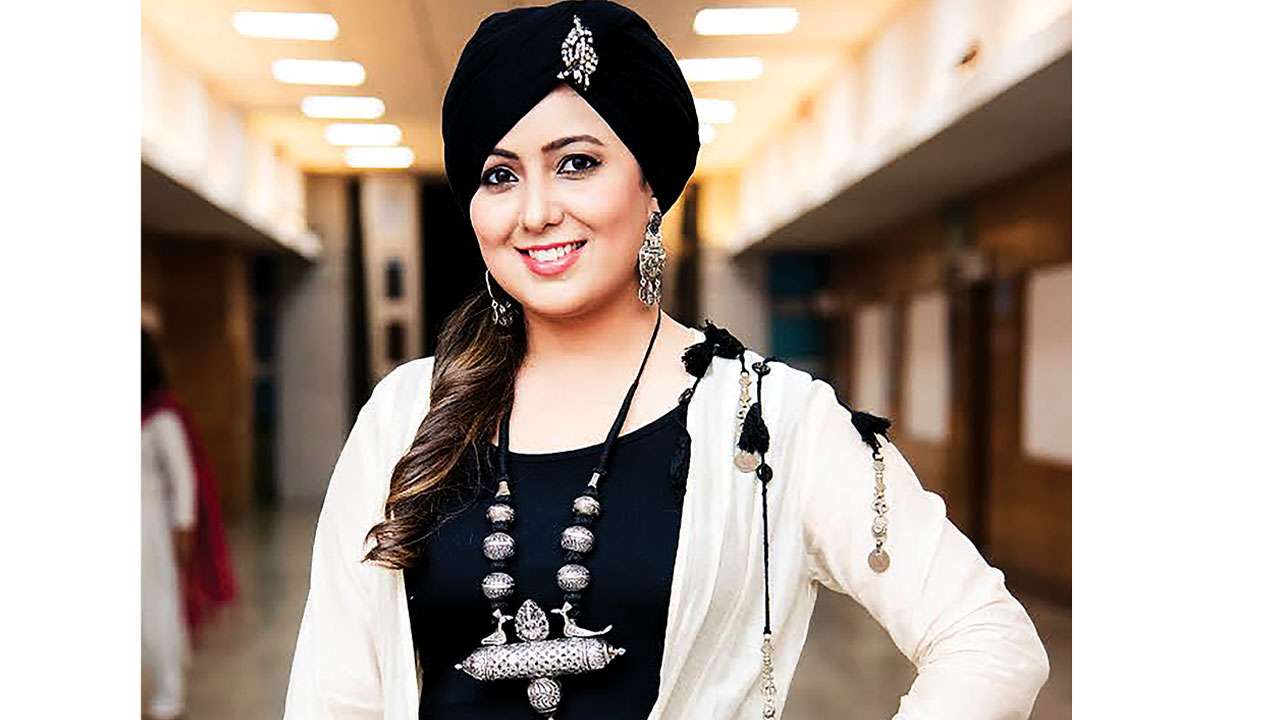
Debarati S Sen (BOMBAY TIMES; January 13, 2022)
Lohri has a special place in singer Harshdeep Kaur’s heart. Two decades ago, her first film song had released just a couple of days before the festival, which was the beginning of a new chapter in her life.
Harshdeep recalls, “I remember I had gone with my dad to a local music shop to buy the cassette of Anubhav Sinha’s film Aapko Pehle Bhi Kahin Dekha Hai. The music was composed by Nikhil-Vinay. Unn dino cassettes aatein thhe. We bought it aur jaldi se maine apna naam check kiya. It was so good to see my name on the cover along with so many other big artistes like Jagjit Singh ji, Asha Bhosle ji, Sonu Nigam, Shaan, Alka Yagnik ji and Udit Narayan ji. To see my name there with these greats was priceless. I had one solo track, Sajna Main Haari, in the album.”
Harshdeep has since lent her voice to chartbusters like Ek Onkar (Rang De Basanti), Heer (Jab Tak Hai Jaan), Katiya Karun (Rockstar), Nachde Ne Saare (Baar Baar Dekho), Zaalima (Raees) Twist Kamariya (Bareilly Ki Barfi) and Dilbaro (Raazi), among others.
Born and brought up in Delhi, Harshdeep has a lot of fun memories attached to the celebrations there. “Lohri is associated with a lot of bachpan ki yaadein for me. Lakdiyan ikkatha karke usko jalate thhe, popcorn aur moongfali (groundnut/peanuts) usme dalna aur revdi khate thhe,” she says, adding, “Lohri is a happy festival. Since it used to be really cold there, bonfire ka mazaa hi kuch aur hota tha. Our cousins and neighbours would gather around it. Hum mummy ke haath ka khana khaatein thhe.”
The singer moved to Mumbai with her family around 18 years ago to pursue her career. They continued to celebrate the festival in the city with as much enthusiasm. “Lohri bahut hi pyaara festival hai. It’s all about fun, dance, music and new beginnings. It is a very auspicious festival aur hum isse dhoom dham se manatein hain. It’s always been about the family getting together. Last year’s celebration was special because it was my son Hunar’s first Lohri and my husband Mankeet went crazy trying to make it special.”
While Lohri celebrations in the North are on a bigger scale, Harshdeep says that her family has not let go of any tradition or festivities associated with this festival even though they live in Mumbai. She says, “Last year, we went to the terrace of our building aur wahin pe gadde bichaake, music lagke, we put together a small bonfire. All of us, including my parents, sister, nephew, parents-in-law and friends, were dressed in traditional clothes. We danced to traditional songs and had a festive barbecue dinner.”
Talking about the festivities, Harshdeep shares, “We sing and dance to traditional songs like Sunder Munderiye. It is great to see that even my son knows this one. We also play many of Gurdas Maan and Surinder Kaur’s Lohri songs. Traditionally, we are used to having makki ki roti and sarson ka saag, makkhan or white butter on saag and gur. For desserts, jalebi-rabdi is a favourite. Lohri marks the end of winter and the beginning of spring and harvest season. It symbolizes the future and growth.”
My baby boy has made me a better musician-Harshdeep Kaur
8:17 AM

Titas Chowdhury (HINDUSTAN TIMES; August 2, 2021)
Harshdeep Kaur and her husband, Mankeet Singh, welcomed their baby boy, Hunar Singh, on March 2 this year. The past one year might have been tough but Kaur says that their little bundle of joy came as a ray of sunshine. “Hunar makes sure that our days are full of joy. He keeps us entertained. He has changed the entire atmosphere in our house. It’s full of positivity all the time now,” she shares.
The singer says that the arrival of their baby has made them more cautious than ever: “We keep spraying disinfectants around the house and if anyone comes home from outside, we immediately hand them a bottle of sanitiser. Babies are prone to catching a lot of infections. In fact, our friends and families only video call us if they want to see or talk to him.”
Even though outdoor recordings have begun already, she asserts that she prefers to record her songs from her studio set-up at home to keep Hunar protected from all kinds of health risks.
So, has motherhood affected her professional life? “I’ve been writing poems for him and composing them into songs. When I sing them to him, it makes him laugh. Mere andar ka composer abhi jaag raha hai. I believe he has made me a better musician,” says the Mere Baabula (Jawaani Jaaneman; 2020) singer.
Kaur’s happy now that she has learnt to balance her personal and professional life. “I adjust my time according to my baby’s schedule. When he was two weeks old, I recorded a song called Jannat. He was sleeping for four hours when I went to a friend’s studio to record it. Sometimes when he sleeps and his father or grandmother is taking care of him, I quickly go to my home studio and record a song. If he wakes up, I go feed him and then come back and go for another take,” she signs off.

Shreya Ghoshal, Neeti Mohan and I kept in touch throughout our pregnancies-Harshdeep Kaur
7:44 AM

Titas Chowdhury (HINDUSTAN TIMES; June 3, 2021)
Harshdeep Kaur welcomed her son, Hunar, on March 3. While it’s just been three months since she embraced motherhood, the singer has already learnt to strike a balance between her personal and professional life. “Earlier, I used to just do my riyaaz and recordings at home, but now, I sing to him (Hunar) all the time. That way, I’m composing new songs and lullabies. Sometimes, when he sleeps, I quickly record a song in my home studio,” she says.
Delivering a baby during a pandemic is no cakewalk, and Kaur admits she was worried to step out for check-ups: “But, we took all precautions, and our doctor was very encouraging. Another thing I was worried about was my vaccination, but I’m happy that they’re vaccinating lactating mothers now.”
The Mere Baabula (Jawaani Jaaneman; 2020) singer has also been sharing tips with “close” friends — singers Shreya Ghoshal, who delivered a baby boy last month, and Neeti Mohan, who is currently in her final trimester.
“We kept in touch throughout our pregnancies,” Kaur continues, “When I told Neeti that I’m going to be a mother, she kept my hand over her belly and told me she is pregnant as well... She keeps asking about my delivery experience, things she should pack in her hospital bag. As for Shreya, I was very concerned and kept checking on her.”
Baisakhi was special this year because of the birth of my baby boy, Hunar-Harshdeep Kaur
7:58 AM

Riya Sharma (BOMBAY TIMES; April 14, 2021)
This Baisakhi was a special one for Harshdeep Kaur, who welcomed her baby boy Hunar recently. The singer says she missed celebrating the festival in Delhi, with her family and friends. “I remember visiting Gurudwara Majnu Ka Tila Sahib in Delhi, where the Baisakhi celebrations used to take place. We would look forward to the langar there. My grandmother would also make us sit in the verandah and sing folk songs for us. I miss Delhi a lot. We visit the gurdwara every year, meet friends and family and celebrate at home,” she tells us.
Talking about how this Baisakhi was special, Harshdeep says, “This year was special because of the birth of my baby boy, Hunar. There are some rituals that we follow on the child’s first Baisakhi, and his grandparents were excited for that. The day also marks the 40th wedding anniversary of my parents so it was double celebrations for us.”
This Baisakhi was a more subdued one because of the Coronavirus pandemic. Harshdeep says, “This year, the celebrations weren’t like every year due to the pandemic. Also, Baisakhi is associated with farmers and harvesting of their crops, but this year due to the ongoing farmers’ protest, the festival wasn’t as celebratory as usual.”
Since my career took off early, I never had time to make friends-Armaan Malik tells Harshdeep Kaur
8:01 AM

In conversation with Harshdeep Kaur, Armaan Malik says unlike many users, social media frenzy doesn't distract him from honing his craft
Sonia Lulla (MID-DAY; December 30, 2019)
Harshdeep Kaur and Armaan Malik bond over a generous dose of bad jokes. Malik refers to his mother, who inadvertently comes into our video frame, as 'momnipresent', while Kaur reacts to his make-up man's interruption to fix his 'shiny face' with: "Star hai, shine to karegaa." You may thank us later for editing the rest of the lame jokes from this excerpt.
Armaan: Like me, you started working young. Does the child in you feel cheated?
Harshdeep: Not at all. If I was in a profession that I wasn't enjoying, I'd possibly feel [that way]. But, [as a kid] I loved going for music classes, competing and performing. My parents would ask me if I was having fun, and that I should tell them if I felt tired. I never missed my studies, though. I'd carry books in the car, and study. In fact, I always felt special. My friends would say, "Oh, we saw you on TV."
Armaan: [When I was young], I wanted to do all [the things that kids do]. My mother says I'd always [sulk] before going for a recording, because I wanted to go for [birthday] parties instead. At that age, a child [can't comprehend it] when he is told to make music a priority so that he can become [capable] in the future. A child just wants to hang out with friends. Since my career took off early, I never had time to make friends. I wasn't around [children] enough at the age when [bonds are forged]. So, now, my friends are those who belong to the industry. But, [everyone] wants his/her group of friends; that never happened for me. Yet, I am glad I prioritised singing; it made me the person I am.
Harshdeep: What according to you is the role that parents play in an artiste's life?
Armaan: Sometimes, parents may not believe that a certain career is apt for the child. People feel [music] is not a viable career. I belong to a music family, so, they understood that this is a line that can be pursued. My mother was initially against it, because she saw my dad struggle, and did not want that life for her children. We were told we had to be educated, and that we would attend [music] classes, but [we shouldn't] treat it as a career option. It so happened that opportunities came my way, and my mother realised that if we let them go, I wouldn't grow into [a fine] artiste later. When I wanted to audition for the [singing reality show] Sa Re Ga Ma Pa Li'l Champs, my dad was hesitant because no one from the family had done that. But, mom wanted me to understand what it was to compete. I would know where I stand [as a singer]. Even though I made it to the eighth position in the show, my confidence [got a boost]. I realised that if I've reached here, [I am able]. Of course, she also had to make me study, so she'd carry my books to the set. She'd wake up early and prepare breakfast and lunch, and take it to the shoot. So, I know that if parents truly support their kids, it goes a long way in helping them.
Harshdeep: But, nowadays, parents push it too far.
Armaan: Yeah, because now, the motive is different. Over the years, social media has got an impetus. When people see that [others have] followers, they want their children to also be famous on Instagram. So, they're like, 'You do it too'. They push kids into doing things that they may not want to. I started singing for the love of it; not to get followers.
Harshdeep: Do you think things would be different if you were practising at a time when social media wasn't as big as it is now?
Armaan: I know a lot of people who are my inspiration, and who have lesser followers than I do. That doesn't make them [lesser artistes]. Social media has helped us reach a bigger audience. For instance, I wouldn't know I had fans in Turkey if it wasn't for social media, where they reach out to me. But, if you rely on the platform, and not on your craft, that's a down-point. A lot of people tell me, "Oh, you're so popular on social media." And I'm like, yeah, but if you give me a mic, I can also sing.
Armaan: I do riyaaz by listening to artistes, and then singing [the way they do]. Have you heard a song again and again, only to replicate its intricacies?
Harshdeep: Often, you wish you could pause a song and see its notations. There was Sukhi ji's [Sukhwinder Singh] Thayya thayya from Dil Se. He did something [interesting] with the alaap. [I began to] sing it slowly, then [matched] the actual tempo.
Harshdeep: As someone who is the younger sibling, I understand how the older sibling can sometimes act like, well... the 'older sibling'. What happens when there's a difference of opinion between you and Amaal [Malik, brother-composer]?
Armaan: Amaal and I have a lot of fights in the studio. He throws books and headphones at me. Recently, we were recording Chale aana, and Amaal was hammering me, telling me I was singing badly. It led to a point where I was ready to storm out. Then, I decided to let it go, because he had a delivery to make. I went in, and sang the song with a lot of anger. That apparently brought out the energy Amaal wanted, and we finished it in one take. So, I'm usually the one who solves [issues].
Harshdeep: How important is it for a good singer to also be a good performer?
Armaan: Audiences don't want to hear songs in the way that they already have, in the recorded versions. They have few options to see you live, and what you present to them at that point is important. So, I may arrange songs in a different way [for live shows].
Harshdeep: In the early part of my career, I would sing a song, then introduce the next one, sing it, and then introduce the next again. When I'd see the recordings, I realised that something was missing. So, I began watching other artistes to notice what they were doing on stage. I realised that when someone pays money for a concert, they want to have a good time. So a singer must think about what the audience wants, and how to involve and interact with them by talking to them, and making them sing along.
Harshdeep: I've heard you sing a lot of English [songs]. Do you plan to release material in it?
Armaan: I've been singing English [songs] since childhood. There was a time when my father had to sit me down and tell me that I had to sing Bollywood [songs] because I live in India. But, I've grown up listening to [international] artistes. Alongside Indian classical [music], I've also learnt Western music. I plan to release English songs [next year].
Harshdeep: I too am trained in Indian and Western classical music; so, I learnt opera singing and the piano. When I was [on] tour with [A R] Rahman sir, he called me and said, 'Why do I feel you can also sing Western music?' He played the piano, and I sang in English. And then, he said, 'Okay, good.' A few months later, he was assigning singers for Slumdog Millionaire, and for [the English track] Dreams On fire, he remembered me. When you don't go about flaunting a certain skill, but are recognised for it, it feels good.
For Katiya Karoon (Rockstar), I had to sound extremely funny-Harshdeep Kaur
7:35 AM

Harshdeep Kaur, whose Uff (Bang Bang) is creating a splash, talks about Sufi singing and reviving Punjabi folk
Lakshmi V (BOMBAY TIMES; November 14, 2014)
How did Uff happen?
I've sung for Vishal and Shekher before. I guess they chose me for this song because my voice suited it. I enjoyed the experience. Uff is not in my typical style but they told me what they wanted before we started recording. I've sung the same number in Tamil and Telugu as well.
Mostly, composers prefer certain hours of the day or night to work and record songs. Does that affect the singers' output?
It depends on each individual. If we have to record a song in the morning, we need to clean our throats because otherwise, our voice will sound sleepy. My voice is in perfect shape in the evenings. Also, I can't sing on an empty stomach. But at the end of the day, if the song is interesting, singers don't mind what time of the day it is.
Do composers instruct or give you a brief before recording?
Not all. A R Rahman sir talks very less. So, when I was asked to sing Heer (Jab Tak Hai Jaan), I had to dig out details from him. When he told me the situation, I visualised how a Punjabi girl brought up in London would strum the guitar and sing for her father. There will be a certain sophistication in her voice. For Katiya Karoon (Rockstar), I had to sound extremely funny. I gave several variations to Rahman sir, but he told me I was sounding very sweet. So, I actually made faces while singing this number, though I was a little conscious doing it in front of him!
How did you get inclined towards music?
Music has been an integral part of my life. My dad had formed a band with his friends and would play the guitar. Later, he started a factory that manufactured musical instruments. He told me if I was serious about music, he would train me professionally. So, I learnt Hindustani classical from Tejpal Singhji and western music from my English teacher. My sister, Simran, plays the sitar and she would also teach me.
Was playback singing always on your mind?
Yes, I didn't even think of any alternative plan. My father took a huge risk by leaving his business in Delhi and shifting to Mumbai for my sake. My mom would get the numbers of studios and composers from the music directory to get an appointment. My dad and I would visit them and drop a demo CD. Even the composers were generous enough to give us time. Of course, hard work and a little bit of luck are also needed to get a break in the industry.
How did you develop an interest in Sufi?
I was always inclined towards Nusrat Fateh Ali Khan and Reshma's music. In competitions, while others would choose Lataji's songs, I couldn't because her voice was high-pitched. I would always sing Shubha Mudgal, Reshma and Jagjit Singh's songs. And as luck would have it, they were all Sufi with a folk touch. Gradually, I learnt the meaning of those songs and started enjoying Sufi more.
But many claim Sufi is not a style of music...
Yes, a style of music cannot be Sufi. It's only the lyrics that make a song Sufi. The lyrics are usually about the almighty, seeing your beloved in the almighty or the almighty in your beloved. It's about spreading love.
Which composers have you enjoyed working with?
Everyone! Pritamda is humble, Amit Trivedi has his own style of working, Vishal-Shekhar are energetic and AR Rahman is very encouraging.
What are you presently working on?
The film 31st October, for which I recorded Rab De Bande, is going to film festivals abroad soon. It's a nice song, mostly philosophical. I've also sung for composer D Imman for a Tamil film. I'm simultaneously working on my dream project - reviving Punjabi folk music. I will be collaborating with new artists whose style is very different from mine. Folk numbers are rich in tune and composition, and I want the audience to be exposed to them. The plan as of now is to release at least one video a month.
Subscribe to:
Posts (Atom)