Showing posts with label Harshavardhan Kulkarni interview. Show all posts
Showing posts with label Harshavardhan Kulkarni interview. Show all posts
Badhaai Do is a spiritual sequel to Badhaai Ho, it tackles a complicated situation in a family set up-Harshavardhan Kulkarni
8:16 AM
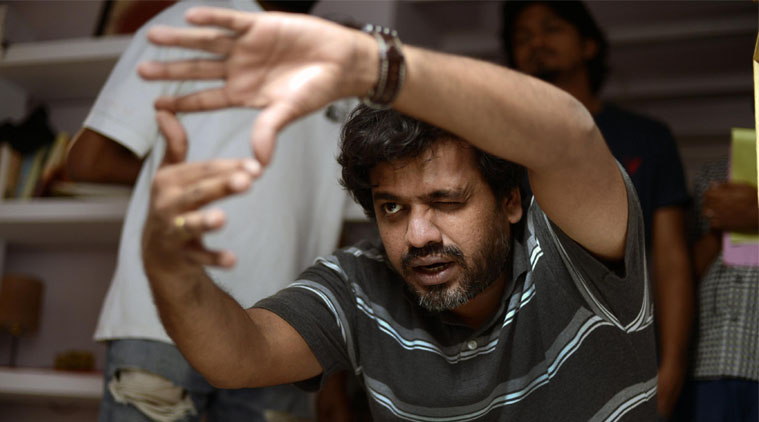
The film's director, Harshavardhan Kulkarni, shares with us the journey of this story about a middle-class Indian family, and what he hopes to achieve with it
Rachana Dubey (BOMBAY TIMES; February 7, 2022)
At what stage did you join the team of Badhaai Do?
I became a part of the film much before it was called Badhaai Do. Akshat Ghildiyal and Suman Adhikary had already written the story and they were working on it with the team from Junglee Pictures. My journey started with reading what we already had on the table, four years ago. Gradually, we found our way through the complex drama and what it intended to say. I have had a long journey with this film. I usually get bored with a story if it does not have layers and complexities, I can’t stay with it for too long. It clearly wasn’t the case here. Once we wrote the script, went into multiple drafts and arrived at the final one, Junglee Pictures felt that it could become a part of the Badhaai umbrella; a spiritual sequel to Badhaai Ho, tackling a complicated situation in a family set-up.
What did you intend to achieve with this film when you dived into it?
It’s not like some of the topics that we’re talking about in this film have never been spoken about. But the very thought of a marriage of compromise like the one between the lead pair of the film felt very tragic to me. I mean, a compromise of a marriage was their best bet – their only viable solution that could give them some sort of freedom to lead their lives as they desired. That compromise somehow gave them some control over their lives. Irrespective of the size of the families, they both belonged to traditional set-ups. From where I saw it, this was not a static film about a problem and a solution alone. It was to bring to light that sexual orientation is a part of who people are and not the definitive thing about them. Once we started putting everything into place, the narrative became fuller, and it organically became a broader story that didn’t have any one microscopic issue. Normalising the larger discourse was my intention.
Attempting a film revolving around such a sensitive subject requires understanding the psyche of the people. Did you get a chance to meet people who have led lives similar to Shardul and Sumi’s in Badhaai Do?
The basic endeavour was to understand their world as closely as possible. We read the literature to understand how these marriages of convenience function. We did try to find real couples but with no luck. Thankfully, we had a lot of support from members of the queer community; in fact, there was a script consultant from the community who was helping us understand things and put them into perspective. We wrote the char- acters from the beginning of their lives and that helped us crack their journeys well. We also got a lot of feedback from the consultant. We even shared the screenplay with select members of the queer community and even among them, they had varied opinions. They would argue among themselves. So, there is no Bible to make a perfectly-researched film. The basic sur of the narrative and characters was vetted by the right people.
Badhaai Ho, the predecessor of Badhaai Do, also dealt with a complex issue arising in a middle-class family’s life. As a director, what between the films?
Badhaai Ho and Badhaai Do are similar only on the account you mention. Both the films deal with some very complicated issues, faced by a middleclass, traditional Indian family. The idea is to blend in a bit of humour with a serious topic. The families are bigger in Badhaai Do, their interpersonal relations, their problems and the way they sort it out is magnified in Badhaai Do. They are grappling with situations that can be embarrassing, the stakes have doubled, the seriousness of the issue is twice as much. It is in a similar zone but there is nothing comparable beyond a point. Badhaai Do is about an intrusive and controlling middle-class family, soaked in traditional values. They assume control of the lives of their young ones out of the love they have for them, which can become stifling. We haven’t devised a formula to tell a story. We have just explored every idiosyncrasy of all the characters that are at play here. Even the humour here sometimes will leave you confused if you should the situation.
Layering is an important aspect of films —there is a focal point and while trying to get there, the story goes through a string of different topics, related to the main mudda writers and you have a laundry list of topics you intended to touch upon in the film?
Our endeavour was not to just think of a novel idea, which rests on acceptance and tolerance. The film had to go beyond that, where people are made to understand and realise that normalising things is the larger aim. The conversation needs to go a few steps further than just acceptance. Yes, it is a complex subject and it has many interlinked things but I don’t like broad-stroking things. In this film, it organically finds its way in. A story and characters like the ones we have, automatically take you into the deep end of the issue at hand. The idea is for people to take home what this film understand what goes behind what they see.
Badhaai Do is the first big film to open in theatres as the third wave subsides. Was waiting in the wings challenging for you?
We’ve actually waited a lot and yes, it can get frustrating. Our film was in prep mode when the first Coronavirus wave hit and shut down everything for a while. As things opened and we prepped and completed shooting, the second wave hit us. We continued to edit the film and as things opened, we finished all post-production work and just as we got ready for release, the third wave hit. And finally, we are getting on the other side. It is a little trying but everyone has gone through so much with this film. If you see it in a good way, we’re in a strong position where the team has such a strong producer who did not let this film release on OTT. It would have diluted the impact of consuming a film like this in a collective. Although I understand why people have released films on OTT platforms, I do feel that films lose their sheen when watched in a staggered manner. Shows, on the other hand, are like novels that need to be read over a period of time. The impact and the magic of watching a film in cinemas is so unique and we’re blessed that our film will be enjoyed by people together.
The actors in the film, including Rajkummar Rao and Bhumi Pednekar, have praised the manner in which you have handled a seasoned cast. What has been your experience with that?
I think they are sweet and generous people who are giving me more credit than I maybe deserve. I am a confident director but I do question things, especially when I am trying something new. I tread lightly in uncertain spaces and I don’t hide that from my cast. There’s no ego. I openly and frankly tell my actors when I am doing something new. They see honesty and drop all inhibitions and become equal participants in the process. I needed to be sure that the sur of the humour is not wrong here. Every member of the cast pushed himself or herself so hard to help me out and that, in turn, helped the film in a big way. I depend on a lot of people around me and I love seeking inputs from everyone because it’s a collective and collaborative process. I was blessed with the most brilliant actors in the business who put themselves out there to make it all work in the film. We write things that create a boundary wall of sorts. The actors use that and elevate the characters. They go a step further to make it all work. Being on a power trip is not the way to work in a team. I wanted the actors to lend an individual voice to the characters, and they just took it from the page to the screen.
Today, do you feel nervous that four years of hard work is now ready to be served to people?
I am; when I hold my film’s DCP (Digital Cinema Package), I know that the device has four years of my team and my labour locked inside. More than being nervous, we’re all happy and excited for this film to go out there and talk to people. We are creators and we know that anything can happen, but the joy of creating and getting it out for people to see is the most satisfying feeling of all.
Junglee Pictures’ Badhaai Do is directed by Harshavardhan Kulkarni, and is a sequel to the multiple National Award-winning film Badhaai Ho. The film, starring Rajkummar Rao and Bhumi Pednekar, releases on February 11 in theatres.
Just because we may be unaware about certain aspects, it doesn’t give us the license to be wrong-Harshavardhan Kulkarni
8:16 AM

Badhaai Do director says Raj-Bhumi’s film on lavender marriage doesn’t stop at accepting queer love, instead celebrates it
Uma Ramasubramanian (MID-DAY; January 29, 2022)
It’s heartening to see how far Bollywood has come in the past few years. In 2019, Ek Ladki Ko Dekha Toh Aisa Laga — which featured Sonam K Ahuja and Rajkummar Rao — gently explored the subject of same-sex love. Three years and a few brave films on the subject have paved the way for a more sure-footed offering. Rao’s next, Badhaai Do, pushes the envelope to discuss lavender marriage.
For director Harshavardhan Kulkarni, his social comedy starring Rao and Bhumi Pednekar is an attempt to take the dialogue around queer love further, nudging people to not only accept it but celebrate it. “When we started writing the film, there weren’t many [same-sex romantic dramas] that had released. Even today, it’s not enough. Finally, [these films] are reaching towards acceptance or tolerance [of queer love]. But we are way beyond that stage right now. I think today’s youth have accepted and moved on. Today, it’s about becoming their allies. That’s the major difference of our film,” asserts the director.
The movie sees the lead characters, who have yet to come out of the closet, settle into a marriage of convenience. Kulkarni says that handling such a sensitive subject involved several rounds of rewriting and being open to advice from those who knew better. “We had a script consultant on board. We were clear that just because we may be unaware [about certain aspects], it doesn’t give us the license to be wrong. Our endeavour was to be authentic. If it was a matter of doing more research, taking some more pain and more help, [so be it]. We even had sessions where we read out our script to people, and altered it [on the basis of their feedback].”
Where Pednekar portrays a physical education instructor in Badhaai Do, Rao plays an alpha male cop. Delving into the male lead’s backstory, the director says, “Raj worked hard to transform his body. The character wanted to be Mr India before he became a cop. Being an alpha male, it becomes all the more difficult for him to work in a feudal set-up and survive in this society.”

Badhaai Do has a very big heart-Harshavardhan Kulkarni
8:21 AM

Director Harshavardhan Kulkarni prepares to take Junglee Pictures’ Badhaai Ho franchise on floors in Jan 2021; promises bigger family & more laughs in Part 2
Himesh Mankad (MUMBAI MIRROR; October 21, 2020)

“Their characters are unique in that they incorporate comedy, certain goofiness and display some quirks. I could see only Raj and Bhumi playing them. And I’m confident that the explosive chemistry between them will combust on screen,” asserts Harshavardhan.
The filmmaker, however, admits that turning a film as loved as Badhaai Ho into a franchise comes with its set of challenges that are a little bigger than directing an independent film. “Firstly, you have to write something that will be supremely exciting, not just for us, but also for the audience. In this respect, I was lucky because the writers, Akshat Ghildial and Suman Adhikary were already developing the script with Junglee Pictures, when I came on board and with the groundwork done, it took a little pressure off me,” he admits.
The 2018 comedy-drama had revolved around a 40-plus couple, with two sons, one in high school, the other a 25-year-old professional in a steady relationship. Their lives are progressing smoothly when, one day, Jeetendra Kaushik’s mother, who lives with them, taunts his wife Priyamvada. While he tries to soothe her, they get intimate and 19 weeks later, discover that another baby is on the way, much to the horror of their sons and the smirking amusement of family, friends and neighbours. Even though it touched on the taboo subject of parental pregnancy, the film did it with sensitivity and gentle humour and the response was overwhelming. “Every story has to have a heart and Badhaai Do has a very big heart,” Harshavardhan points out.
Prod him for details and he keeps it short, saying Raj is playing a tough cop while Bhumi is a PT teacher who aspires to play handball for the country. “We’re also tapping a big social issue with this film. It’s too early to reveal details. All I can say is that Badhaai Do is as much a family entertainer as Badhaai Ho, only the world we’re creating is becoming more diverse. It moves from a small town to a bigger one and then, on to something else. There’s a lot of colour and drama,” he promises.
The film goes on floors in January and Harshavardhan is in the process of locking the locations. “It’s set up in the North and winter is the best time to shoot there. It will be a mix of small town and city,” he shares. Isn’t he worried about shooting in real locations in the midst of a pandemic? He justifies the decision, saying they will be taking all precautions, and following all government-notified SOPs. “We are all concerned and will take good care. Even during the recce, the team was tested before we left on our travels and we stayed together in a bubble. Even for reading sessions, we are doing everything possible to minimise the risk of catching the virus,” he says fervently.
Badhaai Ho featured Ayushmann Khurrana and Sanya Malhotra as Kaushik’s elder son Nakul and his girlfriend Renee, Gajraj Rao and Neena Gupta as the pregnant couple, Surekha Sikri and Shardul Rana as the motherin-law and younger son, and Sheeba Chaddha as Renee’s mother. “There are many more family members this time around because, as they say, the more, the merrier. We’ll have a mix of known actors and fresh faces who’ll become big names after this film. Be assured, it’s going to be a kadak ensemble,” he states.
Amrita Pandey of Junglee Pictures is equally excited about the franchise and looking forward to the shoot early next year. “The director and his team, along with the writers, have creatively reimagined some of the elements keeping in mind the current scenario,” she says, reiterating that government guidelines and safety and hygiene protocols will be strictly followed. “We’ve deployed a specialised Covid sanitisation team to ensure that sets, equipment, vehicles and the living areas of the cast and crew are sanitised and fumigated regularly. Plus, there will be an isolation space on standby for emergencies. We understand that people who are key to filmmaking are coming together to make Badhaai Do happen, so it is essential for us, as producers, to make sure everyone feels safe on our sets.”
Subscribe to:
Posts (Atom)