Showing posts with label Harshad Nalawade. Show all posts
Showing posts with label Harshad Nalawade. Show all posts
Manjummel Boys to Merry Christmas, filmmakers are going beyond borders
3:21 PM

The pan-Indian movie has gone beyond dubbing or casting the odd crossover star. A new breed of directors is making cinema that reflects India’s linguistic diversity
Shruti Sonal (THE TIMES OF INDIA; March 24, 2024)
In 1991, when Kamal Hassan-starrer Tamil psychological romantic drama ‘Gunaa’ hit the box office, it had an average run. However, over the next few years, the film achieved a ‘cult status’, with its song ‘Kanmani Anbodu’ — composed by the legendary Ilaiyaraaja — becoming a rage. The film’s most lasting contribution, surprisingly, was something else. Parts of the film were shot in the hill station Kodaikanal, including a cave known back then as the Devil’s Kitchen. The notoriously dangerous cave became so popular as a tourist spot as a result that it began to be known as ‘Guna Caves’.
Over three decades later, Kamal Hassan, ‘Kanmani Anbodu’ and Guna Caves have gripped the imagination of cinephiles again, this time through a Malayalam film. ‘Manjummel Boys’ is a dramatic re-telling of the real story of a bunch of friends whose trip to the caves in 2006 turned into a disaster after one of them got trapped in it. The film — stripped of any ‘star’, songs, or even a female lead — has sprung a surprise and emerged as the first Malayalam film to enter the Rs 200 crore club.
A fourth of that has come from Tamil Nadu. Ruban Mathiavan, managing director of Chennai-based G K Cinemas, says even after five weeks, some shows are running housefull. “It has already earned equal to what films with Tamil superstars earn. Kamal Hassan and the Ilaiyaraaja song have been a huge factor in it,” he says.
Not just in this particular film, but in multiple movies and web shows today, linguistic and state boundaries are blurring. From dialogues to pop culture references, filmmakers cater to an audience that’s increasingly multi-lingual, mobile, and more comfortable with subtitles than ever before.
REGIONAL DELIGHTS
Big star-led blockbusters such as ‘KGF’, ‘RRR’ and ‘Baahubali’ led the way, but have now opened the floodgates for more experimental forms of content, says Harshit Bansal, founder of Humans of Cinema, an online community of cinephiles that has nearly four lakh followers on Instagram. “Audiences are now more comfortable with the cinematic languages of different regions. From action sequences, songs and background music, to how women are portrayed... Everything differs. A Marathi film looks very different from a Tamil film. Audiences are realizing that they don’t need to turn to Hollywood or Korean cinema in order to get something different,” Bansal says.
What this means is that ‘pan-India’ content today has dived deeper, moving away from lazy remakes, television re-runs with oft-hilarious and unsynced dubbing, or merely putting together stars from different regions in order to broaden the appeal.
For instance, two different versions of Sriram Raghavan’s ‘Merry Christmas’ were simultaneously shot in Hindi and Tamil. In an earlier media interview, Raghavan said he didn’t want any of the versions to ‘sound dubbed’. While the story of the slow-burn romantic thriller was almost identical, the references were carefully tweaked: the Hindi version had references to Rajesh Khanna, the Tamil one had Kamal Hassan. Two different teams of writers were hired for the languages, and original songs were composed for each! Bollywood’s Katrina Kaif and Tamil actor Vijay Sethupathi were leads in both versions, but the secondary cast differed.
However, some things remained the same. Both the versions were dedicated to director Shakti Samanta, and Sethupathi’s credits referred to him via his popular Tamil title ‘Makkal Selvan’ (people’s treasure).
In last year’s biggest hit ‘Jawan’ too, references to an old song being played at a pivotal point in the film differed in each version. The Hindi one had ‘Bekaraar Karke Yun Na Jaiye’ (Bees Saal Baad, 1962), the Tamil one had ‘Paattu Padava’ (Thennilavu, 1961), and the Telugu one had ‘Ee Mounam’ (Doctor Chakravarthi, 1964).
In ‘Manjummel Boys’, director Chidambaram didn’t shy away from letting the audiences know his inspirations. Illustrations from ‘Kanmani Anbodu’ play in the background as the title credits come on screen. The boys buy a CD of the film and play the song on the trip. They refer to the caves as the ‘place where the Kamal Hassan song was shot’. And, perhaps most fittingly, the love song plays in the climax itself, with the lyrics now spotlighting the power of friendship instead.
“The idea to put the song in the climax was in my head even before I started writing the film. I asked my team to get the rights to it before the production started. I told them if we can’t get them, then I won’t make the film. Everything else was written around it,” the director says.
Interestingly, the second half of the film has more Tamil dialogue than Malayalam, which Chidambaram says is ‘organic’ because of the setting. “Lingual boundaries are blurring. Even if one has to make a movie in Bengaluru, the characters can’t just speak Kannada. There will be a mixture of Kannada, Hindi, English, Tamil, Telugu. Similarly, Malayalam content also has to change. That’s how our country is today,” he adds.
ACCENT KHICHDI
In the world of OTTs too, different settings are being explored in order to offer something fresh to the audiences. From characters speaking a mish-mash of different languages to stories being set in far-away locations, creators are opting for it all. Netflix India’s dark comedy ‘Killer Soup’, for instance, is set in a fictional hill station in South India, and has dialogues in Hindi, Tamil, and Dakhni. Starring Manoj Bajpayee and Konkana Sen Sharma as the leads, it is based on a 2007 murder case in Telangana, and has emerged as a sleeper hit.
Harshad Nalawade, one of the writers of the show, says the fictional setting allowed them to also create more eccentric characters that spoke in peculiar accents and mannerisms. “We didn’t want to make yet another show that is set in a small town in north India. I think a section of the audience is tired of content coming from the north, and there’s no fresh world that they are seeing. So this was the opportunity to actually explore that,” he says.
Raj and DK’s hugely popular shows ‘The Family Man’ (season two) and ‘Farzi’, which featured a few Tamil dialogues alongside Hindi, made it easier for the audience to consume more of it in subsequent shows, the writer adds.
One thing is clear. For more and more viewers in India today, language is no bar. As South Korean director Bong Joon-ho said in his 2020 Oscars acceptance speech: “Once you overcome the one-inch tall barrier of subtitles, you will be introduced to so many more amazing films.”
--------------------------------------------------
MAKING UP A REEL LANGUAGE FOR REAL
Others are creating a whole new language themselves. At the global boxoffice, the sequel to Denis Villeneuve’s scidrama ‘Dune’ has earned accolades for offering viewers a glimpse into the fictitious Chakobsa language, created by a group of linguistic experts who borrowed from real-world languages.
In India, grim survival drama ‘Kaala Paani’ has managed to do the same. Set in the Andaman and Nicobar islands, it traces the journey of tourists and officials who try to tackle the outbreak of a mysterious disease.
The fact that it featured tourists from multiple parts of the ‘mainland’ made the use of a multilingual setup necessary, says creator Sameer Saxena. However, the main challenge was to create a fictional language spoken by the ‘Oraka’ tribe featured in the show.
“We got language scholars from across the world, and made a guidebook from scratch, with all the alphabets and pronunciations. We didn’t want it to sound similar to any of the existing tribal languages,” Saxena points out.
The end product was rather finessed, as opposed to the often-derogatory representations of tribal languages that have existed previously. (Think : the jhinga la la hoo hoo songs in the past.)
I know the climate is not conducive for certain kinds of films, but I’ll try-Abhishek Chaubey
8:18 AM
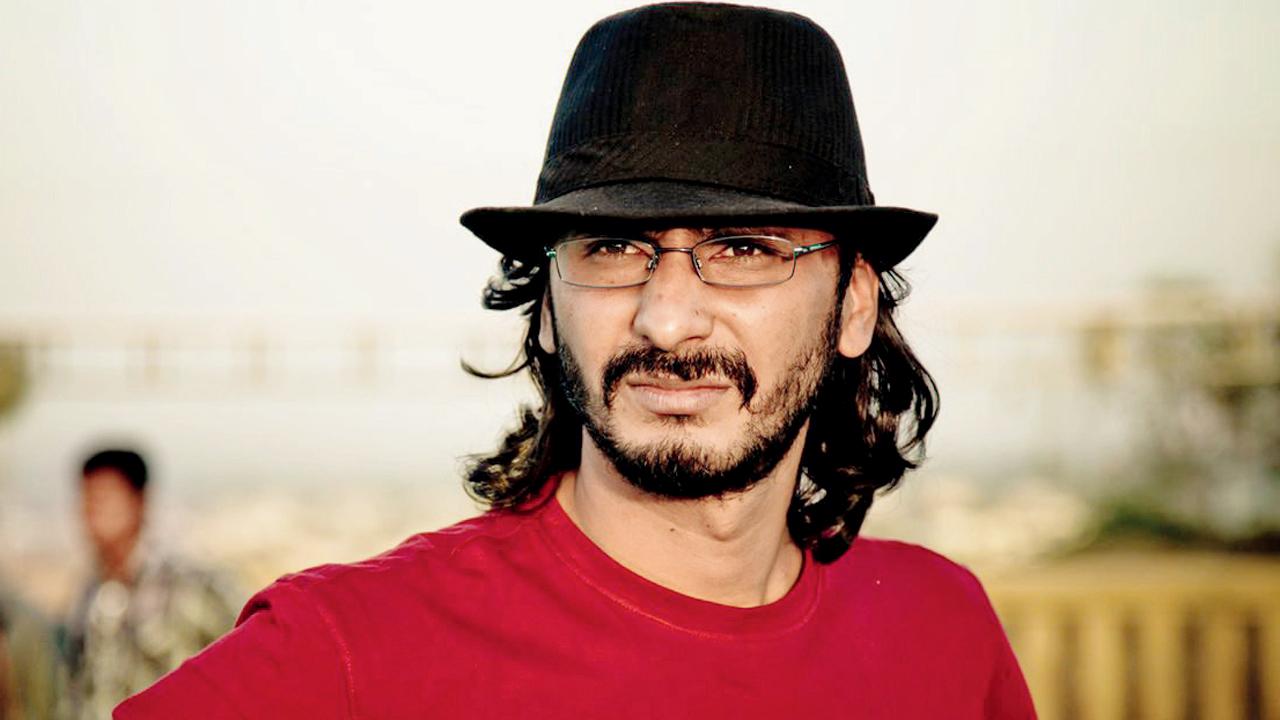
Even as he is enjoying his first brush with web series, Killer Soup director Chaubey eager to return to big screen with his brand of cinema
Priyanka Sharma (MID-DAY; January 13, 2024)
In an Abhishek Chaubey offering, you can be assured of two things—devious characters, and a moody, almost earthy setting. The director found both elements when writers Unaiza Merchant, Harshad Nalawade and Anant Tripathi pitched Killer Soup to him, only months after Sonchiriya’s (2019) release. It was the perfect start, thought the director who was hungry to explore long-form storytelling.
“These three bright writers had also penned a bit of the first episode. The show’s mood is what I immediately fell in love with. I felt I had the skill to blend the different tones into one narrative,” Chaubey recalls.
Expanding the crime comedy over eight hours initially felt daunting. But the story of the Manoj Bajpayee and Konkona Sen Sharma-starrer lured him on. Chaubey relished the shifting power dynamics between the lead characters as he told the story of a shrewd wife who plans to kill her husband and put her lookalike lover as the stand-in.
“It took us two years to write. Shows like this should be enjoyed as a piece of music. I don’t want to explain to the audience, or preach. [I want to] show how power operates within the confines of a family. We mostly talk about power in terms of political or social settings, but not in terms of a family. In this show, you see how lust for power defeats love, and when the power balance shifts, it’s always ugly. Here, women are coming into power, and it’s going to be bad because [these characters] aren’t exactly the nicest people. After all, nice people don’t get power.”
The Netflix black comedy was further elevated by the dependable Bajpayee and Sen Sharma. The director agrees, stating, “Actors of a lesser talent would not have been able to bring about the show’s meaning. You need actors like Manoj and Konkona, who bring nuance.”
Chaubey's heart, however, lies with the big screen. It has been five years since his last theatrical outing, Sonchiriya, and eight years since the hard-hitting Udta Punjab (2016). Even as the director is aware that his brand of gritty cinema isn’t encouraged in the current climate, he is eager to bring forth stories to the marquee.
“Sudip [Sharma, Kohrra creator] and I have spoken at length about this. He has told me that he is not doing theatricals for now. I enjoy doing a two-hour theatrical film. I feel a certain point of view needs to come across on the big screen. I know the climate is not conducive for certain kinds of films, but I’ll try. If one of us is not going to do it, it’s not going to happen,” he asserts.
In the year gone by, we saw spectacle films ruling the box office. It was also the year when the debate around cinema’s responsibility in influencing society took centre-stage, in the aftermath of Animal’s release.
The director shares, “Cinema is not the only thing that influences society, everything else does too. It’s not merely a reflection of what’s going on in society, but also an expression of it. For us to say uncomfortable truths, we need to also listen to people whose opinions we don’t like and find regressive. That’s the price you pay. You can say you don’t like it, but you can’t ask for it to stop.”
Subscribe to:
Posts (Atom)