Showing posts with label Gulshan Grover Bad Man. Show all posts
Showing posts with label Gulshan Grover Bad Man. Show all posts
Akshay Kumar, Rohit Shetty, Karan Johar could have got anything for my part-Gulshan Grover
8:16 AM

Dhaval Roy (DNA; August 3, 2019)
Gulshan Grover recently spoke to us about losing out on Bollywood projects in the pursuit of an international film career. Back then, desi filmmakers were under the impression that he would either ask for too much money or find faults with their movie plots.
However, it’s a different story today. The actor asserts what he is doing today is interesting. “I’m extremely relevant today. I’m the main antagonist in Rohit Shetty’s Sooryavanshi, which is the biggest movie being made by him. It has Akshay Kumar and Karan Johar is the co-producer. All three of them could have got anybody for this part. But I’m doing the role,” he points out. Then, he is also the lead villain in Mahesh Bhatt’s comeback movie, Sadak 2. “I’m also the main baddie in Sanjay Gupta’s Mumbai Saga, which has a big star cast like John Abraham, Emraan Hashmi, Jackie Shroff, Suniel Shetty and various others,” which he says re-emphasises the pertinence of his presence in the industry.
The actor further told us that his international projects and recent Bollywood projects like Agent Vinod (2012), Bullet Raja (2013) or Hate Story 4 (2018) have given more meaning to him coming out with a book. “If I hadn’t had releases, the autobiography would have looked so bad — someone who hasn’t had a film in 10 years recounting the glorious days. Bose speakers ke zamaane mein tape recorder ki baat karne ki tarah,” he laughs.
Gulshan took the bold step of building a career abroad while staying in India.
But in his opinion, the obscurity that a foreign industry accords scares many actors from going there. “The anonymity is a strange and, at the same time, humbling experience,” he concludes.
Akshay Kumar told me to copyright title of Bad Man-Gulshan Grover
7:48 AM

As he inches closer to releasing his biography, Bad Man Gulshan Grover on becoming a somebody in Bollywood
Shaheen Parkar (MID-DAY; July 26, 2019)
Gulshan Grover is the latest to join the Bollywood folk who have penned their life stories. His upcoming biography, Bad Man, traces his journey from being a nobody to somebody, and from Bollywood to Hollywood. The veteran actor was initially not inclined to telling it all in a book "as it is a big responsibility and you should not hurt anyone, especially those who are not alive to defend themselves."
His reluctance gave way "after meeting the publishers. It was a wonderful experience to meet the Penguin team. I was happy to revisit my life." Grover has been involved with "every dot and comma in the book". He says, "I had to read, correct, make changes and send it again, all in time to meet deadlines." He has dedicated the biography to filmmaker-son Sanjay, who he refers to as "my life." Grover has been a single parent and he says the book will chronicle his personal and professional life. "But I have not made any irresponsible statements."
The title for the book was an easy decision. "Ever since Subhash Ghai's Ram Lakhan [1989], in which I mouthed [the words] Bad Man, it has stuck with me." While shooting for Rohit Shetty's Sooryavanshi, Grover spoke about the book's title to co-star Akshay Kumar. "He told me I should copyright it, like he has done for Khiladi." The veteran actor relates an incident in Los Angeles while shooting for a Hollywood project. One of his American co-stars told him, "Oh, you are Bollywood's Bad Man. Wherever I go, I am referred to by the name."
Grover, who has been in the industry for almost four decades, hopes the book proves to be an inspiration for people to chase their dreams. "I am the first commercial actor who crossed into Hollywood long before Irrfan, Anupam Kher and Priyanka Chopra did."
I'm done talking about Ram Lakhan-Gulshan Grover
8:12 AM
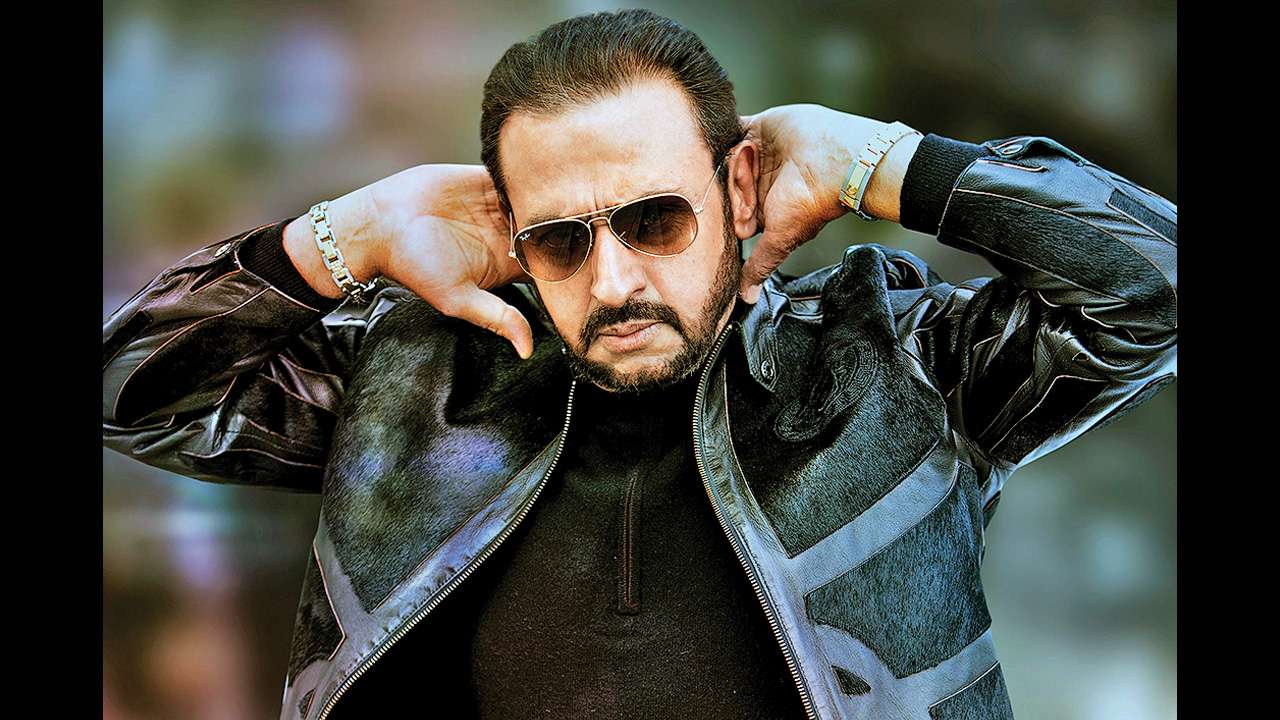
Dhaval Roy (DNA; July 24, 2019)
The first thing Gulshan Grover tells about his authorised biography, Bad Man, is that it has an arc. It’s about an average person who gave up academics in Delhi and came to Bollywood to try his luck but graduated to working in international films. The actor says, “A regular Bollywood actor’s biography is about making it in the industry and becoming bigger and bigger and then that’s it. But mine is about a guy who went to Hollywood at a time when there was no internet and no way for them to know who and what kind of an actor I was.” He adds, “I’m proud that I created a mud-path between Bollywood and Hollywood, which is being followed by wonderful colleagues like Priyanka Chopra, Anil Kapoor, Irrfan and various others.” Excerpts from an interview with the original bad man of Bollywood!
What has the early feedback to Bad Man been like?
Mostly those who have read it say that the refreshing part is reading about the draining experience of entering the international industry, succeeding in the transition and the sense of national pride. It’s more interesting to read than a Bollywood actor saying I met Akshay Kumar on this set or Shah Rukh Khan on that one. Mahesh Bhatt saab said that this will be especially inspiring for the youngsters.
While working on the book, were there any moments that were poignant to relive?
Yes! Being in Los Angeles and introducing myself to filmmakers from morning to evening — I’m Gulshan Grover and I’m a famous actor in India. As soon as I would land in Mumbai, everyone would recognise me, producers would be waiting at the airport requesting me to go to the set without even going home. This contrast was the most difficult part. I used to often wonder why I was struggling there when here, I had projects, money, popularity, and I was enjoying my work.
So why did you choose the life of struggle?
Because I didn’t see myself sitting amidst 30-40 silver jubilee awards or photographs from the past, with a paunch and money, talking about the glorious days. I don’t have a single old picture or a trophy at home. All that is over. I’m done talking about Ram Lakhan. Past is just something to get nostalgic about. It’s an illusion. I wanted to make it an inspiring story for youngsters to dream and work hard. It’s not a story of yesterday that lost to today.
You say you’re the pioneer when it comes to a Bollywood actor going international. But there have many who crossed over...
I’m not the first Indian actor to work in films outside but my predecessors settled there. I was there to make a transition and not look for work. That was a lot more difficult than just getting an acting job as filmmakers there thought you couldn’t be relied on because of the distance and time difference, etc. Also, I was a product of commercial cinema that was looked down upon. Even today, it will not be conceded that we should be approached first for world cinema. Actors of parallel cinema will be called first because the perception is ki woh international level ki acting kar sakte hain. People, neither there nor here, believed I could do it. All they knew was, he’s from a film industry where stars break into a dance every five minutes.
But today, I’m the first Indian who did a Polish, Iranian and Malaysian film each. I also have French, Australian, German and Italian movies. The onslaught of what others are doing has been a lot in the media but my work has not been in focus.
Why did you think now was the time to talk about all this?
I somehow didn’t feel the need to earlier. In fact, Hollywood films destroyed my career here. Producers thought now I would find the bathrooms dirty, I will ask for more money and more importantly, ask about the motivation of the role (laughs). So, I would hide the photographs and tell filmmakers that I was shooting in Bangalore instead of revealing that I was in LA.
Biographies or autobiographies are known for unearthing the personal lives of actors. Has that aspect been covered, too?
My life is very work-driven but I have talked about everything. My upbringing has taught me to respect others’ privacy. It’s disrespectful of men who write about love affairs without realising the repercussions it could have. These things should not be revealed unless you have that equation with the lady in question. I’ve been very cautious about that.
When bad turned out to be good for Gulshan Grover
7:39 AM

Roshmilla Bhattacharya (MUMBAI MIRROR; May 20, 2014)
After films like Sadma and Sohni Mahiwal, Gulshan Grover's fortunes were on the rise when he was surprised by a call from Subhash Ghai. "What are you doing tomorrow?" the director asked. Gulshan replied, "Shooting," but was asked to swing by the filmmaker's residence for breakfast en route to the studio. Gulshan turned up hoping Ghai had a meaty role waiting for him. But not once did the latter broach the subject. As he was waiting for the elevator, Gulshan finally asked Ghai, "Did you call me only to have breakfast?" Laughing out loud, Ghai retorted, "No, actually I have a role in mind for you. The USP of this character is that every time he enters the frame he announces himself as 'Bad Man' and goes on to say that he dislikes good people."
Gulshan was fascinated and like his batchmate from acting school, Anil Kapoor, he was brimming with curiosity and enthusiasm. But Ghai didn't entertain too many questions from the members of his cast of Ram Lakhan. "I remember Anil telling Ghai after watching Karma that he finally understood what the film was about, now could they make it again?" Gulshan guffaws at the memory.
Gulshan discreetly prodded his director about his character and then quietly set about bringing that vision to life. He persuaded Madhav Tailor to stitch some costumes for him for free and then coaxed wig-maker Mallick to design some hairpieces and beards for him, telling him that he'd be paid only if Ghai approved.
A makeup man was also roped in and well-known photographer Nath Gupta agreed to do a photo shoot at Pappu Varma's stable near Film City where Gulshan turned up in two get-ups.
A few days later when Ghai called him to his office to discuss the look, Gulshan apprehensively showed him the photographs wondering if he'd be dropped from the film for being overenthusiastic. To his surprise, Ghai was delighted and told him they were going with his 'look'.
"He even used our location and shot a scene at Pappu Varma's tabela," grins Gulshan. "He would keep pulling out the photographs on the set and show them to Anil, Jackie (Shroff), Madhuri (Dixit) and Dimple (Kapadia) and lauded my hard work. In fact, after that whenever we did a film together, he'd explain his vision to me and then ask me for visuals and I'd go and get a photoshoot organised," says the actor who remembers the shoot as a fantastic experience with Ghai often enacting the scenes for him.
And then it was time for the premiere. There was a series of premieres lined up for the evening and Ghai had asked his stars to park their cars in his compound, have a drink and then leave together in a mini bus he had booked so that they'd arrive at the theatres together. Gulshan who wasn't yet a star was relegated to the back seat but as soon as they arrived at the first theatre, he found the spotlight on him as the audience chanted, "Bad Man, Bad Man."
"This happened at every stop and on the return journey I founded myself seated with the A-listers," he reminisces, adding that after a few days, distributors would insist that he be sent to the theatres to bring in the crowds. "And suddenly the dream I was working towards started to get a real face. I became a villain with an identity of my own even though the film featured several other bad men. And it turned out to be an association of a lifetime. Even today, every time someone says 'Bad Man' you know he's not referring to Pran saab or Amrish Puri but Gushan Grover," he grins.
Subscribe to:
Posts (Atom)