Showing posts with label Gulabo Sitabo. Show all posts

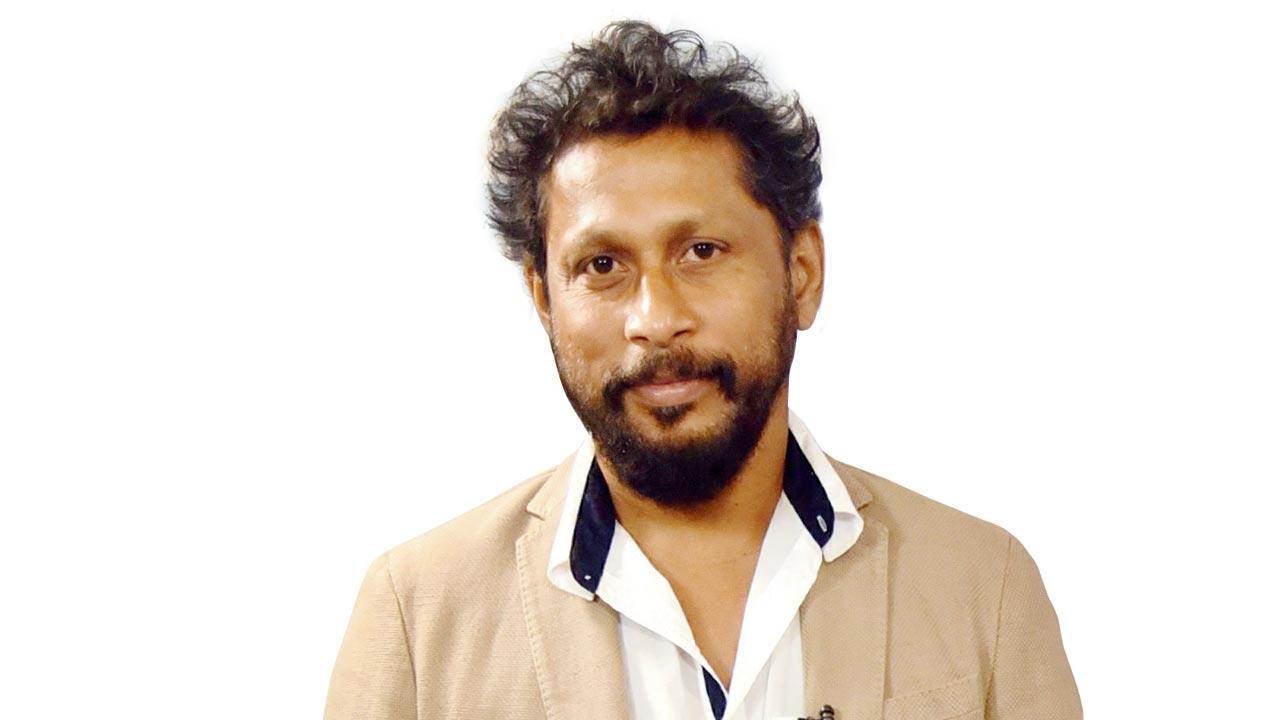
You can’t escape criticism, it’s part and parcel of the work we do-Shoojit Sircar


Rachana Dubey (BOMBAY TIMES; November 28, 2021)

Filmmaker Shoojit Sircar has been on the receiving end of criticism and praise in equal measures for his recent film Sardar Udham. The filmmaker, who had a masterclass at IFFI (International Film Festival of India) recently, spoke to us about his life post the film, whose story he had lived with for over 21 years. Excerpts:

By your admission, you’ve lived with the story of Sardar Udham for over two decades. You spent about five years just on the scripting. What has life been like post the movie?
You sometimes feel you have nothing left to do anymore. Kabhi kabhi hota hai aisa. The film was mounted on a big canvas, though we tried to not make it too big. Now, after the movie is over, suddenly I feel like I don’t know what to do. There is an emptiness that creeps in. Ronnie (Lahiri, the co-producer) and I have ideas and we keep talking about them, and discussing them, but it’s hard to get rid of that khaalipan, that vacuum created after Sardar Udham went out of our system. Both Ronnie and I had never thought it would go through the way it did. It’s like there was a little storm which has now blown over, and now we don’t know what to do.

How do you deal with that emptiness?
You have to keep nurturing yourself. This is a very crucial period and often, people end up making wrong decisions during this phase. You want to quickly start something and put it out there. But the better way out is to remain calm and do things with proper thought and planning. Creatively, you have to keep yourself engaged and active — you have to keep the fire burning. Sometimes, you can do it through cinema and sometimes, you just do things like gardening, playing football or reading something or watching something.

Is that why you often escape to villages in north Bengal and spend time cooking and gardening?
Yes, that’s right! I regularly go to north Bengal where I was born. I grew up there and I spent my childhood in those places that I visit even now. It’s very peaceful. I’m going to stay in Goa for some time now and do some reading there. I also plan to jam with my researchers and see what we can arrive at. I am not in a hurry to make a new film.

Sardar Udham and Gulabo Sitabo were both appreciated and criticised in equal measures. Have you been able to go over the points of criticism that have been raised on the films?
Look, I have realised that criticism is something that you have to take. You can’t escape it and it’s a part and parcel of the work we do. You have to be ready for it and for observations that people make. Also, as a creative person, you cannot possibly cater to everyone and to everything that is asked of you. As Ronnie said during our masterclass session, we did not and we have not compromised on Sardar Udham in any manner. Yes, we may have made mistakes. We will go through the content and whatever mistakes we can identify, we will make a note of it and make up for it in our next films. The idea is to not repeat those mistakes again. I am absolutely not worried about criticism. It can affect you depending on the way you take it. Sometimes, criticism is very healthy and helpful. You have to know which part of criticism is important for you. Sometimes, you have to just let criticism pass and sometimes, you have to hold on to the things people tell you. I believe in taking just those points that are beneficial, learning from those and taking it forward.

During the session, you said that you would probably use all the material you couldn’t include in the film in a series, if you make one. Are you considering that seriously?
Frankly, I don’t know what I will do with the material that I am left with from the film. There is a lot of research that I have. I have heard that Ram Madhvani is making a film on Jallianwala Bagh. I might give it to him. I would love to offer him all my research. It’s a creative and competitive line but I have told everyone that I am ready for any discussion on this subject. I have books that have been marked out, taped and set aside. I can help anyone who needs help on research on this subject.

Using flashbacks or going back and forth in time in a screenplay is commonplace, but the way you did it in Sardar Udham was experimental in many ways, which seems to have increased expectations from you. Does that scare you?
I am very scared of expectations, please don’t expect anything from me. The next movie that I make may not cater to everyone. So far, I have tried to make films that I am happy about. The subjects Ronnie and I are discussing are about films that are completely out of the box. So, don’t expect anything from me. And frankly, expectations scare me a lot!

I have not left any single shot in my edit room for the Jallianwala Bagh scene. Everything is used-Shoojit Sircar

Sit with Hitlist: Seeking the real Shoojit Sircar

In the latest edition of our award-winning interview series, Shoojit Sircar decodes how he created a hatke brand of commercial Bollywood with an indie heart
Mayank Shekhar (MID-DAY; November 13, 2021)

“But you’re not like this [as a person],” an assistant on the sets of Sardar Udham exclaimed to filmmaker Shoojit Sircar — observing him seated, with two buckets full of fake blood, getting constantly replenished on either side of his feet. 

He would dip into it with a mug, splashing that blood to dry earth himself, to get the colour right — all the while operating the camera, filming the Jallianwala Bagh sequence in Sardar Udham (2021).

It’s gory as hell. But Sircar wanted to get April 13, 1919, just right. Martial law in Punjab. Curfew in place. No one allowed to help the injured and dead. One man dealing with dead bodies after dead bodies.

It’s a scene Sircar had been living with, ever since he first visited the actual Jallianwala Bagh site in 1998 — much before he’d even thought of becoming a filmmaker. He’d been going back to that sequestered memorial park, through a narrow passage to the entrance in Amritsar, every year since. It’s a walk down from Golden Temple.

This was his only chance to recreate what he believes was the turning point of India’s freedom movement — the massacre of thousands of people, peacefully protesting the draconian Rowlatt Act, that allowed the British government to incarcerate Indians, without proper trial, under the pretext of ‘national security’: “It gave birth to many unsung revolutionaries, of which we only know about Bhagat Singh, and now Sardar Udham.”

It took Sircar four months to get the colour of blood right. Real blood for shoots is usually imported. They didn’t have the budgets. Jallianwala Bagh is also kinda immortalised from Gandhi (1982), by Richard Attenborough, who had resources to bring down train loads of people from Punjab, to shoot the short scene in Delhi.

Sircar had to shoot in Punjab itself, to get the look of thousands of actors/extras right. He hired locals. Some of them were children trained in Gatka style of martial art. They’d do free-falls and heavy-duty acrobatics, although they’d never faced a camera before.

On day one, actor Vicky Kaushal was his usual enthusiastic self. But as the shoot progressed, with humans being carried like carcasses in wooden carts, and the smell of fake blood and dust around, the cast and crew started getting affected.

Once, when the shooting had packed up for the day, a young girl was still around, that the assistants insisted they should shoot with, anyway. Sircar decided to casually pick the scene, knowing they didn’t need more. Soon as the girl started crying for her mother (in the scene), Kaushal began uncontrollably howling as well. The girl was a little flummoxed. They kept the camera rolling from a distance, most of which made it to the final film.

Every moment in the Jallianwala Bagh scene, step by step, Sircar says, is mentioned in Hunter Commission and the Congress report, besides survivor statements of ladies named Ratan Devi and Attar Kaur. It lasts a lifetime in Sardar Udham: “I have not left any single shot in my edit room. Everything is used.”

Some might dub this as an over-indulgence of sorts. It will remain etched as one of the most haunting sequences in Hindi cinema still. Unsurprisingly we talk about it for a good portion in this conversation. Only as a nod of sorts for the fact that Sircar filmed this one sequence, over 21 days in Punjab! 

Sardar Udham is essentially a London-based period film, for which Sircar extensively referenced series such as Peaky Blinders and The Crown to get the era right.

As for a wider inspiration, while there is no direct connection, Sircar calls Sardar Udham “a tribute to Akira Kurosawa’s relatively lesser known film, The Hunters, set in Siberia, filmed as a Japanese-Russian collaboration.”

Which makes me segue into his film company, Rising Sun. Is that a reference to Japan? “Well, we didn’t think about it. My producer Ronnie [Lahiri] suggested Rising Sun. It sounded positive. I asked him to check if there is any other Rising Sun Films. There wasn’t, so went ahead!”

I ask this because over a decade and half, while the eclectic Sircar undoubtedly has belonged to commercial Bollywood, he remains essentially an independent filmmaker, which is an anomaly of sorts.

Throughout, he has teamed with the same producers, Goa-based Lahiri originally from Shillong, and Bihar-born, Russian educated Sheel Kumar, taking care of the finances. Besides more or less the same crew of writers (Shubhendu Bhattacharya, Juhi Chaturvedi), cinematographer (Avik Mukhopadhyay), editor (Chandrashekhar Prajapati), and the like.

He says, “[By independence], you [mean to] do a film on your own terms. Of course, we compromise sometimes. And I have been compromising [as well]. But film after film, I have reduced that. Crafting your own path is a lesson I have learnt from the city [Bombay] itself, and its film industry. Otherwise, nobody will let you be what you are — forcing on to you what works. And in cinema, there is nothing like, ‘what works’ — it is an expression. You do what you are compelled to, from the inside — what you feel like; you do that.”

Which explains how the money being thrown at him to script a sequel to Vicky Donor (2012) is pretty much the budget of an entire film — he doesn’t reveal the number — but he won’t click that bait, simply because Vicky Donor is behind him, and he’s “not that filmmaker anymore.”

The auction is only natural, given that a Rs 4.5 crore Vicky Donor — a slice-of-life comedy on sperm donation, that even Sircar hadn’t imagined would capture an audience beyond those interested in quirky movies — picked up close to Rs. 80 crore at the box-office! This equals ‘family audience’ in Bollywood speak.

Debutant Ayushmann Khurrana was the star. Which also opened up a minor film industry for Khurrana headlining a series of comedies on similarly taboo subjects — balding, old mother pregnant, gay love, etc.

With Sircar, these benefits can be a challenge: “I am actually very scared of the wrong audience, and unnecessary hope. I am openly telling you — with Gulabo Sitabo (2020), I faced so much of that. I was doing a film with Amitabh Bachchan and Ayushmann Khurrana. So people think it is Vicky Donor and Piku coming together! I faced so much flak after [Gulabo Sitabo came out] — this film is so slow, nothing happens… But that is what I had made. I wasn’t thinking [Vicky Donor and Piku] in my head. Don’t expect it. Yet, how do I convey that? It is so difficult. So sometimes, wrong audiences can really harm your film!”

To be fair, Sircar has dabbled in multiple genres, without getting overwhelmed by the success of his previous work. In fact, if you notice, he consciously shifts from light-hearted to serious subjects/treatments — say, a political thriller Madras Café, after Vicky Donor; a strikingly sombre October, after Piku. It’s something he describes as mere coincidence. Rather than an effort to alter his mind space.

“A movie is not like a mask, that you take off after it’s over, and put on another. It stays inside you forever. I am Sardar Udham. I strongly feel about it. I strongly feel about greed in Gulabo Sitabo. I feel for October, because I have been in ICU for three months with my mother. And I know exactly what happens [being around] a comatose patient. I cannot just throw it away.”

Sircar debuted as a feature filmmaker with Yahaan (2005), set in Kashmir, about a local girl and an Army officer, during the height of insurgency/militancy. One of the aspects that stood out in that film was its coolly lit bluish tint, lending a surreal touch to the screen, although the film was shot on actual locations. 

I am wondering of this level of visual sophistry had much to do with his work in advertising, which is how he first got into films. Sircar says, if anything, his works are often more informed by documentary filmmaking, which is also what he dabbled in for close to five years before.

Yahaan was also the debut feature film of Swedish cinematographer Jakob Ihre. What’s Ihre best known now for? Shooting the stunning HBO series, Chernobyl. Yup! “Jakob was once in Delhi to shoot a documentary for BBC4. A friend of mine was the sound person for the film, who introduced us. Of course I knew of the Polish film school he was from, which is really good. I did a commercial with him, which was also done on my own terms. The ad was for toughened glass. But the film, for around three minutes, unheard of at the time, was all about reflections. With Yahaan, I was wondering if I would get Kashmir right — I had done a documentary there, and knew what Charar-i-Sharief or Habba Kadal Bridge will look like. I needed a different perspective. The first thing Jakob told me when I took him to Kashmir is it looks like Bosnia, which also had problems going on at the time. In winters, Kashmir, like Bosnia, is brown and silver. Jakob got onboard and shot Yahaan.” 

They’ve been friends since. The script of Yahaan “bounced like a ping pong ball” between all the corporate studios in Mumbai, until Sircar first went ahead with it himself, with Jimmy Sheirgill and Minissha Lamba in the lead roles.

Ad films have also allowed Sircar financial independence, and some flex to make only the features he wants. It also turned him into a patron of the arts early on, in the early ’90s, while he worked in an amateur theatre group Act One in Delhi: “I was a mole from my [theatre] group in the advertising industry. I’d make money from ads, and whatever I’d earn, I’d put into theatre. That is what my job with the group was — you make the money, bring it to us, and we will do plays!” 

Act One had performers like Manoj Bajpayee, Gajraj Rao, Piyush Mishra, among others, who later moved to movies and Mumbai. Sircar continued in advertising, mitigating the struggle that involves, in hindsight, romanticised notions of stepping into showbiz city, with few rupees in wallet, friends with culinary benefits, and sleepless nights in railway platforms. Sircar has none of those heartbreaking stories of following a personal passion. 

In fact, strangely enough for a Bengali, the arts, cinema, and literature were totally external to his growing up years. Football was his life’s primary goal; something he actively pursues at 53 still. 

Graduating in commerce from Delhi’s Bhagat Singh College, Sircar was quite comfortably placed as an accountant in one of the city’s top hotels, Le Meridien. Which is a longish walk down from the Capital’s cultural district, that houses National School of Drama, and several theatre performance spaces.

Almost like a turning point of a movie script, a moment of epiphany as it were, Sircar’s friend [his writer now] Shubhendu Bhattacharya asked him once to step out to watch a play, after lunch, during work hours. 

That was Satyadev Dubey’s production Andha Yug, written by Dharamvir Bharti, starring Naseeruddin Shah, Amrish Puri, Rohini Hattangadi. He says something happened to him once he watched that 3 pm show. There were no tickets available for the following 6 pm show, but he bribed the guard to enter again. By 9 pm, when he walked back to his office, he had “turned into a zombie.”

Following week, he watched Satyajit Ray’s Pather Panchali at India International Film Festival in Delhi’s Siri Fort auditorium. A film he had repeatedly slept through, during growing up years. The penny had dropped: “Then I started reading and watching with a different eye.” He joined theatre, then ads, thinking little of the debit and credit accounting of such a call.

Which takes us back a little to the film October (2018), one of his most personal works, since as he said, it came from the experience of nursing his mother in an ICU ward. But its setting — the full expanse with doors that demarcate the contrasting inside and outside world of a five-star hotel is clearly from his time from Le Meridien? 

“When [writer] Juhi bounced off the structure, character and idea about how the film would be, it clicked: ‘Okay, hotel — I know hotel, so I will go into this’. I had no problem in understanding the hotel. My art team said we will create it. I said, no, you cannot create this. It has to be real.”

As is the story — emotive, seeping through the pores, at every level. Even if there’s a touch and feel of Sircar in the lead character, Dan, the fact is, if you rewind to when the film was being planned, the last person you’re likely to imagine in the lead role is the boisterous Varun Dhawan — of ‘tera dhyan kidhar hai, tera hero idhar hai’ fame! There has to be a story behind Dhawan breaching a likely mental/casting block. There is.

Sircar recalls, “Varun had been calling to meet me for quite some time. I live in Kolkata, and would be in Mumbai for two days and leave, so I wasn’t getting time. Once when I had a flight to catch, I saw his text, “Dada, when is your next?” I told him that I was in town, but leaving in a bit. He said his house was close by. I asked him to quickly drop in. He said he’ll take a shower and come, and that he’d just woken up. I told him nobody will see him: ‘Just walk in as you are’. I still have his picture from that day — he was clumsy, holding a bottle that fell. He said, ‘Sorry, Dada, sorry.’ While talking, he zoned out completely. I don’t know what he was talking to me about. [As an actor], he wasn’t on my radar at all. I looked at his torn jeans. He said, please, don’t look there. He just sat there, said, ‘Theek hai, Dada.’ And left. In the flight I kept thinking about him. As I landed, I called up [writer] Juhi and [producer] Ronnie. This is what the clueless Dan is, you know — he doesn’t know what he’s doing, saying, where he is…” 

The unlearning of the Bollywood star started before shoot. For script, Sircar only shared the first half of the film. For prep, Sircar passed on a piece of meditation music to Dhawan and asked him to simply stare at a house-plant every morning with it! 

“On the first day, we shot the film’s last day’s conversation with the girl — it’s an important scene. I thought I’ll catch him raw, the way I had caught him in the office that day. He said, ‘Dada I am not doing anything [in the scene]’. We rolled the cameras in the rehearsal take, and used it in the film.” 

It’s a little like how Sircar got Ayushmann Khurrana into the infamous sperm donation scene in Vicky Donor. Khurrana had to go to a private room to donate sperm. 

Except, there were no instructions on paper about what he’s supposed to do. There were CCTV cameras placed in the room. Khurrana was clueless. He got out of the room and said, “Aise thodi hota hai? (What am I supposed to do; this is not how it happens!”) The cameras captured that actual line. 

In Dhawan’s case of course, the idea was to keep him slightly clueless all through the shoot, instead — something the camera captures convincingly in October. 

As for another unlikely casting, the one that comes to mind is John Abraham. Abraham incidentally won the National Award for Vicky Donor—as the film’s co-producer. No knock on Abraham. But he isn’t quite the first actor one might have in mind for Sircar’s reasonably intellectual political thriller, Madras Café. It was a deeply researched procedural on the plot to assassinate Rajiv Gandhi, called “the PM” in the picture.

Sircar admits, “You can say Madras Café was one film that I just quickly wanted to make. By 2010, the entire Tamil group [LTTE] had been wiped off. The [assassination] case was completely shut. I just thought I must go ahead and make this [before it’s too late]. I didn’t wait too long. The research and script were quite good. In terms of my craft around making the film, I would do it completely differently now, and with an absolutely fresh mind. It could have been much more powerful. That’s one film I would really want to go back, and remake.”

What would he do differently, in particular? “Of course, I will take real names [of characters], as I did with Sardar Udham. I’ll go with a completely new set of cast. There are many places where I have compromised, in terms of dialogue. Then there is the heroism part of the film. My idea of heroism has changed, from then and now. For me, heroism is not about [being a] hero [type]. For me, heroism is doing the right thing — rather than not. That is what it is.”

That’s of course a film yet to be seen, but from what we have of Madras Café, as it exists, it is by no means even vaguely a low point in Sircar’s career — wonderfully farmed from the Jain Commission Report, it survives as an important, albeit slightly over-the-top document, detailing the assassination of PM Rajiv Gandhi. 

If at all, the cursory low point in Sircar’s career might well be a film of his that we haven’t seen. And that’s because it never got released—Shoebite, the director’s first collaboration with Amitabh Bachchan. From my memory of what went wrong with the film was a dispute between two companies, Percept and UTV. The former were first producing the film. 

There was a hitch over Bachchan’s remuneration, reportedly. Percept brought on board Anil Kapoor for the lead part instead. Sircar and Bachchan jumped ship together, bringing in UTV to produce the film instead. Copyright issues followed. I needlessly jog my memory for Sircar, who is understandably not so forthcoming on this. 

“Well, it’s a long story. But I can tell you where we are now, I think. So, finally, the film is with Disney. And Disney is also Fox, and Disney is also UTV. They can actually release the film. They are still figuring it out. What’s happened in the past is over.”

The Fox angle in the story could have to do with the original concept of Shoebite being Hollywood filmmaker M Night Shyamalan’s. Is that true? “So, the script was adapted by Rensil [D’Silva], who had just done Rang De Basanti. Later we found out that this was an idea by Manoj Night Shyamalan. I stepped back. Then Ronnie Screwvala [UTV boss then] was doing a film with Shyamalan and [our project] restarted. Since the basic idea was written by Shyamalan for a Hollywood film, we requested for a regional version. It was messy. But it is quite sad that the film still in the cans. It should release.”

The other messy stuff that’s made it to print in the past, so far as Sircar is concerned, are cases registered by writers against two of his films, Gulabo Sitabo and October, over copyright infringement. Much talked about before release, allegations hurled, press lapping up. 

“It is distressing. When it happened with October (a Marathi filmmaker alleging rip-off), I was completely shaken up. We thought we were creating something absolutely fresh, and new, and everything had come out from my own deepest experiences, and Juhi’s as well. Same with Gulabo Sitabo. This is no way. Tons of stories can stem out of landlords and tenants. But after the film [releases], there is nothing. After the film is gone, there’s nothing. The entire panel of writers’ association has seen the film, and given us a clean chit. What else you can do? I was telling Ronnie the other day: I hope with Sardar Udham, nothing comes up. Ronnie told me I should get used to it. It will come, so it’s okay; be ready for it. It is distressing sometimes. We could not enjoy the release of October, because of this. Normally I go to the theatre and watch the film [with the audience]. We didn’t.”

Thankfully none of the above this has impacted his works consequently. Bachchan, for instance, was happy to sign up with Sircar, despite their first film together having been a non-starter. The released movie is Piku (2015), of course. The brief he gave to his writer (Chaturvedi) for it was long scenes; “sometimes 20 pages long.” 

Sircar wanted to stage Piku as a play first — “experience from theatre really helped” — and then cut at the editing stage. The driving force being to test the acting styles of three really diverse performers—besides Bachchan, Irrfan and Deepika Padukone, whose subtly expressive eyes were really the leads as well. 

Sircar reasons, “Mr. Bachchan, as a person, is all method—he will rehearse, and be so particular — you can’t use left-hand on the rehearsal, and right-hand on the take. You can’t. On the other hand, Irrfan is someone who just lets go. And he can go on. Deepika is natural. You have to tap into her internally, as an artiste. My instruction was that in this film, nothing is happening, nothing is moving. It’s in the drawing room of a Bengali household. If you notice, there are a lot of silences in the film. And I want audiences to hate this Bengali family. Irrfan, though, had just convinced himself that there will be a love angle to the story eventually: ‘You’ve cast me with Deepika, there will be conversations; of course we’ll get romantic’. I had to constantly explain to him that’s not going to happen. People will define [this relationship] in their own way!”

It’s not like the actors didn’t have other apprehensions. Bachchan, for one, did. Until Sircar practically convinced him by actually enacting his part over a narration — after Big B had read the script, with long notes on side margins sent as feedback. While it doesn’t show, the soft-spoken Sircar does have a stubborn streak. It’s that same indie cinema spirit about working on one’s own terms.

When Piku released, Sircar says, it was being deemed as an altogether Bengali movie: “I said no, it’s a Hindi film.” Unsure why he had to be defensive, because Piku is indeed a Bengali film — so specific, that it’s universal enough. 

With the added bonus that most Bengalis I’ve met have so identified with this family — of a cranky daughter, who’s had it with a loud un-selfconscious, child-like dad, obsessed with his bowel movements — that they repeatedly watch Piku, as if it was their home video.

An air force officer’s son, Sircar grew up across defence establishments, given his father’s transferrable job. He spent a lot of time in Delhi. For home, he chose Calcutta still — far from Mumbai’s maddening movie crowd, that he occasionally returns to, for work, and disappears into the “17 football fields” around his Salt Lake, Kolkata address. He says this is also to root his two daughters into a local/Bengali culture — a privilege he didn’t enjoy himself. 

But speaking to him for an hour and some, before a live audience, I sense this could be because Sircar, an ardent devotee of Satyajit Ray, is as genially Bengali as it gets. When it comes to the most special skill the community enjoys, no matter where they are in the world — ‘adda’, that long, warm conversation on things from here and there, that can carry on, even when the cameras are switched off. As was the case with this edition of Sit with Hitlist.

Shoojit Da would tell us a thing or two about good health — the importance of walking. Not brisk walk; just walking. And the right posture to hold a phone, which is not to hold it at all — 20 minutes of cellphone on palm plus wrist equals 17 kg burden on the shoulder. I’ll take that advice from a footballer, who can be quite the Dada on a field, dribbling much younger men like Ranbir Kapoor and Abhishek Bachchan into exhaustion. 

He’s also happy to heckle on the field. Which isn’t my mental image of him, given the gentle demeanour. Equally unsurprised that his assistant was flummoxed looking at him going absolutely berserk with blood and gore, shooting the iconic Jallianwala Bagh sequence in Sardar Udham.

Gulabo Sitabo actor Farrukh Jaffar passes away


HINDUSTAN TIMES (October 17, 2021)

Veteran actor Farrukh Jaffar, known for her performance in films Sultan (2016) and Gulabo Sitabo (2020), breathed her last on Friday at a hospital in Mumbai. She was 89.

Her elder daughter Mehru Jaffar said her mother was unwell and was admitted to the hospital earlier this month. “She was admitted to the hospital on October 4 due to breathlessness. She was not well. Her lungs were unable to take the oxygen that was being given to her. She passed away in the evening at around 6 pm,” Mehru said.

Jaffar, who was one of the first radio announcers of Vividh Bharti Lucknow in 1963, began her on screen journey with the 1981 classic Umrao Jaan, in which she played mother to the character played by Rekha.

She later appeared in some TV shows but found further acclaim with the 2004 Shah Rukh Khan-starrer Swades.

Some of her other notable performances were in Aamir Khan-backed Peepli Live (2010) in which she essayed the role of a bidi-smoking cantankerous mother-in-law and Salman Khan-led Sultan, where she was seen as the actor’s uber-cool grandmother. She also played actor Nawazuddin Siddiqui’s grandmother in Photograph (2019).

Jaffar’s grandson Shaaz Ahmad also announced the news of her death on Twitter. He wrote, “My grandmother and wife of Freedom fighter, Ex MLC Mr S M Jaffar and Veteran Actress Farrukh Jafar passed away today at 7 pm (soc).

For Sardar Udham, I had to believe that one could hold on to his angst for 21 years-Vicky Kaushal

Vicky Kaushal on 'Sardar Udham': Sticking to that note of 21-year angst was difficult

Proud to headline Sardar Udham, Vicky discusses the “emotional journey” of playing the revolutionary who avenged the 1919 Jallianwala Bagh massacre
Uma Ramasubramanian (MID-DAY; October 1, 2021)

You do some films for box-office success, and others for creative satisfaction. For Vicky Kaushal, Sardar Udham is a deeply personal project. With the period piece, he wants to ensure that the heroes of the Indian freedom struggle are not lost in the annals of history. He is agonized that many revolutionaries, over the decades, have been reduced to a few paragraphs in history books.

“Sardar Udham Singh was probably [covered in] one paragraph; he is not widely documented in our books. But I have heard stories about him from my grandparents and parents. I related to his angst because the Jallianwala Bagh massacre shook everybody. He went to the heart of the British Empire and avenged the bloodshed — that’s a story of brilliance and bravery,” says Kaushal, proud to breathe life into the part in the Shoojit Sircar-directed biopic.

Singh assassinated Michael O’Dwyer, the former lieutenant governor of Punjab who played a key role in the 1919 massacre, in 1940. While it was easy to understand Singh’s motivations, the actor admits becoming the character was tough. “I had to believe that one could hold on to his angst for 21 years. To stick to that note was difficult. It was an emotional journey to play Sardar Udham Singh. For Uri: The Surgical Strike [2019], I had to undergo physical prep. Here, it was more of mental prep.” He is confident that Singh’s brave actions will resonate with the audiences even today, as he states, “The ideologies and truth never change.”

The movie, originally designed for a big-screen release, will now drop on Amazon Prime Video. Interestingly, Sircar’s Gulabo Sitabo was the first Hindi release to take the digital route amid the pandemic last year. “I don’t feel I am making a mistake by taking the film to an OTT platform. When Gulabo had gone on OTT, there was a lot of talk about it. I had clarified then that we could no longer hold on to that film. Once my movie is ready, I am impatient and want it to reach the masses. I will miss the cinematic experience of theatres. [But] this film needs a global platform [which a streaming giant provides],” reasons Sircar.

Exhibitors soften stance; warm up to digital premieres as it facilitates cash flow, enables new projects to roll


As pandemic drags on, a section of beleaguered theatre owners is rethinking effects of online releases on business
Mohar Basu, Uma Ramasubramanian (MID-DAY; May 21, 2021)

In 2020, when Gulabo Sitabo became the first Bollywood film to bypass a theatrical run for a digital premiere, exhibitors and distributors across the country were enraged, with a leading multiplex chain warning of “retributive measures”. A year and two severe waves of Coronavirus pandemic later, trade analysts and exhibitors seem to have softened their stance.

With Vidya Balan’s Sherni becoming the latest film to be OTT-bound, exhibitors are viewing the digital route as a favourable option that keeps the wheels of the business turning.

Vishek Chauhan, who owns cinemas in Bihar, explains, “What’s the point of holding on to films? Sooryavanshi’s trailer was released in March 2020. We are in May 2021, and the film is beginning to get dated. I’d be okay if the makers decided to go the OTT way. We can only hope that theatres will be functional, like before, by Diwali this year. Akshay [Kumar] has completed Bellbottom, Prithviraj and Raksha Bandhan [which can enjoy theatrical run if things improve].”

Chauhan emphasises that survival of the primary stakeholders — which consists of directors and producers — is the need of the hour. “The industry is reeling under economic strain. For the cash flow to continue, if makers decide to give their film to an OTT platform, it is understandable. The money that they make off the OTT release will be pumped back into making their next film, which will open in theatres.”

Rumours are rife that Shilpa Shetty Kundra’s Hungama 2 and Saif Ali Khan-starrer Bhoot Police are also considering taking the web route. Exhibitor Akshaye Rathi, who has a chain of cinemas in Maharashtra, Madhya Pradesh and Chhattisgarh, says the move will help movie halls in the long run. “There is no doubt that theatres will be back with a bang. But the big question is when will things settle, leaving people comfortable to go back to halls. In the current scenario, every business in the entertainment sector is only trying to survive — be it us or the producers. I hope that whenever cinemas open, there is enough content to have them up and running.”

However, a section of multiplex owners are standing their ground. Kunal Sawhney, senior vice president, operations, Carnival Cinemas, says, “I wouldn’t want a movie to release on an OTT platform, but it also depends on the amount the producers have invested and their holding capacity. That said, the big movies haven’t been appreciated on OTT. From Laxmmi to Radhe, these films wouldn’t have fared as badly in movie halls because there are viewers who like the community-viewing experience [more than the film itself].”

Now that the vaccine is out, I’m ready to start shooting-Shoojit Sircar


Shamayita C (BOMBAY TIMES; February 20, 2021)

Shoojit Sircar has been working from Kolkata for almost a year now. He went to the city in March, around the time the lockdown was announced, and from the release of his Amitabh Bachchan, Ayushmann Khurrana-starrer Gulabo Sitabo to co-ordinating the post-production of his next, Sardar Udham Singh, Shoojit has done all important meetings through video calls. As the director, who has helmed films like Piku and October, prepares to return to Mumbai, he speaks to us about working from home, his upcoming projects, releasing his film online and more. Excerpts:

You’ve been in Kolkata for a long time after the Coronavirus lockdown. How did you manage your work from there?
I was working from home in Kolkata. In the last one year, we released Gulabo Sitabo and worked on other projects through online meetings and video calls. I am currently working on the post production of Sardar Udham Singh. We are midway through the film. Also, I’ll be going back to Mumbai this month, after almost a year, and the next few months will be heavy for us since the film will release this year. We will be able to decide the date by March.

Planning a theatrical release?
Yes, it (Sardar Udham Singh) will be released in theatres as many cinema halls have reopened now. People have started going back to the halls. We are hoping that other films releasing in theatres in the coming months will show us the way.

Any other projects in the pipeline?
We are discussing a few projects and I’m working on a couple of scripts. The plan is on for a few new films. I cannot shoot in a very constrained environment and hence, haven’t started shooting yet. It has to be freeflowing. I am not in any hurry. Now that the vaccine is out, I think things are moving in a positive direction and I can resume shooting. Shooting a film requires a personal touch and close proximity. I am sure we will be able to get back there soon.

Releasing Gulabo Sitabo on OTT sparked a debate on the significance of cinema halls. Your take on that?
Films are meant to be watched in cinema halls but this was an unusual scenario for all of us. We had not planned to release it on OTT, but the situation left us with no choice. I know there was a lot of debate. It made many in the fraternity unhappy. But I had no option at that moment. Also, there is a financial aspect to it. There is a large team of almost 180 to 200 people whose survival is dependent on the film. For filmmakers like us who make one film a year and run a production company, it is important to get financial support. By releasing the film, we made sure the entire team could survive the lockdown blow. So, I think I made the right decision at that time. It was my first time and I enjoyed the journey. I always say, I took the bullet first (laughs!). After that quite a few films were released online.

Does an OTT release give you the same sense of satisfaction compared to the feeling of releasing films on the big screen?
Theatrical release involves a certain amount of pressure — from the industry angle, about box office collections and so on. If a film is released on OTT, it becomes more accessible without any such pressure. It is there in everybody’s living room. OTT is a big medium now.

In the last year, groupism in Bollywood became a talking point. Being someone who has been associated with this industry for a long time, what do you feel?
I have been working here for more than 15 years and this has always existed. I have seen several ups and downs. Initially, there were individual producers. Then came the corporate houses. Polarisation happens everywhere. It is important to know where you are standing and what you want to do as an individual. Many people say that it is easy for me since I worked with so many stars. But in the beginning, I even worked with newcomers. I have always stood my ground. I handled the finances and also the prejudices to make sure I do the kind of films I want to do on my own terms.

I discussed idea of sporting eyebrow slit with Anubhav Sinha-Ayushmann Khurrana


Ayushmann Khurrana breaks down how Anubhav Sinha and he lent rugged charm to his character in Anek
Mohar Basu (MID-DAY; February 5, 2021)

Earlier this week, Ayushmann Khurrana reunited with his Article 15 director Anubhav Sinha for Anek. Soon, his first look as Joshua, which sees him sporting an eyebrow slit, became a talking point on social media. The actor reveals that it was his idea to lend a rugged charm to his character by way of the eyebrow cut. 

“The objective was to create a distinct look. So, I discussed the idea of sporting an eyebrow slit with Anubhav sir. I have to thank him for being open to my suggestion; that’s what makes our creative partnership so exciting,” says Khurrana, who is currently shooting for the film in Kaziranga, Assam. 

Anyone who has worked with the actor will tell you that he often gives creative inputs for his roles. In fact, he had suggested sporting a nose ring in the same-sex love story, Shubh Mangal Zyada Saavdhan (2020). “I had bounced the idea off Hitesh [Kewalya, director] and Aanand L Rai sir [producer] who included it in the look. Similarly, Shoojit sir [Sircar, director] was happy when I wanted to have a lisp in Gulabo Sitabo. I make these mental notes and discuss them with my director. Fortunately, I have always had filmmakers who have appreciated what I bring to the table.”

Shoojit Sircar opens up about his social media sabbatical

Shreya Mukherjee (HINDUSTAN TIMES; January 14, 2021)

The year 2020 was harsh on everyone due to the pandemic, and more so for Bollywood as there was a lot of hate and anger directed towards the industry after actor Sushant Singh Rajput’s death. The social media toxicity that ensued led to many celebrities take a break from Twitter. Filmmaker Shoojit Sircar was one of them; however, he had his own reasons.

“If you want to be sane and concentrate on work, you need to get out of that space. There was too much happening and the Coronavirus pandemic only made it worse. Irrfan left us (in April). I was already disturbed. Then Gulabo Sitabo’s release on OTT drew flak... I thought let me get out of it first,” reveals the filmmaker, who announced his social media sabbatical on June 22.

Though Sircar returned to social media on January 3, if things get bad, he won’t mind taking another break. “You can try to avoid these to an extent, but it does affect you. The foul language people used wasn’t apt for a public platform. I didn’t want to be in that muddy well, and wanted some peaceful time,” he adds. The Piku (2015) director stresses that everyone needs to behave responsibly online.

Sircar confesses he didn’t miss out on anything. “In fact, I felt relieved, relaxed... I was getting the necessary updates on internet, TV and newspapers,” he states. One good thing that this break did for Sircar was, it helped him concentrate on editing his next film, a biopic on freedom fighter and revolutionary Sardar Udham Singh. While the release date isn’t out yet, talks are on if it will be an OTT or theatrical release. “We want to release it in theatres... [But] we can’t deny that OTT has seen a change in consumption pattern,” he concludes.

OTT releases find place in Oscar entry selection

Oscar Statuette. Pic/AFP
Priyanka Dasgupta (BOMBAY TIMES; November 22, 2020)

Kolkata: No film may have released in most of 2020, but India will still send an entry for the Academy Awards. This is the first year that a good number of OTT releases will be among the 27 films that are currently being viewed online by jury members who will select the Indian entry to the Oscars.

Last year, Zoya Akhtar’s ‘Gully Boy’ was selected as India’s Oscar entry. This year, the jury is being chaired by director Rahul Rawail. According to a source, some of the Hindi films submitted for consideration are ‘Sir’, ‘Shikara’, ‘Gunjan Saxena’, ‘Shakuntala Devi’, ‘Bahattar Hoorain’, ‘Malang’, ‘Chhalaang’, ‘Gulabo Sitabo’, ‘Chhapaak’, ‘Bhonsle’, ‘AK vs AK’, ‘Kaamyaab’, ‘Serious Men’, ‘Bulbbul’, ‘I Pad’, ‘Atkan Chatkan’ and ‘Chintu Ka Birthday’.

Of these, ‘Gunjan Saxena’, ‘Serious Men’, ‘Shakuntala Devi’, ‘Bulbbul’, ‘Gulabo Sitabo’, ‘Chintu Ka Birthday’ and ‘Bhonsle’ have already been released on OTT platforms. Three Marathi films —‘Chippa’, ‘The Disciple’ and ‘Bittersweet’— and two Malayalam movies, ‘Moothon’ and ‘Jallikattu’, are also in contention. Not a single Bengali film is in the race this year, though last year ‘Nagarkirtan’, ‘Tarikh-A Timeline’ and ‘Konttho’ were considered.

Director Nila Madha Panda’s Odia film, ‘Yesterday’s Past’ (‘Kalira Atita’) has been submitted. “It is almost like a silent film about a man and the sea. The film is based on the vanishing villages by the sea,” Panda said.

‘Bittersweet’ director Ananth Narayan Mahadevan said it was important that the film representing a country ticked all the important boxes for an Oscar shortlist. The film had an original subject that had never been explored on the Indian screen. It is on how woman sugarcane-cutters in India are “advised” to undergo hysterectomy to save four working days a month that they may lose to the menstrual cycle.

“It is rooted in its country of origin, is about human rights, tells an emotionally charged story and has an international appeal — these are all requisite boxes for an Oscar jury. It will be a privilege to represent the country with such content that received rave reviews at Busan International Film Festival,” Mahadevan said.

Fenil's Bollywood Talk # 640

HOW FILMS DISAPPEAR FROM PUBLIC MEMORY IN NO TIME THANKS TO OTT!

When films release in cinemas, the entire promotional exercise and even the situation naturally used to be such that those films would get talked about for a couple of weeks at least post its arrival in cinemas. Pre-release, the buzz would be maximum thanks to elaborate publicity strategy. Even if promotion was minimal, there used to be a discussion about the films on social media and even offline. Once the film would release, the promotions from the part of the producer used to reduce. But the reviews, daily box office reports etc used to keep the film in news or at least in discussion among netizens.

Today, with theatres shut and many films releasing directly on streaming platforms, the scenario has altered drastically. The films make minimal noise when the trailer is out. The promotions are limited because the producers don’t feel the need as they have already got the money from the OTT giant. This was not the case earlier when the makers went with the belief the more you promote, the more the chances of film catching the attention of the viewers and the more the chances of it becoming a box office success. And once the film releases on OTT, there’s a bit of noise surrounding it because of the reviews and moviegoers sharing their views. However, in 3 or 4 days, the movie gets forgotten, as if it’s wiped off from public memory!

The first major release on OTT was Gulabo Sitabo, starring Ayushmann Khurrana and Amitabh Bachchan. It was released on Friday June 12 and it hardly made waves on day 1 and day 2. On day 3, it was totally forgotten as the same day, Sushant Singh Rajput passed away and it dominated the headlines (and still continues to do so). Hence, a benefit of doubt was given to it. But the same happened with the other films as well. On July 31, 3 films released on different platforms – Shakuntala Devi, Lootcase and Raat Akeli Hai. All three were acclaimed but got discussed just for 48 or at best 72 hours.

August 12 saw the release of Gunjan Saxena – The Kargil Girl, starring Janhvi Kapoor. It is the story of India’s first woman combat pilot and it got into controversy because of the portrayal of Indian Air Force. This is the only film that was discussed for more than 3 days and that too due to these issues. Again, a week later, it faded into oblivion. Same with Sadak 2. It was in the news as its trailer got the most number of dislikes on YouTube. The film was widely panned and usually such films do stay relevant for being trashy. Sadak 2 proved to be an exception.

In case of films which don’t face a controversy, the condition is horrible. Khuda Haafiz, an actioner starring Vidyut Jammwal, got praise from critics. But it just didn’t make any sort of noise. It may have got viewership but it’s sad such a nice film was ignored on social media. If it had been released in cinemas, this wouldn’t have been the case. A similar example is of Dolly Kitty Aur Woh Chamakte Sitare. It stars Konkona Sen Sharma and Bhumi Pednekar and is directed by Alankrita Srivastava of Lipstick Under My Burkha fame. This flick raises some important issues of patriarchy, feminism, a woman trapped in unsatisfied marriage, cross dressing etc. There’s no doubt it would have stirred a huge discussion if it was a theatrical release, notwithstanding its box office fate. But it was released online and didn’t really have the traction it deserved. It’s not even uncommon to see many moviegoers not even being aware that Dolly Kitty Aur Woh Chamakte Sitare and Khuda Haafiz have even been released.

The upcoming few months will see the release of big films online like Laxmmi Bomb, Coolie No 1 and Bhuj – The Pride Of India, starring biggest of names in the star cast. It remains to be seen if these films also get royally ignored or do they manage to be talked about for at least a week after it’s digital release.

OTT releases back in theatres: A viable option?


We ask experts about the feasibility of OTT-to-theatre releases
Rishabh Suri (HINDUSTAN TIMES; August 27, 2020)

When will theatres reopen is the big question on everyone’s mind in the film industry. Shoots have resumed, actors are ready, but what about the venue that showcases their work? Many filmmakers have opted to release their ready films on OTT platforms instead — Gulabo Sitabo, Shakuntala Devi, Gunjan Saxena - The Kargil Girl, to name a few. While speculation is rife that September might see theatres getting back to business, makers are likely to remain apprehensive about theatrical releases, considering the audience might be scared to venture out. Could these OTT releases be used again to test waters?

Divided opinions
Shibasish Sarkar, CEO, Reliance Entertainment, says it depends on the choice of the platforms. “When a producer has sold the rights of his movies, they lie with the OTT platforms. If they want to release, they may... Unless it’s not in the contract, it’s not the producer’s choice,” he tells us.

Earlier this year, Baaghi 3 had just released when the Coronavirus outbreak hit the country and theatres had to be closed. Actor Tiger Shroff had told us then that they were hoping to come back to theatres, even after it came on an OTT platform. “The bigger picture is the safety of people... Let’s see once the situation settles; perhaps we may re-release,” he had said.

Meanwhile, producer Anand Pandit, who has decided to release his film The Big Bull on OTT, says he is up for re-release of such films theatrically. “Why not? It depends on the contract you have, and also whether it’s viable... But you have to do your analysis. If your films is more B- and C- centric, single screen type, then it is a good thing to consider; they might not have seen it on OTT,” he reasons, adding, “Producers could also buy back the rights, but not at the same price.”

Director Tigmanshu Dhulia, whose film Yaara released directly on a digital platform recently, says chances look slim. “It depends on when theatres will open, and how much content is there to exhibit... There might be some chance of these OTT films releasing, but it’s slim. So much money will have to be put on marketing,” he says.

Theatre owners, on the other hand, are apprehensive if OTT-to-theatre releases would work. Manoj Desai, executive director of G7 Multiplex and Maratha Mandir cinema, Mumbai, says, “If people are getting to watch films in their bedrooms, why would they come to theatres? The public won’t come to theatres in the beginning when theatres reopen as everyone is scared. Also, we don’t know what kind of [social distancing] guidelines we’d get, like seat people keeping one vacant in between. How will a couple sit? They would prefer to watch it comfortably on digital... I have three theatres with a capacity for 1,000 people; it will come down to 450. How will I accommodate everyone? I will have to incur charges on air conditioning and maintenance, too.”

Presenting lockdown list - Dil Bechara, Special Ops emerge most popular film and show

Dil Bechara had reportedly registered 95 million viewers in the first 24 hours of release
As stay-at-home period runs into its sixth month, viewership tracking firm reveals Dil Bechara, Special Ops have emerged most popular film and show
Mohar Basu (MID-DAY; August 26, 2020)

Gulabo SitaboIn a domino effect of sorts, the Coronavirus lockdown caused a shift in the entertainment consumption patterns of the Indian population. A country that has had more than its fill of dramas about shape-shifting serpents and family feuds turned to digital entertainment, thus discovering the grim journey of Hathoda Tyagi or rooting for Sushmita Sen as the unlikely queen of a drug cartel. As we enter the sixth month of lockdown, it is only fitting to determine which series and direct-to-web releases grabbed maximum eyeballs and dominated the mainstream consciousness.

Special Ops dropped online a week before the nationwide lockdown was imposed;Refusing to divulge numbers, Shailesh Kapoor, CEO, Ormax Media, reveals that direct-to-web releases, though a recent phenomenon in the Hindi film industry, found an eager audience. "Dil Bechara has been the top film by a wide margin, followed by Gulabo Sitabo, Extraction, Shakuntala Devi and Gunjan Saxena: The Kargil Girl, in that order. These are based on estimates," he says. The results are arrived at basis the social media buzz generated by each offering, its reach and appeal.

Even as Paatal Lok captured the imagination of the country post its May 15 release and Jitendra Kumar sealed his position as an Internet star with the endearing Panchayat, Kapoor reveals that it is, in fact, an espionage thriller that tops the list of the most-watched Indian web series. "Disney+ Hotstar's Special Ops fared the best. Amazon Prime's Paatal Lok comes second, followed by Voot Select's Asur." Amazon Prime's Panchayat and Disney+ Hotstar's Aarya round off the top five shows.

He observes that TV consumption increased by 40 per cent during the lockdown, with viewers tuning in to news on a daily basis. The top five television offerings between April and June, when old shows were being rerun, were Ramayan (Doordarshan), Mahabharat (Doordarshan), Taarak Mehta Ka Ooltah Chashmah (Sony SAB), Mahabharat (Star Plus) and Shri Krishna (DD). "With fresh episodes being aired from July, Kundali Bhagya has become the most-watched show followed by Taarak Mehta..., Anupamaa, The Kapil Sharma Show and India's Best Dancer."

Extraction round off top three films

Angad Bedi has no qualms over OTT release of films


Shreya Mukherjee (HINDUSTAN TIMES; July 9, 2020)

These unprecedented times are all the more difficult for those staying away from home, says actor Angad Bedi, who recently flew down to Delhi to spend time with his parents. “I usually come for a couple of days every month, but this time, I hadn’t seen them for over three months. Number of (Coronavirus) cases in Delhi shooting the roof got me all the more worried,” he says.

However, upon returning to Mumbai, Bedi says he might quarantine away from home while shooting for his web series, MUMbhai, for the sake of his daughter, Mehr. “I had started shooting for MumBhai when the lockdown happened. This gap actually didn’t benefit me. For an artiste, athlete or performer, this period was like rusting, not resting,” he opines.

Bedi’s next big screen outing Gunjan Saxena starring actor Janhvi Kapoor is now set for a direct-to-OTT release. Is he happy about this? “Everybody is watching everything on the web these days,” he continues, “Be it The Verdict: State v/s Nanavati or Inside Edge (his previous web projects), I know the kind of reach web has. Also, theatres are yet to open and even if they do, I’m not sure how many will take the risk of going out.”

“Amitabh Bachchan-Ayushmann Khurrana’s film Gulabo Sitabo and even films of Alia Bhatt, Abhishek Bachchan and Akshay Kumar are releasing online. It’s the same for us all. We want maximum people to watch our work,” says the actor, 37, adding that one needs to keep avenues open during such a crisis.

With no clarity on reopening of theatres, a large number of films are set to take the digital route


Prashant Singh (HINDUSTAN TIMES; June 30, 2020)

It’s no secret that Coronavirus has hit the economy hard. But one sector seems to have bucked the trend and is actually flourishing – the OTT sale [of Hindi films] in India. With theatres closed since March-end, many Bollywood films have gone straight to streaming platforms. The ‘official’ list includes Gulabo Sitabo, Shakuntala Devi, Dil Bechara, Gunjan Saxena: The Kargil Girl and Ghoomketu.

But a handful of films such as Rohit Shetty’s Sooryavanshi starring Akshay Kumar and the Kabir Khan-directed ’83 featuring Ranveer Singh are still sticking to the ‘70mm first’ policy. “Sure, these are difficult times, but certain films deserve the big screen experience. However, this is not to say that we are against the OTT culture. As far as Sooryavanshi and ’83 are concerned, we’re ready to wait till the end of the year. If things aren’t better by then, we will see what to do. Every one of us – Ranveer, Akshay, the directors – are on the same page,” says Shibasish Sarkar, group chief executive officer, content, digital and gaming, Reliance Entertainment.

Other films unlikely to go the OTT way for now include Radhe: Your Most Wanted Bhai, Coolie No 1, Jayeshbhai Jordaar, Bunty Aur Babli 2, Brahmastra and Maidaan. “Right now the box office may be zero, but I strongly feel the charm of the big screen isn’t going anywhere. There may be a pause but I’m sure the theatre business will be back with a bang,” contends exhibitor-distributor Akshaye Rathi.

Meanwhile, there’s a long line-up of films believed to be set for an OTT premiere. And it includes Kumar’s Laxmmi Bomb, Ajay Devgn-starrer Bhuj: The Pride of India, The Big Bull, Sadak 2, Khuda Haafiz and Lootcase. Some others that may also hit OTT screens first are Chhalaang, Ludo, Jhund, Khaali Peeli, Mimi, Indoo Ki Jawani, Roohi Afzana and Shershaah.

While Sadak 2 producer Mukesh Bhatt feels he is “compelled” to go on a digital platform first as that’s the “best I can do to survive”, Maidaan maker Boney Kapoor says, “OTT platforms can be a big blessing [for producers whose films are ready] as they can easily recover their investments.” Trade analyst Taran Adarsh explains: “This is just a phase, it shall pass too. How long can a producer wait especially if it’s not clear when cinema halls will open again? Having said that, the magic of the big screen will never fade. So, let’s not lose hope.”

Kapoor adds, “In the long run, there will be enough and more content once theatres reopen.”

STREAMING SOON ON AN OTT SCREEN

- Laxmmi Bomb

- Sadak 2

- Shakuntala Devi

- Dil Bechara

- Gunjan Saxena: The Kargil Girl

- Bhuj: The Pride of India

WAITING FOR THE BIG SCREEN AT A THEATRE NEAR YOU

- Sooryavanshi

- ’83

- Radhe: Your Most Wanted Bhai

- Laal Singh Chaddha

- Coolie No. 1

- Maidaan (All release plans are subject to change)

Mid-Day Exclusive: Amazon's James Farrell greenlights crackling desi content for the streaming giant

James Farell. Pic/Nikul Gala
That's the man from LA, responsible for around 20 hours of fresh, quality entertainment, while we've been holed up at homes past few months!
Mayank Shekhar (MID-DAY; June 27, 2020)

James FarrellJames Farrell, sitting in his Los Angeles home, and on a screen before me in Mumbai, is one of India's biggest stars. Except that few in India, even in the movie industry, would've heard of him; let alone met him. And Farrell is not an actor. So, how is he a star in the showbiz sense? Let me explain.

By movie-market definition, a star is someone who green-lights scripts, unlocks the budget potential of a project. And gets a big film on the floors. Why? Because the star, by virtue of a fan-base, or captive audience, ensures that people will give the product a shot, on Day One of its screening. So, some part of the financial risk is covered. What happens thereafter, of course, depends on the word-of-mouth that follows the early/weekend shows.

Match my analogy for a second. And you'll realise that popular streaming giants — like Amazon Prime Video, Netflix, Zee5, or Disney+ Hotstar — perform precisely the same mainstreaming role for a script as a traditional star. Even more so in the current, Coronavirus scenario, where cinemas/multiplexes as an entertainment window no longer exist — although one hopes that's an extremely temporary situation.

Farrell heads International Originals at Amazon Prime Video. Working out of LA, he's the final green-lighting authority for Amazon's shows in India. Those creative decisions and mainstream movie budgets based on stories, and scripts alone — rather than the cast attached, or interested financiers thereby (or traditional Bollywood, so to say).

Unsure of what he makes of my 'OTT, the new star' analogy. Farrell should be glad that all his Amazon Original series in 2020 have been warmly received by captive audiences on his platform/fan-base.

And the shows couldn't have been more diverse from each other: Four More Shots Please was the Indian 'Sex And The City' womance, upping the ante as a sequel. Panchayat — a warm, coming-of-age drama, set in a village in Uttar Pradesh, without any guns/violence involved — something Bollywood would never touch with a box-office pole. And, Paatal Lok — perhaps the most delightful yet disturbing, deliriously dark, Indian crime-thriller ever!

All these showed up back-to-back, like precious gifts delivered home by Amazon. While India, like most of the world, was under lockdown — desperate for distraction from a 'Groundhog day'! These three shows equal over 15 hours of life. Plus, there was the first season of The Forgotten Army, that dropped earlier this year, raising the bar on scale for an Indian war-drama. In terms of quality, they pit Amazon Prime, arguably, if not convincingly ahead of all its competitors in India.

The fact that they've got it right across genres makes one wonder, seriously, what's the strategy? "Strategy is the same everywhere. India is the best example," says Farrell. "[As a service], we're lucky to be bundled as part of Amazon Prime. We're not a standalone video/music app. We don't have to create a large volume, or hours [of content]. Somebody's going to avail of other benefits on Prime as well. This gives us the time to focus on quality. So long as we can present one great show a month, we're super happy. You don't have that kind of luxury, if you're a broadcaster, or a stand-alone streaming service."

Of course the Indian market with its own multiple languages allows for greater depth, something Farrell says he's exploring, "ramping up teams for Tamil, Telugu [content]." Note that content in Amazon's case essentially means series. Unlike Netflix and others that also roll out a bunch of original films, as against acquired productions alone.

Farrell says, "The reason we haven't produced films in India in a real sense is because we have such good relations with [Bollywood's big production houses] Yash Raj, Excel, T-Series, Dharma and all these folks. We license their films, right after theatrical release. We're happy with that. Producers and theatre owners are happy with that too."

It's a win-win, yes. Just not sure about the relationship between theatre owners and Amazon for the time being. On June 12, the platform released Shoojit Sircar's Amitabh Bachchan, Ayushmann Khurana starrer Gulabo Sitabo, making it the first hardcore Bollywood film to drop directly on an OTT platform, indicating a commercial coup of sorts. This shook up the cinema/exhibition industry at once, with at least two multiplex chains, PVR and Inox, publicly shooting off angry letters, screaming blue murder.

"Well, COVID is a tough spot [for everyone]. The filmmakers were in a tough spot. And we tried to help out," Farrell reasons. What that move also momentarily upended, again, was the Bollywood star-system. Which is based on box-office figures of films. And OTT platforms principally do not reveal viewership numbers. So how do I know, in a conventional sense, if Gulabo Sitabo was a hit, given that there's been a parallel industry in place, tracking this data for decades?

"Good question. If it's a series, I guess you'll know soon as we announce Season 2," Farrell smiles. "But there are independent tracking systems like Nielsen for the US broadcasting industry. They didn't start the day TV started. Likewise, it will take some time for a system to develop [for OTTs]. There are already research agencies that make estimates of how many viewers we, or Hotstar, have. Can't say if the numbers are accurate. But they aren't that far off."

Farrell is perhaps referring to research-agency Media Planner Asia, recently quoted in Forbes US, that pegged Prime Video paid subscribers to 17 million in India, by year-end. Second to Disney+ Hotstar at 18 million (thanks in part to live sports, and 'catch-up TV'). Netflix India, with a much higher subscription rate, is seen lagging for now, at 5 million.

While green-lit sequels are indeed indicators for surefire popularity of a series, Amazon Prime did, perhaps for the first time, officially announce in May that Four More Shots Please was the most watched Indian show on their platform, thus far, in 2020. Why make the exception?

Farrell admits, "It is not a common thing. But the [central] question nearly nailed on our [office] doors is: Is this good for the customer? Just bragging about certain numbers is not. This was just a good story to tell, and we can help the show. It's always about that."

Also, shows tend to organically grow in scale/budget as a franchise, with subsequent successes. Case in point: Money Heist on Netflix. Case Two? Four More Shots had Goa for its only outdoor location. The sequel travelled to Istanbul and Udaipur. The third one, I'm told, will travel to Europe.

"That's speculation," Aparna Purohit gently interrupts. Purohit heads Indian original content, based in Mumbai. She's been on shadow-mute, throughout this video-conference call with Farrell. Clarifying at another point, when asked why the original author Tarun Tejpal — on whose book (The Story of My Assassins), Paatal Lok was based — wasn't credited at all on-screen, Purohit says, "We've stated our position. The creators were inspired by the book. But the author had no role in the development of story, characters, or production of the show."

Paatal Lok is Farrell's favourite series from the Indian slate. And he's equally excited about Breathe -  Into The Shadows: "People are going to be shocked by the twists and turns on that one." In another rare instance revealing numbers, Farrell points out that of the entire audience of Breathe—the first season, starring R Madhavan—around 40-50 per cent came from outside India. "With the second season coming back (on July 10), with Abhishek (Bachchan), think it'll go even bigger."

Given the platform is the same, and already paid for; and story, location, scale and casting top-notch: Does it matter so much if an established star Bachchan is the lead in a series (Breathe 2)? Or Jitendra Kumar (in Panchayat), or Jaideep Ahlawat (in Paatal Lok)? Akshay Kumar is slated for his OTT debut on Amazon. Their forthcoming show Bandish Bandits stars only new faces in main roles.

Farrell argues, "There are only three pieces of data we look at: One, how many people watched the show? Two, how many people signed up [to the platform] to watch it? Three, how many people finished it [watched it till the end]? Big stars will incentivise more people to click on the show, and/or sign up for the service. But after that, it's really up to the show, or film. Also, they aren't stars for no reason—they're actors, who've got charisma, and are uniquely suited to some roles." And Amazon's video section is doing well enough to afford them. Fair.

a still from Pataal Kok
A still from Pataal Kok

A still from Four More Shots Please

Shoojit Sircar and Juhi Chaturvedi make Begum triumph in Gulabo Sitabo-Farrukh Jafar

Farrukh Jafar
Following this principle on screen and off it, Farrukh Jafar, aka Gulabo Sitabo's Begum, gears up for new innings in Bollywood at 86
Mohar Basu (MID-DAY; June 21, 2020)

AmitAt the centre of Shoojit Sircar's Gulabo Sitabo is Fatima Begum, the owner of the dilapidated haveli that becomes the bone of contention between Amitabh Bachchan and Ayushmann Khurrana's characters. Though marketed as a film about a landlord and his tenant at loggerheads, the script cleverly puts the spotlight on its 86-year-old leading lady Farrukh Jafar. You should take the hint when her name appears before Bachchan's in the credits.

Locked in her Lucknow home since March, Jafar isn't oblivious to the praise coming her way. Tell her she is hailed as the new rockstar, and she admits, "I had not expected so much love. I have been working actively for decades. But it's only recently that strong roles are being written for actors of diverse cultures and age groups. It's up to the director and writer to utilise the actors effectively. Shoojit Sircar and Juhi Chaturvedi make Begum triumph."

Chaturvedi's sharp understanding of the character made it easier for Jafar to sink her teeth into the role. "Begum's character was old but sassy, and that attracted me to her. I was particularly lured by the last scene," says the actor, who made her debut in Umrao Jaan (1981).

Quiz her about the much-discussed climax—one that filmmaker Neeraj Ghaywan described as "a gentle slap on the male ego"—and she decodes it, "Begum must be loathing herself for choosing a petty and miserly man like Mirza. It's evident to her that he married her for the haveli, and did not value her. The realisation came late, but it's never too late to start living. Even in marriages, women should have their own identity. They are free-thinking and independent individuals." Jafar believes in walking the talk—ready for her new innings in Bollywood, she is in talks for two projects.

The idea of being Bachchan's heroine, and a unique one at that, made her chuckle. "I remember becoming Mr Bachchan's fan post Silsila and Kabhi Kabhie. His romantic pairing with Rekha [in Silsila] is etched in our minds. Until I saw Silsila, I was a fan of Dilip Kumar."

Lockdown woes: Shoojit Sircar helps a horse-cart puller


Prashant Singh (HINDUSTAN TIMES; June 19, 2020)

It goes without saying that the lockdown has spared no one, and that also includes a Lucknow-based horse-cart puller, Jumman Khan, who has been running his horse-cart in the lanes of the Uttar Pradesh capital for over 50 years now. Not many know that Khan also features in Shoojit Sircar’s new film, Gulabo Sitabo. In a scene, towards the end of the film, when a distraught Chunnan Mirza Nawab [played by Amitabh Bachchan] is sitting on a horse-cart, Khan can also be seen in the background, on his horse-cart.

Now, we have learnt that as Khan — who hasn’t taken out his horse-cart for three months now — is finding the going difficult due to Coronavirus induced lockdown, Sircar has reached out to help him. Apparently, when Sircar’s attention was drawn towards Khan’s plight through social media, the filmmaker “immediately instructed his team to look for Khan”.

Since the scene [from Gulabo Sitabo] in question was shot in Bara Imambara, the team looked for Khan throughout Wednesday around the same locality, and finally located him by the end of the day. “I am happy that my team could get their hands on Khan’s number. We have already reached out to him, and will do whatever is required for his well-being, financially and otherwise. I am thankful that Khan’s plight was brought to my attention,” says Sircar, adding that the scene in question was shot “at the real location [Bara Imambara]”. “Since the idea was to keep it all authentic and believable, we had used Khan and his horse-cart in the background, instead of having an actor,” he says.

Khan, in an interview, has apparently stated that he, as well as his horse, hasn’t had full meals for close to three months now. “Our work was already dependent on outstation tourists due to auto-rickshaws and e-rickshaws, and now, due to the lockdown, since people have stopped coming so, it has become very difficult to earn any income,” concludes Sircar.

It's hard to be a professional actor around your screen idol-Ayushmann Khurrana

A still from Gulabo Sitabo
Fan boy first, co-star later, Ayushmann Khurrana discusses working with Amitabh Bachchan in his latest release, Gulabo Sitabo
Mohar Basu (MID-DAY; June 13, 2020)

Ayushmann KhurranaFor Ayushmann Khurrana, Gulabo Sitabo is the realisation of his long-standing dream of working with his favourite actor. With the Shoojit Sircar-directed venture bypassing a theatrical release for a world premiere on Amazon Prime Video, the dream may not have played out on a 70 mm screen. But that hardly diminishes its magic.

"After Dum Laga Ke Haisha [2015] released, Mr [Amitabh] Bachchan sent me a personalised note, appreciating the nuances of my performance. When I won the National Award for Andhadhun [2018], he sent a beautiful message," recounts Khurrana, believing that these moments were only leading up to Gulabo Sitabo, his first collaboration with the megastar. "It's hard to be a professional actor around your screen idol. I am glad he wasn't playing himself — the alpha male with a [deep] baritone. He was playing a character, wearing deceitful make-up. So, there wasn't a hint of the legend on set. But after pack-up every day, I would pinch myself to believe that I was, in fact, sharing screen space with him."

Written by Juhi Chaturvedi, the film thrives on the chemistry of its central characters — Bachchan as the cantankerous landlord Mirza, and Khurrana, his miserly tenant Baanke. "I had previously shot Bala in Lucknow. But on this set, I had to switch to a different accent, one that's typical of old Lucknow. My character in Bala had the Kanpuriya twang," he reflects.

The slice-of-life film marks Khurrana's reunion with Sircar, the director who started it all for him with Vicky Donor (2012). The actor is glad to shift gears from his previous offerings, under the guidance of his mentor. "I owe him my career. So, if he offers me a passing role in his film, I will do it. He is my guru. I have been doing message-oriented films over the years. But this movie doesn't offer social commentary. It's a pure form of cinema that doesn't commit to norms."

(Crisp) Movie Review: GULABO SITABO by FENIL SETA


Gulabo Sitabo rests on a very interesting concept. We have heard of problems faced by tenants and even seen that in some of the films. But even landlords have faced the horrors at the hands of the tenants in our country and Gulabo Sitabo probably is one of the first films to be based on this issue. The Lucknow setting is beautiful and adds a lot to the film’s charm. The characters are very interesting and this also includes the haveli! A few scenes are very funny and the twist in the climax is unpredictable. On the flipside, the film lacks humour. In the past, writer Juhi Chaturvedi and director Shoojit Sircar impressed so much with Piku. It was a challenging project as it hardly had any story and yet the duo had to keep viewers engaged and entertained with the constant blabbering of three main characters. But Juhi and Shoojit passed out with flying colours. In Gulabo Sitabo, they had at their disposal a great plot and some quirky characters. They could have done so much and sadly, they let the opportunity pass. A few developments, meanwhile, are very bewildering and unconvincing especially with regards to Amitabh Bachchan’s character. But his performance is terrific as always. He speaks less and his eyes do a lot of talking that add to the fun. Ayushmann Khurrana gives an entertaining performance and he tries his best to ensure that his act stands out from that in the rest of his films. Vijay Raaz and Brijendra Kala are dependable as always. Farrukh Jafar is a surprise of the film. Srishti Shrivastava leaves a huge mark. All in all, despite the minuses, Gulabo Sitabo is surely a decent one time watch!

My rating - *** out of 5!

Fenil's Bollywood Talk # 625


WILL GULABO SITABO MANAGE TO IMPRESS AUDIENCES?

Angrezi Medium was the last film that released in theatres, on March 13. Sadly, the same day, theatres in Delhi were asked to shut. Soon, cinemas were told to shut shop in Mahrashtra, Gujarat and by March 18, cinema operations were suspended throughout the country. All the films which were to release in forthcoming weeks were postponed indefinitely. A few of the filmmakers realized that if they hold on to the release for too long, the budget of their films would escalate. Hence, a few of them took up the offers from OTT platforms. Two such films that skipped theatrical and released on digital were Bamfaad and Ghoomketu. But these were very small films and hence, made no noise.

But tomorrow, Gulabo Sitabo is all set to release, on Amazon Prime and it’s the first significant flick to go straight to OTT. It stars Amitabh Bachchan and Ayushmann Khurrana and this is the first time that these powerpacked performers are paired together. It is directed by Shoojit Sircar, who has given memorable films with both. While Shoojit was the one who launched Ayushmann in Vicky Donor, with Big B, he delivered Piku. The concept of Gulabo Sitabo seems interesting. There have been rarely any film that speaks about the horrors faced by landlords at the hands of the tenants. The Lucknow setting seems too good. Also, Big B’s look stands out and adds to the quirk and fun element of the film.

Gulabo Sitabo also faces challenges. The trailer evoked mixed reactions. Many found it very dry and not-so-entertaining, although the plot and performances definitely seem promising. Music has flopped totally. Also, there hasn’t been any promotion of the film as such. Both Amitabh Bachchan and Ayushmann Khurrana haven’t given interviews or tried to talk to the media through video calls and that’s quite surprising. As a result, the awareness about the film is very limited. Many are not even aware that such a big film is releasing!

However, content on OTT works differently. There have been instances of films or web series that didn’t make noise on the day it was launched but slowly and steadily, it became popular as reviews poured in. Here’s hoping Gulabo Sitabo gets good response so that more netizens watch it. Even if they don’t, the makers are safe as they have got a huge sum for selling their rights to Amazon Prime, and also their satellite rights to Sony. With negligible publicity, they have even saved on the P&A and other costs that one needs to bear while releasing the film on digital. As a result, it has turned out to be a profitable deal for the producers and now its upto Amazon how it manages to benefit out of this opportunity.