Showing posts with label Goliyon Ki Raasleela Ram-leela. Show all posts
Showing posts with label Goliyon Ki Raasleela Ram-leela. Show all posts
I don’t think Bollywood is overshadowed by south films-Ravi Varman
8:30 AM

Rishabh Suri (HINDUSTAN TIMES; April 3, 2025)
Cinematographer Ravi Varman’s work has influenced films in more ways than one can imagine. A member of the Academy of Motion Picture Arts and Sciences, he was recently inducted into the prestigious American Society of Cinematographers — becoming only the second Indian to do so after filmmaker Santosh Sivan.
Having created iconic frames across both Hindi (Goliyon Ki Raasleela Ram-leela, 2013) and Tamil (Ponniyin Selvan: I, 2022) cinema, does Ravi agree with the buzz that south films have begun “overshadowing” Bollywood?
“It’s not like that,” Ravi tells us. He explains that the streaming space has blurred the lines between Hindi and regional films: “After OTT platforms, [showbiz] became the Indian film industry. So many films from the south are now released all over India and do so well. And Hindi cinema has always had a classic quality of filmmaking.”
Given that he’s worked across industries, what sort of film has been the toughest to work on? Ravi replies, “I can’t say. I never thought I’d get into films — it was accidental. For me, every film is equally important.”
The 51-year-old feels audiences should rethink the parameters of judging a film. “Films that won at the Oscars this year were well acted, but not all of them were superhits commercially. It’s the quality that matters,” he ends.
Some filmmakers told me that I can’t be featured in songs because I can’t look a certain way-Richa Chadha
8:40 AM

Renuka Vyavahare (BOMBAY TIMES; July 4, 2024)
There are certain ways actors are often perceived, especially when it comes to their physicality and the way they appear on screen. Some of them even get typecast based on their character’s look for a particular movie. Richa Chadha, who has delivered several powerful performances in her career, from Gangs of Wasseypur to the recent web series Heeramandi, believes that it takes a lot of effort for an actor to break that perception, and it takes a director like Sanjay Leela Bhansali to look at an actor from a different and unique lens.
“I am happy I worked with Sanjay Leela Bhansali in Goliyon Ki Raasleela Ram-leela and now in Heeramandi. He is an interesting creator. He values people who have talent. I have never heard him say things like ‘Iska kaam accha nahi hai, ya yeh sundar nahi hai’ about anyone. He has so much confidence in his abilities to present someone in the way that he wants to,” Richa explains.
Looking back at her journey, she elaborated, “When I entered the industry after Gangs Of Wasseypur, I had to battle some ridiculous notions like ‘She is older, she can’t speak English’. Some people would talk to other cast members nicely and talk to me in broken Hindi, assuming I wouldn’t understand English. I had to face this attitude. I felt belittled, and these people came from a place of ignorance because they didn’t even know how educated I was and what kind of family I came from. I am not looking down upon people who only speak in Hindi. It’s not about the language. Nawaz (Nawazuddin Siddiqui), at that point, did all his interviews in Hindi. Pankaj ji (Tripathi) is still more comfortable in Hindi. What irked me was that someone choosing to do a deglam part in a film shouldn’t be treated any less. It was assumed that I wasn’t capable of being glamorous because I played a certain part.”
The actress has huge respect for Bhansali for not following the herd. She said, “Bhansali loves his actors. Back then, it was difficult for me to break the perception that I could never look nice. Some filmmakers told me that I can’t be featured in songs because I can’t look a certain way. They just assumed that tum naach nahi sakte, ga nahi sakte. It’s bizarre. Who are you to tell someone what they can or cannot do?”
Talking about her training in Indian classical dance, Richa shares, “I have trained in Kathak. The industry had a lot of Bharatanatyam dancers like Asha Parekh, Waheeda Rehman, Vyajayanthimala and Hema Malini, but not many were trained in Kathak. Madhuri (Dixit) is among the few who are trained in Kathak, and I have always wanted Kathak to be showcased beautifully in our movies. That happened because of Bhansali, and I am grateful for it. When you truly love an art form, you also want that art form to progress.”
My role was to be played by Shraddha Kapoor or Alia Bhatt-Abhay Verma
8:25 AM

Grabbing eyeballs with Munjya’s unexpected success, leading man Abhay recalls how his character was initially written as a woman
Priyanka Sharma (MID-DAY; June 12, 2024)
What’s the best way to gauge a movie’s success? Box-office figures, of course. But the number of calls you get over the release weekend can be another indicator perhaps—something that Abhay Verma experienced over the past four days. His phone hasn’t stopped ringing since his maiden big-screen release, Munjya, became a sleeper hit.
“When Karan Johar texts you, saying, ‘You are a phenomenal performer,’ you don’t need more because he is such a visionary. It’s like getting that rare praise from your parents,” he laughs.
Director Aditya Sarpotdar’s horror comedy has earned over Rs. 24 crore in the first four days—an impressive figure when both big and mid-size films are struggling to register respectable numbers at the box office. For Verma, who featured in the Sara Ali Khan-led Ae Watan Mere Watan and the second season of The Family Man, the film is a reminder of how destiny works in mysterious ways.
“My character was supposed to be a girl earlier. It was to be played by Shraddha Kapoor, and before her, by Alia Bhatt. The character went through changes over four-five years. I am the only hero to have replaced heroines!”
It was also a stroke of luck that the actor, who was a fan of Dinesh Vijan’s films since Cocktail (2012), found himself in the producer’s horror comedy universe. He reveals that Vijan and Sarpotdar chose him after they conducted auditions spanning eight to 10 months.
“My director wanted to gauge how I portrayed fear. Horror comedy is a tricky genre—when you are scared, it should evoke laughter in the audience. Dinesh sir told me, ‘We don’t believe in taking only stars. We believe in making stars, and you will become [one] after Munjya.’”
To the Panipat-born boy who came to Mumbai six-and-a-half years ago to try his luck in the movies, his journey is influenced by Sanjay Leela Bhansali.
“I had failed a few exams. I was quite down and went to watch Goliyon Ki Raasleela Ram-leela, [2013]. I entered the theatre as a loser, but came out as a winner, who had the dream of entertaining people. I came to Mumbai solely for Sanjay Leela Bhansali’s art.”
Film industry has never been unkind to me; I am good friends with Varun Dhawan and Ananya Panday-Avneet Kaur
8:22 AM

Transitioning from television to films, Avneet discusses working with Supriya Pathak in Luv Ki Arrange Marriage and announcing her Indo-Vietnamese film at Cannes
Priyanka Sharma (MID-DAY; June 9, 2024)
For Avneet Kaur, Luv Ki Arrange Marriage ticked all the right boxes—from the story to her character to an eclectic and experienced cast. The film revolves around her mother, played by Supriya Pathak and Annu Kapoor, who happens to be her partner’s father, falling in love when the young couple decide to get married.
Thrilled to be part of the ZEE5 film, she shares, “I used to be quite alert, observing Supriya ma’am’s every expression while shooting. It has been a learning experience for me to watch her effortless acting. I love her [career] graph [and the films] she has done. I remember being blown away by her performance in Goliyon Ki Raasleela Ram-leela [2013].”
Days before kicking off promotions for Luv Ki Arrange Marriage, Kaur was at the 77th Cannes Film Festival to announce her upcoming Indo-Vietnamese film, Love In Vietnam, based on the novel Madonna in a Fur Coat. Reflecting on the event, she says, “Being at Cannes felt unreal. For the first time in my life, I was nervous as it was a huge responsibility to represent your country on an international platform. But it was wonderful that India performed so well at the festival.”
She beams with pride, recalling an interaction with a French woman who congratulated her on Payal Kapadia winning top honours for All We Imagine As Light and actor Ansuya Sengupta bagging the best actor award at Cannes. “When I asked her the reason, she said, ‘Your film won a big award.’ That made me so proud as an Indian.”
In her 14-year career, Kaur has transitioned to films after starting with the small screen. Starting with a significant role in Rani Mukerji’s Mardaani (2014), she acknowledges the challenges TV actors face breaking into Bollywood.
“When I was trying to get into films, so many people told me that it was impossible. But the perception has changed so much. I see a camaraderie between actors on TV and in films. The film industry has never been unkind to me for working in television. I am good friends with Varun [Dhawan] and Ananya [Panday]. They have been very nice to me,” says the actor.
The only time I took Anurag Kashyap's advice was when I was cast in Ram Leela-Gulshan Devaiah
8:24 AM

Sharing screen space with Anurag in Bad Cop remake, Gulshan says he has become more forthcoming with the filmmaker
Hiren Kotwani (MID-DAY; March 19, 2024)
Anurag Kashyap gave Gulshan Devaiah his first break with That Girl in Yellow Boots (2010), marking the first of a satisfying creative collaboration. Fourteen years and multiple films later, the two find themselves as co-actors in the Indian adaptation of the German series, Bad Cop: Kriminell Gut (2017). Naturally, the actor is excited about sharing the frame with the filmmaker.
“Anurag has contributed a great deal to my career, and I’m eternally grateful. To share screen space with him is a happy moment for me,” says Devaiah, who plays a cop in director Aditya Datt’s series.
Over their 14-year association, the two have developed deep respect for each other’s works. Today, Devaiah admits he is more relaxed in front of Kashyap.
“He started in the ’90s, so he has a lot of understanding of how the business has transitioned. He has never interfered or advised me on [my career choices]. The only time I took his advice was when I was cast in Goliyon Ki Raasleela Ram-leela [2013]. While I wasn’t sure about the role, Anurag told me I should do it. Earlier, I wouldn’t voice my opinion in front of him. Now, I am more forthcoming, and sometimes challenge his ideas.”
Nobody better than Ranveer Singh to play Chhatrapati Shivaji Maharaj-Sandeep Singh
9:49 AM

Producer-turned-director Sandeep draws wish-list for Shivaji biopic; keen to cast Madhuri as Jijabai
Upala KBR (MID-DAY; February 19, 2024)
Last week, days before Chhatrapati Shivaji Maharaj’s birth anniversary, Sandeep Singh announced his next directorial venture, The Pride Of Bharat - Chhatrapati Shivaji Maharaj. Through the biopic, he wants to take the story of the famed Maratha warrior king across the country.
“People don’t know [enough] about Shivaji, even though they may have heard of him. This kind of historical drama needs a lot of research,” starts the producer-turned-director, who plans to mount the project on a lavish scale and release it in Hindi, Tamil, Telugu, Kannada, Malayalam and Marathi.
The obvious question is— whom does he wish to cast in the titular role? “My first choice would be Ranveer Singh as I have worked with him in Bajirao Mastani [2015] and Ram Leela [2013]. When nobody was ready to shave their head for Bajirao, he went ahead and did it. That is the dedication we require to play Shivaji Maharaj. There’s nobody better than him to play Shivaji. He was born and brought up in Mumbai, and knows Marathi too.”
The director, who is fine-tuning the script, will approach the actor after he is ready. “I’ll go to him only with a bound script. I’m sure Ranveer will say yes. Who will say no to play the legendary hero?”
The Maratha king’s mother Jijabai was known to have influenced his values and ideals. The film, which will roll by the year-end, will shed light on her too.
“I will ensure that every part of his life story is captured, including how he started going to war at the age of 13 and his sacrifices. If Sridevi was alive, I would’ve requested her to play Jijabai. But now, my ideal choice is Madhuri Dixit-Nene. She is a powerful actor with a strong persona and vast experience.”
Sanjay Leela Bhansali doesn’t suffer fools gladly and has high standards-Richa Chadha
8:28 AM

Taskmaster Bhansali makes Richa nervous, but she’d pick the Heeramandi director over one who “coddles me but makes bad films”
Priyanka Sharma (MID-DAY; March 16, 2023)
Richa Chadha’s upcoming offering, Heeramandi, marks her second film with Sanjay Leela Bhansali, who she previously worked with in Goliyon Ki Raasleela Ram-leela (2013).
“Sanjay sir is a visionary, magician, and a storyteller,” Chadha says, adding that in her career spanning 10 years, she has “never felt as distanced” from her comfort zone as she does while working on this project.
“Often, I go on set, and the director tells me, ‘You can do this, you were so great in that film.’ Honestly, I feel like telling them that that was 10 years ago. I am not the same person that I was even a year ago. I have evolved. I am a director’s actor, and love being pushed to my potential. I like to be challenged till my throat is dry and I develop nausea from nervousness. That is why, I love working with Sanjay sir,” she says.
Chadha believes Bhansali is “respectful” towards those he collaborates with, and helps artistes explore their craft. “He doesn’t suffer fools gladly and has high standards. I’d rather work with a taskmaster who holds himself to such standards than with a director who coddles me but makes a bad film. I feel lucky that I got that chance twice, but, Heeramandi will always be special.”
I want to direct an action film someday-Gulshan Devaiah
8:19 AM

Gulshan, who is seen in a grey role in 'Duranga', on the joy of playing eccentric characters and his directorial aspirations
Letty Mariam Abraham (MID-DAY; August 23, 2022)
After toying with fashion, Gulshan Devaiah quit the field to experiment with acting. It has been a thrilling ride since then. He doesn’t know what the future holds, but he is enjoying the present, relishing the diverse roles. If ZEE5’s 'Duranga' sees him essay the role of a serial killer, he plays a strait-laced teacher in MX Player’s Shiksha Mandal. In a conversation with mid-day, Devaiah talks about his eccentric tag, his future plans, and playing the good guy for a change.
Edited excerpts from the interview.
You don’t fit into the regular mould of an actor, going by your projects. Has it been a conscious decision to keep surprising yourself?
I am conscious of what I don’t want to do. [The idea is] to keep trying different roles. If I am true to myself, I will keep trying new things until I feel like I am done.
Do you think there will be a day when you’ll feel like you are done?
Most definitely. When I was doing theatre and realized one day that I was not having fun anymore, I stopped. There is a strong possibility of that happening [laughs].
Do you feel typecast in eccentric roles?
You end up getting similar offers after a project. After 'Mard Ko Dard Nahi Hota' [2018], I was often offered quirky characters, and villainous roles after 'Goliyon Ki Raasleela Ram-leela' [2013]. But it is up to me whether I wish to take it up or not.
What was your approach to the role in Duranga?
I found the character intriguing because I didn’t know how to play it. Then I discussed some ideas with the directors [Pradeep Sarkar and Aijaz Khan] and Goldie [Behl, showrunner]. Once they gave me the go-ahead, it felt like a good idea.
Were you surprised watching yourself in the series?
I haven’t watched it yet, but mostly it is terrifying to see yourself on screen. I enjoy as well as don’t enjoy watching myself. It is quite exciting to see the character unfold the way you have envisioned it. [But at the same time], it is impossible not to be critical of your own performances. I try not to be too hard on myself.
A similar character was attempted in Ek Villain. How different is Duranga?
I have no idea about Ek Villain [2014] since I haven’t watched it. Duranga is an adaptation of the Korean show, Flower Of Evil, which has been sufficiently changed to suit the Indian psyche. It is an exciting and entertaining thriller.
The show has a twisted theme. How dark is too dark for you?
Of late, I haven’t watched any content that is too dark [laughs]. We’ve emerged from the light-hearted [content] and can explore slightly darker concepts. Having said that, I don’t think 'Duranga' is dark. It is a thriller and has some psychological elements.
After playing eccentric characters in your projects, how different is it to play an all-white part in Shiksha Mandal?
In the show, I play a teacher, which is something I have done briefly. I took my job seriously and enjoyed it. I believe I was quite good at it, my students said so. So, I connected [with the role]. It is about a regular person who has to deal with unpleasant circumstances. It was a nice change for me to play the good guy.
What did you teach?
I have graduated in fashion. So, I used to briefly teach fashion for two to three years. I enjoyed it, then I started to not give a s**t about my classes. I started showing up unprepared for classes. That’s when I decided that it was time to quit because it was not fun anymore.
If you had to make another career switch, what would that be?
I haven’t thought of it. Maybe I will try to tell a story or direct a film, or maybe go back to fashion. Some people have suggested direction, but I don’t know if they were serious or making fun of me based on all the suggestions I keep giving directors [laughs]. I do have some far-fetched ideas, but I am not ready [for direction]. I want to direct an action film someday, but I want to do it without using any of the usual tropes. I want to approach it like a drama.
I was inspired to become a Gujarati man in Jayeshbhai Jordaar-Ranveer Singh
8:21 AM

Nine years after playing Gujarati lover boy in Ram-Leela, Singh discusses applying his learnings in Jayeshbhai Jordaar
Mohar Basu (MID-DAY; April 8, 2022)
After a smashing debut with Band Baaja Baaraat (2010), Ranveer Singh hit the big league with Sanjay Leela Bhansali’s romantic saga, Goliyon Ki Raasleela Ram-leela (2013). Nine years on, the actor is set to play a Gujarati character again in Jayeshbhai Jordaar. A far cry from the boisterous lover of Bhansali’s film, Singh will be seen as a small-time Gujarat-based businessman in the Divyang Thakkar-directed venture.
“I’m playing a Gujarati man again after Ram-Leela, a film that gave me the [standing] of a star in this industry. Ram-Leela made people shower me with love. Even now, when I meet people from the community, they mention how they loved my performance in the film,” he shares.
Bhansali is known to be a taskmaster who makes his actors become one with the character. Singh acknowledges that he walked into Jayeshbhai Jordaar better prepared, thanks to the training that he had undergone on Bhansali’s project. From understanding the milieu to perfecting the diction, the actor has tried to be as authentic as possible to the character and its universe.
“I love everything about Gujarat — its culture, its vibrancy, and most importantly, its people. So, I was inspired to become a Gujarati man. I hope the community loves the film and my performance.”
The social comedy marks the Bollywood debut of Shalini Pandey of Arjun Reddy (2017) fame.
Sudan or Tunisia, wherever I go, I’m amazed at Indian films’ impact-Ranveer Singh
8:34 AM

The actor spoke about the global reach and resilience of Indian cinema, as well as his acting process with I&B Minister Anurag Thakur, at the Expo 2020 Dubai
Niharika Lal (BOMBAY TIMES; March 30, 2022)
From the global impact of Indian cinema in countries across the world, to the challenges he’s faced in his career — Ranveer Singh spoke about a plethora of topics at Expo 2020 Dubai. The actor, who was representing the Indian entertainment industry at the expo, visited the India Pavilion, as part of the Media & Entertainment fortnight, where he joined Anurag Thakur, Union Minister of Information and Broadcasting, for a discussion on The Global Reach of Indian Media and Entertainment Industry. Excerpts:
‘MUJHE HERO BANNA THA,AUR MERI ZINDAGI KA SAPNA PURA HO GAYA’
While discussing his toughest roles, Ranveer said, “Every new role comes with a unique set of challenges. (In the film '83) Woh bowling action karte karte, mera paani nikal gaya.”
Imitating Kapil Dev’s voice, Ranveer continued – “‘We here to win, what else we here for?’ – woh lehza, language and everything aside, that bowling action was very difficult.”
The actor added that working with director Sanjay Leela Bhansali was particularly challenging. He said, “It is no secret that the films I have done with Mr Bhansali (Goliyon Ki Raasleela Ram-leela, Bajirao Mastani, and Padmaavat) constitute the pillars of my career. Stardom aside, he has been able to hone me as an artiste over the three films that I have done with him. The thing with Mr Bhansali is that he really pushes you. He pushes you beyond your boundaries, beyond your limits...and it is only beyond your comfort zone that growth actually happens. He revealed to me what I am capable of. While it is extremely challenging and testing, when you come out of it, it is as a much more evolved artiste.”
When Anurag Thakur wondered, “Ranveer ki itni energy aati kahan se hai? Woh andar se aati hai, ya public se?”
The actor responded, “Mujhe woh hero banna tha. Meri zindagi bhar ka sapna pura ho gaya. It’s so surreal. I am on this stage at this moment representing my country as the face of Indian entertainment, it is an honour for me. That gratitude is that dynamo inside me. Main jo bhi karta hoon, pure josh ke saath karta hoon. No half measures. All in.”
‘NOT JUST INDIAN DIASPORA,PEOPLE ACROSS THE WORLD LOVE OUR FILMS’
The Minister also pointed out how Indian films have a stronghold over countries across the world. He said, “They ask, ‘Mera Naam Joker dekhi?’ Kab Raj Kapoor ji thay, aur kab Mera Naam Joker thi. Unn logon pe humne (our films) kya impact — kya impression — chhora hoga. Yeh Indian film industry ki bahut badi dein hai Bharat ke liye.”
Ranveer added, “I am astonished when I travel across the world – the kind of (impact) our entertainment has had in far-flung places like Algeria, Tunisia, Morocco, Sudan... just about anywhere I go. It is not just the Indian diaspora who loves and watches our films, but so many people from across the world. It has themes that people can relate to.”
While discussing how OTT has given the Indian entertainment industry an opportunity to produce stories that can travel the world so easily, Ranveer said, “We want to tell those stories that are universal, that transcend culture and translate across boundaries. Ultimately, you tell human stories that everyone can relate to. Our films are such an important connect with the Indian diaspora too. They feel connected with their homeland through our films, and that’s a great responsibility. The pandemic affected every industry across the world — and the entertainment industry is no exception — but the way we bounced back, shows our resilience. I am very very proud of our entertainment fraternity.”

Ranveer Singh, Anurag Thakur shake legs on 'Malhari'
Devdas was facing problems; actresses were falling ill. I realised entry to the set was in the wrong direction-Neeta Sinha
8:27 AM
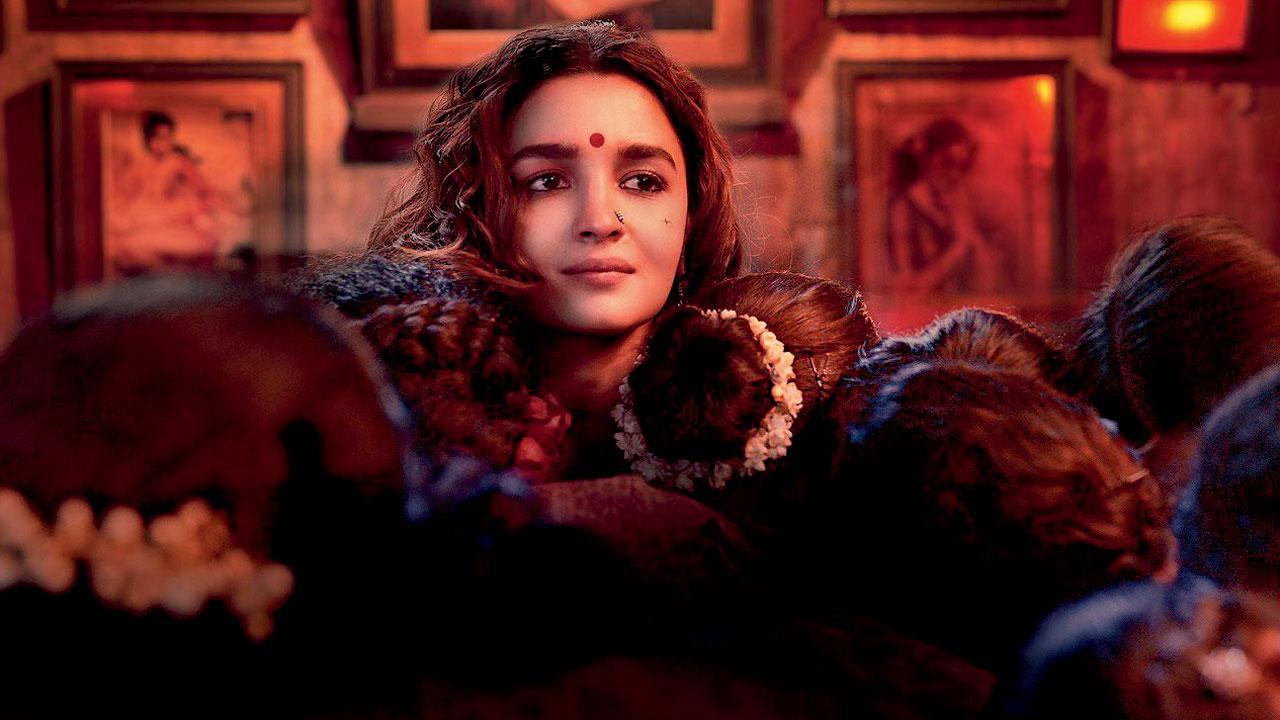
The warm reds in the frames from Gangubai Kathiawadi are as much a result of Neeta Sinha’s intuition as Bhansali’s vision. Meet the woman who’s shaking spirituality with architecture to serve a cocktail of peace and prosperity
Heena Khandelwal, Anju Maskeri (MID-DAY; March 6, 2022)
A little over two decades ago, Hindi film writer-director Sanjay Leela Bhansali was working on his ambitious project, Devdas. Mounted on a budget of Rs. 50 crore, the film found itself mired in one controversy after another. Its producer, diamond merchant Bharat Shah, was jailed for 16 months; crew members died in two separate accidents on the set and some reports said that even a part of the set caught fire on more than one occasion.
Some believed there was more to this tragedy chain than coincidence. Kirron Kher, who was playing Paro’s (Aishwarya Rai) mother, suggested that Bhansali meet Neeta Sinha, who believes that just like people, living spaces also have a horoscope, and the individuals who inhabit the place have a relationship with its energy. They prosper when they are in harmony with their environment.
Perhaps short of choices, Bhansali took up Kher on the suggestion and consulted Sinha. She says, thereafter, the movie wrapped up without any incident. Since then, Sinha has been consulted by Bhansali for every film, including Goliyon Ki Raasleela Ram-leela, Padmaavat and the recently released Gangubai Kathiawadi starring Alia Bhatt.
“The film [Devdas] was facing problems, and the actresses were falling ill. I realised that the entry to the set was in the wrong direction. I suggested they block that entry, add some money plants at specific spots—that drooped downwards—and change the name of the protagonist’s home from Paro ka mahal to Paro’s haveli,” recalls Sinha, 62.
Since then, Sinha has been called not just to rectify the wrong, but ensure no wrong happens to begin with. “I’m usually on board when they are conceiving the drawing [of the set]. The set designers are respectful of my suggestions,” says Sinha, adding that her ideas can be easily incorporated into their larger vision.
Sinha calls herself an astro architect, who specialises in Vastu Shastra or the ancient India science of architecture that some believe dates back to 6,000 BC.
For Gangubai Kathiawadi, Sinha added the colours red and yellow, and a mirror behind the scene to increase the warmth and passion that the cast and crew brings to the film and assigned specific entrances to be used by specific stars. The last, she says, was to enhance and encourage their talent. Bhansali is known for his attention to detail and while it’s not easy or recommended to make radical changes in his frames, Sinha says her ideas are more to balance out the energies on set.
“Bhansali’s sets always have a mandir. It’s critical that this is located in the right spot. I usually choose the North-East direction for the mandir. Colours also play an important role. But it may not always be possible to incorporate a shade I recommend in the frame. So, I use spaces that are out of camera range, like the pathway used for the movement of the crew.”
Sinha, whose clients include Amitabh Bachchan, Shah Rukh Khan, Karan Johar, Ambika Hinduja and Kumar Mangalam Birla, says, “it all started with Kirron Kher”. Kher was hosting a television show back in the ’90s called Jagte Raho, which explored alternative practices and science. Sinha says she was keen to get on the show because vastu didn’t enjoy mainstream awareness at the time.
“Most people believed that we’d break down their home. I was keen to be on the show to argue that structural changes aren’t mandatory [to align the vastu of a home]. I reached out to her and that’s how it all began.”
While the direction of rooms and structures, placement of plants are important, so are the names of people and places. “When Bombay was renamed Mumbai, I had argued [in an article in Debonair magazine] that the grace of South Bombay and Nariman Point would fade with the change, and the prestige would move to the east of Bandra. At the time, Bandra Kurla Complex didn’t exist, but it is Bandra East, isn’t it?” she shares.
Sinha claims Bachchan named his bungalow Jalsa at her behest, as did Shah Rukh Khan, when she suggested that he choose a name with the letter M for his Arabian Sea-facing mansion at Bandra Bandstand. “When he said ‘Mannat’, it sounded good to me.”
Sinha, who is a graduate, says it was the time she spent under the mentorship of her neighbour and homeopath late Dr L N Kusuma, who held a deep interest in vastu and astrology, that led her to develop her skills. While working for celebrities is Sinha’s high, it’s when her suggestions are able to solve a regular man’s challenges that she says she feels truly valued.
“Someone was unable to conceive, another person’s child wasn’t landing a job despite all efforts. Someone else’s family member was repeatedly falling ill. I call them up later to see if they’ve managed to incorporate what I suggested and if they are seeing any difference. People facing health challenges get my appointment on priority,” says Sinha, who claims she also advises hospitals since “they also want their patients to go back healthy”.

Neeta Sinha at her Juhu residence. She says it’s a myth that vastu demands structural changes. Pic/Shadab Khan
Sinha credits Kirron Kher for introducing her to Sanjay Leela Bhansali during the filming of Devdas. Pic/Instagram
My constant theme, more than loneliness, is that you cannot be deprived of dignity-Sanjay Leela Bhansali
8:33 AM

‘This is my most personal film, it is about a world I knew, it has so much of what I absorbed as a young boy,’ says Sanjay Leela Bhansali as he reflects on the dark yet upbeat world of Gangubai Kathiawadi. And he is glad that the audience today is willing to hear, even celebrate, a story such as this
Anshul Chaturvedi (BOMBAY TIMES; March 5, 2022)
When we spoke after Padmaavat, you’d said – ‘My first screening is always with my mother, and there is one empty chair in between for my father, who always wanted me to make films like Mughal-e-Azam and Pakeezah’. Was it the same this time as well?
Yeah, though my mother was not keeping well. For the first time when the print got ready, the first person sitting in that chair was mom, me, and one chair (empty) as usual. That has not changed. This time, I paid tribute to my father as well. In two ways. One was making films on the kind of scale that he wanted – like Mughal-e-Azam. And I also paid tribute to a film that he had made in 1958 called Jahazi Lootera. That is there as a poster on the theatre all through Gangubai. And so this was a film (Gangubai Kathiawadi) that was even closer to me because I was paying tribute to his film that I have never been able to see. I have, sort of come out of it very happy ki chalo, somewhere I have paid my salute and respect to him that whatever he taught me, whatever his unfulfilled dreams were – I’m trying to fulfill over the years.
And this was our area, this was our place. This was where I was born – I was born just one lane away. This was a world that I knew, this was a world we all celebrated, enjoyed our lives, went through our grief and yet strived for everything. So this was one place which was personal.
What’s the sentiment behind this ritual, of sorts, after each film is made?
My deep down gratitude that my film has to be first seen by my mother, and that I firmly believe that my father’s soul is always there. How would I otherwise come out of some of the most difficult situations that any filmmaker would face? I have come out of film after film after film of unheard-of circumstances and I have sailed through it. Something is guiding me, something is protecting me and something is making it possible for me to – as a very below average human being, according to me; nothing special – how do I end up making Bajirao Mastani and Padmaavat and Goliyon Ki Raasleela Ram-leela, if not without a certain amount of spiritual guidance, or blessings of ancestors or prayers of parents... I don’t know. I believe in these things, although you cannot prove it, it is abstract.
I also feel that now I am finding that joy of making a film without thinking of box office and budget and how much will digital sell and how much will satellite sell for. I did Padmaavat which did 550 crores worldwide. I did Gangubai and I think we are getting a terrific response right now. Gangubai (the film), a woman-oriented film in India which we don’t expect people to go to because there is a myth that only hero-oriented films work and hero stories work. Who says that the nation doesn’t want to see a women-oriented story or a heroine-oriented story? Who says that they are not going to see it? But to be able to make that film with that honesty is when you spiritually thought – this is my way of offering a prayer.
You have earlier said that ‘Saawariya and Black have many moments of my life which I want to talk about, which moments, don’t ask.’ You said that you purge yourself through cinema and you leave behind traumatized moment each time you make a film. Now these two thoughts – purging yourself and leaving behind traumatized moments and the film reflecting moments of your life – how much of it applies to this movie?
Completely. This is my most personal work. There are so many references, moments even in terms of the colours of the wall. This is personal in terms of connecting with the character – that’s one. A story, a book that touched my heart the most from all the ten films that I have done. But there are lots of areas – Gangu’s angst, not just Gangu as a character, but somewhere it is placed as Birju. There is a boy called Birju in the film. As Birju I had watched so many things unfolding in front of me in that one chawl area. There is a lot of that I have written and put in. But besides Birju, there is a lot of me in lots of other characters. But Birju, primarily, is me. I wish I had not told you this (laughs).
There were so many layers that I have put in through what I have written in Gangubai. And where it reaches most, I’ve realised is that how I’ve understood a filmmaker, what you have heard and imbibing everything. I don’t know why I was imbibing it all. My soul right now lives over there. It doesn’t live over here in my house where I am staying. No, no, no. My soul, my dreams, are all placed completely in those lanes. So even today, whatever I dream or whatever I think of, is all placed in those lanes. Before every film I go there, stand outside my building and look up. Even now, we went there two days before the release.
What’s the thought behind all the posters you have recurrently kept in your frames through the movie?
Posters used to fascinate me. This world is so beautiful. I remember I used to drive by this brothel to go to school – this lane, the famous lane. In that lane, there was a very strange way of depicting every film as a sexual film to the audience, and there were six theatres in that lane, out of which we’ve shown three. Each would have a poster, and that joy of seeing every Friday a new poster with the sexual tonality to it was fascinating.
I’ve seen films with these people. I’ve noticed the importance of garish posters to attract people. One of the biggest moments of giving them hope and joy was to see a woman as garishly painted as them on the poster. To see an equally garishly painted woman smiling at them from the poster, reassured them of the possibility of hope and joy of what she has achieved, we will also achieve.
And all the films that were running there were not the popular ones. The popular films came very late in these theatres. Good theatres, where “good, decent people” would be where they would release first. So all the posters that we have put up, except for Chaudhvin Ka Chand, are of not very popular films. Films of Dev Anand, of P L Santoshi, but also of very interesting, unheard-of directors. We may have forgotten about them, we may not have seen these films. Someone asked, ‘who is this, sir?’ And I was like, ‘what’re you saying, who is this? This is Nimmi ji, Suraiya ji.’ Today, for me, I was reliving the history and paying tribute to all those faces. Nalini Jaywant… there were lots of Nalini Jaywant posters over there. My most important instruction was that do not get very famous films. So Barsaat Ki Ek Raat was there, but otherwise very few known ones.
In an earlier discussion, you said: ‘A sense of completion is something I have never pursued in my life. I find anything that completes, what should I say, I lose interest in it, it ceases to have been for me and they lived happily ever after doesn’t make sense to me. Incompleteness is something that I pursue a lot.’ Has that changed in this story? It almost ends like something good, something positive happened. Is that not an aberration for a Bhansali film?
No, no, no. It ends in the procession, but the battle is not yet won. That is from where she actually started to fight. A battle which she could not eventually win because it was not legalised, those women have still not been accepted, those children did not get a place in society. Gangu’s life was not complete. What was that life? There’s that incompleteness in life of being betrayed and then struggling till the end to find respect, dignity, happiness – it is just struggling, groping in the air. That groping in the air is what makes it so special, so fascinating because she kept on till she found that one thread and she held on to it. Her life is not complete in that sense.
A topic like this, for want of a better word, is more arthouse than commercial, is it not?
See, this is one film where there are no trappings of a mainstream film. I felt that this film is giving tremendous hope to people to say that we all can get jacked in life. We all go through our toughest and darkest moments, nobody is spared of it, no human being is spared of it, but how you tackle that dark moment and get up, and rise from ashes and you soar. And to soar with that kind of resonance that it was 70s when Gangubai passed away, and 40-50 years later I’ve made a film on her and celebrated that spirit of a woman in Kamathipura, which is the least travelled area by civil society in so many ways. I am celebrating her.
I feel that audience today is willing to hear this. I think it is the first full-fledged film made on a brothel and women after Mandi. Shyam Benegal made that and this is after that. Today I have found far more acceptance than maybe a beautiful film like Mandi found at that point. A lot of people spoke about Shabana Azmi’s performance in the film, but it was not a box office hit.
Is there a social message to a movie on such a subject?
This film has no message. I never make socially relevant films, I tell you stories of people, women or a man who have gone through something. My constant theme, more than loneliness, is that a human being should stand for dignity and that dignity cannot be deprived. No human being should be deprived of his dignity, and in case of adversities and problems, how powerful are you to maintain your own dignity in that circumstances? And that is the recurring theme (of my films) constantly, be it Bajirao, who stands for the dignity of Mastani, that yes, I have had an extramarital affair and I am going to give her a place in my house, and not keep her hidden somewhere. These are the people who fought for dignity. Be it Vanraj in Dil De Chuke Sanam who stands for it or Michelle in Black or Deepika in Padmaavat. Even when Hrithik’s character in Guzaarish asks for death. He says that if I have the right to live with dignity, I have the right to die with dignity. The most important thing to live for is to be respected in whatever capacity. Everyone knows that they all are not going to be rich and famous and name and all that. Forget all that. I need my respect.
Throughout Gangubai Kathiawadi, we see the after-effect of violence, but we never see the violence itself. Why is that? Did you not have a counterview that you are sanitizing it too much?
I thought that was the most fascinating way of doing it. I understood Gangu’s grief. Woh violence ko ek scene mein dikhaaya humne, just to see how and what would happen. But even then, I think it’s just a part of what those women are going through. It’s too gruesome to even think of showing it. I’m very adamant and very convinced of the fact that I saw a woman wanting to celebrate, enjoy, smile through that – even though she is standing in a cage.
This story, for you, is not theory, this is what you have seen first-hand, right?
This is what I have seen and therefore, I’m saying this is what I need to show. They should smile, they will laugh because they have a right to become friends and celebrate within the bars. They’re standing behind the bars and laughing and fooling around. They have no choice. What will they do? Sit and cry inside the cage? There is no escape for them. That after-effect of what I saw, of these women standing, to express that how and why was more fascinating to me as a filmmaker than actually showing Gangu being raped or her first night with her first client. I was not interested in that. I did not want to be voyeuristic on that issue. In my mind, Gangu was family and I did not want to embarrass her one more time on screen, and see the nakedness and harshness of it all. It was not necessary. I wanted to see the after-effect of what happens. Also, the accusation of then maybe sensationalizing Gangu and trying to show more elaborate sex sequences and then trying to encash – I didn’t want that either because that was not the idea. The idea was that she went through it. We know.
You so often refer to filmmakers such as V Shantaram, K Asif, Guru Dutt and Bimal Roy. How do you think you will be remembered 50 years from now?
I don’t think people will remember me 50 years from now. (Pause) They will remember my work.
Bombay High Court directs Eros to pay Bhansali Productions Rs. 19 lakh in 3 weeks
8:20 AM
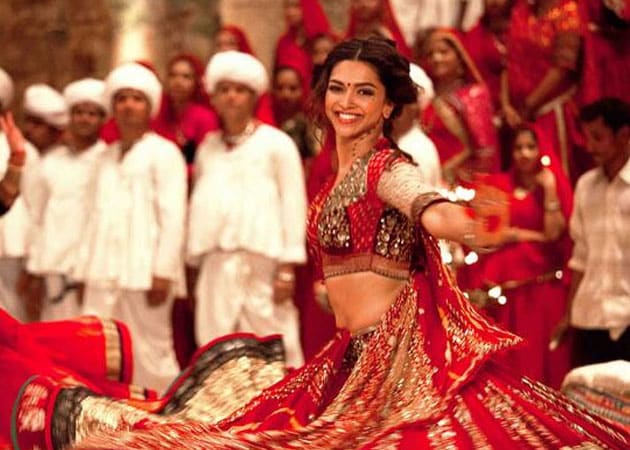
K A Y Dodhiya (HINDUSTAN TIMES; May 6, 2020)
Mumbai : The Bombay high court on Monday directed Eros International to pay outstanding dues to Bhansali Productions of ₹19.3 lakh for the film Goliyon Ki Raasleela Ram-leela but refused to restrain two foreign companies from exploiting the rights of the film after a merger was announced between Eros and two foreign companies.
Bhansali Productions and Eros International Media Limited had co-produced and released the movie in 2013 and there was an understanding between the two with regards to rights of the film. However, after one of the foreign companies started using the poster of the movie to highlight the merger, Bhansali Productions invoked the arbitration and conciliation clauses which restrained Eros International from selling, exploiting, licensing, distributing and renewing rights over the film. Bhansali also sought ₹19.39 lakh dues to be paid by Eros.
A single bench of justice B P Colabawalla while hearing the petition filed by Bhansali Productions through video conferencing on Monday was informed by senior counsel Zal Andhyarujina and advocates Nausher Kohli, Parag Khandhar and Nachiket Yagnik that Eros International limited was likely to merge with its parent company Eros International PLC and Hollywood’s STX Filmworks by June 30.
Advocates Akshay Patil and Vikrant Zunjarrao representing Eros International opposed the plea and said that there was no urgency to grant interim reliefs to Bhansali productions as Eros was to bound to pay the dues.
After hearing the submissions, justice Colabawalla said that as the respondent companies were situated in the British Isles and California, it would require a detailed hearing to decide on whether reliefs can be granted against entities lying beyond the court’s jurisdiction. He further said that as the court was hearing only extremely urgent matters there was no case for ad-interim reliefs. The court, however, directed Eros International to pay dues of ₹19,39,241 to Bhansali Production related to co-production arrangement in three weeks.
Holi means colour, joy and lots of cheer-Deepika Padukone
8:28 AM

For Deepika Padukone, what’s great about a festival like Holi, is that it brings together people, families and communities; says the main idea of festivals for her is to ‘spend quality time’ with her loved ones
Prashant Singh (HINDUSTAN TIMES; March 9, 2020)
She grew up in Bengaluru, Karnataka, where — as she puts it — the Holi fervour isn’t as much as in other parts of the country. But that never stopped Deepika Padukone from adding her share of colours to the festival along with her friends and family. Even now, she seems visibly delighted about “spending quality time” with her near-and-dear ones on such special days. “The mythology part of our festivals is obvious but what’s amazing is that festivals — be it Holi, Diwali or Ganesh Chaturthi — bring together people, families and communities. Also, I really appreciate the fact that these festivals have been going on for generations, and we still continue that tradition,” she says. Excerpts from an exclusive interview:
To start with, would you call yourself a Holi person?
The culture in south India has been slightly different. So, I remember while I was growing up, it wasn’t celebrated as much as it’s celebrated in other parts of India, especially the North. In the South, it [the celebrations] was never that much but I don’t know if things have changed now. In other parts of the country, even walking on the streets can be dangerous on Holi as anyone can randomly throw colours and eggs at you (smiles).
For you, what’s the most fascinating thing about the festival of colours?
It is the festival of colour but for me, in a way, it’s also a festival of light as my memory of it has been that it’s a ‘day time festival’. So, in my mind, the Holi day is always very bright and sunny along with a lot of colour, joy and cheer. That’s what I really appreciate a lot about the Indian culture that every few months, there’s a festival which sort of brings the entire community together, irrespective of what’s going on in the world. In that particular moment, you just forget about everything else and celebrate.
Do you have any special memories of Holi from your childhood?
For starters, it calls for great family time. One of the things we all always got [on Holi] was a public holiday. So, there was no school, and since I grew up in an apartment [in Bengaluru], I had a lot of friends. I remember all of us getting together to play Holi. Since I am someone who has always been particular about being ‘clean’, I had to be prepared much in advance that, ‘Holi aa rahi hai, so I’ve to keep aside an old set of clothes etc’. At that time, there were no organic colours; so it was all about hard colours which didn’t come off for weeks.
So, you would have unstinted fun?
Yes, but since I was in school, I would also be worried as to how much Holi I can play as schools had their strict rules. In that moment though, you don’t think about those things. But I remember my parents telling me to apply a lot of oil on my face, hair and skin so that colours don’t get into the skin a lot, and could come off easily later. And there was no way we could roam around after playing Holi, as we were supposed to head straight into the shower so as to not mess up the house.
Now, that you are married [to actor Ranveer Singh], have things changed vis-à-vis Holi celebrations in particular, or festivals in general?
Not really! We both have always celebrated festivals. So, as much as possible, we try and be in the city, with family. We did the same even before marriage. So, nothing has changed as such, apart from the fact that earlier, the main celebration would take place in my house. Now, we [Ranveer and I] do a small pooja in our house and then we go to our in-laws’ home where everyone is together. So, it’s a bigger celebration. If our respective parents can be together [on that day], then that’s the best thing. Otherwise, my in-laws are here so a part of the family is always around (smiles). We don’t do anything very elaborate. For us, the main idea of festivals or holidays is to spend quality time together.
What’s your idea of Holi? Has it changed over the years?
For me, Holi stands for a celebration of happiness, togetherness, and good food (smiles). And it’s great that such festivals are a really intrinsic as well as rich part of our culture. I feel that’s the beauty of our Indian culture and tradition. When we [actors] are [shooting] outdoors and miss out on celebrating a festival with the family, we, of course, try and celebrate in our own way with the unit but from the inside, you miss being in your city and with your family.
For you, what’s the best thing about the festival of colours?
I think it’s the feeling of sheer abandon. The other Indian festivals are more ritualistic, whereas Holi, according to me, is one festival where there’s a lot of abandon. And that’s what sets it apart from all the other festivals.
Is there anything that you don’t like much about it?
Eggs, I feel, is a bit too much (smiles). And I’ve an interesting story about eggs, my mum and Holi. She will be very upset that I have revealed the story but I have to (laughs). This is from before I had moved to Mumbai, and I was just about starting my modelling career. I had come to the city for a day with mum for an audition for a soap brand. After I finished my audition in the morning, we decided to go to meet my granddad, who lives at Peddar Road. From suburbs, we took a taxi and once we reached, mum said, ‘since it is Holi, let’s not take a chance. Let’s not get down [across the road from the building] and walk on foot to cross the road. Instead, we can take a U-turn’.
Then, what happened?
I was like, ‘mum, it doesn’t make any sense. The roads are empty, and so we can cross it walking’. And while we were crossing the road, a group of boys threw eggs at us, which hit my mum. Later, she said, ‘I think they were trying to aim at you but eggs hit me instead’. Since that day, my favourite Holi memory is that (laughs). We didn’t even have a spare set of clothes as it was just a day trip. The whole day, she smelt of eggs as it went into her hair also. I think she will never forgive me for that. But I guess it’s all in the spirit of Holi. I do not see people letting go of so much during any other festival.
Do you have any special plan for this year’s Holi?
It’s the same; nothing special. Ranveer [Singh; husband] called me up a couple of days back in the evening, and the first thing he asked me was if I am working [on the Holi day]. Sometimes, it’s [working on Holi] really unavoidable. But as much as possible, we try and be with each other on festivals. Since no one else works on that day, it’s a great day to spend time with one another. Also, I’ll leave for my outdoors [for director Shakun Batra’s yet-untitled next] soon, for about a month or month-and-a-half, to Sri Lanka. So, Holi gives me an opportunity to spend quality time with my family before I go.
Work-wise, how are things looking?
I am starting Shakun’s [Batra] film next. In fact, I will leave for its Sri Lanka schedule next week itself. That’s why I am looking forward to Holi a little more because it’s that day when I will get to spend some time with everyone before all the hectic travelling, shooting etc. starts. My other film, The Intern adaptation, in all likelihood, will go into production in the beginning of 2021, around January. However, I am looking at doing something else too, in the second half of this year.
-----------------
A colourful, reel stint with Holi!
“It started with Balam Pichkari (from Yeh Jawaani Hai Deewani; 2013) and, of course, there’s also Lahoo Mooh Lag Gaya (from Goliyon Ki Raasleela Ram-Leela; 2013). If I may say, Balam Pichkari is like Rang Barse (Silsila; 1981) of our generation. Nowadays, every Holi party starts with Rang Barse, and the second song has to be Balam Pichkari. So, it’s become a new-age Holi anthem. It feels nice to have been part of such an iconic song. On the other hand, Lahoo Mooh Lag Gaya is a very different kind of Holi song — very Sanjay Leela Bhansali-ish and extremely sensual. For me, the fascination was that though we see Holi in it with a full-on celebration, his interpretation and the way he showed Holi was in stark contrast to the way we know the festival, or the way we play it.”

I have about five to six scenes in '83-Deepika Padukone
8:35 AM

Glad to finally feature in a film that doesn't involve the death of her or hubby Ranveer Singh's characters, Deepika Padukone traces working on Kabir Khan's 83
Shaheen Parkar (MID-DAY; March 1, 2020)
In Homi Adajania's comic caper Finding Fanny (2014), which starred Deepika Padukone, Ranveer Singh had made a special appearance. Now, it's her turn to do the same. She features in a cameo in his upcoming film, 83. "I have about five to six scenes," says Padukone, who plays Romi, wife of cricketer Kapil Dev, in Kabir Khan's film based on India's 1983 cricket World Cup victory.
After Padmaavat (2018), Bajirao Mastani (2015) and Goliyon Ki Raasleela Ram-Leela (2013), Padukone is glad that she is teaming up with Singh for a movie with a different subject. "All these three films were costume dramas and emotionally heavy. Also, we ended up dying at the end of all!" So, she's glad to be alive in this one. "In that sense, it was relatively emotionally lighter," says Padukone.
Singh had to put in a lot of prep, including learning how to get his cricket on point. "I just went with the flow," says Padukone, who shot for her scenes during the UK schedule last year. She adds, "The way we approach our characters are distinct. Our processes are different. It was also novel as we have not done something like this before."
Though on the set they may prefer to dive into the characters in their own ways, off-screen they influence each other greatly. "His personality has rubbed off on me, and mine, on him. I have learnt a lot from him, and he, from me."
Karan Johar was taunting me when he said I’ll make a good producer-Deepika Padukone
8:14 AM

Deepika Padukone on her foray into filmmaking, fielding for a film with Hrithik Roshan and why she wants to do a young film with Ranveer Singh
Ankita Chaurasia (MUMBAI MIRROR; December 27, 2019)
 After playing central turns in two period films, Deepika Padukone is returning to the contemporary realm of the big screen with her first home production, the Meghna Gulzar-directed Chhapaak. Point out that the director has previously said that the film is an attempt to fuel discourse on acid attacks, a topic that’s rarely a part of public consciousness, and she says, “It is a story of hope which has been told in an entertaining manner. We crib about everything, often forgetting to be grate things. Despite what has thrown their way Laxmi (Agarwal, the inspiration behind Deepika’s Malti in the film) and other acid attack survivors, who could have given up on their lives, lead a spirited existence.”
It wasn’t an easy portrayal for her, Deepika says, adding that it took a toll on her despite extensive physical and emotional prep. “I had to live out the reality of the attack and witness what it felt like to have your life altered so drastically. I had to go through it without having to go through it,” she points out, adding that the story follows the character’s journey from bitterness to acceptance and finally, forgiveness.
The actress goes on to relay Laxmi’s thoughts on her attacker now. “She says, ‘He probably thought he could end my life, kill my dreams and aspirations by disfiguring my face. But nobody can take away my mind. I wonder how he feels now that Deepika Padukone is doing a film on me. He wanted to end my life with the acid attack, but my life began then’.” When asked if she was cautioned about the intense nature of the film, the actress explains that counsellors don’t anticipate problems. “But as soon as I felt I was spiralling, I called mine. She was with me throughout the shoot.”
In the film, Alok (played by Vikrant Massey) is constantly by Malti’s side. Deepika asserts that it is men like him, Ranveer (Singh, actor-husband) and Govind (Sandhu, Meghna’s husband) who make her believe that good men exist. “Because they are confident about themselves, they are confident about their spouses. They don’t mind their women being at the forefront,” she reasons, going on to share that she recently called up Ranveer to thank him. “I’d had a long day, but I didn’t feel anxious about whether he would be upset about me coming home late or because I hadn’t called. I have been in relationships where I didn’t have that. When you don’t have to worry about such things, it allows you to focus on work.”
She goes on to reveal that Ranveer also doubles up as her bodyguard. “After watching the Chhapaak trailer, he recalled the time when we were promoting Goliyon Ki Raasleela… Ram Leela in Jaipur and there was a person, dressed exactly like Shah Rukh Khan, who jumped out of the crowd at me. I had forgotten all about it, but he remembered,” she shudders.
The couple will be soon seen in their first film together since their wedding, Kabir Khan’s ’83. “It is our lightest film together yet. On set, you are not husband and wife or girlfriend and boyfriend, you are actors. This film was so different,” she says, noting that after period films, it feels like she and Ranveer are wearing crowns all the time. “It will be good to be just a boy and a girl in a young, fresh film,” she says wistfully.
A film with Hrithik Roshan is also on her wish-list; she famously swooned over the 45-year-old actor in a social media post recently. A recent viewing of Hrithik’s last release War turned into a fan-fest, when, Deepika admits, they would periodically hit pause on the film to marvel, “Kya naachta hai, kya dikhta hai!” “It’s amazing how my husband and I can sit together and appreciate a guy. That video of him (Hrithik) feeding me cake was a wake-up call for filmmakers to cast us together,” she chuckles.
On her foray into production, Deepika informs that producer Dinesh Vijan was the first person to say that she’d make a good producer. “We used to joke that I was his retirement plan and would have a cabin in his newly renovated office. Now he must be having the last laugh,” she smiles. And Karan Johar reiterated it after watching her take interest in expenses during the making of Yeh Jawaani Hai Deewani. “I thought Ayan (Mukerji, director) was being indulgent. How does it matter where Bunny (Ranbir Kapoor’s protagonist) is globetrotting? He could be in Africa, Goa or even Juhu beach. Why are extensive recces required? Karan was like, ‘I don’t have a problem spending so much money, why do you care?’ He was taunting me when he said I’ll make a good producer,” she laughs.
Next up, she is producing a version of the Mahabharata from Draupadi’s point of view. When asked if it will be a love story or in the mythological space, she says, “It can be anything. It is not so much about the female perspective as it is about a different perspective. We can only think of that when a director comes on board.” And has she found her superheroine yet? “I am wearing red today, should I just fly away now?” she wonders, adding, “The character has to be homegrown. A huge advantage we have over the West is that our characters have depth, cultural influence; they are layered, nuanced, rooted.”
She was on a break after the 2018 release, Padmaavat, and insists that it was important to creatively nurture herself. “We get into the rut of churning one film after the other. Over the last year, I have only spent time with writers and directors and books.”
Then, there was the wedding in November last year. “Setting up a home, learning to live with each other and becoming a part of the family everything is important. When I moved from Bangalore to Mumbai, I had no friends and my work became my life. But it helped me realise that you have to get used to living with yourself.”
Ram Leela, Toilet - Ek Prem Katha writers Siddharth and Garima working on film on khap panchayat?
7:56 AM

Natasha Coutinho (MUMBAI MIRROR; February 8, 2018)
Writer-duo Siddharth-Garima, who penned the Ranveer Singh and Deepika Padukone-starrer Goliyon Ki Raasleela Ram-leela (2013) and last year’s Akshay Kumar-Bhumi Pednekar film Toilet: Ek Prem Katha, now have a social-drama up their sleeve. Titled Saale Aashiq, the film revolves around a Khap Panchayat and a couple on the run.
The film is set to go on the floors by the year-end and the writer duo is currently on a recce in Madhya Pradesh’s Jabalpur for research, meeting real-life couples who are hiding from panchayats, as part of the prep for their film. The script for the Bunty Walia and Ajay Kapoor production is currently being worked on. A source reveals, “Saale Aashiq is about standing up to the hate politics, age-old traditions and an eventual death threat as a couple faces opposition from their respective families. The director of the film will be announced soon.”
Meanwhile, Siddharth and Garima are also prepping to make their directorial debut with Jasmine, which they have also written, that is expected to go on the floors around March-April. The film is the story of a surrogate mother who gets attached to a child and doesn’t want to let go.
I’m more blessed than cursed-Sanjay Leela Bhansali
8:19 AM

Meena Iyer (DNA; February 1, 2018)
As you alight from a taxi in a quiet Juhu bylane, your eyes darting left to right to spot where Sanjay Leela Bhansali’s office could possibly be, a police jeep comes into your vision. And you know immediately that behind the intimidating brown gates is where the man is “imprisoned.’’
When the gate slams shut, a name and reference check is done. And then, a dozen safari suit-clad men with walkie-talkies point you in the right direction. Finally, you are seated opposite SLB, who is dressed in his signature kurta-pyjama. His mop of grey hair and dark-rimmed glasses lend style to his carefully-built persona. He is celebrating the runaway success of his magnum opus with chocolate. Urging you to dig in, he indicates that he is ready to talk. And so, we ask:
Padmaavat continues to go through a lot of strife…
Yes, but Padmaavat is blessed. There are creative angels who come and bless such films. There is some divine energy that says this is the way it should be. It is fascinating to go with the flow. If you are supposed to face the attacks or these kind of protests that we have gone through, it’s a part of the film’s destiny. All I can say is that it just makes you stronger and wants you to make the movie better. When your whole being is at stake and you feel that you are going to perish, you give the thing on hand your best shot. Then things unfold in a way. So, from January 27, 2017, when we were attacked in Jaipur to January 25 this year when the film released, it has been one whole year of strife. I cannot describe all that my team and I went through.
Why didn’t you speak earlier?
A lot of people said that I didn’t answer or defend myself. I didn’t come out in the open to speak or react. But my only reaction was to make the film better. If it hit the screen, which it seemed would be almost impossible at one point, that itself would have been a victory. At the cost of repeating myself, I must say that movies like Padmaavat are destined. How can the same set of people (actor, technicians) who have worked on this film and go to another film, are not able to achieve the same kind of results that this movie has? There is some divine energy. When a film reaches a theatre, that is the happiest journey for me because there is no greater joy than that final lap from the laboratory to the screen. That is what you live for. When the first frame is beamed on the screen, it is the most fascinating and satisfying moment for me even after all these years and so many films. It is a moment to die for.
Do you agree that you have achieved a cult status in Bollywood?
I don’t know who says what. All I know is that there’s a madness that is growing within me. I constantly strive to say something bigger and better. There is a time when you evolve. You feel that you have understood your craft, signature and style of filmmaking. You know you are more adept at doing things and find that rhythm slowly over the years. That’s what I think has happened to me. I found scale during my Hum Dil De Chuke Sanam and Devdas days. But the journey between Goliyon Ki Raasleela Ram-leela and Padmaavat taught me so many other aspects. It is very difficult to make a big-scale film. What people call, ‘the big-screen experience’, is hard to achieve.
All that I loved about music, drama; all that I have learnt from Raj Kapoor, K Asif or Kamal Amrohi, V Shantaram and Mehboob Khan, I started finding and putting it together. I have also deeply admired Ramesh Sippy (of Sholay fame). I’m constantly imbibing the energies of these great men with vision and talking to them. So, I’m discovering far more than the basic box-office collection.
You said Ram Leela was a learning curve...
I started finding the rhythm of the shot for the first time during Ram Leela. I made sure the sur and the scale didn’t go wrong. I found some joy in making Padmaavat irrespective of the problems that I encountered.
Is it right to say that you have been obsessed with your ideas long before your films went on floors?
I took 12 years to make Bajirao Mastani. I waited nine years to make Ram Leela and I had to wait eight years from the time I did Padmavati, the opera on stage, in Paris to get to the film. I’ve enjoyed making these movies so much. They were very challenging. How to put things into a big frame and how to spend money are things that I’m obsessing about all the time. You know budgets become available to you but how you spend that money in the correct way is important. And I really don’t care whether the films brought in the numbers at the box office or not. I never work with that fear.
One never hears of you taking a holiday...
People say why don’t you go on a holiday and I tell them I only want to go to the studio. I want to go to Film City and Mehboob Studios and sit over there. So often, when I’m crossing Bandra, I make it a point to drive into the Mehboob Studio compound, sit there and just stare. That is the kind of love that I have for cinema.
That’s why you have been labelled eccentric…
(Laughs) They can call me what they want. If I’m happy and I enjoy taking that detour into the studio compound and saluting the memory of Mehboob Khan, then let me be. Perhaps the energies of Mehboob saab will get into me and his soul will bless me. Who knows? I like doing that, so I do it. I go to V Shantaram’s Rajkamal Studio in Parel for my mixing. And when I stroll in that place, I can feel his energy and soul. His trophies... the smell in that re-recording studio which has been exactly the same over the years. I had gone there first when I was remixing for Parinda (1989) because I was an assistant with Vidhu Vinod Chopra.
It does matter right that Padmaavat will cross the 150 crore mark today?
It’s so nice to know that the audience wants to see your work. A film without an audience makes no sense. When they say, ‘We now understand your signature and style of filmmaking, so we come to see your film,’ it’s a great high. Whether it has Ranveer (Singh) and Deepika (Padukone which is an added attraction), they come to see my film. I personally thank god for this blessing because even if I’ve been cursed with all these innumerous problems — over the years which I have fought — inner demons and external problems — I’ve also been blessed by God because he has said, ‘Ok fine, you get a style and signature, you have an audience, you do not need anything more.’ Who puts in Rs 180 crore to make a film? It is easier said than done. I would say I’m more blessed than I’m cursed. Even though Padmaavat has gone through so many problems, today it is getting its due.
You have done three films with Aishwarya (Rai Bachchan) and three with Deepika. Is it time to look for a new muse?
Deepika is so fabulous; she is such a jaan. I just love her. All her hard work and brilliance that she brings to the set is effortless. She does her preparation but there is none of the—I AM PREPARED FOR A ROLE—heaviness around her. It is done with so much silence. It’s such a pleasure to work with someone who does what she is doing at that moment with absolute honesty. She’s an actor who feels so honestly and simply, but her performances are detailed and nuanced. I’m not done with her yet.
What about Ranveer Singh who seems to be your favourite?
No other filmmaker understands Ranveer the way I do. Ranveer and I have a great chemistry and understanding. I know how to direct him and I’m aware about his limitations and strengths. I know what to do with him. He’s a very special actor. He has so much energy. I only feel he puts too much effort into ‘I did my research and I went here and did that’, all that I understand. For him to pursue his greatness, he has to be a little more effortless. He is fantastic. I am not done with him either.
Shahid was the new energy on your set?
Shahid was a new energy on set because I hadn’t worked with him before. It was interesting to see how a new actor works. He is a great-looking kid. He is extremely talented and so effortless. He is constantly wanting to become better. He would say, ‘I’m unhappy with that shot. Can I do this better?’ And I would tell him, ‘Can you stop pushing yourself. And punishing yourself because I know what I want from you.’ It was great working with him. He gave Maharawal Ratan Singh such dignity and silence. It was a nuanced and delicate performance. I’m so proud of what he has done in this film. Ranveer obviously had the author-backed role and he has come out with flying colours in it because of the range, but to play a straight and understated part, yet to make your presence felt is very difficult. Deepika and Shahid look so good together. I wish they do more films with each other.
Aren’t you being too harsh on yourself by completely isolating yourself from the world?
I’m in a zone. I’ve not met anyone. I only live for my films. I do not feel I’m too harsh on myself. I’m enjoying it immensely. Once I start a film, I’m like that person who is sitting in a yagna completely consumed by the puja and the process. I’m in that meditative state where I see nothing, but my film. Even if I’ve been physically attacked or my set has been ransacked, my first reaction is, ‘Oh god, that shot, which we had set up, was so beautiful! Where will I take it?’ The humiliation and the anger of what I went through became secondary in so many ways. My film mattered to me. I saw a film called Sant Tukaram so many years ago. When Tukaram was asked anything, he would say ‘Vithal, Vithal.’ And you would wonder what he meant. Today, I understand what it means because for me it is only films. I have become Tukaram.
Doesn’t all work and no play make you dull?
The emotions that I may deprive myself of in terms of relationships don’t matter. I live my life through my films. It is such a joy. Nothing distracts me. I just want to make bigger and better films. I’m constantly asking myself, ‘How do I evolve further?’ I’ve done a lot of introspection to reach this stage. If a film worked, I’ve never got up and said, ‘Wow, my movie worked. Bro, let us have a party.’ For me, it is how do I get better. How do I get one more star from a reviewer? How do I become a better person and a better filmmaker? Which is why you are finding a slow growth in my films from Ram Leela to Padmaavat. The search for excellence doesn’t die. It is getting more and more pronounced. And I’m living it completely.
Check out Renuka Shahane as the Maharashtrian don in Khichdi
8:02 AM

MUMBAI MIRROR (December 19, 2017)
 Renuka Shahane says her favourite female don will always be Dhankor Baa, played by Supriya Pathak in Sanjay Leela Bhansali’s Goliyon Ki Raasleela Ram-Leela. The actress goes down the same road, playing a Maharashtrian don in the TV show Khichdi, who kidnaps the lead character, Hansa, interestingly played by Supriya. “To share screen space with her has been an absolute honour. Also, Hansa is my favourite character from the show and my role is closely linked to hers. It couldn't get better than this,” Renuka exults. Talking about her experience of working on the show, Renuka says, “I had a blast shooting for the show because I have been a fan of Khichdi since I can remember. The makers have been good friends and when they approached me, I instantly said ‘yes’ to the role of a female don which is something I have never done before."
Fear is not an emotion I have ever identified with-Deepika Padukone
8:05 AM

Roshmila Bhattacharya (MUMBAI MIRROR; November 18, 2017)
This year has been more eventful for Deepika Padukone than many would have envisioned. She completed a decade in Hindi films — her debut, Om Shanti Om, released in 2007 — and made inroads into Hollywood with a Vin Diesel franchise. Now, she is gearing up for a hat-trick with one of her favourite filmmakers, Sanjay Leela Bhansali, with the upcoming Padmavati, in which she has the titular role. The year in review with the actress:
Leela, Mastani and now Padmavati... How similar and how different are these three women?
The trio is similar in their spirit and courage, their vulnerability and belief. At the same time they are also very different. Leela had a childlike, playful innocence while Mastani was a warrior who literally took to the battlefield. Now, Padmavati is a warrior in her own right without weapons. Her power comes from her intelligence and her bravery, from the way she stood for what she believed in and the way she protected her people.
As an actress how difficult was it to bring these three women to life?
It was very easy actually, because as a woman I identified with all of these characters and so will every other woman. When talking about Leela and Mastani I would say this as well. Even though Mastani and Padmavati may have lived in different eras, their traits are easy to relate to even today. I have that resilience in me, of never giving up.
Yes, you've completed a decade in the Hindi film industry and it's not an easy place. Ten years is a long tenure for any actress to remain on top, did you ever imagine this would be your home for so long?
Yes, I did. I was welcomed with open arms from the day my first film, Om Shanti Om, came out, maybe even before that. The film's director, Farah Khan, had no idea what I could deliver since I had no film experience, yet to cast me in a film so important to her and her career at that point showed the kind of faith she had in me at a time when I had no faith in myself. And that attitude I see even today from my fraternity who always made me feel very comfortable.
Getting back to your upcoming film, each poster is a story in itself and one in particular, of a fiery maharani surrounded by women in red, encapsulates everything we believe Padmavati stood for as we know from what we've read of her growing up...
That's a powerful moment in the film and it haunts me even today. The energy with which the women come together, the fire within, is almost spiritual. It's one of the most memorable moments of my career to date.
The debates around the film and its portrayal of the queen are getting more ludicrous by the day with detractors now demanding your head or wanting to cut off your nose. How do you react to all this?
Well, at this point, as a woman, an artiste and a citizen of this country I feel angry, I feel let down and I also find it amusing.
It's telling that you didn't say that you were scared...
I will never feel scared. Fear is not an emotion I have ever identified with.
With all the controversies that keep cropping up with every other film do you feel that the creative freedom that the filmmakers and artistes have been enjoying in the world's biggest democracy is being curtailed by the pre-release tamasha?
Yes, people are allowed to express themselves without having even seen the film. And having worked in the film, I can assure you it's one film every Indian will be proud of. I'm glad we are showcasing Padmaviti's journey. Her story needs to be told not just to people in this country but across the world.
Growing up what was your impression of Mastani and Padmavati and has it changed since?
Your understanding of a woman, of these women, as a young girl from reading about them in a chapter in a textbook is very different from your understanding of them as a grown-up. The understanding today is much larger.
There have been allegations of you hogging the limelight from your co-actors and jumping into promotions alone and before them...
Well, to be very honest the film is titled Padmavati but my incentive is to tell the story of this woman's courage. We have had a Mother India in the past with a Nargis and a Sunil Dutt, Razia Sultan with Hemaji (Malini) and Dharmendra. I've always chosen films based on my instincts and I'm proud I've been given this opportunity to play a protagonist who people idolise, revere and some people even worship. But for me it's about the woman and everything she stood for, and as an artiste I feel grateful to have played her on screen.
It's been an interesting year for you as you moved from Serena Unger in XXX: Return Of Xander Cage to Padmavati.
They are both brave, strong, independent individuals, in different ways, different eras and different cultures. As a woman I identified with both and made them relatable in that situation. Serena was a different character from Piku, Mastani or Padmavati but their spirit is alike.
The director of XXX, DJ Caruso, has confirmed that you will be in the next instalment of the franchise?
It's too early to say anything at this point.
You just mentioned Piku and you are reuniting with Irrfan Khan again for Honey Trehan's directorial debut which has been scripted by Vishal Bhardwaj. You are moving from one strong woman to another?
Yes, I keep saying I need to do a film that is less draining, emotionally, and challenging but I keep getting drawn to these characters. Yes, this will be my next film, another powerful woman, and at a creative level I'm excited to be collaborating with Irrfan again as I loved every moment with him on the Piku set. He brings out the best in me as an actress.
There's another actor, Ranveer Singh, who also brings out the best in you, even as a person.
Yeah, I think I'm blessed to have some very special people, whether it's my family — my sister — or my friends and the people I work with. I have a solid support system and some really good people in my life.
And Ranveer is one of them?
Absolutely!
Subscribe to:
Posts (Atom)