Showing posts with label Go Goa Gone. Show all posts
Showing posts with label Go Goa Gone. Show all posts
Alia Bhatt entrusted me with designing her home. That project opened an entirely new chapter-Rupin Suchak
5:59 PM

Rupin Suchak, production and interior designer, on the illusion of wealth, tight deadlines and homes he builds for Bollywood’s stars
MUMBAI MIRROR (June 20, 2026)
I often joke that I have spent most of my career building worlds that people either inhabit for years or encounter for two seconds on screen. The tools are similar, but the pressures of these twin careers are not. My fascination with design started long before I knew it could be a profession. I grew up in a Gujarati family where I was constantly making things, whether miniature installations for Navratri, religious backdrops, stage sets for school productions or drawings for competitions. I was never the student who came alive in conventional academic subjects. Once someone put a pencil in my hand and ask me to create something, though, everything changed.
The first major validation arrived when I secured an All India Rank of 50 in the NIFT entrance examination. Suddenly it felt possible as a career path. My route into interiors was far from straightforward. For years, I worked in production design, first under Sabu Cyril and later independently. Sabu was a huge influence. I became fascinated by the idea that entire environments could be built solely to serve a story.
The commercial grind
When I struck out on my own, I worked on films such as Go Goa Gone, Happy Ending, Dear Zindagi and SPYDER. I also worked on more than a thousand commercials and TV productions. People often underestimate how demanding advertising can be. A commercial might require an entire world to be conceived, designed and executed in a matter of days. You learn speed, adaptability and precision very quickly.
After nearly five years in production design, the turning point came unexpectedly when I was commissioned to design the office of filmmakers R Balki and Gauri Shinde. What started as a single project altered the direction of my career.
During the project, Alia Bhatt visited the office and responded strongly to the design. Not long afterwards, she entrusted me with designing her home. That project opened an entirely new chapter. One commission led to another and before long interior design had become a major part of my practice.
Clients become the story
One of the biggest lessons came from discovering that homes are fundamentally different from film sets. A set exists to tell a story. A home exists for people to live their lives. On a film set, the narrative comes first. In a residence, the people become the narrative.
That sounds obvious now, but it required a significant shift in mindset. In production design, I was accustomed to creating highly immersive environments with strong personalities and unconventional ideas. In interiors, many clients initially wanted something safer. There was one early project that left me deeply dissatisfied because it looked pleasant enough but lacked any real character. I remember finishing it and realizing I never wanted to create generic spaces again.
I never wanted to create generic spaces again.
That project became an important lesson. It forced me to define what kind of designer I wanted to be. Since then, I have approached every commission with the belief that a space should reveal something about the people connected to it. A home should not simply look attractive. It should possess an identity.
Life after cut
Ironically, the biggest challenge in moving from film sets to homes was not creativity but patience. Film production runs on relentless deadlines. Interiors demand long conversations, planning, collaboration and attention to how people actually live. I am fortunate to work with architects who help translate my ideas into technically rigorous spaces, while I push them to think beyond convention.
Whether I am working on a film, a commercial or a residence, the objective remains remarkably similar. I want people to feel something. The medium changes. The story changes. But my desire to create memorable worlds does not.
I had written Madgaon Express for myself to act in-Kunal Kemmu
9:59 AM

Debutant director Kunal recalls how he was dissatisfied with the acting offers coming his way and wrote Madgaon Express with the initial idea of starring in it
Priyanka Sharma (MID-DAY; March 23, 2024)
What if Dil Chahta Hai’s (2001) Goa trip went wrong? From that thought was born Kunal Kemmu’s directorial debut, Madgaon Express. The comedy revolves around three friends whose trip to Goa leads to a series of misadventures. While Kemmu knew that Farhan Akhtar and Ritesh Sidhwani would be the best people to produce it, he didn’t have anyone in mind to direct it.
“I had written the film for myself to act in. But when I narrated it to Farhan, he suggested that I direct it,” he smiles, pleased at how direction happened to him accidentally.
Kemmu remembers starting work on the script in 2016, at a time when he wasn’t satisfied with the acting offers in hand. “I felt I wasn’t getting the opportunities I wanted. Do I want to crib about the opportunities that I don’t have, or work on creating opportunities? That’s how Madgaon Express happened.” He felt confident about screenwriting as he had previously written the Hindi dialogues for Raj-DK’s (Raj Nidimoru, Krishna DK) Go Goa Gone (2013).
Madgaon Express stars Divyenndu, Pratik Gandhi and Avinash Tiwary. While Divyenndu took over the role that Kemmu had written for himself, the filmmaker is happy about his decision to not star in his directorial debut. “It would have been too much to handle for my first film.”
Kemmu has been acting since the age of six. As he begins a new chapter in his career, he says he has been influenced by the directors with whom he worked on comedies. “I did Hum Hain Rahi Pyar Ke [1993] with Mahesh Bhatt, Dhol [2007] with Priyadarshan, Golmaal with Rohit Shetty, 99 [2009] and Go Goa Gone with Raj-DK. I saw them at work, absorbed it and then tried to find my own voice.”
Aamir Khan saw our short film Shot and he hired the DOP for Dhobi Ghat-Raj Nidimoru, Krishna DK
10:31 AM

Director duo Raj Nidimoru and Krishna DK speak on giving up careers in the US to make movies in India and how they will use their OTT learnings for a film in 2024
Natasha Coutinho (BOMBAY TIMES; January 11, 2024)
They are the poster boys of Indian OTT in 2023, with Farzi and Guns & Gulaabs as the two standout shows of the year. Some of the biggest stars – Samantha Ruth Prabhu, Shahid Kapoor and Varun Dhawan – have signed with them for their OTT debuts. But more than plain success, what drives filmmaker duo Raj Nidimoru and Krishna DK is the thirst to tell new stories.
“After Shor In The City, people thought we would make a Salaam Bombay! kind of film. But we made Go Goa Gone, a zombie movie!” says Raj. But then, these two have been breaking the mould regularly – right from the time they chucked their engineering careers in the US to come back to India and make films. Excerpts from the chat:
Over the years, the two of you have created a gallery of characters who belong to a moral twilight zone.
Raj Nidimoru: When we started off in Mumbai, everything was hero-driven, and all of it was about hero worship. So, we thought we should bring the guy (the hero) down to earth, hence we made 99, Shor In The City and Go Goa Gone, where the protagonist is a nobody, and his value system isn’t black or white.
Krishna DK: While our characters are fictitious, they are inspired by real life, where no one is one hundred per cent good or bad. Even the antagonist has a story, about why they are bad. We usually try to give the bad guy one redeeming quality. Mansoor (Kay Kay Menon) in Farzi is the antagonist, but you also feel the pressure he is under and why he is doing what he is doing.
Raj: Even Atmaram (Gulshan Devaiah) in Guns & Gulaabs was abused.
Major stars like Shahid Kapoor, Samantha Ruth Prabhu and Varun Dhawan have made or are making their OTT debut with you. Is that an added pressure?
DK: It’s not really pressure, since they already knew what they were getting into. OTT is an actor’s – and not a star’s – medium.
Raj: It’s a learning experience for them too, and they come with so much of energy and excitement.
DK: That’s the conversation we have with actors. ‘You have done so many films, but you will have to be the character for longer and put in that much extra effort’. These are actors who have been working for years, but now we are the experienced ones when it comes to OTT.
What’s the story behind two software engineers giving up life in the US to pursue their dream of making films in India?
Raj: We were doing very well as engineers, but the cookie-cutter life and the monotony of a nine-to-five job drove me out.
DK: For my family, my life’s biggest achievement was that I went to the US as an engineer. But then we decided to cancel all of it and come back home. My mom thought it was a hobby. After we made one independent film, my family thought I would return to the engineering job. It’s when we decided to make a film in Hindi that they realized that we were serious about it.
Your works as creators/ producers/directors constantly cross genres — heist, horror, comedy, thriller. What did the two of you watch growing up?
Raj: Both of us grew up in small towns of Andhra Pradesh. We would watch every movie running in the theatres – good or bad. We’d watch Telugu, Tamil, Hindi and dubbed Malayalam films. Regional films were always a major influence, but it was in the US that we discovered American indie films and global cinema.
DK: We were especially fascinated with filmmakers’ first breakthrough movies – Russo brothers’ Welcome To Collinwood or Christopher Nolan’s Memento and Following. If you want to learn about a filmmaker’s true personality, you must watch their work in the formative years, when they don’t have the world at their command.
How was the experience of moving from a tech job to filmmaking?
Raj: For our film Flavors (2003), almost everyone was from IT or similar fields. Even the DOP (director of photography) was a steady cam operator! We would hold the mics ourselves and the shoot was entirely in sync sound. We would borrow shopping carts from Walmart and use it as a trolley. Then, one of the actors had finished shooting his part and had flown off and was not accessible. But we needed to do a reshoot, so I had to wear his clothes and we had to do it in a way that my face wouldn’t show. We even learnt editing on the job. By the time we made 99 (2009) and Shor in the City (2011), we were very hands-on. And this training took away all your fears.
Even as new filmmakers, you made a splash with Shor In The City and Go Goa Gone. How did that happen?
Raj: We had zero connections in the industry and no idea about permissions required to shoot. But we shot a short film (Shor, which is the genesis of Shor In The City) with some FTII students. That was a film that a lot of people ended up watching.
DK: Aamir Khan saw that film and he hired the DOP for Dhobi Ghat! As for Saif, he is the first person to admit he’s crazy when it comes to creative stuff. When we narrated the concept of Go Goa Gone, he couldn’t believe we were making a zombie comedy.
Raj: After The Family Man’s success, people were expecting another series in the same vein, which is also why we wanted to do something different with Farzi.
Having worked on films and in OTT what’s your take on the good and bad of both?
Raj: People say Farzi and Guns & Gulaabs should have been films. Our take is that regardless of the medium, our work must entertain and offer a fresh take on the genre. We plan to put our learnings from OTT into a film next year. Not having to worry about the box office in the OTT space does make a difference. There’s no studio pressure to have a song-and-dance break.
DK: There is still pressure to perform, just that it comes in a different form. There are no immediate numbers to show how much money your series made, but from the discussions on social media, you understand if people are liking it. Writing eight episodes for OTT is difficult, but it allows you to go deeper than a film. You must look at the two formats differently, just like in cricket, where you play T20 and one-day matches differently, though both require talent and a knack for the game.
Increasingly, there are reports of certain sections of the audience getting offended by the portrayal of a community. How do you deal with controversies like the portrayal of Tamilians in The Family Man?
Raj: There was nothing inflammatory, just the fact that the subject made some people assume it was negative. Now everybody has a voice on social media, and when you have so many voices, somebody is going to be affected by something.
DK: A lot of times the controversial voices will be enhanced, that’s just the nature of things. When the trailer of The Family Man released, some people assumed that Sri Lankan Tamilians were being portrayed badly. We immediately put out a statement. As filmmakers, one has to be responsible. We don’t set out to offend or shock anybody.
---------------------------------------------
OTT’s like we’re putting the actors on stage, in front of a live audience, something they haven’t done before. So, it’s a learning experience for them too
– Raj Nidimoru
---------------------------------------------
OTT is an actor’s – and not a star’s – medium. You cannot charm the audience for eight episodes. You need to be a nuanced, talented actor
– Krishna DK
----------------------------------------------
When we narrated the concept of Go Goa Gone to Saif, he couldn’t believe we were making a zombie comedy. In an hour, he had almost finished reading (the script) and was laughing away, saying, ‘Mujhe yeh karna hai’
– Krishna DK
----------------------------------------------
Rapid fire
Your favourite film from your own filmography
Raj and DK: Go Goa Gone and Stree
One film or OTT series of 2023 that left a mark on you
Raj and DK: Kaala Paani
An actor/ actress you really want to work with
Raj: Shah Rukh Khan, Ranbir Kapoor, Ranveer Singh, Alia Bhatt, Deepika Padukone – all really strong actors
DK: Aamir Khan and Mr Bachchan have always been on our list too
By now if we hadn’t got into movies, we'd be the founders of Amazon-Raj Nidimoru and Krishna DK
8:29 AM
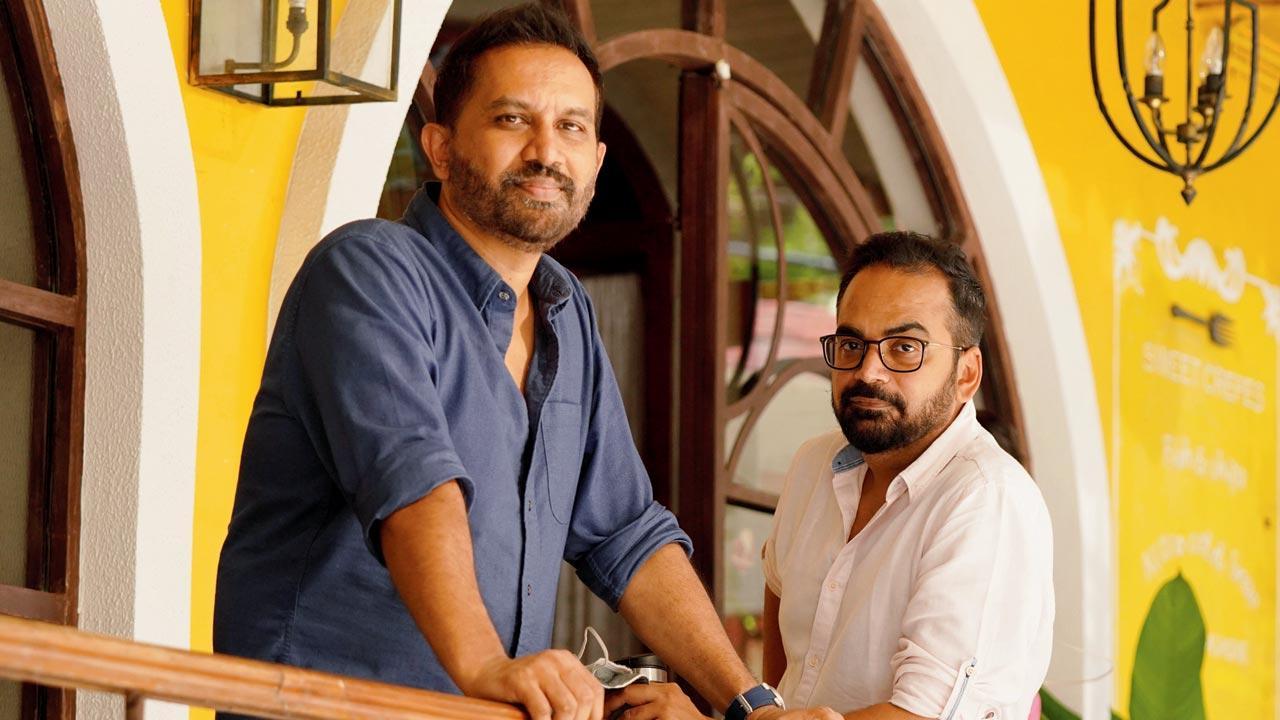
Decoding Raj & DK, the unlikeliest Bollywood directors to claim the ‘family audience’!
Mayank Shekhar (MID-DAY; October 9, 2021)
If this was a Bollywood script, a la DDLJ, we’d start from the exact moment Raj, first locks eyes with Krishna (since no Simran) — perhaps coming down the steps of Tirupati’s Sri Venkateswara University College of Engineering (SVUCE), on their first day in college, with an imagined mandolin tune playing in the background. Somewhere, knowing, because destiny is such, that they’d live together to make Bollywood movies, for babies, happily ever after!
But of course, this is not a Bollywood script. Neither do the typically indie-looking, under-stated Raj Nidimoru and Krishna DK, former engineering classmates from SVUCE, seem like massy Bollywood directors. But they’re as A-list as it gets. If you consider their filmography, that features top-shelf traditional to new Bollywood altogether.
Starting with Saif Ali Khan (Go Goa Gone, 2013), then pairing Saif with Govinda (Happy Ending, 2014), going berserk with Sidharth Malhotra (A Gentleman, 2017), a li’l bit. Casting Rajkummar Rao, Shraddha Kapoor in the year’s sleeper super-hit, Stree (2018).
Not to forget, placing late ’90s Satya’s Manoj Bajpayee back into stratospheric stardom, with The Family Man, Seasons 1 (2019) & 2 (2021). There’s also a Shah Rukh Khan film lined up, which will go on floors, they say, once SRK’s schedules match — since the superstar has enjoyed their script narration, and is very much up for the part.
Who’re these guys, man, and how did their stars so align in a city where everyone sits around with a script? No, there was no meet-cute moment in college, when they first met. Of which they don’t even remember exactly when, or how. As it happens only in desi Nerd Land, they were quiz teammates in college. “Not those general knowledge type quizzes, haan?” DK clarifies. “Music and movie quizzes — where they play songs and ask to identify the singer or composer, or name the movie [from a clip], or who is the director, that kind of stuff.”
This is where I’m guessing they got to collectively express their film geekery — about as much outlet the Nerd Land in the ’90s allowed you, once you’ve signed up for an engineering programme, I guess. The next destination is obviously a ‘starting salary’ (‘package’, best if earned in dollars), pursuing computer programming in the US, living thence the great suburban American dream. Ditto for Raj & DK.
Both are originally from Andhra Pradesh. Telugu is their mother tongue, although English is as much their first language. They’re trained engineers, of course, who eventually moved to Mumbai, to make movies. Starting off with an independent film (99, starring Kunal Kemmu), in Hindi — hardly their strongly suit, in fact decidedly their weak link; gradually veering toward more mainstream Bollywood.
Sounds like both Ram Gopal Varma and Nagesh Kukunoor to me. What’s happening in Andhra — you hardly hear similar stories about directors from other states in the South! “Well, I don’t think Ram Gopal Varma is the same graph [as us]. He went directly with an explosive [start],” Raj corrects me. And he’s right.
Varma’s debut Shiva (1990) was indie, only for a Hindi audience. It starred Nagarjuna, which is blockbuster-grade in Telugu cinema already. The stunning response to which had Bollywood roll out the red carpet for Varma. Although Raj admits, “With Kukunoor, initially, yes, as engineers-turned-screen writers, we were seeing parallels quite a bit, actually. Because he produced Hyderabad Blues, when we were [making our debut film] Flavors in the US.”
What was the flavour of Raj & DK’s debut film like? It had a very American Born Confused Desi (ABCD) vibe to it — a growing sub-genre in the early noughties, with stories about Indian expats and migrants, before Indian-American found more mainstream space in American pop-culture about a decade after.
These movie DVDs were usually available at side sections of desi rental stores in Indian neighbourhoods abroad, that otherwise stocked popular Indian cinema. Low-budget English language indies would include titles like American Desi, American Chai, Green Card Fever, Leela… With local female actors like Sheetal Sheth, Purva Bedi, and often a male character called Krishna, snipped to Krish, who’s confused between both his identities. At least that’s my perfunctory memory of it.
Flavors (2003) as an ensemble cast, slice of life comedy/drama is superior to its then sub-genre, I realise, having caught it on YouTube recently. This is also the same time a shrub of English language Indian films, made by directors for an audience more at ease with English, was growing in India as well. Possibly helped, if not heralded by the cult-like success of Kukunoor’s Hyderabad Blues (1998).
Rahul Bose was almost the poster boy of this Mumbai sub-genre — English August, Snip, Split Wide Open, Everybody Says I’m Fine… Soon enough, Bose once told me, producers in Bombay figured that if they simply changed the film’s language from English to Hindi in, say a movie like Jhankaar Beats, the audience multiplies few times over, automatically. That was the end of the English vinglish shrub!
Raj & DK suggest they knew this already: They knew their “sensibilities were niche” to start with, especially making a “small film” about Indian-Americans, in America, which was not going to be “mainstream, commercial, anyway.” If they stuck to English, even that small audience would get shaved off by many eventually picking up the picture [pirated] online. How do you widen that niche? “By [at least] taking the whole country as our audience, rather than one state [Telugu].” Hence Hindi, which is what Flavors is mostly in.
A decade-and-half later, with the advent of OTT platforms in particular, DK says, “We’ve come to a place, where we are letting the characters speak the language they are most comfortable in. A case in point being The Family Man, Season 1 & 2. While the primary language is Hindi, there are characters who speak English, Tamil, Malayalam, right? That’s a nice space to be in.”
In fact, given the setting —around hideouts of Sri Lanka, among militants of LTTE —The Family Man Season 2 could, for a fair portion, pass off as a Tamil series altogether. And no one seemed to mind, even as it was aimed at a mainstream, family audience — bachhe, boodhe, jawaan — otherwise unused to subtitled entertainment. The other thumb-rule The Family Man Season 2 broke was the ‘curse of the second season’ — the sequel never living up to the love for the original. The post-screening excitement went a few notches up in fact.
But we’ve jump-cut too far. Might be a good idea to go back to DDLJ’s Raj & DK, college mates from SVUCE, who went their separate ways, although within America. They stayed in touch with each other, and with their shared infatuation for films.
Raj hated his job: “It was a huge struggle for me and it kind of gets reflected in Shrikant Tiwari [in The Family Man], being stuck in a job.” “Actually you’ll find this comment on corporate culture in a lot of our films,” DK says, although he wasn’t particularly going through a hard time. He jokes, “By now if we hadn’t got into movies, I’d be the founder of Amazon.”
There are many such sarcastic ones slipped in, with a deadpan expression, throughout this conversation. Which is quite emblematic of their works too — all of which, in some form or the other, have been comedies. Even while they deal with zombies, ghosts, spies or Shor In The City! DK seems the more fun/chilled/gregarious one, while Raj comes across as the serious sort. Although it’s hard to tell for sure.
In the US, working their corporate jobs, living out their long-distance friendship still, Raj was based in Detroit; DK was in Minneapolis: “a significant distance.” At some point, they decided to test their filmmaking skills with a short film, that they shot in Detroit.
DK recalls, “Every Friday, I used to wrap up my software job, have a flight to catch, land in Detroit, we’d shoot Saturday, Sunday, and I’d catch the first flight back on Monday. We did this for about six to seven weeks in a row.” “And he holds the record for missing the return flight seven times in a row,” Raj reminds.
The wrap party, after the schedule, may have been the reason, I’m pretty sure. “No man,” sighs DK, “I am telling you, we are engineers. We didn’t know the concept of a wrap party. We were these people sitting around and planning stuff.” Raj chips in, “We are probably the sanest filmmakers you would associate with a film like Go Goa Gone!”
Even after their debut feature Flavors, Raj went back to his day-job, and DK had been a consultant all along anyway. This prompts DK to offer a piece to aspiring filmmakers, “Don’t quit your day job just yet — keep it going. You will need money, once you’ve used up every ounce of savings to make your first movie. You won’t know when you are going to make that money back.”
This is a cautionary, practical note, to keep both Indian parents and the bank teller happy — quite separate from the ‘3 Idiots’ credo of simply chasing a chimera in a vacuum.
But you gotta get a regular job first, no? Raj & DK held highly employable professional degrees. It’s not common among artistes. Especially if you consider the popular, although debatable theory, on the right and the left brain — wherein the former primarily controls our creative impulses; while on the latter, rests the analytical/logical side. Both never being equal for all.
In mentioning this theory, I may have chanced upon how Raj & DK actually function as a successful writer-director unit. Not that DK can have another nickname, unless you add Bose to tick him off, Raj says, “DK is also known by everyone as Logic King. I am extending logic to a broad sense of the term — understanding sensibilities, structure [of a script], and if it makes sense for a scene or character to be somewhere. That’s his core strength. [With him around] I’ve stopped using the left side of the brain. He is just technically super-sound — from cinematography, that is dealing with the DoP, to editing, even VFX. That would be where I’d fall back on him, and not think too much after.”
On his part, DK believes, “Part of being a film director, and I say this as a writer-director, involves art, yes. But it involves structuring, planning and analyzing everything else as well. It’s not a pure art-form as, say, composing a song, or painting, perhaps — those are pure art forms, which need only that burst of creativity. Of course as a filmmaker, you need that burst of creativity too. But creativity alone will make you look like a madman going around — with a bunch of ideas in your head, that are not structured right. You need to bring them into a format that makes sense as a story — one scene flows to the next, and a character graph that follows. There is also so much organisation involved. It’s everything around that makes [the art] happen.”
As for Raj’s role in the separate right- and left-brains seamlessly complementing, DK says of his partner, “I am trying to find the right word. I think the word is ‘disrupt’. Right when you think it is all good, Raj is — no, this is not good, and that is not good. Let’s redo all that! He is looking at all these small things — this guy doesn’t look like a millionaire, not old/young enough, he’s not saying it right, not wearing the right clothes…”
Raj obviously has a complaint. He doesn’t think DK is making him sound right — after he’s heaped his partner with all the compliments! But of course, DK is referring to perfectionism I guess — a cliché Aamir Khan has lived with all his life for similar reasons.
But Raj agrees, “People [from the set] will call and say, ‘I think, sir, you better come to the location’. And DK will say, ‘You better! I have said okay to it, but don’t complain later’. Invariably I have gone to a place that was done/locked, and said, ‘I like this, and this doesn’t work.’ People are like, ‘F*****, I knew it!’”
Although Salim Khan and Javed Akhtar never formally directed films, as Bollywood’s most successful screenwriting pair, the same was said of their individual strengths too. While one (that is Javed) looked into the minutiae of scenes, the dialogues, and the unsaid; the other (that is Salim) was more into getting the wider expanse, and the larger picture right.
It helps that Raj & DK write films together first, and by the time they’re on set, “most issues have already been hashed over.” The approach to filmmaking that is common between both though, and this, they attribute to their educational training, is “reverse engineering”. Which is really how they learnt to make movies. As Quentin Tarantino says when asked if he ever went to a film school, “No, I went to the films!”
Up until Goa Goa Gone, Raj & DK say they’d never been on a film set — as opposed to shooting on location. Let alone assisted anyone, or trained under a master. DK feels, “The engineering background came in handy in structuring and analysing whatever good creative ideas we could get. And then we reverse-engineered how somebody else made a movie.”
Raj explains further, “We had to teach ourselves. You are so familiar with the films you watch. That is the only familiarity you have — to, say, [Martin] Scorsese or [Steven] Spielberg, or whoever you are watching that you can connect with. Now the question is, can you make it as good, or even close enough? The idea was to figure out how a scene was made, and why is it looking so good?”
Scorsese or Spielberg are obviously the more obvious examples to emulate, or learn from. But if you glean through Raj & DK’s top 40 favourite films of all time, as they listed in a blog recently, there’s essentially a wide smattering of late ’90s indies, chiefly American, but also otherwise.
Invariably a list of popular cults within it too — Pulp Fiction, Fight Club, Boogie Nights, Lock Stock and Two Smoking Barrels, etc. There is hardly an Indian film — okay, I spot Varma’s Siva (1989, in Telugu). Oh, no Bollywood movie at all? There is Hrishikesh Mukherjee’s Gol Maal (1979)!
DK admits, “Honest truth be told, Gol Maal also, I watched first in Tamil; the Rajinikanth version. Then someone said, oh you loved the Tamil version? You should watch the Hindi movie now. And which was really good. That’s why it made it to the list. Otherwise the Tamil version would have!
Raj: “Correction here. There was [only] one Hindi film, yes, but quite a few regional films. That is what we were watching.” DK: “We used to watch Khuda Gawah [1992] — just one big marquee film used to come where we were anyway. That’s all we would get to see. And our [knowledge of] Hindi is not exactly ‘Mahabharat Hindi’, so you pick anything you understand!”
This might sound like a handicap. But it’s proven to be an advantage for Raj & DK in Bollywood. The voice that’s developed seems wholly non-derivative to popular Hindi cinema from the past. The western indie influences are strong alright, again not in a sense of a rehash — as writers, they tend to look within to mine stories still. In each of their spheres, whether in corporate jobs, or two young men in Mumbai out to make Hindi movies, they’ve operated like the observant outsider — piling on experiences into entertaining fiction.
DK says, “Even if you see our earlier films, until a few years ago, I could draw parallels to each character and say where those traits were picked from — from real life, mostly.”
We go over a few instances. Starting with Bombay films itself: The scene, for example, in Happy Ending, where Govinda’s character (who plays a Bollywood star) is offered two DVDs for a script — Meet The Parents, first half; Meet The Fockers, second half.
This happened to them: “It might be slightly exaggerated, but the idea came [from the fact] that these tapes were given to us [by a producer] to direct. The exact same movies. And when we said, not our genre, he immediately came up with two more DVDs — Analyze This, first half; Analyze That, second half!”
Even the names of characters in Stree (Jana, Vicky, Narendra etc) are picked from their friends growing up in Tirupati, including the “bizarre” refrain/idea of “making friendship with a girl,” which had become buzzwords around them. “She is available for friendship. What does that even mean? How far does this friendship go?” Raj laughs.
The young girl Dhriti (Shrikant’s daughter) in The Family Man is inspired by Raj & DK’s friend’s daughter, although she has disowned the character since the second season. The boy Atharva is partly based on Raj’s nephew.
Likewise, the pesky boss lording over Shrikant Tiwari in The Family Man 2 is an amalgamation of all the crappy, techie bosses they’ve worked with, and wished to publicly drill a hole in their heads. What about: “Don’t be the minimum guy”? I’ve come across a few websites explaining the ‘minimum guy’ matrix/concept as a legit HR principle! It’s something that Raj & DK simply came up with.
Raj says, “We were just looking at different quotable quotes on walls. All of which we had seen before — don’t be this, or that, or rise up, stuff like that. We just wanted to coin a word, in a kind of incorrect English slogan, inspired by Trump.”
It’s a sort of continuation too, DK recalls, “There was another phrase in Go Goa Gone, where the characters say, ‘What do we know? What have we learnt?’ They keep saying this. It’s a slogan from the telemarketing company they work at. We also wanted to do a little ode to Steve Jobs, so we put his picture up there, with that Steve Jobs quote that we made up.”
I’m actually quite curious about how Go Goa Gone got made at all for wide theatrical release, with Saif Ali Khan in the lead — a movie ahead of its time, since there hadn’t been an A-grade zombie Hindi film thus far, in order to do a send-up of the genre itself! It’s like the comic spoof appeared before the real thing. That green-lighting seems easy peasy enough. Kunal Kemmu had already been cast in the film. He took Raj & DK to meet Saif, who first wondered, will people in India watch a zombie film?
DK says, “We told him only half the story. At that interval point, he was literally rolling on the floor, laughing. Especially when he heard his gangster character with the name Boris, who is Indian, pretending to be Russian, to blend in, because he’s in Goa. That we’d spike and colour his hair blonde, he’ll have tattoos, and a shot gun. Halfway he said, ‘Yeh toh ch****apa hai, aur mujhe yeh karna hai [got to do this dumbf***ery!]”
The film remained within its original zone, despite the mainstream/Bollywood frills attached to it. Just as their second film in Mumbai — Shor In The City (2011); a manic take/tribute to the city itself, that brought them critical notices, and probably first placed them on the Bandra-Andheri map.
They had already planned the film as a low-budget indie, with multiple newcomers, and funds sourced from friends — a big chunk kept aside for having the Indian-American star Sendhil Ramamurthy on board, who was already charging significantly less than his market fee.
Ekta Kapoor was looking for scripts for her label ALTBalaji. Raj & DK gave her the idea they could work on, while casually mentioning the movie they were going ahead with anyway. She came on board Shor In The City. The film was a smooth sail, although DK says it took them five years to cast for their first film in Mumbai, 99 (2009), which also had Vinod Khanna in a key cameo.
There are two ways to decode the unlikely Bollywood success of Raj & DK in a city that’s traditionally been wary of attempting too many untested concepts in the mainstream. For one, they simply don’t sit on scripts. I cite to them the example of a friend who once met the Japanese master Akira Kurosawa. Kurosawa told him, you’ve got to be like a magician pulling out scripts like playing cards from various pockets — from under the shoe, behind the collar — depending on whatever might interest the producer.
That’s really how it works for us, DK says. They’ve been constantly writing, all these years. Raj remembers, “We were talking to a few filmmakers the other day, and they were struggling to make another film. We went back and counted scripts/ideas like poker chips, and realised, we have 20-plus scripts, and 70 ideas at various stages of development. The energy goes there!”
Also the mental distance from Bollywood allows them to approach their work without preconceived notions, for better or worse. Of all their achievements, Raj & DK may go down as rare filmmakers to pull off a shoot with Govinda, without delays, and no heartache whatsoever! “Oh no, he was amazing — only so happy to back before the camera.”
DK admits, “When I see Rajinikanth or Chiranjeevi in the South or Shah Rukh Khan or Salman Khan, that aura stays no matter what you say. But if you are going to work with somebody, you get into the nuts and bolts of it. We were meeting Kamal Haasan last week, and we kept thinking after the long meeting, if we should take a selfie, but we couldn’t!”
Raj extends the same worldview, “I don’t think we are fan boys, that way. Even people used to ask us, who is your favourite actor, director? Well, I like this film, and this is what I learnt from that film. But there are of course a few people, actors, musicians, we are in awe of. I have basically made a list of seven people I would not shy away from asking for a picture with.”
Subsequent interviewers must ask Raj who those seven are. I realise it’d be an intrusion on their time. You can barely profile Raj & DK looking back, since there’s just so much they’re working on simultaneously. DK lists, “Our series with Shahid Kapoor and Vijay Sethupathi is in production. We wrapped up work on a cool period, satirical comedy series, set in 5th Century, called Golconda. We have another series on the floor. We have Citadel, produced by Russo Brothers, that we aim to start shoot in a few months. Then there is The Family Man 3. There are a couple of films to start as well, since they took a backseat because of the pandemic…”
Speaking of the Russo Brothers, the most commercially successful director duo in the world — in fact, all other director teams we know are siblings; whether in Mumbai, Abbas-Mustan (Burmawalla), or abroad, the Coens, Wachowskis… Not Ashwiny Iyer and Nitesh Tiwari, but they are spouses. A natural creative chemistry that is hard to match. Very non-DDLJ Raj & DK, 48, only three months apart (Raj is elder), in that sense, are exceptions.
This conversation over Zoom is taking place from their respective homes, which is to say that while they seem like brothers from other mothers, indeed sharing their left and right brains, they do live separately.
Raj has to leave the chat early, since his guests are over for his father’s birthday party. DK wishes, “Say happy birthday to your dad.” Raj replies, “Okay, cool. Please say happy birthday to your mom too [same day].” Okay then.
Go Goa Gone was slightly western; Bhoot Police is more desi-Saif Ali Khan
8:12 AM
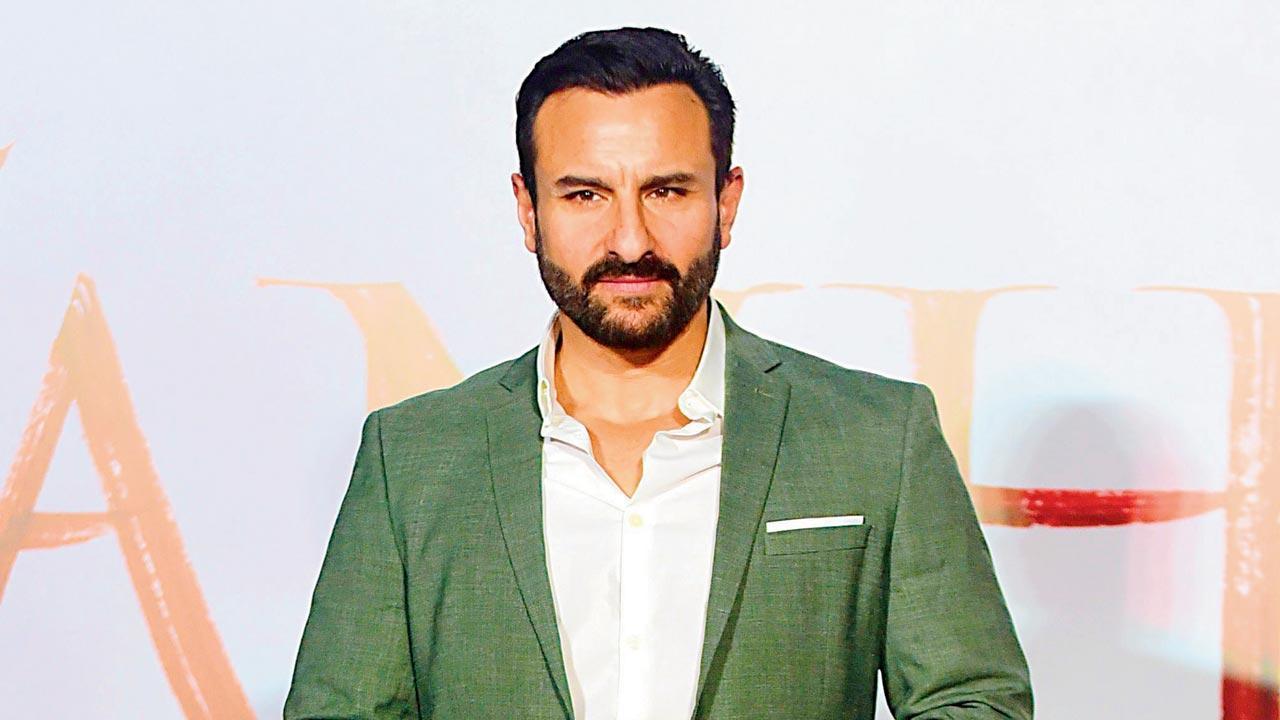
Taking a stab at horror comedy with 'Bhoot Police' after his zom-com 'Go Goa Gone', Saif says his characters reflect the grey shades present in all of us
Uma Ramasubramanian (MID-DAY; September 8, 2021)
Don’t give him a unidimensional, all-white role — he’ll probably balk at the idea. Saif Ali Khan revels in playing morally grey characters, complete with vices and vulnerabilities. He cites the example of his upcoming film Bhoot Police, in which his protagonist is far from the typical do-no-evil hero. The actor plays a fake ghostbuster, only too happy to fleece people who believe in spirits.
“[My character] is not all-good or all-bad; he has got a nice mix of [traits]. It’s more interesting to play characters that are edgy. In life, people are not black or white; most of them lie [somewhere in between]. It’s more natural to play characters like that,” says Khan. Every once in a while, he veers into the all-black territory, as he did with his Udaybhan Singh Rathod act in Tanhaji: The Unsung Warrior (2020).
But for now, he is in the mood to make people laugh. “I enjoy horror comedies. Go Goa Gone [2013] was slightly western since the concept of zombies was alien [to Indian viewers at the time]. Bhoot Police is more desi, and the supernatural elements are rooted in our culture.”
While the horror comedy — also starring Arjun Kapoor, Yami Gautam and Jacqueline Fernandez — is slated to drop on Disney+ Hotstar, the actor admits he would have loved to see it on the big screen. “It would have been nice if the film released in theatres because horror and comedy lend themselves well to the collective experience. That said, we’re lucky that we got a platform, and the producers could make a little profit.”
Khan doesn’t deny that the OTT revolution has changed the dynamics of the business. He is relieved that films now are gauged by their merit. “It’s no longer about day-one numbers. Recently, Farhan [Akhtar] said, ‘You can’t hide behind the numbers anymore; it has to be a quality movie.’ I used to think that [box-office] numbers were a good sign, but now the rating system is different. Now, the audiences have also [evolved]. Maybe my film Kaalakaandi [2018] should have released on OTT. I think it would have done better.”
Amit Mistry wanted longer roles so that he could always be on set-Raj Nidimoru
8:15 AM
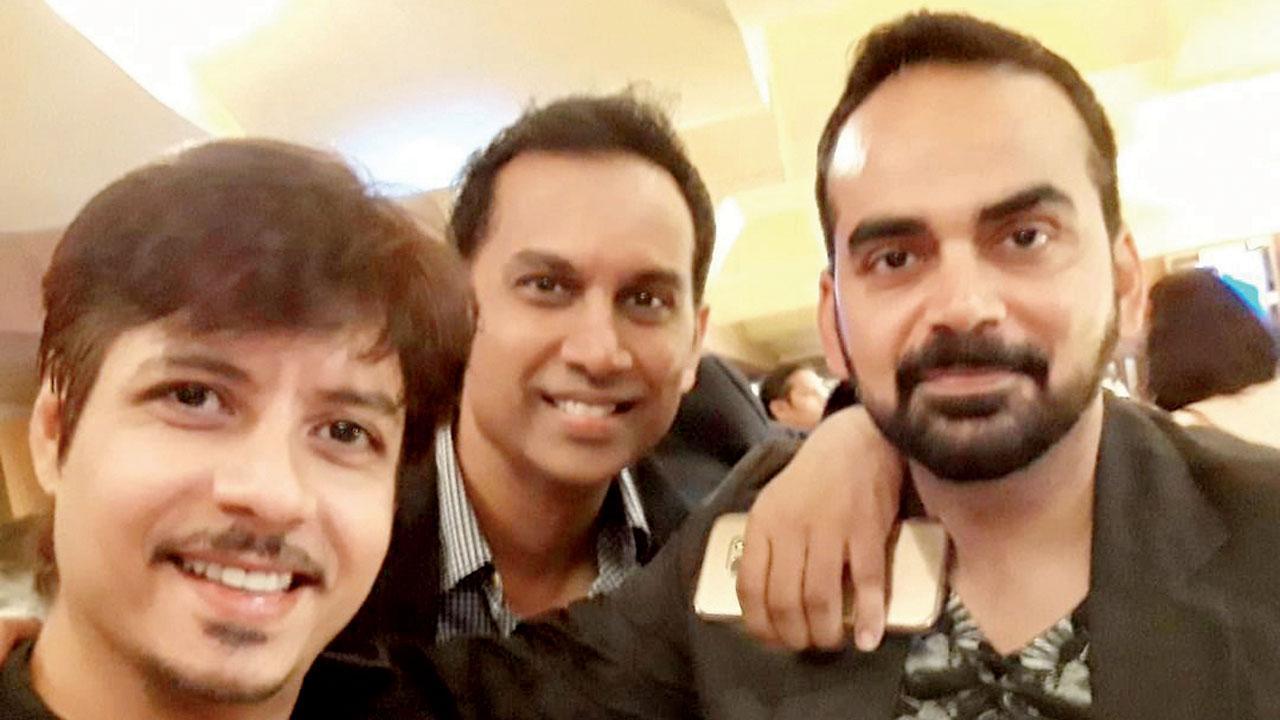
(From left) Amit Mistry, Raj Nidimoru and Krishna DK
As Bandish Bandits actor Amit Mistry breathes his last, director Raj of Raj-DK recounts working with him on four projects
Uma Ramasubramanian (MID-DAY; April 24, 2021)
Raj Nidimoru, one-half of successful director duo Raj-DK, remembers that Amit Mistry had a single complaint. “He would say that he wanted longer roles so that he could always be on the set,” said Nidimoru, hours after the untimely demise of the 47-year-old actor. The popular Gujarati and Hindi film actor, who featured in supporting parts in Shor in the City (2011), Yamla Pagla Deewana (2011) and A Gentleman (2017), passed away last morning at his Andheri home after a cardiac arrest. His most acclaimed work came last year in the Amazon Prime Video series, Bandish Bandits, where he shone bright as musician Devendra Rathod.
It’s a deeply personal loss for Nidimoru who had first collaborated with him on the crime comedy, 99 (2009), and went on to work on four projects. “When we met for 99, we immediately knew he would become one of our favourite actors. To find good actors is a joy, and he was a gifted artiste who could make any character his own. He was a happy guy, and would improvise with every take. He was one of those actors who never got his due. We tried to cast him in Go Goa Gone [2013] even though he didn’t fit the character,” said the director.
Given their fondness for Mistry, the director duo had roped him in for their upcoming production, Prakhand Pandit. “He shot in Mumbai till April 5, after which the shoot had to be halted due to the prevailing scenario. In fact, as we were developing a new story, we had already written a character for him.”
Amar Kaushik always saw the actor in me-Abhishek Banerjee
8:14 AM

After Stree and Bala, casting director-turned-actor Abhishek Banerjee reunites with director Amar Kaushik for Varun Dhawan-led Bhediya
Uma Ramasubramanian (MID-DAY; January 5, 2021)
From his spine-chilling act as Hathoda Tyagi in Paatal Lok to his moving performance in Unpaused, Abhishek Banerjee had a brilliant run in 2020. Now, the casting director-turned-actor is set to reunite with Bala (2019) director Amar Kaushik for his horror satire, tentatively titled Bhediya. The project, fronted by Varun Dhawan and Kriti Sanon, is expected to go on floors next month.
"I knew Amar bhai when he was an associate director, and I, a casting associate. We met on the sets of No One Killed Jessica [2011]," recounts Banerjee, thrilled to team up with the filmmaker for the third time. It was, after all, in Kaushik's Stree (2018) that Banerjee caught everyone's attention with "Vicky, please" — a dialogue that spawned numerous memes and jokes. "He always saw the actor in me. In fact, he would always ask me, 'Tu yeh role kyun nahin kar leta?' I used to tell him that I will act when the time is right. Then, he offered me a scene in Go Goa Gone [2013], promising me Rs 5000 for an hour's work. I did the cameo only because I trusted him. Eventually, when I saw Aaba [Kaushik's first short film], I realised that Amar bhai is a supremely talented director."
The actor reveals that he chased Kaushik when the latter began mounting his first feature film. "I chased him till I got the role of Jaana in Stree. The day I watched the movie on screen, I confessed to him that I am willing to be even a prop in his films," laughs the actor, who has Rashmi Rocket, Aankh Micholi and Helmet in the pipeline.

I am not going to look like an old man for a while-Saif Ali Khan
8:32 AM

Saif Ali Khan reacts to son Ibrahim’s social media caption, ‘Me and my old man’; reveals next production could be a true-life story
Roshmila Bhattacharya (MUMBAI MIRROR; March 18, 2020)
 Your last film, Jawaani Jaaneman, was a fresh spin on the stereotypical father we’ve seen in the movies. How did you merge your on-screen avatar with your real-life role?
I didn’t, actually. My on-screen avatar wasn’t really much of a father. Fatherhood came to him as a surprise and the heroism of the character was in accepting the tremendous responsibility that suddenly came upon him. To look after the girl, Tia, who turns out to be his daughter, and let her stay with him, is what makes Jazz a hero. In real life, fatherhood is all about being present… about love, respect and closeness. A father is a guide and an anchor in his children’s lives. They should be able to come to you whenever they need to, you should be able to help them wherever they need help.
It must be encouraging for you as an actor and producer that the film was accepted by the audience. It reinforces the fact that our cinema is finally coming of age.
Cinema is circular in its growth and has links with the economy. For a while, we lost the plot, but now, there is a huge renaissance across platforms. Not only are we being offered lovely roles, but my generation and the one after mine can now think as actors. Earlier, to survive as human beings, we had to structure our lives as normal people. But now, we can immerse ourselves completely in a role and everything else becomes secondary. That’s an important change. It’s the age of the actor and we can now push the envelope. We’ve been doing it all along, but now it’s becoming the norm.
What’s next for you as a producer?
At the moment, we are negotiating for the rights to make a biopic. I can’t divulge details, but it ticks all the boxes for an interesting, box-office-friendly story. Hopefully, that’s what we will produce next.
Another period drama like Tanhaji: The Unsung Warrior?
No, it’s a contemporary subject.
And as an actor?
Well, shooting for Bunty Aur Babli 2 is on… And then, there’s Bhoot Police.
The last time we spoke, you had mentioned that you would jump into the horror-comedy after you had a couple of hits to your credit.
(Laughs) Yes, I did, and I’m happy to report that they are going ahead with the project later in the year. Right now, the makers are trying to get an interesting cast in place. Bhoot Police is something I’m really excited about.
Recently, your son Ibrahim Ali Khan posted a picture with you and captioned it: Me and my old man. Instantly, your fans took umbrage because they thought he was calling you a ‘buddha’, when ‘old man’ is actually a phrase for father…
Yeah, it was quite funny. Being older doesn’t bother me and the fact is that I am Ibrahim’s old man. But I’m keen to be fit and look my best. I’m not going to be looking like an old man for a while, but I understand the irony of it.
Your son is a good-looking young man and is interested in following in your footsteps. Will you be launching Ibrahim soon?
I don’t know if I will launch him. It’s an option and films are certainly a viable career choice for him. He’s sporty and likes the idea of being in the movies rather than pursuing an academic job. No one in the family, with the exception of his sister (Sara Ali Khan), have been interested in the latter anyway.
What advice would you give Ibrahim, being an actor yourself?
It’s a different universe now, with different benchmarks. I would tell him to be well prepared and choose his films carefully.
Your daughter started out well, but her last film, which took your Love Aaj Kal forward, hasn’t done well.
I am very proud of Sara. Hits and misses are a part of the game.
What do you think of her Coolie No 1 remake?
Remaking Coolie No 1 seems like a good idea… And working with Varun Dhawan seems like a brilliant idea to me.
Dinesh Vijan is writing a role for you in the Go Goa Gone sequel because the zombie-hunter Boris was essential to the plot of the first part. What are your memories of the 2013 horror-comedy, which you had produced with him and Sunil Lulla?
My memories of the earlier film are that nobody wanted to make it. I was the one who said, let’s do it. I do not have the rights to the sequel, but I love the franchise, and if approached with a good role, I’d enjoy doing it.
Dinesh describes Go Goa Gone 2 as a stoner-comedy about the world coming to an end. Given the economic recession and the Coronavirus scare, it doesn’t seem like an implausible scenario currently...
We’ve had economic crashes and viral scares and while it is definitely a cause for concern today, we’ve found a way to counter it in the past and we can only remain positive now.
What did you think of Angrezi Medium?
Irrfan Khan is incredibly watchable.
And your wife, Kareena Kapoor?
She is amazing, as always. I like the way she slaps on-screen. I hope I’m not at the receiving end, ever.
Long road to Goa: Here's why Go Goa Gone sequel hasn't taken off yet
8:36 AM

Eagerly waiting for the sequel of Go Goa Gone, Kunal Kemmu on why the horror-comedy is taking time
Upala KBR (MID-DAY; March 1, 2020)
With Malang behind him, Kunal Kemmu is gearing up for the second season of his web outing Abhay and Rohit Shetty's Golmaal 5. Despite several announcements, the sequel to Raj Nidimoru and Krishna DK's Go Goa Gone (2013) hasn't taken off yet. "I don't have the intellectual property rights [of the film]. The producers and the logistics involved has to come together [for the project] to happen," says Kemmu, who claims that everyone involved in the zombie-comedy is eagerly waiting for the film.
He explains that three announcements have been made about the film. "There have been times when we got ready to start but something fell through. " He adds that he is still in the dark about when the sequel will commence. Kemmu expresses that he is eternally grateful to Saif Ali Khan for coming on board. "Saif not only believed in it but acted and produced it. I don't know any other actor who would colour his hair blonde to play Boris."
We got clarity that we should stick to what we believe in and that is paying off now-Raj Nidimoru and Krishna DK
8:00 AM

Says Raj Nidimoru, of the writer-producer-director duo Raj and Krishna DK. They talk about their association and why they “focus on standing out and not just making money”
Kavita Awaasthi (HINDUSTAN TIMES; November 19, 2019)
After completing 10 years in the business, the writer-producer-director duo, Raj Nidimoru and Krishna DK are glad to have stepped into the digital platform. The duo enjoy working on never-done-before concepts and love adding quirk to each project, including Shor In The City (SITC; 2011), the quirky Go Goa Gone (2013) and their recent hit Stree (2018). Excerpts.
What kind of reactions have you got for the web series The Family Man (TFM)?
Raj: It has been overwhelming and amazing to see what a web show can do. Some people dissuaded us saying we are filmmakers but I am glad we took the plunge. There were so many layers from satire, friendship, terror plot, current affairs, family life, which is what we were excited about. Given that season one was so successful, there is a lot of expectation and excitement about the next season.
DK: Making a web show is a humongous task but it also allows us to explore a subject more deeply than what you can in a film.
What were your expectations while working on the show?
DK: For us, coming from the feature film background, we didn’t know what to expect. There are no box office figures, so we only got a sense of what people thought once we got the reviews and reactions on social media. And what’s lovely about web series is that every week we have new audiences watching it. The life cycle lasts longer.
How do you look back at your decade-long association?
Raj: We were two friends trying to make a film, not knowing how to make one. We taught ourselves everything from writing, producing and directing. We wanted to make movies that are unique and not run-of-the-mill. We didn’t focus on making money but standing apart. We didn’t want to get into the ‘business of films’ but focus on creation. It took four years for our first film to be made. It has been a long journey since then. Today, I feel we are in a happy space and making what we want to, be it Stree or TFM. Few years ago, we got clarity that we should stick to what we believe in and that is paying off now.
DK: Our initial films like SITC got good reviews but didn’t work at the box office. But after SITC came Go Goa Gone and people wondered, ‘who are these whacky guys?’ The last couple of years have been good in terms of the work that we have done. Also turning producers has enabled us to put out a lot more stories and have control over our own creations.
I like to be known as a successful actor but also want to experiment-Saif Ali Khan
8:34 AM

Mirror reader Milind Vora quizzes his favourite actor Saif Ali Khan on ‘indulgent’ film choices, soul food and his obsession with London
As told to Kunal Guha (MUMBAI MIRROR; November 10, 2019)
When I was introduced to him, Saif Ali Khan’s first reaction was, ‘Aren’t you a politician?’. “No, that’s Milind Deora, I’m Milind Vora,” I clarified. Being a fan of the actor who has clocked 30 years in films, I’ve closely followed Khan’s career — from the goofy comedies to the full-blown espionage thrillers. That he started out with multi-starrers before flying solo, makes me wonder if it was a deliberate strategy. “It is a safer option. If you run into trouble at the box office, it can help mitigate the risk and sometimes, it’s not bad to share credit provided the same people are willing to stand by you to share the blame,” says the actor, who featured in blockbusters such as Yeh Dillagi and Main Khiladi Tu Anari along with Akshay Kumar.
Khan, then, solidified his place as an effective second lead before jumping into numerous romcoms, which were lapped up by fans and critics alike. So what drove his film choices? “It’s just an instinct but there must be a pattern. I like to be known as a successful actor but also want to experiment. The idea is to have a good time, and hopefully, no one loses money in the bargain,” he says. But his recent cinematic experiments have been harshly received, turning this theory on its head. “I agree that some of my choices have been a bit indulgent, and that can be a bad thing. Box office success has to do with what people want to watch,” he says, assuring us that his forthcoming releases, Bhoot Police and Vikram Vedha are crowd pleasers.
Just like with films, Khan shares that he has a varied taste in music. “Last night, I was listening to Ted Nugent’s What The doctor Ordered, which is classic rock. But I also love Jazz, Funk, Blues and other genres,” he shares, adding that despite featuring in many, he doesn’t have an appetite for love stories. In fact, in recent years, he has even avoided featuring in them. “The romcom genre of Hum Tum and Salaam Namaste has changed to Badhaai Ho,” he says.
The actor has also skipped the wave of films set in mofussil towns. Perhaps, he was limited by his urban screen image? “I keep saying, ‘I want to play a struggling tailor from a small town’, but my management won’t let me. This is what Harrison Ford warned us about — ‘the less you know about an actor, the easier his job will be’. Hopefully, some nawab roles will come my way soon,” he jokes.
Khan acknowledges the recent renaissance of character actors. “From actors such as Nawaz [Nawazuddin Siddiqui], Pankaj [Tripathi] and Irrfan [Khan], you learn that command over language is crucial. My English is better than my Hindi, so I would be limited in expressing myself in that language. Also, Rajkummar Rao teaches you the importance of putting a thought across to the audience.”
With a career complete with hits and misses, Khan has no regrets, but feels that “Go Goa Gone should’ve gone down better than it did”. “Sometimes, we make mistakes in storytelling and drafting characters. For instance, Agent Vinod should’ve been more desi and serious.” Khan also believes that he’s not equipped for every film but has become more accepting. “I couldn’t have done Laal Kaptaan or Tanhaji a few years ago. If you’re not a trained ballet dancer, you cannot do Swan Lake,” says the 49-year-old, adding that “a lot of my energy comes from my haircut.”
A foodie with a nuanced palette, when Khan is really hungry, he turns to junk food. “The soul gets filled with healthy food like fish and rice or dal-chawal but when I am hungry, my mind immediately goes to pizza or popcorn. So the trick is to never be too hungry.” I’ve also read that he loves to slip away to London for extended breaks. So what does he do there? “Mumbai is a good city to work and achieve something, but in that rush, the respect for some of the finer things gets lost, at least in my world. And the nasty climate keeps one from spending time outdoors. So my favourite thing to do in London is to go and sit in a park, or take my son for a walk.”
As a content creator, I’m only trying to gauge what can break the clutter-Dinesh Vijan
2:32 PM

Rachana Dubey (BOMBAY TIMES; July 27, 2019)
Filmmaker Dinesh Vijan and director Rohit Jugraj have one thing in common - they’ve both learnt the ropes of their business by taking risks. Dinesh decided to signed Rohit to helm Arjun Patiala, a spoof comedy, after seeing one of his Punjabi films with Diljit Dosanjh. Dinesh and Rohit had a frank and fun conversation with BT about their film, which also features Kriti Sanon and Varun Sharma, and the changing face of the comedy space. Excerpts:
Comedy as a genre is gradually changing with newer sub-genres being introduced to the audience. What do both of you make of this trend?
Dinesh: Comedy is the most successful genre that we have today. David Dhawan is one of the most successful filmmakers we have in the industry, in terms of commercial success, and he understands comedy the best. So far, all of my films have had an element of humour in them. The thing is aap logon ko hansa-hansa ke kuch batayenge toh woh jaldi samjhenge. We spoke of live-in relationships with a family angle in Hrishikesh Mukherjee’s style with Luka Chuppi. That made the film accessible to everyone. Even in Arjun Patiala, the humour is such that it can be consumed by everyone.
Rohit: Punjabi cinema has some sort of hold on comedy; they do it really well. I think the audience has been ready for variety in comedy as a genre. We, as filmmakers, have taken longer to convince ourselves to try something out-of-the-box.
Dinesh, after successful films like Stree and Luka Chuppi,you decided to back a film like Arjun Patiala, which is a spoof comedy – a genre that has not been explored much in Bollywood…
Dinesh: I would say that this is the most experimental film we have made so far. While it’s out there, in a strange way, it’s also risky because we are breaking the fourth wall and talking directly to the audience. My company and I have backed films like Stree and Go Goa Gone in the past, which explored new territories. Even here, while there is a pre-existing base, the film is self-deprecating, which is quite new for the business and us. It will be interesting to see how many people this appeals to. We’ve broken the very format of narrating a film where we are saying this is a mandatory love song or an item song. We’ve turned the cop genre on its head.
Over a period of time, you’ve tapped quite a few unchartered territories, as a filmmaker, business-wise isn’t it safer to try something that’s worked in the past?
Dinesh: It’s a spoof comedy that makes fun of itself with a clear story and characters that take themselves very seriously. We haven’t made fun of any other actor or film while trying to do this because it’s not fair. For us, the real challenge was to tap those people who didn’t laugh when they saw the trailer because they didn’t quite get the humour in it. As a filmmaker, I have always experimented with my content, starting with Being Cyrus and Go Goa Gone. Badlapur was an experiment with Varun Dhawan playing such a dark character at the beginning of his career. Stree was a horror-comedy, and films like Angrezi Medium, Bala, Imtiaz Ali’s next, Roohi-Afza and Made In China are also content-driven, with an underlying layer. I’m proud of the line-up. Arjun Patiala leads the pack because it opens first. I remember, when released the trailer of Go Goa Gone, people didn’t know how to react. As a content creator, I’m only trying to gauge what can break the clutter over the next two years. I’ve never taken the audience for granted. My film is an experimental product, and I’m not shying away from that.
Self-deprecation is neither easy to depict nor easy for an audience to consume and accept…
Dinesh: I was ridiculously confident about Stree and Luka Chuppi because somewhere, I knew they would work. Go Goa Gone was an experiment, a zombie film where no one knew how the audience would react. These genres, over a period of time, develop a cult following, which takes time and effort. When writers Sandeep Leyzell and Ritesh Shah came to me with Arjun Patiala, I felt they had the right intent – they wanted to make a film that laughs at itself.
Rohit,you made your last Hindi film, Superstar,a few years ago.Between that and Arjun Patiala, you’ve made some Punjabi comedy films. Why make a comeback with a spoof comedy?
Rohit: The first Punjabi film that I made was Jatt James Bond, which was a thriller-comedy. After working in the Punjabi film industry, I realised that there could be so much variety in humour. For me, it’s a form of spirituality. I have realised that Punjabis generally tackle everything with a pinch of humour and they get past things or drive home their point well. I had gone off the radar from Hindi movies because here nobody lets you make the films you want to if your previous films have flopped. It had happened with me. When I moved to Punjabi films, I got a chance to work with top stars like Diljit Dosanjh and Gippy Grewal, and I understood a lot about stories and the numerous ways in which they could be told. About a year ago, when Dinesh and his writers told me about this film, it hit me somewhere. I was blown away with just how self-deprecating they intended it to be. Writer Ritesh Shah is known for some serious films, and I wasn’t expecting this from him. When Dinu said that we have to break the forth wall and talk to the audience, it was important to understand the four walls to know which one to break. My team had even warned me against me doing this film, but I decided to give something unique a shot.
How difficult was it to explain a film like Arjun Patiala to its actors?
Rohit: They came around fairly easily because they liked their parts; we have had a deeper discussion in this interview than we had with them (laughs!). They just had to believe in the characters and do their bit.
What do you make of the spoof comedy genre which is already quite popular in the West?
Rohit: I think films like Hot Fuzz, Scary Movie and Deadpool are quite popular. Spoof comedies from the West have been massy, and yet, very sophisticated. Their humour has grown on the audience over time. The ultimate thing in any film is its entertainment quotient. We don’t need to have a hangover of the West. If our superhero film doesn’t entertain, the audience will question it. The reason people are more accepting of what they see in Hollywood films is because they say things convincingly and in an entertaining manner. In our spoof comedy, we’ve not aped anything from any existing film. We have done our own thing, and if it entertains, irrespective of whether one has seen a spoof comedy before or not, people will like it.
Horror films are graduating out of their B grade status-Raj Nidimoru and Krishna DK
8:19 AM

Filmmakers Raj Nidimoru and Krishna DK decode the changing scenario of content-driven horror films in India
Rachana Dubey (BOMBAY TIMES; March 6, 2019)
As writers, they probably wouldn’t have achieved what they did by turning producers for Stree. The film rebooted the horror genre. Now, as they gear up for Stree 2 and the sequel to Go Goa Gone, writers and directors, Raj Nidimoru and Krishna DK, who wrote the story for Rajkummar Rao and Shraddha Kapoor’s much-loved movie, speak to BT about introducing freshness to the horror genre and what they plan to do with their upcoming films. Excerpts:
Stree’s success laid the foundation where you and your colleagues can experiment with new content and it also showed the audience that horror films can be different. What are your thoughts?
KRISHNA DK: You know, what is really reassuring here and what gives us confidence, is that we stuck to our kind of absurd and offbeat-meets-mainstream story and it was accepted. It’s the first one of its kind that we could attempt after Go Goa Gone. By becoming producers on the film, we could ensure that it gets made the way we had envisioned. We knew people would like it, but we didn’t expect it to go the way it did. It made people aware that horror can also have shades. It’s the resurgence of the genre, and we’re not the first ones to state it here. We’re gearing up for Stree 2 and Go Goa Gone. There are many more films that are now being made in the horror space. The only worry is that those films, including two of ours, should now add newer dimensions to the storytelling. Otherwise, the space will become repetitive again.
How do you redefine a genre that is most associated with cheap thrills and more often than not, is explored by B-grade films?
RAJ NIDIMORU: Horror is evolving as a content space, the films are graduating out of their B-grade status, particularly in the international market. There, the horror films made in the last five years alone have been far superior to the ones made prior to that. When the genre was new, of course, there was a lot of originality in thought. Over a period of time, things became repetitive, particularly back home. It’s either gore or sex that usually gets sold under the horror label, but now, maybe it will have more meaning, stronger stories and a change in approach by the filmmakers.
Some of the most acclaimed horror films in the past, like Mahal (1949) and Bees Saal Baad (1962), set the stage for great horror writing in Hindi cinema. However, would you say that filmmakers like the Ramsay Brothers in the ’80s and the Bhatts towards the ’90s diluted it with titillating content?
RAJ: I don’t blame anyone, but I think the greatest horror films have always been atmospheric. They have created an atmosphere and transported you into a different world. I agree Hindi cinema had some brilliant horror films at the outset. Then, people discovered the jump-scares — a character walking into a passage or a room and boom... A cat jumps out of nowhere! It’s startling, but, after a point, it’s also quite funny. That’s where it all became repetitive, because I’m not sure if people could think beyond this or didn’t want to think beyond this. Clearly, it had worked for them for some time, but it wasn’t going to work forever.
KRISHNA: That’s primarily why horror films gradually came to be seen as B-grade films with songs and sex. It was a mishmash. India is unique and has distinct tastes from the rest of the world, but somehow people have always stuck to doing what has previously worked. Thankfully, Raj and I thought more as a discerning audience and went with what excited us. We didn’t want to make a film like ‘XYZ’ because it works and brings in the money. We’re not fans of horror cinema, but we wanted to do it as a fusion and give the genre our own spin.
Having seen unprecedented success with Stree, do you now feel a pressure to live up to higher expectations with the sequels for both Stree and Go Goa Gone?
KRISHNA: It’s a big challenge, because as filmmakers and writers, we have never stuck to one genre. Stree was open-ended and so everyone knew that a sequel is in the offing. But now, we know we have to crack it really fast, because we didn’t start off on Stree thinking it would have sequels. Actually, most of our films have had open endings. Goa Goa Gone is another challenge for us because it comes after a gap of six-seven years and the original has stood the test of time. The pressure is high in both situations, because we have to first match the original in terms of content and then the box office, too.
RAJ: The reason everyone loved Go Goa Gone was that no one knew what to expect from it. With a sequel, the challenge is that people are familiar with the world and you have to find something to keep them hooked.
Do you have plans to reinvent the characters or change them around completely?
KRISHNA: We won’t do anything deliberately. We’re still writing Stree 2. With both the films, we don’t intend to change anything unless the story organically demands it.
RAJ: It has been long since Go Goa Gone released. Our actors have matured since then, so we obviously can’t be in a time warp with the film’s story. The characters they play will also change accordingly
When you make a horror film, do you strategise with a plan for censorship? You struggled with the CBFC for Go Goa Gone’s release without too many cuts…
RAJ: There’s no filmmaker who appreciates censorship. Everyone welcomes certification, because it’s an indicator for what the film offers and who it is intended for. But, no filmmaker wants to be told what needs to be cut from the film. When we’re writing, we don’t think of ‘cuts’ in the first draft at least. It was a fight for us to get Go Goa Gone out in theatres the way it was, despite an ‘A’ certificate. Stree was more innocent and didn’t have gore or sex, so it was passed with U/A and less struggle.
KRISHNA: Certification is important for any civil society, but so is the freedom to make a film the way a story demands. We stayed true to the genre with Go Goa Gone and presented it with every element that was required.
The 1980s, in a way, belonged to the Ramsay brand of horror films. With the kind of censorship we have, do you think any of their films would have passed muster?
KRISHNA: I am sure even in that era there was certification, but maybe they were more liberal then. Films were passed with ‘A’ certification and not a single cut.
While the success of Stree must be a memorable experience, you also faced adverse reaction with A Gentleman. How have you dealt with such contrasting outcomes to your films?
KRISHNA: It’s simple. Whenever we have stuck to a thought that excited us and we executed it the way we wanted to, it has worked. In the past, films have been changed around to suit the requirements of a studio or its packaging needs. Not everyone can see the story the way you do. When things are changed without a reason, they don’t work. Now, that we’ve also become producers, we know we can execute a story as we envision it and also rope in only those actors who fit the bill.
RAJ: These are lessons for us. We’ve always had quirky stories, including A Gentleman. It was packaged in a manner that didn’t gel with the audience. Now, as producers, it’s empowering that we have more control over our creative products.
I want to explore this artistic Bengali side to me. I don’t want to be stuck with an image-Saif Ali Khan
4:35 PM

Saif Ali Khan on the creative renaissance in Hindi cinema which encourages him to push the envelope
Roshmila Bhattacharya (MUMBAI MIRROR; February 22, 2019)
Your sartorial choices are as eclectic as your films. In this age of Insta-perfection, it’s nice to see a movie star who dresses down.
I’ve been working on two films, Tanhaji and Hunter, which are all about get-ups, beards and headgears. I’m so focussed on getting the look right on screen that I don’t concern myself on how I look off it. I’m not a fashion meter, nor do I want to be one. It’s okay to dress down, even repeat a certain outfit. I can dress up when there’s a need for it, but to walk to the gym opposite my home, I’m not going to worry about whether I’m looking good. The idea about working out is to look good physically, right? Look at Rajinikanth, he’s the biggest superstar but doesn’t feel the need to wear a wig in public. Unfortunately, I live with the biggest internet star, Taimur Ali Khan, so the paparazzi is always parked outside and I get clicked often. If you ask my two-year-old son where the media is, he will point out of the window.
Doesn’t all the attention Taimur’s getting worry you?
I can only hope he’ll take it as it comes and develop a certain humility. Like Taimur, I too am lucky to be born a Pataudi, go to Winchester College, get work in the industry when there were others who were brighter and more talented. It was a privilege whose worth I didn’t understand then. Hopefully, my son will be more conscious and conscientious. There’s something special about him. During the day, he’s waddling around the house, but in the evening, when I dim the lights, light the candles, put on some music, he’s happy to sit quietly with Kareena and me, drinking his milk, soaking in the ambience. As a parent I can only nurture him.
The roles you are giving the nod to are also unusual for a mainstream Bollywood actor.
When I started out, cinema was at an artistic low, but since then, I’ve watched films of masters like Satyajit Ray who put Indian cinema on the global map in the ’60s. Now, I see a resurgence, the renaissance of creativity in our cinema. If the opportunity arises, I’d like to create something uniquely Indian that reverberates internationally. People often ask me if I can speak Bengali because of my mother (actress Sharmila Tagore). I want to explore this artistic Bengali side to me. I don’t want to be stuck with an image when every actor and technician is pushing the envelope. I’m happy to do a Kaalakaandi, a Hunter or a web series like the one whose second season shoot I’ve just wrapped up, if it helps me sharpen my acting skills.
Hunter looks interesting…
It’s a period revenge drama, an interesting take on love. I’ve never pushed myself so hard. It would take me two-and-a-half hours to get ready, an hour-and-a-half to get to the location and then not be overwhelmed by the get-up and dialogue but make it a part of my onscreen persona. As a student of history, I’d wonder what it’d be like to see these forts in Rajasthan fill up with horses and men in armour, charging at each other with swords clanging. I got to experience it for real on this film. When Navdeep (director Navdeep Singh) first approached me, it had seemed like a crazy idea. A year-and-a-half later, I thank God I gave the nod to this exciting project.
And how has it been reuniting with your Omkara co-star, Ajay Devgn after 13 years, on his home production, Tanhaji?
Compared to Hunter, Tanhaji is easier, it has a lot more CGI. Also, Om Raut, who made an award winning Marathi film, is best suited for this project because of his artistic sensibilities and sense of heroism. It’s my first epic-style story, I’m super excited. Ajay is someone I look up to as an actor and a movie star. He’s a low-profile guy with a strong sense of family, is committed to his work and guards his privacy. He’s successful, with just the right amount of exposure at the right time. That’s how I’d like to see myself too.
You’re the antagonist in the film...
These definitions don’t mean anything. Udaybhan Singh Rathod, a great Rajput warrior who works as a mercenary for the Mughals, is not your regular baddie but a slightly doomed Shakesperean hero who ends up on the ‘other’ side. Even in Amar Chitra Katha comics he comes across as a cool dude, the kind Johnny Depp and Tom Hardy brought to the screen. It’s a lovely role in a lovely film, so why not?
There’s also Jawaani Jaaneman, your home production.
That’s a slice-of-life film about a dysfunctional family. We’re still tweaking the script, but it’s about this guy who thinks he’s still a cool dude and dating girls who’re getting younger and younger. It’s about growing up, accepting responsibilities, adapting to life’s changes and finding age-appropriate relationships which are deeper and more fulfilling. And while it revolves around a father and daughter, it’s also about a father and son, brothers, pets, and a different love story too, with comedy at its core.
Do you identify with this guy?
No, it’s not me. I’ve found myself, I’m happier spending evenings at home with my wife and son, a nice book or a movie we can watch together, than going to a club looking for action. Life, at the moment, is beautiful...Sharing cartoons like Tin Tin with Taimur or reading him Jack And The Beanstalk. I want to hold on to these moments and hope I’ll remain healthy to enjoy them in the future too. In the end it’s not about name, fame or money but family and people you care about.
 Your daughter Sara debuted last year with Kedarnath and Simmba and impressed, on screen and off it. You must be a proud father.
It’s entirely her achievement. I was a proud father even when she got into Columbia University and graduated in two years. I’m proud when I see her interacting with the staff at home. She’s so well-behaved, full credit to her mother (Amrita Singh). Sara’s intelligent, well-spoken and charming. And from her performance in Kedarnath, I could see that she understands the craft. Nobody tells you this, but the camera can read your thoughts. If you fake it, it shows on screen. She liked the story and played it with heart.
Kareena’s started filming Good News. Is it difficult with Taimur when she is away?
Not really, I’ve just wrapped up my show, and since she’s working with Akshay (Kumar) who’s so disciplined, they start shooting early and by afternoon she is back home. Tamiur has enough time with both of us.
There’s Tantrik as well...
It’s now Bhoot Police, a horror comedy with Fox Star Studios.
There’s also Dil Bechara with the studio, the Hindi remake of The Fault In Our Stars.
That was just two days’ work, the director (Mukesh Chhabra) had his own interpretation of the role, and I just went along with it.
And the sequels to Go Goa Gone and Love Aaj Kal?
I’d love to do Go Goa Gone 2, but I think there’s an issue with the rights. Imtiaz (Ali) is making Love Aaj Kal 2, I’m happy to sell my stake and not be a part of the film. It’s a business deal.
Unfortunately, we couldn’t work around the dates for Kanpur Wale Khuranas-Kunal Kemmu
8:19 AM

Chaya Unnikrishnan (DNA; December 8, 2018)
Kunal Kemmu was all set to make his TV debut with the weekend comedy show Kanpur Wale Khuranas. He had even started attending workshops for it and shot a promo that went on air. However, at the last moment, he opted out of it owing to date issues. The Golmaal Again actor, who will be seen next in Karan Johar’s multi-starrer Kalank, has to start filming for the climax scenes in Hyderabad’s Ramoji City from the 14th of this month, while the TV show, for which shooting has already commenced, is slated to go on air on December 15. We spoke to Kunal about what prompted his decision and his take on comedy films. Excerpts...
You were geared up for your debut TV show and had even shot a promo for it. Why did you opt out of it?
There were a lot of things happening even while I was getting into it. I knew that the dates for Kalank’s climax shoot might be around the same time as it was planned. There are a lot of actors involved in the scene, so that couldn’t be shifted. I also realised that television has a fixed schedule and unfortunately, we couldn’t work around the dates. I am shooting for Kalank from December 14 till the end of this month. I’m happy the makers found Aparshakti (Khurana) to host the programme. I’ve known Preeti and Neeti Simoes (producers of the show) for a long time and they suggested we should do something together, but TV is a big commitment for me. This limited edition series of 16 episodes was perfect, but it eventually didn’t work out. We are still hoping we can find something in the future. I wish everyone involved with the show the very best and look forward to watching it soon.
When you eventually make your TV debut, will it be with a comedy show?
I can’t say that, but I like this whole format where you get to improvise, so I still maintain that something like this will interest me.
After starting off with films like Kalyug and Zakhm, you are now firmly entrenched in comedies...
I love comedies. It’s just that I am generally shy when I meet people for the first time. But once the ice is broken, I am known to be a lot of fun. Yes, after doing serious cinema like Zakhm (1998), Kalyug (2005) and Traffic Signal (2007), filmmakers weren’t sure if I would be good at comedy. Even when I did the ensemble movie Dhol (2007), the makers were wondering why I wanted to explore this genre! But if you remember at the age of eight, I did Hum Hain Rahi Pyar Ke (1993), which was a funny film. After Dhol, I went on to do movies like 99 (2009), Go Goa Gone (2013) and the Golmaal series where people saw the fun side to me... to the extent that most of the time I am doing comedy now.
Does that mean your forthcoming movies also are comedies?
No, now there are a couple of films that are quite different. I can’t talk much about my part in Kalank. All I can tell you is that I am playing a character that nobody has seen me do before, or since Kalyug happened. There’s another film, which will mark the debut of an ad filmmaker. It’s a dark comedy and has a different way of storytelling. I am excited about that as you will see interesting actors coming together in it.
When do you start shooting for Go Goa Gone 2?
The scripting is in process right now and the idea is to start in March if everything works out correctly. This film is close to my heart as it was with Go Goa Gone that I learnt how to be a writer (I had penned its dialogues). The movie was with Raj (Nidimoru), (Krishna) DK and me for a long time when we were in the process of putting it together, and finding somebody who will make it. Initially, nobody thought we would do a zombie film and a different kind of comedy, but it was well-received. We had taken three months off for writing it. Now, that the characters are established, there will be something newer in the story, but this time I’m not part of the scripting process.
The movies you are doing now are all multi-starrers...
Firstly, you never go into a film thinking whether you will be playing a solo lead or will it be a multi-starrer. From the business perspective, it makes it easier to do a multi-starrer because the stress of ‘Will this do well at the box office or not’ is shared with everybody and not one person, whether it is a hit or a flop. Apart from that, it’s the story that you enjoy. Golmaal will never work with one hero, so you can’t say, ‘I won’t do it if it’s not a solo lead’.
Despite so many good actors in Bollywood, there aren’t many comedy films that are made in here...
True. Comedies are a tougher genre to work in. A joke can either make you laugh or it can’t. It’s a lot about action and reaction, you always don’t need to say something funny. India has so many different cultures and comedy translates differently everywhere. There is English humour that does not translate so well to Hindi-speaking audience and vice versa. It’s difficult to make a film that is funny for everybody. There is a massy kind of humour as opposed to the niche humour. People are scared to experiment with it. For example, despite being funny, Go Goa Gone did really well only in metros, but not in the interiors. There was a feeling that this might be the case because the humour was slightly more English, and the audience there would be alien to this kind of a zombie film. But over the years, when the movie was shown on satellite TV, it was accepted by everybody. Now, when we talk about the sequel, there is pan-India anticipation about it, not just from the metros. Comedy is still being explored in India. I think there is an attempt in making such films because they are doing well. But, then again not all comedies are great. Some work, some don’t. Sometimes on the set when we are doing a scene, it seems very funny but when it is edited and put it out there, it is not so funny. Comedy is actually a serious and tricky business.
Saif Ali Khan's look in Go Goa Gone sequel can be more mature or more shocking-Raj Nidimoru and Krishna DK
8:12 AM

Directors Raj-DK on how Khan will sport a different avatar in Go Goa Gone sequel
Upala KBR (MID-DAY; December 3, 2018)
In the five years since Saif Ali Khan’s Go Goa Gone (2013) introduced the genre of zombie comedy in Bollywood, director duo Raj Nidimoru and Krishna DK have often expressed their desire to helm a sequel. Now, the makers are ready to roll the project early next year. Tentatively titled Babaji Ki Booty, the second edition will see Khan reprise his role as Boris.
However, his look will be drastically different from the blonde-hair-sporting, gun-toting avatar he flaunted in the first instalment.
DK says, “The story kicks off five years after the first edition. We are trying to see how Boris may have changed in the interim.”
Nidimoru adds that they intend to zero in on his on-screen avatar by January. “We have a few sketches drawn out and will crack the look by January. It could be something more mature or more shocking.”
The second instalment will see Kunal Kemmu, Vir Das and Anand Tiwari reprise their roles. Reports suggest that they will be seen fighting aliens, this time around. Nidimoru says, “We’ll head towards an unexpected direction again.”

Subscribe to:
Posts (Atom)