Showing posts with label Ghulam. Show all posts
Showing posts with label Ghulam. Show all posts
I feel composers ko aur thodi si freedom milni chahiye-Kumar Sanu
11:12 PM

Debarati S Sen (MUMBAI MIRROR; August 8, 2026)
Nearly three decades after Aankhon Se Tune Kya Keh Diya from the Aamir Khan starrer Ghulam, became one of Bollywood's most-loved romantic melodies, the iconic track has found a new life now with Aankhon Se Tune 2.0 (in the film Bhai Tera Star Hai). Bringing together the original voices of Kumar Sanu and Alka Yagnik with Palak Muchhal and Dev Negi, the recreated version introduces the classic to a new generation while retaining its nostalgic charm.
Aankhon Se Tune Kya Keh Diya has been recreated after nearly three decades. What was your reaction when you heard Aankhon Se Tune 2.0?
I originally sang this song with Alka ji, and hearing the recreated version after so many years has given me immense joy. It reminded me of the time when we first recorded it. The song became very popular back then, and seeing the recreated version connect with today's audience honestly makes my heart full. When we recorded the original, we never imagined that the song would stay with people for so long and come back in a new form years later. I have always been very fond of this song, and hearing it again brought back many memories of that time. I am happy that the song is reaching today's listeners as well, and I hope they give the new version the same love and affection that they have given the original over the years.
Your songs continue to be recreated for a new generation, often with electronic beats and altered arrangements. Do you believe these recreations help preserve the legacy of the originals, or do they dilute the emotion and craftsmanship that made those songs timeless?
Ye depend karta hai ki kaun bana raha hai. There are some composers jo original song ke soul ko intact rakh ke usme new elements add karke banate hai. Some composers retain the soul of the original while adding fresh elements to make it appealing for today's listeners. When that's done with sincerity, these recreated versions help the songs reach a new generation. I'm happy to see that happening because it gives classic hits a new life and makes people rediscover and fall in love with them all over again.
There is growing criticism that Bollywood relies too heavily on remakes because it has run out of original musical ideas. As one of the defining voices of the 1990s, do you think the industry today is taking the easy route instead of investing in fresh melodies and new composers?
I definitely feel new composers ko chance milna chahiye to create the kind of music they want. Aaj kal production houses ka pressure bahut rehta hai, aur purane gaanon ko recreate karna ek easy way hota hai sure-shot hit ka. That's because those classics had strong compositions, meaningful lyrics and soulful singing that stay with people for years.
Having said that, it's not true that original music isn't being made anymore. We have immensely talented composers like Mithoon, Amaal Mallik, Sachin-Jigar and Shashwat Sachdev, who have already proved they can create excellent original music. Bas unhe aur creative freedom milni chahiye. If they're trusted to experiment and express themselves, we'll hear many more memorable original songs.
If a filmmaker wanted to recreate one of your iconic songs today, what would make you say yes? Do you think original singers and composers should have a greater say in how a classic is reimagined?
The first thing is that the rights to most of these songs are owned by the music labels. So, anyone who wants to recreate them only needs permission from the label. Unfortunately, as singers, we don't really have much of a say in that process. What I would always request is that the soul of the original song should remain intact. You can certainly add new elements and give it a contemporary sound, but don't lose the emotion that made the song a hit in the first place. Audiences get upset only when their favourite songs are spoiled. Composers should remember that these classics are deeply connected to people's hearts, so they deserve to be recreated with great care and respect.
100 Years of Mumbai electric local train: When these filmi moments were captured on Mumbai’s trains
9:07 AM

As Mumbai’s electric trains marked a century, here’s taking a look at some films where the local trains played an important part in the narrative
Natasha Coutinho (BOMBAY TIMES; March 8, 2025)
Mumbai’s local trains are aptly known as the lifeline of the city. They cover the length and breadth of the city, packing in millions of passengers daily, pausing only for a few hours at night and back on track by early morning. Mumbai’s electric trains complete a century this February (the first electric-powered train in India operated between CSMT and Kurla on February 3). The local trains have also been used as a backdrop for several Bollywood films. We spoke to those working behind the camera about how they pulled off shooting elaborate scenes and songs amidst the unstoppable chaos of daily commuters.
‘We took a Mumbai local to Khandala for Ra.One’
Action director Parvez Shaikh, along with international stunt directors, worked on the massive action sequence on a Mumbai local in Anubhav Sinha’s Ra.One featuring Kareena Kapoor Khan and Shah Rukh Khan.
Parvez recalled, “We had to acquire various permissions to take the Mumbai local train to Khandala for the shoot. The main action sequences were shot there and then we also shot all the way from Chhatrapati Shivaji Maharaj Terminus (CSMT) to Churchgate and Borivali Station. It would have been inconvenient for commuters if we had shot the stunts involving SRK in Mumbai. Also, we wanted to avoid electrical wires in some shots. Kareena’s portions were shot by a duplicate on the real train and later filmed with her on a set in Mumbai. We used around 100 cameras all over the train for the sequence.”
‘The challenge was to create special moments in the train sequence’
The idea behind the romantic song Ishq Bulaava from Hasee Toh Phasee, starring Sidharth Malhotra and Parineeti Chopra, was to show the subculture of Mumbai that unfolds after office hours.
Director Vinil Mathew explains, “Ishq Bulaava came at a time where the lead characters begin to spend time together. We shot the sequence at Goregaon Station. The challenge was to create special moments in the train sequence despite the separate ladies and gents’ compartments. Hasee Toh Phasee was shot on a limited budget, so we didn’t have the luxury of blocking trains. We had 40 minutes to shoot, and it was a functional train, so we just blocked one bogie and completed our shoot.”
‘We got the first train of the day ready for our shoot’
Choreographer Longinus Fernandes recalls they visited various studios to find a set for Jai Ho from Slumdog Millionaire, but none matched director Danny Boyle’s expectations. Finally, they decided on CSMT for its architecture, ample space and lavishness and Jai Ho was shot over four days.
He said, “We received a lot of support from the railway authorities who ensured there was less crowd from 12 am to 5 am and they got the first train of the day ready for our shoot. We started with rehearsals five-six days prior to the shoot. Dev Patel and Freida Pinto were newcomers and dealing with such a crowd was something new for them as well, but Danny Boyle maintained that rawness that was evident on their faces.”
‘Aamir Khan missed getting hit by the train by one second’
Aamir Khan pulled off one of the most dangerous stunts in film history, which had him running towards a speeding train in Ghulam. Director Vikram Bhatt recalls that the scene was filmed at Sanpada Station.
He shared, “It was one of the last scenes of the film and we shot in January, so it was really cold, and we shot over 9-10 nights. At Sanpada station we had the railway yard, garage and tin sheds on one side and the railway track on the other side. We shot the scene in such a way that Aamir and the train were running on the same side because we could not show the yard. Aamir missed getting hit by the train by one second and that was scary. After that I put my foot down that all the other stunts in the film would be done using VFX.”
‘We shot at Marine Lines and Andheri Station for Saathiya’
The young romance between Rani Mukerji’s Suhani and Vivek Oberoi’s Aditya in Saathiya (2002) that blooms on a Mumbai’s local train remains an audience favourite. Director Shaad Ali told us that in Saathiya one of the most important parts of the story was to show how their love story sparks while they are in two trains heading in opposite directions.
He said, “The scenes had to look dramatic and cinematic, with a touch of middle-class romance. Being a debut director I didn’t have a grand budget and had to wrap up the shoot in two days, so we worked on a 28-hour shift and shot at Marine Lines and Andheri Station. Crowd management was another task, as we had about 10,000 passengers at the station when we were shooting.”

25 Years of Ghulam: Aamir Khan would come for every music sitting-Sameer
10:00 AM
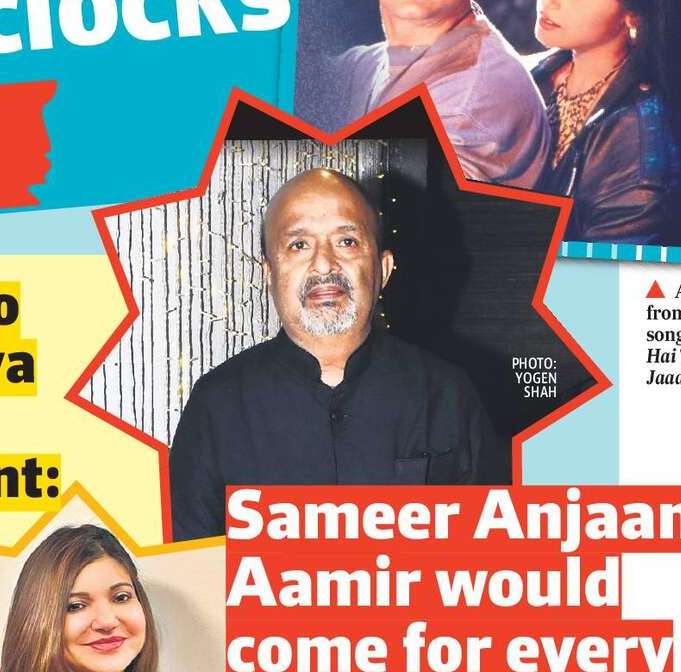
Soumya Vajpayee (HINDUSTAN TIMES; June 19, 2023)
The songs from Ghulam are special for lyricist Sameer Anjaan. “The romantic touch in the numbers made the soundtrack evergreen,” he says, adding that lead actor Aamir Khan was “really involved in the music of the film”.
He shares, “Aamir would come for every sitting. It was not to interfere, but to enjoy the music and the process behind it. He is a music lover and likes to understand how songs are made.”
Talking about penning Jaadu Hai Tera Hi Jaadu, the lyricist shares, “Jaadu is a common word, so the makers of the film were reluctant to use it in a song. They asked me to think of something else, but I felt it worked for the track. When the song became a hit, every maker would asked me to include ‘jaadu’ in some way or another in their songs. Makers have a tendency of going with tried-and-tested formula.”
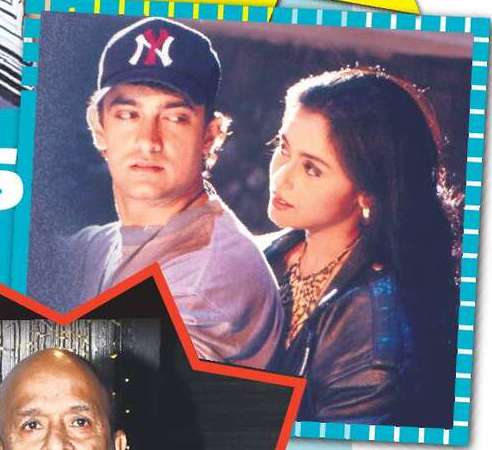
25 Years of Ghulam: Rani Mukerji was asked to laugh the Aati Kya Khandala way wherever she went-Alka Yagnik
9:59 AM
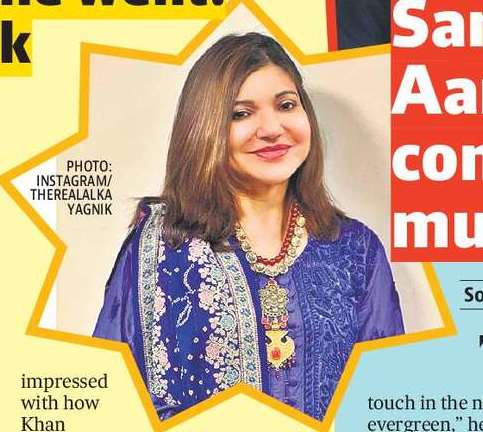
Soumya Vajpayee (HINDUSTAN TIMES; June 19, 2023)
A song from Ghulam (1998) that has, inarguably, gained cult status is Aati Kya Khandala. Sung by singer Alka Yagnik and actor Aamir Khan, the track appeals to people across generations even today. Yagnik says, “Aati Kya Khandala was one of a kind. Such tracks were not made those days. It was also very cutely picturised. The fact that Aamir sang it also added to its popularity.”
Actor Rani Mukerji’s laugh at the beginning of the song is remembered vividly. “The laugh definitely stood out,” says Yagnik, adding, “Ghulam was among Rani’s earliest films and my laugh gelled well with her face. In fact, she told me that wherever she went, people would tell her, ‘Aap ek baar has ke dikha dijiye, jaise aap uss gaane mein hasi hain’. So she had to always clarify, ‘It was not me, but Alka ji’.”
Yagnik admits that she was impressed with how Khan recorded Aati Kya Khandala: “I didn’t expect Aamir to sing so well. He was right in tune. Though we didn’t record it together, the way our portions blended was amazing.”
Calling working with composers Jatin-Lalit “a great experience, thanks to the comfort I always felt with them”, Yagnik says the song Aakhon Se Tune Ye Kya Keh Diya is also close to her heart. “It’s a beautiful one. All the songs from Ghulam are loved by audiences when I sing them during my stage shows,” she ends.

Waman Bhonsle was my friend, philosopher, guide and the first genius I came across in the industry-Vikram Bhatt
7:51 AM

The filmmaker remembers National Award winning editor Waman Bhonsle who passed away yesterday
Onkar Kulkarni (BOMBAY TIMES; April 27, 2021)

Post the news break, the film fraternity was quick to post condolences and share memories on social media. Vikram Bhatt was one of the firsts to share a few words on social media about the man who was his friend, philosopher and guide. When BT reached out to the filmmaker, he said, “He is the first genius that I came across in the film industry. He was so good when it came to editing. He was my friend, philosopher and guide. He’s taught me so much. I was a Chief Assistant on Agneepath (1990) when I first met him. He took me under his wings. He taught me the finer points of film editing. That was the time when the process used to be different as there were no computers.”

After Vikram turned to direction, he continued to closely work with Waman but soon the latter made an exit. “He edited my films all the way till Ghulam (1998). Then, computers came in, however he didn’t want to take the leap. When I was making Kasoor (2001), I told him that I will hire a guy who he can sit with and do the editing. He said, ‘No, Vikram, if I cannot hold a film in my hand then I can’t edit it.' I missed him. There was a time when he used to be so busy with film projects that he used to give filmmakers 3-4 hours everyday. The who’s who have worked with him, right from Subhash Ghai, Raj Khosla, Shekhar Kapur, Mahesh Bhatt, Gulzar saab, Boney Kapoor, Mukul Anand, and the list is endless.”

At my screen test, they made me wear Mamta Kulkarni's clothes-Rani Mukerji
3:03 PM

One of Bollywood's most sensational talents, Rani Mukerji meticulously deconstructs her life before and after films
Mayank Shekhar (MID-DAY; June 28, 2018)
Firstly, we've got to thank you and your filmmaker husband Aditya Chopra as well for coming over. He's an invisible man, surely he's sitting in the room, is he?
Yes, he is. You've got to find him. You had to see Mr India through a red tint. Now I can't decode which colour makes him appear!
No, seriously, does he actually exist?
Of course. And the proof is in the pudding — my daughter. She didn't get baked and come out of the oven (laughs).
I was coming up the lift, and everybody knew you were coming over, one of them said, she's married. The other went, to some Chopra, god knows who! Of course, you've known Aditya for years. Do you remember the first time you guys met?
It's quite historic in my head, actually. He had called me for a film called Dulhan. That movie never got made. But I became his 'dulhan' (bride), eventually, in life.
Was he producing the film?
He was actually directing it. And I had signed up for Kuch Kuch Hota Hai. So he'd asked me a bunch of professional questions that he does with everyone. And this was much before the first film I did for Yash Raj, which was Mujhse Dosti Karoge (2002). And, of course, Saathiya (2002), although that was more of a Bobby Bedi production, with Yash Raj presenting it. Shaad had come to me and said he was remaking Mani Ratnam's film. I was like, "Why are you remaking a great film that Mani Ratnam's already made?" Yash [Chopra] uncle was involved with the film. So was Adi. They were actually shocked to hear that I had said no.
You said no, simply because it was a remake?
Sometimes we actors think we know it all, although actually we don't know anything. And we have to have people guide us to do the right things. Obviously I wasn't guided properly, and in my enthusiasm of youth, I said no. That's when Adi called me for a meeting, asked, "What's the reason for you not doing this film?" I didn't have a good enough answer, so I said, "Because the girl doesn't have a good role." He just burst out laughing!
True, the film's all about the girl.
Yes, that's when Adi realised that I'm a clueless person in the industry. If I can say that the girl's role in Saathiya has no meat, then I must be really cracked!

What's he like as a person?
I think the best way to describe Adi is that he's a great leader. He's got great leadership qualities. After so many years in the industry, it's really difficult for me to respect someone — we tend to know people, in, and out. Adi is somebody I can genuinely respect as a human being, and this has been the case from even before I became his wife and life-partner.
You mean he has paternal qualities; or is a natural mentor?
I wouldn't say paternal. He's essentially a no-nonsense person. He tells you in your face, the way it is. I think that's great, because a lot of people in films need that reality check. You are surrounded by people who constantly tell you that you're the best. He's a really good bubble-buster in that sense. You need someone to say "You're good, but not the best!" Also, whenever someone goes to him for advice, he puts the other person's interest first, before his own. I think that's a rare quality to have, not only in business, in life as well.
What surprises me most about him is when someone told me the poster on the wall behind his desk is that of Fernando Meirelles' gritty-gangster film City Of God (2002), essentially Brazil's Satya (1998). Now that's the last film I'd associate with Aditya Chopra. Does he still have the poster?
Yes, it's still there! My education of foreign language films, or the films I know at all, is thanks to Adi. There's so much to learn. I think it's important for every actor to not only see the big, entertaining blockbusters, but watch films, where the performances are so real, it's hard to tell it's a performance.
You obviously come from a space where you simply didn't want to be an actor, and was forced into it, by your mom, right?
Not forced. I just thank God I was really a good, obedient daughter! In 1993, I got offered a film called Aa Gale Lag Jaa, which I didn't do. Growing up in Juhu, being from a film family was not really looked upon as cool, as it is now. Back then, being from a film family was like, "Oh, you're from films?" That word 'filmy' was treated as an abuse.
Bollywood was basically uncool.
Yes, Bollywood wasn't seen as a place you could make a career out of. I was in my 10th standard, when I got offered Aa Gale Lag Jaa by Salim uncle (Salim Akhtar), and I had the most bizarre reaction: I started crying! I was like, "How can you offer me a movie?" My mom and dad cajoled me, "You don't have to cry. He's only offered you a film." Eventually Urmila (Matondkar) did that film. Two years later, Salim uncle came back to me because Mamta Kulkarni had said no to Raja Ki Aayegi Baraat (1997). My mom asked me if I wanted to just give it a try, and if I didn't like it, I could always go back to college. I thought she was being practical. At my screen test, they made me wear Mamta Kulkarni's clothes that she had worn in Salim uncle's previous film. And I was like, what are these clothes? They put glycerine in my eyes. It was crazy for me.

And this was just the screen test.
And it was a disaster. My mom saw it and realised I wasn't cut out for this. But Salim uncle said I was really photogenic and the cameramen were really happy with me. He asked me if I wanted to join an acting class. I joined Roshan Taneja's school. The first thing he (Roshan) told my father and that remains stuck in my head is that acting is not something that can be learnt. It's not mechanical. You have to feel it. It's a process, being another human being, for a particular amount of time. In my class, there were Jimmy Sheirgill and Chandachur Singh, prepping for their film with ABCL (Amitabh Bachchan Corporation Limited).
Tere Mere Sapne, which had Arshad Warsi in it as well?
Yes, Tere Mere Sapne (1996). And Jimmy was preparing for Maachis (1996), if I'm not mistaken. The whole group was in awe of Chandrachur Singh, because he was the next 'Amitabh Bachchan', had a deep voice, had been cast as lead in an ABCL production. I would diligently go for the morning and evening classes. I just didn't want people to laugh at me (when the film came out). The day I gave my first short for the film, it just came to me. They said, "Cut." I was like, "Shit I actually did it." It wasn't difficult for me. From that day onwards, I've never looked back as an actor.
It just happens when the camera rolls?
I think I just need the camera to come alive.
Also you're from a hardcore showbiz home. Most people don't know how the Mukerjis were once the biggest family in Bollywood — owning, running Filmalaya, Filmistan… Can you take us through these titans, and how's everyone related?
My father would have made this more entertaining. So it goes this way. S (Sashadhar) Mukerji was the producer of films like Naagin, Anarkali, and several others. He was the producer for Filmistan. Someone else owned the studio — Jalaram, if I'm getting his name right. S Mukerji was the only one who branched out of our family in Jhansi, ran away from home, to make movies. My grandfather, who was a judge, and S Mukerji, were brothers. So, S Mukerji joined Bombay Talkies. His wife was Kishore and Ashok Kumar's sister.
Okay, so that's how those two families are related.
Yes, it starts from there. And then my dad, who passed out from Allahabad University, came to Mumbai to be with his uncle, S Mukerji and his brothers Subodh, and Prabodh, who had also joined him to make films like Junglee and others. Are you getting it?
Trying.
So at that time they were these four. My dad started off as a camera person and then became a director. It was a family thing. So they made a lot of films for Filmistan, and once they became sought-after, they went ahead and bought Filmalaya. That's when the onset of Filmalaya happened. Kajol's grandfather is S Mukerji.
So Kajol's grandfather is your grandfather's brother.
Correct.
How is filmmaker Ayan Mukerji related?
Kajol's father [Shomu Mukerji], and Ayan's father, Dev Mukerji, are brothers. So, if you've seen Ek Bar Mooskura Do (1972) — that song (hums it), Tu hamari thi, jaan se pyari thi — that actor, Debu Mukerji, is Ayan's dad. His older brother is Joy Mukerji. So it's Joy, Debu, and Shomu — Shomu is Kajol's dad. Because my father was so intimately involved, everybody feels my dad was Debu kaka and Shomu kaka's brother. Actually they are cousins. So, Kajol and Ayan are first cousins, and I'm the second cousin — to make things clear. From my mother's end, her youngest sister was an actress in Bengal. So for her, acting didn't seem like a far-fetched idea. But my dad was like, "Why would my daughter be an actress?"
You did work in your dad's film though.
Yes. Again to make things clear, Biyer Phool [in Bengali, directed by Ram Mukerji] is not my first film. Raja Ki Aayegi Baraat is. They both released on the same day. But I shot for Raja Ki… first.Then Ghulam (1998) happened, Kuch Kuch Hota Hai followed.
Ghulam with Aamir, KKHH with SRK, which was your first film with Salman?
Hello Brother (1999). I'm sure you must not have given it a good review
Loved it.
Don't say that. Not good for your reputation! I had a lot of fun shooting for Hello Brother, and working with the Khan family, so full of love, is one of the greatest memories. And everyone was shocked that the film didn't do well. The conclusion that everybody draws, after 24 years, is probably that they shouldn't have killed Salman (in the film), they should have killed Arbaaz instead.
That's really mean.
No, I think Arbaaz will also agree. I hope so. Coming back to working with the Khans, what I actually observed working with, especially Aamir and Shah Rukh, because they were the first people I interacted with after my first film, is that they were so on top of everything, their dedication, sincerity, always on time on the set, working on the takes, ensuring every shot is perfect. I had no idea what a successful person/actor was supposed to be like. And that kind of made me choose a working path where I also believe that every film you do should seem like it is your last. This learning process, for me, started with Shah Rukh, Aamir.
Your school, as it were, since you didn't even have the time to finish your acting course before your first film?
I actually just observe people. It gets embarrassing sometimes when a person catches me staring at them! And that's my job. My husband finds it irritating when we go out.
So you can place a person for all the memorable roles you've done, for instance the girl in (Mani Ratnam's) Yuva (2004)?
Of course. There were so many of my house-helps, who I observed. They would chat with my mother about their alcoholic husbands beating them up. I'd noticed their body language, the way they talked, their conversations.
That train scene in Yuva is iconic, seemed like a lived experience.
That's what happens with me, certain things just get stuck in my head, and when prepping for a character, they just come back to me. For me body language is truly important. It differentiates your character from previous ones — the way I walk, talk, I try to change that in every film. I don't know how many people notice it. But Javed uncle [Javed Akhtar] always tells me I am the only actor he knows, who can really make good use of hands. Often, actors don't know what to do with their hands.

And you are quite different in each of your films. Apparently the role that changed your approach to performance was Kamal Hasan's Hey Ram?
I went to Chennai to shoot for Hey Ram. At the time, I was doing glamorous roles in films in Mumbai. It was expected out of me to look good all the time, put make-up; wear five-inch heels, because you can't have a short heroine. My first day of shoot for Hey Ram was the closest I came to a Hollywood kind of set-up — make-up room had pictures of hair-continuity. A bell would ring at 6 am to start shoot. We were to report at 5 am. There was a call-sheet given, which was unheard of back then, with every minute slotted. So I get ready the way I thought I am supposed to. I walk in to the set, find Kamal ji and cinematographer K V Anand standing. Kamal ji looks at me, says, "What have you done to your face?" I'm like, "What? Is there something on my face?" He asked me why had I put make-up on and told me to go wash my face. I was shocked first, and then thought he was joking; ragging me on the first day. I also had a flight back in the evening to shoot Kaali Nagin song for Mann. I just dabbed my make-up, reduced my lip-stick, came back. He was like, "No, I told you to wash your face!" This time I washed my face completely, and he went, "I can see my Aparna [her character] now." Then he called the make-up artist to put on a bindi, he himself put some kajal, and he said, "Leave the rest to the cameraman, he will do his job." When I mentioned I wasn't tall, he said, "I'm not tall either. You have to be tall with your achievements," and insisted on me wearing flat chappals. Then, of course, I carried on that tradition in films that I could. In Saathiya. In Black, I remember Sanjay [Leela Bhansali] told me, "You are playing a blind person, I need your eyes to be dead. We have to give you black lenses so your eyes don't emote at all." I remember just wearing those lenses, scrubbing my face with tomatoes in the morning, because it gives you that freshness.
Does it?
Yes, chalo tamatar kharido sab log [Laughs]. But, like I said, I was confident about not wearing any make-up. Thank god Mani sir didn't have to tell me to wash my face! I already knew it.
Since you brought up Black, Ranbir Kapoor asked us to check with you if you remember the first time you faced the camera with him.
Yes! He was assistant director on that film. We were in Shimla. We didn't have Mr Bachchan's [Amitabh Bachchan] dates, so we started without him. We were shooting the film's first scene, where Nandana (Sen) and I are driving home. I open the car door. I can sense Mr Bachchan by the fountain, and I take him in. Since we didn't have him, we had the great Ranbir Kapoor wearing the cap, and his costume, sitting near the fountain. After that, I just jumped on him, threw him off the fountain, he was on the ground [Laughs]. When you see the making of Black, you'll only see me dancing, or making Sanjay laugh all the way until he says, "Action." He was also having fun.
You'd be chilling on set, and when the camera rolled, you'd become that person? It was an intense role.
But I always leave the intensity for the camera. With me it has always been all about spontaneity.
You basically trust your instincts.
Yes, and I also do my homework well. Like I work mentally on a role, or a script. Everything is in my head. For Hichki, for the first time I was playing a character with tourette syndrome. So, of course, Siddharth Malhotra [director], Maneesh Sharma [producer] and my husband were all worried.
It can go either way, right?
Not that they doubted me, but we didn't have a point of reference. If you are playing a cop, we have seen hundreds of them, so you know things you will not do, otherwise it'll look like a copy, or do it similarly but better. With Hichki, no actor had ever performed it earlier, apart from Johnny bhai [Johnny Lever] in Chori Chori Chupke Chupke. That's how I remember someone having a tick on screen. So they asked me if I could show how I would tick, but I said no. Because that's my process. I do it when I shoot.
Why would you not show it to them?
Because it would not come to me. When the camera rolls, I suddenly become that character. I can't explain in words but that's who I am as an actor. Also, for me, clothes play a really important role. I need to wear the clothes to become the character. It gives me an incentive to become that part. All the designers get fed up with me by the end of a film, because I need to get even a simple salwar kameez, jeans or T-shirt right.
Did you meet people with Tourette syndrome?
The parents of the kids who have this syndrome aren't really open to sending them for such things. For them their child's comfort is rightly of utmost importance. So it was difficult to get somebody to come forward. We did manage with a boy, who came with his parents, but apparently he was a huge fan of mine, so for the two hours he sat with me, he didn't tick even once. He wanted to be at his best. And then I spoke to Brad Cohen [author of Front Of The Class], and it kind of opened my mind to how a person, who has lived with this syndrome, is from childhood onwards. I also got emotional content for my character from him, because the film was inspired by his life.
Did you go through a similar process while you were doing four films a year back in the day?
No, because the films I was doing then didn't really require my character to get into such details. But thanks to Hey Ram, Yuva, and Saathiya, I got a chance to explore how you can give a character a distinct voice, and individuality. At the same time, me in Hum Tum will be different from Kabhi Alvida Na Kehna. Though I am wearing clothes from abroad, I'm still dressed differently, it's not the same. There are tiny differences in all characters.
What have you taken back from your characters?
From Black, I learnt the most — about how to be self-reliant, independent, and not take life for granted. It also taught me how to be humble and be thankful for everything we have in terms of our vision, or that we can hear, talk. The other problems in life are really small.
What about your character in KANK?
Never marry for any other reason, but love. And that really helped me as a single person. That was the time when I would obviously get married, and think of a family, and that was a strong message that came out from the film.
To you personally?
Karan [Johar] kept talking about it. He said this is why so many divorces happen, because people are marrying for wrong reasons — to have children, as their biological clock is ticking, or for companionship at old age. But you should marry only for love, when the excitement of everything moves away, what will actually keep the couple together, is love.
From the guy's perspective, it was really hard to understand Abhishek Bachchan's character. What was wrong with him, he seemed perfectly fine.
We asked Karan the same thing. And Abhishek and I had just delivered Bunty Aur Babli. The audience really loved our pairing. A lot of them who saw KANK questioned why I was leaving him in the film, and going for Shah Rukh. Karan's explanation was the dynamics Maya (my character) shared with Rishi [Abhishek's character] was maternal; in a way she was his mother. He is a bit childish. She is not really in love with him. She loves him, but there is a difference. My character actually gets married because she was brought up by Mr Bachchan's character in the film, she is indebted to him, and can't say no. At that point in time, she feels that this is love, because she is best friends with Rishi, and he loves her to death. She has an OCD issue over cleanliness. After she falls in love with Shah Rukh, her house is pretty shabby, because somewhere she's found her comfort. We always hear about couples getting divorced but think they were so good together, why did they separate? They may be great people individually, but aren't meant for each other.
You got back on a film set for Hichki after a gap of two and years. Apparently you were crying on your way to work?
That also had a lot to do with my daughter.
You were missing her already?
There are certain fears that a first-time mother goes through, so many different emotions attack you, which you aren't even aware of. I don't know if it's a hormonal jump-up in the system, or the fact there's someone completely dependent on you for everything. Or so we think. As parents, we over-think, as if we are the only people who have given birth. On that particular day, I was just thinking if I have taken the right decision, with coming back to films so soon. Not that I was doubting my call, just wondering if it was too early for me. Adira was just 14 months old.
Does Adira mean anything in particular? It's obviously a combination of Aditya, and Rani.
It also means noble, powerful, strong, star. So there are lot of meanings in different languages. I got lucky actually, because I wasn't really looking at combining the two names. But then I checked, and wow, it was a bonus [laughs].
You know there is a stereotype for Bengali moms, right?
It's not a sterotype. It's a fact. Let's not waste time analysing the situation. Bengali mothers are Bengali mothers, that's all I can say [Laughs]. They are like tigresses. For them everything is about protecting their cub. It's never about cub ko chhod do jungle mein. They would be like, nahin, hum saath jayege. We will be there at every single step. My brother is around 45 now, but my mother treats him like he was just born yesterday, so you can imagine. But I think that is our speciality. And I'll always be around Adira.
Feel sorry for her already. Poor girl has no idea what's going to happen to her!
[Laughs] She in for a shocker. I can see a lot of my husband in her though. For her, no means no, and yes means yes.
Does she have a distinctive voice like yours?
No, she has a sweet voice.
The reason I ask you about voice is because filmmakers used to dub over your voice initially?
Not initial films. For Raja Ki Ayegi Baraat, I dubbed myself. In Ghulam, Aamir, Mukesh Bhatt and Vikram Bhatt felt that probably I didn't have the shrill, nice and beautiful voice that heroines used to in those days. Aamir had a conversation with me, he said, "You are a fan of Sridevi, and her voice was dubbed for so many of her films, so it's okay. We should do anything for the betterment of the film." For him it is all about the team. Nobody is bigger than the film. At the time, I thought he made sense, and I agreed. Being a newcomer I didn't have a choice, but it was gracious of them to inform me. Ghulam and Kuch Kuch Hota Hai were being shot simultaneously. We were shooting the KKHH teaser. I was to start dubbing for it, and Karan asked, "I believe your voice is being dubbed (by someone else) in Ghulam, why?" I told him that they thought my voice was not good. He asked me whether I had dubbed for my first film. He asked me if I had any issues with dubbing at all. He told me to dub for KKHH. Karan took that decision, and that sort of changed everything for me. KKHH was such a popular film. Everyone saw it. There was acceptance for my voice.
And they appreciated the fact that your voice was different in a very nice way.
Yes, I guess. I remember Aamir calling me after watching KKHH, saying, "Babes I think we made a huge mistake by dubbing your voice. And your voice is really good." For me that was a really amazing moment, since I respect him so much. The fact that he called and said that they had made a mistake was a big thing for me as a newcomer.
We're going to round off this conversation with the beginning of your life. I hear you had been misplaced right after birth!
Can you imagine someone took me away? I was so cute.
How did that happen?
It was really dramatic. Ayan's dad was also there. My mum had delivered me and she was in the room in the hospital. Ayan's father, Debu kaka, was visiting my mom. The nurse got the baby, and kept her next to my mother for feeding. She was talking to my uncle, looked at the child and said, "This is not my baby." My uncle told her she had gone mad. She said her child had light eyes. They called the nurse, who insisted that the baby she had brought in was the correct one. They checked the tag, and it was wrong. Then mom started howling, shouting, "Mera bachcha kaha hai?" And the whole melodrama began. My mom and uncle went to all the rooms to look for me. I was found in the last room, which had a Sardar family. That person actually had eight girls. I was the ninth one over there. My mom went, "Woh mera baccha hai." And they said, "Nahi aap aise kaise bol rahe ho. Yeh humara baccha hai." They checked out the tag, records and everything, and finally I was returned to my mother.
Otherwise you would be in a Dil Bole Hadippa family [which by the way is one of the most loved films in Germany].
Yes, I would have been Diljeet Kaur, or someone [laughs]. But I finally got married to a Punjabi. So it was destiny, I guess.

I heard Aamir Khan sing Aati Kya Khandala on the sets and suggested that he sing it-Lalit Pandit
8:10 AM

Roshmila Bhattacharya (MUMBAI MIRROR; June 21, 2018)
Back in 1998, a tapori Aamir Khan gruffly asked Rani Mukerji “Aati Kya Khandala?” and, in answer to her surprised, “Kya, Karoon, Aake Main Khandala? retorted, “Arre Ghoomenge Phirenge Naachenge Gayenge Aish Karenge, Aur Kya” and stole her heart away. In the 20 years since, this Jatin–Lalit composition from Ghulam with which Aamir turned singer has become a favourite with street-side Romeos not just in amchi Mumbai but across India and turned Khandala, a little-known hill station, into a popular travel destination.
Flashbacking to one of his evergreen chartbusters, Lalit Pandit remembers that though going by its genre Ghulam was a maar-dhad action flick, producer Mukesh Bhatt and director Vikram Bhatt were clear they wanted a bouquet of melodious songs, different and difficult, that would be the film’s USP and be remembered long after the film had left the theatres. The composer-brothers started with a buddy bonding song, “Tujhko Kya,” before going on to score with “Aankhon Se Tune Yeh Kya Keh Diya”, “Ab Naam Mohabbat Ke Iljaam Toh Aaya Hai” and “Jaadu Hai Tera Hi Jaadu, Jo Mere Dil Pe Chhane Laga.”
“Jaadu…” is one of Lalit’s favourite songs and he recalls how Aamir had suggested they come up with a song along the lines of Jo Jeeta Wohi Sikandar’s “Pehla Nasha” but upping the tempo as he goes zooming off on a bike. “He loved ‘Jaadu Hai Tera Hi Jaadu’ and so did Mukesh ji who has a good understanding of music and so could appreciate this one because it wasn’t your usual love song. Then, came the biggest challenge. Lyricist Nitin Raikwar came to us with 'Aati Kya Khandala' and having heard Aamir sing casually on the sets and knowing he had a good voice, I suggested that he sing it,” informs Lalit, adding that while everyone was game for this musical experiment, the actor himself wasn’t keen and required a lot of coaxing and cajoling to pick up the mic. “I promised him that no one would know about the singing sessions and that if he wasn’t happy with the final recording, we’d scrap it.”
Aamir finally agreed but insisted on rehearsals first and after about 15–20 days of daily practice during which he contributed with a lot of inputs, he was finally ready for the recording. “He wrapped up the song in a couple of hours. Sabko gaana bahut pasand aaya including Aamir, who finally gave us the go-ahead. That year he was nominated for best playback singer at the Filmfare Awards, along with best actor. And since then, wherever he goes he is persuaded to sing at least two lines of the song,” Lalit says.
He goes on to point out that the song worked because knowing that Aamir was an accomplished actor and not a singer, they were careful to work within his range and give him simple notes that he was comfortable with. “It’s a song that anyone can sing with a two-line antara and a conversational tone and Nitin worded it intelligently in the Bambaiya Hindi that Aamir’s character, Siddharth Marathe, a street thug and amateur boxer, speaks through the film. The swag was his own,” admits Lalit instantly conjuring up an image of Aamir in a tight Tee, skinny jeans, his left hand encased in a biker glove, knuckle rings, an anchor pendent dangling around his neck and a red handkerchief used as a prop. “We knew that if we could get Aamir to sing, the song was a hit and agar audience ko bahut pasand aa gaya, then they would be singing it even years later and that’s exactly what happened.”
Interestingly, while they were working on Ghulam Jatin–Lalit were also composing the music for Karan Johar’s Kuch Kuch Hota Hai. The debutant director was scouting for a girl for his film, which had Kajol and Shah Rukh Khan in the lead, to play the latter’s first love and wife. “He had heard about Rani and asked me about her. I told her she was a really good actress. Karan then saw some portions of Ghulam, liked what he saw and approached Rani to play Tina Malhotra and the rest as they say is history,” he says with a smile.
Many people still know me as Shah Rukh or Salman’s heroine-Rani Mukerji
8:09 AM

Nayandeep Rakshit (DNA; March 20, 2018)
Rani Mukerji is one of those few actresses who has romanced all the three Khans on screen, at some point of time in her life. She has played Shah Rukh Khan’s love interest in six films, she’s been paired opposite Salman Khan in five and she’s played the lead heroine to Aamir Khan in three movies, (the last being Talaash six years ago).
Today, the 90s reunions are happening. Anil Kapoor is doing films with many of his previous leading ladies — there’s Aishwarya Rai Bachchan in Fanne Khan, Madhuri Dixit in Total Dhamaal and Juhi Chawla in Ek Ladki Ko Dekha Toh Aisa Laga. When asked if she would love to work with the Khans again, Rani smiles, “I’d love to do a film with them again; because my learning, right from the beginning of my career, has been thanks to them. I respect them immensely and for who they are today. It’s not normal to maintain their stardom for so many years. There definitely has to be something in them which is why they are ruling even today.”
The actress adds, “There’s something special about Shah Rukh, Salman and Aamir and nobody can deny that. More than that, the fact that they are so sincere towards their craft and their work; which is something you have to learn. As an actor, it’s not about working with a co-star. It is about what all you take back working with them. And I’ve learnt a lot working with the Khans.”
Talking about the way they have remained superstars over the last three decades, Rani explains, “Khan is not a word anymore. Shah Rukh, Salman and Aamir are institutions by themselves. And to be able to be in the same frame as them is a matter of pride. Today, so many people still know me somewhere in India because I was Shah Rukh Khan or Salman Khan’s heroine. There have been so many times where people have spoken about Ghulam for that matter. You cannot take that away from me.”
I find it very difficult to believe film stars who say they don’t work for fame or money-Rajkummar Rao
8:04 AM
Debashree Mohanty (TIMES LIFE; October 22, 2017)
You insist you aren't the typical box office hero, but your films have a 100% success rate...
I keep my hopes very neutral in life. I don't really expect too much of something. I know I am not the typical heartthrob, I know teenage girls won't chase me down the street for a selfie. But as long as I am getting appreciation for the honest work I put into the roles I'm given, I am good!
How important is appreciation for you?
It's better than getting abuses for something you have done or not done (laughs). I find it very difficult to believe film stars who say they don't work for fame or money. Then what are you doing in the glamour industry? Since my dancing days in school, I have always been hungry for appreciation and applause. That is the reason I chose this profession.
So, you are quite okay with the image of being nobody's hero...
I have been told by many mentors that my face and body language have the singular quality that will make the audience go: "That character is me", not, "I wish that were me". I know I am not in the league of the SRKs or the RKs... but I am here to make my own identity. As long as good offers keep coming, I am very comfortable with the 'ordinary gentleman' tag.
How did this film bug bite a local Gurugram boy from a joint family?
I grew up in Prem Nagar, Gurugram, with two older siblings and three cousins in an extended family. My father was a patwari (a keeper of land records), and my mother, a homemaker. The one thing that kept the family together was movies. It was a known fact in the family that we are big, big, fans of Bollywood. In fact, when my parents got married, one of the few things my mother carried with her is a poster of Amitabh Bachchan.
How did you begin?
By emulating other stars. When I was about 14, I enacted a version of the "dus dus ki daud" stunt from Ghulam with two of my friends. We sat on the tracks and counted to 10 while the train was coming towards us and then jumped. It was night, so all you could see was the light getting closer. It was plain stupid. But it was fun!
By your own admission, you seldom get irked; nothing gets to you?
Some actors can be really selfish. They can only think about their lines, their scenes, if they are looking okay, if they are facing the camera... they don't bother about the other cast in the film. It's a huge turn-off for me. I go out of my way to make everyone feel comfortable, and would appreciate the same in return.
You go that extra mile to keep away from controversies. Is it a calculated move?
See, I am a small town guy. I have a very modest dream and I want to get there. I am not expecting the impossible or something larger-than-life. As for controversies, I prefer ignoring them rather than getting hassled.
What about material possessions; you had your eyes on the Lamborghini...
That was a dream I cherished when I was still a newcomer in the industry. Now, I have realised that I want much more and that need not necessarily be something material.
About the Oscar list, do we need recognition from the West?
I don't see what the problem with that is. Let's not shy away from the fact that the Western industry has wider reach, it is bigger in that sense. Personally, I would go to any extent to sell my craft to a larger audience and I don't have any pretenses about it.
Did negative feedback post-audition bother you when you began?
Honestly, I was never nervous about auditions. It was the feedback that put me in a state of confusion. I remember I had almost bagged an interesting film. The casting director really wanted me on board but the production house thought I was not fair enough for the role. I kept wondering - how does the colour of my skin matter? But such things are a part of the glamour industry, all you can do is smile and move on.
What embarrasses you?
I get very embarrassed if people ask me to pose for a selfie inside temple premises.
What scares you?
If there's a time where I have to do films that I have no faith in, it'd be scary.
Does Rajkummar have no time for love?
Never in the world can I be busy for love. It's the most spiritual and liberating feeling, and I am blessed that after my mother passed away, I have that certain someone as my constant support. Everyone needs that person in life.
Is there anything we don't know about you?
Did you know, I can dance very well? I learnt steps watching TV and my favourite stars shaking a leg. I was an active participant in local dance performances in Gurugram!
If you were granted a wish, what would you ask for?
I want to be like Daniel Day-Lewis one day, concentrating on one film at a time, disappearing completely into the role. That's the dream.
How Vikram Bhatt got a break as a director thanks to Aamir Khan
8:54 AM

DNA (June 2, 2014)
 During the making of Ghulam, Aamir Khan objected to a totally detached
Mahesh Bhatt retiring to a corner of the set with a novel and asking his
nephew Vikram Bhatt to direct the film. After the first few days, Aamir
walked up to Mahesh and said, “If Vikram is going to direct the film,
you should withdraw your name and designate him as director.” A stunned
Mahesh retorted, “That’s for me to decide, I am the producer of the
film.” Aamir was equally defiant. “But it’s not acceptable to me,” he
said. “You can’t take credit for a film directed by someone else. If you
have a problem designating Vikram, who is actually doing the job as the
director, I’ll walk out of the film.” Mahesh was livid. “How can you
quit the film at this stage? Who will pay for scrapping the portions
already shot with you?” he countered. “I will. Send me a bill, you’ll
get a cheque,” said Aamir without batting an eyelid and walked away. An
upset Mahesh had a quick meeting with his brother and partner Mukesh
Bhatt and decided to take a sensible way out. He stepped down and let
Vikram Bhatt take over as the director of Ghulam.
Subscribe to:
Posts (Atom)