Showing posts with label Ghajini. Show all posts
Showing posts with label Ghajini. Show all posts
"Ghajini effect": Sonam Wangchuk’s sly dig at Aamir Khan’s denial
9:40 AM

HINDUSTAN TIMES (August 31, 2026)
Activist and environmentalist Sonam Wangchuk has responded to Aamir Khan’s recent claim that he and the makers of 3 Idiots did not know him while making the 2009 film. Wangchuk, who has himself previously said Phunsukh Wangdu was not entirely based on him, now says he had a “detailed meeting” with Khan before the film and jokes that the actor may have forgotten it.
“He was watching my speech in his Ghajini outfit. Maybe because of that he experienced short-term memory loss and forgot our meeting after 15 minutes,” he said, referring to the 2008 film where Khan’s character suffers from short-term memory loss.
“Perhaps he was too immersed in his Ghajini persona when he watched me receive an award at an event we both attended… We discussed a lot of ideas,” he said on Prakhar Gupta’s podcast.
As for the character of Wangdu, Wangchuk asserts he does not claim it was entirely modeled after him, but calls it an “influence or inspiration”.
He said, “Maybe he shared those ideas with his writers, who then modified the existing script. Perhaps he did it subconsciously, or the writers were unaware of where the ideas originated. Either way, I have no issue with it,” he said.
Wangchuk also responded to Salman Khan’s viral ‘it’s done bro’ tweet from July, when the actor asked him to end his strike. “Majbooriyan hoti hongi sabki. Aage peeche, daayen baayen dekhna padta hai. Lekin unhone kuch kaha uski main izzat karta hoon,” he said.
What Aamir Khan said
Phunsukh Wangdu, Khan’s character in 3 Idiots, has been popularly believed to have been inspired by Wangchuk. The debate resurfaced in July after actor Omi Vaidya, who played Chatur in the film, referred to Wangchuk as an inspiration while supporting his hunger strike.
Clarifying the connection at the London Indian Film Festival, Khan said, “No, that is not true actually. That is a misconception. I didn’t know about Mr Sonam at that time when we were doing the film, 3 Idiots... Neither Raju nor Abhijat [Rajkumar Hirani or Abhijat Joshi], who are the two writers, we didn’t know about Mr Sonam.”
However, the actor called Wangchuk an inspiration irrespective while wishing for his health.
‘Ghajini’ actor Pradeep Rawat dies at 74 after cancer battle
2:44 PM

THE TIMES OF INDIA (August 5, 2026)
Mumbai: Veteran actor Pradeep Rawat, best known for his performance as the lead antagonist Ghajini Dharmatma in Aamir Khan-starrer 'Ghajini', passed away on Tuesday evening at a hospital in Mumbai after a battle with cancer. He was 74.
The actor's manager Siddharth R Tiwari said that Rawat had been admitted to Mumbai's Kokilaben Dhirubhai Ambani Hospital for the past month. He was recently shifted to a cancer hospital in Bhiwandi.
He is survived by his wife, Kalyani Rawat, and their son, Vikramaditya Rawat. As soon as the news came out, condolences from members of the film fraternity and fans poured in as they mourn the loss of the veteran actor.
Pradeep Rawat's 'Lagaan' co-star and old friend Yashpal Sharma mourned the demise. "Pradeep Rawat, Our Ghajini Deva of Lagaan. RIP," he wrote.
Actor Gajendra Chauhan also paid his tributes. "Om Shanti Om Shanti Our friend and a colleague Pradeep Rawat, who played Ashwathama in Mahabharat, passed away."
A prominent face in the Indian film industry, actor Pradeep Rawat was known for his performances in Hindi, Telugu, and Tamil cinema. His work in films like 'Sarfarosh', 'Lagaan', 'Sye' (Telugu), 'Naayak' (Telugu), and 'Ghajini' is remembered by the audience. The late actor's recent work was Vicky Kaushal-starrer 'Chhaava', where he portrayed the character of Yesaji Kank.
I am loyal to cinema first, and then to theatres-Aamir Khan
9:20 AM

Madhureeta Mukherjee (BOMBAY TIMES; August 11, 2025)
Breaking the mould is second nature to him. Now, in a bold move that challenges the norms of a largely risk-averse industry, Aamir Khan has chosen the pay-per-view model on his YouTube channel for his latest film, Sitaare Zameen Par (SZP), which had released in theatres in June. This aligns with his decades-long pattern of being a disruptor – as an actor and filmmaker. In this freewheeling conversation with us, the superstar talks about access, affordability and the future of cinema beyond theatres. Aamir also confesses that he’s not fearless, unlike what most would assume, and tells us why, at 60, comfort is not an option — “ab comfort hai hi nahi, toh kuch karna padega.” Read on...
How do you think the pay-per-view model gives more power and choice to both the audience and the producer?
You are aware that we are able to reach only 2-3% of our population in the theatrical business, and this is for the biggest hit. For a film like Sitaare Zameen Par, around one crore people would have watched it by the end of its theatrical run. In the absence of enough theatres being built, this model is perhaps the only way to reach the vast majority of India, especially with rising internet penetration. In one stroke, this solves that problem for everyone. It’s great for filmmakers because it strengthens them and empowers them to make better films.
To be able to watch a movie, access and affordability are key. Was this model born out of that philosophy – to make both these points a reality?
Today, cinemas in India, and here I am talking about the multiplexes, are trying to give a unique experience, but that costs money. So, over the years, theatres have evolved from the time when I started out with Qayamat Se Qayamat Tak (QSQT). Back then, the average ticket price was Rs 10. Today, the ticket prices are not affordable for a large section of society. And multiplexes, because of the high cost and heavy investment (in terms of rent, etc), have also started catering to an audience who can afford to come there. So, who will cater to the masses? This model caters straight to the masses.
Continue…
In every press conference prior to my film’s release in the past 10 years, I would be asked, ‘Aap filmbana rahe ho, jo masses hai woh kaise dekhenge?’ The answer to this and the pricing of tickets is not in my hands. I can’t tell theatre owners who have invested a lot of money to go into a loss. If this model works, it will dramatically change the way we distribute films. From an economical point of view, I had strong OTT offers for SZP, if I were to accept that, it would have been a safe bet. I chose not to. I would rather earn Rs 100 from each Indian who watches my movie. Also, this is a great opportunity for younger filmmakers who are trying to break in and don’t get a chance to showcase their work. It will give creative voices more freedom. It will give them the freedom to price their content the way they want to.
You are a theatre loyalist and have spoken about ‘protecting our theatres’. What are some ways exhibitors and filmmakers can work together to reimagine cinema-going as a more inclusive, feasible experience?
Let me clarify, my loyalty is to cinema. Cinemas came first, then theatres came to serve cinema. Earlier, there was no theatre. Cinema dikhaneke liye pardah laga dete the, and it would be shown through a projector. Phir tent aaya, wahan dikhate the. Then permanent theatres came about. Cinema is what I am protecting, and emotionally, I am very tied to theatres. I believe that the theatrical experience cannot be replaced by anything else. When you are sitting in that dark space with 300 people around you, it’s a group experience where you laugh and cheer together. Imagine watching Lagaan, where the whole theatre is cheering...abhi woh experience aapko ghar pe baithke apne family ke saath bhi nahin milega. I am loyal to cinema first, and then to theatres, clearly in that order. To answer your question, I think first of all, we need more theatres. In districts where there is no single screen, not even a single theatre, we should at least have one theatre. India needs many more theatres, but they should be economical theatres.
Do you believe that, at some point, the theatrical business will start thriving again?
Yes, of course. I really hope so.
Do you think that, as makers, focusing on tier-2 and tier-3 cities is key, as therein lies the scope for theatrical recovery in India?
Absolutely! I believe that we need theatres in tier-2 and tier-3 cities. The tier-2 cities have theatres, but as we go deeper, we don’t. I also feel that it’s not that people want to watch only action films in theatres – that was the feeling for some time. If that were the case, SZP wouldn’t have done well, and Saiyaara wouldn’t have been such a success. These are phases that keep coming and going. When I did Ghajini, everyone told me that you are doing an action film at a time when this genre was not working. It worked. I think audiences are interested in watching films irrespective of the genre.
So, the genre of your film and how it fits with current trends and mood doesn’t concern you?
No, it doesn’t. Stories that inspire me and affect me the most are what I gravitate towards.
You’ve consistently been a disruptor — as an actor and a filmmaker. In an industry that often plays it safe, where does this creative fearlessness come from?
No, no, there is a lot of fear. There is fear every time I am doing a film, and unfortunately, my choices are also unusual, but I can’t help but make them. When I was doing Dangal, I felt that dus saal baad karte hain, abhi mein itna mota, buddha dikh raha hoon. Just before that, I had done PK and Dhoom 3. People thought I am 30-35, they didn’t know I am 55. I thought yeh film karoonga toh meri asliyat saamne aa jayegi (laughs). It was in my blood; I had to do it. I am not a fearless person. Before the release, you can’t assume the film will work, at least my films. There were exceptions like Ghajini and Dhoom 3, where you could say yeh kuch toh karegi. But with the unusual ones, it’s difficult to tell. I go with my instinct and my heart. So, I am not thinking about what the audience wants to see. I am thinking mujhe kya banana hai.
There’s still this restless energy about you. Does that fuel your creativity?
I suppose so. If the status quo is comfortable, I have no problem with it. But when it’s not, then I want to do something to correct it. I am comfortable about being comfortable, but ab comfort hai hi nahi, toh kuch karna padega, haath pair marna padega, because in today’s times it is difficult for creative people to make what they want to make. Unless you have a subscription model pre-sale, you can’t greenlight a project. That’s not a comfortable situation to be in for creative people.
Knowing the kind of connection and influence you have with audiences across generations, do you feel a certain sense of responsibility when you take on a film?
I do feel a sense of responsibility, so I don’t do films that propagate any thoughts, views or ethos which are not mine. At the same time, I also believe in having my freedom as an artiste, as that’s how I always operated from the beginning. I have selected films that I wanted to do. Some of them worked, some didn’t. Fortunately, most of them did. I have tried not to take the unnecessary load, ki meri har film 300, 500 ya 600 crore banayegi. I am not chasing that. Mujhe Talaash ki script pasand aayi aur mujhe pata tha yeh 500 crore ki film nahin hai, yeh 200 crore ki bhi nahin hai. In fact, I remember telling the team that I believe the film will do about 70 crores. It went on to do 95 crores. I did the film as I loved the story. Just because I knew it wouldn’t break my Ghajini record, didn’t mean I wouldn’t do it. I can’t think like that. This comes from my excitement as an artiste, and also because I can’t keep doing the same kind of films again and again; I don’t know how to do that.
You said that you feel a sense of fear every time you embark on something new. Can you recall what you felt on the first day first show of QSQT?
I still remember that moment – I remember the premiere show of the film. My uncle (Nasir Hussain) had booked the balcony, and the stall was for the paid audience for the first day, 6 pm show. And Shammi (Kapoor) uncle had come, in fact, he was the only star my uncle had called from the film industry. I remember walking into the film with no one recognizing me, and when the film got over and I walked out, I was mobbed.
Benny Dayal recalls missing out on singing Behka Behka from Ghajini
8:08 AM

Vinay VR Mishra (HINDUSTAN TIMES; February 17, 2023)
Singer Benny Dayal, known for his peppy hits, broke onto the scene a decade ago, with back-to-back hits, from Pappu Can’t Dance Saala and Nazrein Milana (Jaane Tu... Ya Jaane Na, 2008) to Kaise Mujhe (Ghajini, 2008) and Tu Hi Toh Meri Dost Hai (Yuvvraaj, 2008) and others.
The singer shares that he was supposed to make his debut with the song Behka Behka, also from Ghajini. “I was working as an HR professional in a corporate firm. At that time I was offered to sing the track, [but] I told sir (A R Rahman, the film’s composer), ‘I’m at work and I’m unable to come now immediately for the recording’. I was really sad, but then Kaise turned out to be beautiful eventually,” the 38-year-old shares.
Shedding more light on Kaise Mujhe — a wistful romantic melody that struck a chord with audiences — he recalls, “Before Ghajini’s recording happened, he (Rahman) had recorded the song with just a melody. He had no intentions of composing it for the film. He asked me to sing the track. When the work for the movie started, he played the melody to Aamir (Khan, who played the protagonist) sir. Aamir sir loved the melody and wanted to use it in the movie. He also said that he wanted the same singer to sing the song. When I sang the song, I didn’t even know where the song was going,” Dayal recounts.
Talking about his synergy with the music maestro, Dayal says: “It was A R Rahman who actually identified the true potential of my voice. Initially, when I was being approached or I used to approach composers, I felt like a lot of them were clueless. They didn’t know which actor’s face my voice would suit. However, I always have faith that I am good at what I do,” says Dayal.
Aamir Khan remains the uncrowned king of bodily transformation-Michiel Baas
8:04 AM

The male ideal of bulging biceps and chiseled abs has become more attainable with the mushrooming of gyms in India. Anthropologist Michiel Baas’s Muscular India: Masculinity, Mobility And The New Middle Class is an ethnographic account of gym and bodybuilding culture in India and the relationship between fitness trainers and clients in the context of the desire for transformation — both physical and social. Baas talked to Ketaki Desai about how buff bodies became the ideal.
Ketaki Desai (THE TIMES OF INDIA; August 31, 2020)
You spent over a decade studying the fitness and bodybuilding world in India. What made you focus on India? And did you join local gyms to get the full experience?
I first became interested in India when the country celebrated its 50th anniversary in 1997. That year, international magazines were paying considerable attention to the transformation the country had undergone since the economic liberalisation of 1991. As a student of anthropology, I started wondering how Indians themselves experienced this change. Besides the rapid growth of shopping malls and new places of leisure everywhere, I couldn’t help notice the mushrooming of gyms everywhere. At first I had simply interpreted this as a sign that people were concerned about their health, but there seemed to be much more going on. While I visited gyms and attended bodybuilding and male modelling competitions across India, I particularly spent a lot of time in one small neighbourhood gym in South Delhi. This really helped develop a better understanding of the daily interactions between clients and trainers.
Indians once thought of potbellies as a sign of prosperity (what we in Hindi say ‘khate peete ghar ka’). Is Bollywood the trigger for body-building becoming a status symbol?
It really took three Bollywood movies to move away from the old potbelly ideal and popularise a lean, muscular variety instead. Pyaar Kiya To Darna Kya (1998) with Salman Khan was the first time men realised what could be achieved with their bodies. The actual fitness boom in India commenced in full only when Shah Rukh Khan revealed his freshly-baked six-pack in Om Shanti Om (2007). After that it became crucial for movies to highlight the transformation a star had undergone in terms of his body. Aamir Khan remains the uncrowned king of bodily transformation, something that started with Ghajini (2008) and reached new heights with Dangal (2016).
You have noted in the book that the relationship between trainer and client is one that trades “bodily capital” with the promise of upward social mobility. Could you explain?
Trainers are generally from lower (‘new’) middle-class and vernacular backgrounds while their clients belong to the English-speaking upper (‘older’) middle-class.
While we often think that the most important factor of difference is money, I found that social capital matters equally, if not more. This includes things like knowing how to behave in a particular setting, one’s fluency in English, what clothes to wear etc. For a person who is a new entrant to the middle class, this can be quite bewildering. During training sessions there is often time for banter which allows trainers to learn from their clients in terms of their lifestyles, to improve their English, and even pick up on business skills.
Fitness trainers and clients do get close, even romantic, across the world. Did the trainers you interviewed talk about things getting personal or are class differences keeping people apart?
It was often a source of gossip in gyms, especially when personal trainers also offered training at home. One thing that stood out was how it often led to confusion in terms of intentions. Upper middle-class female clients rarely appeared to think of it more than a one-night stand but trainers sometimes let their romantic feelings get the better of them which quickly revealed the social distance that continues to exist. Usually this would mean their contract with a particular gym was terminated. Photo shoots, modelling assignments and casting calls, on the other hand, often confront trainers with situations where they are asked for sexual favours by other men. Some men now supplement their income by offering semi-nude or pornographic content online, or by engaging in sex work. But for the majority, this is not something they are willing to consider.
Did you study any other professions that offer a similar mobility?
I have earlier published on the topic of Starbucks baristas. This is another example where employees are encouraged to bond with their regular customers, which offers the opportunity to learn from them. However, such encounters are more fleeting and less personal.
With gyms shutting down due to Coronavirus lockdowns and the need for distancing even when they eventually open, do you think it will be a body blow for the industry or can it bounce back?
While the boom in fitness is ongoing, the proliferation of gyms across India felt excessive in recent years. Under the pandemic, home-gymming has seen a huge surge with trainers making house calls. Another important development is outdoor ‘functional’ training which takes place in parks and nature. Most trainers are typically self-made men and they are by nature survivors but there has been a huge loss of income due to the pandemic.
10 Years Of Wanted: Salim Khan lending Rs. 1 crore to save the film, theatres painting new ‘Housefull’ boards and many such forgotten trivia!
3:03 PM
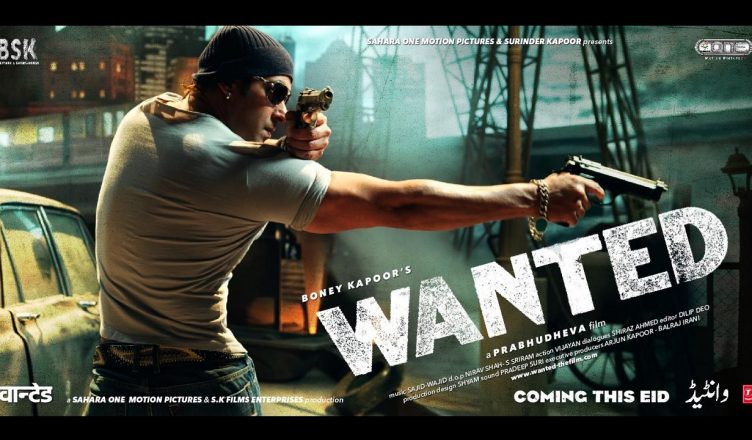
Bollywood is going through a great phase at present. So many different kinds of subjects are being attempted and are getting commercial success. Masala films continue to do well and the era of single screens, whistles, claps et al is very much thriving, albeit only in certain parts of the country. But 10 years ago, things were gloomy for the industry. The films were getting success but there used to vast periods of drought in between two hit films. Also, while footfalls in multiplexes were steady, in single screens, it was poor. The multiplex strike of April-June 2009 had further crippled the business of single screen cinemas.
But then came Wanted, which ushered in a new era. In producer Boney Kapoor’s words, “It brought back the concept of hero, something which was in vogue years back when Amitabh Bachchan used to play such characters. Somehow such cinema had become extinct.” Superstar Salman Khan played the lead role who, just like the industry, was also going through a tough time. Wanted put him back in the big league. Till today, he’s following the ‘Wanted’ formula of making mass-friendly, action entertainers (and with him doing away with his shirt in the finale fight) and now not just single screens but even multiplexes are lapping it up.
10 months before Wanted, Aamir Khan-starrer Ghajini was also an attempt in reviving the testosterone-driven cinema. But it was not a complete action film and had other elements too. Wanted, meanwhile, had action in adequate doses and catered to the single-screen audiences who went crazy over the film and how. On the joyous occasion of Wanted’s 10th anniversary, we go down memory lane and bring back some not-so-known trivia about the film, including how Salman Khan’s father Salim Khan emerged as an angel for producer Boney Kapoor in times of crisis:
BEFORE RELEASE:
1. Wanted was earlier titled Wanted: Dead Or Alive. The makers were in favour of simply Wanted as the film’s title. However, a producer down South had the rights who asked for a huge amount of money to part with the title. According to unconfirmed reports, it was Salman Khan who paid for the title from his own pocket.
2. Not just Salman, but even his father Salim Khan made a major contribution to the film. The B4U group had filed a case against Boney Kapoor in the High Court and demanded a stay on its release. In September 2006, Boney had signed a MoU with B4U for a joint venture for which the latter had extended an advance of Rs. 10 crore to acquire rights of the former’s five films. The price of these films wasn’t fixed and moreover, B4U and Boney couldn’t reach an understanding. Meanwhile, Boney Kapoor was in a debt trap and in the absence of any funds from B4U, he joined hands with Sahara One Motion Pictures and produced Wanted. B4U hence moved the High Court which upheld that Boney can’t create third party rights to his films. It also directed him to furnish Rs. 10 crore as security deposit. Fearing that Wanted’s release may suffer, Boney moved the Supreme Court which allowed the film to release on its scheduled date. But it was told to deposit Rs. 2 crore within a week. Raising Rs. 2 crore was a difficult task for Boney and this is when Salim Khan stepped in. He immediately lent him Rs. 1 crore. Boney was moved to tears at this gesture. Salim saab however felt it was the most apt thing to do and stated, “I know people who have crores lying in Swiss banks and benaami accounts but they will not help you with even a lakh when it comes to the crunch. In fact, if you tell someone that you are looking for monetary help, that is the surest way of driving them away from your life. I think most of us are born selfish.”
3. Wanted began the trend of having Eid releases for Salman Khan. Barring 2013, Salman has had a release on this festival every year from 2009 to 2019 and is also scheduled to have a film coming on Eid 2020 as well. But it’ll be interesting to know that initially, Wanted was to arrive much earlier. The multiplex strike pushed it ahead, just like most films. Till April 2009, Wanted was to hit screens on July 3 and it was also to clash with Dulha Mil Gaya, which featured Shah Rukh Khan in a supporting role. Then it was moved to August 7. Later it got a release on September 18, 2 days before Ramzan Eid. The teaser was released with Love Aaj Kal, that came out on July 31.
4. Another minor jolt suffered by Boney Kapoor is when the Central Board of Film Certification (CBFC) gave the film an adults-only certificate. Several industry insiders, trade and even audience were left shocked since the film had violence but it was not too gory either. There were fears that it might restrict the film’s appeal. Even Salman in many interviews expressed his disagreement with Wanted’s ‘A’ rating.
5. Salman Khan promoted the film extensively. From the promotions itself, it was evident that Salman’s ‘re-birth’ has happened with Wanted. Even in the songs, he seemed in top form after a long time. His dance steps in ‘Mera Hi Jalwa’ was quite appreciated. He said in an interview, “It’s really amazing to see the dance steps I have done. I can’t believe that it’s me in the song, dancing like this, yakeen hi nahin hota ki aisa bhi kuch ho sakta hai!”
6. Salman Khan also used his game show on television, ‘Dus Ka Dum’ to promote Wanted. In a rare move, Boney Kapoor’s wife, the late Sridevi made an appearance in the memorable episode along with Boney, director Prabhudheva and actress Ayesha Takia. Without Sridevi’s knowledge, Salman sneaked in two of her paintings and presented in front of the audiences. Sridevi surprised one and all when she said that for one of the paintings, she used the tips given by Salman. What also made this episode special is that Boney and Sridevi’s daughter Janhvi, who is now also an actress, was present in the audiences’ section and Salman lovingly addressed her and her younger sister Khushi as two other beautiful creations of Sridevi.
AFTER RELEASE:
1. Wanted released in 1400 screens and its first day collections stood at Rs. 5.10 crore. It was the ninth biggest opener of the year but emerged as the fourth biggest grosser of 2009 as it collected Rs. 60.24 crore in its lifetime.
2. It was the massiest film of 2009 and after a long time, such a film had come in cinemas. As a result, his traditional fan base was out in full force. Around 70% of business in the first week was done in single screens, as per a report.
3. In Mumbai, Ankur cinema in Govandi had to paint a ‘Housefull’ board because they didn’t have one. Theatres in South Mumbai like Liberty and New Empire had to dig out the ‘Housefull’ board from their storage rooms as they didn’t need them for a long time. The scenario was similar in many single screens across the country.
4. Manoj Desai, executive director of G7 Multiplex in Mumbai, popularly called as Gaiety-Galaxy cinema complex, was heard saying, "Wanted has got the film industry and also the single screen cinemas out of the ICU. The film has got 100 per cent collections till now and it is only going to get better."
5. Boney Kapoor reported that in Rishi theatre in Uttar Pradesh’s Bulandshahr, a gun firing took place between two sections of Salman Khan fans. It led to a riot-like situation and police had to resort to firing outside the theatre to disperse the crowd.
6. In Paras cinema in Jaipur, the cops had to request the theatre management to sell 200 tickets less to keep the audience in control.
7. In the biggest theatre in Hubli, Karnataka, almost 5,000 people gathered outside to buy tickets.
8. Unlike the norm, Wanted was released in all 3 theatres in Kanpur and police protection was adequately provided.
A lot of films’s tenth, twentieth, twenty fifth anniversaries are celebrated nowadays and many of these at times seem unnecessary. However, Wanted deserves to be feted as it was the first step in making our industry bigger and better. Today, most of the films in the Rs. 200 and Rs. 300 crore club belong to the action masala genre. Hence, Wanted is responsible for opening the eyes of the producers that such films are not dead, as believed then by many, and that they’ll always have an audience. May we have many such pan-India flicks in the future too!

It’s been nine months and 16 days...I really miss home-Rishi Kapoor
8:18 AM

Rishi Kapoor opens up on his battle with the Big C, informs that he has one treatment left after which he will be able to plan his return, reveals he has given his nod to a film and is set to get back in action
Avinash Lohana (MUMBAI MIRROR; July 17, 2019)
It’s around 9:30 am in New York. In response to our text message, Rishi Kapoor asks for a few minutes to finish his breakfast before he gets on the call to talk at length and put all speculations about his health and a forthcoming film to rest. Excerpts from an interview:
There’s been plenty of speculation about your health. Can you tell us how you have been doing?
On the subject of my health, thanks to the prayers and good wishes of my family, friends and fans, I am perfect now. The cancer is in remission, but I am still under treatment. I have a crucial meeting with the doctors today at 10.45 am, there’s one treatment still left to be done. The problem is not the treatment but the reaction time. There is a six-week gap between one treatment and the next when all you can do is eat, shop, watch movies, live a normal life which I would rather do at home than here in New York. It’s been nine months and 16 days—I know since I have been counting the days—that I have been away. I really miss home.
When can we expect to see you back?
I have to be here for 11 months, so I will not be back before the end of August. It’s been a difficult time, very taxing, but Neetu (wife), and my children (Ranbir and Riddhima) have been very supportive. I am grateful to everyone. I am waiting to come back and raring to get going. I will plan my return five-six weeks after my last treatment. It is called consolidation or pushback, whereby I will have to undergo chemotherapy to ensure that the ailment does not return. This is the second time I am going through the treatment. I am hoping that I can plan an end-August return but all this talk that I will be back in early September for my birthday, is again nothing but speculation.
Despite the difficult times, in all the pictures that Neetu ji has been posting over the months, you have always had a smile and a look of serenity on your face. Has battling the Big C changed your perspective towards life?
Not really, it’s because of the love of those who have dropped by to visit me here. I feel so overjoyed… so wanted… that people have come all the way to New York to show their warmth and express concern over my health. I can now reassure everyone that the cancer is in remission, I just need a few more weeks before I return home. Once in a year or a year-and-a-half I have to come back for check-ups. When I first came here, everyone was worried for me. The problem was detected when I was shooting in Delhi and was required to dye my hair white. I was told to immediately rush to the Sloan Kettering Hospital. I came here with my hair still dyed white. When word got around that Rishi Kapoor had gone to New York for some kind of medical examination, rumour spread that I was so unwell that my hair had turned white overnight. To counter this, whenever friends of mine came to see me, they posted pictures so people could see what Rishi Kapoor really looked like. Thankfully, my health started improving, week after week, month after month. I had lost 26 kg as I had no appetite for the first four months. Now, I’ve gained seven-eight kg. I don’t want to look too lean, but I haven’t gone back to my original self either. Thank God for that.
Would you want to reveal what kind of cancer you are battling?
We will talk about the disease later, let’s not get into that now. Let’s talk about my films now.
Yes, you have Jhootha Kahin Ka coming up, it must bring back memories considering Neetu ji and you have worked on a film with the same title 40 years ago. Besides the nostalgia attached to it, what drew you to the script and what do you remember from the earlier film?
The first film was in 1979, I remember we got engaged on the day of the film’s premiere in Delhi on the eve of its release. Forty years later, I am working in another Jhootha Kahin Ka in which while I am not the lead actor, I play an important role. I was very happy to work with director Smeep Kang and producer Deepak Mukut on this comedy. It was a genre I had not done and I find these youthful parodies funny and quite enjoyed myself doing this one. We shot the film extensively in Mauritius and some portions in Mumbai. Unfortunately, my illness took me away otherwise it would have released earlier. They came to New York to do a part of the dubbing. One more film, The Body, is also waiting for me to return and finish it. Perhaps I might dub that here.
There have been reports in the press that you are not happy with the producers of Jhootha Kahin Ka for suddenly deciding to release it this Friday?
Yes, I have been seeing these reports on Twitter and I am very upset with all this nonsense being written. In the last 10 months, I have not spoken to anyone from the media, though they have always supported me. I agree with Kangana Ranaut that some people write anything and as a result, serious journalists get drawn into the controversy. When did I say I was upset? I have not been in the country for months. This is not done, it tarnishes the credibility of other journalists who write and report well. Though I do not entirely agree with what Kangana said, on this point anyone can get upset.
 You have worked in as many as five comedies in the last few years, including Patel Ki Punjabi Shaadi, Wedding Pullav, 102 Not Out, Rajma Chawal and Jhootha Kahin Ka, you really like the genre. Most actors say that it’s easy to make a person cry but really difficult to make them laugh. Would you agree?
Let me put it this way, all my life I have been singing songs, romancing, doing drama. I never really did comedy, barring Rafoo Chakkar and Jhootha Kahin Ka. Aamir Khan’s Ghajini borrowed the entire romantic track in the first half from Neetu and my earlier film. Everything, including the dialogue. I have not really experimented with this genre, perhaps because people didn’t think comedy was my forte. I don’t think even 102 Not Out was a comedy, it had comic moments but was not a comic film. I don’t think I have a good comedy in my repertoire, only serious films even in character roles. So, I really hope the audience like this attempt at making them laugh.
When you get back to India, will we see you jump back to action or would you want to take it slow now?
I am raring to get back to work. I have a film commitment which I will resume. Then, I have another film a director and producer came to meet me for. I can’t get into details right now as we still have to sort out a few things but verbally I have given them a “yes”. The moment I get back, I will take 15 days off to connect with my roots, get over the jet lag, get into IST and hopefully by the end of September I will start shooting.
This time away from home must have really brought the family together?
Yes, all my siblings, my children and Neetu in particular, who has been like a solid rock, have been around me, supporting me through all this. Right now, my daughter and grand-daughter are with me. Ranbir keeps coming every five-six weeks. I am overjoyed by all the love and concern, the solidarity of my family. Here I have to make a special mention of my niece Natasha and my elder sister Ritu Nanda who is also here for the same reason. They were our anchors who kept Neetu and me going. When your anxiety is so high you need this kind of support and such motivational people around.

With Ranbir and Neetu in New York (above); With wife Neetu, sisters Rima Jain, Ritu Nanda and niece Natasha (above; right)
Dadar's Chitra Cinema to shut down; Student Of The Year 2 to be its last day last show
7:59 AM

Dadar's Chitra cinema, one of the city's first AC theatres, will stop operations today after seven decades, thanks to poor business
Sonil Dedhia (MID-DAY; May 16, 2019)
It ran to packed house for days when Jackie Shroff's Hero released in 1983. Almost 36 years since then, it will open its auditorium for the final time today to screen Tiger Shroff's Student Of The Year 2. After an uninterrupted run for nearly seven decades, it will be curtains down for the 550-seat Chitra Cinema today.
Third generation owner and current proprietor Dara Mehta, who took over the business in 1982 from father P D Mehta, cites poor business as the primary reason for the shutdown. "Single screens are hardly doing any business today. While weekends would witness good footfalls, we would hardly have any patrons on weekdays. We haven't yet decided whether it will be given for redevelopment or let out to a multiplex chain."
It is difficult to imagine the parking lot, that wears an empty look these days, teeming with people in October 1961, each hoping to get a ticket to Shammi Kapoor's Junglee, which had released then. "I was very young then, but I remember that Junglee ran for over 25 weeks," Dara reminisces.
Started in the '50s by D B Mehta, Chitra derived its name from Chitrapat (which means cinema in Marathi), presumably to entice the Marathi population that formed the neighbourhood. While its older cousin Plaza Cinema screened mainly Marathi fare, this single-screen theatre served as the destination for Hindi film buffs, who would line up to watch Sholay (1975), Deewaar (1975) and several blockbusters that followed over the decades.
Dara says that the theatre has tried to counter every major threat — from VCRs to piracy. "We have always kept up with technology. We renovated the theatre around 20 years ago, and recently again in 2014. But today, the online streaming platforms have affected our business, too. Earlier, movies were the only source of entertainment. Now, people have countless options on OTT platforms."
Dadar resident Benaifer Motivala, 75, describes Chitra as an "integral part of my childhood". "From Guide [1965] to Waqt [1965] and even Ghajini [2008], I remember many films completing silver and golden jubilee here. The best thing was that they increased their price only marginally over the years. We will miss it."
In March, the shutters of another single-screen theatre, Chandan Cinema, came down for good.
Remembering its days of glory
Trade analyst Amod Mehra reveals that Chitra had the distinction of being one of the first air-conditioned theatres in Mumbai. "Not many are aware but it also had a small preview theatre during the '70s and '80s. Since there were three popular studios around — Ranjit Movietone, Rooptara and Shree Sound — filmmakers would book the preview theatre to see rushes of their movies. It's sad that single screens are slowly fading away."
Rana Daggubati reveals about his connection with Sanjay Dutt-starrer Rudraksh and Aamir Khan-starrer Ghajini
8:01 AM

As told to Avinash Lohana (MUMBAI MIRROR; January 22, 2019)
 I must have been 18 when I started dabbling in industrial photography after a course in photo lab management from one of the institutes in Chennai. At the time, not many took up photography professionally. The photographers, who were around, were driven by passion. I was not keen on a Bachelor of Commerce (BCom) degree so I opted for this one as I found it to be creatively more satisfying.
To start with, I used to do a lot of independent photography for different brands, working with a couple of advertising professionals of the time. I did that for a few months, juggling between Chennai and Bangalore. I would spend a couple of hours every day on photography while simultaneously studying film processing at a lab. My family used to own a film lab back then and I believed this would help me take that business forward. But soon film reels went out of fashion and digital took over. So, all that studying came to naught.
I have always been fascinated by lavishly-mounted spectacles though at the time I had no way of knowing I would feature in the 2015 epic, Baahubali, and its sequel two years later. I was an avid Star Wars fan and wanted to be a part of the making process of such films and learn the craft. So, without wasting any time, I joined a visual effects company that was into post-production for movies.
I started out as a compositor, putting several layers together. For example, in a car blast scene, you shoot the actors in one layer and the blast in another, then bring them together digitally by compositing them. Earlier the same process was done by camera masking, but with advancement in technology, the results are better. Over time, I started managing the facility as visual effects supervisor.
One of the first films I worked on was Mani Shankar’s sci-fi action adventure, Rudraksh, with Sanjay Dutt and Suniel Shetty in the lead. That was the first time I was exposed to visual effects and 3D processes as very few CG (Computer Graphics) based films were made at the time. I worked at these places for around a year-and-a-half since money was not an issue, with my parents doing well and assuring me financial security. I don’t remember what I did with my first earning but being a foodie, I’m pretty sure I splurged on a meal at some restaurant.
Having developed a keen interest in visual effects, I started my own VFX studio which I ran for around six years and worked on almost 50-60 films. I used to work with a small team and dealt with many independent studios. While doing this I also produced a Telugu film, Bommalata, directed by Prakash Kovelamudi, which was adjudged Best Film in Telugu at the 53rd National Awards.
 Encouraged, I wanted to produce more films in the indie space. However, the audience then was not very accepting of such genres and were instead hooked on commercial cinema. So, I took some time off and decided to act in the films I would like to make. That’s how I made my debut with Sekhar Kammula’s 2010 political-drama, Leader (below) which wasn’t a regular Telugu film back then.
Meanwhile, I had sold off my visual effects company and worked with a gaming firm briefly before becoming an actor. We made PC-based games. Around the time Aamir Khan’s Ghajini released and we had made a game based on the film. That was my entry into the Hindi film industry.
While I love what I do, I have not lost touch with the businessman in me. I have invested in start-ups dealing in virtual reality and augmented reality. I intend to continue doing this.

The Khans are Bollywood’s favourite Santa Claus
8:10 AM

Meena Iyer (DNA; December 26, 2017)
A Khan is to Bollywood’s Christmas, what Santa Claus is to the rest of the world. Aamir Khan, Salman Khan, and Shah Rukh Khan are harbingers of good luck and cheer. The triumvirate comes bearing gifts in the form of huge box office collections.
When Aamir released Ghajini (2008) during Christmas, he set a precedent of sorts. Not only did the film pave the way for the coveted Rs 100 cr club, but it also made other superstars realise the potential of the holiday season; clearly the 10-day window from Christmas Eve until January 2 set the cash registers ringing across the globe and proved to be the most lucrative for Hindi cinema, too. “The period starting from Christmas until New Year is the most profitable for a film to hit the marquee,” says exhibitor-producer N R Pachisia. He adds that unlike Diwali, which has pujas, card parties and family traditions (like bhaidooj) to accommodate besides films, the Christmas-New Year holidays are mainly reserved for having fun, relaxing and watching movies. “So, movies released during this period, really do bring in enviable numbers,” he states.
For years on end, Christmas holidays were the most-sought-after phase to release Hollywood flicks in India. However, over the last nine years, Bollywood too has reaped big profits during this time frame. “And, mostly it’s a Khan who has always benefited,” says a trade expert. Aamir has, of course, proved to be the smartest as far as getting Christmas into his kitty goes. In 2009, he released 3 Idiots (Rs 202 cr), in 2013, he had Dhoom 3 (Rs 265 cr), in 2014 he had PK (Rs 325 cr) and his 2016 Christmas release Dangal (Rs 375 cr) is the highest-grossing Hindi film ever.
Following closely in Aamir’s footsteps was Salman, who brought Dabangg 2 during Christmas 2012. Though the film wasn’t able to replicate Aamir’s box-office magic, it did earn a commendable Rs 148 cr. It also made Salman aware that besides monopolizing Eid-ul-Fitr, he could capitalize the Christmas time, too.
In fact, this year, he brought his highly-anticipated Tiger Zinda Hai and the espionage thriller has managed a blockbuster opening. “If the opening trend is closely monitored, the film may go on to do huge numbers,” says trade analyst Girish Johar. Reports say that in just three days, TZH had already crossed the Rs 115 cr mark, making the industry rejoice because from here on, the sky is the limit.
Unfortunately for Shah Rukh Khan, the holiday period of 2015 didn’t prove very lucrative when his Dilwale clashed with Ranveer Singh’s Bajirao Mastani. Since Bajirao received bouquets and Dilwale got brickbats, SRK had to settle for less at the box office. Still in that year, Christmas cumulatively saw a box office collection of Rs. 314 cr. So, the period didn’t fail the films. In fact, Ranveer tasted his first mega success with Bajirao Mastani.
Everyone in the trade now agrees that the Christmas weekend has emerged as the highest revenue-generating period. In the last decade, this phase has stolen a march over other festival weekends like Eid-ul-Fitr and Diwali.
So far, actors have been civil and reserved different festivals for themselves. However, after the thumping opening of TZH, one can expect a Christmas clash in Bollywood. Going forward, each of the B-Town biggies is going to try and reserve Christmas for themselves. SRK has already laid claim to Christmas 2018 for his untitled Aanand L Rai film. And, Abhishek Kapoor’s Kedarnath with newbies Sara Ali Khan and Sushant Singh Rajput is meant to release on the same day. As of now, Ranveer is slated to arrive a week later with Simmba.
Like we said, suddenly there’s a war-like atmosphere building around the Christmas period. Will there be cheers or tears, who knows. but many Bollywood egos will definitely be at play.
[Figures (nett gross): Box Office India]
I will get married to Rahul Sharma by the end of the year-Asin
8:02 AM

Priya Gupta (BOMBAY TIMES; August 14, 2015)
Asin, 29, is marrying Rahul
Sharma, 36, a Delhi based first generation entrepreneur, who is six feet
two inches in height, has done an engineering and then been to Harvard.
He has two older sisters who are both married and his parents, who
retired as principals of schools, were both teachers and now live with
him in Delhi. Asin is a selfmade girl and always wanted to marry a man
who was, too. Rahul is down-to-earth, principled and correct and unlike
Asin who likes to take her time before coming to a decision, he is
instinctive and a quick decision maker. ASIN OPENS UP FOR THE FIRST TIME ABOUT HIM. EXCERPTS:
All Is Well took over two years to make. Did that delay your plans of marriage?
Honestly, at the beginning of 2012, I had three films in hand - Bol Bachchan, Housefull 2 and Khiladi 786 - but it wasn't exciting me so much as an actress, so I had decided to not act any more after finishing these three. I had several self imposed restrictions, for instance I don't do bikini scenes, don't wear skimpy clothes, don't do physical intimacy onscreen. I come from the Southern most part of India and had worked in the South and then made the shift to Mumbai. I had no grandfather, Godfather or even a satellite connection with the film industry. I didn't even have a star boyfriend to keep me in the news. And therefore honestly, it's quite miraculous I have done the films that I did. I have always said that I came into this field not because I needed the money and nor did I chase fame that was a bonus. What I liked was acting and working in films. After Khiladi 786, I was on a break when Umesh Shukla wanted to come and narrate All Is Well to me. I could not say a no to him as he had made one of my favourite films OMG Oh My God and I was keen to meet the maker of it. So we met. I had done 24 films till then and everyone felt that I should do 25 films before I took a break. I asked Umesh, 'What kind of a film would you like to make?' And he said, 'I would like to make entertaining films that makes sense to people. People say leave your brains behind and see the film. But why leave your brains at home? It's an organ that is a part of your body, please bring it with you when you come for the film.' I liked that. All Is Well was a simple family film talking about relationships, giving a sweet message. It didn't involve me to shake my booty and Bhushan Kumar called me to tell me that the film would be completed in 45 days flat. I said to myself, 'Wah it's a quickie!' And I said a yes. But it turned out to be the longest quickie of my career as it took more than two years to finish it.
Talking about your marriage, when will you be getting married to Rahul Sharma?
Rahul and I have been together for almost four years. I will get married by the end of the year.
How did you meet Rahul?
My story is eerily similar to the story of my film Ghajini. Just like my character Sanjana in the film faffs and makes up the story of being linked to Sanjay Singhania, that I met him first at the Mumbai airport, and that he said a hi and I said hi and how he came and sat next to me and then said I love you. My story is eerily similar to that. Rahul and I first met at the private airport of Mumbai as I was going to another country for work with Akshay Kumar for the promotions of Housefull 2. Now, I have just walked in and Akshay takes these early morning flights. So there was Akshay, me and this person who was just a stranger not connected to the film. So I wished everybody good morning and then there is this guy standing next to Akshay who he introduced me to as his friend Rahul. We exchanged 'hi's and went into the flight. All big stars have their friends accompanying them, so I assumed he was that friend. Eventually, as the day unfolded, during the day I have realised who he was. I realised that it was actually, his flight, his tournament we were going for, he was sponsoring us and basically everything was happening because of him. I liked the quality. He was very simple and down-to-earth and that quality stuck with me. And then Akshay tells me the same day, 'I think you two will be good for each other.' I was like, 'What? Where is this coming from? Akshay is a very good friend, one of my favourite co-stars and can joke with me, so I thought this one was also one of his random jokes. Akshay is family for us and some how, has a good sense of people so he sensed that similarity between Rahul and me. Of course I didn't know what Rahul's side (Rahul and Akshay are best friends) was as that may have also been the reason why Akshay was pursuing it.
How long did it take to convert your first meeting into a relationship?
So after our first meeting, we had spoken a few times over the phone and then Rahul was somehow convinced that I was the girl for him, so on one of the times, he asked me if he could meet my parents. He said, 'I have clarity that you are the girl for me and I want to meet them and make my intentions clear.' I found that extremely gentlemanly, to meet my parents upright right at the initial time. We had just spoken 2-3 times, that too thanks to Akshay. Anyways, Rahul came and met my parents and expressed his intention to them. He is very sorted and knows his mind clearly. And he tells them, 'I would like your daughter's hand in marriage.' And they said, 'Okay, but let's ask her what she wants.' I said, 'I want some time.' So with their permission, we started to get to know each other.
You are not an intuitive person and would like to think through all your decisions. What attracted you to Rahul?
Yes unless I am not convinced about it, I will not do it in life and that applies to everything I do. My expectation of a life partner is a guy who is self-made. Because I am a self made person, so if someone is a self made person, I would appreciate that about him and Rahul is. He started his business at such a young age and has reached the place he has. No amount of money would appeal to me, but achievement on your own merit would. He has that drive, ambition and passion. And I have always said that integrity and strength of character is of utmost importance to me and he has it and like how. Also he is level headed, mature and along with all of that, the fact that he is so grounded, and simple. He is very correct in doing things the right way.
Is he romantic?
Yes, he is romantic but he is not very verbally expressive. Neither of us are cheesy. He is not very overtly expressive and is very underplayed as a person. So he does a lot of things, big things but he does it subtly. He is never like I am the man. He has clarity of thought, vision and an opinion. His decisions are thought of but he arrives at them quickly. Also, he is very family oriented with strong roots.
You waited for All Is Well to release to announce your marriage. Did it bother him?
No, he is very chilled and cool and his only policy in life is whatever makes you happy, do that even if it does not include me and that is the footnote also. He is very selfless and outstandingly secure and I feel that's pure love, the rest is selfishness. He has no 'I' in him, it's all about 'You' with him. Throughout the relationship, his sole concern is my happiness. People profess love but a lot of times, it is actually selfishness. I have always believed that love is what helps you develop into the best person you are, it's a selfless emotion but people usually follow the corrupted version. The true version is when the other person is happy. When he came home to meet mum and dad, he was not like I like her so I want to marry her. Even then he said, 'It's her choice. Now you figure out, you make a decision, I am here.' To find that kind of non selfish love is very rare.
You managed to keep this relationship a secret for this long.
My relationship is not a secret, it's just private. And there is a difference between what is a secret and what is private. Both of us are extremely low profile and we don't like to flaunt anything, be it our relationship or anything else.
He is a vegetarian and you are a fish eating Malayali. So will the fish be comfortable in your life?
Actually, I am not a fish fanatic unless it is made in a certain way. Most of the time, my parents and I would eat very light vegetarian food. But also honestly, Rahul doesn't care. He will eat whatever he wants to eat and I will eat whatever I want to.
Does he have a favourite film of yours?
After we started dating, one of his sisters said to me, “I saw Ghajini and came back and told Rahul, 'This is a film about you'.“ He was in the same state of life that Aamir's character (Sanjay Singhania) was at that point in time. He was trying to build his company into the biggest mobile company in India Air Voice Mobile with orange brand colour. He was even driving the same car as Aamir in real life. And can you imagine it's eerie that Rahul built Micromax mobile and his brand colour too is orange. The only difference being that he did not have that girl in his life. So his sister told Rahul, 'Aisi wali ladki le aa.' Rahul apparently went and saw the film post that. And then his sister tells me, 'We had told him to get a girl like that. We didn't know he will bring that girl only. We could not have been happier'
So A R Murugadoss, who has written and directed both the Ghajinis, is the real culprit?
Yes and I told him, 'What pen have you used to write this story with? Please write a happier ending though in your third version (as in the first two, my character dies).' Even in my dreams I could not have imagined that it would come so true in my real life.
Where will you be based post marriage?
I will be based out of Cochin as I have my home there, Delhi where Rahul lives and has his HO and Mumbai where Rahul and I both have homes. Rahul anyways travels almost a fortnight a month.
Are you going to continue with films post marriage?
I have been working from the age of 14 and as of now, I am not taking up anything and will definitely take a break from films.
Do you plan to play a role in business post marriage?
I have not really thought of it, but no, not as of now. Right now, I am looking forward to experiencing this phase in life of marriage.
Any plans of becoming a mother?
I have not really thought of motherhood or that far ahead but it will be a natural succession.

Aamir Khan can afford not doing a film. I can’t-Amit Sadh
7:44 AM

On his birthday today, Amit Sadh talks about putting on weight and losing it, medical issues and other things
Sneha Mahadevan (DNA; June 5, 2015)
Amit Sadh is currently shooting for A R Murugadoss’s Akira with Sonakshi Sinha. While he has to sport a chiselled body for this film, he had to put on 22 kilos for his film Yaara with Tigmanshu Dhulia. In three months, he had to knock off all those extra pounds that took a toll on his health. This episode rings a bell? Mr Perfectionist Aamir Khan has also gained 22 kilos to play a wrestler in Dangal. Read on to know more similarities...
Drastic weight gain, loss
Amit says, “I gained 22 kilos for Tigmanshu Sir’s film. I have to lose some more weight now. I was 75 initially, I became 68, shot for the younger portions that is set in 1975 and then I gained 22 kilos. Then I weighed 90. Yes, I would do it again. Russell Crowe said this many years ago when he was shooting for Cinderella. “When I hear a story, the first thing I try to become is the physicality of the character”. You have to become the character physically and that in turn, has an effect on you internally. Then you get into the psychosis of the character ” What’s interesting is that Aamir too weighed 68 kilos before he gained 22 kilos and now he weighs 90 kgs.
Six-packs
Aamir sported an eight-pack abs in A R Murugadoss’s Ghajini and now Amit is going to be sporting one in the same director’s next Akira. Amit says that though he did build one, it’s not possible to sustain the same body for a long time. “It’s not easy and it is not even possible to keep it 24x7. It is not healthy to stay that way. There are only 20 people — super human beings in the world who are blessed with a frame like that. Who at the age of 24 and 25 sport six-packs? Even they don’t sport it for 12 months. If there is a role, that requires, you build it but a lot goes into it. Also, the selling point is not your abs. Sometime later, you want to see the face. A little later you want to hear the person talk as well. We have just overrated six-pack abs. In America, every third guy has a six-pack. Even in our gyms, most boys have six-packs. Can you make a hero out of all of them?”
Medical issues
While Aamir took about a year off to put on all that weight and will take another six months to lose it all, Amit lost all his weight in less than 12 weeks. Recently, Aamir revealed that he had difficulty breathing and that he would get tired very easily. Amit too faced a lot of health issues. “I had a problem while losing weight. Every third day I was in the hospital. Maybe, next time I will monitor it well. I am aware of my body and know a lot about fitness, but I had to start Akira and I didn’t want to look big in it. I have a great trainer, Viraj who helped me a lot. But then again, from weighing 68 to 90 — you eat 6000 calories and then you bring it down in an instant, it does affect your body. I wish I had the luxury to lose weight over six months and not do a film. I took about 12 weeks to lose the weight. Aamir Khan can afford not doing a film. I can’t afford to sit at home and not do films.”
Ghajini was challenging not due to VFX but because Aamir is a perfectionist-Merzin Tavaria
7:50 AM

Master of digital after-effects, Merzin Tavaria, who played a key role in converting the Oscar-winning Gravity from 2D to 3D, sheds light on the world of visual and special effects
Nilesh Rao (MID-DAY; May 7, 2014)
How did you end up in this profession?
I have always been a movie buff since my college days and interested in games and graphics. I wanted to do something related to computers and took up a course in graphics. My fellow student, Namit Malhotra, who is the owner of Prime Focus, floated the idea of setting up an editing studio then. About four years later, we started doing special effects.
What was your breakthrough point?
We started with popular TV shows and then ventured into commercials. At one point of time, I was handling projects for tele serials and films as well as commercials. I would go to a theatre and find the ads on which I had worked were playing back-to-back. I remember we had just one-and-a-half months to work on Harry Potter, Green Lantern, Transformers and a couple of Hindi films besides a South Indian one.
What are the pre-requisites for this profession?
One has to be patient as well as passionate and have a basic understanding of technology and softwares being used. You also have to be hardworking. This industry is growing by leaps and bounds. Employment opportunities are opening up in a big way.
Gravity was a visual treat. How challenging was the project?
There were crazy shots. Another team in London team was working on the project. It was completed within 1.5 to two years. We converted around 30 minutes of the film from 2D to 3D.
What has been the most challenging project till date?
The definition of challenging keeps changing every minute! Working on Sanjay Leela Bhansali’s film have been quite a challenge. Same goes for Aamir Khan’s Ghajini, not so much for its visual effects but because he is a perfectionist. Then there was Avatar and Clash Of The Titans. Right now, we are working on Sin City 2 as a whole. We are coordinating with the teams in Vancouver. Every year you get one or two projects which suck your blood but the result is always gratifying.
Where does Indian filmmakers’ sensibility stand in terms of special effects?
In 1976, when Hollywood was venturing into space and making Star Wars, we were moving back to the village with Sholay. That was the divide then and it exists now too. There is tremendous potential in the visual effects and animation genres here but they need to be fully exploited.
Which is your favourite film?
Godfather. I also enjoyed Zindagi Na Milegi Dobara and Rock On. There are many Hollywood films where the story is a big, fat chocolate cake and visual effects are the icing on it. Many characters who do not exist during the shoot, are created through visual effects. 3D or stereo is a part of it. You take every frame of the movie and add depth and volume, giving it an immersive touch.
Aamir Khan takes a dig at Bombay Talkies producer?
8:12 AM

Vickey Lalwani (MUMBAI MIRROR; March 27, 2014)
It is yet to be seen who blinks first--Aamir Khan or Anurag Kashyap. But, the fact that Rajkumar Hirani’s Aamir starrer, PK, which was earlier scheduled for June 6, has now chosen to release on the Christmas week, a date pencilled months in advance by Anurag for his ambitious film, Bombay Velvet, has not gone down well with the director who made his displeasure public in an interview to Mirror (March 18). This has apparently miffed the 48-year old star.
Aamir took a dig at one of the makers of Bombay Velvet, Madhu Mantena, when the two bumped into each other at Kangana Ranaut’s birthday party on Sunday. He walked up to Mantena and quipped, his voice dripping with sarcasm, “Kya bhai, aaj kal toh tum bade star ban gaye ho. Aur hum to purane actor hokar rahe gaye.” Those standing close by had no trouble figuring out what he meant.
The two had been good friends during the Ghajini days. Mantena had produced this Aamir-starrer which went on to become one of the biggest grossers.
Says an eyewitness to the exchange, “Äamir was indirectly taking a potshot at Madhu. He sounded really ticked off, Madhu didn’t know which way to look.”
When contacted, Mantena said, “Aamir and I did chat up at Kangana’s party but only about his TV show, Satyamev Jayate.”
Bollywood rewind: The tale of the first Bollywood crore
9:26 AM

In an era of Rs 400- crore hits, here’s a flashback to the first Hindi film to make a crore, and other financial milestones
Divya Unny (BOMBAY TIMES; March 16, 2014)
A few weeks ago, the unthinkable happened. A Salman
Khan film failed to hit the coveted Rs 100 crore mark in its first week
of release. This was a rarity for the Bhai of Bollywood, who has
delivered back-to-back super hits since 2010. Yet, Salman is unlikely to
be affected by the film’s flat performance. If trade experts are to be
believed, Khan made his Rs 100 crore even before Jai Ho hit screens.
Says trade analyst Komal Nahata, “The film, budgeted at about Rs 75 crore, including print and publicity costs, and was sold to Eros International for Rs 120 crore. Its broadcasting rights were about Rs 55 crore and music around Rs 13 crore. So, the film had made Rs 113 crore even before release. This isn’t too bad a start for a film.”
The current era though is a far cry from the times when films depended solely upon crowds filling up single screen theatres across India. There were no elusive ‘100-crore’ clubs.
First one crore movie

One of the first films the masses showered with love and money was Lanka Dahan (1917), a mythological silent film by Dadasaheb Phalke. Veteran film historian Amrit Gangar says coins from ticket counters were apparently collected in gunny bags and transported on bullock carts to the producer’s office. “Lanka Dahan was a silent film, but people went crazy about it. There were long queues at Majestic cinema in Bombay where people would fight for tickets and toss coins at the ticket counter because the film was mostly houseful.” However, it was in 1943, that Kismet, directed by Gyan Mukherjee, became the first film to reach the coveted box office milestone of Rs 1 crore. Who would have thought that the journey of the crore in Indian films would begin with a movie made for under Rs 2 lakh? It was a time when India was in the throes of patriotic fervour. The Quit India movement had just been launched. Kismet, a crime thriller with patriotic sentiments, tapped into this feeling.
In the lead role was Ashok Kumar, playing a Robin Hood-like character who doesn’t mind breaking the law for the greater good. Says film scholar and archivist PK Nair, “Ashok Kumar was a superstar and people loved his part as a pickpocket who dodged the system to help the public.” Kismet was produced by Bombay Talkies. “It ran in Calcutta’s Roxy theatre for almost three years. It was by all estimates the first film to make a crore. It was released in undivided India, so the crowd was bigger,” adds Nair.
The song ‘Door hato ae duniyawalon, Hindustan humara hai’ then became an anthem. “At that time, films were allowed to be made only on restricted raw stock, as it was expensive and had to be imported. Between 1939-45, films had to be made with a maximum 12 reels. However, the British made an exception for movies that were considered a boost to their war efforts. The song ‘Door hato ae duniyawalon’ took an indirect dig at the British, but they never found out how,” says Nair.
The golden ’50s
 Post-independence
was a golden era for Indian cinema, when the industry started to
flower. The Partition caused a disintegration of the hitherto
influential film companies, such as Lahore’s Shorey Studios and Pancholi
Studios, and the era of independent producers began. Producer-directors
like Raj Kapoor, Guru Dutt, Mahesh Kaul and Mehboob Khan, among others,
brought out one masterpiece after another. “Guru Dutt paid homage to
Gyan Mukherjee in his film Pyaasa, because Kismet was such a cult.
Pyaasa created history of its own,” says Nair. It was the showman Raj
Kapoor, however, who really flourished financially with films such as
Barsaat, Awara and Shree 420. “Shree 420 was the film that made over Rs 2
crore and broke Kismet’s record,” adds Nair.
Randhir Kapoor, Raj Kapoor’s eldest son, says “My father never thought of money. He used to make movies for the passion of it and he’d do anything to fulfill his creative urges.”
 Another filmmaker who did not compromise on his
grand vision was Mehboob Khan. After his film, Aan, become a massive
hit, he made Mother India (1957), included among the 100 best films of
World Cinema by Empire magazine, was made with 26-year-old Nargis Dutt
playing mother of two.
In an interview to The Telegraph, the late Sunil Dutt, Nargis’ co-star in the film and her husband, had said “We were amazed with Mehboob Khan’s conviction to be able to pull off a film like this. We shot in several states across the country and he spent more than Rs 35 lakh on it, which was a big amount in those days.” Mother India, the first Indian film to be nominated at the Oscars (in 1958), made approximately Rs 4 crore and ran for over a year at Liberty theatre in Bombay.
 The star system started to gain prominence in the ’50s
as well. The decade marked the rise of Dilip Kumar, Dev Anand, not to
mention Raj Kapoor. Dilip Kumar became the first actor to charge Rs 1
lakh per film. Sidharth Bhatia, author of Cinema Modern: the Navketan
story, says, “In the ’50s some South Indian producers had approached
Dilip Kumar with an offer. When he refused to take it up, Sriramulu
Naidu, a producer from the South who was making Azaad, offered him an
exorbitant amount to act in the film, which Dilip Kumar accepted.”
The advent of colour
At the start of the 1960s came another epic, K Asif’s Mughal-E-Azam. Asif’s dream was to release it in technicolour. But the film’s mammoth budget of Rs 1.5 crore kept the film under production for nine long years. Says Haya Asif, granddaughter of K Asif, “There was a scene in the film where they had to show pearls being thrown on the floor. He (Asif) wanted real pearls. The financers initially refused, but he got it done eventually.” The film ran for over three years and made over Rs 5 crore. “Ticket prices were hiked from Rs 1 to Rs 50 and Rs 100,” says Nair.
Interestingly, the advent of Eastmancolour in the ’60s was one of the biggest factors in the success of films in India. Then came foreign shoots, the trend starting with Shakti Samanta’s Shammi Kapoor-starrer, Singapore (1960). Raj Kapoor, too, filmed several films abroad. Manoj Kumar shot Purab Aur Paschim extensively in England, France, Rome and Switzerland.
Another expensive film of those times was Vijay Anand’s Guide (1965). Says Sidharth Bhatia, “Guide was made for about Rs 60 lakh and this budget doubled because the American filmmaker, Tad Danielewski, who was directing the English version, had a falling out with Chetan Anand after the first three schedules. So they had to revisit many places and reshoot the English version. Also, Guide was a rich film when it came to locations since a lot of it was shot in palaces. Though it did make money when it released, it was much later that people recognised it as such a cult.”
The ’60s saw ground-breaking trends with films such as Dosti where the producers (Rajshree Productions) spent on publicity. Says PK Nair, “I remember that Dosti was made for about Rs 20 lakh. They spent almost the same amount publicising the film because it did not have many stars. There were hoardings and full-page ads in newspapers, which was new for a Hindi film. The first film to put out a full-page newspaper ad was a South film called Chandralekha (1948).”
When multi-starrers ruled
 The
’70s saw the superstardom of Amitabh Bachchan, considered the first
actor to command a fee of Rs 1 crore per film. The decade also saw the
rise of the multi-starrers, a trend set by Manmohan Desai with films
like Parvarish and Amar Akbar Anthony. Rosie Thomas, professor of film
at London’s Westminster University, who has been studying Indian cinema
for the past 35 years, says, “I came to Bombay from England in the 1970s
and I spent a lot of time with Manmohan Desai trying to understand the
mindset of filmmakers. I distinctly remember a story session I sat in
on, where they were segregating Hindu, Muslim and Christian characters
with different coloured chalks on the blackboard. It was fascinating how
stories were deliberately being targeted towards sections of crowd so
that it reached maximum people.”
 In
1975 came Sholay, the highest grosser of all time for almost two
decades. Ramesh Sippy started to make the film with a budget of a crore,
but spent an additional Rs 2 crore. Among the many things that made
Sholay an expensive and challenging film to make was the number of
extras and production people on set, believed to be the highest in
Bollywood history. Sippy says, “There were more than 200 people on set
at any given time. We had to build roads from scratch for many action
sequences. The film ran for five years (amounting to Rs 15 crore gross)
because there were no DVDs or video tapes or multiple screens at the
time. If I release Sholay with 5,000 prints today, it’s never going to
run for that long. Today a film will have to make at least Rs 1,500
crore to be equivalent to what Sholay made in its time.” Sholay’s box office record was broken 19 years later by Hum Aapke Hain Koun (1994), which earned approximately Rs 69 crore.
Then came another monster hit, Dilwale Dulhaniya Le Jayenge. The film also marked the beginning of the end of the silver and golden jubilees. Very soon a new business model would redefine the industry, bringing in crores of money even though the film itself wouldn’t last at the theatre or in public memory beyond a few days.
The magic of multiplexes
Multiplexes and film studios changed the dynamics of the business. Increasing number of digital prints and extended weekend releases resulted in films raking in more moolah faster than expected.
 “Earlier,
a film released in about 25 cinemas with four shows a day, making it
700 shows a week. Today if a film releases in 100 cinemas with 25 shows
per day, that makes it 1,625 shows per week,” explains Nahata.
This and an aggressive marketing campaign paved the way for Aamir Khan’s Ghajini (2008) the first 100-crore film ever. The success of Ghajini was followed by 3 Idiots (2009), which garnered over Rs 202 crore till Shah Rukh Khan’s Chennai Express broke this record, Aamir’s film Dhoom 3 broke the record again with over Rs 260 crore.
But the winners are also the producers who make smaller budget films, and yet set cash registers ringing, leading to big profits.
 According
to filmmaker Mahesh Bhatt, that is an important yardstick for measuring
a film’s financial performance. Vishesh Films, owned by Mahesh Bhatt
and his brother Mukesh, have adopted this prudent approach. Mahesh Bhatt
says, “What gets lost in the hype over collections is profitability.
The mindset is to make expensive, big budget films, but the actual
profit of these films may not be very high. Unlike these, Aashiqui 2 was
made with a modest budget of 35 crore, and yet made almost Rs 100 crore.”
Filmmaker Shekhar Kapur says that in many ways, the most successful film in Bollywood history is Monsoon Wedding (2001). “That film was made within a crore and technically speaking is probably the most successful Indian film in years (it earned Rs 180 crore overseas). But they are not the people who aspire to be part of the crore clubs.”
Interestingly, Kapur’s Paani, being produced by Yash Raj Films, is said to be among the most expensive films to be made in India. “The budget will be not less than $150 million. At that rate my revenue should hit at least Rs 5,000 crore,” says Kapur.

Says trade analyst Komal Nahata, “The film, budgeted at about Rs 75 crore, including print and publicity costs, and was sold to Eros International for Rs 120 crore. Its broadcasting rights were about Rs 55 crore and music around Rs 13 crore. So, the film had made Rs 113 crore even before release. This isn’t too bad a start for a film.”
The current era though is a far cry from the times when films depended solely upon crowds filling up single screen theatres across India. There were no elusive ‘100-crore’ clubs.
First one crore movie
One of the first films the masses showered with love and money was Lanka Dahan (1917), a mythological silent film by Dadasaheb Phalke. Veteran film historian Amrit Gangar says coins from ticket counters were apparently collected in gunny bags and transported on bullock carts to the producer’s office. “Lanka Dahan was a silent film, but people went crazy about it. There were long queues at Majestic cinema in Bombay where people would fight for tickets and toss coins at the ticket counter because the film was mostly houseful.” However, it was in 1943, that Kismet, directed by Gyan Mukherjee, became the first film to reach the coveted box office milestone of Rs 1 crore. Who would have thought that the journey of the crore in Indian films would begin with a movie made for under Rs 2 lakh? It was a time when India was in the throes of patriotic fervour. The Quit India movement had just been launched. Kismet, a crime thriller with patriotic sentiments, tapped into this feeling.
In the lead role was Ashok Kumar, playing a Robin Hood-like character who doesn’t mind breaking the law for the greater good. Says film scholar and archivist PK Nair, “Ashok Kumar was a superstar and people loved his part as a pickpocket who dodged the system to help the public.” Kismet was produced by Bombay Talkies. “It ran in Calcutta’s Roxy theatre for almost three years. It was by all estimates the first film to make a crore. It was released in undivided India, so the crowd was bigger,” adds Nair.
The song ‘Door hato ae duniyawalon, Hindustan humara hai’ then became an anthem. “At that time, films were allowed to be made only on restricted raw stock, as it was expensive and had to be imported. Between 1939-45, films had to be made with a maximum 12 reels. However, the British made an exception for movies that were considered a boost to their war efforts. The song ‘Door hato ae duniyawalon’ took an indirect dig at the British, but they never found out how,” says Nair.
The golden ’50s
Post-independence
was a golden era for Indian cinema, when the industry started to
flower. The Partition caused a disintegration of the hitherto
influential film companies, such as Lahore’s Shorey Studios and Pancholi
Studios, and the era of independent producers began. Producer-directors
like Raj Kapoor, Guru Dutt, Mahesh Kaul and Mehboob Khan, among others,
brought out one masterpiece after another. “Guru Dutt paid homage to
Gyan Mukherjee in his film Pyaasa, because Kismet was such a cult.
Pyaasa created history of its own,” says Nair. It was the showman Raj
Kapoor, however, who really flourished financially with films such as
Barsaat, Awara and Shree 420. “Shree 420 was the film that made over Rs 2
crore and broke Kismet’s record,” adds Nair.Randhir Kapoor, Raj Kapoor’s eldest son, says “My father never thought of money. He used to make movies for the passion of it and he’d do anything to fulfill his creative urges.”
Another filmmaker who did not compromise on his
grand vision was Mehboob Khan. After his film, Aan, become a massive
hit, he made Mother India (1957), included among the 100 best films of
World Cinema by Empire magazine, was made with 26-year-old Nargis Dutt
playing mother of two.In an interview to The Telegraph, the late Sunil Dutt, Nargis’ co-star in the film and her husband, had said “We were amazed with Mehboob Khan’s conviction to be able to pull off a film like this. We shot in several states across the country and he spent more than Rs 35 lakh on it, which was a big amount in those days.” Mother India, the first Indian film to be nominated at the Oscars (in 1958), made approximately Rs 4 crore and ran for over a year at Liberty theatre in Bombay.
The star system started to gain prominence in the ’50s
as well. The decade marked the rise of Dilip Kumar, Dev Anand, not to
mention Raj Kapoor. Dilip Kumar became the first actor to charge Rs 1
lakh per film. Sidharth Bhatia, author of Cinema Modern: the Navketan
story, says, “In the ’50s some South Indian producers had approached
Dilip Kumar with an offer. When he refused to take it up, Sriramulu
Naidu, a producer from the South who was making Azaad, offered him an
exorbitant amount to act in the film, which Dilip Kumar accepted.”The advent of colour
At the start of the 1960s came another epic, K Asif’s Mughal-E-Azam. Asif’s dream was to release it in technicolour. But the film’s mammoth budget of Rs 1.5 crore kept the film under production for nine long years. Says Haya Asif, granddaughter of K Asif, “There was a scene in the film where they had to show pearls being thrown on the floor. He (Asif) wanted real pearls. The financers initially refused, but he got it done eventually.” The film ran for over three years and made over Rs 5 crore. “Ticket prices were hiked from Rs 1 to Rs 50 and Rs 100,” says Nair.
Interestingly, the advent of Eastmancolour in the ’60s was one of the biggest factors in the success of films in India. Then came foreign shoots, the trend starting with Shakti Samanta’s Shammi Kapoor-starrer, Singapore (1960). Raj Kapoor, too, filmed several films abroad. Manoj Kumar shot Purab Aur Paschim extensively in England, France, Rome and Switzerland.
Another expensive film of those times was Vijay Anand’s Guide (1965). Says Sidharth Bhatia, “Guide was made for about Rs 60 lakh and this budget doubled because the American filmmaker, Tad Danielewski, who was directing the English version, had a falling out with Chetan Anand after the first three schedules. So they had to revisit many places and reshoot the English version. Also, Guide was a rich film when it came to locations since a lot of it was shot in palaces. Though it did make money when it released, it was much later that people recognised it as such a cult.”
The ’60s saw ground-breaking trends with films such as Dosti where the producers (Rajshree Productions) spent on publicity. Says PK Nair, “I remember that Dosti was made for about Rs 20 lakh. They spent almost the same amount publicising the film because it did not have many stars. There were hoardings and full-page ads in newspapers, which was new for a Hindi film. The first film to put out a full-page newspaper ad was a South film called Chandralekha (1948).”
When multi-starrers ruled
The
’70s saw the superstardom of Amitabh Bachchan, considered the first
actor to command a fee of Rs 1 crore per film. The decade also saw the
rise of the multi-starrers, a trend set by Manmohan Desai with films
like Parvarish and Amar Akbar Anthony. Rosie Thomas, professor of film
at London’s Westminster University, who has been studying Indian cinema
for the past 35 years, says, “I came to Bombay from England in the 1970s
and I spent a lot of time with Manmohan Desai trying to understand the
mindset of filmmakers. I distinctly remember a story session I sat in
on, where they were segregating Hindu, Muslim and Christian characters
with different coloured chalks on the blackboard. It was fascinating how
stories were deliberately being targeted towards sections of crowd so
that it reached maximum people.”In
1975 came Sholay, the highest grosser of all time for almost two
decades. Ramesh Sippy started to make the film with a budget of a crore,
but spent an additional Rs 2 crore. Among the many things that made
Sholay an expensive and challenging film to make was the number of
extras and production people on set, believed to be the highest in
Bollywood history. Sippy says, “There were more than 200 people on set
at any given time. We had to build roads from scratch for many action
sequences. The film ran for five years (amounting to Rs 15 crore gross)
because there were no DVDs or video tapes or multiple screens at the
time. If I release Sholay with 5,000 prints today, it’s never going to
run for that long. Today a film will have to make at least Rs 1,500
crore to be equivalent to what Sholay made in its time.” Sholay’s box office record was broken 19 years later by Hum Aapke Hain Koun (1994), which earned approximately Rs 69 crore.Then came another monster hit, Dilwale Dulhaniya Le Jayenge. The film also marked the beginning of the end of the silver and golden jubilees. Very soon a new business model would redefine the industry, bringing in crores of money even though the film itself wouldn’t last at the theatre or in public memory beyond a few days.
The magic of multiplexes
Multiplexes and film studios changed the dynamics of the business. Increasing number of digital prints and extended weekend releases resulted in films raking in more moolah faster than expected.
“Earlier,
a film released in about 25 cinemas with four shows a day, making it
700 shows a week. Today if a film releases in 100 cinemas with 25 shows
per day, that makes it 1,625 shows per week,” explains Nahata.This and an aggressive marketing campaign paved the way for Aamir Khan’s Ghajini (2008) the first 100-crore film ever. The success of Ghajini was followed by 3 Idiots (2009), which garnered over Rs 202 crore till Shah Rukh Khan’s Chennai Express broke this record, Aamir’s film Dhoom 3 broke the record again with over Rs 260 crore.
But the winners are also the producers who make smaller budget films, and yet set cash registers ringing, leading to big profits.
According
to filmmaker Mahesh Bhatt, that is an important yardstick for measuring
a film’s financial performance. Vishesh Films, owned by Mahesh Bhatt
and his brother Mukesh, have adopted this prudent approach. Mahesh Bhatt
says, “What gets lost in the hype over collections is profitability.
The mindset is to make expensive, big budget films, but the actual
profit of these films may not be very high. Unlike these, Aashiqui 2 was
made with a modest budget of 35 crore, and yet made almost Rs 100 crore.”Filmmaker Shekhar Kapur says that in many ways, the most successful film in Bollywood history is Monsoon Wedding (2001). “That film was made within a crore and technically speaking is probably the most successful Indian film in years (it earned Rs 180 crore overseas). But they are not the people who aspire to be part of the crore clubs.”
Interestingly, Kapur’s Paani, being produced by Yash Raj Films, is said to be among the most expensive films to be made in India. “The budget will be not less than $150 million. At that rate my revenue should hit at least Rs 5,000 crore,” says Kapur.
Big ticket collectionBetween 2008 and 2013, over 25 films crossed the Rs 100 crore mark. Dhoom 3 holds the record for the highest grosser in Indian cinema, earning, over Rs 260 crore in India and Rs 169 crore in the overseas market so far
Subscribe to:
Posts (Atom)