Showing posts with label Gautam Talwar. Show all posts
Showing posts with label Gautam Talwar. Show all posts
Torrents to Telegram: Piracy makes a comeback in OTT era
8:25 AM
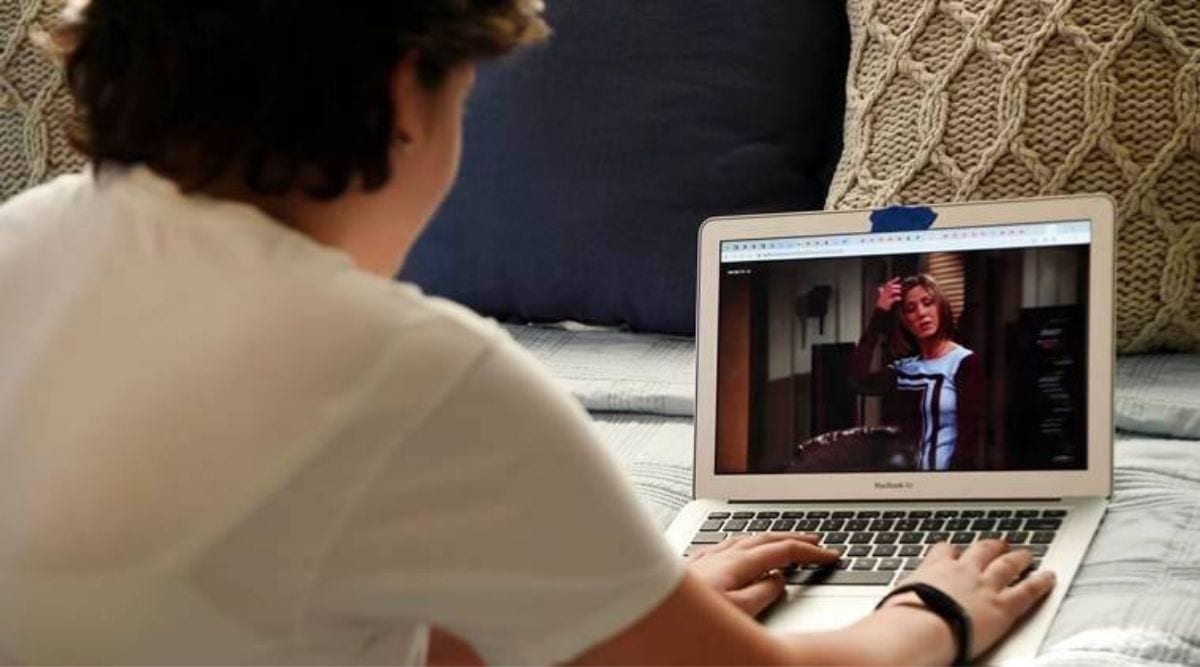
A bunch of techies and copyright experts have teamed up to fight digital pirates who use offshore servers to cover their tracks
Mohua Das (THE TIMES OF INDIA; August 13, 2022)
Ask any teenager from the late 90s and even the most unassuming one will confess to a notorious history of discovering new music and movies through piracy. The noughties arrived with bootleg video libraries and dial-up internet modems. And the new web-straddling generation — mostly ignorant or uncaring of ethical and legal bearings of piracy — were either buying shaky-cam versions of a blockbuster off the streets or downloading entire discographies and films over peer-to-peer file-sharing networks.
It was only a crackdown on illegal sites and shops and the advent of streaming tech that prompted ex-torrenters to kick their habit. However, piracy is anything but dead.
Turns out, if streaming services love the cloud, the pirates love it too since it makes it easier to download, mirror and circulate content illegally and harder for broadcasters to track them. The year 2020 particularly sparked a video piracy bonanza as the pandemic kept people home and out of theatres. Antipiracy agency Aiplex in Bengaluru notes that 23 million people in India had watched at least one episode of ‘Scam 1992’ although Sony LIV accounted for only two million subscribers while ‘Aashram’, one of MX Player’s most popular shows, would have gained 20% more viewership if watched legally.
“According to a report by Digital TV Research in 2021, the loss of revenue for OTT players on account of piracy in India is expected to hit $3.08 billion by 2022, while the cost of global online streaming piracy will reach $52 billion by 2022,” points out Girish Kumar, managing director of Aiplex.
Gautam Talwar, chief content officer for MX Player, calls piracy a “hard habit to break” given people’s inclination to download pirated versions of their content despite shows being available for free on their ad-driven platform. Talwar, during a recent consumer survey, stumbled upon hole-in-the-wall shops that have sprung up in cities like Indore and Bhopal where every web series available on every platform is being sold for as little as Rs 20.
“These are located close to coaching centres and youngsters equipped with laptops and catalogues of entire series with their IMDb ratings are transferring content onto people’s phones. It’s so organized that it’s scary. It’s hurting the business and creative people,” says Talwar.
“The exponential growth of OTT services has sort of facilitated piracy because the same technology of sending content over a high-speed internet connection is being leveraged by pirates to distribute and monetize content,” says Sharath Kumar, founder and CEO of the Chennai-based MassBunk Antipiracy that recently removed 14,000 pirated links of the film ‘Vikram’, within a week of its release.
As piracy enters this new landscape, techies like Sharath and Girish Kumar, with their teams comprising data scientists, software engineers, copyright experts and offline investigators, are using artificial intelligence and state-of-the-art proprietary tools to tackle the tidal wave of pirated content on the web.
“As a computer engineer fresh out of college in 2016, my dream was to become a filmmaker. But as a techie, watching piracy destroy budding directors and producers, I decided to get together with a few college mates and design something that would weed out piracy from its roots. Our motive was to protect not just the content but also investigate and nab those behind all the notorious sites,” recounts Kumar of MassBunk.
Helping a neighbour whose YouTube channel was deactivated because of a copyright strike gave Girish his most successful business idea. “It got me thinking about copyright enforcement. My team of engineers and I spent more than a year devising an antipiracy tool that can extract, validate and delete 95% of copyright infringements in the online space. Our AI-enabled pattern identification technology has also helped us draw up a list of potential and habitual offenders,” says Girish.
While much of it is still about movies and shows, digital piracy in its new avatar applies to e-books and gaming as well. If social media is often used to share pirated content within closed groups or as a signpost, the leading source of pirated content today, they claim, are popular messaging apps like Telegram with its end-to-end encryption that allows pirates and users to conceal their identity and share texts, videos, or other copyrighted content.
“Ninety per cent use Telegram to download their favourite movies, shows, music, and e-books. The process starts with a channel admin posting hyperlinks to pirated content available on a third party streaming/download site. These third-party sites pay the admins according to the number of visits, downloads and streams on their site,” explains Sharath.
“And pirates make most of their money from ad revenues. Legitimate businesses, including well-known brands in search of high traffic, inadvertently place their ads on pirate websites,” says Abhishek Dhoreliya, founder and CEO of MarkScan, an antipiracy agency in Delhi.
“Simulcasting or live streaming video to multiple channels from one platform; extraction of files and capturing videos from streaming services; mobile compatible modified versions of a streaming app that one can install on their Android device are some of the new trends,” says Girish, adding that, “NFT piracy is picking up pace, too, where pirates create counterfeit NFTs and sell them to unsuspecting buyers.”
The work of these antipiracy task forces begins at least a week before a film is about to be released, monitoring websites and Telegram channels round the clock that are likely to post links to the movie once the first pirated print is leaked. “We have teams dedicated to each regional language, and the moment anyone informs us over social media, DMs or email, we remove the links in bulk,” says Sharath, who has filed nearly 50 FIRs till date. MassBunk also teams up with social media influencers, fans and citizen collectives who often alert them to illegal links during a movie’s release.
“Our teams work round the clock to monitor online discussion forums, search engines, user generated platforms like YouTube and social media platforms like Twitter and Facebook,” says Dhoreliya, who has partnered with many of these sites for access to their ‘takedown tool’ that allows them moderator privilege to remove any pirated content on their platforms.
That apart, search-engine delisting and domain blocking via Ashok Kumar order (Indian substitute for John Doe order), a legal remedy against unknown offenders, is an effective counter-measure, believes Girish, whose team recently helped keep films like ‘JugJugg Jeeyo’ (Hindi), ‘Bairagee’ (Kannada), ‘Nadi Dosh’ (Gujarati), ‘Khaao Piyo Aish Karo’ (Punjabi) from popping up on rogue websites. “Such legal orders are a crucial strategy in tackling piracy ahead of big-ticket releases,” says Dhoreliya.
While piracy in India is a criminal act that could attract a three-year prison term and a fine of up to Rs 3 lakhs, most of the perpetrators use offshore servers in foreign countries like UK and France where laws and punishments differ, say these antipiracy crusaders. “Unlike physical CD shops and sellers that were easy to identify and catch, pirates could be anywhere in the world using privacy protection services to hide on the Internet,” adds Dhoreliya, who feels that changes in the copyright laws in India to address new forms of digital piracy and collaboration between stakeholders — content owners, government entities and antipiracy agencies — could help take the bull by the horns.
Political plots rule OTT, woo audience
8:19 AM

Many shows themed around political incidents or real-life political figures have been popping up on digital platforms
Juhi Chakraborty (HINDUSTAN TIMES; June 19, 2021)
Variety is the spice on the OTT platforms and there is no dearth of content from all possible genres. However, lately the digital space is increasingly exploring plots and stories around the political spectrum, some of which seem inspired by real-life political figures and incidents too.
Most recently, shows such as Maharani, which loosely resembles the real-life political drama of Bihar in 1990s, is garnering much praise from the audience and critics alike. Actor Huma S Qureshi, who plays the titular role in the series, tells us, “Maharani is a political show for sure, but also a very hopeful show. It’s not something that leaves you without hope... It’s almost like a fantasy that everybody harbours that if, ‘I’d be the chief minister or Prime Minister, I’d do this and that’. It’s a common man’s dream.”
Qureshi cites an example of Anil Kapoor-starrer Nayak (2001). “It plays into that fantasy. But when done in a realistic political setting, most people connect with that,” she adds.
Even Ramya Krishnan-starrer Queen, which chronicles the life of Shakti Seshadri — a character that bears an uncanny resemblance to late Tamil Nadu chief minister J Jayalalithaa — has been loved by audiences.
There are multiple reasons that make political dramas an audience favourite, feels Gautam Talwar, chief content officer of the OTT platform that screens Queen. “Firstly, these larger than life personalities who’re tasked with running the government, tend to garner heightened attention and curiosity from viewers. Secondly, their personal lives — be it what motivated them to join politics, their childhood, their lives as young adults, among others, make for compelling storytelling, and the common man loves to know the back story about the leaders,” he explains.
Among other web shows based on political themes is the Telugu web series Chadarangam, which revolves around the life of Sr NTR, Modi - Journey Of A Common Man based on Prime Minister Narendra Modi’s life, and City Of Dreams, that explores themes of crime, politics and family conflicts. There’s also a biopic series planned on the life of actor-turned-politician, Sumalatha.
Talwar says that as a storyteller, what interests him the most about political genre is the fact that they’re able to recreate certain parts of history with a nuanced POV, that makes for an interesting watch. “What really appeals is the journey of these characters from very humble, modest beginnings, to them achieving the epitome of power in their respective field,” he adds.
Amit Sial, who stars in Maharani, opines that the shows based on, or inspired by, political figures give the audience a deep sense of satisfaction, as well as a hope. Talking about the show, he shares, “It’s a well etched out script, so I mostly relied on what was written. Subhash Kapoor (creator of the show) is an ex political journalist, so he has deep knowledge and good understanding of the subject. I think the audiences really like complex, political stories, and politics is the in thing right now.”
Actor Rajeev Siddhartha, who stars in Aashram, that has a plotline exposing godmen-politican nexus, feels that such stories can be explored in a bigger way on OTT platforms. “Web space allows to add more complexities, more layers and more information about the incident and characters. I feel that even the audiences like that. In the coming time, we’ll see more of these,” he concludes.


Baba Bobby Deol back again; second part of Aashram to return online in November
8:04 AM

Initially slated for March 2021 release, the second part of Aashram to drop online in November
Upala KBR (MID-DAY; October 8, 2020)
Director Prakash Jha highlighted how blind faith can be exploited as he told the story of a self-styled godman in Aashram. The MX Player web series — which saw Bobby Deol play Kashipurwale Baba Nirala, a spiritual guru whose mysterious activities raise suspicion — was developed in two parts. While the second part was originally supposed to drop online in March 2021, the makers have now advanced its release to November.
A source from the creative team reveals that after filming the three-month schedule in Ayodhya since last October, Prakash Jha had decided to release the opening season in two parts. The source adds, "The second part is currently in post-production, and the makers will announce the release date soon. While Baba Nirala's wrongdoings were not completely explored in the first part, the upcoming edition will delve deeper into his psyche. He will finally be shown as a shrewd and manipulative criminal who is maintaining a façade of a godman. The latest instalment, which will open with Adhyayan Suman's character Tinka Singh performing at a rock concert, will trace how Singh helps Baba increase his following among the masses." Meanwhile, the creative team has developed the material for the second season and will take it on floors by February 2021.
Confirming the early release of the second part of the first season, Gautam Talwar, chief content officer, MX Player, says, "Aashram has crossed over 320-million-plus views in just about a month. It would be safe to say that it's one of the most-watched series in the Indian OTT ecosystem. The second part is in post-production, and we are looking at launching it before the year-end."
Subscribe to:
Comments (Atom)