Showing posts with label Gaman. Show all posts
Showing posts with label Gaman. Show all posts
Rebel without a pause: Actor Nana Patekar no more
10:35 AM

Bella Jaisinghani (THE TIMES OF INDIA; October 9, 2026)
Mumbai: “I don’t know whether I will be here tomorrow,” he said at an event in Goa, days before his unexpected passing. “We all have to go someday. That time comes in the life of everyone. But before that time comes… we have to think… am I able to do what I want to do? Have I made the effort?”
In Vishwanath ‘Nana’ Patekar’s case, the legacy bears out the effort. His screen presence rarely depended on conventional heroism. His strength lay in making characters feel unpredictable, wounded, volatile or quietly dangerous, often within the same scene. Over a career spanning nearly five decades in Hindi and Marathi cinema, Patekar moved effortlessly between rage and restraint, menace and vulnerability, theatricality and deadpan humour.
On Thursday, the voice that had championed the cause of the underdog on screen and oppressed farmers in real life was stilled. Patekar (75) was declared dead at 5.20 am Octoober 8 after having suffered a heart attack in Goa’s Dona Paula. He was found lying on the floor and taken to Manipal Hospital where doctors tried unsuccessfully to revive him. He had reached out to a friend after experiencing discomfort around 2.30 am but his message went unseen till an hour or so later.
Patekar’s remains were later transported to Donje village, Pune, where he was cremated on the grounds of his own farmhouse.
Born on New Year’s Day January 1, 1951, Nana Patekar came from a working-class Maharashtrian family of Murud-Janjira. He had to shoulder the burden of earning a livelihood at the age of 13. Despite his sunburnt upbringing, his fondness for art prompted him to enrol at JJ School of Applied Art in Mumbai.
He had recalled in an interview how he would paint posters and occasionally even zebra crossings on the road to supplement his income. Nana worked in advertising for two years before making his way into theatre, onward to cinema. On stage he found a fitting mentor in director Vijaya Mehta. His play Purush ran for 16 years.
He made his film debut in Muzaffar Ali’s ‘Gaman’ (1978) which was followed by the success of Jabbar Patel’s ‘Sinhasan’ (Marathi, 1979). Nana’s career took flight with impressive performances in Salaam Bombay, Ankush and Parinda.
Awards and accolades followed with Krantiveer, Prahaar (which he directed), Yashwant, Ghulam E Mustafa and Tirangaa. His popularity grew through a screen persona that blended street angst with neo-nationalism. His personal reputation as a short-tempered artist with a mercurial temperament often fed into the public image. Occasionally, Patekar would break out of the mould to do a quirky, witty film like Raju Ban Gaya Gentleman or Thodasa Roomani Ho Jaaye.
The actor lived out the slogan ‘Jai Jawaan Jai Kisaan’ issued by former PM Lal Bahadur Shastri. Nana joined the Territorial Army as a captain in 1988, underwent training for his film Prahaar, and later served with the Maratha Light Infantry during the Kargil War. The public-spirited actor also instituted the NAAM Foundation to help tackle rural distress in Maharashtra.
Yet the ‘angry young man’ did face a few controversies, mainly allegations of sexual harassment levelled by actress Tanushree Dutta during the MeToo movement. Nana subsequently steered clear of the limelight for a few years. In later years, he made a comeback with films like Raajneeti, Natsamrat and Kaala with Rajinikanth.
He is survived by his wife Neelakanti and son Malhar.
(With inputs by Aarushi Mehrishi)
I didn’t watch Umrao Jaan’s remake; the audience won’t allow its contamination either-Muzaffar Ali
3:55 PM

Renuka Vyavahare (BOMBAY TIMES; June 17, 2025)
Come next week, Muzaffar Ali’s Umrao Jaan will be back in theatres, 44 years after its release. On June 26, ahead of its premiere in Mumbai, the veteran filmmaker will launch a book dedicated to his celebrated film. In a conversation with us, the filmmaker takes us down a nostalgic path as he revisits his timeless classic. Excerpts:
How would you describe Umrao Jaan, a film that went on to become a classic?
Umrao Jaan is a serious tragedy, a tale of entrapment. The story revolves around a woman’s helplessness and, at the same time, her resilience to face reality. When she wipes a mirror in which she sees herself, she comes to terms with what’s happened to her. It’s about the realization of losing yourself. The whole Lucknow ambience was so compelling and romantic that it gave birth to the persona of Rekha.
Your story is rooted in Lucknow and it’s fascinating how you cast Rekha, a south Indian actress for lead and made Asha Bhosle, a Maharashtrian singer, her voice.
Only Shahryar (lyricist) and I were from Lucknow. Farooq Shaikh was Gujarati, and the legendary music director Khayyam was Punjabi, yes. I wanted to break this myth of who’s from where. They belong to the world. When I chose Rekha, I realized that there was this resilience in her eyes which could make her fall and rise in the same moment. She can be broken and not defeated. I couldn't see that in anybody else. I found in her a sense of total surrender. For this film, she knew something organic was taking place in her system to become what she could never become otherwise. Had she been reluctant about it, she wouldn’t have reached where she did. She flowed with the wind. She was weightless. Asha ji and I had a lot of discussion, and she asked a lot of questions. Shahryar (lyricist) would complain, ‘why do you make me do women's poetry’? Mushkil nahi hai, kuch bhi agar thaan lijiye. He created that kind of optimism for a woman who was abducted from her home. That was special.
What inspired you to cinematically narrate this story, which is based on Mirza Hadi Ruswa’s 1899 Urdu novel Umrao Jaan Ada?
A lot of our imagination is based on truth. So, Umrao Jaan, for the writer, Mirza Ruswa, was also a compendium of many characters he must have met in life. Coming from Awadh, I wanted to tell the story of this region. I realized that many people who've come from Awadh have got lost in the ocean of Bollywood. They had these beautiful nuances, words and cultural imagination, which became a part of someone else's agenda. So, all these rich minds that went into Bollywood, they were not themselves, you know what I mean? Particularly the poets. Even Sahir Ludhianvi was not himself, in that sense. All these people probably had as rich an imagination as mine, and that imagination needed freedom. So, for me, it was that liberated mindset, which could create an authentic artistic statement. I wanted to tell the story of Umrao Jaan the way I felt it. Be it Umrao or the protagonist, who’s a taxi driver in my film Gaman (1978), the latter doesn’t realize that he would go to Mumbai and drive a taxi with no freedom and reason to come back to his village. Umrao was also trapped in a situation where she couldn't get out of it, and she then was also unacceptable in her own home. This was many people's predicament in Bollywood.
How did you navigate artistic vision and commercial expectations while making Umrao Jaan?
This is a good question because we were all battling between art and commerce at the time. Umrao Jaan is not a box office potboiler. My film was costless; it was the most inexpensive film made at the time. I don’t think expensive, and opulence translates into emotion. Fortunately, I didn't struggle as much because I was working for Air India while making the film. After six months into the film’s making, I myself decided to quit the job because I realized the film will take almost 3 years to be made. Mr. Ratan Tata was gracious and said, “Don't we have employees who play cricket and hockey? Let him make his movie.” I worked for them for 11 years. They were extremely generous.
What were your views on the remake of Umrao Jaan made by J P Dutta starring Aishwarya Rai Bachchan?
I didn't watch the remake but saw bits of it and I didn't find anything. I didn't want to disturb my own world of Umrao Jaan. I had no point of reference when I made Umrao jaan. My point of reference was me looking inside. The remake’s point of reference was my film. They had to reinterpret it to make it look originally different and that’s not an easy step. The thing is that people don't understand the kind of layering that goes into a film that’s emotional and artistic. You're telling the story of textiles, the story of sunsets and sunrises in Awadh. You're telling the story of this light going into Rekha's eyes and coming out as a tear, so these are the nuances that the story contains. It is not my story now. I'm very fortunate that it has gone into a domain where viewers are the fortress protecting the film. They won’t allow any contamination. They want the purity of what Rekha could present to the audience. A melody which goes into people’s souls cannot be erased by some limb shaking music.
If you were to make the film today, who would you cast as the lead?
It's not easy for Umrao Jaan to find Rekha and for Rekha to find Umrao Jaan. There were layers of preparation that went into essaying this role. You must also be the right age. Kareena Kapoor has something. Alia Bhatt has something. They have a lot of magic, but I can't say till I open the book. I think actors today work in shifts. They have too many commitments, they're spread out too thin, so they don't immerse themselves in their roles as much as they should. Also, it's not just them, everybody is in a hurry these days. Everyone’s attention span has depleted.
--------------------------------------------
Deep Saxena (HINDUSTAN TIMES; June 17, 2025)
Filmmaker Muzaffar Ali believes the 1981 cult movie Umrao Jaan, based on Mirza Hadi Ruswa’s novel, should not be reinterpreted. As the film prepares for a re-release in theatres later this month, he admits he wouldn’t even attempt to remake it.
“Rekha is not easy to find! You don’t people with such commitment — what she did, no one else can do today. Every person in the film was as real as Rekha, and she, too, became part of that milieu. It reflected in everything: Shahryar’s lyrics, Khayyam’s music, Kumudini Lakya’s choreography, Asha Bhosle’s playback singing, the characterization, the actors, the cinematography, and the costumes. Everything was crafted in layers,” he says.
Muzaffar adds, “The film has reached such a level that anything new should surpass it. Films aren’t made just with budgets; they’re made with commitment and passion. I haven’t felt that same passion again, and even I wouldn’t redo it. Closure is important — you can’t make it better than this. It can’t be recreated. Others have tried and failed, so why should I? Instead, I’d rather tell new stories with the same passion.”
The film has been restored in 4K by the National Film Archive of India (NFAI) and the National Film Development Corporation (NFDC). On the release date (June 27), he will also launch his coffee table book, featuring archival pictures and write-ups, including contributions from Rekha and Naseeruddin Shah.
Muzaffar Ali rues as his life’s work was damaged by Gurugram’s September floods
7:20 AM
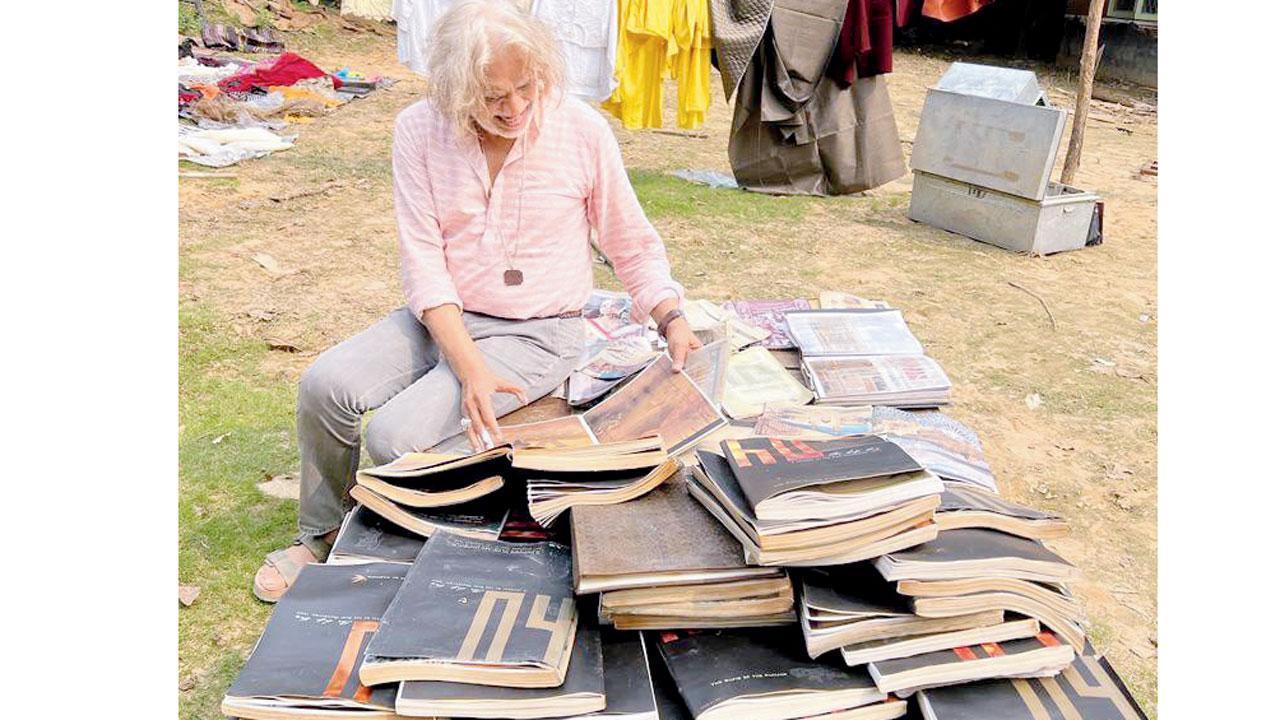
Amir Khusrau’s poem seems to have struck Khusrau festival founder and filmmaker Muzaffar Ali, quite literally, when his life’s work was damaged by Gurugram’s September floods
Yusra Husain (MID-DAY; October 9, 2022)
Arab ki Sarai at Delhi’s Humayun’s tomb was immaculately dressed up for the Jahan-e-Khusrau, an annual three-day Sufi music festival held to commemorate the death anniversary of Amir Khusrau. The year was 2001. Illustrious artistes joined the magnificent musical company of Pakistan’s Abida Parveen, Iran’s Rumi Group and Tunisia’s Lotfi Bouchnak, to regale an audience that sat in the open gardens under moonlight. Little did festival founder, filmmaker and Padma Shri awardee Muzaffar Ali know that 20 years later, just under 25 km away from this venue, a lifetime worth of work would see a “pani phir gaya” moment.
Kotwara Farm, Ali’s home in Gurugram’s Gwalpahari, sits in a nasheb (Urdu for slope) as he puts it, with the beautifully rugged Aravali mountain range in close proximity and a pond behind the residence. This beauty, Ali realised, now comes at a price since the area has seen a burgeoning urban township spring up. Ali says much of it has to do with ASF Infrastructure, a private firm, developing an Information Technology sector-specific Special Economic Zone (SEZ) in the area.
“There are high-rise buildings here now. Water from the pond and the storm water drainage that passes right next to our house, is blocked by new construction and the hillock made by TERI [The Energy and Resources Institute] in the name of a golf course,” Ali alleges.
Like always, the rainwater should have followed its course into the foothills of the Aravalis. As per the records at Delhi’s primary weather station, the Safdarjung Observatory, 16 per cent excess rainfall was recorded in Gurugram in just 24 hours, on September 23. Other weather stations at Palam, Lodhi Road, Ridge Ayanagar and Pusa also recorded heavier than normal rainfall during this period. The 36-hour rain spell made this September the second wettest in a decade.
Like with several other commercial and residential premises, Ali’s home saw water flood in. “In just about an hour, there was three feet of water in my home office. All the archival tapes of original music from the Jahane-e-Khusrau festival from 20 years ago, and master tapes of my films, were swimming in muddy water. Sab sarabor ho gaya hai; I don’t know what to do,” he says helplessly.
Not just the tapes, a number of costumes from the festival and his films, old newspaper cuttings that were stored in a trunk, issues of the coffee table journal by Rumi Foundation, HU-the Sufi way, which document the Sufis of Kashmir, Punjab, Awadh etc, exquisite durries made in his hometown of the erstwhile royal estate of Kotwara, and his personal curation of music, lie ruined. “These tapes also housed the sound tracks of Anjuman (1986) and Gaman (1978),” he says of his films, “The tapes contained the originals.”
Music for Anjuman was directed by Khayyam while Gaman won Jaidev the National Award for best music direction and the National Award for best playback singer female (Chhaya Ganguly).
The damaged lot includes quarter-inch tapes that are no longer in use; music cassettes that replaced these, and CDs that came after. “I am still trying to wrap my head around how much is lost, what can be redeemed and what will be history now,” Ali says, who together with architect-designer wife Meera Ali, has putting the material to sun every morning.
Ali has filed a complaint at Gwalpahari police station in Gurugram to report the loss of “rare and valuable archival records of my films and festivals” that have been destroyed. “Due to the criminal negligence of ASF and TERI, this water was let loose by ASF and not allowed to move out by TERI. This created a flooding situation resulting in huge financial loss and damage to life and property. From time to time, I have been warning the MCG [Municipal Corporation of Gurugram] about this.” Ali says he has not received any support from the film industry or the Haryana government. “I have credibility attached to my life and name and they [the administration] should understand the problems a person like me is facing. Why would people want to settle here?”
“On his complaint, we have asked the MCG to clear out the drains. TERI has also been reached out to and they say off-season rain has caused damage to them too. But we will keep Muzaffar Ali’s maan-samaan and resolve the issue soon. FIR can’t be lodged as this is a non-cognisable offence,” said Gwalpahari police station ASI Prem Chand.
Ali says he has shifted his archives between locations over the last few years—from Mumbai, a city long lashed by the rains, to Lucknow, and finally Delhi. “I still have a lot of original photographs and archives at my Lucknow residence. Artistes and filmmakers tend to have valuable documentation which needs to be preserved and shared. My father [erstwhile Raja of Kotwara] also kept records till his death in 1990, and I have tried to safeguard them. He gifted some of it to the Amir-ud-Daula public library in Lucknow, opposite our home. I am not sure if they will be interested in safekeeping my archives too,” he tells mid-day.
With climate change a reality, Ali wonders if there is merit in considering the setting aside of a budget for the creation of a dedicated space that can serve as an art and cultural archive that’s air-conditioned and moisture-free.
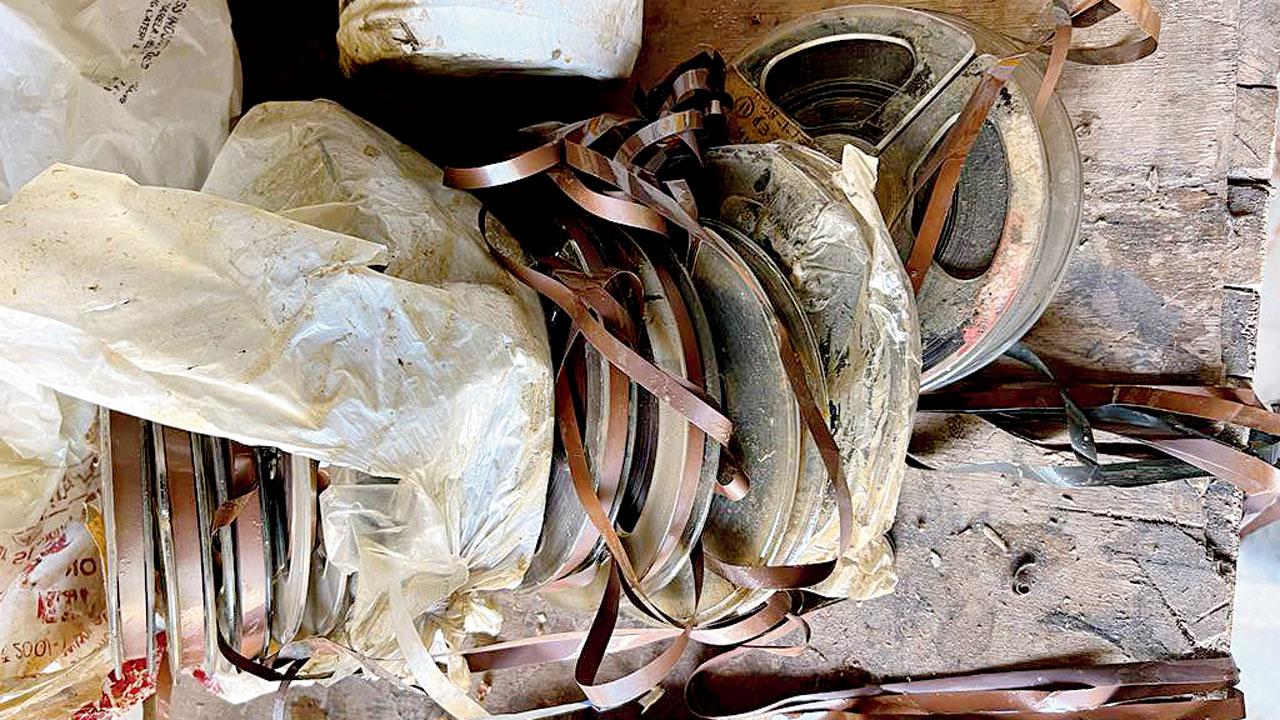

Out of fashion quarter-inch tapes, cassettes, CDs with original music from some of Ali’s best films lie in slush
The medium of Gaman came from Calcutta, inspiration from Aligarh and soul from Awadh-Muzaffar Ali
8:20 AM

Filmmaker Muzaffar Ali on his 1978 directorial debut — about a taxi driver from Uttar Pradesh in Bombay — which chronicles the plight of migrants in the big city
MUMBAI MIRROR (May 17, 2020)
 I was moved to read Trisha Gupta’s piece, Tell me how long the train’s been gone, which appeared in Mirror last week. I am happy to see Gaman is still relevant after so many years. Each film is a world in itself. A universe we create out of ideas and emotions that have been a part of our building blocks. It is a pictorial canvas of what we have seen, and would like to show to this world, with the utmost honesty and sincerity.
Many a time we make films that people would like to see with equal sincerity and artistry, yet there is a fine difference between the two, and people can see the difference. It is what you want them to see that lives on.
Gaman is about displacement. In scientific terms, it is the adding of an external element and thereby the replacement of the original organic element. I saw the emergence of a Gaman-like world in Bombay when I moved there in 1971: The influx of people from all over to displace the original character of the city. The making of a metropolis is the unmaking of a place. Spaces are threatened in layers, year after year, and each year changing the aesthetics of an urban cityscape, rendering the earlier out of date. The enormity of this tragedy was rendering people faceless.
‘Kya koi nayi baat nazar aati hai hammeiñ Aeina hameiñ dekh ke hairan sa kyoñ hai’
 A question of becoming a stranger to oneself: Bombay, to becoming Mumbai, a strange mirror that reflects our past with a perspective of the future. Bombay was a series of fading mirrors that pulled one, each time one saw oneself in them. Most of these mirrors find their way from sacred spaces to the crowded narrow gullies of places called Chor Bazaar.
Gaman is a journey of changing images in such mirrors. It is the reflection of the dynamics of roadscapes of a city, which never sleeps, in the rear-view mirror of a taxi in the eyes of a helpless driver. Spaces that are yours and not yours: A river that can never afford to stop. The protagonist of this ceaseless flow is a throbbing heart, beating, yet lifeless like a stone. Seeking reasons, yet finding none.
‘Dil hai to dharakne ka bahana koi dhoondhe Pathhar ki tarah behiss o bejaan sa kyun hai’
Where music is the melodic refrain for the orchestration of a mechanical world — this was me in Bombay in the 1970s, a city, which I saw from atop the Air India building, where I worked on the 18th floor. From where for hours on end, I watched yellow-roofed taxis crawl like ants. I wondered whether under those yellow metal sheet roofs was a man like me far away from his home. How far was his home; it was anybody’s guess. What he had left behind was beyond anyone’s imagination. The feeling was enough of an answer. Was it worthy of a film, I thought to myself? Was this loneliness our inevitable destiny — a wilderness beyond what meets the eye? On one hand, the ocean, and on the other, an endless sea of humanity...
‘Tanhai ki ye kaun si manzil hai rafiqo Ta hadde nazar ek biyabaan sa kyun hai...’
But certainly it was an emotion as deep as the Arabian Sea. It was an emotion in which I saw the fathomless tenderness of a thumri. Each time our eyes met in a rear-view mirror, a truth transpired. One saw beyond what the eyes could see. I saw the piercing eyes of Khairunnissa wait for Ghulam Hasan. I saw the eyes of Farooq Sheikh and beyond that the piercing helpless gaze of Smita Patil. Was it still worthy of a film?
What was beyond these frozen frames? There were moments of truths and more truths, of humans waiting at traffic lights on metalled roads and zebra crossings, metal bridges across mighty rivers ferrying helpless souls packed in metal cabins. Amidst this human exodus were shattered windows of glass, allowing the last ray of the setting sun play its flute on a windswept face.
‘Aaja sañwariya tohe garwa laga luñ Ras ke bhare tore nayan...’
It was a lonely journey. Can the loneliness of this phenomenon become a collective journey of a film? I had found the words, which described the emotional angst of the migrant. When Krishna leaves, would Radha’s tears drown Braj? In this diabolical answer, I felt, I was near the beginning and the end.
 Everything was in the mind of these mindless travellers, at times, bringing the odd tear when emotions aligned themselves to the sound of the changing tracks. But the sharp tearing horn of a railway diesel engine wiped it off in an instant as the morning sun rose in the formidable ghats and one was sucked into an endless tunnel. One wonders which side one is on. The ones in the train or those they are going to displace. I had become a ‘Ghati’ and a ‘Bhaiyya’ in the same breath. For many years I had been in that train not knowing the difference between the beginning and the end of these journeys.
Hence Gaman: A name given by my friend Asghar Wajahat to this feeling. Something I had begun to see with the inner eye. But Gaman was more than I could hold in one glimpse. It had too many metaphors, both vivid and fading. Khairunnissa sniffing and wiping her nose with her chadar as she extinguishes a night fire at dawn. Clothes becoming one’s second skin, fading and becoming sensuous, looking nostalgic and inviting with their faded textures under the smoke filled thatched roof, turning black with soot. The soot and the smoke was not different to the soot and the smoke from the speeding train... one was towards darkness and gloom and the other towards the light at the end of the tunnel.
‘Aap ki yaad aati rahi raat bhar Gham ki lau thartharati rahi raat bhar...’
One was static in a moving environment and the other moving in a static world.
‘Dard ke chaand dil mein utarte rahe Chandni muskurati rahi raat bhar...’
Gaman was yet to be born. And was it worthy of being a film? I didn’t care anymore. I had begun to unearth the city called Bombay.
The medium of Gaman came from Calcutta, inspiration from Aligarh and the soul from the heart of Awadh... and my palette from my paintings, having sketched out each frame. I was fascinated by khaki from the paper of my paintings and was fascinated by the khaki clad taxi driver protagonist of my film. Symbolically as a migrant taxi driver and as a migrant, he had no identity left but to become khaki, the colour of dust.
Rekha, Smita Patil were ladies with a dream; Shabana Azmi is a woman with a cause-Muzaffar Ali
8:15 AM

Priya Gupta (BOMBAY TIMES; August 6, 2015)
Muzaffar Ali, 70, may be
soft-spoken with impeccable manners, but he is also
invisibly headstrong. He is fixated to his environment, be it his
paintings or his ambience, and wants to have a constant dialogue with
it. A painter from his childhood, he is romantic and today has learnt to
have a great sense of record. He needs his family and friends to
put him together, but he's also extremely clear on
exactly what he wants. He may have married thrice, but has been
consistent with his commitment to Kotwara. In 1981, he created Rekha as
Umrao Jaan. Over two decades later, he has made Jaanisaar. Over an
hour-long conversation with Bombay Times, he talks about his best
companion his wife Meera, his commitment to Kotwara and why Smita Patil
was his favourite muse. Excerpts:
Tell us about your family background?
I was born in Lucknow but my father, Raja Sajid Husain Ali, was the raja of Kotwara. He had become a raja at a very young age and thus, there was an attempt on his life due to which there was a danger to his life. He was packed off to Edinburgh to study. He returned to India as a man ready to take on the world in 1936. The British opened us up to a strange sense of democracy, which later became communalised just before independence and that finally drove us to becoming two countries, India and Pakistan. I was very young at the time of Partition, but remember lot of family friends being separated from us. I studied at La Martiniere Lucknow after which I did my BSc at Aligarh Muslim University, where I got exposed to poetry that became a very important part of my evolutionary process of waking up to the world. Right from my school, I always won the first prize for painting and was always a painter that till today has helped me in my films as I sketch each scene out before I shoot it. I always wanted to do something creative and so moved to Calcutta to join advertising. I worked as the account executive to Satyajit Ray, who was the art director of Clarion McCann. I was very close to him and would go to his house. I learnt from him how you can take your culture to people through your cinema. I then joined another ad agency ASP where I worked with Shyam Benegal and Aziz Mirza after which I joined Air India where I made a couple of films for them and then made my first film Gaman. I won my first Filmfare Award. It also gave me the strength to make Umrao Jaan.
All your films, be it Gaman or Umrao Jaan, had a central powerful woman character.
Yes, for me the lady has to be strong. She has to make a difference and that comes from my mother. My mother's father was the nawab of Moradabad, but while she too came from a princely background, she always put things in perspective for me in a humane and practical way. In Jaanisaar, there is a scene inspired by the real-life incident that took place with her father. Because he was a revolutionary, the prince of Rampur spied on him, got him arrested and the British tied his body to an elephant's feet and dragged him around Moradabad and that is a very hair-raising thought. I loved my mother the most, I lost her to cancer when I was studying at Aligarh. And I still have very strong memories of her.
Talk about working with Smita Patil in Gaman?
Smita was a dream to work with. Like me, she too was a Libran and we were very similar. She could see the aesthetics in everything one was trying to do and she would respond to a lot of things that normally people don't respond to, like music, people, clothes, dialogues. We had great fun together. Asha Bhosle's daughter was her companion and the whole night, we would sit on the terrace in Kotwara and laugh and people would think that some bhoot had come.
You created Rekha as the Umrao Jaan. What is she like?
She's also a Libran but she's just he opposite of Smita. While Smita surrendered more, Rekha was more reserved. Smita was more stimulating as a muse. She had a different kind of imaginaion. Rekha has a lot of grace. She has a mystery and a quaint sense of humour. She's an interesting person, but we had a very professional relationship. She was a bit temperamental and knew what she was getting into. She was positioned within the the environment, be it the people, the music and everything else that made her Umrao Jaan.
You also worked with Dimple Kapadia in Zooni and with Shabana Azmi in Anjuman.
Dimple has a very interesting sense of romance in her. If Rekha, Smita and Dimple were ladies with a dream, Shabana is a woman with a cause.
Farooq Sheikh was a part of most of your films.
He was my alter ego. He was a gem and what he did for me, I don't think anyone could do for me on screen. He was perceptive, vulnerable, encouraging and supporting.
You lived in Mumbai. What made you move back to Lucknow and Kotwara?
When my father died in 1990, that's the time I left Mumbai to go back to live in Lucknow. I had to take on the responsibility of sorting everything out. In his will, he had said that he did not want to see anyone hungry in Kotwara. He was a big father figure there. Everything fell in place for me and I too felt that why should they have to migrate for work like in my film Gaman? That was also the time I had married my third wife Meera. The first thing I told her at the time of marriage was, 'You are marrying me and Kotwara.' Kotwara has been an important cultural influence on me and I am deeply linked to the people out there. I have also shot most of my films there.
You fought the Lok Sabha elections several times. What made you do that?
I got into politics due to Ayodhya as for me it was a watershed moment and I felt I had to say something politically. I fought against Atal Bihari Vajpayee and lost but still got 2.5 lakhs votes. I have been fighting all my life. In a way, I am fighting even in Bollywood to make films on my own terms. Now I am not politically-aligned but I like Akhilesh Yadav. I am happy that I have managed to convince him to extend the film subsidy to shoot in UP. I am not only politically aligned anymore but am aligned to humanism and secularism that is why my film Jaanisaar is important for me as it can humanise people.
You have married thrice. Talk about your relationship with Subhashini Ali (mother of director Shaad Ali).
We never divorced and are just separated. She was too much into her politics and I was too much into my own madness and our lives were just not fitting in. The whole period of 1988-1990 was the toughest and lowest for me. Zooni had got held up, my younger brother who lived in Liverpool died, I lost my father. When Zooni was stopped, I lost not just all my money, but also faith in people and politics. After Zooni, when I walked out of Kashmir I didn't know where I would go. First I thought I would just stay in Kashmir only as I had fallen in love with the valley. I had been promised many things from the government as a guarantee for my money, but I lost all my money. I came to Delhi and had to literally stand on my own again. I was living out of a suit case in a small room of a friend. And that's when I met Meera. She came as a breath of fresh air and has since been my best companion and wife. That's also when I got into making clothes as I thought that if I could make Rekha look beautiful, then I could also make other women look beautiful.
What do you like the most about Meera?
That she is very loving and compassionate and very responsible. She likes my madness.
What made you make a film like Jaanisaar after so many years?
I always try and live a film. 1857 is an important period in Indian history. Hollywood has explored the holocaust threadbare, we have done nothing for our history. I made Jaanisaar as I felt that the period of history post 1857 needed to be exposed. There was not a tree left from where there were no bodies hanging and I owed it to my country to talk about the sacrifices that have got pushed under the carpet. And while I don't know the market, I do know what goes into people's bloodstream. I still meet people every evening who fill up my glass with Umrao Jaan. It could be a matter of time but I feel Jaanisaar too will get into people's mental cache.
What did your father like the most about you?
He liked my honesty and that I was straightforward. I didn't hide anything from him though he was not always sure about how responsible I could be as I did certain things in my life that reflected my being irresponsible. For instance, he had a very beautiful Italian Rolls-Royce car that he had brought from England, which I just sold. He had a beautiful stamp collection, which I just threw around. Now I have developed a sense of record and that is also helping me with my work.
Do you wish he was alive to see you like this?
He would not have given me full marks even now. But, I do know that he is marking me.

Subscribe to:
Posts (Atom)