Showing posts with label GST. Show all posts
Showing posts with label GST. Show all posts
BMC budget 2026-27: Entertainment tax levy may push up film ticket prices
4:40 PM

Sanjeev Devasia & Bella Jaisinghani (THE TIMES OF INDIA; February 26, 2026)
Mumbai: The civic body is all set to impose entertainment tax after Sept 2026, once the state urban development department gives its assent to the BMC. The civic body, which intends to impose the tax on theatres, multiplexes, bowling alleys, cable TV providers, public ticket-based shows, discotheques, pubs, pool parlours, exhibitions, races, and circuses, among various forms of entertainment, is looking at mopping a revenue of over Rs 500 crore; in 2016-17, it had collected Rs 376 crore from entertainment tax levied in the city.
The prospect of film tickets becoming costlier in Mumbai looms large after the fresh imposition of entertainment tax, said experts. Nitin Datar, president of the COEAI (Cinema Owners and Exhibitors Association of India), said, "Since the GST levy was implemented, the Centre had allowed individual states to collect entertainment tax. But Maharashtra and some northern states have not implemented it."
The BMC budget document stated that as per the amendment to Maharashtra Entertainment Duty Act, the responsibility for collecting entertainment tax/fees previously levied by state govt, has been entrusted to the local authorities.
It also stated the state revenue and forest department had extended the exemption from entertainment duty from Sept 16, 2017, to Sept 30, 2026, and accordingly a proposal has been submitted to the urban development department. "We will be seeking data from the revenue authorities that are the district collectorate and will follow the model and features of the tax system adopted by them, while they levied the tax. However, that would be subject to the urban development department approving our proposal," said an official.
Datar said, "Many states in the south were levying this tax, but Maharashtra was not doing so. There are many taxes that businessmen pay to the Centre and to the states. Now with the imposition of this tax in Mumbai, it is almost certain that ticket prices will rise. The quantum of increase depends on the percentage. If 10% entertainment tax is levied, in multiplexes the ticket cost will rise from say Rs 100 to Rs 110, but in a single-screen theatre where tickets cost Rs 30-40, maximum Rs 80, even a three or four rupee increase means a lot."
Nitin Tej Ahuja, CEO, Producers Guild of India, said, "I have not reviewed the BMC tax proposal so I am yet to ascertain what it entails and what its implications are. Conceptually, however, we have made many representations to the central as well as various state govts against local bodies charging entertainment tax. The underpinning principle behind the introduction of the GST regime was ‘One Nation One Tax' and one doesn't understand the rationale why the entertainment industry should be singled out for additional levies. The whole idea behind GST was to subsume all these multiple taxes into one tax."
Birendea Nath Tiwari, president of FWICE (Federation of Western India Cine Employees), said, "The film and television industry has only recently stabilized after years of pandemic losses and the sharp impact of OTT platforms on theatrical footfall. Any re-introduction of entertainment tax at the municipal level must be handled very cautiously. If the levy directly increases ticket prices, the immediate burden will fall on the common audience, and that ultimately reduces footfall in theatres—which again affects workers and daily-wage technicians across the industry."
"FWICE believes the objective of revenue generation for the civic body should not come at the cost of revival of cinema exhibition. We request that either the tax be kept nominal or structured in a way that it is not passed on to consumers. Otherwise exhibitors, already struggling with maintenance, electricity and rental costs, will face additional financial pressure. If ticket prices rise, audiences shift faster to digital platforms, and that harms the entire ecosystem— producers, distributors, theatre owners and thousands of workers."
"Therefore, any policy must balance civic revenue with protection of employment and theatrical business sustainability. FWICE expects ticket prices may increase if the tax is directly applied per ticket, unless the govt caps or absorbs part of the levy. Theatres could face further financial strain, especially single-screen cinemas, unless concessions or differential rates are provided."
Multiplexes want tickets up to Rs 300 in 5% tax bracket
3:58 PM

Javed Farooqui (THE ECONOMIC TIMES; August 27, 2025)
Mumbai: The Multiplex Association of India (MAI) has urged the government to move cinema tickets priced up to Rs. 300 into the 5% GST slab, arguing that such a shift would improve affordability and give exhibitors the confidence to expand screen infrastructure in smaller towns and cities.
The association has reached out to members of the GST Council and written to the information and broadcasting and finance ministries regarding the demand. Currently, tickets priced above ₹100 attract 18% GST, while those below Rs. 100 are taxed at 12%, a structure introduced in 2018.
"Our request to the government is that this Rs. 100 should become Rs. 300. Tickets up to Rs. 300 should fall in the 5% category. Anything higher than Rs. 300 could be in the 18% category," said Kamal Gianchandani, president of MAI and CEO of PVR Inox Pictures.
The 56th meeting of the GST Council will be held in New Delhi on the 3rd and 4th of September. The government is considering reducing the existing four-tier GST structure of 5%, 12%, 18% and 28% to just two slabs of 5% and 18%.
"Since PM Modi has spoken about GST rate rationalization to improve affordability, the cinema sector is a fit case, an obvious candidate to have a rationalization of GST," Gianchandani said.
The industry argues that the current framework no longer reflects ground realities. The dual GST structure was decided in 2018, but since then inflation has risen, Covid-19 disrupted the industry, and consumer behaviour has shifted with the acceleration of OTT adoption.
"A Rs. 100 ticket is no longer realistic. Even Rs. 200 is considered normal due to inflation. To support the sector, the cap should be raised to Rs. 300. Bollywood employs thousands directly and indirectly, and multiplexes are an important medium to reach audiences. At a time when the industry is facing challenges, such support is critical," said Rohit Jain, deputy managing partner at Economic Laws Practice, which has been assisting MAI by drafting representations and engaging with stakeholders.
On the impact of a GST reduction, Gianchandani said the tax gap on a Rs. 300 ticket is Rs. 40, or about Rs. 160 for a family of four, calling it significant.
Shalini Passi called for quizzing in ‘GST evasion case’
8:12 AM

Pradeep Thakur (THE TIMES OF INDIA; March 13, 2025)
New Delhi: Socialite Shalini Passi, wife of businessman Sanjay Passi, has been summoned by the Meerut unit of Directorate General of GST Intelligence (DGGI) for questioning on Thursday in a case of alleged Goods and Services Tax evasion.
According to sources, the matter pertains to alleged short payment of GST by Pasco Motors LLP of which she was a partner. Shalini Passi shot to fame after starring in the ‘Fablous Lives Vs Bollywood Wives’ on Netflix.
Pasco Motors LLP is an authorised dealer of Tata Motors and is in the business of sale of heavy motor vehicles, both chassis and fully built buses and trucks. The tax intelligence department had earlier served summons to Sanjay Passi and other executives of Pasco Motors but they are yet to join the investigation.
J K Mittal, lawyer of Sanjay Passi, has denied any tax evasion and told TOI that the allegations are false. “GST summons issued by the DGGI is malafide and the information of tax evasion is not mentioned in the said summon at all,” he said, adding that the matter has already been challenged in the Punjab and Haryana HC and is presently sub judice. Mittal also confirmed that Shalini Passi was a partner in Pasco Motors LLP and DGGI was making an inquiry into alleged “short payment of GST” as mentioned in the summons.
Sources said while supplying fully built-up buses and trucks, Pasco Motors issues a single invoice but splits the total value into two components: the value of the chassis, which is charged at a GST rate of 28%, and the value of body fabrication, which is charged at a GST rate of 18%.
“As per the law, if a bus body builder constructs and supplies a fully built-up bus, the entire supply should be taxed at flat 28% GST. Therefore, Pasco Motors LLP is evading GST by charging different GST rates for the chassis and body fabrications in a single invoice,” a source said.
GST Intelligence has asked the company to clarify the differential rate of GST billed to customers and provide supporting documents. After queries remained unanswered, the agency sent summons to the company and its partners to record statements and ensure compliance. Generally, summonses are issued after non-compliance and non-cooperation by the other party.
GST slashed on movie snacks? It was always 5%, say cinemas
3:10 PM

Niharika Lal (BOMBAY TIMES; July 13, 2023)
On Tuesday, the GST (Goods and Services Tax) Council approved several proposals, including clarifying that the tax on food served in cinema halls will be 5% and not 18%. Does that mean your popcorn, pizza and burger will cost less? Well, no. Before Tuesday, there was no clarity on how much GST was to be levied on food served at cinemas and exhibitors across the country were levying 5%, as they consider F&B sold in cinemas similar to restaurants, where 5% GST is charged.
CINEMAS WERE ALREADY CHARGING 5% GST ON FOOD ITEMS, SO WHY THE CLARIFICATION?
Industry insiders say that in the last two years, several state governments/local bodies were lobbying to apply different GST rates on different food items in cinema halls. To get clarification, the MAI (Multiplex Association of India) made multiple representations to the GST Council in the last year.
ORDERING TICKET + FOOD COMBO ONLINE? YOU’LL BE PAYING MORE GST
The 5% GST on food however is only when you order the food at the cinemas. Movie tickets that cost below Rs. 100 have 12% GST, while those above Rs. 100 have 18% GST. So when cinemas offer online combo options of food and movie, then the GST is charged on the combo amount, which is 18%. Industry experts advise people to order food at cinemas and not online – to avoid the higher GST.
CINEMA F&B TAX SAME AS RESTOS: GST COUNCIL
The notification by the GST Council says that “ It has been decided to clarify that supply of F&B in cinema halls is taxable as restaurant service,” which is 5%. The exception to this “where the sale of cinema ticket and supply of F&B are clubbed together...the entire supply will attract GST at the rate applicable to service of exhibition of cinema, the principal supply,” which is 18% for tickets priced above Rs. 100.
Cola, popcorn in movie halls to cost less as GST slashed from 28% to 5%
8:44 AM

THE TIMES OF INDIA (July 12, 2023)
New Delhi: The GST Council on Tuesday decided to levy 28% tax on the face value of “bets placed” on online games, chips purchased at casinos and bets placed with bookmakers at horse races, while slashing the tax on food and beverages sold in cinema halls.
Besides, the Council revised the definition of sports utility vehicles for levy of compensation cess and exempted certain imported medicines and food products used by those suffering from rare diseases. Services of private organizations involved in launching satellites were also exempted from GST.
Cinema goers can cheer the development, as the Council clarified that the tax will be slashed from 28% to 5% GST, which is at par with restaurants. “Where the sale of cinema ticket and supply of food and beverages are clubbed together, and such bundled supply satisfies the test of composite supply, the entire supply will attract GST at the rate applicable to service of exhibition of cinema, the principal supply,” an official statement said.
The gaming industry was, however, bitterly complaining even as finance minister Nirmala Sitharaman made it clear that the Centre and the states wanted to promote the industry, but they could not promote casinos and online games more than essential goods.
After discussing tax proposal on online gaming and casinos for almost three years, at its 50th meeting, the all-powerful panel comprising the Union and state finance ministers decided to bite the bullet amid intense lobbying by powerful players.
The proposal, which will require amendments to the law to include online games and horse racing within the purview of GST, has also ended the difference between “game of chance” and “game of skill”. “What is skill based and what is chance based isn’t what we are looking at. What we are looking at is what is being taxed,” FM Sitharaman told reporters, adding that decision was taken after extensive consultation in the Council and factoring in concerns of states that depended on casinos to attract tourists.
Industry experts are keeping close tabs on how the amendment is drafted. “India is probably the only country to levy GST on full face value on all categories of online games. The blanket proposal to levy GST on full face value on online gaming will possibly put an end to the sub-judice debate of ‘game of skill’ versus ‘game of chance’. This change will bring ‘game of skill’ on a par with wagering contracts that are in the nature of gambling and betting. From a revenue perspective the proposed amendment may significantly contribute to the exchequer and will make states like Goa and Sikkim important from revenue generation perspective. This change will need amendments under GST law especially with respect to definition and taxability of actionable claims under GST. What remains to be seen is whether this change is going to apply prospectively or have a retrospective impact,” said Kishore Kumar, who leads the indirect tax practice at Taxmann.
Theatre owners and distributors want the government to lower GST, entertainment and property taxes
11:02 AM

Prashant Singh (HINDUSTAN TIMES; August 11, 2020)
Since March-end, there has been no drama or action, quite literally, in cinema halls across the country. And though states are in unlock mode, the film exhibition sector still hasn’t got a go-ahead. Feeling the financial pinch, now theatre owners/exhibitors want the governments to lend them a helping hand by cutting various levies such as the Goods and Services Tax (GST), entertainment tax and property tax.
“We don’t need to shout from the rooftops that the cinema [exhibition] sector has been badly hit. At this point, we would appreciate some assistance. To start with, the government can reduce or halve the GST for some time at least. If I need to open the theatre, it has to be viable for me. Otherwise, I am ready to keep it shut for another two to three months,” says Suman Sinha, the owner of Patna-based Regent Cinema.
The bleakest year?
This year, only a handful of Hindi films such as Tanhaji: The Unsung Warrior, Baaghi 3, Shubh Mangal Zyaada Saavdhan and Malang, hit theatres before the lockdown came into force. “With newer expenses [Coronavirus related SOPs] at the time of reopening, we’d need help from the government. They can reduce entertainment tax, GST rates and property taxes for the time being,” says Manoj Desai, executive director of Mumbai’s G7 and Maratha Mandir theatres.
According to a Ficci-Ernst & Young report, the number of single screens in India has anyway been steadily declining—from 7,031 in 2016 to 6,327 in 2019. And India is believed to have lost 10-12% of cinema screens since the start of the lockdown. These numbers could go up to 15-20%, if theatres don’t reopen soon.
As exhibitor-distributor Akshaye Rathi puts it: “The sectors that have been most affected are the hospitality, tourism and entertainment. We’d welcome some stimulus in terms of discounts/rebates. Cinema [exhibition] business is in its most difficult situation. For many, it has become the question of survival. Keeping theatres closed for longer would sound the death knell for many.”
Survival at stake
There are too many issues, say industry insiders. To start with, they want SOPs to be viable – financially and otherwise. “How can I have people sit in alternate seats, and also leave an entire row empty? Why would I have the entire air-conditioned theatre function for a handful of people?” says Sinha.
Desai also rues the lack of content. “Even if theatres reopen, will audiences come rushing in, especially when we don’t have exciting, new content?” he says.
During the lockdown, many single-screen theatres such as AVM Rajeswari and Maharani in Chennai, Tamil Nadu, Shanthala in Mysore, Karnataka and Sapna in Thrissur, Kerala, among others, downed shutters. And experts say close to 50% of single-screen theatres may find it difficult to stay afloat.
“The government should seriously consider green-lighting the opening of cinema halls. It’s not as if opening them will lead to a sudden surge in [Covid-19] numbers. Cases are, anyway, not going down as of now,” says Shibasish Sarkar, group CEO, Reliance Entertainment.
Maharashtra government grants permission to resume film and TV shoots
8:32 AM

Clara Lewis (THE TIMES OF INDIA; June 1, 2020)
 Mumbai: It will soon be lights, camera, action in Bollywood again. But the new scene promises to be vastly different: No more star tantrums or open calls—everyone will now have to be compulsorily assigned a window to arrive; also, there can’t be senior citizens (above 65) or more than 33% of crew members on a set at a time. These are among the many conditions laid down by the state government as it allowed the entertainment industry to resume operations.
A government resolution issued on Sunday made it clear that the industry that employs almost five lakh people will have to drastically downsize, except of course, without pruning the main cast of a movie.
Makers of films and TV shows will have to obtain myriad permissions from police and district authorities before they can start shooting. While casting for families, real families should be used so that physical contact is restricted. For fiction/non-fiction scenes, no audience is to be allowed; castings wherever possible are to be done via Facetime, Zoom, Skype, etc.
Bollywood will have to do away with elaborate sequences like marriages, markets, melas, and even fights, till the Coronavirus threat subsides. All crew members who handle equipment should bring their own gear—not even a pen can be shared.
The resolution also states that actors should consider showing up after doing their own makeup/hair styling. They will be allowed only one person as support staff on sets. All trials and fittings are to be done at home and everyone must carry home food.
In case of secondary/ back-up actors, the industry has been advised to avoid hairdos and makeup. Every actor should carry his or her own hard copy of script and discard it after use.
Extras are to be kept to the minimum. In case of crowd management, sourcing of new outfits and costumes is to be avoided. “Either existing costumes are to be used or they can bring them from their personal wardrobe,” states the resolution.
An employee who is pregnant or whose spouse is pregnant is not to be allowed on sets; likewise, children below the age of 10 and people above 65. Ashoke Pandit, chief advisor, Federation of Western India Cine Employees, said it was a start, but the age limit of 65 would be difficult to implement. “How do you ask an actor like Amitabh Bachchan to sit home or a David Dhawan not to direct a film?”
Also, it would be difficult to station an ambulance, a doctor and a nurse at every shoot since at least 70 shoots happen daily in the city. The television industry works between Borivli to Naigaon, said Pandit.
Birendra Nath Tiwari, federation president, said 80% of the staff who work on daily wages have left the city. “Film shooting will not be the same, but it is a start and we thank the CM for allowing the industry to reopen. By the time permissions come and the conditions met, we should be able to make a start by June 18-19,” he said.
-------------------------
Work is allowed in non-containment zones and with certain conditions
Hiren Kotwani (MUMBAI MIRROR; June 1, 2020)
 After over two months of lockdown, the entertainment industry is ready to get back to work. Shooting of films, TV and digital series will be allowed in non-containment zones in Maharashtra in the latest phase of the lockdown with certain conditions, as per an order issued by the state government on Sunday. Issuing a Government Resolution (GR), the Cultural Affairs Ministry said that producers will have to conduct pre-production and post-production works by adhering to the guidelines laid down by the government. “Violation of the rules will lead to stopping of the work,” it said.
Producers will have to apply to managing director of the Maharashtra Film, Theatre, Cultural Development Corporation, the Dadasaheb Phalke Chitranagari in Goregaon, Mumbai, and to district collectors outside Mumbai to resume shoots.
Indian Film and TV Producers Council (IFTPC) chairman J D Majethia, who was a part of the May 22 virtual meeting with Chief Minister Uddhav Thackeray, said, “We had requested the CM to start shoots at the earliest with SoPs in place. His team worked hard and here we are. Today, we will organise meetings with producers, broadcasters and trade bodies to kick off work as soon as possible. We’d like to thank the CM on behalf of the industry for such a proactive decision. We met him on May 22, and got an order on May 31. This development will give hope to people.”
B N Tiwari, President, Federation of Western India Cine Employees (FWICE), added that the industry bodies have been instructed to resume work by strictly following the prescribed safety guidelines and SoPs, which include working with only 33 per cent of the crew, while future shoots in Goregaon’s Film City will require permission from the state government. “As long as we adhere to social distancing, maintain hygiene and honour curfews, I don’t think there will be any problem,” he assured.
Meanwhile, a similar order is awaited by the Telugu film industry. Hyderabad-based veteran producer, distributor and studio owner Suresh Babu said, “We got indications that we can start in another week or two, but we know there will be restrictions, like reduced size of units and using personal transport. Safety and hygiene need to be maintained, so we may need to set the lights in the set a day before to avoid crowding during the shoot.”
Considering that some multiplex chains have come out with SoPs incorporating social distancing by keeping alternate seats vacant, Suresh Babu reiterates that the theatrical market will shrink. “We definitely know that the post-Covid world will not be the same as before. In international territories, where cinemas have opened, the collections are low. When they open in India, we have to start looking at new models,” he says, adding that he feels theatres in India should open two-three months after shooting starts and not in phases.
He explains, “Theatres should open all across the country simultaneously. Even regional cinema depends on other states for some part of the revenue. People go to cinemas for good content. Once shooting resumes, people will be confident of content being made for them to watch in the theatres. Also, if all seats are not going to be available for public, good content won’t become sacrificial lambs. Unlike in international markets, there’s no government support for cinemas here. Unless government gives power subsidy and reduces GST (Goods and Services Tax) in the initial phase when cinemas open, operating for lesser seats sold will be disastrous. If I open a cinema in such conditions, I will lose further. If films don’t do well theatrically in such situations, then more will go to the OTT platforms.”
-------------------------
Maharashtra government lays down stringent guidelines for shootings to resume in Mumbai; Bollywood and television producers welcome the move
Uma Ramasubramanian, Dharmendra Jore (MID-DAY; June 1, 2020)
Even as the country enters the fifth phase of lockdown today in its battle against COVID-19, the entertainment industry can heave a sigh of relief. Following the two-month-plus industry shutdown, Chief Minister Uddhav Thackeray, on Sunday, greenlit the resumption of film, television and OTT shoots amid stringent regulations.
The state government issued a set of Standard Operating Procedures (SOPs), titled Guiding Principles to Restart Entertainment Industry in Maharashtra, for conducting shoots hereon. Among the new rules, producers who wish to conduct shoots in Mumbai will have to seek permission from the managing director of Maharashtra Film, Theatre and Cultural Development Corporation (Film City). Those planning a schedule across other cities or districts in Maharashtra will have to procure permission from the collector of the concerned district.
The on-set SOPs are a combination of the guidelines that had been proposed by the Producers' Guild and the Federation of Western India Cine Employees (FWICE). In one of the most important regulations, the state government suggested that the on-set crew should be minimised to 33 per cent of the original strength. The presence of an ambulance, a doctor and a nurse has been made compulsory on every set, as is the monitoring of temperature of every member.
The decision brought in a wave of cheer in the entertainment industry that has been reeling under the shutdown that was implemented on March 19. With this move, several films — including Alia Bhatt's Gangubai Kathiawadi, Salman Khan's Radhe and Ajay Devgn's Maidaan — that had been abruptly called off, can go on floors again.
J D Majethia, chairman, television & web, Indian Film & Television Producers' Council, says, "I want to thank Uddhav ji on behalf of the entire entertainment industry. We had a Zoom meeting on May 22, and here we are today! He has accelerated the process [to restart the entertainment industry]. Now, it is our turn to be responsible and not to disappoint our government."

How much cheaper is a tax-free film?
8:11 AM

Niharika Lal (BOMBAY TIMES; January 16, 2020)
Recently, several states declared Deepika Padukone’s Chhapaak, a film on acid attack survivors, taxfree, while UP did the same for Ajay Devgn’s Tanhaji: The Unsung Warrior, a film on Maratha warrior Tanhaji Malusare. Maharashtra is considering making both the films tax-free, as per Revenue Minister Balasaheb Thorat, who said, “Earlier, the Revenue ministry used to take a decision on making a movie tax-free, but now the tax has been subsumed in the GST.” Since GST (Goods and Services Tax) came into effect, what exactly does a film’s tax-free status mean?
In December 2018, two GST slabs were announced for films — 18% for tickets above Rs 100, and 12% for tickets below Rs 100. This tax is divided between the state and central government (State GST and Central GST). When a state declares a film ‘tax-free’, now it exempts only half of the entertainment tax, which would be either 9% or 6%, as per the ticket price. For the multiplex audience, since there are hardly any tickets available below Rs 100, the default exemption would be 9%. Cinema hall owners say that declaring a film tax-free had a bigger impact in the pre-GST years, when every state had different entertainment tax and the state governments could exempt the whole amount. Now, a moviegoer still needs to pay Central GST even for tax-exempted films. With GST in play, now the tax-free status of a film means endorsement of a film by the state government, rather than any significant monetary benefit.
Tickets costlier at PVR chains despite GST relief
8:24 AM

Movie-goers also miffed with other multiplex chains across the country; exhibitor insists that prices have reduced but are dependent on ‘movie categories’
Himesh Mankad (MUMBAI MIRROR; January 12, 2019)
The reduction in Goods and Services Tax (GST) - 18 per cent from the original 28 per cent for movie tickets costing more than Rs 100, and from 18 per cent to 12 per cent for those up to Rs 100 - was expected to bring a smile on the face of movie-goers. However, Mumbaikars are miffed because the national multiplex chain, PVR, have yet to pass down the tax relief to the audience.
“Till last year, the morning shows at PVR Juhu were priced at Rs 150- Rs 170. On Friday morning, I was shocked that tickets for both Uri: The Surgical Strike and The Accidental Prime Minister were priced as high as Rs 185 and as a mark of protest, I decided not to watch either of the two films,” says trade analyst Amod Mehra, adding that the industry should look into the matter so viewers are not cheated.
He was justified in feeling shortcharged because the Anushka Sharma-Varun Dhawan-starrer, Sui Dhaaga, which had opened on September 29, 2018, had been priced Rs 15 lower than Uri. When this was pointed out to Kamal Gianchandani, CEO, PVR, he explained the reason for the discrepancy in the pricing, saying, “We follow variable ticket pricing in Mumbai. Depending on the curiosity and excitement around a film, we categorise them as ‘blockbuster’, ‘popular’ and ‘ordinary’. Uri is carrying fantastic reports due to its topical subject, so we have placed it in the popular category whereas Sui Dhaaga was in the ordinary category. One shouldn’t compare the rates of the two films.” He argued that it is not “fair to compare two films that released in different periods”. “The best way to see the GST benefit is by comparing the ticket prices of Simmba on December 31 and January 1, as that would show a clearer picture. The benefit has been passed on to the patrons across the country and there is absolutely no ambiguity on this,” he maintained and also shared the reduced ticket price chart of Simmba.
The chart above shows that there is reason for viewers like Mehra to be upset given that tickets for the same film at various multiplexes differ. “Though the tax benefit is huge, there doesn’t seem to be a decline in ticket prices across the spectrum. The distributor association should sit down with the multiplexes and fix the rates for big and small films and this should be done at the earliest,” he states.
Despite the tax slabs coming down from 45 percent in 2014 to 18 per cent in 2019, there has been a surge in the average ticket rates across national multiplex chains. Ticket prices have gone up from Rs 280 to Rs 400 for evening shows at key city multiplexes which, according to industry experts, is one of the reasons for the audience to stay away from theatres.
Bobby Singh, a cine goer in Delhi groused on Twitter, that Cinepolis (West Delhi) is yet to pass on the benefit of GST reduction. “Cinepolis (West Delhi) charged Rs 190 for morning shows before Jan 1, and they are still charging the same for morning shows of Uri,” he complained.


I don’t dance at weddings for money-John Abraham
10:56 PM

The actor-filmmaker argues why it’s more important for an actor to focus on craft than on social media
Roshmila Bhattacharya (MUMBAI MIRROR; January 7, 2019)
John Abraham embodies virtues which are fast disappearing in today’s world. He is punctual and isn’t afraid to pull punches on screen. He does the same off it too, never trying to to be politically correct during an interview. Excerpts from an interview:
What has been the biggest takeaway from 2018?
To keep working, to doing more films. The idea is not to take yourself too seriously but to simply enjoy the process.
And the biggest lesson you’ve learnt?
Someone asked me recently, “What’s it like being a producer?” I admitted that it’s not financially gratifying and that I’m still trying to recover my monies not just from Parmanu but all the way back to Vicky Donor. The person immediately concluded that production has been a horrible experience. On the contrary, these two films, along with Madras Café, have brought me a lot of respect and appreciation...
Headaches too when one remembers the fight with your erstwhile Parmanu co-producer Prernaa Arora, which ended in court and could have backfired completely. How many sleepless nights did that give you?
Innumerable, and I wouldn’t wish it on anyone else. It’s only because I’m an honest guy that I had the courage to go to court. What upset me was people coming up to me after it was over, saying, “Hey, good you did it.” I didn’t need that pat on my back after going through the journey alone.
Had I not taken that lady to court, we wouldn’t have had so many others coming forward to say she owed money to them too. But it was a battle I fought alone, and I know that tomorrow, if I’m in trouble again, no one is going to show up for me. (Shrugs) But I’m happy that the nightmare is behind me.
Mid-way through the year you found another production partner in Nikkhil Advani with whom you are collaborating on Batla House and 1911. That must be a relief...
I met Nikkhil during Satyameva Jayate. At that point, we didn’t expect too much from our partnership or even the film, we were just happy working together. Over time, I discovered our ideas resonated and in Nikkhil I also saw an honest, hard-working man. I’d assume he saw some of that in me too which is why we decided to collaborate on a number of films and series driven only by content.
Today, there is no star or star director who can sustain a film. Maybe they can bring in an initial collection but even that’s going to end soon. The only way one can reduce the probability of failure is by telling good stories. You can’t give proposals anymore and take the audience for granted.
Yes, that’s what the last year reiterated. What’s the way forward for you as an actor-producer?
Well, from the industry point of view the GST reduction is welcome and was much needed. But when I look at it from the outside, I think tickets are still grossly overpriced and a viewer is no longer going to pay up half his salary unless he thinks it’s worth the money. I promise to invest in stories that have something to say and have an apt cast. I will not bow down to diktats of commerce. I’m not afraid of failure so I’m not afraid of taking risks.
Satyameva Jayate proved that action, a genre that many had thought had run its course, is still a big draw. Are you going to build on this?
Totally. The sense of heroism was lost till Satyameva Jayate came along and reiterated that this country needs heroes. I say this as a producer and not because I love John Abraham, but with the senior actors getting too senior and the younger guys still being boys, you need a man who can run through walls and break down doors. I’m going to be the action hero for the masses.
True-life dramas like Batla House and RAW must have given you a window into the world of terror and terrorism, give us a glimpse…
Yes, both these films have given me an insight into the politics of our country. When you delve deep into such stories, sometimes you come across a footage of a politician talking of the incident, you realise it was a political game and they’re the biggest hypocrites. I’m proud we live in a democracy but the way most politicians take advantage of us and the system, is scary. RAW is probably the most compelling script I’ve read so far while Batla House is probably the most contentious story in North India after the Babri Masjid. But neither film is a documentary. We are here to engage and entertain the audience.
Along with these true-life dramas you have also signed up for Anees Bazmee’s Pagalpanti and that’s a surprise.
As a viewer I enjoy comedies and having worked with Anees on Welcome Back, I wanted to reunite with him. Pagalpanti is a laugh riot, with a fantastic cast and writerdirector. And I believe anything that can make me laugh at the narrative level has a good chance of wooing the viewer too. Personally, both RAW and Batla House were intense experiences so I just wanted to lighten things up for myself.
1911 is your dream project and at a time when your contemporaries are playing football and hockey coaches, you will actually be taking the field as a player. How big a challenge will that be?
I played A-Division football and would have played for India too. I still play regularly. I own a club, North East United FC, and practice with my team sometimes. It is a challenge to execute a film of this magnitude but in terms of the sport, I enjoy it and it’s easy for me. When you kick the ball, the audience should be convinced you are a player and not just acting as one. On that front I think I can be decently convincing.
There’s also Officer Khan?
That’s my next production with Renzil D’Silva as director. It goes on the floors in June. We have been researching the subject for three years. We are making biopics on film stars and sports stars... in a first this is the story of a common man.
What’s the one film in 2018 you wish you could have been a part of?
Honestly, I haven’t had the time to watch too many but I’m very happy for Ayushmann Khurrana, he’s making the right choices. It’s just the two of us who have had two hits last year. On my part, Parmanu taught me how to simplify something complex.
Now that your company is getting bigger and you are doing more films as an actor, will your wife Priya take a more active interest in filmmaking?
Priya handles the football team and that is like two big productions, 365 days a year. She’s doing a swell job and that has taken a load off my shoulders, allowing me to focus on acting and producing films. That’s what partnership is about rather than walking the red carpet in a pretty dress.
How do you perceive the #Me-Too movement in the film industry, one of the most crucial talking points of last year?
I’m happy the movement happened because there is some woman somewhere who has been saved from being molested. Now, it’s how we sustain it, in a credible manner, to create a safe environment for women and that’s not going to happen by putting out a tweet in support. We have to do more than that.
We, as actors, are so consumed by the social media and the love that we get on it, that we become prisoners of our own image. We need to get out, see the world for what it is, learn to respect everyone, get a life and stop taking social media so seriously. It’s a farce.
You seem really upset with the social media.
I will be one of the first few to get off it. I come from a marketing background but if a brand manager tells me that he looks at the number of likes and views on Facebook, Instagram and Twitter to decide whether to take an actor on board, then he is not doing his job right. Today we have social media stars who have not done anything credible, the virtual world has become the real world and vice versa. It’s crazy!
I’m not a social media hater, it is a great platform and can be used effectively in some cases like that of Avni, the tigress, a cause very close to my heart. There are a lot of good people there too and I appreciate their presence. But at the same time, it’s also responsible for polarising the world. There’s so much hate and negativity there that it’s toxic. Read the comments for two hours and if you don’t feel sick, I’ll change my name.
Yeah, there is a lot of celebrity bashing on the social media…
There is but aren’t celebrities also asking for it, wearing funny clothes outside airports and doing funny things. You can only be laughed at if you decide to be a clown in the circus. It’s your choice. I’m not an actor who dances at shows or weddings for money. I find it demeaning. I’m not saying that I’m right, but I wouldn’t do it, ever.
As an actor you are here to show your craft. How much money do you want to mint? Why is it important to be on a list of the highest earners? What about the audience you are robbing with crap you put out? I have always worked hard for credibility, I get that, I move on quietly. I wish we had more actors cut out from the same fabric.
Multiplex, high-rise building to take the place of Chandan cinema
8:44 AM

Single-screen theatre in Juhu, which is a haven for fans of masala potboilers, is unable to sustain and will go in for redevelopment
Sonil Dedhia (MID-DAY; December 29, 2018)
Six months after reports of Regal cinema staring at a shutdown, we hear Juhu's 45-year-old Chandan cinema will soon down its shutters. Owner Sameer Joshi confirmed the development and said, "Yes, we are shutting down, but we haven't decided when exactly. Chandan loyalists needn't be worried because we will be coming up with multiple screens."
"We aren't partnering with any cinema chains. It was purely a business decision between the Wadhwa Group and us." He blamed the kind of films for falling footfall. "There are very few movies today that carter to the masses. For a single screen cinema like us, which is a 650-seater, we struggle to fill even 100 seats." Joshi adds that the slide has also increased since web streaming platforms came in. "People are looking at alternative modes of entertainment. Netflix and Amazon has kind of ruined the business."
He also points out that the government hasn't provided any help to keep the single screens afloat. "Today, we have a 4K projection, better seats and the latest sound system, but the government is worried about where they will collect GST and talk about fiscal deficit in revenues. They have requested single screen owners not to shut down but don't understand that everybody has to change with time. Our association [single screen owners association] has made many presentations on how some aid will help us stay afloat but it has fallen on deaf ears."
Trade analyst Amod Mehra remembers watching many films at Chandan that had opened in 1973. He believes that it is difficult to imagine so many single screens being shut down. "I can understand that it is completely a business decision, but I feel the government needs to step in and save this dying breed and preserve the city's art heritage. It is really sad to hear that many single screens are being forced to shut down."
Shadab Shaikh, an autorickshaw driver, who had just watched Ranveer Singh's Simmba there, said, "This was the only theatre with affordable pricing [currently the ticket rates are in the range of Rs 150-180]. The crowd at Chandan likes to whistle, clap and even abuse which is the real fun."
GST rates slashed! But will movie ticket prices really reduce?
8:31 AM

Rachana Dubey (BOMBAY TIMES; December 25, 2018)
It’s been one happy weekend for show business. On Saturday, the government announced that GST rates on cinema tickets will be reduced from January 1. For tickets priced above Rs 100, the percentage was brought down to 18% from 28%, and for tickets costing upto Rs 100, the figure was reduced to 12% from 18%. What cannot be missed here is that a contingent of filmmakers from Bollywood met Prime Minister Narendra Modi in Delhi on October 24, and in Mumbai on December 18, which may have contributed significantly to this move.
In an official statement, Siddharth Roy Kapur, President of the Producers Guild of India, said, “I would like to thank the government for taking this progressive step. This will help the industry move forward positively with increased investments in exhibition infrastructure and creative development, enabling even better cinema and greater screen density across the country. We look forward to continuing to engage with the government on initiatives that will help to unleash the full potential of the film industry. Cinema can be a significant instrument of Indian soft power around the world, while continuing to act as a uniting force for all Indians — a role it has played for more than a century.”
The GST was brought into practice on July 1, 2017, and cinema was placed in the ‘sin’ products-and-services category. In the last one year since the GST was implemented, the film industry has grappled with changes and challenges.
Eventually, representatives from the Hindi film industry sought audience with the PM and he was receptive to their demands.
Producer Mukesh Bhatt, who was quite critical of the central government when the GST was put into practice, says, “It’s a very good move by the powers that be and I applaud this decision. The industry was fighting too many things; the taxation on tickets was a huge concern. The tickets should now be cheaper and that in turn can increase footfall at cinemas. The thing is, we’re battling multi-layered competition from different mediums and this move can help us tackle that. This is the best New Year’s gift to the industry.” Producer-director-writer Madhur Bhandarkar adds, “Small and medium-scale films often found it difficult to sustain themselves at cinemas because the ticket prices were too high for their patrons. With the revised rate of the GST, I am sure these films will benefit.”
Producers Dinesh Vijan and Sanjay Routray, who have backed two of the year’s biggest money spinners, believe that it’s a positive step, which will encourage more people to build infrastructure and increase the scope for making different kind of cinema. “We can now look at making films that can compete in the world market,” says Dinesh. Sanjay adds, “Ninety per cent families in the country head out to watch films together. With cheaper tickets, perhaps more families will opt for movie screenings as their outings.”
However, independent distributor Amod Mehra cautions that the slashed GST rates might not impact the ticket prices. He says, “Unless multiplexes pass the benefit of a lower tax rate to the consumers, since they are larger in number in most places today, this reduction in tax will not benefit cinegoers. If the ticket prices remain what they are on weekends, or reduce marginally, although the taxes will be much lower, the exhibitors and distributors will gain out of this. It’s difficult to say right now whether the consumer will benefit, too.”
Nitin Datar, the head of the Cinema Owners and Exhibitors Association of India, believes, “In single screen cinemas, the audience will pay Rs 3 less per ticket as the admission rates are the lowest there. The multiplex audience may get a benefit of up to Rs 20 or more. The Local Body Tax should not be levied now and state governments should desist from implementing double taxation. Otherwise, the tax benefit will have no meaning. As I understand, tax reduction is more advantageous to big-budget film producers and multiplexes as compared to regional films and single screen cinemas. The government should further reduce the GST in the production sector and the exhibition sector to save regional films and single screens. The government can earn 30 per cent more revenue if they curb piracy. To save the single-screen cinemas, the producers and distributors must give same terms to single-screen cinemas as given to multiplexes, as single-screen cinemas have not benefited in any way here.”
Talking about the local body tax, Sidharth Roy Kapur told BT, “Double taxation on cinema tickets is against the principle of ‘one nation one tax’, a fact that has been acknowledged by the government in all our interactions with them. We would urge all state governments and municipalities to desist from imposing a local body tax. It would only make tickets more expensive for cinemagoers, and will gravely jeopardise the economics of the industry.”
Ronnie Lahiri, who had backed the movie October earlier this year, believes that the reduction will also impact production. He says, “It’s a chain reaction; so everything and everyone in the cycle benefits. I am a producer, but at times, even I have felt that I am paying too much to watch a film with my family; that probably will be taken care of now. Also, the single screens were suffering a lot more than multiplexes and they should be given more relief.”
Krishna DK, who backed Stree, shares, “Let’s wait for January 1 when the new tax structure comes into play. Only then will we know what’s really been the impact of the new GST rates and who has benefited. The industry will, and the audience should make the most from this new tax slab on cinema tickets.”
Movie tickets of Ranveer Singh's Simmba could cost Rs.25 less from January 1, 2019
8:12 AM

Close to his film’s release, revised GST brings film ticket rates down by eight per cent on an average
Himesh Mankad (MUMBAI MIRROR; December 24, 2018)
The reduction in GST from 28 per cent to 18 per cent for film tickets costing more than Rs 100, and from 18 per cent to 12 per cent for those upto Rs 100 means that film buffs will need to shell out less for a ticket to the next Bollywood offering which happens to be the Ranveer Singh-Sara Ali Khan-starrer Simmba. The revised slabs will be applicable from January 1 and exhibitors reveal that on an average, the ticket prices will come down by approximately Rs 25 from the new year.
“We hope this will increase the footfalls,” saida relieved Deepak Asher, Director of Inox, and, the president of the Multiplex Association of India, while PV Sunil of Carnival Cinemas added, “It is a big relief for the industry and a victory for common man.”
Raj Bansal, the director at a three-screen multiplex, Entertainment Paradise, in Jaipur is happy to pass on this “effective benefit of around 8 per cent” to the viewer. “The tickets for Simmba will be cheaper than other films under the blockbuster slab from January 1,” he promises, adding that makers of Simmba were looking to release the film a day earlier on December 27 to cash in on the festive cheer. “But later, we were informed that the film would release as scheduled on Friday, December 28.”
Vishek Chauhan, owner of Roopbani Cinema in Bihar, confirms the news, saying, “Yes, team Simmba was looking to increase it revenue by releasing a day early, we even got new posters and publicity material announcing the new date. But the exhibitors pushed them back as they didn’t want to over-burden their programming team by re-scheduling shows at the last minute.”
In this positive scenario, trade analyst Girish Johar sounds a word of caution. “While on an average, the ticket prices should come down by 7-8 per cent, as it happened in the past, cinema owners did not reduce the ticket prices, rather they increased the net amount on which tax is levied with the result that the audience did not reap the benefit. I hope that won’t happen this time,” he avers.
Vanity vans strike ends after meeting with Transport Minister; association to meet State Finance Minister
8:19 AM
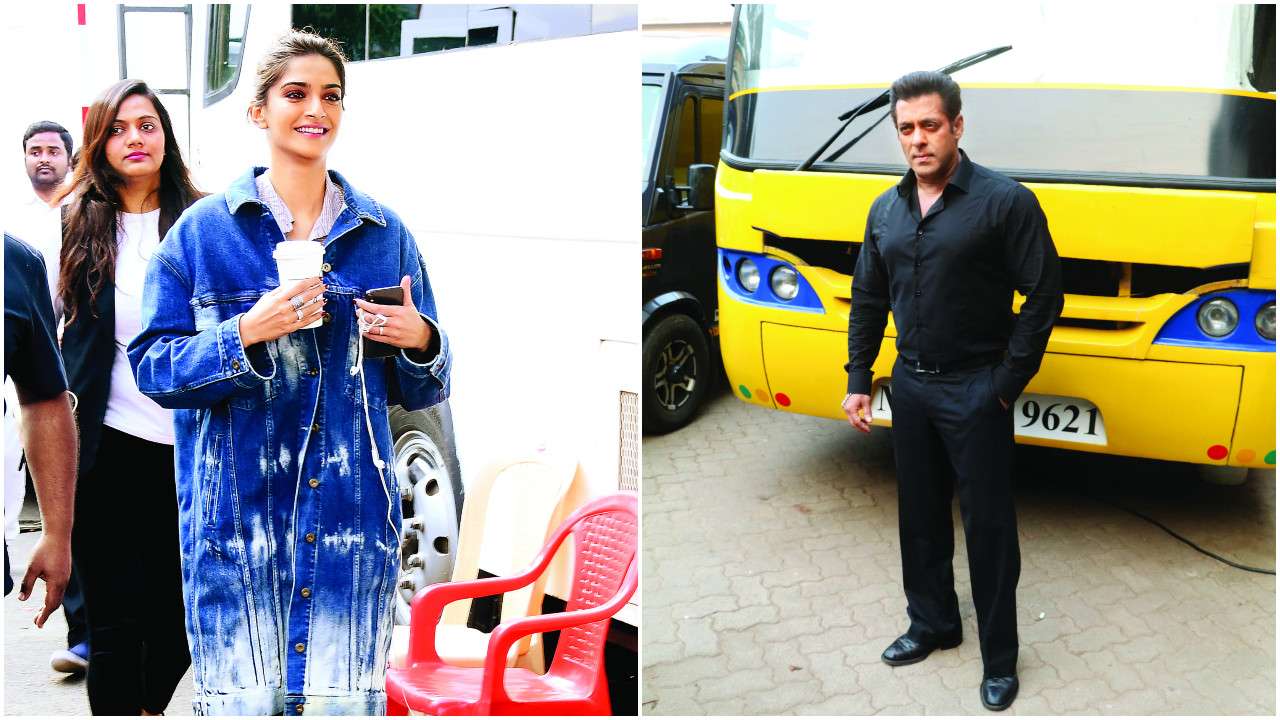
Association hopes meetings with the State Finance Minister and Transport Minister will help ease their burden
Hiren Kotwani (DNA; December 17, 2018)
Within three days of the announcement of an indefinite strike by All Camper Van Owner’s Association, which provides vanity vans for B-Town celebrities and film production, it has been called off. This was the members’ way of protesting against the state government for charging ‘exorbitant Rs 1,25,000 per van annually’.
However, with several A-list stars like Ajay Devgn, Akshay Kumar, Saif Ali Khan, John Abraham having films under production currently, we hear the association decided to end their protest, albeit for now. Ketan Rawal, president of the association reveals, “We called off the strike after State Transport Minister, Vijay Deshmukh, assured us that they will look into our grievance and decide on it by January 15. Moreover, even the film industry guild and affiliated associations requested us. So, on the basis of these factors, we decided to end our strike.”
He says that all over India, vans are charged Rs 12,500 each as annual taxes. “But, for the same van, Maha Govt is charging 10 times the tax, Rs 1,25,000. And if that’s not bad enough, only this government taxes camper vans at per square meter.”
Interestingly, in the pre-GST era, vanity vans were certified under the ‘Rent-A-Cab’ category and were required to pay their service taxes accordingly. “Even the RTO permit calls vans as ‘Rent-a-Cab’. That time, we had service tax, which we paid as per the category. Now under GST, we’re no longer ‘Rent-a-Cab’, but ‘Tangible Goods’,” he says adding, “Moreover, we are also being told to pay for the last five years according to ‘Tangible Goods.’ When we informed the authorities that the last five years, we charged our clientele the service tax as per the category allotted to us, we are told that it’s not the department’s fault but ours and we have to pay the appropriate penalty.”
He says that by way of this correction by the department, each vanity van owner is shown a liability of Rs 2-3 crores of the last five years. He adds, “The department is saying that tax was paid under the wrong category and the correction has to be done because it’s our fault.”
So, the ‘new unreasonably high taxes’ and last five years’ penalties because of ‘Rent-A-Cab’ catergorisation by the authorities before GST came into effect are the two major issues the association is fighting against. Rawal sums it up, “On December 19, we will meet Sudhir Mungantiwar, the State Finance Minister in Mumbai and discuss our predicament because taxes come under his department. We’re hoping for the best. After this meeting, we’ll decide on our next course of action. Also, as assured by Minister Vijay Deshmukh, they will decide on the categorisation and our grievances by January 15. So we’re biding our time for now.”
Regal, Eros: Will single screen theatres in Mumbai be a thing of the past?
7:58 AM

Eros, Regal and many other iconic single screen theatres in the city are slowly grinding towards shutting shop or being sold to multiplex chains
Rachana Dubey (BOMBAY TIMES; December 12, 2018)
It has been almost two years since Eros Cinema, located at a busy intersection near Churchgate railway station in Mumbai, has halted operations. For many months, it has been in the news, with a question mark on what the future holds for this iconic cinema hall in Mumbai. Reportedly, even Regal, once considered the pinnacle of South Mumbai’s cinematic dreams, is struggling to sell tickets. A solo-screen in a theatre just does not cut it anymore, not in a business model where multiplexes can run dozens of shows across half-a-dozen screens at the same time.
A visit to the Eros building had revealed that it had been shut for repairs and maintenance, although there was nothing evident on the ground floor visible from the gate. Enquiries around the property suggested that talks were going on with a multiplex giant and a London-based realtor for either turning the cinema into a multiplex or a shopping complex, but neither seems to have moved forward in the last year or so.
Actor Randhir Kapoor remembers watching films at Eros. He believes that it is indeed difficult for the industry, especially the senior frat, to imagine Mumbai without its iconic cinemas in their original form. “I used to study around the corner where Eros is located. I have great memories of watching films like My Fair Lady (1964) and The Young Ones (1961) at Eros. It was one place that so many youngsters those days frequented for their fill of English films. The place also hosted censor previews. I’m sure it’s the lack of business that has forced its owners to let Eros change hands. I will miss the Eros of yore…” he sighs.
YOUR HERITAGE, YOU PROTECT
Eros is not the first, and sadly, may not be the last of its kind in Mumbai. The city roughly has close to a 100 single screen cinemas struggling for survival, most with dismal businesses. Tickets at most single screens are still sold at marginal rates as compared to the cushy multiplexes. They also have huge seating capacities and not every film they run is a sell-out.
In the midst of the mushrooming slick multi-screen culture, people have somewhat forgotten what a rustic cinema hall feels like. Unfortunately, some of the old single screen theatres are in absolutely dilapidated and stained conditions. For proof, one could walk out of Grant Road towards Bhuleshwar. The tainted lanes house several cinemas which are probably breathing their last. Screenings of even C-grade films have not been helping them much. Some of them even resort to soft-porn and Bhojpuri movies for making ends meet, which occasionally works. In the pre-internet, satellite TV and download days, going to a nearby cinema hall was one of the prime forms of family entertainment but not today.
Cinemas had large-sized screens with space to seat 600 to sometimes 1,100 people. In the last decade, single screens have fallen on hard times. Multiplexes not only have four to five screens where several movies are shown simultaneously, but also have restaurants, bars and shopping arcades, which lure more people. In the last five years alone, several medium and big-sized single screens have downed shutters or been through a supposed face-lift. However, the city continues to have bus stops that are named after cinema halls, some of which do not even exist anymore.
Historian Deepak Rao recalls, “Watching a movie on the first weekend was a norm for many Mumbaikars. First day, first show had such importance in our lives but that charm is lost now. Stall, balcony, dress circle, box… I mean even booking a ticket had its own beauty and fun.” He also adds, “The halls were decorated with chandeliers, mirrors, paintings and carpeted staircases. Maratha Mandir was a 1,000-seater and it has hosted some of the grandest of film premieres of the bygone era. South Mumbai was a thriving hub of cinema halls. It had so many that some of the lanes and junctions were known by the theatre located there. Regal, Metro… these exist even today but they don’t exude the same beauty.”
He goes to the extent of saying that it won’t surprise him if single screens are completely wiped out from the face of the city. “Single screens may work in smaller cities but even there, they won’t survive for long. Mumbai itself has fewer examples of single screens, which have survived the test of time. Deepak Cinema in Lower Parel for example. It’s in an area where there aren’t too many options for people to watch a movie,” says Deepak Rao, adding, “The government will not do anything for the upkeep of Eros or another place like that because for them, this is not a heritage structure that they can spend on. Your heritage, you protect.”
SAVE SINGLE SCREENS, NOW
With time, and increasing competition from plexes, single-screens are barely surviving with loyal patrons and people seeking cheap movie tickets on a weekday or a weekend. Most owners feel pricing the tickets right is the only way to get footfalls.
Nitin Datar of the Cinema Owners and Exhibitors Association of India was shocked to read about the current condition of Eros and Regal. He believes, “There are single screens that have turned into multiplexes and I’m not sure if they are fully satisfied with the results. For the current state of iconic single screens, I can’t blame Mumbaikars. While they preserve their cultural heritage, the generation of patrons visiting single screens doesn’t quite exist now.”
 He adds, “Around 55 cinemas have closed down due to heavy taxes and no relief or support from the Central and State Government. Film piracy has also crippled their business. Distributors often have unfair demands from single screens as compared to the terms they set while dealing with multiplexes. Service providers of content are increasing their rates which has become unaffordable not only to single screens but also to producers and distributors at large. In India, out of 15000 cinemas, 8500 are running in Maharashtra. In comparison, China, in 2007 had only 3527 cinemas, but after policy changes in 2015, there now have 31,627 cinemas. Their industry has benefitted. So, unless some drastic steps are taken by the government bodies, single screens will be wiped out with 20 to 30 percent screens shutting down in the next few years.”
Siddharth Roy Kapur, who heads the producers’ guild, had a meeting with Prime Minister Narendra Modi, too. He, along with a couple of industry representatives, met the PM to discuss why Bollywood deserves an industry status. When we asked him what filmmakers could do to help single screens survive the test of time, he told us, “In the larger scheme of things, there’s an urgent need for cinema to be exempted from the GST. There are many hurdles for anyone who is trying to build infrastructure that enables cinema watching. Double taxation is also hurting the industry at large. Having said that, every business has its own model and it’s way of functioning, making it viable in its construct. What the guild can do at this point is to put forth a word about the taxation structure, requesting it to be made viable for single screens to function. China has multiplied their screen capacity by a mile. With some policy changes, we, can do it, too.”

I can easily make a Rowdy Rathore 2 & earn 3 times the money, but I’d rather make meaningful cinema-Akshay Kumar
9:19 AM

Rachit Gupta (BOMBAY TIMES; August 5, 2018)
Akshay Kumar is the original khiladi of Bollywood. He has been an advocate of martial arts, fitness and sports right through his 27-year-long career. His latest offering, Gold, directed by Reema Kagti, is a sports drama, based on the Indian hockey team winning its first gold medal after independence. This period film has given the actor new insights into the world of sporting history. In a candid conversation with BT, he shares his opinions on telling stories that are relevant and have the power to strike new conversations.
The story of Gold is about India winning its first gold medal as an independent nation at the 1948 Olympics. It also brings forth interesting anecdotes about India’s history, which not many people are aware of. Is that what intrigued you to take up the project?
When I first heard the script, I had no clue that there is history behind India winning its first gold medal as an independent nation. The story of Gold begins in 1936, a period when our country was referred to as British India. During that phase, we used to play hockey, but we also used to participate in international tournaments like the 1936 Berlin Olympics. I was fascinated to discover the story of Adolf Hitler meeting Dhyan Chand. Hitler was watching India play against Germany and we beat them in the final to win gold. Later, Hitler called Dhyan Chand for a meeting and offered him a chance to join the German Army, impressed with his abilities on the hockey field. These nuggets of Indian history really piqued my interest.
Often, such fascinating stories are lost in the pages of history. Do you think cinema is a great medium to bring these stories to light?
That’s the idea. Before we made Airlift (2016), neither the common public nor popular media outlets knew about this extraordinary operation where the Indian government flew out 1,70,000 people from a foreign country. It was a world record of sorts, but no one spoke about it in daily conversation. After the film released, there were a hundred articles published on the same topic. Also, in my opinion, I always feel visuals create a bigger impact as opposed to reading. When it comes to recalling memories, a person often does better with visual memories than with something that they may have read in a book or an article.
The story of Gold has a strong sentiment of patriotism. Do you think that will work in its favour, given that it’s also releasing on Independence Day?
At the 1948 Olympics, India won all its matches and as fate would have it, we faced England in the finals in London. It basically came down to being a match between ex-slaves and their ex-masters. The British ruled us for 200 years. The administration members, coaches and a few players, who used to represent British India, were now part of the English team. The only thing that they were focusing on was that they could not lose this match to India. And that sentiment is what makes the story of Gold so fascinating. We beat them at their own game. How many Indians today know about this wonderful sporting achievement from 70 years ago? That is exactly what attracted me to this film, and I am hoping it will work for the audience, too.
While promoting the film, you referred to your character, Tapan Das, as your quirkiest role yet. What’s so unique about him?
He’s a controversial figure. He drinks and even cheats people, but at the end of the day, he’s a normal man with his own set of flaws. He’s the manager of the team. He gets the team together, but he’s also the guy who picks up the hockey sticks for the players. Uss zamane mein, manager hi sab kuch karta tha. Tab paisa kahan tha, ki entourage leke aayenge. So, the manager used to haul the entire kit, including 12 hockey sticks, the balls and pads.
Did you ever play hockey as a young man? What are your experiences with the sport?
I am familiar with hockey because I used to play it back in my school days.
For decades of your career, you were known as an action hero and you took your time to break away from that image to do the kind of cinema you are doing today. But would you say that these very aspects of your life — fitness and discipline — have helped you achieve what you have today?
Whatever I have achieved in this profession and the film industry is all thanks to martial arts and sports. Mujhe toh acting ka ‘A’ bhi nahin aata tha. Abhi bhi nahin aata hai, abhi bhi main seekh hi raha hoon (laughs). I made a career as an action star because I was good at martial arts and playing sports gave me an athletic frame. All the credit for this goes to my father, who understood that his boy wasn’t interested in academics. He acknowledged the fact that I had an interest in sports and he encouraged me to follow my passion. He pushed me in the right direction. It’s important that parents understand and acknowledge their children’s passion and interest, however different it might be. It’s imperative that they let their child pursue whatever his or her heart desires.
Your films have been able to create a social impact and bring about a change, even if it’s just the beginning. How does the feeling of making a film that brings social awareness compare with the highs of your movie’s box-office achievements?
What is the box-office figure of Pad Man? Rs 80 crores? No! I consider Pad Man to be my biggest hit yet. You know why? With the GST exemption on sanitary pads, women who are using it and even manufacturers across the country will save crores of rupees every single day, thanks to this rebate. Do the math. Over a month, that must amount to crores of rupees. That’s a monetary collection that matters. That is the business that excites me and gives me fulfilment. That is why I am happy to make movies that bring about a change. I can easily make a Rowdy Rathore 2 and earn three times the money that I earn with a Pad Man, but I’d rather make meaningful cinema.
Like your previous films that opened new conversations in society, do you hope Gold will do something similar for the world of Indian sports and sportspersons? Yes, cricketers are some of the country’s biggest and wealthiest stars, but for all other sports, the fame and money isn’t all that great.
I was at an awards show in Delhi recently, where the organisers had called in a few sportspersons and jawans. As a token of appreciation, the organisers wanted to give them a medal and certificate. I was standing on stage and distributing the tokens of honour. When I saw some of them, it seemed like it was a struggle for them to even reach Delhi. A lot of them didn’t come from economically privileged backgrounds. It’s commendable that we’re rewarding sportsmen with respect, but in all honesty, how will that medal and certificate help those people run their kitchens? At that moment, I announced a monetary reward and requested the organisers to change their format and award such heroes with cheques. That small amount might actually be the livelihood of that person’s family for the next three-four months. It is important that we celebrate our achievers and heroes by helping them out in ways that matter. In the end, everyone needs money to survive. Anyone who says that he doesn’t need money to be happy is lying. You need money to fulfill your basic needs.

Cinema can bring about a real and positive change-R Balki on GST exemption on sanitary pads
8:14 AM

Pad Man director R Balki and the original Pad Man, Arunachalam Muruganantham, in the wake of sanitary napkins being exempted from the Goods and Services Tax (GST), a decision that has been lauded by people across society, including activists
Renuka Vyavahare (BOMBAY TIMES; July 24, 2018)
Maharashtra Finance Minister Sudhir Mungantiwar said on Saturday after a meeting of the GST council that sanitary napkins were exempted from the Goods and Services Tax (GST). Previously, sanitary pads were charged at 12 per cent tax under the one-year-old GST regime, which attracted some serious criticism from various quarters of the society, including social activists, women and celebrities. The GST on sanitary pads has now been cut from 12 per cent to zero, which has evoked a positive response across the country.
In February this year, actor Akshay Kumar’s socially-relevant film Pad Man, eventually became a posterboy of the campaign, as it propagated menstrual hygiene and aimed at changing the taboos and stigma associated with periods. Delighted with the decision, Akshay tweeted, “One of those days when news brings tears of joy as a cause close to your heart gets fulfilled. Thank you, #GSTCouncil, for understanding the need for menstrual hygiene & exempting sanitary pads from tax. I’m sure crores of women in our country are silently sending gratitude your way.” Twinkle Khanna, the producer and writer of the film, too welcomed the decision. She wrote, “When I raised questions about why there was GST on sanitary pads I had a large number of people barking at me. Glad to see positive results finally #PadManTalks.”
 Talking to BT from London, director of Pad Man, R Balki said, “I am so pleased with this news. Pad Man has woken up a lot of people and sensitised them to the important matter of menstrual hygiene. This proves once again that cinema can create real and positive change!”
Social entrepreneur and inventor Arunachalam Muruganantham (below; left), whose heroic real life story and initiative towards the cause inspired Pad Man, spoke to this paper. He said, “I welcome the withdrawal of GST on sanitary pads. Now India can truly become a superpower by empowering every woman in this country. Now, every woman will be a superwoman. Everyone will have access to sanitary pads as the prices are bound to come down by 10 to 15 per cent. Girls won’t have to skip schools owing to periods. This will enable the country to become academically strong. Credit goes to the central government and the finance minister for making this happen. Even the United States of America hasn’t done this yet. I am extremely proud of our country and its people.”
 Speaking about the film, he added, “What we couldn’t achieve in so many years, a film like Pad Man has managed to do – spreading the required awareness. Balki and I continue to advocate the cause, even after the film has released. We still talk about it and the conversation needs to go on. This move will ensure menstrual hygiene even at the grass-roots levels. Even today, Akshay Kumar calls me to discuss matters related to this issue.”
While many have embraced the government’s initiative, there are some who wonder if the raw material needed to manufacture a sanitary pad should also be exempted of taxes. Mumbai activist Suhani Jalota, whose NGO Myna Mahila Foundation (below) works closely towards this cause, said, “The raw materials for sanitary napkins are used to manufacture many other products, not just sanitary napkins. So, I don’t know if it is feasible. Overall, the GST wasn’t the largest cost burden, so this move wouldn’t necessarily change the prices much. Let’s see how the manufacturers react to this change.” She added, “This is a good signal from the Government that they are responding to the public. Lower tax rates on sanitary napkins were needed to help reduce prices on the necessity product, however the manufacturing cost may increase.”
Deane De Menezes, Founder of ‘Red Is The New Green’ campaign and recipient of the Queen's Young Leader Award, who works towards installing sanitary napkin dispensers and incinerators in Mumbai’s schools welcomes the move. Her campaign stresses on another bigger issue which is disposal of sanitary napkins. She told BT, “The decision of the GST Council to remove the tax is a good move. Nobody should miss out on an opportunity because of lack of affordability, as menstruation is a normal bodily function. This is definitely a step in the right direction towards making our country period positive.”

Nana Patekar urges government to slash tax on performing arts to 9 per cent
8:10 AM

Upala KBR (MID-DAY; January 31, 2018)
Close on the heels of the Goods and Services Tax (GST) Council’s decision to increase the threshold limit for tax exemption on tickets for theatrical performance to Rs 500, from the earlier Rs 250, Nana Patekar intends to bat for further reduction.
The council’s decision resulted from the constant plea of the performing arts community, which has been battling the 18 per cent tax levied on tickets priced over Rs 250. The slab, they say, has had an impact on footfalls.
However, Patekar hopes that the government can further slash the tax percentage to half to address the community’s concerns. “I connected with Sudhir Mungantiwar [Maharashtra’s cabinet minister of finance, planning and forests departments] and asked him to reduce the tax percentage to half. While communication has halted after he had a throat surgery, I plan to take up the issue again. I will be happy if they eliminate all taxation on this [entertainment] community since it is impacting us immensely.”
Although actors of his calibre can earn a sizeable share for projects by procuring them from the producers, Patekar says it is the artistes who eventually suffer. “Humko kya hai? Hum producers se lenge. But what about the writers, directors, cinematographers and other technicians? You are applying GST on everything. This should not happen,” says the veteran actor.
Bahut masti kar li, ab 2018 is the year to grow up-Varun Dhawan
8:31 AM

Hiren Kotwani (BOMBAY TIMES; January 1, 2018)
Varun Dhawan is in a happy space. After enjoying a good run at the box office, the year that went by also saw him moving into his new, sprawling fourbedroom apartment, not far from his parents’ home in Juhu. All charged up to welcome 2018, the actor talks to BT about his career choices, director daddy David Dhawan, how he is gradually growing up and the movies that he is betting on in the future. Excerpts...
Last year saw some interesting, smaller films win accolades and garner good numbers at the box office, while some big-ticket projects shockingly failed to hit the bullseye. Interestingly, both your movies Badrinath Ki Dulhania (BKD) and Judwaa 2 emerged winners in a year that wasn’t considered the best for Bollywood in terms of big business...
A lot of films that released before BKD had not done well. Demonetization had happened and people weren’t going to theatres to watch movies. When it released, BKD didn’t just do well, it did very well. Shashank Khaitan (director) had worked on it for more than a year and we were all stressed. Even Alia (Bhatt) was worried that this was her only release in 2017. Eventually, the film fared better than my expectations. With Judwaa 2, we were dealing with a different pressure. GST (Goods & Services Tax) was just implemented and prior to that period, six to seven films, including big projects and much anticipated ones, had flopped. There was also the pressure of doing justice to a remake. A lot of people had doubts whether I could pull off Judwaa 2. The decisions to make these films were not taken in a day, like chalo yeh banate hain. Shashank worked on the idea for BKD for a year, likewise with Judwaa 2. My dad worked on conceptualizing and casting for eight months before we started working on the film.
In 2017, both your films were massy, commercial entertainers, but in the past, we have seen you in a film like Badlapur, which was a dark and intense subject. What kind of subjects are you drawn to?
As an actor, when I’m offered something, I get into the genre. Whatever people think of the film, I live every character that I portray. After Badlapur, I needed to take a break from an intense subject and do four-five different films. I had youngsters telling me that they wanted to see me in lighter movies. There is a different audience for Main Tera Hero, Badlapur and Badrinath Ki Dulhania. Now, I’m returning to the intense genre with Shoojit Sircar’s October. It took me nine films to earn a director like Shoojit. With him, I was ready to surrender and do a film that not many would do. Like Badlapur, October, too, is the kind of subject that is not explored in our country. At the same time, it is commercial and will appeal to everyone, irrespective of the language.
Masala movies give you a mass and pan-India reach and that is what attracts actors to do more such films. Your views?
It is essential to do mass films not for numbers, but for the reach and popularity. It’s a misconception that films which do well are masala movies. If a film does well, it’s because people have enjoyed it, irrespective of the genre. People love and enjoy movies like Golmaal Again and Judwaa 2. There are many people who believe that films that are money spinners are not good. In our industry, I feel our filmmakers have stopped making Indian films. Take Fukrey Returns for instance — its language is so Indian and hence, people enjoyed it.
Through the late 80s, 90s and 2000s, your father David Dhawan churned out hits with his Manmohan Desai-inspired masala entertainers, even though the critics snubbed him. A certain section of the audience (critics included) are fairly judgmental about this brand of cinema. Do you think your fan-following has helped his movies like Main Tera Hero and Judwaa 2 click?
I don’t understand why we judge success with the result. This is a creative field and everyone has his/her opinion. While dad is given tremendous respect by his peers, pseudo intellectuals are too critical. If you don’t like such movies, don’t see them, but don’t tell people who like it to not like it. People can make up their own mind, and no one should have the power to tell someone what to do. So many directors have faded away, but he has a good success ratio and is still making films. The problem is that a few people, who don’t like dad’s films, are telling others to not like his work. As an industry, we need to become more thick-skinned, and understand how much we should rely on people’s views on social media or any other media. If people start looking down on commercial cinema, the industry will shut down. Year 2017 was a wake-up call; you have to make entertaining films to draw people to the theatres.
Reports are rife that your dad and you are teaming up again for the remake of Biwi No. 1…
It sounds good, but it’s just a rumour. It is too early to say whether we will team up soon and what we could work on next. He is not an 18-year-old; for his health and in general, I want him to take it easy. Biwi No. 1 might seem exciting and people have been asking us about it, but honestly, there is no truth to it at the moment. Right now, I’m busy with October and another new film.
The general observation within the industry circles is that you have chalked out the smartest strategy among your contemporaries. While exploring subjects like Badlapur and October, you’re also doing the Salman Khan and Govinda kind of massy entertainers…
There’s no strategy. I choose subjects from the heart. Strategy comes after the film is made, while marketing it. After Judwaa 2, I’m doing something very different and I won’t be seen dancing shirtless. When people try to figure me out, I tell them it’s not possible, because even I can’t figure myself out. At some point, I might take a sudden turn or make a switch. I think you need to have that much guts as an actor. When I do a different film, people ask why I am taking a risk and when I do a fun film, they want me to do another fun film.
Year 2017 witnessed a big fat Bollywood wedding. Anushka Sharma and Virat Kohli tied the knot far away from the limelight at an exotic location. Since you have moved out of your parents’ home, is wedding on the cards anytime soon?
Honestly, I would love to do that, but I don’t know how my parents would react to it. Being Punjabis, they would want to do it the traditional way. The next step is something every individual wants to take at some point,but right now,it’s not on the agenda. I have just I HAD moved into my new house, and I want to enjoy this part of life for a couple of years before I think of the next step. It took me a while to get here, it’s a big achievement. It’s also important to enjoy moments. I had this big change happen to me while shooting for October in Manali earlier last year. I was surrounded by nature and there weren’t too many people around, so I would often find myself just staring at the sky and relaxing. I’m not the kind of person who loves nature, but I was so overtaken by the beauty of the moment that I realised that we don’t take time to sit and think about what we want to do; we just end up being robots. Right now, I’m in this Sufi zone, if I may say so. The next 12 months will reflect the mood and the zone I am in.
All excited to kick-off 2018?
It’s going to be a testing time. For me, 2017 was a great year, box-office wise, but in the world around, there were disturbing events. Donald Trump’s election didn’t go down well with people, there were conflicts in the Middle East… after all, a war in any country affects the mood of the people across the world. I hope and pray 2018 will be a good year for all of us. Personally, bahut masti kar li, ab 2018 is the year to grow up. Who knows, I might become a kid again in 2019 Let’s see!

Subscribe to:
Posts (Atom)