Showing posts with label Freida Pinto interview. Show all posts
Showing posts with label Freida Pinto interview. Show all posts
Bollywood cinema does escapism best-Freida Pinto
8:11 AM
John Bleasdale (VARIETY; December 3, 2023)
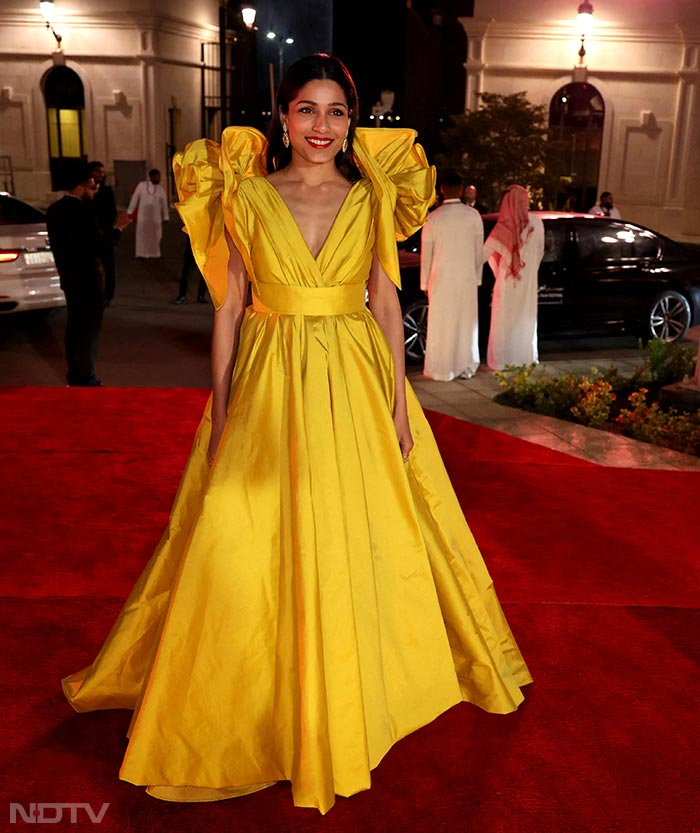
Freida Pinto took a break from her jury duties at the Red Sea Film Festival to talk to Variety about her career and her hopes for the future.
The Indian actor shot to world fame for her starring role in Danny Boyle’s “Slumdog Millionaire” (2008) and remains committed to the breadth of cinema. “I’ve always looked at cinema globally,” she tells Variety. “After ‘Slumdog,’ I could have easily played all the Indian roles, the girlfriends and sidekicks, or just gone and done something only in India.”
Instead, she sought out challenging roles, often playing non-Indian characters such as Iranian or Arab women, for example a Palestinian girl in “Miral,” a choice that she recognizes is now controversial.
“I know it’s not okay these days, because the world has opened up and there’s so much talent,” Pinto says. “But — and I don’t mean this in a pompous way — with a film like ‘Miral,’ where I’m playing a Palestinian girl and it’s such a controversial subject matter, they needed someone then who could put butts on seats. I now see that’s why they chose me, but at the time I thought: I can see myself as x, y and z, and I feel that in me too. The way I think now is not the way I thought back then, at all. But those films opened doors and made people more aware of a whole region, which has so much talent and so many stories that are not being told frequently enough. I wouldn’t do it now, but I’m very proud of what I did then.”
Having had a large part to do with placing Bollywood in the mainstream of Western culture, how does it feel to be in Saudi Arabia where Bollywood stars are greeted with such adulation?
“Bollywood is all over the region. The Middle East and Northern Africa. I believe it’s also huge in Japan. When I was filming in Israel and Palestine, I remember going into the old city of Jerusalem, and they were literally selling DVDs of old Bollywood movies and they would say “Hind,” which means Indian in Arabic. They would ask me, even though I was in character, if I knew all the old Bollywood actors, which obviously I said no.”
So what’s the appeal?
“I think what really works is the escapism, which is something Bollywood cinema does best. I love what we do in the Western world as well, but there’s something magical about Bollywood and it’s always about family, love and culture, and it’s immediately relatable for the Middle East. Coming together, respect for your elders, all of that is represented in Indian Cinema and although Saudi Arabia and India are different countries, there’s no disconnect, when it comes to that. The Western world and their beliefs are more nuclear than the extended family.”
This global perspective also is dictating Pinto’s own future both as an actor and a producer.
“The opportunities are changing now. We’re celebrating ‘Minari’ and ‘Parasite’ at the Oscars. You’re in a bubble if you think Hollywood is the only thing. There’s Asian cinema that isn’t tapped into or explored, and they’re all doing really well in their own countries as well as elsewhere. I don’t want to be just doing Hollywood and working with the filmmakers who we hear about over and over again. That’s why I would love to work with Nadine Labaki. I loved her first film ‘Caramel’ and I’ve been hoping an opportunity would come and now with my own production company I can create that opportunity for myself if I wanted to.”
2024 looks to be a big year with a slew of projects potentially coming to fruition, including roles in Season 2 of Apple TV+ show “Surface” and a film adaptation of Onjali Q. Rauf’s “The Boy at the Back of the Class.” As a producer, she has four projects near “the finishing line,” including a Deepa Mehta film.
“It’s all coming together,” she says.
I don’t get exotic princess roles anymore-Freida Pinto
7:50 AM
Nayandeep Rakshit (DNA; November 30, 2018)
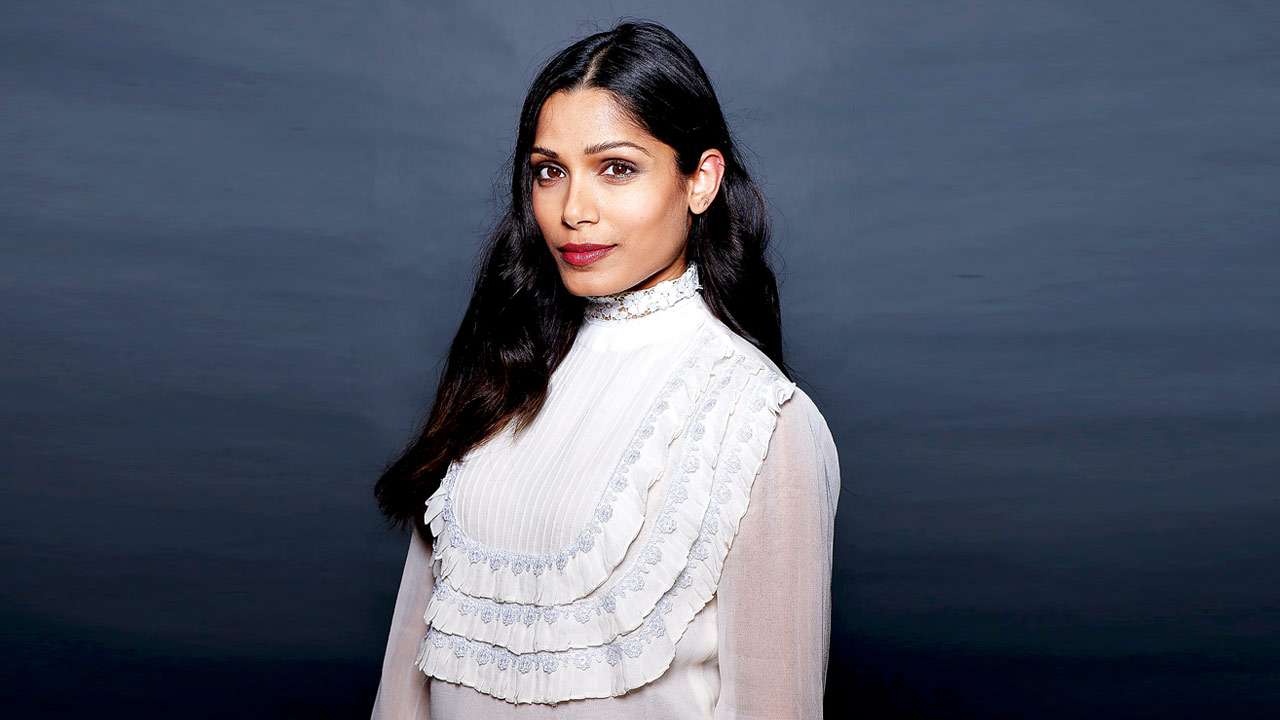
Freida Pinto has admittedly juggled different platforms — she’s done feature films, TV shows and will now be seen in Mowgli: Legend Of The Jungle, which releases next week on Netflix. The actress, who was on a short trip to India, spoke to After Hrs about her role in the film and her plans of producing some Indian stories. Over to her...
Everyone has childhood memories attached to The Jungle Book. Is it the same for you?
Yeah, it’s the animation series, which almost every child in India has memories of. We always had the Sunday experience of watching The Jungle Book with siblings or mom and dad. For me, it’s been exactly the same. I kind of romanticised Sundays with my family because of this experience.
What was going through your mind when you were offered this part?
I was never offered it. I went ahead and demanded a role in the film (laughs). I wanted to be a part of this film and when I heard Andy (Serkis) is making it, I just asked him for it.
But no star would do that...
I’m not a star, I’m an actor.
You have a brief role in the film. Does the screen time matter to you?
It doesn’t really matter to me, as long as I know I’m adding value to the film. I’ve done all kind of roles — I’ve played the lead, supporting roles and even cameos. At the end of the day, if you feel fulfilled, then it doesn’t matter what somebody else thinks. I don’t care to read someone else’s opinion of what the length of my role should be, because it’s my choice and my decision.
Priyanka Chopra has also spoken about how unlike here, in the West, big actors come together to do brief parts, just for a film...
Yes, absolutely! I’ve heard several stories like that. I don’t remember having seen male superstars in India do that. When was the last time we have genuinely seen five heroes come together for a project? I can’t even think of one right now. But yes, to each his own. That’s what they believe they should be doing, but it’s not something I believe in, at all. So for me, it’s not about ‘am I being the centre of attention in the movie?’ No film is successful because of one person, it’s always team work.
Mowgli: Legend Of The Jungle has been made only for the digital platform. What do you think of the newer avenues?
Streaming services have made things more available and accessible for the audience, too. Say something from Mexico can be watched by someone in India, and that accessibility has allowed the cultures to come together. The fact that I’ve American friends who watched Sacred Games, and loved it, proves the fact. The platform that these services provide is absolutely amazing because you can create a theatrical experience at home.
Expectations from this movie will be high given that its feature film version did exceedingly well...
I know The Jungle Book was outstandingly successful. But I have no fears for this film doing well at all, because it’s unique.
This is a dark retelling of the same story. Why opt for something so dramatic?
The Jungle Book has always been made as a slightly happier version. But if you really think about how animals are in the wild, or how a kid, who was adopted by a wolf pack and is trained by them, would behave, you will know that everything can’t be happy and perfect all the time. He will be wild and feral. I feel Andy did justice by really embracing that backdrop. More than just dark, it’s visceral and intense. You’ll be at the edge of your seats while watching this version.
Usually Indian actresses who foray into Hollywood are offered only exotic princess roles. Why do you think they are stereotyped?
It’s their job to refuse such roles if they don’t want to essay them. You can only end a certain stereotype by not giving into it. I don’t get exotic princess roles anymore because I have said no to them in the past. I might have got them right after Slumdog Millionaire (2008), but there’s a way to change that perception and mentality. And it takes a lot of courage, because saying no would mean you’re also refusing the work, money and opportunities. But personally, I don’t want to adhere to this stereotype.
You were also planning to produce an Indian story...
It’s not just one Indian story. There will be quite a few, actually. For me, it’s important to put the right teams together. One of my producing partners is Tabrez Noorani and we are putting together some stories which, I believe, will do well in India, too.
There were rumours that you are getting married to Cory Tran next year…
I believe everyone has reasons for doing whatever they are doing. So, they should be allowed to live and let live.
I have gone where the wind has taken me and I have made the most of it-Freida Pinto
8:03 AM

Renuka Vyavahare (BOMBAY TIMES; September 13, 2018)
Danny Boyle’s Oscar-winning Slumdog Millionaire (2008) catapulted Mumbai girl Freida Pinto to global fame. Back in Mumbai to promote her upcoming film Love Sonia, directed by Tabrez Noorani, the actress talks about the challenges she faced post her overnight success and the journey that followed. Her friend and mentor, Tabrez, too, shares his thoughts on the film and the message he hopes to send across through it. Excerpts...
Freida, yours is considered to be an overnight success story, post Slumdog Millionaire, but I am sure you had your share of challenges, too, while trying to make a foray in the West...
The biggest challenge I faced was the massive responsibility. After Slumdog happened, there was no formula to follow. I wasn’t sure what it would take for my next film to succeed, so everything I did was a risk. The process of signing on an agent, and the whole PR and marketing machinery was new to me. The challenges were more so in understanding the way the system works and to find my voice within that. I was sure about the kind of films I wanted to do. But there was no guarantee that what I wanted to do was going to be offered to me. Today, with the kind of entertainment platforms available to the audience, opportunities for actors have become less stereotypical. You don’t have to say yes to everything, as opposed to when I was starting off. However, I am proud of how I navigated the whole thing. Right after Slumdog, I had these big budget movie offers, but I went after indie films (Miral, 2010). I am proud of that. I wouldn’t have the respect I get in the industry today had I followed the usual route — do commercial cinema and play the exotic princess in foreign films. I don’t have to do 10,000 big budget movies in a year because the thing I really value is the respect I get when I walk into a room.
Unlike Priyanka Chopra, who was an established actress in India before she left for Hollywood, you were just a film old. Was it easy or difficult for you then to cut into a foreign film industry?
I didn’t have the experience of being a brand before I moved to the West. I can only speak about the experience that I had. The way I did it was more organic. I did not have to rely on a certain image that I had to push forward. I was free to do whatever I wanted and that also gave me the opportunity to do indie films and establish my credibility as an actor. Also, I had people like Tabrez, who were my mentors, supporters and guides. I remember Tabrez telling me when we hadn’t even finished filming Slumdog Millionaire, ‘Your life is about to change’. I had no idea what he was talking about because I thought I was playing a little part in the film. Who knew that little part was going to be widely accepted and loved! Till date, I get called Latika, which is crazy.
Was it scary or unnerving to be thrown into the limelight, overnight?
Freida: No. I was like, fine, I’ll take it! I don’t think I am ever scared of a new experience. I think I am always excited. Even in Love Sonia, Rashmi is the kind of a character that I have never played before, but the nervousness helps me stay motivated and play a character better. My first film did so well and it has given me an opportunity to get different roles and I am having fun.
You have known Tabrez for over 10 years. A film like Love Sonia could go wrong if not executed right. Was he the reason you gave your nod to this film?
Freida: I have been a part of Love Sonia for 10 years. Tabrez was a line producer on Slumdog, and that’s when he started work on this film. So, it was easy for me to be a part of Love Sonia, unlike the rest of the cast. I know the kind of work that Tabrez has been doing. He has been a producer on movies like Life Of Pi, Zero Dark Thirty and Mission Impossible. He is a quality director. He trusts his actors and believes they can bring his characters alive on screen.
Tabrez: The day after we finished Slumdog, we did a test for Love Sonia. When we read the character of Rashmi, we knew Freida would fit in. That character developed because of her. We worked with the NGOs, who rehabilitate trafficked girls and from the beginning, the goal was not to exploit the exploited. We have been able to navigate that line very well.
As a director, how difficult was it to make a feature film on a social issue and not make it look like a documentary?
Tabrez: It’s a story about two sisters that gives a new take on the conventional idea of heroism. A hero can be an ordinary girl, boy or man trapped in extraordinary circumstances. It so happens that the backdrop is of global sex trafficking, but 20 minutes into the movie, and the audience will be more concerned about the journey of a girl for her sister and the love they have for each other. It’s a tough journey, but it’s about hope and courage in the end.
While the West is speaking of #MeToo, equal pay and gender equality, the developing nations have their own set of issues. Was Love Sonia a reminder of that?
Freida: That’s complicated. Each of these worlds have their set of issues and I won’t pick one to be a bigger problem than the other. It’s like saying your sorrows are not as important as mine. I don’t know if there is a methodical way of tackling one problem before the other. The only thing common in all these issues is the mindset. Unless attitudes and behaviours change, these problems won’t go away. How do you solve the problem of a desperate poor farmer, who has to make ends meet? There is a burden on men to provide for their family and that’s when they are forced to do questionable things.
The film revolves around the physical and psychological trauma that women go through. Do you think it’s time, the attitude towards women needs to change?
Freida: Since Love Sonia is also a global film, I would like to shed some light on the inequality that women face around the world. For instance, let’s talk about Serena Williams at the French Open. There was a debate around what she was wearing. A comment was made that was very unsavoury. Why is her outfit a problem, as long as she plays her sport really well? Or even in the US Open, a female tennis player (Alize Cornet) was fined for changing her T-shirt on court, while it was okay for Novak Djokovic to take his shirt off and lay down in the sun because it was hot! These are double standards and they exist across the world. Until our thinking doesn’t change, we are going to have trouble solving these various problems that women face across the world.
Tabrez: There are various problems and if we feel strongly even about one cause, we can bring about a small change.
We haven’t seen you in a commercial Hindi film till date. Of course, things are changing, but was representation of women in most Bollywood films an issue for you?
Freida: Yes, I have been offered Bollywood films before, but some were not worth taking and for the rest, the timing didn’t work. I also feel I haven’t actively put myself out there. Even with Slumdog, who knew it would turn out to be a hit? I have gone where the wind has taken me and I have made the most of it. When Love Sonia came about, I was passionate about the subject from day one. When you watch the film, another myth is going to get busted. I do speak Hindi. Also, as far Hindi films are concerned, I love Gauri Shinde. If she wrote a script that I feel I can do justice to, and it’s made in India, I would love to be a part of it.
How difficult was it to make a film with an ensemble cast and stick to your vision because a difference of opinion is bound to arise?
Tabrez: The bottom line was always the script. The biggest challenge was to get the cast we did in that span of time. I chased Richa Chadha and Manoj Bajpayee. I gave them the script, there was no narration. They added their bit to the characters and we were open to changes. You have to be flexible as a filmmaker, as long as the overall vision stays the same. A movie like this would ideally be released in five to 10 screens five years ago, but things are changing.
Freida: Also, a lot goes into hiring the next big name. Mrunal is amazing in Love Sonia. You have to have the foresight to do that. Imagine if Danny Boyle didn’t have it.
What is it that you want people to take home from your film, Love Sonia?
Tabrez: I want them to be moved, be involved, open their eyes wider and question things. They will walk out seeing the journey of a very powerful woman (Sonia played by Mrunal) especially in this day and age. I want them to know how massive the problem of global human trafficking is. Awareness is important.

Love Sonia has stayed with me for 10 years-Freida Pinto
8:08 AM
Meena Iyer (DNA; September 12, 2018)
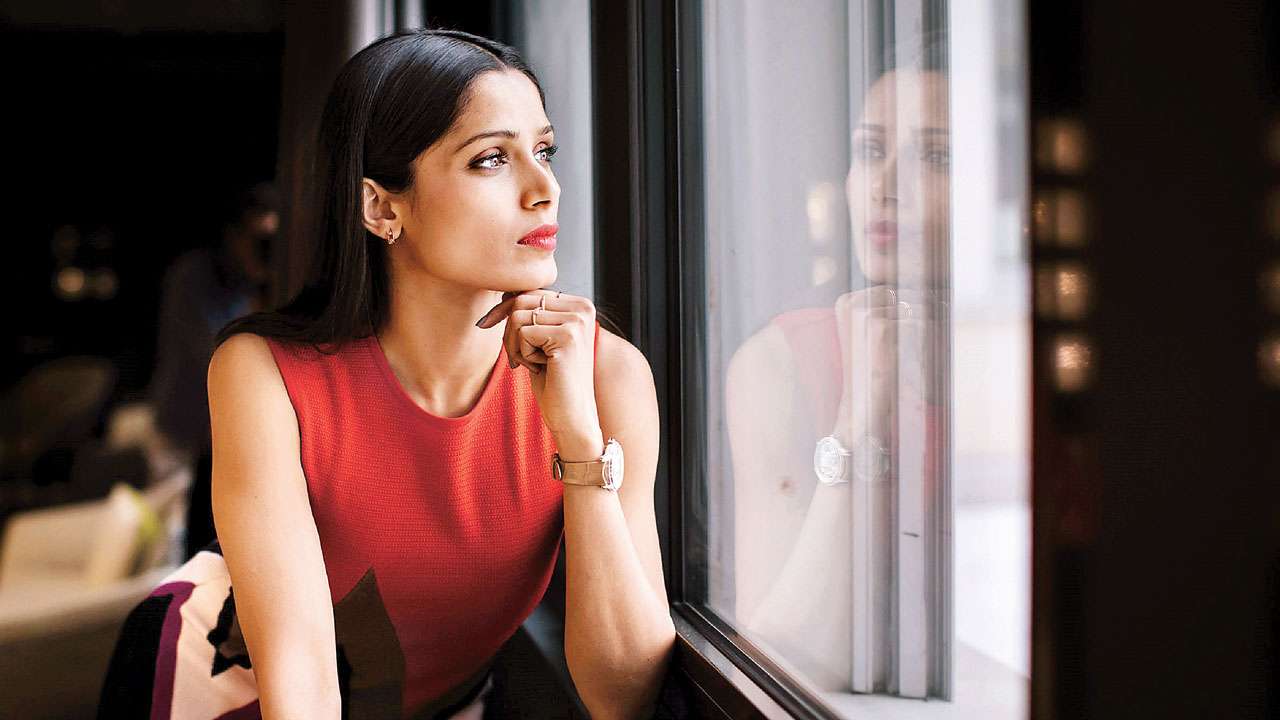
One of India’s most famous exports, Freida Pinto walks in 40 minutes late for this interview. She apologises profusely because she has just landed at an unearthly hour from a foreign destination and is obviously sleep-deprived. Without wasting any further time, she delves straight into shop talk about Tabrez Noorani’s Love Sonia (an upcoming drama on human trafficking) and her other projects in the West.
Tell us about your involvement with Love Sonia.
Love Sonia has stayed with me for 10 years. Tabrez was a producer on Slumdog Millionaire (2008). While working on that film, he was writing this movie and told me that he was keen to direct it. Later, he asked me to read the script. Once I did, I was extremely disturbed by the subject. It was an important story and I wanted to be a part of it. I assured him that whether it was helping him cast actors or anything else, I would be actively involved. It took us a decade to get the right people as it’s difficult to find financiers for such films. When the project came together, he recalled how from 2008 onwards, I had read other actress’ parts and particularly enjoyed reading Rashmi’s lines. I loved the character’s complexity and craziness as well as the fact that she was unpredictable. He asked me if I’d like to portray her on screen. I told him my name was written all over it (laughs).
How did you manage to keep the interest alive in the subject for such a long time?
A lot of people think that when you make such a movie, it must be depressing. I can’t speak for Mrunal (Thakur), her role is a lot more intense. But Richa (Chadha), Manoj (Bajpayee), Raj (Rajkummar Rao) and I had a blast while shooting. Yes, there are scenes that are dark and disturbing, but as soon as we finished filming it, we knew why we were making Love Sonia. We wanted people with determined minds to be part of the movement that puts an end to this brutality. As for keeping my interest alive in this film for 10 years, Tabrez is a dear friend of mine. We live about 15 minutes apart from each other in Los Angeles. He and I would talk about this film and many other projects, we’re working on a bunch of things about which I can’t reveal anything more yet. But Tabrez and I are partners. He’s been my mentor, a lot of people don’t know that I learnt everything from him as a producer. If I ever direct a film, I would prod him on the set to mentor me there as well. The interest is alive because the subject matter of Love Sonia is relevant, probably more now than it was 10 years ago. The fact is that people are going to listen to a story like this.
What are the other projects that you are working on right now?
I’ve shot two movies earlier this year. One of them is with American actor Leslie Odom Jr (of Hamilton, a musical on Broadway, fame). Four-five months later, we ended up doing another film with John Ridley (who won an Academy Award for Best Adapted Screenplay for 12 Years A Slave). Later this year, I also have Mowgli. It’s fantastic that I have these two indie films coming up, both of which are love stories. I’d like to do something like Love Sonia once in a while. I want to indulge in more of human stories. There are also a couple of passion projects that I’m producing.
Your trips and films in India have been few and far in between. Filmmakers haven’t been able to tempt you with better scripts?
They are not few. You know that I come home for more than just Christmas. Whenever I come to India, my goal is not just to reconnect with Mumbai or the industry but with my country and different parts of it. The way you grow as an actor, you keep yourself connected to human stories across the nation and the world as opposed to just keeping it secluded to one part or industry. So, for me, it’s never been just about work. I see my growth as an actor by having new experiences. It’s not about tempting me with the right script, it’s wherever and however they find me. If I feel passionate about it, I will do it. I’m not waiting for something to happen. I have this belief that the right thing gets attracted to you.
As a viewer, are you in touch with Hindi cinema?
I enjoyed watching Hichki at the Melbourne International Film festival. Rani Mukerji and I were on the same platform to talk about our respective projects. It’s so moving that such subjects find a way to reach the audience and enlighten them. Not many people knew about Tourette Syndrome before Rani did that film. Likewise, when she did Black (2005), many of us learnt for the first time what visually and hearing impaired people go through. So, I keep in touch with Hindi cinema as and when I can.
I’m asking you this because you’ve relocated to LA and left Mumbai behind.
I don’t think I have left Mumbai behind. My debut film gave me such a fantastic opportunity; name one person who wouldn’t take it on. I’ve made myself a career that no one has been able to do before. Now, it gives me an even bigger opportunity to straddle both worlds as and when I want to. Also, if there is something that I don’t want to do, I’m finally in a position to say no. Also due to digital platforms, in the near future, we won’t be talking about borders and boundaries any more, but letting content and storytelling take the lead.
Take, for instance, Sacred Games. Not just Indians, but people from across the world are watching it. Stories from the West, England and France are inspiring. There is such beautiful storytelling in America. My favourite example is The Untouchables, the foreign language film that people want to remake even in India.
Would you do a Hindi love story?
Love Sonia is in Hindi. Previously, I did Trishna which was not just in Hindi but also in Marwari. I had to learn a language that I didn’t even speak. So, I have done Hindi films (smiles).
I don’t know if India is ready for a #MeToo kind of a shake up yet-Freida Pinto
8:24 AM

Freida Pinto on misogyny, Mowgli, mindsets and being in love with love
Roshmila Bhattacharya (MUMBAI MIRROR; September 10, 2018)
How is it like being back in India to promote a Hindi film, Love Sonia?
I promoted Trishna too which was in Hindi and English, the difference here is that I’ve been involved with and passionate about this project for the last 10 years so to finally talk about Love Sonia is very fulfilling. It feels like bringing a baby into the world.

(Laughs) I didn’t work with Riya, when you watch the film you will know why, but Mrunal reminded me of me back in the day and I told Tabrez (Noorani, director) that. Last month, at a festival, I was asked, “What are you betting your future on?” and I responded, “Mrunal Thakur is the future.” I’m excited to see what she will do next. She’s an incredible talent!
Tabrez was the line producer on Slumdog Millionaire. How much has he changed in 10 years?
Tabrez is passionate about cinema, he breathes that world, always has. He was my mentor and I remember once, when we were filming Slumdog Millionaire in Chembur, he took me aside and said, “You know your life is going to change after this, right?” At the time I didn’t know what he was talking about, none of us knew then that this film would become so big, but he had the foresight. He’s like a magician and having him direct me in Love Sonia was moving after talking about the film with him all these years. His growth as a filmmaker has been tremendous and even as friends, we now have a better understanding of what we want to do.
Has he spoken to you about his next?
We have a few things up our sleeve. It’s too early to reveal anything, I can only say we’re putting together something for the world as partners.
You must have heard many stories like that of Preeti and Sonia while doing social work. Tell us one that has stayed with you all these years?
It was important for Tabrez that we did our research really well as he wanted the film to be as authentic as possible, so he had some of these survivors on the set as mentors. Before one shot, I was speaking to two of them and asked one that if she had a shot at a different life, like maybe if she fell in love with someone, would she take the opportunity and leave this world. I still remember her answer. “Madam. Love only happens in your world, not in mine.” Those words reflected the stark truth, the many betrayals that brought her into this world. She then went on to explain that she was fine… Surviving… Making money to send her daughter to school. “I don’t see myself getting out, but it’s important to ensure that my child has a different life, a better life.” Those words encapsulate what our film is about. It’s not just a depiction of their lives but it also celebrates the strength of some of these women. They don’t want sympathy from us, only empathy.
From this dark world to a child’s world with the adventure-fantasy Mowgli. That must have been…
(Laughs) That was fantastic! As a child I remember the jingle, “Jungle Jungle Baat Chali Hai” and when I heard that Andy Serkis, with whom I’d done Rise Of The Planet Of The Apes, was directing Mowgli, I told my agent that I didn’t care if I was there for a second, I wanted to be a part of this film as Jungle Book is a story I’ve grown up on. Andy was very welcoming, saying he had just the role for me, that of Mowgli’s adopted mother, Messua. And the best part is that I get to play my part in Hindi in a big Hollywood film.
Has Los Angeles become home, or do you plan to return and settle down in India one day, maybe do a commercial Hindi film?
I come back to India quite often though not many know about these trips. India for me is not just Mumbai or Bollywood. I go up North and to the North-East where I get to see a better representation of our country, where I can be one with nature and blend with the local culture. I can never leave India, not call it my home, but at the same time, after nine years, LA is home too, and I feel as much a part of the American culture. I’m enjoying the best of both worlds.
You’re gearing up to travel back in time with your next, John Ridley’s sci-fi adventure, Needle in A Timestack, which features Orlando Bloom, and Leslie Odom Junior?
I’m super excited about this film as I get to work with both Leslie and John for the second time. John is a genius who won an Oscar for Best Adapted Screenplay for 12 Years A Slave. We worked together on the six-part British mini-series Guerrilla, set in 1970s London against the backdrop of the Immigration Act. Sadly, it wasn’t screened in India. Needle In The Timestack goes back in time but the subject is very today. It’s a heartfelt story of love. (Smiles) And I love talking about love.
If you could go back or forward in time, is there something you’d want to do?
It’s tempting to time-travel, you can do so many things differently. But personally I have no regrets and even if I could go back, I wouldn’t want to change anything because in retrospect, even my mistakes have helped me grow. But I’d love to go forward into the future and tweak a few things. Today, I’m celebrating the fact that India has finally decriminalised homosexuality and it would bring me much satisfaction if women are now treated better. I want to change mindsets.
Talking of mindsets, the #MeToo campaign in the US had many skeletons tumbling out, exposed many big names. Unfortunately, in India, we’re still wary of opening up on the subject…
The reason the movement worked in the US is because of the collective voice. There are many women coming out and they are getting a lot of support even from journalists who have been brave to write their stories. I don’t know if India is ready for a #MeToo kind of a shake-up yet. It’s not easy, even some of these women had wanted to protect their identities and spoke up only when they knew they’d be represented accurately in the media. Here there’s still the fear of being labelled, women don’t feel safe speaking up because of the general lack of support. Hopefully that will change soon. But I must point out here that misogyny exists even in the most developed cultures, though it’s better hidden while here it’s blatant.
Could you explain that?
Remember Serena Williams being called out for wearing a black bodysuit at the French Open nine months after giving birth? It was designed to prevent blood clots, but she was told it violated rules. What rules? Why should someone dictate what a woman should wear if it’s not indecent? She was playing her game, just wanted to be comfortable.
You mentioned that you love the word ‘love’. And we’ve been hearing that you have found love again…
I was never out of love. Love has always been a part of my life. So, going out and finding love seems kinda strange to me.
Going by some of the beautiful pictures we are seeing, love seems to be blossoming…
(Laughs) Awww… I don’t know what pictures you are seeing but if they are the same pictures I’m seeing, then maybe...

Freida Pinto with rumoured boyfriend photographer Cory Tran at the US Open
I avoid going to places in Los Angeles where you find the Kardashians and paparazzi-Freida Pinto
8:21 AM

In town to promote Love Sonia, Freida Pinto says she doesn't like to tom-tom about being one of India's earliest crossover stars
Shaheen Parkar (MID-DAY; September 10, 2018)
A decade after Slumdog Millionaire made her an overnight star, Freida Pinto is back on home turf for the promotions of her upcoming film, Love Sonia. "I got to share screen space with Indian co-actors again. Love Sonia gave me a chance to shoot in India after several years. For most people here, the single point reference is Danny Boyle's film though I have done a lot of work in the West after that," she smiles, when we catch up with her at a Juhu hotel.
In the 10 years since she set up base in Los Angeles, Pinto has worked with some of the biggest names in the business. Her filmography includes Woody Allen's You Will Meet A Tall Dark Stranger (2010), Rupert Wyatt's Rise Of The Planet Of The Apes (2011) and Tarsem Singh's Immortals (2011). Though she is one of India's earlier crossover stars, it is easy to miss Pinto's accomplishments. Point out how, in stark contrast, news of Priyanka Chopra's foray in the West is constantly documented, and Pinto says she is content to be quietly working.
"You will read about me during red carpets or at film promotions. I prefer keeping a low-profile. In Los Angeles, there are these celeb hangout places where you are sure to catch the Kardashians and the paparazzi. I avoid going there as I don't want to be photographed."
Pinto says that she practices similar restraint when in India. "No one knows when I am in town because there are no airport or restaurant spottings. This time, it was work-related, so everyone had to be told about it."
In the throes of new love
Pinto was spotted with photographer beau Cory Tran at one of the US Open matches. Their Instagram feeds are proof that they bond over photography. "It is not only because of photography, we share many other interests," says Pinto. The two were introduced by her The Path co-star Aaron Paul. Asked if he is the chosen one, she says, "Keep guessing."

I want to do a great Indian story-Freida Pinto
8:37 AM

Freida Pinto isn’t necessarily looking at a Bollywood film, though!
Nayandeep Rakshit (DNA; July 4, 2016)
With several international films to her name
post-Slumdog Millionaire, Freida Pinto is making quite a name in the
West. But at heart, the girl is still Indian. Meeting us at an awards
event in Madrid, Spain, she talks about her Hollywood journey and
reveals what she would love to do here in India....
Your advice to Bollywood actors picking up Hollywood projects now?
What happened to me may not necessarily be someone else’s path and vice versa. In many ways, I call this career ‘fickle’ because you can never put a method or a theory to make it. This is the combination of talent, creativity, hard work and being at the right place at the right time. So I feel there can’t be one formula and everyone has their own approach, their own sensibilities and they should chase it.
You have always worked towards a better world for women. Do you see a progression in Bollywood films with respect to women?
Absolutely! I don’t work in Bollywood actively. Whatever I hear is from you guys and my colleagues. But what I see as an audience and a spectator, I definitely feel there is a resurgence of the strong female character. That did exist actually in Indian cinema for quite some time. There are some iconic female characters and I’m not talking about just a Mother India, because it’s everyone’s favourite example. We had our own Smita Patil, Shabana Azmi and others, who have all done very strong female roles. It’s coming back for sure and I enjoy watching films. It does not have to be a female-centric film for a strong female character to be introduced to us. It can be a story of a couple and the female part might still be very strong.
But not many A-listers are willing to be part of such films... Why do you think that’s the case?
It’s unfortunate. Of course, I’ve noticed that.
Do women face similar problems in the West too?
It’s actually pretty similar there, too. There’s a way to put this. In Bollywood, there are a few actors who rule the roost. Those are the few actors you would want to see in those films and they probably have their own films and another 10 films happening at the same time. In Hollywood, you have a wide variety of what you call a star or an actor. Maybe, you would not see Leonardo DiCaprio in a supporting role to Carey Mulligan if she played the lead role. But at the same time, you do have actors of great calibre and when you say it’s not a superstar who’s played the role, I would like to think of it in a different perspective. The actor who played the role opposite Anushka in NH10 (Neil Bhoopalam) was brilliant and was the right person to play the part. That’s when the whole idea of who’s a star and who’s an actor fades in my mind. I just want to see a good performance. I really don’t care if I’m seeing a star.
When are you going to star in a Hindi film?
I guess you’ve asked me this enough number of times by now! (Laughs) I want to produce films here. It’s not necessarily me looking at doing a Bollywood film. I want to do a great film from this subcontinent. And of course because of what I love doing, I want to tell a story of a woman. I am currently looking at two different projects. They are going to be mostly in the local language that they belong to because I am all about authenticity and representing the culture as authentically as possible.
Have you watched Quantico?
I haven’t, actually, because of the time schedules I am at. I don’t even have cable. I watch everything on the Internet. I did watch a bit of the first episode when it was available on the Internet and I am really proud of Priyanka. What Priyanka has done, what she is continuing to do and will continue to do is unprecedented in so many ways. Everyone expects a Bollywood actor in the West to not be in the same lead role that they actually enjoy in Bollywood. She’s actually changed that. It’s very important and heartening to know that can happen.
Would you like to take up such a show?
I am producing and doing so much everywhere, there’s one thing my agents are very clear about. Actually, all the studios who know me and have interacted with me, they know that when I do something on TV, it needs to be in the short format where I can go in and then I am out into my film. So yeah, that’s the kind of shows I would love to be part of.
Any favourite genre?
Gritty dramas! I love watching them. I would do a comedy, but I would rather want to do a film before I do a TV series.
It's 2016 and only 7% of directors are women. It's time to do something-Freida Pinto
8:46 AM

'Sexy chick' roles, pay disparities, discrimination against female directors... sexism runs deep in Hollywood. A non-profit production company, We Do It Together, seeks to change all that with more powerful roles for women both on and off screen. As a member of its advisory board, Freida Pinto is at the Cannes Film Festival to announce its first project. The actor tells Sumeet Keswani about the stereotypes she has encountered and how she fought them
Sumeet Keswani (THE TIMES OF INDIA; May 15, 2016)
At a time when feminism has percolated to the grassroots, how has sexism sustained itself in the upper echelons of Hollywood?
Art imitates life. And if you look at the world around, there's a very strong element of sexism ingrained among people, even the most educated groups. I was watching this TED talk on infidelity by Esther Perel and it was very interesting to learn how sexism was actually glorified eons ago. I don't want to sound like a cynic but it would be too high an expectation to think it can disappear suddenly. But it's definitely time to do something about it, to at least curtail the impact of it on women.
How will the non-profit address sexism? What's the first project?
Although we're a non-profit film production company, we're not here for charity. While we as individuals are not looking to make any money, the box office proceeds from each venture will feed the next. The idea is to produce something exciting and entertaining. We don't want to tell stories of puritan, chaste women, but women who are as real and powerful as men. It's not just the stories, but also who's making them. In 2002, 7% of directors were female. It's 2016 now, and that number still stands at 7%. We're looking at female-driven stories made by female directors. Our first project is going to be a compilation of six to seven short stories. Each of these is a project that a female director or producer wanted to make. These will be released together as a feature film or TV series. One of them is a story I've been working on for a long time. I'm going to be producing it and acting in it too.
Have you done any roles that you now feel catered to stereotypes?
I have done many roles that were stereotypical! When I started off, I would think, 'If I don't take up this offer, maybe I won't get anything else.' When I took up Day of the Falcon, I wasn't very sure about the character. When I read it on paper, I wanted to give it a stronger presence. In the end, I didn't entirely go with my gut instinct. I can't tell others what to do but I personally have now come to a place in my life where if I'm offered a role that may be construed as sexist or degrading to women, I refuse to do it. I have the responsibility and power to say no.
Any roles you've refused?
I was offered a stereotypical role of an Indian call centre employee who spoke in a very desi accent. It also had a very disrespectful reference to the 2012 gang rape in Delhi. I immediately threw up my hands and refused the role.
Any recent female characters that you have loved?
Last year, Room was one of the most phenomenal movies. It was nice to get an insight into the life of a woman who was traumatized and wasn't the perfect mother at times, and that's fine. You shouldn't make a lesser film by telling the story of a perfect woman. Cate Blanchett's character in Blue Jasmine and Alicia Vikander's in The Danish Girl were also good to see. In Bollywood, Deepika Padukone's performance in Piku was refreshing. I'm working with Richa Chadha on Love Sonia. She's done a fair amount of powerful roles. And Shefali Shah is out of this world! I loved Kangana in Queen; she was vulnerable, funny and empowered all at the same time. Women aren't black and white all the time, and shouldn't be portrayed so.
Actors like Cameron Diaz, Catherine Zeta Jones and Olivia Wilde have brought up the issue of ageism in Hollywood. Your take on it?
The issue very much exists. There's a disparity in the way men and women are viewed. For instance, Tom Cruise can be in his 50s and still be Ethan Hunt and romance 22-year-olds on screen. But when female actors hit 35 or 37, or god forbid the 40-mark, they are relegated to playing mothers or grandmothers - older characters who aren't sexually active anymore... all the female body parts suddenly disappear! We're still here, the same people having the same kind of fun men like to have. Female actors seem to have a shelf life in the industry. I personally feel that in my 30s, I'm more aware of who I am than I was in my 20s. Doesn't it mean I should get better roles now? But that's not the case. We want to address this issue by coming up with amazing stories of women well into their 40s, 50s, and 60s. They can be very entertaining as well.
Has the issue of whitewashing affected you? Does your ethnicity dictate roles?
From the very onset of my career, my team pushed out the message, 'Yes, she's Indian, but she's not interested in playing Indian roles only, especially not the stereo typical ones.' So I haven't faced that issue. As far as whitewashing goes, TV is way ahead of films in diversity. There's also a problem with the way Asian actors are cast. Filmmakers shouldn't add a token Indian girl for the sake of diversity; give her some thing real to do.
Art imitates life. And if you look at the world around, there's a very strong element of sexism ingrained among people, even the most educated groups. I was watching this TED talk on infidelity by Esther Perel and it was very interesting to learn how sexism was actually glorified eons ago. I don't want to sound like a cynic but it would be too high an expectation to think it can disappear suddenly. But it's definitely time to do something about it, to at least curtail the impact of it on women.
How will the non-profit address sexism? What's the first project?
Although we're a non-profit film production company, we're not here for charity. While we as individuals are not looking to make any money, the box office proceeds from each venture will feed the next. The idea is to produce something exciting and entertaining. We don't want to tell stories of puritan, chaste women, but women who are as real and powerful as men. It's not just the stories, but also who's making them. In 2002, 7% of directors were female. It's 2016 now, and that number still stands at 7%. We're looking at female-driven stories made by female directors. Our first project is going to be a compilation of six to seven short stories. Each of these is a project that a female director or producer wanted to make. These will be released together as a feature film or TV series. One of them is a story I've been working on for a long time. I'm going to be producing it and acting in it too.
Have you done any roles that you now feel catered to stereotypes?
I have done many roles that were stereotypical! When I started off, I would think, 'If I don't take up this offer, maybe I won't get anything else.' When I took up Day of the Falcon, I wasn't very sure about the character. When I read it on paper, I wanted to give it a stronger presence. In the end, I didn't entirely go with my gut instinct. I can't tell others what to do but I personally have now come to a place in my life where if I'm offered a role that may be construed as sexist or degrading to women, I refuse to do it. I have the responsibility and power to say no.
Any roles you've refused?
I was offered a stereotypical role of an Indian call centre employee who spoke in a very desi accent. It also had a very disrespectful reference to the 2012 gang rape in Delhi. I immediately threw up my hands and refused the role.
Any recent female characters that you have loved?
Last year, Room was one of the most phenomenal movies. It was nice to get an insight into the life of a woman who was traumatized and wasn't the perfect mother at times, and that's fine. You shouldn't make a lesser film by telling the story of a perfect woman. Cate Blanchett's character in Blue Jasmine and Alicia Vikander's in The Danish Girl were also good to see. In Bollywood, Deepika Padukone's performance in Piku was refreshing. I'm working with Richa Chadha on Love Sonia. She's done a fair amount of powerful roles. And Shefali Shah is out of this world! I loved Kangana in Queen; she was vulnerable, funny and empowered all at the same time. Women aren't black and white all the time, and shouldn't be portrayed so.
Actors like Cameron Diaz, Catherine Zeta Jones and Olivia Wilde have brought up the issue of ageism in Hollywood. Your take on it?
The issue very much exists. There's a disparity in the way men and women are viewed. For instance, Tom Cruise can be in his 50s and still be Ethan Hunt and romance 22-year-olds on screen. But when female actors hit 35 or 37, or god forbid the 40-mark, they are relegated to playing mothers or grandmothers - older characters who aren't sexually active anymore... all the female body parts suddenly disappear! We're still here, the same people having the same kind of fun men like to have. Female actors seem to have a shelf life in the industry. I personally feel that in my 30s, I'm more aware of who I am than I was in my 20s. Doesn't it mean I should get better roles now? But that's not the case. We want to address this issue by coming up with amazing stories of women well into their 40s, 50s, and 60s. They can be very entertaining as well.
Has the issue of whitewashing affected you? Does your ethnicity dictate roles?
From the very onset of my career, my team pushed out the message, 'Yes, she's Indian, but she's not interested in playing Indian roles only, especially not the stereo typical ones.' So I haven't faced that issue. As far as whitewashing goes, TV is way ahead of films in diversity. There's also a problem with the way Asian actors are cast. Filmmakers shouldn't add a token Indian girl for the sake of diversity; give her some thing real to do.
I’m excited about this new wave-Freida Pinto
8:01 AM

Freida Pinto on her upcoming release Knight of Cups and why she’s thrilled about Indian actresses making a splash in the West
Tusshar Joshi (DNA; March 15, 2016)
Freida Pinto’s next big release is a Terrence Malick film Knight of Cups which has her opposite Christian Bale. The actress, who’s thrilled to have worked with both Bale and Mallick says shooting this project was a liberating experience. She also talks to me about why she won’t agree to play a stereotypical Indian brown girl or jump onto the TV bandwagon as yet. Here are excerpts from my conversation with her.....
How was it working with a director like Terrence Malick, who’s known to be unconventional?
For any actor who wants to work with him, I say, ‘Go for it’, it’s such a life-changing experience. The entire formula is flipped around. No dialogues are given to you the night before. There are certain pages for you to think about and reflect upon. Then you go on set and you enjoy the experience of just letting whatever is happening on that particular day, whatever you think that character might be influencing in that particular day and you just actually enjoy it. And the environment he creates for you. It is like experiencing the ‘everyday life’ kind of experience and I definitely had a lot of questions, especially because if you have seen the synopsis of the film, it is about this man who was lost in the world of Hollywood and film industry and glamour and he is searching for himself. It is a quest of life which he is on. It taught me so much, not necessarily for the film, but for life. So yes, it was kind of a spiritual experience. I hope when people watch the film they just have an open mind.
Did you have conversations about Batman with Christian Bale?
Sometimes, when you know that a certain actor has played such an iconic role, it is a little weird to bring this topic up or if he’s fed up of the fact that people call him Batman. So no, I did not really bring it up, but The Dark Knight Rises actually released the same time we were filming, so yes, he was going back and forth and I did not watch the film, while I was filming with Christian. It would have been actually impossible to not ask him questions then. So I waited for the entire shooting of Knight Of Cups to get done with and then I went and watched TDKR. I don’t know how he would want to view himself, but this is my view of him: he is so successful, he is so accomplished and yet at the same time when you see him on a film set, he does not have any airs about him. He basically travelled in the same van as all of us, as a regular technical crew and as the rest of the actors. We were all made to do that. This is what I really loved about Terrence Mallick... He was very patient with us and it didn’t feel like he was directing any of us; he was just helping us enjoy the film. He is a very down-to-earth person. KOC was a very democratic set. We all travelled to the set together as one family.
Both Priyanka and Deepika have signed on Hollywood films. What’s your advice to them?
It is so good, so important and so very timely in a way because everybody has been talking about representation and we have two of the country’s best actresses in international films. At the same time, it is also very important to acknowledge all the people who came before us, before me, before them, because they have all done their little bits and pieces to create avenues for us. It does not matter whether their roles have been big or small or they were in big franchise films or small independent films. I am so excited for this new wave because as much as people are pitting actors or actresses against each other — whatever it is — one thing we should not forget that as soon as we have more people in the global world, there will be more roles created for all of us. So the more people, the more roles! I am super excited about it.
What’s keeping you from signing a Bollywood film?
My answer has always been the same and it has never been that I don’t want to do Bollywood or I don’t want to do regional language film. For me, that conversation is so redundant. In the past eight years, I have said so clearly that I want to be a part of films that have beautiful character-driven stories and at the end of the day, have sincere enough storytelling and if that story happens to be from India, why would I say no? I would absolutely be up for it. It may not necessarily be a big budget film, but I do actually meet people and talk about what they are working on and if they are interested in me, I absolutely take that meeting. In fact, I am producing a film and I do hope that some of my films are made in Indian languages and can be enjoyed and consumed by global audiences. That is the sign of truly successful storytelling. I am very excited I am producing films like that. And I hope it will be consumed by the world.
Priyanka has made a successful crossover in American television with Quantico. Do you see yourself doing TV?
Television is something that I have been looking at, over the last four years, actually. But I’ve been keeping busy and it is actually hard to do films when you’re doing television. I have been busy with my film projects and TV requires a proper time commitment. I always feel when the right project comes my way, no matter what the time commitment, I’ll do it. If the story clicks, there are no two ways about it. You, then, pretty much move any mountain to make that work. I am actually very excited for the work that I am doing because one of them I might be co-producing, I might also explore a television angle.
Are you getting characters that are ethnically ambiguous? Are you still getting the typical ‘brown girl doing the Indian dance’ roles?
Do you think I will be given characters of typical Indian girls and dance? I don’t think so. I don’t think there has been anything apart from Slumdog Millionare, where I have danced as an Indian actor or a brown girl.
Right, but you still get approached for it? Do people still come to you with that mindset?
Not really. To be really honest, I feel after a point, these people stop sending you such projects. I feel it is becoming more and more apparent to everybody to stop writing stereotypical roles, I am sorry, but people from India are not going to play those stereotypical roles. So I think it is becoming more and more clear to the makers of those character-driven roles as well.
Is it true that you are dating polo player Ronnie Bacardi?
I don’t know. I have nothing to say to that one.
Any plans to come visit Mumbai?
I have to come in a few weeks for my cousin’s wedding. All I have been thinking of over the last couple of days, is India.
In highly glamorous industry, it is easy to fall into the insecurity trap-Freida Pinto
8:25 AM

Freida Pinto, who is back on the big screen again with two big films, talks about working with Christian Bale, facing verbal abuse in her modelling days and dating an industry outsider
Shubha Shetty Saha (MID-DAY; March 12, 2016)
You play a model in Knight Of Cups which hit US theatres yesterday. You have been a model and had mentioned somewhere that in the modelling world, one has to go through a lot of verbal abuse. Can you elaborate?
Yes, you know, what you do and how you are is never good enough. One has to go through a lot to fit in to others’ idea of beauty. They keep reminding you that you are not thin enough; the criticism is constant. And then there’s social media where everyone is a critic. A lot of them are not considerate; in fact, there are a lot of nasty people out there, so poor body image is something that you always grapple with as a model. You feel you are never good enough.
Did that struggling-to-get-accepted ordeal continue even after you stepped into Hollywood?
Not at all. On the contrary, being a different looker can be an asset. I had the most fantastic phase when I came here just after doing Slumdog Millionaire (2008). Anyway, thankfully, I never had that urge to get other people’s approval. I felt that I was special enough and chose to have more confidence in myself. Apart from confidence, one must be willing to take risks, challenges, have the power to go out there and do it, and do something unique. I think the trick is to spend less time worrying about what others say or should say about you. Given that this is a highly glamorous industry, it is easy to fall into the insecurity trap. All of us are real and all of us can get insecure. You need to keep thinking you are enough. What helped me at that time and even now is that I choose to surround myself with real, honest people, who don’t make a big deal of anything that I achieve. It didn’t matter if I was getting the biggest pay cheque or not; all that matters is being a kind, generous person who is not afraid. Even back then, post the Slumdog phase, my inner circle treated me like they would treat any other 22-year-old girl. At that point, you get all the adulation, gifts, bags, clothes but then you realise all this just goes away. I don’t want to be remembered as someone who got all the fame that went to her head. I know that nothing works better than staying true to yourself and having a clear conscience.
Now the obvious question. How was it working with Christian Bale?
Oh, it was a beautiful learning experience. I sometimes forget how lucky I get. He is such a down-to-earth, humble guy, and that’s totally inspiring. He doesn’t make a big deal of his stardom and is just another regular guy.
We hear you are singing in your other film, The Jungle Book…
( Laughs) Yes, that is kind of true and I am really excited about that. I come from a musical family. My mother forced me to learn the keyboard. My sister at 35 is still learning Hindustani music, so this was a great opportunity for me.
How far have you reached with your plans of producing films?
We are under development. I heard they took 18 years to make Gandhi, so one or two more years should be okay. I have passion but no patience. I can’t wait for too long. Also, it has kept me very busy. I want to be hands on with production, so I get involved and forget how many hours I am putting into it. I am enjoying the process, though. We have a couple of films on South Asian stories and one from India.
You are rumoured to be dating investment banker. Is it easier to date someone who’s not from the same field?
Not specifically, but generally speaking, to each his own. Having said that, one just falls in love, you don’t choose who to fall in love with and what profession he is in
I’m just a phone call away for Priyanka Chopra-Freida Pinto
8:48 AM

Nayandeep Rakshit (DNA; September 12, 2015)
Freida Pinto and Priyanka Chopra recently collaborated on bringing the Girl Rising campaign to India. While Freida has been making rapid strides internationally, Priyanka Chopra has decided to scorch American small screens with her maiden series Quantico hitting TV screens this September-end.
In a chat over Skype, Freida lauds PC and her decision to choose a TV series over a Hollywood film. Not just that, she’s maintained that PeeCee’s made the correct choice. Over to Freida...
Priyanka is making her debut on Amercian TV with Quantico. Did she ever discuss it with you or ask you for any advice?
Not really, what people forget is that she’s a professional. She’s been doing this for a very, very long time. She’s been doing this longer than I have been. Yes, I have been doing this longer in America but she’s been there in the industry for 15 years. So she’s a pro and she does not need me to tell her how to do it. But if she ever calls or asks me any questions or queries, I’ll always be there to answer them. I have answered that for few people who have come up to me and asked me about how it’s done here. America and India are two very different industries, in terms of how they run. Yes, the effort you put into any project is the same everywhere. But production wise, they do differ a lot. So if anybody needs me, I’m always there, just a phone call away!
Today, more and more Indians are making their presence felt in Hollywood..
I am really happy because it’s high time we have more Indian representation on the global platform as well. Irrfan (Khan) has been doing this for a while. He’s one man I feel proud of every time I hear he’s doing a film, whether its Jurassic Park or anything else. We need more people representing India. And definitely more women! (Smiles)
But do you think choosing a TV series over a Hollywood was the right decision for PC?
That’s a very unfair question because you are basically asking me to tell you whether she’s taken the right decision in her life. Of course she has. Why would I say she hasn’t? You have to go forward with your gut instinct and do what you think is right. I can tell you one thing that Hollywood as an industry is very hard. It may seem very glamorous from the outside. But it’s not. Forget about ethnic minorities, let’s just talk about actresses, the white actresses — there’s so much competition and there are such few roles written for them.
And on TV?
I think TV, as someone said the other day, is a promised land. Priyanka has absolutely made the right moves and why not?
Do you regret not being a part of a TV series yourself?
No, not at all. I wouldn’t say I haven’t done TV at all. I did a little stint on the Mindy Kaling show which is very popular over here. But for me, TV, films every medium is for people to be entertained. If anything is putting someone in a happy space, then that’s a good medium to be part of.
Like us, Narendra Modi believes in the power of good storytelling-Freida Pinto
7:53 AM

Freida Pinto gets chatty on her dream project, new endeavours, Hrithik Roshan and Christian Bale, but is mum on Dev Patel and Sidhartha Mallya
Roshmila Bhattacharya (MUMBAI MIRROR; September 5, 2015)
Freida Pinto's days are never normal or routine. Besides her yoga/workouts and some meals, nothing else runs to a pattern. "I sleep strange, I work odd hours and am constantly planning and putting together new ideas. I love the craziness, but I also crave abnormal days, when all I'm doing is lying in bed or soaking in a hot tub and eating sushi," she admits.
 However, there's no time to
chill now with her dream project, Girl Rising, taking off. The idea is
to use moving stories to sensitise people not just to realities but also
a need to be a part of the change. "I see this project as a beginning —
of awakening, of change, of a movement that will be so inspirational
that we will end up having many takers, supporters and volunteers by the
time we're ready for phase two," she asserts. Freida admits that
they're in talks with key change drivers and policy makers to ensure
their ground work bears fruit on a larger scale.
However, there's no time to
chill now with her dream project, Girl Rising, taking off. The idea is
to use moving stories to sensitise people not just to realities but also
a need to be a part of the change. "I see this project as a beginning —
of awakening, of change, of a movement that will be so inspirational
that we will end up having many takers, supporters and volunteers by the
time we're ready for phase two," she asserts. Freida admits that
they're in talks with key change drivers and policy makers to ensure
their ground work bears fruit on a larger scale. The Prime Minister has aligned the vision with his national campaign, Beti Bachao Beti Padhao. Frieda who met Narendra Modi during her last visit to India, says he suggested they launch on August 29, as Raksha Bandhan is a meaningful day. "Like us, he believes in the power of good storytelling," she says.
That trip to the Capital also sparked off talks of a music video and an international single with singer-composer Vishal Dadlani next year. Freida laughs, "You've got a few things right and a few things wrong....Vishal, music, next year, are all correct...The rest I cannot reveal yet."
The actress, who shot to fame with the Oscar winning Slumdog Millionaire, is equally evasive about her personal life. She grabbed headlines when pictures of her pole dancing outside a pub on her birthday, Sidhartha Mallya looking on, leaked online. Bring it up and she says, "There is nothing to comment on really." She also refuses to talk about her break-up with Dev Patel, insisting that she has never spoken about her personal life. "So unfortunately this time is no different," she retorts.
Meanwhile, Trishna, was supposed to release early this year in India but didn't. Buzz is, she was unhappy with the Indian cut and the promotional campaign, which portrayed it as a semi-porn film. "Let's just say that I'm happy the film is on Itunes and Netflix. I'm sure those who would like to watch it have a legal way of accessing it," she maintains.
In Bollywood, she loves the work Richa Chadha is doing. "She's smart, intelligent and incredibly talented. A lethal combo," Freida asserts.
She had once stated that she was unable to find roles in a hero-centric Hindi cinema. But today, she is happy to see films that are not just alternative but also that these women-centric stories are getting such phenomenal backing and setups. "I'm open to and excited about working in Indian films with a global appeal," she asserts.
Has she ever felt inferior or discriminated against, particularly in the film studios? "On the contrary I'm proud to have not only been given the opportunity to break barriers but also the credibility and a recognisable launch to execute it successfully," she says. "Gender bias exists without a doubt, but we also have enough and more women who are flagbearers of standing their own ground and creating a space for themselves, like Meryl Streep and Cate Blanchett."
Speaking about opportunities on the basis of skin tone, she points out that you can't be expected to be cast in a film with an all-Japanese cast. One has to be realistic, aware of one's appeal and ability. "But for every three stereotypical roles, there is at least one good, wholesome, satisfying one too," avers Freida, who enjoys the challenge of changing the game. "It makes work interesting everyday, even if some days get frustrating. I've become adept at adopting a positive, fighter like approach."
Freida has some interesting films coming up, like Blunt Force Trauma and Knight Of Cups, also featuring Christian Bale and Natalie Portman. She says, "In the first I play Colt, the female lead. And this may sound weird, but I haven't seen the latter yet. I actually don't always like watching my films. Also, a Terrence Malick film is hard to describe with word limits, it's a detailed experience. Christian was a brilliant co-star, I learnt a lot from observing him."
There's also lot of curiosity about Jungle Book: Origins. "This is the part where I say ...Patience!" she laughs. "I'm excited for Jungle Book as should everyone else. This is going to be epic!"
Her recent Twitter conversation with Hrithik Roshan made news for days until she replied to his tweet. Any chance of seeing them together on screen? "Hrithik's compliment for my film, Desert Dancer, and my performance was heartwarming. Receiving such kind words from an artiste and performer like him inspires me to do better," she says. "I don't know him well so I can't comment on our rapport. But as an artiste, there will always be shared respect and encouragement for each others' work."
She's heartened by the support from Priyanka Chopra, Alia Bhatt, Kareena Kapoor, Madhuri Dixit, Parineeti Chopra, Nandita Das and Sushmita Sen and promises that they'll collaborate more. "I've always believed in collaboration as opposed to creating change singularly. Going solo is usually never successful, it is terrible leadership."
For me, Sushmita Sen is the most successful woman-Freida Pinto
7:44 AM

Freida Pinto talks about her Girl Rising campaign in India
Nayandeep Rakshit (DNA; August 31, 2015)
Freida Pinto uses her celebrity status to bring to
India a short film that traces the ills that plague the Indian society.
The gender bias and the lack of education for women formed the basis of
her film titled Girl Rising: Woh Padhegi, Woh Udegi that aired on
Saturday. Joining Freida were a host of actors including Priyanka
Chopra, Alia Bhatt, Madhuri Dixit, Sushmita Sen, Amitabh Bachchan and
Farhan Akhtar. Here Freida talks about the initiative.
Tell us about your campaign…
Girl Rising is a global campaign for girls’ education that uses the power of storytelling to share the simple truth that educating girls can transform societies. It unites girls, women, boys and men who believe every girl has the right to go to school and the right to reach her full potential. Our mission is to change the way the world values the girl and ensure that girls’ education is part of the mainstream global conversation. So, I, along with a lot other strong, influential women, be it Priyanka, Sushmita, Madhuri, Alia, Parineeti and others, decided to bring this in India through a film.
Would you call this campaign an extension of yourself?
Oh God! I hope so. I get attracted to projects if I feel they are impactful. I don’t look for myself in the characters I play. It need not necessarily be who I am but I need to know the strength. Whether the strength is internalised or it projects an outward appearance, that’s very important. Why do we go to watch films? Because we want to be inspired or entertained, want to laugh or feel. If I don’t feel that while taking up a project, I wouldn’t do it.
How would you define a strong woman in today’s world?
A strong woman for me would be someone who knows herself — not just her strengths — she knows her weaknesses and shortcomings as well.
Who in Bollywood fits that bill?
I love Sushmita Sen. One of the reasons why I really wanted her to be in this project is she is an absolutely self-made woman. If I talk about successful women and you start counting how many films you’ve done or how much money your films have made, I don’t know if you would count Sushmita in it, but for me, she is the most successful woman. Because not only has she made a mark on the international platform with her beauty pageant and in the film industry, she is a wonderful mother. She stands her ground, says what she has to say and is not worried about telling, you are wrong or admitting she’s wrong.
With Bollywood actors coming on board, do you think this will bring a change in the society at large?
Let me first clarify, this is not about actresses. It’s not about me or Priyanka or Alia or others. We, as actresses are just providing the vehicles for these girls whose stories we are actually telling. These are not girls who are famous or are on magazine covers. They are your everyday girls. This is, not in any way, for any of us to be furthering our good image. In fact, Mr. Bachchan and Farhan too are there in the film but it’s just their voices. So the shift that you are talking about can only happen if we can use the star power to leverage the cause and then empower communities, teachers, schools and governments to take this campaign forward on their own.
Deepika’s video on women empowerment caused a lot of controversy...
I don’t think I have watched this particular one. We aren’t telling controversial stories. At the same time, we don’t want to lie and if there’s some injustice, we want to report that in our story. It’s not a controversial film, but a very inspirational one.
Subscribe to:
Posts (Atom)