Showing posts with label Fire. Show all posts
Showing posts with label Fire. Show all posts
If marrying Javed Akhtar would make me Shabana Azmi, I would marry him-Vidya Balan
8:16 AM

Neha Maheshwri (BOMBAY TIMES; October 22, 2024)
The masterclass with veteran actress Shabana Azmi moderated by Vidya Balan, at the MAMI Mumbai Film Festival 2024, left the audience inspired. The two acclaimed actresses shared their journeys, offering insightful perspectives on the craft of acting, the evolving landscape of Indian cinema, and the key to staying relevant.
‘Theatre isn’t my first medium, I find it incredibly challenging’
During their conversation about the diverse mediums in today’s entertainment landscape, Vidya asked Shabana about her love for theatre, given her unforgettable performances in plays like Tumhari Amrita and Broken Images.
“I still see myself as a film actor,” Shabana responded, elaborating, “I’m trained in cinema and understand the medium much better. However, I believe the ideal situation for an actor is to work in both mediums.”
Shabana said, “While theatre isn’t my first medium, I find it incredibly challenging. The thrill of performing live on stage is unmatched. However, I wouldn’t say it’s the most satisfying because a film performance lasts forever, whereas theatre is ephemeral.”
Vidya added, “I’ve been offered a few plays, but I haven’t had the courage to say yes. The idea of performing in front of a live audience is extremely intimidating.”
‘Hindi cinema used to operate in an alternative reality’
Vidya brought up the fact that Shabana has starred in a diverse range of films, from arthouse cinema to mainstream escapist hits. When asked about the contrasting impact and reception of her vast body of work, she replied, “I just have a ball. I surrender myself to the director. For example, if I were to ask someone like Manmohan Desai, ‘What does this mean?’ He’d reply, ‘Iska kuchh matlab nahi hai. Main bol raha hoon yeh hai iska matlab. Yeh Satyajit Ray ki picture nahi hai’(laughs!). And you are happy to surrender to someone who directs with such conviction.”
‘The lack of attention to detail in mainstream cinema drove me crazy’
Elaborating on her experience of working in mainstream and offbeat cinema, she said, “It’s actually easier for actors to perform in arthouse cinema because it is realistic. Hindi cinema used to operate in an alternative reality; it didn’t matter if you were playing a policeman or a businessman – their homes looked no different from one another. The lack of attention to detail drove me crazy. It was left to art films to capture those finer nuances. I feel there was a design behind it though – Hindi cinema aimed to cater to the lowest common denominator and wanted to be all India. This focus on mass appeal made it more challenging to create credibility in such a stereotypical world.”
‘I lament the loss of songs & lip-syncing in our films’
Shabana expressed her disappointment over the decline of lip-synced songs in Hindi cinema, saying, “I lament the loss of songs being sung in sync because, in Hindi films, we tell our stories through songs. These songs were like little philosophies that captured life’s moments. We had a song for every situation, creating a nostalgic connection. However, in the effort to be modern, we’re replacing the song with something no one is paying attention to.”
Vidya agreed, adding, “I absolutely miss lip-syncing to songs; they have now been relegated to the background. I also feel that the urge to be universal is robbing the Hindi film industry of its unique essence.”
‘Actors who start playing meaningful roles have a longer career span’
When asked how she has managed to stay relevant over the decades, Shabana shared, “I’ve never been someone to rest on past achievements because I constantly seek new challenges. So, staying relevant is important to me. Even after 50 years, I am still learning. I adapt to changes, like working with green screens (chroma) where I react to nothing.”
On the topic of ageing and the kind of roles that women get offered, Shabana concluded, “Ageing has never been a problem for me, I embrace it as a natural part of life. I don’t try to look younger than I am because there’s nothing more beautiful than ageing gracefully. Even in my 30s, I wasn’t doing only naachne-gaane ke roles; I was playing substantial characters. Actors who start playing meaningful roles have a longer career span. There’s always more space for characters than just leading men and women.”
‘My entire family supported my decision to do Fire’
When I was working with women living in slums, I was concerned that if I accepted the role (in Fire), it could be used against me, making it difficult for those women to continue working with me. Zoya (Akhtar), who was only 18 then, asked, ‘If you like the script, what’s the big deal?’ Farhan, even younger, liked the script but was concerned about the ending — my character was meant to die in the fire. He argued it would suggest the character did something wrong, insisting she needed to survive. I shared his feedback with Deepa (Mehta). Ultimately, my entire family supported my decision
---------------------------------------------------
If marrying Javed Akhtar would make me Shabana Azmi, I would marry him – Vidya Balan
---------------------------------------------------
I really enjoyed working on Rocky Aur Rani Kii Prem Kahaani. In the very first scene, I had my hair down on one side, wearing a silk sari while cooking macchi curry. I asked Karan (Johar), ‘Which Bengali woman cooks in a silk sari with her hair open?’ He said, ‘In a Karan Johar film, she does, just go with it’. I’m glad I trusted his vision because it turned out beautifully – Shabana Azmi
Fire actually went through the censor board twice, without a single cut-Deepa Mehta
8:25 AM

Debarati S Sen (BOMBAY TIMES; May 20, 2024)
Deepa Mehta’s Fire, starring Shabana Azmi and Nandita Das, was among the first films in mainstream Indian cinema to explore the topic of same-sex relationships. At the recent Kashish Pride Film Festival at Liberty Cinema, Deepa Mehta and Nandita Das came together for a ‘Fire’side Chat to talk about the impact the film had on the audience and the LGBTQIA+ community 28 years ago.
Nandita, who made her acting debut with Fire and has directed films over the years, said, “Fire sparked a crucial conversation about LGBTQ+ issues at a time when such a dialogue was virtually non-existent. Revisiting this journey at this film festival with Deepa was profoundly moving. It reminded me of the power of cinema in driving social change and the importance of continuing this advocacy.”
Deepa said that when she made Fire, she didn’t think about conveying a message through the film. “For me, it was an exploration, and I didn’t think of it as a queer film then. It was a natural progression in the relationship, where they were emotionally available and sustainable for each other,” she revealed.
Nandita added, “For me, Fire was my first film. Many people said it was such a bold decision to work in a film like this as your first. But at that time, I didn’t see it as an act of courage because I didn’t know there was going to be a second film. I didn’t want to be an actor; I was quite happy working at the NGO after my Masters of Social Work. To me, Fire was a story of love, about something that we weren’t talking enough about. My understanding of queer issues came after the film when I started realising what kind of an insensitive world we were living in, with so many double standards. I became a natural ally without having the vocabulary and the ‘isms’.”
‘Fire went through the censor board twice, without a single cut’
The protests, attacks and vandalism did not begin immediately after the release, but after almost two weeks. Deepa recalled, “Fire actually went through the censor board twice, without a single cut and that we felt was amazing. After the release, I was in Dubai, but was called back to Delhi because the attacks began. There were protestors at the Regal Theatre and Connaught Place. I reached there and was astounded. I wept at what I saw. I saw women with placards that said, ‘We are lesbians and we are Indians’.”
Nandita chipped in, “We knew there would be problems when we made the film. We were prepared for some cuts, but when the Censor Board passed it without a single cut, we were overjoyed. It was released, and there were mixed reactions. On the 13th day, the attacks started with, ‘Yeh hamare culture ke khilaf hai’. What gave us courage was that people took to the streets spontaneously saying that it was their right to be able to watch the film.”
Shabana Azmi lists her five special films from her 50-year career
3:10 PM

Natasha Coutinho (BOMBAY TIMES; March 15, 2024)
Five decades in the movies – and what a glorious journey it has been for Shabana Azmi. “But then, acting can’t be taught in 15 days or a month, that’s not even touching the tip of the iceberg. The greatest resource for an actor is life itself. Getting into the world of the character is not an easy task, just learning your lines is not enough,” she says.
It’s a 50-year career marked with several milestones, from winning a National Award for her debut in Ankur (1974) to choosing to play a queer character in Fire (1996). Here are five movies from her 50-year career that she exclusively spoke on during an hour-long chat.
ANKUR (1974): ‘I TOLD MY MOTHER THAT IT WAS LIKE SHOOTING A SATYAJIT RAY FILM’
I had started shooting for Faslah and Parinay, but it was Shyam Benegal’s Ankur that was my first release (Shabana won the Best Actress National Award). I was an urban, city-bred girl who spoke English and had never gone to a village. Then, Shyam Babu got Lakshmi’s costumes ready and we started working on what her gait would be like. It was interesting working with Shyam Benegal and I told my mother that it was like shooting a Satyajit Ray film. We went to the Berlin Film Festival and it was so glamorous. We got special treatment because Satyajit Ray’s film had been screened there in the past and were widely appreciated. Richard Dreyfuss and I were announced as the talented newcomers. The journey afterwards was a dream, and I was lucky as I faced no struggle.
ARTH (1982): 'EVEN TODAY PEOPLE TELL ME THAT THE FILM CHANGED THEIR LIVES’
One could give up an arm or a leg for my role in Arth. Mahesh Bhatt and I were friends and he excited me as a director. It’s like he would press a button and I would become the character. When the film released, people said it was nice, but objected to the ending – how could a woman not forgive her husband when he was apologizing? We said that we had made the film with that specific ending in mind and thank god for that! I won the National award, and it was a big hit. Even today people tell me that the film changed their lives and gave them courage. It was a small-budget film and many of the clothes I wore were my own. It didn’t have a bound script and kept developing even as we were shooting. One day, I was shooting for another film and Bhatt asked me to come over for 10 minutes. When I reached, he started shooting the important telephone call scene, with just one technical rehearsal. I started trembling, but today I’m glad it turned out that way and I did not over-prepare.
MANDI (1983): ‘I VISITED THREE BROTHELS TO UNDERSTAND THE WORLD OF THE FILM’
There was no question of saying no to Shyam Benegal and I gave 40 days for Mandi. My secretary was baffled and told me that I could’ve finished more films in that time. Most people on set were from FTII or NSD and we had a great time. Smita and I were given cars, but we gave it up to travel by bus with the others. Ila Arun would keep us entertained with her songs. I visited three brothels to understand that world. Faaroq Shaikh took me to Peela House and I noticed the girls were not garishly dressed; they wanted to look like film stars. Amrita Singh’s mother Rukhsana Sultana took me to GB Road, Delhi, that had tawaifs. Shyam Benegal took me to Heeramandi, where the madam asked one girl to perform on Dil Mein Tujhe Bitha Ke (from Fakira, that stars Shabana opposite Shashi Kapoor). Afterwards, she went back to being the person she was, a woman who had to support a family of eight. Pankaj Kapur had one scene but Shyam Babu would like the actors to be around. So he built a volleyball court and a carrom space so that we wouldn’t get bored.
FIRE (1996): ‘IT WAS NANDITA DAS’S FIRST FILM BUT SHE HAD THE COURAGE TO SPARKLE’
People still talk about Fire. It was Nandita Das’s first film but she had the courage to sparkle. We shot in a small house in Lajpat Nagar in Delhi and I knew there would be different reactions. People would be disturbed and overwhelmed, as these subjects were generally shoved under the carpet. The final confrontation between the characters played by Kulbhushan Kharbanda and me, where I talk about desire, was memorable. Deepa (Mehta) described my character as a ‘centred woman’ and for me, that’s when the penny dropped in my head. I don’t like directors showing how to act; one has to inspire the actor – not make them imitate. Having said that, the director is the most important person on the film, it’s their vision. But actors get more credit because we are on camera.
ROCKY AUR RANI KII PREM KAHAANI (2023): ‘KARAN JOHAR WOULD SAY ‘TRUST ME’ AND I WAS HAPPY TO SURRENDER’
Rocky Aur Rani Kii Prem Kahaani was a very different world for me. Karan Johar would just say ‘trust me’ and I was happy to surrender. Karan has kept up with the times and also wanted to bring in the world of Yash Chopra. The film raises such important points on gender roles. On one side I was playing Jamini and on the other side I was shooting for R Balki’s Ghoomer, I was also shooting for Shekhar Kapur’s What's Love Got To Do With It? In the same period.
Applause and standing ovations for What’s Love Got To Do With It were a pleasant surprise-Shabana Azmi
2:16 PM
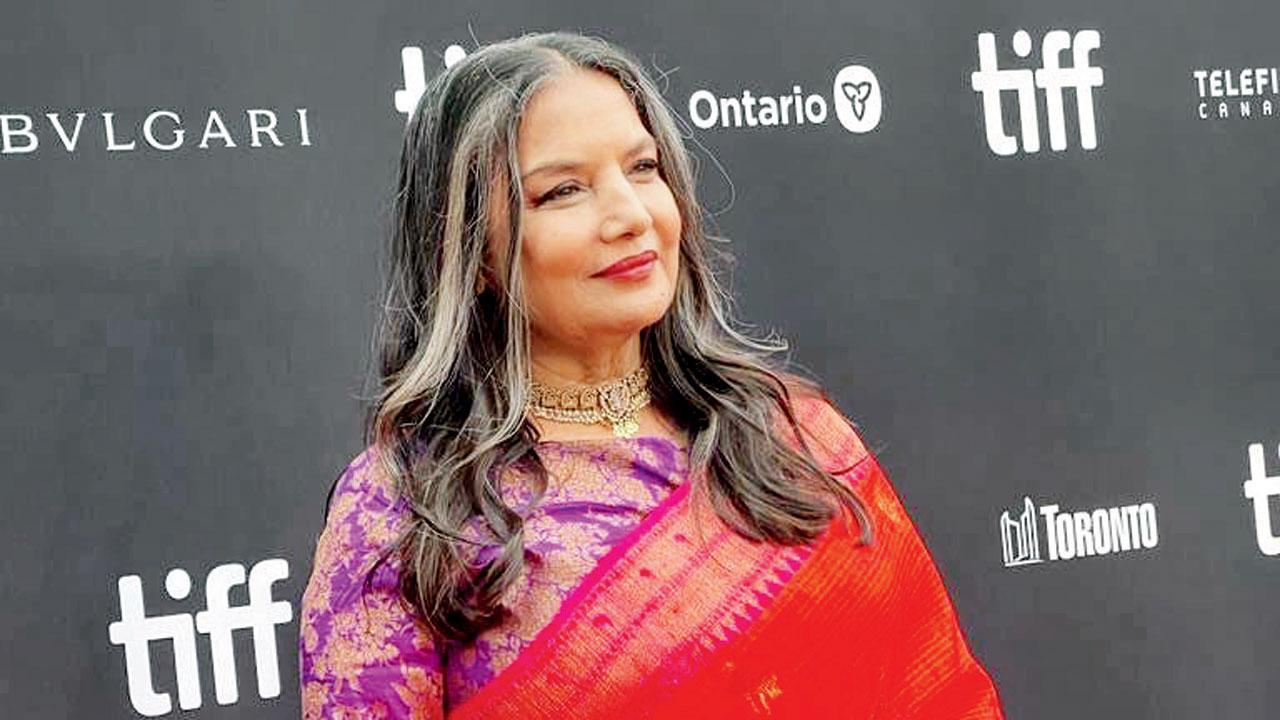
Shabana Azmi on the standing ovations her film, What’s Love Got To Do With It received at TIFF screening
Upala KBR (MID-DAY; September 16, 2022)
It is rare to witness the audience’s reaction to a film these days, but Shabana Azmi, who recently attended the Toronto International Film Festival (TIFF), for the premiere of Shekhar Kapur’s What’s Love Got To Do With It?, was overwhelmed with the response the film garnered. “It was evident that the audience was loving the film,” says Azmi, who was thrilled that “every joke had landed” and people registered the emotions of the film.
“I was watching the film on the big screen for the first time. The thunderous applause and standing ovations were a pleasant surprise. Shekhar reacted to the overwhelming response with equanimity. He was smiling at all the press interactions,” says Azmi.
What’s Love Got To Do With It?, written by Jemima Khan, also stars Emma Thompson, Lily James and Shazad Latif. While Thompson and Latif couldn’t make it to TIFF due to prior commitments, they caught the audience reactions and were thrilled nonetheless. “We missed Shazad. He was gutted because he couldn’t attend,” expressed Azmi.
The actor, who plays Aisha Khan — the matriarch of the Asian family — believes that the audience connected with the movie because they found it “relatable”. “It’s a warm, funny, and emotional film about love, intimacy, and identity. Jemima Khan’s observations of the difference between cultures is laced with clever lines, humour, and compassion. In today’s dark times, it is refreshing to have a film that celebrates life and the family.”
The icing on the cake was when Azmi caught up with her Fire (1996) team at TIFF after ages. “TIFF got us together to celebrate 25 years Of Fire since we first premièred it at the festival. Nandita [Das] was there as a director [for her film Zwigato] and Deepa [Mehta, director] was at the fest for a workshop. It feels great that all of us have our boots on and are still working. Fire has become a cult film. Even today, we receive warm messages from people who say it transformed their lives,” expresses the actor.
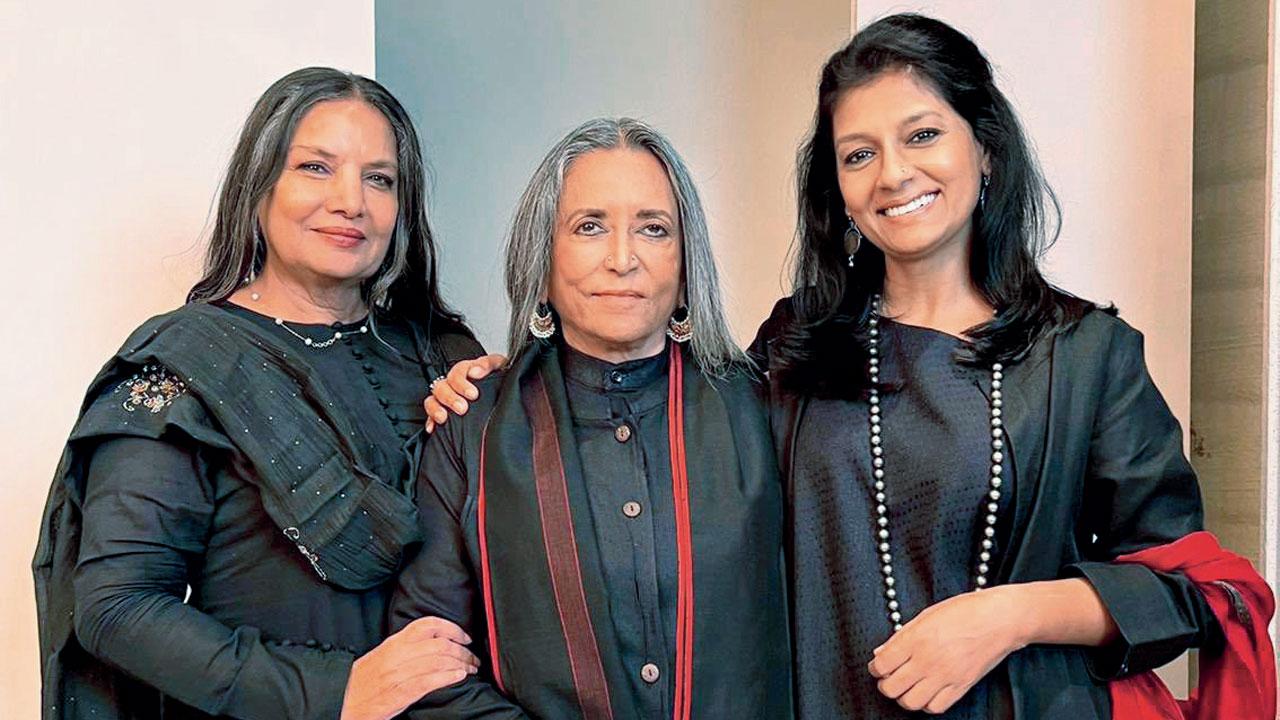
Azmi, Deepa Mehta, and Nandita Das celebrating 25 years of Fire
Saif Ali Khan exits Fire due to busy date diary; will now be a two-hero film with Pratik Gandhi and Divyenndu
8:27 AM
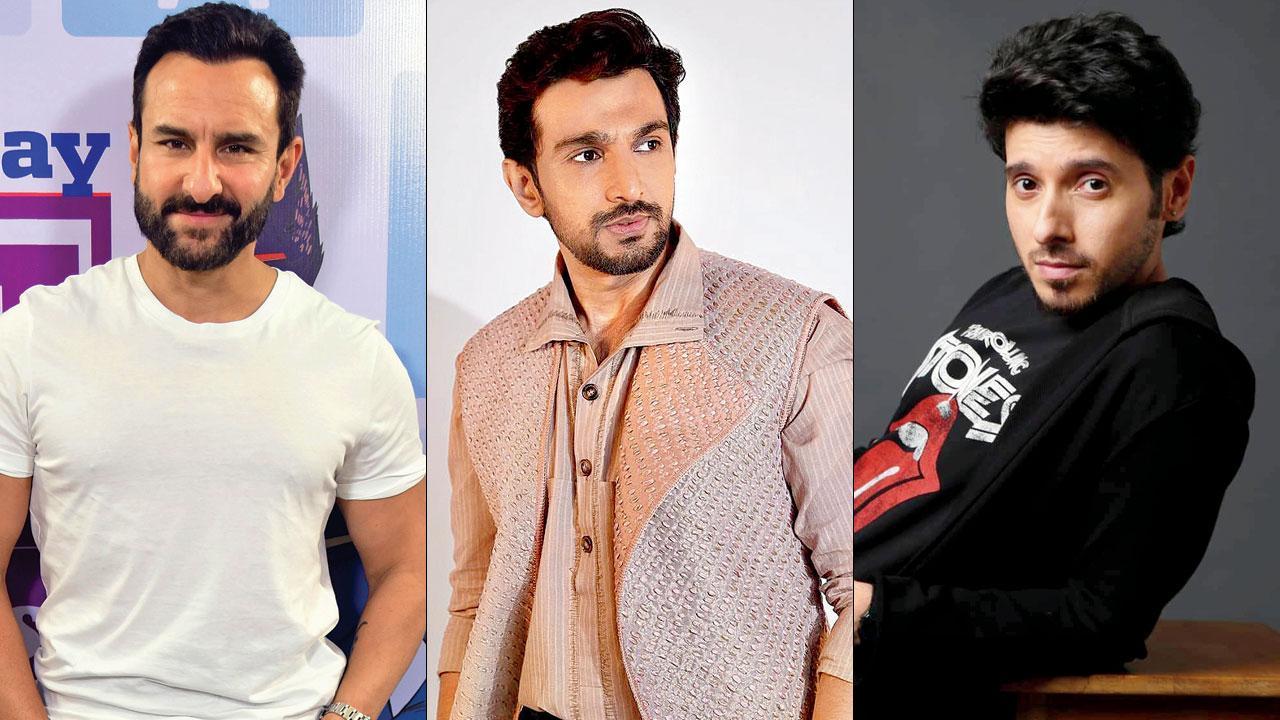
Sources say Saif exits Fire due to busy date diary; director reworks story as two-hero film with Pratik and Divyenndu
Uma Ramasubramanian (MID-DAY; May 26, 2022)
Last year, the news about Fire had caught the attention of many as the film was to reunite Saif Ali Khan with his Dil Chahta Hai (2001) makers, Farhan Akhtar and Ritesh Sidhwani, after over two decades. The actor was supposed to play a fire-fighter in Rahul Dholakia’s directorial venture.
But it looks like a Khan-Akhtar reunion is not on the cards. mid-day has learnt that Khan has bowed out of the project due to his busy date diary. The actor will be caught up with Vikram Vedha and Adipurush over the next few months.
With his leading man’s exit, it is heard that Dholakia went back to the drawing board and made significant changes to the script. A source close to the development reveals, “Earlier, Fire was envisioned as a single-hero project. But with Saif’s exit, the director and writer Vijay Maurya revisited the script, making it an ensemble project. They have roped in Pratik Gandhi of Scam 1992: The Harshad Mehta Story fame, and Divyenndu in the lead. The project will be a homecoming of sorts for Divyenndu, who played a key role in Farhan and Ritesh-backed Mirzapur.”
If all goes as per plan, Dholakia will take the film on floors next month. Excel Entertainment remained unavailable for comment.
In a film like Kapoor & Sons, Fawad Khan’s character of a queer person was an important one-Shabana Azmi
8:26 AM

Nuzhat Aziz (BOMBAY TIMES; September 28, 2021)
After more than two decades of the release of Deepa Mehta’s controversial film Fire, actor Shabana Azmi feels that the representation of same-sex relationships in mainstream cinema is finally being dealt with empathy, rather than mockery. From playing a character in a same-sex love film, to essaying a mother who finds it difficult to accept her daughter’s relationship in an upcoming project, she feels that even today, despite the far greater acceptance and awareness of LGBTQIA issues, there is still reluctance and misconstrued notions around the same.
Having recently won the Best Actor for Sheer Qorma at the India International Film Festival at Boston, the versatile actress talks to us about how important it is to showcase the underrepresented LGBTQIA community in mainstream cinema, how dissent is valid in a healthy democracy and what the pandemic has taught her. Excerpts:
Sheer Qorma has been showcased at several festivals and is winning praises and acceptance. Your thoughts on being part of a project that highlights an underrepresented group like the LGBTQIA community in India, especially after the decriminalization of Section 377.
I think that this is a subject whose time came several years ago. If you look at Fire, which was made in 1996, it was a logical extension of that. A film like this is very important because it is done in a very sensitive manner to sensitize people who still have mixed reactions about the topic. I think that Sheer Qorma is an important film, particularly because it has been made by a queer, non-binary filmmaker (Faraz Arif Ansari) and it has been his journey and struggle in being able to come out with it.
Fire released in the 90s and created a controversy because it spoke of same-sex love. How far have we come from then? Do you feel the queer community has greater representation and acceptance in mainstream cinema today?
Certainly, because earlier it was inconceivable that any actor, particularly in mainstream cinema, would agree to play a character from the queer community. But now, although in the beginning it almost happened surreptitiously, the fact is that in a film like Kapoor & Sons, Fawad Khan’s character of a queer person was an important one. So, I think the queer narrative is making its way into mainstream cinema by being dealt with empathy, rather than mockery. This not only leads to acceptance of people with different choices in love, but also gives hope that this acceptance of the “other” will then be extended to communities, nations, gender, race and religion; and that’s what we need. Not just tolerance, but acceptance as well.
Your character in Sheer Qorma is layered.Even though you have accepted your child’s sexual identity, it somewhere rattles you to see them in the same light as your son and his partner. Do we, in some way, cause the damage to our children because of our inability to understand what exists outside of us?
Parents are still in that space where they think ‘Oh my God, I have done something wrong’. Any departure from a social norm is considered wrong and then you either blame yourself, or the other person. So, it requires a sea change of attitude. We are inching towards it. I think one of the most important dialogues in the film is where the mother says: “Yeh khuda ke khilaaf hai” (This is against God). And then her son says, “Magar jinhone inko banaya hai woh bhi toh usi khuda ne banaya hai, ya kisi aur ne?” (But God has created them and they are part of his creations). And that makes the penny drop for her.
This is the point that the actors, filmmaker and writer are making – this is love. People have different kinds and expressions of love – who are we to judge them? It is all this prejudice that keeps surfacing and erupting, not only when it comes to same-sex love, but to anybody who is different from us. You need people in the public eye who have accepted same-sex relationships of their children. Because when you start seeing this being accepted, then people who are less empowered will get the courage to accept it.
Your recent web series, The Empire, was subject to trolling and ran into a controversy because some felt that it glorifies the Mughal ruler Babur…
Political agendas have permeated into every single thing in our society, and you have to negotiate your way through that. You cannot treat every comment and remark as a war. People have a right to express their opinion and dissent is one of the strongest things in a democracy. So, when people have the right, some of them will use it, some will misuse it. When you welcome all the accolades, you also have to accept the brickbats. It’s part of the game.
You recently shot for Jemima Goldsmith’s What’s Love Got to Do With It, along with Emma Thompson. What was the experience like, especially during the lockdown period?
I left on January 3, which was the height of the pandemic, and we completed the film in 38 days. We were in a very tight bubble and the whole crew was tested every single day. We were all very respectful of the bubble and weren’t allowed to meet anybody outside our shooting group. It was bitingly cold, and the outdoor sequences were very hard, but with actors, I think it is just an adrenaline rush that comes up when you are against forces. The film is a lovely rom-com and I think that kept people’s spirits up.
The Coronavirus pandemic has made all of us look at the world differently. Do you think we will see the world in a better light now?
It makes you very sharply aware of the fact that every single person, from the richest to the poorest country, is connected. It is evident now that we have become a global village. For me personally, what it has made me do is distinguish between needs and wants. We have an overdose of everything – clothes, shoes, bags, books - anything that catches our fancy. Throughout the two years of the pandemic, I did not buy a single thing and have always felt the need to curb the material desire.
To have Divya Dutta and Swara Bhasker as co actors in Sheer Qorma was a bonus-Shabana Azmi
8:03 AM

Renuka Vyavahare (BOMBAY TIMES; July 6, 2021)
In a career spanning over four decades, Shabana Azmi has been seen in a wide range of roles, and several of them focused on social issues and were applauded for being brave attempts at bringing taboo subjects onto the big screen. Recently, she featured in the short film Sheer Qorma along with Swara Bhasker and Divya Dutta. The film directed by Faraz Arif Ansari focuses on the relationship of a same-sex couple — played Swara and Divya, and how love is judged in society based on gender and sexuality. The film, which has been screened and appreciated at various film festivals, won Best Short Film Audience Award at the Frameline Fest and has also qualified for the BAFTA this year.
Shabana says, “Divya Dutta, who is a dear friend, spoke to me about the film, and I liked the script. When I met Faraz, I knew I had made the right decision. To have Divya and Swara as co-actors was a bonus. The attitude of the mother I play reflects most of society’s attitude towards the LGBTQ+ community. The film succeeds in making the audience see the protagonists as people who are in love.”
Shabana has previously featured in Deepa Mehta’s film Fire (1996), which focused on two women who form an intimate bond. The actress says, “Fire was made 25 years ago, and although the climate around the LGBTQ+ community has softened, a lot more needs to be done. For me, acceptance of who you consider 'the others' — the other race, religion and nation — is needed. Tolerance is different from acceptance. We are enriched when we accept diversity and stop judging people through prejudiced eyes. I remember watching Wong Kar-wai’s Happy Together (1997), and it was so refreshing to have the two male leads presented normally.”
For the first time, I don’t play a victim. Here, I am the instigator-Ayushmann Khurrana
8:26 AM

Abhimanyu Mathur (BOMBAY TIMES; February 20, 2020)
 Shubh Mangal Zyada Saavdhan sees Ayushmann Khurrana play a homosexual character for the first time. He is paired opposite a relative newcomer, Jitendra Kumar, in the film (and also reunites with Badhaai Ho co-stars Neena Gupta and Gajraj Rao). But the actor is quick to point out the film is not another ‘Ayushmann film’ about a non-mainstream topic. It is different from anything he has done before, he maintains. We sit down with him to let him elaborate on that difference, why this film needed to be a family entertainer, and how he made sure to not let his character become caricature-ish. Excerpts:
When it comes to LGBTQ characters in Hindi films, there are two kinds of stories — either where they are comic relief or caricatures, or serious films that talk about homophobia, like Aligarh. In that, Shubh Mangal Zyada Saavdhan has taken a new approach – a romcom with a gay lead pair...
It’s progressive. Let me first state that it is not a message-oriented film or some in-depth look at same-sex relationships. It is a comedy film. It is a family entertainer and we have primarily made the film like that because we want the families to watch the film with their kids. They will not feel iffy about it when they watch it. That’s the aspiration of the film, which is why it is more of comedy and less of romance between these two boys. The homophobe is the target audience here.
You say it is not a message-oriented film or an in-depth look at same-sex relationships, but a comedy. Is entertainment a better way of getting a message across as opposed to sermonising?
I think that’s the correct approach. We should not be preachy. At the same time, we have to normalise the same-sex relationship — the love story between two boys. More than the love story, it is about the reaction of the parents and the family, and how they react when they find out that their son is gay. I am playing the instigator in the film while Jitendra is the son. So this is a crazy comedy from the eyes of that family that is regressive but ultimately they have to accept things. This was the right time to make this film and send this message, too, particularly after the Supreme Court verdict on Section 377.
Has the verdict changed how the Indian society sees homosexuality? Is it easier to make mainstream romantic films on the issue now?
It was difficult to make such a film before the verdict. In the 90s, there was a film called Fire and right-wing activists tore down posters and burned the theatres. Today, the kissing scene (between the two leading men) is also a part of the film. Otherwise it was impossible. But yes, the sanction of the court has nothing to do with the sanction of the society. There is little acceptance for same-gender relationships. But this is definitely a step up. That’s why the film needed to be from the family’s perspective. Just like Badhaai Ho, in this film, the whole family is the hero.
The kiss between your and Jitendra’s characters in the film is being talked about a lot. A kiss in a heterosexual love story does not receive the same spotlight these days.
This was important for the film because we have to normalise it. I recently saw two boys kissing in a mall and then I realised, we are ready for it. We normally don’t see PDA between same-sex couples, but that happens abroad. That will happen in India also. It’s about basic human rights. People think that it is unnatural, abnormal because they are wired like that. So, acceptance is importance. Probably, this is the introduction to homosexuality for an average Indian homophobe. Right now we are discussing the same-sex kiss, and I think the next step will be that nobody will ask this question again when it happens in a film. Just like nobody asks a question about a heterosexual kissing scene anymore. Back in the ’90s if there was a kissing scene, there were a lot of questions, headlines, kitni kisses hain iss film mein and all that. In fact, just ten years ago, Emraan Hashmi ko lekar kissing scenes ke bare mein kitni baat hoti thi. Ab hoti hi nahi hai. Toh aisa hi hoga, jab same-sex relationship ko lekar film banegi aage, nobody will be asking about the kiss.
The film is shot in Varanasi and not a Delhi or Mumbai. Is that a conscious call to show that a same-sex relationship is not something that happens only in the metros, as it is still perceived by a large section of the society?
Most of my taboo-breaking or stigmabusting films are — by default — based in small towns and middle-class families. There is a reason behind it. For instance, my last film (Bala) was on baldness. People in urban India are already confident. They have ten other means to feel confident about themselves. The same is with sames-ex relationships. They are still acceptable in Delhi and Mumbai. We have gay pride parades in Delhi, Bangalore, Mumbai and Kolkata. But you never see that in a Kanpur. That’s the reason. There is no conflict in the urban city because we are aware, we are woke. There is lack of awareness in small cities. When there is no conflict, there is no story. The conflict only arises in the small city in the middle-class.
You said you are the instigator here. Be it Bala, Badhaai Ho,or Dum Laga Ke Haisha, you have played victims or people who happen to face some tough situations. Here, we see you taking charge and making things happen.
(Laughs) They had given me a choice of picking up one of the characters. I chose this one because I thought I don’t want to be a victim anymore, let me be an instigator. This is a guy more confident about his sexuality and Jitendra’s character is still in the closet. He is the parallel lead and he has got a great arc in the film because he is the one who comes out and fights the family. It was a conscious decision to do this character, to have something different to do. He (Jitendra) is the subtle one and I’m the more flamboyant one.
In playing a gay character that you describe as ‘flamboyant’, how do you make sure that the portrayal is fun and yet does not become a caricature like the LGBTQ characters we have seen in mainstream films in the past?
See, one character in the film has to imbibe certain stereotypical features also. Like he (Jitendra) looks like a ‘regular’ heterosexual male, while I am the one with certain nuances to the character that are perceived as effeminate. I have a nose ring for example. But that is important for the masses to relate because unhone aisa bhi dekha hai. Relatability bhi chahiye and for that you have to use certain stereotypes, but without going over the top. You have to take the middle path.

Will Shubh Mangal Zyada Saavdhan be the first ever proper LGBT hit film of Bollywood?
2:38 PM

Times are changing and more and more novel and unconventional topics are being tackled in our films. But homosexuality is one such subject where we have slightly lagged behind. Here, we are not talking about caricature gay characters inserted in films for cheap laughs but realistic depiction of such people. Interestingly, Hollywood and many of our web series too are based on this idea. Even regional films on homosexuality have thrived. However, a handful of Hindi films have had protagonists playing gays.
So what’s stopping Bollywood for getting into it full throttle like its contemporaries? The biggest problem is that despite Supreme Court decriminalizing homosexuality and increase in awareness, it’s something that still remains a taboo. And films made on taboo topics can be detrimental. Akshay Kumar’s film on sanitation, Toilet – Ek Prem Katha, worked very well as this was a still a topic that can be discussed. But when he attempted to spread awareness about sanitary pads in Pad Man, the desired result was not achieved. Toilet – Ek Prem Katha earned Rs. 132.07 crore while Pad Man, despite having better word of mouth, could reach only till Rs. 78.22 crore.
Shockingly, none of the LGBT film of Bollywood has even seen a commercial success. Fire was the first such film in this genre. However, it was met with violent protests due to which the film was withdrawn. Sometime later, it was re-released after the Censor Board imposed cuts. Though it ran without any problem, the earnings were paltry.
Then, Split Wide Open, Rahul Bose-starrer, came next in this genre. But it was so niche that it went unnoticed. Karan Razdan’s 2004 flick, Girlfriend, was a story of an obsessive lesbian. It had immediately come after Murder, which popularized the idea of films with intimate scenes. It had loads of steamy and sleazy scenes and hence, it didn’t do much for the LGBT movement. And it was an average grosser at the ticket window.
Many other films then came up but were mostly small-budget. My Brother Nikhil, Onir’s first directorial, came all of a sudden, and as expected sank without a trace. Margarita With A Straw got a bit noticed but didn’t have any commercial trappings. Same happened with Aligarh. Angry Indian Goddesses was a fine piece of cinema and had an unexpected lesbian angle but viewers couldn’t give it a chance because of its very elite feel. Dunno Y Na Jaane Kyun, meanwhile, is considered to be a success story, and even has a sequel. But those who have seen it call it shoddy piece of cinema. And in cinemas, it was a big time disaster.
Karan Johar made two films and both have done a lot to make homosexuality mainstream. His 2008 flick Dostana was an average grosser and many even criticized for being cheap. However, homosexuals call this film a blessing as it at least ignited the conversation. During 10th anniversary of Dostana, prominent LGBTQ rights activist Harrish Iyer had told this writer, “Dostana broke the taboo. It was a landmark film as it mainstreamed the issue. It brought the conversation to the dining table. Dostana almost became a word for gays. People would say ‘Yeh log dono Dostana karte hai’ instead of saying ‘Yeh dono gay hai’!” He futher adds, “Karan Johar has done a lot of service to the homosexual community by bringing the conversation out from the closet into the open.” 8 years later, Karan Johar produced Kapoor & Sons. This was a hit film but homosexuality formed a very small part of the flick.
Last year, a lot of expectations were rested on Ek Ladki Ko Dekha Toh Aisa Laga. It featured a mainstream actor like Sonam K Ahuja in the role of a lesbian. What’s more, her real life father Anil Kapoor played the part of her dad, and there was also Rajkummar Rao and two popular songs too add to the impact. Sadly, the film received mixed response. On top of that, the taboo topic obviously and also the serious nature of the film kept audiences away.
But now, we have a film that can finally emerge as the first box office success in this space - Shubh Mangal Zyada Saavdhan. It stars Ayushmann Khurrana and Jitendra Kumar as the lovers with Neena Gupta, Gajraj Rao, Manu Rishi Chadha and Maanvi Gagroo playing supporting parts. The trailer was unveiled few days back and has been loved for its clever writing and the feel good mood of the film. What’s great is that someone like Ayushmann Khurrana has backed it and that too at this stage of his career. Right now, he’s on a roll and how. He has had 6 back-to-back hits, and it all started with the first part of this film, called Shubh Mangal Saavdhan, which was based on performance anxiety. Ayushmann is known to take up such topics in his films like sperm donation, late pregnancy etc in his films and these movies are family entertainers, without too many embarrassing moments for the traditional audiences.
Due to these reasons, Shubh Mangal Zyada Saavdhan has a very high chance of becoming a hit at the box office. The costs also seem limited and even if it does a business of around Rs. 55-60 crore, it’ll be in the safe zone. One might argue that a value of a film should not be judged by the amount of money it makes. After all, films like My Brother Nikhil, Fire etc also have been significant films of this movement, notwithstanding their box office outcome. But when a film on gays becomes a hit and gets whole-hearted acceptance, it’ll encourage more and more producers and even mainstream actors to back such projects. And this, in turn, will serve the larger cause and bring social acceptance to LGBT in a small but significant way. Hence, here’s hoping that Shubh Mangal Zyada Saavdhan turns out to be a great fare and that it gets the success it deserves!

What does it take to portray an LGBTQIA+ character on screen?
8:18 AM

Shamayita C (BOMBAY TIMES; May 26, 2019)
 In the late ’90s, the intimate scenes between Shabana Azmi as Radha and Nandita Das as Sita in Deepa Mehta’s Fire celebrated a shift in the relationship binaries that the Indian society had so far been accustomed to. Same-sex emotional attachments, which would earlier take careful refuge in aesthetic metaphors, needed a jolt and Fire did that with fiery passion. By the time Rituparno Ghosh and Indraneil Sengupta fanned romance on screen as Chapal Rani and Kumar in Kaushik Ganguly’s Bengali film Arekti Premer Golpo in 2010, the audience had matured enough to accept same-sex love. Films dealing with homosexual relationships have walked a long way since then. The same audience that once cringed in their seats with Radha and Sita’s love-making scenes, was swayed by Madhu (Ritwick Chakraborty) and Puti’s (Riddhi Sen) love story in Nagarkirtan, the Bengali movie, which went on to win four National Film Awards last year, including the Best Actor for Riddhi.
 In fact, late ’90s was dotted with some breathtaking performances by actors portraying transsexual characters. Nirmal Pandey in Amol Palekar’s Daayra, Arif Zakariya as Immi in Kalpana Lajmi’s Darmiyaan, Paresh Rawal as Tikku in Mahesh Bhatt’s Tamanna and some others essayed transgender characters with great dignity and care. “I wanted to give the character a human touch. Transgenders are usually mocked and ridiculed. They deserve dignity and compassion and that was my job. It was my chance and I tried my best to make the character look real,” said Paresh, whose performance garnered critical acclaim from several quarters.
In 2010, a homosexual professor, Shrinivas Ramchandra Siras, was suspended from Aligarh Muslim University because of his sexual orientation. He was later found dead in his house, which threw open a Pandora’s box of possibilities. While the law took its own course in finding out the cause of Siras’ death, filmmaker Hansal Mehta’s Aligarh had Manoj Bajpayee play the role of the gay professor. When asked about the role, Manoj said, “Siras loved literature and poetry. So, for me, the focus was more on getting that element into the character than the fact that he was gay. What’s most important to convey here is that a man’s sexual preference should not matter. What’s important is that the professor was lonely and away from family rather than he being gay! When I portrayed the role, I got a great response from the audience and the character was appreciated internationally, too.”
FIGHTING RAMPANT MOCKERY
While today we get to watch some heartwrenching same-sex love stories like Aligarh, stereotyping and ridiculing such characters have been rampant on the Indian big screen. Labelling was a big problem and directors were often insensitive about the impact their lop-sided portrayals would have on society at large.
HOW HAS ON-SCREEN PORTRAYAL OF SEXUAL MINORITIES CHANGED OVER THE YEARS?
“It is not just about this community. Our society has always ridiculed specially abled people, those with stammering problems and what not! However, we are becoming sensitive now and the LGBTQIA+ community is also being treated with respect. They are part of our society and deserve to be treated right,” Paresh told us.
According to Manoj, when people have conviction, such interesting films are made. “It takes a Shabana Azmi and Nandita Das to come together and act in a film like Fire or Apurva Asrani, Hansal Mehta and Manoj Bajpayee to come on the same page and make a film like Aligarh and justify the role,” said the actor.
HYPOCRISY AND OTHER ODDS
Kaushik Ganguly, whose Nagarkirtan saw a stupendous performance by Riddhi Sen, told us, “We’ve always used stammer, limping and effeminate nature as our comic prop. This just shows our plummeting sensibility. The time has now changed. These marginalised characters are now taking centrestage.”
Filmmaker Sanjoy Nag, who directed the National Award-winning Memories In March in 2010, thinks it is the inherent hypocrisy of our society that impacts our sensibility. “We are often okay with a gay man next door, but when we get to know that the sexual preference of my son is not straight, we get upset. While working on the film, I saw how fear ruled this community. Barely has anyone been arrested under Section 377, but the prospect of its misuse has instilled a sense of fear in society. Homophobia is universal. Wherever I went with this film, from New York to Durban, I was often asked, ‘What was the need for making this film?’ I was appalled. But I am glad that I made the film. I was told many homosexual people came out of closet and there lies my success,” he told us.
 A PARADIGM SHIFT
Hansal Mehta (left) also feels it’s time to break away from stereotyping people on the basis of their sexual orientation, religion, caste or creed. “Unfortunately, storytelling opted by the mainstream cinema puts them in boxes. A Muslim guy is either a gangster or a good neighbour called Rahim chacha. For that matter, even Hindu Brahmins are stereotyped. A homosexual is represented as an extremely effeminate person wearing garish clothes. My fight is to humanise and normalise them, even if it’s about their sexual preferences,” says the filmmaker.
 He’s all praise for the ‘Out and Proud’ campaign. “While Aligarh was a tragic melancholic story, there are stories of hope, too. I have been reading about the ‘Out and Proud’ initiative. We need to show stories of hope and celebration of sexuality. Being inclusive is a step towards a greater equality and society needs to know that everybody has been created as an equal, something that the Indian constitution endorses, too.” Filmmaker Onir (right), who has always worked on a gender-sensitive narrative in his films, thinks that ‘mainstream award functions do not often recognise good works that deal with the LGBTQIA+ community’. “Unlike Oscars and other important award shows, our mainstream awards do not often encourage or acknowledge works dealing with this community. However, with the Supreme Court’s verdict last year and this current boom of digital media, many filmmakers are coming up with sensible stories. They don’t fear censorship and hence, a lot of web-specific contents are being created,” he said.
AN ACTOR’S DELIGHT?
How easy or difficult was it to portray a homosexual character on screen? Manoj Bajpayee feels that over the years our society has let go of many taboos connected with this community. He said, “I feel a country or society is never ready for anything, but when people believe in something and try to spread the message with conviction, then society wakes up to it. During my growing up years, I have seen many professors, friends and people who were gay and never felt they were any different from us. That’s what we wanted to show in our film. I’ve never really enjoyed stereotypical performances. So for me, Professor Siras was a very passionate, intelligent human being and his sexual preference was just a part of his personality. Would you ever call the guy a straight professor? That here is a professor who is straight!”
For Indraneil Sengupta, who acted in Kaushik Ganguly’s Arekti Premer Golpo alongside Rituparno Ghosh, it wasn’t easy at all. By his own admission, his knowledge about the LGBTQIA+ community is ‘acquired’. “Honestly, it was a difficult character for me to play,” he said. “It was a bit late when I was first exposed to the idea of alternative sexuality. I grew up in Ahmedabad in the ’90s and only encountered homosexual people when I shifted to Mumbai in 1999-2000. It took time to be comfortable, but I learnt to coexist. And that is when the role came my way,” he said.
What made him say yes to the film? “The character was challenging. I decided to approach it as a love story. Ritu (Rituparno Ghosh) and Kaushik (Ganguly) spoke to me continuously and prepared me for the character. While working on the script, they also mellowed down the intimate scenes. And we did a good job. Considering my apprehension and inhibition, I am proud that I worked in that film. In fact, it helped me in many ways. Now I empathise and understand the importance of an inclusive and happy society,” he added.
While Indraneil found it tough slipping into the shoes of a homosexual man, it was simpler for Jisshu U Sengupta, who played a percussionist in Rituparno Ghosh’s Chitrangada: The Crowning Wish. For him, it was just a performance. “I am an actor and for me, it was just a performance. I saw Rituda very closely. I have friends from the community and I played my part,” the actor said. But did the film make him closer to the community? “No. I always had gay friends. I feel it’s a crime to be sympathetic towards them. Why should one be? They are like us. They live a life just like you and I,” he added.
‘THE PORTRAYAL OF GAY CHARACTERS ON SCREEN HAS IMPROVED’
Harsh Chhaya recounts the time when he went out of his way to get the role of a gay fashion designer in Madhur Bhandarkar’s Fashion. “Initially, the makers were not convinced that I could pull it off. I was tired of playing the good doctor and corporate honcho, and this role of a gay fashion designer gave me an opportunity to do something unconventional. I felt privileged that I could convincingly play the character,” he says.
Saqib Saleem played a homosexual character quite early in his career in Karan Johar’s Bombay Talkies. He had to enact intimate scenes with Randeep Hooda in the film. Says Saqib, “Earlier, films made caricatures out of gay characters, but the one that I played in Bombay Talkies was treated differently. Instead, it showed the dynamics of same-sex relationship. While nobody pointed fingers at me after the film released, some felt that I would stop getting roles as I played a gay character so early in my career. Over the years, the audiences, especially from metros, have become more open to the topic. Even the portrayal of gay characters on screen has improved.”
With inputs from Tanvi Trivedi and Neha Maheshwri

From kite-flying to treading the write track with Manto: Nandita Das opens up on her journey
8:06 AM

As told to Avinash Lohana (MUMBAI MIRROR; July 30, 2018)
As an actor, I always wanted to play a role that would require ‘prep’ because many of my characters were from a context too familiar and so eminently believable with the result that I was driven primarily by my instincts. Of course, every character requires one to learn new skills to make the portrayal more authentic so for Bawandar, I had to practice walking in the dessert with pots on my head, and in Earth, I actually learnt to fly a kite. For the widow’s role in Deepa Mehta’s Water, I shaved my head while for Rani, I had begun to learn fencing. Unfortunately, neither materialised. Also, having acted in 10 languages, learning my dialogues with the right pronunciation and meaning was a challenge too.
Direction is a whole different beast. One has to ‘prep’ from day one of the inception till the very end. I am not a trained filmmaker, nor have I assisted anyone to learn the tricks of the trade. What has helped me are the multiple things I’ve experienced and observed in life. Also, some subconscious learning must have happened through the 40-odd films I’ve acted in. But there is lot more to making a film than just the shooting which I was privy to earlier. The exciting part about direction is that every phase allows you to dabble in a different creative field — writing, finding locations, casting, gathering the crew, editing, sound, music, songs, graphics, visual effects and so on. It is like doing many different things, but all in the service of one.
For years, I had thought of making a film based on Saadat Hasan Manto’s short stories, but it was his essays that helped the idea expand beyond them. Researching and writing was time consuming and hectic, but that’s what formed the backbone of the biopic. I’ve read Manto extensively but given how prolific he was, I can’t claim to have been fully exhaustive in my research. It took five long years of reading his works, getting people’s inputs, writing several drafts of the script to finally feel equipped, both emotionally and creatively, to tell the story that so needed to be told.
I didn’t grow up in an Urdu speaking household, but growing up in Delhi, where we would speak a mix of Hindi and Urdu, came in handy. The dialogues had to be easy enough so as not to alienate the audience but not so simplistic either, that it compromised the authenticity of the period. The first few drafts of the script were done with my consultant Mir Ali Hussain. He’d read aloud to me Manto’s works in Urdu that were not available in Devanagari script or in English. Thereafter, many in Mumbai and Lahore helped me with it. My own Urdu improved exponentially with this film.
As Manto died so young (at the age of 42), there were very few who had actually met him. I went a few times to Lahore to meet his three daughters and his grand-niece, the eminent historian Ayesha Jalal. Apart from her own books that she gave me, the stories that the family shared were precious. No book could’ve given me the insights they did, not just about Manto, but also about his wife, Safia, as very little has been written about her. Safia’s sister, Zakia Jalal, is one of the few people who had a lot to share. Little nuances that make the characters rich and believable came from those conversations.
When I began writing the script, I wanted to journey through 10 years of his life but with every draft I realised I was trying to cover too much. I ended up focusing on the four most tumultuous years in Manto’s life (1946–50). What to include and what not to, was the most challenging aspect of writing. I wanted to introduce him to the widest audience possible and at the same time, give precious nuggets to his admirers, who are the film’s natural allies. It was not an easy process but everything I have kept, I think, is more compelling and relevant than everything I had to let go.
The learnings were not just creative, but also emotional and spiritual. In fact, ‘letting go’ has been one of the most valuable gifts of this experience. I was tested at every stage. First with the writing, then, dealing with constraints of budget and locations and finally editing. Direction is, after all, about making the right choices and also letting go of things one has no control over.
Manto, the man and the film, both have helped me grow in the direction I want to. And that I am grateful for.

From left to right: Nandita Das in Bawandar (2000), with Shabana Azmi during prep for Water, with Aamir Khan in Earth (1998)
We live in times where we are ready to bow down even before we are slapped by someone-Nandita Das
8:06 AM

Nandita Das, along with actor Jim Sarbh and filmmaker Onir, dwells on the topic of gender and sexuality in Indian cinema at a conference at IIT Bombay. Interestingly, the discussion coincided with the Supreme Court’s decision to review Section 377, which criminalizes homosexual behaviour
Pallabi Purkayastha (BOMBAY TIMES; January 11, 2018)
While the country welcomed Supreme Court’s decision to re-examine its view, which criminalises gay sex under Section 377 of the Indian Penal Code (IPC), the ‘South Asian Conference On Gender and Sexuality’ held at IIT Bombay recently was a hub of revelation as it touched on the alarming issue of exclusion of the LGBTQ community and representation in Indian cinema.
I DON’T THINK PEOPLE WILL COME ON THE STREETS TO SUPPORT A FILM LIKE FIRE: NANDITA DAS
Nandita Das spoke about how Fire (1998) was the first film to start a dialogue on homosexuality — a topic that was swept under the carpet in most households. “After having done 40 films in various languages, Fire is one of those few films that had an impact,” said the actress-director, who was a part of the panel, which included speakers like filmmaker Onir, actor Jim Sarbh, LGBTQ activist Dr Aditya Joshi, professor at Jamia Millia Islamia University Shohini Ghosh and lawyer and human rights activist Vrinda Grover. “Whether you liked the film, hated it or were uncomfortable about it, suddenly there was a reference point to start a conversation (on LGBT). For me, personally, it was a life-changing experience. I have understood homosexuality on an intellectual level, but I often get asked ‘Why do you care about LGBTQ community? You are straight. Is your brother gay?’ The problem is we have not thought about it as our issue. In fact, it is only after Fire that I realised what an insensitive world we live in,” she explained.
Nandita, whose upcoming biopic on writer Saadat Hasan Manto is set to release this year, feels that with every passing day, the society is succumbing to the fear of unknown and that, freedom of expression cannot be exercised as one could back in the 90s. “What has changed now? I think Fire released without a single cut despite the presence of self-proclaimed custodians of culture, who thought the film should be stopped. Today, if something like this happens, I don’t think people will come out on streets to support us like they did back in 1998. People talked about freedom of expression, whether they agreed or disagreed with the film. I don’t know if a film like Fire can be made today. Are we liberal enough as a society to make a film like that or even a film like Firaaq (2009)? I don’t know how Manto is going to be received. We live in times of fear and silence, where we are ready to bow down even before we are slapped by someone,” she said.
The award-winning actress also shared a rather disturbing anecdote, which was an offshoot of social media bullying. “Someone wrote that I said, ‘All men are potential rapists’. I would never make a generic statement like that, but people started tagging me on pictures of my five-year-old son and asking, ‘Is he a potential rapist, too?’ I was scared for myself and my family. I don’t know the source of the quote, but I had to clarify it,” she shared.

‘I AM TIRED OF BEING CONSTANTLY QUOTED AS THE ONLY OPENLY GAY DIRECTOR IN BOLLYWOOD’: ONIR
Celebrated director Onir spoke of how the world around him concentrates on his sexual orientation and not the variety of work he has done. “I am tired of being constantly quoted as the only openly gay director in Bollywood. I made My Brother Nikhil, it was my fifth script, which accidentally became my first film. I am always fighting this notion that because I am gay, I made My Brother Nikhil. I have made films that deal with child abuse or even Kashmiri pandits, but that doesn’t make me a victim of abuse or a Kashmiri Pandit. It’s just that you feel about certain issues,” said the director.
Despite winning a National Award for ‘Best Feature Film’ for I Am (2012), the director still struggles to get his films to the theatres. Talking about the humongous task of getting his films cleared across various boards, the filmmaker shared, “I went to the FCAT to get a U/A certificate for Shab (2017), I received a written letter from them, saying ‘It glorifies homosexuality’. At the end of it, I am really worried as to whether I really want to make another film.”

‘I HAVE NO INTENTIONS OF PROMOTING BOLLYWOOD’S IDEA OF HOW A MAN SHOULD BEHAVE’: JIM SARBH
Yet another popular name from the film and theatre world, Jim Sarbh shared a few funny anecdotes from his audition days. Reflecting upon the numerous instances of ‘stereotypical gay jokes’, the Neerja-famed actor said, “I was part of an advertisement where I was asked to repeat a take because they thought my walk was not manly enough. It is shocking that people are discussing these things the way they are. It is not because I come from an amazingly Bohemian family and even my family will have a tough time to come to terms with it, if I said I was gay or bisexual. People should express themselves the way they want to as long as they are not causing any harm to another person.”
Jim, who is well aware of the ways of showbiz, refuses to conform to stereotypes. “Men are expected to behave a certain way, especially in Bollywood and the idea is promoted vehemently. But I have no intentions of doing it, not unless you’re playing that stereotypical role of a macho man as the only representation of men. As long as the films are being sensitive to these gender roles, I will do it. But if a role says ‘that’s how men are’, I will fight that,” asserted the actor.

I had faced this with my films, yeh toh hissa ban gaya hai life ka-Nandita Das on Padmavati controversy
8:10 AM

Riya Sharma (BOMBAY TIMES; December 14, 2017)
Actress-director Nandita Das, who has made a film on the life of playwright and author Saadat Hasan Manto, says that she is not afraid of the flak,if any,that the film may receive.Talking at a session at the Urdu festival Jashn-e-Rekhta in Delhi, the actress insisted that she has faced trouble for films earlier in her career. “I had faced problems with my films like Fire and Firaaq. Yeh toh hissa ban gaya hai life ka. Pehli baat toh ye hai ki koi bhi film aati hai toh hum usey pehle hi controversial bana dete hain. A movie like Padmavati seems to be glorifying the Rajput valour...trailer dekh ke toh yehi laga aur jinhone dekhi unhone bhi yehi bola, uss mein bhi problems aa gayi. I am not afraid for my next because aise darr ke kuch karne lage toh humein toh kuch karna hi nahi chahiye. Humein na gaana chahiye, na humein films banani chahiye. We as people can either let this continue or we can help each other in this,” she said.
About her film, Manto, she added, “We are not sensationalizing any topic, the problem that Manto faced in that era, he wanted to write on topics that bothered him, but the agony of the writer was that the society resisted what he wanted to write, and that is what we seem to be facing even today.”
Censor's RC cut the scene when the couple was to reach climax-Shonali Bose
7:48 AM

Director Shonali Bose is happy that her film Margarita With A Straw moved censor board members and that it only got a single cut
Subhash K Jha (DNA; April 2, 2015)
 Filmmakers needn’t lose hope if director Shonali
Bose’s recent experience with the Central Board Of Film Certification
(CBFC) is anything to go by.
Filmmakers needn’t lose hope if director Shonali
Bose’s recent experience with the Central Board Of Film Certification
(CBFC) is anything to go by.Her starkly real film Margarita With A Straw had been recommended several cuts by the CBFC’s Examining Committee. However, the Board’s Revising Committee asked only for one. And that means the love-making between the two female protagonists played by Kalki Koechlin and Sayani Gupta, is now intact.
Shonali sounded happy, but said guardedly, “I was devastated when the EC recommended drastic cuts. No way was I going to allow my film to be mutilated. So my first reaction was to celebrate when my film was passed by the Revising Committee(RC) with only one cut. But after a few hours I began to wonder what the hell I was celebrating. It is my film and they were threatening to cut it. Was I feeling grateful just because they made one cut? It’s like a battered wife feeling grateful that her husband has given her only one slap”.
Shonali would have fought for that one cut too had it affected her film. “But it doesn’t really effect my narrative. It’s a scene of heterosexual lovemaking. They only wanted me to cut when the couple was to reach absolute climax. I agreed. It didn’t take anything much away from my film”.
What Shonali is jubilant about is that the crucial lesbian love-making scene remains. “There was no way I was going to let even a single moment of that go. When the EC wanted that sequence reduced, I was shocked. How can they tell me that the crux of my film is invalid? But thankfully, they’ve allowed me the freedom to have my say. In a country where homosexuality is still illegal, it is no small victory to allow two women to make love in a film.”
When reminded of Deepa Mehta’s Fire which had lesbian love-making scenes, Shonali laughs, “Oh that was nothing compared with what we’ve shown.”
Shonali says, “I am enormously relieved that Margarita With A Straw has been certified without cuts. My biggest moment of triumph was to see members of the censor board, all above the age of 45, admitting to being moved by the film. Even when the EC wanted monstrous cuts, some of the women members of the Board told me they were very moved. But they had guidelines of dos and don’ts to follow, so why don’t I approach the RC? That was the biggest triumph for my film.”
Subscribe to:
Posts (Atom)