Showing posts with label Faraar. Show all posts
Showing posts with label Faraar. Show all posts
Nawazuddin Siddiqui is a master of his craft, says Mission Impossible actor Ilia Volok
9:19 AM

Neha Maheshwri (BOMBAY TIMES; March 14, 2026)
With a filmography spanning over 200 Hollywood projects and collaborations with acclaimed directors such as Steven Spielberg, Oliver Stone, David Fincher and Roman Polanski, Ilia Volok has worked across a wide spectrum of the Western film industry. Now, the actor is set to make his Bollywood debut with Faraar, directed by Kushagra Sharma and starring Nawazuddin Siddiqui. In a candid conversation, Volok talks about stepping into Hindi cinema, working alongside Nawazuddin, the creative contrasts between Hollywood and Bollywood, and why his first visit to India left a lasting impression.
‘The script convinced me instantly’
Ilia didn’t hesitate when Faraar came his way. He says, “I’ve always been fascinated by Hindi cinema and hoped that one day I would get the chance to work in Bollywood. When I was approached for Faraar and read the script, which I loved, there was no doubt in my mind that I had to be part of the project.”
A major factor was Kushagra’s collaborative approach. He shares, “He was open to my suggestions and ideas. That openness is valuable. It allows an artiste to exchange ideas freely and flourish, ultimately benefiting the film.”
‘Nawazuddin approaches acting through emotional truth’
Ilia speaks with admiration about his co-actor Nawazuddin Siddiqui. He says, “From the first moment on set, it was clear that Nawazuddin is a master of his craft and a complete professional.”
They quickly discovered a shared acting philosophy. He adds, “I sensed that his approach aligns with the style of method acting I was trained in. It focuses on emotional truth & encourages an actor to explore a character’s inner emotions and motivations.”
‘Tom Cruise is generous as a scene partner’
Elaborating on his experience with Tom Cruise on Mission: Impossible - Ghost Protocol (2011), Ilia highlights discipline and generosity. “What struck me most was his focus and attention to detail, as well as his generosity as a scene partner. I knew he was there to help if I had any questions or needed clarification,” he recalls.
For Ilia, these qualities define true professionalism. He adds, “Some actors get distracted by external aspects of stardom. Some focus too much on superficial things, like the size of their trailer or vanity van. I prefer working with those who see acting as a continuous process of growth.”
‘Too much structure can stifle creativity’
For all its scale and technical precision, Ilia finds Western studio filmmaking more rigid. He explains, “I would say that within the Hollywood structure there is less room for improvisation. Working on Faraar taught me to be more open to the director’s new ideas and changes on the day of the shoot. That was refreshingly surprising! I think too much structure and control can potentially stifle creativity. In Bollywood, creativity breathes freely.”
‘Nothing replaces experiencing India first-hand’
Reflecting on his first visit to India last November to shoot a portion of the film, the actor says the experience reshaped his perspective. “Even though my visit was brief, I was blown away by this amazing country and its people. Over the years, I’ve heard and read about India, but nothing can substitute first-hand experience,” he says.
What stayed with him most was the warmth of the people. He shares, “Their kindness, warmth and generosity left a strong impression on me. I look forward to another visit soon.”
Nawazuddin Siddiqui teams up with Mission Impossible actor for new heist film
9:21 AM

Rohit Bhatnagar (HINDUSTAN TIMES; October 21, 2025)
As Nawazuddin Siddiqui gears up for his big Diwali release Thamma, we have exclusively learned that the actor is set to appear in a never-seen-before role in an upcoming heist film tentatively titled Faraar, where he will be seen portraying a Physics professor.
Joining him is actor Ilia Volok, known for his roles in franchises like Mission Impossible, G.I. Joe, and Indiana Jones, who will play the antagonist. Actor Nimisha Sajayan, famed for her work in Dabba Cartel, is also part of the cast. Spanish composer Iván Martínez Lacámara, who scored the hit series Money Heist, will produce the background music for Faraar.
Regarding the choice of Ilia for the film, director Kushagra Sharma shares, “It was a creative decision driven by the desire to reintroduce the essence of a powerful, layered villain while breaking away from conventional portrayals. As cinema becomes increasingly global, it is essential to bring together two performers who embody depth, intensity, and authenticity.”
He added, “With the Money Heist composers crafting the background score, audiences can expect a sound that takes the thrill to the next level, turning the film into a true big-screen experience.”
Attempts to reach Nawazuddin for comment were unsuccessful.
I loved Haribhai to death but he had one very irritating habit. He just couldn’t make it to shoots on time-Sharmila Tagore
8:55 AM
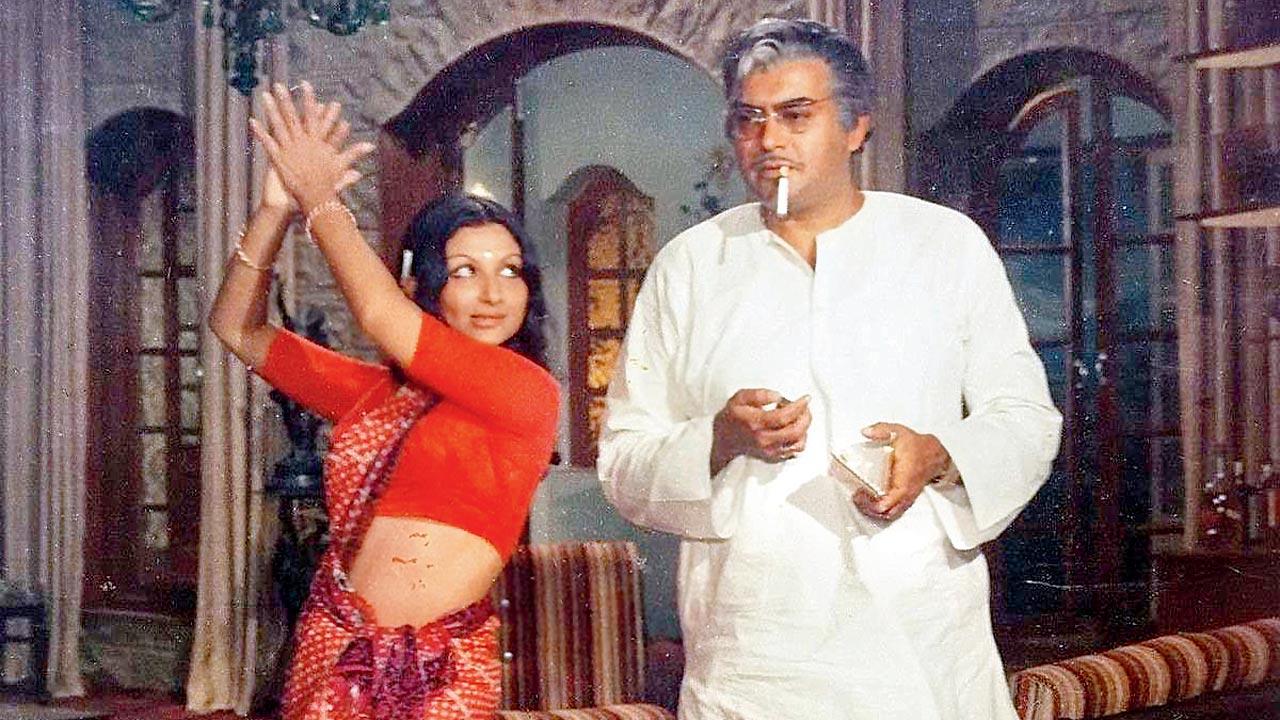
Sanjeev Kumar and Sharmila Tagore in a scene from Mausam (1975)
In a new biography on Hairbhai Jariwala aka Sanjeev Kumar, co-actor Sharmila Tagore remembers a stellar actor who drove her up the wall
MID-DAY (June 19, 2022)
I don't quite remember when I first met Haribhai. It was probably on the sets of Shandaar. He was already a big star. Our working equation began on a note of mutual respect and friendship. Shaandar was shot in 1974 in Chennai. The film industry there is extremely disciplined and strict about the language. Since Hindi is not their native tongue, they are very hesitant about changing even a single word of the dialogue that is sent from Bombay.
In one of the scenes, I had to say, “Mera dil huk uthega.” This to me sounded overly dramatic. I couldn’t identify with its sentiment. I got into a vehement argument. The director and the assistants tried to convince me that I had to say that line, but I wouldn’t listen. In those days there were no mobile phones, so they couldn’t get in touch with the dialogue writer in Bombay to suggest an alternative. Being a Bengali, I couldn’t come up with better suggestions either. This stalemate continued for a couple of hours at least.
Finally, Haribhai came up to me and whispered, “Rinku, [my nickname] do you want to stay here all night? It doesn’t matter, whatever the dialogue is, if you say it with the right emotion, I am sure you will sound convincing, and the scene will also work.”
I understood the wisdom of his words and did just that. That day I learnt an important lesson from him—that to make a scene work, one needs to cooperate. As long as you deliver your dialogue sincerely, the audience will also believe it.
Although I loved Haribhai to death, he had one very irritating habit—he just couldn’t make it to shoots on time. At one time, I was doing a double shift, Faraar in the morning and Mausam in the evening. In both the films, Haribhai was my co-star.
Those of you who have seen Mausam would know that I played a double role in the film. On my first day’s shooting as Kajri, I was extremely excited, and all keyed up. I was portraying this kind of a character for the first time and was really looking forward to the day’s shoot. I was ready with my make-up and dialogues by 2 pm, and guess at what time Haribhai came? 8 pm. I had been waiting for about six hours, and by the time we went to the set, I was exhausted and livid. I was so angry that I had a meltdown and said very nasty things to him, which had absolutely no effect on him. He remained totally calm, and that made me more angry.
Finally, Gulzar sahab, in a very conciliatory tone, said, “Can we at least take one shot?” Haribhai had no problem doing the scene. He did his part perfectly, and I, on the other hand, kept giving retakes after retakes. I don’t remember how the day ended, but again I learnt a valuable lesson—that you shouldn’t allow your temper to get in the way of your performance. We continued to work together for 14 hours a day, for Faraar in the morning and Mausam in the evening, but I refused to talk to him. I was still very angry.
Ten days went by, and I went to see Aandhi. I loved the film, and particularly Haribhai’s performance. The next day, when we were shooting for Faraar, I went and knocked on his dressing room door and told him, “You really are an awful person and very irritating but because you are such a brilliant actor I would like to shake hands and make up. Just one request, if you’re going to be late, please let me know so that I can adjust my time as well.”
He heard what I had to say calmly. If he felt anything, he didn’t show that, and of course, he didn’t apologize. But he had a twinkle in his eyes. I think our friendship became stronger from that day on. I had accepted him the way he was.
Once I visited his home. When I went to his room, I was so taken aback. It didn’t look like a ‘star’s’ room at all. Every inch of his bed, every chair was stacked with either his clothes or his papers; there was no place for me to sit. Finally, I asked, “Haribhai, where do you want me to sit? On the floor?”
So he transferred some clothes from one chair to another and made some space for me. This was his lifestyle. He was comfortable anywhere, whether in a crammed room or working with an annoyed co-star. Puffing away on his cigarette, which couldn’t have done him any good because there was a genetic cardiac problem in the family, he always managed to stay at peace with himself.
On many occasions, he came to our house. Tiger [Mansur Ali Khan Pataudi, husband] liked him very much. They would drink and chat, and sometimes Haribhai would have one too many. I remember that, on one occasion, Haribhai had to hold one hand with the other to ensure that the spoon of food actually landed inside his mouth. He loved his alcohol. But he would ring up the next day to ask if he had misbehaved in any way. And I would tell him, ‘You only wiped your hands on the curtain. But not to worry, I will send you the laundry bill.’
On another occasion, I forgot his birthday. The next day at a shoot, I apologized to him for my lapse and wished him a belated happy birthday. One of our co-stars made a snide remark, “This is a very convenient excuse.”
But Haribhai instantly checked her and spoke in my defence, ‘If Rinku says it, she means it. She doesn’t make up stories like you.’ Which still makes me smile. I knew then that he really liked me.
He was extremely devoted to his family, and his mother meant the world to him. In between shots, among other things, he would discuss his marriage plans with me. His mother was looking for a bride for him, but he didn’t agree with his mother’s choice. He wanted someone who was beautiful and dignified and would understand and appreciate his work. In that context, he mentioned a couple of co-stars, but nothing ever came of them.
Excerpted with permission from Sanjeev Kumar: The Actor We All Loved by Reeta Ramamurthy Gupta and Uday Jariwala, published by HarperCollins India
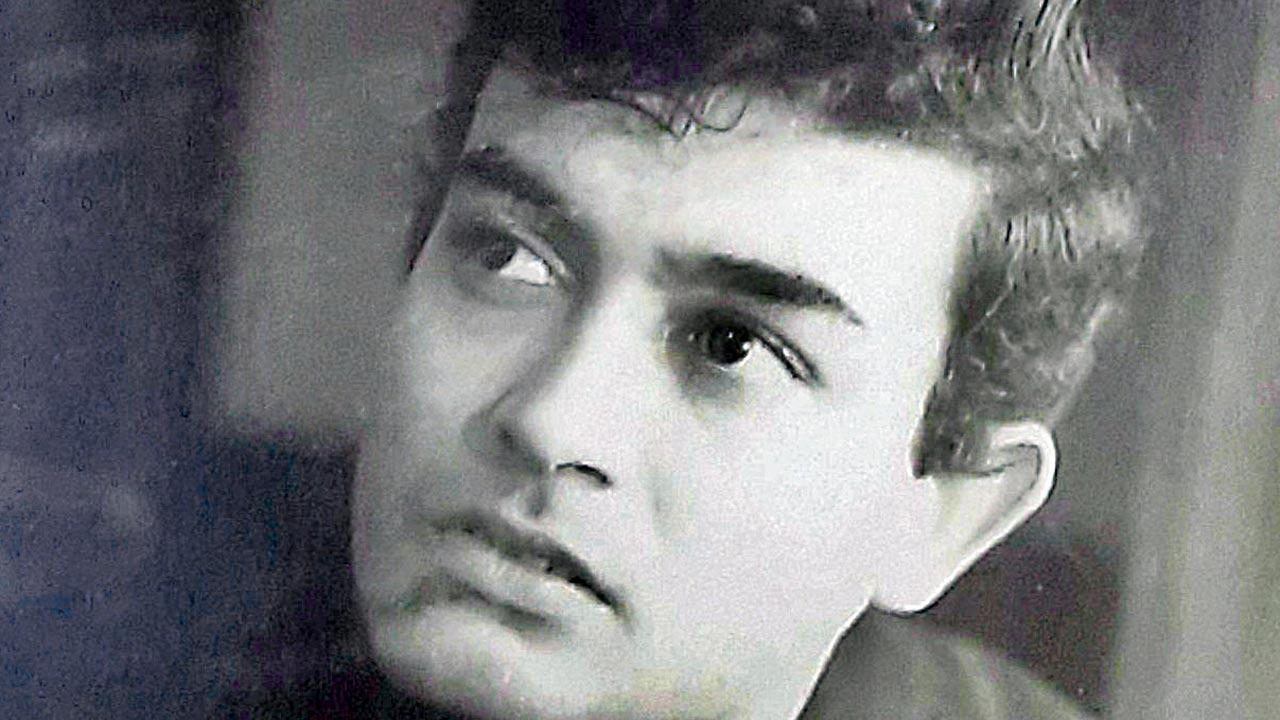
A pensive Hari. According to Paresh Rawal, he had the ideal actor’s face: plenty of space for expression and an excellent sense of proportion. PICS COURTESY/Sanjeev Kumar: The Actor We All Loved, HarperCollins India
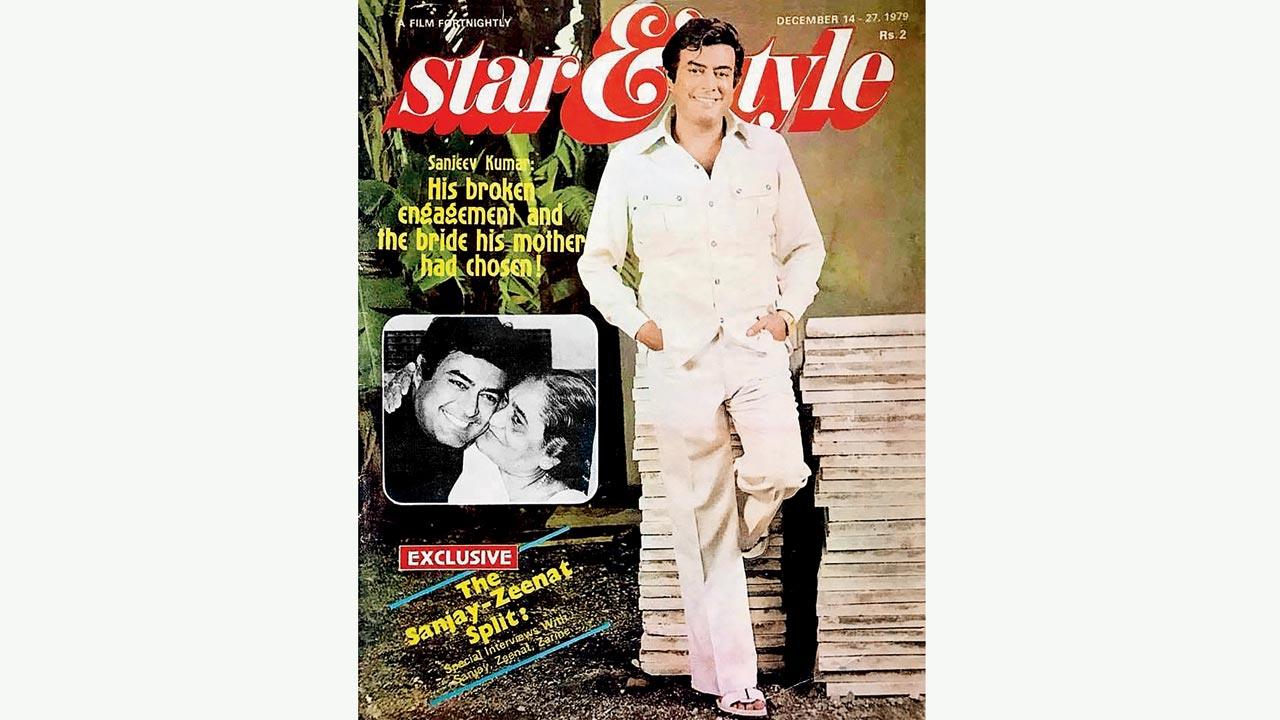
The great obsession of media, in those days, was to get Hari married. His relationships, marriage plans, Baa’s preferences, etc. were a hot selling point for the press. Courtesy/RJ Anirudh Chawla
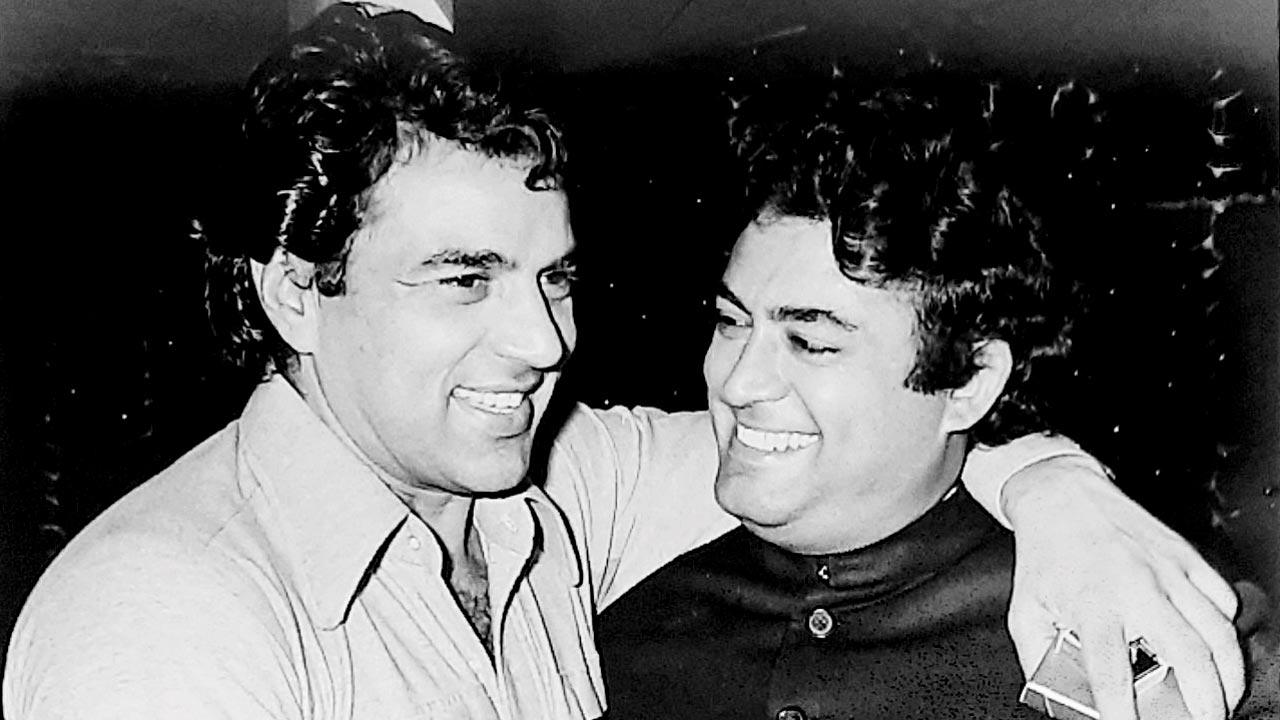
Hari seen here bonding with Dharmendra
Subscribe to:
Posts (Atom)