Showing posts with label Fandry. Show all posts
Showing posts with label Fandry. Show all posts
I sang and showed Payal Kapadia how people from Ratnagiri dance-Chhaya Kadam
10:50 AM

Determined to bag the role in All We Imagine As Light, actor Chhaya Kadam on how she listed out many similarities between her and the Ratnagiri-bred character to director Kapadia
Priyanka Sharma (MID-DAY; November 15, 2024)
Once in a while, an actor comes across a role that resonates so strongly with them that they almost become possessive about it. For Chhaya Kadam, director Payal Kapadia’s All We Imagine As Light gave her that role. The actor was so enamoured by the character of Parvaty that she pitched hard for it.
“At one point, I thought the role shouldn’t go to any other actor. So, I started listing out similarities between the character and me. I told Payal, ‘I am also from Ratnagiri. My father was a mill worker. We used to live in a MHADA building and now we live in a tower. Everything is the same between us.’ I even sang and showed her how people from Ratnagiri dance,” she laughs.
In the Cannes Grand Prix-winning film, Kadam plays a hospital staff member, who strikes an unlikely friendship with two nurses. She had complete faith in the story and in Kapadia’s vision. That it was the director’s maiden feature did not deter her.
She reasons, “For me, the most important part is my character, then the story. I started my career with Nagraj Manjule’s Fandry [2013], which was his debut. I feel first-time directors work very hard on their film.”
This may just be Kadam’s year. She began 2024 with Laapataa Ladies that saw her as the wise Manju mai, followed it up with Madgaon Express, and then had the Cannes win for All We Imagine As Light. The one thing common in all her outings is her characters’ feminist streak.
She reflects, “I always liked characters that felt like one of us. I enjoyed films that saw the hero defeating the goons with one punch, but they never felt real. I was drawn to Smita Patil and Shabana Azmi’s brand of cinema. Now, it has become a habit to do work that I enjoy, and if we can give a social message, then nothing like it.”
I wanted to work with Nagraj Manjule even before Sairat released-Riteish Deshmukh
8:17 AM

Riteish Deshmukh on doing a trilogy with the filmmaker, working with Tiger Shroff and staying away from action in their film
Himesh Mankad (MUMBAI MIRROR; February 26, 2020)
 After a negative turn in Marjaavaan, Riteish Deshmukh is returning to the marquee as one of the central characters in Baaghi 3. The actor is an unusual entrant in the Sajid Nadiadwala-produced series, which is fronted by Tiger Shroff and is known for action sequences. Conceding that he was surprised when the role came to him, Riteish says, “I knew what Nadiad was going to offer. When he asked me to listen to a story of two brothers and Ahmed (Khan, director) came over for a narration, I was game.”
The 41-year-old actor reveals that the dynamic between his and Tiger’s character is like that of a mother and son. “One is weak while the other is strong. My character may be the elder brother, but Tiger’s Ronnie behaves more like his mother,” Riteish smiles.
The larger-than-life action sequences were shot in Serbia, which is portrayed as Syria in the film. “I had seen huge sets while working on Housefull 4 but to be around blasts, five-six tankers, army guys and choppers was like being in a toy store,” gushes the actor. When asked if he felt the fear of missing out, since he doesn’t have adrenaline-pumping scenes like Tiger in the film, Riteish reasons, “Things are designed in a certain way. Besides, everyone can’t do everything. My job here wasn’t to do action.”
He has shared screen space with Tiger’s father, Jackie, in Housefull 3 but this is his first film with the former. “I share a close bond with Jaggu Dada. Tiger is disciplined, lovable and well brought-up,” he smiles.
 Next up for Riteish is a trilogy on Shivaji Maharaj, the Maratha warrior-king, which will be directed by Sairat filmmaker Nagraj Manjule. “A film on Chhatrapati Shivaji Maharaj is a big responsibility. We have to be true to real events as people respect this great personality. Hopefully, we will do justice to the subject,” he says.
The film goes on the floors this year. “I had wanted to work with Nagraj ever since I watched Fandry (the director’s debut film); this was before Sairat released. He, too, had wanted to make a film on Chhatrapati Shivaji Maharaj for a while. When we met, everything just fell in place,” the actor shares, adding that he will start prepping for the role soon.
Ritiesh hails his debut, Tujhe Meri Kasam (2003), as a gamechanger. “I have grown as an actor. In the early days, I was called ‘wooden’ and ‘furniture’. To get favourable reviews after that is a big deal,” he explains.
He has been a regular fixture in several franchises, including Masti, Kya Kool Hai Hum and Housefull. When asked to name one of his films that had the potential to be spun into a series, he says, “It has to be Bluffmaster. Once, Abhishek (Bachchan, co-star) and I had spoken to Rohan Sippy (director) to make part two, but some things are not meant to be.” And will there be Housefull 5 soon? “Akshay, Nadiad and I are already discussing Housefull 8,” he jokes.
Love Sonia has been a tough journey but definitely worth it-Tabrez Noorani
8:06 AM
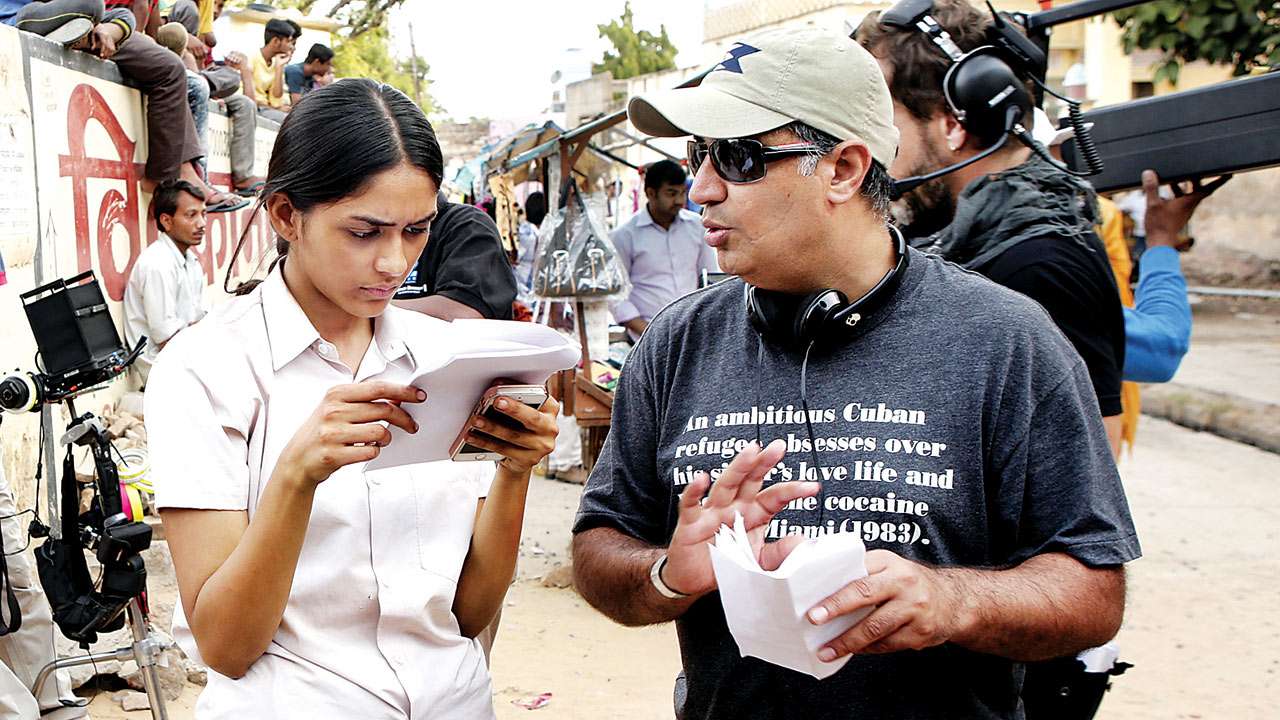
Dhaval Roy (DNA; September 15, 2018)
Love Sonia has just released in India and its director Tabrez Noorani is excited to bring the tale of human trafficking to a wider audience. “It’s like the line from Life of Pi (2012) — ‘The story’s yours now’. This one belongs to the viewers and I am making them a part of the journey that may not be an easy one,” he says. However, the Hollywood producer (Slumdog Millionaire, 2008; Eat Pray Love, 2010 and more) and now debutant director hopes that cinegoers will leave the cinema hall with hope and a ray of light after seeing the courage of the characters and real-life survivors. The filmmaker talks to us about the challenges of making the movie and more.
The idea of Love Sonia believably germinated in 2003 when you worked towards rehabilitating human trafficking victims. What took the film so long to make?
It’s taken a lot of time for various reasons — the tough topic, money, casting and not having stars attached to the project. We ran into a wall because there was no one to fund a movie about human trafficking at that point of time. We wanted to be in the business with the right people and not someone who would exploit the film. So, I refused to compromise and let someone milk the situation. We also had to be extremely careful that we were respectful to the victims and honest to the subject. After all, these were girls I have known and helped rehabilitate. So, it’s been a tough journey but definitely worth it.
Tell us about casting for the film...
I had to chase Richa Chadha and Manoj Bajpayee both. Richa didn’t know me from Adam and I refused to do a script narration because I don’t know what that means. I sent her a draft and she wanted to make sure that the one she read was the same that I would make. But once we started talking, she became more confident about me as a filmmaker and then she took the script to another level. I just got extremely lucky that everyone came on board.
Didn’t you feel the film was getting too delayed?
I’m glad I didn’t make this earlier because the research continued and I kept developing the characters. After the first season of Sense8, I decided to stop producing and focus on this project.
In spite of having produced a number of big Hollywood flicks, why didn’t you venture into direction earlier?
I wanted to debut with this film. I believe for your first outing you need to make something that you feel passionately about. I had other offers, but I felt anyone else could have directed those films but no one could have done this one.
With realistic cinema, filmmakers can often get self-indulgent. How did you ensure that didn’t happen with your movie?
Yeah, self-indulgence was one of the biggest concerns for me. And that’s why I had members of the NGOs as well as trafficked girls on the sets in Los Angeles, Hong Kong, and India. Survivors were also involved in the scripting and editing processes and we made a conscious effort to not exploit the exploited. Once both parties saw the film, it was a validation that we navigated the land very well.
With many so-called parallel films doing well in India these days, do you think it’s a good time for stories like Love Sonia?
Absolutely! I think the audience here has been more open to different kinds of films of late — more than they were, say, three to five years ago. India is making such fantastic cinema, whether it’s a large film like Padmaavat (2018) or a low-budget one like Titli (2014). People here want to go see Stree and a Gali Guleiyan releases at the same time, too.
Which films have impressed you of late?
I thought Titli was an outstanding movie. Udaan (2010), Masaan (2015), Anurag Kashyap’s works, and the Marathi film Fandry (2013) were quite impressive.
What’s next? Would one have to wait too long for another film from you?
Hopefully not. I’m working on two films and they will be very different from this one.
Apart from human trafficking, is there another cause you’d like to make a film on?
That’s an interesting question, but I haven’t thought about it. Anyway, this work won’t end after the release of the project. Trafficking is a massive problem all over the world and I can do anything to help tackle it — even if I have to disguise it in the form of a movie, I would do it because down the line, it will create awareness.
Hold the applause: Funding still a huge struggle for Marathi cinema
8:25 AM

Mithila Phadke (THE TIMES OF INDIA; April 19, 2015)
It was the little film that could. When
Shwaas opened in 2004, it was dubbed a “breath of fresh air“ for
Marathi cinema. Shot over a single month on a budget of Rs 65 lakh, by
first-time director Sandeep Sawant, it notched up glowing reviews and
several awards. The story of a little boy about to lose his sight to
cancer and a grandfather determined to show him as much of the world as
possible before the operation, stood apart from the bloated potboilers
that had become the norm.
“It drew people's attention to the Marathi film industry, and many offbeat films were made in the following years. Funding became a little easier, producers started thinking, Okay, so something like this can also work!'“ says film critic Ganesh Matkari.
Despite the tremendous buzz Shwaas had generated around alternate Marathi cinema, it took Sawant 10 years to make his second film. The problem: funding. Sawant and his wife Neeraja Patwardhan, the upcoming Nadi Vahate's costume designer, had to raise the budget of about Rs 4 crore themselves. They approached banks for loans, and dipped into their savings to add the rest.
 Finances
continue to remain a worry for independent filmmakers, despite the
rahrah for Marathi cinema every time a debut director manages to push
his film to the theatres, an actor turns producer or a corporate house
bankrolls a project. Not just Sawant, several other indie filmmakers
maintain that the much-talked-about groundswell of support for Marathi
films is actually very limited. “There is definitely a greater
interest in producing Marathi cinema today, especially the
content-driven kind,“ agrees Sawant. The problem,
he explains, is with the numbers.
Finances
continue to remain a worry for independent filmmakers, despite the
rahrah for Marathi cinema every time a debut director manages to push
his film to the theatres, an actor turns producer or a corporate house
bankrolls a project. Not just Sawant, several other indie filmmakers
maintain that the much-talked-about groundswell of support for Marathi
films is actually very limited. “There is definitely a greater
interest in producing Marathi cinema today, especially the
content-driven kind,“ agrees Sawant. The problem,
he explains, is with the numbers.
The Marathi film industry churns out close to 120 movies a year. These include the masala kind like Lai Bhaari and Timepass, and the offbeat, such as Fandry, Tingya and the just-released Court. Of these, not more than a dozen actually reach audiences, says Shivaji Patil, director of the acclaimed Dhag. “From this lot, maybe two or three will be offbeat, quality films. These are the ones that get talked about,“ Patil says, adding that for every Court and Fandry, there are several that go unnoticed. Or they win awards, but can't draw audiences due to meagre marketing budgets. “A Dhag, a Gandha - how many people saw them?“ asks Matkari.
When his father, the writer Ratnakar Matkari's novella was adapted for film in 2013 the team screened it for small groups from production houses like Essel Vision “They all loved it,“ says Matkari, associate director of the National Award-winning Investment. “But the matter didn't go any further.“
Financial support is relatively easier to get for middle of-the-road films like Coffee Ani Barach Kahi. “For the more serious, darker subjects production houses are hesitant.“ The budget tends to be a “safe“ one of Rs 1.5-2 crore so that the returns are assured Sawant says. His film Nadi Vahate, shot across villages in Goa and Sindhudurg, required a larger budget that producers were unwilling to provide.
Bhaurao Nanasaheb Karhade, 30, is well aware of the challenges. Earlier a farmer in Ahmednagar's Gawadewadi and then a communications student in Pune, he sold his five-acre plot of land back home to finance his film. He had approached “close to 40“ producers for Khwada, which is about a shepherd family that moves to the city. No one helped. But Karhade's family stood firm behind him, and the film, made on a budget of Rs 2 crore, snapped up two National Awards. “The first thing the companies think is business. And I don't blame them,“ he says. “But if I hadn't managed to find the money, the film would have never been made.“
Nikhil Sane, Business Head at Zee's Essel Vision, a leading producer and distributor of Marathi films, feels it's unfair to generalize. “How much support a production house gives its filmmakers and believes in the project - it depends on the company,“ he says. “We have produced films across the board--from Elizabeth Ekadashi to Timepass 2. If we were solely concerned with the returns, we wouldn't have taken on Fandry.“
The problem though, as producer Sanjay Chhabria from Everest Entertainment points out, is that there just aren't enough production houses. There are about three main players. “I can only do about 2 or 3 films in a year. We don't have the bandwidth to take on more,“ he says.
Directors Sunil Sukhtankar and Sumitra Bhave, makers of critically acclaimed films like Dahavi Fa and Astu, had approached production houses for five projects. “It's always been the same case,“ says Sukhtankar. “The artistic committee watches the film and they love it, they are moved to tears. Once it reaches the marketing department, things come to a grinding halt.“
“It drew people's attention to the Marathi film industry, and many offbeat films were made in the following years. Funding became a little easier, producers started thinking, Okay, so something like this can also work!'“ says film critic Ganesh Matkari.
Despite the tremendous buzz Shwaas had generated around alternate Marathi cinema, it took Sawant 10 years to make his second film. The problem: funding. Sawant and his wife Neeraja Patwardhan, the upcoming Nadi Vahate's costume designer, had to raise the budget of about Rs 4 crore themselves. They approached banks for loans, and dipped into their savings to add the rest.
Finances
continue to remain a worry for independent filmmakers, despite the
rahrah for Marathi cinema every time a debut director manages to push
his film to the theatres, an actor turns producer or a corporate house
bankrolls a project. Not just Sawant, several other indie filmmakers
maintain that the much-talked-about groundswell of support for Marathi
films is actually very limited. “There is definitely a greater
interest in producing Marathi cinema today, especially the
content-driven kind,“ agrees Sawant. The problem,
he explains, is with the numbers.The Marathi film industry churns out close to 120 movies a year. These include the masala kind like Lai Bhaari and Timepass, and the offbeat, such as Fandry, Tingya and the just-released Court. Of these, not more than a dozen actually reach audiences, says Shivaji Patil, director of the acclaimed Dhag. “From this lot, maybe two or three will be offbeat, quality films. These are the ones that get talked about,“ Patil says, adding that for every Court and Fandry, there are several that go unnoticed. Or they win awards, but can't draw audiences due to meagre marketing budgets. “A Dhag, a Gandha - how many people saw them?“ asks Matkari.
When his father, the writer Ratnakar Matkari's novella was adapted for film in 2013 the team screened it for small groups from production houses like Essel Vision “They all loved it,“ says Matkari, associate director of the National Award-winning Investment. “But the matter didn't go any further.“
Financial support is relatively easier to get for middle of-the-road films like Coffee Ani Barach Kahi. “For the more serious, darker subjects production houses are hesitant.“ The budget tends to be a “safe“ one of Rs 1.5-2 crore so that the returns are assured Sawant says. His film Nadi Vahate, shot across villages in Goa and Sindhudurg, required a larger budget that producers were unwilling to provide.
Bhaurao Nanasaheb Karhade, 30, is well aware of the challenges. Earlier a farmer in Ahmednagar's Gawadewadi and then a communications student in Pune, he sold his five-acre plot of land back home to finance his film. He had approached “close to 40“ producers for Khwada, which is about a shepherd family that moves to the city. No one helped. But Karhade's family stood firm behind him, and the film, made on a budget of Rs 2 crore, snapped up two National Awards. “The first thing the companies think is business. And I don't blame them,“ he says. “But if I hadn't managed to find the money, the film would have never been made.“
Nikhil Sane, Business Head at Zee's Essel Vision, a leading producer and distributor of Marathi films, feels it's unfair to generalize. “How much support a production house gives its filmmakers and believes in the project - it depends on the company,“ he says. “We have produced films across the board--from Elizabeth Ekadashi to Timepass 2. If we were solely concerned with the returns, we wouldn't have taken on Fandry.“
The problem though, as producer Sanjay Chhabria from Everest Entertainment points out, is that there just aren't enough production houses. There are about three main players. “I can only do about 2 or 3 films in a year. We don't have the bandwidth to take on more,“ he says.
Directors Sunil Sukhtankar and Sumitra Bhave, makers of critically acclaimed films like Dahavi Fa and Astu, had approached production houses for five projects. “It's always been the same case,“ says Sukhtankar. “The artistic committee watches the film and they love it, they are moved to tears. Once it reaches the marketing department, things come to a grinding halt.“
Mumbai Film Festival might not happen this year after the main sponsor pulls out
7:53 AM

Uncertainty shrouds the 16th edition of Mumbai Film Festival, as the main sponsor pulls out
Shakti Shetty (MID-DAY; September 1, 2014)
For a city that homes one of the biggest film industries on the planet, it’s quite ironical that its premier film festival is facing an existential crisis.
Mumbai Film Festival (MFF), organised by Mumbai Academy of Moving Image (MAMI), is scheduled to run from October 14 to October 21. However, that seems uncertain given the event hasn’t attracted any major sponsor for the first time since the turn of the century.
Reliance Entertainment backed the annual event for five straight years before deciding to pull the plug last year citing lack of profit. As a result, the celebrated film fest is struggling to raise an estimated amount of Rs 5 crore that is required for the function to take place. And so far, the crowdfunding measures have attracted an encouraging response from celebs and cinephiles on social media. But still, it’s a long journey ahead and time is running out.

Last year, the festival showcased over 200 films from more than 65 countries. In 2012, Anand Gandhi’s Ship of Theseus was screened at the festival, making its debut in the country. Later, it was not only shown but was also internationally feted at several film festivals. In fact, the directorial debut finally earned a commercial release last year. No wonder Gandhi is saddened by his favourite film festival’s current state of affairs. “It’s really hurtful. I don’t understand how the corporate structure doesn’t fit in with cinema in a country like ours where everybody likes to watch movies. To me, Reliance backing off is bottomline shameful. The company is way too big to say that it’s not making profit with the film festival,” adds the director.
Gandhi has a point because in the West, corporate involvement in international film festivals is commonplace. The mantra is simple: the corporate world can do with some visibility that cinema tends to offer on a plate.
Blame game
Regardless, it’s difficult to blame any one party for the issue. The argument doing the rounds is how the Hindi film industry, which boasts of Rs 100 crore blockbusters, can do a lot more to sustain a cultural event. Moreover, Rs 5 crore seems like a meager amount when you look at the extravagance that Bollywood is so used to. But then, the other side of argument is it’s not incumbent on film studios to help run a film festival.
The United States of America, which boasts of the most number of film festivals in the world, sticks to the corporate structure. However, organisers are generally headed by independent bodies — not film studios — who have the final say in everything, from which films are to be screened to who is going to win the awards.
Speaking of awards, out of its estimated budget, Mumbai Film Festival spent about a crore on handing out prize money to the competition winners.
Putting value
Filmmaker Rohan Sippy is a self-confessed fan of the Mumbai Film Festival. He fondly remembers the inaugural year of the fest. Back then, he assisted his father, filmmaker Ramesh Sippy, with the first edition. And he too disapproves of the dismal situation. “In an ideal world, sponsors would be queuing up considering the pull movies have in our day-to-day life. Unfortunately, that’s not happening.”
Early bloomers
To put it succinctly, the Mumbai Film Festival is not just about providing a week-long visual treat for the aam janta. Many a times, Indian filmmakers, whose works are appreciated worldwide, get a chance to showcase the same to the local crowd. For instance, Ashim Ahluwalia’s Miss Lovely won multiple awards, including Best Film in the India Gold category at the 14th Mumbai Film Festival. This happened a few months after his film was screened at the Cannes Film Festival.
Ashim talks about what might be the crux of the financial problem: “Whether it’s Cannes or Venice, money is a major ingredient but at the same time, patience is a priceless commodity, too. We ought to have patrons because it’s not just cinema we are talking about here. Culture is also a matter of concern, isn’t it? The corporate world doesn’t seem to understand this.”
Support base
Last year, The Lunchbox made a lot of headlines not only in India but also in foreign shores. Interestingly, the celebrated movie wasn’t screened at the Mumbai Film Festival.
However, the film’s leading actress, Nimrat Kaur, has been an regular attendee of the festival for quite some time now. “If it weren’t for this film festival, I would have missed out on some really good uncensored films. Of course, in today’s age, one can download to watch these acclaimed films but what can replace the thrill of watching them on the big screen?” asks the actress.

Regional fare
Some of the finest regional films have been showcased and appreciated at this fest. Last year, the Marathi feature film, Fandry, received a lot of accolades for its grim but honest portrayal of class divide. It was screened for the first time in India at this fest; later on, it won an award in the international film category as well. The film’s ensuing journey culminated with the film earning a commercial release this year on Valentine’s Day.
 Director Nagraj Manjule is hopeful that the 16th edition goes ahead as
per plan and manages to run with as fewer glitches. “Regional cinema
can flourish thanks to festivals such as these — it’s a boon, especially
for regional filmmakers. They watch and inculcate values and lessons
that will shape their thinking as filmmakers.”
Director Nagraj Manjule is hopeful that the 16th edition goes ahead as
per plan and manages to run with as fewer glitches. “Regional cinema
can flourish thanks to festivals such as these — it’s a boon, especially
for regional filmmakers. They watch and inculcate values and lessons
that will shape their thinking as filmmakers.”Umesh Kulkarni (right), whose films, Vihir (2009) and Deool (2011), were screened at the festival, agrees. “I hope the film festival goes ahead. It’d be a huge loss to the society; it’s not just about money. A festival nourishes both filmmakers as well as the audiences and you can’t put a price tag to that accomplishment,” he points out.
History repeats itself?
In 1998, the second edition of the festival couldn’t take place due to lack of funds. However, the event took place the following year and hasn’t skipped a single year since. “I hope they manage to pull it off this year. To me, it is more about the cultural pluses than the commercial minuses. The event needs patrons and sponsors, and if it works out, well and good. If they don’t, they should at least aim at coming back with a bang next year,” says filmmaker Rohan Sippy.
Fandry, Titli to be screened at Melbourne International Film Festival
8:46 AM

Agencies (MUMBAI MIRROR; July 15, 2014)
Eight independent Indian films will be screened during Melbourne International Film Festival (MIFF) 2014, which will be held from July 31st.
A total of 11 films from India will be screened in various sections of the festival this year.
The India In Flux section, will showcase films including Rajesh S Jala's Children of the Pyre, Rajesh Dhanraj's Invoking Justice, Anand Patwardhan's Jai Bhim Comrade, Ranu Ghosh's Quarter number 4/11, Ashim Ahluwalia's John & Jane, Farida Pacha's My Name is Salt and Avijit Mukul Kishore's Vertical City.
"Currently experiencing a prolific phase of production and circulation, this cinema is one of the best examples of truly independent filmmaking. India in Flux brings a selection of its most important films and filmmakers to Melbourne," said an official statement released by the festival.
Feature films picked for the festival include Marathi film Fandry, directed by Nagraj Munjale, which will be screened under Accent of Asia section, along with Kanu Behl's film Titli.
Marathi film The Fort (Killa), directed by Avinash Arun, has also been selected for screening in this year's festival which will end on August 17th.
Low-budget production, absence of star system doing wonders for Marathi cinema
8:50 AM

Urmimala Banerjee (MID-DAY; March 9, 2014)
It seems like a classic case of the tortoise and hare race. Even when Bollywood films are riding over claims of hundreds of crores, the Marathi film industry is quietly making quality films which are raking in substancial profits, thanks to relatively low cost of production. Marathi filmmaker Ravi Jadhav’s Timepass (above) raked in Rs 5 crore in its opening weekend.
Over a span of three weeks, it earned Rs 31 crore, breaking the Rs 25 crore record held by Duniyadari.
Close on the heels of Timepass came Fandry, a strikingly different film that grossed around Rs 2.25 crore in its first week. After wooing the regional audience, it’s the first Marathi film to be released across different Indian cities.
For the past two years, Marathi films have managed to catapault themselves to an enviable position, mainly due to their novel stories and engaging narratives. From social dramas to biopics and mass entertainers, creative ideas are blossoming. Young talented actors, directors and storytellers are finding the industry a great platform to showcase their talents. How is this transformation happening?
Cinematic renaissance
In the ’90s, the Marathi film industry was caught in a rut with every second film belonging to the slapstick comedy genre. It was Sandeep Sawant’s Shwaas that gave a new lease of life to the stagnating industry.
Filmmaker Mangesh Hadawale, who directed the critically acclaimed Tingya, explains, “ I found it tough to find a producer for my film till 2007. Umesh Kulkarni who made Deool is also greatly responsible for encouraging the new breed of directors. Marathi cinema had seen its heydays when filmmakers such as Amol Palekar and Dr Jabbar Patel made classics; this is the second innings.” Besides Shwaas, films like Deool and Shala also played a role in bringing about a transition. The period of 2009-2011 was a good one with films like Deool, Harishchandrachi Factory, Shala and Mi Shivajirao Bhosale Boltoy doing well at the ticket windows.
Director Sujay Dahake who is gearing up for the release of his film, Ajoba, made his directorial debut with Shala. He explains, “The film made on a budget of Rs 3 crore grossed around Rs 9 crore at the box office. It created a lot of buzz, as it starred rank newcomers and had foreign technicians. Plus, we got critical acclaim with the National Award.”
Culture comes to aid
Marathi literature has always been rich with its quota of amazing novels, short stories and poetry. The new generation of directors seems to be in sync with the cultural milieu and aspirations of the audience.
Jadhav says, “Our audience believes in a good story. This reflects in the casting as actors don’t choose films, it’s the films that choose them. Fandry is a prime example. It talks about the caste system through a love story. Marathi audience has a certain standard that comes with reading and watching theatre. When we made Balak Palak, we had to ensure that a family can watch it together without cringing. Even a commercial film like Timepass had a message that love is not a onquest or a matter of frivolity. The themes are universal, but our treatment is local.”
Dahake argues that the lack of content in Bollywood is helping Marathi films. He opines, “There is a huge revival in the art of story- telling. Modern directors want to explore new themes. Our audience has got a stimulation it missed sorely in the ’80s and ’90s.” Hadawale adds, “Our women love reading rather than attending kitty parties. We have to recognise their sensibilities.” It is this regard for content that has wowed the corporates as well.
Nitin Sane, head of the Marathi film division, Essel Vision says, “The content in Marathi film is better than Hindi ones. Also, our films are extremely rooted in our culture. Look at Kaksparsh, Natrang and now Fandry, all of them resonate with our people. As a corporate house, we believe in good subjects. While many producers would have avoided financing a project like Fandry after a superhit like Timepass, we thought otherwise. Our next film is a biopic on Yashwantrao Chavan, the first CM of Maharashtra.”
Zero star system
The absence of a star system in the industry is also being hailed as one of the reasons behind this renaissance.
Since there are no stars to take away a major chunk of the investment, films are made in much smaller budget. Since the budget is not much, many more risks are taken in terms of stories and scripts. Nagraj Popatrao Manjule, the director of Fandry says, “I did not have a target audience in mind before making the film. The idea was to tell a good story. When you have such a mindset, you don’t bother about stars or profitability. The focus is solely on correct casting.”
Unlike Bollywood, the Marathi film industry is devoid of camps, which makes it easier to take risks. “Present-day directors know their craft and are brave enough to experiment with what they think is right for their films. They have watched European and Iranian cinema and believe in good story- telling with everyday characters. The people who worked in the Laxmikant Berde-Ashok Saraf brand of cinema weren’t educated in the craft per se,” adds Hadawale.
However, Ravi Jadhav has a different take on this. “I think the commercial aspect is equally important as the creative one. I could make a film like Timepass without stars as it suited the subject. However, it was a good idea to cast Swapnil Joshi, Ankush Chaudhary and Sai Tamhankar in Duniyadari (below) as it was a mass youth-centric film. Tomorrow, if I make a big budget thriller, I will opt for a proper beefed-up hero. It’s too early to talk about a star system out here.”

Bollywood wakes up
A number of B-Town actors raved about Fandry after seeing the film. Riteish Deshmukh made profits as a producer after the success of Balak Palak. His next production venture is Yellow, the story of a swimming champion with Down’s Syndrome.
Akshay Kumar and Nikhil Advani too are producing Marathi films. Jadhav states, “I don’t think Bollywood stars think about profits when they invest in Marathi films. When they come here they want to promote stories they actually believe in. It’s nice to see people such as Akshay Kumar, Riteish and Nikhil investing in the industry. Their positive feedback is very crucial for us in reaching out to more people.” It is not just about production ventures, romantic films that are slowly disappearing from B-Town are finding their way in Marathi films
Dahake says, “Even two years earlier, the Marathi audience would prefer a Bollywood film over a Marathi one. I feel that the romantic films of the ’90s in Bollywood are making a comeback in Marathi with varied treatments. The young audience relates to the depiction of love in Hindi films. Perhaps, that’s why films on love and marriage are finding takers.”
Money matters
The minimum investment in a Marathi film is Rs 1 crore for a topnotch production. The minimum amount is Rs 60- 65 lakh. “The smaller films too have an audience in the rural areas. An amount invested in films is around Rs 2.5 crore which is just the production cost. The marketing costs an additional crore. Even if a film makes Rs 6-8 crore, it has recovered money,” states Dahake. When a Rs 2-3 crore film crosses Rs 30 crore, it’s great news for the industry. “A film like Fandry even if it does not do great business, is good as it brings appreciation for Marathi cinema. Out of 120 films it’s only 10 that do really well,” says Jadhav.
Nitin Datar, exhibitor and distributor says, “Out of the 80 films released last year, 95 per cent made losses. Only five per cent were successful. The minimum investment is Rs 40 lakh. There are some who make films just to get government subsidy. Many first-time producers have incurred greater costs due to inexperience.”
Marketing magic
According to Datar, the publicity costs have gone higher. Many spend more on artistes and less on the quality of films. “With promotions across TV channels and newspapers across 35 districts of Maharashtra, costs have shot up,” says Datar. Sane stresses, “We have tried our best to promote films like Fandry. As a channel, we like to encourage new and upcoming talent. In terms of marketing, we have a long way to go.”
Government support
Jadhav says, “I can’t speak much about subsidy. But it’s good that they are starting studios in Malvan and Kolhapur. State awards are very important for us. They also give Rs 1 lakh cash reward. The entertainment tax exemption is also important in bringing in more people to the theatres.”

A scene from Sujay Dahake’s upcoming film 'Ajoba' that talks about the journey of a leopard from Malshej Ghat to Mumbai - See more at: http://www.mid-day.com/articles/why-marathi-films-are-not-small-fry-anymore/15145060#sthash.SFlvasNz.dpuf
Mumbai moviegoers queing up for Marathi cinema at theatres
11:31 AM

From witnessing its best haul at the 59th National Awards to Fandry drawing in the crowds beyond traditional audiences, Marathi cinema is breaking barriers, especially in terms of language
Kanika Sharma (MID-DAY; March 5, 2014)
Marathi cinema has always had it heavy on its shoulders, especially when the precedent of such a legacy is Dadasaheb Phalke. Though decked with illustrious names, Marathi films have had it tough since the 1980s as Maharashtrian audiences were the only ones who turned up, despite government support. This wasn’t the case earlier, Kapil Bhopatkar, owner of Bharatmata Cinema, tells us, “Marathi cinema has had many downturns. First, with the arrival of the videocassette recorder (VCR), cinema hall audiences became uncertain. Then, satellite television, followed by local Marathi channels and Marathi theatre, posed problems.” Bharatmata Cinema, one of the last surviving single- screen cinema halls in Mumbai, established in 1941, serves as a reminder of the times when Marathi cinema had queues of cinegoers snaking pavements. Bhopatkar claims that even Gujaratis, Marwaris and Parsis would watch the cinema during those days.

Audience applause
“In the last two/two-and-a-half years, there has been an upsurge in the screening and success of Marathi films. We’ve had films that open with three shows on a Friday and midweek become nine to cater to the increasing interest,” informs Kamal Gianchandani, president of PVR Cinemas.
 Evident of a change, Nagraj Popatrao Manjule’s Fandry that won
the Grand Jury Prize at the Mumbai Film Festival was released in unusual
places such as Kolkata, Indore, Chennai and Baroda.
Evident of a change, Nagraj Popatrao Manjule’s Fandry that won
the Grand Jury Prize at the Mumbai Film Festival was released in unusual
places such as Kolkata, Indore, Chennai and Baroda.The actual game changer can be traced to 2004, in the film, Shwaas that triggered the dwindling number of films being made in the industry from 14 to 100 and more. “Marathi audiences have always been used to reading literature, so they appreciate quality,” maintains Bhopatkar.
Mixing it up
“Recently, I watched Duniyadari,” says 21-year-old Sachin Dhivar, who was not attracted to Marathi films as “there was no fun in them” till some time ago. Yet he regards the 2013 blockbuster as an eyeopener which he found as “ advanced”. Sachin Khedekar, a Marathi actor who has marked his presence in both Hindi and Marathi films, gives the expert’s lowdown on this recent development: “If you look at the last five years, none of the films can be said to belong to a single genre.” He adds, “They are all sorts — historical, comical and social.” Naming a few, he shares Kaksparsh, Duniyadari, and Balak Palak.
Raking in the moolah

Since Shwaas, which only had word-of- mouth publicity; Manjule’s Fandry is being promoted by the who’s who of Bollywood including Kiran Rao and Rakeysh Omprakash Mehra. As of today, an average Marathi film is being made for Rs 1.5 crore. Bhopatkar still feels that the market for Marathi cinema is almost unexplored and has the potential to give tough competition to Bollywood.

How Shwaas broke new ground
“The budget of Shwaas was only Rs 65 lakh,” reveals Sandeep Sawant, its director, adding that the idea was to take up a fresh subject and take the risk of making something different, as the film was based on a grandfather-grandson relationship. With Shwaas, after a long period, a good film was seen that led to more filmmakers making radical films. Shwaas indeed broke the ceiling, as it was not only India’s official entry to the Academy Awards but also the first Marathi film in 50 years to win a National Award. Since then, there has been a change in the subjects of the films and target audiences that now focus on the youth, shares Bharatmata Cinema owner, Kapil Bhopatkar.
>> Fandry’s net collection at the Box Office so far has been Rs 2.35 cr, according to its director Nagraj Manjule.
>> Duniyadari ran for 15 weeks superseding any Bollywood film’s record.
>> Duniyadari was viewed by 4.6 lakh people at PVR and did a business of Rs 3.6 crore while Timepass had about a 6-lakh viewership at PVR and raked in 5.04 crore at the same venue
Fandry based on real-life experiences of director
9:37 AM

Jyoti Punwani (MUMBAI MIRROR; March 2, 2014)
Nagraj Popatrao Manjule hated studying, and would have dropped out of school just like his younger brother if it hadn’t been for his strict father.
The eldest of four brothers, Manjule somehow made it to Std X, but the Board exams proved a challenge. Conditions at home weren’t conducive — the absence of electricity and a literate person to help him cope, made it worse.

This is the man whose first feature film, Fandry has collected a barrage of awards at international festivals, including the 15th Mumbai Film Festival’s Jury Grand prize. One of the many reasons the Marathi film about the plight of Dalits in rural Maharashtra hits you hard is that everything it depicts in this subtly-told tale of dreams and the dead-end they meet, was experienced first-hand by its director. Like his young hero Jabya, who comes from a family of pig catchers and spends the length of the film looking for a black sparrow to earn the love of an upper-caste girl, Manjule too had to help his father in a caste-determined profession. Ashamed, he’d visit neighbouring villages to crush stone, lay boulders and build homes.
Like Jabya who loves Shalu, Nagraj harboured a crush on an upper-caste schoolmate, and while his hero only dreams of sprinkling her with the ash of a burnt sparrow to win her over, Manjule actually did it. The slap she gave him made him forswear black magic forever.
Although caste didn’t bludgeon him the way it did Jabya, it was omnipresent. Sure, he could enter his ‘upper caste’ friends’ kitchens to drink water, but he knew this was possible only when their parents were out. They didn’t ever stop him; it was just understood that “there was a limit we couldn’t cross. My father too made sure we knew our place,’’ recalls Manjule.
This constant awareness of who he was, robbed him of his self-confidence. Fortunately, the complex didn’t prevent him from landing an MA in Marathi literature. With nothing to do after he failed the SSC exam, Manjule discovered the joys of reading and, determined to explore this new world, re-appeared for his Boards and made it to college.
But there was little in conventional literature that he could relate to; the stories about impoverished villagers written by upper-caste, urban writers who had never dirtied their hands in the sludge of village life, seemed superficial. As a child, listening to his father narrate stories from the Ramayana, he identified more with the dark, ugly rakshasas than with a fair, handsome Ram. And though he loved watching Hindi films, after a while, he grew tired of the luxurious lifestyle they depicted.
He knew that the dark, average looks of Fandry’s hero could put his viewers off, but “in the end, his character, his innocence would surely change their attitude.’’
Except for Kishore Kadam, who plays Jabya’s father, the rest of the cast is made up of villagers. His hero, also a Dalit, had to be coaxed into acting. He was afraid he couldn’t do it — the diffidence that Manjule was so familiar with. Manjule feels nonactors are ‘purer’ in their acting than professional performers, devoid of pre-conceived ideas of how a role must be interpreted. The sensitive, raw performances in Fandry are a testimony to that belief.
Subscribe to:
Posts (Atom)