Showing posts with label Fan. Show all posts
Showing posts with label Fan. Show all posts
Jabra Fan case: A film’s trailer is not an offer or a promise, only to create buzz, says Supreme Court
10:36 PM

The SC rules in favour of Yash Raj Films; no penalty on YRF for not including Jabra song in the 2016 Shah Rukh Khan-starrer Fan
Niharika Lal (BOMBAY TIMES; April 24, 2024)
On Monday, the Supreme Court said in a judgment that a film trailer is not an offer or a promise. A producer cannot be held liable for unfair trade practice if the contents of the promo do not feature in the actual movie. “A song, dialogue, or a short visual in a promotional trailer may be seen in the context of the multifarious uses of advertisements. These could be used to popularise or to create a buzz about the release of the film, rather than to purely represent information about the contents of the film,” a Bench headed by Justice PS Narasimha observed.
The SC held that there’s no deficiency in service because what was alleged in the complaint arose out of the complainant’s own expectation that the song would be a part of the movie.
“The fallacy in this argument is in assuming that a promotional trailer is an offer or a promise. It is under this misplaced assumption that the complainant has assumed that the subsequent formation of a contract to watch the movie is not in compliance with the promise allegedly made through the promotional trailer.”
The Court observed that promo trailer not shown in the movie don’t amount to Unfair Trade Practice.
The background
The SC judgment on Monday set aside a 2017 NCDRC (National Consumer Disputes Redressal Commission) order, directing Yash Raj Films to pay Rs. 10,000 as compensation besides litigation costs to a moviegoer who complained that she was cheated and deceived because Jabra song which was shown in the trailer of the Shah Rukh Khan-starrer Fan was not shown in the film.
What did the SC judgment say?
In his order, Justice P S Narasimha said, "A promotional trailer is unilateral. It is only meant to encourage a viewer to purchase the ticket to the movie, which is an independent transaction and contract from the promotional trailer. A promotional trailer by itself is not an offer and neither intends to nor can create a constructual relationship. Since the promotional trailer is not an offer, there is no possibility of it becoming a promise. Therefore, there is no offer, much less a contract, between the appellant and the complainant to the effect that the song contained in the trailer would be played in the movie and if not played, it will amount to deficiency in the service."
Shah Rukh Khan looked me and whispered, 'Mashallah, so beautiful'-Shriya Pilgaonkar
8:48 AM
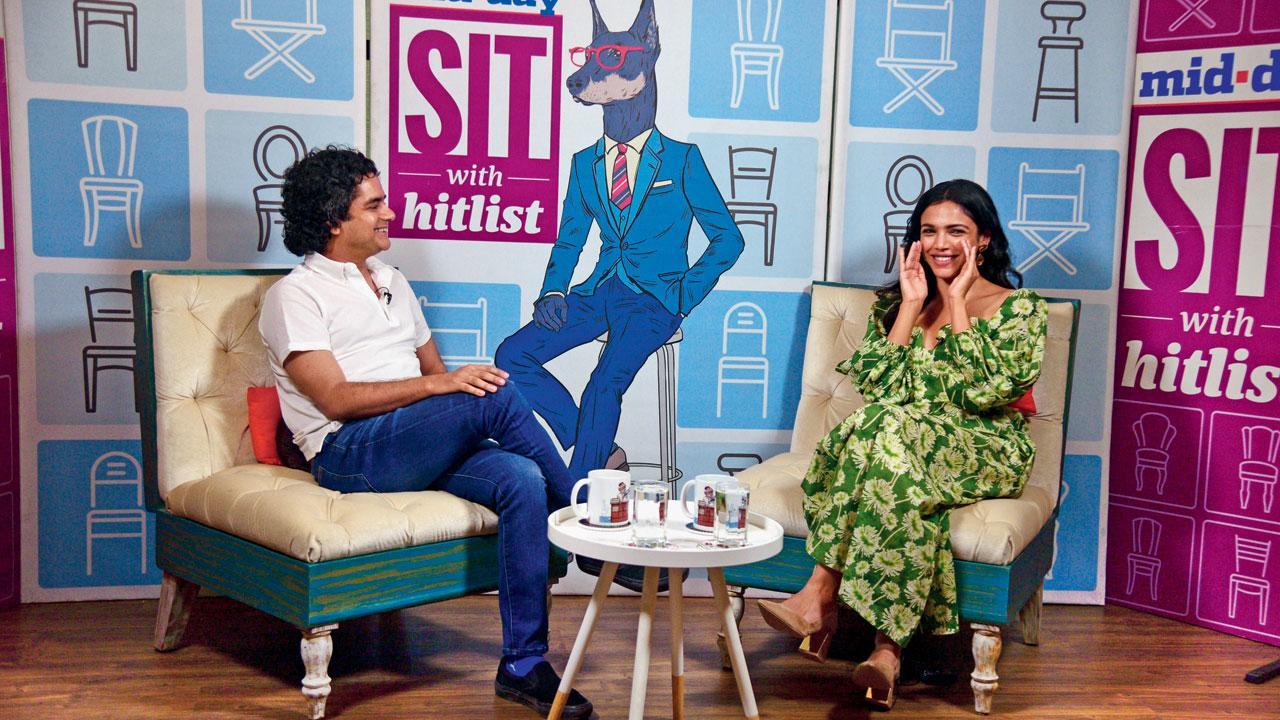
Shriya Pilgaonkar with mid-day’s entertainment editor Mayank Shekhar at the latest edition of Sit with Hitlist
Walking into Hitlist OTT Awards with two Best Actor: Series nominations, Shriya Pilgaonkar reflects on the shows that put her on the map
Mayank Shekhar (MID-DAY; February 18, 2023)
Serendipity, I suspect, plays the starring role in most lives. But it’s something we kept going back to, over an hour-long conversation with actor Shriya Pilgaonkar, 33, who’s legitimately an OTT star in her own right, and has been a film buff forever. Enough to bleed her eyes bingeing on five back-to-back films on the big screen at Mumbai’s MAMI festival.
One of which was The Artist (2011) — i.e. before the French tour de force became the toast at the Oscars, and indeed before Shriya was an actor herself.
There is a strange connect she felt with the film’s lead actor Jean Dujardin on the screen, which went beyond the fact that she obviously found him attractive. She told her mother about it later, and ‘journaled’ it at night — about being inexplicably drawn towards this man.
“Cut to,” Shriya says — as all readers of screenplays are prone to narrate their anecdotes — she had cracked an audition for a part, that turned out to be for a French production, set in India, starring Dujardin.
Likewise, before she took up acting as a profession, like many film aspirants, Shriya was assisting a director, Megha Ramaswamy, on a short film, being shot at the Yash Raj Films’ (YRF) studio, where Shah Rukh Khan was shooting as well. Ramaswamy, also Chak De! India director Shimit Amin’s wife, knew SRK, and introduced Shriya to the superstar.
The nation’s charmer number one, and the actor to have cornered all desi female hearts, looked at Shriya, whispered, “Mashallah, so beautiful!” At that moment, Shriya recalls, she died!
Cut to, 2015: There was a moment in Shriya’s life, when during the day, she was shooting with Dujardin, and at night, with SRK — for Maneesh Sharma’s YRF production, Fan (2016), her Bollywood debut.
How did the latter happen? With auditions over three months, where she was testing for multiple parts, and even sitting in for cues for other actors, hoping to be cast, at YRF. It was one such tape — that wasn’t hers, and so she was totally relaxed on the screen — that “Maneesh (director) and Adi Sir (Chopra, producer) saw,” and selected her.
“I like how all these stories happen late at night — I got a call from Shanoo Sharma (YRF’s casting director). I just went over to my parents’ room, told them I’ve been cast as Shah Rukh’s love-interest. And I just shut their door, without waiting for their reaction! Didn’t know what to say.”
The parents being Sachin, and Supriya Pilgaonkar. Both of whom are prominent, professional actors. She belongs to the third generation in the film industry. Shriya’s paternal grandfather, Sharad Pilgaonkar, who she never got to see, was a producer. That explains how Sachin himself started early as an actor in his father’s film — that paved his path as a career child-actor, Master Sachin, from thereon.
Sachin, 65, has been an actor for 60 years! Supriya debuted with the Marathi film Navri Mile Navriyala (1984), directed by Sachin. Shriya herself appeared as an infant in one of Sachin’s movies. She doesn’t remember which one: “He’s directed 21 films!”
Reversing movie history, if you may — since men played female parts on screen once — Shriya first spoke for the screen as a little boy, basically “kid with boy cut”, to say, “Aunty, mummy ne achaar mangaya hai!”
That was her cameo in the hit TV show, Tu Tu Main Main. Those of a certain vintage might instantly remember the sing-song way Tu Tu Main Main was said in the title sequence, after which director Sachin would yell, “Action”, before the episode started.
Shriya followed director Sachin’s instruction in her debut film, in Marathi, Ekulti Ek (2013), too — which fetched her Maharashtra government’s film award.
Given the self-sufficient family unit of filmies, one would assume Shriya as an actor is an obvious career move. And yet, when she’d taken up a part in a short play as a stage debut of sorts, her mother simply looked at the adult child, for where she was headed, and sighed: “How predictable.”
Until 14, Shriya was set to be a professional swimmer; her days centred on training for the sport that she was participating at the state-level: “The sportsperson’s is a tough life. Even in swimming, a difference in micro-seconds sets apart the winner from others. It consumes you.” She was training at Bandra’s Otters’ Club, and gave up on the sport, shortly after her coach passed away.
And it’s not like she had a Plan B, or any particular plan at all. As someone scoring high in class, she did what most over-achiever type kids do, in school, and later in college — everything. I learnt later that she was also the student-boss of Malhar, St Xavier’s College annual festival — it’s the kind of designation collegians, I notice, flaunt even on LinkedIn!
A big move she did make, Shriya admits, was actually the one that she did not — that is, to pursue her master’s at Columbia University, where she had secured admission. Columbia was her trying to postpone/evade the question about what she really wants to do next. Instead she enrolled in a film appreciation course at FTII, began acting in plays, directing short films, documentary, eventually auditioning for acting parts for movies.
That she is multi-talented could have a lot to do with her father Sachin. Best way to describe Sachin is as Rajshri Productions’ OG Prem. He was the lead in the super-hit Nadiya Ke Paar (1982), that got remade into Hum Aapke Hain Koun (1994), with Salman Khan.
Another way to describe Sachin is as a singer, writer, producer, director… Between her parents, Shriya rightly insists her father is the star — all about showmanship — while her mother is the ‘actor’, who can detach herself from her work as well.
What’s common between them is they can break a leg! For proof, the Pilgaonkar couple had famously won the maiden season of dance-reality show, Nach Baliye (2005), surprising many with their killer moves.
Which is also in common with the daughter, we learn. Shriya extensively trained in kathak, growing up — that, in fact, pretty much all Bollywood female actors do, at some point. As we speak, she’s finally put that talent to test in a “full dhamaal” song-and-dance routine, “for an unannounced film, produced by Emmay Entertainment.”
From her mother, Shriya says, she’s acquired ‘body-language’ as an important acting lesson. At some point in the conversation, she effectively shows us how her three well-known characters — lawyer Kashaf Quaze, from Guilty Minds (2022); journalist Radha Bhargava, from The Broken News (2022); sex-worker Madhubala, from Taaza Khabar (2023) — would sit, if they were in the same room.
And that’s self-awareness at the level of where the legs are placed, how the head moves, whether she is leaning-in (Kashaf), straight, and attentive (Radha), or totally carefree (Madhubala).
When she was offered the part of Sweety Gupta, on the other hand — a girl from the hardcore, Hindi heartland, namely Mirzapur, meaning Uttar Pradesh (UP) — an advice/warning she got was not to come across as the Maharashtrian girl that she is.
This is where her dad would’ve been the inspiration: “Unki zubaan bahut saaf hai (he has clear diction). One thing he told me is to always master the dialect, before you play any part.”
Sweety is as UP as they get. Shriya jokes people have come up to Sachin to suggest he couldn’t be Sweety Gupta ke papa. It’s this role of Guddu Bhaiya’s girlfriend in Mirzapur, she admits, that gave her “the taste of pan-India fame. Till today, there’s the Sweety-love everywhere I go, and I love that,” although her character died in the first season of Mirzapur (2018).
Guilty Minds, though, she reckons, is what brought her “critical appreciation” as an actor; she came into her own. There is some serendipity here too. In the sense that dad Sachin, all her life, she tells me, had wished to play a lawyer. It’s never happened. He’s drawn to law as a hobby as well — reads books, goes through minutiae of contracts, etc.
It’s Shriya who got to dive deep into the world in ways that Indian screen hasn’t before. In terms of movies, Chaitanya Tamhane’s Court (2015) was a masterpiece on India’s legal system. Shriya agrees. That apart, for long-form content, the realism and authenticity of Guilty Minds is refreshingly first-rate.
Much of it comes from the series creator, Shefali Bhushan, daughter of prominent jurist, ex law minister of India, Shanti Bhushan; sister of top lawyer and activist, Prashant Bhushan. Can’t get more insider than that!
The writing was such, Shriya recalls, that there is a scene in the show, where her character Kashaf, and her team, along with the opposing lawyers, are in a village, fighting against a power plant coming up, that will wreck lives of locals.
Somehow, while performing that (third episode’s) monologue, detailing the human cost of development, Shriya broke down on the shoulders of Sugandha Garg (co-actor), after the director called cut: “I felt something. Maybe the line between the actor and character broke.”
As an actor, she says, she actively practices an attachment-detachment relationship with her work, given that the outcome, in terms of success, is out of everyone’s hands. But it’s hard to pretend you don’t care, after all the effort that’s gone in.
Going back to her journal that night after Guilty Minds shoot, she wrote about what she had experienced doing the emotional scene. And that it doesn’t matter how the show is received, in terms of numbers of reviewers’ nods — this is something special that will stay, regardless.
The Broken News, likewise, enters the world of television journalism, with Shriya’s character at the centre of the newsroom, navigating nuances, if not serious dilemmas of this profession. The apprehension, Shriya confesses, about being typecast as this everyday/important professional, did cross her mind.
“Even my friends say which profession is left to play? But that’s not the point. Even among lawyers or journalists, there are different types.” To prep for her part of a reporter, she in fact spoke to (mainly former) journalists on how they’d respond to life’s choices, rather than intricacies of the newsroom itself.
Not be an ‘ageist’ about it — I’m an old man myself — but there is a rejuvenating aspect to hosting long chats with younger guests, as they delve into their early experiences. The memories are firstly fresh, rather than jaded from having gone through these same interviews/questions, over years. Shriya is one of the youngest to feature on the Sit with Hitlist series of conversations, before a live audience.
Also, you can probe — without, hopefully, coming across as a nosey uncle — on random fun stuff, like her favourite drunken story? Involved lots of wine, during the India-Pakistan match, at Melbourne Cricket Grounds — she had to keep drinking, because once India scored, you’re supposed to stay put in the same position, and repeat exactly what you were doing before!
Or how about check on important issues, like who’s she dating? Well, this chat took place on Feb 13. She said she didn’t have a date for Feb 14. So I’m guessing she’s single. Although she’ll be happy, she mentioned, if she somebody made a plan. If you search for this chat on YouTube, we’ve left her number there (of course, I’m kidding).
Most elementally though, the fact of a young star is you’re catching them on the curve. There’s so much to look ahead. I had looked up Shriya’s TEDx talk, from 2019, and already her professional life has transformed enough to render that talk premature. As would be this interview.
Considered the past year alone for Shriya — The Broken News on ZEE5, Guilty Minds on Amazon Prime Video, Taaza Khabar (2023) on Disney+ Hotstar — you can’t escape on her on OTT.
So much so that there’s stuff of hers on other platforms that I haven’t had the chance to catch: new season of The Gone Game on Voot, a show called Murder In Agonda on Amazon Mini? She’s the only actor to be nominated twice for Best Lead (Female) at the Hitlist OTT Awards.
The first time most Indians, including me, saw Shriya on screen was, of course, in Fan. I kept wondering where I’d met her before. It was at a party in Pune, when she wasn’t an actor, and she was pissed with movie critics, in general. I reasoned that film reviewing was indeed a low form of writing, because it often lacked empathy.
“At that time obviously I didn’t know I was going to be an actor, and that I’d have to change my opinion on critics,” Shriya laughs, pointing out that what had irked her after Fan were actually reviews that didn’t mention her at all.
Which is fair. Indifference is the opposite of love, not hate. While the film was a YRF production, starring SRK, it wasn’t exactly the proverbial launch vehicle, associated with star-kids. In this case, Sachin’s daughter.
Shriya says, “[There are star] children, who get papped, groomed, branded, for two years, before they come as movie stars [on screen]. I didn’t want to be on a magazine cover, even before I was an actor.” That’s also Instagram all right.
But the actual scene among screen talents has changed too dramatically to count on tested measures. And is it even about Bollywood anymore, as one supposes?
Look at the galazy of stars getting created in the OTT space, starting with Shriya, for instance. It’s a medium that isn’t ‘television’ enough for actors to surrender their identity to their character, that carries on playing itself, over hundreds of episodes!
Although exhibiting similar aesthetics, it isn’t exactly film, that is centred on the male lead, hustling over box-office returns. Let alone conversations on nepotism for debutants.
“Every role I’ve got is through passing an audition,” Shriya reveals, on the real serendipity surrounding her — right talent, at the right time. It’s like being an actor with a great voice, just when silent films have given way to talkies!
Cast your vote for the Hitlist OTT Awards
Shriya Pilgaonkar has been nominated in the Best Actor (Female): Series category for Guilty Minds and The Broken News.
The other nominees are:
- Amruta Subhash (Saas Bahu Achaar Pvt Ltd)
- Fatima Sana Shaikh (Modern Love Mumbai)
- Huma Qureshi (Maharani S02)
- Masaba Gupta (Masaba Masaba S02)
- Sakshi Tanwar (Mai: A Mother’s Rage)
- Shefali Shah (Delhi Crime S02)
There are 16 categories that the public can vote in. Log on to www.radiocity.in/hitlistott to cast your vote.
Voting lines close on February 22.
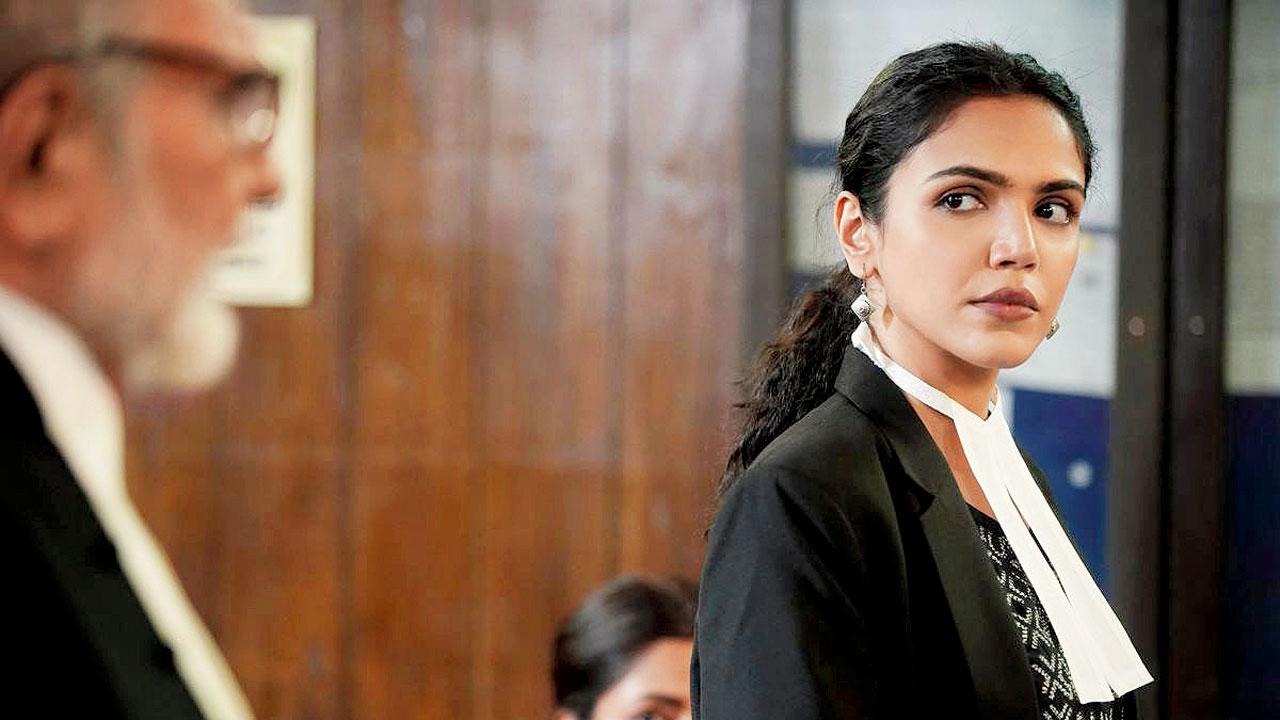
A still from Guilty Minds. Pics/Ashish Raje
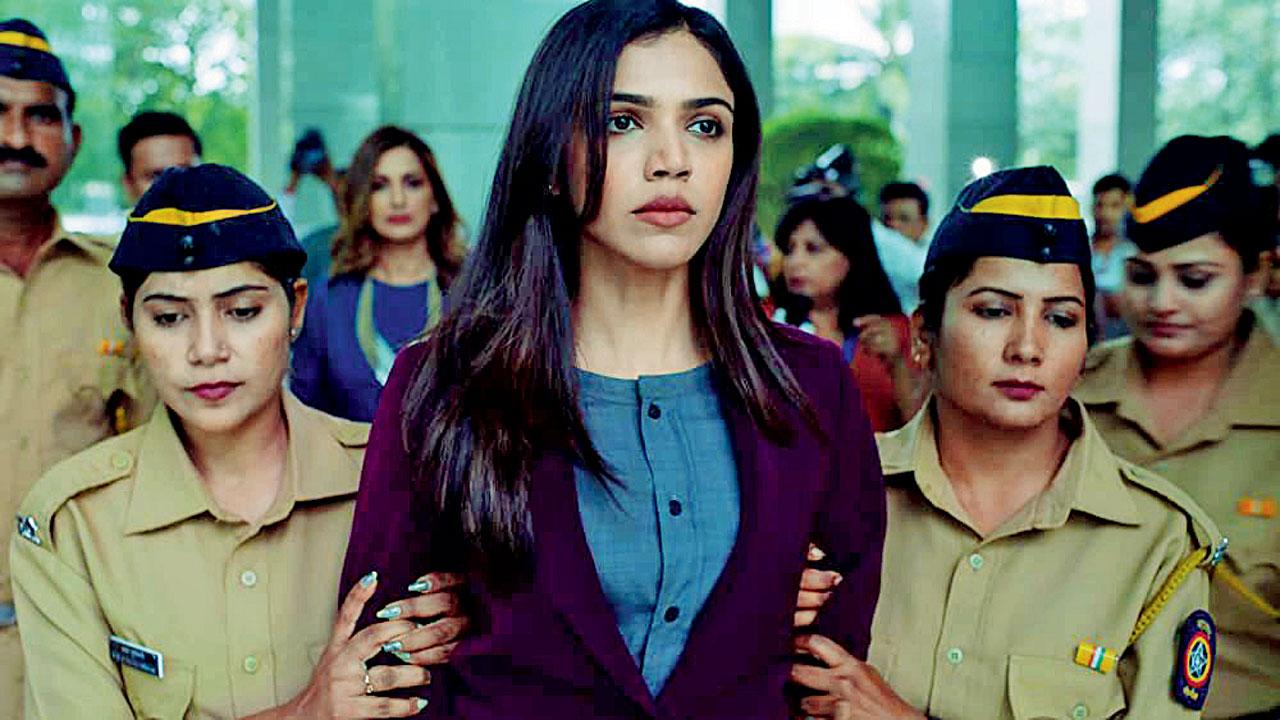
Shriya Pilgaonkar in The Broken News
I realized the women were no longer talking about Shah Rukh Khan. They were using him as a metaphor-Shrayana Bhattacharya
8:57 AM
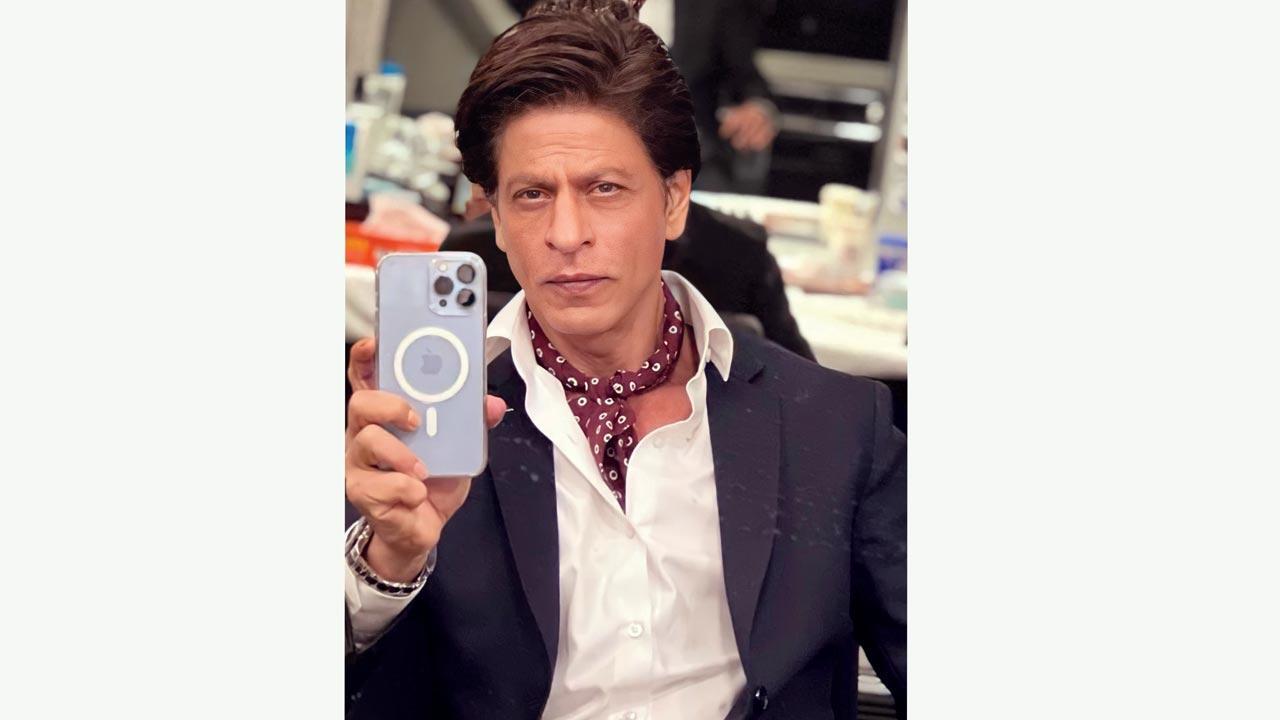
Thirty years after the Hindi film industry welcomed SRK into the movies, his legacy shines on. A social scientist, a documentary filmmaker, and his biggest fan deconstruct the myth and madness of Bollywood’s baadshah
Jane Borges (MID-DAY; July 3, 2022)
On our table at the Aquarius poolside restaurant of The Taj Mahal Palace Hotel, actor Shah Rukh Khan dominates the conversation. Writer-economist Shrayana Bhattacharya, who we are here to meet, teases the mid-day photographer, “Please, take good pictures… you never know, Shah Rukh might see.”
It’s been over half a year since her book Desperately Seeking Shah Rukh—already a bestseller—made it to bookshelves, and just about two months since her fortuitous visit to Mannat to meet the incidental subject of her book. “I am very happy to report that I didn’t faint. He is really presidential,” she shares.
On June 25, when Khan, Bollywood’s undisputed Baadshah, completed 30 years in the movies, Bhattacharya was among those who celebrated it with her two bits on social media: “An artist whose images and interviews changed the way I approach economics, writing, social science research, gender studies and myself. He is more than a ‘star’, he is a universe of concepts and meaning,” she wrote, with the hashtag #pictureabhibaakihain.
Bhattacharya tells us now, how she dislikes words like “star-struck”—often used callously for the actor’s admirers—to describe her work as a social scientist. “I am too ordinary a fan,” she confesses. What she was purely interested in, is telling the story of “what happened to women in post-liberalisation India”. “India is one of the few countries where as we have grown [economically], women’s employment drastically declined. Today, we are at the bottom five [when it comes to women’s employment],” says Bhattacharya.
“I wanted the reader to understand data, the different explanations, the technical substance of it, but of course, I wanted to do it in a way which would not bore them to death. It had to be interesting and accessible, and I was very committed to that for a long period of time.” As luck would have it, SRK came into the picture.
Her research began in 2006, when she was working on projects for Self Employed Women’s Association (SEWA) and Institute of Social Studies Trust (ISST) in rural hamlets of Gujarat and Uttar Pradesh. While investigating questions “about their employment and working conditions” she sensed a disinterest on their part. After all, they had answered these questions so many times before, she says.
“In research, we are taught to employ different methods [to eke out information]... like ice breakers. So, I started asking people about their favourite actor, and lo and behold, everywhere I went, I met these giant Shah Rukh fans. The energy and enthusiasm when talking about your favourite actor is much more, when compared to talking about your economic circumstances, which honestly can be quite depressing. We live very harsh lives in India, at least most people. I decided I will give energy to that [the conversations about Khan],” she says.
Her pursuit was a revelation of sorts. “For the next six to seven years, as I was sent to different areas of the country, speaking to women fans about him, I realized the women were no longer talking about him. They were using him as a metaphor.”
Fandom, explains Bhattacharya, is not a “silly cultural activity”. “It actually is an economic activity… to follow the work of an artiste requires money, free time, access to markets, media, public space, and even a mobile phone. None of these things, women in India [especially in rural India], can claim with ease.”
She learnt along the way that one of the ways in which Khan’s Indian female fans “flexed their economic independence was to buy a movie ticket or a television set, so that they could star gaze at their favourite actor”. He became a means to articulate their autonomy. Not to mention, a benchmark to critique masculinity.
There is a line in her book that Bhattacharya harks back to: “As real men retreat, superstars gain more glory. An ideal man is found in fantasy. You scour the landscape of everyday life, but he is nowhere to be found.” The idea of Khan, the King of Romance as that “ideal” is what Indian women continue to celebrate even 30 years on.
Khan represents the softer, gentler kind of man, thinks Bhattacharya. Having had her own “heart smashed” in 2013, when she was in the midst of research, made her realise this more certainly than ever. “All the ordinary frustrations of not being seen and acknowledged, and all the labour that women are doing... [in Khan] they see a man who is acknowledging that, not just in his films, but also in his interviews. Through the interviews I conducted with the women, I realised that he is not just some silly celebrity crush... he is a well-thought out formulation of a man who helps in a kitchen, performs emotional labour, a man who accords a certain kind of dignity to women’s experiences, and the burdens our society places on us. He is a powerful icon not just because he is a remarkable personality of our contemporary age, or because so many people’s memories and life experiences are bound to him, but because he is a language. How many people become language?” she asks.
People’s love for Khan, argues Bhattacharya, is a serious social and cultural phenomena. Even his interviews to the media elicit emotion, she says, while narrating the experiences of her interviewees mentioned in her book. “When these women would feel lonely, they’d listen to his stories of loneliness and the struggles he had. And, they drew a lot of solidarity from that.”
Back in 2005, documentary filmmaker, TV producer and author Nasreen Munni Kabir and Peter Chappell gave fans a peak into the life of their most admired icon in a two-part film, The Inner And Outer World of Shah Rukh Khan. The documentary, in a first, showed us Khan, beyond the veneer of his stardom—the family man, diligent actor and live performer, committed smoker, who was dealing with the tragedy of losing his parents at an early age, and fighting the insecurities that came with success. Kabir, who is now in London, says that since 1988-89, she had been documenting a number of film personalities. “My choice for my documentaries were those who in my view were history makers and left an imprint on the industry.”
Khan then was at the peak of his career with blockbusters like Dilwale Dulhaniya Le Jayenge, Dil To Pagal Hain, Kuch Kuch Hota Hai and Kal Ho Naa Ho under his belt. “This was the time before Facebook, Twitter or Instagram, so your connection with the stars was still quite fictionalized. To see someone [like him] in their daily life, came as a revelation.”
During the nine weeks she spent with him, Kabir saw a side of Khan, which was humbling—and that directly translated into how he came across in front of the camera. “He was a natural. He allowed you to film him, and was never really pretentious,” she remembers. “He was not vain. An actor, who is in front of the camera, would be constantly fiddling with his hair or checking himself out in the mirror... he was utterly the opposite of that. That was also the most endearing quality about him.”
Kabir says when you interview Khan, you realise that “he is, who he is”. “And when he is with you, he is completely there. That particular capacity of being totally present, even in a fictional film, makes him so relatable.” That he is also intelligent means that he can analyse himself and his craft with great clarity.
Kabir admits that it is impossible to make an absolutely objective film about anyone, leave alone Khan, but the attempt here, was to understand what he meant to people. She remembers the time when she and Chappell went with the actor to New Delhi, where he visited the grave of his parents. “Even there, in the graveyard, he had all these people following him. They really didn’t think about that moment he needed with the memory of his parents. Peter and I, however, were at quite a distance from the grave. We chose a wide shot [to give him privacy]. I remember he said something very nice after that; he said, ‘you are not greedy. You could have been up my nose, but you chose to keep a distance’.”
To understand the reason why Khan continues to be loved among fans, Kabir says, you must go back to the 1990s, when the romantic hero was adored across generations. “Stardom doesn’t come before the films. The films [of the actor] have to match up first, and have to be lived by the fans for a certain number of years, before this actor is proclaimed a star.”
In that, Khan had proved himself ably. “But there are some stars whose stardom is set in stone. So whether, the last film or the last two films are popular or not, nobody can shift them from their position. Shah Rukh is a bit like that... fans still have an attachment to him. He has become bigger than his films.”
Khan’s biggest fan, arguably, is Vishahrukh Singh of Lucknow. Vishahrukh’s fandom is both personal and public. He has christened his home Shah Rukh Palace, and his children, Simran and Aryan. His own birth name is Vishal, but he chose to keep Vishahrukh after director Subhash Ghai, who happened to see him on the set of Pardes, suggested that he take on the name of his favourite actor.
“My love for Shah Rukh ji only keeps growing,” he tells us over a video call. He is wearing a black T-shirt which has Khan’s name printed on it, and his brown hair is neatly parted in the middle, with strands inching close to his aviator glasses. It’s a “’90s SRK hangover,” we admit. Vishahrukh first saw Khan on Doordarshan, when he won acclaim for his roles in Fauji and Circus. “But, it was his character in the film Deewana [1992] that caught my attention. I had installed a music system on my bike, and I’d play two songs from the film and roam around every day... just like Shah Rukh ji.”
After he got married, he and his wife Ruchi came to Mumbai to meet Khan. This was in 1996. “We didn’t even know how far Bandra was from Colaba, where we were lodged,” he remembers. At the time, Khan lived in Amrit Building on Carter Road. On someone’s suggestion, the couple even dined at the Taj Mahal Palace Hotel, as they were told that Khan visits a particular restaurant there after shooting. “We spent the entire evening there, and also incurred a huge bill, but Shah Rukh ji never came.”
Vishahrukh finally came face-to-face with the superstar days later—it involved hovering around his building daily and befriending the security guards. He recalls creating a ruckus, when he tried to run behind Khan’s car, as it entered the gates. “I was screaming and wailing like a lover-boy for his attention. He had already read a letter that I had sent through the guard, where I had mentioned that I’d jump into the sea, if he didn’t meet me. So, he knew about me. He got out of his car, hugged and spoke to me. I was so emotional, that he had to remind me to get my camera out and take a picture with him.”
His love for Khan, he says, has only grown over time. Vishahrukh has since met the actor on several occasions, and each time, Khan has obliged him and the family. “He addresses my wife as bhabhi. When the world’s biggest superstar says something like this, who will not fall in love with him.”
In 2004, when Khan brought his fans to tears with his stoic performance in Kal Ho Naa Ho, where he is seen fighting a terminal heart condition, Vishahrukh was himself battling cancer. “I had bought the home I called Shah Rukh Palace around the same time... all this while I was undergoing chemotherapy. I drew strength from him and continue to do so,” says Vishahrukh, who has also launched a production house and an institute, where they teach dance and acting.
For Khan’s film, Fan (2016), he says the writers had reached out to him, to understand what obsessive fan worship can do. Vishahrukh was, however, disappointed with the character of Gaurav Chandna, the 20-something young man, whose world revolves around a mega movie star Aryan Khanna, based on Khan. “True fans won’t harm their heroes,” he tells us. His dream now is to make a film with Khan, titled Hum Bhi Hain Shah Rukh. “I have had many ups and downs in life, but Shah Rukhi ji has and always will remain a constant.”
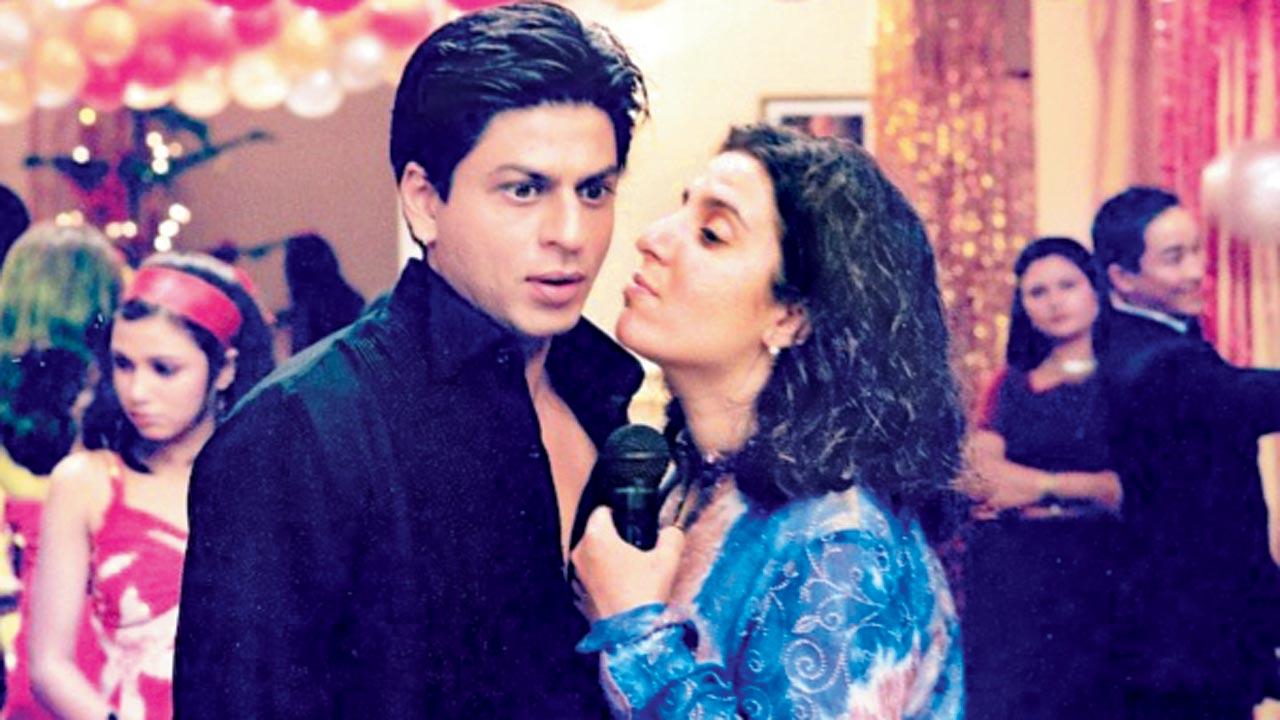
During the making of The Inner World of Shah Rukh Khan, 2004. On the set of Main Hoon Na, with director Farah Khan
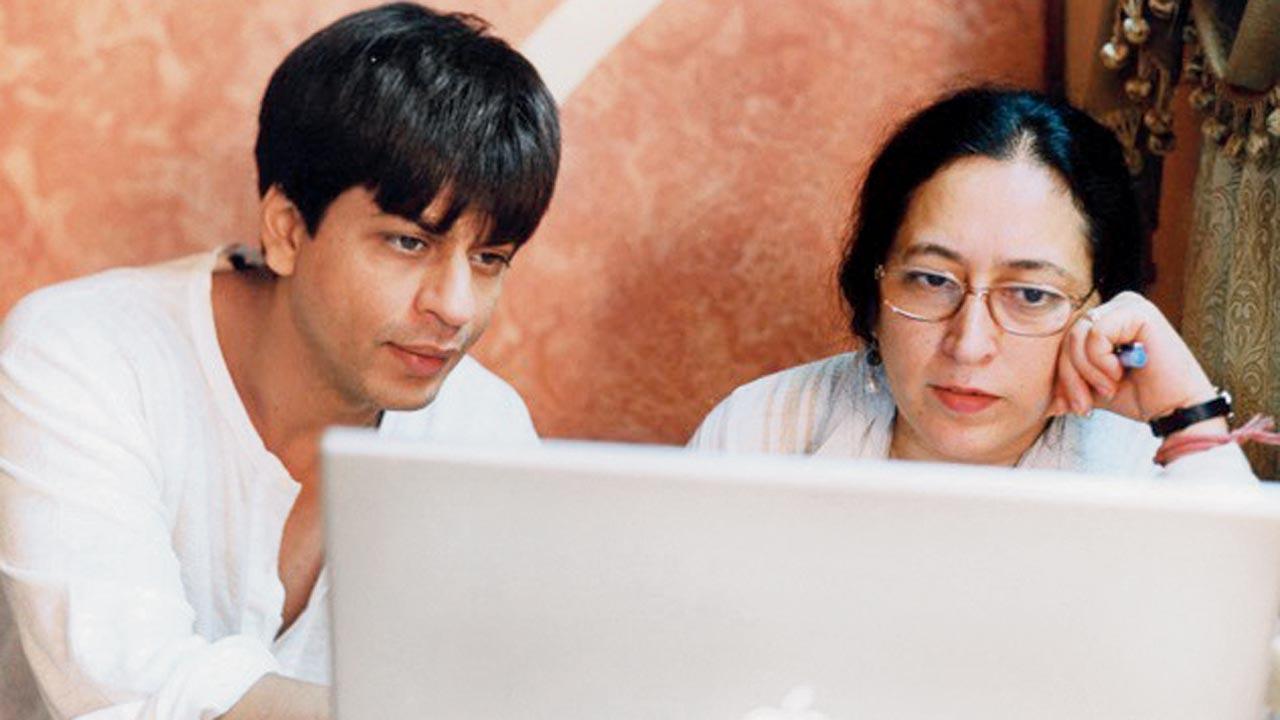
With director Nasreen Munni Kabir. Photographs by Peter Chappell. Pics courtesy/Hyphen Films, UK
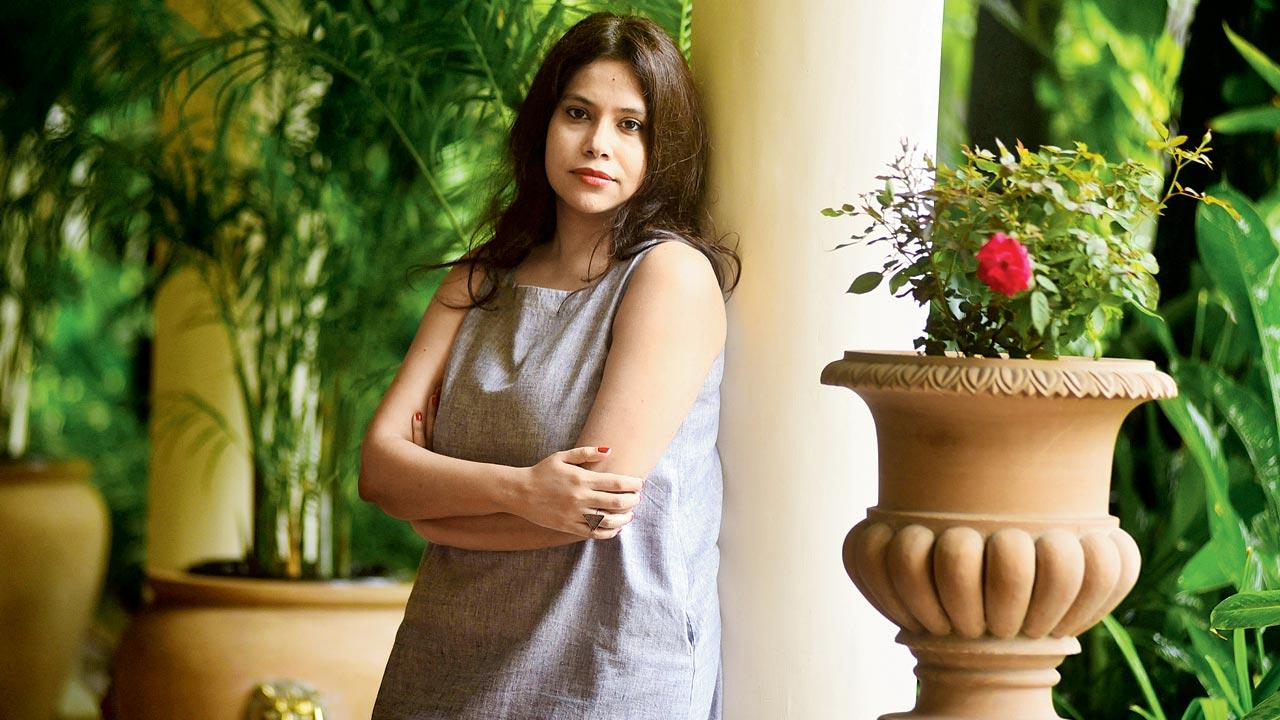
Writer-economist Shrayana Bhattacharya’s book Desperately Seeking Shah Rukh (HarperCollins India) uses the actor as a metaphor to explore the economic circumstances of women in post-liberalisation India. Pic/Shadab Khan
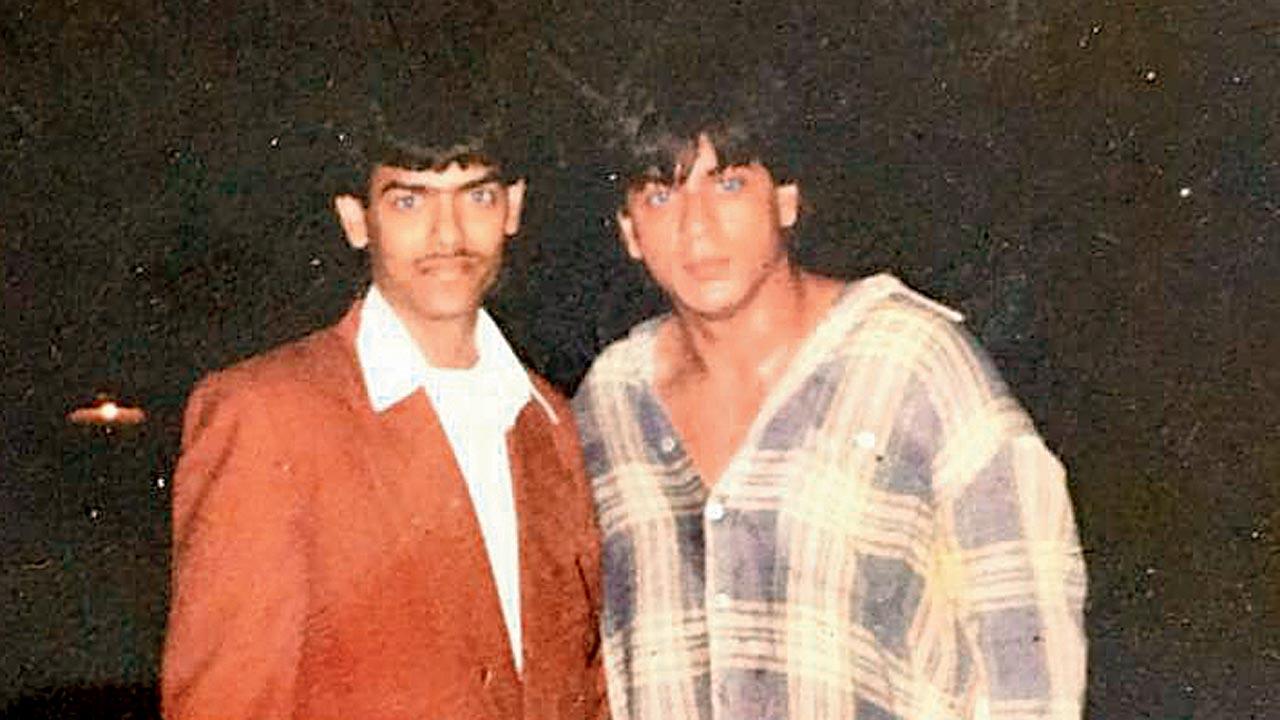
Vishahrukh wants to make a film with the actor so Vishahrukh Singh with Khan during their first meeting in 1996.
Despite Fan coming from a huge production house and featuring a superstar, the audience didn’t accept it-Waluscha De Sousa
8:19 AM

Goa-born Waluscha De Sousa on facing prejudice as she attempts to make a mark in the OTT world with Escaype Live
Letty Mariam Abraham (MID-DAY; June 7, 2022)
Waluscha De Sousa has been facing the camera for decades as a successful model. But her transition from modelling to acting has not been easy. From making her acting debut with Fan (2016) to her web debut with Crackdown, De Sousa is happy to explore distinct roles as she works towards gaining a foothold in the industry. In a chat with mid-day, she discusses the highs and lows of showbiz, and why she picked up Disney+ Hotstar’s latest series, Escaype Live.
Edited excerpts from the interview.
Your initial journey in showbiz was bumpy.
My acting debut was with Fan [2016]. Despite it coming from a huge production house and featuring a superstar, the audience didn’t accept the film. Post that, the work that came my way didn’t excite me. The roles usually didn’t have anything for me to display as an actor. So, I took a sabbatical. Fortunately, the digital space opened up by then. I made my OTT debut with Crackdown [2020]. I don’t think viewers expected me to play such a role. I took a gamble, and it paid off.
Prior to Crackdown, it was difficult to stay true to who I am. I had my fair share of being told that things are not going to work out for me. But all I needed was an opportunity. I never shied away from auditioning for roles. There were preconceived notions, ‘Oh, she was a model’, ‘She is a gori’ and so on. They never bothered to ask me where I was born and brought up. Sometimes, I walk into a meeting, and they ask me if I can converse in Hindi. Fighting these preconceived notions is exhausting.
Do you feel the offers that came to you until Crackdown focused only on glamour?
100 per cent. The roles were all about being glamorous or someone’s arm candy. I knew what I had to offer as an actor. I have to thank Apoorva Lakhia [director] for taking that chance with me and giving me Garima Kalra [her character in Crackdown], which displayed my potential.
How did Escaype Live happen?
I was aware that casting for the social thriller was going on. Director Siddharth Kumar Tewary called me [for the narration]. It was a new concept, [tackling] a scenario we are all facing in our relationship with social media. My character Gia Bose is someone who calls the shots, and is a woman in a man’s world. I wanted to play someone in charge, which is so unlike me in real life. I am quiet and reserved, but it was nice to call the shots on the set. At one point, my co-stars asked me if I am going to keep ordering them around [even when the cameras aren’t rolling].
How is your relationship with social media?
I am a private person. I don’t have a social media game, and don’t think much when I’m putting out a post. They are usually related to my work. There are actors who are good at juggling acting and being active on social media. But I want to [demarcate whether] I am an influencer or an actor. I prefer to stay relevant with my work rather than my social media posts.
Do you feel there should be an age restriction for apps?
A lot of apps have an age restriction, but there needs to be a better [distinction than age]. In the past three years, our relationship with social media has intensified. There was nothing else to do besides be online during the lockdown. The unfortunate part is even schools went online. Whether you liked it or not, your child had to have a phone, and laptop. I remember calling my grandmother on Zoom, something she has never done in her life.
SC stays order asking YRF to pay moviegoer Rs. 15,000 for not including Jabra Fan promo song in Fan
8:35 AM

Niharika Lal (BOMBAY TIMES; September 22, 2021)
The Supreme Court on Monday stayed a February 2020 order of the National Consumer Disputes Redressal Commission (NCDRC) which directed Yash Raj Films (YRF) to pay Rs. 15,000 compensation to a consumer aggrieved by exclusion of the song Jabra Fan in the Shah Rukh Khan-starrer Fan, which released on April 15, 2016. However, the court did question the production house over why it marketed the film with the song, but edited it out of the final movie.
FELT ‘CHEATED AND DECEIVED’ AFTER SONG WASN’T PART OF THE MOVIE: COMPLAINANT
Afreen Fatima Zaidi, a teacher from Aurangabad, on watching the film’s promos – which included the song Jabra Fan – decided to see the film in cinema with her family members. However, the song was missing from the film, which made her feel ‘cheated and deceived’. Zaidi approached the concerned District Forum by way of a consumer complaint seeking compensation, along with a direction to the petitioners to air the promos and song with a caveat that the said song was not included in the film.
UNLESS THERE’S A DISCLAIMER, ANY PERSON WOULD BELIEVE THE SONG IS PART OF THE MOVIE: NCDRC
The NCDRC had held that inclusion of a song in the promo of the movie when it is not actually a part of the movie, amounted to deceiving viewers and was consequently an unfair trade practice, under Section 2(1)(r) of the Consumer Protection Act. It specified the need for a disclaimer in such cases, stating that “if a person likes the song shown in the promo, and based upon such liking decides to visit a cinema hall for watching the said movie for a consideration, he is bound to feel deceived, disappointed and dejected if the song shown in the promo is not found in the film.”
It added, “The obvious purpose behind such an unfair trade practice is to draw the potential viewers to the cinema hall by luring them with the song which forms part of the promo and thereby making gain at the cost of the viewer.”
‘FROM A LEGAL PERSPECTIVE, THE CONSUMER’S EXPECTATION IS LEGITIMATE’
Vivek Narayan Sharma, a Supreme Court advocate, says, “A film is a product. A promise was shown in a glimpse in the promo. If the consumer was mesmerised by a glimpse of that promise, and when the consumer sees it missing from the product then they can claim compensation. From a legal perspective, it was a legitimate expectation by a moviegoer to see the song in the film. It can be argued in the court by the consumer that their legitimate expectations were not fulfiled, hence, it caused them mental agony and they have incurred losses — movie tickets, time spent in the cinema hall and money spent in hiring a vehicle and so on.”
THE DIRECTOR, NOT PUBLIC, SHOULD CHOOSE WHAT SONG/SCENES SHOULD BE RETAINED IN FILM: YRF
YRF argued,“The song Jabra Fan was only meant for the promotion of the movie and the same was not to be a part of the movie and this fact was also well publicised by the Petitioner, the star-cast of the movie as well as by the director on multiple occasions.”
YRF also added that it is a common industry practice to release certain songs for promotional purposes and not include them in the movie. It submitted, “What scenes/songs/portions that the producer and the director finally choose to retain as part of the film, after editing, and what they finally present to the public, is their prerogative. Members of public cannot demand the story to be presented in a specific manner, suitable to their sensibilities.”
Shah Rukh Khan's doppelganger rendered jobless by COVID-19 crisis
8:36 AM

Prashant Walde had taken up a job in Dubai after his Bollywood career took a hit. Now, he has lost that job, too, and is struggling to make ends meet
Onkar Kulkarni (BOMBAY TIMES; May 7, 2020)
Countless daily wagers have lost their jobs due to the economic crisis triggered by the Coronavirus pandemic. Among them is Prashant Walde, a lookalike of Bollywood superstar, Shah Rukh Khan. Prashant, who would work as SRK’s body double in Bollywood, was forced to take up a job offer from Dubai after there wasn’t enough work for him in BTown, as the actor has been spacing out his films over the past two years. And now, the #CoronaCrisis has left him jobless once again.
Back home in Mumbai, he tells BT, “I have been a handyman for filmmakers working on Shah Rukh bhai’s films and commercials. In his absence, they would use me for long shots and cheat shots, too.”
Prashant, who has worked in films like Om Shanti Om, Don 2, Chennai Express and Fan, apart from many commercials, says that his B-Town career took a hit a few years ago. “Hum lookalikes ki life hi aisi hai. Over the past few years, I wasn’t getting much work. The number of stage shows reduced, too. The last time I shot with Shah Rukh bhai was in December 2019, for an ad film,” shares Prashant, who used to earn ` 30,000 per day as an SRK lookalike.
With no work, debts mounted. He continues, “I have two children and my wife is a homemaker. So, I needed a steady job, but didn’t know anything else apart from being SRK’s body double.”
In December 2019, an opportunity knocked on the door and Prashant flew to Dubai. “I got an offer from a Bollywood theme park, where I had to work as an SRK lookalike in 12-hour shifts. I had to stage 15 shows, each lasting 12 minutes,” he shares.
However, within three months, he was sent back home following the Coronavirus outbreak. “I was lucky that I reached Mumbai on March 21, otherwise I would have been stuck due to the lockdown,” he says, adding that all his earnings have gone into clearing dues. “It’s become a matter of survival now. There are over 160 artistes like me in India and we had set up an All India Look Alike Association (AILAA), but it hardly has any funds. So, we recently approached the Federation of Western India Cine Employees (FWICE), and while they did offer some help, we are still struggling to make ends meet,” he rues.
Has he reached out to SRK for help? “I made a living out of his identity, so it feels embarrassing to go to him for help. I am sure some solution will come up,” signs off Prashant.
Being Polish in Bollywood
9:06 AM

Matylda Bajer, who hails from Pozna in west Poland, is now a resident of Malad. She says her biggest roles yet have been as Sunny Leone's friend in the 2018 web series Karenjit Kaur, and in the Malayalam film Lucifer (2019). Pic/Pradeep Dhivar
While international faces in Hindi films are now commonplace, it's the recent rush of Polish talent, especially across acting and cinematography, that industry observers say points to an interesting connect
Prutha Bhosle (MID-DAY; December 8, 2019)
 During World War II, about 1,000 orphaned children from war-torn Poland travelled to India seeking refuge. When their ship docked at Rozi Port in Jamnagar, Maharaja Digvijaysinhji Ranjitsinhji Jadeja of Nawanagar, a princely state in the Kathiawar Peninsula off Gujarat, made arrangements to build a camp for them. Later in 1943, the only permanent and the largest Polish settlement, was built in Valivade, next to Kolhapur, for 5,000 refugees. This gesture resulted in the heart-warming documentary, A Little Poland In India, made in 2013. The 52-minute film is the first to be co-produced by the Indian and Polish governments.
While this story celebrates compassion, and a cultural and historical connect between India and Poland, there is another one unfolding in Bollywood.
Growing up in Poznan, western Poland, Matylda Bajer's love for Hindi cinema grew early with the Shah Rukh Khan-Mahima Chaudhary-starrer Pardes (1997). Then a teenager, Bajer, now 28, watched the film on her television. "Then there was the Punjabi MC-Mundian tu bachke song which was played on loop in Poland's clubs. Bollywood was not known to everyone there. These were the only two links we had to the Indian entertainment industry," she says when we meet her at her Malad home.
When she turned 18, Bajer moved to Ireland. While still pursuing business studies and working as an assistant in an accounts office, she was approached by a photographer. "I was shy and hated being clicked. But he convinced me and said he would keep the photographs only as souvenir. When I saw my pictures, I was stunned." It set the ball rolling for a new life. Bajer enrolled for a theatre workshop in Dublin and worked with independent filmmakers on small roles till she turned 20.
In 2012, on a backpacking trip to Hong Kong "to experience Asian culture" she was introduced to India. "People spoke of the challenges of living here, how culturally diverse it is and how it could change your life." From June 2013, Bajer explored India for the next five months. "It was tough, I stayed at the most basic accommodations and ate street food. But my stay made me realise how madly I had fallen in love with the country. I packed my bags and left for Europe, with a dream of returning and pursuing a career here."
After saving up by modelling in Ireland, Bajer arrived in Mumbai in 2015. She lived at a Colaba guest house and frequented tourist spots in South Bombay, drawing the attention of film agents and coordinators. "I did a random reality show. I had to begin somewhere. And then, started giving auditions in Aram Nagar. Soon, I started shooting for TVCs. My first big ad was for Incredible India." Bajer played the role of a news reader in the Neil Nitin Mukesh-starrer Firrkie, an air hostess in SRK's Fan (2016) as well as bagged a part in a series on Bindaas called Life Lafde Aur Bandiyan. Her biggest break was as Sunny Leone's friend in the 2018 web series Karenjit Kaur - The Untold Story Of Sunny Leone,, and the Malayalam film Lucifer (2019).
Bajer says her tribe is growing in Bollywood. Born in Wodzislaw Slaski, Claudia Ciesla (below), 32, has in the last 13 years appeared as a contestant on Bigg Boss and starred in the hit song Balma from Khiladi 786 (2012). A well known face on the European modelling circuit, she came to India in 2006 to shoot with an international crew for Karma. "I had to be in Mumbai to promote the film, and that is how I got noticed by the paparazzi. When I went back to Germany, I was offered an entry into Bigg Boss season 3, to be hosted by Amitabh Bachchan." Initially, she turned down the offer. "I didn't even know what a reality show was. But the organisers convinced my manager that this would be a good platform, so I gave in."
Ciesla survived in the house for 10 weeks. "When I got out, people wanted selfies with me. I had become popular in just two months, I couldn't believe it. This is when I realised I could try for bigger projects in Bollywood. If things didn't work out, I had a successful career waiting for me back home." So, the 32-year-old actor stayed and hit gold. She signed another reality show, Zor Ka Jhatka with SRK, and shot the project in Argentina. Next came Comedy Circus, and then the sizzling item number, Balma. It's been 13 years, but Ciesla like Bajer has no plans of heading back.
While speaking English isn't common in the country, all the interviewees we spoke to were fluent in the language. And so, the real obstacles in a smooth work-life in India are the weather and hair colour. "Initially, they [production houses] would want me to colour my hair brown so I could look more Indian. But I am an outsider and will never look local, no matter what contact lenses I wear. One day I put my foot down and decided I'd accept only those roles that allowed me to play a foreign character," says Bajer.
 A March 2019 report by the Federation of Indian Chambers of Commerce and Industry titled, A Billion Screens of Opportunity, stated that in 2018, the country's media and entertainment industry enjoyed a stellar run. "With the film segment expanding by 12.2 per cent to reach an annual revenue of INR 174.5 billion. Of this amount, the domestic film revenues crossed INR 100 billion with Net Box Office Collections for Hindi films at INR 32.5 billion —the highest ever," it said.
With massive budgets and a growing worldwide audience, it's not surprising that Bollywood and Indian television attracts talent from across the world. What's surprising however, is the concentration of Polish talent. Joanna Robaczewska has anchored Comedy Circus and was a part of Karenjit Kaur season 2. Erika Kaar played a pivotal role with Ajay Devgn in Shivaay. Bielsko-Biala-born Natalia Janoszek, too, was seen in lead roles in Dreamz: The Movie (2013), and Flame: An Untold Love Story (2014). Well-known Polish actors Cezary Pazura and Tomasz Karolak bagged roles in Bangistan (2015).
 Julia Piekielko (left; above), a Polish national, set up a talent agency in Mumbai five years ago, to increase collaboration between Bollywood and international talent, especially her home country. In the last five years, she says, she has placed eight directors of photography (DOP) in various productions across India. "It isn't necessary that they [production houses] ask for a DOP of a certain nationality; it's truly their choice in the end," she says. Representing the production company Film Poland Productions and the Talent Agency Choice Talents, she placed DOP Michal Luka for Ittefaq (2017); animator Adam Wyrwas in Tokri (2017), and Marcin Laskawiec (right) and Karol Stadnik (right; below)—both DOPs—on the production of Tiger Zinda Hai (2017). The projects helped their careers in India take off.
Until recently, Artur Åurawski was the only Polish DOP—Pradeep Sarkar's Mardaani (2014) and Yash Raj Films' Sultan (2016)—in Bollywood. But, as Laskawiec's and Stadnik's career graphs show, Bollywood's interest in Poland is not limited to acting.
 Born in the small central Polish city of Slupca, Stadnik is currently on an assignment in Delhi. Speaking to us over the phone, he says, "As a kid I was a major movie buff. I grew up making amateur movies and VFX. During the five-year-long cinematography course at the Polish National Film School, I had already started making short films. After graduating in 2011, I did multiple commercials and feature films in Germany and Estonia."
Moving from Poland—which has its own flourishing and acclaimed film industry—was an easy choice for Stadnik, who says the competition was tough back home. "I have not yet worked on a big budget film in Poland. The competition among DOPs there is quite intense. But Indian films have given me the opportunity to work as the main DOP."
Director Ali Abbas Zafar has hired Polish DOPs for his big ticket films like Bharat (2019), Tiger Zinda Hai and Sultan. "Ali Abbas specifically demands that his films have Polish DOPs. I think after Zurawski did a great job in Sultan, the director has a fascination for Polish camera operators," says Laskawiec, who studied philosophy and literature for two years each, before enrolling in the Krzysztof Kieslowski Film School in Katowice to learn cinematography.
Piekielko agrees. "My job is to bring in talent most suited for a film. While I deal with cinematographers from across the globe, there are some Indian directors who prefer Polish DOPs. It's their choice. My job is to then guide them through the work visa procedure so the production carries on smoothly. I coordinate on the project from the beginning to completion, to ensure that both the director and the DOP are happy and all goes according to the production plan."
Interestingly, Film Poland Productions, for whom Piekielko works, offers another service back home—their exotic locations where Indian movies can be filmed. Marta Bejma, head of production, tells us, "We believe that Poland is one of the most attractive and competitive places in Europe for filming movies. We have historical cities, castles, fairytale palaces, mountains, the seaside, and also modern city life. We can add a European feel to any film at a much lower budget than other countries."
And there have already been takers. Salman Khan's Kick (2014) was shot in Warsaw. The Alia Bhatt and Shahid Kapoor-starrer Shaandaar (2015) was shot at the Zamoyski Palace in the Lublin region and Ksiaz Castle in Lower Silesia. Then came Fitoor (2016) and Super 30 (2019). And now, Amitabh Bachchan-starrer Chehra is set to be shot in the region. Film Poland Productions wants to make Poland the new Switzerland for Bollywood films.

Shah Rukh Khan starts shooting for his cameo in Ranbir Kapoor and Alia Bhatt's Brahmastra
8:13 AM

Actor is shooting a cameo for Karan Johar’s fantasy adventure; he was joined by one of the film’s antagonists, wrestler-turned-actor Saurav Gurjar
Himesh Mankad (MUMBAI MIRROR; November 15, 2019)
 Mirror was the first to report (November 1) that Shah Rukh Khan will be joining Ranbir Kapoor and Alia Bhatt’s fantasy-adventure Brahmastra. After over a year, the actor returned to Filmcity Studios last week to shoot a cameo in the Ayan Mukerji directorial.
“It’s a VFX-driven character and SRK has been shooting against a green screen. While most of the actors find it difficult to adapt to this technique, he breezed his way through, having worked in films like Ra.One, Fan and Zero which were heavy in visual effects,” revealed a source close to the development, adding that he was impressed with the technical set-up on the sets. “Shah Rukh joined the crew a couple of days after his birthday on November 4 and shot for three days on the trot. He then had to take a break to attend the Kolkata International Film Festival.”
When he resumed shooting late on Wednesday, he was also joined by Saurav Gurjar. The wrestler-turned-actor plays one of the antagonists in this Karan Johar production. SRK has about eight day’s shoot, which he is expected to wrap up by this weekend. He plays a pivotal role in the story driven by Ranbir’s character, Shiva, who can emit fire from his hands. Planned as a trilogy, the first installment narrates Shiva’s discovery of the ‘agni’ within him. Alia plays a modern girl, Isha.
After wrapping up the Mumbai schedule, Ayan and his team will fly down to Manali for a 10-15 day shoot, taking Ranbir and Alia’s character closer to the Himalayan range. Post production is in process at a London-based studio. The makers are expected to lock the film and announce the release date by January.
I didn't even know who Shah Rukh Khan was, and then I got to slam him against a wall-Richard Lovatt
8:19 AM

The subject of a new documentary, Rich In Bollywood, fitness trainer and actor Richard Lovatt tells us how he's now almost Indian
Aastha Atray Banan (MID-DAY; August 18, 2019)
"Chaotic, fast, unorganised, exciting, fun," is how Richard Lovatt, a Brit, describes Mumbai in a small clip from a documentary being made on his life, Rich In Bollywood. That's also how he describes himself, and it's no wonder that the 28-year-old actor and fitness trainer says that he has effortlessly integrated into the city. "So many don't like it. People ask questions like, 'What about the traffic, what about the pollution?' I don't even think of these things. The way Mumbai is, is the way I am, and how I love my life—hectic, unorganised and yet fun and exciting. So, it's a perfect fit," he tells us over the phone from Bengaluru, where he is shooting at the moment. "I have ADHD and the city is also like that, right? So, it agrees with me."
Rich In Bollywood is being made by Lovatt's cousin and well-known Canada-based filmmaker Nicolas Levesque, who rang Lovatt up one day and said, "Let's do this." "He got a grant to make a film, and he zeroed in on my story. I think it's kind of a different story for international audiences. So, it made sense to do it. Nicolas is known for doing this kind of real-life tales," says Lovatt, who belongs to Huddersfield in the UK, and came to India in 2014 to start training Bollywood stars. Ever since, he has trained Sushant Singh Rajput, Arjun Kapoor and Ranveer Singh, among many others. But, if you expect his Instagram to be full of fitness videos—and he is ripped enough to be flaunting his body—prepare to be shocked. His feed is full of funny videos, which have him either unboxing, or giving advice (on anything under the sun), or even singing. It's almost like a mini showreel, where he portrays different emotions and expressions. Also, his Hindi is better than most of us. "I tried to take a few classes, but those were not working for me. So the Hindi I do speak, I have just picked up either from talking to people or reading scripts. Even making the videos has been great practise," he says. We especially love the video where he talks about the monsoon and sings Yeh Baarish Ka Paani, and the one with advice about the three cars to never buy in India, where the Skoda Laura tops the list (watch the video to know why). The documentary is made up of all this and more: his fitness and Bollywood career, and life in general trying to get by in Mumbai.

Ask him about Bollywood, and the moments that have excited him the most have been the ones when he has been shooting. "Meeting Shah Rukh Khan was great. I didn't even know who he was, and then I got to slam him against a wall. Even spending time with Irrfan Khan and just chatting about everything was great," says the actor, who has done bit roles in movies like Fan, Ki & Ka and now will be seen next in the Sonam Kapoor-starrer The Zoya Factor. He may have been only doing the Bollywood thing for a few years now, but the audition process already seems to have tired him out. "You think you have given the best audition in the world, and the casting director also says 'yes, that was great'. But then it never follows through. And then I get very disappointed. It's all very cliquey here. So now, when people call me and ask for a video, I say no. Then they say 'the budget is low', so I tell them not to waste my time. I only go for it if it's word of mouth and I know there is a real shot of me getting a role," he says.
Lovatt says the documentary's take-away would be simple: it's that even a foreigner like him, who he says is not treated any differently in Mumbai, is almost an Indian himself. "There is nothing special in the way I am living here. There is no special struggle. It's just a normal life, where a person is going about his work. Audiences, who will watch the documentary either in India or internationally, will know that for me, India is just like any other country in the world."

#MeToo: When Shah Rukh Khan teaches consent
8:44 AM

MeToo has sparked many serious conversations about the gray areas around intimacy. But teaching consent doesn’t have to be boring. A bunch of educators are using music, films, chai and chairs to explain why ‘no means no’
Ketaki Desai (BOMBAY TIMES; October 21, 2018)
‘Do people think consent is like hard cash? You can’t hold it in your hand and see it, you have to learn to sense it,” sing Shakku and Megha in a colourful and tongue-in-cheek music video that certainly puts the sensual in consensual. The two are lavani dancers, an erotic folk music and dance form from Maharashtra known for thumkas and lip-biting moves rather than lessons in consent.
But it’s precisely the reason why Paromita Vohra, filmmaker and founder of the love, sex and dating website Agents of Ishq, chose the playful lavani route. “You can’t give people a lecture. If lectures worked, people would have understood consent by now. We’re trying to help people, not scold them. When you see the music videos, the lyrics are very unambiguous about consent but what you’re getting to watch is what consent looks and feels like,” says Vohra. Her website, Agents of Ishq also has several resources pertaining to consent, from handy explainers that detail what constitutes sexual harassment to podcasts about people’s personal experiences with consent.
Vohra is amongst many in the country who are taking discussions about consent out of the realm of the abstract and serious, and using art, music, and personal narratives to talk about the issue. Sukhnidh Kaur, a 19-year-old student from Mumbai, is behind a minute-long song about consent that has garnered close to 200,000 views on social media. “Did you have to convince, say ‘babe, it’s just a kiss’? That’s pressure, my friend, and that’s not consent,” she sings.
Kaur is one of the women receiving messages about people’s stories of sexual assault as part of the MeToo movement and wanted to do something about it on a larger scale. “We shouldn’t only find out what consent is when it is breached. I felt like music is an effective form of communication,” she says. In fact, since posting the video she has received messages from men saying they understand now, and even from women who said that they didn’t realise that they had been on the receiving end of non consensual behaviour till they heard the song.
While these social media videos are largely focused on adults, there also some organisations trying to teach kids that no-means-no in a fun and relatable way. Radhika Mittal, director of Super School India which runs sexual education workshops in schools in Delhi, and uses chai and Shah Rukh Khan to explain consent. “If you ask me if I want chai, and I just smile, you will ask me again and not assume I want chai. If you do that with something as small as tea, then why not kissing or sex?” Taking the chai analogy one step further, she says, “Now, say I had tea with you twice last week. What if you come up to me, open my mouth and pour tea in it? At this point the kids laugh and say that would be a crazy thing to do, and that’s when we take it further and talk about how consent isn’t permanent.”
The non-profit also uses Shah Rukh Khan movies to differentiate between ‘cool behaviour’ and ‘ajeeb behaviour’.
For instance, the SRK character in Dilwale Dulhaniya Le Jayenge would be used to show the gentle, empathetic way to behave, while his stalker character in a movie like Darr or his alter ego in Fan would show them how not to behave.
The YP Foundation, a non-profit that works on sexual and reproductive rights in Delhi, UP, Bihar and Rajasthan, uses role play and games to explain consent to young kids. A child is asked to sit in a chair and the other children have to convince him or her to get off their chair without any physical intervention. Esther Moraes, communications manager at the YP Foundation, says, “This leads to a discussion about what the person’s consent means in that moment, and how the young people would want someone to convince them.”
She adds, “With an older group, we have facilitators role playing a situation relating to consent, like asking a girl out through a text message and her not being sure. Then, we switch our facilitator from that role play with someone from the group. They now have to figure out how to best maneuver this situation in real time.”
Storytelling is handy tool for Ameen Haque, founder of Storywallahs, to explain tricky concepts at sex ed workshops. “The moment you say ‘Now that you have turned 13 so we are having this conversation’, it makes kids uncomfortable. But, in a story we’re not talking about them, we’re talking about Rahul and Aishwarya,” says Haque. He goes on to tell the story of Aishwarya, a star basketball player who becomes friends with Rahul. Misinterpreting their friendship, Rahul posts on Facebook that they’re in a relationship. The story is chockfull of log-kya-kahenge drama and relatable teenage angst. “What we do is stop the story at the moment of conflict, and then open up the conversation about what Aishwarya should do next and why Rahul did what he did. Now, instead of a boring lecture it becomes a two-way conversation, where you can actually understand how these kids think and feel,” he says.
Vohra believes that a creative approach to teaching and talking about consent is part of the solution to the impasse we seem to have found ourselves in as a country. She says, “We need everything that is happening right now with the MeToo movement in our discussions about consent, but we also need things that are restorative, that help others and shows them the way forward. Literature, culture and art have the power to do that.”

LAVANI WITH A MESSAGE: The Amorous Adventures of Shakku and Megha in the Valley of Consent is a playful music video that succinctly explains consent and doesn’t shy away from showing women as people with sexual desires
After Fan, Waluscha De Sousa bags Time To Dance
7:52 AM

Waluscha De Sousa returns to the screen after two years with a musical which demands a lot more from her as an actor and dancer
Natasha Coutinho (MUMBAI MIRROR; May 22, 2018)
Waluscha De Sousa is gearing up for a comeback on the Hindi screen with Stanley D’Costa’s directorial debut, Time To Dance, which also features Sooraj Pancholi and will introduce Katrina Kaif’s younger sister Isabella. The model who turned actress with the Shah Rukh Khan starrer Fan, plays Isabella Kaif’s older sister and a dancer. The musical showcases different dance forms, including the Waltz, Tango, Viennese Waltz, Foxtrot, Quickstep, Cha Cha, Samba, Rhumba, Paso Doble and Jive, and Waluscha has been training hard.
“It’s wonderful working with Stanley and Remo (Stanley was choreographer Remo D’Souza’s assistant and he is producing the film with Bhushan Kumar). I love dancing and am learning Ballroom and Latin forms for the film. It’s something I’ve wanted to do all my life,” exults Waluscha, adding that since they play competitive Ballroom and Latin dancers in the film, it’s not normal Waltz and Foxtrot. “The body language is different.”
She’s trained in Indian classical dance like Bharatanatyam and Kathak but never in Ballroom dancing. She’s still getting the hang of this form of dance and at times co-star Sooraj has to bear the brunt of her fumbling. “I try keeping my heels off Sooraj’s feet as much as possible, but the steps are so quick that sometimes I end up squashing his toes. Poor guy!” she laughs, even as she sympathises with his plight.
Quiz her on her reel life sister and she quips, “I love Isabella’s energy.”
Speaking of her journey in the film industry, Waluscha reveals that she enjoyed her years as a model and wouldn’t change that for anything. But she admits that people still perceive that models can’t act and since she comes with that stamp, she has to prove it wrong. Is she more confident about her acting abilities post her debut turn, you wonder, and she laughs, “I think I’m more nervous now, this film requires a lot more of me as an actor and dancer. Once we start shooting in London, we will know if all the effort has paid off. For now, I’m just glad Remo and Stanley saw potential in me.”
Growing up in Goa, the actress admits she didn’t get the kind of exposure someone living in a bigger city would get and, as a result, things happened to her much later in life. “Everyone’s journey is different and my simplicity helps me keep my balance in this crazy city. But I still have a lot more to learn,” Waluscha acknowledges. Surely, she learnt something working with Bollywood’s Badshah? She smiles, “I was figuring things out back then but I have learnt from Shah Rukh to give your 100 per cent and let the moment consume you, nothing else matters.”
I am proud of my six pack abs-Waluscha De Sousa
7:40 AM

Debarati Sen (BOMBAY TIMES; December 18, 2017)
She was all of 16, when she casually met designer Wendell Rodricks in his office. And though she was in her school uniform, he spotted the model in the gorgeous, athletic girl, in front of him. Waluscha De Sousa has come a long way since. In a chat with BT, she talks about her plans, which include waiting for the right film, hosting shows and doing music videos. Excerpts:
Your toned body and six-pack are much talked about. How do you maintain it?
It takes a lot of dedication to get a six-pack. But when you are already fit, it just takes pushing yourself a little more. I don’t believe in fad diets — I eat every two hours and in moderation. A high-protein diet works for my body type and I stick to that.
Your six-pack came into focus when you did Himesh Reshammiya’s single, Trippy, early this year...
Himesh and I had an idea of how we wanted the dance video to be shot and what I’d be wearing for it. I wanted to give the audience a different look, so, I took to pilates, weight training with cardio and maintained a strict diet to achieve the desired look. I am quite proud of it now.
How different is the new music video, Kisko Pata with Yash Wadali (of Wadali Brothers fame) from Trippy?
Kisko Pata is a fun dance track with romantic overtones. I always want to do something different, so after showing off my six-pack in the first one, we chose the fire element for the second. I was literally melting and sweating while shooting for the video in Goa. I was shooting with a fire close to my face in hot weather, but eventually it looked outstanding. I am really happy that people are appreciating and liking my work.
Last year, you made your dream debut opposite Shah Rukh Khan in Fan. How was the experience of working with him?
Fan was a great coming together of big names and it was a great opportunity for me. I was 17 when I did my first TVC with him. Even after so many years, the man has stayed humble, down-to-earth, charismatic and professional. I think he gave his best performance as Gaurav in the movie. It was great to see that unfolding in front of my eyes on the set.
Which actors would you want to work with in Bollywood next?
The list is endless. After working with SRK, I would now like to work with Saif Ali Khan, Akshay Kumar, Salman Khan and Ajay Devgn.
Could you tell us about your upcoming projects?
I believe that your first film always comes looking for you, but it’s the second one that you need to look for. I am waiting and sitting it out, which is not easy. My first film has set the benchmark so high that my next needs to meet the criteria. I have always been choosy, even when it comes to designers and TVCs. That’s the reason why I have always got great work.
Given a chance, I want to make Asoka again-Shah Rukh Khan
8:18 AM

Nayandeep Rakshit (DNA; November 2, 2017)
Shah Rukh Khan turns 52 today. The actor, who has been part of over 60 films (without the special appearances), has managed to maintain his superstardom over the last 25 years. Through the course of his career, he has attempted different things — some worked, some didn’t and some set new benchmarks in filmmaking.
Ask him about his plans and he tells us, “We have decided to produce almost nine-10 films in the next two years. I won’t be acting in all the films, we are always willing to do new things regardless of its outcome. Today, our films are doing the business, tomorrow I might lose everything but that thought will never stop me from attempting.”
The actor wants a revolutionary change in terms of special effects in India. “I understand we don’t have the budgets that a Hollywood film does. Today, I have a dedicated team, who is working endlessly to create VFX for films like Fan and Aanand L Rai’s film, which people couldn’t even think of doing, a few years ago. We tried introducing a technology in India with Fan and although the film didn’t work, it cannot take away the accomplishment of my team. When people come and talk to me about it, I consider all this fluff — that my career is ending and I’m going to be finished. That’s what you think but without being pompous, I can say that I’m at a position where I can decide to take on things which come with a huge chance of failure. But if we don’t do it, things won’t progress.”
He also expresses another wish he’s nurtured for quite some time now. “I had loved doing Asoka. Given a chance, I want to make Asoka again. But this time, it will be much bigger and grander. Maybe with some great VFX work which has so far not been seen in Hindi cinema.” He further explains, “We made Asoka in a budget of Rs 8 crores. We didn’t know much about VFX because special effects were still not a rage then. Today, imagine how much more we can do with a bigger budget and better VFX. I’m fascinated by such powerful war stories and someday, I would definitely like to revisit Asoka again.”
Some relationships don’t need explanations-Shah Rukh Khan
8:09 AM

MUMBAI MIRROR (November 1, 2017)
Co-producer Shah Rukh Khan has admitted that he wanted to act in his upcoming thriller, Ittefaq, which features Sonakshi Sinha and Sidharth Malhotra as leads, but could not owning to his busy schedule.
“I was shooting for Raees and Fan at that point so physically it was exhausting. But I am happy with the way Abhay (director Abhay Chopra) has adapted the script and changed it a bit to make it relevant in today’s time,” the King Khan applauded. The actor was in line to play the cop, a role that was later played by Akshaye Khanna.
Excited about collaborating with Karan Johar after films like Kuch Kuch Hota Hai, Kabhi Khushi Kabhi Gham, My Name Is Khan and Kabhi Alvida Naa Kehna, Shah Rukh was visibly irked by speculations that their relationship had hit a rough patch. “There are some relationships that don’t need explanations. I don’t have to talk about how much I love Karan and how we bond. Yet every time he makes a film without me, such questions arise,” he groused, pointing out that as an actor-director duo they should be happy to make a film together and feel excited about the story, otherwise it was okay to say “no” to each other without fearing for their relationship.
He went on to say on record that he never ever had a problem with Karan Johar and loved him unconditionally. “We are a family and we will grow old together. Maybe at the age of 105, on our wheelchairs, we will still be promoting our films or maybe we won’t be able to work together but the love and brotherhood will always be there. If Karan is ever in any trouble, I will be the first to stand by him,” SRK added.
Bollywood's going through its roughest phase, here's how
8:19 AM

Joginder Tuteja (DNA; August 13, 2017)
There was a time till a couple of years ago when star power ensured that a substandard or a bad film worked at least to an extent at the box office. Not anymore! While bad films are failing, even good films are finding it difficult to find an audience. The new era of Bollywood audiences is fairly and squarely announcing that they are the king.
How it all started
When the Rs 100-crore phenomenon kick-started with Ghajini, hordes of films followed suit. Each Khan — Aamir, Shah Rukh, and Salman got into a race to deliver a century. Soon enough, Akshay Kumar, Ajay Devgn and Hrithik Roshan, too, had them to their names. The young brigade, Varun Dhawan, Ranveer Singh and Arjun Kapoor, entered the club and countless films joined in.
There were bad apples
Each biggie delivered by superstars was not quite worth the Rs 100-crore fortune. To some, it seemed like a fluke where films managed to score big. In fact, there were bad apples — films managing to register big numbers despite being panned by critics. So, on the one hand, there was quality cinema being missed and on the other, there was this slogan of ‘Bollywood Shining’.
Stardom ruled
One of the key reasons for this phenomenon to gain prominence was the star system ruling Bollywood. A Khan film had to take an opening. A non-Khan superstar (read Akshay, Ajay, Hrithik) was a reliable commodity. Bring in Deepika Padukone, Priyanka Chopra, or Katrina Kaif into the mix and a ‘deal’ was well in place to draw in audiences at least during the opening weekend. More films started seeing a Rs 50 crore plus weekend and content took a backseat. Stardom ruled!
The bubble had to burst
This was a bubble waiting to burst, but the industry wasn’t willing to see it with open eyes. The projects continued to be put together and an occasional Rs 200-crore or Rs 300-crore blockbuster made many believe that this phenomenon was there to stay. Many didn’t bother to check the abysmal failure rate that stood over 60 per cent at least. Producers and distributors lost money on these films. Still, for the 20 per cent odd films where both parties made money, champagne bottles were popped. No one was willing to wake up.
Audiences wised up
As corporate presentations were being put together for the big projects, audiences were wising up, too. They decided not to be enticed by just star power or a package deal. The early signs, what with Salman’s Jai Ho, Ranbir Kapoor’s Besharam and Bombay Velvet, Ajay’s Action Jackson, and SRK’s Fan being rejected became prominent with Ranveer’s Befikre, Hrithik Roshan’s Mohenjo Daro flopping. Unfortunately, many still didn’t understand these signals.
The unforgiving audience
One look at how audiences have given a thumbs down to star power is pretty much a testimony to how they’ve come up with a collective call of ‘enough is enough’. Salman returns after 10 Rs 100-crore biggies and delivers a major failure in Tubelight. SRK returns in his romantic avatar with Jab Harry Met Sejal and even that’s not welcomed. Ranbir’s Jagga Jasoos finds itself in the midst of widespread negativity. Tiger Shroff sees his lowest grosser ever in Munna Michael. Rangoon and Raabta emerge as disasters. Youngsters are not impressed with OK Jaanu and Meri Pyaari Bindu. Amitabh Bachchan suffered one of the biggest disasters with Sarkar 3. In a year that has seen close to 60 releases already, 14 odd turned out to be profitable at least for the producers, if not for the distributors as well.
Will there be a change?
Change is the name of the game, but one waits to see if that would happen quickly. The rest of the releases of 2017 can’t be altered with the content already being shot. Most of 2018 releases won’t see much of a change either since the script has been drafted and the shooting commenced. So, if a remarkable turnaround is expected, it would be in 2019, when some sort of sanity would have returned to the scene. Guess life would indeed have to come full circle for Bollywood by then.
I didn't realise what success meant for many years & that was the best phase of my career-Shah Rukh Khan
8:13 AM

Madhureeta Mukherjee (BOMBAY TIMES; August 1, 2017)
Call him a superstar,
rockstar, King Khan, Raj, Raees or Harry - it doesn't matter. After 25
years in the industry, he wears his stardom with casual, unfettered
pride, but when it comes to cinema, there is nothing casual about
SRK. Ask any director who has worked with him, they will unanimously tell
you that he's the most giving actor. For him, every shot is as big as
the whole picture. When we met up for this interview at his sprawling
home, before the release of Jab Harry Met Sejal (JHMS), the actor looked
upbeat and relaxed. “AbRam has learnt to hold his breath underwater for
three seconds, we both were dunking our heads in a tub right now,“ he
tells me. Well, even superstars have to keep their heads above water and
hold their breath, right? Shah Rukh Khan has done that for long and
almost mastered it. Who says superstardom comes easy. SRK tell us all about that and more. Read on...
You have been in the industry for 25 years now. Highs, lows, friendships, heartbreak - your journey from an actor to a star has been fascinating. At the same time, it's heavier for a superstar to bear the cross of a failure. Did you ever crack under the pressure to succeed?
I think it would be foolish for people who have been working for so long to not know the limit of success each product has. It would also be silly to assume that after working for so many years, I would not know where this is headed. Of course, in this case, there could be two scenarios; one, it could be way beyond the disaster that you thought, or it could be way beyond the huge hit that you assumed. Like Dilwale Dulhania Le Jayenge was a shocker and so was Fan, though the latter was not a shocker because we assumed it would do Rs 200 crore, but because I thought it would be more liked than it was. While these two scenarios are beyond calculation or assumption, the third scenario is what most of us know. When I crack a joke at an award show, I know how far it will go. It is seldom that there's complete silence, likewise, it is seldom that people guffaw and fall down laughing. As an entertainer for years, you are never delusional about your success, and if you are not, chances are rare that you will crack under pressure of wanting to be successful. I remember I did a film with a famous director-producer and as we watched the first 30 minutes during the premiere, everyone knew that something had gone wrong. I went to the bathroom and the producer was there, washing his face. It was a very awkward moment. He turned to me and said, 'You know kya hota hai yaar, jab sab kuch khatam ho jaata hai phir bhi jisne film banayi hai na usko 10% hope hoti hai. Ab wohi reh gayi hai, toh main woh dhone aaya hoon.' We smiled and left. Of course, I believe that a long-running actor knows somewhere that he will get it right sometime or the other.
Was there any make or break phase for you?
I wasn't from Mumbai, so I didn't understand the parameters of a successful star in this industry. Also, I wasn't launched in a way many other actors made their debut. For instance, if Aryan (son) is being launched today by friends (which he is not), there would be a thought behind it. Like his first film could be a love story by uncle Karan (Johar), then he could go on to work with the finest directors like Rajkumar Hirani and Imtiaz Ali, so that he has a line-up of three big films and hopefully then, he will do a cola ad (laughs!). I never followed any system or pattern. So, I didn't realise what success meant for many years and I think that was the best phase of my career. As strange as it might sound, I realised that I have done well only 15 years into my career.
Talking about Imtiaz Ali, you are working with him for the first time in JHMS, and you recently said that you would like to do a film with him every year...
Imtiaz's writing is simple, beautiful and heartfelt. I haven't seen any of his films from start to finish; I've only seen portions of Socha Na Tha and Rockstar. There are two kinds of filmmakers - one who gets completely corrupted by filmmaking as it is a business, and the other who is semi-corrupted. I don't use 'corrupted' as a bad word. I think it is important. Some are completely mind, some are completely heart. The first kind could be extremely manipulative and successful; the second type could be extremely heartfelt and unsuccessful. Then, there are some filmmakers who figure out the middle path. Imtiaz is like that, he is all heart and still very successful. Every actor in the industry openly says that they are dying to work with him. I don't know if it's his films or the way he is personally. He is a great guy to work with, of course, but being nice is no criteria to work with someone in this competitive field. Imtiaz writes and directs beautifully and I think that makes a great combo. I am hoping that I've made him think a little bit, as being a writer, he's all heart. You will see that in JHMS. So yes, I think Imtiaz and I make a good combo, and I would like to work with him more if he wishes to work with me.
Twenty years ago, you took far more risks. You defied the archetypal Bollywood hero by doing films like Darr, Baazigar and Anjaam. Do you think that today, you would be able to pull off films like those?
I will be honest; when I was doing those films, there were people from the industry and outside who told me, 'you are finished'. I was not knowledgeable enough, and I always say this to people that the greatest thing going for me when I started off in Mumbai was that I didn't know how to be a star. If I can remain like that, I will always be a star, because then I will do things that are radically different without being calculative. Yes, I think that even today, I can do those roles fantastically. They haven't written a role like that for me in a long time. A character like Don was androgynously sexy, you had to love him. That wasn't really a negative role, it was James Bond gone rogue. I would love to do a character like Dexter (US television show). Well actually, I feel scared to say these things in an interview as people will think it is my state of mind. They will say, 'Look at what kind of person he is, instead of doing a patriotic film he wants to be a killer.' As an actor, there is amazing potential for such roles, and I think that I am among the most fortunate actors in the film industry who have had the chance to essay roles with such contrasting shades. If someone offered me roles like what we see in Breaking Bad and Dexter, I think I can pull it off. More often than not, I am told that people want to see me playing the good part, but c'mon, a bad guy could have shades of goodness, too. If I made a film from Gabbar Singh's (from Sholay) point of view, I think you would really love Gabbar.
Irrespective of your hits and misses at the BO, or the kind of films you do or don't do, your fan following and stardom remain undiluted. All superstars talk about humility and modesty, but at the height of stardom Shah Rukh, how humble can you truly be?
I read this saying somewhere, and I would keep saying it till about 10 years ago that I am not yet great enough to be humble. Now, I really feel that I am great enough to be humble. I am truly humble. I am being honest, not pompous. In life, you sometimes reach a level of achievement where humility should be at the forefront you will see this in most achievers. I will not say that I have achieved the most. I am not saying that I am the biggest superstar. I still believe there's a long way to go and I love superstardom. I wear it on my sleeve and I enjoy it. I am a rockstar and I really believe that I am a cool guy. I'd rather be this than anything else. I want to have a private jet and I want to enjoy all the trappings of a movie star. I want to come late on the set and make movies the way I do. And I say all this without any cynicism. I have never said this to anyone from my team, 'Oh, he can wait for me'. I am just unfortunately and unfashionably late, but that doesn't mean that I disrespect anyone or their time. It's like bachpan mein maa bolti thi ki jis ped par zyada phal hote hai woh jhuk jaata hai. In fact, my kids joke about me being a star (in a nice way). If they see me telling my team that, `Guys, this has to be done by 9 pm!' suddenly, Aryan will say...'Ohh...S..R..K!' They know that I don't take stardom seriously, so they can make fun of it. They don't say it, but I know that my family is bothered about my future. Like Aryan says, 'You have to be a big star baba, because AbRam should not be bereft of it. He is so young and he has not seen your stardom yet, we have seen it'. He tells me that I should work hard and AbRam should have the same upbringing that they had. He says, 'You have to work harder, as you doing all this isn't the same as me doing well, or mama doing something well or Suhana doing well. It's not the same when baba does something well. So, you have to look healthy and strong.' That is really sweet. So, I think that my family is attached to my stardom, but we are not sold out to it. I believe that when you are a superstar, you have to let people listen to your heartbeat. You are not supposed to tell them... 'Aye, yeh karo, woh karo'. They will give you the best things in life if they believe that you are a superstar. If ONLY you believe that you are a star, you have to scream it out aloud. It has been long since I actually screamed, so I must have been a star for many years (smiles!).
You were just talking about Aryan; how does it feel watching him grow into a good-looking boy, building muscle, talking about movies et al...
He's learning how to make movies, which is something I am still doing 25 years later (laughs!). Gauri and I often sit down and ask each other...'Kaun hai yeh bade bade log joh hamare saath rehte hai and are roaming around the house?' I see my daughter (Suhana) all dressed up, hanging out with her friends and going out partying. We are liberal parents. Aryan is a tough guy; he does Taekwondo and he's building muscle, but he very sweetly tells me, 'Baba, you can still beat me'. It feels like Gauri and I are stuck in a time warp, where we are living with these two people (Aryan and Suhana), we know them, but we don't associate them as our children who have grown up. I think the beauty of our children is that they will look after me rather than me looking after them. They are smarter and more balanced than me. I come across as normal, but I think that I am the most imbalanced person in the house and my family knows that. I guess you become that way when you are dealing with all that I deal with every day.
You have been in the industry for 25 years now. Highs, lows, friendships, heartbreak - your journey from an actor to a star has been fascinating. At the same time, it's heavier for a superstar to bear the cross of a failure. Did you ever crack under the pressure to succeed?
I think it would be foolish for people who have been working for so long to not know the limit of success each product has. It would also be silly to assume that after working for so many years, I would not know where this is headed. Of course, in this case, there could be two scenarios; one, it could be way beyond the disaster that you thought, or it could be way beyond the huge hit that you assumed. Like Dilwale Dulhania Le Jayenge was a shocker and so was Fan, though the latter was not a shocker because we assumed it would do Rs 200 crore, but because I thought it would be more liked than it was. While these two scenarios are beyond calculation or assumption, the third scenario is what most of us know. When I crack a joke at an award show, I know how far it will go. It is seldom that there's complete silence, likewise, it is seldom that people guffaw and fall down laughing. As an entertainer for years, you are never delusional about your success, and if you are not, chances are rare that you will crack under pressure of wanting to be successful. I remember I did a film with a famous director-producer and as we watched the first 30 minutes during the premiere, everyone knew that something had gone wrong. I went to the bathroom and the producer was there, washing his face. It was a very awkward moment. He turned to me and said, 'You know kya hota hai yaar, jab sab kuch khatam ho jaata hai phir bhi jisne film banayi hai na usko 10% hope hoti hai. Ab wohi reh gayi hai, toh main woh dhone aaya hoon.' We smiled and left. Of course, I believe that a long-running actor knows somewhere that he will get it right sometime or the other.
Was there any make or break phase for you?
I wasn't from Mumbai, so I didn't understand the parameters of a successful star in this industry. Also, I wasn't launched in a way many other actors made their debut. For instance, if Aryan (son) is being launched today by friends (which he is not), there would be a thought behind it. Like his first film could be a love story by uncle Karan (Johar), then he could go on to work with the finest directors like Rajkumar Hirani and Imtiaz Ali, so that he has a line-up of three big films and hopefully then, he will do a cola ad (laughs!). I never followed any system or pattern. So, I didn't realise what success meant for many years and I think that was the best phase of my career. As strange as it might sound, I realised that I have done well only 15 years into my career.
Talking about Imtiaz Ali, you are working with him for the first time in JHMS, and you recently said that you would like to do a film with him every year...
Imtiaz's writing is simple, beautiful and heartfelt. I haven't seen any of his films from start to finish; I've only seen portions of Socha Na Tha and Rockstar. There are two kinds of filmmakers - one who gets completely corrupted by filmmaking as it is a business, and the other who is semi-corrupted. I don't use 'corrupted' as a bad word. I think it is important. Some are completely mind, some are completely heart. The first kind could be extremely manipulative and successful; the second type could be extremely heartfelt and unsuccessful. Then, there are some filmmakers who figure out the middle path. Imtiaz is like that, he is all heart and still very successful. Every actor in the industry openly says that they are dying to work with him. I don't know if it's his films or the way he is personally. He is a great guy to work with, of course, but being nice is no criteria to work with someone in this competitive field. Imtiaz writes and directs beautifully and I think that makes a great combo. I am hoping that I've made him think a little bit, as being a writer, he's all heart. You will see that in JHMS. So yes, I think Imtiaz and I make a good combo, and I would like to work with him more if he wishes to work with me.
Twenty years ago, you took far more risks. You defied the archetypal Bollywood hero by doing films like Darr, Baazigar and Anjaam. Do you think that today, you would be able to pull off films like those?
I will be honest; when I was doing those films, there were people from the industry and outside who told me, 'you are finished'. I was not knowledgeable enough, and I always say this to people that the greatest thing going for me when I started off in Mumbai was that I didn't know how to be a star. If I can remain like that, I will always be a star, because then I will do things that are radically different without being calculative. Yes, I think that even today, I can do those roles fantastically. They haven't written a role like that for me in a long time. A character like Don was androgynously sexy, you had to love him. That wasn't really a negative role, it was James Bond gone rogue. I would love to do a character like Dexter (US television show). Well actually, I feel scared to say these things in an interview as people will think it is my state of mind. They will say, 'Look at what kind of person he is, instead of doing a patriotic film he wants to be a killer.' As an actor, there is amazing potential for such roles, and I think that I am among the most fortunate actors in the film industry who have had the chance to essay roles with such contrasting shades. If someone offered me roles like what we see in Breaking Bad and Dexter, I think I can pull it off. More often than not, I am told that people want to see me playing the good part, but c'mon, a bad guy could have shades of goodness, too. If I made a film from Gabbar Singh's (from Sholay) point of view, I think you would really love Gabbar.
Irrespective of your hits and misses at the BO, or the kind of films you do or don't do, your fan following and stardom remain undiluted. All superstars talk about humility and modesty, but at the height of stardom Shah Rukh, how humble can you truly be?
I read this saying somewhere, and I would keep saying it till about 10 years ago that I am not yet great enough to be humble. Now, I really feel that I am great enough to be humble. I am truly humble. I am being honest, not pompous. In life, you sometimes reach a level of achievement where humility should be at the forefront you will see this in most achievers. I will not say that I have achieved the most. I am not saying that I am the biggest superstar. I still believe there's a long way to go and I love superstardom. I wear it on my sleeve and I enjoy it. I am a rockstar and I really believe that I am a cool guy. I'd rather be this than anything else. I want to have a private jet and I want to enjoy all the trappings of a movie star. I want to come late on the set and make movies the way I do. And I say all this without any cynicism. I have never said this to anyone from my team, 'Oh, he can wait for me'. I am just unfortunately and unfashionably late, but that doesn't mean that I disrespect anyone or their time. It's like bachpan mein maa bolti thi ki jis ped par zyada phal hote hai woh jhuk jaata hai. In fact, my kids joke about me being a star (in a nice way). If they see me telling my team that, `Guys, this has to be done by 9 pm!' suddenly, Aryan will say...'Ohh...S..R..K!' They know that I don't take stardom seriously, so they can make fun of it. They don't say it, but I know that my family is bothered about my future. Like Aryan says, 'You have to be a big star baba, because AbRam should not be bereft of it. He is so young and he has not seen your stardom yet, we have seen it'. He tells me that I should work hard and AbRam should have the same upbringing that they had. He says, 'You have to work harder, as you doing all this isn't the same as me doing well, or mama doing something well or Suhana doing well. It's not the same when baba does something well. So, you have to look healthy and strong.' That is really sweet. So, I think that my family is attached to my stardom, but we are not sold out to it. I believe that when you are a superstar, you have to let people listen to your heartbeat. You are not supposed to tell them... 'Aye, yeh karo, woh karo'. They will give you the best things in life if they believe that you are a superstar. If ONLY you believe that you are a star, you have to scream it out aloud. It has been long since I actually screamed, so I must have been a star for many years (smiles!).
You were just talking about Aryan; how does it feel watching him grow into a good-looking boy, building muscle, talking about movies et al...
He's learning how to make movies, which is something I am still doing 25 years later (laughs!). Gauri and I often sit down and ask each other...'Kaun hai yeh bade bade log joh hamare saath rehte hai and are roaming around the house?' I see my daughter (Suhana) all dressed up, hanging out with her friends and going out partying. We are liberal parents. Aryan is a tough guy; he does Taekwondo and he's building muscle, but he very sweetly tells me, 'Baba, you can still beat me'. It feels like Gauri and I are stuck in a time warp, where we are living with these two people (Aryan and Suhana), we know them, but we don't associate them as our children who have grown up. I think the beauty of our children is that they will look after me rather than me looking after them. They are smarter and more balanced than me. I come across as normal, but I think that I am the most imbalanced person in the house and my family knows that. I guess you become that way when you are dealing with all that I deal with every day.

Subscribe to:
Posts (Atom)