Showing posts with label Excel Entertainment. Show all posts
Showing posts with label Excel Entertainment. Show all posts
Rapperiya Baalam to send legal notice to Mirzapur The Movie makers over Shoorveer
9:46 AM

Mohar Basu (MID-DAY; September 7, 2026)
Trouble has come knocking before the team of Mirzapur: The Movie can celebrate its strong opening at the box office.
Rajasthan-based folk artiste Rapperiya Baalam is preparing to send a legal notice to Excel Entertainment over the use of his song Shoorveer, which he claimed has been used without his permission or credit in the Pankaj Tripathi, Ali Fazal, and Divyenndu-led crime drama.
According to Baalam, Shoorveer appears to have reached Gurmmeet Singh’s directorial feature through the distributor and the broader rights chain. “They have used the song through the distributor, the distribution rights and registrar, and True Music/Virtual Planet. But permission is [a crucial] thing. Nobody came to ask me. My voice and song have been used, and there is no credit. We already emailed Excel, we’ll send a legal notice as well,” he told mid-day.
The artiste’s larger concern is the manner in which Shoorveer — created originally by him along with Rajneesh Jaipuri and Honey Trouper — has been used on Divyenndu’s character Munna in Mirzapur: The Movie. “Shoorveer is a song about Maharana Pratap Singh’s valour, history, and the emotions attached to that legacy. Now you are using it in a situation involving Munna Bhaiyya. I have a major problem with that. To see it get used like this hurts me and I want it taken down from the film,” he asserted.
Baalam, who learnt about the song’s inclusion only when the film released on September 4, underlined that financial settlement is not what he is seeking. “I want my song out of the movie. I am not sitting here saying, ‘Give me money and everything is fine.’ This is not a money issue.”
mid-day reached out to Excel Entertainment, which remained unavailable for comment.
"We’re beating each other up for Rs 50 work": Makeup dadas react amid Ranveer Singh-Don 3 feud
8:44 AM
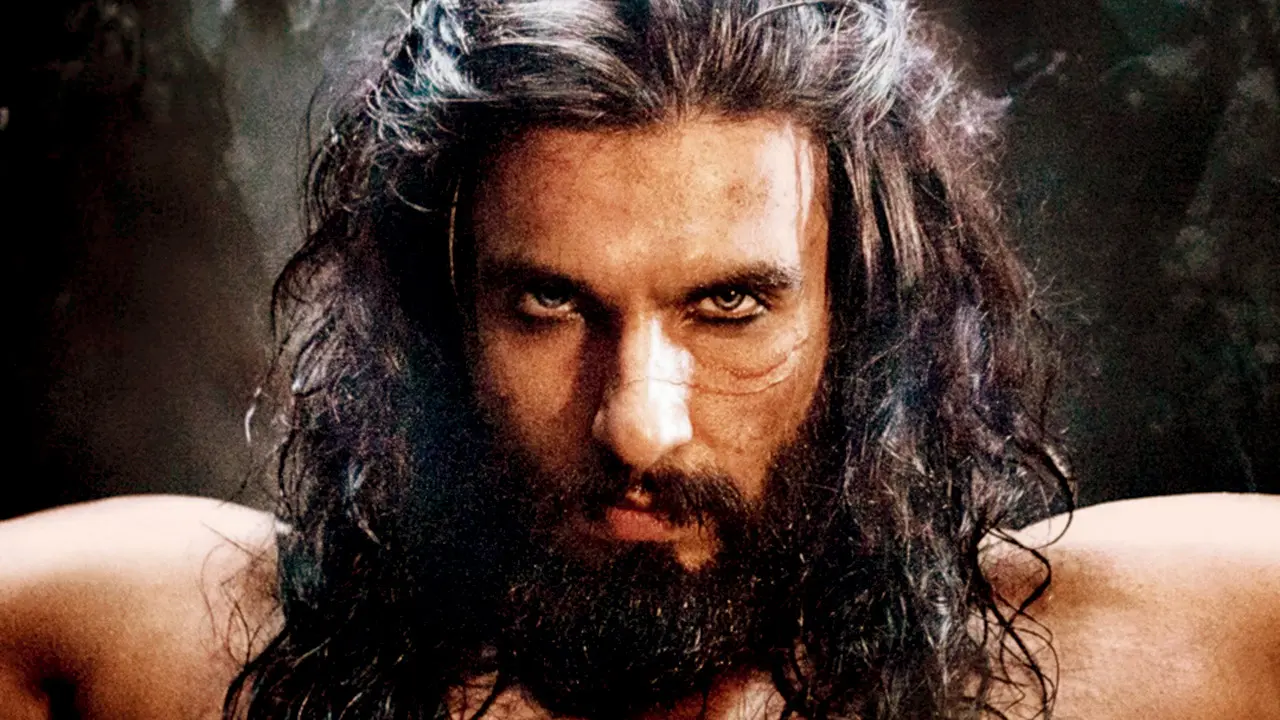
While Ranveer Singh and the makers of Don 3 lock horns over filming commitments, it’s the industry’s artistes who stand to lose the most. While some might have lost wages due to a halt in filming, others are now under pressure to say no to working with the star
Arpika Bhosale (MID-DAY; May 31, 2026)
We all adore Ranveer Singh; we might not all be fans, but in an industry full of leading men who took themselves too seriously, he was a breath of fresh air. His knowledge of obscure movies and songs, his kitschy fashion sense made him relatable and interesting. Other stars were a little too “polished” and reserved. Enter Singh, who broke out into songs mid interviews, wore eye-watering pink suits, and said and did whatever he wanted.
But his wilfulness has earned the ire of the Federation of Western India Cine Employees (FWICE), which recently put out a non-cooperation directive against the actor after he pulled out of Don 3’s production. The May 25 notice requested around 38 different artist associations and unions to boycott any projects linked to Singh, and all hell broke loose.
In media reports, many have alleged that this is a tactic to get Singh to pay out the Rs 45 crore already invested in Don 3’s pre-production by Excel Entertainment and its owners, Ritesh Sidhwani and Farhan Akhtar. Industry stakeholders, though, insist that the real motive is to send a message: it’s high time that stars understand they cannot exit a project willy-nilly.
Either way, though, it’s the last rung of Bollywood that will suffer the most. Hundreds of technicians who committed their time and expertise to Don 3 have now lost weeks of work because of this mess. And even if FWICE’s boycott is carried out, once again, it’s technicians who will lose out on paying work.
Ranveer Singh’s statement
“Throughout the recent developments surrounding Don 3, he [Ranveer Singh] has consciously chosen to maintain silence, believing that professional discussions and personal equations are best handled with dignity, maturity and mutual respect.
While several narratives and speculations have surfaced over time, Ranveer has never considered it necessary to respond publicly or contribute to conjecture. His focus remains firmly on his work and the commitments ahead. Choosing restraint and grace in moments like these has always been a conscious decision on his part, and he will continue to maintain the same stance.”
‘We can’t afford to say no to work’
Union head and veteran spot dada Sharad Shelar says worker can’t afford to turn away paying work
The Cine Costume Make-up Artiste and Hair Association was established in 1951 and has grown to a 7000-strong membership, including almost every kind of artiste who works in Bollywood. The union head, Sharad Shelar, aka Sharad dada, is a senior spot dada who has worked with every actor one can imagine. He explains why Singh backing out of a mega project like Don 3 hits all the technicians attached to the film.
“Usually when actors as big as Ranveer [Singh] back out of projects, the film is shelved in its entirety. So let’s say a technician would have worked on that film for three months — he now has to look for a job to compensate for the lost income. And jobs in the industry have become scarce anyway because such big-budget movies are not made often anymore.”
Shelar is angry about the non-cooperation directive issued by FWICE, and alleges that none of the unions under the federation were consulted before the call was taken. “There are 38 registered unions under FWICE, my union alone has 7000 people. None of these producers or guild members spoke to us even once before banning Ranveer. There are no big movies being made that employ technicians by the dozens, and now they are asking us not to pick up some work we might get here and there also? We do not have that luxury,” he says.
“The situation now is so bad that workers are beating each other up to get work for the day. If I say I will take Rs 100, another worker says he will work for Rs 50,” he rues, “Paristhiti itki vait aahe ki technician ekamekana panas rupe saathi martaath (Things are so bad, we’re beating each other up over Rs 50 work).” Then there are veterans who are masters of their craft, who refuse to squabble over pennies and end up jobless, he adds.
Shelar, who turned 71 this year, tells us that associations like theirs have helped artistes with funds in medical emergencies, post retirement and even during weddings. But producers are nowhere to be found during their time of need.
Shelar says that he recently visited a movie set in Goa and realized that hardly any of the technicians were members of federations. “So they will not fight for us when big production houses employ, say, just five out of 25 technicians from unions. Then they’ll turn around and say don’t work with so-and-so artiste?” he asks.
‘Don sab ko dekhni thi’
Bharati K Dubey, veteran entertainment journalist, says she still hopes for an amicable settlement for the sake of the industry
The problem with such non-cooperation directives is that the daily worker really suffers. Ranveer and the directors/production house will not have much of a dent in their income, or they might make up for the loss somewhere else. But the technician can’t do that.
At a time when the film industry is in such dire financial conditions, we must keep our egos aside and work together. I hope the producers and Ranveer come to an understanding soon and the already struggling industry doesn’t take this unnecessary hit. Also, Don sabh ko dekhni thi (We all were looking forward to watching the movie)!”
‘Artistes have no money to buy essentials’
The top rungs of the industry don’t really get how bad things are for the last rungs of the industry right now. They are struggling to eat, pay rent, buy essentials, and now this non-cooperation directive will hit them too. The movie producers and star will move on from this, but they’re completely detached from the reality of how it will impact everyone else.
- Aditya Kriplani, Actor, director-producer
‘The trend of walking out needs to stop’
FWICE head Ashoke Pandit an SOP is in the works to ensure accountability from anyone who rescinds their production commitments
Ashoke Pandit, the head of FWICE, says that the trend of artistes pulling out from projects has been going on for too long. He hopes that practice will end once they draft an SOP on the time frame within which an artiste can back out of a project in good faith.
“It’s not about going against Ranveer Singh; we have seen this trend happening too often. Last month, I had a case where an assistant director and four people in their team told the producer at the last minute — just before they were to board a flight to the shoot location — that they were dropping out of the production,” he says.
“We are currently in talks with all four producer bodies, The Indian Motion Picture Producers Association (IMPPA), Producers Guild of India and Western India Film Producers’ Association (WIFPA) Indian Film and TV Producers Council (IFTPC), and we are trying to bring in some guidelines that will ensure accountability of not just actors, but anyone including a producer commits to an actor but drops them at the very last minute,” says Pandit.
As of now, the industry does not have any official guidelines on this issue. The lack of regulation is hurting the industry at a time when it is barely hanging on by a thread. “In the case of Don 3, the shoot was to begin, workers were flying in, hotel rooms had been booked. When an actor commits to a project in good faith, the production house takes their word for it and covers these pre-production costs. Excel [Entertainment] spent Rs 45 crore on this,” he adds.
‘Law is on Singh’s side’
Lavin Hirani, a lawyer with 15 years of experience in showbiz cases, says the boycott is not legally binding, but can make for leverage in settlement talks
Hirani & Associates is a full-service law firm in Bandra, specializing in IP, Media & Entertainment, and litigation advisory. The firm serves top-tier clients, including leading production houses, A-list talent, and international music labels. Founder Lavin Hirani has over 15 years of experience in India’s media and entertainment sector and has had clients such as Shah Rukh Khan, Sunny Deol, and Rana Daggubati, as well as major studios and streaming platforms.
On the Ranveer Singh–Don 3 dispute, Hirani says cases of this kind are not new to the industry, but that the sequence of events matters. “From what I understand, the film was announced in 2023 and stayed largely dormant for a long stretch. After Dhurandhar released and performed strongly, Ranveer exited the project,” he says.
“We don’t know precisely what happened. There are reports of creative differences, and the timing is worth noting, coming soon after a commercially successful release,” he adds.
On the FWICE directive itself, Hirani is careful to separate what it is from what it can do. “A non-cooperation directive is not legally binding, and it is not a ban,” he says. “In practice it can create pressure toward a settlement and complicate an actor’s future productions, but it carries no force of law,” he adds.
He also clarifies how the matter reached FWICE. “Going by FWICE’s own account, the directive did not originate from a complaint by Excel Entertainment directly. The grievance was filed by Farhan Akhtar, the director of Don 3, before the Indian Film and Television Directors Association, which then forwarded it to FWICE. The producers cited pre-production losses.”
Hirani notes the dynamic can run the other way too. “There are also cases where producers drop actors once a bigger star becomes available, and little is said about the effect on the actor who is let go,” he says. “As a general industry pattern, you also see actors keep more than one producer waiting before committing. These tensions are not one-sided.”
He draws a structural contrast with Hollywood. “There, producers cannot hire outside the guild, and the guild disciplines producers who refuse to sign union contracts. Here, a federation is disciplining the actor for leaving a film. That inversion is structurally unusual rather than standard practice,” he observes.
On what follows if an actor is said to have breached, Hirani is precise about the remedies. “People loosely call it ‘specific performance,’ but a court will generally not order specific performance of a personal-service contract — you cannot compel an actor to perform,” he says.
“Occasionally a court may grant a narrow negative injunction restraining the actor from taking up competing work for the term of the contract, but that is rarely granted and tightly limited. In most cases the producer’s realistic remedy is a claim for damages.” He expects one of two outcomes. “Either a settlement that closes the matter, or litigation that does not.”
Don 3 fallout: Did Ranveer Singh call a truce with Farhan Akhtar?
10:51 PM

HINDUSTAN TIMES (April 23, 2026)
In a fresh twist surrounding the Don 3 row between actor Ranveer Singh and actor-filmmaker Farhan Akhtar, a truce seems to have been called.
After walking out of the film and Farhan claiming losses over recce and pre-production work, Ranveer has decided to return his signing amount of Rs. 10 crore to the production house Excel Entertainment, as per a Free Press Journal report.
To compensate for the pre-production amount spent by the producers, Ranveer has reportedly also offered a stake in his next film, tentatively titled Pralay. Details of the arrangement, including the size of the stake, remain undisclosed for now.
We reached out to both parties for a comment or clarification on the matter, but received no response till the time of going to press. htc
HOW IT STARTED
It all started in December last year, when Ranveer walked out of Don 3 after the release of Dhurandhar, and Farhan demanded Rs. 40 crore as compensation for the pre-production costs. He also claimed Ranveer had approved the script at every stage.
Meanwhile, Ranveer was upset about Don 3 being put on the backburner over his career slump. The issue was escalated with members of the Producers’ Guild stepping in to mediate, including Karan Johar, Hrithik Roshan, Rajkumar Hirani, Zoya Akhtar, Sajid Nadiadwala, Ramesh Taurani, Kumar Mangat, and Amritpal Singh Bindra.
Universal Music India acquires a stake in Excel Entertainment; can corporate investments ever be married to creativity?
9:45 AM

Akshita Maheshwari (MID-DAY; January 25, 2026)
In December last year, when we first heard rumours of Netflix acquiring Warner Bros, the thinkpieces came thick and fast. People said this was the final nail in the coffin for theatrical films, the moment algorithms would officially replace auteurs, and boardrooms would decide not just what gets made, but what kind of stories are even worth telling. A streaming giant swallowing one of Hollywood’s oldest studios seemed to confirm everyone’s worst fears, that cinema would finally become content, IP would matter more than ideas, and risk, originality, and the mid-budget film would be the first casualties.
Closer at home, Universal Music India (UMI) just acquired a 30 per cent stake in Farhan Akhtar and Ritesh Sidhwani’s production house, Excel Entertainment. This comes after Saregama Music invested in Bhansali Productions in December last year, and vaccine billionaire Adar Poonawalla acquired a 50 per cent stake in Dharma Productions in 2024. When corporate deals that haven’t even gone through in the West cause such a stir, is there any panic of a corporate takeover of the movies at home?
Managing director at Mukta Arts production house, Rahul Puri, says, “Giants have always existed in the business. Mukta was one of the first companies that went public and raised money from the equity markets. Then you had PNC [Pritish Nandy Communications], Balaji [Telefilms], Tips [Industries] in those early days. Even when there was a corporate interest, companies — like the [Aditya] Birla Group with Applause — tended to build organically. They didn’t necessarily partner with anyone because they had enough capital to come in and attract talent.”
He adds, “Now the mindset has changed. Corporate houses have recognized the value that creators and production houses bring. They bring a network of talent and relationships, and our business is very much about those networks.”
The style of filmmaking too has changed today. Going to the cinema is a theatrical event, reserved only for big-ticket spectacles.
“Whether it’s action films with big sequences or films on a large canvas with international travel, budgets are much bigger,” says Puri, “There’s also the ambition to make Indian films competitive globally, so quality has to go up, which affects production costs. Corporate investment is a way to de-risk producers while also giving them capital to be able to make these large projects.”
Among the three deals mentioned, interestingly, two of them happen with music labels entering films. In Indian cinema, music and films have always shared a special relationship, in business and in bed. Even bad films could rely on a banger album to be able to succeed. Before phones and social media, music was the first taste of a film, and often the biggest factor that invites the audience in.
“Unfortunately though in India, music is perceived as free. We never want to pay for music. Since the piracy boom, music has been seen as an add-on to everything else,” says Rajdeep Anand, who works in music licensing, “With UMI and Saregama getting into films, music will finally get its due.”
For Anand too, the deal is like music to his ears. “The older model was that someone would come up with a movie and a set of songs, and then labels would bid for it. But now, everything in Excel’s future that relates to music will go through UMI. Universal doesn’t have to worry about any other player coming in. If I already know my slate for the next five to ten years — what’s coming on OTT, what’s coming in theatres — I can spend time developing new talent and strategically placing which singer gets attached to which project. It gives artistes a platform even before they start off,” he explains, “Look at something like Mismatched (2020-26), Kho Gaye Hum Kahan (2023), or Gehraiyaan (2022), or something as big as Dhurandhar (2025) — they could take much bigger bets with their music. Excel has always had a great ear for music, so I am hopeful that this collaboration will bring music to the forefront.”
Puri also adds, “It is also a play to give music labels a strong flow of content separate from their traditional business, which is essentially just music distribution. They’re taking advantage of a dynamic content monetization space.”
Filmmaker Arati Kadav, whom you may recognize from Mrs (2025), shares why she thinks corporates are investing in films. “First of all, there is always the charm of being associated with the film industry,” she says, “We hear of many films making Rs 100 or Rs 200 crore, but we confuse revenue for profit. Even if a film makes Rs 100 crore, the production cost has gone up so much that the profit we earn is very less.”
Puri argues that big-ticket films might actually help with cash flow. “If a film like Dhurandhar [Jio Studios] does really well, that money can flow into smaller films. Big stars can’t make infinite films, so the surplus has to go somewhere. Ideally, into more creative films.”
Kadav also agrees, “Corporates coming in might actually impart some autonomy to production houses. For example, Dharma [Productions] could make the beautiful film, Homebound (2025) because they had the backing of Adar Poonawalla.”
We ask, what if algorithms start to dictate storytelling? She says, “Unfortunately, the climate has already become like that. Algorithms are dictating the shape of our stories already. Actors are chosen by follower counts. The world has become like that, regardless of corporations. At least if a producer with a good sensibility gets corporate money and support, and if they have good convincing power, they might actually be able to break out of that.”
Although Puri, Kadav, and Anand make this sound like a sweet deal, there are still sceptics who worry that this might mean a death for their creative vision. Filmmaker Aditya Kripalani shares his concerns, “Within corporations, you have a whole board of people and their aim is to not lose their job. I’m not saying they are wrong. But for them, the peak point of their life is to keep that job at the platform,” he says, “If I’m at a platform, it’s easy for me to have a checklist: Did it go to Cannes? Does it have a star? What numbers has that star’s previous film done? Once I have that checklist, my head will not roll if I take the film. But if I say ‘I like the film’ and the film doesn’t work, my head will roll.”
Kripalani calls back to when Netflix co-CEO Ted Sandoros said that he thinks Sacred Games (2018-19) may not have been the best choice to open in the Indian market; he would have liked to go with something more “populist”. “Exactly, there you go,” says Kripalani, “For me, the 100 per cent corporatization is when a platform makes a film. Because then the creative individual — which is the director — has no power. They are hired hands, no matter how big that director is.”
Eros International, a music giant, produced Raanjhanaa (2013), while Aanand L Rai directed it. When the film was re-released, Eros could change the ending of the film with AI, without the director’s consent, completely changing the meaning of the film. Rai was then dragged in a copyright infringement lawsuit by Eros for making Tere Ishk Mein (2025) too similar to Raanjhanaa.
An important loss in the race to corporatization is the mid-budget film. “The '1-crore films, we used to call them,” says Kripalani. According to him, movies will now split into big-ticket spectacles or OTT releases. The traditional trajectory for a director to get a big-budget would be to start with AD-ing, get to mid-budget, and then big-budget event films. With corporatization, we may just be witnessing the death of a mid-budget hit.
“In the 1990s, you used to get 2 to 3 such films a year each from Ram Gopal Varma, from Dharma [Productions], from Yash Raj [Films]. Even Munna Bhai MBBS (2003), Rock On!! (2008), Dil Chahta Hai (2001) were all mid-budget films. A film made for a certain budget with a known face, these are gone,” he says, “In the last couple of years, you have seen Superboys Of Malegaon (2024), Laapataa Ladies (2024), and maybe one or two more — there’s a handful of this kind of film that I can name.”
“I think the people who are in the biggest problem are the mid-level people. New people — like a crazy YouTuber making great content — can still get picked up. And if you’re already an established [Martin] Scorsese or [Christopher] Nolan, you’re okay,” says Kripalani, “But the people who have made five to eight films and are in the middle of their career. There is no platform left for them.”
But what do we lose when we lose mid-budget films? “We lose stories with depth. They may not deal with dark subjects, but they touch you deeply — family dynamics, interpersonal relationships,” says Kripalani, “The indie space deals with the darker sides of society. Big films are just popcorn films, which is fine. Now you’ll get either mindless spectacle or very dark films. When was the last time you got something like Dil Chahta Hai? That middle space is disappearing.”
Sunny Deol's action thriller with director Balaji to go on floors in February after 2-month delay due to Border 2
10:19 AM

Mohar Basu (MID-DAY; January 23, 2026)
Sunny Deol’s yet-untitled next, which marks his maiden collaboration with Farhan Akhtar and Ritesh Sidhwani’s banner Excel Entertainment, was to go on floors in December 2025. mid-day has learnt that after a shift in its production timeline, the film — touted to be a big-budget action thriller — is set to roll in the first week of February. The leading man will report to the set on February 10.
A source close to the development revealed that the change was mutually agreed upon to accommodate the actor’s commitments in January.
The insider said, “Sunny is tied up with the promotional campaign of Border 2. Rather than rushing into the shoot, the makers felt it would be best to push the project and begin with complete focus.”
Prep on the film has begun, with director Balaji having planned a tightly scheduled shoot. “The first leg kicks off in Andheri, Mumbai. Sunny has allotted bulk dates, and the idea is to wrap the project by summer 2026,” added the source.
Tuning up the band: Music labels bet on movie companies to hit the high notes
2:52 PM

Saregama & Universal’s investments in production houses aimed at a bigger play in entertainment industry: Analysts
Rajesh N Naidu (THE ECONOMIC TIMES; January 9, 2026)
Mumbai: Recent investments by music labels Saregama India and Universal Music in film producers Bhansali Productions and Excel Entertainment, respectively, point more to a larger play in the entertainment sector than consolidation of film production houses, industry experts told ET.
These investments are disparate both in structure, strategy and goals as opposed to the Adar Poonawala-Dharma Productions deal, and they have been triggered largely by the bearish business conditions in the music industry, they added.
"After a few years of bull run of over 20% compounded annual growth rate in revenue from streamers, YouTube and digital sources, labels today are seeing a bear phase as the industry consolidated, streamers merged or shut shop and free streaming is moving towards paid subscription," said a top executive at a leading industry player, on the condition of anonymity.
"Some of these labels seem to grow through reverse consolidation to build acquisition moats and create a robust pipeline. They may end up producing films," said the executive cited immediately above.
Another aspect that has triggered these investments is the fiercely competitive space of buying music rights in the open market.
"These investments ensure consistent availability of new content at a reasonable cost. In the past few years, competition intensity for music rights in the open market has become too high," said Vaibhav Muley, lead analyst, media and entertainment sector, Yes Securities.
Labels pay Rs. 10 crore-Rs. 33 crore per film if they buy music in the open market, shared analysts. A multi-year deal for music with a production house is almost 30-50% cheaper for labels, they pointed out.
Business Case
Also, these investments are effective from the standpoint of return on capital employed (RoCE) ratio-how effectively a company generates profits using its capital. Analysts shared that monetizing music across avenues provides RoCE of 30-40%, while films generate RoCE of 11%. This shows why buying a stake in production houses is a relatively less risky proposition than directly producing films.
Acquiring stake in production houses is also a win-win strategy, pointed out analysts.
"Today, labels have reasonably good cash on books. They are looking for low-cost avenues to buy music. Investment in production houses is one such route. Production houses get a minimum guarantee amount to start a film and labels in turn get music rights and ownership of films in proportion with their stakes," said an analyst, who declined to be named.
Furthermore, consolidation in the music label industry has prompted incumbents to look for adjacent diversifications.
"Labels are chasing growth. Acquiring labels have become expensive after consolidation (three labels shut shop). Then, there is subdued growth in revenue from streamers due to a shift in subscription mode. These deals reflect these realities," said the analyst cited immediately above.
Industry experts say the distinction between these investments and the Adar Poonawala-Dharma Productions deal.
"These investments do not amount to consolidation among production houses. They are different from Adar Poonawala-Dharma Productions, which is about equal partners. Whereas, after the investments, labels will function as 'strategic investors.' Along with owning music, they will own film rights in proportion with their stakes," explained Gaurav Dagaonkar, co-founder and chief executive officer of Hoopr, a leading platform for music licensing.
Analysts expect labels would integrate talent from their talent management division into the films produced by the production houses more effectively, right from the scripting stage, while also improving the monetization of music assets in these entities.
Universal Music acquires 30% stake in Excel Entertainment
10:48 PM

Farhan Akhtar and Ritesh Sidhwani’s production house valued at Rs. 2,400 cr
Javed Farooqui (THE ECONOMIC TIMES; January 5, 2026)
Mumbai: The India unit of Universal Music Group (UMG), world's largest music company, has acquired a 30% stake in Farhan Akhtar and Ritesh Sidhwani’s Bollywood production house Excel Entertainment at an enterprise valuation of Rs 2,400 crore, in one of the largest deals in the film entertainment business.
Under the agreement, Akhtar and Sidhwani will retain creative control, while UMG gains a foothold in the video business and strengthens its Bollywood music catalogue. Devraj Sanyal, Chairman and CEO of Universal Music India & South Asia and SVP of Strategy for Africa, Middle East and Asia, will join Excel Entertainment’s board.
The deal marks the third major M&A transaction in the Hindi film industry in recent times, following Adar Poonawalla’s Rs 1,000 crore investment for a 50% stake in Dharma Productions and Saregama’s Rs 325 crore investment in Sanjay Leela Bhansali’s Bhansali Productions.
The transaction highlights a renewed consolidation wave in the media and entertainment sector, as companies chase scale, capital and stronger IP portfolios amid shifting consumer behaviour. UMG becomes the second music label after Saregama to invest in a film production company, expanding its presence beyond music into filmed entertainment.
Ritesh Sidhwani and Farhan Akhtar, Founders of Excel Entertainment said, “India’s entertainment landscape continues to grow from strength to strength, and this is the perfect moment to build meaningful global collaborations. We’re excited to partner with UMG in what we believe will be a truly creative and transformative alliance—one that unlocks fresh opportunities for artists and repertoire across music, film, and emerging formats. Together, we aim to take culturally rooted stories to the world.”
Vishal Ramchandani, CEO, Excel Entertainment said: “This partnership with UMG marks a pivotal step in our journey to broaden creative opportunities and tell Indian stories with a global lens. With a shared vision for innovation and excellence, we aim to transform Excel into a creative global studio—one that brings clutter-breaking, original content to audiences across platforms and geographies.”
Adam Granite, UMG’s CEO of Africa, Middle East and Asia (AMEA), said: “Today’s announcement further strengthens UMG’s position in India, a dynamic and strategically important music market for the group globally. Original soundtracks remain at the heart of India’s fast-growing music market, with Indian listeners showing a growing desire to access more music in that genre. By investing in and partnering with Excel Entertainment, UMG will be uniquely positioned to contribute from the earliest stage to Excel’s future endeavours and throughout the creative process, providing huge benefits to both parties.”
Devraj Sanyal said: “Farhan and Ritesh have built an exceptionally impressive business, and we’re thrilled to be working with them on the next phase of their journey. The Indian film scene presents a hugely exciting opportunity for music and the music-led entertainment business, and Excel is the perfect partner for us to work with going forward”.
The investment and strategic partnership, he added, would help UMG deepen its presence in a high-potential recorded music market.
India is the world’s 15th-largest recorded music market by revenues, according to the latest IFPI data, with strong linkages between the country’s audio-visual and music sectors. The opportunity is further underpinned by more than 375 million OTT viewers and an estimated 650 million smartphone users.
Founded in 1999, Excel Entertainment has released more than 40 films and scripted series. Its breakout film Dil Chahta Hai set the tone for a slate that includes Lakshya, Don, Zindagi Na Milegi Dobara, Fukrey, Dil Dhadakne Do and Gully Boy.
The company was also among the earliest studios to embrace streaming, producing Amazon Prime Video’s first Indian original series Inside Edge, followed by titles such as Mirzapur, Made In Heaven, Dahaad and Netflix’s Dabba Cartel.
AZB & Partners acted as legal counsel to Universal Music Group. Ernst & Young and KPMG served as transaction advisors to Excel Entertainment and Universal Music Group, respectively. Morgan Stanley advised Excel Entertainment, while Khaitan & Co acted as its legal counsel.
-------------------------------------------
Javed Farooqui (THE ECONOMIC TIMES; January 6, 2026)
Mumbai: The Universal Music Group-Excel Entertainment deal could catalyse fresh foreign merger and acquisition interest in India's media and entertainment industry, with the Maharashtra government promoting Mumbai as a global hub to produce creative content, people familiar with the development said.
At least three similar transactions are currently under discussion, though details remain under wraps due to commercial sensitivities, said a top-ranked Maharashtra government official closely tracking the discussions, requesting anonymity.
Universal Music Group's India unit has agreed to acquire a 30% stake in Farhan Akhtar and Ritesh Sidhwani-promoted Excel Entertainment at an enterprise valuation of Rs. 2,400 crore, marking one of the largest deals in India's film and entertainment space.
The Maharashtra government was involved in facilitating the transaction.
The deal follows a series of consolidation moves in the sector, including Adar Poonawalla's acquisition of a 50% stake in Karan Johar's Dharma Productions for Rs. 1,000 crore in 2024, and Saregama's Rs. 325 crore investment in Sanjay Leela Bhansali's Bhansali Productions.
"The film industry is ripe for consolidation, and companies with strong IPs are likely to attract foreign investors," the official said. In the past, several Hollywood studios like Disney and Paramount either scaled back or exited the Indian market due to challenges around scale.
"Global companies today look for five things when choosing where to invest: talent, policy stability, respect for IP, speed of execution and a complete ecosystem. Mumbai and Maharashtra offer all five. That is why we are seeing sustained global interest across music, films, OTT, gaming, AVGC and the creators economy," Maharashtra CM Devendra Fadnavis said announcing the Excel-Universal deal.
UMG CEO for Africa, Middle East and Asia Adam Granite said the company will remain a minority investor in Excel Entertainment, while retaining a say in creative decisions, even as Sidhwani and Akhtar continue to exercise creative freedom.

Sonakshi Sinha, Jyotika to butt heads in the courtroom for Ashwiny Iyer Tiwari's film
9:15 AM

After years in limbo, Ashwiny Iyer Tiwari’s legal drama finally kicks off with a new cast
Mohar Basu (MID-DAY; June 8, 2025)
After two years of delays at the negotiation table, Ashwiny Iyer Tiwari has finally kicked off her courtroom drama. The Amazon Prime Video film, originally set to star Kareena Kapoor Khan and Kiara Advani, will now be headlined by Sonakshi Sinha and Jyotika. While the team had planned to start the shoot in March, it only began last week in Malvani, Madh Island, and Vile Parle, where courtroom interiors have been recreated.
An insider revealed that the original plan with Kapoor and Advani didn’t materialise “because it didn’t align with [our] timelines and creative direction.”
“Early this year, after shelving the initial version, a fresh draft was locked. Sonakshi came on board after extensive look tests and readings. She brings a grounded intensity to the role that impressed the creative team.”
Produced by Farhan Akhtar and Ritesh Sidhwani’s Excel Entertainment and Harman Baweja’s Baweja Studios, the yet-untitled film revolves around a legal battle rooted in social justice and personal trauma. The source further informed that Sinha plays a fierce lawyer.
“The script is gritty and is not your typical courtroom drama. The legal arguments have emotional backstories, and both female leads have equal weight. Jyotika starts filming by mid-June, and their courtroom scenes are expected to be the highlight of the film.”
The film is expected to wrap up principal photography by year-end.
Priyanka Chopra hints at signing a Hindi film: "I have something up my sleeve"
8:07 AM

As actor Priyanka Chopra Jonas completes 25 years in the glam world, she talks about the hurdles she has overcome and always “being like water, not rigid”
Rishabh Suri (HINDUSTAN TIMES; December 4, 2024)
As 2025 draws near, actor Priyanka Chopra Jonas is all set to celebrate a remarkable milestone — 25 years as a public figure, since her appearance in the Miss India contest in 2000. Talking to us, Jonas shares, “I have just finished shooting for the last bit of Citadel (second season).”
Looking back, the 42-year-old acknowledges the hurdles she’s overcome to carve a place for herself in the global entertainment landscape: “But I feel blessed that I was not completely alien to working in the US. My schooling as a teenager happened in America, so that really helped. The process of filmmaking is the same everywhere. It’s the cultural differences that make them different industries. I can’t expect it to be Hollywood-like in Bollywood, or vice versa. I feel you should be like water, and not rigid. I’ve been like that my whole life... keep quiet, listen and find your place. I was thrown into it to figure it out.”
After making her Bollywood debut with The Hero: Love Story Of A Spy in 2003, she delivered hits such as Fashion (2008) and Bajirao Mastani (2015), among others. In 2015, she shifted base to the US and became the first South Asian actor to lead in an American network drama series, Quantico.
Ask her about the challenges she faced while finding her footing in the West, and she says, “I have been a public person for more than half my life. I am extremely private. So, the hard part is to manage expectations.”
“I have changed a lot. Being a professional, being able to deal with failure and change... that’s the hardest part. I am not someone who talks about my vulnerabilities or hardships very much. There are some people who do, and I find it very... inspiring. I was raised to be tough,” adds Jonas, who’s part of the campaign Can’t Stand Still by Johnnie Walker Refreshing Mixer.
She further says, “I am someone whose ethos in life is to keep walking, moving forward. When this campaign was brought to me, it was a no-brainer. I just had to keep walking — in my life and career. I am not daunted by ambition. I’ve always said everyone can have big dreams. You have to just keep moving forward.”
A HINDI FILM IN THE PIPELINE?
While Jonas makes frequent trips to India, we are yet to hear about her next Hindi project after The Sky Is Pink (2019). So, is a Bollywood outing in the pipeline? “I meet many filmmakers here, read scripts. I have actively been looking for something I want to do in Hindi. This year was busy for me. But I have something up my sleeve, I will leave it at that,” she chuckles. Is that “something” a hint that Jee Le Zara is on the cards? She says, “You will need to speak to Excel (Entertainment, Farhan Akhtar’s production house) about that.”
Struggling movie production houses may open their doors to buyers
10:24 AM

Cos showing interest in film production houses, which have been battling high costs, to broaden their vision: Analysts
Rajesh N Naidu (THE ECONOMIC TIMES; December 3, 2024)
A consolidation wave is likely to build steadily among film production houses in the coming months as their costs in running operations mount and interest of large and mid-sized corporations in the entertainment business increases.
Producers, independent consultants and trade analysts who spoke with ET shared that in the coming months large and medium-sized companies may acquire either a big or a bunch of mid-and-small-sized film production houses as their vision is not restricted to merely film business.
Ram Mirchandani, founder, Rampage Motion Pictures, a production house, said, "The Dharma Productions-Adar Poonawala deal has paved the way for some consolidation in the industry. We foresee either big companies acquiring well-established production houses or medium-sized companies acquiring a bunch of small boutique production houses."
A common challenge which most production houses face today is the cost and time involved from developing film projects to obtaining the right material. Developing scripts, bibles, buying re-make or other rights and then high fixed expenses in running a production house are unavoidable costs. Many a time, these costs are not recovered as projects get shelved for a variety of reasons.
"So, there is a need to fund costs. If you have investments, you can produce a film and leverage better on satellite and digital rights," said Ram Mirchandani of Rampage Motion Pictures. Changing dynamics of cost of film-making and performance of films at the box office have been another bane for production houses as they are unable to recover their investments.
Girish Wankhede, a movie trade analyst, said, "Production houses have been working on thin margins. Earlier, a hit film would recover the losses of four flop films. Today, a flop film wipes out the gains from four hit films. This shows production houses are not making enough money on their investments."
These are the reasons why production houses need money and could serve as lucrative investments for corporations. Post the Dharma Productions-Adar Poonawalla deal, there are reports which suggest that production houses Excel Entertainment (co-founded by actor Farhan Akhtar) and Abundantia Entertainment are also looking to raise money through selling stake.
Independent consultants are of the view that the interest of corporations in acquiring production houses serves their goals beyond the film business.
Shrirang Nargund, a veteran and independent consultant on entertainment business, said, "I think corporations have a bigger vision than merely investing in film business. They may want to exploit the creative talent of production houses in launching various business verticals such as gaming, web series, interactive social media content, and leveraging influencers on social media by providing them required infrastructure."
The lure of acquiring intellectual property (IP) of existing and future films is another reason corporations are showing interest in the business.
Vishesh Agrawal, a film producer, associated with films such as Dangal (2016) and Dream Girl 2 (2023) said, "Corporations do their due diligence. They will buy only those production houses which have strong IPs in their film libraries and a long proven performance across business cycles of the industry."
"It is not the first time corporations are showing interest in production houses. Earlier production houses managed without them. But today production houses need money because revenues are shrinking," he added.
On a macro level, producers believe that large corporations may want to leverage on the increasing emergence of Indian Cinema content as a 'soft power' in global markets. Producer and film business expert Girish Johar said, "Today, cinema is soft power. Indian content is consumed globally through streaming platforms. This provides a convincing reason for corporations to invest in the sector as it allows them to market and position a type of content."
When I joined Excel Entertainment, it was understood that I was on my own path, and my father, on his-Rahul Nair
8:19 AM
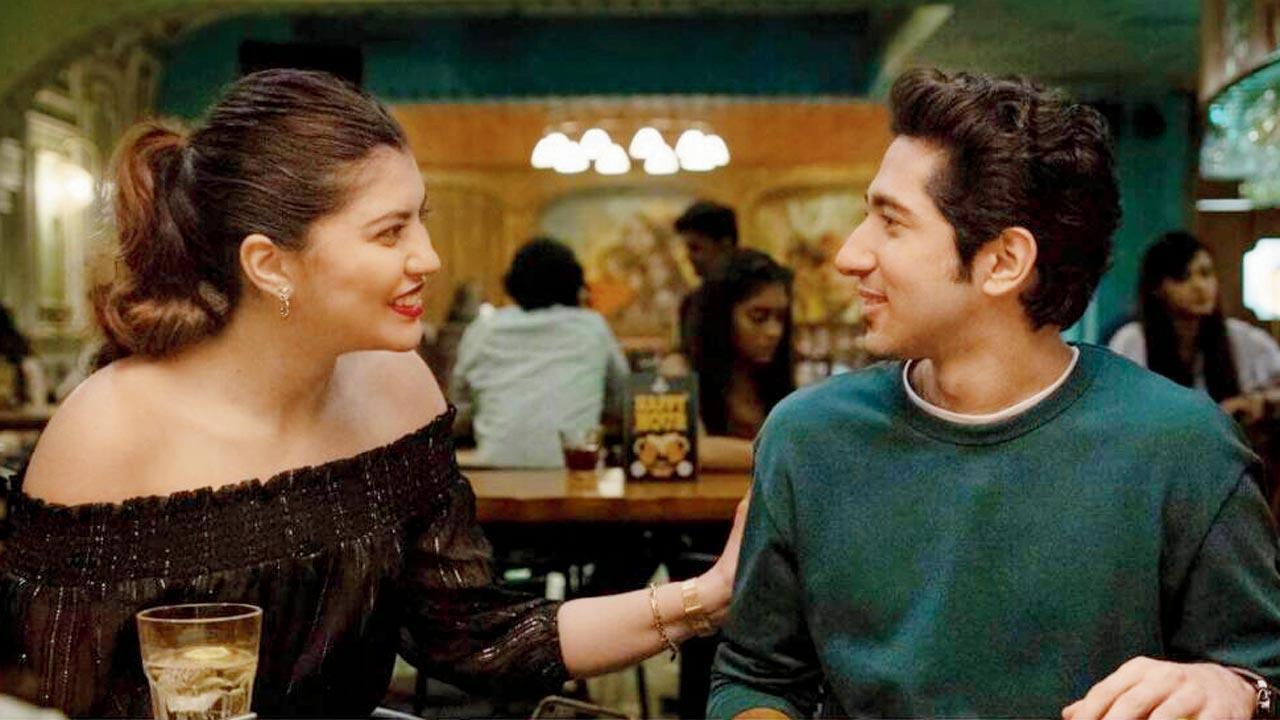
As he debuts under Farhan-Zoya’s banners, Eternally Confused... director says he doesn’t pitch ideas to producer-father Sameer Nair
Hiren Kotwani (MID-DAY; March 24, 2022)
Those who have seen Eternally Confused And Eager For Love will agree that director Rahul Nair, who presents the dilemmas of modern dating in the series, has a fresh and relatable style. It is refreshing to see that Rahul — son of content creator and Applause Entertainment’s CEO Sameer Nair — chose to make his directorial debut under Zoya Akhtar’s banner Tiger Baby Films, instead of collaborating with his father. A result of the nepotism debate that has rocked Bollywood over the past few years, perhaps?
Far from that. The debutant director says that he was always determined to carve his own path. Asked if he ever pitched a story or idea to his producer-father, Rahul offers an emphatic “Never”. “I’m never going to show anything to them. My step-mother [Sawari Alagh-Nair] works in the industry, too. But we have always kept work and family separate. When I joined Excel Entertainment as an intern, [it was understood that] I was on my own path, and my father, on his. We discuss our adjacent paths over dinner, but that’s the extent of it,” he says.
Reema Kagti, who serves as one of the producers on the Netflix series, says that it has been satisfying to see Rahul grow from an intern at Farhan Akhtar’s production house to a director. She recounts, “I first met Rahul about six-seven years ago when we had started prepping for Gold [2018]. He helped me with referencing [and research]. He has come a long way since.”
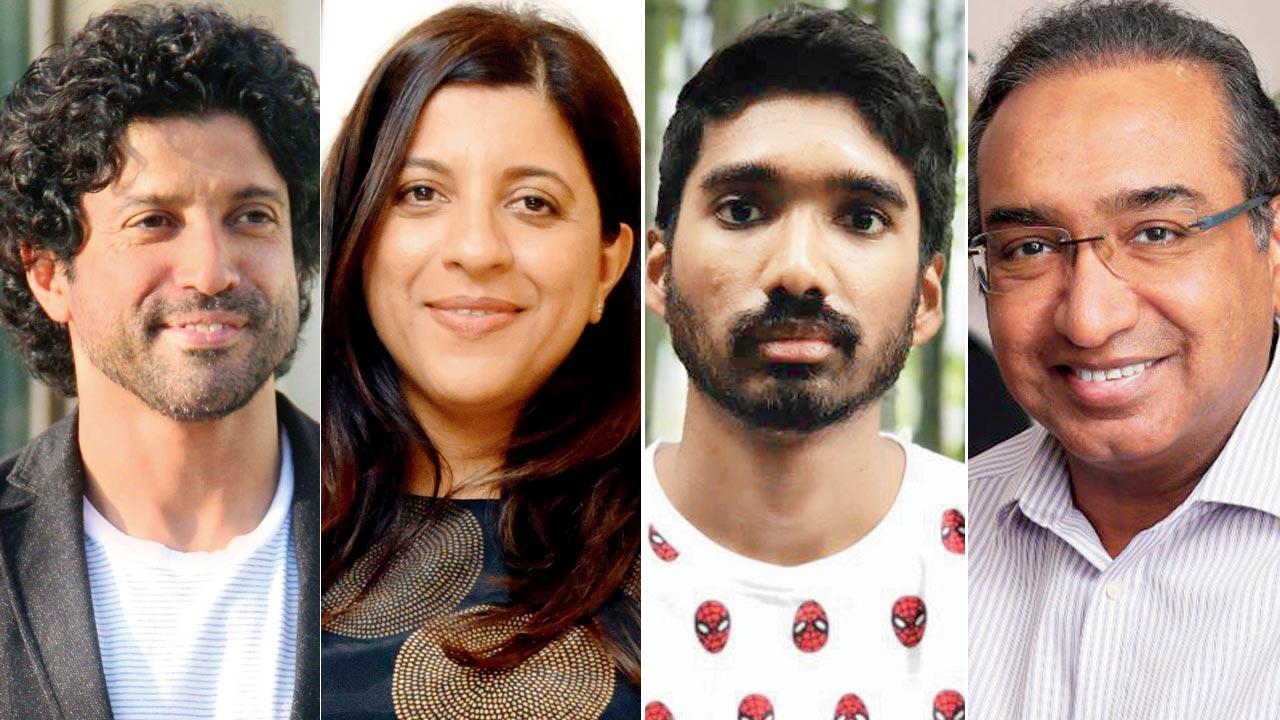
Farhan Akhtar, Zoya Akhtar, Rahul and Sameer Nair
Karan Johar, Netflix call off exclusive deal after 2 years
8:02 AM
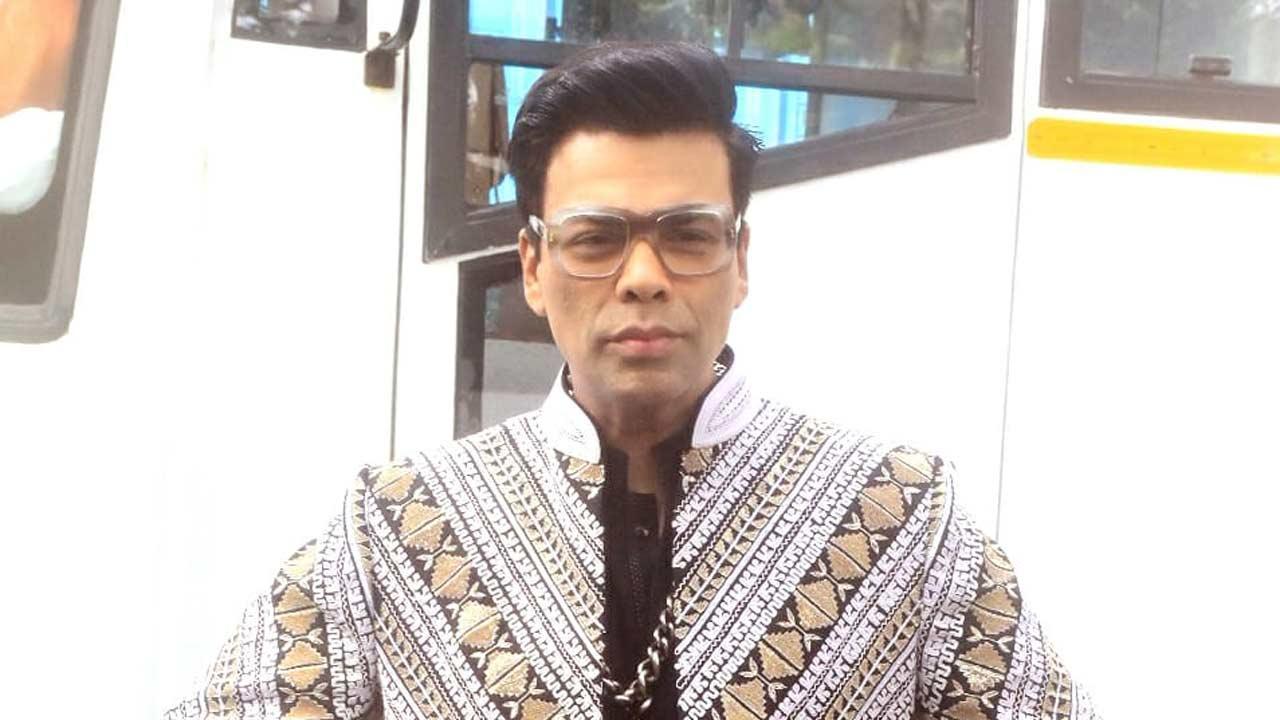
Gaurav Laghate (ECONOMIC TIMES; September 21, 2021)
Bollywood filmmaker Karan Johar and Netflix have ended their exclusive content deal signed in September 2019 whereby Johar’s digital content studio Dharmatic Entertainment was to supply all its content – fiction and non-fiction series and films – only to the California-based streaming giant.
“The deal has been called off and Dharmatic can now work with other video streaming services too,” a person with direct knowledge of the matter told ET.
Another person said the two will continue to work together on shows and series already signed and announced. “There are multiple projects which have already been green-lighted or announced, and deliveries of these are over the next 12-18 months,” the person said. “Then there are some returning seasons too. However, will they work together after that is not yet clear.”
Dharmatic, digital content arm of Johar’s Dharma Productions, is currently working on new series ‘Finding Anamika’, and the next season of ‘Fabulous Lives Of Bollywood Wives’. There is also an upcoming film, ‘Meenakshi Sundareshwar’ apart from a few other projects in the pipeline.
Queries sent to Dharma Productions and Netflix did not elicit any response till press time on Monday.
One of the sources cited above alleged that “too much interference” from Netflix has been one of the main reasons for the exclusive deal to be called off.
“The entire (content) industry knows it. They (Netflix) want everything in a certain way and sometimes it's frustrating and confusing. There is a disconnect between what they want and what they say,” he alleged.
At the time of announcing the deal with Johar two years ago, Monika Shergill, vice president – content (then director of international originals, India) at Netflix, had said the company allows its creators “full creative freedom and support”.
At that time Johar had told ET that it was “much more” than just a business transaction. “It is an emotional alliance, a relationship,” he had said.
It was Netflix’ biggest deal yet in the Indian market as an exclusivity clause was attached to it. None of the streamer’s Indian deals, be it with Shahrukh Khan’s Red Chillies Entertainment for films and web series or with Aamir Khan Productions for the actor’s films, had an exclusive arrangement.
ET had also learned that as part of the deal, Johar was exclusive to Netflix and except for pre-existing ‘Koffee With Karan', he wasn’t supposed to be a part of any show for any rival streaming service.
Last month, Netflix announced a multi-year partnership with Ritesh Sidhwani and Farhan Akhtar’s Excel Entertainment. As part of the non-exclusive deal, the production house will make a variety of projects under its series banner Excel Media and Entertainment, starting with ‘Dabba Cartel’ and ‘Queen Of The Hill’.
Netflix had entered India in January 2016 as part of its global rollout. It started commissioning content after April 2017 when Netflix was registered as a limited liability partnership (LLP) in India.
YRF begins vaccine drive; FWICE adopts no-vaccine-no-shoot policy
8:40 AM
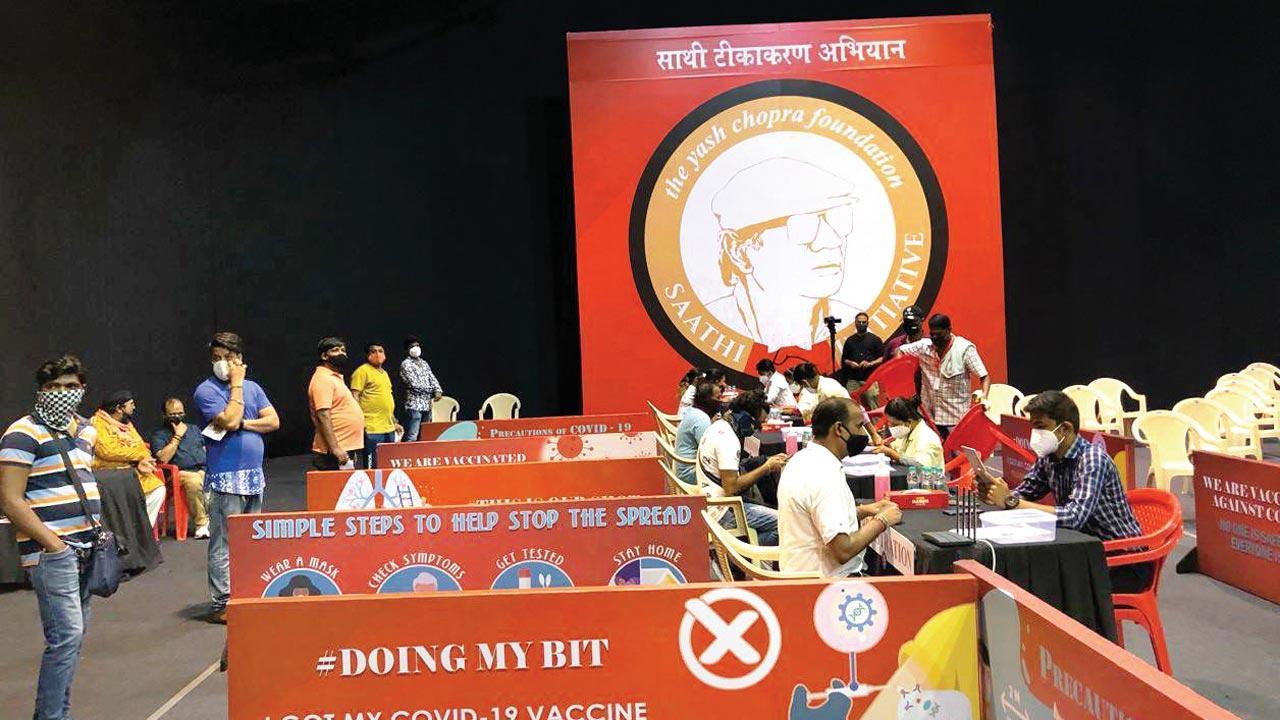
As YRF begins ambitious drive, film body introduces no-vaccine, no-work policy for its workers to tackle hesitancy
Mohar Basu, Uma Ramasubramanian (MID-DAY; June 9, 2021)
On Tuesday, filmmaker and Yash Raj Films’ (YRF) head honcho Aditya Chopra threw open the doors of his studio to kick off the vaccination drive, thus staying true to his word of inoculating 30,000 daily-wagers of the Federation of Western India Cine Employees (FWICE). Even as the first day saw close to 3,500 workers getting immunised, the drive has faced a setback in the form of anti-vaxxers in the industry.
With many harbouring misplaced fear and suspicions about the vaccine, the studio and FWICE find themselves bearing the additional responsibility of educating workers about its necessity. In a bid to encourage people to take the jab, FWICE has now adopted the no-vaccine-no-shoot policy where only those who have taken the first dose will be allowed on a set.
Pappu Lekhraj, who supplies the largest number of daily-wage artistes to Hindi film productions, reveals, “It has been a struggle on the part of the studio and FWICE to convince people to get inoculated. YRF is sponsoring the vaccination of workers and their families, while [the cine body] has announced that unless a worker takes the jab, he/she won’t be allowed back on set. Be it YRF or Bhansali Productions, there’s an emphasis on vaccinated workers.”
Going forward, several other production houses, including Excel Entertainment and Rohit Shetty Picturez, will follow the policy. Ashok Dubey, general secretary, FWICE, says, “Very few daily-wage artistes, workers and spot boys had filled the form [to take the shot]. But when the initiative kicked off, many others came forward. We have told them vaccination is compulsory, and that producers will call only those immunised for their shoots. So, out of the fear of losing jobs, people are now getting jabbed.”
YRF, one of the biggest studios of Bollywood, meanwhile is going full steam ahead on its multi-phase vaccination programme. Akshaye Widhani, senior vice president at the studio, said, “After inoculating all the employees at the studio and the crew members of our films, we have now started the vaccination drive for the Hindi film industry. This will result in the daily-wage earners returning to work and gaining financial stability. The drive will have to take place in phases, given the huge number of vaccines that are required to cover the industry.”
Death cover of Rs 25 lakh due to COVID-19 and hospitalisation cover of Rs 2 lakh have been provided-B N Tiwari, FWICE
8:21 AM
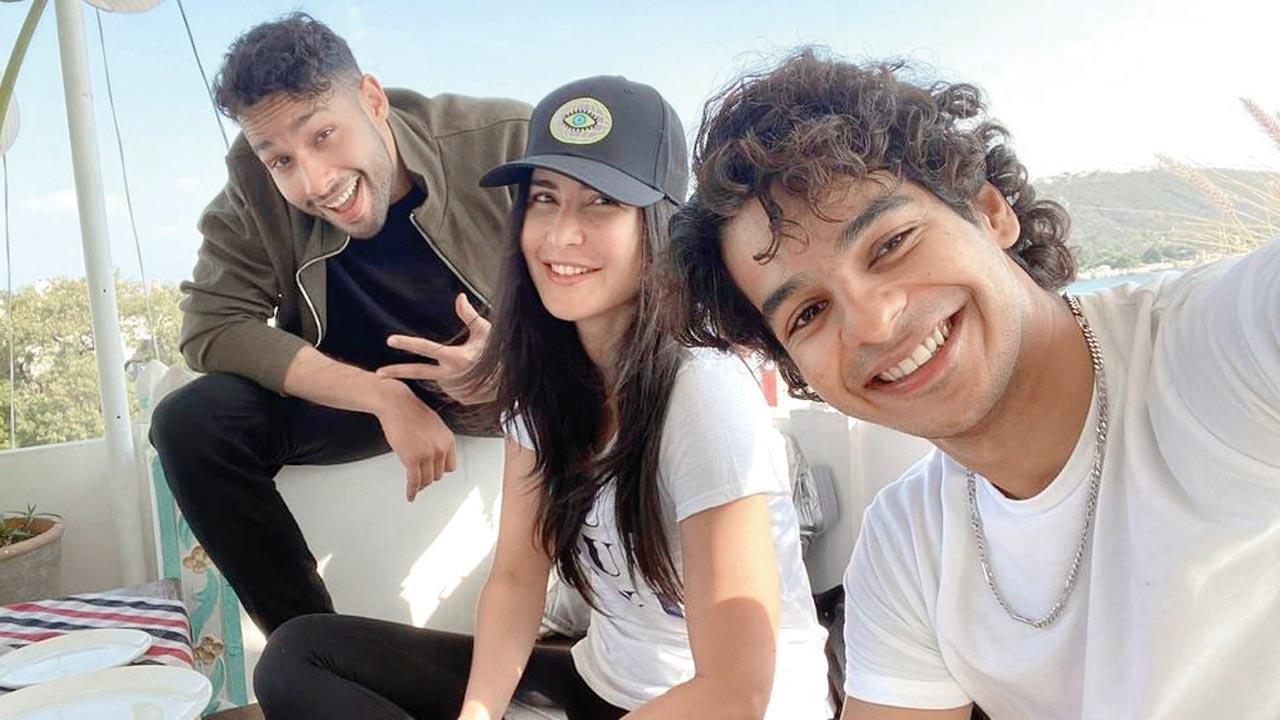
Phone Bhoot, starring Katrina Kaif, Ishaan Khatter and Siddhant Chaturvedi
With filming suspended, Guild VP distributes food to daily wagers; FWICE ensures studios bear treatment cost of those who contracted virus on set
Uma Ramasubramanian, Mohar Basu (MID-DAY; April 20, 2021)
The daily-wage workers, who had returned to Mumbai after the entertainment industry resumed work last October, have taken a beating again as the state government suspended filming till May 1. As they face economic strain while the Coronavirus cloud looms large, leading cine bodies have sprung into action to alleviate their troubles. The Federation of Western India Cine Employees (FWICE) is ensuring that the concerned production house bears the treatment expense for every daily-wager who has contracted the virus during the shoot of its project.
Sharing the details, Birendra Nath Tiwari, president, FWICE, says, “A death cover of Rs 25 lakh due to COVID-19 and hospitalisation cover of Rs 2 lakh have been provided. Recently, one of our members [who was working on a television show] met with an accident on his way back home, post 18 hours of the shoot, and lost his life. We ensured his family was given the Rs 25 lakh compensation, even though he didn’t die on the sets or due to the virus. He was an assistant art designer; we have offered the same position to his wife if she wishes to take it up. As far as the members who are not working are concerned, they can contact us if they [come down with the infection]. We’ll do everything we can, in our personal capacity.”
Manish Goswami, vice-president, Producers’ Guild, believes things will take a turn for the worse if the junta curfew is extended. “In my personal capacity, I am doing whatever I can for the daily wagers. I have distributed groceries among them,” he says.
Pappu Lekhraj, who provides junior artistes to Bollywood, says the Junior Artistes’ Association was happy to see the safety measures adopted by the production houses. “Yash Raj Films was shooting two major projects [Pathan and Tiger 3] in a bio-bubble; they were testing weekly and had put up all artistes at a Goregaon hotel. Excel Entertainment had mandatory bi-weekly RT-PCR tests on the sets [of Phone Bhoot and Dongri To Dubai], and it took care of anyone who came down with the infection. The chance of contracting the virus in such set-ups was negligible,” he recounts, adding that some television shows, unfortunately, cut corners. “They rely solely on antigen tests, which is not the right yardstick. Now, most serials have shifted base to Goa, Silvassa and Rajasthan. I appraise the safety norms [employed on sets] before assigning my artistes to them.”
For a better purpose
With film shoots stalled in the state, Ketan Rawal — who is among the biggest vanity-van suppliers in Bollywood — has deployed about 10 vans to Marol, Malad, Dahisar and Ghatkopar, where they are being used by frontline workers. Cops on COVID-19 duty have been utilising them to change, have meals and use the restrooms during their long shifts. Each vehicle is demarcated into three distinct areas that can host up to 10 people. Rawal has about 30 more vans that can be assigned to frontline warriors, should the suspension of shoots continue.
Katrina Kaif to team up with Ishaan Khatter and Siddhant Chaturvedi for an action adventure?
8:01 AM

MID-DAY (October 1, 2019)
 Word on the street is that Katrina Kaif has been approached by Farhan Akhtar and Ritesh Sidhwani's Excel Entertainment for an action-adventure film. If all goes as planned, the movie will have a refreshing cast as she will be joined by Ishaan Khatter and Gully Boy's breakout star Siddhant Chaturvedi.
A source reveals, "The movie is heavy on action and will see Katrina drive the proceedings. Like the studio's other productions, this film is high on concept and mounted on a big budget. The actor is busy with the Sooryavanshi shoot and will zero in on her next only after the film has been wrapped up. She is considering this as her previous project with Excel, Zindagi Milegi Na Dobara [2011], remains one of her most loved films."
mid-day reached out to Kaif, who remained unavailable for comment.
An analysis of Excel Entertainment and how Raees can be a game changer for them
4:19 PM

Box Office India Trade Network
The industry is going through a major downturn with corporate money drying up and most films going on the floors are not getting the budgets they would like. There are many reasons giving for this but eventually its down to content and how a section of the industry moved away from the Hindi roots to this so called new age cinema which we call DIL CHAHTA HAI cinema. For one because this film started it despite not being liked and secondly a section of the industry wanted to make and believed in it but only god knows why as the results were never there. A couple of weeks back we wrote about Disney India who tended to support this cinema with most of their films but whenever they went to rooted Hindi cinema with the story telling that the audience understood they delivered a ROWDY RATHORE, CHENNAI EXPRESS and DANGAL but sadly it was a few and far between.
Last week we wrote about the fiasco of DIL CHAHTA HAI (2001) which started this cinema which a section of the industry loved but the audience did not care for so if one of the biggest supporters of this cinema Disney India are written about then the actual biggest advocates Excel Entertainment have to be written about and more so as it will explain why this cinema just does not have a chance. Also what happens is that if there is some support for this new age cinema it is in the internet world as people do send mails saying these films are good but that is the opinion where watching is concerned which is box office plus television it tells a totally different story be it DIL CHAHTA HAI, ZINDAGI NA MILEGI DOBARA or BARFI. Its a case of being talked about but not really watched.
Nothing helps better to explain the failure of this cinema and its story telling style which has been probably picked up from everywhere in the World barring our own cinema than the filmography of Excel Entertainment. Disney India supported this cinema but at least they had a good outing occasionally like ROWDY RATHORE, CHENNAI EXPRESS and DANGAL which the audiences loved but Excel Entertainment were made of sterner stuff and did not flinch once and stuck to the new age cinema until now with RAEES.
Excel Entertainment has sixteen films in their filmography to date and all belong to the same cinema. The films are DIL CHAHTA HAI, LAKSHYA, DON, HONEYMOON TRAVELS PVT LTD, ROCK ON, LUCK BY CHANCE, KARTHIK CALLING KARTHIK, GAME, ZINDAGI NA MILEGI DOBARA, DON 2, TALAASH, FUKREY, DIL DHADAKNE DO, BANGISTAN, BAAR BAAR DEKHO and ROCK ON 2. Some of these films are HITS but even those HITS are under performers as they were expected to do better. It is important to note that out of these fifteen films, six are with Aamir Khan, Shah Rukh Khan and Hrithik Roshan and this is what says it all as what are the numbers for the films with these big stars. DON 2 with Shah Rukh Khan is the highest grosser at just 106 crore nett out of these films and it came in the same year as a much disliked Shah Rukh Khan film RA.ONE which did 114 crore nett and rated double of DON 2 on television. If that is not under performance then what is as RA.ONE was better from every angle though even RA.ONE was not appreciated.
DON 2 was a sequel of DON (2006) which was a remake of the 1978 DON film starring Amitabh Bachchan, Zeenat Aman and Pran. This weird thinking cinema is even reflected in DON (2006). DON in 1978 did very well, it was not a huge grosser or anything but was made in a restricted production budget (70 lakhs) which enabled very good profits for all. The restricted budget meant that DON (1978) could have been improved on as you have a winning story and now you have the budget also. This would not be a case with a SHOLAY (1975) as that is hard if not impossible to improve on. So DON is a good choice for a remake but it takes some creative mind to kill off the biggest reason why DON (1978) did so well and that was the simpleton who has to replace criminal. That character was the rooted Indian one and was killed off in DON (2006) which meant biggest plus gone so box office was never going to fly.
Those are the two Shah Rukh Khan films. Then there is LAKSHYA with Hrithik Roshan coming after the huge success of KOI MIL GAYA which was an urban drama with a war setting and the results were simply bad. Then there is ZINDAGI NA MILEGI DOBARA with Hrithik Roshan and Katrina Kaif which a section of the audience watched but the other rejected it outright but a 90 crore nett total for a film with Hrithik Roshan and Katrina Kaif means its just the stars and the film itself added nothing. For these stars together in 2011 this total should come eyes closed. How many people can relate with people trekking around Europe and singing songs in foreign languages in India? The film was supposed to be an emotional drama and they say emotions are universal and its true but not when the characters are not relatable. The film was a total disaster on television.
Then there is Aamir Khan with DIL CHAHTA HAI and TALAASH. Enough has been said about DIL CHAHTA HAI and TALAASH is probably the only poor Aamir Khan film in a decade simply because nothing is there in the film. It looks like a remake of some B grade European thriller. The film grossed 92 crore nett which is again only the actor taking it there as film has only negative points. But Aamir Khan was not left alone with just two films. He was made to be a voice over of a dog in DIL DHADAKNE DO which is crazy and where do these creative ideas come from? Aamir Khan may have a relationship with the makers but why do a voice over of a dog? The Hindi translation for dog is slang which led to the North Indian multiplex audience laughing for the wrong reasons every time Aamir Khan spoke as they knew it was him with the face of the dog. Again it was an emotional family drama but with a family which was not relatable so how can the film work on an emotional level? Also its not about the family being rich or from high society which makes it not relatable. KABHI KHUSHI KABHIE GHAM in 2001 also had a rich family but the characters were relatable which led to the emotions working in a big way. Actually it comes down to presentation. On a side note even if that huge blockbuster had a voice over by a dog it would have had a different result.
These sort of results with big actors say there is something wrong. Its not actually Excel Entertainment but the cinema that is being made and they have stuck to it though it can't even get results with the biggest stars (The biggest star Salman Khan is not in any of the films but its doubtful if even he could have made a difference to the results if the films remained the same). The stars are also at fault here for making bad choices but they have got away with it as they had other films to back these bad ones. Even Excel Entertainment deserve credit as producers because they off loaded all these films to corporates though that was made easy having big stars but the prices meant that the corporates were always going to lose somewhere unless these films became SUPER HITS as that's what is expected from Aamir Khan, Shah Rukh Khan and Hrithik Roshan as a minimum. Also it made it easier for Excel to offload their smaller films as it enabled them to sell them in a package with the big star ones.
All the films made by Excel Entertainment till date can be called Hindi films as they are in that language but they are miles from being real Hindi films which appeal to real India. Then you have stories of young stars like Ranbir Kapoor, Ranveer Singh and Varun Dhawan doing the director of ZINDAGI NA MILEGI DOBARA and DIL DHADAKNE DO's next which is scary as these boys have potential but it can't be fulfilled if your doing the wrong cinema that has no potential today or going forward. Of course we can be wrong and this film may not be that DIL CHAHTA HAI cinema and then its a different story but all you can go by is the track record.
But there is always HOPE and there's RAEES which looks a real Hindi film from the promos, its a first for Excel Entertainment. The film looks rooted and the characters seem more relatable to the Indian audience. When we see the promo the doubts come as we know the history of Excel Entertainment so despite a good theatrical you think the DIL CHAHTA HAI cinema will be there somewhere though the hope is that its not. The difference is that the public does not know the history of Excel Entertainment and they are seeing the trailers worth only which will make them come out but if that so called new age cinema is there distorting the film they will find out fast enough.
If Disney India looks back they will know today where they have gone wrong but its possibly too late there and here with Excel Entertainment it would be good to see RAEES work in a big way as that will help showing the way forward. But for RAEES to work it has to be a real Hindi film as if its the DIL CHAHTA HAI type then it's all just about how far can Shah Rukh Khan star power take it and big numbers just don't happen on star power alone as can be seen with the results of DIL CHAHTA HAI, LAKSHYA, DON, ZINDAGI NA MILEGI DOBARA, DON 2 and TALAASH.
It is important going forward that cinema which is not going to work is left alone and this can only happen if studios understand the audience. The corporates are almost gone or not paying big money which made box office irrelevant for producers in terms of risk. So the industry can now only survive on results, either box office or television but preferably both and these big results can only come with rooted Hindi cinema. Once in a while the DIL CHAHTA HAI cinema will also work like BARFI (2012) but that is the exception not the rule.
Sooraj Pancholi bags a film he doesn’t want to talk about, three in limbo
7:47 AM

Sonil Dedhia (MID-DAY; November 11, 2016)
After debuting last year in Salman Khan’s Hero, newcomer Sooraj Pancholi has had to wait long to bag a second project.
A few months ago, things seemed to be looking up for the actor who the industry saw as promising talent, when three films starring him were announced back to back. But, now, it looks like it will be a while before things move.
Sooraj, though, insists that news about a much-hyped film on the theme of football backed by Excel Entertainment, now shelved is not true. “It has been postponed indefinitely,” is how he puts it. An Ajay Devgn production directed by Remo D’souza was supposed to go on floors at the end of the year, but that may take longer to kick off. “The script has been finalised and they are working on the budget. Once things fall in place, we will start rolling,” the actor clarifies.
What about choreographer Bosco Martis’ debut directorial project, Circus? “I have met the makers. They are still planning a few things.”
There is a silver lining, though. Sooraj has signed a romantic action film, he tells us, but refuses to share more. “I can’t talk about it, but, I liked the script and will start shooting in January 2017. I am also in talks with Ajay [Devgn] sir for a film, which hopefully will start rolling early next year.” Sooraj Pancholi and Athiya Shetty in his debut film, Hero
Rock On director Abhishek Kapoor moves HC against Farhan Akhtar to stall the sequel
8:09 AM


Sunil Baghel (MUMBAI MIRROR; March 18, 2015)
Filmmaker
Abhishek Kapoor, who wrote and directed the 2008 Bollywood hit Rock
On!!, has moved the Bombay High Court against the movie's sequel, Rock
On 2, being produced by Farhan Akhtar and Riteish Sidhwani's Excel
Entertainment. He claims he hasn't been credited for the story.
In a suit that will come up for hearing today, Kapoor (fondly known as Gattu) has sought an injunction against Excel Entertainment from producing the movie, or entering into any third-party agreements related to it. He has also sought that whatever agreements are already in place should be disclosed before the court.
Kapoor, who made his Bollywood debut as director with Rock On!! starring Farhan Akhtar and Arjun Rampal, insists that he started collaborating on the script of sequel with Pubali Chaudhuri on September 4, 2011, and the two regularly exchanged emails while developing the concept. Now, Excel has solely credited the latter for the script.
He claims that after creative differences with the production house, he sent an email to Chaudhuri on August 13, 2013, saying: "I heard about Excel making Rock On 2. Have they contacted you? I have a feeling they would want to make our script." He says Chaudhuri replied the next day saying she was unwell and would meet him later to discuss the matter.
However, the same day, Chaudhuri got the script registered with the Film Writers' Association. "The mala fide conduct of Chaudhuri can be seen from the fact that when the plaintiff (Kapoor) addressed an email, she did not dispute the contents whereby Kapoor referred the script as 'our script'. In fact, she made a false statement that she was unwell. Had she been unwell, she would not have got the script registered the same day. It is clear from the conduct of Chaudhuri that she cheated Kapoor. It was a blatant breach of trust," the suit insists.
Kapoor says that Chaudhuri avoided meeting him and stopped taking his calls. His attempts to resolve the issues with the production house had failed by then. On February 11, 2014, he applied to the Film Writers' Association to register the script of Rock On 2 in his name. The association ruled in his favour.
Then, in October 30, he came across a press release announcing a sequel to Rock On!! He immediately dashed off a letter to the production house claiming credit and remuneration for the script, as per the agreement signed between them. He received a reply stating that Excel had considered hiring Kapoor as director for the sequel and Chaudhuri had started discussing story with him in "good faith".
"Excel made several allegations which are not only false but contrary to the records and the emails exchanged between the parties. For the first time, Excel alleged that they have engaged Chaudhuri solely to write the story and screenplay of Rock On 2," the suit claimed.
Regarding his deal with the production house, Kapoor said that when the agreement was executed he had just begun my career as writer and director, and had relatively low bargaining power as compared to a big and established production company like Excel. "The company's directors had created a friendly atmosphere and I started trusting them," he says in the suit. "The clauses of the agreement were in favour of Excel, and some of the clauses are even contradictory to one another and completely contrary to the Copyright Act."
Farhan and Ritesh Sidhwani did not wish to comment on the matter.
In a suit that will come up for hearing today, Kapoor (fondly known as Gattu) has sought an injunction against Excel Entertainment from producing the movie, or entering into any third-party agreements related to it. He has also sought that whatever agreements are already in place should be disclosed before the court.
Kapoor, who made his Bollywood debut as director with Rock On!! starring Farhan Akhtar and Arjun Rampal, insists that he started collaborating on the script of sequel with Pubali Chaudhuri on September 4, 2011, and the two regularly exchanged emails while developing the concept. Now, Excel has solely credited the latter for the script.
He claims that after creative differences with the production house, he sent an email to Chaudhuri on August 13, 2013, saying: "I heard about Excel making Rock On 2. Have they contacted you? I have a feeling they would want to make our script." He says Chaudhuri replied the next day saying she was unwell and would meet him later to discuss the matter.
However, the same day, Chaudhuri got the script registered with the Film Writers' Association. "The mala fide conduct of Chaudhuri can be seen from the fact that when the plaintiff (Kapoor) addressed an email, she did not dispute the contents whereby Kapoor referred the script as 'our script'. In fact, she made a false statement that she was unwell. Had she been unwell, she would not have got the script registered the same day. It is clear from the conduct of Chaudhuri that she cheated Kapoor. It was a blatant breach of trust," the suit insists.
Kapoor says that Chaudhuri avoided meeting him and stopped taking his calls. His attempts to resolve the issues with the production house had failed by then. On February 11, 2014, he applied to the Film Writers' Association to register the script of Rock On 2 in his name. The association ruled in his favour.
Then, in October 30, he came across a press release announcing a sequel to Rock On!! He immediately dashed off a letter to the production house claiming credit and remuneration for the script, as per the agreement signed between them. He received a reply stating that Excel had considered hiring Kapoor as director for the sequel and Chaudhuri had started discussing story with him in "good faith".
"Excel made several allegations which are not only false but contrary to the records and the emails exchanged between the parties. For the first time, Excel alleged that they have engaged Chaudhuri solely to write the story and screenplay of Rock On 2," the suit claimed.
Regarding his deal with the production house, Kapoor said that when the agreement was executed he had just begun my career as writer and director, and had relatively low bargaining power as compared to a big and established production company like Excel. "The company's directors had created a friendly atmosphere and I started trusting them," he says in the suit. "The clauses of the agreement were in favour of Excel, and some of the clauses are even contradictory to one another and completely contrary to the Copyright Act."
Farhan and Ritesh Sidhwani did not wish to comment on the matter.

Reema Kagti asks Kangana Ranaut to star opp Saif Ali Khan?
7:12 AM

Ankur Pathak (MUMBAI MIRROR; June 4, 2014)
While she garnered both critical and commercial success with Vikas Bahl's Queen, Kangana couldn't create the same magic in the follow up, the Sai Kabir-directed Revolver Rani. However, that hasn't stopped plum offers from coming her way. A few weeks ago she was offered Sujoy Ghosh's Durga Rani Singh, which she declined.
And now Mirror has learnt that before she flew off to New York to continue her script-writing course, Reema Kagti, who last directed the Aamir Khan-Rani Mukerjee- Kareena Kapoor starrer, Talaash, met up with the actress for a detailed narration of her next project.
To be produced by Excel Entertainment, the film will see Saif Ali Khan reuniting with the banner after their memorable collaboration in Dil Chahta Hai. As far as the female lead is concerned, Kangana is Reema's first choice. The decision to cast her was taken right after she watched Queen.
A source close to the development told Mirror, "Kangana and Reema had a comprehensive discussion on the film. Kangana is really impressed with the detailing with which the script has been written. It's a drama which has a very strong romantic angle to it."
However, the source insisted that a final call by Kangana will be taken only once the actress returns from New York in the first week of July.
"Presently, she is only committed to Aanand L Rai's Tanu Weds Manu sequel and Sai Kabir's Divine Lovers with Irrfan Khan. If this film works out, it will be the first time she will be seen opposite Saif."
Kangana remained unavailable for comment.
Nawazuddin Siddiqui too thin to do Raees
7:50 AM

Subhash K Jha (DNA; April 16, 2014)
The endless will-he-won’t-he speculation on Nawazuddin Siddiqui’s presence in Rahul Dholakia’s Raees can finally be put to rest. The harried actor has rubbished the reports of him working in the movie. “I am at a loss to understand where these reports come from! I was never offered Raees. So the question of accepting or refusing the film doesn’t arise. Someone in the media decided that I was part of the film. Then they decided I wasn’t going to be a part of it. All this drama is very distracting and embarrassing,” says the actor.
He says that as the role in Raees requires the actor to put on 20 kilos, he would never have been able to pull it off. “Even if I ate chocolates, sweets and pizzas round-the-clock, my metabolism won’t allow me to put on that kind weight. So there is no question of doing the role.”
Nawaz adds that he shares a terrific rapport with the Raees producers Farhan Akhtar and Ritesh Sidhwani. “I did Talaash with them. And I was very happy with the outcome. I share a great relationship with them. I’d love to work with them again. In fact Excel (Farhan and Sidhwani’s production company) did offer me another film which I couldn’t do because of date problems. But Raees never came to me.”
He is now gearing up to plunge into Sajid Nadiadwala’s Kick. “I’ve a fabulous role in the film. Plus, I’ve some really exciting scenes with Salman Khan. Kick is my most commercial project to date. It’s the kind of action films I used to watch and enjoy as a child. I never knew I’d actually be a part of one of those.”
Subscribe to:
Posts (Atom)