Showing posts with label Ehsaan Noorani. Show all posts
Showing posts with label Ehsaan Noorani. Show all posts
I’ve always suggested that musicians do something on the side to build their income-Ehsaan Noorani
8:31 AM

Week after the conclusion of the Big Blues Band Hunt event, mentor Ehsaan Noorani explores why the genre deserves the spotlight
Sonia Lulla (MID-DAY; February 3, 2025)
Unintended though it may be, a conversation with Ehsaan Noorani sheds light on the dichotomy between making a career as a blues musician and being financially independent while at it. Never one to tackle a question lackadaisically—be it relating to his work as part of the revered Bollywood trio, Shankar-Ehsaan-Loy, or as an independent musician—Noorani permits bias when discussing matters relating to the genre that originated among African-Americans.
“The one thing that people should know about this genre is that rock, jazz, and metal come from blues music. They are all derivatives of that. It’s a genre that’s popular across the globe. Even though there aren’t many festivals promoting it, it is still celebrated. So, why should we not promote such a beautiful genre that everyone can enjoy?” asks the ace guitarist while discussing mentoring the Big Blues Band Hunt along with Zubin Balaporia.
In encouraging aspiring musicians to chase the style that has long held his admiration, Noorani, however, will not lead them astray. Well aware of the internal negotiation a musician must be part of when deciding to venture into the industry whilst seeking financial security, Noorani may be reminded of his own personal battles when turning mentor to the next generation. “I don’t know if you can support yourself as part of a blues band,” he says matter-of-factly.
“There are a couple of bands that did that, like Soulmate, which unfortunately is not together anymore. It doesn’t pay the kind of income that you would need to live properly in a big city. So, I’ve always suggested that musicians do something on the side to build their income until the time arrives when they can earn a favourable income stream from music.”
The musician, however, doesn’t leave the conversation at that. Asserting that a variety of factors now come into play when determining an artiste’s success, he points to the multiple avenues available at their disposal when they decide to chart their careers.
“I’m not very unhappy with my progress over the years, in spite of not having the facilities and access to media. I’m sure that if we had access to YouTube, and all the kinds of music that are available online, things could have been different. In America, one can listen to whatever they want on radio stations. So, [music becomes part of] their DNA. Unfortunately, that was not the case when we were starting our journey. Now, there’s access to so much content. You can watch concerts and instructional videos as well. Availability of good equipment is also useful.”
The shift has been evident as the latest edition of the festival saw the participation of musicians who could indeed stay true to the genre. It was a welcome change for Noorani, who had, until the previous years, noticed that participants were aiming to use the platform to showcase their skills as rock artistes, or those fluent in other genres. “But, this year, 80 per cent of the entries were of those who played blues alone. That was a pleasant surprise.”
The festival will take place this week and will feature an act by the winning band, John Blue Ensemble.
Ilaiyaraaja’s legal battle over music rights; musicians react
7:45 AM
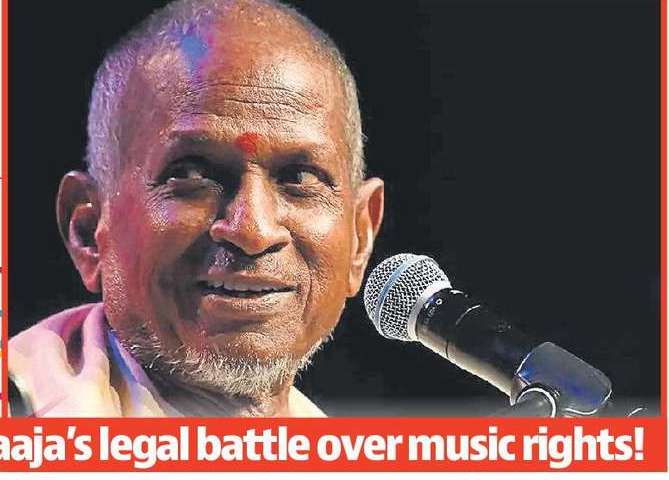
As Ilaiyaraaja’s battle for the rights to his 4,500 songs ends, musicians agree with the court’s decision
Rishabh Suri (HINDUSTAN TIMES; May 2, 2024)
Tamil musician Ilaiyaraaja’s legal battle with Echo Recording Company, that bought the rights to his compositions, has sparked the question — who owns a song? Is it the film producer who pays the music composer, lyricist and singer, the music director who composes a song or the lyricist who writes it? According to the Copyright Act 1957, the producer is the first owner.
On April 24, the Madras High Court came to the conclusion that the musician cannot claim the sole rights to his discography that includes over 4,500 songs, because lyrics are an integral part of a song too. The two-judge bench stated that the 80-year-old only has a right on the melody.
When we speak to composers and lyricists from the Indian music industry, they agree with the court’s decision, stating that a song is a collaborative effort and cannot belong to just one artiste.
SWANAND KIRKIRE, LYRICIST:
I don’t have a take on the case. I also can’t comment on who gives the companies the copyright in this case. I share a good rapport with Ilaiyaraaja. The intellectual property remains with the creator and the producer uses it for their film. What the court has done is reiterating the Copyright Act and stated that everyone needs to follow the law.
UTTAM SINGH, COMPOSER:
I feel everyone involved in creating a song is indispensable. A music director makes the tune for the lyrics that is written by the lyricist and the singers get to sing it. When an award is given, three people are always talked about — the composer, the lyricist and the singer. I feel a song is made by these three together and it’s hard to decide who has more stake in a song.
SAMEER ANJAAN, LYRICIST:
India has a Copyright Act and everything has been written very clearly so that there is no misunderstanding between the author, composer or producer. The rights belong to the producer. If somebody is claiming they have got 100% rights, I don’t think this is the right approach. It’s okay if Ilaiyaraaja is ready to fight, but you have to follow the law. You can’t not obey the law of the land. I always stand by the court’s decision.
EHSAAN NOORANI, COMPOSER:
When you are working on a movie, you’ve been hired to do the music for it. You can, as the composer and lyricist, claim royalties. Unless there is documentation to show your own rights, a producer automatically sells the rights of the song to record companies. So, unfortunately, the complete ownership of a song is not possible when doing a film contract. Whether in India, or the US, it’s the same.
NO STOPPING FOR ILAIYARAAJA
Now, Ilaiyaraaja has sent a legal notice to Sun Pictures, the producers of Rajinikanth-starrer Coolie, over unauthorized use of his song, according to a report by India Today. The notice states that a segment from the song Vaa Vaa Pakkam Vaa from the 1983 Tamil film Thanga Magan has been used without his permission.
We’ve been told people skipped Bandish Bandits's talkie portions to hear the music - Shankar-Ehsaan-Loy
8:34 AM
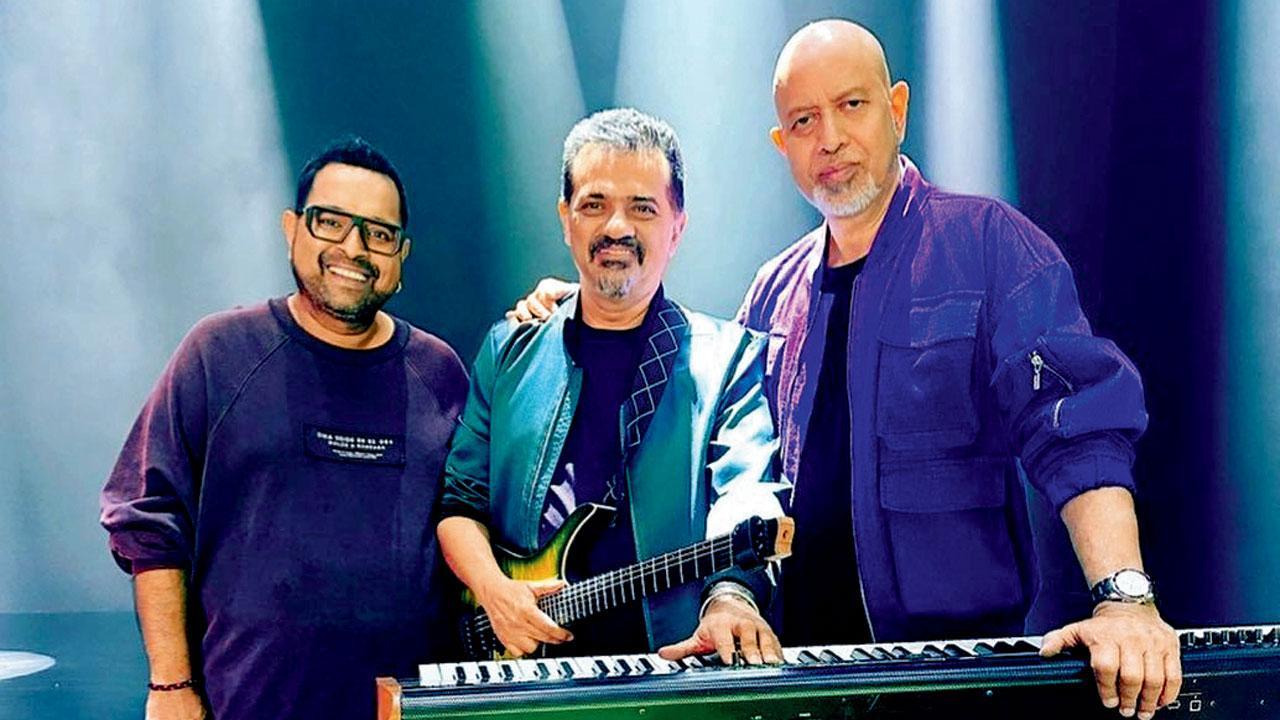
While agreeing that a song’s visual appeal keeps a web-film watcher from hitting the forward button, The Archies composers Shankar-Ehsaan-Loy say its sonic quality keeps them coming back on audio streaming platforms
Sonia Lulla (MID-DAY; December 4, 2023)
Having created six of the 17 songs that form the backbone of The Archies musical, Shankar-Ehsaan-Loy say they felt they could “smell sponge cake in the room”, when they watched the final edit. “It’s such a sweet film,” they promise, as they discuss recording with Suhana Khan, and working with Javed Akhtar.
Edited excerpts of the interview.
There’s always something special about the music you’ll make for a Zoya Akhtar-film. Why is that so?
Ehsaan: [We are given] the freedom to create. She never blocks an idea and says, ‘No, let’s try something else.’ Her attitude is respectful to the creative person.
Shankar: There are certain directors whose presence in the studio [enables] the music to flow easily. There may be parts of the music that we use or don’t use, or mould at a later stage. For example, the song Va Va Vroom came out to be as it is because he [Ehsaan] randomly played one line, and we decided to record it. Only later did we recall we had this recording. It was a founder’s ball, and we realized this would fit the scene because it has an element of rock. So, when music flows easily, it feels fresh to the listener.
Many cast members, like Dot, are also singers. Suhana has also lent her voice to a song. Did you’ll sit with them to discuss the music?
Shankar: For Suhana’s part, we wanted someone who had the required voice, age, and innocence. The singers we recorded sounded too professional. When she sang it, we said, this is it. She was nervous but practiced a lot.
Ehsaan: The song that she sang has a conversational quality. Another song has been sung by Kelly Dlima. These young singers are all unheard of. They’ve been singing in the studio, but now they’ll get this excellent break.
Shankar: There is one song that is completely picturized on skates. The kids had to learn skating for it.
Ehsaan: There’s another that has been rendered by Arijit [Singh]. People will be surprised when they hear it. It’s unlike anything you’ve heard from Arijit. He was also thrilled with it.
When creating music for the web, where it’s easier for someone to hit fast-forward when a song plays, do you believe the emphasis on the visuals of the song has increased in a bid to lure the viewer to watch it?
Shankar: I would agree that that it is valid. But, 80 per cent of the music that is consumed in the country is non-visual. It is consumed on streaming platforms, where you aren’t seeing it. So, the perception that Bollywood is the only thing [that matters in the music industry] is not true. Bollywood is a small part of the whole game. Monetarily it’s a big part. But there’s a lot happening otherwise. We did a web series called Bandish Bandits. [We’ve been told that] people skipped the talkie portions to hear the music.
Loy: Our job is to write a great song. What is done with the visuals is on the director. But, we have to create a song that sounds amazing even without the visuals.
Shankar: You know, Senorita [Zindagi Na Milegi Dobara] was not supposed to be a song. It was a situation in which they were meant to jam with some Spanish musicians, and leave. When we created that [motif] we realized it was an amazing song. So, visuals were created for it, thereafter. That was also the case with Havan Kund in Bhaag Milkha Bhaag. It was supposed to be a scene in the hostel. But Prasoon [Joshi] ji wrote a big paragraph, and that led to the making of a full song.
Since the songs are conversational, did you’ll spend more time with Javed Akhtar?
Shankar: We always do. I remember, when we were sitting with Javed saab for this film, he would tell us, ‘I have to [not consider] 80 per cent of the words in my vocabulary, because these kids are Anglo-Indians.’ Sometimes, Farhan [Akhtar] and I would playfully argue about some lyrics, and he’d say, ‘With your vocabulary, all I can do is send a telegram’. The kids in the film have limited vocabulary. So, he couldn’t write intricate poetry. He had to write simple words that still conveyed the message—whether that message was about politics or [love]. It had to be musical and the rhymes needed to fit the tune. Only he could have done this.
15 Years of Rock On: Purab Kohli says no one recognized them during the shoot; Ehsaan Noorani reveals guitar sales went up
8:23 AM

Kavita Awaasthi (HINDUSTAN TIMES; August 29, 2023)
Who can forget the drummer KD from Rock On!!? When he auditioned for the film, actor Purab Kohli didn’t know its scale. “I enjoyed shooting for the film. But I realized the magnitude of the film only when I saw the final cut,” says Kohli, adding that he bonded with co-actors Farhan Akhtar, Arjun Rampal and Luke Kenny on and off the screen.
“Farhan was an established director and producer when he did the film and everyone would turn to him for advice. But he was just focused on acting. Gattu (Abhishek Kapoor; director) was the captain of the ship.”
Music was a crucial aspect of the film and Kohli recalls shooting the song Socha Hai at Mumbai’s Hutatma Chowk. “Farhan was well-known, but back then, he wasn’t the star he is today. In fact, Arjun was the star. But since we were in our look — Arjun with long hair and me with a beard — the crowd that gathered didn’t really know who we were. They were just enjoying the song. Perhaps they thought a music video was being shot,” he ends.
-----------------------------------
Soumya Vajpayee (HINDUSTAN TIMES; August 29, 2023)
Rock On!! was a special album for us. It was as trendsetting as Dil Chahta Hai (2001), Kal Ho Naa Ho (2003) and Bunty Aur Babli (2005). It was the first time that an Indian film was made on a rock band,” says Ehsaan Noorani of the composer trio Shankar-Ehsaan-Loy. He adds that making the songs for the film “was like a breeze”:
“Loy (Mendonsa) and I grew up playing rock music. We also played with rock bands for many years. I was hugely influenced by the music of Jimi Hendrix, Led Zeppelin, Pearl Jam, Nirvana, U2 and The Police (rock outfits).”
Recalling the studio sessions, Noorani says, “Spending time with Javed (Akhtar; lyricist) saab, Farhan (Akhtar; actor), Shankar (Mahadevan) and the rest of the band and coming up with ideas that were turned into songs felt special. We had a rock band-like setup in the studio, with live musicians, including a drummer and a bass player. We composed the songs like how a band would. I’d come up with a guitar riff and that’d go on to become a song. The music became such a rage that my friends who are music instrument dealers told me that the sales of acoustic and electric guitars went up drastically after Rock On!! released.”
Noorani feels “Javed saab should have won awards for the film. An Urdu poet writing simple Hindi lyrics like Meri Laundry Ka Ek Bill was unique”. Calling Phir Dekhiye his favourite number, Noorani adds, “It’s a simple song that I came up with on an acoustic guitar.”

Farhan Akhtar is highly enthusiastic and amusing. Aamir Khan makes the process easier for us-Ehsaan Noorani
8:30 AM

Juggling a bunch of projects in Bollywood, Ehsaan of Shankar-Eshaan-Loy says script, director’s working style contribute to a soundtrack’s novelty
Parth Srivastava (MID-DAY; June 5, 2023)
Their names may not have hit the headlines for a while, but their reticence need not be mistaken for their absence from music-making. On the contrary, Shankar-Ehsaan-Loy have been neck-deep in work, bringing life to several big-budget Bollywood offerings that will be unveiled in the upcoming months.
Apart from the much-discussed Farhan Akhtar-directed venture Jee Le Zaraa, the trio also has Meghna Gulzar’s Sam Bahadur, Zoya Akhtar’s The Archies, and Avnish Barjatya’s Dono, in the pipeline. In an exclusive interview with mid-day, Ehsaan Noorani gives us a glimpse of how they have been juggling the multiple offerings.
“We’ve completed the compositions, and will soon start working on the background score,” he says of Vicky Kaushal-starrer Sam Bahadur. “While composing the soundtrack, we wanted to encapsulate the glory of Sir Manekshaw. [The music] needed to replicate how majestically he worked for the country during the Indo-Pak war in 1971. We’ve tackled another film based on the army, which was Lakshya. We had to be careful while working on these movies, because we can’t use random elements in them. Because his [Manekshaw] story is based in the early ’60s, we’ve used sounds [that belong to the era].”
Meanwhile, fans of the trio have their eyes set on their work in Jee Le Zaraa, Akhtar’s next outing, which is being touted as the female version of his 2011 film, Zindagi Na Milegi Dobara. However, it will be a while before fans can get a dekko of the music given that “even the writing sessions have not commenced”.
“Only after that is done will we work on the music. The team intends to kick off the sessions in a couple of weeks,” he promises. “However, for [Zoya’s] The Archies, we have commenced working on the background score. The songs have been completed and shot, but they have yet to be fine-tuned.”
Apart from the decades of experience that they rely on while composing music, the trio would also, perhaps, employ tropes to retain novelty across multiple projects. Noorani agrees. “When the script is being narrated to us, we try to be vigilant and attentive. Each time that we sit to compose, we think about the scenario and the script so that each and every thing aligns with the scene that we are dealing with. The music needs to match the scene. In each album, some experimentation is involved. SEL is all about experimenting with new sounds, and music. We try to avoid repetition of any kind. We are also attentive to the needs of the audience for whom we are creating the music.”
Apart from adapting their styles to fit the scene, Noorani says the trio also benefits from the wealth of information that a director brings to the table. “We have had a terrific time working with all our directors. Each of them is distinct in his own way. When we work with Farhan, we find him to be highly enthusiastic, and amusing. Aamir Khan would constantly work towards making the process easier for us while we collaborated for Taare Zameen Par. So, each director has a working style that’s unique.”
Give background score its due credit, say music composers
7:52 AM
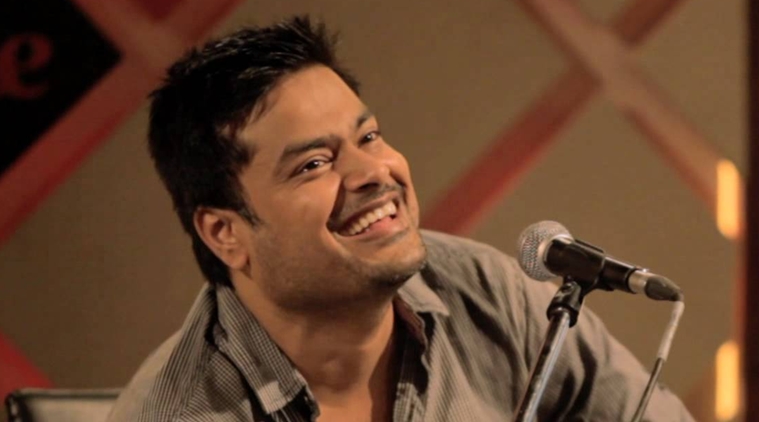
After music composer Clinton Cerejo’s recent outburst over not being credited for his work in a film’s review, other composers join in and explain how background score truly makes or breaks a film and the people behind it must be credited and recognized
Debarati S Sen (BOMBAY TIMES; December 8, 2022)
Clinton Cerejo, who has composed the music for Kartik Aaryan’s latest OTT release, Freddy, recently shared on social media that his work was wrongly credited to someone else in the film’s reviews. Calling it out, the music composer said that it was not okay to attribute the background score to someone else and negate months of hard work done by the entire music department.
Speaking to Bombay Times, Clinton said, “My post was not intended to target any one individual. The point of the post was to highlight the larger problem where critics sometimes credit the person who has done one or two songs as the film’s scorer.”
Clinton said, “This doesn’t happen abroad. Billie Eilish composed the opening credits song in the Bond film No Time To Die, but was the music credit of the film given to her because of that? Of course not! The credit goes to Hans Zimmer, who has done the background score. He is the film’s composer. You cannot attribute the entire music credit of the whole film to someone who has just composed for a few minutes over someone who has done it for over 100 minutes.”
Clinton feels that most of the time, background scores are treated like the second cousin of songs in the Hindi film music industry. “Today everything is content-driven, and the musical element of a film is an essential part. The background score really pushes a film. People are realizing that when a film works, it works because of the sound. Of course, songs too are important when it comes to a film, but 50% of the film experience is the background score and the sound design. These are the elements that are there throughout the film,” he added.
Clinton is not the only one who feels strongly about the issue. A number of composers agree with him. We spoke to a few of them and here’s what they had to say:
IF YOU PULL OUT THE BACKGROUND SCORE, A FILM WILL NOT BE ABLE TO STAND AT ALL: AMAAL MALLIK
Composer-singer Amaal Mallik said, “If you pull out the songs, maybe the film can still survive, but if you pull out the background score, the film will not be able to stand at all! In Christopher Nolan’s Batman (The Dark Knight), if you remove the score (Original Motion Picture Soundtrack) by Hans Zimmer, certain serious scenes may look comical. Everyone has both worked in synergy to create that intense soundscape and that’s what makes it great. You cannot disregard the musicians, the music team, the music supervisors, the sound engineers, the background score composers — all of us together make the sound of a film.”
BACKGROUND SCORE COMPOSERS SHOULD BE GIVEN MAIN CREDITS AND BE ON POSTERS TOO: SALIM MERCHANT
Salim Merchant, of the Salim-Sulaiman composer duo, who have been creating BG music since 1997and have worked in around 100 films, strongly feels that the BG scorers should be given due credit. “The background score of a film is actually the unseen character in the film. It plays quite an important role and it truly makes or breaks the film. So many times a film has succeeded because of the BGM, which helps build the story and take it ahead. It also helps in making the audience ‘feel the film’ in its true sense. It is important to give the BG score the main credit in the film. I also feel that it should be on the posters. In the West, the person who does the background score is credited first as music by so-and-so and after that credits for the songs are given. Background score is the heart of any film,” said Salim.
REVIEWERS DID NOT CREDIT ME FOR MY WORK IN BRAHMASTRA’S BG SCORE: PRITAM
Pritam, who worked on Ayan Mukerji’s Brahmastra Part One: Shiva for two years, is miffed at the way some film critics have wrongly credited Simon Franglen instead of him for the score. “Simon was
initially supposed to be a part of this, but that never happened eventually. We began working on the background music of the film in early 2019. I did the score, and he was in no way even remotely a part of the background score of Brahmastra. Yet, my name was not mentioned in many reviews, only his was. In fact, it was a long battle to get even Wikipedia to correct this mistake. They only corrected it recently,” he said.
COMPOSING SONGS AND COMPOSING BG SCORE ARE TWO DIFFERENT DISCIPLINES OF MUSIC: EHSAAN NOORANI
Songs and background score are very different from each other, say composers. There are technicalities involved while giving background music, which is not always the case in composing songs. Ehsaan Noorani explained, “I wouldn’t say that one is easier and the other isn’t because they both are completely different disciplines of music. For a background score, you need to be mature and very objective. You can’t use a piece just because you like it. The main thing about the background score is to see how it works with the scene. And at the same time, silences are important too. Also, one must make sure that the music in the film is changing. However, you must do it with such subtlety that it doesn’t overpower the film. The background score is incidental and yes, the film cannot do without it, but at the same time, it cannot be showcased so strongly that it will overtake it.”

We deserves better facilities at gig venues, say musicians
8:12 AM

Singer KK not getting immediate medical help at the Kolkata gig has raised concerns over the lack of infrastructure at concerts in India
Rishabh Suri (HINDUSTAN TIMES; June 4, 2022)
Singer KK’s last live act was at a college event in Kolkata. He had performed at countless such gigs in the past, but how it all went down this time around is something that has got everyone talking about the lack of infrastructure for music performances in India. Many videos that have surfaced on the internet show the late singer sweating profusely on stage, as his team asked for better air conditioning. In addition to that, there were no medical facilities or an ambulance at the venue to tackle an emergency. KK had to walk all the way to his car, surrounded by people.
Singer Armaan Malik tweeted, “Concerts in India need better mgmt, medical & emergency facilities. I’ve seen and been part of far too many shows that don’t serve the right conditions for us to perform in. But yet, being the artists we are, we continue with performing coz we don’t wanna disappoint our fans (sic).”
Singer Shibani Kashyap told NDTV that KK’s concert was a “huge eye-opener”. She said, “There should always be medical aid and ambulance on standby.”
Composer Ehsaan Noorani of the Shankar-Ehsaan-Loy trio says, “Unfortunately, we don’t see ambulances on standby at concerts in India. All the concerts held abroad are insured. This (safety) is something we need to start thinking about. I remember we were once performing at a show and there was ruckus outside with people trying to get in, and a kid fell over a fence. Sometimes, it’s also up to the audience to behave in a particular way.”
LACK OF FACILITIES
Another challenge that singers face during indoor gigs is when the air conditioning is not up to the mark. “Live performances are physically challenging. And it’s summer time, too. The temperature on stage is always higher due to the equipment, lights and LED screens,” says singer Amit Mishra.
What is surprising is that when performing abroad or when international artistes perform in India, it’s a different picture altogether. “Forget the performer, even audience members can black out. Concerts abroad have a team to pull out such people and give them oxygen and CPR. When a foreign band comes to perform in India, that’s always stipulated.”
Security can be better
Singer Mamta Sharma says security arrangements for performers is also a key area of concern at venues. “We, as artistes, are entirely focused on our show, even if we feel uneasy. Organisers should have better security facilities around the stage, especially near the entry and exit points. Fans get too close to us for selfies, and any mishap can happen,” she rues.
I have been told by many that Dil Chahta Hai was a story ahead of its time that broke clichés-Farhan Akthar
8:53 AM

As Dil Chahta Hai clocks 20 years, director Farhan Akhtar says Aamir-Saif-Akshaye starrer gained cult status due to its novel treatment of friendship
Uma Ramasubramanian (MID-DAY; August 10, 2021)
Three friends, one car, Goa. So powerful is its imagery that millions can recognise the film in a heartbeat. With Dil Chahta Hai (2001), first-time director Farhan Akhtar did more than just reflect our Goa plans on screen, or influence popular hairstyles. In telling the coming-of-age story of three friends, he shunned over-the-top drama and dialoguebaazi, thus giving Bollywood a new cinematic language. Result? The Aamir Khan, Saif Ali Khan and Akshaye Khanna-starrer remains one of Hindi cinema’s cult films against which every buddy comedy is measured.
As the Ritesh Sidhwani-backed film clocks 20 years, Akhtar says he had little idea that his script would have such a lasting impression. “I have been told by many that it was a story ahead of its time that broke clichés and redefined friendship. Akash, Sameer, and Sid [played by Aamir, Saif and Khanna respectively] were projections of the people we see in our daily lives. That is probably why after two decades, the audience can still relate to them,” he says. The movie will air on &pictures today to mark the occasion.
Shankar Mahadevan, who composed the music with Ehsaan Noorani and Loy Mendonsa, says the film was a milestone in their careers. “It’s a path-breaking film where Farhan’s command over the craft is evident. The music was a clutter-breaker. When you hear the songs even today, they don’t feel dated.”
We began our journey with 30-second jingles, moved on to 2-hour long films, and now, 8 hour shows - Shankar-Ehsaan-Loy
5:44 PM

From making bit-sized jingles, to eight-hour web shows, Bandish Bandits composers Shankar-Ehsaan-Loy on meeting industry's evolving demands
Uma Ramasubramanian (MID-DAY; July 27, 2020)
After repeatedly offering content that is markedly superior than its cinematic counterpart, OTT platforms could perhaps also offer solace to music aficionados who seek melodies that are free from commercial trappings. Following A R Rahman's foot-tapping soundtrack that elevated Dil Bechara, starring Sushant Singh Rajput, next week's release, Bandish Bandits will see the web debut of Shankar-Ehsaan-Loy.
"This is a new experience for us," says Mahadevan of the long-format narrative that explores the stories of two protagonists with distinct music sensibilities. "It's a 10-part series. We began our journey with 30-second jingles, moved on to creating two-hour long films, and now, [we're creating] music for eight-hour shows." The relatively new platform, he says, also comes with its set of fresh challenges. With a movie being in and out of theatres within weeks, they can usually simply focus on the project at hand. "In the case of a series, we need to consider how it will play-out after a couple of months as well, [because web shows are leisurely consumed]."
Anand Tiwari's directorial venture for Amazon Prime Video features Ritwik Bhowmik as a Hindustani classical performer and Shreya Chaudhry as a pop-star, along with a supporting cast comprising Naseeruddin Shah, Atul Kulkarni, Kunaal Roy Kapur, Sheeba Chaddha and Rajesh Tailang. In order to meet its music demands, the makers knew they could only turn to this trio to do justice to the distinct genres. "The three of us can tackle any genre that exists on this planet. The beauty of this show is that there are so many forms of music, including classical, folk, pop, in play. So, it is exciting for us since we have the scope to experiment. Also, we're looking at a global market; we need not only consider Indian [sensibilities]."
If the narrative provided them with the opportunity to exploit their talent, the musicians count themselves fortunate to have the finest cast enhance their creation. "When the character of Pandit [played by Naseeruddin Shah] was narrated, we were certain that we wanted to feature Pandit Ajoy Chakrabarty. We've always wanted to work with him. When we learnt that Naseer saab was playing the role, we were delighted. It is owing to his greatness that he adapted to Pandit sa'ab's singing."
Apart from the 12-odd full-fledged tracks, the trio peppered the offering with abundant melodic moments that viewers can indulge in. "You'll see scenes being [influenced by music], like when someone does riyaaz, teaches music, or jams. Apart from pure Indian classical music [like Sajan bin], there are pop, fusion, folk and Rajashthani elements," says Mahadevan, as Loy Mendonsa adds that it was Mahadevan's background in Indian classical music that enabled him to "catch finer aspects of the [genre] and bring that to the table."
In an industry where egos fly high, the trio has stood the test of time to complete over 25 years in Bollywood. Bound by their love for music, Noorani says it is their ability to hold their own that has kept them together. "We are respectful of one other's inputs. I have seen many bands dismembered in as little as seven years due to ego issues. We are here to serve a bigger [endeavour]. Millions love our music, so we owe it to them."
Pritam Chakraborty isn’t alone; Film composers deliberate on why they prefer going solo
8:04 AM

Soumya Vajpayee Tiwari (MID-DAY; May 23, 2017)
Multi-composer albums may have become the norm in Bollywood today, but not many musicians are comfortable with the idea. For them, maintaining the sanctity of a soundtrack is so important that they’d rather bow out of a project even after having invested a great deal of time and energy in it. In the latest instance, Pritam Chakraborty opted out of Sushant Singh Rajput-starrer Raabta after the makers insisted on adding a promotional song by another composer to the album that was, until recently, solely his.
Pritam, who announced his exit from Raabta on social media, tells us while he has no problem with the multi-composer trend, he doesn’t wish to be part of it. “Some films, especially love stories, have a distinct soundscape and definitely need a single composer to maintain that. Can you imagine a Barfi! (2012) or a Rockstar (2011) with multiple composers?” he asks.
Lack of clarity on the makers’ part was another reason for walking out of Raabta, adds Pritam. “They should be clear about their intention from the beginning. I am fine if they don’t work with me, but I don’t want to be part of movies where there’s a gap between what’s promised and what happens,” he says.
For script’s sake Seconding Pritam, Ehsaan Noorani of Shankar-Ehssan-Loy explains why they, too, prefer solo-composer projects. Besides helping maintain uniformity of soundscape, solo composers manage to fuse the music with the story. “We feel if the music is of any importance to the storyline, it should be done by one composer, who can weave the music into the script. It isn’t an ego issue,” he says.
Having many composers on board is convenient for makers since music is merely a marketing medium for most films nowadays, he reasons. “The focus is on one song that the producers and record companies feel will give the movie a good opening at the box office. Then why not record one or two tracks for a film, instead of getting five composers on board?”

Good enough
Amit Trivedi says he can never work in tandem with other music makers. He says, “Ek gaana le lo, do gaane le lo, main nahin kar sakta. I am capable enough to deliver an entire soundtrack. I have been doing that for years.”
However, young composer Amaal Malik, who has worked on several projects with other music directors, blames tight deadlines for the trend. “Everybody wants the song delivered the next day. If you get four days for a song, you would opt for remixes or remakes because they don’t take much time. That’s also why multiple composers come on board for a single film.”

Raabta-Pritam row: Too many musicians spoiling the melody?
7:24 AM

Bollywood's music frat divided over the presence of multiple composers on a single project
Rachana Dubey (BOMBAY TIMES; May 19, 2017)
Early this week, Pritam Chakraborty made
an exit from his upcoming film Raabta. He stated on his social media
page, “I had decided a while back to only do solo composer albums and
not have an outside song in my album. In Raabta, producers want to
recreate an existing song from the music label as part of promotions, so
I have decided to not continue with the film and requested the
producers to take out my name from the film credits and promotions and
the album will be completed by my company.“
Bollywood, at the moment, is simmering with examples of films that boast of multiple composers. From the one-composer-one-album norm, the industry has veered towards the idea of having multiple composers in an album of five or six songs. Of course, seniors do have their way and that explains why plenty of albums have a single composer, too. A R Rahman, Amit Trivedi, Vishal-Shekhar, Anu Malik, Shankar-Ehsaan-Loy are among the composers, who don't share credits with others. On the other hand, Amaal Mallik, Tanishk Bagchi and Mithoon represent the breed that seems okay with the idea of partnering with fellow composers.
REASONS GALORE
“Someone like Mohit Suri ropes in multiple composers for creative reasons. We've worked well on Half Girlfriend and Aashiqui 2. I'm careful while choosing projects where I'm not the solo composer. Also, as far as ego and insecurity are concerned, if you are passionate about your craft, you will shine irrespective of who you work with,“ says Mithoon.
Filmmaker Mohit Suri can be credited for flagging off the trend a decade ago. Soundtracks made with this formula work, but the track record isn't 100 per cent. “Getting songs from different composers worked because each one brought a different flavour. I'm not against working with a single composer, but then, he must satisfy my need for variety. Specialization is the nature of the game. With one composer for each song, I also reduce the pressure on the composer,“ argues Mohit.
Commerce, variety and giving new talent a platform are some of the reasons music companies and film makers opt for multiple composers. Singer Sonu Nigam, who maintains a neutral stance, points out the similar treatment was meted out to singers about a decade ago. He recalls how composers would make several singers record a single track. “It's evolution. By making 10 singers record a song, composers like Pritam had once reduced the importance of singers. By roping in multiple composers, companies are now doing the same thing to them. Labels that make films call the shots. And you have to fall in line,“ he says.
MY ALBUM, MY SONGS
Anu Malik, who insists on working solo, contends that after creating a repertoire, he doesn't feel the need to stand in a crowd. And if he's ever cornered to do that, he fears it would pull down the quality of work. “It's a different story if you do it dosti khaate mein. But I don't think a composer should be forced to share credits with others. I don't mind two albums a year, but I mind being asked to give two songs in an album. I will never be able to do justice to an album I don't own,“ he says.
Ehsaan, who follows a similar school of thought, opines that record companies have placed their faith on that one hit song that can help a film sail through. And so, they often run to several composers to find that one chartbuster. He concludes, “In so many cases, like Kaala Chashma in Baar Baar Dekho, the music has done well, but it hasn't done any thing to save the film. In the olden days, songs became hits because they thrived on the film's popularity. The scenario is exactly opposite today, which pressures composers and dilutes the creative process. Though we don't conform to this way of functioning, if it works for someone, bless them.“
During the making of Dus, everyone was surprised to see three composers-Shankar Mahadevan
8:16 AM

Soumya Vajpayee Tiwari (MID-DAY; January 1, 2017)
Ehsaan (Noorani), Loy (Mendonsa) and I (Shankar Mahadevan) were friends since we worked together in the advertising field. But we never imagined that the three of us would be doing music for films together. We were doing a Pepsi commercial for Mukul Anand and he offered Ehsaan to do music for his next film, Dus. Ehsaan refused immediately. But when Mukul pushed him, he said he’d do it if Loy and I also do the film. We met Mukul and had the narration.
When we reached the studio to record the first song, the makers and people from the industry were all there. They asked Mukul who the composer of the film was and he pointed at us. Everyone was surprised to see three composers. They were shocked that there were no musicians, arrangers and music coordinators, etc. Mukul said these three would do everything. So they told Mukul, “Boss, tumne kisko sign kiya hai!” They’d completely given up. In the evening, we recorded the first song, Chandni, and they were floored. They offered us the entire soundtrack! A few days later, Mukul called me from New York, before we were about to record the most important song of the film, Suno Gaur Se Duniya Waalon. He blessed us, saying, “It’s a patriotic number, but I want it to play for every cricket and football match, and even at clubs.” We did the song and the team loved it.
But Mukul passed away during the making of the movie and Dus got stalled. We were happy doing jingles, but we were upset that our career in the film industry saw such a low right at the beginning. It was then that Nitin Manmohan (the producer of Dus), shot a video for Suno Gaur Se to pay tribute to Mukul. The song took off. It played everywhere, from cricket matches to clubs. Mukul was and has been a guiding force. Later, Vidhu Vinod Chopra gave us Mission Kashmir and Farhan (Akhtar) gave us Dil Chahta Hai.
Do most reworked songs - in films or singles - help rake in the moolah?
7:55 AM

Rachana Dubey (BOMBAY TIMES; November 25, 2016)
Recreated songs, though
technically not the most apt term, have been a part of pop culture in
India for several years now. Leading singers and composers have lent
themselves to the new-age versions of old hits. But do most reworked
songs - in films or singles - help rake in the moolah? What about the current trend of reworking old numbers for films?
GIVE CREDIT WHERE IT'S DUE
Composer Vishal Dadlani rues, “It's something that probably Shekhar and I started with Bachna Ae Haseeno about a decade ago. And today, I deeply regret it.“ He adds, “We paid tribute to the old song and credited the original talent behind it. We did our best to retain the integrity and the original flavour of the song while adding our little twist to it. My only request to composers: if you rework an old song, do it with utmost sincerity. There are some cases where a composer has reworked a classic very well. Har Kisi Ko Nahi Milta Yahan Pyaar Zindagi Mein and Jagjit Singh's ghazal that I recently heard in Tum Bin 2 are examples.“
Ankit Tiwari, who has recreated quite a few hit numbers, including the recent Teri Fariyad from Tum Bin 2, insists that unless asked for, labels don't aptly credit the original creators of the songs. “I insisted that Nikhil Vinay's credit comes alongside mine for Teri Fariyad. It's not an original, so why make it sound like that? I wouldn't like it if someone recreated Sun Raha Hai Na without duly crediting me for it,“ he says.
RECREATIONS GALORE
In 2016 alone, there have been well over two dozen 'recreations' of old melodies. Ae Zindagi Gale Laga Le, Teri Fariyad, Aise Na Mujhe Tum Dekho, Kaala Chashma, Oye Oye, Kar Gayi Chull, Aaj Jaane Ki Zid Naa Karo, Gumnaam Hai Koi are just some of the examples that come to the mind instantly .
The trend, it looks like, will The trend, it looks like, will continue in 2017. To begin with, Commando 2 will feature a new version of Hare Krishna Hare Ram from Bhool Bhaulaiyaa. Kaabil will also feature a version of Hai Saara Zamana Haseeno Ka Deewana from Yaarana. An upcoming Shah Rukh Khan-starrer will have Sunny Leone gyrating to Laila O Laila, a song immortalised by Zeenat Aman in Qurbani.
BLAME IT ON DEMAND
Composer Amaal Mallik, who has belted out a couple of the popular reworked songs this year, says that there is a heavy demand for such tracks from labels, actors and producers. “Since there is no solidarity among composers, we can't even put an end to this. If I refuse, someone else will do it. Sometimes, producers are hard-pressed for time because they have suddenly been allotted dates by the artistes. And we get even lesser time to create or recreate songs. So, it's a gamble - it could be fantastic or go terribly wrong,“ he says.
Ehsaan Noorani, of the trio Shankar-Ehsaan-Loy , says, “As long as there is demand, there will be supply. I am sure music companies and producers are doing their math over this. And they'll encourage this fad only if it benefits them. I have seen cases where recreated songs have worked, but the films have tanked, and vice-versa, but something has kept this trend alive. Yes, we are in an overdrive mode right now. “
JUST A PASSING FANCY?
The trend, Ankit feels, will pass soon. “As a newcomer, I was asked to create something like Kajra Re. It's the norm here. Either you say 'No' to work or work according to the brief. A lot of producers are good with original scores, but many others ask us to either get 'inspired' or recreate a song. No composer likes touching another's work, and I'm not an exception, but do we have an option?“
ORIGINALITY WILL NEVER GO OUT OF FASHION
Vishal sums it up, “Originality in music will never cease to exist. The beauty of music is that everything is concurrent. I am sure all the people who are doing 'reworked songs' want to compose originals. But mate, when you recompose, do it like it's your own!“

There's no way we'll compromise on quality - Shankar-Ehsaan-Loy
7:52 AM

Shankar-Ehsaan-Loy on Rock On!! 2 and the current situation with indie music in India
Soumya Vajpayee Tiwari (MID-DAY; October 18, 2016)
They are celebrated music composers in Bollywood, but Shankar-Ehsaan-Loy (SEL) have an identity beyond Hindi film music. They are solo musicians, who also support the country’s non-film music scene. Shankar Mahadevan runs an online music academy while Ehsaan Noorani performs with ensemble bands like Fender & Friends and String Society. Loy Mendonsa is a familiar face in live jazz sets and has reformed his electronica group Instant Karma with Ehsaan. In a bid to promote indie music, the trio has come on board as content co-curators for an initiative by Hungama and Tata Sky. Titled Music +, the service will feature music videos across genres. “The fact that they focus a lot on indie music was exciting. In a way, we have a responsibility to bring good music to the listeners,” says Ehsaan. Excerpts from an interview with the guys behind the soundtrack of Rock On!! 2.
All three of you started out as indie artistes. What’s your take on the current indie scene?
Shankar: The Internet has given a major boost to it. People don’t need a record company to put their music out there. Of course, there’s a dearth of indie labels in India. Some years ago, record companies here released works by artistes like Alisha Chinai and Lucky Ali, but that, unfortunately, has fizzled out.
The number of film soundtracks from SEL has reduced over the years. Is this a conscious decision?
Ehsaan: There is just so much we can do. We tour, record for films and commercials, for corporate gigs. We also have individual commitments that make our musical existence more wholesome. We are doing the same amount of work. It’s just that new music releases every week, so the impression is that we are not working much. We’ve always stood for quality songwriting, and there’s no way we will compromise.
SEL is nearly two decades old. Have you thought of dissolving the group and going independent?
Loy: We are doing independent things too, while keeping the integrity of SEL intact. It has given us so much; why would we want to let go?
Since Rock On!! (2008) was a landmark album, was the soundtrack of its sequel more challenging?
Shankar: It’s a completely different soundtrack, and the challenging part was letting go of the basic three- chord garage band’ sound we achieved with Rock On!! It’s coming eight years later. All the members of the band (in the movie) have grown intellectually and musically. The songs are a lot more varied now.
New reality show The Stage will see participants crooning only English songs
7:43 AM

Ria Lawrence (MID-DAY; September 10, 2015)
The small screen may be inundated with music reality shows, but in a first-of-its-kind endeavour, a TV channel is all set to launch a talent hunt focussing on performances on English songs. Titled The Stage, the show will not follow the public voting system and the winners will be declared purely based on the judges’ verdict.
The reality programme will hit the idiot box on October 10. Vishal Dadlani, Monica Dogra, Ehsaan Noorani and Devraj Sanyal have been roped in as the judges as well as the vanguard responsible for nurturing and bringing singing talent to the fore. “At the end of each episode, the performers with the lowest scores will be ‘benched’ and given one more chance to perform on stage and prove their mettle. Whoever doesn’t live up to expectations will be eliminated,” says a source.
Monica, who is on the judging panel, says she is excited about the show, although she was initially reluctant about taking it up. “I think it is amazing that such big entities are now backing and taking interest in English music and talent where it has never been done before. To find somebody from Assam or Rajasthan… You would not expect to hear such voices singing Rihanna or Bruno Mars. I was convinced show and the fact that they knew that I would be uncomfortable with judging. But they said since I was uncomfortable, I will be fair,” adds the singer-actress.
Alia Bhatt in Rock On 2; to sing most of her songs
5:21 PM

Ankur Pathak (MUMBAI MIRROR; December 4, 2014)
Mirror (October 31) had earlier reported about the race between Alia Bhatt and Shraddha Kapoor for the female lead in Rock On 2.
Now, it's confirmed that Alia has bagged the much-coveted sequel and after proving her singing talent to one song each in Highway (the AR Rahman-composed Suha sa) and Humpty Sharma Ki Dulhania (Main tenu samjhawan ki), the Patakha Guddi will get to sing most of her songs in Rock On 2.
A source told Mirror that the makers were clear that the lead stars of the film should be able to give their own playback. And Alia fits the bill perfectly.
"It's a film which will be mounted on a much bigger scale than the original. And composers Shankar-Ehsaan-Loy who are working on Part 2 as well, are planning to create something unique and experimental. They are thrilled to have Alia on board," added the source.
Ehsaan Noorani admitted that he couldn't wait to have her sing to their tunes. "She is a wonderful singer as is evident from the songs she has sung in the past. We wouldn't want it any other way. She has to sing and she will be terrific, just like Farhan," he asserted. "Rock On 2 is an extremely exciting project for us."
When prodded on, he said, "So far we've only had a few preliminary meetings. The pre-production starts next week."
The film, which is expected to go on floors early next year, will be directed by ad filmmaker Shujaat Saudagar. He has replaced Abhishek Kapoor.
Meet the guitar doc who fixes guitar of prominent Bollywood musicians
8:38 AM

Saurabh Datar (MID-DAY; March 30, 2014)
In an unassuming workshop at Charkop, Kandivli, Sunil Shinde is surrounded by guitars — broken, bent, modified, or some new ones. He is India’s foremost guitar luthier (a term used to describe someone who makes a lute or other string instruments), and the biggest names in the music industry seek him out.
“My skill is god’s gift — I never attended classes to learn how to repair guitars,” says the 40-year-old.
It all began in 1989, when he joined Alberto Music, a Malad store. After picking up some chops from its owner Salvadore Dias, he started repairing and fixing guitars full- time. Working at Alberto also exposed him to several books on guitars. “I would repair a guitar and compare what I had done to the manuals; it matched.” Soon, Shinde began servicing legendary Bollywood musicians such as Kalyanji-Anandji, Pyarelal and guitarists Dilip Naik and Ramesh Iyer.
Going solo In i996, Shinde established his own workshop and his clients moved with him as well. Today, he serves Ehsaan Noorani and Loy Mendonsa, bass guitarist Karl Peters, guitarist Kalyan Baruah, indie stars Papon and Rabbi Shergill, Sandeep Chowta and Clinton Cerejo. The list goes on to about 3,000 clients.
Ehsaan Noorani swears by Shinde. “I wouldn’t trust my guitars with anyone else. I send them to Sunil every month for maintenance.” During the 2006 deluge, Noorani’s guitar was damaged when Empire Studios was flooded. “ I thought it was gone. But he fixed it!” says Noorani. “I have a Parker Fly guitar, made of mahogany graphite. Once, to detect a problem, Sunil put the guitar in an X- ray machine,” he exclaims.
The Doc is also inventor Shinde also customises guitars according to client requirements. One such request came from singer-director Avdhoot Gupte. “Once, he wanted an intrument which combined western and Indian sounds. The protagonist in the film, Ek Tara, is a musician who undergoes a transformation,” explains Shinde. After about a year of research, creating designs, and working on prototypes, Shinde invented the ‘gitara’, a combination of the ektara and the guitar. “It has six strings and same number of frets as a guitar, but emits a more Indian sound. But, it can also be used in western tonality,” he explains.
The gitara will be patented. Ek Tara, will release in April. Shinde also invented another instrument, combination of a mandola and a mandolin, on the request of veteran Bollywood mandolin player Chandrakant Lakshpati.
Shinde says he never feels like composing music, though he is in touch with composers. ‘Ehsaan sir’, as Shinde calls him, got him imported tools and books.
The Guitar Doc now plans to set up a factory to produce guitars under his own name. He hopes his two boys will also learn the skill. “They’re young now. But, that’s all for the future. For now, I’m happy.”
Zee to revive music label; to give musicians royalty?
8:32 AM

Gaurav Dubey (MID-DAY; March 15, 2014)
Reams have already been devoted to covering the royalty issue between music company T-Series and a bevy of singers and music composers. Recent instances include the much-publicised controversy that broke out when actor-turned-producer Abhay Deol decided to take on T-Series by supporting the rights of the music director trio, Shankar-Ehsaan-Loy.
Similarly, Sonu Nigam and Sunidhi Chauhan were shown the door upon demanding royalty; their songs were then re-recorded with other singers.
For quite some time now, the industry seems to have been unable to resolve this conflict. But it looks like a solution is not so far away. If sources are to be believed, Zee is all set to take on T-Series with its own music label. What’s more, this label is apparently pro musicians and is considering giving them royalty.
Says a source, “The chairman of Essel Group, Subhash Chandra, called for a meeting with the industry’s top music directors, lyricists and producers where they were informed about Zee’s music label. He stressed on the fact that the company will seriously consider the amended copyright clause that deals with paying royalty to music composers and lyricists.” This secret meeting is said to have included director Vikramaditya Motwane, filmmaker Vipul Shah, actor-filmmaker Arbaaz Khan and some leading music directors from the industry.
 When informed about this, Bhushan Kumar of T- Series said, “Music is a big market and recently it has incurred us losses, so we have
now diversified into film production. Besides, we have always welcomed
healthy competition from big names.”
Kailash Kher is happy with this development. He says, “Some people are not ready to give singers their due but there are a few good people in the industry who follow the rules. We respect Zee’s ideology.”
Sonu Nigam, who has been fighting the royalty battle for a long time now, sounds relieved. He says, “For a musician like me, who is loved and appreciated by people, it is difficult to accept a scenario where an autocratic, unrepentant set of people snatch away my songs and make others sing them. So this news is a breath of fresh air.” The new music label has apparently acquired music rights of a few films and this list could include Shah Rukh Khan starrer Happy New Year, Akshay Kumar starrer Holiday, and a film being made by Vashu Bhagnani.
 Lyricist Sameer, who was
present at the meeting, says, “Zee is reviving its music label and this
is great for us, because they have promised to follow the new copyright
law which will give singers royalty and performance rights.” Music
composer Ehsaan Noorani, who also attended the meeting, points out that
healthy completion is always welcome. “It’s good to have more music companies distributing and acquiring music. Copyright laws apply to everyone, but their implementation by record
companies is taking a long time. A lot of administration and monitoring
work needs to be done for it to be smoothly executed.”
Punit Goenka, CEO of Zee Entertainment, remained unavailable for comment. Anurag Bedi, business head, Zee Entertainment, said, “ When the time is right, we will surely comment on this.”
Subscribe to:
Posts (Atom)