Showing posts with label Durga Puja. Show all posts
Showing posts with label Durga Puja. Show all posts
Konkona Sen Sharma on Durga Puja: "In Mumbai, they seem to have vegetarian food..."
4:11 PM

Akash Bhatnagar (HINDUSTAN TIMES; October 1, 2025)
Durga Puja rekindles in Konkona Sen Sharma the childlike excitement she felt growing up in Kolkata. The actor-director says, “It has been a part of my childhood and my upbringing. Growing up in Kolkata, it was a very big deal. We would plan our whole year around the Pujo. It’s beyond being a religious festival; it’s kind of like an identity for Bengalis.”
“During our childhood, we would all get five new dresses for five days, and then we would go into different pandals. We would eat food and meet friends and family, and it would be a very lovely festive time,” the 45-year-old explains as she recalls her memories of celebrating the festival.
This year’s celebration is extra special for the actor-director. Ask her why and she shares, “Along with Maa Durga, my mother (Aparna Sen, filmmaker) has come to visit me during the festival, which doesn’t happen every year. It’s really lucky that I’m spending time with my Maa Durga.”
Having moved from Kolkata to Mumbai, Konkona noticed a difference in how Durga Puja is celebrated in both places. “I was pleasantly surprised to see that pujo is such a big deal here too. It’s called Navratri and celebrated a little differently.”
Asked about the differences, she adds with a smile, “In Mumbai, they seem to have vegetarian food, which is very different from how Bengalis celebrate. In Bengal, people like to eat fish cutlets, chaat and whatnot. They indulge in food that they normally wouldn’t, and it becomes a part of the celebration.”
There’s something about the Bengali culture that just feels very familiar-Vidya Balan
2:30 PM

Onkar Kulkarni (BOMBAY TIMES; October 11, 2024)
Dressed in a red Banarasi sari, Vidya Balan enthusiastically soaked in the Durga Puja festivities at the Chembur Durga Puja Association. The actress, who believes, “Ami mon theke Bengali (I am a Bengali at heart)”, immersed herself into the celebrations – from blowing the conch, playing the dhak to gorging on some irresistible Bengali mishti. She talks to us about her connect with Durga Puja, her Bengaliness and how Satyajit Ray has a role to play in her love for Bengali culture.
‘My first visit to a Durga Pujo pandal was in my early 20s’
While growing up, Vidya was more familiar with Navratri than Durga Pujo. She tells us, “We celebrated Navratri every year in the South Indian way. For us, Navratri meant ‘girl time’. My mom would call her female friends and their girls over for haldi kumkum and we would visit others too. My first visit to a Durga Pujo pandal was only in my early 20s. I’d done a music video, Kabhi Aana Tu Meri Gali, with Euphoria and Pradeep Sarkar (director of Parineeta). Since I lived in Chembur, dada’s then assistant Paula, invited me to this pandal because she was going to be singing here.”
‘Fortunate to explore various facets of Durga Maa through my work’
As she revisits this pandal after 20 years, Vidya gets nostalgic. She says, “The image of Durga Maa instantly called out to me. What Durga Maa stands for resonated with me at a very deep level, even before I could articulate it or understand it. I’ve been fortunate to explore various facets of Durga Maa in some of my most popular films.”
‘Bengalis are known for their beautiful women and their beautiful weaves’
The Kahaani actress loves the khichuri along with begun bhaja (brinjal fry) bhog served during pujo. One of the other highlights is, of course, dressing up in gorgeous saris. “I love wearing saris with the red bindi, and hair left loose, and now I also have my own shakha pola (the traditional Bengali white and red bangles). Bengalis are known for their beautiful women and their beautiful weaves. I wear all kinds of saris, but I love Bengali saris, the Dhakai, Baluchari and even the simple Bengal cotton saris. I remember on one of my early trips to Kolkata, I had gone to Punjabi House at Gariahat and bought my mom a sari for Rs. 135, and she still has it.”
‘I see Navratri and Durga Puja as a celebration of the divine feminine’
Apart from the grand celebrations, the festival is also a tribute to the divine feminine, Maa Durga. Vidya shares, “I see Navratri and Durga Pujo as a celebration of the divine feminine and the power of Shakti. I guess my sister and I have imbibed that from my mother. Growing up, I had examples of a lot of strong women in my life, including my mother, aunts, neighbours and sister, who I’ve always said is my hero. They are all delicate, simple women, but women with a lot of strength. So, when you grow up with such role models, you believe that you can do whatever you want to do in life and that femininity is not an appendage, it is powerful.”
‘The first time I visited Kolkata, it felt like this was also home’
Vidya has had a strong association with Bengal and its culture. In one of her most outstanding performances, Kahaani, she was called Vidya Bagchi, and the final moment in the film culminated in a Dashami scene. She made her acting debut with a Bengali film, Bhalo Theko, and then her Bollywood debut with Parineeta, which was set in Bengal.
She says, “There’s something about the Bengali culture that just feels very familiar. You know, I visited Kolkata for the first time only in 2003, but the moment I went there, it felt like this was also home. I’ve also shot a lot of important films in my career, including Bhalo Theko (2003), Parineeta (2005), Kahaani (2012), Kahaani 2 (2016) and Te3n (2016) in Kolkata.”
‘Satyajit Ray has a role to play in my love for Bengali culture’
“I think Satyajit Ray also has a role to play in my love for Bengali culture. I’ve watched a lot of Bengali films, and I know some songs and rhymes (like aabol-taabol) too. I couldn’t have imagined that my film debut would be in the land of Ray. I didn’t get an opportunity to work with him, but I’ve had a lot of people tell me that I look like one of his favourites, Madhabi Mukherjee (laughs)!”

Little girls often look up to their mothers, and I love that Adira is connecting with our cultural heritage-Rani Mukerji
8:14 AM

Madhureeta Mukherjee (BOMBAY TIMES; October 10, 2024)
The sweet smell of Durga Pujo is in the air. The dhak players are ready with their drums, the pandals are filled with the aroma of khichuri bhogand the finest saris and jewellery are laid out for the five days of celebrations. On this occasion, Rani Mukerji talks about her deep connect with pujo, following tradition and the power of Shakti.
The Mukherjee family pujo has been around for 77 years. Generations have taken it forward, what do you think has changed about the festivities – in terms of scale, ideas and the young blood managing the show?
It is a moment of great pride that we celebrate 77 years of our pujo this year. The festival has always been extremely close to my heart, and I am eternally grateful that Durga Maa has blessed our family and friends associated with the pujo to be able to carry on the celebrations for 77 years. For me, it’s very emotional as my dad and mom used to manage this pujo successfully for many years with the help of other family members, and the baton passed on to Debu kaka (Deb Mukherjee) after my father fell ill and passed away. While Durga Pujo retains its core religious significance, the festival has undergone significant transformations over the years – right from our pandal décor, the bhog area, to the entertainment, everything has only become bigger with each passing year. I remember, as kids, we used to serve people on the floor on banana leaves, and then the table and chairs were introduced. At first, the volunteers were only family members, now every person who is a friend, member, or relative, participates in the bhog distribution.
You have been involved with this pujo since your childhood, do you see your daughter Adira getting deep into the culture, festivities and celebrations now?
Durga Pujo is more than just a religious festival; it is a cultural phenomenon that brings together people from all walks of life. I’m sure Adira will be attached to the Durga Pujo just as I am. She loves the Navratri festival as she has read books on Nav Durga. She knows the significance of the nine devis and their names and helps me prepare the bhog every day for nine days. She enjoys the Kanjak Puja I do each year, where I invite her friends and make them do a little garba and give them a feeling of the festivities. Little girls often look up to their mothers, and I love that she’s connecting with our cultural heritage. Dressing up, enjoying good food and spending time with family – it truly makes this the best time of the year for us, filled with joy and togetherness.
Which aspect of pujo do you enjoy the most – serving bhog to the devotees, the sounds of the dhak, the dhunuchi dance, sindoor khela?
Durga Puja is one of my favourite festivals, and I love everything about the festivities, including getting together with the entire family, bonding with friends, and dressing up. This celebration offers a unique opportunity to serve and enjoy bhog, a tradition I’ve cherished since childhood. The poribeshon (serving of food) is something we truly enjoy, and the bhog khichdi made during Durga Puja always tastes divine. I also enjoy participating in sindoor khela on the last day of the pujo, it’s a vibrant and heartwarming ritual. The dhunuchi naach is also a very important and unique part of our celebration, and it’s something which is not seen anywhere in the world.
Like most Bengalis, do you handpick the saris and jewellery you will be wearing during pujo?
Handpicking saris and jewellery for Durga Pujo is one of my favourite parts of the celebration. Each year, I look forward to selecting the perfect pieces that not only reflect our traditions, but also add a personal touch to the festivities. Choosing a sari is an experience in itself, so I enjoy every moment of it. When it comes to jewellery, I love wearing traditional pieces that enhance my attire. After all, we are dressing up for Maa Durga and her homecoming, so it is like a five-day party for us.
In Mrs Chatterjee vs Norway, a mother (portrayed by you), goes to lengths to save her children; she fights her family, society and the legal system. Do you believe women have this empowering force within them to protect their own and the people they love?
I absolutely loved shooting the Durga puja scene we recreated in Tallinn for the movie. I believe women have a powerful ability to protect themselves and their loved ones. They embody strength and resilience, often serving as the emotional backbone of their families and communities. Throughout history, women have taken on roles as caregivers, advocates, and leaders, nurturing and empowering those around them. Their courage shines in times of crisis, as they confront societal norms and fight for safety and justice, demonstrating remarkable determination and resourcefulness. We are, after all, Maa Durga's lineage and represent Shakti in its truest form. Without shakti, I'm sure nothing in this world would survive.
It feels good to be back to work, being independent again-Rhea Chakraborty
8:35 AM

Sundas Jawed (BOMBAY TIMES; October 30, 2023)
Actress Rhea Chakraborty, who was in Kolkata on Thursday to participate in the Calcutta Monsoon Derby 2023, has been in the news recently for her strong comeback with a Roadies win. On the sidelines of the races, she spoke to us about her career and more. Excerpts:
About getting back to work after a break
It feels really good. Work is always good, it’s therapeutic. It’s a confidence booster to be working and being independent again.
About her Kolkata visit
This is a short trip, but I definitely look forward to coming here and eating as much as I can – from phuchkas to egg rolls to bhapa illish and sweets. I’ll definitely take back some sandesh. I’ve just been able to get breakfast, lunch and snacks from unnamed places this time and in Kolkata, all places serve great food. We used to come to Kolkata often to visit my jethu dadu, who used to live in Lake Place. He passed away recently.
I’ve heard that Pujo themes are getting very innovative these days in Kolkata; that there was even a phuchka-themed pandal this year.
About the journey from Teen Diva and to Roadies
It has been a full circle for me. The journey from Teen Diva to Roadies has been my life journey in a way. Roadies is exciting, as it’s a lot like life – has a lot of ups and downs and many challenges. I had a lot of fun!
Celebrating Durga Puja in Mumbai
We visited pandals close to our house, had Bengali food at home and friends came over for lunch on Dashami. I haven’t been in Kolkata during Pujo for three-four years now, but I’ve heard that themes are getting very innovative these days; that there was even a phuchka-themed pandal this year.
About attending a race in Kolkata
I have attended races in Mumbai and Pune, but this was my first time in Kolkata. I love the energy, the vibe and the strong heritage feel to it.
We make many women centric films today; some of the biggest global superstars are Indian women-Mouni Roy
9:34 AM

Onkar Kulkarni (BOMBAY TIMES; October 24, 2023)
This is one festival that Mouni Roy eagerly awaits, however, this year the actress has missed most of the celebrations due to her shooting schedule. Amid work, she managed to make a quick visit to a pandal for pujo. Bombay Times captured her at Kumar Sanu’s MBCA Durga Puja in Mumbai. In a conversation with BT, she spoke about celebrating the power of women on Dussehra and her childhood memories of the festival. Excerpts:
Among the festive days of Durga puja, what makes Dashami (Dussehra) special for you?
The two most important days for me during pujo are the Maha Ashtami day and the Bijoya Dashami (Dussehra). On these two days, the celebrations and the energies are at their peak. It’s a mixed feeling on Dussehra because you prepare for Durga pujo for months, and then, on this day you bid Durga maa goodbye. As kids, I remember we used to wake up early, get ready in our white and red saris and head for sindoor khela. We would see women putting sindoor on each other’s foreheads, cheeks and their shakha pola (white and red bangles that married Bengali women wear).
Dusshera symbolizes conquering good over evil. Women have to overcome various battles at every stage – be it gender bias (at home and workplace), eve teasing or lack of equal opportunities. What are your thoughts about women constantly looking within them and finding the power to fight against these?
It’s sad that women face these evils even today, but I think we are moving towards a world where women can command and demand equality. I come from a small town (Cooch Behar, West Bengal) and I have studied in Delhi. So, I have seen everything very closely, and I feel it is important that all men have the knowledge and wisdom to treat women as equals with respect in our day-to-day life and even at workspaces. In terms of our (movie) industry, times have changed a lot. We make many women-centric films today, and some of the biggest global superstars are Indian women. It’s moving in the right direction. But many things come into play when you talk about equality at work, like the films that are mounted on male superstars or heroes… I think everything is equivalent to the number of days that you work and what’s your part in the film. So, there are a lot of metrics at play. I hope and pray to see equality soon, but I don’t see that happening in the near future, but we are definitely taking the right steps.
The festival celebrates the power of women. Who are the women in your life who have been a source of strength and inspiration?
I could go on and on about this because I am surrounded by women. My mom, aunts and other women are supremely intelligent… some of them are doctors, engineers and teachers. I grew up in a household that’s academically oriented, and we were always taught to be independent and to stand on our own feet. To have your individuality and be emotionally and financially independent is something I have been taught by my father and all the women around me. Now that I am working in Mumbai, I see my manager, stylists, and other team members around me, who are all hardworking women.
‘Sindoor Khela is about women celebrating each other’s strength’
Since I’ve been married, I have always worked on Dussehra. So, I haven’t really been able to participate in sindoor khela. I believe that it signifies power, purity, courage and strength. Red is a very strong colour. Sindoor khela is where women celebrate each other’s strength and happiness. I hope I get to be a part of it next year. Suraj (Nambiar, her husband) is equally involved in the festivities. Last year, he came to Mumbai, and we did the puja and ate bhog together. Unfortunately, this year, he is not in the country.
Food tastes amazing only on pujo days as there is a different energy that passes through the food as well-Rani Mukerji
8:54 AM

Renuka Vyavahare (BOMBAY TIMES; October 21, 2023)
Soaking in the auspicious spirit of Durga Puja, Rani Mukerji takes us through the nuances of the festival and what it truly stands for. Here’s what she said as she took us on a trip down memory lane.
We love the sarees, jewellery, food and the spirit of festival, but that apart, what does Durga Puja truly mean to you as a woman?
Since childhood, I have seen my parents participate in our family Durga Puja, and this is our 76th year. For us, as probashi Bengalis, (Bengalis who stay outside of West Bengal), it was very important for my parents to inculcate the Bengali culture in us, especially during this festival. Whether it was performing on stage to Rabindranath Tagore’s plays, songs and skits, to enriching us culturally and educating us about the famous Bengali poets and writers – on these five days we did everything associated with our Bengali culture.
Can you take us through the rituals and their meaning?
The puja is elaborate and beautiful -- whether it’s the sandhi pujo which is done by using 108 earthen lamps, 108 lotuses, garland of 108 bel pattas. It’s a sight to behold. Even the dhunuchi dance is beautiful. The bhog that we serve and eat, is something we wait for the whole year and believe that food tastes amazing only on those pujo days as there is a different energy that passes through the food as well. We worship Durga Ma as she is the deity of war who symbolises the power of good over evil. We celebrate Dussehra also with a lot of fervour. On that day all the Bengali ladies offer meethai to the deities. The sindoor that is put on Durga Maa is a blessing and traditionally, very precious for Bengali women. We feel sad on the last day of the festival, because suddenly the five days of fun and celebration come to an end and we feel bad that Durga Maa is going back and we will only get to see her a year later.
Do you think there has been a positive change as far as the representation of women in Hindi cinema is concerned?
From the films of the 1940s and 50s to now, there has always been a great representation of women. We always had very strong women depicted in our films and it has been carried forward as well. Just because some films did not depict women in the right way, that does not mean that our cinema failed to do so. Cinema has always depicted the strength of women beautifully and at the end of the day, cinema is incomplete without women. Art imitates life. And honestly, nothing can ever exist without the presence of women. Hindi cinema has given us great films that represent strong women through decades, so to pinpoint and say it is not enough, seems unfair. I think there will always be a challenge for each generation and each decade to do their best work in the depiction of women. That is an ongoing process. But, in my career span, I have seen extremely strong depiction of women, who have had a very strong voice.
What drives you as an actor? Have there been women who have strongly impacted you?
As an actor, my motivation stems from the desire to tell compelling stories about women from diverse backgrounds and walks of life. I believe every woman possesses qualities akin to Goddess Durga. Every woman is a hero in her own right, regardless of her role, profession or social standing. In my films, I aim to showcase the strength and resilience that women possess. For example, my recent film, Mrs Chatterjee vs Norway, featured a simple housewife who displayed incredible power and resilience, truly embodying the essence of a hero. Throughout my life, I have been influenced by strong women. I grew up hearing tales of Rani Lakshmibai (Rani of Jhansi) because my father hailed from Jhansi. Visiting his ancestral home, I remember our early morning walks to the Rani of Jhansi fort, where he showed me the spot from where she bravely jumped off with her son on her back, fighting against the British. These are all stories about strong women that my father told me. Meeting Mother Teresa as a young girl and receiving her blessings was a significant moment, as well. Such encounters with remarkable women have left a lasting impression on me and continue to inspire my work.
Your family Durga Puja is legendary in Mumbai, how involved are you in the festivities?
All the Bengalis in Mumbai and outside the city congregate for our pujo. For us Bengalis, celebrating Durga Puja is like Eid, Diwali, Holi… all the festivals rolled into one. These five days are full of fun, food, culture, music, and everything to do with Bengali traditions, whether you are living in Mumbai, Delhi, Kolkata or anywhere in India and around the world. It is a tradition that I am now passing on to my daughter (Adira) and my brother has passed on to his children. The newer generation is imbibing the enthusiasm from us, like we did from our parents.
I feel Bollywood might typecast me after Rocky Aur Rani Kii Prem Kahaani-Churni Ganguly
8:25 AM

Flush with the success of her Tollywood and Bollywood releases, Churni Ganguly talks about staying grounded, ‘short-hair roles’ and more
Ruman Ganguly (BOMBAY TIMES; September 15, 2023)
KYA SHOT DIYA!
I never expected Alia Bhatt and Ranveer Singh to be so grounded and warm. It was a pleasure to work with them. Alia improvises a lot, which works wonders in every scene. Ranveer has warm words for everyone. He’s always watching what his co-actors are doing. He came to me so many times to say, ‘Kya shot diya!’
TWO DIFFERENT ROLES, TWICE THE LOVE
I was in the lift one day and a gentleman said that he loved my film. I thanked him but had to ask him which film he was talking about. It was Rocky Aur Rani Kii Prem Kahaani. Another person in the same lift congratulated me for Ardhangini, saying that he loved the story. It’s so fulfilling!
“Success comes and goes with each film; what remains is your attitude towards work. I work very hard for any film I do, especially if it challenges me. But success shouldn’t go to your head”
FEAR OF BEING TYPECAST IN B-WOOD
I feel Bollywood might typecast me after Rocky Aur Rani Kii Prem Kahaani because Anjali, the character I played, has a distinctive personality. I don’t want to land up with the same kind of role again. Even if offers come, they must be different from Anjali. But I must say, the hospitality of the cast and crew there (in Mumbai) was incredible. The attitude they have towards actors who have come from other industries is praiseworthy. They made me feel at home and not worry about anything.
DURGA PUJA PLANS
It will be a family time for us as Ujaan will be in town. We might go for a holiday, but nothing has been finalized yet. But if we are in town, every day there will be adda sessions with friends and family over good food. Not a single festive day should go to waste! Shopping is not on my agenda as I have many new clothes in my wardrobe. But will buy new clothes for Ujaan as his birthday is also during Durga Pujo. So, it is a double bonanza for him. I can’t surprise Kaushik by buying new clothes; he has tried out all his clothes first! To me, Durga Puja is all about fun, adda, new clothes, happiness, positivity and of course, great food.
BENGALI CINEMA CRIPPLED BY BUDGETARY CONSTRAINTS?
People who want to leave a mark are making films that move the audiences. But there is also work that is sub-par. I think budget is a problem. You have to allow a creative person to soar and experiment, to get the best cinematic experience. So many films suffer because of budgetary constraints. I understand producers struggle as well, but I must admit, while working in Mumbai I was proud of Tollywood. It needs a lot of talent to be able to tell impactful stories despite all the challenges we face, and yet get appreciated by the audiences all over. Kudos to us!
-------------------------------------------------------
“I’m not getting into direction very soon (last one was Tarikh) but yes, I have been thinking of starting something. I am concerned about the fact that budgets are very limited these days and I don’t know whether I am creative enough to tell my story on a shoe-string budget”
-------------------------------------------------------
“Because of my short hair, people don’t cast me in traditional roles but I have wigs, directors and producers must know that (laughs)! Even then, Tollywood directors and producers hardly ever cast me and the success of my two films won’t make any difference. But it’s okay!”
This year, I’ll be literally living out of the suitcase, but no complaints-Raima Sen
8:01 AM

Ruman Ganguly (BOMBAY TIMES; August 13, 2023)
Raima Sen is looking forward to working in a Bengali film after a hiatus of almost three years. “My last Bengali film, Dwitiyo Purush, released in 2020, so I’m eagerly looking forward to the shoot of Hawa Bodol 2, which also stars Parambrata Chattopadhyay. In between, I acted in a Bengali web series, but films are always special. Moreover, we’ll be flying to London in mid-August for the shoot — the bonus of working in this film (laughs),” the actress told us during an exclusive photoshoot and chat. Raima also spoke about her camaraderie with Parambrata, upcoming projects, Pujo plans and her personal life. Excerpts:
I have great camaraderie with Parambrata Chattopadhyay, both on and off screen. Even the audience wants to see us more on screen. We’ve done innumerable ad commercials together. Now we’ll be working together in the sequel of Hawa Bodol, which was appreciated by the audience.
I owe a lot to the Bangla film industry because both my grandmother (Suchitra Sen) and mother (Moon Moon Sen) built their careers here and I have quite a few good Bengali films on my resume too.
I’m travelling to Georgia in September to shoot for a Hindi film that also stars Ronit Roy. I’m also doing a Hindi OTT project. So, this year, I’ll be literally living out of the suitcase, but no complaints (smiles)!
I’m happy that none of my past relationships worked. I deserve much better
I don’t want to get married right now. I’m not in that headspace. But if I get a good companion, I might think it over. Right now, it’s only about doing good work. I don’t regret my past relationships and trust me, I’m happy that none of them worked. (Laughs) I deserve much better!
Raima’s plans for Durga Puja
I’m not sure if my work will permit me to be in Kolkata during Durga Puja. But I’ll try to be around, as I had missed Pujo last year too because we were in Goa celebrating my father’s birthday. The city is so vibrant during Durga Puja! I don’t want to miss that this time. Moreover, I wear only saris during Pujo and ma does all our shopping. Dida used to do that in our childhood. My mother is the best when it comes to buying saris and jewellery and I completely trust her. Food is also an integral part of Pujo, so diet takes a back seat. For me, the festival is incomplete without enjoying some street food.
Pics: Prathamesh Bandekar
Makeup: Babusona Saha
Hair: Ginni Halder
Stylist: Sumit Sinha
Bipasha Basu to give pandal hopping a miss: Our baby is going to arrive soon
8:27 AM

Rishabh Suri (HINDUSTAN TIMES; October 4, 2022)
Durga Puja, this year, is rather special for actor Bipasha Basu Singh Grover, as she and her husband, actor Karan Singh Grover await the arrival of their little one.
“This year has been blessed by Maa Durga. Our baby is going to arrive soon,” the mum to-be tells us, and goes on to share an incident she holds very close to her heart: “Last year, in November, we had a beautiful darshan of Maa Vaishno Devi, and Karan and I prayed to have a baby. When we got to know of my pregnancy and I went for my first ultrasound, the due date turned out to be the same date on which we were there (in Vaishno Devi)! Maa Durga is a part of our lives.”
Given the stage of pregnancy she is in at present, Bipasha has been told by her doctors not to venture out much. And that means no pandal hopping, either. “I’m pretty close to my due date. Even though I want to go, my size doesn’t permit me. Also, I don’t have clothes. Any time I have to step out, I’ve to think what to wear! But, the main reason (for not stepping out) is the health of the baby. I’d prefer to not to expose myself much to the viruses around, at this point,” she says.
Pujo has always been very special for the 43-year-old. She recalls, “Though I was born in Delhi, we used to travel to Kolkata for this (Pujo). I’ve been a devotee of Maa Durga from a very young age. My mum gave me a Durga locket, and I don’t go anywhere without it. I miss the celebrations in Kolkata. It’s beautiful in Mumbai, too, but I still miss the fervour there.”
My Bengali genes completely take over during Pujo-Rupali Ganguly
8:26 AM

The actress tells us that the meaning of the festival has not changed for her over the years
Riya Sharma (BOMBAY TIMES; October 4, 2022)
Her schedule is packed because of her show’s shoot but Anupamaa actress Rupali Ganguly is taking out time for pandal hopping. “I am a Marathi and Bengali, so my Bengali genes completely take over during Pujo and this is the time when nothing happens, sirf puja chalti hai. This time, it is hectic because of my shoot but there are certain things that I cannot miss. I am going pandal hopping, eating all the goodies and jitna ho sakta hai, utni masti kar rahi hun. Sindoor khela bhi definitely khelungi,” says the actress, who was in Delhi recently.
For her, the fondest memories of Durga Puja are from her childhood. “I remember going to the Shivaji Park Pandal in Mumbai with my papa, kakus, cousins and my entire family, bonding over adda, while gorging on shingara, cutlets and relishing bhog. I am very emotional about the bhog and line mein khade ho kar bhog lena. Ab toh baith ke khilate hain, tab humein line mein khade ho kar lena hota tha, there are lots of memories. Wahan sabse important hota tha adda marna, which included general charcha and gupshup; we Bengalis thrive on adda...Durga Puja, for me, is about five days of picnic, masti, doing puja and imbibing the essence of maa in you,” says the actress.
She adds, “It means connecting to my cultural roots, bringing out the Bengali in me, passing on the culture and traditions to my child the way my parents passed it down to me. My mother is a Maharashtrian, but the way she imbibed the whole Bengali culture is commendable. Durga Puja means connecting to the divine force, and I am a firm believer of Maa Durga, so this is the time for me to connect with my culture.”
The actress also points out that the meaning of the festival has not changed for her over the years. “This is the time to get together with family, friends, and spend time with maa. Pujo, for me, is connecting to my inner self, connecting to everyone around and the divine force, it has been the same and it will continue to remain the same for years,” she says.
Durga Puja brings out the best of all my avatars-Raima Sen
8:22 AM

Ruman Ganguly (BOMBAY TIMES; October 4, 2022)
Raima Sen is upbeat about spending quality time with her whole family in Kolkata this Durga Puja. And her plans definitely include her pet Dasho, says the actress who performed the dhunuchi naach – a traditional dance performed to dhaak (drum) beats – for us. She talks about her Durga Puja plans, shopping diaries and more. Excerpts:
What does Durga Puja mean to you and how do you usually celebrate the festival?
My excitement starts way before Pujo. The Pujo asche feeling (the anticipation) is like a mood booster. The festivities have something truly special about them – you can feel it in the air and smell it too (smiles). You look around and see smiling faces and celebrations galore everywhere – positivity is abundant. In the run-up to the festival, looking at pandals being made and people shopping with enthusiasm makes you feel like you are already on a holiday. I love dressing up, wearing my sarees and jewellery – I’m in a great mood during this time of the year. And at times when I can’t be in Kolkata, my hometown, during Pujo, I get really sad. I must admit that Durga Puja brings out the best of all my avatars.
Have you ever participated in dhunuchi naach before this photoshoot?
Oh yes. I have done it for a web series. Also, we sometimes do dhunuchi dance at Pujo functions too. So, I am learning the tricks. I had a lot of fun shooting for the dhunuchi naach sequence for this shoot!
Have you seen your mother (Moon Moon Sen) doing the dhunuchi naach?
Yes. In fact, we once danced together at a Pujo pandal. It was before the pandemic, we had so much fun!
How did you spend Durga Puja this year?
I am spending Pujo in Kolkata. We were supposed to go to Goa, but the plan got canned. My sister Riya and her husband are here as well. So, I am looking forward to some quality family time as we don’t get to spend much time together. When we are in my hometown for Pujo, we go pandal hopping and meet our friends. Usually wherever I go, my pet Dasho will accompany me (smiles).
Food is an integral part of Durga Puja celebrations, isn’t it?
Oh, yes. I love to have bhog during Pujo. So many families send over bhog to our place during this time. My father is a foodie. Whenever he reads about a new restaurant, he notes it down, so we can try something new during Pujo. I love gorging on street food – jhalmuri to phuchka – during the festival.
Tell us about your puja shopping.
Ma does all our Pujo shopping. Since she has a huge collection of sarees, she does not buy us new ones. But she gets us western and Indo-western outfits. She likes us to wear her sarees and jewellery. But wearing new clothes for Pujo is a ritual.
A little birdie tells us that you bought a lot of makeup products...
I did! I am extremely lazy and never learnt the tricks of applying makeup. But now, I think it is high time I picked up the nuances of doing it my own. It comes in handy.
Do you have memories of going to puja shopping with your grandmother Suchitra Sen?
During our childhood, dida used to buy us new clothes for Pujo. Later, as we grew up, she would give us money so we could buy according to our choice.
Do you wear your grandmother’s saree during Pujo?
Not much. I only wear it for shoots at times. We treasure everything that belonged to her. The sarees are quite old now, so we handle them with care. We don’t want them to get torn.
During my early years in Mumbai, I’d miss Kolkata’s Durga Puja-Pritam Chakraborty
8:16 AM

Debarati S Sen (BOMBAY TIMES; September 25, 2022)
When Bollywood music composer, instrumentalist, and singer Pritam Chakraborty first came to Mumbai, he would miss the Durga Puja he had grown up celebrating in Kolkata. But now, over the last two decades of his career, he has grown to love the celebration in Mumbai, too.
“For every Bengali, Durga Puja is the biggest festival, and we wait for it the entire year. We plan for weeks and begin buying new clothes months in advance. It’s a different feeling altogether and cannot be put into words. When I was in Kolkata, I’d go for the para (neighbourhood) pujo. Once I shifted to Pune, and later during my early years in Mumbai, I felt the pang of missing it all. In those days, I did not know many people, and I really missed Durga Puja.”
Over the years, he settled in and forged relationships here and now has many friends in the city with whom he enjoys the festival. Pritam’s family is also a part of the organisers of the Aikatan Durga Puja, Andheri. He shares, “Now, since we have a ghorer pujo (family puja), with my elder sister Sangeeta and brother-in-law Tapas Bhadury, and my mother Anuradha Chakraborty, that charm of Kolkata Pujo has come back for me. I also go for the North Bombay Sarbojanin Durga Puja Samity of Debu Kaka (Deb Mukherjee), Ayan (Mukerji) and Rani Mukerji, now that I know them well. This year I will also perform there for one of the nights.”
For most Bongs, Durga Puja celebrations are incomplete without pandal hopping, and Pritam agrees, saying, “I plan to go pandal hopping one night right from Powai and Chembur to Shivaji Park and the suburbs.”
Pritam is happy that he does not have any more film commitments this month. He says, “I had Ganpati at home, but this year I could not spend any time at home because of my work commitments and film release. I am glad that I don’t have any this month, so I will be able to enjoy Durga Puja thoroughly.”
Kumar Sanu to organize a Durga Puja after 36 years
8:06 AM
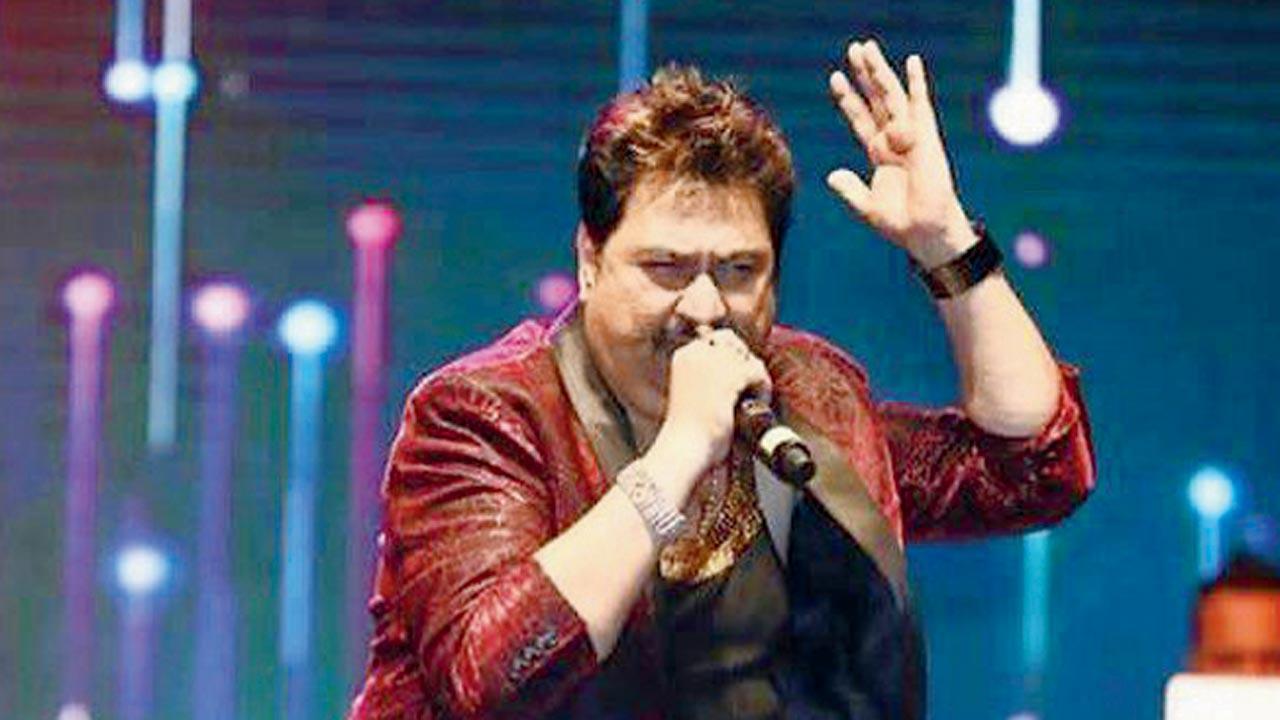
Rekindling his love for Bengali festivities, playback singer Kumar Sanu on organizing a Durga puja after 36 years
Upala KBR (MID-DAY; July 10, 2022)
The ’90s music scene would be incomplete without Kumar Sanu’s voice reverberating over speakers. We last witnessed his soulful voice in the Ayushmann Khurrana and Bhumi Pednekar-starrer Dum Laga Ke Haisha (2015) and when he recreated his hit numbers Aankh maare for Simmba (2018) and Mirchi lagi toh for Coolie No 1 (2020).
Born and raised in Kolkata, the playback singer claims that he has lost touch with his roots after leaving the City of Joy in 1986. To reignite his “enthusiasm”, Sanu is now planning to organise his first ever Durga puja in Andheri, this year. “I remember celebrating Durga puja with excitement, but after moving out of Kolkata for work, I never experienced the same emotions that I did as a child. To bring those emotions closer to the city I now call my home, I have decided to organize a grand Durga puja for the first time in 36 years,” says the singer.
The festivities, in tandem with Mumbai Bengali Cultural Association (MBCA), will kickstart on September 30 and go on until October 5. “Our main motto is to promote Bengali art, culture, and heritage on a grand level,” he says, adding that the celebration will be different from what people have been witnessing across Mumbai over the years. “[There will be] huge idols of Goddess Durga and her children. The pandal will be based on a theme and [we will serve] authentic Bengali food. This puja will be open for everyone,” he elaborates.
Sanu, in his bid to pay back to the society, took to politics twice. However, unable to juggle his work commitments with that of his political duties, he took a back seat and found other ways to contribute to the society. Ask him if he ever plans to go back in to the arena, and he says, “I am an artiste, and I cannot live without singing, hence I left. Right now, performing for charity events and running a school for underprivileged children is all that I am doing for people in need. [As for joining politics], it is not something I have thought of.”
I think every Bengali, wherever they are in the world, waits for Durga Puja-Rani Mukerji
8:01 AM

Debarati S Sen (BOMBAY TIMES; October 15, 2021)
For as long as she can remember, Rani Mukerji has been closely associated with her family puja, the North Bombay Sarbojanin Durga Puja Samiti. The fact that this year she has been busy with her shoot has been a dampener of sorts for her. Talking exclusively to Bombay Times she says, “I have been missing the usual fun and festive atmosphere that we have during these five days, as I am shooting for my next film, but I managed to visit the pandal one day. This year our Protima (Durga Maa idol) is beautiful and mesmerizing and the décor is probably one of the best we have seen.”
The actress has always loved the grand celebrations, but due to the Coronavirus pandemic, the festivities have been low-key, keeping in mind the protocols and restrictions. She says, “We wanted to have a full-fledged Durga Puja this time, but since the planning happens seven to eight months in advance, we had no idea how things would be. That’s why we decided to go ahead with a low-key celebration.”
Rani’s love for the festival is well-known and she has many fond memories of the puja. She shares, “Over the years, my favourite thing about Durga Puja is getting together with the entire family and all my friends during these five days when we enjoy the food, dressing up and connecting with each other.”
Rani says, “The other thing that we love doing, which we missed this year again, is serving food to the many people who visit our Puja. I think every Bengali, wherever they are in the world, waits for these five days to rejoice with their dear ones.”
Rani’s daughter Adira, too, has already had a few Durga Puja moments and for the actress, those have been precious times. “I think my fondest memories are of my daughter, Adira, attending the Puja in 2019 when she was old enough to enjoy herself and experience everything. Surprisingly, she was only three years old then, and it is amazing that till date, she remembers the kadak chai that she had from one of the stalls at the venue,” says the actress.
The ritual of Sindoor Khela that is held on the last day of the Puja, on Dashami, will be held today across pandals (virtually or socially-distanced). Talking about it, Rani says, “I want to be a part of Sindoor Khela, but I am not sure whether I will be able to attend it as I am shooting for my film.”
Channelling your inner goddess is about using your voice and spelling out your choices-Vidya Balan
8:09 AM
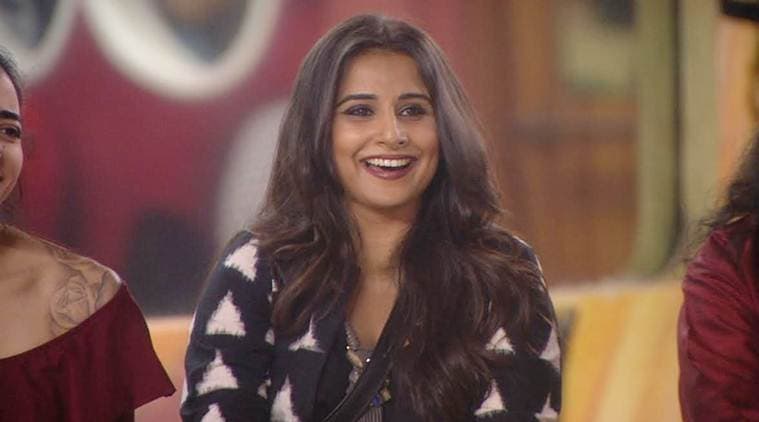
Rachana Dubey (BOMBAY TIMES; October 13, 2021)
While actresses across film industries, age groups and nationalities have played strong characters on screen, Vidya Balan set a standard that few could match. She chose to play mothers who were unlike the sacrificial kind that Hindi cinema was accustomed to. She played love interests, but not the damsels in distress. She essayed women who were not afraid to make choices, who didn’t always tick the socially acceptable boxes. On the occasion of Navratri and Durga Puja, Vidya speaks exclusively to BT about not just the powerful characters that she has portrayed on screen, but also how every woman should channelise the inner goddess within her. Excerpts:
When we talk about channelling one’s inner goddess or harnessing the power within, how do you interpret and explain the concept?
It’s about so many things… It’s about drawing healthy boundaries, learning to say no, valuing yourself more, using your voice and being authentic and unapologetic, or at least, working towards it. It’s also about valuing and spelling out your choices and what you want in life. The thing is, we have been trained to put ourselves after everyone else around us. Channelling your inner goddess means learning to prioritise ourselves without feeling selfish. We have been taught that everyone else should be our priority, but it is for us to realise that our needs, desires and wants can be placed alongside what we do for others. Channelling your inner goddess means acknowledging that you have the right to a life of your choice and dreams, focussing on your own health and taking that break when you are bogged down, asking for help and support instead of trying to be a superwoman.
In recent times, the audience that consumes Hindi cinema is more than willing to embrace strong female characters on screen who live by their own ideals, morals and rules. What inspires you to pick such characters?
I guess I try to practice what I just said, and so, I get drawn to these stories naturally. I have often spoken about how I came to accept myself the way I am and what it took me to do that. You have to be in allowance of your dreams that are beyond you or doing something that no one in your family has done before. You have to know and accept that there will be days when you will be more acceptable to people and some days when you won’t be, and that it’s okay. There will be days when I am angry, or badly behaved or something like that; there will be days when I am intolerant, and days when I am kind, compassionate and giving. All of that is a part of me and should be first accepted by me.
About a decade ago, my mother had put me in touch with a healer. I was going through some health issues at that time. From then till now, I speak to my healer from wherever I am in the world and express what I am feeling. That’s the most transparent space for me as an individual whose life and work is in public glare. It has helped me understand what I am feeling, spell it out and follow what I want to do in most situations.
It’s not about what anyone else wants, but what you want. It’s about choosing that. Doing that has helped me be authentic, live the life I want. Also, that is a gift from my parents to my sister and me - they have allowed us the space to be who we want to be. The fact that I am a woman of a certain size or maybe someone who does not necessarily possess certain skills that are thought of as prerequisites didn’t stop me from wanting to do things my way. I feel most women feel this very restlessness, this unwillingness to settle, and it’s this what is happening in the world around us that has found its way into films because it always does.
Is that why the women, especially the mothers that you have played on screen, have seldom followed a rule book or settled for the shorter end of the stick?
In 2015, during a panel discussion, I remember talking about the change we need to see in cinema, and one of the things I spoke strongly against was the glorification of the sacrificial mother. I have always disliked the idea. Maybe the universe heard me that day. The films that came my way in the subsequent years, including the ones where I play a mother, like in Shakuntala Devi and Mission Mangal, had me essaying characters who wanted things for themselves; they had flaws, and they were thinking, feeling women. Mind you, that did not make them lesser mothers. We see women like that around us all the time. They have been punished and judged for having feelings, desires, which didn’t revolve around others and for not putting themselves behind everyone else. But it’s these women who have inspired other women to make choices irrespective of the repercussions. I remember everyone that I spoke to told me how Shakuntala Devi wanted the most out of life. The point where she says, ‘Agar main amazing ho sakti hoon, to main normal kyun banoon?’ sums it up.
We often set unreal standards for women to meet in every walk of life. Do you think cinema can steer a conversation on accepting women as individuals before being identified by their professions and relationships?
Cinema is already trying to bring about a change in the way we perceive women around us through stories and characters. We see and worship the goddess in so many forms. What we also need to realise is that the goddess is you and me. She is not an otherworldly creature who is perfect. For instance, Maa Kaali symbolises the angry side of the woman, the kind that can wreak havoc. Nothing can really calm her rage when she’s pushed to the brink. But do we let women in real life express their anger amply? The purpose of our mythological and religious scriptures is also to make us understand human behaviour. I think Mahabharata is the most in-depth study of human behaviour and how nothing is right or wrong. It’s about how you see things. Today, we need to look into the nuances and subtle messages that these books actually hold for us. We need to go past our limited views of things. When a woman channels her inner goddess, she leaves no option for the world, but to accept her for who she is. We have to remember that the goddess is not outside; she is within each woman around you, and more importantly, within you.
You can only appreciate the beauty when you are not worried about putting food on your plate-Abhay Deol
8:12 AM

Shamayita Chakraborty (BOMBAY TIMES; October 6, 2021)
From reimagining retro burlesque posters to painting Albert Einstein in water colour, farmer’s protest and more, Abhay Deol’s social media posts have given us enough reasons to appreciate his inclination towards art. The actor recently visited to Kolkata to be part of his friend, artiste Harshit Agarwal’s solo exhibition. The exhibition came to an end with a talk, The Arts They Are A-Changing, in which Abhay was one of the speakers. In a quick chat with us, the actor talks about his recent picture with friend Shilo Shiv Suleiman that went viral, his love for arts and more. Excerpts:
Your recent photograph with artist friend Shilo Shiv Suleiman broke a lot of fans’ hearts.
(Laughs out loud) Please don’t take me seriously is what I would say.
We see a lot of your paintings on your social media.
(Laughs) It is a hobby and I paint every now and then. Not as often as I would like to. I put it up on my Instagram. I am not a professional though.
How conducive do you find our country to practice and perform arts of any form?
Honestly speaking, art is a luxury. Of course, there is a reason why richer nations invest a lot more in art than poorer nations. You can only appreciate the beauty when you are not worried about putting food on your plate. That’s the truth. But yes, we have the middle class who are doing well. There are people who are doing well. It’s not like we don’t have business that runs successfully, not like there isn’t infrastructure. We have had a lot more success in the past couple of decades than before. That has led to people having money to spend. So, you do see a lot of art and appreciation for it today than before I think.
You spend a lot of time at you home in Goa, what are your plans for the festive season this year?
We are, as a family, not so ritualistic. From a very early age I’ve noticed that on Diwali days, we burst a lot of crackers that end up irritating in my throat and spreading a lot of smoke in the atmosphere. On Holi, a lot of colours have chemical ingredients harmful for the body. So, I have always questioned since my childhood that if it’s not good for the environment, is it really good for god? I am very objective with festivals. In Indian culture, gods and goddesses represent the elements. It is one rare culture that worships nature. I think that is a beautiful part. We worship elements and our gods and goddesses represent those elements. I hope to see festivals that celebrate a clean environment and community.
You were in Kolkata when the city was gearing up for its biggest festival.
I haven’t participated in Durga Puja. But any festival that brings communities together, treats them equally, talks about harmony and peace between everyone is one that should be celebrated.
I feel a strong connection with Maa Durga since childhood-Bipasha Basu
8:35 AM

Onkar Kulkarni (BOMBAY TIMES; October 25, 2020)
Durga Puja celebrations may be low-key this year, but everyone’s trying to keep their spirits high. Bipasha Basu made the most of it as she celebrated the festival at home with husband, Karan Singh Grover. Talking about it, she says, “Karan has been doing the puja, while I take care of other things. We have made bhog at home with dishes like khichuri, alur dom and bhaja. The celebration this year is nothing like it was last year. I am going to miss sindoor khela, which I celebrated last year with my two sisters.”
Every year, Bipasha participates in the Durga Puja celebrations in Mumbai, though her best memories are from her childhood days in Kolkata. She recalls, “As kids, we used to wear two new outfits every day — the morning look and the evening look (laughs!). We would get pocket money from our parents and relatives. We would save it only to binge on Chinese food and Calcutta rolls. My friends and I would visit different pandals and see the different protimas there. At padar pujo (pandal in the locality), we were given different responsibilities. Our job was to cut fruits, make chandan, look after the flowers, etc. On the day of the visarjan, we would have coconut laddoos from around the idol.”
The last time Bipasha visited Kolkata for Durga Puja was in 2016. “That’s the year Karan and I got married. So, we went there to seek blessings on Ashtami. Karan enjoys celebrating Durga Puja with my family. He knows that I feel a strong connection with Maa Durga since childhood. I have always felt like she is next to me,” she shares.
Our conversation is interrupted by the sound of a conch blowing. Bipasha tells us that its part of the puja that her husband is performing. She says that she often feels he is Bengali, too. “He sings, paints, writes… basically, he does all things that a typical Bengali would do. He loves Bengali food including labra (mixed vegetable), begun bhaja (friend brinjal), aloo-phulkopir dalna (potato, cauliflower curry), etc. In fact, even before we got married, Karan could speak Bengali. Whenever he spent time with my family, he spoke in Bengali with them. Maybe he learnt it so well only to impress my parents (laughs!).”
I miss the positivity and synergy of Durga Puja celebrations in Mumbai-Rituparna Sengupta
8:24 AM

Debarati Sen (BOMBAY TIMES; October 25, 2020)
With Durga Puja celebrations being done in a low-key manner due to the Coronavirus pandemic, actress Rituparna Sengupta couldn’t come to Mumbai to participate in the festivities this year. The actress has been stationed in Singapore with her family over the last seven months. Talking to Bombay Times about her Durga Puja plans, she says, “My days in Singapore during the pujo are all about little outings with friends, but only five at one time as that’s the rule here. To celebrate the festival here, I wear sarees, offer prayers to Maa Durga and have a lunch that includes traditional Bengali delicacies.’ On a nostalgic note, she tells us, “What I really miss about Mumbai’s Durga Puja celebrations is the positivity and the synergy. The cosmopolitan crowds are a huge part of the festival, and that gives it a beautiful dimension.”
Rituparna further adds, “Since association pujas aren’t allowed anywhere, everyone is celebrating in their own way. We will do some charity work through an organisation. That’s something we do every year in Kolkata. I will try to offer anjali virtually. I will miss wearing my red tika and a brand new saree that I wear every year while praying to Maa Durga at our own pandal. A lot of my friends will have small pujas at their residences in Kolkata and we will wait to see their pujo and aarti virtually. I will miss all the delicious food and bhog this year.”
The actress hopes that the festive atmosphere boosts people’s morale amid the pandemic. She says, “Our minds are clouded with a lot of indecisiveness and sadness. I think Maa Durga will eradicate that and help us rebuild our confidence.”
This Durga Puja, I am missing all our family members coming together-Rani Mukerji
8:32 AM

Madhureeta Mukherjee (BOMBAY TIMES; October 24, 2020)
It is that time of the year when Bengalis deck up in their finest, wear their cheerful spirit on their sleeves and come together in huge numbers to soak in the joy of the Durga Puja festival. But 2020 has changed the course of all festivals, briefly, we hope. In times of the pandemic, even the Mukherjee family’s legendary Durga Puja, which sees the presence of the Bollywood brigade across the five-day celebration, is a close-knit family and members-only affair this year. Rani Mukerji, in an interview with BT, talks about what she is missing the most during the low-key celebration this year, how she values the time she’s got during the pandemic to spend with her daughter, Adira, and how she’s concerned about the impact this phase will have on young children. Read on...
First time since your childhood, I assume, you will be witnessing a downsized version of the Mukherjees’ iconic Durga Pujo, which is in its 73rd year. Every year, thousands flock to the North Bombay Sarbojanin Durga Puja during all the days of festivity. This year the celebration is obviously different?
Yes, it is different and a very low-key affair because as a community and society, we need to abide by the law, and if there is a rule for how all the pujas and festivities have to be done, it’s only for the safety of every individual. As it is a puja, we did not want to put a halt to it, so it is being done in a very low-key manner where only the main puja of Maa Durga is taking place, and anything else that happens around the puja, for instance, serving bhog, distribution of prasad and even the entertainment, which is an important cultural exchange program that happens during puja — all that has been cancelled. Looking at the Coronavirus pandemic situation, especially in Mumbai and Maharashtra, there will be only the puja of the Goddess.
What are you missing the most about the otherwise elaborate celebrations, which I guess is a close-knit family affair this year?
Actually, it won’t even be a close-knit family affair because all the family members and the puja committee members have been told that they can come for the darshan only if they are taking proper safety measures. And safety measures are being taken at the pandal as well, but it is not open to the public the way it normally is since it’s a sarbojanin puja. I think what we are missing the most is the fact that once a year all the family members come together under one roof, but this year that is not going to happen. We also enjoy feeding so many people who come to visit our puja with our own hands. I think the poribeshon (serving food to everyone) is also something that I will miss and, of course, the bhog, which is something that we look forward to eating every year. I think there is so much that has happened this year that to let go of one year of celebration is the most sensible decision that the family and the puja committee members have taken. We look forward to doing it next year once everything is better.
Did you still manage to buy some special saris just to mark the occasion and soak in the spirit of the pujo?
This is the only year that I haven’t done that. I will definitely be doing a small puja in my house, as my daughter is still very young, and I want to keep the tradition alive. So, I am going to do the Kanjak Puja on Ashtami, which I do every year. I have got new clothes made for my daughter, Adira, and I am sure that I will find a new sari for myself in my closet.
Like many others, will you also be viewing the pujo virtually then?
If any committee or family member wants to watch the puja, they can do so from the safety of their homes, virtually. I join in during the aarti and pushpanjali. We also might have the whole family to do a video conference call so that we can say our ‘hellos’ and wish each other Happy Pujo!
Given that you are so attached to your family pujo, is Adira now slightly aware of what the festivities are about?
She knows about it completely because for the last two years I have been taking her to the pandal. Last year, she spent a little more time since she is older now, and it is unfortunate that this year she is not going to see that and there will be a year’s gap. I will still see if I can probably do a quick darshan, and knowing me, I will feel the urge to go, and might do it. There are no concrete plans as of now, I will take it as it comes. During COVID times, making plans is not a very sensible thing to do; we have to take it one day at a time.
We are all finally coming out of a long period of lockdown. It has been a tough, but an introspective phase for many. What have been your learnings from this phase?
What has been keeping me really busy is my daughter’s online schooling for the past seven-eight months and since she is only four-and-a-half years old, I had to be around throughout. I also finished shooting the remaining work for my upcoming film, which was a different working experience during the pandemic. We have to take each day as it comes and we all have to be very thankful for what we are blessed with. We should be thankful for our good health, having a roof over our heads and being able to eat what we eat. These are things which we have been able to understand and appreciate more in a situation like this. We are now humbler about all the things that we would have probably taken for granted when this pandemic was not there. It has been a good phase in terms of spending quality time with the family, being at home and doing things, which we couldn’t do owing to our busy schedules. I have taken to baking again that I always loved doing. I tried to hone my skills as I had so much time in hand. I have also learnt how to make Indian sweets from scratch, like sandesh, rasmalai, rasgulla and kaju katli. I have been learning a lot of things and I feel that learning for every individual is enriching and important.
I think what’s positive about the current situation is the kind of uninterrupted family time that many of us have got. It has also helped us understand each other better…
Well, it has let me understand my daughter completely because the time that she would spend at school, I would actually not know what she is doing in terms of her overall growth. So, just being there day in and day out has been a wonderful experience. I have always said that teachers are the most important community as they are the ones who lay the foundation for the way the next generation is going to shape up. A teacher’s contribution is so crucial, and going through these seven-eight months of the pandemic with my child and educating her at home has made me realise this. The news that we have been getting over the last few months about the difficulties that children in the world are facing has been the cause of my constant worry. Since my daughter is four years old, my concern has been for children of her age whose formative years that are spent in school has hit a roadblock because the most important aspect for them is to go to school physically, meet friends, play with them and interact with teachers… but that entire process has come to a standstill.
For adults, it has been a different experience, but for kids, it has been very different and difficult. I am experiencing this obviously because I have a child of that age. I think of all the parents who have children who are above two years of age and they are pretty much facing the same thing because you want your child to run around, go to the park, beach, school and have that experience of interacting with other kids. This is something that they are really missing out on. When the pandemic is over, we will have to see what effect it has had on them psychologically. Some children can’t even express what they might be feeling, and some kids can even block that feeling, so I don’t know how it will impact them. I am just hoping and crossing my fingers that all the children are protected and come out of this phase with a positive mindset. We have to work extra hard to remove the fear of this pandemic from their hearts and heads. Obviously, they know about COVID-19 and they know the reason why they are not being sent to school. The fear is instilled in them. It is something that we will have to work on to get rid-off. That has been my most worrisome thought during this pandemic. For me, it has been amazing, but as a mother, I am very saddened by the fact that my daughter is unable to do things, which she earlier could do. Parents have been communicating with each other and the teachers on how we can help our children to the best of our abilities.

Audiences return to cinemas in West Bengal
2:34 PM

Box Office India Trade Network
India saw the first sign of audiences returning to theatres in some
numbers after more than six months as new releases in West Bengal
recorded decent occupancy considering the situation. There were many
Bengali films released yesterday as the Puja holidays started and the
response is heartening.
The biggest releases were DRACULA SIR, RAWKTO RAWHOSHYO and SOS KOLKATA and some cinemas which are 300 seaters had an audience count of 120-130 which is very good as these cinemas have a maximum capacity of 150 now due to social distancing. It means occupancy of around 40% when only 50% is the maximum allowed. Even the other smaller releases have found an audience and generally its good occupancy
The biggest releases were DRACULA SIR, RAWKTO RAWHOSHYO and SOS KOLKATA and some cinemas which are 300 seaters had an audience count of 120-130 which is very good as these cinemas have a maximum capacity of 150 now due to social distancing. It means occupancy of around 40% when only 50% is the maximum allowed. Even the other smaller releases have found an audience and generally its good occupancy
Obviously the Puja holidays help in bringing out an audience but in these times no one could have been sure that even holidays will bring out the public but this is a sign that the audience wants to come and its about having new content in theatres. The response in West Bengal will give confidence for all industries in India that the audience is out there still waiting for good cinema. There is a question mark how long the films can hold after Puja but that is there even without a pandemic and dependent on the content.
Subscribe to:
Comments (Atom)